ONLINE ANSCICON 2021 PROGRAMME
←
→
Page content transcription
If your browser does not render page correctly, please read the page content below
Online
AnSciCon 2021
PROGRAMME
                                                                        Registration under
                                                                        https://hs-flensburg.de/form/anscicon

                                                                        We thank our Supporters
Annual Scientific Conference of
Applied Bio and Food Sciences 2021
January 21, 2021
(Link to the online meeting room will be provided after registration)
Dear guests, students and teaching staff,

It is my pleasure to welcome you to this year‘s Annual Scientific Conference
of Applied Bio and Food Sciences. This conference is an inherent part of the
master programme „Applied Bio and Food Sciences“ of Flensburg University
of Applied Sciences.
The conference is dealing with issues of „ innovative and sustainable
research and development“. It perfectly fits into the „science year 2020 bio-
economy“ and contributes to our national research strategy BioEconomy
2030.
This conference provides an optimal opportunity for our students to present
their knowledge and the skills that they have gained in the current semester.
In addition they acquire experiences in organizing such a multinational con-
ference. I would like to explicitly mention the contributions of international
students from our Indonesian partner university in planning and organising
this conference.
I would like to thank everyone involved in this conference. Especially if you
take into account the very special circumstances of studying and teaching
in 2020 - you have been proven performance under exceptional conditions! I
wish this conference fruitful discussions, even if they might only be virtually.
Sincerely,

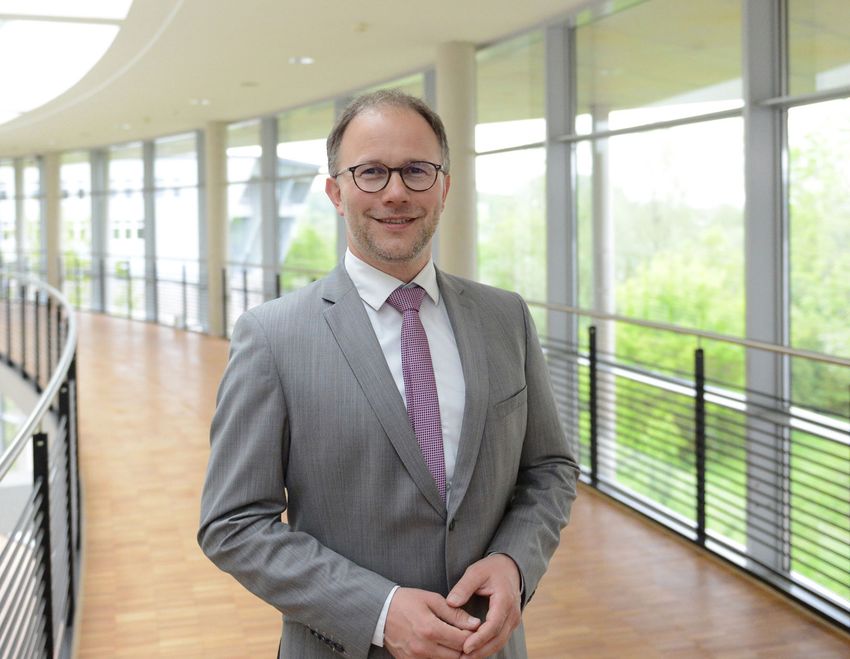
Dr. Christoph Jansen
President of Flensburg University of Applied Sciences
Dear conference participants,                                                     University of Applied Sciences. The students will present their research with
                                                                                  focus on sustainable use of resources for food production and biotechnology
it is a great pleasure to welcome you to the Scientific Conference 2021 at
                                                                                  in healthcare. These are typical examples for the focus areas of the master
Flensburg University of Applied Sciences. We are looking forward to interesting
                                                                                  programme “Applied Bio and Food Science”. The students design and conduct
presentations and inspiring discussions during this day.
                                                                                  a research project on a specific advanced topic of the field, but also gain
This conference is organised by students for students in course of our Master     skills for scientific work. The conference and its proceedings are an integral
program “Applied Bio and Food Science”. It illustrates the connection of          part of the study programme. The content and arrangement of the conference
research and product innovation our university stands for. The demand for         but also all of its organisational parts were scheduled and prepared by the
future food and fossil-free production based on biotechnology approaches          students in an independent manner.
are rising and is recognised by decision makers in science, politics and
                                                                                  The success of the projects is based on the efforts the students put into their
industry.
                                                                                  projects. We, as the professors, congratulate the project teams to this success
This year our students joined forces with students from our partner               and wish the best for the presentations and poster sessions today.
University of Jember in Indonesia. We are proud of this international
                                                                                  We thank you for joining in and wish an insightful and enjoyable time.
character. It reflects the context in which modern science occurs. We hope
that physical travel and exchange of students for which the educational                    Sincerely,
programs of our university were used will start again soon. In the meantime,
                                                                                           Dr. Holger Rehmann
our students have shown that international co-operation is also possible
                                                                                           Prof. Dr. Antje Labes
under Corona-conditions.
                                                                                           Prof. Dr. Birte Nicolai
During the conference, the students will present the results they obtained                 Prof. Dr. Andreas Nicolai
during the project semester of the Master program “Applied Bio and Food                    Prof. Dr. Hans-Udo Peters
Science”. You can expect overviews of the projects and insights in their                   Professors of the Master’s study Applied Bio and Food Science,
results. Next to the presentations, students as well as professors and the                 Flensburg University of Applied Sciences

program coordinator will be available in break out rooms. You are interested
in our Master program? This conference is a unique possibility to obtain
insight information from your peers but also to get in contact with your
future teachers.

The conference is the final highlight of the project semester of M.Sc. students
of the study program “Applied Bio and Food Science” of the Flensburg
Introduction                                                                    Time Table 21.01.2021

Over the last decades the general living standard for people has increased,     Germany (UTC+1): 9:00 – 13:00, Indonesia (UTC+7): 15:00 – 19:00

but there are still many environmental problems and risks for the human
                                                                                09:00 - 09:15 (15:00 - 15:15)   Time to Enter the Conference
health. That is why the research in this field is still ongoing. Through the
cooperation of the University of Applied Sciences in Flensburg (Germany)
                                                                                09:15 - 09:20 (15:15 - 15:20)   Opening Remarks		                 Mara Baller
and the University of Jember (Indonesia), these problems can be tackled by
                                                                                                                           Dr. Christoph Jansen
spreading awareness and exchange of knowledge.                                  09:20 - 09:30 (15:20 - 15:30)
                                                                                						Dr. Ir. Iwan Taruna
                                                                                                              Welcoming

The risks for human health reach from illnesses like Malaria over deficits
                                                                                09:30 - 10:15 (15:30 - 16:15) Project OPTIMA
in the diet and threats from climate change through a not sustainable way       			Comparison of optimized
                                                                                			                           growth in H. pluvialis   Elias Messerschmidt
of using available resources. This is where the presented projects have their   			combining
                                                                                						Tobias                             parameters to        Koser
                                                                                			increase yield and
causes.                                                                         			productivity

The Malaria project aims to find Malaria Vectors for Characterization to
                                                                                10:15 - 10:30 (16:15 - 16:30)   Coffee Break
reduce the spread of Malaria in the long run. The research carried out by
MEAT contributes to solving environmental, ethical and dietary problems,        10:30 - 11:15 (16:30 - 17:15) Project MALARIA
                                                                                			                           Redesigning ITS2 Primer for Muhammad Khalid Abdullah
leading to the development of new methods of providing food. OPTIMA aims
                                                                                			Molecular Characterization
                                                                                						Nuril                                                   Azizah
to make astaxanthin, a food supplement and natural dye, more accessible         			of Anopheles spp. as
                                                                                			Malaria Vector
to a wider range of applications and by doing so to reduce the use of non-

renewable resources.                                                            11:15 - 11:45 (17:15 - 17:45)   Lunch Break

                                                                                11:45 - 12:30 (17:45 - 18:30) Project MEAT
                                                                                			                           Isolation of satellite cells from Isa Antonowicz

                                                                                						Alessandra              different tissue sources to build              Buse

                                                                                						Mara                    a base for an affordable and            Baller
                                                                                			efficient
                                                                                						Jörn                             cultured meat                 Niklas Hansen
                                                                                			production

                                                                                12:30 - 12:35 (18:30 - 18:35)   Closing			                        Jörn Niklas Hansen

                                                                                12:35 - 13:20 (18:35 - 19:20)   Discussion
                                                                                			                             Meeting in breakout rooms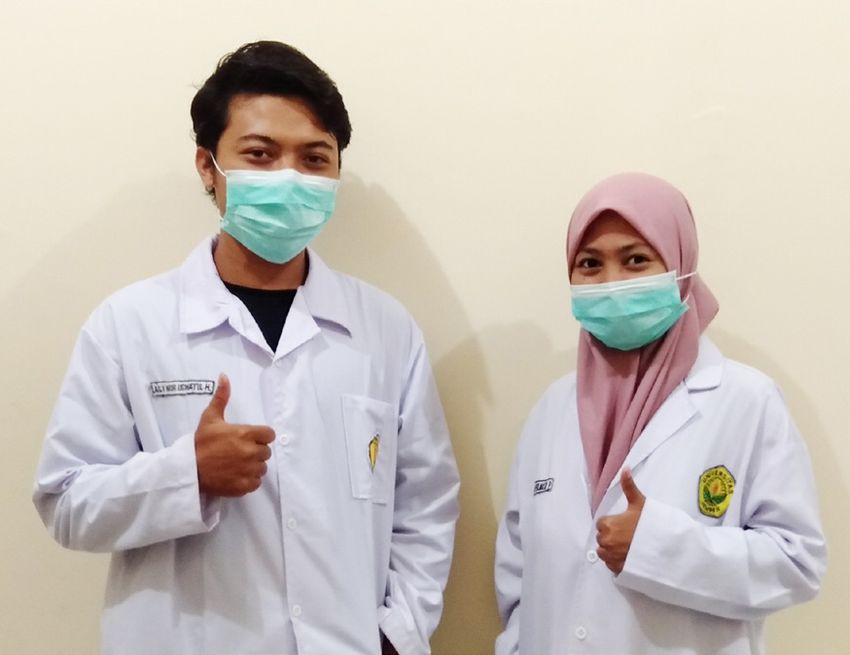
MALARIA – Redesigning ITS2 Primer
for Molecular Characterization of
Anopheles spp. as Malaria Vector
Anopheles mosquitoes are vectors of the Malaria disease, a serious health
issue in Indonesia. Therefore, vector control becomes an important method
to overcome this disease. The first and important step of vector control is
vector identification. Some of Anopheles species share undistinguishab-          MEAT – Isolation of satellite cells from
le morphological features, and can only be distinguished via molecular           different tissue sources to build a base
identification. DNA barcoding is a method to identify different vector species
                                                                                 for an affordable and efficient cultured
using specific DNA sequences as molecular markers. Internal Transcribed
Spacer 2 (ITS2) is a non-coding region DNA commonly used as a molecular          meat production
marker in DNA barcoding of insects. Many ITS2 PCR primers available are          The production and consumption of meat is associated with various negative
universally designed for all insects. These primers are usually less specific    effects, such as high carbon dioxide emission promoting climate change,
for identifying certain genera, i.e. Anopheles spp. Therefore, redesigning a     high resource consumption and animal cruelty. Additionally, as the world
specific ITS2 primer is necessary for Anopheles spp. identification. This re-    population increases, the food industry will not be able to meet the demand
search aims to design a specific PCR primer for Anopheles mosquitoes. The        for meat much longer. In order to reduce these negative impacts, alternatives
redesigned primer is then tested for its universality using mosquito samples     are currently being researched. One of them is artificially cultured meat, i.e.
from Anopheles genus and for its specificity using mosquito samples from         in-vitro meat. Meat production using cell culture technique has gained more
another genera. Each mosquito is morphologically identified and their geno-      and more attention in recent years. We present first steps of cell-cultured
mes are extracted. Each DNA sample is amplified by PCR-method using the          meat with the primary aim to isolate satellite cells from porcine and bovine
redesigned primer. The redesigned primer will be useful for distinguishing       tissue. There are different quality levels by which these types of meat are
Malaria vectors that are                                                         examined: fresh meat directly from slaughter and meat from the fresh food
morphologically similar via                                                      counter. The study of different samples aims to support the in-vitro research
molecular identification,                                                        by trying to find a reasonably priced and high-quality base material to
especially in Indonesia.                                                         facilitate the isolation of satellite cells for further research projects.
OPTIMA – Comparison of optimised                                                 Quotations:
growth in H. pluvialis combining
                                                                                 “It was fun to see the great enthusiasm with which students
parameters to increase yield and                                                 working on such diverse projects as the biotechnological

productivity                                                                     production of astaxanthin, the characterisation of malaria
                                                                                 vectors, or the basic development of techniques for the
                                                                                 production of in-vitro meat co-operate to make this conference
Astaxanthin is a food supplement that can positively influence the health        possible.”		 Dr. Holger Rehmann
of people and is being used as a dye in the food industry. It is produced by a
microalga called “Haematococcus pluvialis”.                                      “Your projects have once again impressively shown how valuable
                                                                                 the combination of research and teaching is.”
The objective of the project was to increase astaxanthin production in the
                                                                                 			Prof. Dr. Birte Nicolai
mentioned microalga. By increasing the effectiveness of the fermentation,
an increase in sustainability is observed. In this way, chemically produced      “Thank you very much for your commitment despite the
astaxanthin, which is manufactured with the help of petrochemicals, could        adversities caused by Corona.”
be replaced by a more environmentally friendly alternative.                      			Prof. Dr. Hans-Udo Peters

Our project goal was to determine the relevant parameters of the Astaxanthin
                                                                                  “It was a great pleasure to see how the students self-reliant
production and to test them in a laboratory environment. This was done by
                                                                                 familiarized themselves with current issues and projects in
researching the effects of the parameters such as pH, light and temperature      biotechnology and food technology. “
in the cultivation of Haematococcus pluvialis and analyzing the results          			Prof. Dr. Andreas Nicolai
using HPLC and
OD measurements.                                                                 “The science of today is the technology of tomorrow – this quote
                                                                                 of E. Teller is a good motivation for our students to combine
                                                                                 curiosity, ambition and enthusiasm to gain new knowledge
                                                                                 and capability.”		           Prof. Dr. Antje Labes

                                                                                 “I am very excited and looking forward to the upcoming
                                                                                 student’s conference as I understand that they are organizing
                                                                                 almost everything by themself, not only my enthusiasm of the
                                                                                 differs topics, but also how an international online collaborati-
                                                                                 on between students is able to make this conference possible.“
                                                                                 			Dr. rer. nat. Kartika Senjarini
You can also read


