6 OPEN ACCESS IN PORTUGAL
←
→
Page content transcription
If your browser does not render page correctly, please read the page content below
6
                  open access in Portugal
                                     Ricardo Saraiva, Eloy Rodrigues

 Saraiva, Ricardo; Rodrigues, Eloy (2010). “Open access in Portugal”. In: Open access in Southern European countries.
 Lluís Anglada, Ernest Abadal (eds). Madrid: FECYT, p. 83-99.

6.1 Introduction/Background

In the terms of one of the most important declarations of the open access (OA)
movement, the Budapest Open Access Initiative (BOAI),

      “An old tradition and a new technology have converged to make possible
      an unprecedented public good. The old tradition is the willingness of
      scientists and scholars to publish the fruits of their research in scholarly
      journals without payment, for the sake of inquiry and knowledge. The
      new technology is the internet. The public good they make possible is the
      world-wide electronic distribution of the peer-reviewed journal literature
      and completely free and unrestricted access to it by all scientists, scholars,
      teachers, students, and other curious minds. Removing access barriers to
      this literature will accelerate research, enrich education (…)”.16

   According to BOAI, OA can be achieved by two complementary ways or
means. The first one, usually called “gold OA”, is open access journals that do
not use subscription or access fees and copyright to restrict access to the articles
they publish. The second one, usually called “green OA”, is self-archiving a
copy of journal articles in open access repositories.
   In brief, open access advocates the free dissemination on the Internet of
scholarly literature, allowing anyone to read, download, copy, distribute, print,
search or reference the full text of documents.
16
     Budapest Open Access Initiative (2002). (http://www.soros.org/openaccess/read.shtml). [Accessed: 31/05/2010].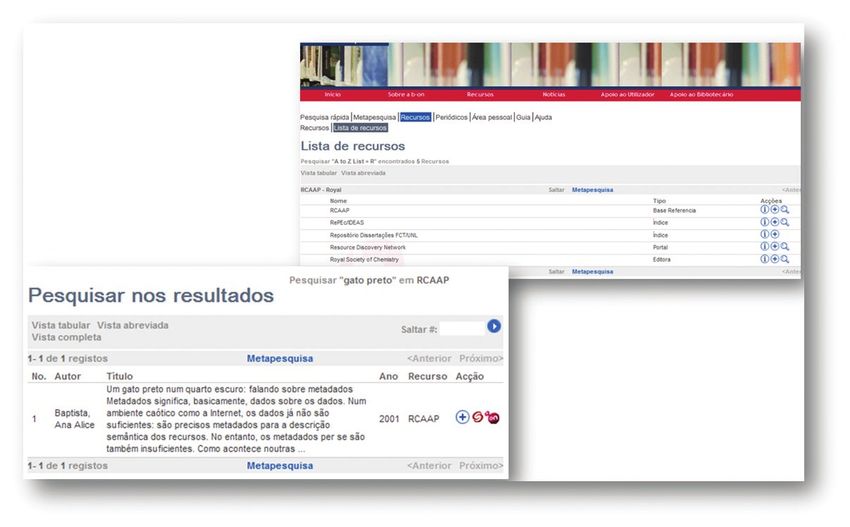
84                                                  Open access in Southern European Countries

    As in many other countries, open access initiatives in Portugal are relatively
new (see section Evolution of open access in Portugal), with the first initiatives
dating from 2003, but only getting general attention after 2006. On top of
the factors that are common to most countries, the slow uptake of the open
access agenda in Portugal can also be explained by the particular conditions
and situation of portuguese research and publications.
    In fact, Portugal hadn’t a strong scientific tradition and infrastructure before
the end of the last millennium. The number of researchers and the number of
publications, especially in international peer-reviewed journals, was very small
until recently. Just as an illustration, the number of Portuguese articles per year
referenced on ISI databases was under 1,000 until 1990 and only after 2003
the number is bigger than 5,000 (see table 6.1).
    The structural setback of the Portuguese science and the significant efforts
made by Portugal to modernize its scientific system and higher education since
the mid-1990s can also be confirmed by the growth rate in the number of
publications since 2000, which was one of the biggest of the European Union
(see figure 6.1).

                                                                                             Table 6.1. Number* of Portuguese scientific

                                    1990        1991        1992         1993         1994        1995         1996        1997         1998
 [1] Publications in non
                                       13           12            2           4            5            4           6            1           4
 classified journals
 Exact Sciences                       343         415          427         521          575          600         713          870         925
 Natural Sciences                     192         205          256         286          322          401         402          552         630
 Engineering & Technology
                                      148         148          199         185          229          306         353          385         477
 Sciences
 Ciências Médicas e da Saúde          205         214          286         315          388          494         462          558         602
 Agriculture Sciences                  26           20          36           33           63          73           89          94         132
 Social Sciences                       30           27          53           48           48          63           90          53           75
 Humanities                              9          23          18           18           35          18           27          22           22
 [2] Publications in multi-
                                         5           4            1           6            5            7          10            3          17
 disciplinary journals
 Publications Total [1] + [2]         970       1,068       1,277        1,415        1,669       1,966        2,152       2,538        2,883
Source: GPEARI - Gabinete de Planeamento, Estratégia, Avaliação e Relações Internacionais / Ministério da Ciência, Tecnologia e Ensino Superior
* Finding done by the method of fractional counting from: Thomson Reuters, National Citation Report for Portugal 1981/2008
** Provisional figures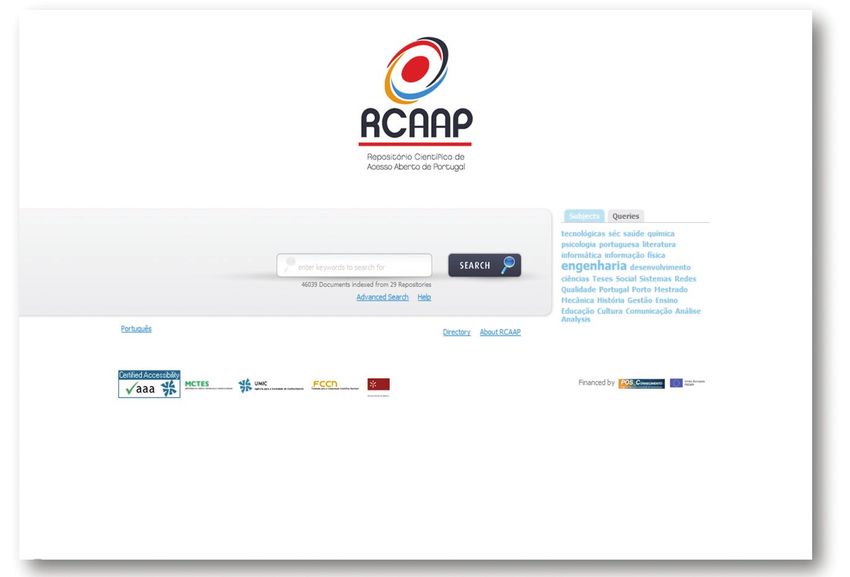
Open access in portugal                                                                               85

                    Figure 6.1. Number of publications growth rate, by European Union countries and per million of
                                      inhabitants, between 2000 and 2008 (Source GPEARI)

publications by scientific area
NCR 1981-2008
                                                                                                             Total
 1999        2000       2001      2002      2003      2004      2005       2006       2007      2008**

      9           1          1                  1         2          1          1          5          1         73

  1,184      1,279      1,489     1,482     1,827     1,943      2,086      2,341      2,134     2,191      23,347
    725        742        900       999     1,060     1,221      1,379      1,725      1,936     1,965      15,894

    547        621        638       818       775     1,115      1,013      1,403      1,158     1,250      11,767

    809        782        762     1,064     1,143     1,285      1,447      1,837      2,051     2,110      16,814
    122        147        167       200       222       212        236        332       367        389       2,959
     86        166        122       131       148       185        227        289       326        340       2,507
     40          50         33       35        29        30         33         42         56        51         588

      4           5          4       21        16        12         13         32         18        34         214

  3,525      3,792      4,115     4,748     5,221     6,005      6,435      8,002      8,051     8,331      74,163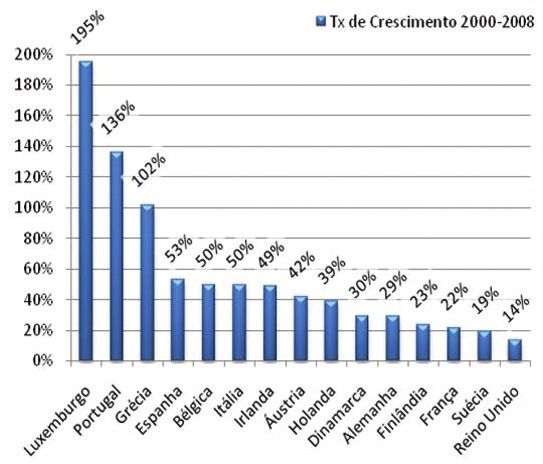
86                                             Open access in Southern European Countries

    On the other hand, library collections, especially journal collections, were
very scarce and insufficient (the average number of subscribed journals on
academic libraries was around 1,000 in 2003). The creation of the national
journal subscription consortium B-on - Online Knowledge Library,17 in 2004,
dramatically improved the accessibility of scientific journals in Portugal, and
eased the access problem to Portuguese libraries and researchers.
    Finally, despite the fact that several hundred scientific related publications
were published in Portugal in the last decades, there is no really strong tradition
of scholarly journals. Most of the publications are connected with scientific
societies, many of them have no periodicity, or have severe problems complying
with announced periodicity, and some have no real peer-review process. So, if
the criteria of periodicity and peer-review are strictly applied, the number of
Portuguese scholarly journals published in the last two decades will be probably
under 100.
    All this contextual background (limited dimension of research and research
output, small number of scholarly journals and increased access to scientific
literature after 2004) must be taken into account on the analysis of the Portu-
guese situation.

6.2 Evolution of open access in Portugal

In Portugal, the development of open access has been mostly carried out by the
universities, who have taken different initiatives to further promote access to
research information. The first Portuguese open access initiatives were initiated
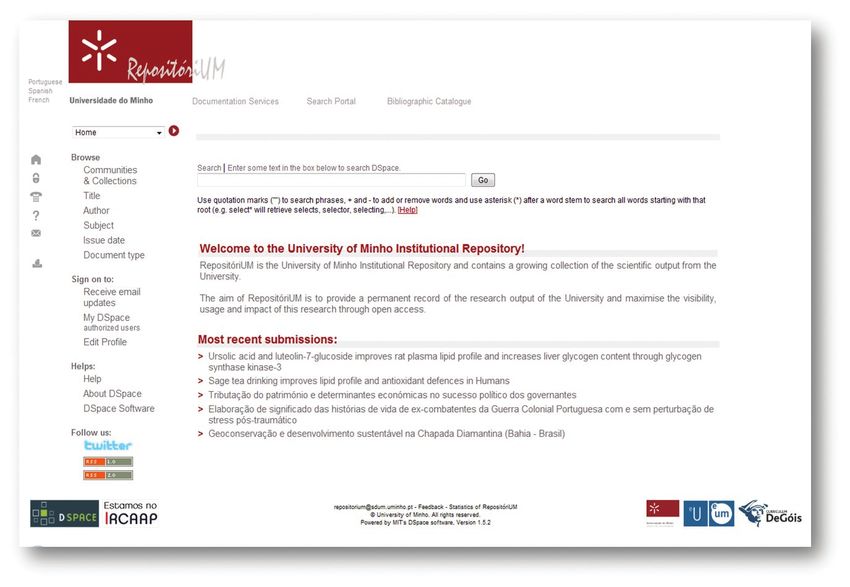
by the University of Minho with the creation of RepositóriUM,18 its institu-
tional repository which was publicly presented in November 2003. One year
later, in November 2004, as a symbolic act to celebrate the university’s institu-
tional repository first anniversary, the rector of University of Minho formally
signed the Berlin Declaration.19
    At the same time, a world pioneering institutional self-archiving policy was
established (December 2004) and was implemented in January 2005. Some
months later, University of Minho organized the 1st open access Conference
17
     B-on: http://www.b-on.pt
18
     RepositóriUM: http://repositorium.sdum.uminho.pt
19
     Signatories of Berlin Declaration: http://oa.mpg.de/openaccess-berlin/signatories.html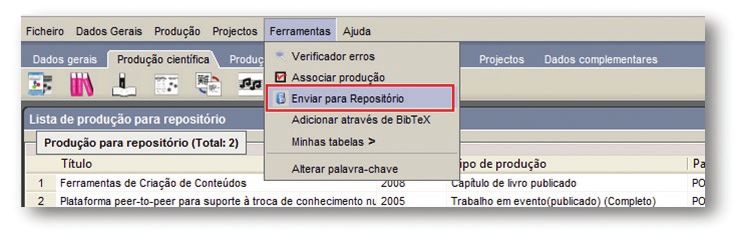
Open access in portugal                                                                            87

                                       Figure 6.2. RepositóriUM

(May 2005) held in Portugal with the contribution of some of the most
prominent protagonists and representatives of various organizations related
with open access worldwide.
   Also in 2005, the first Portuguese initiative concerning open access publi-
cation was set up, with the availability of the portal from the Portuguese
section of the Scielo project20 (March 2005). The Scientific Electronic Library
Online (SciELO) is an electronic virtual library covering selected scientific
journals collections from Latin America, Spain and Portugal. The library is an
integral part of a project being developed by FAPESP - Fundação de Amparo
à Pesquisa do Estado de São Paulo, in partnership with BIREME - The Latin
American and Caribbean Center on Health Sciences Information.21 The
SciELO Portugal22 collection results from the efforts of GPEARI - Gabinete
de Planeamento, Estratégia, Avaliação e Relações Internacionais (former
20
     More information about the SciELO project available on the WWW at: http://www.scielo.org
21
     More information about BIREME - The Latin American and Caribbean Center on Health Sciences Infor-
     mation available on the WWW at: http://www.bireme.br/bvs/I/ihome.htm
22
     SciELO Portugal: http://www.scielo.oces.mctes.pt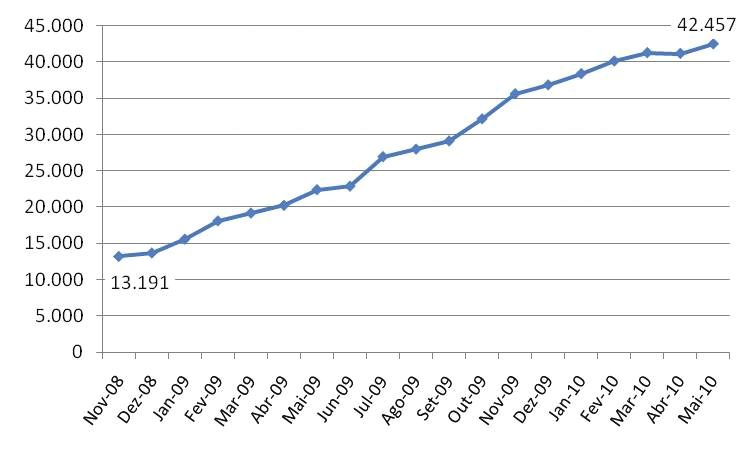
88                                          Open access in Southern European Countries

OCES)23 and the MCTES - Ministério da Ciência, Tecnologia e Ensino
Superior24 to promote quality Portuguese scientific journals and disseminate
worldwide the Portuguese scientific publication.
    Until the last quarter of 2006, the only two Portuguese open access initia-
tives remained RepositóriUM and SciELO Portugal. But the situation started
to change on the last months of that year, with the emergence of new reposi-
tories, the dissemination of an open access declaration issued by CRUP -
Conference of Rectors of the Portuguese Universities25 (November 2006), and
the organization by the University of Minho of a very successful 2nd open
access Conference (November 2006) with the contribution of some of the
most prominent protagonists and representatives of various organizations from
Portugal and other countries like Brazil, Spain, United Kingdom, Hungary,
Holland, Armenia, Mozambique and Japan.
    During the 2nd open access Conference, as the result of the debate and
contributions presented in the pre-conference Workshop: “Acesso Livre em
Países Lusófonos: Iniciativas e Perspectivas”, aiming to promote open access
and the creation of new repositories and within the Portuguese speaking
scientific community it was produced and submitted to public subscription a
commitment named: “Compromisso do Minho: Compromisso Sobre Acesso
Livre à Informação Científica em Países em Lusófonos”.
    In the subsequent months several other Portuguese universities started the
installation and creation of open access repositories, but most of them were
not publicly presented or were made available with a very small number of
documents.
    At that time, following its declaration endorsing open access, CRUP estab-
lished a working group on open access and developed efforts to involve repre-
sentatives of governmental agencies in the discussions and additionally CRUP’s
president signed the Berlin Declaration (January 2007). The purpose was to
promote OA at each Portuguese university, helping the establishment of insti-
tutional repositories and the definition of open access self-archiving policies in
all of them, as well the creation of a national aggregator for Portuguese reposi-
tories. During 2007, a CRUP representative (from Minho University) was also

23
     GPEARI - Gabinete de Planeamento, Estratégia, Avaliação e Relações Internacionais: http://www.gpeari.
     mctes.pt
24
     MCTES - Ministério da Ciência, Tecnologia e Ensino Superior: http://www.mctes.pt
25
     CRUP - Conference of Rectors of the portuguese Universities: http://www.crup.pt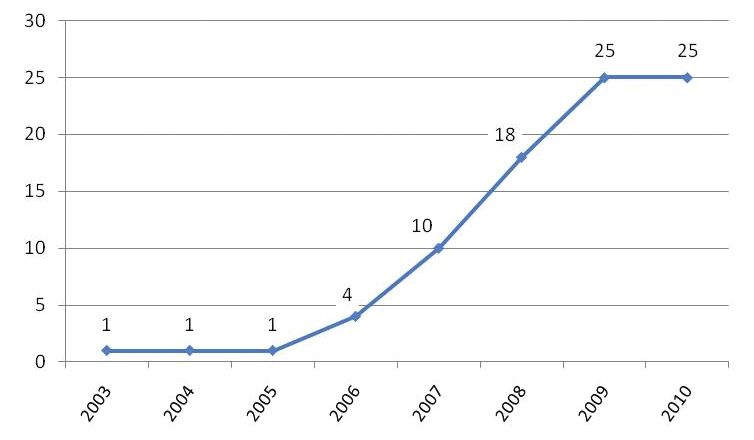
Open access in portugal                                                                                  89

actively involved in the European Universities Association (EUA) open access
working group, contributing for the definition and final writing of EUA open
access Recommendations.26
    Earlier 2008, CRUP addressed to the Portuguese Ministry of Science,
Technology and Higher Education (MCTES) by resending the CRUP’s Decla-
ration on open access and stating its support to the recommendations from the
European University Association (EUA) Working Group on open access.
    In March 2008, UMIC - Knowledge Society Agency27 developed some
contacts with FCCN - National Foundation for Scientific Computation28 and
University of Minho, setting the foundations for a project to build a national
aggregator for Portuguese repositories and also promote, help and hosting the
establishment of new institutional repositories. That project was named RCAAP
(Repositório Científico de Acesso Aberto de Portugal = Portugal open access
Science Repository) and started in July 2008 as an initiative promoted by the
UMIC, in collaboration with the FCCN, offering an advanced service on the
Portuguese Network of Science and Education (Rede de Ciência e Educação)29.
The University of Minho was responsible for the scientific and technical work
on the project.
    The first phase of RCAAP, from July to December 2008 produced, as
planned, three significant deliverables for a short period of time:

– RCAAP Portal:30 aiming to collect, aggregate and index open access scien-
  tific contents from Portuguese institutional repositories, forming a single
  entry point for searching, discovery and recall of thousands of scientific and
  scholarly publications.
– SARI (ASP service for institutional repositories): allowing institutions to
  create and completely “brand” their repositories as desired.
– Project support website:31 website with information about the RCAAP
  project, as well several pertinent documentation for different types of
  audiences (researchers, repository managers, general public).
26
     EUA open access Recommendations available on the WWW at: http://www.eua.be/index.php?id=396
27
     UMIC – Knowledge Society Agency: http://www.infosociety.gov.pt
28
     FCCN – National Foundation for Scientific Computation: http://www.fccn.pt
29
     More information about the Portuguese Network of Science and Education available on the WWW at: http://
     www.english.umic.pt/index.php?option=com_content&task=view&id=29&Itemid=187
30
     RCAAP Portal: http://www.rcaap.pt
31
     Project support website: http://projecto.rcaap.pt/index.php?lang=en
90 Open access in Southern European Countries
Figure 6.3. RCAAP
The main component of the RCAAP project, the national aggregator
for Portuguese repositories, the RCAAP Portal (http://www.rcaap.pt), was
unveiled to the public during the 3rd open access Conference that took place
at University of Minho on the 15th and 16th December 2008.
Also during this period, the University of Coimbra, the oldest Portuguese
university, presented its repository, Estudo Geral, and the University of Porto
unveiled its repository, Repositório Aberto, as well its institutional self-archiving
policy.
In 2009, besides the organization of the 4th open access Conference
(November 2009), integrated in the work plan of the RCAAP project various
initiatives and activities were completed:
− Creation of Repositório Comum, a common platform for researchers
working at institutions without their own repository set in place.
− Interconnection with the B-on - Online Knowledge Library.
− Interconnection with the national Current Research Information System
platform DeGóis.32
32
DeGóis Curricula Platform: http://www.degois.pt/index.jsp?lang=enOpen access in portugal 91
Figure 6.4. Interconnection with the national Current Research Information System platform DeGóis
Figure 6.5. Interconnection with the B-on (Online Knowledge Library)
6.3 Current situation of open access journals
In Portugal the publishing of scientific journals is mainly administered by
the active scientific societies within each respective research field. In most
cases, journal subscription is connected to a membership and is offered as a
membership benefit, mostly in printed form.
Some figures about journal publication in Portugal are shown in the tables
below obtained from a search in Ulrich´s Periodicals Directory,33 a commercial
33
Ulrich´s Periodicals Directory: http://www.ulrichsweb.com92 Open access in Southern European Countries
database of all types of serial publications. Academic and scholarly journals
published in Portugal, or published in Portuguese language, have been also
searched. The search criteria used are listed in the tables 6.2-6.3 below, as well
as the results. Ulrich’s designation for academic/scholarly journals has been
used consistently. Journals with peer review are presented separately.
These tables show that most of the journals are still published in printed
form, and that the number of open access journals in Portugal is low.
Concerning the open access journals spectrum, the Portuguese section of
the SciELO project, SciELO Portugal, currently hosts 24 open access journals
published by Portuguese entities. The Directory of open access journals
(DOAJ),34 which gathers information from 5,049 OA journals worldwide,
is referring an increasing number of journals from Portugal in its database.
Table 6.2. Number of academic/scholarly journals published in Portugal
Academic/Scholarly, active journals published in Portugal (possibly co-published with another country)
Online and JCR and JCR, online
Total number Online JCR
OA online and OA
203 60 31 4 4 0
Peer reviewed
30 17 7 4 4 0
Not peer reviewed
173 43 24 0 0 0
Source: Ulrich’s Periodicals Directory
Table 6.3. Number of academic/scholarly journals from published in Portugal with material in
Portuguese
Academic/Scholarly, active journals published in Portugal with material in portuguese
(may also contain material in another language)
Online and JCR and JCR, online
Total number Online JCR
OA online and OA
167 44 21 0 0 0
Peer reviewed
21 8 4 0 0 0
Not peer reviewed
146 36 17 0 0 0
Source: Ulrich’s Periodicals Directory
34
Directory of open access Journals (DOAJ): http://www.doaj.orgOpen access in portugal 93
Throughout the first months of 2010, 5 new journals have been added,
making a total of 44 scientific journals Portuguese open access registered in
DOAJ so far.35
Finally, in Portugal there aren’t many examples of institutional member-
ships for publishing on OA journals. The only two examples registered in
recent years were University of Minho and Faculty of Medical Sciences - New
University of Lisbon that had a membership with BioMed Central36 currently
discontinued.
6.4 Current situation of open access repositories
There are 16 public universities in Portugal and combined with polytechnic
institutes or smaller private universities that are focused mainly on teaching
activities, the number increases approximately to 40 higher education institu-
tions. As earlier reported the Conference of Rectors of the Portuguese Univer-
sities (CRUP), consisting of the rectors of the above-mentioned 16 public
universities, has signed the Berlin Declaration on open access and recommended
that all universities should build an institutional repository and implement a
policy for self-archiving.
Prior the RCAAP project 11 repositories, in production or installation
phases, were known in Portugal. During the first phase of the RCAAP project
(2nd semester of 2008), five brand new repositories were created using the SARI
infrastructure (University Aberta; University of Açores; Technical University of
Lisbon; University of Coimbra Hospitals; University of Algarve).
In the first half of 2009, within the working plan of RCAAP project five
repositories were created or installed in the SARI service. Three were new
institutional repositories (University of Beira Interior, Polytechnic Institute of
Leiria, Gulbenkian Institute of Science), one a renewed version of a previously
existing repository (Polytechnic Institute of Bragança) and a fifth (Repositório
Comum) is a common infrastructure for researchers working at institutions
without their own repository (like the Depot repository37 in the UK). In the
35
Portuguese Journal referred on DOAJ in 2010: http://www.doaj.org/doaj?func=journalsByCountry&cId=158
&year=2010
36
BioMed Central: http://www.biomedcentral.com
37
Depot repository: http://depot.edina.ac.uk94 Open access in Southern European Countries
last months of 2009, envisaged on a 2nd call of the RCAAP project, four new
repositories were developed and installed in the SARI infrastructure (National
Laboratory of Engineering and Geology; Hospital Dr. Fernando Fonseca,
Institute of Applied Psychology and Polytechnic Institute of Castelo Branco.
So, at the time of writing (May 2010) there are in Portugal 25 scientific
open access repositories (http://www.rcaap.pt/directory.jsp) in a production
stage and aggregated in the national portal - RCAPP Portal. Altogether, the
running IR’s, currently collect more than 42,400 scientific documents (see
figures 6.6 and 6.7).
In the universe of Portuguese repositories, there has been significant progress
in recent years, but the degree of development has been diverse, differing from
institution to institution, in general the scientific output deposited in reposi-
tories is still low (estimated less than 10 % of what is actually produced within
the institutions). Regarding the types of documents publicly available, there
is also some diversity in the overall, about 44 % of them are scientific articles,
30 % doctoral thesis and dissertations, 12 % papers resulting from communica-
tions to congresses and conferences and 14 % other types of documents. The
repositories which seem to have higher degrees of success are those with self-
archiving policies implemented.
Figure 6.6. Evolution of the repositories number established in PortugalOpen access in portugal 95
Figure 6.7. Evolution of the documents number available in the Portuguese repositories
The repositories more mature and/or with self-archiving policies associated
also seem to enjoy some competitive advantage in terms of its visibility on
the Web, as noted by the Ranking Web of World Repositories38 (established
from a universe of 1,418 repositories worldwide). Since the visibility of their
repositories also contributes to the position of the Portuguese universities in
Webometrics Ranking of World Universities.39
These findings were the inspiration for producing, under the RCAAP Project,
a document designated: “open access Policies Kit”,40 which gathers useful
information and resources for formulating and implementing OA policies in
the institutions (especially universities) and funding organizations.
The repository software presently most used in Portugal is DSpace, followed
by Digitool and SinBad. But in terms of repositories platforms it has been
noticed that institutions have been relying furthermore on the SARI infra-
structure provided by the RCAAP project over proprietary solutions.
38
Ranking Web of World Repositories available on the WWW at: http://repositories.webometrics.info
39
Webometrics Ranking of World Universities available on the WWW at: http://www.webometrics.info
40
Portuguese version of the “open access Policies Kit” available at: http://bit.ly/6zzW6H96 Open access in Southern European Countries
In the Portuguese IR’s community there has been a strong commitment to
comply with the DRIVER Guidelines,41 endorsed both by the University of
Minho (a DRIVER partner) and by the RCAAP initiative.
The institutional teams and repositories managers have the overall respon-
sibility for the content of the local repositories since the quality assessment of
the archived data is very important. The RCAAP Portal also requires quality
metadata and has therefore developed its own OAI-PMH harvester and validator
tool,42 which daily harvests and validates metadata accordingly to the DRIVER
guidelines to ensure the quality of the local repositories. Data differing from
the metadata standard are normalized by the repository managers which are
contacted with suggestions for corrections. Data coming in from many different
sources can then be presented uniformly to the user.
RCAAP project support website presently provides information about
publishers’ policies for self-archiving and refers to the Sherpa/RoMEO
database.
It has been a libraries’ task to produce instructions, guidelines and tem-
plates for agreements regarding self-archiving, yet the available information
about Portuguese journals/editors spectrum is scarce or inexistent; many
Portuguese journals don’t have formal policies or have it only for the printed
version. For this reason, in the context of RCAAP, a project lead by Faculty
of Sciences and Technology - New University of Lisbon was engaged with
the collaboration of other Portuguese institutions to foster the identification
and provide wider information about Portuguese publishers’ policies towards
open access.
For what has been seen until now, the main driving factor for engaging with
the development and maintenance of IR’s in Portugal has been the increasing
awareness of the open access movement and the need to showcase the institu-
tional research outputs. On the contrary, the main inhibitors are the low level
of awareness on open access in some scientific areas and institutions and the
doubts or fears with regard to the copyright situation for published research
output.
41
Portuguese version of the DRIVER Guidelines available at: http://www.driver-support.eu/documents/
DRIV22ER_Guidelines_v2_Final__PT.pdf
42
RCAAP validator tool URL: http://validador.rcaap.ptOpen access in portugal 97
6.5 Conclusions and recommendations
The universe of Portuguese scientific publication is relatively small, but has been
growing consistently in the last two decades. Although there isn’t any compre-
hensive and reliable data on the Portuguese scientific output, we estimate that
the number of journal articles published yearly by Portuguese researchers is
around 20,000. From those, more than 1/3 are published in ISI referenced
international journals and less than 2/3 in other non-ISI referenced interna-
tional journals or Portuguese journals.
As revealed in this study, the number of Portuguese scientific journals is low,
many are still published in printed form, and consequently the number of OA
journals is also low. Most of Portuguese journals are from social sciences and
humanities, and on some of those areas Portuguese journals and conference
proceedings are the main venue for publishing research results. On the contrary,
in most of science and technology areas (and even in some social sciences like
economy), a big percentage of the Portuguese scientific output is published
in international journals. Anyway, in almost all the areas (from humanities
to science), there is a growing trend for internationalization of research and
research publication.
Concerning institutional repositories, there was a significant progress on the
last years. Since 2007 several institutional repositories were created in Portugal.
After CRUP’s declaration on open access, and the creation of CRUP’s OA
working group, the leaderships on most of the Portuguese universities have
take action on this matter. At present time almost all Portuguese universities
with significant research output have already or are creating their own institu-
tional repository.
The development of Portuguese repositories has been very diverse, from
institution to institution. In general, the percentage of the institutional research
output archived in those repositories is still relatively small (less than 10 %).
The most successful repositories, like RepositóriUM, from Minho University,
are associated with institutional self-archiving policies, requiring, encouraging
and/or rewarding deposition of publications.
From the information collected in this report, there is a clear conclusion
that open access developments in Portugal have been done mainly by institu-
tional repositories and self-archiving (green OA), with open access publishing
(gold OA) being also important but less significant. Taking into consideration98 Open access in Southern European Countries
the dimension and weaknesses of Portuguese journals, the growing proportion
of research output published in international journals and the limited financial
resources of universities and other research institutions for supporting publi-
cation fees, it’s natural that in the near future the focus for open access progress
in Portugal remains repositories and self-archiving.
From these conclusions, some recommendations can be suggested for the
development of open access in Portugal within RCAAP project:
1. Continue to provide support for the establishment of repositories in research
institutions (universities and research centers) where they don’t exist yet.
2. Provide guidance and help to the definition and implementation of OA
mandates in universities and other research institutions.
3. Provide guidance and help to the definition and implementation of OA
mandates for research funding organizations (public and also private),
including the possibility to fund gold OA publication for funded research.
4. Reinforce dissemination and advocacy activities for open access repositories
and RCAAP portal.
5. Influence B-on negotiations, to include clauses for OA publishing (when
that option is available) in the journals subscribed by the consortium, at no
extra cost for authors, researchers funders or the consortium itself.
6. Study, analyze and define possible scenarios for RCAAP intervention and
collaboration on OA publishing (relation with SciELO, offering OA journal
hosting service, etc.).
6.6 Bibliography
Moreira, João Mendes, et al. (2010). “Repositório Científico de Acesso
Aberto de Portugal: uma ferramenta ao serviço da ciência portuguesa”. In:
Congresso Nacional de Bibliotecários, Arquivistas e Documentalistas (10,
Guimarães, Portugal, 2010). “Políticas de informação na sociedade em rede:
actas” [CD-ROM]. [S.l.]: APBAD, 2010.
Portugal. Ministério da Ciência, Tecnologia e Ensino Superior. Gabinete de
Planeamento, Estratégia, Avaliação e Relações Internacionais. Direcção de
Serviços de Informação Estatística em Ciência e Tecnologia (2009). Produção
científica portuguesa, 1990 - 2008: séries estatísticas. Lisboa: GPEARI, cop.Open access in portugal 99 2009, actual. Out. 2009. (http://www.gpeari.mctes.pt/archive/doc/SE2008_ 22-10-09.pdf ). [Accessed: 5/06/2010]. Portugal. Ministério da Ciência, Tecnologia e Ensino Superior. Gabinete de Planeamento, Estratégia, Avaliação e Relações Internacionais. Direcção de Serviços de Informação Estatística em Ciência e Tecnologia (2009). Produção Científica Portuguesa, 1981-2008: Indicadores Bibliométricos. Lisboa: GPEA- RI, cop. 2009, actual. Out. 2009. (http://www.gpeari.mctes.pt/archive/ doc/Indicadoresbibliometricos_1981_2008__2__0.pdf ). [Accessed: 5/06/ 2010]. Rodrigues, Eloy (2004). “Acesso livre ao conhecimento: a mudança do sistema de comunicação da ciência e os profissionais de informação”. Cadernos BAD, vol. 1 (2004), p. 24-35. (http://repositorium.sdum.uminho.pt/handle/1822/ 670). [Accessed: 5/06/2010]. Saraiva, Ricardo; Rodrigues, Eloy (2010). “O Acesso Livre à literatura científica em Portugal: a situação actual e as perspectivas futuras”. In: Congresso Nacional de Bibliotecários, Arquivistas e Documentalistas (10, Guimarães, Portugal, 2010). “Políticas de informação na sociedade em rede: actas” [CD-ROM]. [S.l.]: APBAD, 2010. (http://repositorium.sdum.uminho.pt/ handle/1822/10528). [Accessed: 5/06/2010].
You can also read


