Open Space and Places for People Grant Guidelines - logo
←
→
Page content transcription
If your browser does not render page correctly, please read the page content below
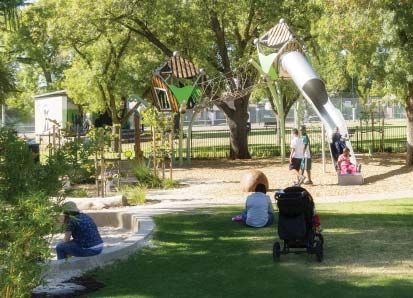
Open Space and Places for People Grant Guidelines
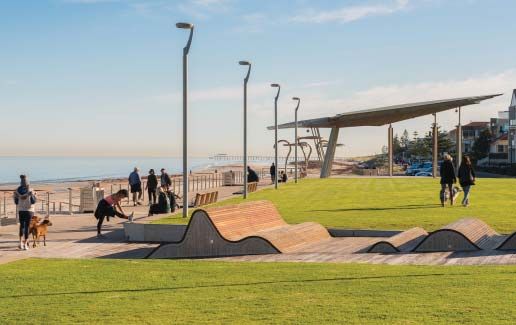
Planning and Development Fund
 The Planning and Development Fund (the Fund) operates under the Development Act 1993 (and will continue
 operating under the Planning, Development and Infrastructure Act 2016). The Fund provides the means for open
 space and public realm investment across South Australia.

 Money paid into the Fund is derived from cash payments in lieu of open space for development involving the
 division of land into less than 20 allotments and for strata and community titles. This money is spent in line
 with Section 81 of the Act and is administered by the Department of Planning, Transport and Infrastructure.

 The Fund allows the Government to adopt a State-wide approach to strategically implement open space and
 public realm projects in an objective manner. Along with allowing the Minister for Planning to acquire, manage
 and develop land for open space; the Fund provides grant funding opportunities for local government by financing
 two grant programs (Open Space and Places for People).

 In the last 10 years, over $190 million has been provided to approximately 500 open space and public realm
 projects across South Australia.

 Purpose of the Open Space and Places for People Programs
 The purpose of the grant programs is to support the development and improvement of quality public open
 space and to revitalise public spaces that are important to the social, cultural and economic life of their
 communities or region.

 The objectives of the Open Space Program are to:
     •   Assist in the conservation, enhancement and enjoyment of natural and cultural regional open spaces
         to help communities better utilise existing green spaces.
     •   Promote unstructured recreation opportunities compatible with the surrounding environment.

 The objectives of the Places for People Program are to:
     •   Increase the useability and function of the public realm through innovative and creative design
         outcomes.
     •   Create or revitalise public spaces that are important to the social, cultural and economic life of their
         communities.

 Applications can only be made by local government or from organisations representing out of council areas.
 Councils may submit multiple applications per funding round for both Open Space and Places for People
 projects.

 The objectives of the grant programs are achieved by supporting projects which meet the following
 assessment criteria:
     •   Relevance to State and local government strategic plans
     •   Strategic significance of location (i.e. areas experiencing urban infill, open space networks, supports
         tourism and public spaces in regional South Australia)
     •   Conservation and recreation value and/or revitalisation of public spaces through innovative design
         processes
     •   Potential for physical, social and economic transformation of the community
     •   Accessibility and connectivity of the project
     •   Level of financial support from council and other partners

#10762226                                                                                                           1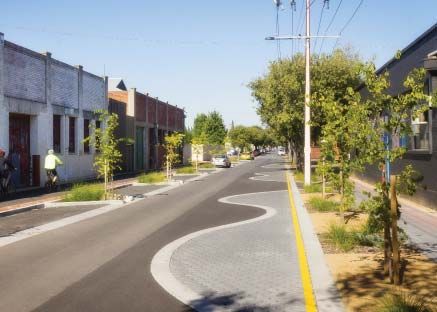
Eligibility criteria
 Councils should ensure projects meet the following eligibility criteria prior to submitting an application:
     •   Applications can only be made by local government or from organisations representing out of council
         areas.
     •   Projects should have at least a 50% funding contribution from council (see Page 7 for more details).
     •   Projects must be undertaken on public land with free public access (no fee or charge levied to use
         the space, or ongoing exclusive use by particular groups).
     •   Projects must be able to be completed within 18 months of grant funding approval.
     •   Projects should be able to commence within two months of grant funding approval.
     •   Council must have met all acquittal conditions for previous funding.
     •   Funding is only available for new works; retrospective funding is not available for anything
         undertaken prior to grant funding approval.

 Ineligible projects
 The following types of projects are ineligible, please do not include these in your application:
     •   Commercial operations and buildings.
     •   Road works including routine upgrading of footpaths, kerbs and car parks.
     •   Council administration and project management costs associated with delivery of the project.
     •   Public art pieces as a singular project (may be included as part of an overall project design).
     •   Projects that require the public to pay a fee to access the site.
     •   Organised sporting facilities.
     •   Projects which are considered to be part of council’s usual ongoing maintenance and management of
         a site (including ongoing reserve management, asset maintenance or replacement of existing
         infrastructure).
     •   Projects which commence prior to grant funding approval (including any initial project work, studies,
         planning or land purchases).

#10762226                                                                                                        2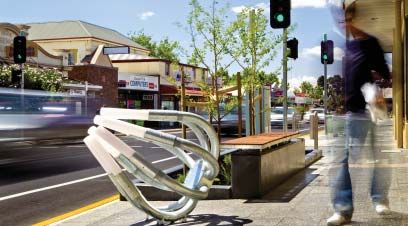
Grant program overview
 Under the Open Space and Places for People grant programs councils may apply for funding for the following
 types of projects:
     •   Development;
     •   Planning and urban design; and
     •   Land purchase (Open Space only)

 Councils will need to nominate which type of project they are seeking funding for. Applications seeking
 funding for both design and development projects will be accepted.

 For development projects which are for the upgrade, extension or replacement of existing infrastructure;
 applications will need to demonstrate how the project provides significant increase in benefit than is currently
 existing (i.e. improved economic or social benefits).

 Open Space projects
 Development for the enhancement of open space, including:
     •   Linear parks
     •   Regional parks
     •   Coastal reserves
     •   Regional play spaces
     •   Trails and strategic open space linkages

 Planning and urban design to guide future development of regional open space across a council area or
 region, including:
     •   Open space and cycling/walking strategies
     •   Master plans, concept plans and detailed designs

 Strategic land purchase to acquire land for public open space. Please note:
     •   Grant funding will only be provided towards the market value of the land, any payment above market
         value will be fully funded by council.
     •   Funding will not be provided towards legal costs, transfer fees, stamp duty or compensation arising
         from compulsory acquisition of land by council.

 Places for People projects
 Development for the revitalisation of nodes in key spaces, including:
     •   Foreshore, riverfront
     •   Civic plazas, town squares and main street precincts

 Planning and urban design for places of strategic importance or the enhancement of key public realm
 precincts including:

     •   Public realm strategies and urban design frameworks
     •   Master plans, concept plans and detailed designs

#10762226                                                                                                       3
Assessment Criteria
 All projects will be assessed against their strategic alignment and how well they address all relevant objectives.

 Strategic alignment
 Projects should be identified through a strategic process. Councils will need to demonstrate the relevance
 of the project including how it aligns to both State and local strategic plans.

 The South Australian Planning Strategy

 The Open Space and Places for People Programs align to the targets, policies and actions of the Planning
 Strategy for South Australia. Applications for funding should demonstrate a direct link to one or more of the
 priorities of the Planning Strategy, this may include:
     •   Provide diverse areas of quality open space in neighbourhoods (especially in higher density areas) to
         encourage active lifestyles and support access to nature within our urban environment by providing:
            o   a range of quality open space and recreation facilities;
            o   walking and cycling facilities, giving consideration to the different needs of people in the
                community; and
            o   a range of unstructured recreational facilities and activities for young people.
     •   Integrate and protect landscapes, green spaces and biodiversity assets through excellence in the
         design of the public realm and public open space.
     •   Improve access to quality public realm and public open space at strategic locations by supporting
         strong linkages between all parts of towns particularly between urban renewal areas, residential
         areas, town centres, sporting and recreational facilities and open space.
     •   Create greenways in transit corridors, along major watercourse linear parks, the coast and other
         strategic locations to provide walking and cycling linkages.
     •   Investigate opportunities to increase the amount and/or quality of public open space provision in
         areas of low open space provision and areas of increasing population growth.

 Local government strategies

 In addition to aligning with State strategic priorities, councils will need to demonstrate how their project aligns
 with their own local planning strategies. Relevant council strategic plans may include:
     •   Open space or public realm strategies
     •   Urban design frameworks, master plans etc.

 Project location

 Councils will need to demonstrate the significance of the project location. Priority will be placed on projects
 which directly address any of the following areas:
     •   Provide and enhance public space in areas experiencing a high level of urban infill or in areas of low
         open space provision
     •   Implementation of metropolitan wide open space networks to create multi-functional open space
         corridors
     •   Support increased tourism and public space in regional South Australia to provide a range of social
         and environmental benefits and encourage private investment.

#10762226                                                                                                          4
General objectives
 In addition to demonstrating strategic alignment, the following objectives and assessment criteria are
 considered essential for projects to meet the outcomes of the grant programs.

 Please note the Open Space and Places for People Programs have additional objectives and criteria to
 which applications will be assessed.

 Objective 1 – Support the safety and wellbeing of the community
    •   Demonstrate how the community life, social interaction and vitality of an area will be enhanced:
            o   How does the project respond to community issues?
            o   How will the project encourage investment and stimulate the local economy? – Consider the
                role of ‘place making’ and building stronger communities.
    •   Improve safety of public open space or the public realm:
            o   How are the principles of Crime Prevention Through Environmental Design (CPTED)
                integrated into the design, planning or development of the project?
            o   Does the project consider day and night use options and take into account vandalism issues?

 Objective 2 – Improve accessibility
    •   Increase useability and function for a wide cross section of the community:
            o   How does the project consider convenience of the location, accessibility and movement (to
                and around the project) to allow for a diversity of users?
    •   Take into account the needs of mobility impaired users, the elderly and children:
            o   Who is the expected user group and does the project provide disability access (where
                possible)?

 Objective 3 – Improve open space and neighbourhood connectivity
    •   Role of the project and its connection to the broader open space network or surrounds:
            o   Does the project provide connections to other paths, trails, streetscapes etc. or consider the
                movement of people through the public realm?
    •   Provide safe connections between communities and land uses to support and encourage wider use
        of the public open space and surrounds:
            o   How does the project improve connections to destinations? – Consider the use of
                interpretive/way finding signage.

 Objective 4 – Community support and consultation
    •   Demonstrate a strong level of community support and empower communities to work in partnership
        to create civic pride and social responsibility in the project:
            o   What type of consultation has been/will be undertaken with the local community and how are
                local businesses involved? – Letters of support are not required.

#10762226                                                                                                        5
Open Space objectives
OS Objective 1 – Promote conservation, enhancement and enjoyment
• Assist in the preservation, enhancement, biodiversity and enjoyment of features of natural beauty,
conservation significance or cultural value:
o How does the project respond to the existing landscape character and contribute to the
improvement of urban biodiversity? – Where possible consider the use local native vegetation
in landscaping.
o Are Water Sensitive Urban Design (WSUD) principles integrated into the design, planning or
development of the project?
o Does the project incorporate elements of education and interpretation that the community can
relate to (i.e. provides information of local history, native flora and fauna etc.)?
o Does the project consider ongoing maintenance and whole-of-life costing (in particular capital
works projects)?
OS Objective 2 – Promote unstructured recreation
• Unstructured recreation should be compatible with the surrounding environment to promote health
and wellbeing and deliver a range of physical environments for a diversity of uses:
o How does the project provide pleasant and functional quality open space to improve the use of
existing green spaces?
o How does the design and appearance of the project deliver a space that offers a range of
activities and opportunities to enable more effective use of regionally significant open space?
Places for People objectives
P4P Objective 1 – Increase the useability and function of the public realm
• Delivers revitalisation of shared spaces and the public realm to maximise and increase the quality of
public spaces.
o How does the project create an attractive pedestrian environment which is flexible, adaptable
and multi-functional to allow for a range of alternative uses and encourage use?
o How does the project create a high quality environment through design?
o How does the project mitigate the urban heat island effect?
P4P Objective 2 – Innovative and creative design processes and outcomes
• Unique, well-designed and sustainable public spaces:
o How does the project use materials and designs that reinforce the meaning of a place and
create unique and beautifully designed public spaces? – Consider ‘artistic’ creativity in its
design through the use of public art, landscape themes and the design of street furniture, or
innovative practices.
o How does the project support sustainable environmental outcomes?
o Are Water Sensitive Urban Design (WSUD) principles integrated into the design, planning or
development of the project?
o Does the project consider ongoing maintenance and whole-of-life costing (in particular capital
works projects)?
• Does the project include a collaborative approach to design and development (i.e. embrace all
professionals in the process)?
#10762226 6Grant funding and co-contributions
Grant funding availability
The Open Space and Places for People grant programs are both funded through the Planning and
Development Fund. There is no minimum or maximum grant funding amount. In addition, councils may
submit multiple applications. However, councils should consider their ability to match requested funding for
all projects.
Please note, while an application may meet the assessment criteria, a grant is not guaranteed and
successful applicants may not receive funding to the full amount requested.
Council contribution
Councils co-funding contribution can consist of co-contributions from community groups and in-kind works.
Co-funding demonstrates your commitment to the project and can show evidence of community support. If
councils contribution includes in-kind works this will need to be identified within the project budget
breakdown.
External funding and joint partnerships
Councils should investigate and embrace other external funding opportunities and seek partner
organisations with objectives matching those of the project.
Projects should not be solely reliant on Open Space or Places for People grant funding and councils are
encouraged to seek other sources of funding to supplement funding for their project including:
• Other State and Commonwealth Government grant funding programs.
• Joint funding with other councils to achieve regional priorities.
Project target table
A target table of activities/project outcomes contributing towards the project cost must be provided as an
attachment to the application form (examples are provided on the following page).
A high level breakdown of the costs associated with the project will be sufficient. For development projects,
where a cost estimate has been completed by a quantity surveyor, you may wish to include this as an
additional attachment. A target table is not required for land purchase projects.
Please note when providing a target table:
• These figures should not include GST.
• Funding is not provided towards council administration costs and project management costs.
Please do not allocate grant funding towards these costs.
• In-kind funding can be provided. Please provide a monetary amount for in-kind work and indicate
these amounts in the project target table.
• Project target table should not include works or activities that have already been undertaken.
• Project cost over-runs are the financial responsibility of the council
#10762226 7Development Development Planning and development Urban Design
#10762226
Project Target Table – examples
8Application process
• Discuss any proposed project with a grant funding coordinator. This can be done via phone and is
encouraged to ensure that all applications are consistent with the objectives of the Open Space and
Places for People grant programs.
• Where appropriate a grant funding coordinator will arrange a site visit to view the site and discuss the
proposal in further detail.
• Once the scope, detail and eligibility of your proposal has been determined, complete the online
application form. Ensure all relevant sections are completed with all required supporting material and
documentation included.
Supporting material may include:
• Development project:
o Location map
o Photos of existing site conditions
o Previous strategic work (i.e. master plan, concept plan, detailed design)
o Project target table (and/or a cost estimate by a quantity surveyor, if applicable)
• Planning and urban design project:
o Location map
o Photos of existing site conditions
o Previous strategic work (i.e. urban design framework, open space or public realm strategy)
o Project brief
o Project target table
• Land purchase:
o Location map
o Photos of existing site conditions
o Current market valuation (by a Certified Practising Valuer)
o Legal description of property and copy of current Certificate of Title
Lodgment of applications
Applications for the 2018-19 financial year close at 3pm Friday 8 February 2019. Applications and
supporting documents must be received prior to the closing date.
Open Space and Places for People grants are now managed online through the SmartyGrants platform.
Please login to access the application form and view the status of your grant application.
Successful councils will be notified in writing which projects will be funded.
Assessment process
The Open Space and Places for People grant programs are highly competitive; applicants must not assume
they will be successful. All applications will be assessed by the Department of Planning, Transport and
Infrastructure according to the assessment criteria and will be presented to the Minister for Planning for the
final funding decision. Please note a funding decision may not be made until June 2019.
Assessment will take into consideration previous grant performance and the status of any current projects.
Assessment of the project may involve an inspection of the project site with council staff and the grant
coordinators.
#10762226 9Grant conditions and responsibilities
• In order to accept and receive the grant funding offer, councils are required to enter into a formal
Funding Agreement with the Minister for Planning – a sample copy of the Funding Agreement can be
obtained from the Department of Planning, Transport and Infrastructure on request.
• The project must be carried out as described in the application
• Any variance of project scope, budget or grant requirement is at the discretion of the Minister.
• Where a council project manager changes or a project cannot meet the agreed timeframe for
completion, a funding coordinator from the Department of Planning, Transport and Infrastructure must
be contacted.
• Successful applicants must acknowledge the grant contribution through the Planning and
Development Fund in any publications or publicity regarding the project.
• Projects must be able to be completed within 18 months of grant funding approval.
Reporting and monitoring
Reporting on project progress and achievement of milestones will be required on an ongoing basis until the
project is completed.
After completion of the project and within 30 business days of the end of the specified funding period, councils
must submit a Final Report that includes suitable evidence of project completion such as:
• Summary of expenditure
• Photographs of completed project (if applicable)
• Completed concept plan, documentation etc. (if applicable)
Any unspent grant funding must be repaid in accordance with the details of the Funding Agreement.
Please note that the contact details of council’s project manager can be changed at any time by sending an e-
mail to DPTI.PublicSpaceGrants@sa.gov.au along with the relevant submission reference number and new
project manager contact details (i.e. name, phone number and e-mail address).
Department contact details
To discuss your proposal, or for further information, please contact a grant funding coordinator at the
Department of Planning, Transport and Infrastructure:
Mei-Lin Schwarz Matt Lang
Tel: 7109 7179 Tel: 7109 7090
Email: DPTI.PublicSpaceGrants@sa.gov.au
#10762226 10You can also read


