Outside the Bible sample - Ancient Jewish Writings Related to Scripture
←
→
Page content transcription
If your browser does not render page correctly, please read the page content below
s a mp l e
                                                  Uncorrected page proof

Outside the Bible

                                                                           u n c o r r e c t e d pa g e p r o o f | © 2012 by the Board of Regents of the University of Nebraska | NOT FOR RESALE OR REDISTRIBUTION
               Ancient Jewish Writings Related to Scripture

Edited by Louis H. Feldman, James L. Kugel, and Lawrence H. Schiffman
Outside the Bible
                          Ancient Jewish Writings Related to Scripture
Edited by Louis H. Feldman, James L. Kugel, and Lawrence H. Schiffman

Outside the Bible gives to the English-speaking world the sacred library of
ancient Israel. For the first time in a Jewish context, the vast collection of
the extra-biblical texts that comprise ancient Israel’s excluded scriptures
are available to scholar and general reader alike. From the Dead Sea Scrolls
to the Septuagint, Apocrypha, Pseudepigrapha, Josephus, and Philo, this
anthology brings together the texts that transformed Jews and Christians
at the turn of the first millennium.
   Outside the Bible looks at these extraordinary writings in a unique way:
as they relate to each other and illuminate the Hebrew Bible itself. We dis-
cover that ancient Judaism began the process of commenting on and wres-
tling with its sacred scripture even before the canon of holy books was
itself completed. We now know that we cannot fully understand what is in
the Bible without also appreciating what was excluded from it; the view
of the outside informs the view of the inside. Thanks to the wonders of
archeological discovery and the diligence of modern scholars, the array of
excluded Jewish scriptures of the Second Temple period of late antiquity
have come into focus.
   This collection of 154 original text translations, introductions, and
detailed commentaries connect backward to the Hebrew Bible and biblical
institutions, laterally to other writings from the Second Temple period and
their historical setting, and forward to the religious legacy of Rabbinic
Judaism and Early Christianity. In so doing, the anthology makes signifi-
cant contributions to our knowledge and understanding of the Second
Temple period, providing new insights into the history, literature, philos-
ophy, and artistic achievements of Jewish and Christian cultures, out of
which grew the Western humanistic tradition.
   The 3-volume collection includes a general introduction and opening
essays and new and revised translations, with introductions, detailed com-
mentaries, suggestions for further reading and source notes that together
place each text within its historical and cultural context, as well as a time-
line, lists of books of the Bible and Second Temple literature, and a general
subject index.

See back cover for special pre-publication order information.

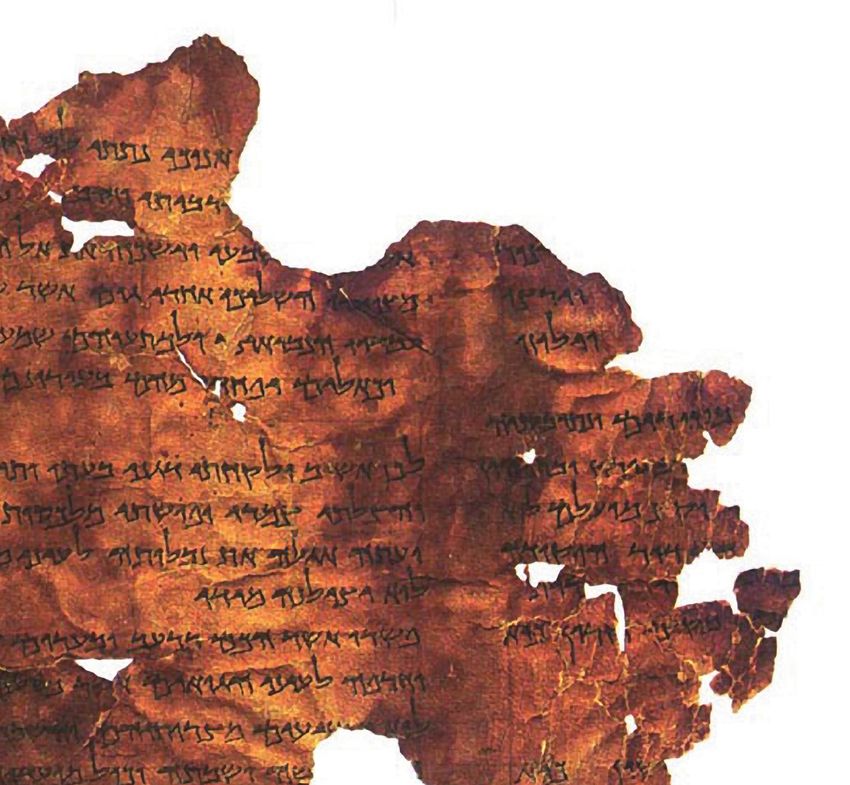
cover: Pesher Hoshe`a, 4Q166 (4QpHosa), Parchment. Copied late first century B.C.E.
Courtesy of the Israel Antiquities Authority
Outside the Bible u n c o r r e c t e d pa g e p r o o f | © 2012 by the Board of Regents of the University of Nebraska | NOT FOR RESALE OR REDISTRIBUTION
u n c o r r e c t e d pa g e p r o o f | © 2012 by the Board of Regents of the University of Nebraska | NOT FOR RESALE OR REDISTRIBUTION

                   Univer sit y of Nebr a ska Pr e ss · Lincoln
Outside the Bible
Ancient Jewish Writings Related to Scripture
u n c o r r e c t e d pa g e p r o o f | © 2012 by the Board of Regents of the University of Nebraska | NOT FOR RESALE OR REDISTRIBUTION
Edited by Louis H. Feldman, James L. Kugel, and Lawrence H. Schiffman
The Je wish Publication So ciet y · Phil a delphi aAbout the Editors
Louis H. Feldman is Wouk Family Professor of Classics and Literature Emeri-
tus at Yeshiva University, where he has taught since 1955. A leading scholar of
ancient Judaism and Hellenistic culture, Dr. Feldman’s many publications in-
clude Josephus and Modern Scholarship; Jew and Gentile in the Ancient World;
and Josephus’s Interpretation of the Bible. He is associate editor of Classical Week-
u n c o r r e c t e d pa g e p r o o f | © 2012 by the Board of Regents of the University of Nebraska | NOT FOR RESALE OR REDISTRIBUTION
ly, managing editor of Classical World, and former editor for Hellenistic Litera-
ture for the Encyclopedia Judaica.
James L. Kugel is Meiser Professor of Bible and director of the Institute for the
History of the Jewish Bible at Bar Ilan University in Tel Aviv, and former Starr
Professor of Hebrew Literature at Harvard University. Dr. Kugel specializes in
the Hebrew Bible, the history of biblical exegesis, and ancient Judaism. His
many books include How to Read the Bible; The God of Old; and The Bible as It
Was. Dr. Kugel is co-founder and associate editor of Prooftexts: A Journal of
Jewish Literary History, a member of the editorial board of Jewish Studies Quar-
terly, and editor in chief of Jewish Studies: An Internet Journal.
Lawrence H. Schiffman is vice-provost of undergraduate education at Yeshiva
University and professor of Jewish Studies, and former Edelman Professor of
Hebrew and Judaic Studies and chairman of the Department of Hebrew and
Judaic Studies at New York University. Dr. Schiffman is a leading scholar of
ancient Judaism with special interest in study of the Dead Sea Scrolls. In addi-
tion to his many publications, he is co-editor of the Oxford Encyclopedia of the
Dead Sea Scrolls and editor of The Dead Sea Scrolls: Fifty Years After Their Dis-
covery. He is a member of the board of directors of the Dead Sea Scrolls Foun-
dation and of the directors’ council of the World Union of Jewish Studies, and
a co-editor of the journal Dead Sea Discoveries.
vContents
Acknowledgments
Introduction
Lists of Abbreviations
The Septuagint Emanuel Tov
The Apocrypha and Pseudepigrapha James L. Kugel
The Writings of Philo David T. Runia
u n c o r r e c t e d pa g e p r o o f | © 2012 by the Board of Regents of the University of Nebraska | NOT FOR RESALE OR REDISTRIBUTION
Josephus and His Writings Louis H. Feldman
The Dead Sea Scrolls Lawrence H. Schiffman
The Bible Translated into Greek (the Septuagint)
Introduction to the Septuagint Selections Emanuel Tov
Genesis 11 Emanuel Tov
Deuteronomy 32 Emanuel Tov
Joshua 20 Emanuel Tov
Joshua 24 Emanuel Tov
Selections from Samuel to Kings
(1–4 Kingdoms LXX) Emanuel Tov
1 Samuel 1
1 Samuel 2
1 Kings 2
1 Kings 5
1 Kings 11
Selections from Jeremiah Emanuel Tov
Jeremiah 10
Jeremiah 27
Jeremiah 43
Proverbs 1 Emanuel Tov
Selections from Esther Emanuel Tov
Esther 1
Esther 3
Esther 8
Additions to Esther Michael V. Fox
Job 34 Emanuel Tov
Daniel 4 Emanuel Tov
Additions to Daniel Matthias Henze
The Story of Susanna and the Elders
The Prayer of Azariah and
The Song of the Three Jews
Bel and the Dragon
1 Esdras Sara Japhet
viSustained Biblical Commentaries: Retellings and Pesharim
Commentary on Genesis A George J. Brooke
Ages of Creation Andrew Gross
The Book of Giants Loren Theo Stuckenbruck
The Genesis Apocryphon Matthew J. Morgenstern
and Michael Segal
u n c o r r e c t e d pa g e p r o o f | © 2012 by the Board of Regents of the University of Nebraska | NOT FOR RESALE OR REDISTRIBUTION
Admonition Based on the Flood Alex P. Jassen
Jubilees James L. Kugel
Pseudo-Jubilees James L. Kugel
Pseudo-Philo, Book of Biblical Antiquities Howard Jacobson
Pseudo-Daniel John J. Collins
Son of God John J. Collins
Pesher Nahum Shani Berrin Tzoref
Pesher Habakkuk Bilhah Nitzan
Greek Jewish Interpreters
Demetrius the Chronographer Lorenzo DiTommaso
Artapanus Erich S. Gruen
Eupolemus Gregory E. Sterling
Pseudo-Eupolemus Gregory E. Sterling
Pseudo-Hecataeus Bezalel Bar-Kochva
Theodotus, “On the Jews” Howard Jacobson
Philo, the Epic Poet Harold W. Attridge
Ezekiel, the Tragedian Howard Jacobson
Pseudo-Orpheus David Aune
Pseudo-Philo, On Samson and On Jonah Aram Topchyan and
Gohar Muradyan
The Biblical Interpretations of Philo
Questions and Answers on Genesis and Exodus Aram Topchyan and
Gohar Muradyan
On the Creation of the World David T. Runia
Allegorical Interpretation Maren R. Niehoff
On the Life of Abraham Ellen Birnbaum
On the Migration of Abraham Peder Borgen
On the Life of Moses Maren R. Niehoff
On the Decalogue Sarah J.K. Pearce
On the Special Laws Naomi G. Cohen
viiThe Biblical Interpretations of Josephus’s Jewi s h A n t iqu i t i es
Preface to Jewish Antiquities Louis H. Feldman
Creation Louis H. Feldman
The Flood Louis H. Feldman
Abraham Journeys to Canaan and Egypt Louis H. Feldman
The Akedah Louis H. Feldman
Joseph and Potiphar’s Wife Louis H. Feldman
The Rape of Dinah Louis H. Feldman
Moses’s Campaign against the Ethiopians Louis H. Feldman
The Sending of the Spies Louis H. Feldman
u n c o r r e c t e d pa g e p r o o f | © 2012 by the Board of Regents of the University of Nebraska | NOT FOR RESALE OR REDISTRIBUTION
The Revolt of Korah Louis H. Feldman
The Story of Balaam Louis H. Feldman
The Death of Moses Louis H. Feldman
Mosaic Constitution David Goldenberg
The Altar across the Jordan Silvia Castelli
The Levite and His Wife Silvia Castelli
Deborah Silvia Castelli
Jephthah’s Vow Silvia Castelli
Birth of Samson Silvia Castelli
Marriage of Ruth and Boaz Silvia Castelli
Massacre at Nob Silvia Castelli
God Rejects Saul Silvia Castelli
The Witch of Endor Silvia Castelli
The Death of Saul Silvia Castelli
David Kills Goliath Silvia Castelli
David and Bathsheba Silvia Castelli
Death of Absalom Silvia Castelli
Solomon’s Wisdom
(The Case of the Two Harlots) Pablo Torijano
Phoenician Writings on Solomon’s Wisdom Pablo Torijano
Solomon’s Magical Powers Pablo Torijano
Solomon’s Prayer
(at the Temple’s Dedication) Pablo Torijano
The Return from Exile Paul Spilsbury
Esther Paul Spilsbury
Interpretive Texts Centering on Biblical Figures
Life of Adam and Eve Gary Anderson
1 Enoch Miriam Brand
Apocalypse of Abraham Alexander Kulik
Melchizedek Joseph L. Angel
Aramaic Levi Document Michael E. Stone and
Esther Eshel
Visions of Amram Andrew Gross
viiiSong of Miriam Sidnie White Crawford
Apocryphon of Joshua Miriam Zangi and
Hanan Eshel
The Vision of Samuel Andrew Gross
Pseudo-Ezekiel Devorah Dimant
The Apocryphon of Ezekiel Benjamin G. Wright III
Letter of Jeremiah Steven Fraade
1 Baruch Steven Fraade
2 Baruch Adam H. Becker
3 Baruch Yivgeny Zingerman
u n c o r r e c t e d pa g e p r o o f | © 2012 by the Board of Regents of the University of Nebraska | NOT FOR RESALE OR REDISTRIBUTION
Prayer of Nabonidus John J. Collins
4 Ezra Karina Martin Hogan
Testaments
Testament of Abraham Annette Yoshiko Reed
Testaments of the Twelve Patriarchs James L. Kugel
Testament of Moses Kenneth Atkinson
Testament of Kohath Andrew Gross
Testament of Job Harold W. Attridge
Prayers and Psalms
Psalms of Solomon Kenneth Atkinson
Self-Glorification Hymn Esther Eshel
Daily Prayers Daniel K. Falk
Festival Prayers Daniel K. Falk
Words of the Luminaries Daniel K. Falk
Angelic Liturgy Michael Swartz
Thanksgiving Hymns (Hodayot) Angela Kim Harkins
Apocryphal Psalms Eileen Schuller
Non-Canonical Psalms Eileen Schuller
Greek Synagogal Prayers Pieter W. van der Horst
Prayer of Enoch James Kugel
Prayer of Manasseh Esther G. Chazon
Prayer for King Jonathan Hanan Eshel
Wisdom Writings
Wisdom of Solomon Peter Enns
Wisdom of Ben Sira Benjamin Wright
Pseudo-Phocylides, Sentences Pieter W. van der Horst
4 Maccabees David A. deSilva
Wisdom Literature from the
Qumran Library Armin Lange
Wiles of the Wicked Woman Armin Lange
Words of the Maskil to All Sons of Dawn Armin Lange
Book of Mysteries Armin Lange
ixBeatitudes Armin Lange
Instruction-like Composition B Armin Lange
Musar LeMevin Armin Lange
Philosophical Treatises of Philo
On the Virtues Walter Wilson
On the Contemplative Life David M. Hay and
David T. Runia
The Hypothetica Gregory E. Sterling
Stories Set in Biblical and Early Post-Biblical Times
u n c o r r e c t e d pa g e p r o o f | © 2012 by the Board of Regents of the University of Nebraska | NOT FOR RESALE OR REDISTRIBUTION
Joseph and Aseneth Patricia Ahearne-Kroll
Judith Betsy Halpern-Amaru
Tobit George Nickelsburg
4 Baruch Pablo Torijano
3 Maccabees Sara Raup Johnson
Historical Writings Pertaining to Post-Biblical Times
The Letter of Aristeas Erich S. Gruen
1 Maccabees Lawrence H. Schiffman
2 Maccabees Daniel R. Schwartz
Jewish War: Excursus on Jewish Groups Albert I. Baumgarten
Against Apion John M. Barclay
Sectarian Texts: Community, Law, and the End of Days
Rule of the Community Alex Jassen
Damascus Document Joseph L. Angel
Temple Scroll Lawrence H. Schiffman
Some Precepts of the Torah Lawrence H. Schiffman
War Scroll Jean Duhaime
New Jerusalem Joseph L. Angel
Notes
Books of the Bible: The Traditional Hebrew (Masoretic Text) and the Septuagint
List of Second Temple Literature
Writings of Philo
Writings of Josephus
Apocrypha
Pseudepigrapha
Primary Documents of the Dead Sea Scrolls
Contributors
General Subject Index
xExcerpts from Jubilees
The book of Jubilees is arguably the most important and influential of all the James L. Kugel
books written by Jews between the Bible and the Mishnah. It is a treasure-
house of ancient biblical interpretation, composed by an unknown author who
thought deeply about the Torah and Judaism. Jubilees was prized by the Dead
u n c o r r e c t e d pa g e p r o o f | © 2012 by the Board of Regents of the University of Nebraska | NOT FOR RESALE OR REDISTRIBUTION
Sea Scrolls community; parts of no fewer than fifteen manuscripts of this book
were hidden by them in the caves at Qumran.1 But its influence certainly went
beyond this group. Although Rabbinic Judaism rejected Jubilees, in part be-
cause of some of its doctrines, many of its interpretive traditions are paralleled
in the Talmud and various midrashic collections, as well as in the early poetry
of the synagogue, suggesting possible influence. It also played an important
role in early Christian communities, and it is thanks to them that the book has
been preserved in its entirety to this day.
Jubilees is a retelling of much of the book of Genesis and the first part of the
book of Exodus. It claims to have been communicated to Moses on Mount
Sinai by God’s chief angel, the “angel of the Presence.” Moses had gone up the
mountain to receive the Torah; before he could go down again, Jubilees relates,
God ordered His angel to dictate another book to Moses, a dated history of
events “according to the Torah and the Testimony” (see below). That other book
was the book of Jubilees itself. Although it retells much of the material in Gen-
esis and Exodus, its retelling is accompanied by all sorts of new information de-
signed to answer questions about the biblical narrative: How did humanity con-
tinue to develop if Adam and Eve bore only sons? When did God decide that
Israel was to be His special people? Where was Abraham when God first spoke
to him? When and why was the tribe of Levi chosen for the priesthood in Israel?
In addition to answering such questions, Jubilees’s author sought to communi-
cate an overall message of hope and encouragement to the Jews of his day and
to urge them to follow stricter standards of morality and religious observance.
Significance
Apart from answering specific questions about the stories of Genesis and Exo-
dus, the author of Jubilees had a definite ideological message he wished to com-
municate through his book. He lived in a time when, no doubt, many of his
countrymen were despairing of Israel’s future. It may well be, they reasoned,
that at one point God adopted Israel as His own people, just as ancient Scrip-
1ture related (Exod. 19:5–6). But that day was long gone. In the meantime, He
had allowed the Northern Kingdom of Israel to fall to the Assyrians, never to
rise again; the Southern Kingdom, Judah, had similarly fallen to the Babylo-
nians, and much of its citizenry had been exiled to Babylon. Unlike the North-
erners, the Judean exiles had subsequently been allowed to return to their
homeland, but they were nonetheless a subject people, ruled over first by Per-
sia, then Ptolemaic Egypt, then Seleucid Syria. Was this a fitting arrangement
for a people allegedly chosen by the Lord of heaven and earth? Instead, it seemed
a clear indication that God’s adoption of Israel as his own people, an act inau-
u n c o r r e c t e d pa g e p r o o f | © 2012 by the Board of Regents of the University of Nebraska | NOT FOR RESALE OR REDISTRIBUTION
gurated with the great covenant at Mount Sinai, must no longer be in force.
Israel had violated that covenant—first the Northerners, then the Southerners
—and had therefore been rejected; the apparently unending years of foreign
domination were a clear indication that Israel had fallen into God’s disfavor.
It was principally to combat such a negative reading of history that the origi-
nal author of Jubilees wrote his book. He began by having Moses hear the “pre-
diction” of all the evils that would lead to up to the Babylonian exile (Jub. 1:9–
14). This was to be a terrible catastrophe, but it would ultimately be followed
by Israel’s repentance and restoration (Jub. 1:15) as well as the explicit reversal
of the Pentateuch’s own curses which were said to be Israel’s lot if it violated the
Sinai covenant (Jub. 1:16). In other words, Jubilees’s author readily accepted that
Israel had sinned and been punished—but this hardly spelled the end of its his-
toric bond with its God. Israel was and always had been God’s own people.
Suggested Reading
Doran, R. “The Non-Dating of Jubilees: Jub. 34–38; 23:14–32 in Narrative Context.” jsjs 20
(1989): 1–11.
Kister, M. “Observations on Aspects of Exegesis, Tradition, and Theology in Midrash,
Pseudepigrapha, and Other Jewish Writings.” In Tracing the Threads: Studies in the Vitality
of Jewish Pseudepigrapha, edited by J. C. Reeves, 1–34. sbl ejl 6. Atlanta: Scholars, 1994.
Kugel, J. Traditions of the Bible. Cambridge: Harvard University Press, 1998.
—. A Walk through Jubilees. Leiden: Brill, 2012.
Najman, H. Seconding Sinai: The Development of Mosaic Discourse in Second Temple Judaism.
sjsot 77. Leiden: Brill, 2003.
Segal, M. The Book of Jubilees: Rewritten Bible, Redaction, Ideology, and Theology. Leiden: Brill,
2007.
VanderKam, J. C. Textual and Historical Studies in the Book of Jubilees. hsm 14. Missoula mt:
Scholars Press, 1977.
—. The Book of Jubilees: A Critical Text. csco 510; Scriptores Aethiopici 87. Louvain: E.
Peeters, 1989.
—. The Book of Jubilees (Translation). csco 511; Scriptores Aethiopici 88. Louvain: E.
Peeters, 1989.
Werman, C. “The Rules of Consuming and Covering the Blood in Priestly and Rabbinic Law.”
RevQ 16 (1995): 621–36.
2 Excerpts from JubileesSource of Translation The translation, with minor alterations, is from O. S. Wintermute, “Jubilees
[2nd century bc]: A New Translation and Introduction,” in The Old Testament Pseudepigrapha,
ed. James H. Charlesworth (New York: Doubleday, 1983–85), 2:35–142.
Translation
The Book of Division
This is The Account of the Division of Days of the Law and the Testimony for Annual Obser-
u n c o r r e c t e d pa g e p r o o f | © 2012 by the Board of Regents of the University of Nebraska | NOT FOR RESALE OR REDISTRIBUTION
vance according to their Weeks [of years] and their Jubilees throughout all the Years of the
World just as the Lord told it to Moses on Mount Sinai when he went up to receive the
tablets of the Law and the commandment by the word of the Lord, as he said to him,
“Come up to the top of the mountain.”
Commentary
of the Divisions of Days This phrase (better: of the divisions of the times; Heb. mahlekot
ha-ittim) in Jubilees means a chronological history, that is, a history in which important
events are accompanied by the date of their occurrence in anno mundi (i.e., calculated
from the time of the Creation).
of the Law and the Testimony That is, based on two sacred books, the Law (the Torah) and
the (book of) Testimony (the teudah). These are the two sacred texts whose contents
form the basis of this chronological history; see “Introduction” as well as below on verse 4.
for Annual Observance Better: “of the events of the years”; that is, it relates events dated by
the years in which they took place.
their Weeks [of years] and their Jubilees throughout all the Years of the World17 “Their weeks”
refers to the groupings of 7 years in which they took place and “their Jubilees” to groups
of 49 years, significant units. “Throughout all the years of the world” is better rendered
as “throughout all the days of yore.” To reword the title thus far: “This book is a chrono-
logical history, based on the Torah and the teudah, of certain events, dated by their years,
as well as by their ‘weeks’ and their jubilees, throughout all the days of yore.” The earliest
reference to the title of this book is found in the Damascus Document (col. 16:3–4) of the
Dead Sea Scrolls community, where it appears in shorter form: “The Book of the Divi-
sions of Times according to their Jubilees and in their ‘Weeks.’”
just as the Lord told it to Moses on Mount Sinai when he went up to receive the tablets of the
Law and the commandment “Law” refers to “Torah.”18 The operating fiction of Jubilees is
that God first gave Moses the Torah on Mount Sinai and then had the “angel of the Pres-
ence,” His chief angel, dictate the contents of Jubilees to Moses. For that reason, the phrase
“when he went up to receive the [stone] tablets [of] the Law and the commandment”
(taken from Exod. 24:1) is potentially significant; see below on 1:1.
by the word of the Lord This book was related to Moses on God’s orders.
The Book of Division 3Moses Is Summoned to the Mountain
1:1In the first year of the Exodus of the children of Israel from Egypt, in the third month
on the sixteenth day of that month, the Lord spoke to Moses, saying, “Come up to Me
on the mountain, and I shall give you two stone tablets of the Law and the command-
ment, which I have written, so that you may teach them.”
2And Moses went up to the mountain of the Lord. And the glory of the Lord dwelt
upon Mount Sinai, and a cloud overshadowed it for six days. 3And he called to Moses
on the seventh day from the midst of the cloud. And the appearance of the glory of the
u n c o r r e c t e d pa g e p r o o f | © 2012 by the Board of Regents of the University of Nebraska | NOT FOR RESALE OR REDISTRIBUTION
Lord was like fire burning on top of the mountain. 4And Moses was on the mountain
forty days and forty nights.
Moses Is Instructed to Write a Book
And the Lord revealed to him both what (was) in the beginning and what will occur
(in the future), the account of the division of all of the days of the Law and the testimony.
1:1. in the first year of the Exodus . . . in the third month on the sixteenth day The Ten Com-
mandments had already been proclaimed on the preceding day, the 15th;19 now God calls
to Moses alone to ascend the mountain to receive further instruction for 40 days and
nights (Exod. 24:12–18).
Come up to Me on the mountain This is God’s summons to Moses in Exod. 24:12; the rest
of this verse is cited in Jubilees’s next words: “and I shall give you two stone tablets of the
Law [i.e., the Torah] and the commandment[s], which I have written, so that you may
teach them.” As he did in the title sentence, the author again cites Exod. 24:12. But why
this verse in particular? While other biblical verses speak of God giving the Ten Com-
mandments to Moses (see Exod. 34:28; Deut. 4:13 and 10:4),20 the fact that Exod. 24:12
mentions “the stone tablets, the torah, and the commandment” seems to state clearly that
Moses was given many more commandments than those ten. In fact, this verse might be
interpreted as implying that Moses received a body of commandments even beyond those
contained in the Torah—such as the additional stipulations found in the book of Jubilees
itself. Exod. 24:12 was used for a similar purpose, but still more expansively, in B. Ber. 5a:
“The ‘tablets’ refers to the Ten Commandments, ‘the Torah’ to Scripture [i.e., to the
Pentateuch as a whole], ‘and the commandments’ to the Mishnah, ‘which I wrote’ to
the Prophets and the Writings, ‘to teach them’ to the gemara [i.e., oral teachings about
the Mishnah, Torah, and other topics]—this verse [thus] teaches that all of these were
given to Moses on Mount Sinai.”
1:2. for six days See Exod. 24:16.
1:4. And the Lord revealed to him both what [was] in the beginning That is, at the time of the
Creation (“in the beginning” here alludes to the first words of Gen. 1:1). God had to reveal
these things because no humans could know them on their own. And what will occur (in
the future) which humans also cannot know.
the account of the division of all the days of the Law and the testimony In other words, the
4 Excerpts from Jubilees5And he said, “Set your mind on every thing which I shall tell you on this mountain, and
write it in a book so that their descendants might see that I have not abandoned them on
account of all of the evil which they have done to instigate transgression of the covenant
which I am establishing between me and you today on Mount Sinai for their descendants.
6And thus it will be, when all of these things happen to them, that they will know that I
have been more righteous than they in all their judgments and deeds. And they will know
that I have truly been with them.
Moses Is Told How the People Will Forsake the Lord in the Land of Promise
u n c o r r e c t e d pa g e p r o o f | © 2012 by the Board of Regents of the University of Nebraska | NOT FOR RESALE OR REDISTRIBUTION
7“And you, write for yourself all of these words which I shall cause you to know today,
for I know their rebelliousness and their stubbornness before I cause them to enter the
chronological history contained in this book, which includes the things narrated both in
the Law (the Torah) and also in the testimony (the Teudah, the book of the Warning),
with each incident being assigned its proper date in years, starting from the creation of
the world.
1:5. Set your mind on every thing Deut. 32:46.
and write it in a book In Exod. 34:27 Moses is also commanded to “write these command-
ments,” but here Jubilees adds “in a book,” perhaps to stress that only books (like Jubi-
lees itself) can be relied on (as opposed to the oral traditions espoused by his halakhic
opponents).
so that their descendants might see that I have not abandoned them Lev. 26:44; this is the
author’s main purpose in writing Jubilees. He knew, of course, that long after the time of
Moses the Babylonians had conquered Judah and that thereafter the Jews had remained
a subject people until his own day. At the same time, he asserts, even in their sinfulness
God has not abandoned them “on account of all of the evil which they have done” (in the
sense of: despite all the evil). The point of Jubilees is that none of this came about because
God had abandoned Israel, but because the people had strayed from the covenant, that is,
because of all that the Israelites “have done to instigate transgression of the covenant.”21
1:6. I have been more righteous than they The Ethiopic text duplicates a Hebrew idiom (Gen.
38:26; Job 4:17; Ezek. 16:52) that means “I have been proven right,” sometimes in a court-
room setting, or more generally (as here), “I am right and they are wrong.” Such a divine
courtroom may in fact be implied by the next words: “in all their judgments [better: in all
their punishments, those meted out to Israel in the court of divine justice] and [all their]
deeds.” Jubilees then goes on to explain: If Israel has suffered, this does not mean that I
have abandoned them. Rather, “I have truly been with them” all the time—the connec-
tion between God and Israel began at Creation; continued throughout the patriarchal pe-
riod, long before God had given Israel any laws at Mount Sinai; and continues to this day.
1:7. for I know their rebelliousness Jubilees’s author tried to write in as “biblical” a Hebrew as
possible, often peppering his discourse with phrases cited from the Pentateuch and else-
where; this tendency is particularly pronounced in the opening chapter of the book, as
the author tries to establish for readers that it is really Moses who is writing. This verse is
The Book of Division 5land which I swore to their fathers, Abraham, Isaac, and Jacob, saying, ‘I will give to your
seed a land flowing with milk and honey.’ 8And they will eat and be satisfied, and they will
turn to strange gods, to those who cannot save them from any of their affliction. And this
testimony will be heard as testimony against them, 9for they will forget all of my com-
mandments, everything which I shall command them, and they will walk after the gen-
tiles and after their defilement and shame. And they will serve their gods, and they will
become a scandal for them and an affliction and a torment and a snare. 10And many will
be destroyed and seized and will fall into the hand of the enemy because they have for-
saken my ordinances and my commandments and the feasts of my covenant and my sab-
u n c o r r e c t e d pa g e p r o o f | © 2012 by the Board of Regents of the University of Nebraska | NOT FOR RESALE OR REDISTRIBUTION
baths and my sacred place, which I sanctified for myself among them, and my tabernacle
and my sanctuary, which I sanctified for myself in the midst of the land so that I might
set my name upon it and might dwell (there). 11And they will make for themselves high
thus a patchwork of different biblical phrases: “rebelliousness and . . . stubbornness” ap-
pear together in Deut. 31:27; “to your seed” is used frequently in Genesis;22 and “to your
seed” together with “a land flowing with milk and honey” are recurrent phrases in the
Pentateuch; see especially Deut. 31:20.
When they will eat and be satisfied Deut. 31:20; the citation continues into the next verse
(1:8) with the words: “they will turn to strange [better: foreign] gods,” likewise from Deut.
31:20.
1:8. And this testimony will be heard as testimony against them This verse is a (somewhat gar-
bled) echo of Deut. 31:21; its apparent meaning is that Jubilees will later serve as a witness,
testifying that the Israelites were duly warned in advance of what will happen. This is not
merely a play on the word teudah and its root he’id (testify), but it also refers to a cardinal
principle of post-exilic jurisprudence: no one is to be punished without prior warning.
Therefore, the author specifies that the words of warning dictated to Moses here—words
that are apparently based on what is written in the Torah and the book of the teudah—
will always be around to demonstrate that the people of Israel were indeed forewarned.
1:9. for they will forget all of my commandments Despite the warning of Deut. 8:11.
and they will walk after the gentiles, and after their defilement and shame23 “Defilement” is
better rendered as “their idols,” and “shame” as “their abominations” (Heb. to’evot, which
is synonymous with “idols”). The people’s moral impurity is, according to Jubilees’s author,
the reason for the Jews’ difficulties in his own time—despite God’s never having aban-
doned them. Moreover, they “will serve their gods”—the greatest of sins—”and [this] will
[ be . . . ] a snare,” apparently mokesh, the same word used in Exod. 23:33 and Deut. 7:16.
1:10. many will be destroyed and seized and will fall into the hand of the enemy That is, the
Babylonians. This is as specific as Jubilees’s author ever gets with regard to later history;
cf. chapter 23 below.
the feasts of my covenant This nonbiblical phrase may be alluding to the covenants God es-
tablished with Israel’s ancestors and which—according to Jubilees—were the basis for such
later festivals as Weeks and Booths.
6 Excerpts from Jubileesplaces and groves and carved idols. And each of them will worship his own (idol) so as
to go astray. And they will sacrifice their children to the demons and to every work of
the error of their heart.
The Murder of Prophets, the Captivity, and the Loss of the Cult
12“And I shall send to them witnesses so that I might witness to them, but they will not
hear. And they will even kill the witnesses. And they will persecute those who search out
the Law, and they will neglect everything and begin to do evil in my sight. 13And I shall
hide my face from them, and I shall give them over to the power of the nations to be cap-
u n c o r r e c t e d pa g e p r o o f | © 2012 by the Board of Regents of the University of Nebraska | NOT FOR RESALE OR REDISTRIBUTION
tive, and for plunder, and to be devoured. And I shall remove them from the midst of the
land, and I shall scatter them among the nations. 14And they will forget all of my laws
and all of my commandments and all of my judgments, and they will err concerning new
moons, sabbaths, festivals, jubilees, and ordinances.
Repentance and Restoration
15“And afterward they will turn to me from among the nations with all their heart and
with all their soul and with all their might. And I shall gather them from the midst of all
the nations. And they will seek me so that I might be found by them.
When they seek me with all their heart and with all their soul, I shall reveal to them an
1:11. high places and groves “Groves” refers to “sacred groves.” These are stereotypical sins
mentioned in Scripture (Deut. 16:21; 23:25); it seems unlikely that these were a real prob-
lem in Jubilees’ day. The same is true of child sacrifice “to the demons,” a practice (men-
tioned in Deut. 32:7) which had likely ceased in Israel long before the time of Jubilees.
1:12. I shall send to them witnesses . . . so that I might witness to them Better: “I shall send to
them prophets . . . so that I might warn them”; Heb. he’id means both to testify at a trial
and to warn. Deuteronomy and later biblical books, along with Jubilees, use this verb to
describe the prophet’s function of warning the people;24 “but they will not hear” (cf. 2
Chron. 24:19); and “they will even kill” the prophets (cf. Neh. 9:26).
1:13. I shall hide my face from them That is, ignore their pleas: Deut. 31:17, 18.
1:14. And they will forget all of my laws As a consequence they “will err concerning new
moons, sabbaths, festivals, jubilees, and ordinances.” That is, they will not use the prop-
er calendar endorsed by Jubilees, but will start the months at the appearance of the new
moon; this will cause them to celebrate festivals on the wrong day, and miscalculate the
start of jubilee year and the larger unit of time it represents. Even the Sabbath will be des-
ecrated because, although it is independent of the calendrical system, using the wrong
calendar will ultimately cause festivals to fall on the Sabbath when they should not, lead-
ing to its desecration.
1:15. And afterward, they will turn to me Better: “return to me,” from the Babylonian exile—
the punishment imposed because of the aforementioned violations.25
The Book of Division 7abundance of peace in righteousness. 16And with all my heart and with all my soul I shall
transplant them as a righteous plant. And they will be a blessing and not a curse. And
they will be the head and not the tail. 17And I shall build my sanctuary in their midst, and
I shall dwell with them. And I shall be their God and they will be my people truly and
rightly. 18And I shall not forsake them, and I shall not be alienated from them because I
am the Lord their God.”
Moses’s Prayer of Intercession
19And Moses fell upon his face, and he prayed and said, “O Lord, my God, do not abandon
u n c o r r e c t e d pa g e p r o o f | © 2012 by the Board of Regents of the University of Nebraska | NOT FOR RESALE OR REDISTRIBUTION
your people and your inheritance to walk in the error of their heart. And do not deliver
them into the hand of their enemy, the gentiles, lest they rule over them and cause them
to sin against you.
20“O Lord, let your mercy be lifted up upon your people, and create for them an up-
right spirit. And do not let the spirit of Beliar rule over them to accuse them before you
and ensnare them from every path of righteousness so that they might be destroyed from
before your face. 21But they are your people and your inheritance, whom you saved by
your great might from the hand of the Egyptians. Create a pure heart and a holy spirit for
them. And do not let them be ensnared by their sin henceforth and forever.”
1:16. righteous plant For this phrase, see 1 En. 10:16; 93:5, 10. Israel as a “plant” is a common
enough image in the Bible.26
they will be a blessing and not a curse. And they will be the head and not the tail “They” re-
fers to “Israel.” This is a conscious evocation of the Torah’s curses that will befall Israel if
it does not keep its part of the covenant: the enemy invader “will become the head and
you will be the tail” (Deut. 28:44). This will indeed happen, God tells Moses here, but
once Israel returns, physically and spiritually, He will restore Israel to its rightful place,
“the Lord will make you the head and not the tail” (Deut. 28:13).
1:19. Moses fell upon his face Because he was distressed at this prediction of disaster. He is
particularly disturbed at the thought that “the gentiles” will rule over Israel (in the au-
thor’s own time, the Greeks and their Hellenized followers), since they will further lead
Israel astray.
1:20. And do not let the spirit of Beliar A wicked angel, sometimes identified with Satan.
Wicked angels were, for the author of Jubilees along with other Jews of this period, a con-
stant source of danger; they could infiltrate people’s minds, leading them astray or even
driving them mad.
8 Excerpts from Jubileessample Notes
1. It is also cited in the Damascus Document (col. 16:3–4), and it was used extensively by
the authors of the ALD and the Genesis Apocryphon.
2. The translation, with minor alterations, is from O. S. Wintermute, “Jubilees [2nd cen-
tury bc]: A New Translation and Introduction,” in The Old Testament Pseudepigrapha,
ed. James H. Charlesworth (New York: Doubleday, 1983–85), 2:35–142.
3. This phrase, if understood as “all the days of the world,” cannot be referring to the
book of Jubilees, whose history stops with events in the book of Exodus. Rather, the
Hebrew original (apparently shenot olam) ought to be compared to Ps. 77:6: “My
thoughts turn to days of old, to years long past [shenot olamim],” or Deut. 32:7, “Re-
u n c o r r e c t e d pa g e p r o o f | © 2012 by the Board of Regents of the University of Nebraska | NOT FOR RESALE OR REDISTRIBUTION
member days of old [yemot olam], consider the years of ages past.”
4. VanderKam’s edition of the Eth text reads “as he related to Moses,” and this is ap-
parently a superior reading. But even “he related” is not quite right, since this is actu-
ally the third-person singular “impersonal”: see E. Kautzsch and A. E. Cowley, Gese-
nius’ Hebrew Grammar (Oxford: Clarendon, 1910), 144.2 (p. 459) and should thus be
translated as a passive verb, “it was related.” The title thus far has not mentioned any
personal “he” who could be the subject of this clause, neither God nor the angel of the
Presence.
5. This is the date of the Festival of First Fruits, and, quite apart from that, the 15th of any
month is a significant day; see below on 17:15–16, 18:17–19.
6. This led to the claim of certain “heretics” that Moses received only these Ten
Commandments from God. See on this J. Kugel, Traditions of the Bible (hereafter: Tra-
ditions) (Cambridge: Harvard University Press, 1998), 638–40, 677–79.
7. The Ethiopic text has the causative form, “to lead astray” (rendered here as “to insti-
gate transgression of the covenant”), but this is apparently an error; see VdK, 2n.
8. Gen. 12:7, 15:18, 24:7, 26:4, etc.
9. This reconstruction is presented by Eibert Tigchelaar, “A Cave 4 Fragment of
Divrei Mosheh (4QDM) and the Text of 1Q22 1:7–10 and Jubilees 1:9, 14,” DSD 12
(2005): 302–11.
10. See Japhet, Ideology of Book of Chronicles, 183–91.
11. On the text of 1:16: VdK, 4n. Here is another pastiche of biblical verses: Deut. 6:5, 30:3;
2 Chron. 15:2; Jer. 29:13; Ps. 119:165; Isa. 61:3; Jer. 33:15; Deut. 30:1, 28:13; Gen. 17:8; Lev.
26:44; Exod. 29:46.
12. E.g., Hosea. 10:1; Ps. 80:9; Isa. 5:7, 60:21, 61:3; Jer. 23:5, 33:15; also 1 En. 10:3, 84:6; and
Jub. 16:26, 21:24, 36:6.
The Book of Division 9Opportunities for Support
This 3-volume collection is destined to become a classic. JPS and the University
of Nebraska Press extend heartfelt thanks to those who have already contributed
toward bringing Outside the Bible to life. Opportunities for support still exist—
it’s not too late to attach your name to this scholarly milestone! Your gift will
make this important scholarship available for generations to come.
u n c o r r e c t e d pa g e p r o o f | © 2012 by the Board of Regents of the University of Nebraska | NOT FOR RESALE OR REDISTRIBUTION
J P S Donor Op p ortun itie s
JP S L egac y Buil der $ 36,0 0 0+
Entitles donor to an individual dedication page in one volume of Outside the Bible
JP S P ioneer $18,0 0 0 +
Entitles donor to a shared “Pioneer” dedication listing
JP S Patron $5,40 0+
Entitles donor to a shared “Patron” dedication listing
JP S Benefactor $3,6 0 0+
Entitles donor to a shared “Benefactor” dedication listing
JP S Fr iend $1,8 0 0+
Entitles donor to a shared “Friend” dedication listing
If you are interested in finding out more about supporting Outside the Bible,
please email:
—Rabbi Barry Schwartz, jps, at bschwartz@jps.org, or
—Donna Shear, unp, at dshear2@unl.edu
Checks should be made payable to:
JPS Fund
University of Nebraska Foundation
1010 Lincoln Mall
Lincoln ne 68508“Breathtaking in its scope and eminently satisfying in its execution, Outside
the Bible will prove to be an indispensable reference for every scholar of
the Hebrew Bible, Second Temple Judaism, the New Testament, and early
Christianity. With introductions to and translations of the mass of non-
canonical Jewish writings produced from the Exile up to the Mishnah,
by an eminent group of internationally renowned scholars, here we have
a resource that will meet scholarly needs for generations to come.”
—Ba rt D. Ehr ma n, James A. Gray Professor, Department of Religious
u n c o r r e c t e d pa g e p r o o f | © 2012 by the Board of Regents of the University of Nebraska | NOT FOR RESALE OR REDISTRIBUTION
Studies, University of North Carolina at Chapel Hill
“Outside the Bible is a well-conceived and magnificently executed answer to
the question of what Jews were reading in the centuries before and after the
Common Era. High quality English translations appear for each document,
along with sufficient material to place these documents within their original
contexts and to provide insight into their meaning. We are thus able, as it
were, to enter into arguments and expositions from antiquity, many of which
are virtually unknown within today’s Jewish communities and even within
academic circles. Such far-reaching scholarship may lead us not only to
rethink our past, but also to reconsider our present and future possibilities.”
—Leona r d G r eenspo on, Klutznick Chair in Jewish Civilization
and Professor of Classical and Near Eastern Studies and of Theology,
Creighton University
bibl e studie s / r el igiou s st udie s / j e w i sh st udie s
Publication: December 2013; available at sbl, November 23, 2013
isbn 978-0-8276-0933-4
3-volume set 1,406 pp. 8 x 10 inches
Cloth $275.00
For publicity information, contact: Marketing Department, mpress@unl.edu.
University of Nebraska Press
nebraskapress.unl.edu
The Jewish Publication Society
This booklet contains uncorrected sample pages from the forthcoming work.
d Excerpts from JubileesYou can also read


