OUTSTANDING TEACHING, LEARNING AND ASSESSMENT TECHNICAL SKILLS NATIONAL PROGRAMME - Final ...
←
→
Page content transcription
If your browser does not render page correctly, please read the page content below
OUTSTANDING TEACHING,
LEARNING AND
ASSESSMENT
TECHNICAL SKILLS
NATIONAL PROGRAMME
3. The NewVic Enterprise Programme 2017/18 - Final Summary
Created by: John Ruskin College
February 2018

Managed by                                                   In partnership with
THE NEWVIC ENTERPRISE PROGRAMME 2017-18
What is it and how does it work
An ambitious exciting enterprise programme created by Student Development in partnership with
Community Links, London Metropolitan University, Money A and E, Plaistow South Big Local and
NCS with the Challenge.
The aim is to challenge our learners and develop their transferable skills by engaging them in real time
live business opportunities and experience the realities of planning and launching their own enterprise.
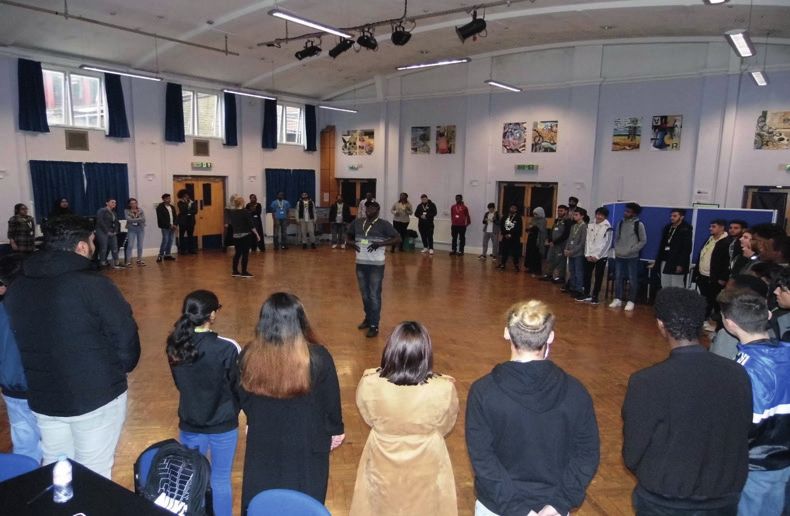
Students take part in a number of training opportunities, research trips, development workshops,
competitions and they also run their business at public markets. The programme is differentiated for
the different levels involved.
Examples of skills that are developed:
  - Business Planning/ Project Management
    (timelines, milestones, SMART objectives)
  - Market Research (target market, competitor
    analysis, research into industry, competitive
    advantage and USP)
  - Finance/ Budgeting (start-up costs, break even,
    planning an enterprise to a set budget)
  - Marketing and Promotion (marketing
    objectives, reaching a target audience,
    developing a marketing strategy)
  - Customer Service
  - Creativity, critical thinking, empathy, resilience, communication, leadership, self-awareness,
    team work and initiative)
The programme adds value to vocational subjects, supplements our learner’s development, allows
the opportunity for learners on different courses/levels to work together and is a niche delivery that
the college offers. Over the last two years our students and staff have received enterprise awards and
the programme has also been covered by the local press. Participation counts towards the national
Sixth Form Baccalaureate award.
Each enterprise will be given a start-up budget funded through the OTLA project to understand the
importance of managing budgets for developing products, marketing and paying for expenses.
Funding will also be available to carry out certificates for cosmetic safety assessments to ensure rules
and regulations are covered and will be managed by the Applied Science Department.

The Programme
The programme runs from September through to June, thus covering a whole academic year and
has been directed towards level 2 and below learners. The level 2 cohort is made up of learners who
have not reached their full potential at school by not attaining the entry requirements at GCSE for a
Level 3 programme, or have need additional time to complete the level of study. Most students will
be resitting GCSE maths and/or English and require a higher level of encouragement to achieve their
goals.
The programme has been developed by the Student Development Team in conjunction with the
Business Department and forms part of the NCFE L2 Business curriculum. The programme has
been growing every year and it has successfully developed relationships with local employers,
organisations and this year with universities.
The main focus of the programme is to prepare student with the skills and knowledge to research,
develop and realise products to sell at a market. The programme must include the following but can
easily be adapted to the curriculum delivery and resources that are available.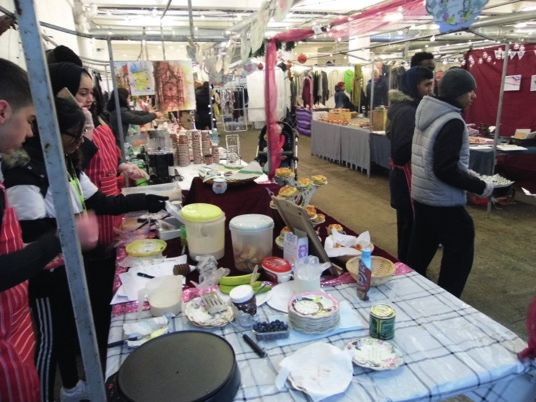
Stage 1 - set up

                                             Stage 2 - Skills and Knowledge

                                                                                                           Stage 3 - Delivery
                   • Set up programme                                         • Deliver skills and                              • Finalise products
                     timeline                                                   knowledge to engage                             • Certify products H&S
                   • Establish outcomes                                         learners
                                                                                                                                • Develop products and
                     (market stall dates)                                     • Opening conferences                               set price
                   • Decide subjects                                            (employers and HE)
                                                                                                                                • Boot camps,
                     and curriculum                                           • Workshops                                         hospitality
                     participation                                            • Market research                                 • Budgets
                   • Employers and                                            • Boot camps
                     organisations input                                                                                        • Market stall delivery
                                                                              • Student pitch ideas                             • Evaluate
                   • HE links
                                                                              • Develop products                                • Market stall Delivery
                   • Enterprise conference                                      samples
                                                                              • Test samples
                                                                              • Source ingredients

  NewVIC Programme
  The programme below can be adapted top the resources and subject areas within any institution,
  suggested cross-department collaborations are highlighted within the detail.
        Activity / Location                                                              Detail
        Set up                                                                           Lessons take place as normal with students
        • Roles and responsibilities agreed                                              fulfilling the assessment requirements. SOW
                                                                                         to include preparation for and delivery of a
        • Courses, units and subjects agreed                                             live project related to the Business Enterprise
        • Students receive welcome pack                                                  Programme.
        • Research trips arranged                                                        Introduce Digital skills online packages
                                                                                         to complement delivery and encourage
        • Employers deliver introduction talks
                                                                                         independent flipped learning (skills to succeed
        • Online employability skills packages                                           or digital careers)
        Research                                                                         Programme
        • Business Enterprise Conference                                                 • Introduction to the programme (NewVIc)
        • Trip Museum of Brands                                                          • Inspirational Key note speakers(London Met)
        • Market research trip – Spitalfields Market,                                    • Developing presentation skills (London Met)
          Boxpark Shoreditch and Croydon                                                 • How to communicate with the public in
                                                                                           business (PYM)
                                                                                         • Budget and Plan your own community event
                                                                                           (The Challenge)
                                                                                         Activity
                                                                                         • Time tunnel – workshop
                                                                                         Activity
                                                                                         • complete workbook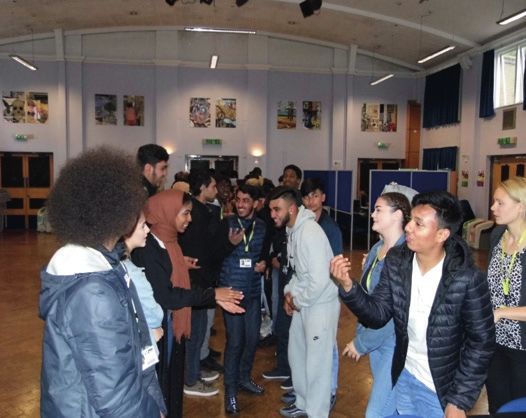
Ideas                                         Classroom activities with support from
• Develop ideas                               employers, to invite investor to pitch ideas and
                                              award most successful in terms of product and
• Agree on products                           presentation
• Pitch presentations                         Possible links to other curriculum areas
• Budgeting                                   • Business – pitches and budgeting
• Branding                                    • Art and design, Creative Media – packaging
                                                and branding
                                              • Performing arts – presentation skills
                                              • Applied Science, Health and Social Care,
                                                Engineering – products
Products                                      Clock making at London Met
• Product workshops                           • Design and develop handmade clocks using
• Develop samples                               laser cutter machinery

• Gather feedback                             Food testing at Shooters Hill college

• Source materials and ingredients            • L2 Food and Hygiene Certificate

• Risks assess and apply for products to be   • Marketing and customer service
  safe to sell.                               • Dish development
                                              • Taste testing
                                              • Product presentation
                                              Soap making – Science labs NewVic
                                              Technicians and students
                                              • Health and safety
                                              • Natural ingredient testing
                                              • Experiment with scent and colour
                                              • Soap modelling
                                              Possible links to other curriculum areas
                                              • Craft products – Arts
                                              • Health food item – Health and Social Care
                                              • Key rings, Stationery items – Engineering
                                              • Calendars, Christmas/birthday cards –
                                                Foundation Learning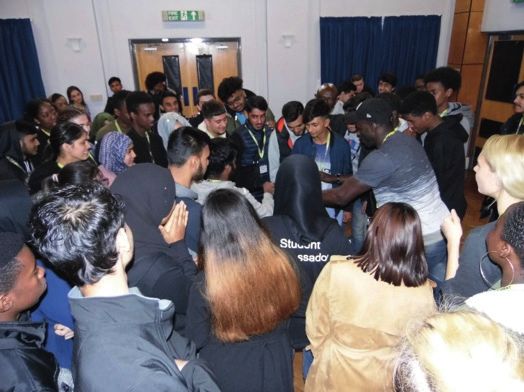
Preparation for sale                              Each team will be allocated a budget in funds
• Boot camp                                       for their enterprise products/stall design.

• Market Stall Boot Camp                          Event supported by Plaistow Youth Market and
                                                  London Met
• Dragons Den
                                                  • Preparation of market stall business
• Gather feedback, reflect and review
                                                  • Product and orders confirmation
                                                  • Pitching the business idea
                                                  They will be trained and will prepare for running
                                                  an enterprise at either an East End market,
                                                  Plaistow Youth Market, London Met Uni Fair,
                                                  College Open Day or an activity at the college.
                                                  Possible links to other curriculum areas
                                                  • Business – pitches and budgeting
                                                  • Performing arts – presentation skills
                                                  Activity
• London Metropolitan University Big Idea         Students encouraged to create imaginative
  Challenge - Enterprise Event at NewVIc.         and useful business ideas (separate from their
                                                  curriculum business ideas)
                                                  Only one/two teams will be chosen for the
                                                  London finals. London Met Ambassadors will
                                                  run a preparation workshop with each class
Entrepreneurs                                     Activity
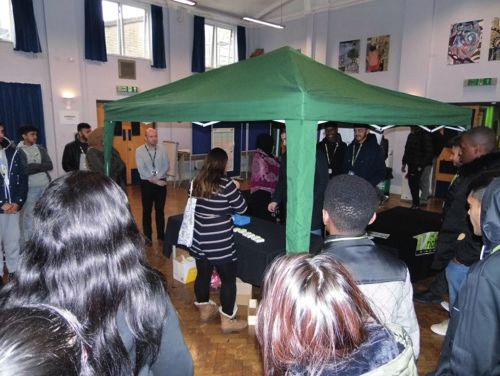
• Market Stall Delivery – Plaistow Youth Market   Set up the stall, present good, handle money,
  at NewVIc                                       communication with customers, gather
• Market Stall Delivery – London Met Christmas    feedback, support others, clear and clean area.
  Fair                                            Selected students groups will run their business
• Market Stall Delivery - Spitalfields Market     on a market stall at a local community market.
                                                  (Christmas Market)
• Market Stall Delivery – College open days
                                                  Possible links to other curriculum areas
                                                  • Business – accounting, managing people and
                                                    resources
                                                  • Performing arts – presentation skills
                                                  • Arts – stall decoration and visual presentation
                                                  • Travel and Tourism – Hospitality
Celebrating achievement                           Activity
Business Enterprise Awards Ceremony               Students that have demonstrated excellent
                                                  commitment/leadership/initiative will be invited
                                                  to celebrate achievements and receive a
                                                  certificate and prize from London Met university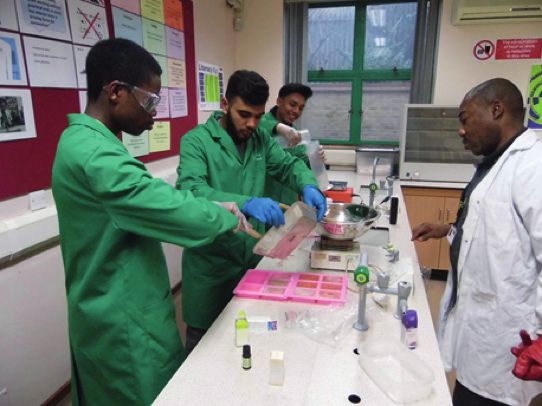
Curriculum and links to employability skills and professional practices
The programme has been integrated within the curriculum
delivery of the L2 NCFE Business course, Entry Level provision
and supported by the L3 Extended Diploma in Applied Science.
The L2 Business students decided to concentrate of three areas
Food and Beverages, Cosmetics, Arts and Crafts. The focus for
the pilot was to expose students to the other curriculum areas
and subjects to ensure that they understand all the steps that an
entrepreneur will take through the production of a product.
Health and Science was the focus and students developed
ideas that included health drinks and foods, sustainability and
natural ingredients. As part of the partnership we had the ability
to collaborate with Shooter Hill College so students could test
the food products and also complete the L2 Health and Hygiene
certificate this has enabled students to gain an additional
qualification, with skills and knowledge to sell food professionally
and also gain valuable skills in hospitality a subject area that isn’t
available at the NewVIc.
NewVIc is extremely well resourced within the science and are well equipt with Chemistry, Biology
and Physic Laboratories. The business students were supported by the Applied Science students in
developing a range of soaps made from natural ingredients. The students prepared the soaps and
sent samples to Cosmetic Product Safety Reports. The products have been assessed and can be
legally sold.
The curriculum links can easily be expanded to other areas, in 18-19 we are hoping to align
timetables to create common enterprise sessions for Creative Arts and Health and Social Care.
Impact on Teaching and Learning
                                                The teaching team have developed new ways into
                                                delivering the vocational curriculum through a carer
                                                focussed approach to engage students. The increase of
                                                activities that form part of the curriculum delivery outside
                                                of the classroom environment this has included Market
                                                Research trips to Boxpark and Museum of Brands,
                                                lessons developing products in Shooters Hill catering
                                                department and Science Laboratories, lessons conducted
                                                actually selling products on market stalls in college,
                                                London Met and Spitalfields Market. The teachers have
                                                also introduced digital technologies to support student’s
                                                knowledge of modern forms of communication. Sharing
                                                good practice and enabling the teaching team to be
                                                more explorative and take risks have deemed as being
                                                outstanding practice for a fully immersed VOCATIONAL
                                                student experience.

Teachers quote
I deliver more digitally focussed sessions by taking
advantage of mobile application and online web tools.
These methods have supported my learners to develop
on the required digitals skills in order to progress with their
projects. Tools such as Remind, Kahoot, GoFormative,
Padlet and even Polleverywhere are some methods
that have helped me to assess and deliver topics to my
learners. This also helped to engage learners and very
essential to developing interpersonal skills for the current
industry.

Teacher quote
“I use a variety of teaching techniques from written,
sounds and to visual activities. This has helped me to
target the variety of learning styles. This also has helped
my level 2 learners to have the opportunity to develop on
both communication / written skills”.
Teacher quote
“I have taken learners on trips and invited guest speakers
(employers). This has helped my learners to get insight
of how businesses function and particularly product
development and marketing”.
Teacher quote
“With the digital activities, in class collaborative activities,
external trips, external guest speakers - has helped
learners to improve on current skills and gain new
knowledge and skills to impart during project work and
assessments”.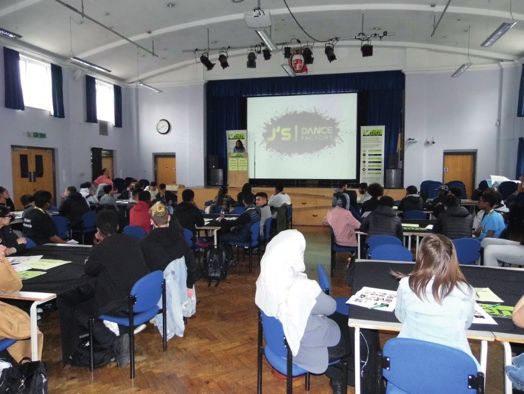
Student participation
What Departments are involved?
The programme will be cross curricular and be delivered
to Business Vocational Level 2 (3 classes), the entire Level
1 cohort (4 classes) and Entry Level 2 (1 class). 1 group of
Applied Science students approximately 10-15 students.
Approximately 130-150 students will be engaged in
the programme that begins during the Autumn Term.
Breakdown of classes and staff below:
1 x Project Lead
2 x Project support

Business Voc:
3 x teachers
  • 3 classes – Level 2 (approx. 25 students per class)
  • NCFE Unit 07: Contribute to running a project
  • NCFE Unit 09: Manage and improve own performance in a business environment
Business Enterprise project: Running a market stall business (selling a product).

Applied Science:
1 x technician
1 class – L3 (approximately 10-15 students)
To support students in the development of making soap and organising cosmetic safety assessment.

Entry Level:
2 x teachers
1 class - Entry Level 2 (approx. 12 students)
Business Enterprise project: Running a market stall business (selling a product).

Level 1:
4 x teachers Staff
4 classes – Level 1 (approx. 15-17 students per class)
Business Enterprise project: Running a market stall business (selling a product).
Below is a summary of student activities that been attended throughout the pilot that is
currently still in progress.
 Activity                                                      Deliveries           Unique numbers
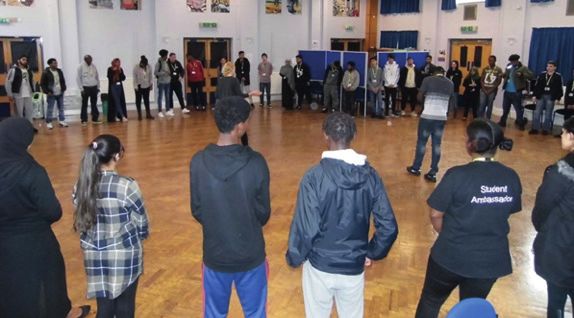
 Business Enterprise - Market Stall Training                   2                    82
 Business Enterprise Conference                                2                    101
 Business Enterprise Soap Making Workshop                      1                    4
 Museum of Brands Trip                                         3                    50
 Business Enterprise Skills workshop                           1                    58
 Business Enterprise Clock Making Workshop                     1                    11
 Business Enterprise- Food, Hygiene & Preparation              1                    12
Student feedback
What elements of the Enterprise Project have you
enjoyed so far?
  • When we all came up with an idea of what are
    thought our product was going to be. Out of the 8
    ideas we came up to 3 ideas the final idea which was
    Oreo Marshmallow Brownies.
  • Everyone making their own products and trying out
    different ways of expanding on their idea, as well of
    choosing an idea we have agreed on.
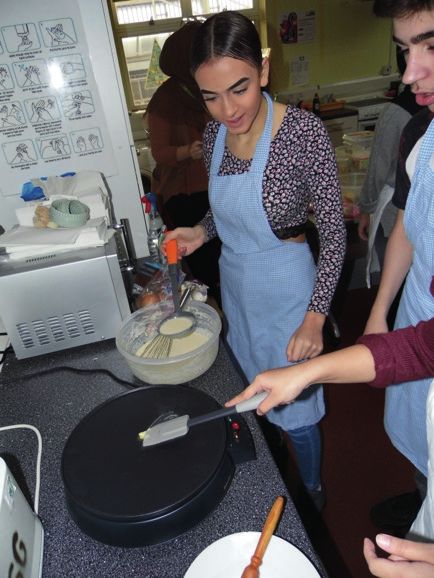
  • going to Shooters Hill and able to produce products
    such as pancakes, working as a team and coming
    up with different ideas.

What Enterprise skills and knowledge do you feel you have developed within your roles and
as a group?
  • the skills we have come across was communication as we had to discuss our ideas before our
    final idea. Team work skills were involved in the kitchen when we were making our product.
  • Adaptability to seeing new people as well as working together as a team.
  • Adapting and confidence, when we were all put in a group no one really spoke to each other
    and work wasn’t getting done.
  • Communication
  • Working with different people
  • Confidence
  • Team work
  • Resilience

What type of skills and knowledge will you use to sell your products?
  • Persuasive skills
  • Assertiveness
  • Respect
  • Customer service
  • clear and professional, basic manners
  • being kind and being able to control the way you speak to others so speaking formal not
    informal to sell the product.
  • Greeting the customers
  • Persuasive tactics
How has the project prepared you to become
entrepreneurs and to sell goods for the upcoming
market?
• We all have roles on which to do on the day of
the market stall. Shift timings we are aware and
confident with the roles we all have
• To work as a team and having the knowledge how to
sell, knowing their roles and how they can mutually
benefit the team.
• We have prepared everyone to understand what their
role is and everyone have understanding on how to
sell the product.
• We learnt how to cook in shooters hill
If you could change anything about the Enterprise
project what would it be?
• more group meetings
• making the product looks more appealing and more
presentable.
• making the product packaging more attractive to
audience
How will you measure the success?
• our confidence and how people work together to put
people you think will work well.
• By ensuring that the project goes smoothly as well as the roles of everyone
• because we are going to work at different markets and we know what is the best area to sell
out our product and will know how much profit we made for each product.
• count how much profit we earned from our market stallPartnership The programme is designed to develop enterprise skills and knowledge gained through partners, it is important to identify the relevant stakeholders at the set up stage to support the learning but also teacher’s knowledge of current trends and real-life industry standards. The program is made up of a broad selection of stakeholders that makes the project interesting and in line with the main elements to engage learners through exciting activities and events. Organisation Role in project Activity Plaistow Youth Market Market trader Youth Enterprise Worker manager and established market trader London metropolitan university Schools and Colleges Liaison Officers Lecturers Student ambassadors Money A+E J’s Dance Factory award-winning entrepreneur and business coach National Citizen Service with The Challenge Engagement Team Shooters Hill Hospitality and catering department Plaistow Youth Market - http://plaistowyouthmarket.co.uk/ Big Ideas Challenge - http://bigideachallenge.co/ National Citizen Service with The Challenge - http://www.ncsthechallenge.org/ London Metropolitan University (Accelerator)- http://accelerator-london.com/students/christmas- market/ J’ Dance Factory - http://www.jsdancefactory.co.uk/ Money A+E - https://www.moneyaande.co.uk
Report on the Tenth Plaistow Youth Market
Saturday 2nd December 2017
PYM is an initiative of Plaistow South Big Local with lead partner Newham Sixth Form College, and
also in partnership with The Mix (REIN), Plaistow Community Neighbourhood, Eden Plaistow, and
other local youth work agencies.
The aim of the event is to support and encourage young people and young adults’ enterprise,
providing opportunities to hone marketing and other business skills, and to raise the positive profile of
young people, of south Plaistow and PSBL.
                                                   The tenth PYM was planned by young people,
                                                   staff and volunteers representing the above
                                                   organisations between August and December
                                                   2017. The lead organisers were Lora Toma on
                                                   behalf of PSBL and Steven Kern on behalf of
                                                   NewVIC.
                                                   Not including staff time, the event was funded
                                                   by £828.07 of PSBL money, spent on publicity,
                                                   equipment, materials, food at planning meetings
                                                   and 7 bursaries to stallholders under 21 years of
                                                   age.
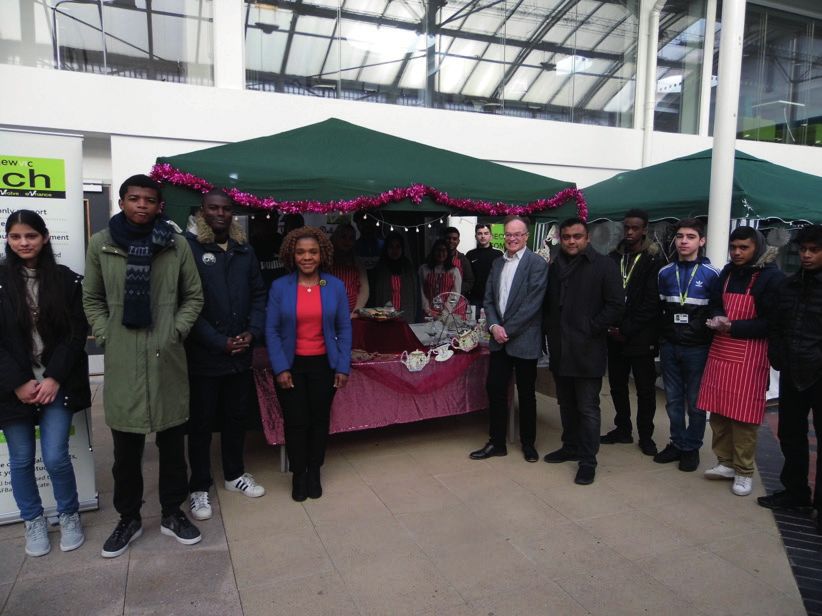
12 volunteers and 3 staff members from PSBL, 7 NewVIc students and staff, Eden Plaistow, REIN
and the local LBN Community Neighbourhood Officer supported the event variously in setting up the
market stalls, managing the day’s arrangements, and packing away afterwards.
Publicity to gain stallholders was released in
October and to attract customers in November,
including local banners/posters, flyers, social media,
e-mails and centre-page report in PSBL Newsletter.
18 stalls were allocated, of which 11 were led by
young people aged 14 to 30 years and 7 by people
over 30 – the average age of lead stallholders was
24. Around 60 young people and young adults were
involved in running stalls.
5 additional stalls were run by agencies supporting
young enterprise – The Mix, Money A+E, PSBL
and Newham Community Neighbourhood and
Cornerstone Cafe
6 lead stallholders were residents of the PSBL area or close fringes. 9 others were residents of Newham outside PSBL. The remainder came from outside Newham or their residency is unknown. Many of those not in the PSBL area had close connections to the area through working or studying here. Products sold: calendars, candles, soaps, scarves, gloves, jewellery, ornaments, bags and purses, handmade cards, pastries, cakes, jams, sweets, cupcakes, cookies, illustrated gifts, and a range of other goods. Approximately 350 people attended the event from 11am-2:30pm on Saturday 2nd December 2017, including 4 local Councillors. The total takings of the young people’s stalls topped £1000. The plan is to hold a review at the beginning of 2018. Youth Enterprise Worker
You can also read


