Parents' evening presentation
←
→
Page content transcription
If your browser does not render page correctly, please read the page content below

Parents’ evening
presentation

                   Security marking: PUBLIC
UCAS – an independent charity

UCAS does:
                                              UCAS doesn’t:
ü process applications
                                              ꭗ   suggest courses or universities
ü provide information, advice, and training   ꭗ   make decisions or offers
ü have a Fraud and Verification Team          ꭗ   advise on finance, immigration, or
ü take part in education sector engagement        visas for individuals
Course providers
                   350+ universities and colleges:
                       •   4 in Northern Ireland
                       •   15 in Wales
                       •   19 in Scotland
                       •   324 in England
                       •   one in mainland Europe
                                        at the time of checking

                   • 35,000+           courses available

                                                       Security marking: PUBLIC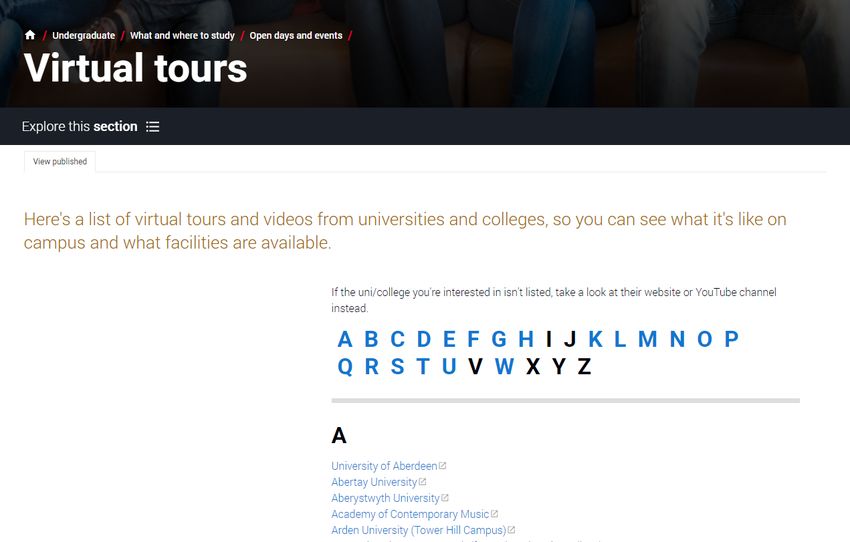
Choices available

  Higher         Apprenticeships/            Studying   Gap year   Getting a job
 education         traineeships               abroad

Understand the options available: ucas.com

Apprenticeship advice
UCAS has apprenticeship advice to help students make informed
decisions about their post-16 and post-18 opportunities.

Find out about:
    • the different types of apprenticeships
                                                                   25%
                                                                of applicants declining
    • how to find and apply for apprenticeships                 all offers in 2018 told
                                                                UCAS they had chosen
    • preparing for the application and interview process         an apprenticeship
                                                                        instead.

Go to ucas.com/understanding-apprenticeships.
Opportunities while studying:
             ü Chance to study a subject they are passionate about.
             ü Achieve a qualification that could lead to their chosen
               career.

Why higher
             ü Grow in confidence, make lifelong friends, and gain
               independence and important life skills that will widen
               their prospects.

education?   With a degree, they’ll have:
             ü the opportunity to follow their career path
             ü better job prospects, as many employers target
                 graduates
             ü higher earning potential
Choosing the right university for you
•   Style – from traditional, with a focus on subject-based courses and research, to modern universities with a
    greater focus on vocational courses.

•   Location – some are based in large cities, others in smaller towns. This can have a major influence on the
    environment and lifestyle on offer.
•   Size – larger universities can have more than 20,000 students, whereas some of the smallest have only a few
    thousand.

•   Culture and facilities – influenced by a range of factors, including the diversity of students who attend.

•   What graduates do – all universities collect destination statistics. It can be interesting to find out the types of
    jobs or further study students go on to.
•   Tuition fees – vary between course providers. Check if there are any scholarships/bursaries available.

•   Living costs – accommodation, transport, and food can vary enormously.

                                                                                                           Security marking: PUBLIC
Choosing the right course for you
•   What does the course cover?
•   Courses with the same title may be very different.
•   Look carefully at the core course content, and the range of optional studies/modules available.
•   Which modules are the most interesting and relevant to career aspirations?
•   See if the course or university/college offers any internship, placement, or study abroad
    opportunities.
•   How is the course taught – structured teaching, or more independent research? How many
    lectures are there, and how much group work will be done in seminars?
•   How is the course assessed?

                                                                                           Security marking: PUBLIC
Research resources
Research – it’s free!
                   • Register in the UCAS Hub to explore options – find and
                     favourite courses and search for virtual events - all in one
                     handy place!
                   • Learning from others – student videos and blogs.
                   • Career options – use the job profiles to explore different
                     career roles and pathways, or take the Buzz quiz to find out
                     more about individual strengths, and what roles may suit.
                   • The Career Finder tool is ideal for considering options after
                     education, including searching for apprenticeships.
The UCAS Hub
Security marking: PUBLIC/INTERNAL USE ONLY/CONFIDENTIAL
Virtual tour search

                      Security marking: PUBLIC
Apply key facts…
Simple application cost:
It’s an online application.
• one choice – £20
• two to five choices – £26
5 Maximum of five choices.
Equal consideration.
Choice restrictions:
• medicine, veterinary, ‘Invisibility’.
medicine/science, dentistry
(maximum of four)
• Oxford or CambridgeWhen to apply for 2021 entry
19 May UCAS Undergraduate Apply opens for 2021 entry.
8 September First day for receipt of completed applications.
15 October* Application deadline for courses in medicine, veterinary medicine/science,
and dentistry, and courses at Oxford or Cambridge.
15 January* Equal consideration application deadline.
25 February Extra opens.
30 June* Last date for applications before Clearing.
* All 18:00 (UK time)Completing the UCAS application
Sections to complete:
A student 1. Personal details Teacher/ Applications
registers at: 2. Additional information adviser adds are sent to
ucas.com/apply 3. Student finance their UCAS
4. Choices reference
5. Education
6. Employment
7. Personal statement
8. Referee details
Universities/
colleges make
their decisionsThe
The only section the applicant has full control over.
personal
Their only chance to market themselves individually.
statement One personal statement for all choices.
Maximum of 4,000 characters, or 47 lines.
Minimum of 1,000 characters.
No spelling/grammar check.
No formatting.Decisions
Universities and colleges will review the: They
And may
makealso
oneask for: decisions:
of three
personal statement Unconditional
Admissions testoffer
qualifications Interview
Conditional offer
reference Unsuccessful
Portfolio/auditionTracking applications
Track allows applicants to:
• follow the progress of their application 24/7
• see their choices and personal information
• view their offers
• reply to offers online
In Track, a student can hold up to two offers:
• firm – if they meet the conditions of the offer they will be placed
• insurance – if they are not placed with their firm choice, they
may be placed with their insurance choiceOther options
Extra (25 Feb – 4 Jul)
• Used all five choices and had no offers.
• Add Extra choices for consideration one at a time in Track.
Clearing (5 Jul – 19 Oct)
• Apply after 30 June, receive no offers, decline all offers, not met
conditions.
• Find vacancies from July, and add one choice in Track.
Adjustment (up to five days in Aug)
• Placed with firm choice, and did better than expected.
• Register in Track, then find another university or college. The new
university or college adjusts the record.What should your child be doing now?
• research
• go beyond the syllabus
• focus on this year’s studies
• completing the form
• completing their personal statementUse the parents/guardians’ section of the UCAS website at
Research
www.ucas.com/parents.
How can Sign up for updates from UCAS, and get everything you need
you
Sign up
to know about the application process direct to your inbox.
support Open days
Attend virtual events and open days – you may have a
them?
different perspective.
Make sure they read everything carefully that is sent to them
Be proactive
and don’t book family holidays at key times!Unifrog Sign in at: unifrog.org/sign-in
At the top you can see the
university subject the student is
writing their Personal
Statement for.

Students can choose to write
their Personal Statement in
three sections or combined all
in one.
UCAS Predicted Grades
In June, teachers gave UCAS predicted
grades – for internal purposes – to be
used by tutors to discuss best possible
choices with students.

After this week’s assessments, we will
review these and raise the grades where
appropriate.

We will always be aspirational although
we cannot be unrealistic.
Thank you

            Security marking: PUBLIC
You can also read


