Parents' evening presentation
←
→
Page content transcription
If your browser does not render page correctly, please read the page content below

Parents’ evening
presentation

UCAS – an independent charity
UCAS does: UCAS doesn’t:
ꭗ suggest courses or universities
process applications
provide information, advice, and training ꭗ make decisions or offers
have a Fraud and Verification Team
ꭗ advise on finance, immigration, or visas
take part in education sector engagement for individuals
Security marking: PUBLIC 19 July 2021 | 2
What is UCAS?
 350+ universities and colleges:
        •   4 in Northern Ireland
        •   15 in Wales
        •   18 in Scotland
        •   316 in England

 35,000+ courses available

Security marking: PUBLIC            19 July 2021 | 3
Choices available

 Higher                    Apprenticeships/   Studying   Gap year   Getting a job
education                    traineeships      abroad

Find out more: ucas.com

Security marking: PUBLIC                                                 19 July 2021 | 4
Apprenticeship advice
UCAS has apprenticeship advice to help students make
informed decisions about their post-16 and post-18
opportunities.
Find out about:                                                       Head to:
                                                                   ucas.com/apprenticeships
       •     the different types of apprenticeships
       •     how to find and apply for apprenticeships
       •     preparing for the application and interview process

Security marking: PUBLIC                                                           19 July 2021 | 5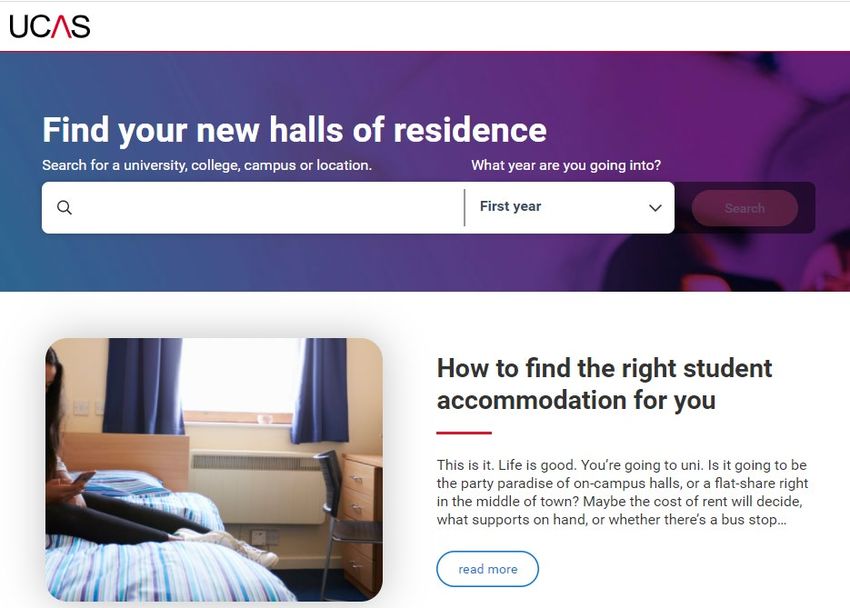
Why higher education?
Opportunities while studying:

 •       Chance to study a subject they are passionate about.

 •       Achieve a qualification that could lead to their chosen career.

 •       Grow in confidence, make lifelong friends, and gain independence and important life skills that will widen
         their prospects.

With a degree, they’ll have:
     •    the opportunity to follow their career path
     •    better job prospects, as many employers target graduates
     •    higher earning potential

Security marking: PUBLIC                                                                                    19 July 2021 | 6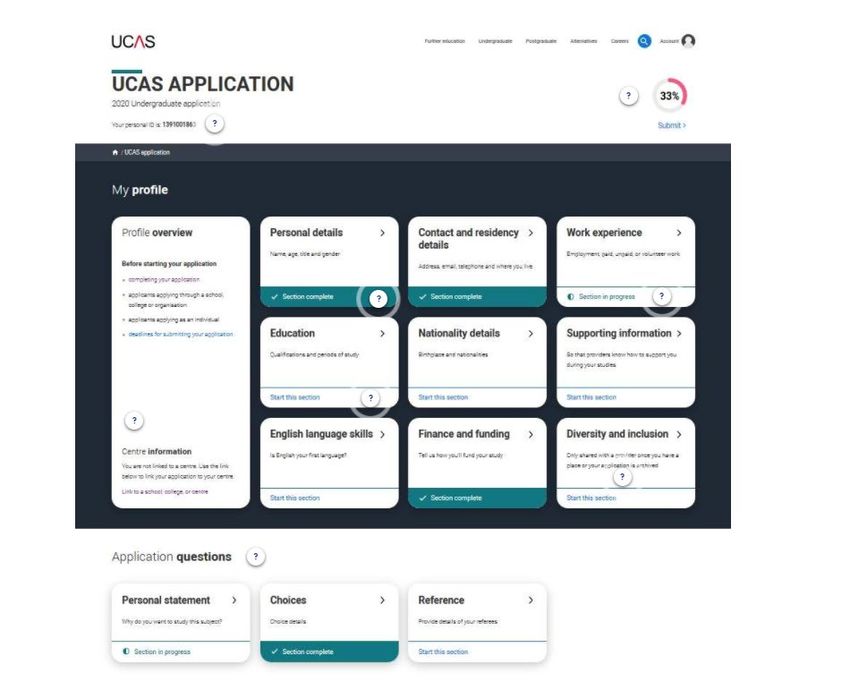
Choosing the right university
•      Style – from the traditional, with a focus on subject-based courses and research, to modern universities, with
       a greater focus on vocational courses.
•      Location – some are based in large cities, others in smaller towns - a major influence on the environment and
       lifestyle.
•      Size – larger universities can have more than 20,000 students, whereas some of the smallest have only a few
       thousand.
•      Culture and facilities – influenced by a range of factors, including the diversity of students who attend.
•      What graduates do – all universities collect destination statistics. It can be interesting to find out the types of
       jobs or further study students go on to.
•      Tuition fees – can vary between course providers. Check if there are any scholarships or bursaries available.
•      Living costs – accommodation, transport, and food can vary enormously.

    Security marking: PUBLIC                                                                               19 July 2021 | 7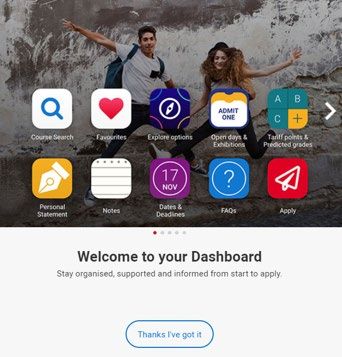
Choosing the right course
• What does the course cover?

• Courses with the same title may be very different.

• Look carefully at the core course content, and the range of optional studies/modules available.

• Which modules are the most interesting and relevant to career aspirations?

• See if the course or university/college offers any internship, placement, or study abroad opportunities.

• How is the course taught – structured teaching, or more independent research? How many lectures are there,
  and how much group work will be done in seminars?

• How is the course assessed?

Security marking: PUBLIC                                                                                19 July 2021 | 8
Research
resources
Starting research
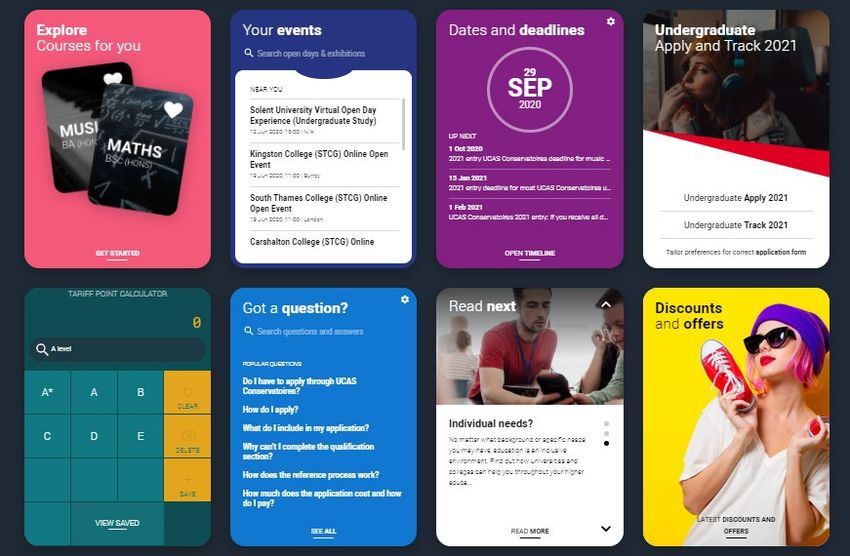
Students should register in UCAS Hub to:

•     explore careers, subjects, universities and apprenticeships

•     find and favourite over 35,000 courses

•     search for virtual tours and online events

•     turn predicted grades into Tariff points

•     speak to those in the know using Unibuddy

•     speak to career, higher education, and application
      specialists by attending the Hub lives.

•     explore job profiles to discover different career roles and
      pathways.

•     Start an application for 2022 entry (from May 2021)

Security marking: PUBLIC                                            19 July 2021 | 10
Organise everything in one place… Get organised: Tools to search, favourite, shortlist, reflect, diary, and build application. Define what’s important: Distance from home, teaching satisfaction, work experience options, job outcomes… Make it yours: Organise tools, remove the ones they don’t need, and tick off their to do list. It’s their space, and their future. Expanding horizons… …by pushing options they might not have considered. Security marking: PUBLIC 19 July 2021| 11
Free tools to help…
   Discovery Days - at UCAS/Discovery you can explore all kinds of
   possibilities. Talk to subject and admissions experts, discover
   apprenticeships, get advice on personal statements, applying through
   UCAS, and more. Get stuck in and open your mind to a world of
   opportunities.
   Join our UCAS Hub lives and Facebook lives -each live session is hosted
   by an expert panel to give you what you need to make an informed
   decision.
   Accommodation Search- accommodation is high on the list when
   considering where you want to study, but it’s not always easy to
   compare what’s on offer. Understand what options there are using
   our new Accomodation search.
When to apply for 2022 entry
                                               UCAS Application deadline for
                                               courses in medicine, veterinary
                                               medicine/science, and dentistry,
   UCAS Undergraduate Apply opens              and courses at Oxford or
   for 2022 entry.                             Cambridge.                               UCAS Extra opens.

                                  7 September                                26 January                              End of June

                 18 May                                 15 October                                February

                           First day UCAS can receive a             UCAS Equal consideration                Last date for applications before
                           completed application to process         application deadline.                   Clearing opens.

Security marking: PUBLIC                                                                                                       19 July 2021 | 13
Applying - key facts • Register with UCAS via the Hub • Use your username and password to apply online • Students can add up to 5 choices, unless they’re applying to study medicine, veterinary, medicine/science, dentistry – then it’s 4 choices • Students can’t apply to BOTH Oxford and Cambridge • Applying costs £22 for 1 choice, or £26.50 for 5 choices • Apply by the equal consideration date • Providers can’t see other choices when you apply
Registering
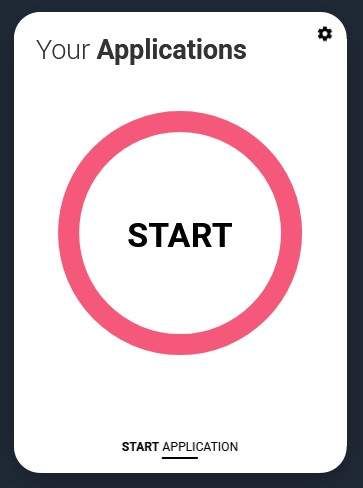
•   To start an application students need a UCAS
    Hub account.
•   Register for a UCAS Hub account at any time
•   From 18 May 2021 you’ll see a new ‘Your
    applications’ tile in your UCAS Hub
•   Click ‘Start application’ to get started…
Linking to a school
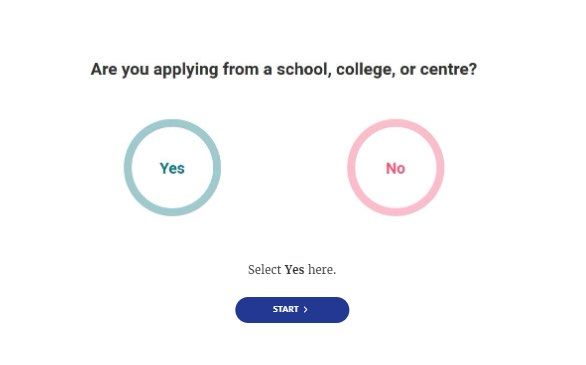
• If they’re applying with the help of a school,
college or centre they should enter their
‘buzzword’ to link their application.
• The buzzword is a unique code for our centre.
• By linking their application students are giving us
permission to view and track their application.
• It also means we can provide a reference.Making an application
Sections to be completed:
• Personal details
• Contact and residency details
• Work experience
• Education
• Nationality details
• English language skills
• Supporting information
• Personal statement
• Choices – make up to five
• References
• Finance and funding
• Diversity and inclusion (for students with a UK home
address)
Security marking: PUBLIC 19 July 2021 | 17The personal statement
The only section students have full control over
Students only chance to market themselves individually
UCAS’ similarity detection
The same for all choices service:
every personal statement is run
A maximum of 4,000 characters, or 47 lines through software to check for
plagiarism.
A minimum of 1,000 characters
There isn’t a spelling or grammar check
No formatting is allowed
Security marking: PUBLIC 19 July 2021 | 18Completing the UCAS application
Student complete their
Students register for a application – working Teachers/advisers review Applications are sent to Universities/ colleges
UCAS Hub account their way through all the application and add UCAS by the school on make their decisions
sections and send it to reference and predicted behalf of the student
their school / college grades
Security marking: PUBLIC 19 July 2021 | 19Tracking applications
Students should head to ucas.com to track their application. Click your
application to:
• follow the progress of their application 24/7
• see their choices and personal information
• view their offers
• reply to offers online
In Track, a student can hold up to two offers:
• firm – if they meet the conditions of the offer they will be placed here
• insurance –if they are not placed with their firm choice, they may be
placed with their insurance choice.
Security marking: PUBLIC 19 July 2021 | 20Decisions
Universities and colleges will review the: They may also ask for:
personal statement admissions test
qualifications interview
reference portfolio/audition
Security marking: PUBLIC 19 July 2021 | 21Replies to offers
Once students have decisions from all their
choices, they can hold a maximum of two offers:
• one as a ‘firm’ acceptance – their first choice
• the other as an ‘insurance’ acceptance. This
acts as a back-up if they don’t get into their
‘firm’ choice
They must then decline any remaining offers.
Once all decisions and replies have been made, if
students aren’t holding an offer, they may be able
to use Extra or Clearing to find available places.
Security marking: PUBLIC 19 July 2021 | 22Other options
Extra (Feb – Jul)
• Used all five choices and had no offers.
• Add Extra choices for consideration one at a time in
Track.
Clearing (Jul – Oct)
• Apply after 30 June, receive no offers, decline all offers,
not met conditions.
• Find vacancies from early July, and add a Clearing
choice to their application.
Security marking: PUBLIC 19 July 2021 | 23What should students be doing now? • research • extracurricular activities • work experience • go beyond the syllabus • focus on this year’s studies Security marking: PUBLIC 19 July 2021 | 24
How can you support them?
             Research      Use the parents/guardians’ section of the UCAS website at www.ucas.com/parents.

                           Sign up for parent updates from UCAS and get everything you need to know about the
              Sign up
                           application process direct to your inbox.

            Open days      Attend virtual events and open days – you may have a different perspective.

                           Make sure they read everything carefully that is sent to them and don’t book holidays
          Be proactive
                           at key times!

Security marking: PUBLIC                                                                           19 July 2021 | 25
Thank you Security marking: PUBLIC 19 July 2021 | 26
You can also read


