PARENTS' GUIDE University of Otago
←
→
Page content transcription
If your browser does not render page correctly, please read the page content below

University of Otago

PARENTS’ GUIDE
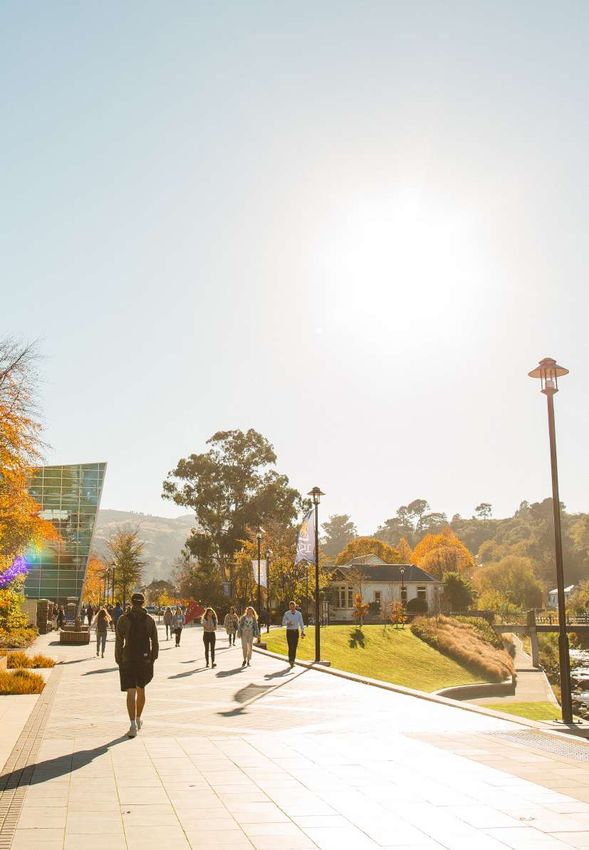
At the University of Otago we are committed to ensuring
the safety, well-being and success of our students.
This guide provides information about the transition from school to university,
and Otago’s comprehensive on-campus support system that helps students
get the most from their studies and their time in the most vibrant student
community in Aotearoa New Zealand.

Welcome
Nau mai, haere mai, tauti mai
                                     As your young person nears the end of their secondary
                                     education, they are faced with major decisions about the
                                     next steps in their lives.
                                     We have produced this guide because we know that you
                                     will want to be well informed about the choices that are
                                     available to your family.
                                     Every year we welcome nearly 4,500 new students to
                                     the University of Otago, most of them from outside
                                     Dunedin.
                                     We have students from almost every secondary school
                                     in the country as well as from 100 different countries
                                     around the world. Students choose the University of
                                     Otago for a number of reasons.
First, and foremost, they come here to gain a world-class education. The University of
Otago is a research-intensive university and students are taught by world-recognised leaders
in their field of study who are also award-winning teachers.
Students also come here because of the high quality of student life. The University of Otago
is New Zealand’s only truly residential university. Nowhere else in this country do so many
bright young people come together to live and learn.
At the University of Otago, we are not only training the next generation of accountants,
doctors, lawyers, teachers and scientists, we are also educating the next generation of
citizens. We take this responsibility very seriously, and continue to provide new and exciting
opportunities for students to enhance their sense of social responsibility to the local
community, to the country and to the world.
Nelson Mandela once said, “Education is the most powerful weapon which you can use to
change the world”. The Dalai Lama said, “When educating the minds of our youth, we
must not forget to educate their hearts”. Here at Otago, we strive to do both – we educate
young hearts and young minds, and together, we will change the world.
Your young person’s experience at Otago will represent one of the greatest journeys of their
lifetime. We look forward to sharing that journey with them and with you.
As always, you are more than welcome to visit our beautiful campus.

PROFESSOR HARLENE HAYNE
ONZM, PhD, HonDSc, FRSNZ
Vice-Chancellor

                                                                                                 1
The University of Otago
    Te Whare Wānanga o Ōtākou
    Established more than 150 years ago, the University of Otago is New Zealand’s first and finest
    university, with a worldwide reputation for research and teaching excellence.
    At Otago we are committed to ensuring            The majority of our 21,000 students
    the safety, well-being and success of our        study and live within one kilometre of
    students.                                        the Dunedin campus, creating our iconic
    Our lecturers are internationally recognised     student community, with all academic,
    researchers who are also dedicated to            cultural, social and sporting facilities just a
    teaching.                                        short walk from the Dunedin city centre.
    For six of the past eight years, our teachers    Most of our first-year students choose to live
    have won the Prime Minister’s Supreme            in one of our 14 undergraduate residential
    Award for Teaching Excellence.                   colleges, which offer excellent support and
                                                     guidance, and are great places to make new
    This world-class education goes hand in
                                                     friends and share new experiences.
    hand with fantastic support services, and
    state-of-the-art lecture theatres, research      Other students prefer to go flatting, boarding
    laboratories and libraries.                      or to live at home in their first year.
    In addition to being an international centre     Whichever they choose, we offer support,
    of academic excellence, Otago is New             facilities and academic opportunities to help
    Zealand’s only true residential university,      your young people get the very best out of
    with a unique campus lifestyle and culture.      their time at Otago.

2
5+

Awarded 5 stars plus – the highest                 One of the                      Unmatched record in the National
possible international quality rating             most beautiful                     Teaching Excellence Awards:
          (QS Stars Rating)                    campuses in the world                  6 Supreme Award Winners

    21,000 students, including                    More than 200                           85% of first-year
   3,000 international students                 undergraduate and                        students come from
        from 100 countries                   postgraduate programmes                       outside Dunedin

     Ranked in the top 1% of                  Flexible degree structure:                More than 150 student
     universities in the world                combine subjects, majors                   clubs and societies
        (QS World Rankings)                          and degrees                           to choose from

       95% of graduates go                  New Zealand’s top university               State-of-the-art libraries,
       directly into work or                for educational performance                     lecture theatres
        on to further study             (TEC Educational Performance Indicators)              and facilities
Dunedin
    Ōtepoti
    Dunedin is a true student city. During semesters our students make up 20 per cent of Dunedin’s
    population, creating a community and atmosphere that’s unique to Otago.
    The town and the university campus
    developed together, so Dunedin is one of
    just a handful of places worldwide where
    education is the main activity of the city.                    Auckland
    Dunedin has everything that’s on offer in
    larger cities, but is still a friendly, uncrowded
    and safe place to live.
    The university campus and student area
                                                                                 Wellington
    are multicultural – they are home to more
    than 3,000 international students from 100
    countries, and about half our academic staff                           Christchurch
    are from overseas.
    The city has a strong cultural focus. Music
                                                                      Dunedin
    and the arts, shopping and fashion, and
    museums and libraries are among the best in
    New Zealand.

4
New Zealand’s only covered stadium is also
right on our doorstep – hosting international
sport and music events throughout the year.
The entrepreneurial spirit is alive and well
in Dunedin, and innovation and creativity
are backed by a supportive local business
community.
Although surrounded by hills, Dunedin
is mostly flat and easily accessible. Unlike
larger cities, you don’t need a car to get
around – it’s a 10-minute walk from the
campus to the town centre, and a good
public transport system covers the main
suburbs.
No other city in the country offers the
same opportunities to get out and explore;
Dunedin is perfect for surfing, kayaking,
mountain-biking and hiking. And the
stunning lakes and world-renowned ski fields
of Queenstown and Wanaka are only a few
hours’ drive away.
Despite being the country’s southernmost
university, Dunedin’s weather is milder than
you might think. Daily highs are typically
18–22°C in summer and 10–12°C in winter.
Dunedin also has considerably less rainfall
than most New Zealand centres.

   Getting here
   There are regular direct flights to
   Dunedin from Auckland, Wellington
   and Christchurch and connections
   from all other New Zealand airports.
   Bus routes connect Dunedin to
   Christchurch, Invercargill, Wanaka
   and Queenstown – with further
   connections to all South Island
   destinations. And you can drive to
   Dunedin from anywhere in the South
   Island within a day.

                                                5
The university year
    He tau i te whare wānanga
    To help you understand what’s going on in students’ lives, here’s a general guide to what
    happens during the university year.

                                                                                              NOV
                                                                    AUG
                          MAR

                                           MAY

                                                                                        OCT

                                                                                                      DEC
                                APR

                                                   JUN
                FEB

                                                                           SEP
                                                          JUL
    JAN

          SUMMER SCHOOL               SEMESTER 1                           SEMESTER 2

    February                                             July
    Orientation week is packed with music                Semester 2 is winter in Dunedin. New
    gigs, sports days, a market day and other            courses start and by now students are pretty
    activities. There is also an academic                settled and used to the routine of university
    orientation programme to help prepare                life.
    students for the year.
                                                         August
    March                                                One-week mid-semester break.
    Anxieties around courses and workload,
    finances and health, and homesickness may            September
    set in. There are people available in the
                                                         Students are completing their last
    colleges and on campus to offer help and
                                                         assessments and studying for final exams.
    support.

    April                                                October/November
                                                         End-of-year exams start in mid-October
    This is a busy time for assignments and
                                                         and finish in early November. Once students
    assessments. Most students go home for the
                                                         complete their last exam, the summer break
    first time at mid-semester break.
                                                         begins.

    May
                                                         December
    The lead-up to exams can be an anxious
                                                         Exam results come out at the beginning of
    time as the pressure of study mounts. Staff
                                                         December each year, and Summer School
    in the colleges and support services are on
                                                         starts early in January – it is generally
    hand to help.
                                                         attended by returning students rather than
                                                         first-years.
    June
    Mid-year exams are followed by a two-week
    break.

6
Studying at Otago
Te ako ki Ōtākou
The University has more than 80 academic departments organised into four divisions –
Business, Health Sciences, Humanities and Sciences – offering more than 200 undergraduate
and postgraduate programmes.
An Otago bachelor’s degree is most                Changing majors and degrees
commonly a three-year programme of
                                                  We understand that not all students know
study, which builds towards a specific subject
                                                  exactly what they want to study when they
specialisation or “major”. A “minor” is a
                                                  first enrol with us. We also understand that
secondary area of specialisation.
                                                  university is a life-changing experience for
Papers are the building blocks of the             many students, so we know that study and
degree; most are worth 18 points and most         career goals may change.
are completed in one semester. A full-time
                                                  Students can change their major or their
course for a first-year student is generally
                                                  whole degree – and it may not even take any
three or four papers in any one semester, or
                                                  longer to complete than initially planned.
seven to eight papers in a full year.
                                                  Our course advice experts are available to
Some degrees such as Laws (LLB),
                                                  help as many times as needed throughout a
Surveying (BSurv) and many of the Health
                                                  student’s time at Otago.
Sciences specialisations take more than three
years.                                            Detailed information about studying at
                                                  Otago is available in the Undergraduate
The cross crediting of papers enables
                                                  Prospectus, the Guide to Enrolment and on our
students to undertake two degrees at the
                                                  website.
same time: it is possible for a student to
complete two three-year degrees in four and       otago.ac.nz/plan-your-degree
a half or five years.

   Workload
   Studying at university is very different to school. As well as lectures, students must also
   attend tutorials and lab sessions, and complete assessments and assigned reading. As a
   general rule, that will work out to about 36–48 hours a week.
   Students are responsible for their own attendance. Usually, no one will check up on
   them if they miss a class or fail to hand in an assignment.
   However, help is available from tutors, lecturers and course advisers. Student
   Learning Development provides help with learning strategies, management of
   assignments, study skills and exam preparation, and the residential colleges also run
   programmes to assist students with their study.

                                                                                                  7
Residential colleges
    Whare puni
    As more than 85 per cent of our new students come from outside Dunedin, we place great
    emphasis on providing high-quality, safe and supervised living in our residential college
    communities.
    Most first-year students choose to live in one    The colleges are fully catered (three meals
    of our 14 undergraduate residential colleges,     a day), have a mix of male and female
    which are all either on campus or within          students, and range in size from 126 to more
    walking distance of the University.               than 500 beds. Single-sex floors are available
    In a residential college, the residents are       in some cases.
    part of a caring and supportive community.
    Professional, experienced college leaders and
    staff take a real interest in the well-being of
    their residents. They are supported by senior
    students who mentor and guide new students
    through their first year of university.
    The colleges all provide tutorials and study
    spaces, and work hard to develop their
    residents as scholars and good community          Our residential colleges accommodate around
    members through academic, cultural,                3,500 students. 98% of students provide a
    sporting, volunteering and social programmes.         positive assessment of their colleges.

8
Applying for a place in a residential college
Applications should be made online through
the University’s website before the end of
September, for consideration in the first
round of offers.
Any changes that need to be made to an
application after it has been submitted
can be emailed directly to the Student
Accommodation Centre.
The application must be completed in full,
all questions need to be answered, and
the reference form needs to be completed
by the applicant’s high school. Applicants
should also use the online portal to check the
status of their application before the end of
September. Flatting
During October, applicants will be contacted Most students choose to go flatting in
with either an offer of place in one of the their second year of study, although
colleges or advice that their application has some do opt for a flat in their first year.
been placed on a waiting list. There are a variety of flats to choose
Our collegiate communities are very popular from – from studio rooms and
and there is competition for places, hence a character houses to multi-unit purpose-
waiting list. built complexes. Many are only a few
When places do become available, offers minutes’ walk to the campus – students
will be made to students on the waiting list, do not need to spend large amounts of
through to the start of semester. money on transport at Otago.
If a college that is not a student’s first choice The Student Accommodation Centre
makes an offer, it is strongly recommended website provides up-to-date flat listings
that the student accepts this offer. that cover one bedroom to eight-
bedroom flats.
When an offer is made, the colleges require
They also offer a service where
a payment to secure the place. Payment
flatmates can advertise to fill vacancies
options are explained when an offer is made.
in their flat and they provide sample
For more information, please contact the
budgets for flatting, a list of students
colleges directly.
looking for flatmates, flat agreements
More information about the colleges is between flatmates, and helpful hints for
available in the Undergraduate Prospectus and flatting life.
online. You are also very welcome to contact Other accommodation options include
the colleges to book a tour. homestays and private boarding.
otago.ac.nz/colleges For more information about all
accommodation options:
otago.ac.nz/accommodation
9Student support
Taunaki ākonga
Mindful that many of our first-year students are away from home for the first time, we offer
a range of dedicated on-campus support services to help all students get the very best out of
their time at Otago.
Academic Orientation Code of Student Conduct
Academic Orientation runs in the week The University has a Code of Student
before the start of semester 1. It includes Conduct, a set of common-sense rules that
a wide variety of academic events to help prohibit behaviour that is likely to endanger
students make the step from secondary safety.
school to settling into university life.
The University relies on Campus Watch to
otago.ac.nz/academic-orientation help maintain a safe and healthy campus
and to ensure that the provisions of the
Code are observed.
Campus Watch
otago.ac.nz/code-of-conduct
The University has a Campus Watch team
to help maintain a safe and healthy campus.
Team members are easily recognised by Computer services
their distinctive blue and gold uniforms. Otago provides a range of IT services to
otago.ac.nz/campus-watch students: 24-hour wireless study spaces with
printers and computers, student webmail
and online Office 365, and a student desktop
Career Development Centre that’s accessible anywhere.
The Career Development Centre helps
Our friendly Student IT support team
students with career planning, job search,
provides help and advice in person and
applications and interviews advice. They
online, as well as free training sessions
also facilitate employer events on campus.
tailored to common student questions.
otago.ac.nz/careers
blogs.otago.ac.nz/studentit
Chaplains
The chaplaincy team offers pastoral care Course advice
and spiritual support to anyone who wants Course advice and planning is a chance
to talk in confidence, whatever their beliefs. for students to ensure that their course of
The chaplaincy offices can be found on the study is right for them and their goals. Our
eastern end of the mezzanine floor in the experienced student advisers can listen and
University Union building. provide tailored guidance to help students
plan and achieve their goals at university
otago.ac.nz/chaplain
and beyond.
otago.ac.nz/course-advice
10Disability Information and Support
Disability Information and Support provides Te Huka Mātauraka –
learning support, advice, advocacy and
information to students with disabilities, the Māori Centre
impairments, medical conditions or injuries. Nau mai, haere mai, tauti mai.
The support provided is varied and may Your tamariki will not be alone when
include access to specialised equipment, they come to Otago. The Māori
quiet study rooms, note-taking, subject Centre is the “whānau on campus”
tutoring, reformatting of course materials, for tauira Māori, encouraging Māori
and alternative test and examination students to participate and succeed,
arrangements. and providing first-class support for
Student advisers are available to discuss academic, cultural and social
each student’s requirements and work development from pre-enrolment
through to graduation.
collaboratively to put together a support
plan. The Centre creates opportunities for
Māori students at Otago to meet in an
otago.ac.nz/disabilities
informal and relaxed atmosphere and
operates from a kaupapa Māori base
Internships to provide services such as:
While at Otago, there are a variety of • recruitment and study advice
internship or summer research positions • Māori Academic Orientation
students can apply for. These are usually programme for first-year local Māori
available in the third year of study and students
contribute to learning by providing real- • Tūraka Hou / Māori orientation
world work or research skills and enhancing • Ka Karahipi – scholarships and
post-study employability. grant information
• mentoring and liaison
otago.ac.nz/internships
• academic tutorials and seminars
• counselling and advocacy
Libraries • Māori pre-graduation ceremonies.
The University of Otago Libraries offer an otago.ac.nz/maoricentre
outstanding range of information services
and resources, access to Wi-Fi, and warm
comfortable facilities suitable for individual
study or group learning.
There are a number of libraries across
campus: the Central Library (Commerce
2,187
and Humanities), the Robertson Library
(Education), the Sir Robert Stout Law
Library, the Health Sciences Library, the
2,187 tauira Māori
Science Library, and the Hocken Collections
(New Zealand and Pacific heritage material). were enrolled in 2019
otago.ac.nz/library
11Local students Recreation
The Locals Collegiate Community provides Unipol Recreation Services and the
college-style support and engagement for OUSA Clubs and Societies team provide
students living at home, flatting or boarding a comprehensive programme to ensure
in their first year at Otago. students maintain a healthy, balanced and
Locals offers social events, volunteering fun lifestyle while studying at Otago.
opportunities and academic support, and There are more than 150 sporting, cultural,
helps students connect with other first-year political and religious clubs and societies
students living in the local community. to choose from, as well as recreational
otago.ac.nz/locals opportunities on and off campus including
courses, trips, group fitness classes and social
sport.
Otago University Students’ Association
The OUSA is run by students for students Entry into Unipol gym is free with a student
and is central to the Otago experience. ID card. This fantastic facility includes
Its services include welfare and advocacy, weight training and cardio rooms, and team
student representation, sport and recreation sports areas where students and their friends
and, of course, social activities which begin can participate in casual sports such as
with Orientation at the start of semester 1 basketball, table tennis and more. A range
and continue throughout the year. of equipment can also be hired.
ousa.org.nz otago.ac.nz/recreation
12Student Health
Student Health is centrally located on Pacific Islands Centre
campus, with approximately 55 staff,
Warm Pacific greetings!
comprising nurses, general practitioners,
mental health clinicians, psychiatrists and The Pacific Islands Centre offers a
administrative staff, providing medical, home away from home for all Pacific
nursing, counselling and psychiatric advice students; working collaboratively with
and treatment for all students enrolled at the academic divisions and the Pacific
the University of Otago. community to ensure that Pacific
students’ time at Otago is as memorable
We endeavour to provide the best and successful as possible.
health care possible in a manner that is We welcome you, their parents, to
competent, compassionate, confidential, visit us when you are here in Dunedin.
timely and in an atmosphere of mutual We understand your concerns and
responsibility and respect. have the best interests of your child at
We provide daily urgent and routine heart. Contact us early so we can plan
appointments. Consultation fees do together to ensure a smooth transition
apply and charges are reduced with a from home to university for your child.
Community Services Card (CSC). The Centre provides:
otago.ac.nz/studenthealth • orientation and transition programmes
• supplementary tutorials and the
Taimane Academic Mentoring
Student Learning Development Programme
Student Learning Development provides • tutorial rooms and a warm study space
free academic support for all students, • strong links to the Pacific community
including workshops, peer learning and in Dunedin
support programmes, and online study • pastoral care and advice on matters
resources. such as accommodation, scholarships,
otago.ac.nz/sld legal and immigration issues, travel,
places to worship, university and
course-related information, study
Volunteering skills, and other support services.
Student volunteers often have the
otago.ac.nz/pacific
employability edge as they can demonstrate
to employers the additional skills and
experiences gained through volunteering.
The Social Impact Studio supports students
to lead social projects addressing causes they
care about, and helps connect them with
opportunities to make positive changes in
1,050
their community.
otago.ac.nz/volunteer
1,050 Pacific students
were enrolled in 2019
13The cost of university study
He aha te utu?
Tuition fees
Fees-free study After the first year, programme fees range
Most domestic students who are new from about $6,000 to $16,000 depending on
to tertiary education will be eligible the degree and papers being studied.
for one year of fees-free study. Tuition fees increase every year so call us
For more information, and to find out free on 0800 80 80 98 or talk to a schools’
how to check eligibility, please visit: liaison officer to find out the latest costs.
otago.ac.nz/fees-free Information regarding current tuition fees
can also be found on our website.
otago.ac.nz/tuition-fees
Residential colleges
There is some variation in the costs, but on
average (based on 2020 figures) residential
colleges cost $15,846 for the academic
year of 38 weeks. Students receiving an
offer of accommodation will be required
to make a confirmation-of-place payment.
For accommodation in 2020 in a university-
owned residential college, this was $760.
otago.ac.nz/colleges
Living costs Residential college Flatting
Annual accommodation fee $15,846 -
Average rent (52 weeks @ $150) - $7,800
Groceries (40 weeks @ $90) - $3,600
Electricity/internet (52 weeks @ $25) - $1,300
Personal costs (40 weeks @$65) $2,600 $2,600
Entertainment (40 weeks @ $55) $2,200 $2,200
Total $20,646 $17,500
Please note: Residential college contracts are normally for 38 weeks. Some colleges may charge a higher fee than the
fee listed in the table. In addition to the accommodation fee, the residential colleges charge a small amenity fee.
Personal costs vary considerably depending on lifestyle. This estimated budget does not include travel costs or any
significant personal expenditure items.
14Flatting StudyLink
Dunedin rental properties are generally let StudyLink administers student allowances,
for 52 weeks. Extra money is needed at the student loans and also extra help with costs
start of the year for refundable bonds for while studying.
flats and electricity accounts. Other living
Student allowance
costs students incur include clothes, travel,
The student allowance is a weekly payment
health, entertainment and incidentals (e.g.
that can help students with their living
mobile phone plans, postage and toiletries).
expenses while they study full-time. There
are certain criteria they need to meet to
Travel qualify. A student allowance does not have to
Because the campus is contained and close be paid back.
to all of Dunedin’s main amenities, students
Student loan
spend very little on transport once they get
A student loan can help to finance study. It’s
here. The cumulative daily transport costs of
made up of three parts – compulsory fees,
travelling to a university closer to home can
course-related costs and living costs. There
often be far greater than several airfares to
are certain criteria students need to meet to
Dunedin each year.
get a student loan. A student loan has to be
In weighing up the costs of students moving paid back.
away to attend university, remember what
it costs to keep them at home. Almost all Extra help
parents notice a marked drop in their food There are a number of ways that StudyLink
and petrol bills! can help with extra costs while studying
or if the student is on a study break and
can’t find work. These include help with
Student Job Search accommodation, health, ongoing medical,
Before students take out a student loan they childcare or emergency costs.
should consider other options to finance
their studies. Many students take on holiday When to apply
jobs and part-time work throughout the It’s important that students apply for their
academic year to help fund themselves student finance well before their course
through study. Student Job Search can help starts – it can take around six weeks to
students looking for paid work. process a student allowance or student loan
application. Students can apply even if
sjs.co.nz
they’re not sure where or what they’re going
to study, they just need to make sure they tell
StudyLink once they have decided.
How to apply
The easiest way to apply for student finance
is online. When a student applies they can
set up a MyStudyLink account, which lets
them check the status of their applications,
view and update their personal details and
view their mail online.
studylink.govt.nz
15Scholarships
Ngā karahipi
Scholarships are a good way to fund study and are open to a wide range of students.
Not all scholarships depend on previous academic achievements.
Entrance scholarships are available for full-
time, first-year undergraduate study. Applications
The University of Otago offers a range of Applications for our core entrance
undergraduate entrance scholarships that scholarships open in July and close
recognise academic excellence, leadership mid-August, unless otherwise stated.
qualities, ethnicity, financial hardship, You don’t need to worry about
disability and excellence in sporting or applying for specific scholarships.
cultural pursuits.
Based on the information provided,
There is also a range of donor- and trust- applicants will be considered for all
funded entrance scholarships with applications applicable scholarships and awards
opening at various times throughout the open on the date the application was
year. received.
New Zealand and Australian citizens / For more information, and to apply,
permanent residents are eligible for our please visit:
scholarships.
otago.ac.nz/entrance-scholarships
International students may be eligible for
some scholarships.
16Scholarship NZ$ (1–3 year tenure) Eligibility
Academic Excellence Typically around $35,000 Students who have
outstanding previous academic
performance, with leadership
qualities and community
involvement also considered.
Leaders of Tomorrow Standard value $6,000* Students with excellent
academic results and
outstanding leadership qualities.
Māori Standard value $10,000* Māori students with academic
ability, and involvement in their
community or knowledge of
taha Māori.
Pacific Peoples’ Standard value $10,000* Indigenous Pacific students
with academic ability and
involvement in their community.
150th Standard value $6,000* Academically strong students
with financial or life
circumstances that make
attending university difficult.
Donna-Rose McKay Standard value $6,000* Students who have a disability,
good academic ability, and
financial or life circumstances
that make attending university
difficult.
Performance Standard value $16,000** Students with excellent
academic results who have
performed in sport or cultural
activities at an elite level.
Dux $6,000 (or with Recipients are Duxes of their
reduced value if held in secondary school and have an
conjunction with another automatic entitlement to this
Otago scholarship) scholarship. No application or
closing date.
New Frontiers $2,500 or $5,000 Students who do not have
(closes 4 March) another University of Otago
entrance scholarship and
have gained overall Excellence
endorsement at NCEA Level
2 and/or 3 (or IB or CIE
equivalent). Not available
to students enrolling in
Health Sciences First Year
or Engineering Intermediate
programmes.
* Exceptional applicants may be offered this scholarship at a higher value and longer tenure.
** Exceptional applicants may be offered this scholarship at a higher value in year one.
17Enrolling at Otago
Ka tono ki Ōtākou
Students must be at least 16 years old by the first day of classes in the semester they begin
their study and hold one of the following university entrance (UE) qualifications.
NCEA Level 3 International Baccalaureate (IB)
• At least 14 credits in each of three • IB diploma with 24 points
approved subjects minimum
• Numeracy – 10 credits at Level 1 • Meet literacy and numeracy
or higher requirements
• Literacy – 10 credits at Level 2 or
above (five in reading and five in
writing)
Cambridge Assessment Overseas secondary school
International Education (CAIE) qualifications
• At least 120 points on the UCAS • Australian secondary school
Tariff, with a grade of D or better ranking
at AS or A level in syllabuses from
• General Certificate of Education
at least three different syllabus
(GCE) Advanced Level
groups, broadly equivalent to the
NCEA approved subject list • International Baccalaureate (IB)
taken overseas
• Meet literacy and numeracy
requirements • Other overseas qualifications
Alternative methods of admission
Foundation Studies: the foundation year Check
provides a university entrance qualification At the beginning of Year 13, check that
recognised by all New Zealand universities. your son or daughter is taking sufficient
credits and enough approved subjects at
Special Admission: for students 20 years
Level 3, and that they have the required
of age or over.
literacy and numeracy credits. This
Discretionary Entrance: for students can save confusion and disappointment
under 20 years of age. when they come to enrol at university.
See our website for further information.
otago.ac.nz/entrance
18Otago’s enrolment system The key points of the Entry Pathway system
There are a number of qualifications at the are:
University of Otago that are subject to the • a Preferential Entry pathway for high
Entry Pathway system: calibre students
• Bachelor of Applied Science (BAppSc) • a Competitive Entry pathway in which
• Bachelor of Arts (BA) remaining students are ranked and
• Bachelor of Arts and Commerce (BACom) admitted according to the availability of
• Bachelor of Arts and Science (BASc) places
• Bachelor of Commerce and Science • an enhanced admission system for Māori
(BComSc) and Pacific students.
• Bachelor of Biomedical Sciences A full overview is available online:
(BBioMedSc) otago.ac.nz/entrypathways
• Bachelor of Commerce (BCom)
This system does not apply to international
• Bachelor of Health Science (BHealSc)
enrolments, or to the following programmes,
• Bachelor of Laws (LLB) (first year only)
which have their own selective entry
• Bachelor of Music (MusB)
regulations:
• Bachelor of Performing Arts (BPA)
• Bachelor of Science (BSc) • Bachelor of Radiation Therapy
• Bachelor of Theology (BTheol) • Bachelor of Dental Technology
• Health Sciences First Year • Bachelor of Oral Health
• Social Work Pre-Professional (BA) • Bachelor of Teaching
• Surveying First Year For further information about entrance
• Certificate of Proficiency (COP) for requirements and enrolment, contact a
undergraduate papers University of Otago schools’ liaison officer.
• Diploma in Language (DipLang)
• Diploma in Global Cultures (DipGlobalC) Tel 0800 80 80 98
• other intermediate courses. otago.ac.nz/study
19The enrolment process
Te tukanga whakauru
Preparation Application Course enrolment Payment of fees
Are you eligible for Create your eVision Provide annual details All the information
admission to the account you need to organise
University? payment is in the
Finance section of
What, where and when Complete and submit Select your papers your eVision account
do you intend to study? your application
What are the entry University admission Course approval
requirements
of the programme?
What are the application Programme admission Declaration
due dates?
The closing date for most enrolment applications is 10 December. Some programmes have
earlier enrolment deadlines. Please visit our website for up-to-date information:
otago.ac.nz/important-dates
More information
eVision The Undergraduate Prospectus is delivered to
The University uses an online system all New Zealand secondary schools at the
called eVision to handle application end of the second school term. It explains
and enrolment. how to choose a course, how to structure a
eVision is the admin site for study- degree and how to go about enrolling and
related information including finding accommodation.
timetables and examination results. The Guide to Enrolment is distributed to
eVision is accessible anytime, secondary schools early in term three. It will
anywhere, using the internet and help guide you through the application and
mobile devices. enrolment process, and provides valuable
otago.ac.nz/enrolment information for course planning. It also
includes degree structures and details of
papers that are available.
To request a copy of these publications visit:
otago.ac.nz/publications
20Contact us
Whakapā mai
AskOtago
AskOtago is your one-stop shop for Stay connected
all questions about studying at Otago. Otago Connection is an online
You can find answers instantly with our newsletter that keeps our students’
searchable knowledgebase. Or call, email friends and families connected with
or chat with us. life at Otago.
ask.otago.ac.nz It covers events like Orientation
0800 80 80 98 and graduation, and provides an
university@otago.ac.nz opportunity for the University to
share some of the amazing things
Schools’ Liaison Officers that students are doing as they live
Before enrolling, students should contact and learn here.
one of Otago’s schools’ liaison officers
otago.ac.nz/otago-connection
to receive information and advice on
what courses they should take in order to
maximise their talents and achieve their
career ambitions.
Liaison officers visit most New Zealand
secondary schools at least once a year,
and intending students and their parents
can also see them by appointment in
their offices in Auckland, Wellington and
Dunedin.
Auckland
09 373 9704
auckland.liaison@otago.ac.nz
Wellington
04 460 9805
wellington.liaison@otago.ac.nz
Dunedin
03 479 8247
liaison@otago.ac.nz
The information provided in this guide is, as far as possible, up to date and accurate at the time of publication.
The University reserves the right to add, amend or withdraw courses and facilities, to restrict student numbers
and to make any other alterations, as it may deem necessary.
Published July 2021 by the Division of External Engagement, University of Otago.0800 80 80 98
university@otago.ac.nz
otago.ac.nz
Dunedin | New Zealand
DunedinYou can also read


