Part of the story 10 years of the South African National Editors' Forum Elizabeth Barratt - South African National Editors Forum
←
→
Page content transcription
If your browser does not render page correctly, please read the page content below
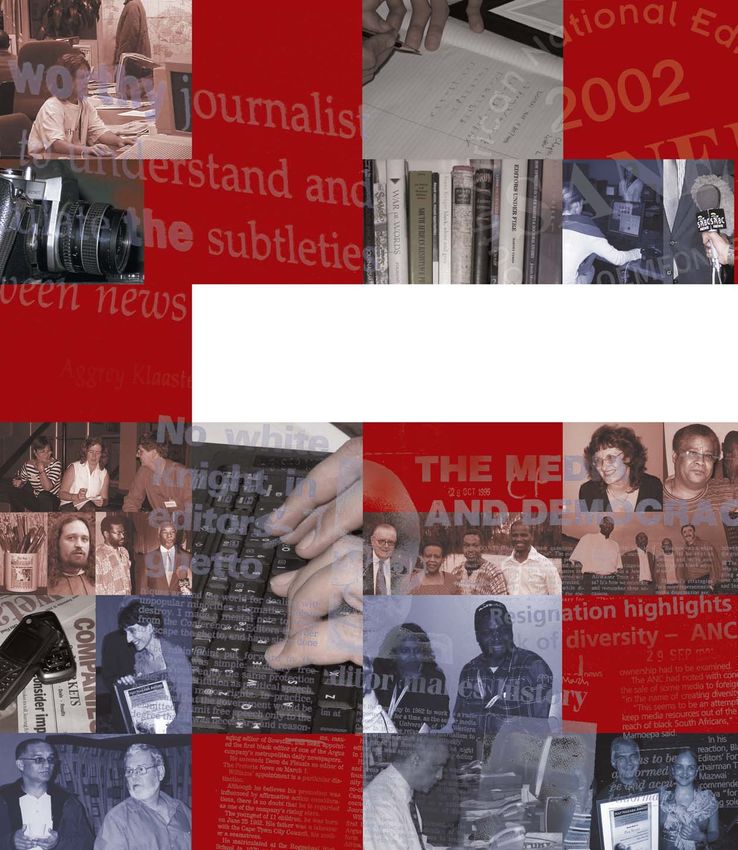
Part of the story
10 years of the South African National Editors' Forum
Elizabeth Barratt
Contents
Part of the story                                               Preamble by Joe Thloloe                                      1
WRITTEN BY Elizabeth Barratt
                                                           1    From struggle journalism                                     2
EDITED BY Guy Berger
DESIGN BY Shahn Irwin
                                                           2    Before Sanef                                                 4
                                                           3    Looking for common ground                                    8
I would like to dedicate this book to my father, John,     4    Unity Conference: Oct 1996                                   10
and my daughter, Claire, the generations on either side
who have supported me so strongly.                         5    Setting up Sanef                                             14
Sanef has taken me out of the office and into the          6    First controversies                                          16
wider context of journalism, giving me a chance to get
to know great colleagues from South Africa and the         7    Sanef launch                                                 18
rest of Africa. It has pushed and pulled me. One of the
challenges has been this study, which I hope does
                                                           8    Nat Nakasa award                                             20
justice to all those who have given their time and         9    Old laws and new laws                                        22
commitment to Sanef over the years. My thanks go to
Moegsien Williams for getting me involved, and to          10   Race threatens Sanef                                         26
Mathatha Tsedu for keeping me there.
                                             Liz Barratt   11   Reuniting with new direction                                 30
                                                           12   Tensions with government                                     32
Thank you to all those who have recorded Sanef
events in pictures over the years and The Star for         13   Keeping freedom in the news                                  36
the use of its photographs. Other images come
from a variety of newspapers and the Rhodes                14   Issues of sensitivity                                        38
Journalism Review. Special acknowledgement goes
to Jurgen Schadeberg for the photo of Nat                  15   Education and training                                       42
Nakasa.                                                    16   Skills audits and indaba                                     44
Thanks also to Joe Thloloe and Johan de Villiers
for their help; and Judy Sandison, Mathatha Tsedu,
                                                           17   National vs public interest                                  48
Lakela Kaunda and Mandla Letlape for anecdotes.            18   Editors and Africans                                         50
                                                           19   Media ethics                                                 54
Sanef would like to thank Total for the advert             20   Promoting democracy                                          58
on the back cover.
                                                           21   How Sanef works                                              62
Appreciation goes to Vodacom for funding
the production, printing and distribution of               22   Problems … and promise                                       64
this book.
                                                           23   Sanef’s future: the next 10 years                            66

Published October 2006 by Sanef
                                                                www.sanef.org.za
ISBN 0-86810-433-7                                              Room 210A Nedbank Gardens, 33 Bath Avenue, Rosebank, 2196,
                                                                    Johannesburg, South Africa. Phone +27-011-442-3785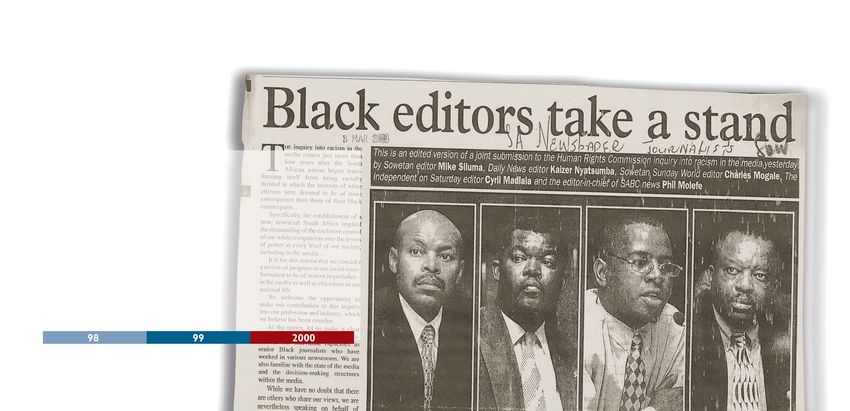
PREAMBLE

  Narrators, commentators...and actors
           When you are in the centre of a story in the making, it is easy to get
           bogged down in the details of trying to survive from day to day and to miss
           the big picture.
               Many of the people who founded the South African National
           Editors’ Forum ten years ago, operated in it and helped it flourish, were in
           the centre of a story that is important for our country.
               The media in South Africa are part of this society and are therefore
           obliged to strive for the goals spelled out in the national Constitution.
               We have three other responsibilities:
           • To hold up the vision in the Constitution and remind South Africans of
               their commitments;
           • To hold all those in power accountable for turning the dream into real-
               ity; and
           • To tell the daily story of the bumpy journey to this new world.
               We are part of the story but also stand back to get a better perspective
           to help us tell it. None has captured this better than Elizabeth Barratt, long-
           serving Sanef member and an executive editor at The Star, in the title of her
           thesis last year: “Choosing to be part of the story: the participation of the
           South African National Editors’ Forum in the democratising process.”
               Stellenbosch University awarded her an MA (cum laude) for her work.
               That thesis was the foundation of this celebratory book that forces us to
           see that big picture.
               She has captured Sanef, all our contours, pimples and scars. Sanef is not
           a trade union, not an industry policeman, not a tool to be used by public
           relations firms to get to a captive collection of editors. Sanef is rather a
           forum that uses moral persuasion to improve the quality of journalism in
           South Africa, to transform the industry and to hold up media freedom as a
           vital pillar of democracy.
               Sanef is also grateful to Prof Guy Berger, one of its founding members
           and head of the School of Journalism and Media Studies at Rhodes Univer-
           sity, for editing the book.

                                                                                             PART OF THE STORY   1
CHAPTER 1
From struggle journalism
rights – including the right to media freedom. SECTION 16 of the Constitution
A DECADE OF WORK Everyone has the right to freedom of
Since then, South African society, including govern-
expression, which includes –
Neither union nor NGO, Sanef is a forum. It brings ment, has been learning to deal with the new media
• freedom of the press and other
together editors, senior journalists and journalism educa- freedom. This came after years of coping with an array of media;
tors across the divides of race, institution and media plat- restrictions. Journalists have had to learn to work within • freedom to receive or impart
form to participate in the new South African democracy. a different and changing socio-political environment. information or ideas;
• freedom of artistic creativity; and
Over 10 years, its members have worked to deepen Another new challenge has been how to relate to a legit-
• academic freedom and freedom of
media freedom and overcome old injustices still present imate government. scientific research.
within the industry. The organisation has led debate and There has been an imperative to transform journalism The right in subsection (1) does not
projects about the quality of journalism and journalism staffing and content to reflect and promote equality and extend to
• propaganda for war;
training. nonracialism. Technical changes and an industry stress
• incitement of imminent violence;
on the “bottom line” are also part of the picture. Sanef has or
had to negotiate all these issues. • advocacy of hatred that is based
LEARNING A NEW ROLE on race, ethnicity, gender or
religion, and that constitutes
Sanef’s unity and its commitments are highly significant Television cameraman in 1993, and the newspaper lead headline
COMMON IDEALISM incitement to cause harm.
when seen within the potentially divisive historical con- reads ‘Mandela, FW hold summit’
text: that of a post-apartheid, infant democracy in a Sanef has been able to command the ears of presidents
developing country. and top judges, and engage in scores of activities. This is From an initial membership of around 40 to its 190 and commitment of numerous people who themselves
The negotiated political settlement, signed by African despite, from the start, being a fragile body with few members in 2006, the forum has continued to attract have full-time and demanding jobs in stressful environ-
National Congress president Nelson Mandela and resources, held together mainly by threads of a common senior journalists from all media. And from the early ments.
National Party leader FW de Klerk in 1993, was idealism among senior journalists. As the home of those days of shoestring budgets, its operating costs are now The story that follows shows how the forum has
embodied in an interim constitution. who decide what the news is, Sanef and its positions have funded by all the mainstream media. helped to shape media and journalism in a time of rapid
From 1993, South Africa had its first-ever bill of evoked widespread respect. Sanef’s survival and success has required the vision change in South Africa and in the wider media world.
● 1995 BEF-CoE ● 1997 First Sanef council meeting ● 1998 Sanef launch conference ● 2000 HRC hearings ● 2001 Sanef- ● 2002 Sanef website up ● 2004 ● 2005 The African ● 2006 Media
talks begin Truth Commission hearings into on racism in media Soul City MDDA hearings Third SA Editors’ Forum Freedom is
media ● 1999 Agreement with Second Sanef AGM HIV/Aids African Union launch election launched your freedom
● 1996 SA gets authorities on disclosure of workshops campaign
Meetings with Mandela adopts new vision Sanef Skills Indaba Sanef Skills Accuracy focus
new Constitution sources
Sanef Skills Audit 1 Formation of National vs public interest debates Audit 2 Guidelines on Glass ceiling
Unity Conference Comtask researches government
Sanef starts media law campaign (reporters) project Nepad ● 2003 Media law workshops (news confidential briefings study done
forms Sanef communications managers)
Second SA election – starts Sanef Ethics All Africa Editors Conference Court
Sanef chairperson resigns Deputy President
Press Mbeki as President conference Sanef stance on Hefer Commission Seminars: reporting
Street protest against Zuma fired
Ombudsman Nat Nakasa award announced First journalism unit standards completed Media in 10 handbook
First Sanef AGM held Section 205 subpoenas Sun City Participation in Peer
opens office years of
meeting with Southern Africa Editors’ Forum launched
democracy Review mechanism
government
95 96 97 98 99 2000 01 02 03 04 05 06
2 PART OF THE STORY PART OF THE STORY 3
CHAPTER 2
                                                                                                                                       they are white, they are
                                                                                                                                       They are white, they are male, they are
    Before Sanef                                                                                                                       male, they are from a
                                                                                                                                       from a middle class background, they tend
                                                                                                                                       to share a very similar life experience …
                                                                                                                                       middle class background,
                                                                                                                                       (I)n a country whose population is
    DECADES OF DIVISION                                              blacks first and journalists second. Meanwhile, even those
                                                                     white journalists who opposed State control of the press
                                                                                                                                       they tend to share a very
                                                                                                                                       overwhelmingly black (85%), the principal
                                                                                                                                                                                                 ment posts. It also extend-
                                                                                                                                                                                                 ed to print and broadcast
    White and black editors formed Sanef in 1996 – two               often underplayed their relatively privileged position.
                                                                                                                                       similar life experience …
                                                                                                                                       players in the media have no knowledge of
                                                                                                                                                                                                 media as well as spanning
    years after South Africa’s first democratic election and six                                                                       (I)n a country whose
                                                                                                                                       the life experience of that majority. – Nelson            the private/independent
    years after the liberation movements were unbanned and
    political parties became nonracial. Why the time lag? The
                                                                     RAPID CHANGES                                                     population is black
                                                                                                                                       Mandela, speaking to the IPI in Cape Town, 1994           and public/state divide.
                                                                                                                                                                                                 The BEF promoted affir-
    answer lies in the deep racial divisions and inequities          After the liberation movements were unbanned and Nel-                                                                       mative action, training,
    within the media.                                                son Mandela was freed in February 1990, political vio-                                                                      transformation of
        In apartheid South Africa, only the white minority had       lence intensified.                                                                                                          media ownership and
                                                                                                                                    SEPARATE BODIES
    rights to democracy, economic opportunities – and the                However, the main apartheid laws were scrapped and                                                                      media freedom.
    top jobs in media. Media people were polarised between           the state of emergency was lifted, leaving the media free to   The unions show the divisions among journalists over the         The CoE was a
    collaboration and complicity, and resistance and repres-         report on this changing struggle and previously banned         years. Most black journalists had belonged to the Writers    group of the top editors of mainstream newspapers
    sion. All journalism was political.                              organisations. Yet there was also increased intimidation       Association of South Africa (Wasa), which had a black        formed in 1981 to unite English and Afrikaans editors for
        The 1995 Truth and Reconciliation Commission                 and violence against journalists for exposing political        consciousness identity and a high political profile. It      media freedom. It was accustomed to opposing state
    (TRC), chaired by Archbishop Desmond Tutu, examined              violence or being critical of political parties.               became the Media Workers Association of SA (Mwasa) so        control of the press. Many of its editors were concerned
    the role of media under apartheid. It concluded that                 Democratic elections finally took place in April 1994.     it could represent all black media workers (including        about the need for constitutional protection, intimidation
    most of the media – with some important exceptions –             While the preliminary constitution guaranteed freedom          print workers). The South African Society of Journalists     of journalists by political parties and the use of laws by
                                        had either deliberately      of expression, media freedom and access to information,        (SASJ) had only a small minority of black members.           police to get information from journalists.
                                        promoted apartheid,          it also provided for an independent regulator for broad-           From two polarised groups – the Black Editors’
                                         or implicitly complied      casting.                                                       Forum (BEF) and the Conference of Editors (CoE) –
                                         with it. In both ways,          As regards media leadership at the time, Aggrey            Sanef was formed in October 1996. BEF members were
                                          media institutions         Klaaste edited Sowetan and Khulu Sibiya City Press, but it     politicised, inclusive and had strong black consciousness
                                          had contributed to a       was only in 1995 that the first black person was appoint-      or Africanist approaches, while CoE members were most-
                                          climate of gross           ed to edit a “white” mainstream newspaper: Moegsien            ly white liberals or apartheid supporters in an exclusive,
                                           human rights viola-       Williams at the Pretoria News.                                 non-political club of English and Afrikaans newspaper
                                           tions.                        Transformation was happening more quickly in               editors.
                                                 In the decade       broadcast. A new board was appointed in 1993, and by               The BEF was a post-apartheid
                                             that led up to the      1994 the SABC already had black editors, including for-        formation, created in 1992. Given
                                              formation         of   mer Sowetan managing editor Joe Thloloe. Black unions          the deficit of black editors, and
                                               Sanef, those black    became owners of some privatised SABC stations as well         the aspirations of senior black
                                               journalists com-      as of greenfields radio outlets and TV station e.tv.           journalists, this group drew sup-
                                                mitted to fighting       The final South African constitution was adopted at        port from ranks below that of edi-
                                                apartheid saw        the end of 1996, confirming the media freedom provi-           tors-in-chief, especially from Mwasa
                                                themselves as        sions of its interim predecessor.                              members now in middle-manage-

     4    PART OF THE STORY                                                                                                                                                                                                        PART OF THE STORY    5
CHAPTER 2
we can expect turmoil in
We can expect turmoil in newsrooms as
newsrooms as blacks
blacks demand a bigger voice in the SANEF’S STALWARTS
decisions there ... There will be hard
demand a bigger voice in The forum relies on the energy of its members. Here are eight who have
questions about an almost lily-white he said, the lack of diversity in control and staffing of the remained actively involved in Sanef’s structures and projects since the first year:
the decisions there ... There
editorial management team at publications print media led to one-dimensional journalism. Second- Paddi Clay
heads the
Amina Frense
is Sanef's 2006/7
Raymond
Louw is
Mary Papayya
is the secretary-
will be hard questions
like The Star. – Joe Thloloe, BEF chairperson, ly, many white journalists had predicted a storm that had
not come, yet continued to be pessimistic. His third area
Johncom Pearson
Journalism
Gauteng
convener, and
editor/publisher
of current affairs
general of Sanef
for 2006/7. She
writing in Rhodes Journalism Review, July1994.
about an almost lilly-white of criticism concerned the lack of excellent journalism. Programme and
is responsible for
previously
served as Sanef
newsletter
Southern Africa
previously served
as Sanef’s
Finally, he strongly criticised black reporters, suggesting recruitment and developing treasurer for a few years. Report. He was Rand Daily Mail Kwazulu-Natal regional
journalistic talent. She was a Before joining the SABC, she editor (1966-77) and later SA convenor for four years and
their allegiances lay with their white bosses rather than
copy editor and print reporter was foreign correspondent for Associated Newspapers has been on the Sanef
with liberation. before, in 1979, joining newly various television broadcasters general manager. He worked council for nine years. She is a
PRESSURE ON EDITORS established Capital Radio. She abroad and then joined the on newspapers in Sussex, former bureau chief of the
These criticisms put pressure on all editors. White
has been a correspondent for Institute for the Advancement Cumbria and London, and Witness, news
Part of the context into which Sanef was born, was a editors felt they were being told it was time to leave. foreign radio networks and of Journalism in Johannesburg. made a plea to the UN editor/executive producer
programme and news director She is news assignments editor Human Rights Commission to at SABC Radio News and was
political one of loud criticism of the media, especially For black journalists, being attacked like this was an
of 702 Talk Radio. She is a at the SABC, where she entrench press freedom as a founder news
from the new political leadership in the country. added pressure. Even editors sympathetic to the ANC former SAUJ office-bearer. previously held several other human right. An IPI fellow and manager/editor at East Coast
As Sanef education and positions, including editor: World Press Freedom Radio. Papayya is currently
Mandela, as ANC president in 1992, said the party now found that their journalistic independence was
training convenor, she worked training and development. Committee African the Kwazulu-Natal bureau
valued “a free, independent and outspoken press”. But, under question. However, over time these pressures closely with the Mappp Seta Frense is actively involved in representative, active in Sanef, chief for the Sowetan
since its inception. Clay media advocacy bodies around FXI and Misa-SA, he received newspaper. She also serves
created a common interest among editors and a shared
chaired the standards democratic transformation Misa’s 2005 Press Freedom as a southern Africa media
journalistic idealism. generating body which and freedom of expression award and co-leads the trainer specialising in
developed the first national in South Africa and the campaign against Africa’s gender, elections and news
journalism qualification. SADC region. “insult laws”. reporting.
FACING THE FUTURE
Judy Sandison Mathatha Joe Thloloe is Moegsien
heads the New Tsedu is the a former Williams is
The challenge for media leaders was to remove the
Media Unit at editor of editor-in-chief editor of The
legacies of inequality and discrimination, and to develop SABC News, City Press. He of SABC Star, the flagship
which previously Television News title of
racial representativity in content and in staffing.
incorporates the held the and of e-tv. He Independent
Along with this, editors needed to define their role in website sabcnews.com and following positions: Sunday was for many years managing Newspapers in South Africa,
other news-on-demand Times editor, deputy head of editor of Sowetan, and and editorial director of the
expanding and strengthening democracy, while consid-
services such as NewsBreak. SABC News, deputy editor worked before that on the group. He previously edited
ering how their freedom related to nation-building in a Formerly an award-winning of The Star, Sunday World, Post Transvaal, Drum the group’s Cape Town titles,
broadcast journalist, Independent deputy editor, and and the Rand Daily Mail. He the Cape Times and the Cape
deeply divided and conflict-torn country.
parliamentary reporter and political editor of Sowetan. was detained and jailed Argus. Before that, he was
And then, to add to the load, they had to succeed regional editor, she is also a Tsedu was an active trade several times between 1960 Editor of South, an
gender activist and has done unionist and held several top and 1984. Thloloe was a independent weekly
commercially in an increasingly competitive environ-
volunteer work for a range of positions in the Media founder member and newspaper which played a
ment. women’s rights groups. Workers Association of SA eventually the president of key media role in the
She was on the editorial (Mwasa). He was the the Union of Black Journalists anti-apartheid era. He has also
Apartheid had fostered deep mistrust, so race would
collective of Stir magazine in chairperson of Sanef for three (UBJ), and of Mwasa. He been managing editor of
remain a complex and central issue even once Sanef was the 1980s. Sandison is on the consecutive years and still was Sanef’s first executive Sowetan and editor of Pretoria
Sanef council, and has served serves on its council. He director, in an acting capacity, News. Williams is a previous
formed. At the same time, there was the challenge of how
as secretary-general (for three is presently the chairperson and served two terms as chairperson of both the
to cover the story of the new South Africa, and how to years) and Kwazulu-Natal of The African Editors’ Sanef chairperson: from International Press Institute
regional convenor. Forum (Taef). 2004 to 2006. and Sanef.
constitute the place of editors within this story itself.
6 PART OF THE STORY PART OF THE STORY 7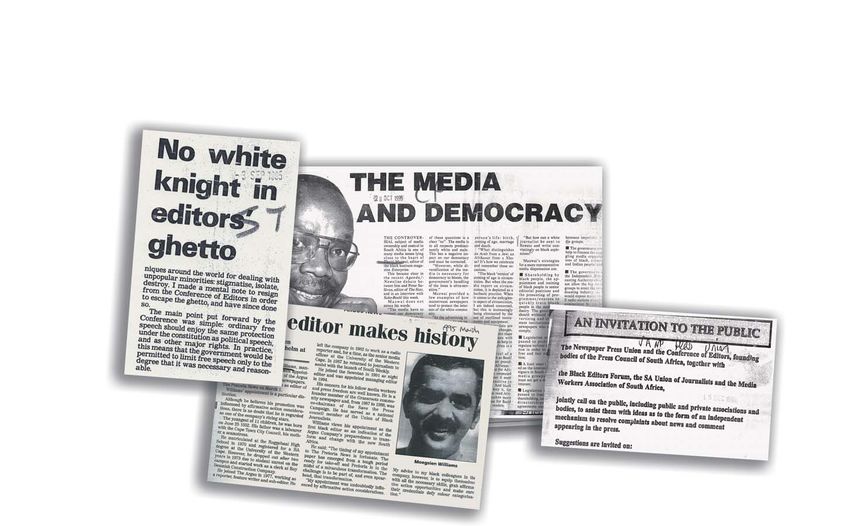
CHAPTER 3
                                                                                                                                                                                                     mass media has
    Looking for common ground                                                                                                                                                                         South Africa’s mass media has

                                                                                                                                                                                                     helped to chanworld,
                                                                                                                                                                                                      helped to change our world, but
                                                                                                                                                                                                      internally it has done too little about

                                                                 an all-white, middle-aged ghetto”, as he called their del-         Williams chaired a BEF-CoE task group meeting on
                                                                                                                                                                                                     but internally it has
                                                                                                                                                                                                      changing itself. – Moegsien Williams of the
    TIME OF CHANGE                                                                                                                                                                                   done too little
                                                                                                                                                                                                      BEF and CoE, writing in 1995
                                                                 egation, that he resigned from the CoE.                        March 14 at the Carlton Hotel in Johannesburg. Members
    The year 1995 was one of even more intense debate               Then Sibiya resigned as CoE chairperson in Septem-          discussed a joint bosberaad, affirmative action and train-
    about the role of the media and their conduct in South       ber 1995, saying he had failed to unite white and black        ing, press freedom, a structure for a new organisation and
    Africa. To give just a few instances: deputy president       editors; that CoE members were resisting change.               the idea of a roadshow to promote press freedom values.           In what turned out to be the last CoE meeting, on
    Thabo Mbeki, speaking to the BEF, pointed out the print                                                                     They recommended the formation of a joint body of             July 29, Harber expressed “hope that a new umbrella
    media were still mostly white-owned, edited and written;                                                                    editors, senior journalists and those associated with the     body will be formed in the near future”. CoE minutes note
                                                                 BRIDGING THE DIVIDE
    the ANC attacked the media for their lack of complexity                                                                     industry. And they identified an easy area of common          that Mazwai had “expressed support for a new umbrella
    in reporting on transformation; and Gauteng Premier          At this stage Williams, who was the local International        ground: media freedom issues.                                 body, provided the BEF would continue to exist”.
    Tokyo Sexwale blasted foreign ownership.                     Press Institute (IPI) chairperson, took the initiative. As a       A statement after the meeting said editors were
        But changes in BEF and CoE membership had started        member of both editors’ groups, he facilitated a private       “gravely concerned at the move by Zimbabwe’s President
                                                                                                                                                                                              DOWN TO WORK
    to bridge the polarisation of the two groups.                meeting of Mazwai and CoE’s acting chair, John Patten,         Robert Mugabe to take direct control of the country’s
        From 1991 there were four black editors in the CoE:      on October 9.                                                  newspapers”. They also agreed South African editors           There were now two task force committees: Harber,
    Khulu Sibiya, Aggrey Klaaste, TG Mthembu and Brij                There were soon signs of BEF-CoE co-operation. In          would in future be jointly represented by the BEF and         Williams and Mazwai on membership and construction
    Ramguthee. By 1993 it also had three white men from the      December they and the Newspaper Press Union, SAUJ              CoE to government and to national and international           of the new organisation, and CoE’s Raymond Louw and
    alternative press: Franz Krüger, Anton Harber and Guy        and Mwasa published an advert calling for public sugges-       organisations. Then in March there was a joint statement      BEF’s Mike Tissong on training and an editorial charter.
    Berger. By 1996 the CoE had one woman member, Jane           tions on a mechanism to solve press complaints. It was         urging the government to protest against the arrests of the       Finally dates were set: the BEF/CoE Unity Conference
    Raphaely, among the 29 men.                                  felt the Press Council was outdated now press freedom                               managing director and editor-in-         would be from October 18 to 20 in Cape Town. October
        And in the BEF, Williams, of the Pretoria News, was      was being written into the constitution, and self-regula-                           chief of the Post in Zambia.             19 is National Media Freedom Day in South Africa, com-
    four months later moved to the more influential Cape         tion by a Press Ombudsman would be more appropriate.                                                                                                 memorating the banning in 1977
    Times. He wrote about a new vision in journalism: along                                                                                                                                                           of the World and Weekend World.
    with other areas of transformation, the editors’ organisa-                                                                                                                                                            On one hand it seemed the
                                                                 TALKS BEGIN
    tions had to transform too. In 1995 he joined the CoE.                                                                                                                                                            best that could be achieved was an
                                                                 But it would take another 10 months of work by BEF-                                                                                                  umbrella body of the two bodies
                                                                 CoE committees to find common ground over establish-                                                                                                 as a watchdog on press freedom,
    REVEALING DIFFERENCES
                                                                 ing a democratic media system.                                                                                                                       at the other extreme was the possi-
    In August 1995, CoE and BEF groups had a joint hearing           A meeting of representatives of both groups took                                                                                                 bility they would merge.
    with the Constitutional Assembly committee dealing with      place on February 9 1996. Patten, Mazwai and Williams
    freedom of expression. CoE chair Sibiya at the last minute   recommended a task group be set up to adopt joint posi-
    said he could not attend, so other CoE members present-      tions, where possible, and iron out problem areas. The
    ed a dossier of their concerns. But BEF chair Thami          CoE had chosen a new chairperson, Harber, to lead their
    Mazwai took a different tack, calling for constitutional     team: as an outspoken editor of the “alternative” press
    limits on foreign ownership of the press. Sunday Times       with an anti-apartheid background he would be accept-
    editor Ken Owen so objected to being “neatly confined to     able to the BEF.

     8   PART OF THE STORY                                                                                                                                                                                                           PART OF THE STORY   9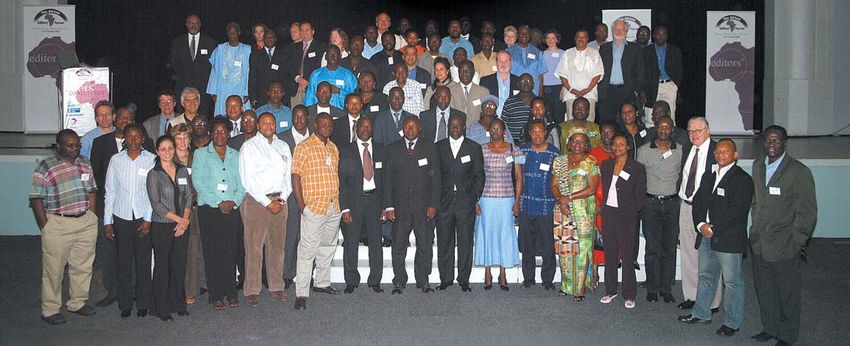
CHAPTER 4

    Unity Conference: Oct 1996
                                                                   with other cultures to enliven them.” Sanef was exciting
    TOUGH TALKING
                                                                   because it drew on two cultures.
    Unity did not come easily to about 80 journalism leaders           From Anton Harber came the appeal that for too
    who gathered in Cape Town. Some editors, critical of the       long South African journalists had spoken with different
    event, chose to not attend.                                    voices – but one voice did not mean a centralised voice.
       Moegsien Williams reminded the meeting that it was              Thami Mazwai described media’s role as being “to
    the eve of the anniversary of the 1977 bannings of news-       protect the freedoms we fought for”. The country was
    papers. “This unprecedented coming together is a consid-       headed for disaster unless media decided to be part of the
    erable achievement indeed,” he said. “This forum should        new society. Sometimes differences were very bitter, but
    be built about a single pillar of freedom of expression, but   “but one thing we all believe in: media has to be free”.
    providing a roof for a diverse spectrum of media voices.”          The conference broke into workshops on media
    The conference had come at an opportune time, as the           diversity, media freedom, what was then called “affirma-
    president of the Constitutional Court had criticised the       tive action”, education and training, as well as the struc-
    press and needed to be engaged on the matter.                  ture, goals and activities of a new editors’ forum. On the
       Anthony Sampson, former editor of Drum, made                final morning, resolutions were debated and adopted.
    opening remarks, highlighting how drawing on diverse           These called for Truth Commission hearings to be open
    experiences was a source of creativity. Referring to the       and condemned media repression in Zambia.
    UK, he quipped: “The English are themselves dull, com-             Mike Tissong, still BEF secretary, described the event:
    placent and indifferent, always needing to be bombarded        “Editors at the conference conducted themselves with          These are the founding members of Sanef – those who met at Breakwater Lodge

     10    PART OF THE STORY                                                                                                                                                                            PART OF THE STORY   11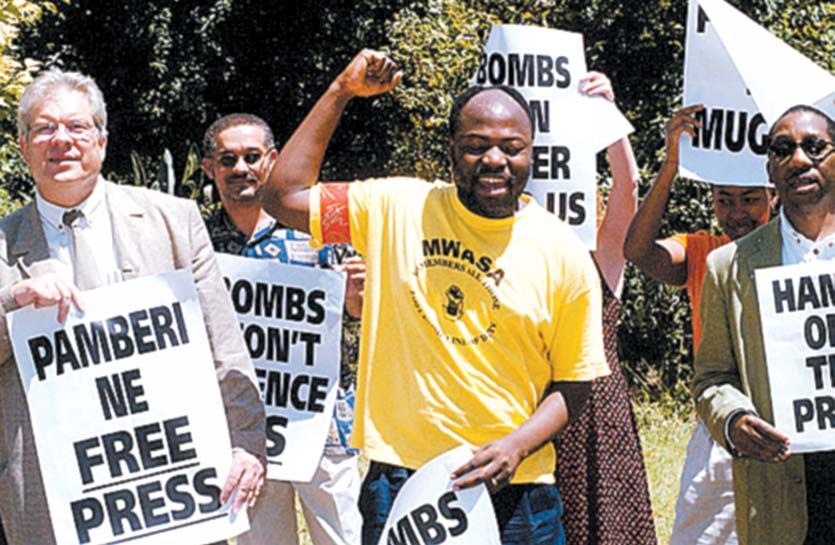
CHAPTER 4
1996: Founding commitments
Editors are typically individualistic people
PREAMBLE with strong opinions, so uniform responses
Recognising past injustices in the media, we commit
ourselves to a programme of action to overcome these to the commitments [of the conference]
openness not experienced among leaders in the industry
injustices and to defend and promote media freedom and OUTCOMES can be excluded. And that will probably be
before and the hidden agendas that were feared in the
independence.
run-up to the meeting did not materialise. There were Among the outcomes of the unity meeting were Sanef’s the source of a lot of infighting in the
BELIEF tensions and strong words exchanged, but they were “preamble, belief, declaration of intent, organisation and future. Sanef will not be able
It is our belief and understanding that: done in the spirit of keeping all eyes on the prize of leav- programme of action”. This founding document guided to sanction editors that
• Public and media scrutiny of the exercise of political ing Cape Town’s Breakwater Lodge with an organisation the forum until its launch 15 months later. do not stick to the
and economic power is essential;
that will express the interests of South African editors.” Its preamble shows a compromise between the BEF spirit in which Sanef
• The law related to the operation of media should be
consistent with South Africa’s Bill of Rights in its Deputy President Thabo Mbeki featured as a dinner focus on transformation and the CoE concern with
was formed.
protection of freedom of expression; speaker and said: “Sitting together in Sanef as black and media freedom, and has a similar ring to the preamble to
– Mike Tissong, 1996
• Journalists and media owners have a duty to work to white South Africans we have the rare possibility to the South African Constitution.
the highest professional standards and ethics; influence one another, to impact on one another as Big goals and a complex programme of action were
• Journalists and journalism teachers should embrace a
equals, to make interventions in our society in ways set for an organisation that had no staff and whose mem-
learning culture by committing themselves to on-going
education and training. which will explain why we thought it was ever necessary bers had full-time jobs. These included:
to come together to form one editors’ forum. Surely it • an annual report on affirmative action;
DECLARATION OF INTENT cannot be that we formed Sanef so that we could have • strong action on both media freedom and the promo-
• To nurture and deepen media freedom as a nonracial tea parties.” tion of diversity;
democratic value in all our communities and at all
• redressing race and gender imbalances in journalism
levels of our society;
• To foster solidarity among journalists and to promote and media houses; and
co-operation in all matters of common concern; • establishing communication channels with govern-
• To address and redress inappropriate racial and
gender imbalances prevalent in journalism and news
organisations and encourage corrective action and a
ment, the judiciary and other statutory groups.
Sanef’s structure was set up. Future councils would
breakwater lodge
I remember ...
Breakwater Lodge was a watershed conference. Many of us
be elected without quotas, but the unity meeting chose knew of each other or knew each others’ work, but we
transformation of culture within the industry; had never sat down together as a group of senior editors –
• To promote media diversity in the interests of an interim council based on a formula: five BEF; five across race and gender, broadcast and print – to discuss
fostering maximum expression of opinion; CoE; five broadcast; and five others including magazines issues of common concern to the journalistic profession.
• To promote the process of media education and to and educators. The first Sanef leadership was elected: It started off in a very fragile way, with most of us
help aspirant and practising journalists acquire or Mazwai as chairperson, Brian Pottinger as deputy and walking on eggshells and being very careful how we
develop skills; phrased things.
S’bu Mngadi as secretary-treasurer.
• To promote professional freedom and independence But there was a big, cathartic breakthrough when
in broadcast media and all media funded by public An editorial in Die Burger afterwards noted that all feelings ran high and discussions got very heated on issues
authorities; media branches were now represented in one body and around corrective action, and past injustices to black
• To encourage government to ensure transparency and that its cornerstone was press freedom – with the profes- journalists in particular. Veteran journalist John Battersby
openness in administration and to pass laws sional development of journalists and corrective action as stood up and gave a very moving apology as a white
ensuring maximum freedom of information; journalist to his black colleagues, which went to the very
additional aims. “Sanef’s unity did not come without dif-
• To use all available institutions to defend heart of the damage done by apartheid to journalism.
media freedom. ficulty, but there appears to be greater mutual under-
– Judy Sandison
standing already,” the paper said.
12 PART OF THE STORY PART OF THE STORY 13
CHAPTER 5

    Setting up Sanef
                                                                  intern/cadet training schemes, information seminars for     President’s strong criticisms of black journalists. It was   promised to send staffers. However, the seminars were
    THE FIRST COUNCIL
                                                                  journalists and public servants, and fundraising for an     agreed to meet every three months to improve govern-         noted for having a positive impact on relationships.
    Sanef had a clear programme of action but inherited all       office with one staffer. There was no report from the       ment-media communication. The Minister of Safety and
    the divisive issues of the media and the loud criticisms of   media diversity subcommittee.                               Security, Sydney Mufamadi, and police chief George
                                                                                                                                                                                           COMTASK CONTRIBUTIONS
    the ANC government. It was a fragile unity. The 20 jour-          Council decided to draft responses for the next meet-   Fivaz also attended.
    nalism leaders on that first council held a wide variety of   ing with Mandela on anti-media laws and the Open                The Sanef council met Constitutional Court president     In October 1997, the cabinet started to transform the
    strong viewpoints as evident in their meetings with           Democracy Bill. It also agreed to call on members to        Judge Arthur Chaskalson and Chief Justice-elect Ismail       South Africa Communications Services which had con-
    President Mandela. This period saw increased black own-       co-operate with the TRC’s inquiry into the media – but      Mahomed on November 28, and discussions again                trolled state information during apartheid. It accepted the
    ership in media via Times Media Ltd and commercial            Sanef as such would not make a submission (See Ch 10).      included Section 205.                                        recommendations of “Comtask”, a committee including
    radio stations: South Africa’s editors would have to keep         S’bu Mngadi resigned as he was moving to a corporate        Another large Sanef delegation went for a second         (in their individual capacities) Sanef members Raymond
    pace with transformation in their own domains.                job, and Latiefa Mobara was elected secretary-general.      meeting with President Mandela on June 10 1997.              Louw and Mathatha Tsedu. The Government Communi-
                                                                  Shaun Johnson and Anton Harber also moved to manage-        Editors asked him about his public statement in Zimbab-      cation and Information System (GCIS) was set up with
                                                                  ment jobs, so were replaced as CoE representatives on       we that black reporters kowtowed to their white bosses       Joel Netshitenzhe appointed CEO in February 1998 –
    SUBCOMS GET GOING
                                                                  council by Jim Jones and John Battersby.                    and did not express their real opinions. A robust            another body with which Sanef needed to establish a
    There was a sense of urgency once Sanef was founded. A            The second Sanef council meeting was held in Dur-       exchange followed. Mandela told them certain journalists     relationship.
    meeting was quickly secured with President Mandela,           ban on June 7. A draft constitution was adopted and it      were questioning his integrity and in many cases                 GCIS was not perceived as a threat to the media,
    and by October 31 council members had been allocated          was noted that pledges of R150 000 had been obtained        “conservative whites” were still controlling the media.      which further deflated lingering CoE-style fears of some
    to subcommittees:                                             from media companies to set up the office. A task group                                                                  white editors that an ANC government would suppress
     • Media Diversity – convened by Mazwai                       was asked to probe the idea of a Media Charter. Mary                                                                     or seek to control the media.
                                                                                                                              INFORMATION EXCHANGES
     • Training and Affirmative Action – Pottinger                Papayya joined council to represent radio.                                                                                   It had been an active first year for Sanef. The organi-
     • Code of conduct and promotion of media freedom –                                                                       On March 20 1997, the first of Sanef’s series of media-      sation was also a founder member of the office of the
        Williams                                                                                                              government information exchange seminars was held in         Press Ombudsman. The organisation had moved from
                                                                  MANDELA AND JUDGES
     • Constitution and membership – Tissong                                                                                  Johannesburg. The Health Minister and the Director           embryonic unity to becoming a busy forum with a range
        Sanef members were spread all over the country but        Five days after the Unity Conference, on October 25,        General of Department of Communications attended, as         of activities.
    largely concentrated in Johannesburg. They communicat-        Mazwai sent council members a fax: “President Mandela       did officials and 21 journalists from around SA. Another
    ed by phone, fax and sometimes email. When possible,          has agreed to a meeting with Sanef at 8am on Friday         four seminars followed, with a variety of
    subcommittees met face-to-face.                               November 1. The committee feels that the meeting            government departments.
                                                                  should be open to all council members.”                        At these events, difficulties
                                                                      On November 1, all but two of the Sanef council met     and expectations about commu-
    MEETINGS BEGIN
                                                                  Mandela at the Union Buildings in Pretoria. The President   nication were aired in order to
    The first Sanef council meeting was held in Johannesburg      said he hoped more black members would be appointed         reduce misunderstandings. In
    on February 15 1997. It agreed on ambitious proposals,        to the council. The use of Section 205 of the Criminal      many cases, the Sanef leadership
    including a roadshow promoting media freedom, a media         Procedures Act to compel journalists to disclose sources    was frustrated by journalists not
    ethics workshop, an internet site, a workshop on              was among the subjects discussed (See Ch 9), as were the    turning up, although editors had

     14   PART OF THE STORY
CHAPTER 6
First controversies
from naming Saudi Arabia’s involvement in a major arms
AGREEING TO DISAGREE
deal. Legislation used to suppress information during Raymond
Before 1996 ended, Sanef started experiencing severe apartheid had been “resurrected” for use by a government Louw
internal differences. committed to transparency, Sanef said. Nevertheless, the speaks at
On December 30, the BEF welcomed the Truth and Sunday Independent publicised the name. the TRC
Reconciliation Commission’s probe into the role of the Should editors obey the law because the government hearings
media in the violation of human rights from 1960 to is legitimate, or break it because they believe in media
1994, but objected to the “proposed preliminary investi- freedom? On one level, this was the issue. On another it
gations by an intermediary body”, the Freedom of was whether Sanef’s leadership represented all members. Sanef member Williams was part of the Independent and heaping contempt on the transformation process and
Expression Institute (FXI), which it felt would favour the On August 29, Mazwai’s column in Business Day team. That March he had criticised his former Cape Argus do not even recognise our courts of law. They see the
English press. The main protagonists were both in Sanef: denounced those editors who had defied the court order. editor, John O’Malley, for rejecting the “humble apology” media as a law and an institution unto itself in which they
chairperson Thami Mazwai (BEF) and council member Mazwai was identified as Sanef chairperson. Pottinger proffered by Independent on behalf of its previous own- tell South Africa what to do.” Mazwai also resigned from
Raymond Louw (FXI). Louw was a former editor of the and Moegsien Williams sent formal letters of objection. ers, the Argus Company, about discrimination experi- the BEF, which would continue to be part of Sanef.
anti-apartheid, liberal Rand Daily Mail. In January 1997 Williams wrote: “Without going into the demerits and enced by black journalists. The leadership kept Sanef going and did not counter-
the TRC decided to drop the research. merits of the Denel issue, I must distance myself from a On September 26, 127 journalists from Nasionale attack Mazwai. Instead, it united members around Sanef’s
The issue brought up the question of procedures, and paragraph in a column which gave the impression you Pers (Naspers), the Afrikaans publishing group, defied new activities – particularly the launch conference.
at its first meeting the council agreed to consult members were speaking on behalf of Sanef. To my knowledge, their employers by apologising for their role during
over statements about controversial matters. neither the members of the council nor the management apartheid. They included some Sanef members.
NEW CHAIR CHOSEN
In April, Brian Pottinger told the TRC that council had committee of Sanef were consulted about the content of
“decided in view of the wide differences in experience, your column.” Sanef held its third council meeting in Johannesburg two
MAZWAI RESIGNS
views and attitudes of the members it was unlikely that Mazwai said he believed 80% of Sanef would support days after the resignation. Williams was chosen as acting
Sanef, a professional body devoted to improving journal- him in condemning the editors, but none broke ranks to As a result of the Denel issue and range of perceptions chair. Joe Thloloe offered to organise the January 1998
istic standards and defending media freedom, would be take his side. voiced at the TRC hearings from Sanef members, public launch and set up an office.
in a position to provide a unified submission”, but added cracks were appearing in Sanef. Pottinger was quoted as The Media Charter task group – Jim Jones, John Bat-
that it had called on members to co-operate. saying he hoped Sanef’s aims would not be diluted “by tersby and Mike Siluma – reported that Sanef should not
TRC HEARINGS
This is an example of Sanef members agreeing to dis- major ideological wars among its members”. Others said dictate to editors, but each media institution should have
agree and Sanef therefore keeping silent: as a “forum” it At the same time, divisions in the media – interpretations Sanef was not dealing with pertinent issues, or it seemed a code. They said the “function of Sanef is to provide pro-
cannot always speak with one voice. of the past and of what was needed now to build the new racist attacks were preventing constructive criticism. fessional support to editors, rather than act as a policing
South Africa – were being aired in the media in the On October 2, Mazwai resigned from Sanef. He said he agency” – this should be left to the courts and independ-
build-up to the TRC hearings. was disillusioned with many of the white Sanef members. ent complaints structures such as the ombudsman.
DISPUTE OVER DENEL
Some newspapers and journalists appeared at the In a letter to Tissong (BEF secretary), Mazwai said: “They And, in a sequel to ex-security men telling the TRC
On July 25, Sanef condemned arms company Denel for TRC media hearings from September 15 to 17. These do not believe in the media as an integral part of South there were still many agents in the media, Sanef called for
trying to suppress information. Denel had been granted a included representatives for TML and Independent Africa and, therefore, part and parcel of the country’s their resignation and “urged any journalists approached
Pretoria High Court interdict preventing newspapers Newspapers – the two big English liberal press groups. national objectives. Some even go to the extent of abusing in the future to reject and publicise such advances”.
16 PART OF THE STORY PART OF THE STORY 17CHAPTER 7
a role for Sanef in ensuring
A role for Sanef in ensuring racial and
Sanef launch racial and gender equity in
gender equity in the media industry was at
the very heart of the unity process
the media industry was at the
between the CoE and the BEF. Under no
MOVING TOWARDS LAUNCH very heart of the unity process
circumstances must this role be diminished
In its first year, Sanef was frequently in the news. Its ... under no circumstances
or watered down. – Moegsien Williams, acting
Sanef chair, at the launch conference
members made its internal problems public through their
own media.
must this role be diminished
At the same time, its leadership was changing fast:
besides Thami Mazwai, six others left before the end of
LAUNCH CONFERENCE
1997 because they were no longer editors. Sanef had lost
all three of its executives, both BEF and CoE chairpersons It was a powerful attack, to which Sanef did not immedi-
and three of the four people pivotal in the unity process. ately respond. Instead, it was used to give direction and
On the balcony at Eskom Centre
This was part of a fast-changing period for the media, gravity to its launch conference, as well as to establish a
particularly for newspapers, in terms of ownership but “Sanef way of responding” that was confident rather than Mike Siluma, Sowetan editor, was elected chairper-
INTRODUCTION to launch resolutions
also the appointment of black editors. confrontational. son, with Williams as deputy and Judy Sandison as sec-
However, at this time, in November 1997, veteran About 80 editors, senior journalists and journalism retary-general. Siluma said Sanef had decided to see We, the delegates at the launch conference of the
journalist Joe Thloloe became acting executive director – trainers, including prominent BEF members, attended Mbeki in February and Mandela in March, where the SA National Editors’ Forum, having noted
President Nelson Mandela’s remarks at the ANC’s
Sanef’s first employee. He set up the Sanef office and the launch at Eskom Centre from January 23 to 25 1998. emphasis would be on the obligation in the new Consti-
50th conference as well as other criticism of South
worked towards the launch conference. The report by Williams as acting chairperson notes tution to protect the media’s historic role. African media, remain committed to transforming
Despite the difficulties, Sanef work had continued – the problems of trying to unite the two vastly different our industry to represent fully the communities we
including three large events. A Sanef-Independent News- bodies of people of different ideologies. Nonetheless, the serve. We reaffirm that South Africa’s new
TAKING STOCK constitution has granted us a historic role to be
papers conference on journalism training was held at forum had been set up, three council meetings held and
critical watchdogs, especially over those who wield
Rhodes University, Grahamstown, in September and a all except the diversity subcommittee had been active. In his column in Beeld, editor Arrie Rossouw wrote after- power in our society. This is a responsibility which
code of ethics workshop at Peninsula Technikon, Cape Williams called Mandela’s December remarks “a wards that some journalists had feared Sanef would we will never shirk.
Town, in November. Then a conference for educators watershed event”. He said the President knew the media adopt government’s media agenda after receiving such
To this end we bind ourselves to:
and trainers was held in January 1998. was changing and vulnerable, so this was “a bid to gain strong criticism, but the opposite had happened.
• Leading the debate on the issues affecting our
But before Sanef’s launch came President Mandela’s allies by first putting them on the defensive and making “… South African media is united in an organisation that industry and society as a whole;
harshest criticism yet. At the ANC’s Mafikeng congress in them feel they owe a moral debt to the new order in represents the interests of all interest groups.” Resolu- • Developing and defending the integrity and
December, where Mbeki was elected party president, South Africa”. However, he said, independent-minded, tions on both transformation and the watchdog role of credibility of our industry and profession;
• Forging links with like-minded groups in South
Mandela said that most of the mass media opposed the critical and professional journalists were many and would journalists had been unanimously adopted.
Africa, our continent and across the world;
ANC and declared any transformation efforts as an attack not be cowed. In responding to Mandela, Sanef needed to Sanef’s launch had been imperative, Siluma wrote. • Representing the profession on legislative and
on press freedom. be honest about its shortcomings but give prominence to “One of the main weaknesses in South African journal- restrictive issues;
“Thus the media uses the democratic order, brought its “vision of media in a democratic South Africa”. ism is that there is no credible voice. Some of the loud- • Striving for professional excellence;
• Embarking on a recruitment drive to ensure we
about by the enormous sacrifices of our own people, as After workshops, the conference agreed on its resolu- est voices are white and they are discredited. Black
represent the full spectrum of our segment of the
an instrument to protect the legacy of racism,” Mandela tions and drew up a detailed programme of action for its journalists have views but no clout. There is no debate industry.
told congress. four subcommittees. going on and therefore a vacuum.”
18 PART OF THE STORY PART OF THE STORY 19CHAPTER 8
Nat Nakasa award
been outspoken on issues of race and the media.
SETTING UP THE AWARD WHY NAT NAKASA?
A friend of Nakasa’s from the United States, Harold
By October 1997 Sanef, Print Media SA’s Media Freedom McDougall, spoke at the 2006 ceremony of his personal Nakasa was a South African journalist who died in exile
Committee and the Nieman Society of Southern Africa experiences of the writer whose name is honoured by at the age of 28. He was awarded the Nieman Fellowship
had decided to co-operate in setting up and administer- this award. “Nat was a principled, passionate, courageous in 1964 and left South Africa on an exit permit because
ing an award for integrity in journalism. This is still the person. He wanted freedom and justice not only for his the government would not give him a passport to travel
only award Sanef backs and promotes, though it is often own people, but for everyone. He was quiet and unas- to the United States. After completing his year of studies
approached to endorse or nominate judges for other suming, easy to know, generous with his time and space. at Harvard University he moved to New York, where he
awards. He was also a great listener. It seems to me that a good grew increasingly homesick and isolated. He committed
Nominations were called for and the first award journalist, like a good social activist or a good leader, suicide on July 14 1965.
ceremony was held in 1998, on October 19 – South must know how to listen. That was Nat.” Nathaniel Nakasa was born in 1937. He moved to
Africa’s Media Freedom Day. In 1999, a Sanef council decision to market and Johannesburg to follow his dream to be a journalist: he
The first award went to writer and build its national status cemented Sanef’s commitment to contributed to the Golden City Post, was an assistant edi-
broadcaster Jon Qwelane, who had the award. tor of Drum and the first black columnist on the Rand
roundly criticised Sanef the Other awards have larger prizes, but the Nat Nakasa Daily Mail.
previous year but had also remains prominent as the only one for integrity. Since By 1963 when he founded a literary journal, The
2003, the award-giving ceremony has been held at a Classic, he was a prominent journalist, known for his
dinner during Sanef’s mid-year AGM. By 2006, the prize particular writing style, subtle humour and independent
was R20 000 and a certificate. views that crossed race and political barriers to expose
racial prejudice and black oppression.
Mine is the history of
I am more at home with an Afrikaner than
THE WINNERS: 1998 TO 2006
the Great Trek,
with a West African. ‘My people’ are South 1998 Jon Qwelane, writer and broadcaster
1999 Mzilikazi wa Afrika, Sunday Times investigative
Gandhi's passive
Africans. Mine is the history of the Great
Trek, Gandhi’s passive resistance, the wars
journalist
resistance, the wars of
of Cetshwayo and the dawn raids that gave
2000 Mathatha Tsedu, deputy editor of The Star
2001 Sunday Times investigative team André Jurgens,
Cetshwayo and the dawn
us the treason trials of 1956. All these are
Jessica Bezuidenhout and Mzilikazi wa Afrika
2002 Justin Arenstein, founding editor of African Eye
raids that gave us the
South African things. They are part of me. News Service
2003 Debbie Yazbek, The Star’s chief photographer
treason trials of 1956
– Nat Nakasa, 1965
2004 Buks Viljoen, investigative reporter of the Lowvelder
2005 Veteran photographer Alf Kumalo
2006 Guy Berger, head of the School of Journalism and Sanef members and guest at the 2005 award-
Media Studies at Rhodes University giving ceremony
20 PART OF THE STORY PART OF THE STORY 21CHAPTER 9
Old laws and new laws people allow us into
“We go into situations where we present
these situations because
ourselves as journalists and people allow
they know we will respect
us into these situations because they know
WHAT’S THE PROBLEM? ties would not scrap 205 entirely. A “just cause” exemp-
tion would have to be argued on a case-by-case basis to
PROBLEMS PERSIST their confidentiality. If
we will respect their confidentiality. If we
are called to testify, then we may as well
The Unity Conference resolved that Sanef would establish show that giving up names would jeopardise the right to Despite the Record, on Media Freedom Day 2000 media
we are called to testify,
be police consultants.” – Mathatha Tsedu,
communications with the judiciary and use “all available media freedom. Raymond Louw was consulting lawyers houses were raided by the Scorpions looking for informa- then we may as well be
Sanef chairperson, in 2001
institutions to defend media freedom, including the
Constitutional Court, parliamentary bodies and the
on this option.
Events, however, ran ahead. In 1998, the forum had
tion on the Staggie case. Sanef met Bulelani Ngcuka,
National Director of Public Prosecutions, who had issued
police consultants
Public Protector”. to call for the withdrawal of a summons by the Western the search warrants. This meeting discussed, without
The problem has been that many apartheid era laws Cape Attorney-General to photographers to testify as accord, the difficulty in balancing the need to fight crime At this point, Sanef editors felt so strongly that, in
are still on the statute books. At the same time, new laws state witnesses in a case about the mass killing of gang with journalists’ right to protect sources and information. June 2001, 40 of them protested outside the Cape High
are being introduced and Sanef needs to ensure that leader Rashaad Staggie. Sanef in 2000 again found itself condemning subpoe- Court before the appearance of their deputy chairperson,
these are in line with the Constitution and its own vision The press statement from Sanef said: “Journalists nas – this time against the SABC and Reuters concerning Die Burger editor Arrie Rossouw. He had applied for the
of media freedom. cannot be expected to give evidence that can place their video material on Staggie’s death. The issue dragged on, withdrawal of a search warrant (apparently to obtain
Since 1996, Sanef has been working on: lives at risk.” and seven months later Sanef issued another statement photos of the Staggie killing). Sanef repeatedly argued
• Media law reform – especially Section 205 of the supporting Reuters and APTN: police were still trying to that journalists should not be put in the role of police
Criminal Procedure Act. get video tapes. A month later, it welcomed a high court informers nor do police work, because this damaged
TEMPORARY SOLUTION
• Input on new laws – submitting views to parliament. decision setting aside the attempts. their ability to gather information in the public interest.
While the forum has been a highly vocal watchdog in Sanef then met the Attorney General, Justice Minister
these areas, its energy has reduced the threats rather than Dullah Omar and Safety and Security Minister Sydney
eliminating them entirely. Mufamadi in 1998. A committee of four was set up, and
drew up a proposal for an interim agreement.
However, just days after the meeting, three Cape
SECTION 205
Town editors were issued subpoenas to give evidence and
Section 205 of the Criminal Procedure Act was used by hand over material in the Staggie case. They publicly
the apartheid government to subpoena journalists to refused to co-operate.
reveal the identities of confidential sources – in those days Nevertheless, on February 19 1999, a “Record of
often linked to banned liberation groups. Understanding” was signed between the Minister of
Concerns about this provision were raised with Pres- Justice, the Minister of Safety and Security, the National
ident Mandela in 1996, and he undertook to follow up if Director of Public Prosecutions and Sanef. It noted a need
Editors
Sanef submitted a list of offending laws. Section 205 was to continue to negotiate on 205. protest
also discussed with the Constitutional Court judge pres- In the meantime, when the state wanted a journalist to outside
ident and Chief Justice-elect when Sanef met them in testify or hand over materials, the decision would first be the Cape
1996. cleared by the National Director of Public Prosecutions – High
Court in
However, by the time the council had its second which office would also attempt to mediate before any 2001
meeting in 1997, it was becoming clear that the authori- subpoena was issued.
22 PART OF THE STORY PART OF THE STORY 23You can also read


