PERFORMANCE WORK STATEMENT (PWS) FOR - SECOND GENERATION WIRELESS LOCAL AREA NETWORK (2GWLAN) 86 LRS B-2368 & B-2379 Wi-Fi EXPANSION Ramstein AB ...
←
→
Page content transcription
If your browser does not render page correctly, please read the page content below
86 LRS WIFI Installation

PERFORMANCE WORK STATEMENT (PWS)

                 FOR

    SECOND GENERATION WIRELESS
   LOCAL AREA NETWORK (2GWLAN)

 86 LRS B-2368 & B-2379 Wi-Fi EXPANSION

          Ramstein AB, Germany

             (16 June 2020)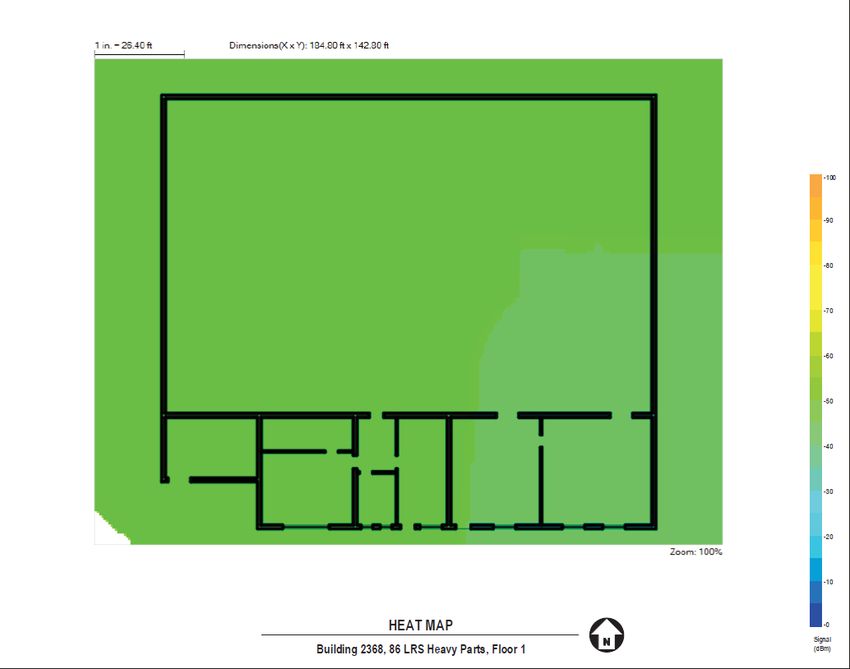
86 LRS WIFI Installation

               PERFORMANCE WORK STATEMENT (PWS)
                      TABLE OF CONTENTS

SECTION                                            PAGE
1.SCOPE                                            3

2.GENERAL INFORMATION                              4-6

3.APPENDICES                                       12
86 LRS WIFI Installation
86 LRS WIFI Installation

1. Purpose.
This is a non-personnel services contract to provide a, contractor-installed solution to engineer,
furnish, install, configure, and test 2GWLAN additions to obtain full coverage in the interior spaces
in the in the Logistics Readiness Squadron (86 LRS) buildings 2368 and 2379.

2. Scope of Work.
This PWS defines the requirements for the Contractor to engineer, furnish, install, configure, test
(EFI&T) and place into service an approved wireless network system listed on the Approved
Products List for the 86 LRS facilities 2368 and 2379 at Ramstein Air Base (AB), Germany (DE).
System Description. The proposed WLAN will consist of Interior mounted Access Points (APs), Air
Monitors (AMs), and new premise wiring to connect the APs/AMs back to the existing network
switches in each facility. The APs and AMs will be installed throughout the affected facilities of the
86 LRS facilities 2368 and 2379.

   2.1 Access Points/Air Monitors. All Access Points and Air Monitors proposed for this project will
       be listed on the Air Force BITI-Wireless approved products suite.
      2.1.1   86 LRS Building 2368 (1 floors)
      2.1.2   Contractor shall Engineer, Furnish, Install and Test (EFI&T) APs and AMs to support
              the identified offices and storage spaces in building 2368.
      2.1.3   Contractor shall EFI&T Local Area Network (LAN) cabling from the AP/AM location
              to the existing network switch. This will include all equipment and materials necessary,
              such as conduit (if needed), cable, clamps, connectors, junction boxes, faceplates, and
              patch cords.
   2.2 86 LRS Building 2379 (1 floors)
      2.2.1   Contractor shall EFI&T APs and AMs to support the vehicle support bays, equipment
              bays, warehouse spaces, and training spaces surrounding the exterior of the warehouse
              building 2379.
      2.2.2   Contractor shall EFI&T Local Area Network (LAN) cabling from the AP/AM location
              to the existing network switch in building 2368 as there is no current infrastructure
              present at 2379. This will include all equipment and materials necessary, such as
              conduit (if needed), cable, clamps, connectors, junction boxes, faceplates, and patch
              cords.
3. Systems Engineering. The contractor shall provide systems engineering solutions for the
   analysis, installation, integration, configuration, and testing of new and upgraded systems
   associated with delivery of infrastructure capabilities. After award, the contractor shall be
   responsible for submitting a Telecommunications Systems Installation Plan (TSIP) for approval
   before accomplishing any tasks.

       For the contractor, the following works are considered minimum:

       •Functional Specifications (FS): Includes the description of supply, technology and hardware
       used, and data structures functionality. It will include annexes with documentation on
       hardware manufacturers. List of materials shall indicate manufacturer.
86 LRS WIFI Installation
•Test protocols. Testing protocols for monitoring and verifying correct commissioning will be
developed.
4. Requirement/Description of Services. The contractor shall provide all personnel, equipment,
supplies, facilities, transportation, tools, materials, supervision, travel, and other items and non-
personal services necessary to engineer, furnish, install, configure, and test (EFI&T) a new
wireless network coverage area to the existing Ramstein AB wireless architecture. The
Government shall not exercise any supervision or control over the contract service provider
performing the services herein. Such contract service providers shall be accountable solely to the
Contractor who, in turn is responsible to the Government. The new coverage area will encompass
the following areas:
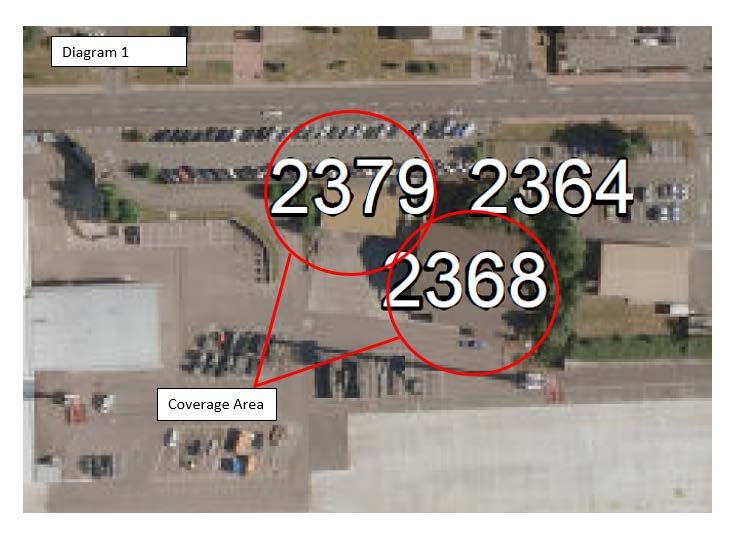
4.1. Internal coverage of building 2368 (See Attachment 1, diagram 1)
4.2. Internal coverage of building 2379 (See Attachment 1, diagram 2)
It is the contractor’s responsibility to determine ultimate placement of hardware for optimal
WIFI coverage and to ensure the proposed WLAN will consist of Interior mounted Access
Points (APs), Air Monitors (AMs), and new premise wiring to connect the APs/AMs back to
the existing network switches in each facility.
The contractor shall perform to the standards in this task order (T.O.). These services are
considered mission non-essential.
Period of Performance: The period of performance shall be for 8 months from date of T.O.
award.
Continuation of Essential DOD Contractor Work During Crisis. IAW DoDI 3020.37. IAW AFI
63-124, para 2.7.1, and DODI 3020.37 this requirement is not considered mission essential.
4.1 Network Services and Solutions
Any wireless infrastructure installed must be capable of being incorporated into the existing core
wireless network architecture. All wireless installations must comply with Air Force 2nd
Generation Wireless Local Area Network (2GWLAN) outlined in the National Security Agency
Central Security Service web site https://www.nsa.gov/Resources/Everyone/csfc/Components-
List/ from approved vendors using CNSSP-11 Compliance standards for which NIAP Validation
has been completed. Contractor must show how the Joint Interoperability Test Center (JITC)
wireless network architecture is met in their design.
4.2 Network Infrastructure
It is the Contractor’s responsibility to test all Access Points (AP), Air Monitors (AM), antennas a
and grounding for functionality and that they meet all standards and requirements. The Contractor
must correct any deficiency and provide 86 CS/SCX all testing results. The Contractor shall
provide a frequency and channel test at peak times to ensure that there is minimal interference
and correct functionality. The Communications Squadron will serve as the installation focal
point.
4.3 Site Preparation and Installation Services
The contractor shall perform site preparation and installation activities to support implementation
of required services and solutions under this contract at Ramstein AB at locations as outlined at
attachment 1, hereafter “required locations”.
4.4 Requirements Analysis and Conceptual Design86 LRS WIFI Installation
The contractor shall perform requirements analyses and conceptual designs at required locations.
During this process, the contractor shall collect all the information to complete a requirements
analysis and conceptual design. The contractor shall survey, evaluate and provide technical advice
concerning all existing infrastructures, communications, power, Heating, Ventilation and Air
Conditioning (HVAC) and environmental aspects of the site. The contractor shall provide an
implementation plan, in accordance with the T.O., reflecting the strategy, schedule and
recommendations (e.g., site architecture, topology and configuration) for the implementation with
considerations of on-site failover and continuity of operations. The government will provide
applicable information, as available, such as existing/projected user network resources and
locations, base support requirements and other written information related to specific
implementation for this T.O. to establish the unique characteristics of each site.
4.5 Site Survey
The contractor shall perform site surveys at required locations. The findings of the site survey and
any actions required in preparation for system installation shall be documented.
4.6 Systems Engineering
The contractor shall provide systems engineering solutions for the analysis, installation,
integration, installation, configuration, and testing of new and upgraded systems associated
with delivery of infrastructure capabilities. After award, the contractor shall be responsible for
submitting a Telecommunications Systems Installation Plan (TSIP) for approval before
accomplishing any tasks.
For the contractor, the following works are considered minimum:
•Functional Specifications (FS): Includes the description of supply, technology and
hardware used, and data structures functionality. It will include annexes with
documentation on hardware manufacturers. List of materials shall indicate manufacturer.
•Test protocols. Testing protocols for monitoring and verifying correct commissioning
will be developed.
5. Government Support
The government will furnish facilities and utilities to the contractor, including light, heat,
ventilation, electric current and outlets for use by installation personnel as required. The facilities
will be readied prior to arrival of contractor personnel and be provided at no cost to the contractor.
The contractor shall provide required temporary utilities, which are not readily available in the
work area.
6. Installation
Install cables, antennae, and access points to provide indoor and outdoor access through the
designated area to ensure NIPR coverage is available to the maintenance technicians in the 86
LRS compounds.
6.1.1.1. Inside Plant
The contractor shall, install and configure all the components for inside the plant (e.g., power,
groundings, HVAC, racks, fiber optic distribution panels, equipment, internal cabling, comm.
closet, etc.). The contractor shall install and test all cable and components IAW accepted industry
standards. Electrical and communications cable, conduits, and circuits shall be installed IAW the
Berlin Protocol Expert Panel Microelectronics 2010 / Complies with IEC 60364. The contractor
shall clearly label each end of every individual cable in accordance with the floor plans or
engineering drawings. The contractor shall provide attached labels that are durable and legible.
6.1.1.2. Tools and Testing Support86 LRS WIFI Installation The contractor shall provide all tools, installation materials and test equipment required to perform any required product installation and maintenance. All tools and test equipment shall remain the property of the contractor. Any damage caused by the contractor to existing site facilities or equipment which might occur during site preparation, installation, testing or cutover of the system will be repaired at the expense of the contractor. The site shall be restored to the original condition which existed prior to the event unless otherwise directed. The contractor shall demonstrate that the installed system meets the reliability/availability/maintainability requirements of the TO. Mean Time between Failure data will be used to calculate the reliability/availability/maintainability of the system. The calculations shall be based on all of the equipment installed in the network. The contractor shall be capable of performing reliability, availability and maintainability analyses of components, isolated sub-networks and the entire system. 7. Host Nation Installations The contractor shall determine if any host nation restrictions are applicable to any installation. The contractor shall be responsible for compliance with all host nation labor, safety and environmental laws, regulations and standards applicable at each installation location. If any additional permits or regulations apply, the contractor shall inform the government and provide a proposal to initiate the appropriate documentation upon approval from the government. 8. Relocation and Removal The contractor shall relocate and remove systems as specified in the T.O. The contractor shall be responsible for storage, staging and deployment of any equipment and materials provided as part of awarded T.O.s unless otherwise mutually agreed upon by the contractor and the government. If removal of equipment and/or material is necessary, the contractor shall be responsible for disposal and shall comply with all applicable industry rules and regulations. Any equipment removal and/or disposal shall be coordinated with a designated official at the host base communications squadron. All trash and hazardous waste, generated as a result of the work performed, safety inspections, emergency or routine repairs, shall be disposed of off base, IAW the German Waste Disposal Law at no additional cost to the Government. 9. Conformance with Environmental Management Systems The Contractor shall perform work under this contract consistent with the relevant environmental policy and objectives identified in the installation environmental management system (EMS) applicable for your contract. The Contractor shall perform work in a manner that conserves water, energy and other resources to the maximum extent feasible and ensure minimum production of waste as possible, giving preference to recycling and reutilization opportunities. Furthermore, the Contractor shall give preference to less toxic materials whenever available and still reliable for their work. In the event an environmental nonconformance or noncompliance of host nation and USAF environmental laws and regulations associated with the contracted services is identified, the contractor shall take corrective and/or preventative actions. In the case of a noncompliance, the Contractor shall respond and take corrective action immediately. In the case of a nonconformance, the Contractor shall respond and take corrective action based on the time schedule established by the EMS Coordinator. In addition, the Contractor shall ensure that their employees are aware of the environmental management system on base and how these requirements affect their work performed under this contract. All on-site contractor personnel shall receive the installation EMS awareness level information. Conformance with Environmental Requirements. The contractor shall perform all work in accordance with applicable German and US Air Force environmental laws, regulations and operating standards, including but not limited to the Final Governing Standards (FGS) for Germany. The contractor shall be immediately capable of understanding and addressing environmental laws and regulations as they pertain to work performed under this contract.
86 LRS WIFI Installation

 The FGS for Germany and other important environmental laws & requirements applicable for all
 contractors working on base will be provided upon request.

10. Contractual Requirements

 10.1 Contractor Manpower Reporting Application (CMRA).
 The contractor shall report ALL contractor labor hours (including subcontractor labor hours)
 required for performance of services provided under this contract for the Government via a secure
 data collection site. The contractor is required to completely fill in all required data fields at
 http://www.ecmra.mil.Reporting inputs will be for the labor executed during the period of
 performance for each Government fiscal year (FY), which runs 1 October through 30 September.
 While inputs may be reported any time during the FY, all data shall be reported no later than 31
 October of each calendar year. Contractors may direct questions to the CMRA help desk.
 Reporting Period: Contractors are required to input data by 31 October of each year. Uses and
 Safeguarding of Information: Information from the secure web site is considered to be proprietary
 in nature when the contract number and contractor identity are associated with the direct labor
 hours and direct labor dollars. At no time will any data be released to the public with the
 contractor name and contract number associated with the data. User Manuals: Data for Air Force
 service requirements must be input at the Air Force CMRA link. However, user manuals for
 government personnel and contractors are available at the Army CMRA link at
 http://www.ecmra.mil.
10.2 Program Management
 Within 30 days of task order award, the Contractor shall obtain approval through DCOPS
 order to perform the services outlined in this performance work statement
 The contractor shall identify a Program Manager who shall be the primary representative
 responsible for all work awarded under this contract, participating in Program Management
 Reviews and ensuring all standards referenced herein are adhered to. The contractor work hours
 will be: Monday-Friday, 0900-1700L, no weekends, holidays, or command down days.

 Holiday and Command Down Days 2020
 Date Federal holiday - Day of the week
 January 1, 2020 New Year's Day - Wednesday
 January 2, 2020 New Year's Day (observed) - Thursday
 January 21, 2020 Martin Luther King Day - Monday
 February 17, 2020 Presidents' Day* - Monday
 May 29, 2020 Memorial Day - Monday
 July 3, 2020 USAFE-AFAFRICA Down Day - Friday
 September 7, 2020 Labor Day - Monday
 October 12, 2020 Columbus Day - Monday
 November 11, 2020 Veterans Day - Wednesday
 November 26, 2020 Thanksgiving Day - Thursday
 November 27, 2020 USAFE-AFAFRICA Down Day Friday
 December 25, 2020 Christmas Day - Friday

 Holiday and Command Down Days 2021
 Date Federal holiday - Day of the week
 January 1, 2018 New Year's Day – Friday
 January 18, 2021 Martin Luther King Day -
 Monday
 February 15, 2021 Presidents' Day* -
 Monday
86 LRS WIFI Installation
 May 31, 2021 Memorial Day - Monday
 July 5, 2018 USAFE-AFAFRICA Down Day - Monday
 September 9, 2021 Labor Day - Monday
 October 12, 2020 Columbus Day - Monday
 November 11, 2020 Veterans Day Wednesday
 November 26, 2020 Thanksgiving Day Thursday
 November 27, 2020 USAFE-AFAFRICA Down Day Friday
 December 25, 2020 Christmas Day Friday
 December 26, 2020 USAFE-AFAFRICA Down Day Tuesday
11. T.O. Management
 The contractor shall establish and provide a qualified workforce capable of performing the
 required tasks. The workforce may include a project/T.O. manager who will oversee all aspects
 of the T.O. The contractor shall use key performance parameters to monitor work performance,
 measure results, ensure delivery of contracted product deliverables and services, support
 management and decision-making and facilitate communications. The contractor shall identify
 risks, resolve problems and verify effectiveness of corrective actions. The contractor shall
 institute and maintain a process that ensures problems and action items discussed with the
 government are tracked through resolution and shall provide timely status reporting. Results of
 contractor actions taken to improve performance should be tracked and lessons learned
 incorporated into applicable processes. The contractor shall establish and maintain a documented
 set of disciplined, mature and continuously improving processes for administering all contract
 and T.O. efforts with an emphasis on cost-efficiency, schedule, performance, responsiveness and
 consistently high-quality delivery.

12. Configuration and Data Management
 The contractor shall establish, maintain and administer an integrated data management system for
 collection, control, publishing and delivery of all program documents. The data management
 system shall include but not be limited to the following types of documents: White Papers, Status
 Reports, Audit Reports, Agendas, Presentation Materials, Minutes, Contract Letters and T.O.
 Proposals. The contractor shall provide the government with electronic access to this data,
 including access to printable reports. The contractor shall provide as-built documentation
 including, but not limited to, drawings and diagrams of the solution provided under each T.O.
 identifying specific cards in a chassis/shelf. The as-built documentation shall also include layout
 drawings, power drawings/specifications, floor plans and engineering specifications generated in
 support of the installation of the system. Documentation shall also include equipment listing with
 serial/model numbers and manufacturer specifications. The contractor shall review and update the
 T.O. associated documentation, to include test data, within 20 days of completed testing and
 before completion of the AFTO 747.
       12.1. Records, Files and Documents
 All physical records, files, documents and work papers, provided and/or generated by the
 government and/or generated for the government in performance of this PWS, maintained by the
 contractor which are to be transferred or released to the government or successor contractor, shall
 become and remain government property and shall be maintained and disposed of IAW AFMAN
 33-363, Management of Records; AFI 33-364, Records Disposition – Procedures and
 Responsibilities; the Federal Acquisition Regulation, and/or the Defense Federal Acquisition
 Regulation Supplement, as applicable. Nothing in this section alters the rights of the government or
 the contractor with respect to patents, data rights, copyrights, or any other intellectual property or
 proprietary information as set forth in any other part of this PWS (including all clauses that are or
 shall be included or incorporated by reference into that contract).
86 LRS WIFI Installation
13. Security Management
13.1. Department of Defense (DoD) Identification/Installation Entry
Contractor/Employee Base Pass and Identification, Special Clearances And Vehicle Passes. The
Contractors personnel shall obtain Base Entry Identification, Installation Common Access Card
(ICAC). In order to obtain the ICAC the Contractor is required to submit a BACO-90 (Request
for Base Entry Identification) at a minimum 20 days prior, Memo of Base ID request and the
Security Questionnaire for simple security check as well as a Police Good Conduct Certificate
(Polizeiliches Fuehrungszeugnis). Coordination for completion of these tasks is the responsibility
of the contractor.
13.2. Personnel Security
Individuals performing work under this contract shall comply with applicable program security
requirements and will support the following levels of security: Unclassified.
The Contract Security Classification Specification (DD Form 254) will be at the basic contract
and T.O. level and will encompass all security requirements. All contractors located on military
installations shall also comply with Operations Security (OPSEC) requirements as set forth in
DoD Directive 5205.02, Operations Security Program and AFI 10-701, Operations Security. In
accordance with DoD 5200.2-R, Personnel Security Program (Jan 87), DoD military, civilian,
consultants and contractor personnel using unclassified automated information systems, including
e-mail, shall have, at a minimum, a completed favorable National Agency Check plus Written
Inquiries (NACI).
The types of Personnel Security Investigations (PSI) required for the contractor vary in scope of
investigative effort depending upon requirements of the government and/or conditions of the
contract/T.O. In cases where access to systems is as a condition of the contract/ application/cost
for the appropriate PSI shall be the responsibility of the contractor. In such instances the
contractor shall diligently pursue obtaining the appropriate PSI for its employees prior to assigning
them to work any active TO. Acquisition planning must consider Antiterrorism (AT) measures
when the effort to be contracted could affect the security of operating forces (particularly in-transit
forces), information systems and communications systems IAW DoD Instructions 2000.16
Antiterrorism Standards.
14. Protection of System Data Unless otherwise stated in the contract, the contractor shall protect
system design-related documents and operational data whether in written form or in electronic
form via a network in accordance with all applicable policies and procedures for such data,
including DOD Regulations 5400.7-R and DoDM 5200.01 to include latest changes and
applicable service/agency/combatant command policies and procedures. The contractor shall
protect system design related documents and operational data at least to the level provided by
Secure Sockets Layer (SSL)/Transport Security Layer (TSL)-protected web site connections
with certificate and or user id/password-based access controls. In either case, the certificates
used by the contractor for these protections shall be DoD or IC approved PKI certificates issued
by a DoD or IC approved External Certification Authority (ECA) and shall make use of at least
256-bit encryption.
15. Authorization of Contractor Personnel The representative host country and U.S. Government
shall make the determination of a contract employee’s status with respect to being an ordinary
resident. Authorized Contractor personnel will be granted privileges consistent with those
granted members of the civilian component of the U.S. Forces, as defined below.
An authorized contractor personnel is defined as an individual who: (1) has been hired as a86 LRS WIFI Installation
consequence of this contract, (2) is a full-time (40 hours per week or more) contract employee, (3)
is employed in a Host Nation country, (4) is a national (citizen) of or an ordinary resident of the
United States provided that the contract employee is not also a Host Nation country (local) resident
(i.e., a dual citizen), or (5) is a U.S. citizen or a citizen of a NATO country other than the Host
Nation provided that the contract employee is not an ordinary resident of the Host Nation.
16. Overseas Requirements The contractor is responsible for ensuring that all country clearances,
passports, visas, and accreditations required by the Host Nation are obtained prior to
employment of individuals under this contract. Documentation requirements are subject to
change as Status of Forces Agreement(s) (SOFA) change. In the event a proposed Contractor
employee is denied Host Nation approval, accreditation, and/or permission, the prospective
awardee shall submit like documentation for another nominee. The Contractor will be
responsible for obtaining the appropriate country specific requirements, and will coordinate this
with the CO. All Contractor personnel shall have been accredited, cleared, granted visas, etc., to
specific positions at specific overseas locations. The Contractor shall provide written
notification to the CO and the COR within 24 hours of becoming aware of accredited Contract
personnel no longer performing duties requiring accreditation/clearances/permissions. The
Contractor shall recognize that Host Nation authorities may conduct on-site inspections at any
time in the Contractor personnel’s work area for the purpose of verifying the status of positions
and Contractor personnel and appropriate visas or permissions. The Contractor shall assume all
costs related to submission of required documentation. The Contractor shall provide the CO the
required documentation to include a BACO-90 (https://www.eur.army.mil/contractor/) for all
support services personnel in due time to comply with required performance periods of the
contract by taking into consideration that the DoD Contractor Personnel Office (DOCPER)
process requires an average of 12-16 weeks for completion.
17. Quality Processes. As a minimum, the prime contractor shall be appraised at ISO
9001:2000 or ISO 9001:2008 or ISO/IEC 20000 for the entire performance period of the
contract, inclusive of options. This certification must be held at the prime offer’s organizational
level performing the contract.
Assessment of the quality of work performed will be conducted by 86 Communications
Squadron quality management team prior to completion of the AFTO 747 which signifies
completion of the contract.
18. Deliverables
All deliverables are subject to Government approval and acceptance. They shall meet
professional standards and the requirements set forth in this PWS. All deliverables shall be
produced using recommended software tools/versions as accepted by the Government. The
Contractor shall submit the following product resulting from this task order: As-builts of access
point and air monitor placement, work schedule, testing plan, and functional test report will be
provided.86 LRS WIFI Installation Appendix 1: Attachment 1 – Coverage Areas NOTE: Coverage areas represented in these diagrams are the contractor responsibility to verify. Contractor is responsible to ensure adequate coverage is reached in each of these areas as descripted in the PWS.
86 LRS WIFI Installation
DIAGRAM 2: B-2379 FLOOR PLAN (For informational use only – not to scale).
86 LRS WIFI Installation

Attachment 2 – Notional Heat Map Diagrams (For informational use only – not to scale). The
contractor shall determine ultimate placement of all APs/AMs through verification coverage
testing.
You can also read


