Perry fire north of Reno, Nevada Landsat 8 OLI July 28, 2018 - USGS
←
→
Page content transcription
If your browser does not render page correctly, please read the page content below
Perry fire north of Reno, Nevada Landsat 8 OLI July 28, 2018
Mission Objectives                                                               Mission Parameters
•      Provide continuity in multi-decadal Landsat land surface                     •    Single Satellite, Mission Category 1, Risk Class B
       observations to study, predict, and understand the                                • 5-year design life after on-orbit checkout
       consequences of land surface dynamics                                             • At least 10 years of consumables
       • Core Component of Sustainable Land Imaging                                 •    Sun-synchronous orbit, 705 km at equator, 98°inclination
          program
                                                                                    •    16-day global land revisit
                                                                                    •    Partnership: NASA & USGS
                                Mission Team                                             • NASA: Flight segment & checkout
•      NASA Goddard Space Flight Center (GSFC)                                           • USGS: Ground system and operations
•      USGS Earth Resources Observation & Science (EROS)                            •    Category 3 Launch Vehicle
       Center                                                                       •    Launch: Management Agreement - December 2020
•      NASA Kennedy Space Center (KSC)                                                            Agency Baseline Commitment – November 2021

                                                                                                                  Instruments
                                                                                    •   Operational Land Imager 2 (OLI-2; Ball Aerospace)
                                                                                        • Reflective-band push-broom imager (15-30m res)
                                                                                        • 9 spectral bands at 15 - 30m resolution
                                                                                        • Retrieves data on surface properties, land cover, and vegetation
                                                                                           condition
                                                                                    •   Thermal Infrared Sensor 2 (TIRS-2; NASA GSFC)
                                                                                        • Thermal infrared (TIR) push-broom imager
                                                                                        • 2 TIR bands at 100m resolution
                                                                                        • Retrieves surface temperature, supporting agricultural and climate
                                                                                           applications, including monitoring evapotranspiration
                                                                                         Spacecraft (S/C) & Observatory Integration & Test (I&T)
                                                                                    •   Northrop Grumman Innovation Systems (NGIS), formerly Orbital
                                                                                        ATK (OA)
                                                                                                               Launch Services
                                                                                    • United Launch Alliance (ULA) Atlas V 401
    Increase in pivot irrigation in Saudi Arabia from 1987 to 2012 as recorded by       Mission Operations Center (MOC) and Mission Operations
    Landsat. The increase in irrigated land correlates with declining groundwater
             levels measured from GRACE (courtesy M. Rodell, GSFC)
                                                                                    •   General Dynamics Mission Systems (GDMS)

L9 Development Status to Landsat Science Team                     August 9, 2018                                                                           3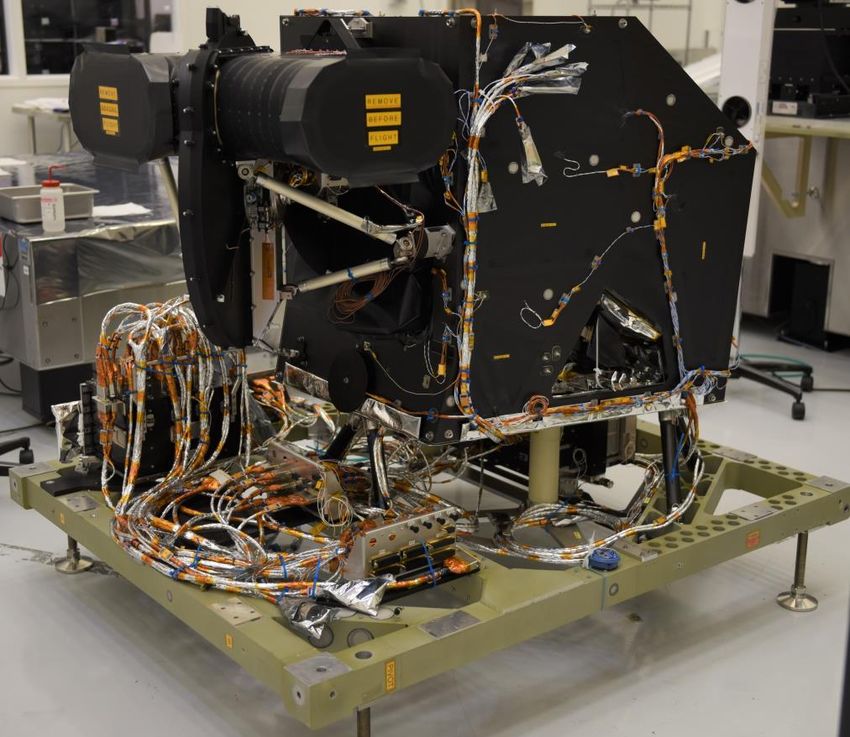
➢ Independently-funded Agency partnership
Not reimbursable like NASA/NOAA missions
➢ Partnership is codified in a NASA-Department of the Interior (DOI)
interagency agreement for Sustainable Land Imaging with a NASA-USGS
annex for Landsat 9
NASA is responsible for the space segment (instruments and
spacecraft/observatory), mission integration, launch, and on-orbit checkout
» Support for anomaly resolution during operations on a reimbursable basis, if necessary
USGS is responsible for the ground system, flight operations, data processing
and distribution
» Operational control/leadership of mission after on-orbit checkout and handover from NASA
➢ NASA/GSFC and USGS/EROS Project Offices enjoy a highly integrated and
trusting relationship
The Annex Implementation Plan (AIP) written by GSFC Landsat 9 project office
and USGS EROS Landsat 9 project office defines detailed plans for project
coordination
L9 Development Status to Landsat Science Team August 9, 2018 4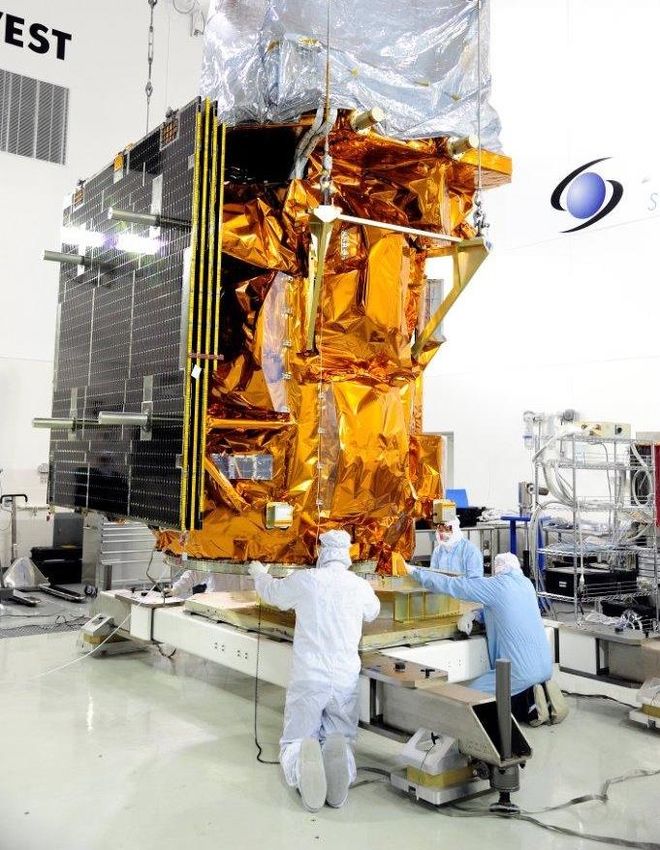
✓       Project ATP                                   March 4, 2015
           ✓       SRR/MDR                                       June 1-3, 2016
           ✓       KDP-B                                         August 17, 2016
           ✓       PDR                                           September 12-15, 2017
           ✓       KDP-C                                         December 6, 2017
           ✓       CDR                                           April 2018
           o       SIR                                           August 2019
           o       KDP-D                                         December 2019
           o       ORR                                           September 2020
           o       KDP-E                                         November 2020
           o       Launch                                        December 2020

L9 Development Status to Landsat Science Team   August 9, 2018                           5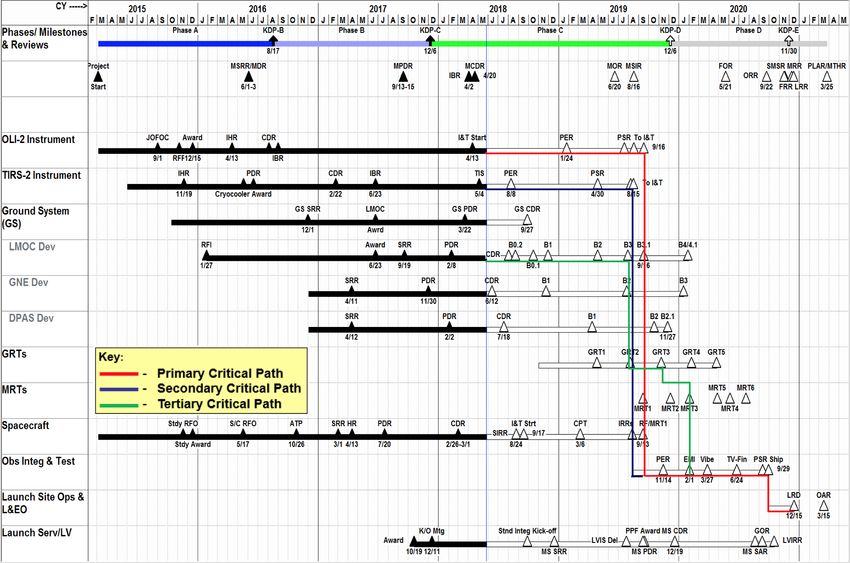
➢ Important to USGS/NASA/community to maintain two healthy Landsat satellites on-orbit for 8-day
coverage
Landsats 7 and 8 currently operating
➢ Landsat 7 End of Mission planning – goal is to align with launch of Landsat 9
Landsat 7 science data will degrade once outside mission
equatorial crossing requirement of 10:00 AM +/- 15 min
MLT in May 2020
» Acceptance by Landsat Science Team that science Landsat 7 Equatorial Crossing Time
Impact on End of Mission
data retains some value until 9:15 AM MLT Planning
December 2020 LRD with 3-month commissioning period
completed in March 2021 supports 2021 northern
hemisphere growing season with Landsat 9
➢ Congressional direction to launch Landsat 9 in 2020
➢ Risk-informed estimates show Project has
approximately a 50/50 chance of launching in 2020
➢ Landsat 9 KDP-C Agency direction in December 2017
recognized this challenge, but also provided substantial
schedule and budget resources if challenge can’t be met
Management Agreement LRD: December 2020
Agency Baseline Commitment LRD: November 2021
➢ Landsat 9 Project recognizes that S/C and ground
schedules are the most challenging aspect of satisfying
target December 2020 LRD
➢ Project well-positioned to face this challenge
L9 Development Status to Landsat Science Team August 9, 2018 6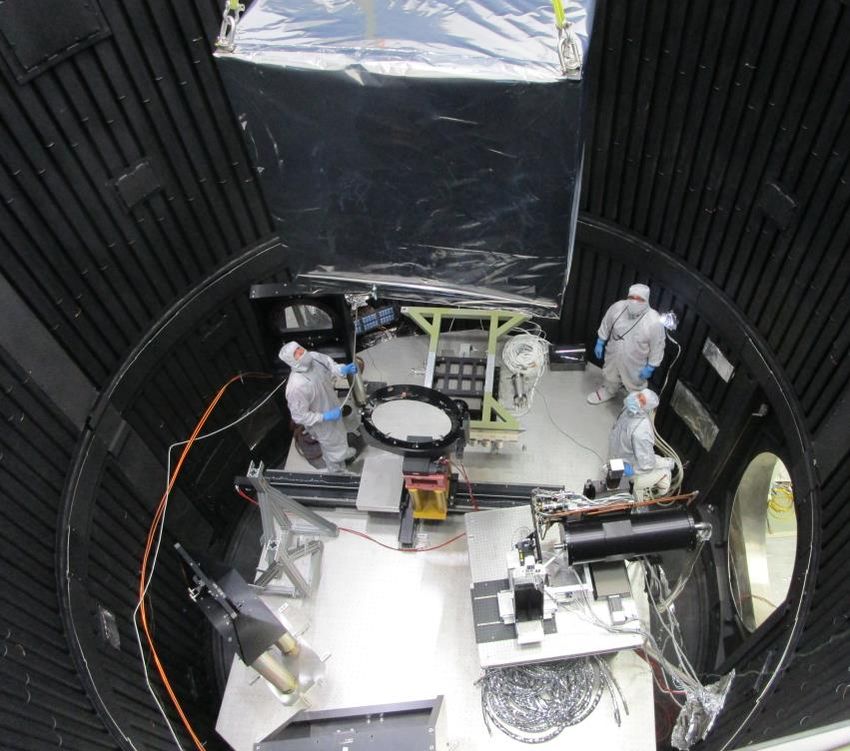
L9 Development Status to Landsat Science Team August 9, 2018 7
L9 Development Status to Landsat Science Team August 9, 2018 8
Landsat 9 spacecraft will be similar to that of Landsat 8, and it will also draw on component
heritage from ICESat-2 and JPSS-2 missions
➢ Contract competitively awarded to then Orbital ATK in
Gilbert, AZ in October 2016 (now NGIS)
➢ Spacecraft successfully completed
System Requirements Review in February 2017
Preliminary Design Review in July 2017
Critical Design Review in February 2018
Landsat 8 Spacecraft at launch facility
➢ All components and subsystems in development
➢ Targeting readiness to integrate OLI-2 and TIRS-2 in mid-
2019
L9 Development Status to Landsat Science Team August 9, 2018 9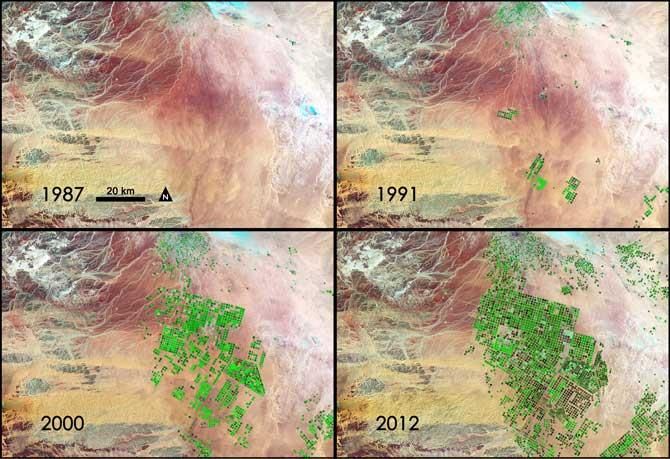
Landsat 9 spacecraft bus
           structure being assembled at
           Northrop Grumman Innovation
           Systems in Gilbert, AZ

L9 Development Status to Landsat Science Team   August 9, 2018   10
OLI-2 will, to the extent possible, be a copy of OLI for Landsat 9 to maintain data
continuity with Landsat 8 and to minimize cost and risk
➢ Contract with Ball Aerospace in Boulder CO
established in December 2015
➢ Instrument in single flow integration at Ball Aerospace
Telescope and calibration assembly completed
stray light testing and are integrated for flight
Focal plane integrated into telescope
Instrument Support Electronics and Focal Plane
Electronics completed environmental testing and
delivered to I&T
Instrument assembly integrated and ready for spatial
testing
Baseplate assembly and radiators in storage and ready
for integration
➢ Instrument spatial testing (SPATS) begins in August
2018, to be followed by calibration testing (CATS) in
the fall
➢ OLI-2 PER planned for January 2018
➢ On target for mid-2019 delivery to spacecraft
L9 Development Status to Landsat Science Team August 9, 2018 11Ball Aerospace
FPA Assembly
Team, and fully
integrated FPA
OLI-2 being lowered into Brutus chamber
for spatial testing
OLI-2 configured for spatial
testing at Ball Aerospace,
Boulder CO
OLI-2 Flight
Baseplate
L9 Development Status to Landsat Science Team August 9, 2018 12TIRS-2 will be a rebuild of Landsat 8 TIRS except TIRS-2 will be upgraded
from Risk Class C to Class B for Landsat 9
➢ TIRS-2 image performance and cryogenic evaluation (TIPCE) TIRS-2
testing completed over winter 2017/2018 Improvements
Image quality, focus, and stray light performance very good • Increased redundancy to
satisfy Class B reliability
standards
➢ Instrument in single flow integration at NASA GSFC • Improved stray light
performance through
All subsystems have completed assembly and environmental improved telescope
test. baffling
• Improved position
All major elements have been integrated in to the Sensor Unit, encoder for scene select
mirror to address
with final harnessing and blanketing in work. problematic encoder on
Landsat 8 TIRS
Sensor Unit elements undergoing testing together with the
electronics boxes in ambient. The environmental test program
will begin in the fall with EMI/EMC testing, followed by Thermal
Vacuum Test 1, Sensor Unit Vibration Test, and Thermal
Vacuum Test 2.
The Flight Cryocooler completed all assembly and test
activities and was delivered to GSFC ahead of schedule. The
Flight Cryocooler has been integrated in to the TIRS-2 Sensor
Unit.
➢ Successful TIRS-2 PER held August 7-8, 2018
➢ On target for mid-2019 delivery to spacecraft
L9 Development Status to Landsat Science Team August 9, 2018 13Flight Detector With Filters
Installation of the Telescope and
Detector into the Structure
Flight Scene Select Mechanism
Flight Main
Electronic
Box No. 1
Ball Aerospace Flight
Cryocooler Control
Electronics, Redundancy
Switch Electronics, and
Thermal Mechanical Unit
at GSFC
L9 Development Status to Landsat Science Team August 9, 2018 14Landsat 9 launch services awarded to same provider for same LV as Landsat 8
➢Awarded October 2017 to United Launch Alliance (ULA)
➢Vehicle: Atlas V 401 from Vandenberg AFB SLC-3
➢LRD Range at award: Dec 15, 2020 through June 1, 2021
LRD solidified to Dec 15, 2020 at Flight Planning Board on
July 12, 2018
➢ L9 launch services task order includes option to add an ESPA
Air Force has officially requested to fly an ESPA with secondary
payloads on L9 launch
ULA analysis indicates no impact to Landsat 9
» Preliminary coupled loads analysis with and without ESPA complete
» Preliminary configuration study complete showing ESPA configuration
requires longer payload fairing (XEPF vs. EPF used on L8)
Launch segment interface requirements levied on NGIS
observatory design not impacted by ESPA decision
NASA Science Mission Directorate and Flight Planning Board
approved AF ESPA rideshare for Landsat-9 in April 2018
AF “Do No Harm” criteria are in place
Implementation agreement in work between NASA and AF
➢Routine integration/coordination between Landsat 9 and ULA underway
L9 Development Status to Landsat Science Team August 9, 2018 15➢ Closely coordinated between NASA and USGS
➢ Mission Readiness Tests (MRTs) and Mission Sims
scoped and scheduled
Established in IMS
➢ Key mission ops documentation at
appropriate level
➢ Mission Operations Readiness Team is active
and coordinating multiple working groups F-SPT
GSI
Bldg 32, Rm N202
L9 LSR Layout - Concept 6
Table: 4' x 30"
GSTL
Accommodates Table: 6' x 30"
43 positions
Exit only Table: 6' x 24"
MRT WG, Ops Procedure WG, Connectivity Test Desk chair
N-
IM
Tall shelf unit
C om
T
28'-10 1/4"
WG, etc.
O-
Structural column
C
om
M
FS
M
TL
Cables along floor
FO
Position Key:
S
SY
T
N-
-N = NASA
CE
110V outlet
N-
GT
-O = Orbital/ATK
N-
C
T
M
DH
hm
S
-V = Vendor
O-
SY
F-
O-
O-
-F = FOT Coat rack
S
CD
T
SY
➢ Launch support room design maturing
hm
H
O-
FO
FO
T
T
N-
N-
Brick wall
F
Pw
SW
F-
r
SY
O-
O-
S
FS
Pw
W
N-
r
V
er
F-
O
FO
➢ L&EO/Commissioning operations planning
N-
rb
T
MS
A
N-
N-
O
Pr
rb
op
O-
Or
O-
b
Pr
is maturing
op
F-TIR
N202B
N-OLI
FO
S N-T
T
F-OLI
N-
IRS
AC
S
O-
V-TIR
V-OLI
AC
S
Exit only
S
1/17/18
Launch Support Room Planning
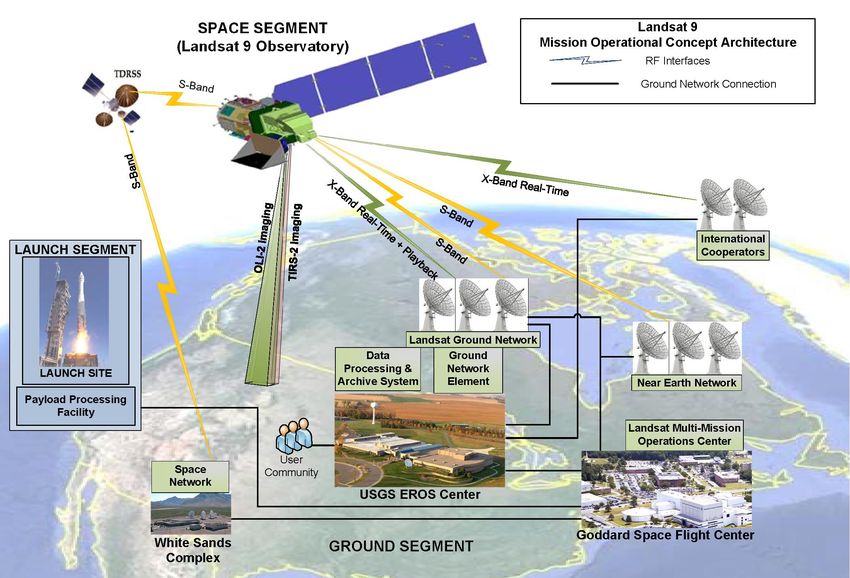
L9 Development Status to Landsat Science Team August 9, 2018 16Space Segment L9 GS Operational Concept Architecture
(L9 Observatory) DCN: LSDS-1647 v3.0
Date: December 22, 2017
X-Band Downlink
Launch Services
Segment (VAFB) S-Band CMD/TLM
Image Data Flow
System and Human Interfaces
External Entities
GSFC Flight
Dynamics, NASA Services
ESMO,
& CARA
Coordination,
Command, Orbit
Telemetry Information
S/C, Instrument(s)
Flight Software
Vendors
Landsat Multi-Satellite Operations Center
Flight Software
CMD/TLM
S/C,
Telemetry,
Flight Mission CMD/TLM Database Instrument(s)
Command
& Control Dynamics Planning & Vendor Facilities
Scheduling
CMD/TLM, P&S Pole Wander
Products
Trending & Health &
Analysis Status Simulators
Monitoring
NASA NASA
Space Near CMD/TLM,
Earth
Ground Network Element
Network CFDP Status, Contact
(WSC) Network Schedules, TLE,
P&S Products, Calibration
Interval Metadata Test Data
Status, Maneuvers Cal/Val USNO
Notifications & Calibration Collection Team
Request (CalCR)
Data Processing & Archive System CPF
LGN RF Communications Image Assessment
Pole Wander
Access
Interna tio nal Image &
Search & Discovery,
Coop erators (ICs) Ingest Processing Distribution Special Collection
Mission Data, Request (SCR),
Metadata & Browse
Command and Mission Data
Telemetry Routing User
Routing Data Products, User
Community
Science Products Community
Storage and Metrics &
Mission Data, Metadata Archive Reporting LTAP Collection Request
P&S Products (LCR)
Archive
Science
Office
L9 Ground System
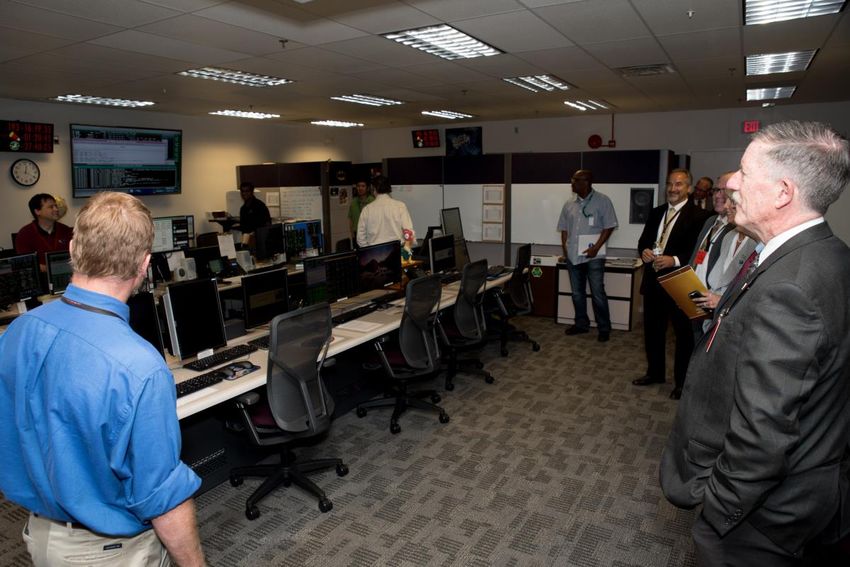
L9 Development Status to Landsat Science Team August 9, 2018 18➢ Landsat Multi-satellite Operations Center (LMOC)
The facility, functional capability, and personnel needed to operate the Landsat
9 observatory
GSFC, Greenbelt, MD
Landsat Multi-satellite Operations Center (LMOC) facilities at GSFC (L8 & L9)
» Observatory Telemetry & Commanding
» Orbit and Attitude Flight Dynamics
» Management of Image and Calibration Acquisitions
» Long-Term Trending, Modeling, and Analysis
Backup LMOC (bLMOC) facility location study is in process
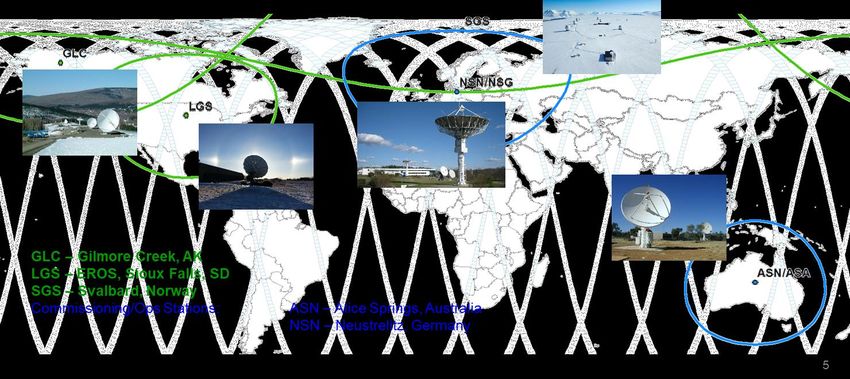
➢ Ground Network Element (GNE)
Provides highly reliable S-Band and X-Band communication services with the
observatory and routes the data appropriately within the Ground System (GS)
Leverages current operational Landsat Ground Network (LGN)
LGN stations in Sioux Falls, SD; Fairbanks, AK; and Svalbard, Norway
Neustrelitz, Germany and Alice Springs, Australia for use after commissioning
Data Collection and Routing Subsystem (DCRS) gathers mission data from
LGN stations into complete intervals to transfer to the DPAS
➢ Data Processing and Archive System (DPAS)
Ingest, archive, catalog, process, and distribute Landsat 9 data (through Level EROS, Sioux Falls, SD
2/ARD) to the public
Includes interfaces to the LMOC (e.g. special acquisition requests)
Leverages mature, multi-mission system
DPAS facility at USGS EROS Center
L9 Development Status to Landsat Science Team August 9, 2018 19Ground System nearing critical design completion; hardware
acquisition and subsystem development underway
✓ GSRR December 2016
✓ GPDR March 2018
o GCDR September 2018
✓ GNE CDR June 2018
✓ DPAS CDR July 2018
✓ LMOC CDR August 2018
o Ground Readiness Tests Begin February 2019
o Mission Operations Readiness June 2019
o Flight Operations Readiness May 2020
➢ Launch December 2020
➢ Mission Transition & Handover March 2021
L9 Development Status to Landsat Science Team August 9, 2018 20Once GRT3 is completed, all GS launch critical requirements are verified! L9 Development Status to Landsat Science Team August 9, 2018 21
➢ USGS is now adopting Level-2 / Analysis Ready Data (ARD) as the standard
product for L9
Gridded, tiled, “stackable” images
Processed to surface reflectance (SR) and surface temperature (ST)
Will continue to produce the Level-1 product
➢ Landsat 9 project is building the Landsat 4-9 (TM, ETM+, OLI / TIRS)
operational capability for Level-2 / ARD and will produce L9 Level-2 / ARD
as a standard product during commissioning.
The USGS Landsat Science Information System (LSIS) project receives the
ARD capability, modifies it to run at scale, and processes the L4-8 archive as
well as new L8 acquisitions
➢ The DPAS Critical Design Review resulted in an RFA on latency for Level-2
products.
Soliciting science team discussion / feedback during Chris Engebretson and
Steve Labahn’s Landsat Archive and Product Collections presentation that
discusses plans for Level-2 / ARD
L9 Development Status to Landsat Science Team August 9, 2018 22Incremental approach towards building the DPAS
DPAS B0.5 DPAS B1.0 DPAS ARD DPAS B2.0 DPAS B2.1* DPAS B2.2*
Supports Supports Supports Supports Post
Pre-Build Supports ARD
GRT 2 & 3 GRT 4 GRT 5 Launch Release
Ingest R6.0.0 Ingest R6.0.1 Ingest R6.1.0 Ingest R6.2.0* Ingest R6.3.0*
Inventory R7.0.0 Inventory R7.1.0 Inventory R6.0.0 Inventory R7.2.0 Inventory R7.3.0* Inventory R7.4.0*
Subsetter R5.0.0 Subsetter R5.0.X* Subsetter R5.1.0 Subsetter R5.2.0* Subsetter R5.3.0*
IAS R15.0.0 IAS R15.1.0 IAS R14.0.0 IAS R15.2.0 IAS R15.3.0* IAS R15.4.0*
LPGS R15.0.0 LPGS R15.1.0 LPGS R14.0.0 LPGS R15.2.0 LPGS R15.3.0* LPGS R15.4.0*
User Portal R7.0.0 User Portal R7.0.X* User Portal R4.9.0 User Portal R7.1.0 User Portal R7.2.0* User Portal R7.3.0*
MDS 4.0.0 MDS R3.3.0 MDS R4.1.0 MDS R4.2.0* MDS R4.3.0*
A&A Enterprise Release A&A Enterprise Release A&A Enterprise Release A&A Enterprise Release A&A Enterprise Release* A&A Enterprise Release*
ICWP Enterprise Release ICWP Enterprise Release* ICWP Enterprise Release ICWP Enterprise Release ICWP Enterprise Release* ICWP Enterprise Release*
* Notional builds and releases if necessary
Leverages the heritage multi-mission (L1-9) system
Currently performing integration and test for the DPAS B0.5
Subsystems; DPAS ARD and B1.0 in development
L9 Development Status to Landsat Science Team August 9, 2018 23➢ Minor changes to support L9
Add new Landsat 9 presets to existing LGN equipment (antenna, RXs, exciters, demods,
automation, etc.)
Modify data routing systems for Landsat 9 interval assembly, interfaces to LMOC, and
expand 90-day cache
Build new command & telemetry processor desktops for Landsat 9
➢ Design is complete; in build, integration and test
➢ Established plans for station modifications, integration and test
➢ Currently testing the routing system and working changes necessary at the stations
L9 Development Status to Landsat Science Team August 9, 2018 24➢ Design is complete
Leverages Landsat 8 heritage but modified to meet L9 requirements and
provide efficiencies for L8 and L9 multi-operations
Also leverages incremental capability and build approach
➢ Construction build-out nearly complete (moved L7 MOC)
➢ Integration and Test (I&T) hardware and software purchased
➢ Operational hardware and software procurement awarded to the vendor
➢ Development of early software modifications in process and working
subsystem integration test
Build 1.0 (Hardware installed + initial telemetry, command, trending) in October
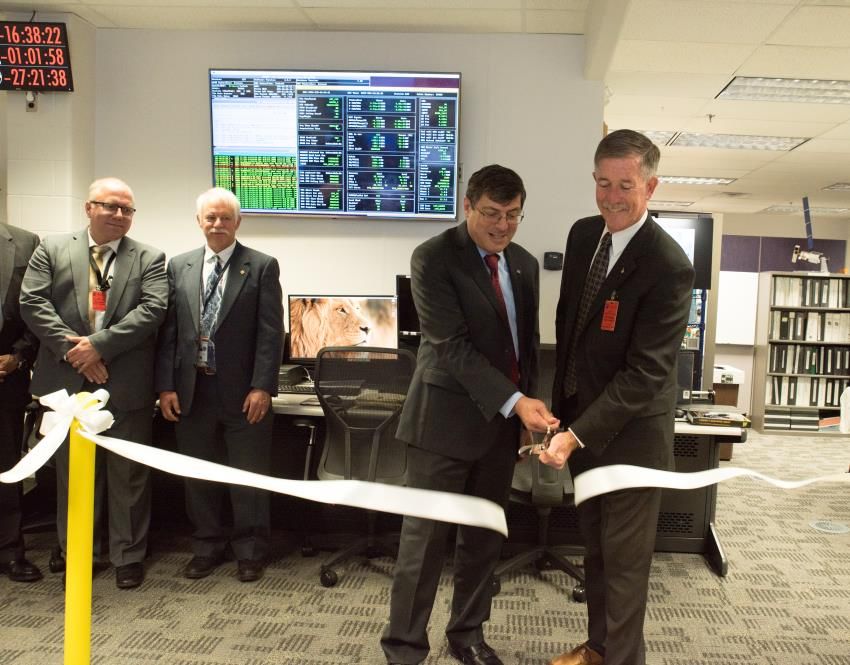
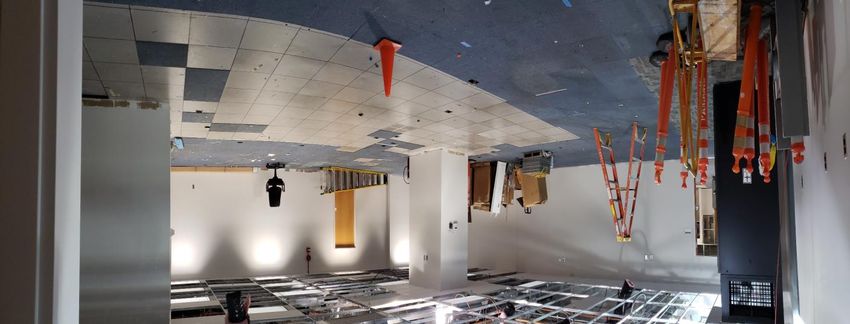
L9 Development Status to Landsat Science Team August 9, 2018 25July 12, 2018: GSFC Director Chris
Scolese and USGS Director James
Reilly cut the ribbon for the new
Landsat 7 MOC
➢ Successfully moved Landsat 7 operations
from GSFC Building 32 to a new facility in
Building 25
➢ The move enables refurbishment of the
Building 32 space for the new Landsat Multi-
satellite Operations Center (LMOC) to operate
Landsats 8, 9, and beyond
L9 Development Status to Landsat Science Team August 9, 2018 26LMOC at GSFC Building 32 on 7/26/2018 and 8/7/2018 Construction to be completed by 8/15/2018 L9 Development Status to Landsat Science Team August 9, 2018 27
➢ Mission design uses proven Landsat 8 architecture and and elements to
satisfy agency mission requirements
➢ Utilizes well established and strong NASA/USGS relationship
➢ NASA and USGS major acquisitions successfully completed and
development underway
➢ Key lessons learned are being applied at all Project levels
Process has been established for the collection of new Lessons Learned
➢ Schedule challenges are understood and being mitigated to the degree
possible
➢ Mission development continues on solid footing and manageable pace
All project elements are in excellent technical shape
Mission design heritage/maturity provides high confidence in satisfying
performance requirements and reduces schedule/cost risk
Mission design is achievable within allotted budget and schedule
➢ Team leadership heavily focused on preparing for efficient mission
integration
L9 Development Status to Landsat Science Team August 9, 2018 29L9 Development Status to Landsat Science Team August 9, 2018 30
L9 Development Status to Landsat Science Team August 9, 2018 31
You can also read


