Phasing out single-use plastics - Updated Next Steps Policy AUGUST 2020 - Transport Canberra and City Services Directorate - AWS
←
→
Page content transcription
If your browser does not render page correctly, please read the page content below
Phasing out
single-use plastics
Updated Next Steps Policy
AUGUST 2020

Transport Canberra and
City Services Directorate
© Australian Capital Territory, Canberra 2020
This work is copyright. Apart from any use as permitted under the
Copyright Act 1968, no part may be reproduced by any process without written
permission from:

City Services, Transport Canberra and City Services Directorate
ACT Government
GPO Box 158, Canberra ACT 2601
Telephone: 13 22 81
Website: www.cityservices.act.gov.au
Printed on recycled paper.

Publication No. 200660

WASTE POLICY ENQUIRIES
If you have an enquiry about waste policy in the ACT, or would like to obtain a hard
copy of this document, please contact:
Director, Waste Policy
ACT NoWaste
Transport Canberra and City Services Directorate
Telephone: 13 22 81
Email: ACTwastepolicy@act.gov.au

ACCESSIBILITY
The ACT Government is committed to making its information, services, events and
venues as accessible as possible.
If you have difficulty reading a standard printed document and would like to receive
this publication in an alternative format, such as large print, please phone Access
Canberra on 13 22 81.
If English is not your first language and you require a translating and interpreting
service, please phone 13 14 50. If you are deaf, or have a speech or hearing
impairment, and need the teletypewriter service, please phone 13 36 77 and ask for
Access Canberra on 13 22 81.
For speak and listen users, please phone 1300 555 727 and ask for Access Canberra
on 13 22 81.
For more information on these services visit www.relayservice.com.au

Contents
Foreword – Minister Steel                                                                  5
Single-use plastics: we have a problem                                                     6
Phasing out single-use plastics: what we heard through the consultation                    7
The ACT is acting to phase out single-use plastics                                         8
  The phase out approach                                                                   8
    Immediate phase out                                                                    8
    Phase out after 12 months                                                              9
    Longer term consideration                                                              9
Current Government Initiatives                                                             10
    ACT Government swap and go reusable coffee cup scheme                                  10
Complementary measures                                                                     11
  Continued engagement                                                                     11
  ACT Government events and plastic-free precincts                                         11
  Events ACT                                                                               11
  Actsmart ‘plastic busters’ and education campaigns                                       12
  Championing sustainable consumption models within the ACT                                12
  Government investing in waste infrastructure                                             12
Timeline                                                                                   13
References                                                                                 14

                                                 Updated Next Steps Policy - August 2020    3
4 Phasing out single-use plastics
FOREWORD
MINISTER STEEL
Single-use plastic can be a highly problematic material.
It’s hard to avoid and it is not designed to be reused – the
antithesis of our aim to reduce, reuse and recycle.
Plastic either litters our waterways and landscapes for
hundreds of years or otherwise ends up in landfill because it
is not easily recycled.
The Canberra community are some of the best recyclers in
the country and they’ve had enough of single-use plastic.
During consultation in 2019 on the ACT Government’s
discussion paper Phasing out single-use plastics, there was
strong support for phasing out certain unnecessary and             Chris Steel
                                                                   Minister for Recycling and
problematic single-use plastics with a transition to readily
                                                                   Waste Reduction
available alternatives.
The majority of the community also supported strong government regulatory action to
ban problematic and unnecessary single-use plastics, rather than just non-regulatory
responses.
The Government has listened to the community and is taking action to phase out single-
use plastics in the ACT via legislation – the Plastic Reduction Bill. This document outlines
our responsible approach to phasing out certain products by introducing this legislation
and other complementary measures.
In doing so we have considered the impact phasing out or banning products could have
on certain groups of the community, such as people with a disability, and we will work
with these groups during the implementation of this policy.
Further consideration is also being given to some products where there are not yet clear
alternatives that are better for the environment.
This document outlines a decisive but staged approach to manage plastic waste –
minimising the impact of regulatory reform to industry, business and the community.
The ACT Government has consulted with the community and with the release of the
Exposure Draft of the Plastic Reduction Bill 2020 is now commencing the implementation
of the single-use plastic ban. The phase out will begin no earlier than July 2021, with the
ACT commencing a ban on the sale and supply of single-use plastic cutlery, stirrers and
polystyrene food and beverage containers such as plates, cups, bowls and ‘clamshell’
takeaway containers. This transition period recognises that affected sectors like the
events and hospitality industries are currently in hibernation during the pandemic or
are just trying to survive, and that they may need to use up any existing stock that they
have. However, community and industry remain supportive of our proposals and the
ACT Government remains committed to progressing legislation to ban certain single-use
plastics. We are therefore releasing a public exposure draft of the Plastic Reduction Bill and
Explanatory Statement, before we commence our phase out – now expected in July 2021.
This document has been updated accordingly.
I thank our local businesses, many who have continued to use sustainable
alternatives to single-use plastic throughout this challenging time. The legislation is
crucial to ensure that we reduce the amount of plastic going to landfill and into our
environment. I look forward to continuing to engage with our community and
business on the ACT Government’s plan to ban certain single-use plastics.

                                 Updated Next Steps Policy - August 2020                       5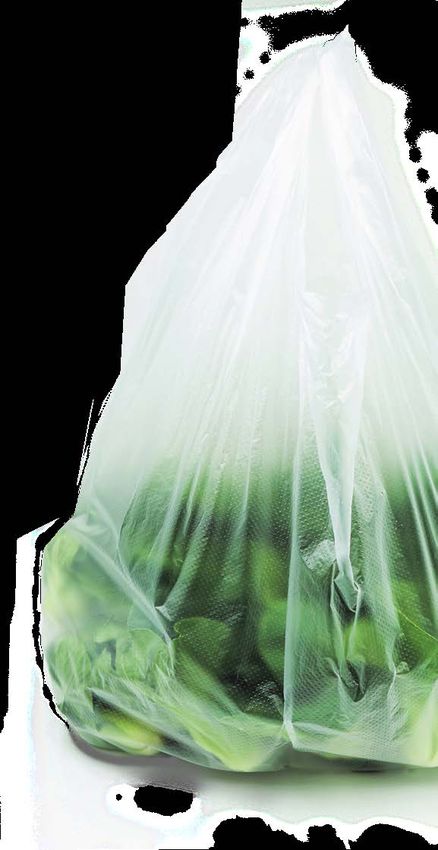
SINGLE-USE PLASTICS: WE HAVE A PROBLEM
The global use of plastic has exploded since it was            3. True cost of plastic - upstream and downstream
commercialised in the 1950s. Plastic has become                   costs and perverse outcomes of the consumption of
ubiquitous in modern society due to its key qualities             plastic to the economy, environment and society are
of strength, adaptability, stability, light weight and low        borne by the environment, waste management and
cost, which can be applied to a wide range of products            health sectors. Changing the way single-use plastics
and packaging.                                                    are consumed in the ACT supports the delivery of the
                                                                  ACT Government’s commitment to tackling climate
However, plastic has serious downsides, including:
                                                                  change.4
1. Persistence in the environment - commonly                   Much of the plastic consumed in the ACT is designed to
   used plastics do not readily break down and can             be thrown away after a single use. Many of the single-use
   persist in the environment in some shape or form            plastic products used are difficult to recycle, and as a
   for hundreds or even thousands of years.1 Plastic           result, these products end up in landfills or the natural
   pollution is compromising the safety of food supplies,      environment.
   soils, waterways and wildlife. In the ACT, the Keep
   Australia Beautiful 2017/18 litter survey found that        For these reasons, our Government wants to take
   although there had been an 11.3% reduction in litter        action, including introducing policies and legislation
   levels over the preceding 12 months, there has been         that support the avoidance of the consumption of these
   a 21.3% increase in the level of plastic. This means        products, including banning certain types of plastic
   that a greater proportion of litter in our community is     products.
   plastic.2                                                   Action should be taken on products that have readily
2. Plastic is made from non-renewable resources -              available alternatives. Addressing these products in the
   more than 99% of plastics are made from chemicals           first instance provides an opportunity to raise awareness
   derived from oil, natural gas and coal, that once           of the impacts of problematic single-use plastic, while
   depleted, cannot be replaced. The UN estimates that         minimising the risk of unintended environmental, social
   by 2050 the plastic industry could account for a fifth of   and economic outcomes associated with some types of
   the world’s oil consumption.3                               single-use plastic products.

6       Phasing out single-use plastics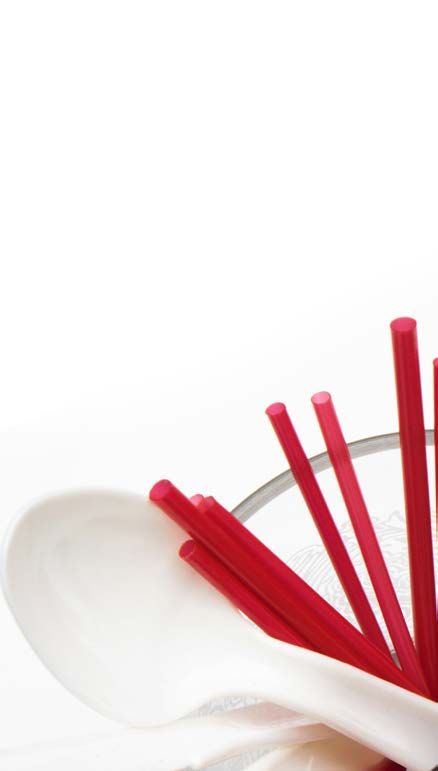
PHASING OUT SINGLE-USE PLASTICS: WHAT WE
HEARD THROUGH THE CONSULTATION
The ACT community is progressive and environmentally           times larger than the ACT, received 3,630 interactions
conscious. Canberrans love the ‘bush capital’ mantra           during similar consultation demonstrating the huge
of our city, and the growing proportion of single-use          interest this issue has amongst the ACT community.
plastics in landfill and littering our Territory puts          Through the feedback received from industry, business,
community concern about plastic waste at an all-time           and community members, there were high levels of
high.                                                          support to phase out the following single-use plastic
                                                               products in the ACT. For example, the community survey
Internationally, as well as across Australia and in the ACT,
                                                               revealed that:
there is community support and a growing expectation
that governments and companies do more to address              a) 94% support a phase out of polystyrene
the issues and challenges associated with single-use
                                                               b)	93% support a phase out of plastic stirrers and
plastic.
                                                                   straws
Through the Phasing out single-use plastics discussion
                                                               c)	92% support a phase out of plastic lined coffee cups
paper, the ACT Government sought to consult broadly
                                                                   or lids
with industry, business and the community about ways
to avoid and reduce the consumption of single-use              d)	91% support a phase out of plastic cutlery
plastics. This included considering whether certain
categories of single-use plastics should be phased out or      e)	91% support a phase out of plastic plates and cups
banned in the ACT.                                             f)	87% support a phase out of takeaway food
Feedback from the community, business and industry                 containers
has shown people support, and expect, the ACT                  g)	85% support a phase out of lightweight fruit and
Government to lead action on this important issue.                 vegetable barrier bags.
The ACT also has an opportunity to remain at the
forefront of environmental action and responsible waste        In addition to the consultation community survey, a
management.                                                    survey of the general community was undertaken by
                                                               the ACT Government which found definite or probable
There is broad support for regulatory government action        support for:
from community, industry, and other organisations.
75% of community survey respondents said a regulatory          a) banning single-use plastic straws (77%)
approach would be most effective to reduce their               b) banning plastic-lined takeaway coffee cups (71%)
consumption of single-use plastic products and 20%
think a voluntary approach would be most effective.            c)	banning single-use plastic takeaway containers
78% of business survey respondents would prefer a                  (68%)
regulatory approach to phasing out single-use plastic          d) banning thicker plastic bags (58%).
products and 17% prefer a voluntary approach.
                                                               The outcomes of the consultation are outlined in more
The consultation received over 3,300 responses. In             detail in the Consultation Engagement Report available
comparison, South Australia, with a population four            at: www.yoursay.act.gov.au.

                                                               Updated Next Steps Policy - August 2020                  7
THE ACT IS ACTING TO PHASE OUT
SINGLE‑USE PLASTICS
The ACT Government will implement a phase out of
targeted single-use plastic products by introducing           BUSINESS CASE FOR FIRST
a regulatory ban. We have earmarked products that             TRANCHE PHASE OUT
will be phased out over time but have also identified         The ACT Government undertook a cost-benefit
products that can be banned immediately in line               analysis of the social, economic and environmental
with community support and the existence of readily           impacts of our first tranche phase out. This was the
available alternatives.                                       first attempt by any Australian government to do so.
                                                              The ACT is leading the way, with learnings from
THE PHASE OUT APPROACH                                        the ACT now being used in other jurisdictions. This
A phase out approach will give certainty to businesses        ensures that the methodologies used to quantify
and the community. We will do this through regulation         the impact of respective single-use plastic phase
by introducing new legislation, the Plastic Reduction Bill,   outs are, wherever possible, harmonised across
to phase out certain single-use plastic products within       Australian jurisdictions.
the ACT.
                                                              The cost-benefit analysis showed us that there are
                                                              already alternatives to single-use plastic stirrers
FIRST TRANCHE PHASE OUT
                                                              and polystyrene containers that are both more
> Single-use plastic cutlery                                  cost effective and environmentally friendly.
> Single-use plastic stirrers                                 Our cost-benefit analysis also showed that the
                                                              best option to reduce the impacts of single-use
> Single-use expanded polystyrene takeaway food
                                                              plastic and alternatives is to avoid these altogether
  and beverage containers (polystyrene containers)
                                                              wherever possible. We want Canberrans to reduce
  (e.g. ‘clam shell’ containers and cups).
                                                              their consumption and their waste – we don’t just
The consultation revealed strong support for the phase        want one product substituted for another one,
out of single-use plastic products. Single-use plastic        plastic or otherwise.
cutlery, stirrers and polystyrene containers are symbolic
of single-use plastic consumption and were widely
supported for phase out. These products
have existing and readily available alternatives              EXPANDED POLYSTYRENE FOAM
and have been identified for immediate ban                    Expanded polystyrene foam containers (e.g.
once the legislation commences.                               plates, cups, bowls, takeaway clamshells)
                                                              will be phased out immediately. Community
                                                              consultation identified the phase out of
                                                              polystyrene foam containers as the very highest
                                                              priority, with 94% of the surveyed community
                                                              supporting a phase out. This material fragments
                                                              and disperses in the natural environment when
                                                              littered – creating smaller pieces of plastic.
                                                              Expanded polystyrene foam containers cannot
                                                              be recycled through ACT recycling bins and
                                                              must be sent to landfill.

8       Phasing out single-use plastics
PHASE OUT AFTER 12 MONTHS
> Single-use plastic fruit and vegetable ‘barrier bags’
STRAWS
A huge majority
> Oxo-degradable* plastic products of the community
support banning
> Single-use plastic straws will be phased out after
single-use plastic
12 months except for people who need them.
straws. However,
The consultation also indicated strong support for the alternative straws
phase-out of single-use plastic straws and fruit and do not offer the
vegetable barrier bags, along with oxo-degradable same utility as
plastic products. The ACT Government will move to plastic straws
phase these out 12 months after the regulatory ban for those that require their use, because of a
of single-use plastic cutlery, stirrers and polystyrene disability or a medical reason.
containers. This will ensure that businesses have time Plastic straws will be banned 12 months after
to respond and determine which alternatives (if any) are the commencement of legislation except for
best suited to their needs and allow for continued work people who need them. The implementation of
on the implementation of the ban on single-use plastic the ban and exemptions will be the subject of
straws and exemptions. further work with disability advocacy groups so
that it works for people with a disability and the
LONGER TERM CONSIDERATION environment.
> Plastic-lined single-use coffee cups and lids
> Single-use plastic dinnerware (e.g. plates, cups Often, the only appropriate recycling pathway
and bowls) for alternatives to single-use plastic is industrial
organics processing.
> Other single-use plastic products including
boutique/heavyweight plastic bags greater than The ACT Government is currently planning
35 microns thick for household food organic waste collection,
commencing in 2023. This is considering
> Cotton ear buds (with plastic sticks). processing alternatives to single-use plastic
The consultation indicated high levels of support to ensure these valuable resources are kept in
for phase out of some of these items such as circulation.
single-use plastic dinnerware (e.g. plates, cups and
bowls) and coffee cups and lids. Some of these
plastic types are accepted for recycling in the ACT
but can be difficult to sort effectively and may be
mistaken for paper or cardboard.
Traditional paper and cardboard dinnerware
and coffee cups are recyclable, as long as food
residue has been removed first. Other alternatives
to single-use plastic are often made from plant-
based materials, such as bamboo or corn starch.
They look and feel like plastic, paper or cardboard
but are not currently recyclable at ACT facilities.
When single-use plastic items or their plant-based
alternatives end up in our paper and cardboard
recycling, they contaminate this valuable resource.
* Oxo-degradable plastic products are conventional plastics which include
additives to accelerate the fragmentation of the material into very
small pieces, triggered by UV radiation or heat exposure. Due to these
additives, the plastic fragments over time into plastic particles, and finally
microplastics, with similar properties to microplastics originating from the
fragmentation of conventional plastics (European Commission 2018).
Updated Next Steps Policy - August 2020 9The Phasing out single-use plastics discussion This work is looking at problematic packaging such as
paper consultation process resulted in significant polystyrene meat trays and packaging from products
feedback on all kinds of single-use plastic products, such as white goods and electronics – these persist in
many of which require further consideration. We will our environment and cannot be recycled. As part of
continue to evaluate the merits of expanding the education efforts surrounding banned single-use plastic
phase out approach to other single-use plastic items, items in the ACT, we will also look to educate our local
particularly as suitable alternatives become more widely community and businesses on other items, such as meat
available. Feedback indicated the ACT community is trays, to help them shift to suitable alternatives wherever
also concerned about plastic more generally, including possible.
packaging. The ACT Government is supporting the
Australian Packaging Covenant Organisation’s (APCO)
National Packaging Target that 100% of Australian CURRENT
packaging is reusable, recyclable or compostable by
2025. We are also supporting APCO in its industry-led
GOVERNMENT
target to phase out problematic and unnecessary single- INITIATIVES
use plastic packaging through redesign, innovation or
alternative delivery methods. The ACT Government is supporting a reusable coffee
cup scheme, trialing a ‘swap and go’ model before
determining a regulatory approach on these items.
There is lower support for phasing out thicker shopping
bags in the community. Thicker bags are technically
not single-use products and are designed to be reused.
Appropriate alternatives to thicker plastic bags (e.g.
‘compostable’ or ‘biodegradable’) are not clear at this
time. They can present similar environmental risks as
plastic and have been banned in several states. The
ACT Government anticipates further innovation in the
design of plastic bags, including reusable bags, by the
packaging industry.
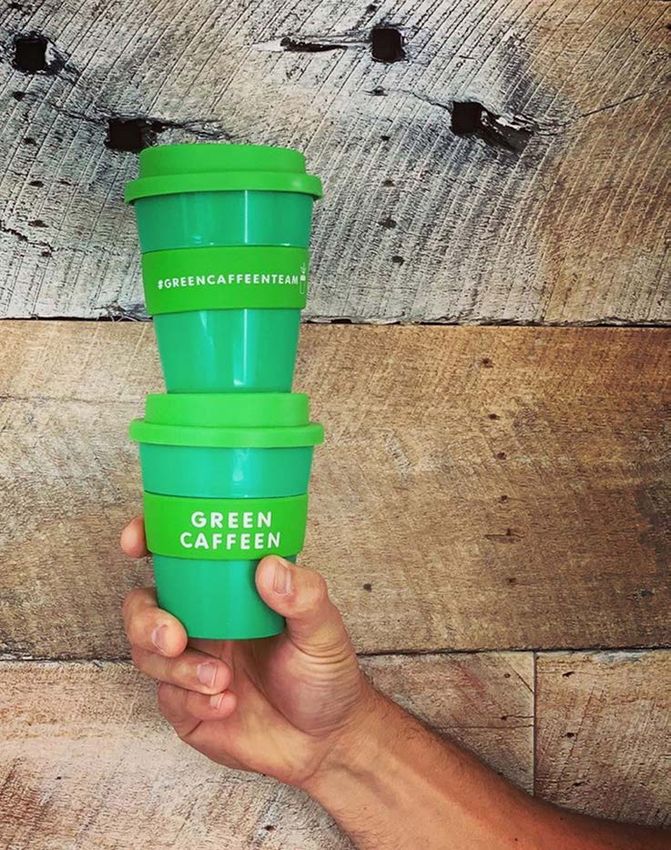
ACT GOVERNMENT SWAP AND GO
REUSABLE COFFEE CUP SCHEME
The reusable coffee cup scheme, formally launched on
11 December 2019, allows customers to participate
in a ‘swap and go’ model at participating cafes.
Reuseable coffee cup provider Green Caffeen has
been chosen to deliver the scheme following a
successful tender process.
Using a swap and go system, customers can
return their used cup to the same cafe or another
participating café Australia-wide. This keeps these
resources in circulation and reduces consumption of
single-use coffee cups.
The ACT Government encourages cafes to get
involved in the reusable coffee cup scheme trial
which will be free for both cafes and consumers.
Approximately 110 cafes are already participating,
and many continue to do so in line with public health
advice.
Organisations interested in signing up to the scheme
can find more details at: actsmart.act.gov.au
10 Phasing out single-use plasticsExamples of plastic-free events could include Floriade
MICROBEADS and the National Multicultural Festival, or major sporting
Microbeads are small solid, manufactured fixtures and festivals.
plastic particles that don’t degrade or dissolve Importantly, an event must be declared to be single-use
in water. If washed down drains after use, these plastic free, with appropriate restrictions around how
miniscule pieces of plastic can end up in rivers, this can be done. This is particularly important as we
lakes and oceans. Microbeads are commonly continue to navigate the impacts of COVID-19, including
found in rinse-off cosmetics and personal on our events industry.
care products, and business and Australian
Governments are working together to phase out The ACT Government is also exploring options to trial
100% of microbeads from these products by single-use plastic free precincts, building on existing
2020. initiatives such as the reusable coffee cup scheme.
EVENTS ACT
COMPLEMENTARY Events ACT is responsible for planning, marketing
MEASURES and delivering a quality suite of significant events
for the city that provide strategic economic and
social benefits to the ACT. This event portfolio
The ACT Government acknowledges that a legislative
includes Floriade, Floriade NightFest, the Enlighten
ban alone won’t work to curb consumption of single-
Festival, the Canberra Balloon Spectacular,
use plastic products across the board. A number of
Reconciliation Day, FYI Canberra, Windows to the
complementary measures could be supported over time,
World, the Canberra Nara Candle Festival and
to help empower businesses and consumers to ditch the
celebrations held in conjunction with Australia Day,
disposable and move towards more sustainable models
Canberra Day and New Year’s Eve.
of consumption.
Events ACT is taking leadership on tackling
Specific initiatives will be developed in addition to the
single‑use plastics in the festivals and events
regulatory ban including:
sector through:
CONTINUED ENGAGEMENT > engaging of a company to deliver sustainable
solutions to waste management collection
Complementing our already extensive consultation,
> introducing additional waste streams for event
we have set up a Plastic Reduction Taskforce to ensure
attendees – including general waste, recycling,
that legislation we have designed is fit for purpose. Our
compost, bio-plastics and a container deposit
Taskforce comprises members from key national and
scheme. Additional streams are also being
local business, industry, environment and disability
provided for back-of-house event operations
advocacy bodies.
> successfully piloting the use of a fully
We also continue collaboration with our partners in other compostable cup at Floriade’s bar facilities in
jurisdictions across Australia, many of whom are also 2019, including the processing of bio-plastic
working to reduce single-use plastic consumption. This waste with a local hot compost provider
ensures a consistent and, where possible, harmonised
approach across the country. > offering discounts for patrons with reusable
coffee cups at Floriade 2019, while also providing
reusable cups for sale at vendor outlets and the
PLASTIC-FREE PUBLIC EVENTS Floriade shop
AND PRECINCTS > increasing drinking fountains and water refill
In addition to the regulatory ban on single-use plastic stations at event sites to encourage the refilling
cutlery, stirrers and polystyrene containers, the ACT of reusable bottles and to reduce waste
Government will provide additional leadership by being generated by single-use plastic bottles
the first jurisdiction to legislate the ability to phase out > a commitment to deliver a new winter event,
other single-use plastic items at public events, both FYI Canberra, as single-use plastic free, now
government and non-government. delayed due to COVID-19.
Updated Next Steps Policy - August 2020 11ACTSMART ‘PLASTIC BUSTERS’ CHAMPIONING SUSTAINABLE
AND EDUCATION CAMPAIGNS CONSUMPTION MODELS WITHIN
The ACT Government already provides education and THE ACT GOVERNMENT
behaviour change programs that assists Canberrans to Whilst some single-use plastics are required for good
be more sustainable. reason, like sterile products used in ACT hospitals,
Actsmart is helping households, businesses, schools and the ACT Government will work across Directorates
the community through sustainability programs. These to encourage the reduction of single-use plastic. For
include opportunities to reduce single-use plastic – for example, Canberra Health Services is looking at ways of
example, helping Canberrans rethink their use of single- cutting down on the amount of single-use plastic used at
use plastic straws. The Canberra Hospital, such as:
Actsmart will provide information and support to small > trialing reusable alternatives to single-use plastic
businesses, to help them avoid and reduce single-use dinnerware
plastic to meet the timelines of the Plastic Reduction > eliminating expanded polystyrene cups by exhausting
legislation and find appropriate alternatives where existing stock, replacing these with recyclable cups
necessary.
> trialing the use of alternatives to single-use plastic in
The ACT Government also has the user-friendly online the staff cafeteria
tool, Recyclopaedia, which provides a comprehensive > replacing plastic straws with paper straws, while
A-Z on how to recycle. We continue to raise the profile of keeping a small stock of plastic straws on hand for
reducing single-use plastic consumption by supporting patients with specific needs.
innovative events such as the Design Out Waste event at
the 2019 Design Canberra Festival. INVESTING IN WASTE
The ban will be supported by a transition period so INFRASTRUCTURE
people can use items they already have, ensuring these
The ACT Government is working on a Strategic Waste
don’t go to waste. We will also preference education over
Infrastructure Plan. Part of this Plan will examine
compliance, ensuring that Canberrans are aware of the
the infrastructure required to deal with food organic
ban and how it will affect them – this is how we already
waste in the ACT. This includes exploring appropriate
approach the existing plastic bag ban. In response to
infrastructure to process food organics and, potentially,
consultation feedback, we will support our community
Australian certified ‘compostable’ products. This may
to make decisions on suitable alternatives, including
provide a place for single-use plastic alternatives which
appropriate disposal pathways.
can act as an organic feedstock and be turned into
compost or other products – keeping these valuable
resources in circulation.
The ACT Government is also rolling out more recycling
bins throughout the city in highly frequented areas like
shopping centres to ensure that recyclable products can
be conveniently recycled.
12 Phasing out single-use plasticsTimeline
2019
April to July 2019
Phasing out single-use plastics discussion paper
consultation
August to November 2019
Evaluation of consultation feedback
December 2019
Announcement of plan to phase out select single-use
plastic products
2020
August 2020
- Public exposure draft of the Plastic Reduction Bill 2020
and Explanatory Statement tabled
- Tabling Statement and updated Next Steps policy
document released
2021
1 July 2021
Plastic Reduction Act 2021 and phase out of single-use
plastic cutlery, stirrers and polystyrene containers in
place commences no earlier than this date
Supplementary measure to help businesses and
consumers to ‘ditch the disposable’
Government and non-government events can be
declared single-use plastic free
2022
1 July 2022
Legislative phase out of single-use plastic straws except
for those who need them), fruit and veg ‘barrier bags’
and oxo-degradable plastic products commences no
earlier than this date
Updated Next Steps Policy - August 2020 13REFERENCES 1 United Nations Environment Programme (2018), Single-use Plastics: A Roadmap for Sustainability, available at: https://wedocs.unep. org/bitstream/handle/20.500.11822/25496/singleUsePlastic_ sustainability.pdf?isAllowed=y&sequence=1 accessed on 7 October 2019, p12. 2 Keep Australia Beautiful National Association (2018), National Litter Index 2017 – 2018: Australian Capital Territory Results, Canberra, p 6. 3 United Nations Environment Programme (2018), Single-use Plastics: A Roadmap for Sustainability, available at: https://wedocs.unep. org/bitstream/handle/20.500.11822/25496/singleUsePlastic_ sustainability.pdf?isAllowed=y&sequence=1 accessed on 7 October 2019, p2. 4 ACT Government (2019), Phasing out single-use plastics discussion paper, Transport Canberra and City Services, Canberra. European Commission (2018), Report from the Commission to the European Parliament and the Council, available at: https:// ec.europa.eu/environment/circular-economy/pdf/oxo-plastics.pdf accessed on 18 October 2019, p. 2. 14 Phasing out single-use plastics
Updated Next Steps Policy - August 2020 15
You can also read


