PIP Breast Implants Situation update - Report
←
→
Page content transcription
If your browser does not render page correctly, please read the page content below

Report

PIP Breast Implants

Situation update

April 2013
Executive Summary: Situation Update on PIP Breast Implants An Afssaps inspection was conducted on the premises of the company PIP from 16 to 18 March 2010 after it had been alerted by a surgeon and because of the increase in medical device incident reports and fruitless discussions with the company who were unable to explain these problems. Major deviations with respect to regulations and safety were noted and subsequently transmitted to the Public Prosecutor and the Director General of the Agence Française de Sécurité Sanitaire des Produits de Santé (Afssaps - French Health Products Safety Agency) who took the health policy decision on 29 March 2010, to suspend the marketing, distribution, export and use of silicone breast implants manufactured by this company. This decision was brought to the attention of the European authorities and other countries in which the implants were distributed. Since 30 March 2010, follow-up recommendations for health professionals and information for patients fitted with these implants have been distributed and are regularly updated by Afssaps. In November 2011, the French Minister of Labour, Employment and Health and the Secretary of State for Health announced that they wanted the explantation of PIP implants to be offered to women during an interview with their surgeon, even if there were no clinical signs of implant failure. On 1 February 2012, Afssaps, jointly with the General Directorate of Health (DGS) and on request of the Minister for Health, published a report on the series of controls carried out by the health authorities on the company PIP1. The Agency has since periodically transmitted a summary of adverse effect reports related to PIP silicone breast implants. A one-year assessment of the reports is presented in this situation update. This report also includes data about the safety evaluation of PIP silicone gel implants performed in France and abroad. On the basis of data available to ANSM including sales volumes, the Agency has estimated that at the time of the marketing ban of 30 March 2010, 30,000 women had been fitted with PIP silicone breast implants. The data collected by the ANSM up to December 2012, show that 14,990 women had their PIP silicone gel implants explanted between 2001 and December 2012. Taking into account the known under-reporting of medical device incidents, the number of women actually explanted may be greater than the number of cases reported to the Agency. A total of 5,048 women encountered at least one implant failure and 2,697 at least one adverse event. These figures may not add up as the same woman may experience both implant failure and adverse effects. These explantations were performed after the detection of implant failure or a clinical sign. They can also be performed as a precautionary measure. Explantations performed after detection of an adverse event At the end of December 2012, 4,061 women had undergone explantation after the detection of an adverse event. These events can be classed in two groups: implant failure or an adverse effect observed in the patient. Both types of event may occur in the same woman. 2,703 women reported a rupture with clinical signs or detection during an ultrasound scan to ANSM corresponding to a total of 3,263 ruptured implants. Ruptures occurred during the first years after 1 Update on checking procedures performed by the health authorities on the Poly Implant Prothèse Company, DGS/Afssaps http://ansm.sante.fr/content/download/44078/572467/version/2/file/Rapport_complet+anglais+PIP_DEF.pdf 1
implantation and earlier (average 6.3 years) with PIP implants in comparison with the usual longevity of
breast implants which is more than 10 years.
A total of 1,726 explanted women had at least one adverse effect, corresponding to 2,276 implants. These
reactions were observed with or without an implant failure report and mainly involved inflammatory
reactions. They occurred during the first years after implantation (mean time of 6.1 years).
Preventive explantations
Since the health policy decision of March 2010 and until end December 2012, 10,900 women underwent
preventive explantation (explantation after the patient asked to have the PIP implant removed, with no
previous clinical or ultrasound sign of an adverse event).
8,641 (79%) had no failure of their implant(s), or adverse effects.
2,259 (21%) women presented an adverse event. These adverse events corresponded to implant failure
(rupture, gel-bleed etc.) in 1,603 women and/or an adverse effect not detected by the tests performed
before explantation in 971 women (capsule, effusions etc.).
Tumours in women with PIP implants
A total of 64 cases of breast cancer had been reported to the Agency at the end of December 2012 in
women with PIP silicone gel implants.
No new cases of anaplastic large cell lymphoma have been reported in women with PIP silicone gel
implants since November 2011.
According to the opinion of the Institut National du Cancer (INCA - French National Cancer Institute) and
experts from the European Commission, the reported tumours are not related to the characteristics of PIP
implants.
2Contents
Glossary and abbreviations 4
Introduction _________________________________________________________________________ 7
1. Medical Device Vigilance Data: implant failures and adverse events observed in French
women with PIP implants ______________________________________________________________ 9
1.1 Population of women with PIP silicone gel implants ________________________________ 9
1.2 Device vigilance data collected up to December 2012 ______________________________ 12
1.2.1 Explantations after the detection of an adverse event ______________________________________15
1.2.1.1 Implant ruptures _______________________________________________________________15
1.2.1.2 Adverse effects________________________________________________________________16
1.2.2 Preventive explantations since April 2010________________________________________________18
1.2.2.1 Total number of preventive explantations____________________________________________18
1.2.2.2 Adverse events discovered during preventive explantation ______________________________20
1.2.3 Tumours in women with PIP implants_________________________________________________21
2. Toxicological data available in France on PIP silicone gels _________________________ 22
3. International data ____________________________________________________________ 24
3.1 Vigilance data in other countries _______________________________________________ 24
3.1.1 United Kingdom____________________________________________________________________24
3.1.2 Australia _________________________________________________________________________25
3.1.3 Discussion and summary of the French and international vigilance data ________________________26
3.2 International toxicological data ________________________________________________ 27
3.2.1 United Kingdom____________________________________________________________________27
3.2.2 Australia _________________________________________________________________________28
3.2.3 Discussion and summary of the French and international toxicological data _____________________29
4. Conclusion in 2013 and ANSM action plan _______________________________________ 30
3Glossary and abbreviations
Capsule or Capsular Contracture
Fibrous capsule formation around the breast implant. The capsule is a type of membrane that forms around a foreign
material in order to isolate it and protect the body. It is a normal reaction to a foreign body. However, the membrane
sometimes thickens and forms a genuine fibrous capsule and is then called a capsular contracture. The formation of
this contracture is often accompanied by discomfort, pain and excessive firmness of the breasts. The frequency of this
complication cannot be accurately estimated as it varies according to the type, volume and quality of the implant but
also on the implantation conditions. Capsular contractures can have many origins.
Cytotoxicity
Property of a chemical or biological agent enabling it to alter or destroy cells
Medical device (MD)
Any instrument, apparatus, equipment, material, product, except for products of human origin, or other article used
alone or in combination, including accessories and software intended by its manufacturer to be used specifically for
medical purposes and whose principal intended action is not achieved by pharmacological, immunological or
metabolic means, but whose function may be assisted by such means. The software intended by its manufacturer to
be used specifically for diagnostic or therapeutic purposes is also a medical device.
Health policy decision (DPS):
If the marketing or use of a health product gives rise to a risk for public health, ANSM can take health policy decisions
under the conditions specified in the Code of Public Health.
These policy decisions may concern:
- Products or activities subject to authorisation or registration. In this case, the control measures (suspension,
revocation, restriction) are provided for by the laws and regulations governing each product or activity.
- Products or activities not subject to authorisation or registration (MD, cosmetics for example). In this case, the control
measures are laid down by Articles L.5312-1 et seq. of the Code of Public Health.
These policy decisions are strong legal acts and result from a scientific assessment and regulatory process ensuring
the proportionality of the measure to the health risk. An adversarial procedure with the operator concerned by the
decision takes place before signing the health policy decision, except in the case of a public health emergency. A
health policy decision can be opposed by the interested party on notification and by third parties after publication, in
particular in the Journal Officiel. A health policy decision may be reversed by a new decision, i.e. the previously issued
authorisation may be restituted or a temporary or permanent ban lifted as soon as the findings motivating the policy
decisions have been refuted.
DGS
Directorate General of Health
Genotoxicity
A genotoxic substance has a harmful effect on the structure of the genome.
Device vigilance
Monitoring of incidents or potential incidents, resulting from the use of medical devices after their marketing.
4CE mark
CE (Conformité Européenne) mark that signifies a product meets the accepted standards of the applicable directives
and that the products have been submitted to the conformity evaluation procedure in accordance with guidelines. The
CE mark is affixed before marketing.
The three stakeholders of CE marking:
- Manufacturer: responsible for marketing, chooses the notified body and affixes the CE mark once it is obtained.
- Notified Body: assesses the compliance of the procedure followed by the manufacturer to demonstrate compliance
with the essential requirements and issues the CE certificate.
- Competent authority: • Appoints and inspects notified bodies
• Monitors the market
• Centralises and evaluates surveillance data
• Takes the appropriate health policy measures
Devices that are not custom-made or intended for clinical trials which are marketed or used in France must bear the
CE mark.
MHRA
Medicines and Healthcare products Regulatory Agency: competent authority in the UK for health product safety
NuSil
Gel specially formulated for the manufacture of breast implants. This gel was declared in the CE marking dossier
technical file for PIP implants. It consists of two components (A) and (B) that the implant manufacturer must mix in
defined proportions of 3A/1B using a protocol drawn up by the supplier NUSIL. Each of these components contains
reactive elements, and in particular a platinum-based catalyst, which initiate the polymerisation reaction when they
come in contact. They also contain a non-reactive oil that remains "trapped" in the cross-linked network, thereby
forming a gel.
Gel-bleed (gel-sweat)
The phenomenon of gel-bleed (or gel-sweat) is a mechanical complication involving the leaking of the silicone through
the shell of an intact implant. It is a silent phenomenon and not detectable by imaging. Moreover, after an implant
rupture, this phenomenon is masked by the presence of silicone in the implant pocket. Hence, gel-bleed is usually
only detected after preventive explantation of intact implants.
Inflammatory reactions
Stereotyped reaction of the immune defence system, to injury.
The following are considered to be inflammatory reactions:
- Capsules,
- Inflammation or infection,
- Effusions,
- Lymphorrhoea,
- Siliconoma,
- Lymph node enlargement,
- Necrosis,
- Induration,
- Nodules,
Implant rupture
According to medical literature, the term "deflation" of the implant is associated with breast implants filled with saline
and the term rupture concerns implants containing silicone gel. However, according to the experts, the rupture of the
shell causes the deflation of the implant whatever the filling product. The terms "deflation and rupture" are therefore
grouped together in the same class. Several factors cause the deflation or rupture of the implant, including:
5- texturing of the implant surface which increases its rigidity and can weaken the shell,
- insufficient or excessive filling of the implant above or below the implant characteristics weakening its
mechanical properties,
- damage, however minor to the shell caused by surgical instruments
- performing strenuous physical activity which is not indicated in women with breast implants
- during a mammography examination around the areola, excessive pressure on the breast can cause the
opening of the valve and cause an effusion of the filling fluid.
- a defect of the weld
- violent trauma (car accident, for example)
- age of the implant which is the major cause of implant failure. The more the implant is exposed to heavy wear
and regular damage the more its shell is likely to break. The probability of breast implant failure therefore
increases with time after implantation. Consequently, breast implants should not be considered to be lifetime
devices.
Capsular contracture or fibrous calcification may abrade the shell of the prosthesis and cause it to break.
SCENIHR
Scientific Committee on Emerging and Newly Identified Health Risks: Scientific Committee of the European
Commission
TGA
Therapeutic Goods Administration: competent Australian authority for health product safety
Sweating
See gel-bleed
6Introduction
Breast augmentation surgery has existed since the 1900s. The techniques used have gradually
improved and really encouraging results were first obtained at the end of World War II. Several
types of implant have been tested over the generations. The most commonly used solution today
is still the implant with a silicone membrane filled with a cohesive silicone gel. This preference is
confirmed each year by the increasing sales of silicone gel implants. The advantage of this type of
implant over saline-filled implants is that it more closely resembles the natural shape and density
of the breast.
This mammoplasty is performed either for breast reconstruction after mastectomy or for cosmetic
purposes.
The company PIP has marketed implants containing silicone gels since 2001.
An Afssaps inspection was conducted on the premises of the company PIP from 16 to 18 March
2010 after it had been alerted by a surgeon and because of the increase in medical device
incident reports and fruitless discussions with the company who were unable to explain these
problems. Major deviations with respect to regulations and safety were noted and subsequently
transmitted to the Director General of the Agence Française de Sécurité Sanitaire des Produits de
Santé (Afssaps - French Health Products Safety Agency) who took the health policy decision on
29 March 2010, to suspend the marketing, distribution, export and use of silicone breast implants
manufactured by this company.
Since March 30, 2010, follow-up recommendations for the attention of health professionals and
information for the attention of patients with these implants have been distributed and are regularly
updated by the Afssaps.
In November 2011, the death of a patient with PIP brand implants from anaplastic large cell
lymphoma was reported to AFSSAPS. This event had a strong impact on the public and drew the
attention of health professionals and women to PIP breast implants leading to numerous and often
retrospective medical device incident reports.
The Minister of Labour, Employment and Health requested on 7 December 2011 to the Director
General of Health and the Director General of AFSSAPS a status report on all the controls carried
out by health authorities on the company PIP.
The Directorate General of Health (DGS) asked the National Cancer Institute (INCA) to issue an
opinion on the possible risks of anaplastic lymphoma of the breast and breast adenocarcinoma in
women with PIP implants. In its opinion of 22 December 2011, INCa concluded that there was no
excess risk of anaplastic large cell lymphoma in women with PIP breast implants compared to
other brands, nor any increased risk of breast adenocarcinoma either in relation to other breast
implants or the general population.
After reading the INCa report, in November 2011, the Minister of Labour, Employment and Health
and the Secretary of State for Health announced that they wanted explantation of PIP implants to
be proposed to women during an interview with their surgeon, even if they presented no clinical
signs of deterioration of the implant.
On 1 February 2012, Afssaps jointly with the DGS and on the request of the Minister for Health
published a situation update on the series of controls carried out by the health authorities on the
7company PIP1 . The Agency has since periodically transmitted a summary of adverse effect reports
2
related to PIP breast implants pre-filled with silicone gel.
This new assessment was made one year after the latest recommendations for women with PIP
implants and 3 years after market withdrawal of PIP implants.
It was drafted in order to share the available information about the current state of knowledge on
the subject in particular with women with implants and health professionals.
The first part of this report is devoted to device vigilance data on implant malfunctions and the
effects seen in women, reported since the health policy decision of the Agency on 30 March 2010.
The second part reviews the safety assessment data on PIP silicone gel implants obtained in
France.
Finally, the third part presents the data available in other countries and compares them to the
French data.
The conclusion of this report outlines the future secondary action plan.
1
Update on checking procedures performed by the health authorities on the Poly Implant Prothèse Company,
DGS/Afssaps http://ansm.sante.fr/content/download/44078/572467/version/2/file/Rapport_complet+anglais+PIP_DEF.pdf
81. Medical Device Vigilance Data: implant failures and adverse
events observed in French women with PIP implants
1.1 Population of women with PIP silicone gel implants
Women may receive breast implants for two reasons:
- Aesthetic choice
- A situation requiring reconstruction surgery usually after cancer, reconstruction for
congenital malformations remains rare.
> Women fitted with breast implants for cosmetic purposes
According to the report of the European Scientific Committee SCENIHR on the safety of PIP
silicone gel breast implants, women who receive breast implants for cosmetic reasons are usually
healthy with normal weight to slim and have given birth. These women smoke more than the
average population.23
The average age of implantation is 32 years (15-60 years).
> Women with breast implants for reconstruction surgery
Reconstruction surgery for cancer is performed for two reasons:
- secondary reconstruction following treatment,
- primary reconstruction during mastectomy (including cases of prophylactic mastectomy)
The average age of implantation is 50 years (21-72 years).2
The SCENIHR report also points out that complications after breast implants are more severe in
the cohort of women who underwent reconstruction than among patients who had breast
augmentation for cosmetic purposes .3 4
The report also shows that complications are multifactorial and may, for example, be due to the
surgical technique, the amount of tissue available, the laxity of the breast tissue, surgical trauma
concomitant with the mastectomy in primary cases and to the initial tissue lesions after
chemotherapy and radiotherapy in secondary cases.
2
The safety of Poly Implant Prothèse (PIP) Silicone Breast Implants, SCENIHR, version of 1st February 2012
3
Henriksen et al., 2005, Cunningham and McCue 2009, Spear et al., 200
9> Number of women fitted in France with PIP silicone gel implants
The data available to ANSM indicate that 69,383 silicone gel implants manufactured by Poly
Implant Prothèse were distributed in France between 2001 and 30 March 2010, when the ANSM
suspended their marketing (Table 1).
Year Number of prostheses sold
2001 4572
2002 8339
2003 9744
2004 8996
2005 7460
2006 7929
2007 8042
2008 7251
2009 5640
2010 1410
TOTAL 69383
Table 1. Estimated sales volume
It is estimated that 80% of breast implants are implanted for cosmetic purposes and about 20% for
breast reconstruction 23.
Using these sales volumes, the agency estimated that the number of women with PIP silicone
breast implants in France was about 30,000 at the time of the ban on marketing on 30 March
2010, using the following calculation (Figure 1):
Number of implants sold by PIP
69,383 implants
80% of implants fitted for cosmetic purposes i.e. 20 % of implants fitted for breast
55,506 implants reconstruction i.e.
13,877 implants
These women have two breast implants i.e. These women have 1 or 2 breast implants
27,753 women (1.26) i.e.
11,013 women
Number of women who potentially received implants
38,766 women
Number of women who potentially received implants
after adjustment for reimplantations
30,000 women
Figure 1. Method of calculating the number of women with implants
By extrapolating from the sales volume (69,383), the number of implants for cosmetic purposes is
estimated to be 55,506 (80%) and the number of implants for reconstruction surgery is 13,877
(20%).
For cosmetic purposes, the number of implants fitted per woman is 2, the number of women
receiving implants in this indication is therefore estimated to be 27,753.
10For reconstruction surgery, the number of breast implants per woman varies from 1 to 2,
depending on the case and underlying indication (unilateral or bilateral cancer, for symmetry or
not, construction for underdeveloped mammary glands etc). Data collected by the Agency during
medical device vigilance indicates that this figure is close to 1.26 implants per woman, bringing the
number of women potentially fitted with PIP silicone gel implants in these indications to 11,013.
The total number of women potentially fitted with implants for all indications since 2001 is therefore
38,766. Taking into account the fact that some women have probably had their implants removed
once or several tines followed by reimplantation of a PIP breast implants during the period 2001 to
2010, the Agency estimated that there were 30,000 women with PIP silicone breast implants
at the time of the suspension of marketing on 30 March 2010.
Based on the data available to ANSM including sales volumes, the Agency considers that there
were 30,000 women with PIP silicone breast implants at the time of the marketing ban of 30 March
2010.
111.2 Device vigilance data collected up to December 2012
The appendix summarises the different series of follow-up recommendations for the patients
concerned issued from the health policy decision of March 2010 suspending the marketing of
implants until the Ministry of Health Recommendations of December 2011 proposing that all
women with PIP implants should be offered preventive explantation even if they have no clinical
signs of deterioration of the implant.
The data collected by ANSM (Figure 2) indicate that 14,990 women (25,644 implants) had their
PIP silicone gel implants removed between 2001 and December 2012.
16000
14990
14000 Ministerial
Recommendation
Number of explanted women
12000
Health policy
10000
decision (DPS)
8000
6000
4000
2406
2000 779
182 347 542 1150
38 72 114
16
0 13
2001 2002 2003 2004 2005 2006 2007 2008 2009 2010 2011 2012
Year of explantation
Figure 2. Report of the number of women with PIP implants who underwent explantation
reported to the Agency
As in all vigilance systems, there is under-reporting of adverse device incidents, particularly for
medical devices used for cosmetic purposes, such as breast implants1. A considerable delay in
the reporting of incidents has been observed and many reports were collected retrospectively after
the health policy decision in March 2010 and in particular, after the media outcry in December
2011. This under-reporting of incidents related to breast implants prior to March 2010 probably led
to an underestimation of the number of women explanted before that date. The number of women
explanted to date may be higher than the value given above, which corresponds to the cases
reported to the Agency and included in the national device vigilance database.
These explantations took place either after a clinical alert sign following clinical diagnosis or
imaging (mammography and ultrasound, as MRI is not indicated first-line), or as a precautionary
measure decided by the patient.
There are two types of adverse event, breast implant failure or an adverse effect observed in the
patient and a same woman may experience both types of event.
12> Breast implant failure
Several types of breast implant failure have been reported when taking into account all implants
from explanted women (Figure 3). They concern 6,644 implants (for 5,048 women) and
represent 7,042 failure events as the same implant can combine several.
The most common are ruptures (59% of failures for 63% of implants) and gel-bleed (25% of
failures pour 26% of implants). These two types of malfunction explain 85% of PIP implant failures.
These failures are not specific to PIP breast implants (all breast implants may present these
problems), but their frequency and early occurrence are more important in the case of PIP breast
implants.
Other types of failure include: - Folds, "waves", rotations of the implant,
- Colour changes of the implant,
- Cuts or holes,
- Disintegration and visible defects.
The failure rate of PIP implants is currently 25.9% (6,644/25,644).
231
113
3%
2%
1756
26%
Change of implant colour
Miscellaneous (Cut/hole, disintegration, visible
defect)
Gel-bleed
Folds, waves, rotation of Implant
Rupture
4130
63%
414
6%
n = 6,644 implants out of 25,644 explanted implants
Figure 3. Distribution of implant failures
13> Adverse events observed in patients
Adverse effects have also been reported in patients associated or not with an implant failure
report. A total of 4,257 have been observed in 2,697 women (Figure 4). These are mainly different
types of inflammatory reaction. Cases of cancer reported to the Agency are not included in this
section and are discussed in a specific paragraph.
The incidence of adverse events with PIP implants observed to date is 16.6% (4,257/25,644).
Capsules represent more than half of the adverse events (48%). Capsular contractures or
capsules can have many origins. The analysis of the presence of these capsules is complicated by
several factors:
- Notifications by surgeons with difference in the assessment of the capsule stage.
- The incidence of this complication cannot be accurately estimated, since it varies depending
on the type, volume and quality of the implant but also on the implantation conditions.
- Variable quality of PIP implants1.
Siliconomas, lymph node enlargement and lymphorrhoea may be caused by the diffusion of
silicone following implant rupture or gel-bleed. These effects account for 25% and may occur in
the absence of any visible defects of the implant.
Effusions are the third most common effect (11%). They may be caused by implant rupture or the
body's response with secretion of lymphatic fluid.
Finally, inflammation and infection account for 8% of the effects observed in women.
ntotal = 4,257 adverse effects in 2,697 women
n = 332
8%
n = 1084
25% Other reactions
Capsules at various stages
Effusion
n = 352 Inflammation or infections
n = 2001
8%
48%
Siliconoma, enlarged lymph
n = 488 nodes or lymphorrhoea
11%
Figure 4. Distribution of inflammatory reactions
14From 2001 until December 2012, a total of 14,990 women (25,644 implants) underwent
explantation of their PIP silicone gel implants.
There are two types of adverse events, either breast implant failure or an adverse effect observed
in the patient, and a same woman may experience both types of event.
A total of 5,048 women had at least one implant failure and 2697 at least one adverse event.
These figures may not add up as the same woman may experience both implant failure and an
adverse effect.
At this stage of data analysis it is necessary to distinguish between:
- explantations performed after the detection of an implant failure or a clinical alert sign.
- preventive explantation performed without a clinical alert sign and which sometimes leads to
the detection of anomalies
All explantations of PIP breast implants, whether preventive or following an incident must be
reported to the ANSM. However this information is at the discretion of the reporting surgeon.
1.2.1 Explantations after the detection of an adverse event
This part of the report concerns data reported to the Agency after the detection of implant failure or
a clinical sign leading to the explantation of a PIP implant.
At the end of December 2012, 4061 women had undergone explantation after an alert sign.
Implant lifespans will be considered separately for women with implant ruptures, the most common
failure, and those with adverse effects. The number of women with a ruptured implant cannot be
added to the number of women with an inflammatory response, as some women had several
adverse events.
1.2.1.1 Implant ruptures
A rupture of the PIP implant with a clinical alert sign or detection during an ultrasound scan was
reported to ANSM for 2,703 women, corresponding to a total of 3,263 ruptured implants, as
some women had several implant ruptures
Ruptures were detected at all times after implantation and in particular during the first years after
implantation. It is commonly accepted that the life span of a breast implant is 10 years or more.
Ruptures detected for PIP breast implants occurred after a mean time of 6.3 years (median
5.9), which is therefore earlier.
15Ruptures (Figure 5) were analysed according to time since implantation for women who had at
least one ruptured implant, and for whom information on implant age was available (i.e. 2123 out
of 2703)4 . 5
350
300
293
287
270
Number of women with at least one rupture
263
250 250
212
200
160
150 151
136
100
67
50
34
0
≤1 1< and ≤2 2< and ≤3 3< and ≤4 4< and ≤5 5< and ≤6 6< and ≤7 7< and ≤8 8< and ≤9 9< and ≤10 >10
Time since implantation in years
Figure 5. Distribution of the number of women who had at least one rupture
1.2.1.2 Adverse effects
A total of 1726 women whose implant was removed after a clinical alert sign and who
presented at least one adverse effect were reported to ANSM, corresponding to 2276
implants. These reactions were observed with or without an implant failure report and mainly
concerned inflammatory reactions.
These effects were detected regardless of the time since implantation. However, they usually
occurred during the first years after implantation at a mean implant age of 6.1 years (median
5.9).
45
Reports to the Agency did not always mention the dates of implantation and explantation for each implant and both dates are required to calculate
the time since implantation.
16The effects (Figure 6) were analysed against time since implantation (i.e. 1398 out of 1726).
180
170 168
160 159
153
140 139 140
120
Number of women
106 106
100
97
83
80
77
60
40
20
0
≤1 1< and ≤2 2< and ≤3 3< and ≤4 4< and ≤5 5< and ≤6 6< and ≤7 7< and ≤8 8< and ≤9 9< and ≤10 >10
Time since implantation in years
Figure 6. Distribution of the number of women who had at least one adverse effect
At the end of December 2012, 4061 women had had their implant removed after an alert sign.
Rupture of the PIP implant with a clinical alert sign or detection during an ultrasound scan was
reported to ANSM for 2703 women, corresponding to a total of 3263 ruptured implants, as some
women had several implant ruptures.
A total of 1726 women who had their implant explanted after a clinical alert sign and who
presented at least one adverse effect were reported to the ANSM, corresponding to 2276
implants. These reactions were observed with or without an implant failure report.
171.2.2 Preventive explantations since April 2010
1.2.2.1 Total number of preventive explantations
As already mentioned, explantations performed at the patient's request for the removal of the PIP
implant are considered to be preventive explantations when no clinical or ultrasound evidence of
an adverse event was detected previously.
Before the health policy decision (DPS) of March 2010, there had been 29 preventive explantation
reports. These have not been counted in the rest of this section which only concerns preventive
explantations performed since the DPS. They were reported in 2009 by the company PIP and no
associated adverse events were notified.
Between April 2010 and December 2012, the Agency recorded 10,900 preventive explantation
reports including 10,100 with explantation dates indicated by the reporter (Figure 7).
The number of preventive explantations reported during the first 21 months after the DPS was
quite low (1743). In December 2011, the Ministry of Health updated the recommendations for
management of women with PIP implants, in particular so that all women with PIP implants, even
without clinical signs of deterioration of the implant, are offered preventive explantation1, 5 . There 6
was then an exponential increase in the number of preventive explantations. The number of
preventive explantations reported to the Agency had concerned 4114 women in February 2012 i.e.
an increase of 136% over a two-month period. The rythm of explantations continued to accelerate
significantly during the beginning of 2012. In June 2012, it was reported that 8445 women had had
their implants removed i.e. twice the number of women explanted at the end of February of the
same year.
Since the summer 2012, the frequency of these explantations has slowed but remains constant
with, at the end of December 2012, a total of 10,900 patients who have undergone preventive
explantation including 10,100 with a known explantation date.
Ministerial
Health policy Recommendation
decision (DPS)
12000
10000
8000
6000
4000
2000
0
10
11
12
em -10
nu 10
em -11
nu 11
em -12
12
Ju 0
Ju 1
Ju 2
J u 10
J u 11
J u 12
M 0
em -10
br -11
M 1
em -11
br -12
M 2
em -12
Se g u 0
Se g u 1
Se g u 2
Ap 1
Ap 2
M y-11
M y-12
em 10
em 11
em 12
-1
-1
-1
-1
-1
-1
-1
Au ly -1
Au ly -1
-1
-1
O er-
O er-
O er-
J a er-
J a er-
r-
-
-
-
p t st-
p t st-
p t st-
ov be r
ov be r
ne
ch
ne
ov be r
ch
ne
Fe ary
Fe ary
ec ber
ec ber
ec ber
ril
ril
ril
y
ay
ay
ay
be
l
r
r
Ap
b
b
b
b
b
ua
ua
ar
ar
o
o
o
ct
ct
ct
Au
N
D
N
D
N
D
Num ber of w om en n = 10 100
Figure 7. Monthly change in the aggregate number of women who have undergone preventive explantation
from April 2010 to end December 2012
56
http://www.sante.gouv.fr/actualisation-des-recommandations-pour-les-femmes-porteuses-de-protheses-mammaires-poly-implant-prothese-
pip.html
18> Reports of preventive explantations have shown that for the 10,900 operations
performed:
- 8,641 (79%) of women had neither implant failure nor adverse effects.
- 2,259 (21%) of women had an adverse event.
Preventive explantations (Figure 8) were analysed against time since implantation (available for
8,402 women 4): 5
- Known time since implantation for 6,602 women out of 8,641 women explanted without
adverse events.
- Known time since implantation for 1,800 women out of 2,259 women explanted with an
adverse event.
Women with discovery of an adverse effect n = 1,800 Women without discovery of an adverse effect n = 6,602
1200
1000
800
Number of women
906
870
866
600
673 673 694
639 491
570
400
200
157 232
199 215 209 208 187 211
132 145
63
49
0 13
≤1 1< and ≤2 2< and ≤3 3< and ≤4 4< and ≤5 5< and ≤6 6< and ≤7 7< and ≤8 8< and ≤9 9< and ≤10 >10
Time since implantation in years
Figure 8. Summary of preventive explantations according to implant age
On average, preventive explantations with no adverse event were performed 6.25 years after
implantation, with a median of 6.1 years. It should be noted that these times give a rough
approximation of PIP implant survival although they cannot be used to assess their reliability, as
these were preventive explantations (without clinical alert signs) and did not follow the occurrence
of an adverse event.
For the 10,900 women who underwent preventive explantation (explantations in patients
requesting the removal of their PIP implants, without any prior detection of a clinical or
ultrasonography sign of an adverse event), 8,641 (79%) women were found to have no implant
failure or adverse effect and 2,259 (21%) women had an adverse event.
191.2.2.2 Adverse events discovered during preventive explantation
In 21% of cases (i.e. 2,259 women), implant failure (rupture, gel-bleed etc.) and/or an adverse
effect undetected by the investigations performed before the intervention was in fact observed
after preventive explantation.
The actual date of occurrence of these events observed after the operation cannot be estimated
as these were preventive explantations. The event may have been silent for several years.
Several adverse events were sometimes discovered during explantation.
> Implant failures
These explantation operations revealed the following types of implant failure in the women
concerned :
- 692 women had at least one implant rupture,
- 645 women had at least one case of gel-bleed,
- 266 women had at least one other type of failure (change of colour of the gel, implant
rotation in the pocket, disintegration of the implant).
n = 266
17%
n = 692
43% Other failure
Gel-bleed
Rupture
n = 645
40%
1,603 women out of 10,900 women undergoing preventive
explantation
Figure 9. Number of women with implant failure detected during preventive explantation
> Adverse effects observed in patients
In addition, an adverse effect associated (n = 353) or not (n = 618) with an implant failure report
was recorded for 971 women.
Capsules represented most of the adverse effects observed in patients with 61% of effects.
Effusions were the second most common effect after capsules.
Lesions or clinical signs affecting the lymphatic system (lymphorrhoea, lymph node enlargement)
and siliconomas were the 3rd most common effect in these women.
20n = 40
n = 51
4%
5%
n = 141 Capsules at various stages
15%
Effusion
Siliconoma, enlarged lymph nodes or
lymphorrhoea
n = 591 Other reactions
n = 148 61%
15% Inflammation or infections
971 out of 2,259 explanted women
Figure 10. Effects discovered after the explantation of breast implants
Events (implant failures and adverse events) encountered during preventive explantation were
detected on average 6.7 years (median = 6.3) after implantation. However, this median time only
provides an indication as infraclinical abnormalities may have occurred earlier in the patient's
history.
In a total of 21% of cases of preventive explantation (i.e. 2,259 women), implant failure (rupture,
gel-bleed etc.) was detected in 1,603 women and/or an adverse effect undetected during
investigations performed before the intervention, was discovered in 971 women.
1.2.3 Tumours in women with PIP implants
According to the opinions issued by INCa 6 and experts from the European Commission2 , the
7 3
reported tumours were not related to any particular characteristics of PIP implants.
One case of anaplastic large cell lymphoma was recorded in November 2011. This report was the
reason for the analysis 6 which led to the updating of the recommendations of December 2011.
7
The agency is not aware of any new cases in women with PIP silicone gel implants.
A total of 64 cases of breast cancer had been reported to the Agency by the end of December
2012 in women with PIP silicone gel implants. These tumours were observed whatever the reason
for implantation (cosmetic purposes or breast reconstruction).
67
Proposed management of women with PIP breast implants: opinion of the INCa expert group, December 2011
"The data available today demonstrate the absence of any excess risk of breast adenocarcinoma in women with implants compared with the
general population. There are currently no data demonstrating an increased risk of breast adenocarcinoma in women with PIP implants compared
to other implants."
- "There are currently no data demonstrating an increased risk of anaplastic large cell lymphoma in women with PIP implants compared to other
implants."
21.
2. Toxicological data available in France on PIP silicone gels
The data presented are the result of tests and analyses performed in France and described in the
report jointly published in February 2012 by Afssaps and the DGS1 . Data from other countries will
be discussed in the third part of this situation update.
The Agency, together with the judicial authorities, has conducted and commissioned analyses of
implants taken from the premises of the company PIP. These different analyses were carried out
between June and early September 2010, according to the applicable standards for breast
implants. Their purpose was to characterise both the raw materials used and the mixtures forming
the gel filler, determine the resistance of the implants and finally to evaluate the tolerance of
biological tissues in contact with the gel filler. This final point was complemented by a second
series of biological tests in early 2011.
> Physical, chemical and mechanical tests:
Identification of the raw materials used to manufacture the gel fillers
- Determination of the numerical mean molecular weight and the dispersion index of
polymers by high pressure liquid chromatography (HPLC)
- Identification and assay of low molecular weight silicones by gas chromatography-mass
spectrometry (GC/MS) in comparison with reference standards
Study of the release of silicone by the implant
- Release of silicone performed by emission spectrometry according to standard NF/EN/ISO
14607/2009.
- Determination of sweating (see ASTM standard F703/2007) in order to monitor the gain in
weight of the silicone disc due to gel-bleed of the test implant over an eight week period.
Characterisation of the mechanical properties according to standard NF EN ISO 14607,
based on the results of the following tests:
– Tensile strength test
– Fatigue resistance test
– Elongation at break test
– Static breaking strength test (No performance criterion is defined in the standard)
> Toxicological studies on the finished products:
Tolerance tests of biological tissues in contact with the filler gel performed according to standard
NF EN ISON 10993 including:
an in vitro test assessing the toxicity for cells (cytotoxicity)
an in vivo test evaluating intradermal irritation (in the rabbit)
several tests evaluating the harmful effect of the gel on cell DNA (genotoxicity)
- an in vitro assay (Ames reverse mutation test on bacteria)
- an in vitro chromosomal aberration test on human lymphocytes
- an in vivo micronucleus test on mouse erythrocytes
- an in vivo comet assay on mouse liver
22> Summary of the analyses and tests performed in France
The physicochemical tests performed on implants sequestered on the Poly Implant Prosthèse site
made it possible to confirm the presence of a different gel filler to that declared in the CE
marking technical file ("NUSIL" gel). The results of analysis and examination of the texture of
gels extracted from implants showed that "PIP" gel formulations are of poor quality (in
particular because of the presence of high levels of D4-D13 siloxanes), in terms of crosslinking,
reproducibility and the physical and chemical properties of the gels.
Mechanical tests showed non-compliance with the standard for the elongation at break test for
textured implants and, in general, a poorer quality of textured implants in comparison with smooth
implants which nevertheless had a heterogeneous quality.
The documented variability of the physical and chemical properties of PIP gel between
batches is a major obstacle to the characterisation of a toxicological profile that can be
extrapolated to all of these implants.
Within the scope of risk assessment for patients exposed to these gels, it is first necessary to
consider the results of the intradermal irritation test in rabbits showing the non-compliance of all
the gels tested (4 batches) which had a mild to moderate irritant potential. The induction of an
inflammatory reaction under the experimental conditions of this test is consistent with the reports
of chronic inflammatory reactions observed in some implanted women. The existence of a local
chronic inflammatory reaction is a recognised risk factor for cancer [19-24], although this risk has
not been experimentally demonstrated to date in the case of PIP gels.
Under the experimental conditions used to perform the genotoxicity studies, a negative or
doubtful genotoxic effect was observed depending on the type of study performed on the batch of
gel tested. However, taking into account the methodological limitations of these studies and the
variability between batches clearly shown by the physicochemical tests, no overall conclusion
about the genotoxicity of "PIP gel" can be made. Each batch appears to be unique. Given the
significant heterogeneity of the batches of gel used to fill the implants manufactured by PIP, it is
impossible to determine if "PIP gel" has a specific genotoxicity. Finally, the genotoxicity does not
alone determine the carcinogenicity of a product.
However, the non-compliance, defective quality, variability from one batch to another and irritancy
are four findings which alone justify the precautionary surveillance of women with implants and
even the explantation of these implants.
It is unlikely that new genotoxicity tests would provide any more relevant information to assess this
risk. The only way to investigate the carcinogenic risk of these gels on the basis of experimental
data would be to conduct carcinogenicity studies under in vivo implantation conditions as close as
possible to those used in implanted women. However, considering the relatively small number of
implants made from a single batch of gel and the variability between batches, it would be
extremely difficult to extrapolate the results obtained in these studies to all PIP implants. Risk
analysis both at individual and population level has therefore proved extremely difficult and there
seems little point in continuing it, all the more so when decisions have already been taken about
surveillance of women and explantation.
In addition and as explained in the following sections, the available international toxicity data
corroborate the information obtained in France.
233. International data
PIP implants have been sold worldwide, particularly in the United Kingdom and Australia. These
countries have carried out their own analysis of PIP implants, and also reported their findings on
PIP. Following the AFSSAPS alert after the inspection of PIP, the European Commission asked
the SCENIHR2 to draft a report on the safety of PIP implants. This was published in February
3
2012 and is based mainly on the French data.
3.1 Vigilance data in other countries
3.1.1 United Kingdom
In December 2011, following the reinforcement of the French recommendations, the English
Secretary of State for Health asked the NHS (National Health Service) Medical Director to set up
an expert group to conduct a study on the safety of PIP implants. The group released an interim
report7 in January 2012 and a final report in June 2012 8.
8 9
In addition, in May 2012, the MHRA published a review9 of its actions concerning PIP silicone 10
breast implants.
Concerning the data notified by the vigilance system9 before the French decision of March 2010,
10
the MHRA reported that there were no conclusive data showing any problem with PIP implants but
that a small number of implants failed more rapidly than other types of implants. In addition, the
MHRA made the same remark about the under-reporting of incidents as in France.
A retrospective analysis was conducted on explanted PIP implants and other implants over the
period 2001-20118 . 9
According to data provided by sites fitting breast implants, PIP implants were implanted in 26,000
of the 131,000 women (238,000 implants) who received implants.
There were 5,870 explantations of breast implants, 1,565 of which concerned PIP implants.
During these explantations it was found that 31.1% (486/1,565) of PIP implants had defects
(ruptures and gel-bleed) versus 4.3% (186/4305) for other brands of implants.
The conclusions of this retrospective analysis are presented in the final report of the group of
experts89 together with the limitations that led to an underestimation of the observed incidence of
adverse events (implant defects or local clinical signs):
- PIP implants presented 2-6 times more failures (ruptures and gel-bleed) than other brands
of implants, and this difference was already clear 5 years after implantation
- The implant failure rate (rupture and gel-bleed) for PIP was estimated to be 1.2% at 5 years
and 3.1% at 10 years versus 0.2 to 0.4% at 5 years and 1.1% at 10 years for other breast
implants.
- PIP implants induced 3-5 times more local clinical signs than other implants. The incidence
rate of clinical signs was 0.8% at 5 years and 2.1% at 10 years
- PIP implants are not associated with an excess risk for other clinical problems such as
capsular contracture, haematoma and cancer.
78
PIP breast implants: interim report of the Expert Group, NHS, (DH, January 2012)
89
PIP breast implants: final report of the Expert Group, NHS, (DH, June 2012)
910
Poly Implant Prothèse (PIP) silicone breast implants “Review of the actions of MHRA and Department of Health”, May 2012
243.1.2 Australia
Non-implanted PIP prostheses were recalled in Australia in April 2010, following the AFSSAPS
decision.
The TGA estimated that about 13,000 PIP silicone gel implants were delivered to the Australian
market between 1998 and 2010.
The number of women who received PIP implants was estimated to be 5,000 by the TGA as most
women were operated for cosmetic purposes and therefore received two implants.
The number of women who actually received implants is unknown.
On 31 January 2013, the TGA has received 473 reports of rupture of PIP breast implants (451 of
which were confirmed and 22 unconfirmed 10 ). 11
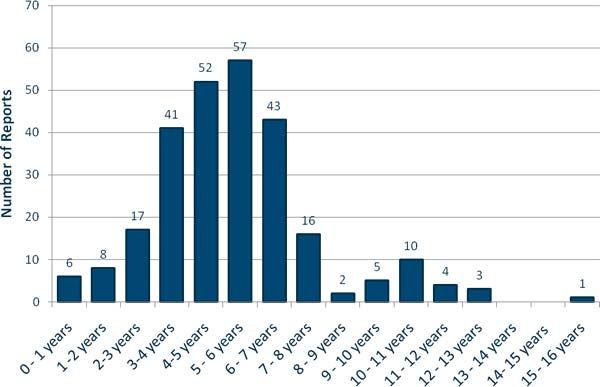
Figure 11 shows the number ruptures versus time since implantation when this was known (265 of
473). The data reported to the TGA suggest that ruptures occur on average between 5 and 6
years after implantation.
Figure 11. Distribution of implant ruptures versus time since implantation
A report published in April 201211 by the Australian Department of Health concluded that the
12
rupture rate of PIP implants is higher than for other silicone implants.
In addition, no cases of anaplastic large cell lymphoma have been reported in Australia.
1011
http://www.tga.gov.au/safety/alerts-device-breast-implants-pip-130211.htm#reports
1112
Poly Implant Prothèse (PIP) Breast Implants: Report of the Chief Medical Officer, Department of Health and Ageing, April 2012
253.1.3 Discussion and summary of the French and international vigilance data
The English, Australian and French data are consistent. The implant failure rate (rupture and
gel-bleed) is higher for PIP implants compared to other implants from the first years after
implantation.
In addition, both the MHRA and the French Authority pointed out the under-reporting of incidents
occurring with breast implants in general and therefore the potential impact in the PIP case. The
accurate reporting of this information is essential in order to detect trends in the frequency of
occurrence of incidents that are expected to occur such as ruptures.
Following the first SCENIHR2 report in February 2012 mentioning in particular the lack of available
3
data on reported incidents, the European Commission requested an update12 of this first report
13
and asked the SCENIHR in particular to help create a European questionnaire for the different
Member States in order to collect data on patients with implants. The results should soon be
available.
Cancer and anaplastic large cell lymphoma.
To recap, the French National Cancer Institute (INCa), concluded on 23 December 2011 that:
"The data available today demonstrate the absence of any excess risk of breast cancer in women
with implants compared with the general population. There are currently no data allowing us to
conclude that there is an excess risk of breast cancer specific to PIP implants compared to other
implants."
- "There are currently no data demonstrating an excess risk of anaplastic large-cell lymphoma
specific to PIP implants compared to other implants."
Likewise, in its report of 1/2/2012, the SCENIHR Scientific Committee mobilised by the European
Commission also considered that there are no data suggesting an increased risk of lymphoma or
breast cancer in patients with PIP implants2 . These conclusions were taken up by both the English
3
and Australian authorities.
In France one case of anaplastic large cell lymphoma was reported in a woman with PIP breast
implants.
In January 2011, the FDA had identified worldwide 60 cases associated with breast implants,
including 34 documented cases with a breast location (including 17 in the U.S.). This particular
type of lymphoma is very rare among all lymphomas: according to the American National Cancer
Institute’s Surveillance, Epidemiology and End Results (SEER) programme, it can be estimated
that one woman in 500,000 develops this type of lymphoma each year in the U.S. The breast
location for this type of lymphoma is even rarer with an estimated yearly incidence in the U.S. of 3
cases per 100 million women.
Considering that nearly 4 million women received breast implants in the United States between
1998 and 2009, the FDA believes that in the United States, the incidence of anaplastic large cell
lymphoma is higher in women with breast implants that in the epidemiological data observed for
the general population.
1213
Request for an update scientific opinion on the safety of PIP silicone breast implants
http://ec.europa.eu/health/scientific_committees/emerging/docs/scenihr_q_031.pdf
26Concerning anaplastic large cell lymphoma, the FDA concluded in January 2011 that:
1. The association of this type of lymphoma with implants was "possible", given the fact that in
the reported cases the tumour mainly occurred in areas close to the implant;
2. It is currently impossible to reliably link this serious event to a particular type of implant;
3. The pathophysiological cause of this serious event has not been established to date;
4. Given the extremely low frequency of this type of lymphoma and the evidence gathered to
date on breast implants, the safety of these products is not questioned.
European and international studies are currently in progress to obtain more precise data.
3.2 International toxicological data
3.2.1 United Kingdom
In September 2010, in parallel with the tests conducted by Afssaps, the MHRA commissioned a
first series of tests13 to evaluate the toxicity of PIP silicone breast implants and then completed this
14
evaluation in 2012 by a second series of tests14 ,8 . All these tests were conducted under in vitro
15 9
conditions by comparison with implants filled with medical grade silicone gel.
The following series of tests was performed:
- Comparative composition of PIP implants and implants with medical grade silicone gel
- Genotoxicity tests (in vitro Ames assay: bacterial reverse mutation)
- Evaluation of cytotoxicity (in vitro test on fibroblast cultures) ,
- Skin irritation test (in vitro test on the EpiSkin model)
The results concerning implant composition, such as those of tests commissioned by the French
authorities, showed that concentration levels of low molecular weight D4-D6 siloxanes were
significantly higher (10 times or more) in PIP implants than in medical grade silicone implants, and
that these levels varied from one batch to another.
PIP silicone implants do not contain major levels of organic or inorganic impurities. Platinum levels
(catalyst used in the polymerisation of the gel) in PIP silicone gel implants are lower than in
medical grade silicone implants. A very low level of caesium was detected in PIP implants unlike in
medical grade silicone implants.
Moreover, low molecular weight siloxanes were assayed in the milk of a woman with ruptured PIP
implants. The quantity detected was much lower than that found in commercial cow's milk.
Concerning the toxicological data, the MHRA concluded that the in vitro evaluation of the toxicity
of the gel demonstrated no genotoxicity or cytotoxicity, supporting the French results.
In addition, the PIP implants tested were considered to be non-irritant according to an in vitro skin
irritation test on the EpiSkin skin model.
Finally, the MHRA13 and NHS8 reports point out that the presence of these siloxanes is not a
14 9
significant health risk for subjects with implants even in the case of the complete rupture of the
implant. Siloxanes are not genotoxic and do not cause skin or eye irritation or allergic sensitisation
1314
Summary report on tests performed on extracts of silicone gel filler material from PIP silicone breast implants, Sept. 2012
1415
Chemical analysis summary, composition and toxicity of PIP silicone, November 2012
27You can also read


