POST PRIMARY SCHOOL EDUCATION PACK 2017/2018 - www.guidedogs.ie - Irish Guide Dogs
←
→
Page content transcription
If your browser does not render page correctly, please read the page content below
POST PRIMARY SCHOOL
  EDUCATION PACK
     2017/2018

      www.guidedogs.ie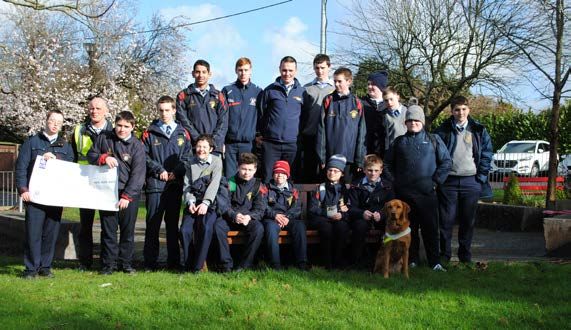
HISTORY OF
                                                             IRISH GUIDE DOGS
                                                             FOR THE BLIND
I N T R O D U C T I O N                                      Irish Guide Dogs for the Blind is a non-profit organisation

& CONTENT
                                                             that provides life-changing services to people who are
                                                             vision impaired and to families of children with autism.
                                                             Here at Irish Guide Dogs we have come a long way since
                                                             we were co-founded by the late Mrs. Mary Dunlop and
    History of Irish Guide Dogs			            1              Mr. Jim Dennehy in 1976.
                                                             We achieved our first Guide Dog partnership in 1980 and
    Fundraising Ideas				2
                                                             have not looked back since.
    Information on School Visits 		           3
                                                             For over 40 years we have provided life-changing
    Become a Friend of Irish Guide Dogs       4              services and support to people across Ireland with sight
                                                             loss. In 2005, we were the first organisation in Europe
    Student Volunteer placements @ HQ         4              to provide Assistance Dogs for families of children with
                                                             autism.
    Case Study: Martin Gordon and ‘Jake’      5
                                                             Throughout that time we have consistently focused on
    Support and services available 		         6              innovation, to ensure that we maximise the number of
                                                             people who can benefit from our services. Since starting
    Smart Street Heroes			                    7              our journey in 1976, we have greatly advanced our
                                                             knowledge and understanding of dog training.
    Debate Activity				8
                                                             We have invested in state-of-the-art training facilities
    World Sight Day 				                      9              and developed programmes that deliver the best dog, at
                                                             the right time, with the most suitable temperament to
    Types of Vision Loss				10
                                                             match our clients’ needs.
    Annual Fundraiser: HEROES		               11             All our programmes are offered free of charge, with
                                                             intensive support and aftercare available to all our clients.

                                  SIGNIFICANT MILESTONES
       1976:      Organisation is founded
                                                             2005: Introduction of our Assistance Dog
                                                                   Programme for families of children with
       1980:      Moved to our current site in Model Farm
                  Road, Ballincollig, Cork and trained our
                                                                           autism

                  first Guide Dog partnership
                                                             2010:         Taoiseach Enda Kenny officially opens
                                                                           €5m redevelopment of National
       1988: Introduction   of the Orientation &
             Mobility Programme (Long Cane Training)
                                                                           Headquarters and Training Centre.

       1999: Introduction
             Programme
                            of the Child Mobility     2016:                President Michael D. Higgins visits the
                                                                           National Headquarters and Training
                                                                           Centre to celebrate the 40th Anniversary

       2004: Launch  of The Independent Living Skills
             training facility and programme
                                                                           of Irish Guide Dogs and to recognise the
                                                                           significant contribution of its voluntary
                                                                           community.
1
FUNDRAISING
Help us to provide life-changing services to people
who are vision impaired and families of children
with autism. We raise more than 85% of our income
from voluntary donations and events. We need YOU
to make sure we can continue to meet the demands
for our services.

Get involved today by organising an
event in your school. Here’s a few ideas to
get you started:

• Create own events; sports days, table quizzes,
  sponsored silences, cake sales etc.

• Get involved in our annual fundraiser in April
  (see page 11)

• Virtual pet show: pay €2 to enter a photo of your
  pet, have a local vet judge the winner, display the
  photos on your school wall

• Christmas: Sell Irish Guide Dog Christmas cards
  and calendars in your school

• Hold a jumble sale for unwanted Christmas gifts

• Hot chocolate sale

• No uniform day

Contact us at education@guidedogs.ie to discuss
how we can bring your ideas to life and support you
in any way we can.

                                                        2
SCHOOL VISITS
 AND TOURS                                                                       Below are some pictures of schools that
                                                                               have completed a fundraising event in aid of
                                                                                  Irish Guide Dogs and have received a
                                                                                 school visit or tour of our Headquarters
                                                                                       and Training Centre in Cork.

                        Cree National School                                  Clonmel School - Coláiste Chluain Meala
                             School Visit                                                    HQ Tour

                                               Loreto Secondary School, Balbriggan
                                                           School Visit

    Nagle Rice Secondary School                                                                         Scoil Dean Cussen
              HQ Tour                                                                                      School Visit

                                                                                                                            Patrician
                                                                                                                            Academy,
                                                                                                                             Mallow
                                                                                                                             HQ Tour

3
Become a Friend of Irish
Guide Dogs for the Blind
Sign up for our online Student Newsletter
by visiting www.guidedogs.ie/education and
completing the sign up form to join the mailing
list and receive a quarterly newsletter containing
a roundup of stories from schools around the
country.

Why not send in a photo of your school group
participating in an Irish Guide Dogs activity and
see your own school featured.

School Visits
If your school is learning about vision impairment
or autism why not have one of our Volunteers visit
your school with one of our Ambassador Dogs, or
if your school has completed an Irish Guide Dogs
project why not reward yourselves with a visit and
tour of our Headquarters and Training Centre in Cork.

Please contact the Regional Co-Ordinator in                                                     Scoil Dean Cussen
your area to book your visit:                                                                      School Visit

                       Cork, Kerry, Kilkenny,                                 Clare, Limerick
                       Tipperary, Waterford
                                                                              Katie Kiely
                       Anne Burns
                                                                              t: 021 487 8246/085 887 6580
                       t: 021 487 8259/087 195 4827
                                                                              e: katie@guidedogs.ie
                       e: anne@guidedogs.ie

                       Carlow, Dublin, Kildare, Louth,                        Cavan, Donegal, Galway, Laois,
                       Meath, Wexford, Wicklow                                Leitrim, Longford, Mayo,
                                                                              Monaghan, Offaly, Roscommon,
                       Julie Ann Ramsell                                      Sligo, Westmeath
                       t: 021 487 8292/087 264 7172
                                                                              Lynda Foley
                       e: julieann@guidedogs.ie
                                                                              t: 021 487 8238/085 859 5072
                                                                              e: lyndafoley@guidedogs.ie

Student Volunteer placements @ HQ
We are pleased to be able to offer placements for Post Primary students as part of our Student Volunteer
Programme at our headquarters and training centre in Cork. Teachers can apply on behalf of students to
volunteer@guidedogs.ie who can provide you with an application form. This is a great opportunity to join an
office based team and learn about team work, attention to detail, computer skills, as well as helping organise
events and supporting our Dog Care and Welfare team in our kennels.
                                                                                                                    4
G A N D COMPRE               HENSION
    SE STUD Y R E A D IN
CA
                  O w   n e r M  a r t i n
     Guide Dog              u i d e D   o g
     Gordon wi t h h i s G
                           Jake
    When Martin Gordon closed his eyes on the night of            bring me there.” Jake
    June 15th 2002 he had no idea it was the last time he         became an extension
    would ever see. During the night, he suffered a retinal       of Martin, acting
    detachment. He woke to complete darkness, his sight           as his eyes, taking him
    was gone. He was 17 years old and terrified that life         everywhere he needed to go, guiding
    as he knew it was over and that every dream he’d ever         him around every obstacle which lay in their path.
    had was lost.                                                 Martin says “Having Jake meant I could get from A to
    Martin had lost more than his sight. He’d lost his way        B so much faster. The cane was an obstacle finder but
    of life. A life that like so many boys his age revolved       a Guide Dog is an obstacle avoider. With Jake I was
    around playing football and rugby, skateboarding and          dodging obstacles I didn’t even know were there.”
    kayaking. Martin’s greatest fear was that along with
    his sight, he’d lost the dreams he had for his future.        Finally, Martin and his parents could see his future and
    His dreams were the same as many young men his                his dreams coming into view again. Can you imagine
    age; of going to college, forging a career, falling in love   the relief his parents felt when they realised that with
    and one day having a family. Martin told me about the         Jake by his side their son could achieve everything
    moment he realised how much his life had changed              he dreamed of? And so, with Jake by his side Martin
    and how important it was that he get his independence         completed his Leaving Cert and achieved his dream
    back. “It really hit me the first time we left the house.     of going to college in Galway. Something Martin says
    I felt helpless. I was a fit 17-year old and I was like a     would not have been possible without a Guide Dog.
    child. I had to be guided by my parents. I couldn’t do        Martin remembers his days in NUI Galway as some
    anything for myself. I knew I didn’t want to have to          of the best of his life. “Over my four years in Galway
    hold someone’s arm forever. I didn’t want my parents          I had the absolute time of my life. I was able to have
    with me everywhere I went.” School also presented its         the exact same college experience as everyone else.
    own challenges. “I had to learn how to learn again. How       Thanks to Jake.” But Martin’s dreams didn’t stop there.
    to read poetry. How to do maths. How to learn Irish.          He had more to do. And so, Martin and Jake made the
    Gradually I worked out what worked for me.”                   move to Dublin where he attended Trinity College.
                                                                  And as his confidence grew so did his ambition. After
    But Martin was determined to fight to get his life back.      graduating from Trinity Martin made the decision to
    Not just the life he’d known before he lost his sight         train as a barrister. With Jake by his side Martin knew
    but the future life he’d always dreamed of. Using his         that anything was possible, that included finding love,
    cane to get around took its toll on Martin. “I found a        Martin remembers the important role Jake played in
    long day using the cane would drain me of energy. In          introducing him to his partner Louise. “This girl came
    the evenings I was wrecked, I’d fall asleep at my desk        over to me and said I’m so sorry I’m after tripping over
    trying to do homework.” Martin knew that to get the           your dog. And I joked don’t apologise to me, apologise to
    Leaving Cert results he needed something had to               him. And that was how I met Louise. I guess she fell for
    change. And that’s when he made the decision that             Jake first and then she fell for me.”
    would give him the independence he needed to turn
    his dreams into reality. Martin applied for a Guide Dog.      Today, seven years later Martin and Louise are settling
    Eventually, the call came telling Martin we had a dog         into life as new parents to 16-month-old Norah. He says
    for him. His name was Jake, Martin was ecstatic and           “Everything good happened to me happened with Jake.
    could tell immediately that having Jake was going to          Every graduation, qualifying as a barrister, meeting
    be a game changer. “I remember thinking this is going         Louise. Sometimes being blind is a pain. There are loads
    to be great. I’ll be able to get around town on my own.       of things I’d love to see; I’d love to see my little girl’s
    No more needing to ask people to bring me here or             face, but I can go to work, come home, go to the shops
                                                                  and do things any father would.”
5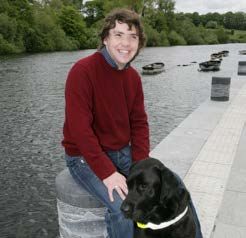
Maths Quiz                                                 What Support Is Available?
It costs €38,000 to raise a Guide Dog from                  As well as providing Guide Dogs to people who
Breeding to Retirement. Dogs work for                       are vision impaired and Assistance Dogs to
                                                            families of children with autism, we also deliver
approximately 10 years. It takes about 2
                                                            confidence-building rehabilitation services to
years to fully train a dog.                                 adults, young people and children including long
                                                            cane mobility training, communication and daily
Number of clients in Ireland:
                                                            living skills.
• 162 Guide Dog Owners
• 273 Assistance Dog Owners                                 Our services are designed with the needs of the
• 738 Other vision impaired clients                         individual at heart and we go to great lengths to
                                                            match each client with the right dog to suit them
This year’s plan:                                           and their lifestyle.
• Create 30 new Guide Dog partnerships
• Create up to 36 new Assistance Dog                        Services include:
  partnerships                                                 • Guide Dog Programme
• Train 15 clients in Long Cane Skills                         • Assistance Dog Programme
• Train 12 clients in Independent Living Skills                • Independent Living Skills Training
                                                               • Child Mobility Programme
Every year we:                                                 • Next Step Programme for young adults
•     Conduct 600 aftercare visits to client
                                                                  moving out of home
      homes
                                                               • Long Cane Training
                                                               • Gardening Programme
Maths Questions:                                            All of our programmes are offered free of charge
1. How many clients do we have in total?                    with intensive support, and after care available to
2. How many NEW clients will benefit this                   all our clients.
   year?
3. How many TOTAL clients will we work with
   this year?
4. In “Dog Years” how long does it take to

                                                                     OUR ES
   train a Guide Dog?
5. How many new partnerships

                                                                     SERVIC
   will we have in total according to this
   year’s plan?

Answers to Maths Quiz are on page 9.
                                                                                          D
                                                                                     GUIDE OGS
Case Study :
                                                                 MOBILI N &

Answer the following questions:
                                                                                                 PR
                                                                                                   YOU AMMES
                                                               ORIENTATI0
                                                                       TY

                                                                                                   OG

1. How old was Martin when he lost his sight?
                                                                                                     R
                                                                                                      TH

2. For how many years has Martin been vision
    impaired?

3. What is Martin’s dog’s name?
                                                                              GO
                                                                       ON

                                                                                                 S NCE

4. What does Martin say the difference is when
                                                                       PP          IN G             TA
                                                                    SU

                                                                                              S I S
    using the cane and using a Guide Dog in relation
                                                                            OR             AS
    to obstacles?                                                                T                 DOG
5. When Martin made the decision to get a Guide
    Dog, what did he hope this would give him in life?

6. Fill in the blanks: Jake acts as Martin’s ____,
    helping him get from A to B so much ______?
                                                         Answers to Case Study questions can be found on page 9.   6
SmartStre

                                                                                        et H
                                                            I am a

                                                                                            ero
    SMA R T S T R E E T
    Last year we launched a Smart Street          1. Become one of our
    campaign as part of World Sight Day              SmartStreet Heroes
    to create better awareness of how the         Explain to your family members how they can
    public can help people with vision loss in    help people with vision loss in the community
    their community by keeping pedestrian         by:
    pavements free of obstacles, i.e. parked         • NOT parking on pavements
    cars, over-hanging branches, household           • NOT blocking pavements with household
    wheelie bins and street furniture such as          wheelie-bins
    signage. These obstacles put the safety of       • Trimming garden hedges and
    people with vision loss at risk by causing         overhanging branches.
    an injury or by forcing them on to the road
    where they are unable to see on-coming        2. Take the SmartStreet Pledge:
    traffic.                                      Show your support for our SmartStreet
                                                  Campaign in October, by pledging your
                                                  commitment to keep our pavements free
    This is an ongoing campaign and we would
                                                  of obstacles. Keeping pavements free of
    like you to support it by speaking to your
                                                  obstacles, also, helps children with autism who
    students about the importance of keeping
                                                  own an assistance dog and other pedestrians,
    pavements clear of obstacles so they can
                                                  such as parents with buggies.
    relay this important message to their
    parents/guardians. The following activities
    may get the conversation started in your      3.Show and share :
    classroom.                                    Show and share the SmartStreet video
                                                  featuring Joe Bollard and his Guide Dog
                                                  showing how blocked pavements make their
                                                  daily walks difficult. This can be found by
                                                  visiting: www.guidedogs.ie/smartstreet

             Connect with us online!

                                  www.guidedogs.ie
7
DEBATE
ACTIVITY
Discuss whether employers • The government runs a wage subsidy
scheme which offers financial support
should do more to diversify their for employers who employ certain
workforce to include people with people with disabilities on a full time
a disability. basis. (Citizens Information)
• People with disability are only half as
How to get started: likely to be in employment as others
of working age (National Disability
If possible, move the desks out of the way to
Authority)
make a clear space for people to stand in the
middle of the room. • For employers limited disability know-
how and a fear of the unknown can be
Ask the class to decide if they agree or issues. For the individuals, poor health,
disagree with the following statement. lower levels of skills or education, low
People who agree should stand to one side expectations, fears of losing benefits,
of the room and people who disagree on the and practical issues such as transport to
other side. work can be issues (National Disability
Authority)
“Employers should have a target
quota of people they aim to employ • In international terms, Irelands
with a disability in order to diversify employment rate for people with
their workforce to include people with disabilities is low (Government’s
disability”. comprehensive employment strategy for
people with disability)
Start to ask certain people why they chose to • The social aspects of real workplaces
agree or disagree with the statement can be as important as the job itself
(Government’s comprehensive
As the conversation moves along, introduce employment strategy for people with
some of the following points of information. disability)
At the end of the discussion ask people if
they would like to change sides of the room, Debriefing Questions for the Class:
depending on whether the discussion and
information changed their mind. What surprised you most about your
personal reaction to this topic?
Points to consider during What surprised you most about other people’s
views on this topic?
the discussion:
How do you think a person with a disability
feels when they don’t get past the interview
• It is illegal to discriminate against any
stages of jobs they are qualified for?
employee on the basis of disability
and this right is set down (Citizens What could you do differently in your own life
Information) based on what you learned today?
8Wo r l d S i g h t
Day
World Sight Day is an annual day of awareness held A study conducted by Trinity College Dublin
in October to focus global attention on blindness and highlighted the importance of mobility services, like
vision impairment. ours, for people registered blind. The study found over
a third of older people registered are unable to get out
World Sight Day reminds us to pay attention to in to their local community independently.
eye care issues that impact lives everywhere, both
developed and developing economies. There are Over half of people who are vision impaired have
simple things you can do like going for an eye test, difficulty visiting places they are unfamiliar with. Over
wearing your glasses when you’re supposed to and a third of older people registered blind are unable to
giving yourself regular breaks from staring at mobile get out in their local community independently. Our
phone, iPad and computer screens! services enhance the mobility and emotional wellbeing
of people who are vision impaired.
The main causes of vision loss in Ireland are:
• Age-related Macular Degeneration (which people
acquire over the age of 50)
Fundraising for WSD
• Cataracts, Diabetic Retinopathy, Glaucoma and Encourage students to become a
Retinitis Pigmentosa SmartStreet Hero by getting sponsored
• There are 54,810 people in Ireland who are blind or for €5 (or more) by making 3 or more
vision impaired. SmartStreet interventions such as:
• Getting family members to park their cars or
vans on the street not on the pavements
Bag Pack • Cut back overhanging branches from your
garden
We have Bag Packs
• Ensure wheelie bins and refuse containers are
in lots of stores
not left on the pavement
nationwide. If you and
your classmates would • Report broken street lights, potholes or badly
cracked paving slabs
like to support one of
our Bag Packs, please
ask your teacher to
contact the Regional
Take a look at the photos across
Volunteer coordinator the page to gain an insight in to
in your area to discuss further. how our Guide Dogs might look
Contact details can be found on Page 4. to their vision impaired owner.
dreams into reality, 6) Eyes, Faster
1) 1149, 2) 96, 3) 696, 4) 14, 5) 69 whereas a Guide Dog is an obstacle avoider, 5) Independence to turn
Answers to Maths Questions: 1) 17 years old, 2) 15 years, 3) Jake, 4) The cane is an obstacle finder
Answers to Maths Quiz from Page 6: Answers to Case Study from Page 6:
9TYPES OF
VISIO N L O S S
NORMAL VISION CATARACTS
AGE-RELATED MACULAR DEGENERATION RETINITIS PIGMENTOSA
DIABETIC RETINOPATHY GLAUCOMA
10We would be delighted if
you would get involved in
our annual fundraiser. Here
are some ways in which your
school can participate:
Order a HEROES school pack which will include items Hold a HEROES fundraising event in your school. See
to sell to students and teachers in your school; You will page 2 for some additional ideas
receive
We are also calling on support from students
• 100 HEROES Pins over 16 to:
• 100 HEROES ‘Independence’ wristbands • Sell our items in your local community on-street
(we can arrange a permit for the date that suits
• HEROES Posters to put up around the school your school schedule and provide all the pins,
buckets, hi-visibility vests etc.)
• Collection buckets
• Volunteer to sell pins in your local Supermarket
Sell your HEROES items to your friends and family
11 If you would like to take part, please contact the Regional Co-Ordinator in your area. Details can be found on Page 4.You can also read


