Prevent the spread of H1N1(Swine Flu)
←
→
Page content transcription
If your browser does not render page correctly, please read the page content below

Prevent the spread
      of H1N1 (Swine Flu)
      Help protect yourself and your family by getting prepared for an influenza outbreak
             now. Prevent the spread of the virus by following these simple steps.

                                                                    www.wvdhhr.org

H1N1, or Swine Flu, is spread mainly from
person to person through coughing or sneezing.            WASH HANDS FREQUENTLY
Touching something with the H1N1 virus on it and
then touching your eyes, mouth or nose can also
spread infection. Wash hands often with soap              COUGH OR SNEEZE INTO YOUR
and warm water or clean with an alcohol-based             ARM OR SLEEVE
cleaner. Cleaning frequently touched surfaces
such as doorknobs and telephones can also
prevent the spread of the H1N1 virus.                     AVOID TOUCHING EYES, MOUTH
                                                          OR NOSE

                                                          IF YOU FEEL SICK STAY HOME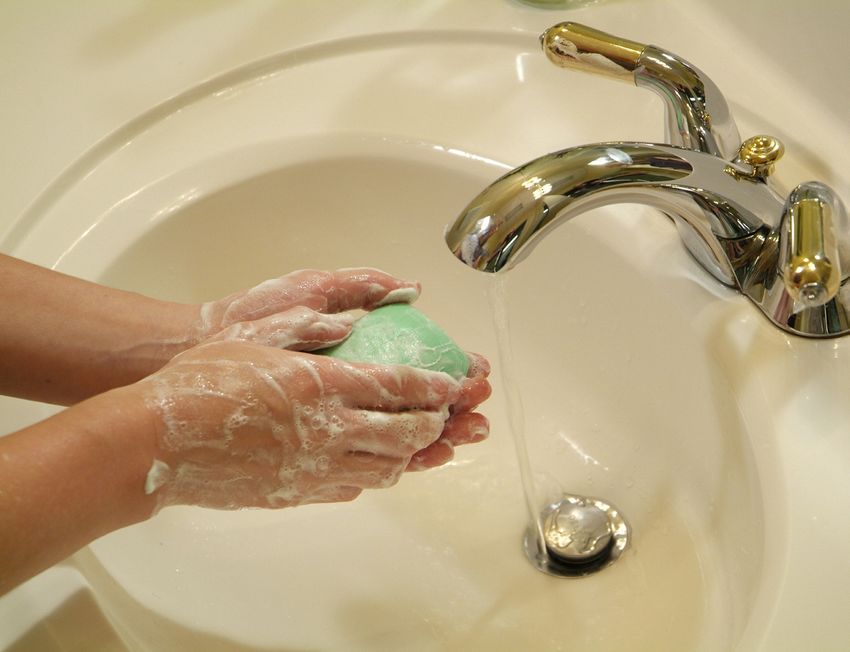
Managing H1N1 (Swine Flu) Illness
Background
The novel H1N1 (Swine flu) virus is causing illness in the United
States and around the world. Experts expect it to continue to spread.
Much has been learned, but we continue to learn more every day.

H1N1 Symptoms are Similar to Seasonal Flu
The symptoms of this new H1N1 (Swine flu) virus are similar to
symptoms of seasonal flu – fever, cough, sore throat, runny or stuffy
nose, body aches, headache, chills and fatigue. Sometimes, people also
have diarrhea and vomiting. People are usually sick for up to a week, occasionally longer.

Avoid Spreading Flu to Others
If you are sick with a flu-like illness, stay home for 7 days after your symptoms begin or until you have
been symptom-free for 24 hours, whichever is longer. Stay apart from others as much as possible.
You’re most likely to spread flu to people who are within 3-6 feet of you. If sick and you have to be
very close to others, wear a surgical mask if you can or cover your coughs and sneezes with a tissue.
Wash your hands regularly with soap and water or use an alcohol based hand sanitizer. People can
probably spread the virus to others from one day before symptoms start to up to 7 days after they get
sick. Children, especially young children, may be contagious a bit longer.

Know Your Risk for Complications
Although more is being learned, people most at risk for serious complications from the new H1N1
(Swine flu) disease are likely the same as those at high risk for complications from seasonal flu:
children younger than 5 years old, pregnant women, people with chronic medical conditions (such as
asthma, diabetes, or heart disease), people who are immunosuppressed, and people over age 65.

Treatment is Similar to What You Should Do for Seasonal Flu
                                    Most people are expected to recover without needing medical care.
                                    If you have flu-like illness and are at high risk for complications
                                    of flu check with your health care provider or seek medical care.
                                    Things you can do to care for yourself at home include:
                                    y   Get plenty of rest.
                                    y   Drink clear fluids (such as water, broth, sports drinks,
                                        electrolyte beverages for infants) to keep from being dehydrated.

West Virginia Department of Health and Human Resources, Bureau for Public Health               May 2009
y   Over the counter medications you would normally use for colds and flu can help treat the symptoms,
    for example, acetaminophen (Tylenol®) or ibuprofen (Advil®, Motrin®, Nuprin®) for fever; cough
    medicines or decongestants. Check the label to see if over the counter medicines already contain
    acetaminophen or ibuprofen. Don’t double dose!
y   Children less than 18 with flu should never be given aspirin (acetylsalicylic acid) containing
    products, for aspirin can put them at risk for a complication called Reye’s Syndrome.
Antiviral drugs will not be needed for everyone who has H1N1 flu virus infection.
y Antivirals [oseltamivir (Tamiflu®) and zanamivir (Relenza®)] are most important to use in those
  who require hospitalization for influenza or those at high risk of complications.
y While they do not cure flu, they can help reduce disease severity, duration, or complications.
y These medications must be prescribed by a health care professional.
y For treatment, the drugs work best if given within 2 days of becoming ill, but may be given later if
  illness is severe or a person is at high risk for complications.
y Sometimes, antivirals are also used to prevent disease in high risk, close contacts of cases.
Be watchful for emergency warning signs that might indicate you need to seek
medical attention.
In children, those include:
• Fast breathing or trouble breathing
• Bluish or gray skin color
• Not drinking enough fluids
• Severe or persistent vomiting
• Not waking up or not interacting
• Being so irritable that the child does not want to be held
• Flu-like symptoms improve but then return with fever and worse cough
In adults, emergency warning signs include:
• Difficulty breathing or shortness of breath
• Pain or pressure in the chest or abdomen
• Sudden dizziness
• Confusion
• Severe or persistent vomiting
• Flu-like symptoms improve but then return with fever and worse cough

Find out More
• Stay informed. Health officials will provide additional information as it becomes available.
• Visit the following websites for up to date guidance:
  www.cdc.gov (“Taking Care of a Sick Person” “Antivirals” and
  other Resources) or www.wvdhhr.org for West Virginia specific
  information.
• Speak to your health care provider or local health department.
• Follow public health advice regarding school closures, avoiding
  crowds, and other social distancing measures.
• Consider developing a family emergency plan as a precaution for
  more serious pandemics or other emergencies. This includes
  plans for childcare should schools be closed, a supply of food and
  medicines if you are staying home for a few days, etc. See www.wvflu.org, “At Home”.

West Virginia Department of Health and Human Resources, Bureau for Public Health             May 2009
Talking to Children About
                                      Novel H1N1 Flu Concerns
Stressful situations often cause children to worry and have many questions about what is
happening and how it can be fixed. It is important to remember to take care of your health
and well-being as well as the health of your children. Your confidence, calm attitude and
ability to cope well with stressful situations will help your children ease their worries and feel
safe and secure.

 Here are some helpful tips on what you                                          Focus on what your child can do to
 can do for your children:                                                       avoid close contact with people who
                                                                                 are sick with flu:
 ♦ Keep activities as consistent and
     normal as possible even if your normal                                      ♦ Set a good example by washing your
     routine changes (such as daycare or                                             hands frequently with soap and water
     school closures).                                                               for 20 seconds (long enough for
 ♦ Ask your children what they have heard                                            children to sing the “Happy Birthday”
     about novel H1N1 flu (swine flu).                                               song twice), and by coughing and
     Answer questions openly and honestly                                            sneezing into a tissue and disposing
     at a level they can understand. Be                                              of it immediately.
     concrete and do not avoid difficult                                         ♦ Stay at least six feet away from people
     questions.                                                                      who are sick with flu.
 ♦ Allow your children to express their                                          ♦ Stay home from school and avoid
     feelings and concerns. Let them know it                                         extracurricular activities if sick.
     is okay to be afraid or mad. Ask                                            ♦ In communities where H1N1 (swine flu)
     questions so you can help them identify                                         virus is spreading, stay away from
     and cope with their feelings.                                                   large gathering places or crowded
 ♦ Children always need to feel safe and                                             settings if you are at high risk for
     loved. When they are uncertain about                                            complications of flu.
     situations and afraid, they may need
                                                                                West Virginia Department of Health and Human Resources
     even more affection and attention.                                         Bureau for Behavioral Health and Health Facilities
                                                                                350 Capitol Street
 ♦ Limit exposure to media and adult                                            Charleston, WV 25301
     conversations about novel H1N1 flu.                                        Telephone: 304-558-0627
                                                                                Website: www.wvdhhr.org/bhhf
     Try to be available to watch the
     television with your children and                                          Additional Resources

     answer their questions.                                                    Key facts about Novel H1N1: www.cdc.gov/h1n1flu/key_facts.htm
                                                                                Taking Care of Patients at Home:www.cdc.gov/h1n1flu/
 ♦ Encourage appropriate healthy                                                guidance_homecare.htm
     behaviors, such as eating well, sleeping                                   Talking to Children About Swine Flu (H1N1): A Parent Resource:
                                                                                www.nasponline.org/resources/
     well, and playing outside.                                                 Talking_With_Children_About_Flu_FINAL.pdf

 ♦ Use their questions as an opportunity to                                     West Virginia Department of Health and Human Resources,
                                                                                Bureau for Public Health: www.wvdhhr.org
     let them know what they can do to
                                                                                West Virginia Department of Health and Human Resources,
     avoid getting novel H1N1 flu.                                              Bureau for Public Health: www.wvflu.org

Adapted from: The Centers for Disease Control and Prevention Website: http://www.cdc.gov/h1n1flu/talkingtokids.htmm, May 2009.
Self-Mental Health Care
Things to remember when trying to understand an outbreak or health concern
♦ It is normal to worry about yourself and your family’s safety.
♦ Everyone is at risk during an outbreak.
♦ Grief and anger are normal reactions.
♦ Focusing on your strengths will help you cope.
♦ Everyone has different needs and different ways of coping.
Common reactions that may occur during an outbreak or health concern
♦ Difficulty talking, sleeping, walking and concentrating.
♦ Increased irritability.
♦ Depression, sadness, mood swings, and crying easily.
♦ Feeling of helplessness.
♦ Concerns about those who depend on you for care.
♦ Worries about loss of income and job protection, especially if asked to
stay at home for an extended period of time.
♦ Fears of separation from life activities.
♦ Feeling a lack of control, especially when control is entirely in the
hands of others.
♦ Increased boredom.
Take action
♦ Learn as much as you can about the H1N1 virus and be aware of the normal reactions during an
outbreak.
♦ Keep to your usual routine as much as possible.
♦ Have activities on-hand that can prevent boredom (games, toys, etc.) and keep your mind active.
♦ Get plenty of sleep, try to exercise, eat healthy foods and relax.
♦ Establish a family emergency plan that includes important phone numbers and where to meet if you
become separated.
Pay special attention to children
♦ Let children know it is okay to feel upset when something scary happens.
♦ Enjoy your child and take part in activities together.
♦ Encourage children to express feelings without making judgment.
♦ Turn off the television and radio, especially if the news makes you worried. If you are
worried, children can sense it.
West Virginia Department of Health and Human Resources
Bureau for Behavioral Health and Health Facilities
350 Capitol Street
Charleston, WV 25301
Telephone: 304-558-0627
Website: www.wvdhhr.org/bhhf
Adapted from the Wisconsin Division of Public Health Pandemic Flu PlanYou can also read


