Preventing and Minimising Gambling Harm 2019/20 to 2021/22 - Consultation on: Proposed Strategy and Service Plan Proposed Levy Rates
←
→
Page content transcription
If your browser does not render page correctly, please read the page content below
Preventing and Minimising
    Gambling Harm
  2019/20 to 2021/22
                      Consultation on:

         Proposed Strategy and Service Plan

                   Proposed Levy Rates

http://www.health.govt.nz/publication/strategy-prevent-and-minimise-
       gambling-harm-2019-20-2021-22-consultation-document
Outline of Presentation
• Context
• Gambling harm needs assessment.
• The Consultation Document:
Draft Strategic Plan 2019/20 to 2024/25
Draft Service Plan 2019/20 to 2021/22
Draft problem gambling levy rates 2019/20 to 2021/22
Policy questions
• How to make a submission
• Next steps
• Questions / points for clarification.Context – what is gambling harm?
• The Gambling Act 2003 defines gambling harm as:
‘Harm or distress of any kind arising from, or caused or exacerbated by, a
person’s gambling; and
Including personal, social, or economic harm suffered –
i. By the person; or
ii. By the person’s spouse, civil union partnet, de facto partner, family,
whānau, or wider community; or
iii. In the workplace; or
iv. By society at large.’Context – what is the Strategic Plan?
• The Gambling Act 2003 sets out requirements for an ‘integrated problem
gambling strategy focused on public health’.
• It must include:
measures to promote public health
Services to treat and assist problem gamblers and their families/whānau
Independent scientific research
evaluation.
• The Ministry of Health is responsible for developing the strategy every three
years, and for implementing it.
• The Crown recovers the cost of developing and implementing the strategy
using a ‘problem gambling levy’.
• The process for this consultation is set out in the Act, and includes carrying
out a Needs Assessment.What did the Needs Assessment say (1 of 2)?
• Gambling participation & levels of harm have declined since a peak in
the 1990s.
• The proportion of people affected by gambling harm (measured by the
PGSI) have remained static since 2012, but the total number of people
affected by gambling harm has increased in line with population
growth.
• about 5% of the NZ population (191,000 people) participate in at least
low risk gambling behaviour, of these 0.5% (37,000 people) fit the
clinical definition of a ‘problem gambler’.
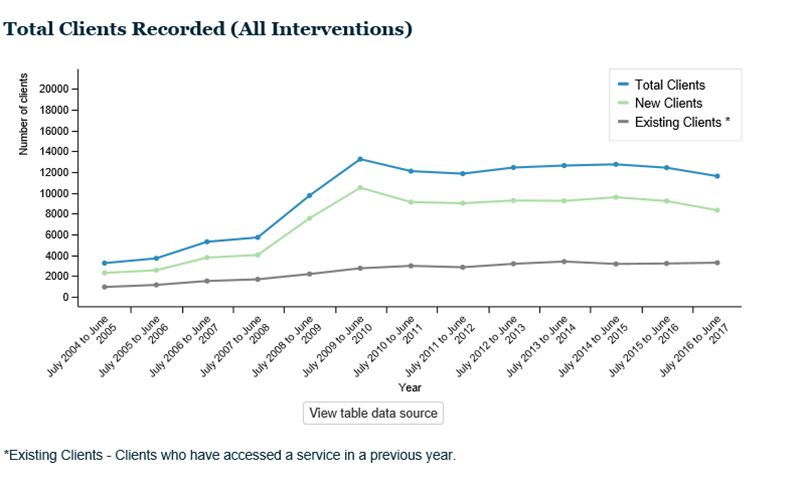
• Service uptake has been well below expected demand. Service
utilisation rates have remained relatively unchanged over the last 5 to 6
years.Utilisation of gambling harm services
Presentations by ethnicity (excluding brief interventions)
MODERATE RISK/ PROBLEM GAMBLING RATES

 Rates of moderate risk/ problem gambling compared to European/Other:

 • Maori population rates are in the region of 2.5 times higher
 • Pacifica rates are in the region of 2.3 times higher
 • Asian rates are in the region of 2 times higher
Use of gambling harm services 2016/17

• Of the 6,300 gamblers who sought treatment:

       • 38.1 percent identified as European/other

       • 33.0 percent identified as Māori

       • 21.2 percent identified as Pacific

       • 7.7 percent identified as East Asian

       • 53.1 percent were men.
What did the Needs Assessment say (2 of 2)?
• About half of all electronic gaming machines or ‘pokies’ (which research
has shown is the source of the highest risk of harmful gambling activity)
are located in the most socio-economically deprived areas of the
country.
• These are areas where Māori and Pacific peoples are also over-
represented. These are also the groups that research tells us are
associated with high levels of harm and are the least able to afford the
costs of gambling.
• Strengthen research and evaluation, particularly regarding the
convergence of gambling and gaming.Distribution of class 4 NCGMs by low, mid and high
deprivation areas
Source: Department of Internal AffairsLocation of pokies by social deprivation index
Location of pokies by social deprivation index
What has been the Ministry’s response?
• What we aim to achieve has not changed
• But we need to change how we try to achieve those objectives
• The Service Plan shows a desire to do things differently, including:
Expanding the range of services available to match more closely those
available in the wider addiction and mental health sector
Taking the opportunities offered by existing gaps to pilot new models of
working and to evaluate them
Research into relapse prevention, online gambling.
• The government is also asking some different questions through this
consultation process.Policy questions (1 of 2)
• The draft strategy proposes that the Ministry and Department of Internal
Affairs report back to responsible Ministers with options to address the
location of EGMs in high social deprivation areas.
Seeking your views on:
• What barriers exist (if any) to relocation of non-casino gaming machine
venues from high social deprivation areas to low social deprivation areas
• What incentives could be put in place for relocationPolicy questions (2 of 2)
Seeking your views on:
• Effectiveness of the levy formula in apportioning payments to sectors in
proportion to harm
• Changes to the levy formula to make it more effective (if any)
These will NOT affect the strategy and levy rates to be set for 1 July 2019, which
will be set using current legislation.
Specific policy proposals will follow if changes are contemplated.Draft six-year Strategic Plan (‘the what’)
• Based on Outcomes Framework developed in 2011 with the gambling
industry and harm minimisation services
• Broadly fit for purpose, with relatively minor changes proposed, notably:
Alignment with NZ Health Strategy
Framework for organising the strategic objectives
Include a focus on reducing inequalities and equities in Objectives 9 and
10
Stronger emphasise on recovery through enhancing the mana of service
users
Introduce ‘priorities for action’ informed by the needs assessment, such
as:
o pilot initiatives focused on reducing gambling relapse and
persistent gambling harm-related health inequities.Draft three-year Service Plan 1 of 3 (‘the how’)
• Priorities (informed by the needs assessment) include:
maintaining the focus on vulnerable, at risk populations, particularly for Maori,
Pacific and Asian communities, to reduce gambling harm health inequities
• Propose to:
Introduce peer support
Introduce residential care
refocus the mix of current services to increase awareness and engagement by those at
risk (most likely via tender process)
fill service gaps and pilot/evaluate new service models
refocus/evaluate current activities to inform service development
Establish a consumer network to inform service co-design and activities
research into the growth of internet based gambling and the convergence between
gambling and gaming, relapse prevention.Draft three-year Service Plan 2 of 3
• Maintains emphasis on an outcomes and results-based approach to services
• Retains key elements from current service plan:
Fosters innovation in primary prevention & psychosocial intervention
Encourages workforce development: public health training (in core
competencies & minimum qualifications) and intervention training (for
DAPAANZ registration or equivalent)
• Funding for HPA to develop / maintain
Good practice materials for gambling operators and venues
Enhanced focus on Māori and Pacific
• Gambling helpline service through the integrated national telehealth serviceDraft three-year Service Plan 3 of 3
• Ministry seeking funding of $55.339m for 2019/20-2021/22.
• The Ministry is estimated to have a $5 million underspend, accumulated
over time since 2013.
• It is proposed to use that funding to pilot new activities, rather than
increase the appropriation.
• The appropriation will maintain existing levels of service while this work
proceeds.
• The level of funding will be reviewed, based on what is learnt from the pilots
and evaluations.
• It is possible that an increase to the appropriation may be requested for the
levy period beginning 1 July 2022.
• There is no change to the Ministry’s proposed operating costs.Proposed indicative budget to prevent and minimise
gambling harm (GST exclusive) 2019/20 to 2021/22
• The table below refers to the amount proposed to be appropriated and does
not include the proposed underspend
• The underspend of approximately $5 million is proposed to be applied to
new / piloted services, spanning public health and intervention, and to their
evaluation.
2019/20 ($m) 2020/21 ($m) 2021/22 ($m) Total ($m)
Public health services 6.870 6.840 6.880 20.590
Intervention services 8.461 8.361 8.361 25.183
Research & evaluation 2.209 2.210 2.210 6.629
Ministry operating costs
0.957 0.990 0.990 2.937
Total ($m) 18.497 18.401 18.441 55.339What is the problem gambling levy for?
• The problem gambling levy recovers the cost of the Ministry-funded
services to prevent and minimise gambling harm and of the Ministry’s costs
for implementing and managing those services.
The Act prescribes a levy formula which takes into account:
• forecast and actual expenditure over time
• any over or underpayments by each sector
• changes in each sector’s share of expenditure and presentations (as two
proxy indicators of harm).Draft levy rates
• Levies set by formula in legislation to recover costs of providing strategy
• The formula is informed by
gambling industry sector share of expenditure and share of
presentations for gambling harm services
compares actuals to forecasts, and adjusts for any over or
underpayment of levy compared with costs
Adjusts for changes in sector share of presentations & forecast
expenditure
• Four levy options presented, but government has only chosen 10/90
previously (10% weighted to expenditure, 90% weighted to presentations )
• Tables will be updated with most recent data in revised proposals for
Gambling CommissionProblem gambling levy formula
Levy rate for each sector = ({[A x W1] + [B x W2]} x C) plus or minus R
D
W1 and W2 are weights for expenditure and presentations, the sum of which is
1.Expenditure by main gambling sectors 2009 - 2017
Presentations by main gambling sectors 2004-2017
Share of presentations and expenditure by sector, for 2017
Levy rate (%) per sector by presentation weighting options

Table 1 Levy rate (%) per sector

     presentation
                                   NCGM   Casino        NZRB    NZLC
     weighting %

     current levy
                                   1.30   0.87           0.52   0.40
       (10/90)

    95 (Option 1)                  0.86    0.53          0.44   0.31

    90 (Option 2)                  0.84    0.53          0.45   0.32

    80 (Option 3)                  0.81    0.54          0.48   0.34

    70 (Option 4)                  0.78    0.54          0.50   0.36
Levy payments ($millions) per sector by presentation weighting options
Levy payment 3-year total per sector ($m)
presentation
NCGM Casino NZRB NZLC
weighting %
Current levy
31.683 14.058 5.148 5.141
forecast (10/90)
95 (Option 1) 25.323 10.613 5.224 6.620
90 (Option 2) 24.734 10.613 5.343 6.833
80 (Option 3) 23.850 10.813 5.699 7.260
70 (Option 4) 22.967 10.813 5.937 7.687Example 10/90 and 20/80 weightings
NCGMs
NCGMs Casinos
Casinos NZRB
NZRB NZLC
NZLC
Rate to 30.6.16
Rate to 30.6.19
30.6.16 1.31%
1.3 0.74%
0.87 0.60%
0.52 0.30%
0.40
at 10/90 1.31% 0.74% 0.60% 0.30%
at 10/90
Expected
Expected levy
Expected levy
levy 31.683
33.35 11.34
14.058 5.38
5.148 3.95
5.141
$m
$m to 30.6.16 33.35 11.34 5.38 3.95
$m to
to 30.6.19
30.6.16
Rate
Rate to 30.6.19
Rate to
to 30.6.22
30.6.19 1.30%
0.84 0.86%
0.53 0.50%
0.45 0.40%
0.32
at
at 10/90 1.30% 0.86% 0.50% 0.40%
at 10/90
10/90
Expected
Expected levy
Expected levy
levy 31.91
24.734 14.02
10.613 5.01
5.343 5.07
6.833
$m
$m to 30.6.16 31.91 14.02 5.01 5.07
$m to
to 30.6.22
30.6.19
Rate
Rate to 30.6.19
Rate to
to 30.6.22
30.6.19 1.27%
0.81 0.87%
0.54 0.52%
0.48 0.44%
0.34
at
at 20/80 1.27% 0.87% 0.52% 0.44%
at 20/80
20/80
Expected
Expected levy
Expected levy
levy 31.17
23.850 14.18
10.813 5.21
5.699 5.58
7.260
$m
$m to 30.6.19 31.17 14.18 5.21 5.58
$m to
to 30.6.22
30.6.19Making a submission
• Submissions form includes series of questions
• Written submissions: Please include a copy of the submission form at the
back of the consultation document.
• Must be received by Friday 21 September (after that = not in analysis)
• Prefer electronic copy:
online form or by email to gamblingharm@moh.govt.nz either the
submission form as Word document, pdf or short email
• For hard copy post to (allow time for it to be received by close-off date)
Preventing and Minimising Gambling Harm Submissions
Mental Health and Addictions
Ministry of Health
PO Box 5013
WELLINGTON 6145.Next steps
• Submissions close 21 September 2018
• Analysis of submissions and possible revision of draft Strategy (updated
levy calculations)
• Late October revised Proposals Document to Ministers & Gambling
Commission
• November Gambling Commission meeting and report
• March 2019 Cabinet decisions on shape of strategy and levy
• Approximately late May 2019 strategy and levy made public
• 1 July 2019 start of new strategy and levyThank you
Questions & points for
clarification?Additional Information – Post Consultation Meetings
• During the course of the consultation meetings, a number of people raised
similar / related questions regarding:
• The proportion of funding provided to Māori and Pacific providers
• Whether the $5 million underspend on the Problem Gambling
appropriation received by the Ministry was sufficient to cover the
proposed pilots, residential care and peer support, and associated
evaluations, and/or more requests for more detailed costings for this
proposal
• The Ministry has accordingly set out these details on the following two
slides.Additional Information – Post Consultation Meetings
Indicative detailed costings for the $5 million underspend are set out below.
Please note:
• indicative costs for peer support services include provision for
training/workforce development
• indicative costs for residential care services includes provision for
commissioning work on a model of care for gambling harm residential care.
Service area 2019/20 2020/21 2021/22 Total
($m) ($m) ($m) ($m)
Pilots (public health and intervention services) 0.500 1.250 1.250 3.000
Pilots (evaluation) 0.200 0.100 0.200 0.500
Peer Support services 0.035 0.235 0.530 0.800
Residential care services 0.100 0.100 0.500 0.700
Total ($m) 5.000Additional Information – Post Consultation Meetings
Total spending 2018/19 financial year on Māori providers and
Pacific providers
Māori providers (rounded total per annum): $3.4m
Pacific providers (rounded total per annum): $0.87m
Total funding for all services (rounded total per annum): $15.3m
Please note that:
• The totals above include both public health and intervention services, including
infrastructure and workforce development services.
• The figures above refer to Māori for Māori and Pacific for Pacific services. The
Ministry also funds two mainstream providers that have dedicated Pacific teams.
Were these providers included, the total increases to approximately $1.7m.You can also read


