Prince Chapman Academy School Improvement Plan - Title I-Public Law 221 2021-2022
←
→
Page content transcription
If your browser does not render page correctly, please read the page content below
Prince Chapman Academy
                              School Improvement Plan

                                      Title I-Public Law 221

                                                  2021-2022

                                                               East Allen County Schools
                                                                      Corporation (0255)
                                                               EACS School Code 0043
                                                                Principal Renee Hutter

Prince Chapman Academy School –Wide Improvement Plan                                  1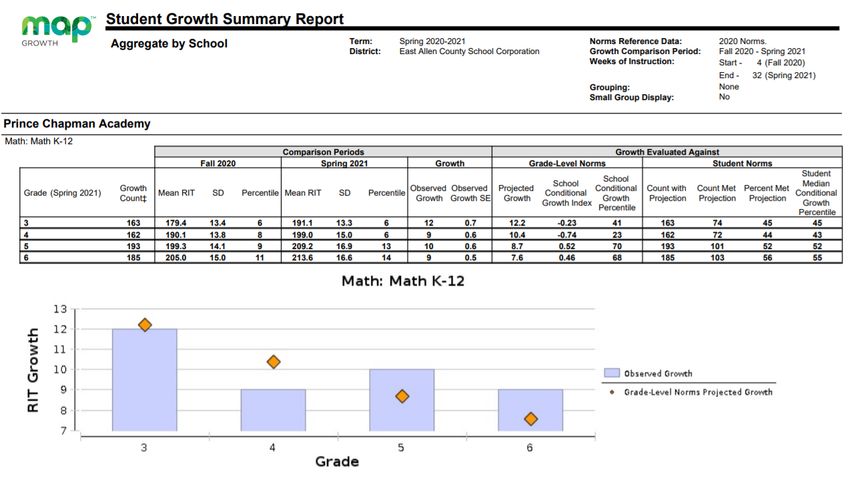
Prince Chapman Academy
                                            2021-2022

                              School Leadership Team Members

                                                 Renee Hutter
                                                Justin Hoering
                                                  Bria Booker
                                                  Alicia Fitch
                                                 Kelly Sullivan
                                                  Julie Smith
                                                 Kendra Doerr
                                               Danielle Hartzell
                                                 Lynn Randall
                                                Nicole Hooker
                                              AnnMarie Neumann
                                              Megan Smith-Causey

Prince Chapman Academy School –Wide Improvement Plan               2
School- Wide Improvement Plan Title I
Table of Contents
Mission, Vision & Belief Statements………………………………………………………………………………………5
Profile Data
Unique Local Insights…………………………………………………………………………………….……………6
Student Data……………………………………………………………………………………………………………...8
Instructional Data…………………………………………………………………......................................9
Community Data……………………………………………………………………………………….……………....6
School Improvement Action Plans……………………………………………………………………..……..………..39
Results Based Professional Development Plans…………………………..……...……………………...…41-44
School-wide Title I Components
Component 1: Comprehensive Needs Assessment……………………………………..………….……...…6-7
Component 2: Academic Assessment……………………….…….……………………………………….……………7
Component 3: Effective/Highly Effective Teachers……….………………………………..…………..…28-29
Component 4: Professional Development……….……………………………………………………………..….37
Component 5: Conclusions for Student Achievement……………….…………………..……….........…..18
Component 6: Parental Participation Strategies………………………………………………..……..…….….22
Component 7: Preschool Transition Strategies……………………………………………………..…….….….31
Component 8: Teacher Involvement Relating to Assessment Results……………………..……...…..32
Component 9: Effective Additional assistance to Students in Need……………………….……..……24
Component 10: Coordination of Federal, State, and Local Services and Programs………….…..31
Component 10a: Consolidated Programs……….…………………………………..…………………………..…25
Prince Chapman Academy School –Wide Improvement Plan 3Public Law 221
Table of Contents
Narrative description of the school, the community, and the educational programs..............6
Description and location of curriculum…………………………………………………..............................21
Titles and descriptions of assessment instruments to be used in addition to ILEARN..............7
Statement of mission, vision, or beliefs..................................................................................5
Summary of data derived from an assessment of the current status of educational
programming..........................................................................................................8-14
Information about how school’s curriculum supports the achievement of Indiana
academic Standards...................................................................................................21
Information about how school’s instructional strategies support the achievement of Indiana
academic Standards...................................................................................................21
Conclusions about student achievement based on information from ISTEP+ and other
assessment strategies……...........................................................................................18
Parental participation in the school.....................................................................................22
Technology as a learning tool...............................................................................................23
Safe and disciplined learning environment…………………………………………………………………………23
Professional Development…………………………………………………………………………………………….32-46
Student achievement objective/goals derived from an assessment of the current status
of education programming on attendance rate…………………………………………………………19
Percentage of students meeting academic standards on the ISTEP+ program ………………………9
Prince Chapman Academy School –Wide Improvement Plan 4Vision Statement
Every student, without exception and without excuse, will be proficient in reading, writing,
and mathematics.
Mission Statement
Prince Chapman: A Learning Community that produces Individual Student Growth.
Belief Statements
• Parent participation enhances student motivation and achievement.
• All students can learn in a safe, disciplined environment in which they feel trusted,
supported and have a sense of belonging.
• Students learn best when they are actively engaged and when teachers provide
challenging and meaningful work and activities.
• Intelligence and character are subject to development and are not innate qualities given at
birth.
Prince Chapman Academy School –Wide Improvement Plan 5CHARACTER COUNTS
• Trustworthiness Think true blue
• Respect Think the Golden Rule
• Responsibility Think solid like a tree
• Fairness Think sharing an orange
• Caring Think of a heart
• Citizenship Think regal purple as representing this state
Profile Data
Prince Chapman Academy (PCA) was reconfigured from a middle school to an intermediate school, serving
students in grades 3-6 for the 2011-12 school year.
Prince Chapman Academy, one of 15 schools in the East Allen County Schools District, is located in the
southeastern part of Fort Wayne, Indiana. The school is a one-story facility with forty-two classrooms built in
2002. The building was named in honor of a prominent youth activist, the late Mr. Prince Chapman. Prince
Chapman is an urban elementary school that feeds into Paul Harding Junior High School. Our feeder school is
Southwick Elementary School, which serves students in grades Pre-K -2.
June 2021 demographic data reflects an enrollment of 794 students with 42% of the population comprised of
English Language Learners as assessed through WIDA. The table below represents the percentage of EL
students in each of the WIDA language proficiency levels.
English
Level 1 Level 2 Level 3 Level 4 Level 5 Level 6
Proficiency
Entering Beginning Developing Expanding Bridging Reaching
Level
% of EL
Students at 3.9% 8.6% 33.9% 37.5% 14.7% 1.4%
PCA
The table below represents the ethnic makeup of Prince Chapman Academy.
Hawaiian
Black/African Native
Ethnicity Asian or Pacific Hispanic Multiracial White
American American
Islander
% of
Students 48.5% 26.1% 0% 15% 4.8% 0% 5.7%
at PCA
84.6% of the students who attended PCA in 2020-21 were eligible for free or reduced lunch and breakfast.
Due to the large number of students at or below the poverty level, PCA has been designated a Provision I
school. All students receive free breakfast and lunch for the 2021-2022 school year.
Prince Chapman Academy School –Wide Improvement Plan 6Prince Chapman Academy endeavored to craft a school improvement plan that reflects the needs of our school community. Extensive research has led to the implementation of programs that were implemented in the last three years and will continue to strengthen student achievement in the current school year. Teachers received training in strategies and assessments that will lead to positive student achievement. Training continues with the assistance of the school instructional coaches. There is a need to build continuity and cohesiveness among the staff and to embed the strategies as a part of our daily practices. Prince Chapman Academy School –Wide Improvement Plan 7
Assessments
Students are assessed through informal assessments such as NWEA, MobyMax, Scantron, and WIDA. Formal
assessments are provided through ILEARN, IREAD-3 and the school psychologist.

NWEA(Curriculum-based)
NWEA assessments are created from pacing guides commonly used within the state (or district). Reports on
these assessments provide educators with detailed information for targeting and personalizing instruction.
Educators can assess student progress and provide immediate online instruction based on student results at
various levels. Acuity includes the ability to create custom, state-specific assessments for reading/language
arts, math, science, and algebra. Each module includes item authoring and an item bank aligned to the state's
standards. The NWEA item bank offers permission-based tools for efficiently producing, managing, and
organizing questions to give teachers maximum flexibility in creating custom tests.

MobyMax (Progress Monitoring)
MobyMax delivers standards-aligned PreK-12 curricula that provide interactive, self-paced, challenging,
engaging activities. Activities promote exploration, individual and cooperative learning, problem- solving,
reflection, and real-world connections. MobyMax applies current and confirmed research about how students
think and learn.

8-Step Process
The 8-Step process, a system-wide approach for school improvement, will continue to be implemented. It
encompasses the following 8 steps: data disaggregation, instructional calendars, instructional focus,
assessment, tutorials, enrichment, maintenance, and monitoring. 4-week assessments are aligned with the
State Academic Standards and the school’s Instructional Calendar. Based on data from assessments, all
students are assigned to daily tutoring groups so that indicated standards may be retaught, reinforced, or
enhanced.

Scantron
This formative assessment is designed to reflect the format and rigor of the state’s ILEARN tests. These short,
frequent assessments allow teachers to check for understanding, tell which students are learning and which
need more help, chart student progress, adjust teaching methods to achieve better results, and modify the
Instructional Calendar as needed for re-teaching or acceleration. All student subgroups benefit from this drill
down in instruction to help meet the needs of ALL students.

WIDA
Prince Chapman Academy follows Indiana Department of Education required language assessment WIDA.
WIDA advances academic language development and academic achievement for linguistically diverse students
through high quality standards, assessments, research, and professional development for educators.
It is the most trusted resource in the education of Pre-Kindergarten through Grade 12 language learners.
WIDA's Can Do Philosophy: believing in the assets, contributions, and potential of linguistically diverse
students

Collaboration: facilitating interaction among educators, state and local educational agencies, researchers, policy-
makers, and experts worldwide

Innovation: drawing from research and practice to find the best solutions for students and educators

Service: exceeding expectations with friendly and knowledgeable support of our customers and stakeholders
Prince Chapman Academy School –Wide Improvement Plan                                                                  8
Assessment of Student Data to Identify Needs

                                           Enrollment Trend by Ethnicity
      60%

                                                                                                                 49%
      50%
                                  43%                                                      43%
             38%                                                39%
      40%
                34%
                                                                  32%
                                                                                             29%
      30%                                                                                                          26%
                                    21%
      20%
                    15%                   14%                           14%                        15%                   15%

      10%                 6% 7%                 7% 8%                         8%
                                                                                   6%                    6% 7%                 5% 6%

       0%
                2015-2016               2016-2017                     2017-2018                  2018-2019             2020-2021

                                            Asian       Black     Hispanic         Multi   White

                      Enrollment Trend by Special Education and English Language
                                               Learners
     90%
                                                 80%
     80%                  76%
                                                                              69%
     70%
                                                                                                         60%                    58%
     60%
     50%
                                                                                                   40%                    42%
     40%
                                                                        31%
     30%            24%
                                          20%
     20%
              10%                  11%                           9%                          9%                   11%
     10%
      0%
                2015-2016           2016-2017                         2017-2018                  2018-2019             2020-2021

                                          SPED         English Learners        Non English Learners

Prince Chapman Academy School –Wide Improvement Plan                                                                                   9
ISTEP+/ILEARN Percent Passing Trend
60%
49%
50%
44% 43%
40% 38%
35%
32% 32%
30% 28%
24% 23%
20% 21%
20% 16%
10%
0%
2015-2016 2016-2017 2017-2018 2018-2019 2020-2021
English/LA Math Both
ISTEP+/ILEARN Passing Rate Grade 3
60%
48% 49%
50%
43%
40%
30% 27%
24% 24% 24% 25%
22%
20%
20% 17% 17% 16%
10%
0%
2015-2016 2016-2017 2017-2018 2018-2019 2020-2021
English/LA Math Both
Prince Chapman Academy School –Wide Improvement Plan 10ISTEP+/ILEARN Passing Rate Grade 4
60%
49%
50%
39% 40%
40% 37%
34%
32%
29%
30% 27%
21% 20% 20%
20% 16% 15%
10%
0%
2015-2016 2016-2017 2017-2018 2018-2019 2020-2021
English/LA Math Both
ISTEP+/ILEARN Passing Rate Grade 5
50%
45%
45% 43%
41%
40% 37%
35% 34%
35%
29%
30%
26% 27%
24%
25%
19%
20% 17% 17%
15%
10%
5%
0%
2015-2016 2016-2017 2017-2018 2018-2019 2020-2021
English/LA Math Both
Prince Chapman Academy School –Wide Improvement Plan 11ISTEP+/ILEARN Passing Rate Grade 6
60%
54%
51%
49%
50%
43%
39% 38%
40%
32% 33%
31%
29%
30% 27%
22%
20% 18%
10%
0%
2015-2016 2016-2017 2017-2018 2018-2019 2020-2021
English/LA Math Both
IREAD 3 Data
80%
72%
70%
64%
60%
60% 57% 57%
50%
40%
30%
20%
10%
0%
2015-2016 2016-2017 2017-2018 2018-2019 2020-2021
3rd Grade IREAD 3 Scores
****2017-2018-Pass rate data is based on total number of students enrolled during the testing window and those that passed
during summer after remediation. The data does not reflect those who received a good cause exemption.
Prince Chapman Academy School –Wide Improvement Plan 12WIDA (World Class Instructional Design and Assessment)
Level 1- Entering Level: Students use pictorial or graphic representation of the language
Level 2- Beginning Level: Students use general language related to the content areas
Level 3- Developing Level: Students use general and some specific language of content areas.
Level 4- Expanding Level: Students use specific and some technical language of the content areas.
Level 5- Bridging Level: Students use specialized or technical language of the content areas.
Level 6- Reaching Level: Students use specialized or technical language reflective of the content areas at grade
level.
2020-2021 WIDA Results
3rd Grade 2020-2021 WIDA Scores
3%
6%
10%
Level 1
26%
Level 2
Level 3
Level 4
Level 5 +
54%
4th Grade 2020-2021 WIDA Scores
2%
10%
25% Level 1
Level 2
27% Level 3
Level 4
Level 5 +
36%
Prince Chapman Academy School –Wide Improvement Plan 135th Grade 2020/2021 WIDA Scores
0%
8%
23%
18% Level 1
Level 2
Level 3
Level 4
Level 5 +
51%
6th Grade 2020-2021 WIDA Scores
2%
8%
Level 1
28% 16%
Level 2
Level 3
Level 4
Level 5 +
46%
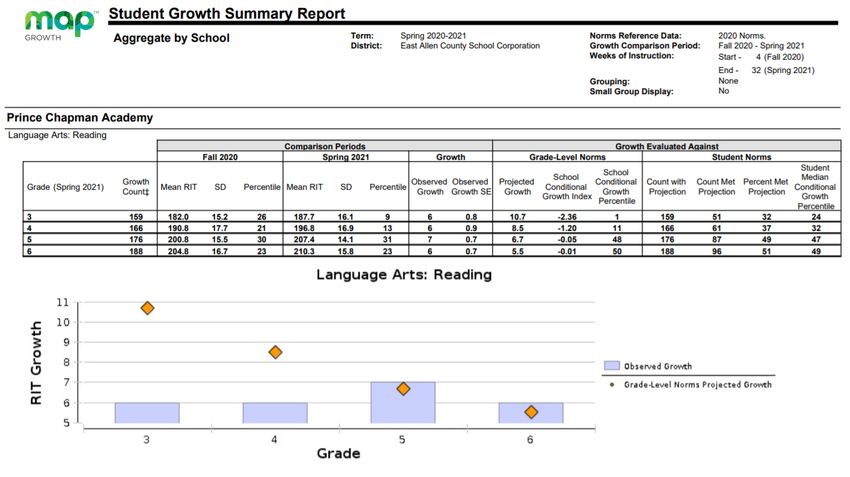
Prince Chapman Academy School –Wide Improvement Plan 142020-2021 NWEA Growth Prince Chapman Academy School –Wide Improvement Plan 15
Discipline Data - Referrals

                                                   Discipline Data
 450

 400

 350

 300

 250

 200

 150

 100

  50

   0
           2015-2016          2016-2017          2017-2018               2018-2019   2019-2020   2020-2021

                                                       Referrals   ISS    OSS

Student Referrals/Detentions/Suspensions
Office Discipline Referrals at Prince Chapman Academy have decreased slightly over the past couple of school
years. Using Title I funding, Prince Chapman Academy implemented an alternative room for students who
could not perform successfully in a traditional classroom setting. Students in the alternative room receive
interventions in the school setting to change behavior and receive academic instruction. Other interventions
that have been put in place include: Teach Town, a computer program to focus on social skills, lunch social
skills groups led by The Bowen Center, and a boy’s mentoring program. We have also started setting monthly
behavior goals with students who have a high number of behavior infractions. A behavior specialist was also
hired during the 20/21 school year to meet with small groups based on behavior data.

Component 5 SWP: Conclusions for Student Achievement

Academic Needs Based on Available Data
All East Allen County School students are provided a strong English Language Arts curriculum supported
through the use of instructional coaches in each elementary, middle school and high school. In addition, WIDA
standards have been included in the district curriculum to support instruction of English Learners. However,
according to the ILEARN data there is still a need to focus on vocabulary, comprehension and writing in
language arts. Data indicates that number sense, computation, and problem-solving are the weakest areas of
math; Prince Chapman will focus on these skills.

Prince Chapman Academy School –Wide Improvement Plan                                                         16
Additional Needs Identified for 2021-22 Special Services as of July 2021 Students identified as in need of Special Services include: (5 full-time Special Education teachers) • 118 Special Education Students • 38 High Ability Students Student attendance goal is 96% for the 2021-2022 school year The 2020-2021 attendance goal was not achieved due to Covid procedures. Incentives will continue to be used to motivate and reward students with attendance at or above our goal. The Attendance Secretary and Student Assistant Specialist, will continue to make phone calls and home visits to encourage regular student attendance. Teacher attendance goal is 96% for the 2021-2022 school year The 2020-2021 staff attendance goal of 96% was achieved. Continuing to use this same goal of 96% will allow teachers to miss no more than 6 days per school year when averaged. Summary Overall, PCA students are showing growth in most subgroup populations in all grade levels as shown through the data provided above. However, we are still below the performance targets set forth in the ESSA Flexibility Waiver in all subgroups. The PCA staff is committed to continual improvement with the core curriculum to address the needs of ALL of our students. The information that follows on the next 2 pages states and defines the components of our core curriculum that PCA is monitoring/evaluating for fidelity of implementation this school year through administrators and support from instructional coaches. Prince Chapman Academy School –Wide Improvement Plan 17
Component 9 SWP: Assistance for Students in Need

Research-Based Practices for Planned Comprehensive Reform at Prince Chapman Academy

       Model / Practice                            Standards*              Citation/Reference
 District Core Curriculum                    English/Language Arts     District Curriculum Team
                                             Math                      IDOE Standards
                                             WIDA English Language
                                             Development Standards
 Balanced Literacy Framework                 English/Language Arts     Ohio State Literacy Framework
 Interventions:                              English/Language Arts
 •     Leveled Literacy Intervention                                   •   Scholastic
       (LLI)
                                                                       •   Fountas and Pinnell
 •     LLI Gold
                                                                       •   Mindplay
 •     GrapeSeed
 •     Orton Gillingham

 Lucy Calkins: Units of Study                English Language Arts     Calkins, 2003

 6 + 1 Traits of Writing                     English Language Arts     Ruth Culham

 The Problem Solver                          Math                      Shirley Hoogeboom
                                                                       Judy Goodnow
 Five Easy Steps to a Balanced Math          Math                      Larry Ainsworth and Jan Christinson
 Program

 Character Counts                            Guidance                  Josephson Institute of Ethics
                                             English/Language Arts
                                             Math
 Positive Behavior Interventions             Safe Schools              PBIS Plan
 and Support (PBIS)

 SEL                                         Tier 1 Core Instruction   Universal Screener

Prince Chapman Academy School –Wide Improvement Plan                                                         18
The following instructional strategies, methods and/or programs have developed from our study groups, School Improvement Plan, District-Wide expectations, analysis of data, and current research. Description of Curriculum and Support of the Indiana Academic Standards Core Curriculum for grades 3- 6 Language Arts and 3-6 for Math is located on the district’s shared drive. In grades 3-6 Language Arts and 3-6 Math, the Indiana Academic Standards are bundled together to provide a seamless curriculum for all students including interventions and extensions. The curriculum supports the teaching of the Indiana State Standards and was written by our in-district educators with Title II funds. Annually, updates are made to the curriculum bundles using Title II funds. Balanced Literacy Framework Reading Workshop: Classroom teachers provide 90 minutes of reading instruction for all students. The instructional focus of the reading block is based upon the five essential components of reading: phonemic awareness, phonics, fluency, vocabulary, and comprehension as identified by the National Reading Panel. Classroom teachers follow the scope and sequence of the district core curriculum, Fountas and Pinnell. Teachers use explicit and intentional language to facilitate the delivery of reading skills and strategies to all students. In addition, students who are identified as strategic (slightly below grade level) and intensive (significantly below grade level) are given an additional 30-60 minutes (Tier II/Tier III) of intervention. Intervention groups for grades 3-5 are based on the NWEA assessment given throughout the year. Grade 6 intervention groups are based on the data from the NWEA assessment. Regular progress monitoring for all students offers teachers the opportunity to evaluate current intervention strategies and to adjust or change strategies if students are not showing adequate progress. Data is reviewed continuously through grade level collaborations and individual coaching meetings with the Instructional Coaches. Writing Workshop: Within the Balanced Literacy framework, teachers provide 30-45 minutes of writing instruction following the writing standards listed under each unit in our district curriculum. One resource that is available for teacher use is Lucy Calkins Units of Study. This is a K-6 curriculum designed to help students become independent writers with a clear understanding of the writing process. Teachers will work through a series of sequential units teaching a variety of genres and skills with increasing sophistication. In conjunction with the Units of Study, teachers will also work to implement the 6+1 Traits of writing within their writing block. This is an analytical assessment tool that provides a common language for all teachers. It creates a set of criteria that clarifies the writing expectations. Math Framework Within the 60 minute math block, teachers will have 30 minutes of whole group instruction and 30 minutes of small group instruction. Teachers will devote one day a week to group problem-solving. Using The Problem Solver book, teachers will introduce or review a variety of strategies students can use when solving problems. Teachers will focus on computation and number sense through the Daily Math Review (DMR). Realizing that number sense is the foundation of all math concepts, teachers will work to develop this skill in all students. Both problem-solving and number sense will be incorporated in a variety of lessons throughout the entire week. Prince Chapman Academy School –Wide Improvement Plan 19
All students should find math instruction relevant and applicable to real life experiences. Basic computation of
whole numbers and review of concepts should be practiced as part of the daily math learning activities.
Manipulative and visual models enable the teacher to demonstrate how number systems work and allow the
students to practice those skills to a mastery level. They also help to create and develop mental math models
to enhance reasoning skills. Students improve their learning, understanding, and math vocabulary when they
write and speak about math problem-solving. Teachers are placing emphasis on student mastery of basic math
facts for addition, subtraction, multiplication, and division. Students who know and use these facts are
successful in daily assignments and assessment situations (Ball, 1996; Zemelman, 1998; Calvery, 1993; Rowan,
1994; and Winogard & Higgens, 1995).
Component 6 SWP: Parent Participation Strategies
Component 7 SIP: Parental Involvement

Parental Involvement
•   Communication logs are a tool to track behaviors and academics week by week. Teachers complete these
    logs and send them home with the students daily so parents are informed of behavior and academic
    progress. Teachers and parents can share messages, concerns, and questions on the log and are able to
    respond in a timely manner.
•   Parents have been active in Back to School Night and will participate in Parent/Teacher Conferences,
    which are held at the end of the first quarter of the school year. Parents have and will continue to
    complete Parent Surveys throughout the year to provide data the school will use to drive reforms,
    professional development, staff meetings, and other facets for improvement at Prince Chapman Academy.
•   The School Improvement Support will work to improve communication with parents and to increase
    access to school activities. This person will coordinate monthly special events for students, parents, and
    teachers including Parent Literacy Night, Family Blast Night, and Grandparents’ Day.
•   School Messenger System is a powerful automated tool for parent notification of school events and other
    important information via a short phone message. Participation at school events has increased through
    the use of this tool.
•   School and Teacher websites are currently utilized. Teachers use the website to provide an overview of
    each subject area, weekly standards in all areas, homework assignments, and tips for parents. The website
    assists parents by giving them a window into what is happening in the classroom so they can help their
    child. During the year, training sessions are conducted for parents so that they are able to efficiently access
    the website. Parents can also access students’ grades through the Grade Book on the Parent Access Page
    of the website. We also have school Facebook page where information is communicated to parents.

•   School Facebook is used to communicate information via social media. Special events are life streamed
    through our school Facebook page. This allows parents to get a visual picture of what is taking place at the
    school.

•   School Newsletter is an effective way to communicate with parents the events that are going on in the
    school. The newsletter is sent home monthly and highlights the school monthly events and important
    reminders. The newsletter is translated to the meet the needs of our diverse population. The newsletter
    will is sent electronically to parents. Paper copies are provided to those who do not currently have an
    active email address on file.

Prince Chapman Academy School –Wide Improvement Plan                                                             20
• Assessment information is sent home to parents throughout the year. Specifically, ILEARN, IREAD, WIDA,
and NWEA assessment data is provided to parents. This data describes the students’ current abilities,
growth they have made, and where they should be for their current age and grade in school.
Technology as a Learning Tool
In the fall of 2016, EACS implemented an iPad initiative providing students in grades 3- 6 on a 1:1 ratio. SMART
Boards were installed in every classroom during the 2010-11 school year with full access to the Internet.
MobyMax and Office 2010 is available to all students both at school and at home via the Internet. Prince
Chapman currently has 1 computer lab to increase computer accessibility to students. Students utilize the lab
during specials to work on keyboarding. PCA is also using Lexia, IXL, MobyMax, Edulastic, Britanica, and
Spelling City across all curriculum to improve student achievement.
Safe and Disciplined Learning Environment
• The MTSS Specialists will work closely with teachers, Instructional Coach, and the principal to provide
MTSS Tier II and Tier III interventions to students as needed. These positions are paid for with Title I funds.
• The School Improvement Support personnel, paid with Title I funds, assists in implementing school-wide
behavior expectations. In addition, they will also work with students who have been identified as high risk
for failure, suspensions, and dropping out of high school. Interventions include “Check In / Check Out” and
daily communication between families and the school staff.
• The principal and assistant principal will conduct weekly walkthroughs to assess and monitor the
implementation of the District Curriculum and school-wide discipline procedures. If there is weak
implementation, a time is set to meet with teachers and focused feedback is given in areas that need
improvement.
• PBIS - In 2013/14, Prince Chapman Academy began full implementation of Positive Behavior Interventions
(PBIS). PBIS is a proactive approach to behavior management on a school-wide level for creating and
sustaining safe and effective schools. PBIS places emphasis on prevention of problem behavior,
development of pro-social skills, and the use of data-based problem-solving for addressing existing
behavior concerns. The key components of an effective school-wide PBIS system involve clearly defining
and teaching a set of behavioral expectations, consistently acknowledging and rewarding appropriate
behavior, constructively addressing problem behavior, and effectively using behavioral data to assess
progress. The ultimate goal is to increase academic performance, increase safety, decrease problem
behavior, and establish positive school climates through these research-based strategies and systems.
The following resources will enhance the PBIS implementation:
• Character Counts will be implemented school wide. The roll out of the program is listed on the district
web site and included in the curriculum.
• Fred Jones’s School Wide and Classroom Procedures: These procedures assist in optimizing students’
time-on-task. Prince Chapman students have clearly defined and concrete expectations so that
students know what it takes to succeed at school and can learn to transfer these skills to the real
world. Responsible students who have learned to manage themselves require much less management
from the teacher. Dr. Jones’s book Tools for Teaching, offers an updated description of the
fundamental skills for classroom management, with which Prince Chapman teachers are provided.
Prince Chapman Academy School –Wide Improvement Plan 21Prince Chapman Daily Creed
I am a Prince Chapman Academy student. I have great expectations for myself. I accept the challenge to become
the best that I can be.
Yesterday's failures are behind me. Today's successes are now before me. I will make today the very best day of
all, for this day begins the rest of my life.
I accept the responsibility for my behavior and its results. I do not have the right to interfere with the learning
and well-being of others. I will be respectful, responsible, and on-task at all times today.
With my family and teachers, I will determine what I will become, for the education I receive today will make me
a leader of tomorrow.
Component 9 SWP: Effective Additional assistance for Students
Component 8 SIP: Activities Before and After School
Support for “under-achieving” and “high-achieving” students
Fountas and Pinnell, LLI, LLI Gold, Orton Gillingham
Currently, on-going intervention is planned throughout the year, at all grade levels, based on the NWEA and
other assessments. Intervention is ongoing through individual, small group, and whole group direct instruction
by classroom teachers. Strategic and intensive students meet daily for at least 40 minutes of intervention for
reading or math.
8-Step Process
The 8-Step Process, a system-wide approach for school improvement, will continue to be implemented. It
encompasses the following 8 steps: data disaggregation, instructional calendars, instructional focus,
assessments, tutorials, enrichment, maintenance, and monitoring. 4-week assessments are aligned with State
Academic Standards and the school’s Instructional Calendar. After the assessments, ALL students are
determined to need enrichment, tutoring or maintenance in the identified critical standards. They receive 45
minutes of additional instruction based on the results of the 4-week assessments.
1. Test Score Disaggregation
School test data is broken down into individual student and classroom reports. The test scores are used
to identify instructional groups and weak and strong objective areas. Teachers receive training in data
interpretation.
2. Instructional Focus Calendar
The instructional team develops a campus timeline that encompasses all State Standards, benchmarks,
and time allocations based on the needs of the instructional groups. The team decides how much time
to spend on each standard/benchmark based on student needs determined by the data.
3. Instructional Focus Activities
Using the calendar, a schedule stating the standards/benchmarks, instructional dates, and assessment
dates is developed and disseminated to all teachers. For a designated amount of time each day,
teachers instruct students focusing on the standard/benchmark.
4. Assessment
After the instructional focus standards/benchmarks have been taught, an assessment to identify
mastery and non-mastery students is administered. The assessments are modeled after ILEARN.
Assessment dates are listed on the instructional focus calendar.
5. Tutorials
Tutorial time to re-teach non-mastered benchmarks is scheduled. After concepts have been re-taught,
students are assessed again.
Prince Chapman Academy School –Wide Improvement Plan 226. Enrichment
Enrichment sessions are provided for students who have mastered the standard/benchmark assessed.
Related activities that extend the learning of the concept are provided during enrichment.
7. Maintenance
Quick refresher lessons are given periodically in order to provide ongoing maintenance and re-teaching
of benchmarks/standards. Through these quick activities, teachers can identify topics that need to be
revisited.
8. Monitoring
Instructional leaders visit classrooms and meet regularly with departments and teams to monitor the
instructional progress of students.
High Abilities Program
An enrichment program facilitated by the corporation and the high ability coordinator will meet the needs of
the highest achieving students in grades 3-6. The identified students at each grade level work on reading,
writing, and math activities that are accelerated and cross curricular. Students will have opportunities in
district-sponsored activities.
Career Education
A partnership has been established with Junior Achievement to work directly with students throughout the
year in all grades. Fifth grade students also participated in STARBASE, a program that teaches math and
science real world skills.
Project Lead the Way
Focuses on hands on STEM activities and lessons for students. These lessons empower students by giving
them in-depth knowledge and skills by utilizing real world applications. These activities are provided to all
students during success time.
Starbase 2.0
After school program held one day a week for our 6th grade students focusing on the area of robotics.
Students will have the opportunity to engage on hands on team building activities. The goal of this program is
to increase interest in STEM activities, increase student behavior and outcomes, and decrease high risk
behavior. Staff supervision for the after school program is paid out of Title I funds.
IREAD Tier 3 Intervention
Students in grades 4-5 and who have not passed the IREAD 3 state assessment receive small group instruction
with a ration of 1:10. Students are instructed on current grade level standards as well as IREAD 3 remediation
strategies for more than 90 minutes a day. These students also receive intervention services for 45 minutes a
day to focus on academic standards they have not mastered. MTSS Specialists who are paid out of Title I funds
provide these services.
Prince Chapman Academy School –Wide Improvement Plan 23Component 9 SWP: Assistance for Students Having Difficulties Mastering Academics
Component 8 SIP: Activities Before and After School
The Prince Chapman student population speaks eight different languages. We have seven full time EL
instructors and six EL paraprofessionals to facilitate the learning of non-English speaking students. They
provide lessons focusing on content and language objectives using the WIDA ELD standards and building
background knowledge to promote student engagement. The English Learner teachers conduct a 90-minute
reading block at each grade level for the highest needs EL students. Levels one, two and three students meet
with EL teachers during the reading block. These teachers also provide two 30-minute intervention blocks at
each grade level using the critical standards to guide instruction while incorporating all facets of language
learning – reading, writing, and speaking. A variety of techniques are used for making content concepts and
information understandable. Two Burmese Translators have been hired to work in our school full time.
Throughout the school corporation, we have access to interpreters and translators for multiple languages.
Component 9 SIP: Mentoring Program
School-wide Mentoring
Opportunities for mentoring are provided through the Pre-Counseling Interventionist and the B.F Goodrich
volunteer program. Students are identified by discipline data and paired with a mentor. 3rd grade classrooms
have been assigned a representative from Real Men Read to read with their class.
Component 2 SWP: Academic Needs Assessment
Component 1 SIP: Scientifically based Research Strategies
• The Prince Chapman assessment plan incorporates the goals designed through the School Improvement
Plan into a comprehensive plan of instruction, assessment, evaluation, intervention and reassessment.
The plan has been designed with progressive goals, assessment instruments, and checkpoints. PCA
teachers in grades 3-6 are collecting, reporting, and using data in reading, writing, and math.
• Formative monthly assessments are designed to reflect the format and rigor of the state’s ILEARN tests.
These short, frequent assessments allow teachers to check for understanding, tell which students are
learning and which need more help, chart student progress, adjust teaching methods to achieve better
results, and modify the Instructional Calendar as needed for re-teaching or acceleration.
• For grades 3-6, NWEA data is collected three times a year and provides teachers with students’ reading
levels and math levels and shows growth over the year. ILEARN data is also collected once each year.
• District Writing Assessments are incorporated into the unit assessments for students in grades 3-6 three
times a year. In addition, students in all grade levels take part in the IXL program that is used as a progress
monitoring tool and provides prescriptive lessons that align with the Indiana State Standards.
• Classroom teachers analyze assessment data to determine achievement levels of individual students. A
core of support staff, along with the classroom teacher, meets on a weekly basis to facilitate decision-
making in the areas of interventions, extensions, and changes to student instruction. Instructional Coach
and administrators meet with classroom teachers every week to review data with teachers.
• Prince Chapman teachers in grades 3-6 are and will continue collecting, reporting, and using data for
reading fluency, comprehension, writing, including language in use, math computation and problem-
Prince Chapman Academy School –Wide Improvement Plan 24solving. NWEA data is collected three times per year. Writing benchmarks are collected three times a
year. Data from all of these assessments are used to help guide instruction.
• Initially, classroom teachers analyze assessment data to determine achievement level of individual
students. Grade Level Data Analysis Form is used to list pertinent data, show error patterns, to ask
questions about programming and instruction, and to facilitate decision-making in the areas of
remediation and changes to current programming. Instructional and curricular decisions are made
regarding remediation and intervention on an individual, small group, or whole group basis. Adjustments
in the pace and content are made based on the needs of students across the grade level.
• The next step is to analyze data at the class level. Staff will use one grade level collaboration day each
month to examine specific data (NWEA, District Reading/Math Assessments, District Writing Assessments
and ILEARN) scores. Current data is scrutinized to determine weaknesses and strengths in the curriculum
and/or instruction. Teachers identify new strategies and/or curriculum changes to improve student
learning and performance (Nichols, 2000).
• Prince Chapman classroom teachers and special education teachers use the assessment data to make
instructional, intervention, and remediation decisions. Assessments allow teachers to determine levels of
mastery and acquisition of skills. Overall instructional planning and curricular decisions are based on
demonstrated needs of students through assessment evaluation.
• The identification of students for programs for interventions and high ability groups is accomplished
through evaluation of testing data. These programs service those students who are most in need, based on
assessment. Resources for these programs are used more efficiently because of the ongoing identification
process. Using assessment data, teachers are able to group children for intervention for targeted
instruction.
Prince Chapman Academy School –Wide Improvement Plan 25Component 3 SWP: Instruction by Highly Qualified Teachers
Effective/Highly Effective Teachers
This information is currently based on the 2020/2021 school year. 100% of the certified and 100% of the
classified staff members at Prince Chapman are “Highly Qualified”.—
Prince Chapman Academy Staff
Effective/Highly
Last Name First Name Position 2020/2021
Effective
Pressley Brooke 5th Grade HIGHLY EFFECTIVE
Baker Christina 4th Grade HIGHLY EFFECTIVE
Belcher Tiffany Reading Specialist HIGHLY EFFECTIVE
Bice Courtney 6th Grade HIGHLY EFFECTIVE
Bobay Vikki Reading Specialist HIGHLY EFFECTIVE
Booker Bria Counselor HOUSSE-masters
Fisher Alyssa 3rd Grade EFFECTIVE
Wilson Veronica 5th Grade HIGHLY EFFECTIVE
Copenhaver Levi 6th Grade HIGHLY EFFECTIVE
Cornmesser Cheri Reading Specialist HIGHLY EFFECTIVE
DeCamp Tyler CRT over 30 college cr
Doran Alixandra School Improvement HQ not required
Evans Diane Reading Specialist HIGHLY EFFECTIVE
Fitch Alicia Instructional Coach HIGHLY EFFECTIVE
Fuelling Katherine Para - EL over 60 college cr
Hartzell Danielle 6th Grade HIGHLY EFFECTIVE
Hayden Sara 3rd Grade HIGHLY EFFECTIVE
Tomkinson Gwen 6th EL HIGHLY EFFECTIVE
Hooper-
Ramona 6th Grade HIGHLY EFFECTIVE
Blackmon
Johnson Jazmine 3rd Grade EFFECTIVE
Kunberger Jared PE HIGHLY EFFECTIVE
Ladig Monica Para - EL ParaPro
Johnson Hannah 5th Grade EFFECTIVE
Loftus Samantha 3rd Grade HIGHLY EFFECTIVE
Marchand Michelle RtI Specialist HIGHLY EFFECTIVE
Woudema Emily 3rd Grade HIGHLY EFFECTIVE
McCann Pat Principal HQ not required
Allison Afrika Para - Gen/Sup ParaPro
Myers Paula Special Education HIGHLY EFFECTIVE
Neuman Anne Marie Music EFFECTIVE
Pawson Elizabeth Art EFFECTIVE
Prince Chapman Academy School –Wide Improvement Plan 26Randall Lyn EL 3rd Grade HIGHLY EFFECTIVE
Souder Erica Speech/Language HIGHLY EFFECTIVE
Bennett Ethan 6th Grade EFFECTIVE
Pranger Mark School Improvement HOUSSE-masters
Roop Christopher 4th Grade EFFECTIVE
Nelson Connell Para - Gen/Sup ParaPro
Koeneman Heidi 6th Grade EFFECTIVE
Schrock Heather EL 4th Grade HIGHLY EFFECTIVE
Sebastian Melissa 5th Grade EFFECTIVE
th
Sheehan Abigail 4 Grade HIGHLY EFFECTIVE
Bendewald Rebecca EL 3rd Grade EFFECTIVE
Smith-
Megan RtI Specialist HIGHLY EFFECTIVE
Causey
Shein Aye Translator Over 30 college cr
Soe Thein Gi Translator Over 30 college cr
Sorg Heather EL 5th Grade HIGHLY EFFECTIVE
Arkellin Justin 4th Grade EFFECTIVE
Strack Nicole 6th Grade EFFECTIVE
Sullivan Kelly 3rd Grade EFFECTIVE
Smith Adam 6th Grade EFFECTIVE
Weaver Belinda Para-Spec Ed ParaPro
Wells Christeena Para - EL ParaPro
Wiegman-
Kendra 5th Grade HIGHLY EFFECTIVE
Doerr
Component 4 SWP: Professional Development to Support Improvement Goals
Component 3 SIP: How Professional Development Funds Will Be Used
The goals that have been set in our School Wide Plan guide our staff development and focus on Core
Curriculum to meet the needs of all of the subgroups as described below.
• The focus of professional development at Prince Chapman will be in the areas of reading/language arts,
writing, and mathematics. All teachers and instructional staff at Prince Chapman take part in professional
development throughout the year. This training is ongoing and job embedded. Reading training is
delivered through the MTSS Specialists, or the Instructional Coach (Sparks, 1999) as well as corporation
training in balanced literacy. Math training will be provided by the Instructional Coach. The instructional
coach also supports teachers in the implementation of the math curriculum. Areas of focus are determined
by error patterns and priority strategies that have been identified through ongoing assessment and
evaluation of standardized test results, data collection from 4-week benchmark assessments and
reading/writing assessments. Collaboration time for data analysis has been established one day a week
during the teacher’s prep period.
• The Instructional Coach provides on-going, job embedded training for staff in the area of reading/language
arts. Trainings are implemented in several forms: Initially, monthly trainings focus on specific components
of Guided Reading. Secondly, trainings build on monthly training, which focuses on specific standards and
needs of grade levels. Finally, the third phase of training includes modeling, coaching, and observation
Prince Chapman Academy School –Wide Improvement Plan 27feedback within individual classrooms by the Instructional Coach (Sparks, 1995). Teachers and the coach
determine the areas addressed through this method in every classroom. Observation/feedback will occur
in each classroom at least twice monthly. These strategies will support the transfer of skills through
comprehensive professional development to practice in the classroom.
• EL training and support will also be provided during the coming school year by EACS, NESP, Title I and Title
III for all EL and general education teachers.
• Writing skills will be addressed at the building level by the instructional coach. The principal and the
instructional coach meet to determine the focus of this instruction.
• Random observations and “walk-throughs” by the principal and assistant principal will be used to
determine the effectiveness of staff development. Feedback from our Assistant Superintendent, the
instructional coach, and school administrators will also be considered to determine strategic areas for
improvement. Results will be evaluated both by grade level and school-wide to identify strengths and
areas for modification.
Prince Chapman Academy School –Wide Improvement Plan 28Component 5 SIP: Written Notice of School Improvement Component 7 SIP: Parental Involvement The district Title I office annually sends a letter through the mail to parents of all students in the school regarding the school status. This letter is translated for Hispanic and Burmese families in their native languages. Parents are given the opportunity for school choice in this annual mailing. The school hosts an annual Title I parent meeting during the first month of school. In August of each school year, parents receive a copy of the Prince Chapman Parent Involvement Policy that describes the shared responsibilities of the administrator, staff, community and parents at our school. Throughout the year, the school outdoor marquee and Messenger System (an automated communication system) is used to provide information to all stakeholders concerning school events. PCA also provides a regular school newsletter to keep parents updated on information from the school. Component 6 SIP: Responsibilities of LEA and SEA Component 10 SWP: Coordination of Federal, State and Local East Allen’s Director of Development and Title I, will share the responsibility of coordinating all federal, state, and local services and programs. The LEA oversees Title I funds, offers professional development and parent resources. The SEA assists and monitors the LEA to ensure that it complies with federal law to help every child succeed in school. Component 7 SWP: Transitions from preschool to middle school Southwick Elementary, a Pre-K-2 school, feeds into Prince Chapman Academy for grades 3 - 6. In recognition of the need to promote a cohesive school community, Southwick, PCA, and Paul Harding Jr. High hold community parent meetings and Walkthrough Wednesdays where parents can come tour the school. The goal is to create an area campus environment where students and parents feel a sense of attachment to all three schools. Pre-school students will benefit from activities hosted at PCA by gaining a familiarity with the school prior to attending the school. In addition, parents of pre-school age students are able to form relationships with 3-6 grade teachers at PCA prior to their students’ enrollment by participating in a Walkthrough Wednesday. Component 10a SWP: Coordination of Funding and Resources Under the guidance of the East Allen County School Board of Trustees and with direction of the EACS Superintendent and the Assistant Superintendent of Elementary Education, Prince Chapman utilizes allocation and grant funding to make provisions for our students and staff following the priorities and guidelines for each funding source. During the 2021-2022 school year, all MTSS Specialists, School Improvement Support, and Instructional Coaches are paid out of Title I funds. After school staff supervision for Starbase 2.0 will be funded out of Title I funds. Prince Chapman Academy School –Wide Improvement Plan 29
Component 1 SIP: Scientifically Based Strategies
Component 3 SIP: How Professional Development Funds Will Be Used
Component 6 SWP: Parental Participation
Component 8 SWP: Teacher Involvement Related to Assessment Results

Prince Chapman Academy SIG Implementation Profile
Goal: (Standards based Mathematics instruction)

 Curriculum and Instruction                 Implementation
 Math                                        (2021-2022)
 Goal: All students will improve            Strategies:
 math computation and problem-              Identification of strategies to address error patterns through ILEARN, NWEA, and local assessment
 solving skills across the curriculum.
                                            8 steps: taking data from ILEARN, NWEA, and local assessments to group students according to their
                                            ability level
 Math Benchmarks: Prince Chapman
 students will demonstrate a 10
                                            Using data to reteach and differentiate instruction through small groups.
 point increase in math scores as
 measured by the 2021-2022 NWEA             Problem-solving strategies as part of regular math instruction with problem-solving rubric
 assessment.
                                            Targeted math strategies and hands-on activities for elementary algebra, mathematical reasoning,
                                            and geometry

                                            Implement core curriculum with fidelity
                                            Utilize Daily Math Review (DMR)
                                            Continued use of district-created math timed tests 4-5 times per week

 *Cultural Component:                       Continue with Poster Math Problem-Solving strategies
 Low SES students, minority students,       Utilize the strategies of the 5 Easy Steps to a Balanced Math Program
 special education students, high ability
 students will receive additional           Focus on vocabulary in classroom instruction
 support through in-school                  Daily 3 stations during small group instruction
 remediation, differentiated
 instructional groups and small group       Anchor charts provide visual aids to cement learning
 instruction.
                                            Professional Development:
                                            Staff training to utilize Envision curriculum
                                            Ongoing training for inquiry based math strategies and hands-on activities

                                            Staff math meetings with focus on data collection and analysis

                                            Peer observations

                                            Monthly meeting with instructional coach

                                            Instructional coach models instruction in classrooms

                                            Family learning/training:
                                            Parent conferences focused on identified strategies

                                            Technology:
                                            Use of multiple student websites for math

                                            IXL, Front Row, Prodigy, MobyMax math programs

                                            SMART board interactive activities

                                            iPad activities

Prince Chapman Academy School –Wide Improvement Plan                                                                                             30
Component 8 SWP: Teacher Involvement Relating to Assessment Results
Component 4 SIP: Annual Measureable Objectives
Component 4 SWP: Professional Development
Results- Based Staff Development Plan - Mathematics
Intervention: Teachers will increase student problem-solving and reasoning abilities in all curricular areas.
Staff Development Outcome Measure of Effectiveness Student Outcome
Teachers will implement Group Problem-Solving (GPS) Informal Teacher Assessments 1. Students will demonstrate the knowledge of math facts through
timed tests.
and number sense instruction consistently throughout Math Facts Timed Tests
2. Students will demonstrate the ability to analyze problem-solving
the school year. GPS assessments/rubrics using the EACS format sheet and math rubric.
NWEA data
8-Steps Data
Level Activity Person Evidence of Resources Timeline
Responsible Attainment
Knowledge Teachers utilize the GPS model and explicit number sense Instructional- Timed Tests District-created timed tests 2021-2024
instruction within their grade levels. Coach/ Observations GPS Problem Solver Binders
Staff will implement with fidelity the EACS district wide mental Administrators/ rubric District curriculum
Poster Math Problem-Solving
model and rubric to support problem-solving. Teachers /
Model/ Grade levels model the correct usage of the ten problem-solving Grade Level Observations District-created timed tests 2021-2024
Demonstration strategies. Teachers / Sign-in Sheets Problem Solver Binders
Instructional District curriculum
Poster Math Problem-Solving
Coach
Low-risk Practice Strategies modeled whole group Administrators / Implementation District-created timed tests 2021-2024
Staff members work with grade level team members to plan and Teachers/ of practice Problem Solver Binders
prepare problem-solving strategies used to guide instruction. Instructional Observations District curriculum
Poster Math Problem-Solving
Coach
On-the Job Practice Teachers use the problem-solving strategies with class. Teachers / Timed Tests District-created timed tests 2021-2024
DMR data will be analyzed to focus on strengths and Administrators Observations Problem Solver Binders
weaknesses in number sense and computation. DMR Poster Math Problem-Solving
NWEA data
District curriculum
Follow Up Instructional coaches will meet during grade level Instructional NWEA District-created timed tests 2021-2024
collaborations. Coach/ ILEARN Problem Solver Binders
Additional modeling as needed Teachers 8-Steps data NWEA data
District curriculum
8-Steps assessments data will be analyzed to see if more
Poster Math Problem-Solving
students are mastering the standards.
Long Term Teachers will have the support of the Instructional Coach /grade Administrators / Collaboration Logs District-created timed tests 2021-2024
Maintenance level peers/ lead teacher to support their math needs. Instructional Observations Problem Solver Binders
Coach / Teachers All math data NWEA data
District curriculum
8-Steps data
Poster Math Problem-Solving
Prince Chapman Academy School –Wide Improvement Plan 31You can also read


