Progressive news, views and ideas - CANADIAN CENTRE FOR POLICY ALTERNATIVES SEPTEMBER/OCTOBER 2019
←
→
Page content transcription
If your browser does not render page correctly, please read the page content below

Progressive news, views and ideas

CANADIAN CENTRE FOR POLICY ALTERNATIVES
SEPTEMBER/OCTOBER 2019

Contributors

                                     Maude Barlow is Honorary        Gavin Fridell is Associate      Shoshana Magnet is
                                     Chairperson of the Council of   Professor and Canada            Associate Professor of
                                     Canadians and a director on     Research Chair in               feminist and gender studies
                                     the board of the Washington-    International Development       and criminology at the
Vol. 26, No. 3                       based Food and Water Watch.     Studies at Saint Mary’s         University of Ottawa.
ISSN 1198-497X                                                       University.
Canada Post Publication 40009942     Ashley Courchene is an                                          Molly McCracken is Director
                                     Anishinaabe legal scholar       Alex Hemingway is the CCPA-     of the CCPA-Manitoba.
The Monitor is published six times
                                     at Carleton University and      BC’s Public Finance Policy
a year by the Canadian Centre for                                                                    Hadrian Mertins-Kirkwood
Policy Alternatives.                 the national chairperson for    Analyst.
                                                                                                     is a senior researcher at the
                                     the Circle of First Nations,
The opinions expressed in the                                        Declan Ingham is completing     CCPA’s national office.
                                     Métis and Inuit Students at
Monitor are those of the authors                                     a master’s degree in public
and do not necessarily reflect
                                     the Canadian Federation of                                      Catherine-Laura Tremblay-
                                                                     policy at the University of
the views of the CCPA.               Students.                                                       Dion is a doctoral candidate
                                                                     Toronto. His research focuses
                                                                                                     in the University of Ottawa’s
Please send feedback to              Marc Edge is Associate          on building a workers-first
                                                                                                     Faculty of Education.
monitor@policyalternatives.ca.       Professor in the Department     economy and a welfare state
Editor: Stuart Trew                  of Media and Communication      that leaves no one behind.
Senior Designer: Tim Scarth          at the University of Malta.
Layout: Susan Purtell
Editorial Board: Alyssa O’Dell,
Shannon Daub, Katie Raso, Erika
Shaker, Rick Telfer

Contributing Writers:
Cynthia Khoo, Anthony N. Morgan,
Frank Bayerl, Elfreda Tetteh,
Elaine Hughes

CCPA National Office:
141 Laurier Avenue W, Suite 1000
Ottawa, ON K1P 5J3
Tel: 613-563-1341
Fax: 613-233-1458
ccpa@policyalternatives.ca
www.policyalternatives.ca
CCPA BC Office:
520-700 West Pender Street
Vancouver, BC V6C 1G8
Tel: 604-801-5121
Fax: 604-801-5122
ccpabc@policyalternatives.ca
CCPA Manitoba Office:
301-583 Ellice Avenue
Winnipeg, MB R3B 1Z7
Tel: 204-927-3200
ccpamb@policyalternatives.ca
CCPA Nova Scotia Office:
P.O. Box 8355
Halifax, NS B3K 5M1
Tel: 902-240-0926
ccpans@policyalternatives.ca
CCPA Ontario Office:
720 Bathurst Street, Room 307
Toronto, ON M5S 2R4
Tel: 416-598-5985
ccpaon@policyalternatives.ca                                                                         Amy Thompson is a Canadian
                                                                                                     visual artist based in Ottawa.
CCPA Saskatchewan Office:
2nd Floor, 2138 McIntyre Street                                                                      Her work explores themes
Regina, SK S4P 2R7                                                                                   of memory and the natural
Tel: 306-924-3372                                                                                    world through the mediums
Fax: 306-586-5177                                                                                    of drawing, painting and
ccpasask@sasktel.net                                                                                 collage. She has created
                                                                     Book reviews in the
                                                                     Monitor are co-ordinated        public art pieces in Ottawa
                                                                     by Octopus Books, a             and Vancouver. Her work
                                                                                                     has been featured on book,
                                                                     community-owned anti-
                                                                                                     magazine and album covers,
                                                                     oppressive bookstore in
                                                                                                     and she has exhibited across
                                                                     Ottawa.
                                                                                                     Canada, the U.S. and Europe.
CONTENTS

                                                 Election 2019
                                   THINKING BIGGER, DEMANDING BETTER
                                                 / 12–41

                                             DEMOCRATIC WORKPLACES
                                                   FAIR TAXATION
                                                 PHARMACARE NOW
                                                   EQUALIZATION
                                                 VOTER DECEPTION
                                             A GREEN NEW DEAL FOR ALL
                                                MILLENNIAL ACTIVISM
                                         FREE AND INFORMED PRIOR CONSENT
                                                 CANNABIS EQUITY
                                                 RIGHT TO HOUSING
                                            BATTLE OF POLITICAL BRANDS
                                                ACCESS TO ABORTION
                                             END AUSTERITY BUDGETING
                                            BOYCOTT, DIVEST, SANCTION
                                                      ARTICLES BY
                                           ALEX HEMINGWAY, MELANIE BENARD,
                                            RICARDO ACUÑA, CYNTHIA KHOO,
                                                  ASHLEY COURCHENE,
                                               ARUSHANA SUNDERAESON,
                                            RICARDO TRANJAN, SYED HUSSAN,
                                          CHUKA EJECKAM, DAVID MACDONALD,
                                         RICHARD NIMIJEAN, MOLLY MCCRACKEN,
                                             SARAH KENNELL, SHEILA BLOCK
                                                    AND CLARE MIAN.

                             UP FRONT                                                        FEATURES
                 ALBERTA MUST FIND                                                     FEAR AND LOATHING IN
                  ALTERNATIVES TO                                                      MODI’S SECOND TERM
              CUTTING SOCIAL SPENDING                                                       ASAD ISMI / 44
                     NICK FALVO / 5                                                  HOW PUBLIC PROCUREMENT
            ENVISIONING A PROGRESSIVE                                                  CAN SPUR ECONOMIC
                    TRADE AGENDA                                                          DEVELOPMENT
            ETHAN EARLE, MANUEL PÉREZ-ROCHA                                              DECLAN INGHAM / 46
                 AND SCOTT SINCLAIR / 6                                                WHO’S WHO IN BIG OIL?
             WE NEED AN INDEPENDENT                                                    A NEW CORPORATE MAPPING
            COMMISSION ON WEST COAST                                                     PROJECT DATABASE / 49
                FISHING LICENSING
                 EVELYN PINKERTON / 8

           Editorial 2   |   Letters 3   |   New From the CCPA 4   |   Index 7   |   Good News Page 43   |   Books 56
From the Editor
    STUART TREW

    From placeholder to activist government

    C
         ANADIAN ELECTIONS CAN be staid af-         de-colonize the Canadian economy.          society to a better-paid and more
         fairs. For all the talk of big change,     They determined that an actually           sustainable one — these activists and
         campaigns tend to gravitate to-            effective carbon tax of $200/tonne         organizers are making impressive
         ward which party can be trusted            (compared to the current $30/tonne)        inroads into Canadian mainstream
    to “manage the economy.” Trusted by             would, on its own, raise $80 billion a     debate, with polling data showing high
    whom? The coveted “middle class”                year for investment in public transit,     levels of support for a Green New Deal
    voter, of course. Those at the higher-in-       building retrofits and just-transition     here, too.
    come end of that group are more likely          programs for fossil fuel workers.             Leading off our election special,
    to vote yet have the least to gain or lose,     Modestly raising taxes for the high-       however, CCPA-BC researcher Alex
    relatively speaking, from a shift in gov-       est-income earners and corporations,       Hemingway wonders why other big,
    ernment in any direction. The political         and closing tax loopholes that benefit     democratic and socialist ideas that are
    imagination is stifled by this electoral        the rich, would add at least another       popular abroad have less resonance in
    reality; the options for meeting today’s        $20 billion a year to this pot.            Canada (page 13). U.S. Democrats and
    overwhelming challenges drastically                Obviously, the leap hasn’t happened     the U.K. Labour Party are proposing
    reduced by the fiscal conservatism of           yet. The Trudeau government’s con-         inclusive worker ownership funds,
    a well-off minority.                            tested carbon tax was set too low to       worker representation on corporate
       Could 2019 be different? The pollster        have any effect on emissions, and 90%      boards, and the “right to own” or buy
    Nik Nanos claimed in June that climate          of new revenue was spent on individu-      companies that are set to be shut
    change would be “one of the defining            al tax credits, wiping out the potential   down, for example. They are calling for
    battle grounds” this election. “More            of the tax to fund a green transition.     more action to encourage and support
    important than jobs, more important             In any case, a federal recommitment        co-operative enterprises, and seriously
    than health care, more important than           to new oil sands pipelines seriously       considering financial transactions
    immigration.” In July, Abacus Data put          challenged our hope of lowering            taxes that would raise enough money
    climate change in third spot behind             Canadian greenhouse gas emissions.         to make all schooling free.
    health care and cost of living, an im-          Expensive tax loopholes remain open           While the current federal govern-
    portant issue (with the environment)            and a “middle class tax cut” primarily     ment dithers with refined neoliberal
    for the two-thirds of voters from the           benefited higher-income earners.           methods of governing for big business,
    millennial and gen-X generations. If               Where we needed massive increases       strange bedfellows are calling into ques-
    the polls are right, and those public at-       in spending on large-scale public pro-     tion that defunct project. In a centenary
    titudes hold, parties may be judged not         jects, the government created “clear,      declaration this year, the International
    on their ability to manage the economy,         long-term investment paths,” in the        Labour Organization asks governments
    but on their plans to transform it.             Canada Infrastructure Bank, for            to accept a “human-centred approach to
       As readers will know, the Monitor            private hedge funds and pensions to        the future of work,” including support
    (and the CCPA) takes social transfor-           profit from new or refurbished toll        for gender equality, universal access
    mation very seriously. It’s our jam, as (I      roads, buildings, and public services.     to social protections, living wages and
    think) the kids still say. Like in 2015, this   Finance Minister Bill Morneau’s ad-        the right to organize. In August, the
    special election issue doesn’t pretend          visory council on economic growth,         Financial Times, a pro-market business
    to be comprehensive, and we have no             speaking on behalf of these decidedly      paper, urged the U.S. (but really all
    interest in telling you how to vote. In-        non-middle-class investors, called for     countries) to “drop concerns around
    stead, some big ideas for transforming          “a pipeline of scalable projects with      state planning” and realize “the need
    Canada are presented alongside expert           reasonable certainty” and “some            to transition to a worker-led economy.”
    assessments of the current govern-              source of revenue potential” (i.e., user      In her article on the 2015 election’s
    ment’s record and critical takedowns            fees). The government delivered.           overblown fear of deficits (pg. 37), Sheila
    of the right-wing propaganda—about                 CCPA-Manitoba Director Molly            Block concludes, “a debate about who
    immigration, equalization and deficits          McCracken catches up with Leap             can spend less in government is the last
    in particular—distracting voters from           co-founder Avi Lewis (page 23), who        thing we need.” With the threat of cli-
    more important things, climate change           has been touring Canada with other         mate change so immediate, and money
    high among them.                                social justice leaders to promote the      as cheap as it is now, Canada should be
       Five years ago, CCPA economists              idea of a Green New Deal for All. Em-      spending freely and generously—not
    worked with the drafters of the Leap            boldened by strong U.S. momentum           to manage the economy for the comfort
    Manifesto to find the money it would            for a Leap-like transition — from a        of those at the top, but to transform
    take to rapidly de-carbonize and                resource-dependent, highly unequal         society for the good of all. M
2
and Richard Wilkinson            liberalism. I would promote

                     T         in their 2009 book The
                               Spirit Level, work that was
                               extended in their 2019
                                                                the idea of ecosocialism,
                                                                but I don’t know how to
                                                                make it happen.
                                                                                                  Awareness
                                                                                                  He’s “making the case for war.”
                               The Inner Level (both from                                         Haven’t we been here before—
                                                                Don Kerr,
                               Penguin). These books                                              in the monumental deception that
                                                                Collingwood, Ontario
                               show the correlation                                               prepared for aggression
                               between many societal ills                                         against Iraq?
                               and inequality — and it is
                               with inequality per se rather    Another side                      “It’s a terrorist state.”

 Letters                       than low income. This trend
                               is occurring throughout the
                                                                of Quebec’s debt                  Few hands are clean.
                                                                                                  The millions of dead from
                               liberal economies, giving        Figures don't lie, but they       Latin America, Cambodia, Vietnam,
                               rise to a general feeling on     can be made to support op-         Iraq
                               the part of many people          posite positions. Guillaume       speak to my inner ear.
Populism                       of getting a bad deal.           Hébert (“Quebec’s debt and        The screams of the tortured return
and inequality                 They are willing to follow       borrowing rates are related,      through the silence, the missing
                               populist demagogues out          but not in the way you            and the disappeared—appear.
The last issue provided        of desperation.                  think,” July/Aug 2019) does
excellent articles on             The worst cases are in        not mention that reducing         A call for war
populism. Paul Saurette did    economies that can be            Quebec's debt reduces the         betrays their memory,
a fine job of defining this    classified as neoliberal, that   cost of servicing it. Using his   unpicks the links of life,
difficult term (“Populism      is, having an inherent belief    numbers, a debt reduction         foregoes a future—already
as good storytelling,” July/   that the market knows            of $21.1 billion would reduce     hanging by a thread.
August 2019). I wish to        best and economic growth         the cost of servicing it (at      Is there a coalition
comment on the source of       solves everything. To arrest     2.1%) by $443.1 million per       that knows our condition
populism in Canada and in      these negative trends, it is     annum. On the other hand,         and cares, speaks truth
other capitalist societies.    necessary to adopt a policy      2.1% is a pretty good rate        to call us back
   Many persons say that       of lowering inequality by        at which to borrow money.
populism is characterized      having a more progressive        I wish I could negotiate a        toward life?
by a sense of economic         taxation system that redis-      mortgage that low. Should         Frank Thompson,
pessimism, anger at elites,    tributes income and wealth       Quebec be amortizing its          Parry Sound, Ontario
and deep mistrust of           to counter the natural           indebtedness or not?
mainstream media and           tendency of capitalist econ-
                                                                E. Russell Smith,
science. Some rightly          omies to transfer wealth
                                                                Ottawa, Ontario
suggest that part of the       to the 1% from the rest of
answer lies with high          the population. This would
levels of inequality, tepid    be better for everyone, but
economic growth, etc. It is    don’t count on those who         Correction
important to note that the     benefit to fix this broken
trend to higher inequality     economic system.                 In the table of contents
started in the 1980s and          Another aspect of             of the July/August issue,
continues to this day. It      inequality is the distortion     the Monitor accidentally
was promoted by Friedrich      of the market driven by the      referred to Gordon A.
Hayek and Milton Friedman      growing income share of the      Bailey, author of “Civil
and picked up by Ronald        upper economic class and         disobedience in the time of
Reagan and Margaret            the aspirations to imitate       Trans Mountain” (page 49),
Thatcher. In Canada the        them. Is it possible that        as “Robert A. Bailey.” We
share of national total        the housing crisis in large      apologize for the mistake,
income received by the         urban centres is related         which we’ve changed in
top 1% of population has       to these inequality trends       the PDF version of the
risen from 7% in 1985 to       as well as rising personal       magazine at www.policyal-
11.3% in 2016. Inequality      debt? Economic liberalism        ternatives.ca/monitor.
is particularly bad in the     has had its day and is
United States followed by      leading to a general feeling
the United Kingdom.            of powerlessness among           Send all letters to monitor@
   The fundamental             the lower middle classes.        policyalternatives.ca. We
research on inequality was     We seem to be beyond             will contact you if we plan
presented by Kate Pickett      the restoration of welfare       on running your letter.
                                                                                                                                       3
climate change policies,       Employment                       new CCPA-Manitoba
                                   such as the carbon tax, to     insurance’s hidden               report, Making Space for
                                   focusing on energy policies    deductible                       Change, which traces the
                                   that restrict the production                                    history and implementation
                                   of fossil fuels.               A report from the CCPA-          (in 2014) of the social
                                                                  Ontario finds that just one      program, and changes that
                                                                  in four minimum-wage             have taken place since
                                   A B.C. budget                  workers are eligible for         then.
                                   we can get behind              employment insurance                Activists made a
     New from                                                     benefits even though they        strategic decision to focus
     the CCPA                      In June, the CCPA-BC made
                                   a submission to the 2020
                                                                  make significant contri-
                                                                  butions to the program.
                                                                                                   their organizing on housing
                                                                                                   assistance, recognizing
                                   provincial budget consul-      CCPA-Ontario researcher          that housing affordability
                                   tation highlighting how        Ricardo Tranjan analyzed         was an issue that more
    Canada’s climate               B.C. could make the most       the three most common            people could relate to.
    policy drought                 of substantial surpluses in    EI coverage indicators           The result, as Brandon
                                   the next two fiscal years.     and determined that only         and Hajer document, was
    Hotter temperatures and        Top recommendations            68% of minimum-wage              widespread public support
    extreme weather are            include funding the next       workers—as compared              across party lines for the
    bringing the reality of        phase of the province’s        to 80% of all unemployed         creation of the Rent Assist
    climate change directly        poverty reduction strategy,    workers—are considered           benefit program.
    into more and more lives. A    expanding climate action       eligible for benefits. This is      However, Rent Assist has
    new report from the CCPA       initiatives in recognition     despite the fact that lower      faced several cuts since
    and the Adapting Canadian      of the urgency of climate      income earners tend to pay       then. Manitobans receiving
    Work and Workplaces            change, and making new         more into the EI program.        benefits are now paying
    to Respond to Climate          investments in affordable         “EI began as a program        a higher deductible even
    Change research program        housing. CCPA-BC also          targeting lower-wage             though rental allowances
    (ACW), titled Heating Up,      urged the government to        workers. It became a             have stayed the same or
    Backing Down, finds that       accelerate investments         program offering near            decreased. A 2017 KPMG
    Canadian governments are       in transit, create a fairer    universal coverage, and          study, which called for more
    still not taking the problem   provincial tax system, and     yet today it fails to support    cuts, could result in the
    seriously.                     strengthen public K-12 and     most precariously em-            program being rolled back
       “Overall, we find that      post-secondary education.      ployed, low-wage workers,”       even further by the current
    climate policy in Canada          Specifically in the area    Tranjan writes in his new        government.
    is less ambitious and          of poverty reduction, the      report, Toward an Inclusive         Still, as Brandon and
    less comprehensive than        submission called for an       Economy. He recommends           Hajer explain, Rent
    even two years ago,”           immediate and significant      a basic level of income          Assist remains one of the
    writes author Hadrian          increase to social and         security for all workers         most successful shelter
    Mertins-Kirkwood, a            disability assistance          in recognition of their          programs in Canada.
    senior researcher at the       rates; new investments         payment into the program.        “The achievement and
    CCPA. “More ambitious          in additional low-income       Tranjan also suggests that       maintenance of Rent
    policies backed by bold        housing stock, including       the EI program should            Assist represents a major
    climate leadership will be     co-op housing, and             recognize the reality of         victory for anti-poverty
    necessary for Canada to        stronger renter protections;   lower-wage work so that          organizers in Manitoba,”
    achieve its goals and make     further improvements           minimum-wage workers             the write. “Their success
    a positive contribution to     to the delivery of social      are no longer penalized for      offers lessons for housing
    humanity's existential fight   assistance; funding for        part-time work and shorter       and social assistance
    against climate change. We     proactive enforcement of       tenures.                         advocates across Canada.”
    cannot afford to back down     employment and labour
    as the world heats up.”        law; expanded access to
       Backlash against            affordable dental and eye      Making change
    otherwise promising            care, as well as pharmacare    by making some noise
    carbon-emission policies       for low-income people; and
    risks putting Canada           improved access to justice     A concerted effort from          For more reports,
    back on the path of rising     for lower-income and           anti-poverty organizers was      commentary and
    emissions. Mertins-            marginalized communities.      behind the implementation        infographics from the
    Kirkwood recommends                                           of Manitoba’s Rent Assist        CCPA’s national and
    a shift from a collective                                     benefit, write Josh Brandon      provincial offices, visit
    fixation on controversial                                     and Jesse Hajer in their         www.policyalternatives.ca.
4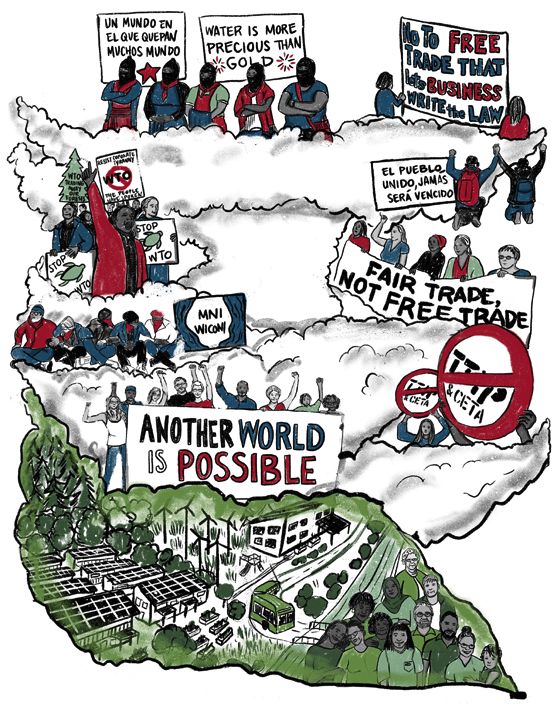
of tuition fees, starting with a 20% re-
                                                                                           duction in fees for all post-secondary
                                                                                           students for the upcoming year, includ-
                                                                                           ing for international students.

   Up Front
                                                                                               One in five Alberta households
                                                                                           include someone unable to take
                                                                                           prescribed medications in the past
                                                                                           12 months because of cost. The AAB
                                                                                           therefore proposes a provincially
                                                                                           funded, universal pharmacare program.
                                                                                           After all, if you’re sick, you’re sick.
                                                                                               Finally, social assistance caseloads
                                                                                           have risen substantially since the start
                                                                                           of the economic downturn. This is espe-
                                                                                           cially the case for single adults without
                                                                                           dependents. The Alternative Alberta
                                                                                           Budget would therefore increase fund-
                                                                                           ing for retraining Albertans experiencing
                                                                                           prolonged periods of unemployment.
                                                                                           This would halt the flow of people onto
                                                                                           social assistance and improve the like-
                                                                                           lihood they will find new jobs.
                                                                                               Alberta still has, by far, the lowest
                                                                                           debt-to-GDP ratio of any province,
                                                                                           projected to be 6.5% in 2018-19. The
                                                                                           next lowest is British Columbia’s, which
                                                                                           stands at 15.2%, while Ontario’s 2018-
                                                                                           19 debt-to-GDP ratio is above 40%. In
                                                                                           other words, there is no fiscal crisis in
                                                                                           this province. Alberta does not have
                                                                   GOVERNMENT OF ALBERTA   to cut social spending to preserve its
                                                                                           long-term financial health.
                                                                                               Albertans are also taxed less than res-
NICK FALVO | ALBERTA                                                                       idents of any other province. According

Province must find
                                                                                           to Alberta Treasury Board and Finance,
                                                                                           if the province adopted a tax structure

alternatives to cutting
                                                                                           similar to the next lowest-taxed prov-
                                                                                           ince in the country (British Columbia),

social spending
                                                                                           Alberta would generate an additional
                                                                                           $8.7 billion in annual revenue.
                                                                                               Meanwhile, Alberta remains the only
                                                                                           Canadian province without a provincial

T
                                                                                           sales tax. The Alberta Alternative
      he Alberta government led by               This year’s AAB discusses several         Budget working group estimates that
      Premier Jason Kenney will almost        social challenges in Alberta. For            the implementation of a 5% provincial
      certainly announce major cuts           example, more than 80% of Alberta’s          sales tax in Alberta would generate
to social spending in the near future. It     kindergarten through Grade 3 classes         approximately $5 billion in new revenue
doesn’t have to. In fact, it could increase   currently exceed the provincial gov-         annually. What’s more, even after the im-
social spending while being fiscally          ernment’s own class size targets. The        plementation of this tax, Alberta would
responsible.                                  AAB therefore recommends substantial         remain Canada’s lowest-taxed province.
   The Alberta Alternative Budget (AAB)       increases in spending on K–12 educa-             There is a need for increased, not
is an annual exercise whose working           tion alongside reduced public funding        decreased, social spending in this prov-
group consists of researchers, econo-         for private schools (which are currently     ince. There is also the fiscal capacity to
mists and members of civil society. Our       subsidized at higher rates than in any       do it. Now is the time to move forward,
mandate—like that of the Alternative          other province).                             not backward. M
Federal Budget co-ordinated each year            Tuition fees as a share of university     NICK FALVO IS A CALGARY-BASED ECONOMIST
by the CCPA—is to create a progressive        operating revenue roughly tripled in         AND CONSULTANT, AND THE EDITOR OF THIS YEAR’S
                                                                                           ALBERTA ALTERNATIVE BUDGET. A VERSION OF
vision for Alberta that boosts economic       Alberta over the last 30 years. The AAB      THIS ARTICLE RAN IN THE EDMONTON JOURNAL
growth and reduces income inequality.         therefore proposes a five-year phase-out     ON JULY 4.

                                                                                                                                           5
chains over the past several decades
                                                                                                       clearly exceeds the planet’s ecological
                                                                                                       limits. Rapid climate change is simply
                                                                                                       the most alarming symptom of mul-
                                                                                                       tifaceted environmental destruction
                                                                                                       and unsustainable resource exploita-
                                                                                                       tion—of fossil fuels, forests, farmlands
                                                                                                       and fresh water—that are at the heart
                                                                                                       of this system. At the same time, the
                                                                                                       economic gains from growth in trade
                                                                                                       have been overwhelmingly captured by
                                                                                                       a tiny elite.
                                                                                                          To now, free trade agreements have
                                                                                                       been employed by governments and
                                                                                                       corporate lobbyists, in the interests of
                                                                                                       this elite, to lock in those harmful (but
                                                                                                       profitable) ways of producing and ex-
                                                                                                       changing goods and services. For those
                                                                                                       pursuing social change, it is imperative
                                                                                                       that we rethink free trade ideology and
                                                                                                       the prevailing template for the agree-
                                                                                                       ments that govern globalization.
                                                                                                          Progressives can and do seek to
                                                                                                       preserve the benefits of trade, but at the
                                                                                                       same time to embed trade agreements
                                                                                                       in a new legal ecosystem of rights and
                                                                                                       obligations that looks first to the rights
                                                                                                       and health of citizens, workers, commu-
                                                                                                       nities and the planet. In other words,
                                                                                                       progressives insist on trade rules that
                                                                                                       give priority to human rights and the
                                                                                                       rights of nature over corporate rights.
                                                                                                          A reformed international trading
                                                                                                       system must be inclusive, and tolerant
                                                                                                       of different ideas about how our econ-
                                  ILLUSTRATION BY KARA SIEVEWRIGHT OF THE GRAPHIC HISTORY COLLECTIVE   omies and societies are organized.
                                                                                                       Through special and differential treat-
                                                                                                       ment, trade rules must accommodate
    ETHAN EARLE, MANUEL PÉREZ-ROCHA                                                                    the development aspirations of the
    AND SCOTT SINCLAIR | INTERNATIONAL                                                                 Global South. A progressive trade model

    Envisioning a progressive
                                                                                                       would also redress the long-ignored
                                                                                                       rights of excluded and disadvantaged

    trade agenda
                                                                                                       groups everywhere to productively
                                                                                                       participate in the global economy. The
                                                                                                       harmful secrecy surrounding trade and
                                                                                                       investment treaty negotiations must be

    T
                                                                                                       replaced by an open and transparent
           he extraordinary surge in popular        Our new report, Beyond NAFTA 2.0: A                treaty-making process that no longer
           support for expanding public           Progressive Trade Agenda for People and              gives the upper hand to corporate
           health care, a “Green New Deal”        Planet, addresses a key question: what               lobbyists and other insiders.
    (see page 23 of this issue) and other         kind of trade, and what kind of trade                   Another overarching theme in our
    progressive policies demonstrates a           agreements, might complement growing                 report is the demand for a new trade
    powerful public appetite for meaningful       demand for better social programs, more              treaty framework that supports core
    social change. Decades of neoliberal          ecologically sustainable production, and             progressive policy priorities such as
    austerity and “the market made me do          more egalitarian ways of living? What                universal health care; strong public
    it” politics, which boosted inequality        kind of trade regime, in other words,                services; robust environmental pro-
    in most countries, have also created          should progressives support?                         tection and resolute action on climate
    pent-up demand to change the rules              The extraordinary expansion of in-                 change; full employment in meaningful
    of globalization and international trade.     ternational trade and globalized supply              work that provides a good standard of
6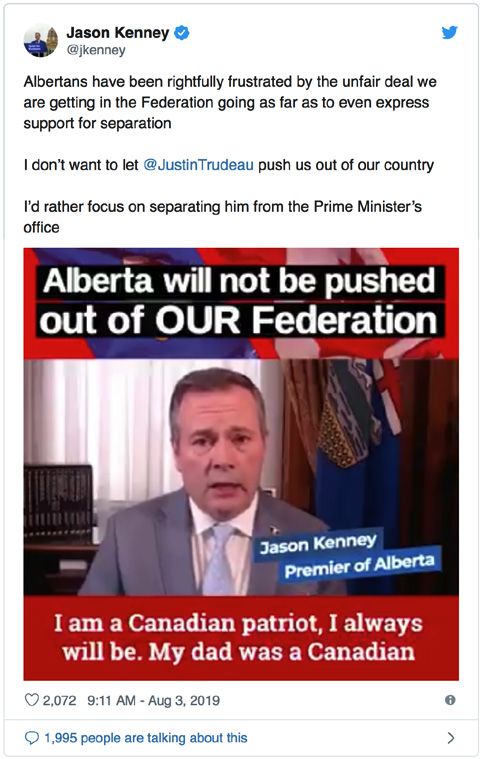
living; strengthened labour standards           This positive, progressive trade
and trade union rights; the primacy of        agenda proposes the following actions
universal human rights, especially the        (among others):
rights of women, Indigenous Peoples,
and all those seeking equity; and the
                                              • Eliminate   ISDS and investment
                                              protections that undercut the right of
greater democratization of economic
                                              duly elected governments to regulate
decision-making.
                                              in the interests of their citizens and
   Realizing this policy vision will
                                              the environment, and establish binding
clearly mean defying and ultimately
dismantling key corporate-biased as-
                                              investor obligations.
                                                                                             Index
pects of existing trade treaties, such        • Enshrine binding, enforceable obliga-        Wasted Spaces
as investor–state dispute settlement.         tions to reduce and mitigate the effects
It will also require organizing politically   of climate change in all international
                                                                                           Compiled by Elfreda Tetteh
to thwart corporate-driven efforts to ex-     commercial agreements and safeguard
pand the current, deeply flawed model         greenhouse gas reduction and climate
                                                                                           600 million
into new areas including digital trade,       protection initiatives from challenge by
                                                                                           Number of cars’ worth of greenhouse gas
e-commerce, data privacy, regulatory          foreign investors or governments.
                                                                                           emissions created annually by clearing
co-operation and expanded intellectual
property rights.
                                              • Replace excessive intellectual prop-       forested land, mostly to pasture cows.
                                              erty rights with balanced protections
   For too long, trade treaties have been
                                              that encourage innovation while sup-         83%
instruments of policy suffocation, key
                                              porting user rights, data privacy, and       Portion of global farmland allocated to meat
tools for enforcing a neoliberal policy
                                              access to affordable medicines.              and dairy.
monoculture. This must end. The
existential threat of climate change          • Replace non-binding, unenforceable         60%
and the corrosive effects of inequality       labor provisions with strong, fully en-
                                                                                           Amount of agricultural greenhouse gas
have exposed current trade treaties as        forceable labor rights and standards
                                                                                           emissions produced through meat and dairy
counterproductive and dangerously             that enable citizens and trade unions
                                                                                           production.
out of sync with today’s challenges           to take complaints to independent
and priorities. It is critical to reverse     international secretariats, which should
                                                                                           18%
the prolonged “mission creep” through         also have the authority to proactively
                                                                                           Portion of calories provided by meat and
which trade agreements have strayed           investigate labor rights abuses.
                                                                                           dairy.
far from basic trade matters, such as
tariff reduction, to instead become
                                              • Fully recognize and respect gender
                                              and Indigenous rights, including             44%
instruments of corporate control and
                                              prioritizing women’s employment and          Amount of all methane emissions in agricul-
privilege in all areas of governance.
                                              economic well-being, and recognizing         ture, forestry and human land use produced
   Despite Trump’s populist and anti-es-
                                              Indigenous title to land and resources       by cows.
tablishment rhetoric, his unilateralism
                                              and the right to free, prior, and informed
is clearly aimed not at undoing but at
                                              consent.                                     500 million
deepening the pro-corporate biases of
                                                                                           Number of people who currently live in areas
the current trade regime. The evolution       • Ensure international trade agree-          where once-productive land has dried out
of NAFTA into the USMCA is proof of           ments respect food sovereignty and
                                                                                           and turned to desert.
that.                                         the livelihoods of small holdings and
   The approach advocated in our report       family farmers by giving priority to local
                                                                                           $1.8 billion
could not be more different. Through          producers and providing a fair return for
                                                                                           Average annual insurance costs associated
close analysis of the USMCA (CUSMA            small-scale agricultural producers.
                                                                                           with extreme weather in Canada between
in Canada and T-MEC in Mexico), trade
experts and activists explore how that
                                              • Encourage policy flexibility for those     2009 and 2017, up from an average of $405
                                              industrial and community economic            million in 1983.
agreement and the current neoliberal
                                              development strategies striving to en-
trade regime set back progressive
                                              sure that trade and foreign investment       1.2 trillion
aspirations across the policy spectrum.
                                              contribute to good jobs, local economic      Number of new trees the world could
   This analysis is guided by four basic
                                              benefits, healthy communities, and a         plant—a startlingly achievable goal—to
principles: recognizing the primacy of
                                              clean environment.                           remove two-thirds of all carbon dioxide from
human rights over corporate rights;
                                                                                           the atmosphere.
respecting the policy space of dem-           • Pursue international co-operation
ocratic governments to ensure trade           that respects regulatory autonomy            Sources “Estimated carbon dioxide emissions from tropical deforestation im-
contributes to national and local             and aims to harmonize to the highest         proved by carbon-density maps,” Nature Climate Change; “Reducing food’s envi-
                                                                                           ronmental impacts through producers and consumers,” Science; “Climate Change
economic development; safeguarding            standards, instead of the current            and Land,” the 2019 report of the Intergovernmental Panel on Climate Change; “New
public interest regulation; and adopting      corporate-dominated regulatory co-op-        report says Canada should start adaptation measures to offset climate-change ef-
                                                                                           fects,” Globe and Mail; “Tree planting ‘has mind-blowing potential’ to tackle cli-
a climate-friendly approach to trade.         eration agendas that erode autonomy          mate crisis,” The Guardian (U.K.).

                                                                                                                                                                            7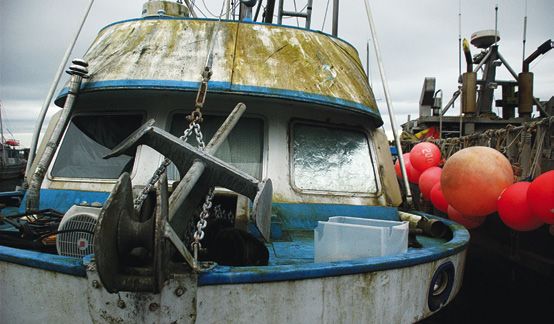
and harmonize to the lowest common
    denominator.

    • Remove the pressure under current
    services and investment rules to pri-
    vatize public services and instead fully
    protect the right to preserve, expand,
    restore and create public services
    without trade treaty interference.

    • End the current secrecy in trade
    negotiations and privileged access
    for vested interests, and establish
    procedures that provide full disclosure,
    transparency and meaningful public
    participation.
    A final theme of our report is that while
                                                                                                         WILLIAM ROSMUS (FLICKR CREATIVE COMMONS)
    the existing trade and investment re-
    gime needs to be transformed, policy
    alternatives can and must be pursued
                                                  EVELYN PINKERTON | BRITISH COLUMBIA
    immediately. Given the destructiveness
    of runaway climate change and rising
    inequality, we cannot afford to wait until    We need an independent
    the current international trade system
    is reformed before acting. Recognizing        commission on West Coast
    the obstacles that current trade and in-
    vestment rules pose to a just economic
    and ecological transformation should
                                                  fishing licensing
    never imply giving in to their chilling

                                                  B
    effect.
                                                          ritish Columbia’s coastal com-          outside of Canada. Some are process-
       Our working paper is meant to be a
                                                          munities, long dependent on             ing companies that freeze or can the
    roadmap, not a blueprint. We hope it
                                                          fishing for their livelihoods, are in   fish. All are able to lease out the ITQs at
    will be a living document, subject to
                                                  serious trouble. Populations are down,          rates (as high as 80% of the value of a
    discussion, criticism and revision, and
                                                  along with youth retention, incomes,            catch in some fisheries) that force fish-
    a tool for stimulating deeper debate and
                                                  investment, infrastructure, health              ermen to take virtually all the risk and
    discussion about trade alternatives in
                                                  outcomes and levels of well-being.              little of the benefit. Some Canadian cor-
    civil society, trade unions and social
                                                  It’s now almost impossible for young            porations, because they own licences
    movements. M
                                                  people to enter the fishery because of          and fish-processing plants, are able to
    SCOTT SINCLAIR DIRECTS THE CCPA’S TRADE
    AND INVESTMENT RESEARCH PROJECT. MANUEL
                                                  the high cost of purchasing or leasing          land and flash freeze the fish in Canada,
    PEREZ-ROCHA IS AN ASSOCIATE FELLOW AT THE     the individual transferable quotas (ITQs,       but then export the fish overseas to be
    WASHINGTON, D.C.–BASED INSTITUTE FOR POLICY
    STUDIES. ETHAN EARLE IS A FORMER PROGRAM
                                                  permits to catch a certain quantity of          processed, further removing jobs from
    MANAGER AT THE ROSA LUXEMBURG STIFTUNG–       fish, attached to most licences). Coastal       our coastal communities. So we are
    NEW YORK OFFICE AND IS NOW A POLITICAL
    CONSULTANT IN PARIS. THEIR REPORT, BEYOND
                                                  communities that used to have dozens            losing jobs, opportunity and benefits
    NAFTA 2.0: A PROGRESSIVE TRADE AGENDA FOR     of fishermen now may have a handful             in fishing, fish processing and related
    PEOPLE AND PLANET, CAN BE FOUND ON THE CCPA
    WEBSITE.
                                                  at best. The boat-building, repair and          support industries.
                                                  gear supply businesses that service the             These problems don’t occur as much
                                                  sector are disappearing. How did this           on the East Coast. The official policy
                                                  happen to our once prosperous coast?            since the 1970s for both coasts has
                                                     A big driver in this change is how           been to consider the social, economic
                                                  many fishing licences and ITQs are              and cultural consequences of fisheries
                                                  freely — and anonymously — tradable.            management, but this policy has not
                                                  Policy on the West Coast has allowed            been implemented on the West Coast.
                                                  ownership of licences and ITQs by all           Furthermore, the licensing systems on
                                                  sorts of people and companies who               the two coasts developed very different-
                                                  never set foot on a boat. Their only            ly. On the West Coast there are virtually
                                                  qualification: they have a lot of money.        no rules around licence ownership. On
                                                  Some are investor-speculators. Some             the East Coast, measures such as the
                                                  are laundering money. Some are shell            owner-operator policy (which requires
                                                  companies owned by people living                most licence holders to be fishermen
                                                                                                                            CONTINUED ON PAGE 10
8
Monitored
A DIG INTO THE MONITOR ARCHIVES | VOL. 6, NOs 4 AND 5, SEPTEMBER–OCTOBER 1999
Preparing for battle overtaxed.” According to Dobbin, that was true only
relatively speaking—and it was low-income Canadians
With the November 1999 “Battle of Seattle” alter-
who were facing higher taxes relative to their incomes,
globalization protests around the corner, the Monitor
not the well-off. But old propaganda dies hard. This
spent a lot of time in its September and October issues
summer, the right-wing, business-funded Fraser
on the push by rich countries, including Canada, to
Institute lumped all taxes (including import duties,
negotiate new corporate priorities (a “Millennium
profit taxes and payroll taxes) into the average family
Round”) into the binding WTO agreements — investment
income tax to make the false claim we all spend more
protection, government procurement, competition
on taxes than living costs—a myth the media largely
policy— over the strong objections of developing
reported as fact. Well, most media. The Beaverton, a
countries. Deriding how the WTO and other free
parody news site, covered the Fraser Institute report
trade deals create “substantial new obstacles to
this way: “‘In 2018, the average Canadian family earned
environmental protection, food safety regulations,
an income of $88,865 and paid total taxes equaling
cultural support programs, and resource conservation
$4,988,921,656,429.12, approximately 5600000000% of
initiatives,” Steven Shrybman, then executive director
their income,’ the study says. ‘Individuals in Canada are
of the West Coast Environmental Law Association,
not only paying more taxes than individuals in any other
proposed the adoption of “equally enforceable
country, they are each paying more taxes than the entire
international agreements to achieve broad societal
population of any other country.’”
goals, rather than entrenching the narrow interests of
large corporations and foreign investors.” Twenty years
Privacy legislation showing its age
later, Canada has fully committed to “Millennium Round”
disciplines on state-owned enterprises, public spending, Freelance writer Paul Bobier wrote about plans to
financial services, domestic regulation, and many other introduce a Personal Information Protection and
areas, in a network of ever-more-intrusive free trade Electronic Documents Act (PIPEDA) in our October
deals such as CETA and the CPTPP. 1999 issue. The legislation was introduced that spring by
John Manley, then industry minister, “to give consumers
The law is the law more control over how their personal information is
used by the banks, cable and broadcasting companies,
A short article in the September issue reported on
telecommunications firms, and other businesses that
“exceptional” research by University of Saskatchewan
come under federal jurisdiction,” reported Bobier. The
labour law students, which showed that the provincial
Canadian Chamber of Commerce opposed the new
Roy Romanow government “violated both provincial
privacy act, along with the Conservative Party (the
laws and international human rights codes when
U.S. would be upset with Canada) and Bloc Québécois
it legislated striking nurses back to work [in April
(it infringed on provincial jurisdiction), but it would
1999].” Based on their findings, the students issued a
eventually pass in 2000. Today, however, PIPEDA is once
Declaration of Freedom, “to show their solidarity with
again out of date in an era of mass intrusions by social
the nurses, drafted language for a new law to repeal [the
media and new tech companies. Following last year’s
back-to-work legislation], and announced plans to file
introduction in Europe of the General Data Protection
an official complaint against the government with the
Regulation (GDPR), which sets a new benchmark for
ILO and the United Nations.”
personal privacy, the federal government has promised
to legislation a 10-point “digital charter,” which, if
Tax facts and fictions
enacted, “would constitute the most significant privacy
The October 1999 issue included 24-page report by law changes in decades,” according to Michael Geist of
CCPA research associate Murray Dobbin, “10 Tax the University of Ottawa.
Myths,” which aimed to clear the smoke created by yet
another corporate-led PR campaign against Canada’s
tax system. The number one myth? “Canadians are
9CONTINUED FROM PAGE 8
WORTH REPEATING who own and operate their own boats) Over 120
protected coastal communities and
independent fishermen. The federal fishermen, coastal
“A total failure of accountability” fisheries minister at the time, Dominic community
From the outset, we asked for an
LeBlanc, proposed in February 2018
that these ideas be not just policy but mayors, First
independent and transparent public
inquiry into my wrongful extradition. We
legal requirements on the East Coast. Nation leaders,
boycotted the external review because
So discussion of amendments to the
Fisheries Act (Bill C-68) began. academics and
we believed that it would amount to a
whitewash exercise. It is profoundly
In response, civil society mobilized on environmental
upsetting to see our concerns and fears
the West Coast. Shortly after LeBlanc’s
proposal to amend the Fisheries Act, organizations
materializing.
Ecotrust Canada and partners convened agreed on the
I endured over five years of draconian
bail conditions and more than three
a broadly representative gathering of
B.C. fishermen and communities. Over need for fisheries
years of imprisonment away from 120 fishermen, coastal community may- policy reform on
my family and home. My reputation
was tarnished; my financial savings
ors, First Nation leaders, academics and
environmental organizations agreed on the West Coast.
were wiped out; my physical and the need for fisheries policy reform on
mental health deteriorated, and most the West Coast. The Canadian Inde-
importantly l missed the birth of my pendent Fish Harvesters Federation
son and more than three years of my added their voices to this plea. The must be more inclusive of the fishing
children’s lives. Fishermen’s Union, representing many community, for example. Among other
fishermen and shoreworkers on the Pa- changes, an owner-operator policy is
My suffering and that of my family was
cific coast, surveyed many fishermen’s essential.
prolonged due to the conduct of senior
(not just its members’) opinions on a li- When Bill C-68 received royal assent
officials at the Department of Justice.
censing policy review. There was strong on June 21, the owner-operator policy
Yet the report found that no one was
support for putting licence ownership was recognized as something the
responsible for this miscarriage of
in the hands of active fishermen. And minister could legally require, alongside
justice. Neither does the report call for
lots of ideas about how to do it gradually, other social, economic and cultural
a serious reform of the very problematic
causing the least disruption. considerations. When Prime Minister
extradition law to ensure that Canadians
In the process of considering Bill C-68, Justin Trudeau shuffled his cabinet in
are protected.
the House of Commons Standing Com- July, he charged new Fisheries Minister
I trusted the government’s promise that mittee on Fisheries and Oceans received Jonathan Wilkinson with continuing
what happened to me should never numerous additional West Coast com- to advance LeBlanc’s changes to the
happen to anyone else. However, the plaints about the injustice of licensing Fisheries Act. The new minister must
report promises a continuation of the old there. The committee was particularly ensure that the necessary corrections
way where every Canadian is at risk. It moved by the BC Young Fishermen’s Net- are made to the B.C. licensing system so
was alarming to see that the report was work, whose members explained how that our fisheries once more are for the
seeking to strengthen the existing law difficult it is for a young person to get into benefit of working fishermen, the small
by recommending educating the public the fishery. The committee began its own businesses that support and depend on
about extradition steps and procedures. separate review of West Coast licensing our fishing industry, and fisheries-de-
in January 2019, inviting people with a pendent coastal communities. Toward
The report represents a total failure of
great array of perspectives—including that end, the government must strike the
accountability and transparency. We
Pacific region officials from the Depart- independent commission advocated by
demand a public and transparent judicial
ment of Fisheries and Oceans (DFO), the committee, with participation from
inquiry because justice dies in the
fisheries experts from Canada and other fishermen and fishing communities, to
darkness.
jurisdictions, fishermen and processors, figure out how to implement the commit-
— Statement by Hassan Diab at a press among other witnesses—to help them tee’s crucial recommendations.
conference on July 26 following the understand the regional challenges. But the minister will need a lot of
release of Murray Segal’s external review The committee’s final recommen- encouragement from citizens to do this,
of Diab’s wrongful judicial extradition to dations, unanimously supported by all as there are significant vested interests
France to face charges, thrown out for parties and released on May 7, over- in the status quo. Furthermore, all candi-
lack of evidence, that he was involved whelmingly support a licensing policy dates in the upcoming election should
in a 1980 bombing outside a Paris that reverses the numerous problems be forewarned that this issue matters a
synagogue. Segal concluded "(counsel) identified above. We must make sure great deal to British Columbians. M
acted in a manner that was ethical and this transformation happens, and that EVELYN PINKERTON IS A PROFESSOR IN THE SCHOOL
consistent— both with the law and… it brings about a more equitable distri- OF RESOURCE AND ENVIRONMENTAL MANAGEMENT
AT SIMON FRASER UNIVERSITY.
practices and policies." bution of benefits. DFO advisory boards
10Colour-coded and Black Panther Party for Self-Defence, I drew much in-
spiration from Canada’s own histories of struggle for Black
Justice freedom—organizations like the Brotherhood of Sleeping
Car Porters, the Black Action Defence Committee, and the
ANTHONY N. MORGAN African Canadian Legal Clinic, for example, and individuals
such as Charles Roach, Juanita Westmoreland-Traoré and M.
NourbeSe Philip. I chose to become a lawyer so I could carry
on the tradition set by these leaders of the Canadian Black
What’s a Black liberation movement. That is what makes me a Black lawyer.
Using a critical race or race-conscious frame of analysis
lawyer to do?
to ground and guide my work, I have served Canada and
its Black communities as a policy and research lawyer, a
civil litigator, and now as a public servant. Public thinking,
writing and speaking with this lens has been an integral
aspect of my commitment to racial justice lawyering. At
L
IKE MANY BLACK children who grew up in Canada in every step of my professional career, a focus on addressing
the mid-80s and early 90s, I was raised with the idea anti-Black racism in Canada has been central.
that making your parents proudest meant becoming I plan on sticking to that tradition in this column.
a doctor or a lawyer. It didn’t matter if your family “Colour-coded Justice” will explore racial justice issues in
descended from 18th century Black Loyalists or 19th Canadian law, policy and society— issues like racial pro-
century African American Refugees, or if your parents had filing, gun violence, Black community development, Black
recently immigrated from the Caribbean or Africa to serve politics and leadership, Black and Indigenous relations,
as working class labourers or foreign-trained professionals, reparations in Canada, and other questions and challenges
or to find greater safety and security. For “bright” Black facing Black life in this country.
children, the best way to make your family and community In early 2018, for example, the current federal govern-
proud was to gain entry into the legal profession. ment announced with great fanfare that it would officially
Whether or not we welcomed, actualized, resented or
resisted this family pressure, it was generally understood to
come from a good place. Black families typically want their
Black babies to grow up to escape poverty and, if possible, I chose to become a lawyer
even achieve the highest ranks of Canadian social accept- so I could carry on the
ance and respectability. This is not unique to Black families
in Canada. But it is especially common due to Canadian tradition set by these leaders
anti-Blackness, which perpetually impales the prospects, of the Canadian Black
well-being and sense of belonging of Black Canadians as
equals in this country. liberation movement.
It’s on this backdrop of my parents’ and community’s
Jamaican immigrant dreams that I became a lawyer. But
it doesn’t explain how I became a Black lawyer, or why. recognize the United Nations–declared International
I was born in Toronto and raised in racialized and work- Decade for People of African Descent. In support of that
ing-class neighbourhoods in the Greater Toronto Area. declaration, the 2019 budget committed $25 million over
As proudly Afro-Jamaican as my family and community five years “for projects and capital assistance to celebrate,
encouraged me to be, we equally claimed “Canadian” as an share knowledge and build capacity in our vibrant Black
inextricable part of social identity. As a result, I developed Canadian communities.”
a deep sense of power and pride in the interconnected But what does this commitment (and its future) mean
complexities of my African heritage, Jamaican parentage, during in an election year? Is this really enough money to
and Canadian social inheritance. truly support Black communities’ needs? Which Black com-
So when I decided in high school that I wanted to become munities are best served by such endeavours, and has the
a lawyer, it was far more than an expression of acquiescence government identified the right priorities to fund? These are
to my family’s and my community’s projections of Canadian the kinds of questions this column will explore and provoke.
immigrant dreams. I deeply wanted to play an active part I hope you enjoy it, learn something useful, and perhaps
in helping Canada fully realize its democratic ideals of gain new perspectives, insights and even inspiration on
multiculturalism, fairness and equality. Years before Black how to equitably think through law and policy as they
Lives Matter became the clarion call of a global generation impact Black communities in Canada. But if it does nothing
of justice-seeking Black advocates and communities, I chose else, my humblest hope is that this column will simply
the law as the avenue by which I would pursue social change make my parents proud. :-) M
for the betterment of Black life in Canada. ANTHONY N. MORGAN IS A TORONTO-BASED HUMAN RIGHTS LAWYER, POLICY
Though mostly motivated by books I read about American CONSULTANT AND COMMUNITY EDUCATOR. YOU CAN FOLLOW HIM ON TWITTER
AT @ANTHONYNMORGAN.
icons of the Black Power Movement, such as Huey Newton
1112
THINKING
BIGGER,
DEMANDING
BETTER
A MONITOR
GUIDE TO THE
DEBATES
AND DISTRACTIONS
FRAMING THE
2019 FEDERAL
ELECTIONALEX HEMINGWAY
OWN IT
THE DEMOCRATIC SOCIALIST
DEBATE CANADA SHOULD BE HAVING
THIS ELECTION
W
e live in an era of extreme they centre matters of who owns and a comeback. Concrete policy proposals
inequality of wealth and controls core economic institutions to address them are now emerging in
power across much of the and wealth. And they could be de- the U.K. and U.S. in particular.
developed world, and Can- scribed as “democratic” because they
ada is no exception. Public confidence take a bottom-up approach that would Inclusive ownership funds
in political institutions and “political reshape and significantly equalize Perhaps one of the boldest ideas cur-
classes” in the West is in long-running economic ownership and control. rently on offer, the inclusive ownership
decline. The failure of established in- These policies are also, in many cases, fund is an ambitious plan to transfer
stitutions to grapple adequately with extremely popular among voters part of the equity ownership of large
the crises we face is giving way to an across the political spectrum. corporations to a trust held by the
environment of growing instability In short, the policy debate is rapidly company’s workers. Proposed by the
and unease, providing fertile ground being populated with innovative and New Economics Foundation, a British
for the rise of the far right and deliv- far-reaching economic proposals of a think-tank, this policy was adopted by
ering the likes of Donald Trump and kind that we should be considering the U.K. Labour Party last year, and
Boris Johnson into the highest offices. much more seriously in Canada. To Bernie Sanders recently announced
Yet there is also reason for optimism. that end, let’s take a look at a selection plans to adopt a similar policy.
The left, too, is in many places also of big policy ideas now on the table In the Labour version, corporations
reinvigorated — and quite suddenly south of the border and across the with over 250 employees would be
bursting with big, bold new policy Atlantic, which represent potential mandated to transfer 1% of equity
agendas. This includes, perhaps most starting points for important debates per year to worker-owned trusts. (To
visibly, a push for a Green New Deal, here at home. avoid raising too many alarm bells by
crucial in the face of the ticking clock big capital owners, the transfer would
of the climate crisis. But another set of PUTTING POWER AND be capped at 10% of equity.) The divi-
developing policy proposals relating OWNERSHIP IN WORKERS’ dends earned from this equity would
to the ownership and control of our HANDS be paid out annually to the company’s
economy also deserve our attention. We generally take for granted, at least workers. To ensure equity between
In the U.K. and U.S., transformative in principle, that everyone has the firms and sectors, the dividends would
policy ideas for economic justice are right to a say—and certainly a vote — be capped at £500 ( just over $800),
emerging and starting to move quietly in what our governments do. But the with any additional funds allocated
into the political mainstream. These expectation of democracy stops quite to broader social investments at a
include policies to promote worker abruptly at the door of the workplace. national level. The worker ownership
ownership and control of companies, When it comes to some of the most stake would also come with a seat at
breaking up large monopolistic corpo- powerful institutions in our society the table in the corporation’s board of
rations, and an annual wealth tax on and our daily lives — corporations and directors proportionate to the owner-
the super-rich. These ideas are being workplaces —there is little practice or ship share.
advanced not only by activists and pretense of democratic control. Strikingly, there appears to be a
think-tanks, but now also major polit- But why shouldn’t working people strong public appetite for this type of
ical parties and candidates, including have more of a say over the institu- policy. In a recent poll of Americans,
the U.K.’s Labour Party and U.S. Dem- tions that govern their working lives? 55% supported (and 21% opposed) a
ocratic presidential candidates Bernie And indeed, why shouldn’t people have version of this policy that would go
Sanders and Elizabeth Warren. more ownership over the firms we even further, transferring up to half
These policies are not exclusive to work for? These are major economic of corporations’ equity to their work-
any single ideology, but they could and political questions with a long ers. Even 50% of Republicans polled
reasonably be called “socialist,” since history, and they are starting to make supported the plan, demonstrating
13EQUALIZING away from a single-minded focus on on boards, as has the U.K. Labour
THE TAX maximizing value for shareholders. Party. Like the inclusive ownership
TREATMENT Evidence suggest that having workers fund policy, worker representation on
OF CAPITAL at the board table could result in less boards polls very strongly in the U.S.,
AND LABOUR inequality, lower CEO pay, and fewer
layoffs during economic downturns,
with 52% of likely voters in support
compared to only 23% opposed.
INCOME COULD while tending to put a lid on stock
RAISE BILLIONS prices. Because stock ownership is “Right to own” and
OF DOLLARS so concentrated among the rich, this worker-owned enterprises
IN ADDITIONAL would also amount to a non-tax-based Beyond the partial ownership of
GOVERNMENT form of redistribution (a potential large firms created by an inclusive
REVENUE. complement to other taxation and ownership fund, another proposal
spending-based progressive policies). to democratize the economy is to
Germany and many other European promote full worker ownership of
countries have long required worker more firms. One elegant but poten-
representation on corporate boards. tially far-reaching policy measure
Warren’s proposal would also would give workers in a company the
that this is an issue that doesn’t break put new restrictions on corporate legal right of first refusal to buy their
down along simple left-right lines. influence in politics and elections by business if it’s being sold or shut down.
requiring a vote of 75% of the board to Such a “right to own” has recently
Worker representation authorize any political spending (i.e., been advocated by the Labour Party
on corporate boards worker representatives would have to in the U.K., and detailed proposals
Another set of new proposals would back it). Warren’s policy would curb the along these lines have been developed
require corporations to give their ability of directors to engage in short- by both the New Economics Founda-
workers elected representation on term share selloffs of their company’s tion and Institute for Public Policy
their boards of directors, even absent a stock, and federal corporate charters Research (IPPR) in the U.K., as well
transfer of equity. For example, Demo- would be amended to require directors as the Democracy Collaborative
cratic presidential candidate Elizabeth of large corporations “to consider the in the U.S. Each of these proposals
Warren’s version of this policy would interests of all corporate stakeholders.” includes mechanisms to assist work-
require 40% of corporate board seats These provisions would be backed up ers in financing the upfront costs of
to be reserved for representatives of by the threat of the federal government purchase. A “right to own” law has
the company’s workers. revoking a company’s corporate char- long existed in Italy, where the Emilia
Such a shift in corporate governance ter in the case of repeated violations. Romagna region has one of the highest
could substantially change the balance Bernie Sanders has also come out levels of co-operative ownership of the
of priorities in favour of workers and in support of worker representation economy in the world (equal to about
one-third of GDP).
While there is no “right to own” in
Canada, its potential can be seen in
2009 2010 2011 2012 2013 2014 2015 2016 2017 Total examples such as the Harmac Mill on
BC 18 23 24 37 29 31 17 27 24 230 Vancouver Island. Slated to be shut-
tered a decade ago, but successfully
AB 9 15 7 8 7 14 10 11 14 95
bought out by its employees, the mill is
SK 2 2 10 11 7 2 15 7 6 62 thriving today (shuttered West Fraser
MB 13 17 9 10 8 10 11 7 5 90 Timber and Canfor workers take note).
ON 27 22 43 63 53 25 25 23 21 302 Like the other policies mentioned so
far, U.S.-based polling suggests that
QC 135 116 131 143 125 107 91 87 96 1,031
a “right to own” is very popular, with
NB 3 10 10 7 3 9 7 13 22 84 69% support versus only 10% opposed
NS 21 22 33 13 11 19 13 15 15 162 in that country.
PEI 6 7 1 3 7 2 1 2 5 34 Thousands of worker-owned en-
terprises and co-operatives already
NL 2 1 2 0 4 1 4 3 0 17
exist in the U.S., U.K. and Canada. The
NU 0 0 0 0 0 0 0 0 1 1 economic evidence, much of it sum-
NT 0 0 0 1 1 2 0 0 2 6 marized in Tom Malleson’s 2014 book,
YK 0 1 0 1 0 2 0 1 0 5 After Occupy: Economic Democracy
for the 21st Century (Oxford University
Federal 5 6 6 7 6 6 2 7 0 45
Press), suggests that productivity in
Total 241 242 276 304 261 230 196 203 211 2,164 worker-owned co-operatives is as
good as or better than in conventional
▲ NEW INCORPORATIONS
14 OF NON-FINANCIAL COOPERATIVES,
2009–2017 SOURCE: INDUSTRY CANADAYou can also read


