Prospectus 2021 Higher Education and Training - Richfield
←
→
Page content transcription
If your browser does not render page correctly, please read the page content below

Prospectus 2021 Higher Education and Training

31
                          1990               PC Training & Business College
                                            founded in Tongaat, focused
                                           initially on training people on
                                           PC skills for business

             1990–2000                    Established 5 Higher Education sites
                                         in Durban, Johannesburg, Pretoria,
                                         Cape Town and Bloemfontein

            2000–2002                   Expansion of education clusters
                                        around main CBD areas

                   2012               Introduction of Tablet PC’s
                                      and tech-driven interface

               2013                  Establishment of
                                     Distance Learning division

             2015                   Expanded course offering to 124
                                    accredited courses across Higher
                                   Education and Technical, Vocational,
                                   Education and Training

            2016                   Group (PC Training & Business College)
                                  rebranded as Richfield Graduate Institute
                                 of Technology to enable expansion of
                                 brand and course offerings

        2017                 Richfield acquires
                             AAA School of Advertising
                            +
                            Richfield named “Best Regional College”
                           at the International Socrates Awards:
                           Oxford England

     2018                 Ninety One (Investec Asset Management)
                          controlling stake in Richfield Holdings

     2019             Postgraduate Programmes Accreditation

 2020                Successful academic year despite the
                     Covid-19 pandemic

 2020               MBA Accreditation
Contents

International Recognition and Awards                        3
Statutory Disclosure                                        5
International Associates and Partners                       6
Institutional Leadership and Management                     7
Curriculum Innovation, Design and Development Forum         8
Uniqueness of Richfield Campuses                            11
Academic Calendar – Contact Learning                        14
Academic Calendar – Distance Learning                       16
World-class Technology                                      18

Faculty of Postgraduate Studies                             20
Master of Business Administration                           22
Bachelor of Science Honours in Information Technology       24
Postgraduate Diploma in Management                          25

Faculty of Information Technology                           26
Bachelor of Science in Information Technology               29
Diploma in Information Technology                           31
Higher Certificate in Information Technology                33

Faculty of Emerging Technologies                            34
Higher Certificate in Computer Forensics                    37
Advanced Certificate in Information Technology Governance   38
Advanced Certificate in Information Security                39

                                                                 1
...continued

    Faculty of Commerce and Faculty of Leadership and Business Administration        40
    Bachelor of Commerce                                                             42
    Bachelor of Business Administration                                              44
    Diploma in Business Administration                                               47
    Higher Certificate in Business Administration                                    49
    Higher Certificate in Office Administration                                      50

    Faculty of Public Management and Local Government                                51
    Bachelor of Public Management                                                    51
    Diploma Local Government Management                                              52
    Higher Certificate Local Government Management                                   53
    Higher Certificate Recognition of Prior Learning (RPLA) Activities               54

    HET: Assessments, Credit Accumulations and Progression                           55
    Council on Higher Education Accredited Qualifications and Department of Higher
    Education registered campuses                                                    58
    Campuses registered with the Department of Higher Education and Training         60

2
International Recognition and Awards
from the USA, Italy, Switzerland and the UK
2020 –
      MBA Accreditation

2018 – PMR AFRICA, Diamond Arrow Award – 1st Overall IT Training Institution

2017 – Winner of The TOPCO National Business Of The Year Award

2017 – Winner of two prestigious international awards in Rome from Otherways’
        Association of Management and Consulting – France for:
        •	Global Award for Perfection, Quality and Ideal Performance; and
        •	Green Era Global Award for Sustainability.

2017 – Academic Union, London, UK, having admitted Richfield as Global Member, AU has
        awarded the Institution’s CEO, Jay Ramnundlall, the status of Honourable Professor
        of the Academic Union, Oxford, UK, with admission to the Club of Rectors of Europe
        and the International Socrates Nomination Committee.

2017 – Standard Bank Institutional Recognition for “Outstanding Achievements in the field
        of Education”

2016 – International Socrates Awards: Oxford, England – ‘Best Enterprises’ and ‘Best
        Manager of the Year’ Award,

2016 – PMR Africa, Diamond Arrow Award:
       Best IT Training Institution: 1st overall for doing most in the education sector and for
       stimulating economic growth and development in Kwa-Zulu Natal.

2016 – South African National Business Award – First Place in the Category – Investor in
        People.

2015 – Winner of the Century International Quality ERA Gold Awards for:
       •	Impressive Work Integrated Learning (WIL) – increasing the rate of employability
          of students
       •	Promoting Technology – providing students with free access to high-tech devices
          with NO additional cost
       •	Creating a ‘green’ culture which benefits the environment, encouraging students
          and educators to move away from excessive use of paper and printing

2015 – PMR AFRICA, Diamond Arrow Award – Leaders and Achievers Category

                                                                                                  3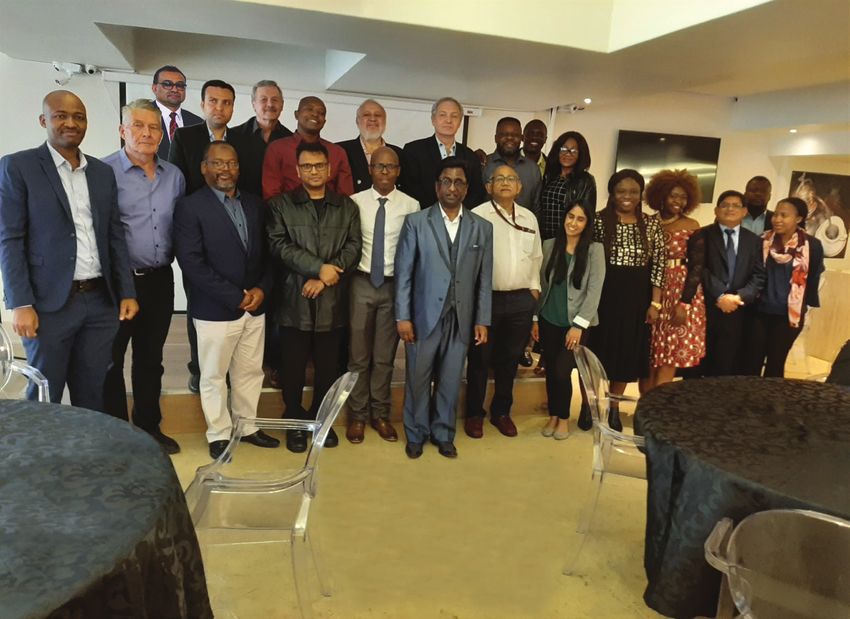
...continued
    2015 – Finalist of the Kwa-Zulu National Top Business Awards for being the Leading Brand
            in Kwa-Zulu Natal

    2015 – Finalist in the Platinum Technology International Award for Quality and Excellence

    2015 – Finalist in the Oliver Empowerment Awards for the Top Empowered Male Leader of
            the Year Award

    2014 – PMR Africa Winner of the Diamond Arrow Award in the Business Sector for:
           •	Business Sector for Economic Growth and Development
           • Managerial expertise
           • Corporate governance
           • Brand awareness
           • Levels of innovation

    2013 – CEO: Finalist African Access National Business Awards – Top Businessman of the
            year Category

    2013 – Winner of the Best Computer Training Institute/College in the Reader’s Choice
            “Best of the Best” Pretoria News Awards.

    2013 – Finalist in four categories of the African Access National Business Awards:
           • Investing in People Award
           • Innovation through Technology Award
           • Customer Focus Award
           • Corporate Citizenship Award

    2012 – Winner of the Top Gender Empowered Company in the Business, Education and
            Training Category

    2012 – Winner of the FNB/Kwa-Zulu National Top Business Portfolio Awards in the Social
            & Community Services Sector

    2012 – Finalist in four categories of the African Access National Business Awards:
           • Investing in People Award
           • Innovation through Technology Award
           • Customer Focus Award
           • Business, Education and Training Award

4
Statutory Disclosure
Richfield Holdings: Group Statutory Information
Richfield Holdings: Group Statutory Information
Group holding company RZT Zelpy 4472 (Pty) Ltd
Company registration number 2005/032812/07
Holding company Richfield Holdings (Pty) Ltd
Company registration number 2004/034364/07
Legal status Private company
Auditors BDO South Africa
Statutory directors
N Marsh MEng
J Ramnundlall BCom, MBA, SAIPA, TQM, ODETDP
A Parsons BA, LLB
MM Shezi Advanced Management Program (AMB) (Boston, USA),
Certificate of Insurance & Risk Management, Masters in
Business Administration (MBA), Bachelor of Science (BSC) in
Chemical Engineering.
CJ Bradford BA, Hons, Economics, Yale University
MBA, Stanford University
MA, Education, Stanford University
Company Secretary
JH Brink BCom, BCompt Hons, CA (SA)
Richfield Graduate Institute of Technology
Registered name Richfield Graduate Institute of Technology (Pty) Ltd
Auditors BDO South Africa
Trading name Richfield Holdings (Pty) Ltd
Abbreviated name RGIT
Company registration number 2000/000752/07
Legal status Private company
Statutory directors
S Ferreira BCom, MBA, GMP23
S Ganas BCom, BCom Hons
S Chengadu B.Ped, B.Ed, M.Ed, Executive MBA
JH Brink BCom, BCompt Hons, CA (SA)
Prescribed officers
B Waweru BCom, BCompt (Hons), CA (SA)
N Marsh MEng
Main campus Corporate office Postal address
292 Anton Lembede St, 19 Crewkerne Place Office Private Bag X23
Durban Park, Somerset Park Umhlanga Rocks, 4320
Tel: 031 304 9340 Umhlanga Rocks, 4320
Tel: 031 816 7300
info@richfield.ac.za | richfield.ac.za
Further details may be found in the student handbook, Institutional website, enrollment
contract and are also preloaded on students’ Tablet or laptop PCs.
5International Associates and Partners
Melissa Hathaway Dr Sampan Silapanad
President: Hathaway Western Digital
Global Strategies Corporation, Thailand
Dr Vincenzo Costigliola Prof Krista Rodriguez
President: Academic Monroe Community
Union, Oxford, UK College, USA
Prof Zal Phiroz Dr Gwendolyn Benson
e-Learning Instructor Harvard Georgia State
University, USA University, USA
Lelethu Nkula Hon Steve Mbikayi
Senior Partner: Vodacom DRC Minister of Education
Education Specialist and Universities
Dr Fritz Pinnock Ken Osei
Caribbean Maritime University International Finance Corporation
Prof JP Nsabua Jan McCauley
Vice Chancellor: State University of
University of Kinshasa, DRC New York
Dr Praveen Mahodeb Danny Ryan
JSS Academy, Coventry University, UK
Mauritius
Prof John WA Netting Prof Sagadevan Mundree
Director General: Queensland University
Europe Business Assembly of Technology
Dr Susan Lipford Ogletree Prof Prem Shamdasani
Georgia State Co-Director, Stanford-NUS Executive
University, USA Program in International Management &
Director, Marketing Strategy in a Digital
World. NUS Business School, National
University of Singapore
6Institutional Leadership and Management
Stefan Ferreira Shireen Chengadu
MBA, BCom, GMP23 B.Ped, B.Ed, M.Ed, Executive MBA
Chief Executive Officer Group CAO
Dr Stephen Akandwanaho Dr Muni Kooblal
PhD (CS), MIT, BSc (Hons) BSc, B.Ed, HED, MPA, DAdmin
Chief Academic Officer Academic Registrar
John Brink Kegan Shunmugam
B Com, BCompt Hons, CA (SA) BCom, ODETDP
Group CFO MD: HET
Zane Ramnundlall Ravika Sookraj
BSc (IT), MBA MBA, BCom (Hons), BCom
Chief Information Officer MD: Distance Learning Director
MBA Director
Sholina Durga
BSc (Hons) Adam Kelly
MD: TVET ACMA, CGMA, BCom
Group Sales Director
Elaine Ganas
BCom (Hons) Industrial and Isaka Reddy
Organisational Psychology MSc (Computer Science)
Chief HRD Officer Dean: Faculty of Information Technology
Irene Popela Dr Rajendra S Tulsee
BSc IT, MSc IT PhD (PUB AD), MPA, ADV DIP,
Faculty of Postgraduate Studies (PUB AD), BAdmin, BA
Dean: Faculty of Education and RPL
Professor S Adam
PhD, BA, MPA, DAdmin Arno Meyer
Dean: Faculty of Public BCom, BCom Hons, MPhil
Management and Local Government Dean: Faculty of Leadership
and Business Administration
Freedom Vezi
MMSci
Dean: Faculty of Commerce
7Curriculum Innovation,
Design and Development Forum
Prof Louis Fourie Jay Ramnundlall
Ex DVC (KITS) Cape Peninsula CEO Alpvest
University of Technology
Mr Akash Sukdeo
Prof Ronnie Perumal Tax Consultant
Retired Dean ex University of
Kwa-Zulu Natal Shahied Daniels
Chief Executive at SAIPA – South African
Dr Jabu Mtshweni Institute of Professional Accountants
Director: Council for Scientific
& Industrial Research (CSIR) Nick Marsh
Investec: Investment Principal, Africa
Dr Kiru Pillay Private Equity
Chief Director of Information Services Ninety One
Prof Tankiso Moloi Alistair Mokoena
Research Prof: University Head Google Africa
of Johannesburg
Prof Sibu Moyo
Prof Manoj Maharaj DVC Research, DUT
Research Professor – UKZN
Sibu Zondi
Prof Oludayo Olugbara Emerald Publishing
Professor of Computer Science
and Information Technology, DUT Dr Upasana Singh
Senior Lecturer, UKZN
Professor Kuzvinetsa Dzvimbo
Chief Executive Officer: Zimbabwe Dr Sthembiso Ngubane
Quality Assurance Zimbabwe Council Unizululand
for Higher Education
Nasirah Govindsamy
Dr Strini Pillay Manager, MICT SETA
International Relations: DUT
Prof Des Parmanand
Dr Gerald Thaver Advocate
Training and Development, ABSA
Steve Glendinning
Professor Mogamat Rashied Small HR Consultant
Executive: Education, Training and
Membership: SAIPA
8...continued
Ms Mariam Paul Ravi Lachman
Chief Director, Dept of Post Platech Technologies
& Telecommunication
Dr Craig Gokhale
Dr Gwenddolyn T Benson Lecturer, University of Zululand
Georgia State University
Dr Kriyanka Moodley
Dr Susan Lipford Ogletree UKZN: Project Manager (Academia);
Georgia State University Lecturer
Mr Torgbor Mensah Prof Serestina Viriri
President: Advertising Association Professor, Computer Science,
of Ghana (AAG) University of Kwa-Zulu Natal
Mr Francis Dadzie Dr Sanjay Ranjeeth
Executive Director: Advertising Lecturer UKZN, PMB
Association of Ghana (AAG)
Dr Lesego Rametsi
M. Mansa Amoa-Awuah Head of Group Wellness at Absa
Vice President: Advertising Association
of Ghana (AAG) Prof Shirley Zinn
Saki Publicity Limited Independent Consultant, Seasoned
Board Director
Dr Vincent Kiberu
Makerere University, Uganda Dr Craig Nossel
Co- Founder & CEO of Carenomics –
Melissa Hathaway Australia
President, Hathaway Global strategies
LLC; ex Advisor to President Barak
Obama and George W Bush on national
Cybersecurity
Prof Krista Rodriguez
RDA, RDH, MA, FADAA Monroe
Community College in Rochester,
NY, USA...continued
Front row: Dr Stephen Akandwanaho (Chief Academic Officer); Prof Thinus de Wet (MD: Strategic Insight); Dr Daniel
M Madyira (Senior Lecturer, Engineering: UJ); Dr Thaver (Absa); Prof Tankiso Moloi (Research Prof: UJ); Logie Naidoo
(Ex Deputy Mayor; Speaker of eThekwini Municipality); Prof Des Permanand (Advocate); Dr Kriyanka Moodley
(Graduate School of Business: UKZN); Dr Ethel Abe (Postdoctoral Researcher: UKZN); Ms Ntombifuthi Radebe
(Radio and TV Personality); Dr Muni Kooblal (Academic Registrar); Xolile Nomzamo Nene (HOD: HR Department)
Back row: Dr Ankit Katrodia (Lecturer: UNW); Dr Carl Lodewicus Koekemoer (Ludi) (CEO of AAA); Dr Sibusiso
Chalufu (Director: University of North West); Prof Louis Fourie (ex. DVC (KITS): Cape Peninsula University of
Technology; Chair of Senate); Jay Ramnundlall (Director); Mr Daryl Wade Swanepoel (Progressive Business Forum);
Dr Chidi Idi Eke (Lecturer, School of Management, IT and Governance: UKZN), Zanele Nkosi (HOD for
SCM Department)
The Curriculum Innovation, Design and other responsible stakeholders (commerce
Development Committee (CIDD) comprises and industry, government, research
of subject matter, academic experts from organisations, distance learning experts,
public institutions, industry experts, and etc.) deliberate and decide on the structure
practicing professionals. The CIDD designs and content of a programme.
and develops new programmes and reviews
current programmes. The CIDD meets twice a year in April and
September. After the CIDD workshop, a
The CIDD is an innovative and effective review is undertaken, where necessary, to
strategy to assemble experts from diverse revise curriculum content, without serious
backgrounds to develop curriculum, deviation from the accredited outcomes
where information/feedback/inputs are or the level (NQF) of the module and
also factored into teaching and learning programme. This process ensures that the
and material development. A team of curriculum is updated, has cutting-edge
academics (subject matter experts) and technology and is globally competitive.
10...continued
It is with great pleasure that we welcome you as a prospective student to one
of our country’s most pronounced and quality recognised institutions. Like
all progressive organisations, in planning the new academic year, we have
upgraded all our policies, frameworks, strategies and practices and reconfigured
them, to provide you with a world-class learning experience. Some unique
aspects are highlighted below:
Vision Learner management system
“A global Institution committed to quality, The Institution has migrated to the Moodle
student satisfaction, leadership, creativity Student Management System which is also
and value innovation”. used by major universities of the world.
Students can directly access additional
Mission learning content from the website.
“To facilitate and enhance quality teaching
for learning, promoting research and Benchmarking
engaging the community, through An active benchmarking strategy of our key
innovative practices and emerging processes, programmes and curricula with
technologies achieving increased global other private, public, national, international
access, employment, entrepreneurial and trade organisations is carried out in the
opportunities and transformation”. constant pursuit of excellence and continued
improvement.
World class institution
The Institution’s programmes have been Relevant curriculum
historically driven by demand in the Developing and delivering curricula in line
workplace. The National Master Scarce with industry and employer requirements
Skills List for South Africa provided by the are supported by an externally represented
Department of Labour as well as Seta Sector Senate. In addition, academic faculties and
Skills Plan demand work-based programmes departments provide support to all teaching
that are geared towards preparing students for learning activities.
in finding meaningful employment in the
ICT, commerce, government and industry Professional management
sectors. Teaching and Learning expertise on
each campus, together with professional
Work-integrated learning management, ensure that the learning
Included in the curriculum are compulsory needs of students are met and that the
work-readiness skills and work integrated quality of teaching for learning, assessment
learning programmes requiring appropriate and research is continually improved
workplace assessment for all students, and consistent at all campuses. Students
before awarding qualifications. are provided with a system of nationally
managed, standardised learning materials
and curricula which are reviewed and
11...continued
upgraded annually. Learning materials are Language policy
also preloaded on Tablet or laptop PCs, The medium of instruction is English.
making them easily accessible.
Mode of instruction
Interactive Learning
Contact or distance depending on
Small and manageable class sizes allow programme.
for interactive teaching for learning and
provision of strategic supplementary classes Student financial aid
in smaller groups targeting specific needs in
Students that require bursaries and financial
student development.
aid are requested to write to the Bursary
Committee, Private Bag X23, Umhlanga
Community engagement
Rocks, 4320 or visit our website:
An effective Community Engagement (CE) richfield.ac.za
strategy makes campuses more accessible
to the communities. Joint projects and use of Student support services
institutional infrastructure for CE purposes
Complaints/grievances, students must
are encouraged.
complete the Student Concerns logbook
to ensure satisfactory conclusion.
International ISO 9001: 2015 and OHSAS
Students may email student concerns to:
18001: 2007 quality standards lc@richfield.ac.za
The Institution also holds to the ISO
9001: 2015 and OHSAS 18001: 2007 Code of conduct
internationally certified quality standards Students are required to abide by the code of
for the provision of higher education and conduct, of which full details are covered in
training, distance and vocational technical our enrollment contract.
studies, professional learning and skills
programmes to international organisations South African Regulatory Compliance
and individuals.
In addition to the International Quality
Standards, the Institution meets the
Fees and charges including refund(s) in
quality standards of the Council on Higher
the case of cancellation or withdrawal
Education, Department of Higher Education
Students are advised to refer to the and the South African Qualifications
enrollment contract: terms and conditions Authority.
1.4 and 1.5 regarding cancellation or
withdrawal. Internet-enabled libraries
Access to internet-enabled libraries, that
Student enrollment contract
offer full text electronic database downloads
All students are to ensure that they have for teaching and learning purposes, are
signed and completed an enrollment available to students.
contract.
12Uniqueness of Richfield Campuses
Campus social life Academic Agility
All campuses have staff responsible for Despite Covid-19, the institution continued
work-integrated learning, social and cultural the academic year without any teaching and
activities and community engagement learning disruptions.
programmes. Social networks using wi-
fi connectivity and Tablet or laptop PCs Library and e-library resources
are encouraged and freely available at all Richfield possesses a substantial academic
campuses. library collection of over 135 000 textbooks
across its 30 libraries nationally. The latest
Academic infrastructure available textbooks are prescribed and kept
The Institution has state-of-the-art facilities in the libraries nationally.
and highly qualified academic and support
staff including a mix of foreign academic The e-library subscribes to an increasing
professionals who also provide scarce and number of electronic journals (e-journals),
critical skills. electronic case studies (e-cases), electronic
books (e-books), electronic magazines
Industry Engagement (e-magazines) and electronic newspapers
(e-newspapers) from leading academic
Richfield has a dedicated team working
publishers such as Elsevier Science Direct,
closely with industry experts and thought
Emerald Publishing, SpringerNature and
leaders, as well as key stakeholders
PressReader. Major book publishers such
in recruitment, and learning development
as Cengage Learning, Pearson Education,
to ensure we develop cutting-edge
Wiley, McGraw-Hill, Juta, Oxford and
curriculum that will in turn prioritise
Lexis Nexis provide academic support
Richfield graduates for employment.
to the institution.
Articulation of qualification
Health and wellness policy
The Institution’s qualifications are
Students are to familiarise themselves with
positioned on the National Qualification
the institution’s health and wellness policy.
Framework (NQF) and certain qualifications
are also positioned on the new Higher
Policy on disability
Education Qualification Sub-Framework
(HEQSF). All qualifications have an Students are to familiarise themselves with
occupational content and allow for the institution’s policy on disability.
vertical and horizontal articulation.
13Academic Calendar – Contact Learning
(First Years)
First Semester: 2021
Duration Start Finish Number of days
Institution Opens 4 January 2021
2020 Supplementary Exams – Nov/Dec 18 January 2021 29 January 2021 10
Student Induction and Orientation (1st years ONLY) 8 March 2021 12 March 2021 5
Semester 1 15 March 2021 16 July 2021 90
Lectures Commence 15 March 2021
Easter Holidays 2 April 2021 5 April 2021 2
Assignment 1 and 2 Due Date 6 April 2021
Continuous Assessment Test 1 7 April 2021 16 April 2021 8
Assignment 3 and 4 Due Date 22 April 2021
Assignment 5 and 6 Due Date 7 May 2021
Continuous Assessment Test 2 24 May 2021 4 June 2021 10
Semester 1 Revision and Examinations 28 June 2021 16 July 2021 15
Institution Holidays 19 July 2021 30 July 2021 10
Second Semester: 2021
Duration Start Finish Number of days
Semester 2 2 August 2021 3 December 2021 88
Lectures Commence 2 August 2021
2021 Supplementary Exams – June/July 11 August 2021 20 August 2021 8
Assignment 1 and 2 Due Date 20 August 2021
Continuous Assessment Test 1 25 August 2021 7 September 2021 10
Assignment 3 and 4 Due Date 22 September 2021
Continuous Assessment Test 2 27 September 2021 8 October 2021 10
Assignment 5 and 6 Due Date 30 September 2021
Semester 2 Revision and Examinations 11 November 2021 3 December 2021 17
Institution Holidays 6 December 2021
14Academic Calendar – Contact Learning
(Second and Third Years)
First Semester: 2021
Duration Start Finish Number of days
Institution Opens 4 January 2021
2020 Supplementary Exams – Nov/Dec 18 January 2021 29 January 2021 10
Student Induction and Orientation (1st years) 8 February 2021 12 February 2021 5
Semester 1 8 February 2021 16 July 2021 123
Lectures Commence 15 February 2021
Assignment 1 and 2 Due Date 19 March 2021
Continuous Assessment Test 1 26 March 2021 8 April 2021 8
Easter Holidays 2 April 2021 5 April 2021 2
Assignment 3 and 4 Due Date 22 April 2021
Assignment 5 and 6 Due Date 7 May 2021
Continuous Assessment Test 2 24 May 2021 4 June 2021 10
Semester 1 Revision and Examinations 28 June 2021 16 July 2021 15
Institution Holidays 19 July 2021 30 July 2021 10
Second Semester: 2021
Duration Start Finish Number of days
Semester 2 2 August 2021 3 December 2021 88
Lectures Commence 2 August 2021
2021 Supplementary Exams – June/July 11 August 2021 20 August 2021 8
Assignment 1 and 2 Due Date 20 August 2021
Continuous Assessment Test 1 25 August 2021 7 September 2021 10
Assignment 3 and 4 Due Date 22 September 2021
Continuous Assessment Test 2 27 September 2021 8 October 2021 10
Assignment 5 and 6 Due Date 30 September 2021
Semester 2 Revision and Examinations 11 November 2021 3 December 2021 17
Institution Holidays 6 December 2021
15Academic Calendar – Distance Learning
(First Years)
First Semester: 2021
Duration Start Finish Number of days
Institution Opens 4 January 2021
2020 Supplementary Exams – Nov/Dec 18 January 2021 29 January 2021 10
Semester 1 Commence 15 March 2021 16 July 2021 90
Workshop 1 – Induction and Orientation – Saturday, 20 March 2021
Assignment 1 Due Date 9 April 2021
Workshop 2 – Revision and Assignment 2 Guidelines – Saturday, 17 April 2021
Assignment 2 Due Date 14 May 2021
Workshop 3 – Revision and Assignment 3 Guidelines – Saturday, 22 May 2021
Assignment 3 Due Date 4 June 2021
Workshop 4 – Revision and Examination Preparation – Saturday, 19 June 2021
Semester 1 Examinations 28 June 2021 16 July 2021 15
Second Semester: 2021
Duration Start Finish Number of days
Semester 2 2 August 2021 3 December 2021 88
2021 Supplementary Exams – June/July 11 August 2021 20 August 2021 8
Workshop 1 – Induction and Orientation – Saturday, 14 August 2021
Assignment 1 Due Date 30 August 2021
Workshop 2 – Revision and Assignment 2 Guidelines – Saturday, 11 September 2021
Assignment 2 Due Date 29 September 2021
Workshop 3 – Revision and Assignment 3 Guidelines – Saturday, 9 October 2021
Assignment 3 Due Date 29 October 2021
Workshop 4 – Revision and Examination Preparation – Saturday, 23 October 2021
Semester 2 Examinations 11 November 2021 3 December 2021 17
16Academic Calendar – Distance Learning
(Second, third and Postgraduates)
First Semester: 2021
Duration Start Finish Number of days
Institution Opens 4 January 2021
2020 Supplementary Exams – Nov/Dec 18 January 2021 29 January 2021 10
Semester 1 Commence 8 February 2021 16 July 2021 123
Workshop 1 – Induction and Orientation – Saturday, 6 March 2021
Assignment 1 Due Date 30 March 2021
Workshop 2 – Revision and Assignment 2 Guidelines – Saturday, 17 April 2021
Assignment 2 Due Date 29 April 2021
Workshop 3 – Revision and Assignment 3 Guidelines – Saturday, 8 May 2021
Assignment 3 Due Date 28 May 2021
Workshop 4 – Revision and Examination Preparation – Saturday, 5 June 2021
Semester 1 Examinations 28 June 2021 16 July 2021 15
Second Semester: 2021
Duration Start Finish Number of days
Semester 2 2 August 2021 3 December 2021 88
2021 Supplementary Exams – June/July 11 August 2021 20 August 2021 8
Workshop 1 – Induction and Orientation – Saturday, 14 August 2021
Assignment 1 Due Date 30 August 2021
Workshop 2 – Revision and Assignment 2 Guidelines – Saturday, 11 September 2021
Assignment 2 Due Date 29 September 2021
Workshop 3 – Revision and Assignment 3 Guidelines – Saturday, 9 October 2021
Assignment 3 Due Date 29 October 2021
Workshop 4 – Revision and Examination Preparation – Saturday, 23 October 2021
Semester 2 Examinations 11 November 2021 3 December 2021 17
17World Class Technology
Success is at your doorstep...
Students who register for a Diploma, Degree 100mb monthly data valid for 12 months. All
or Postgraduate qualification will receive students
a Laptop with Windows 10. This laptop fully have FREE access to the Richfield Website
supports all programming languages utilised and Moodle platform. The Tablet or laptop
during the course and comes with a 12-month PC is compact, very lightweight and
warranty. You will also gain access to our extremely easy to carry. Our tablets or
world-class campus-based Wi-Fi, e-libraries laptops can easily fit into most backpacks.
and our student learner management system.
The learning material also includes global
All other students registering for other full podcasts of experts’ opinions on pertinent
Higher Education courses, such as Higher subjects and provides online entry to
Certificate will receive a FREE Vodacom the Integrated Tertiary Software (ITS)
Tablet or laptop PC which includes limited and Moodle for assignments, accounts
warranty and storage, e-libraries and information and assessment results.
Blended Learning:
A holistic African Solution
ING SUP Migration to a Greener Planet
RN Student Centredness
PO
ED LEA
Face-to-Face Moodle Learner Management System
RT SYS
& Distance Tablet or laptop PC Integration
Learning
Richlabs Digital Content Creation
ND
TE
M BLE
18Digital Libraries
PressReader offers unlimited digital access The Institution has perpetual access to
to over 4 000 top newspapers and more than Elsevier ScienceDirect e-book collection.
3 000 magazines from around the world. The e-book collection consists of the
Students choose from full-version, current following subject areas:
day content in 60+ languages from more • Computer science, business,
than 100 countries. management, hospitality and tourism,
finance, media technology, medicine and
Students can enjoy reading the world’s
dentistry
newspapers and magazines the way they
want to receive them:
• In downloads, online, or on their mobile
device, tablet or e-reader
Discover this unparalleled resource for
• Wherever they live, travel, work or play accelerating research and learning for
students, researchers and professionals.
Richfield has partnered with International
Publisher, Springer Nature, to make available
over 3 000 new Titles of 2018/2015
e-books free of charge to registered
Emerald Publishing is a global publisher
students. The subject collection includes
providing the highest quality, peer-reviewed
Business, Management, Computer Science,
research. With over 50 years’ experience,
Economics, Finance, Mathematics, Statistics,
Emerald manages a portfolio of over
Professional Computing and Applied
300 e-journals. Journal articles can be
Computing.
downloaded and shared with students.
Students at Richfield have unlimited
The institution subscribes to the e-journal
restrictions to downloads which may be
Premier Collection and the Emerging
accessed anytime, anywhere and on
Markets e-case studies.
any device.
19Faculty of
Postgraduate
Studies
20Postgraduate Studies
The Faculty of Postgraduate Studies provides support and valuable information
pertaining to the Postgraduate programmes. The institution provides
disciplinary training and also focuses on developing the Postgraduate student
as a researcher. The Postgraduate School offers workshops and seminars on
a range of topics from national and international experts in various areas
of scholarship.
Prof Susan Ogletree and Prof Gwendolyn • Prof Louis Fourie
Benson who are renowned scholars • Prof Ronnie Perumal
and experts in Research, Community
• Prof Adam Ahmed
Engagement and Leadership from Georgia
State University in Atlanta, USA have been • Prof Serestina Viriri
conducting seminars for Postgraduate • Prof Susan Ogletree
students on leadership and research. • Prof Gwendolyn Benson
Ms Melissa Hathaway also conducts • Dr Stephen Akandwanaho
seminars to Postgraduate Students. Ms • Dr Muni Kooblal
Hathaway is the former senior advisor to • Dr Kiru Pillay
two US Presidents, Mr George W Bush and
• Dr Sanjay Ranjeeth
Mr Barack Obama.
• Dr Sonny Ako-Nai
The institution uses modern systems, as • Dr Chidi Idi Eke
well as structures to enhance the learning
• Dr Gerald Thaver
and research environments for students.
The institution also has a pool of high- • Dr Ankit Katrodia
level scholars and experts in various fields • Dr Kriyanka Moodley
for research supervision and support of • Dr Chris Roets
Postgraduate Students including:
• Dr Suresh Ramdial
• Dr Rajendra Tulsee
• Dr Craig Gokhale
• Irene Popela
• Dr Noluxolo Gcaza
• Mrs Ziphozihle Zajiji
• Dudu Msomi
• Dr Sara Bux
• Prof Lyal White
• Maggie Mojapelo
21Master of Business Administration
(Distance Learning Only – Two Years)
(SAQA ID number: 117681: 180 credits: two years) Council on Higher Education Accredited
Qualification (Distance Learning)
Richfield’s MBA is a transformative programme to apply all their learnings immediately in their job.
that is purposed to equip students with not only It will also prepare working professionals to lead
the business ad leadership knowledge but modern their organisations or departments, to understand
information technology skills to enable students universal business problems and challenges in the
keep pace with the current rapid technological South African and global context and to apply best
advancements. The programme was designed with practices and management styles. Students will be
an IT focus to provide students with holistic skills to equipped with the necessary knowledge and skills
meet the burgeoning demand of the talent that to capitalise on business opportunities and to solve
can function effectively and innovatively in the complex problems by using creative and innovative
current context of The Fourth Industrial Revolution. thinking and a variety of management techniques.
This MBA degree also provides a high level of This programme is particularly relevant for those
theoretical engagement, intellectual independence who wish to lead an organisation, to understand
and the ability to resolve complex business problems universal business challenges, to apply best practices
in an innovative way. The programme embraces the and to solve complex problems in the private and
‘use it now’ principle, where students will be able public sector.
DISTANCE LEARNING ONLY
2 Years Total Credits: 180
NQF NQF
Subject code Semester: 1 Credits Subject Code Semester: 2 Credits
level level
MBASMM900 Strategic Marketing MBABECG900 Business Ethics
Management 900 9 15 and Corporate 9 15
Governance 900
MBASFM900 Strategic Financial MBABUR900 Business
9 15 9 15
Management 900 Research 900
MBASITM900 Strategic Information
MBAITM900 Innovative Talent
& Technology 9 15 9 15
Management 900
Management 900
TOTAL 45 TOTAL 45
22...continued
NQF NQF
Subject code Semester: 3 Credits Subject Code Semester: 3 Credits
level level
MBASTL900 Strategic Leadership MBADISS900 Dissertation
9 15 9 45
900
MBAIBS900 International
9 15
Business Strategy 900
Electives (Choose one only) Optional
MBAMDT900 Managing Digital MBAINS900 International Non-
Transformation 900 9 15 Study 900 9 credit
bearing
MBAENTI900 Entrepreneurship MBAEMD900 Emerging & Non-
and Innovation 900 9 15 Disruptive 9 credit
Technologies bearing
MBASOM900 Strategic Operations
9 15
Management 900
TOTAL 45 TOTAL 45
GRAND TOTAL 180
Admission Requirements
• Honours degree, or Post Graduate Diploma
• Equivalent NQF 8 qualification
• Relevant work related experience
• Recognition of Prior Learning (RPL)
23Bachelor of Science Honours in Information Technology
(Distance Learning Only – One Year)
(SAQA ID number: 110089: 120 credits: one year) Council on Higher Education Accredited
Qualification (Distance Learning)
This qualification will provide students economy through an industry-driven
with advanced knowledge and expertise cutting-edge curriculum that blends real-
with greater depth and breadth in various world applications with academic rigour.
areas of information technology, as well as
professional skills and research capacity This programme equips students with
in the methodologies and techniques of the managerial functional and reflective
information technology. The programme competences to deal with the broad
is uniquely suited to prepare students for based information technology issues in
success in today’s knowledge and digital today’s dynamic information technology
environment.
DISTANCE LEARNING ONLY
1 Year, Total Credits: 120
NQF NQF
Subject code Semester: 1 Credits Subject code Semester: 2 Credits
level level
ICS800 Information and HCI800 Human Computer
8 15 8 15
Cyber Security 800 Interaction 800
REM800 Research
8 15 DAM800 Data Mining 800 8 15
Methodology 800
ITS800 Information Technology
Strategy and 8 15 RPR800 Research Project 800 8 30
Governance 800
ASE800 Advanced Software
8 15
Engineering 800
Admission Requirements
• Bachelor of Science in Information Technology or Information Systems, Computer Science,
Informatics, Internet Communication, or
• Equivalent NQF 7 qualification, or
• Recognition of Prior Learning (RPL)
24Postgraduate Diploma in Management
(Distance Learning Only – One Year)
(SAQA ID number: 105754: 135 credits: one-year) Council on Higher Education Accredited
Qualification (Distance learning)
The purpose of the Postgraduate Diploma in The programme aims to develop an integrated
Management (PGDM) is to empower employed conceptual understanding, synthesis and
graduates, those aspiring for management critical application of specialised qualitative and
positions, those seeking career progression in quantitative issues in management with a view
management, as well as unemployed graduates to enable students to become knowledgeable,
who would like to increase their employability well-rounded business managers and leaders.
by obtaining advanced general management Moreover, through application of the under-
knowledge. This programme will ensure that standing and knowledge of research as it pertains
graduates understand management principles and to management, graduates will be able to resolve
practices and apply them to better manage teams management-related challenges by conducting
and organisations or divisions of organisations. research and present their results in a manner
that is understood by both management teams,
as well as senior management of the organisation.
DISTANCE LEARNING ONLY
1 Year, Total Credits: 135
NQF NQF
Subject code Semester: 1 Credits Subject Code Semester: 2 Credits
level level
ECO800 Managerial FIN800 Managerial
8 15 8 15
Economics 800 Finance 800
MKT800 Marketing HRM800 Human Resource
8 15 8 15
Management 800 Management 800
REM800 Research Research
8 15 RER800 8 20
Methodology 800 Report 800
ICM800 Innovation and Change
8 15
Management 800
ITM800 IT Management 800 8 15
Electives (Choose one only)
OPM800 Operations
8 10
Management 800
EIN800 Entrepreneurship
8 10
and Innovation 800
PSM800 Public Sector
8 10
Management 800
Admission Requirements
• A Bachelor’s Degree, Advanced Diploma; or
• Equivalent NQF 7 qualification; or
• Recognition of Prior Learning (RPL).
2526
Faculty of
Information
Technology

              27
Faculty of Information Technology
Graduates from institutions such as Richfield and universities remain a key
resource to address the IT skills shortage of major projects as well as the huge
shortage of ICT professionals and engineers in the global economy.
Information Technology pertains to the medicine. Information technologies are
study, design, and development of computer one of the most important and promising
systems and networks, which are used for fields given that qualified specialists with a
obtaining, processing, and distributing data. Bachelor of Science Degree in IT are needed
This field has been growing at a very fast in all areas of life – from business and science
pace over the last few years, and according to the entertainment sector.
to experts, this growth is expected to remain
stable. The Faculties of Information Technology,
Computer Applications & Systems
Thousands of jobs have been created by IT, Engineering help to develop experts in the
and hence, today, it is essential for everyone field of new technologies & applications,
to understand what information technology leading to software developers, engineering
is, and how it plays a vital role in every gurus and computer application specialists.
aspect of modern-day life.
A range of tertiary qualifications based on
Information Technology is infused in all various NQF levels and duration of study are
areas of professional, business and personal offered in Higher education qualifications
life: from providing communication to which include:
Faculty of Information Technology
• Bachelor of Science in Information
Technology
• Diploma in Information Technology
(three years)
• Advanced Certificate in Information
Technology
• Higher Certificate in Information
Technology
28Bachelor of Science in Information Technology (BSc IT)
(Contact & Distance Learning – Three Years)
(SAQA ID number 35954: NQF 7: 370 credits: three years) Council on Higher Education Accredited
Qualification (available at selected campuses or through Distance Learning)
Today IT goes beyond the design, and development of computer systems
(hardware and software) and networks, which were historically used for
obtaining, processing, and distributing data. This field has been growing at a
very rapid pace over the last few years, and this growth is expected to remain
stable. Thousands of new jobs are being created by IT as we move away from the
Information Age and Knowledge Age to the Digital Age.
Students will learn how to determine The BSc in IT allows students to choose
information needs by understanding user cutting-edge technology electives including
expectations and converting these to design artificial intelligence and programming or
elements in addressing how to automate software engineering. Those seeking a more
business processes, ensuring safeguards strategic direction in this space may choose
with regards to Cyber Security, Cloud IT Strategic Management.
Computing, Internet of Things, Business
Intelligence, Mobile Computing and Digital
Applications Development.
Career Opportunities
• Software Engineer • Systems Analyst and Designer
• Business Analyst • Data Base Designer and Administrator
• Application Developer • Data Analyst
• Information Security Analyst • Cyber Security Compliance Consultant
Admission Requirements
• A National Senior Certificate or equivalent with an endorsement for admission to a Degree,
with a pass in Maths and one Science subject; or
• Student who have passed RGIT HCIT/HCSE or an equivalent level 5 in the field of
Information Technology. A-level students pass in two subjects; or
• O-level students who have passed 12th class, or an equivalent A-level examination, or senior
secondary school certificate, or a technical diploma after secondary school certificate with
English and Maths in terms of the secondary education system; or
• Mature Age Exemption for students above the age of 23 as set out in the Higher Education
Regulations; or
• Recognition of Prior Learning (RPL).
29...continued
The Bachelor of Science in Information All aspects of the programme have
Technology is to enable the qualifying extensive practical elements, with emphasis
student to enter various sub-categories on group and individual work, and the
within the Information Technology industry. associated business, communication and
presentation skills.
The degree has been structured to allow
students to choose an elective in one of three In addition, the student is assured of being
possible areas within the IT industry. The exposed to the latest, cutting-edge IT
curriculum has specific outcomes aimed at technologies and strategies.
developing professional, generic and specific
skills required within each area of elective.
Year 1: Total Credits: 120
NQF NQF
Subject code Semester: 1 Credits Subject code Semester: 2 Credits
level level
INS511A Information Systems 511 5 10 INS512A Information Systems 512 5 10
PRO511A Programming 511 5 15 PRO512A Programming 512 5 15
WBT511A Web Technology 511 5 15 WBT512A Web Technology 512 5 15
NET511A Networks 511 5 10 NET512A Networks 512 5 10
MAT511 Mathematics 511 5 10 MAT512 Mathematics 512 5 10
Year 2: Total Credits: 120
NQF NQF
Subject code Semester: 1 Credits Subject code Semester: 2 Credits
level level
INS621A Information Systems 621 6 10 INS622A Information Systems 622 6 10
PRO621A Programming 621 6 15 PRO622A Programming 622 6 15
DBS600 Database Systems 600 6 10 BDI600 Big Data & IOT 600 6 10
CCP600 Cloud Computing 600 6 10 MCI600 Machine Learning 600 6 10
IPR621A Internet IPR622A Internet 6 15
6 15
Programming 621* Programming 622*
CAT600A Computer STN600 Server 6 15
6 15
Architecture 600* Technology 600*
BAS621 Business Analysis 621* 6 15 BAS622 Business Analysis 622* 6 15
Year 3: Total Credits: 130
NQF NQF
Subject code Semester: 1 Credits Subject code Semester: 2 Credits
level level
IPM700 IT Project ITP700 IT Project 700
7 10 7 10
Management 700
PRO731 Programming 731 7 15 PRO732 Programming 732 7 15
CBS700 Cyber Security 700 7 10 AFI700 Artificial Intelligence 700 7 10
Mobile App Work Integrated
MAD700 7 10 WIL700 7 20
Development 700 Learning 700
PRO741 Programming 741* 7 15 PRO742 Programming 742* 7 15
SEM700 Software SAM700 Simulation and
7 15 7 15
Engineering 700* Modelling 700*
ISM731 IT Strategic ISM732 IT Strategic
7 15 7 15
Management 731* Management 732*
* Choose one of the electives in year two and progression in year three.
Elective – Systems development Elective – Systems engineering Elective – Information technology management
30Diploma in Information Technology (DIT)
(Contact & Distance Learning – Three Years)
(SAQA ID number 88322: NQF 6: 370 credits: three years) Council on Higher Education Accredited
Qualification (available at selected campuses or through Distance Learning)
The purpose of the Diploma in Information Technology is to provide students
with a wide spectrum of study covering the breadth of Information Technology.
The diploma has been structured in such a way as to allow students to choose from an elective
in one of three possible areas within the IT industry. The curriculum has been designed with
specific outcomes in mind and is aimed at developing both generic and specific vocational skills
required within each elective.
Career Opportunities
• IT Manager
• Business Analyst
• Database and Systems Administrator
• Network Administrator
• Application programmer
Admission Requirements
• A National Senior Certificate with an endorsement for admission to a diploma and/or
degree; or
• A National Certificate Vocational (NCV) at NQF Level 4 with appropriate subject
combination and levels of achievements; or
• Mature Age Exemption for students above the age of 23 as set out in the Higher Education
Regulations; or
• Recognition of Prior Learning (RPL)
31...continued
Year 1: Total Credits: 120
NQF Subject NQF
Subject Code Semester 1 Credits Semester: 2 Credits
Level Code Level
SDT500B Software Development 500 5 10 BCM500B Business Communication 500 5 10
INS511B Information Systems 511 5 10 INS512B Information Systems 512 5 10
PRO511B Programming 511 5 15 PRO512B Programming 512 5 15
WBT511B Web Technology 511 5 15 WBT512B Web Technology 512 5 15
NET511B Networks 511 5 10 NET512B Networks 512 5 10
Year 2: Total Credits: 120
MCM521B M-Commerce 521 5 10 MCM522B M-Commerce 522 5 10
INS621B Information Systems 621 6 10 INS622B Information Systems 622 6 10
PRO621B Programming 621 6 15 PRO622B Programming 622 6 15
DBS521B Database Systems 521 5 10 DBS522B Database Systems 522 5 10
IPR621B Internet Programming 621* 6 15 IPR622B Internet Programming 622* 6 15
NET621 Networks 621* 6 15 NET622 Networks 622* 6 15
BSM621B Business Management 621* 6 15 BSM622B Business Management 622* 6 15
Year 3: Total Credits: 130
QTS600 Quantitative Techniques 600 6 15 OPS600 Operating Systems 600 6 10
IPM600B IT Project Management 600 6 15 ITP600B IT Project 600 6 15
Management Info
SEM600 Software Engineering 600 6 10 MIS600B 6 10
Systems 600
HCI600 Human Computer WIL600B Work Integrated
6 10 6 15
Interaction 600 Learning 600
PRO631B Programming 631* 6 15 PRO632B Programming 632* 6 15
NET631 Networks 631* 6 15 NET632 Networks 632* 6 15
BAS631 Business Analysis 631* 6 15 BAS632 Business Analysis 632* 6 15
Shaded areas represent electives modules
Elective – Systems Development Elective – Networks Engineering Elective – Information Technology Management
32Higher Certificate in Information Technology
(Contact & Distance Learning – One Year)
(SAQA ID number 82926: NQF 5: 120 credits: one year) Council on Higher Education Accredited
Qualification (available at selected campuses or through Distance Learning)
This qualification provides students with a
foundational knowledge base in the IT field Career Opportunities
and the ability to apply their knowledge
• IT Technical Support
and skills in System Development or the
• Junior Web Developer
Technical Support field.
• Systems Developer
It also equips students to undertake more
specialised learning in ensuing years.
Year 1: Total Credits: 120
NQF NQF
Subject code Semester: 1 Credits Subject code Semester: 2 Credits
level level
ITC500D Introduction to IIT500D Introduction to Information
5 15 5 15
Computers 500 Technology 500
SSW500D System Software 500 5 15 ECM512 e-Commerce 512 5 15
Business
ECM511 e-Commerce 511 5 15 BCM500D 5 15
Communication 500
IWT500 Introduction to WIL500G Work Integrated
5 15 5 15
Web Tech 500 Learning 500
Admission Requirements
• A National Senior Certificate with an endorsement for admission to a Higher Certificate
and/or Diploma and/or Degree; or
• A National Certificate Vocational (NCV) at NQF Level 4 within an associated field and levels
of achievements; or
• Mature Age Exemption for students above the age of 23 as set out in the Higher Education
Regulations; or
• Recognition of Prior Learning (RPL)
3334
Faculty of Emerging
Technologies

                      35
Faculty of Emerging Technologies
Graduates from Institutions such as Richfield and Universities remain a key
resource to address the IT Skills Shortage of major projects as well as the huge
shortage of ICT Professionals & Engineers in the global economy.
Emerging Technologies represent new fields given that qualified specialists with a
technologies that are continuously evolving Bachelor of Science Degree in IT are needed
and Information Technology (IT) pertains in all areas of life – from business and science
to the study, design, and development of to the entertainment sector.
computer systems and networks, which
are used for obtaining, processing, and The faculties of Information Technology,
distributing data. The field of information Computer Applications and Systems
technology has been growing at a very fast Engineering help to develop experts in the
pace over the last few years, and according field of new technologies & applications,
to experts this growth is expected to remain leading to software developers, engineering
stable. gurus and computer application specialists.
Thousands of jobs have been created by IT, A range of tertiary qualifications based on
and hence, today, it is essential for everyone various NQF levels and duration of study are
to understand what information technology offered in Higher education qualifications
is, and how it plays a vital role in every aspect which include:
of modern-day life.
• Higher Certificate in Computer Forensics
Information Technology is interfused in • Advanced Certificate in Information
all areas of professional, business and Technology Governance
personal life: from providing communication • Advanced Certificate in Information
& medicine. Information technologies are Technology Security
one of the most important and promising
36Higher Certificate in Computer Forensics
(Distance Learning Only – One Year)
(SAQA ID number 111617: NQF 5: 125 credits: one year) Council on Higher Education Accredited
Qualification (Distance Learning)
This qualification provides students with the technical skills and reflective
competancies to deal with the broad-based cyber crime related to optimising
the competitive positions of the organisation. The focus of the programme
is to improve the practice of information security with the special focus on
computer forensics.
It also equips students to undertake more
specialised learning in critical technical skills,
integrate specific case situations and apply
various computer forensic techniques in the
investigation of cybercrime.
DISTANCE LEARNING ONLY
Year 1: Total Credits: 125
NQF NQF
Subject code Semester: 1 Credits Subject code Semester: 2 Credits
level level
FCF500 Forensic Computing
5 15 COSS500 Courtroom Skills 500 5 10
Foundations 500
DCI500 Digital Crime and
FOS500 Forensic Science 500 5 15 5 10
Investigation 500
FEI500 Forensic Exploitation
5 15 NFO500 Network Forensics 500 5 15
and Intelligence 500
AFC500 Advanced Forensic
IFO500 Internet Forensics 500 5 15 5 15
Computing 500
WIL500D Work Integrated Learning 5 15
Admission Requirements
• A National Senior Certificate with an endorsement for admission to a Higher Certificate
and/or Diploma and/or Degree; or
• A National Certificate Vocational (NCV) at NQF Level 4 within an associated field and levels
of achievements; or
• Mature Age Exemption for students above the age of 23 as set out in the Higher Education
Regulations; or
• Recognition of Prior Learning (RPL)
37Advanced Certificate in Information
Technology Governance (Distance Learning Only – One Year)
(SAQA ID number: 109601; NQF 6: 120 credits: one year) Council on Higher Education Accredited
Qualification (Distance Learning)
The introduction of Information Computer are seen as enablers for development,
Technologies (ICTs) into many aspects of as they provide an efficient channel to
everyday life has led to the development deliver a wide range of basic services. This
of the modern concept of the information programme will provide students with
society. The availability of ICTs and new the skills and expertise in Information
network-based services offer a number of Technology Governance. Students will be
advantages for society in general, especially able to assess the organisational ability to
for developing countries. ICT applications, improve performance through information
such as e-government, e-commerce, technology governance frameworks, as well
e-education, e-health and e-environment, as manage information technology risks.
DISTANCE LEARNING ONLY
Year 1: Total Credits: 120
NQF NQF
Subject code Semester: 1 Credits Subject code Semester: 2 Credits
level level
ITA600 IT Auditing 600 ITM600 IT Service
6 15 6 15
Management 600
ISM600 Information Security
IRM600 IT Risk Management 600 6 15 6 15
Management 600
CSP00 Cyber Security WIL600 Work Integrated
6 15 6 15
Principles 600 Learning
ICP600 IT Compliance Project
6 15 ITP600C Project 6 15
Management 600
Admission Requirements
• The minimum entry requirement is a Higher Certificate at NQF Level 5 in an associated
field; or
• Mature Age Exemption for students above the age of 23 as set out in the Higher Education
Regulations; or
• Recognition of Prior Learning (RPL)
38Advanced Certificate in Information Security
(Distance Learning Only – One Year)
(SAQA ID number: 117408; NQF 6: 120 credits: one year) Council on Higher Education Accredited
Qualification (Distance Learning)
The purpose of the Advanced Certificate situations and recommend solutions to
in Information Security is to provide particular information security-related
the learner with the necessary expertise problems. This approach facilitates the
and knowledge to take on appropriate application of theory to practice and
professional positions in the information practice to theory. Further, the qualification
technology industry and in particular, will prepare the learner as a competent
in the field of information security. Information Technology Security specialist
This qualification seeks to introduce capable of being pro-active and responding
learners to the fundamental concepts positively to dynamically evolving
of information security. Information Technology environment,
intersecting national and international
Learners will be able to apply critical business practice to ensure uniformity,
technical skills; interrogate specific case growth and sustainability.
DISTANCE LEARNING ONLY
Year 1: Total Credits: 125
NQF NQF
Subject code Semester: 1 Credits Subject code Semester: 2 Credits
level level
FIS600 Fundamentals of CIAR600 Cyber Incident Analysis
6 15 6 15
Information Security 600 and Response 600
SMP600 Security Management
Best Practices, Risk 6 15 NSE600 Network Security 600 6 15
and Governance 600
NFU600 Networking Work Integrated
6 15 WIL600C 6 15
Fundamentals 600 Learning
PLS600 Policy, legislative and
Issues in Cyber 6 15 PRJ600 Project 6 15
Security 600
Admission Requirements
• The minimum entry requirement is a Higher Certificate at NQF Level 5 in an associated
field; or
• Mature Age Exemption for students above the age of 23 as set out in the Higher Education
Regulations; or
• Recognition of Prior Learning (RPL)
39You can also read


