Prostate artery embolisation for benign prostatic hyperplasia - Systematic Review
←
→
Page content transcription
If your browser does not render page correctly, please read the page content below
Prostate artery
embolisation for
benign prostatic
hyperplasia
Systematic Review

Decision Support Document No. 105
ISSN online: 1998-0469
Prostate artery
embolisation for
benign prostatic
hyperplasia
Systematic Review

Vienna, March 2017
Project Team
Project leader: Dr.in med. Katharina Hawlik, MSc
Authors:          Dr. Thomas Vreugdenburg, ASERNIP-S
                  PD. Dr. Claudia Wild

Project Support
Systematic literature search: Tarquin Mittermayr, BA
External Review: Uni. Prof. Dr. Rolf Muschter,
                 Urologisches Zentrum Lübeck and Sana Kliniken Lübeck, Germany
Internal Review: Dr.in med. Katharina Hawlik, MSc

Correspondence
Claudia.Wild@hta.lbg.ac.at

This report should be referenced as follows:
Vreugdenburg TD, Wild C. Prostate artery embolisation for benign prostatic hyperplasia. Decision Support Document
No. 105; 2017. Vienna: Ludwig Boltzmann Institute for Health Technology Assessment.

Conflict of interest
All authors and the reviewers involved in the production of this report have declared they have no conflicts of interest
in relation to the technology assessed according to the Uniform Requirements of Manuscripts Statement of Medical
Journal Editors (www.icmje.org).

Disclaimer
The external reviewers did not co-author the scientific report and do not necessarily all agree with its content. Only the
LBI-HTA is responsible for errors or omissions that could persist. The final version and the policy recommendations are
under the full responsibility of the LBI-HTA.

The HTA Core Model ®, developed within EUnetHTA (www.eunethta.eu), has been utilised when producing the
contents and/or structure of this work. The following version of the Model was used: [HTA Core Model Version 4.2].
Use of the HTA Core Model does not guarantee the accuracy, completeness, quality or usefulness of any information
or service produced or provided by using the Model.

Commissioned by the Austrian Ministry of Health, this report systematically assessed the intervention described herein
as decision support for the inclusion in the catalogue of benefits.

CONTENT INFORMATION
Publisher:
Ludwig Boltzmann Gesellschaft GmbH
Nußdorferstr. 64, 6 Stock, A-1090 Wien
http://hta.lbg.ac.at/page/imprint

Responsible for content:
Ludwig Boltzmann Institute for Health Technology Assessment (LBI-HTA)
Garnisongasse 7/20, A-1090 Vienna
http://hta.lbg.ac.at/
Decision support documents of the LBI-HTA do not appear on a regular basis and serve to publicize
the research results of the Ludwig Boltzmann Institute of Health Technology Assessments.
Decision support documents of the LBI-HTA are only available to the public via the Internet at
http://eprints.hta.lbg.ac.at
Decision Support Document No.: 105
ISSN-online: 1998-0469
© 2017 LBI-HTA – All rights reserved
Content
Content
Summary................................................................................................................................................................ 5
Zusammenfassung ............................................................................................................................................... 8
1 Scope .................................................................................................................................................................... 13
1.1 PICO question ............................................................................................................................................ 13
1.2 Inclusion criteria ........................................................................................................................................ 13
2 Methods ............................................................................................................................................................... 15
2.1 Research questions ..................................................................................................................................... 15
2.2 Sources......................................................................................................................................................... 16
2.3 Systematic literature search ....................................................................................................................... 16
2.4 Flow chart of study selection ..................................................................................................................... 17
2.5 Analysis ....................................................................................................................................................... 18
2.6 Synthesis...................................................................................................................................................... 18
3 Description and technical characteristics of technology ............................................................................. 19
4 Health Problem and Current Use.................................................................................................................... 23
5 Clinical effectiveness ......................................................................................................................................... 29
5.1 Outcomes ..................................................................................................................................................... 29
5.2 Included studies.......................................................................................................................................... 30
5.3 Results ......................................................................................................................................................... 31
6 Safety .................................................................................................................................................................... 33
6.1 Outcomes ..................................................................................................................................................... 33
6.2 Included Studies ......................................................................................................................................... 33
6.3 Results ......................................................................................................................................................... 34
7 Quality of evidence ............................................................................................................................................ 37
8 Discussion ........................................................................................................................................................... 41
9 Recommendation ............................................................................................................................................... 45
10 References............................................................................................................................................................ 47
Appendix .................................................................................................................................................................... 51
Evidence tables of individual studies included for clinical effectiveness and safety ..................................... 51
Risk of bias tables ................................................................................................................................................ 57
Applicability table ............................................................................................................................................... 60
List of ongoing clinical trials .............................................................................................................................. 61
Literature search strategies ................................................................................................................................. 65
Search strategy for the Cochrane Library ......................................................................................................... 65
Search strategy for MEDLINE .......................................................................................................................... 65
Search strategy for Embase................................................................................................................................. 66
Search strategy for CRD (DARE, NHS-EED, HTA)...................................................................................... 67
List of Figures
Figure 2-1: Flow chart of study selection (PRISMA Flow Diagram) .......................................................................... 17
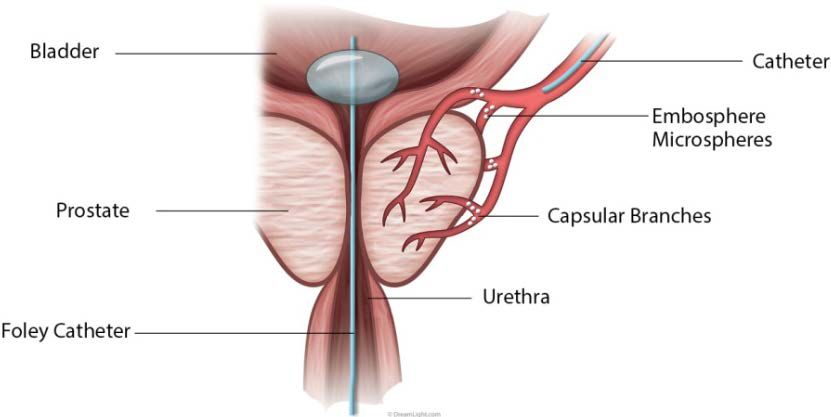
Figure 3-1: Diagram of PAE microspheres being inserted into the prostate arteries through a catheter .............. 19
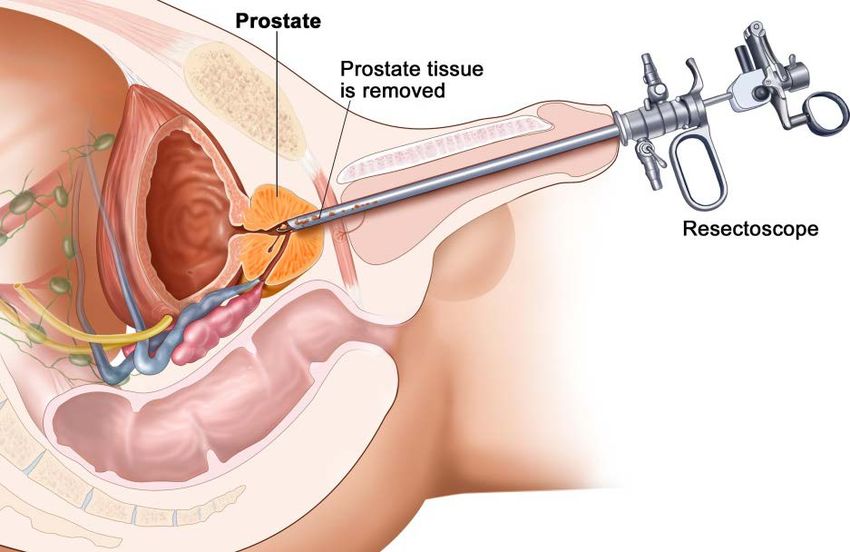
Figure 3-2: Trans Urethral Resection of the Prostate using a resectoscope ............................................................... 20
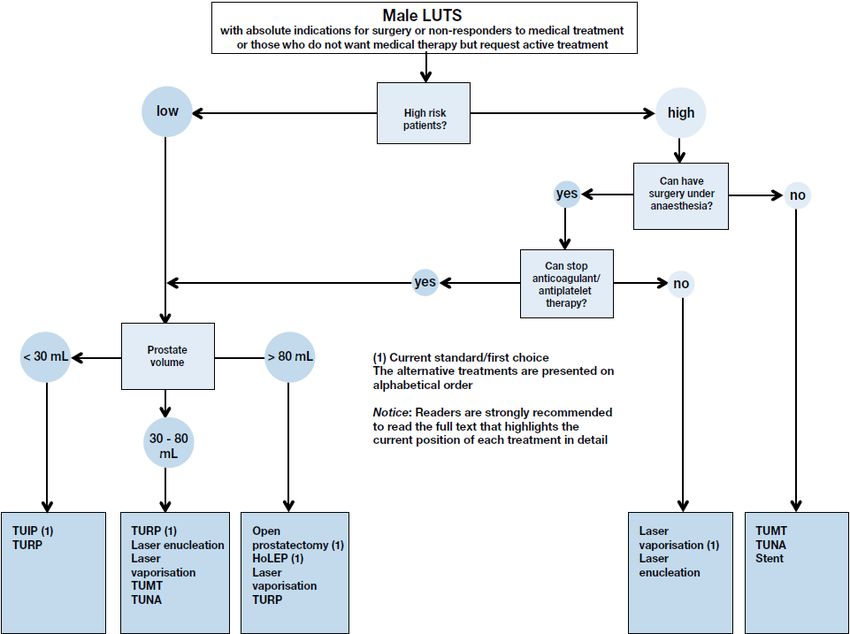
Figure 4-1: Clinical management algorithm for the surgical treatment of moderate-to-severe LUTS................... 26
LBI-HTA | 2017 3Prostate artery embolisation for benign prostatic hyperplasia
List of tables
Tabelle: Charakteristika von Embolisationspartikeln zur Behandlung der BPH .................................................. 9
Table 1-1: Inclusion criteria ............................................................................................................................................ 13
Table 3-1: Characteristics of embolisation agents used to treat benign prostatic hyperplasia ............................... 20
Table 7-1: Evidence profile: effectiveness and safety of PAE compared to TURP .................................................. 38
Table 7-2: Evidence profile: efficacy and safety of PAE compared to open prostatectomy .................................... 39
Table 7-3: Evidence profile: safety of PAE from observational trials ........................................................................ 40
Table 9-1: Evidence based recommendations ............................................................................................................... 45
Table A-1: Prostate artery embolisation: Results from randomised controlled trials
of PAE compared to TURP .......................................................................................................................... 51
Table A-2: Prostate artery embolisation: Results from observational studies; PAE vs open prostatectomy ......... 53
Table A-3: Prostate artery embolisation: Results from a randomised controlled trial
comparing PAE particle sizes....................................................................................................................... 54
Table A-5: Risk of bias – existing systematic reviews of PAE for BPH [10] .............................................................. 57
Table A-6: Risk of bias – study level (randomised studies) see [60] ........................................................................... 58
Table A-7: Risk of bias – study level (non–randomised studies) see [61] .................................................................. 58
Table A-8: Risk of bias – study level (case series), see [13] .......................................................................................... 59
Table A-9: Summary table characterising the applicability of a body of studies ...................................................... 60
Table A-10: List of ongoing randomised controlled trials of PAE compared to TURP ............................................. 61
Table A-11: List of ongoing randomised controlled trials of PAE compared to medical therapy ............................ 61
Table A-12: List of ongoing randomised controlled trials of PAE compared to sham procedure ............................ 62
Table A-13: List of ongoing observational trials of PAE ................................................................................................ 62
List of abbreviations
AMSTAR ......Assessing the Methodological IPSS .............. International Prostate
Quality of Systematic Reviews Symptom Score
BPH ...............Benign Prostatic Hyperplasia LUTS............ Lower Urinary Tract Symptoms
CRD ..............Centre for Reviews and NHS-EED .... NHS Economic Evaluation
Dissemination Database
DARE ............Database of Abstracts of Reviews PAE .............. Prostate Artery Embolisation
of Effects PSA ............... Prostate Specific Antigen
DRE ..............Digital Rectal Examination PVA .............. Polyvinyl Alcohol
EAU ...............European Association of Urology Qmax ............ Peak Urinary Flow
EUnetHTA ...European network for Health RCT .............. Randomised Controlled Trial
Technology Assessment
TUIP ............ Transurethral Incision
FDA...............Food and Drug Administration of the Prostate
GRADE .........Grading of Recommendations TUMT .......... Transurethral microwave therapy
Assessment, Development and
TUNA ........... Transurethral Needle Ablation
Evaluation
TURP ........... Transurethral Resection
HRQoL .........Health-Related Quality of Life
of the Prostate
HTA ..............Health Technology Assessment
UTI ............... Urinary Tract Infection
IIEF ...............International Index
of Erectile Function
4 LBI-HTA | 2017Summary
Summary
Introduction
Health Problem
The scope of this assessment includes benign prostatic hyperplasia (BPH) benign prostatic
causing moderate-to-severe lower urinary tract symptoms (LUTS). Benign hyperplasia (BPH)
enlargement of the prostate gland, bladder outlet obstruction, and LUTS are causes
independent factors, in any combination referred to as LUTS suggestive of moderate-to-severe
BPH. The symptoms of BPH are classified as voiding (e.g. hesitancy, intermit- lower urinary tract
tency, dysuria), storage (e.g. frequency, nocturia, urgency) or post-micturition symptoms (LUTS):
symptoms (e.g. incomplete voiding, dribbling). Approximately 2.5 per cent problems with urination
of men with untreated symptomatic BPH will develop acute urinary reten-
tion, and another six per cent will require invasive therapy within five years.
The severity of LUTS is measured using the International Prostate Symptom severity of LUTS:
Scores (IPSS) questionnaire, whereby a score of 1-7 indicates mild symptoms, measured with IPSS
8-10 moderate, and 20-35 severe. The global prevalence of histological BPH
is estimated to be 42 per cent of men aged between 51 and 60, and 82 per cent prevalence:
of men aged between 71 and 80. However, not all of these men will be symp- 42% men 51-60 y
tomatic or require treatment. A representative survey of Austrian men esti- 82% men 71-80 y
mated the prevalence of moderate-to-severe LUTS to be 9.1 per cent of men not all symptomatic
between the ages of 15 and 89, noting that BPH is not the only cause of LUTS.
Description of Technology
Prostate artery embolisation (PAE) is a minimally invasive alternative to sur- prostate artery
gical resection, which aims to shrink the prostate gland rather than remove embolisation (PAE):
it. In PAE, an interventional radiologist inserts a catheter into the femoral minimally invasive
artery at the top of the leg, and guides the catheter to the prostate arteries. A therapy
solution of microscopic particles is injected through the catheter, which me- microscopic particles
chanically block the prostate arteries and partially reduce the blood supply. injected to block the
The reduction in blood supply induces ischaemic necrosis, causing the gland prostate arteries
to soften and shrink in size over time.
There are at least four different types of embolisation agents that can be used four different types
in PAE, which vary in size and material, but all of which operate under the of embolisation agents
same biomechanical principles.
Methods
In patients with BPH and moderate-to-severe LUTS, is PAE safer concerning research question:
adverse events, and as effective concerning changes in IPSS, International In- efficacy and safety
dex of Erectile Function (IIEF) score, and quality of life scores, compared to of PAE
surgical resection?
The research question was investigated through a systematic review of the systematic search
current literature on PAE. Four databases (Medline, Embase, Cochrane Li- in 4 databases,
brary, CRD-Database) were searched; two authors independently conducted 2 authors: study
the study selection, data extraction, and quality appraisal. selection, extraction,
quality appraisal
LBI-HTA | 2017 5Prostate artery embolisation for benign prostatic hyperplasia
Results
available evidence: Effectiveness outcomes were addressed by randomised controlled trials (RCTs)
efficacy (n = 304 pts): and non-randomised studies comparing PAE to transurethral resection of the
comparative studies prostate (TURP) or open prostatectomy. For safety outcomes, further five
with TURP or open studies (e.g. single arm trials with at least 150 participants) were included.
prostatectomy:
Two RCTs comparing PAE to TURP (n = 144), and one matched-pairs study
2 RCTs,
comparing PAE to open prostatectomy (n = 160), were identified for effective-
1 matched-pairs study
ness outcomes. In addition to these studies, one additional RCT comparing
PAE particle sizes, two non-randomised studies comparing different popula-
safety
tions treated with PAE, and two single-arm studies of PAE were included for
(n = 304 + 1,168 pts):
safety outcomes. The additional studies included a total of 1,168 patients.
observational studies
and RCTs comparing All studies with one exception included patients with more severe symptoms
different agents or (IPSS ≥ 8). The mean age of all included patients ranged between 63 to 73
patient groups years (for effectiveness analysis) and 63 to 83 years (for safety analysis).
pts characteristics Clinical effectiveness
PAE vs TURP The overall strength of evidence for the effectiveness of PAE compared to
low strength of TURP was low. The included RCTs demonstrated conflicting evidence in re-
evidence: lation to improvements in IPSS and HRQoL at 12 months. The larger trial
conflicting evidence in (n = 114) reported no significant differences in IPSS and HRQoL at 12 or 24
improvements in IPSS months between PAE and TURP, whereas the smaller trial (n = 30) favoured
and HRQoL at 12 months TURP for both outcomes at 12 months. Disease progression was a rare out-
no long-term data come, and as such meaningful comparisons between PAE and TURP cannot
beyond 24 months be drawn for this outcome. There was no long-term data beyond 24 months.
PAE vs OP The overall strength of evidence for the effectiveness of PAE compared to
low strength of open prostatectomy was low. The matched-pairs trial reported open prostatec-
evidence: tomy was associated with a significantly greater improvement in mean IPSS
significant better (-19.04 vs. -13.58, P < 0.01) at 12 months compared to PAE. Disease pro-
improvement in IPSS gression was a rare outcome, and as such meaningful comparisons between
and IIEF at 12 months PAE and open prostatectomy could not be formed for this outcome. There
with OP was no long-term data beyond 12 months.
Safety
PAE vs TURP vs OP The overall strength of evidence for the safety of PAE compared to TURP and
moderate to low open prostatectomy was low or moderate. There were no reported cases of peri-
strength of evidence operative mortality in any of the included studies. One RCT reported PAE
to be associated with significantly more adverse events compared to TURP,
no perioperative while the matched-pairs trial found significantly fewer adverse events for PAE
mortality compared to open prostatectomy.
SAE: rare
The overall strength of evidence for the safety of PAE from non-randomised
AE conflicting evidence and single-arm studies was low or very low. Serious adverse events were rare,
on minor AE and included one case of bladder wall ischemia, and eight technical or clini-
urethral burning, cal failures across the entire safety population (n = 1,472). The most common-
acute urinary retention, ly reported adverse events associated with PAE were minor, including ure-
blood in the urine etc. thral burning (range 10.2% to 100.0%), acute urinary retention (range 8.6%
to 30.8%), blood in the urine (range 0.0% to 13.3%), blood in the semen (range
1.25% to 11.2%), and urinary tract infections (range 1.25% to 4.8%).
6 LBI-HTA | 2017Summary Upcoming evidence There are five ongoing RCTs of PAE compared to TURP in patients with 5 ongoing RCTs: moderate-to-severe LUTS, which are currently scheduled for completion be- PAE vs. TURP: 2021 fore February 2021. In addition, there is one ongoing RCT of PAE compared to medical therapy, scheduled for completion in February 2021, and one RCT 1 ongoing RCT: of PAE compared to sham procedure, scheduled for completion in September PAE vs. medical therapy 2017. In addition to the ongoing RCTs, there is one substantive non-random- ised registry trial comparing PAE, TURP and open prostatectomy, which aims Registry: PAE, TURP, OP to enrol 300 patients, and is scheduled for completion in September 2017. Most of the ongoing trials are limited to 12-month follow-up, and as such will not fill the current evidence gap for the long-term safety and efficacy of PAE. Discussion and Conclusion The available RCTs reported conflicting results for the main effectiveness conflicting results outcomes, and adverse events rates were reported variably across the includ- no consistent system ed studies. A consistent system for recording or rating the severity of adverse of reporting events was not present; however, severe adverse events were rare. The study (S)AE populations were broadly generalizable in relation to symptoms, history, and study populaton demographics. Medium- to long-term follow-up data of safety and effective- generalizable ness outcomes beyond 12-24 months are limited. It is currently unknown if placing embolisation particles in the prostate arteries may lead to long-term follow-up data: adverse events. Different embolisation agents were used in the included stud- 12-24 months ies, including particles with a range of shapes, materials, and sizes. One RCT that compared outcomes of different sized particles found no significant dif- different embolisation ference in effectiveness or safety. It is unknown whether particle material or agents (size, shape, size have an impact on long-term outcomes. material) The current evidence is not sufficient to prove that PAE [in adult patients current evidence is with moderate to severe LUTS] is as effective, but more safe than the com- not sufficient to prove parator(s) TURP and open prostatectomy. New study results will potentially effectiveness influence the effect estimate considerably. The re-evaluation is recommended re-evaluation in 2021 in 2021. LBI-HTA | 2017 7
Prostate artery embolisation for benign prostatic hyperplasia

                             Zusammenfassung
                             Einführung
                             Indikation und therapeutisches Ziel
                gutartige    Bei der benignen Prostatahyperplasie (BPH) handelt es sich um eine gutarti-
      Prostatahyperplasie    ge Vergrößerung der männlichen Vorsteherdrüse (Prostata). Die BPH verur-
                  (BPH):     sacht eine Verengung der Harnröhre und damit mäßige-bis-schwere Sympto-
                             matiken der unteren Harnwege (lower urinary tract symptoms, LUTS), was mit
    Vergrößerung der         Problemen beim Wasserlassen einhergeht. Die Symptome von LUTS sind ver-
   Prostata verursacht       zögertes Einsetzen der Blasenentleerung trotz starken Harndrangs, das Be-
   mäßige bis schwere        dürfnis zu pressen, um die Blase zu entleeren (Pressmiktion), das Gefühl, die
Symptome des unteren         Blase werde nicht ganz leer (Restharnempfinden), ein schwacher Harnstrahl,
   Harntraktes (LUTS)        nachtröpfelnder Urin, lange Dauer der Blasenentleerung und schon kurze
                             Zeit nach dem Urinieren einsetzender erneuter Harndrang. Etwa 2,5 Prozent
   Harndrang, Blasen-        der Männer mit unbehandelten symptomatischen BPH entwickeln akute
 entleerungsstörungen        Harnretention (Harnverhaltung oder Ischurie), und weitere 6 Prozent benö-
                  etc.       tigen eine Therapie innerhalb von fünf Jahren.
      LUTS Schweregrad:      Der Schweregrad von LUTS wird mit dem Patientenfragebogen des Interna-
       gemessen mit IPSS     tional Prostate Symptom Scores (IPSS) gemessen, wobei eine Punktzahl von 1-7
                             milde, 8-19 mäßige und 20-35 schwere Symptome, anzeigt.
             Prävalenz:      Die weltweite Prävalenz der BPH wird auf 42 Prozent der Männer im Alter
 42 % Männer 51-60 J,        zwischen 51 und 60 und bereits 82 Prozent der Männer im Alter zwischen 71
          82 % 71-80 J       und 80 geschätzt. Allerdings werden nicht alle diese Männer symptomatisch
              nicht alle     und/oder bedürfen eine Behandlung. Eine repräsentative Umfrage unter ös-
       symptomatisch         terreichischen Männern schätzte die Prävalenz von mäßiger bis schwerer
   österr. Umfrage zu        LUTS auf 9,1 Prozent der Männer im Alter zwischen 15 und 89; allerdings
     LUTS: 9,1 % aller       ist festzuhalten, dass BPH nicht die einzige Ursache für LUTS ist.
Männer jeglichen Alters
                             Da Störungen beim Wasserlassen bei älteren Männern relativ häufig sind und
                             aufgrund der Symptomvielfalt der BPH, wird nur auf der Basis einer Stufen-
     Standarddiagnostik:     diagnostik eine Therapieempfehlung ausgesprochen.
                                1. Anamnese einschließlich einer genauen Medikamentenanamnese
                  Stufen-/
                                2. IPSS (International Prostate Symptom Score) oder vergleichbare
    Differentialdiagnostik
                                   Symptomscores
                                3. Körperliche Untersuchung mit digito-rektaler Untersuchung (DRU)
                                4. Laboruntersuchungen: Serum-Kreatinin, Prostataspezifisches
                                   Antigen (PSA) (bei einem Lebensalter von über 50 Jahren), wenn sich
                                   daraus therapeutische Konsequenzen ergeben (dies allerdings derzeit
                                   fakultativ), Urinstatus und Urinsediment
                                5. Uroflowmetrie
                                6. Restharnbestimmung
                                7. Uro-Sonographie (Nieren, Blase, Prostata
                                   [vorzugsweise Transurethraler Ultraschall (TRUS)])
             Vielzahl von    Für die Behandlung der BPH steht eine Vielzahl von Therapieoptionen zur
        Therapieoptionen     Verfügung. Alle haben die Linderung der LUTS Symptome als Therapieziel.
                             Das Spektrum reicht von anfänglichem Beobachten, ob sich die Beschwerden
             TURP gilt als   von selbst bessern, über Medikamente bis hin zu zahlreichen Operationsver-
        Standardmethode      fahren, bei denen die Prostata teilweise entfernt wird. Die Prostatakapsel
                             bleibt immer bestehen. Transurethrale Resektion der Prostata (TURP) gilt aber
                             als die Standardmethode zur Behandlung des BPH.

8                                                                                                 LBI-HTA | 2017
Zusammenfassung
2015 wurde TURP 5.983 mal und die offene Prostatektomie 150 mal LKF-Abrechnung 2015
in österreichischen Spitälen abgerechnet.
Beschreibung der Technologie
Die Prostata-Arterie-Embolisation (PAE) ist eine minimal-invasive Alterna- Prostata-Arterie-
tive zur chirurgischen Resektion. Die PAE zielt darauf ab, die Prostata zu Embolisation (PAE):
schrumpfen, anstatt sie zu entfernen. Bei der PAE wird von einem interven- minimal-invasive
tionellen Radiologen über eine Leistenarterie ein dünner Katheter in die Ar- Methode
terie der Prostata eingeführt: mittels einer injizierten Lösung von mikrosko-
pischen Partikeln (Durchmesser 80-500 µm) werden die kleinen Äste dieser mittels mikroskopischer
Arterie dauerhaft verschlossen, indem die Partikel die Blutversorgerung der Partikel wird die
Prostata mechanisch blockieren, was ein Schrumpfen der Prostatazellen zur Blutversorgung der
Folge hat: Die Verringerung der Blutversorgung führt zu einer ischämischen Prostata reduziert, diese
Nekrose, wodurch die Drüsen im Laufe der Zeit erweichen und schrumpfen. schrumpft in Folge
Vier verschiedene Arten von Embolisationspartikeln, die bei er PAE verwen- vier unterschiedliche
det werden können, verfügen über eine Europäische Marktzulasssung (CE- Embolisations-Partikel
Mark), keine jedoch eine US-amerikanische (FDA-)Zulassung. Die Partikeln verfügbar: CE Mark
unterscheiden sich in Größe, Form und Material, arbeiten aber alle mit den keine FDA Zulassung
gleichen biomechanischen Prinzipien.
Tabelle: Characteristika von Embolisationspartikeln zur Behandlung der BPH
Produkt Embozene™ Embosphere® PVA Foam
Charakteristika Microspheres Bead Block® Microspheres Embolisation Particles
Hersteller Boston Scientific Biocompatibles UK Ltd Merit Medical Cook Medical
Corporation* Systems Inc
Material HydroGel core with Polyvinyl alcohol Trisacryl with Polyvinyl alcohol
Polyzene-F coating hydrogel gelatin
Form Spherical particles Spherical particles Spherical particles Non-spherical particles
Durchmesser (µm) 100- 400 100–300, 300-500 100–300, 300-500 90–180, 180–300
CE Mark Ja, November 2005, Ja, November 2003, Ja, März 2013 Ja, Mai 2013
erneuert Oktober 2015 erneuert Dezember 2014
FDA Zulassung Nein Nein Nein Nein
* Formerly manufactured by CeloNova Biosciences, Inc.
BPH = benign prostatic hyperplasia; FDA = Food and Drug Administration; PVA = polyvinyl alcohol; UK = United Kingdom.
Methoden
Im folgenden Bericht gingen wir der folgenden Frage nach: Ist PAE im Ver- Fragestellung
gleich zur chirurgischen Resektion (TURP oder offene Prostatektome) bei
Patienten mit BPH mit mäßigen bis schweren LUTS sicherer bezüglich un-
erwünschter Ereignisse und wirksamer in Bezug auf Veränderungen in Inter-
national Prostate Symptom Scores (IPSS), International Index of Erectile Function
(IIEF) Score und Lebensqualität Scores?
Zur Beantwortung der Forschungsfragen, wurde eine systematische Literatur- systematische
suche in vier Datenbanken durchgeführt (Medline via Ovid, Embase, Coch- Literatursuche in
rane Library, CRD-Database). Ergänzend erfolgten eine Suche in Studienre- 4 Datenbanken;
gistern und eine Studienanfrage bei den Herstellern. Die Daten der entschei- Anfrage bei den
dungsrelevanten Endpunkte wurden aus den einzelnen Studien zusammen- Herstellern;
gefasst und nach GRADE (Grading of Recommendations Assessment, Devel- Datenextraktion und
opment and Evaluation) bewertet. Die Studienauswahl, Datenextraktion so- -bewertung durch
wie die Bewertung der methodischen Qualität der Studien wurde von zwei 2 AutorInnen
Autorinnen unabhängig voneinander durchgeführt.
LBI-HTA | 2017 9Prostate artery embolisation for benign prostatic hyperplasia
Klinische Wirksamkeit und Sicherheit
Endpunkte Die folgenden Endpunkte wurden für die Bewertung als entscheidend defi-
Wirksamkeit: niert, um eine Empfehlung zur Wirksamkeit von PAE abzuleiten: gesund-
HRQoL, IPSS, IIEF heitsbezogene Lebensqualität Scores (HRQoL), IPSS, IIEF und Krankheits-
progression.
Endpunkte Sicherheit: Die folgenden Endpunkte wurden für die Bewertung als entscheidend defi-
Mortalität, AE, SAE niert, um eine Empfehlung zur Sicherheit von PAE abzuleiten: (Schwerwie-
gende) Unerwünschte Ereignisse und Prozedur-bedingte Mortalität.
Ergebnisse
Verfügbare Evidenz
Wirksamkeit: nur Insgesamt konnten drei vergleichende Studien identifiziert werden, die zur
vergleichende Studien Beurteilung der Wirksamkeit herangezogen wurden: Sie verglichen die PAE
mit der transurethralen Resektion der Prostata (TURP) oder mit der offenen
Sicherheit: auch Prostatektomie. Für die Beurteilung der Sicherheit wurden auch Beobach-
Beobachtungsstudien tungstudien (einarmige-Studien mit mindestens 150 Teilnehmern) und ver-
> 150 Pts. gleichende Studien (mit unterschiedlichen Partikeln und Patientenpopulatio-
nen) herangezogen.
Wirksameit: Es konnten zwei RCTs, die PAE mit TURP (n = 144) verglichen, und eine
2 RCTs (n = 144) Matched-Pairs-Studie, in der PAE mit der Prostatektomie (n = 160) vergli-
1 matched-pairs Studie chen wurde, eingeschlossen werden. Zusätzlich zu diesen Studien wurde ein
(n = 160) RCT, der PAE-Partikelgrößen verglich, zwei nicht-randomisierte Studien, die
Sicherheit: zusätzlich: verschiedene Patientenpopulationen verglichen und zwei einarmige Studien
2-einamige Studien + für die Sicherheitsergebnisse herangezogen werden. Die zusätzlichen Studien
3 weitere vergleichende umfassten insgesamt 1.168 Patienten.
Studien (n = 1.168)
In allen eingeschlossenen Studien (mit nur einer Ausnahme) wurden Patien-
Patientencharakteristika ten mit schweren Symptomen (IPSS ≥ 18) behandelt. Das Durchschnittsal-
Schweregrad: IPSS ≥ 18 ter aller Patienten lag zwischen 63 und 73 Jahren (in den Studien zur Wirk-
Alter: 63-73/83 J samkeitsbeurteilung) und zwischen 63 und 83 Jahren (in den Studien zur
Sicherheitsbeurteilung).
Klinische Wirksamkeit
PAE vs TURP: Die Stärke der Evidenz für die Wirksamkeit von PAE im Vergleich zu TURP
niedrige Stärke der war niedrig. Die eingeschlossenen RCTs machten widersprüchliche Aussa-
Evidenz gen in Bezug auf Verbesserungen bei IPSS und HRQoL nach 12 Monaten.
Die größere Studie (n = 114) berichtete keine signifikanten Unterschiede zwi-
widersprüchliche schen PAE und TURP nach 12 oder 24 Monaten, während die kleinere Stu-
Ergebnisse in 2 RCTs die (n = 30) TURP nach 12 Monaten in Bezug auf IPSS, HRQoL und IIEF
begünstigte. Die Progression der Krankheit ist ein seltenes Ereignis und es
kann deshalb kein Ergebnis aus den zwei Studien abgeleitet werden. Daten
zu langfristigen (> 24 Monate) Ergebnissen liegen keine vor.
PAE vs OP: Die Stärke der Evidenz für die Wirksamkeit von PAE im Vergleich zur offe-
niedrige Stärke nen Prostatektomie war ebenfalls niedrig. Die Matched-Pairs Studie berich-
der Evidenz tet für die offene Prostatektomie eine signifikant größere Verbesserung im
signifikant bessere IPSS (-19,04 vs. -13,58, P < 0,01) nach 12 Monaten im Vergleich zur PAE.
Ergebnisse in IPSS und Auch in dieser Studie gilt, dass die Progression der Erkrankung ein seltenes
IIEF zugunsten von OP Ereignis ist und keine Schlussfolgerungen abgeleitet werden können.
10 LBI-HTA | 2017Zusammenfassung Sicherheit Die Stärke der Evidenz für die Sicherheit von PAE im Vergleich zu TURP PAE vs TURP und OP: und offener Prostatektomie war moderat. Ein RCT fand bei PAE signifikant moderate/niedrige mehr unerwünschte Ereignisse als bei TURP, während die Matched-Pair-Stu- Stärke der Evidenz die (niedrige Evidenz) deutlich weniger unerwünschte Ereignisse für PAE im Vergleich zu offener Prostatektomie berichtete. Es gab keine berichteten Fäl- sehr wenige SAE (n = 8) le von peri-operativer Mortalität in den eingeschlossenen Studien. Schwerwie- bei 1.472 Pts gende Nebenwirkungen waren selten und beinhalteten einen Fall von Blasen- wand-Ischämie und acht technische oder klinische Komplikationen über die gesamte Sicherheitspopulation (n = 1.472). Die in allen Studien am häufigsten berichteten Nebenwirkungen, die mit PAE hauptsächlich assoziiert waren, waren geringfügig, einschließlich Brennen/Schmerzen beim geringfügige AE Urinieren (10,2 % bis 100,0 %), akute Harnverhaltung (8,6 % bis 30,8 %), Blut im Urin (0,0 % bis 13,3 %), Blut im Samen (1,25 % bis 11,2 %) und Harnwegs- infektionen (1,25 % bis 4,8 %). Laufende Studien Derzeit laufen fünf RCTs zu PAE im Vergleich zu TURP bei Patienten mit 5 RCTs zu PAE vs. TURP mäßigen bis schweren LUTS, deren Ende für Februar 2021 geplant ist. Dar- 1 RCT PAE vs. über hinaus gibt es eine laufenden RCT zu PAE im Vergleich mit medizini- medizinische Therapie scher Therapie (ebenfalls mit Ende 2021) und ein RCT zu PAE im Vergleich 1 RCT PAE vs. Placebo mit Placebo (September 2017). Zusätzlich zu den geplanten RCTs läuft eine 1 Registerstudie Register-Studie (n = 300) zum Vergleich PAE, TURP und offene Prostatekto- mie (September 2017). Die meisten der laufenden Studien sind auf 12-Mo- nur 12 Monats FU nats-Follow-up begrenzt, und füllen damit nicht die aktuelle Evidenzlücke zur langfristigen Sicherheit und Wirksamkeit von PAE. Diskussion und Empfehlung Die Stärke der Evidenz zur Abschätzung der Sicherheit und Wirksamkeit der geringe Stärke PAE ist niedrig. Die verfügbaren RCTs berichteten über widersprüchliche der Evidenz und Ergebnisse für die wichtigsten Wirksamkeitsendpunkte und die unerwünsch- widersprüchliche ten Ereignisse wurden in den eingeschlossenen Studien sehr unterschiedlich Ergebnisse für erhoben und berichtet. Ein einheitliches System zur Dokumentation oder Be- Wirksamkeits- und wertung der Schwere von unerwünschten Ereignissen war nicht vorhanden. Sicherheitsendpunkte Allerdings waren schwere unerwünschte Ereignisse selten. Die Studienpopu- lationen waren in Bezug auf Symptome, Erkrankung und Demographie weit- wenige SAE gehend verallgemeinerbar. „realistische“ Patienten Mittel- bis langfristige Follow-up-Daten zu Sicherheits- und Wirksamkeits- endpunkten > 12-24 Monate liegen nicht vor. Es ist derzeit unbekannt, ob das Injizieren von Embolisationspartikeln in die Prostata-Arterie zu langfris- tigen Nebenwirkungen führen kann oder gar eine Kontraindikation für eine chirurgische Folgeintervention darstellt. In den eingeschlossenen Studien kamen verschiedene Medizinproduke zur verschiedene Embolisation zur Anwendung, die sich in Form, Material und Größe unter- Medizinproduke scheiden. Ein RCT verglich die Ergebnisse von Partikeln unterschiedlicher zur Embolisation: Größe und fand keinen signifikanten Unterschied in der Wirksamkeit und keine Evidenz zu Sicherheit. Es ist unbekannt, ob Partikelmaterial, -form oder -größe einen Unterschieden Einfluss auf die langfristigen Ergebnisse haben. LBI-HTA | 2017 11
Prostate artery embolisation for benign prostatic hyperplasia

     vorliegende Evidenz     Die vorliegende Evidenz reicht nicht aus, um zu beweisen, dass PAE [bei er-
          reicht nicht aus   wachsenen Patienten mit mäßigen bis schweren LUTS] gleich wirksam, aber
                             sicherer ist als der/die Komparator/en TURP und/oder offene Prostatektomie.
      Re-Evaluation 2021     Neue Studienergebnisse aus den laufenden RCTs werden die Beurteilung er-
                             heblich beeinflussen. Eine neuerliche Evaluierung wird im Jahr 2021 vorge-
                             schlagen, sofern Ergebnisse aus RCTs vorliegen.

12                                                                                               LBI-HTA | 2017
1 Scope
1.1 PICO question
Is prostate artery embolisation (PAE) in comparison to surgical resection in PIKO-Frage
patients with benign prostatic hyperplasia (BPH) with moderate-to-severe
lower urinary tract symptoms (LUTS) safer concerning adverse events, and
as effective concerning changes in International Prostate Symptom Scores
(IPSS), International Index of Erectile Function (IIEF) score, and quality of
life scores?
1.2 Inclusion criteria
Inclusion criteria for relevant studies are summarized in Table 1-1. Einschlusskriterien
für relevante Studien
Table 1-1: Inclusion criteria
Population Second line treatment of benign prostatic hyperplasia (BPH) with moderate-to-severe
lower urinary tract symptoms (LUTS). Moderate-to-severe LUTS are defined by an
International Prostate Symptom Score (IPSS) score of 8 to 35 [1].
International classification of diseases (ICD)-10-CM code: N40.1 Benign prostatic
hyperplasia with lower urinary tract symptoms.
Contraindications/exclusions: prostate cancer, bladder cancer, neurogenic bladder.
MeSH Terms: Prostatic Hyperplasia [C12.294.565.500], Lower Urinary Tract Symptoms
[C23.888.942.343]
Intervention Prostate artery embolisation (PAE), delivered percutaneously by an interventional
radiologist. There are several embolisation agents currently available in Europe for PAE,
including:
Embosphere® trisacryl microspheres (Merit Medical Systems Inc, USA)
Embozene™ polymer microspheres (Boston Scientific, USA)
Bead Block® polyvinyl alcohol hydrogel (Biocompatibles UK Ltd, UK)
PVA Foam Embolisation Particles (Cook Medical, USA)
MeSH Term: Embolisation, Therapeutic [E02.520.360, E02.926.500]
Control Surgical resection of the prostate by any method, including but not limited to
trans-urethral resection of the prostate (TURP), and open prostatectomy [2].
MeSH Term: Prostatectomy [E04.950.774.860.625]
Rationale: International guidelines on the recommended use of PAE are not currently
available, due to the experimental nature of the intervention. Recently published clinical
trials have investigated PAE as an alternative to surgical resection, as it is more invasive
than medical therapy [3, 4]. Surgical resection is a second-line therapy for BPH following
failure of, or intolerance to, medical therapy – or as a first-line therapy in cases of
absolute indications for surgery [2].
LBI-HTA | 2017 13Prostate artery embolisation for benign prostatic hyperplasia
Outcomes
Effectivness Clinical endpoints include changes from pre- to post- treatment measurements:
Decrease in Health-related quality of life (HRQoL) scores
Decrease in International Prostate Symptom Scores (IPSS)
Increase in International Index of Erectile Function (IIEF) scores
Disease progression or recurrence requiring re-intervention after 12 months
Surrogate outcomes include changes from pre- to post- treatment measurements of:
Peak urinary flow (Qmax)
Post-voiding residual urine volume
Rationale: BPH primarily affects quality of life (QoL) through LUTS. Therefore, the main
outcomes of interest are direct meaures of QoL, including IPSS, IIEF and QoL
questionnaire scores [5, 6]. Surrogate outcomes of QoL related to function are also relevant.
Safety Adverse events (including an increase in IPSS or HRQoL, and a decrease in IIEF)
Re-intervention rates within 12 months
Procedure-related mortality
Rationale: PAE is claimed to be less invasive than surgical resection. Perioperative and
long-term adverse events are the main safety outcomes associated with surgical resection
and PAE, and are therefore the key safety outcomes for this assessment [7]. Procedure-
related mortality is a rare but important outcome of TURP and open prostatectomy
(0.32% and 0.51% respectively), and is therefore relevant to this assessment [8, 9].
Study design
Effectivness Systematic reviews of randomised and non-randomised controlled trials
(with an AMSTAR quality score of > 5). In the absence of systematic reviews,
the following will be included:
Randomised controlled trials
Prospective non-randomised controlled trials
Excluded: conference abstracts, narrative reviews, letter to the editor, author response,
case reports, case series.
Safety Systematic reviews of randomised and non-randomised controlled trials, and prospective
case series with > 150 participants (with an AMSTAR quality score of > 5). In the absence
of high quality systematic reviews, the following will be included:
Randomised controlled trials
Prospective non-randomised controlled trials
Prospective/retrospective single-arm studies with >150 participants
Excluded: conference abstracts, narrative reviews, letter to the editor, author response,
case reports, retrospective and prospective single-arm studies with ≤ 149 participants.
14 LBI-HTA | 20172 Methods
2.1 Research questions
Description of the technology
Element ID Research question
B0001 What are prostate artery embolisation and surgical resection?
B0002 What is the claimed benefit of prostate artery embolisation in relation to surgical resection?
B0003 What is the phase of development and implementation of prostate artery embolisation
and surgical resection?
B0004 Who administers prostate artery embolisation and the surgical resection and in what context
and level of care are they provided?
B0008 What kind of special premises are needed to use prostate artery embolisation and surgical resection?
B0009 What supplies are needed to use prostate artery embolisation and surgical resection?
A0020 What is the marketing authorisation status of prostate artery embolisation?
A0021 What is the reimbursement status of prostate artery embolisation?
Health problem and Current Use
Element ID Research question
A0002 What is the disease or health condition in the scope of this assessment?
A0003 What are the known risk factors for benign prostatic hyperplasia?
A0004 What is the natural course of benign prostatic hyperplasia?
A0005 What are the symptoms and the burden of disease for the patients with benign prostatic
hyperplasia?
A0006 What are the consequences of benign prostatic hyperplasia for society?
A0024 How is benign prostatic hyperplasia currently diagnosed according to published guidelines
and in practice?
A0025 How is benign prostatic hyperplasia currently managed according to published guidelines
and in practice?
A0007 What is the target population in this assessment?
A0023 How many people belong to the target population?
A0011 How much is prostate artery embolisation utilised?
Clinical Effectiveness
Element ID Research question
D0001 What is the expected beneficial effect of prostate artery embolisation on mortality?
D0005 How does prostate artery embolisation affect symptoms and findings (severity, frequency)
of benign prostatic hyperplasia?
D0006 How does prostate artery embolisation affect progression (or recurrence) of benign prostatic
hyperplasia?
D0011 What is the effect of prostate artery embolisation on patients’ body functions?
D0016 How does the use of prostate artery embolisation affect activities of daily living?
D0012 What is the effect of prostate artery embolisation on generic health-related quality of life?
D0013 What is the effect of prostate artery embolisation on disease-specific quality of life?
D0017 Was the use of prostate artery embolisation worthwhile?
LBI-HTA | 2017 15Prostate artery embolisation for benign prostatic hyperplasia
Safety
Element ID Research question
C0008 How safe is prostate artery embolisation in comparison to surgical resection?
C0005 What are the susceptible patient groups that are more likely to be harmed through the use
of prostate artery embolisation?
C0004 How does the frequency or severity of harms change over time or in different settings?
C0007 Are prostate artery embolisation and surgical resection associated with user-dependent harms?
2.2 Sources
Description of the technology, health problem and current use
Quellen Background publications identified in hand search of databases
Clinical practice guidelines identified by hand search of databases
Documentation provided by the manufacturers
2.3 Systematic literature search
systematische The systematic literature search was conducted on the 9th of December 2016
Literatursuche in in the following databases:
4 Datenbanken Medline via Ovid
Embase
The Cochrane Library
CRD (DARE, NHS-EED, HTA)
Kontaktaufnahme The systematic search was limited to articles published in English or Ger-
mit Herstellern man, no other search limits were applied. After deduplication, overall 375 ci-
tations were screened for inclusion. The specific search strategy employed for
each database can be found in the Appendix.
insgesamt Manufacturers of two embolisation agents (Bead Block and Embozene) sub-
376 Publikationen mitted 19 publications, from which no new citations were identified.
identifiziert
One additional article was found by hand searching reference lists of included
studies, resulting in overall 376 hits.
16 LBI-HTA | 2017Methods
2.4 Flow chart of study selection
Overall 536 hits were identified. The references were screened by two inde- Literaturauswahl
pendent researchers and in case of disagreement a third researcher was in-
volved to solve the differences. The selection process is displayed in Figure
2-1.
In total, nine existing systematic reviews on PAE were identified, but were
subsequently excluded due to limitations related to quality and selection cri-
teria. Quality appraisal scores for the identified reviews are presented in Ta-
ble A-5. Consequently, only primary studies were included in this review.
Records identified through Additional records identified
Identification
database searching through other sources
(n=536) (n=1)
Records after duplicates
removed
(n=376)
Screening
Records screened
(n=376)
Records excluded
(n=312)
Eligibility
Full-text articles
assessed for eligibility
(n=64)
Full-text articles excluded,
with reasons
(n=55)
Studies included in Other study design (n=44)
qualitative synthesis Duplicate sample (n=1)
Included
(n=9) Wrong outcomes (n=1)
RCTs (n=3) Full-text not available (n=1)
NRCTs (n=3) Low quality systematic
Case-series with review (n=9)
≥ 150 participants (n=2)
Figure 2-1: Flow chart of study selection (PRISMA Flow Diagram)
LBI-HTA | 2017 17Prostate artery embolisation for benign prostatic hyperplasia
2.5 Analysis
Datenextraktion Data from the included studies was systematically extracted into data extrac-
tion tables based on study design and research question (See Appendix Ta-
bles A-1 to A-4). The extracted data were validated for accuracy by an inde-
pendent researcher. Direct evidence of the effect of PAE on quality of life
outcomes were identified in the search strategy. Therefore, no further analy-
sis of the data was conducted.
Qualitätsbeurteilung Two independent researchers conducted quality appraisal, with differences
settled via consensus. Quality appraisal was conducted with different tools,
SR: AMSTAR depending on study design (see Appendix Tables A-5 to A-8). Systematic re-
RCT: Cochrane Risk views were appraised using the AMSTAR (Assessing the Methodological Qual-
of Bias v1.0 ity of Systematic Reviews) quality appraisal tool [10]. Randomised studies
nRCT: ROBINS-I were evaluated using the Cochrane Risk of Bias v1.0 tool, and non-random-
ised studies were evaluated using the ROBINS-I tool (formerly the ACRO-
BAT-NRSI tool) [11], as advised by the EUnetHTA Joint Action 2 reports on
internal validity of randomised [12] and non-randomised studies [11]. Single
arm case series were evaluated using the Institute of Health Economics check-
list [13].
2.6 Synthesis
Zusammenfassung The research questions were answered in plain text format, with reference to
der Evidenz: GRADE (Grading of Recommendations Assessment, Development and Eval-
uation) evidence tables included in Table 7-1, and the data-extraction tables
GRADE in the Appendices (See Appendix Tables A-1 to A-4) [14]. No quantitative
analysis of outcomes was performed, due limited number of RCTs (N = 2)
and the small number of patients included.
18 LBI-HTA | 20173 Description and technical
characteristics of technology
Features of the technology and comparators
B0001 – What are prostate artery embolisation (PAE)
and surgical resection?
PAE is a minimally invasive alternative to surgical resection, which aims to PAE minimal-invasive
shrink the prostate gland rather than remove it. In PAE, an interventional Methode: Katheter wird
radiologist inserts a catheter into the femoral artery at the top of the leg, and zur Prostata-Arterie
guides the catheter to the prostate arteries. A solution of microscopic parti- eingeführt
cles is injected through the catheter, which mechanically block the prostate
arteries and partially reduce the blood supply (see Figure 3-1). The reduc- mikroskopische Partikel
tion in blood supply induces ischaemic necrosis, causing the gland to soften injiziert: Teilblockade
and shrink in size over time [15]. der Blutzufuhr
ischämische Nekrose:
Drüsen schrumpfen
Figure 3-1: Diagram of PAE microspheres being inserted into the prostate arteries
through a catheter. (Source: Merit Medical Systems, Inc. [16])
There are a number of embolisation agents currently available for PAE, rang- Embolisations-Partikel:
ing in shape (spherical and non-spherical), material (polyvinyl alcohol, tris- unterschiedlich in Form,
acryl gelatin, or hydrogel with a proprietary coating), and diameter (80 µm to Größe und Material
500 µm) [3, 4, 17-22]. While the particle size and materials differ, they all op-
erate under the same biomechanical principle of providing long-term occlu- aber gleiches
sion of the prostate arteries. The characteristics of currently available embo- biomechanisches Prinzip
lisation agents are outlined in Table 3-1.
Surgical treatments for LUTS suggestive of BPH involve the removal of ad- chirurgische Therapie
enomatous prostate tissue, for the relief of symptoms and obstruction. There von LUTS:
are many methods for ablating adenomatous prostate tissue and de-obstruc- am Gebräuchlichsten:
tion of the prostatic urethra, the most common of which include open pros- TURP
tatectomy and TURP.
Open prostatectomy involves the surgical removal of obstructive prostate tissue offene Prostatektomie:
through an incision in the lower abdomen. Due to its high level of invasive- invasivste Methode
ness, open prostatectomy is usually reserved for patients with very large prosta-
tes, or in concomitant diseases such as bladder diverticulitis, or in whom TURP zahlreiche weitere
or transurethral holmium or thulium laser enucleation is not possible [2, 5]. Methoden
LBI-HTA | 2017 19Prostate artery embolisation for benign prostatic hyperplasia
Table 3-1: Characteristics of embolisation agents used to treat benign prostatic hyperplasia
Device Embozene™ Embosphere® PVA Foam
characteristics Microspheres Bead Block® Microspheres Embolisation Particles
Manufacturer Boston Scientific Biocompatibles UK Ltd Merit Medical Cook Medical
Corporation* Systems Inc
Material HydroGel core with Polyvinyl alcohol Trisacryl with Polyvinyl alcohol
Polyzene-F coating hydrogel gelatin
Shape Spherical particles Spherical particles Spherical particles Non-spherical
particles
Diameter (µm) 100- 400 100–300, 300-500 100–300, 300-500 90–180, 180–300
used to treat BPH
CE Mark Yes, November 2005, Yes, November 2003, Yes, March 2013 Yes, May 2013
renewed October 2015 renewed December 2014
FDA Approval No No No No
* Formerly manufactured by CeloNova Biosciences, Inc.
BPH = benign prostatic hyperplasia; FDA = Food and Drug Administration; PVA = polyvinyl alcohol; UK = United Kingdom.
TURP: Entfernung von In TURP, a resectoscope is inserted into the penile urethra and forwarded to
adenomatösem Gewebe the prostatic urethra, where the adenomatous tissue is removed piece by piece
(See Figure 3-2). TURP is currently the most common method for prostate
reduction to treat LUTS suggestive of BPH and obstruction, due to its lower
level of invasiveness compared to open prostatectomy.
Figure 3-2: Trans Urethral Resection of the Prostate using a resectoscope
(Source: National Cancer Institute [23])
20 LBI-HTA | 2017Description and technical characteristics of technology B0002 – What is the claimed benefit of prostate artery embolisation in relation to surgical resection? Prostate artery embolisation is thought to result in fewer complications and PAE verspricht weniger adverse events than surgical resection, while providing equivalent improve- Komplikationen und AE ments in quality of life and symptom relief [24]. As PAE is less invasive than als bei chirurgischen resection, it requires less recovery time in hospital, with patients often able to Methoden return home on the same day as the procedure [15]. B0003 – What is the phase of development and implementation of prostate artery embolisation and surgical resection? PAE was first established in the 1970s as a method for controlling prostate PAE seit 1970er bleeding, either due to prostate carcinoma, or perioperative complications [25, 26]. It was first described as a potential therapy for treating bladder outlet ob- NICE 2013: struction due to BPH in the early 2000s [27], and was first trialled in human experimentell patients in 2010 [28]. In 2013, PAE was considered an experimental procedure by the National Institute of Clinical Excellence (NICE) in the United King- in urologischen dom, largely due to the lack of comparative studies with long-term follow-up Leitlinien derzeit nicht [29]. PAE is currently not included in European or American urology guide- als Therapieoption lines for the treatment of BPH [2,5], but is currently disseminating in clini- erwähnt cal practice around the world. Both TURP and open prostatectomy are well-established methods for the TURP und offene treatment of benign prostatic hyperplasia. Open prostatectomy is a surgical Prostatektomie (OP) treatment for moderate-to-severe LUTS secondary to BPH, first described in etablierte Methoden 1894, and is the current standard of care for patients with prostates larger than 80mL [2, 30]. TURP is currently the most common procedure for treating TURP: Standard BPH in patients with prostate volume of 30-80mL, due to its lower level of invasiveness compared to open prostatectomy [2]. Administration, Investments, personnel and tools required to use the technology and the comparator(s) B0004 – Who administers prostate artery embolisation and surgical resection and in what context and level of care are they provided? B0008 – What kind of special premises are needed to use prostate artery embolisation and surgical resection? B0009 – What supplies are needed to use prostate artery embolisation and surgical resection? Prostate artery embolisation is conducted by a highly skilled interventional PAE: radiologist in an outpatient setting. The procedure is technically demanding, intervenioneller and requires a high degree of expertise. Patients treated with PAE are typi- Radiologe cally treated as day-patients, and are able to return home within 4 hours after the procedure [20]. In the rare event of a serious adverse event, patients may tagesklinisch be kept overnight. PAE involves the use of a microcatheter and wire, emboli- sation agents, local or epidural anaesthesia, and intraoperative fluoroscopy. technisch anspruchsvoll: The average procedure time reported in the literature ranges between 70 to braucht Erfahrung 90 minutes [19, 20, 31], due to the challenging task of placing a catheter in the target arteries. As a result, prolonged fluoroscopy exposure may be re- quired. Surgical resection of the prostate is conducted by a urologist in an inpatient chirurgische Resektion: hospital setting. Due to the invasive nature of surgical resection, patients are Urologe required to be admitted to hospital for several days in order to aid recovery, and manage potential post-surgical adverse events [9]. Surgical equipment stationäre Aufnahme LBI-HTA | 2017 21
You can also read


