#Protect2020 Strategic Plan - FEBRUARY2020 - CISA
←
→
Page content transcription
If your browser does not render page correctly, please read the page content below

#Protect2020 Strategic Plan
 FEBRUARY2020

U.S. Department of Homeland Security
Cybersecurity and Infrastructure Security Agency
“   If we learned anything, I think,
    through 2016 and the Russian
    interference with our elections,
    it’s no single organization, no
    single state, no locality can go at

                                                                        ”
    this problem alone.

    CHRISTOPHER C. KREBS
    Director, Cybersecurity and Infrastructure Security Agency (CISA)
01
CONTENTS

Introduction to the Initiative                                          02
  • Message from the Director (02)
  • Background & Authority (04)

Meet the Election Community                                             06
  • Who We Support (06)
  • Who We Partner With (07)

Election Security Initiative Lines of Effort                            08
  •   Election Infrastructure (09)
  •   Campaign & Political Infrastructure (13)
  •   The American Electorate (17)
  •   Warning and Response (21)

Results & Conclusion                                                    24

Appendix A: “Last Mile” Figure References                               26
  •   Election Security Planning Snapshot “The Last Mile” Poster (26)
  •   Election Day Emergency Response Guide “ EDERG” Poster (27)
  •   Campaign Checklist (28)
  •   The War on Pineapple Infographic (29)
02

Message From the Director
                                             Election security is a top priority for the U.S. Department of Homeland
                                             Security (DHS) and the Cybersecurity and Infrastructure Security Agency
                                             (CISA). As the lead federal agency responsible for securing the Nation’s
                                             elections infrastructure, CISA works closely with the intelligence community,
                                             law enforcement officials, private sector partners, and others across the
                                             Federal Government to ensure we are doing everything possible to defend
                                             our electoral systems. But this needs to be a whole of nation effort. State
                                             and local election officials are on the front lines, and the role of the Federal
                                             Government is to make sure that they are prepared.

                                             Ultimately, CISA’s efforts depend on the trust and cooperation of state and
                                             local officials. Those relationships are strong and growing stronger. CISA’s
                                             #Protect2020 initiative will engage officials from all fifty states, District of
                                             Columbia, and partisan organizations. We are working to make it harder for
                                             adversaries to compromise our systems and to enhance our resilience so
                                             that Americans know their votes will count—and will be counted correctly.
CHRISTOPHER C. KREBS
Director, Cybersecurity and Infrastructure
Security Agency (CISA)

Guiding Principles

      Customer Oriented                                  Resilient                                    Adaptive
     Emphasizing stakeholder                        Building stakeholder                        Developing creative
      needs and delivering                     capabilities to resist malicious                 solutions to a rapidly
         rapid solutions                         actors and recover rapidly                   evolving threat landscape
                                                         from attacks

#PROTECT2020 / MESSAGE FROM THE DIRECTOR
03
Strategic Planning Overview
          CISA Strategic Intent
        Introduces the vision and operational
        priorities for CISA, and establishes a
       common framework of goals and high-
                     level outcomes                                                      Vision
                                                                               Secure and resilient elections
               #Protect 2020                                                     trusted by all Americans
               Strategic Plan
      Defines lines of effort and objectives for
       achieving election security mission to                                          Mission
      secure election infrastructure ahead of
              the 2020 election cycle                                        To ensure the election community
                                                                               and American public have the
                                                                              necessary information and tools
                                                                             to adequately assess risks to the
      CISA 2020 Election Security                                              electoral process and protect,
           Operational Plan                                                 detect, and recover from those risks
       Describes key organizational functions,
       processes, and resources employed to
             carry out the CISA mission

“     There’s no question that our election process is
      more resilient and secure than it was in 2016, and
      heading into 2020 it will certainly be more secure
                                                                               Matt Masterson
                                                                               Election Security Initiative,
                                                                               Senior Cybersecurity Advisor

                                                                     ”
      than it was in 2018.

          Vigilant                                  Trustworthy                                Transparent
    Continuously monitoring                   Safeguarding the trust and                 Sharing information quickly
 threat trends and forecasting                information of our partners                      and effectively
     future vulnerabilities to                  and the American public
  provide timely services and
           information

                                                                                    #PROTECT2020/VISION & MISSION
04

Background & Authority
In January 2017, DHS designated the infrastructure used            Through #Protect2020, CISA leverages a wide range
to administer the Nation’s elections as critical infrastructure.   of offerings and services to build outreach
This designation recognizes that the United States’ election       programs and engage local election officials in the over
infrastructure is of such vital importance to the American         8,000 election jurisdictions across the country. CISA
way of life that its incapacitation or destruction would have      builds these crucial relationships within the election
a devastating effect on the country. It gave federal agencies      community by supporting election officials in their
authority to assist in election security, but strictly in a        efforts to identify and plan for potential vulnerabilities
supporting role. Under the Constitution, the responsibility for    to elections infrastructure ahead of and during the
carrying out elections rests with state and local officials.       2020 election cycle. CISA engages political campaigns
                                                                   by supporting the development of non-partisan
The President directed DHS to lead federal efforts to protect      informational products and conducting voluntary
election infrastructure. DHS provides voluntary assistance         assessments, partners with the private sector to
and support to state and local officials in the form of advice,    collaborate on best practices and vendor security, and
intelligence, technical support, and incident response             works towards raising public awareness about foreign
planning—with the ultimate goal of building a more resilient,      interference efforts.
redundant, and secure election enterprise.
                                                                   An example of a successful direct engagement with
During the 2018 midterm Election cycle, DHS established            state officials is CISA’s Last Mile Project, featured on
the Election Task Force (ETF) and the Countering Foreign           the following page. Launched in 2018, the Last Mile
Influence Task Force (CFITF) to coordinate federal support         effort creates and distributes election security products
to the election community. ETF and CFITF have now been             to various stakeholders, tailoring the products to
institutionalized as the Election Security Initiative (ESI)        stakeholder needs and priorities. Fifteen states have
within CISA. CISA works in coordination with various federal       worked with CISA to complete customized Last Mile
partners, such as DHS’ Office of Intelligence and Analysis         products that have been distributed to over 1,000
(I&A) and the Federal Bureau of Investigation (FBI), as well       jurisdictions. Officials from 20 additional states have
as non-federal election stakeholders.                              already expressed interest in Last Mile products for the
                                                                   2020 elections.

#PROTECT2020 /BACKGROUND & AUTHORIT Y
05
CISA #Protect2020
“The Last Mile” Products
Thousands of local jurisdictions, vendors, and political campaigns make up the majority of the U.S. elections stakeholder
community, and together represent the biggest opportunities and vulnerabilities for election security. The independence
and resource disparity among these entities create significant challenges to information sharing and implementation of
best practices. Engaging these local stakeholders and the voters they serve represents the “Last Mile” in reducing risks to
election security. CISA’s Last Mile products are scalable, customizable tools that local stakeholders can use immediately to
improve security and awareness of additional services available. These products aim to strengthen the relationships among
national, state, and local partners, which are essential for effective information sharing and continual engagement on critical
election security issues.

                    See Appendix A for samples of Last Mile Products and other election security deliverables

SPOTLIGHT:                                                         SPOTLIGHT:
ELECTION SECURITY PLANNING SNAPSHOT                                ELECTION DAY EMERGENCY RESPONSE
POSTER                                                             GUIDE POSTER
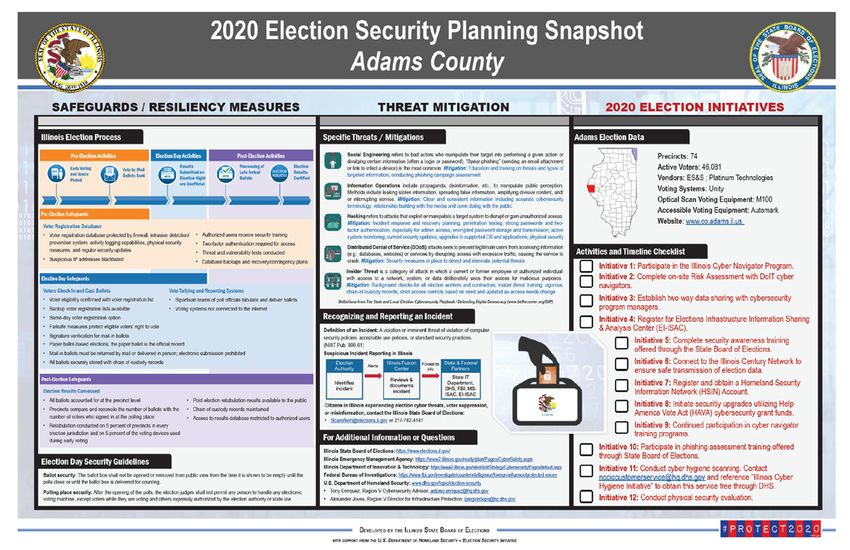
The Election Security Planning Snapshot posters highlight          CISA has identified incident response and reporting as a
the measures state and local election authorities are              capability gap among state and local election authorities.
taking and plan to implement to strengthen the security            CISA also recognizes that polling places, election offices, and
of their election systems. CISA collaborates with state            storage facilities are vulnerable to a variety of threats. The
election officials to customize the Snapshot posters for           Election Day Emergency Response Guide posters address
each state and locality. The Snapshot posters promote              this capability gap by providing local election personnel with
election security initiatives and bolster confidence among         a simple yet eye-catching tool for determining what steps to
voters, lawmakers, and election personnel in the security          take when an incident occurs and who to report the incident
of their jurisdiction’s elections. The Snapshot posters help       to. CISA works with state election officials to determine which
cover the Last Mile by demonstrating to localities that            response steps and contacts are most appropriate for their
election security is a top priority for state governments and      jurisdictions.
CISA, and by encouraging localities to leverage the free
resources CISA offers.

                                                                #PROTECT2020 / CISA #PROTECT2020 “THE LAST MILE” PRODUCTS
06
                                              State and Local Election
Who We                                        Authorities

Support                                       State and Local Authorities: Elections are organized
                                              and executed by citizens at all levels of government
                                              from a State’s Chief Election Official to precinct poll
The election community is made up of a        workers. These are the operators on the front lines of
variety of independent actors. CISA must      drafting election security policies and overseeing their
constantly work to ensure stakeholder buy-    implementation.
in and to build trust within the community.
Without each of these groups’ voluntary       Coordinating Bodies: Stakeholders in the election
engagement, CISA could not work to            community often voluntarily come together in formal
promote election security.                    organizations to share information and best practices
                                              and to serve as a central communication point between
                                              the Federal Government and individual actors.

SPOTLIGHT:
COORDINATING BODIES                           Election Technology
                                              Vendors
                                              Elections take place on technology and infrastructure
                                              developed, deployed, and sometimes operated by
                                              private sector companies. These companies play
                                              a critical role in ensuring the overall security of the
                                              election system.
The Government Coordinating
Council (GCC) & Sector
Coordinating Council (SCC)
                                              Campaigns and
                                              Political Infrastructure
The GCC and SCC are made up of
state and local election officials and        Campaigns: The security practices of candidates
                                              and staffers can affect how easily an adversary can
private sector election stakeholders,
                                              penetrate their networks and attempt to disrupt U.S.
respectively. They are the primary
                                              elections through leaked materials.
coordinating bodies through which
their respective stakeholder groups           National Political Party Committees: Partisan
and the Federal Government                    organizations are potential targets for adversaries
collaborate to address the entire             searching for sensitive political information. They also
range of security and resilience              provide resources to assist campaigns in strengthening
efforts and policies in the subsector.        their cybersecurity posture.

                                              American Electorate
                                              Voting citizens are the lifeblood of the election system
                                              and the ultimate targets of any attempts to interfere in
                                              the elections process.
#PROTECT2020 / WHO WE PROTECT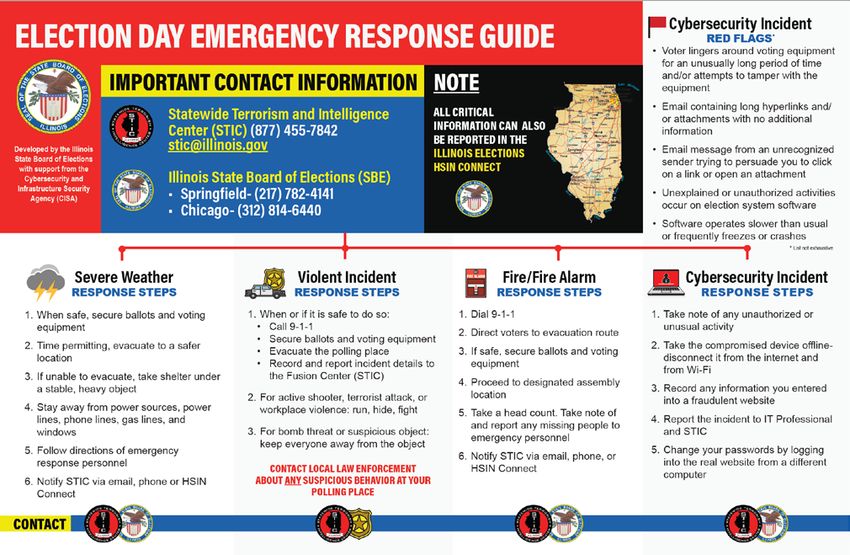
07
                                                  Federal Partners
  Who We                                          Federal Partners: A number of federal agencies
                                                  play a role in election security. Some have a direct

  Partner With                                    election-related mandate while others have adapted
                                                  from their traditional roles to support election
                                                  security efforts. Through coordination across the
                                                  federal interagency, election security stakeholders
                                                  are provided the best possible intelligence,
                                                  information, and security services.

                                                  Non-Governmental
                                                  Organizations (NGOs)
                                                  NGOs work with stakeholders at all levels to
                                                  increase the election community’s resilience to
                                                  disruption.
SPOTLIGHT:
EI-ISAC
                                                  Think Tanks & Academia
                                                  Academic institutions, think tanks, and private
                                                  researchers play a pivotal role in creating and
                                                  promoting best practices for election security.

                                                  Media & Social Media
The Elections Infrastructure                      Companies
Information Sharing and Analysis
                                                  Traditional media outlets and social media platforms
Center (EI-ISAC)
                                                  are critical nodes for reporting on elections and can
                                                  be abused by malign actors to manipulate or erode
The EI-ISAC facilitates the sharing of cyber
                                                  confidence in the electoral system.
and critical election infrastructure data among
members and others as appropriate, in order
to promote communication regarding election-
related disinformation and cyber and election
infrastructure readiness and response efforts.
                                                  Cybersecurity Firms
                                                  Private sector firms are often responsible for
                                                  providing election officials with risk consultations,
                                                  threat monitoring services, and incident response
                                                  teams.

                                                             #PROTECT2020 / WHO WE PAR TNER WITH
08
CISA Lines of Effort
CISA’s #Protect2020 campaign supports the election infrastructure community, campaigns, political infrastructure
stakeholders, and the American electorate, with a combination of technical expertise and relationship building to ensure
they have a solid understanding of the risks they face and access to the resources they need to manage them. To
aid this effort, CISA engages with public and private sector threat intelligence sources to identify risks to the election
community. CISA’s #Protect2020 lines of effort work toward making the 2020 elections the safest and most secure in our
Nation’s history and toward building a sturdy and sustainable framework for defending all future elections.

This Strategic Plan is organized by the lines of effort shown above. For each line of effort, CISA has defined associated
objectives, key actions, and measures of success.
Elections Infrastructure

Campaigns & Political Infrastructure
                                VOTE
              VOTE

                                                                                 SAFE &
The American Electorate                                                          SECURE
                                                                                 ELECTIONS

Warning and Response

#PROTECT2020 / CISA LINES OF EFFORT
Line of Effort 1: 09
Election Infrastructure
Ensuring state and local election officials and private sector partners have the information they need to assess and
manage risks to their networks. CISA assists with efforts to secure election infrastructure, which includes storage
facilities, polling places, and centralized vote tabulation locations used to support the election process. Additionally,
CISA assists with information and communications technology to include voter registration databases, voting machines,
and other systems to manage the election process and to report and display results on behalf of state and local
governments.
Objectives
1 Build Stakeholder Capacity
1.1 Promote security practices among key audiences
1.2 Advise and coordinate the creation of incident response & communications plans
1.3 Train stakeholders and exercise security practices
2 Provide Assessments and Services
2.1 Coordinate interactions between deployed cyber and physical advisors, and election stakeholders
2.2 Promote the use of CISA’s no-cost, voluntary security services & assessments
2.3 Provide Incident Response capabilities, as necessary, by request
3 Facilitate Information Sharing
3.1 Convene and interface with stakeholder bodies
3.2 Expand reach among election community
3.3 Promote situational awareness among stakeholders
#PROTECT2020 / LINE OF EFFORT 1: ELECTION INFRASTRUCTURE10 Line of Effort 1
Election Infrastructure
Objectives SPOTLIGHT:
ELECTION INFRASTRUCTURE
1. Build Stakeholder Capacity SUBSECTOR COORDINATING
CISA focuses on making sure that election infrastructure stakeholders
COUNCIL (EISCC) ELECTION
have the skills and information necessary to assess and manage the SECURITY GUIDE
risks they face. State and local officials, volunteer poll workers, and Election system vendors and their
election system vendors are responsible for administering safe and third-party providers establish the
secure elections. However, they face threats from foreign nation- technological foundation of American
states and criminal organizations. CISA serves to provide them the democracy and are therefore integral
resources and support necessary to build their capacity to deal with to CISA’s efforts to secure election
these outside adversaries. infrastructure. However, many private
sector companies that EISCC members
partner with lack the resources and the
KEY ACTIONS know-how to meet the security standards
expected by the voting public. The
• 1.1 Promote security practices among key audiences EISCC Election Security Guide provides
CISA partners with state and local election officials and their election technology providers a tool
private sector partners to create and distribute customized for promoting the measures they take
products that aim to close the disparity in resources and to secure their products, services, and
capabilities among election infrastructure stakeholders. infrastructure, as well as for providing
guidance to their third-party providers
• 1.2 Advise and coordinate the creation of incident for contributing to those efforts. The
response and communications plans Guide also details incident response and
CISA works to produce standardized incident response and reporting steps for their own employees
crisis communications plans and encourages states to adopt and and third-party providers to follow, as well
practice them prior to election day. as CISA resources they should leverage.
• 1.3 Train stakeholders and exercise security
practices
CISA offers trainings and facilitates exercises at the local, state, and national levels for the election community. The
exercises simulate likely election scenarios, such as disinformation campaigns and cyber events, while highlighting
best practices and allowing actors to develop and practice their response plans. The exercises serve to reinforce
existing communication channels and forge new ones to be used in the event of a crisis.
#PROTECT2020 / LINE OF EFFORT 1: ELECTION INFRASTRUCTURE11
2. Provide Assessments and
Services
CISA engages with election infrastructure stakeholders continually to give them
the technical assistance necessary to monitor and secure their networks and
provides them with federal support as they confront cyber threats.
KEY ACTIONS
• 2.1 Coordinate interactions between deployed cyber and
physical advisors, and election stakeholders
CISA deploys cybersecurity advisors (CSAs) and protective security
advisors (PSAs) to all regions of the country. These advisors engage
“
stakeholders and assist with creating their risk profiles, using federal
resources, and implementing best security practices.
• 2.2 Promote the use of CISA’s no-cost, voluntary security As the threat environment
services & assessments evolves, DHS will continue to
CISA maintains a full catalog of no-cost physical and cybersecurity work with federal agencies,
services. These services inform CISA’s understanding of risk to state and local partners,
different communities. CISA has specifically promoted services such and private sector entities to
as vulnerability scanning, physical security assessments, remote enhance our understanding
penetration testing, and Phishing Campaign Assessments for the of the threat; and to make
election community. Through these services, CISA helps stakeholders essential physical and
assess their risk profile and works with them to develop individualized cybersecurity tools and
plans for increasing security. resources available to the
• 2.3 Provide incident response capabilities, as necessary, public and private sectors
by request to increase security and
resiliency.
When cyber incidents occur, CISA offers assistance by request to
”
potentially impacted entities, analyzes the impact across critical
infrastructure, and coordinates the national response to significant cyber Bob Kolasky
incidents. CISA works in close coordination with other agencies with Director of National Risk Management
complementary cyber missions, as well as private sector and other non- Center
federal owners and operators of critical infrastructure, to ensure greater
unity of effort and a whole-of-nation response to cyber incidents.
#PROTECT2020 / LINE OF EFFORT 1: ELECTION INFRASTRUCTURE12
SPOTLIGHT:
3. Facilitate Information Sharing GCC “READY FOR 2020”
PRIORITIES
The election infrastructure community relies on up-to-date threat reporting
and best practice sharing to secure America’s elections. CISA facilitates The Election Infrastructure
this two-way process by coordinating up-to-date intelligence sharing Government Coordinating Council
between the Federal Government and private and local partners. (EI-GCC) identified 5 priorities to
support the Election Infrastructure
KEY ACTIONS Sector Specific Plan ahead of the
2020 elections:
• 3.1 Convene and interface with stakeholder bodies • Increase engagement and support
to local-level election officials.
CISA is the sector-specific agency for the election infrastructure
subsector and takes the lead in managing to guide priorities across • Increase awareness of risks
the subsector and promote effective communication among state and associated with inconsistent and
local officials, industry experts, and the Federal Government. insufficient resources.
• 3.2 Expand reach among the election community • Mature risk initiatives with
Sector-Specific Agencies (SSAs)
CISA funds the EI-ISAC to enable rapid communication, information through coordination with Sector
sharing, and situational awareness across the community. CISA has Coordinating Councils.
prioritized encouraging localities to sign up for the EI-ISAC.
• Apply lessons learned from
• 3.3 Promote situational awareness among stakeholders 2018 to review and refine the
communications mechanisms and
CISA and the EI-ISAC provide a variety of situational awareness
content supporting the subsector.
capabilities, including hosting a platform prior to, during, and after
state and national elections for election stakeholders to swiftly • Drive improved security practices
identify, react to, and share real-time events and intelligence. in future election infrastructure.
SUCCESS INDICATORS
• Advance election technology security from voter registration
databases to vote casting devices and ballot tabulation processes.
• Prepare election infrastructure stakeholders to perform their duties
securely and manage incident response scenarios.
• Encourage more secure publicly facing platforms that display voting
information and report election night results.
#PROTECT2020 / LINE OF EFFORT 1: ELECTION INFRASTRUCTURELine of Effort 2: 13
Campaigns & Political Infrastructure
To provide political campaigns and partisan organizations with access to the information they need to assess and
manage risks. CISA assists efforts to secure political infrastructure and critical communications systems.
VOTE
V O T E
Objectives
4 Build Partisan Stakeholder Capacity
4.1 Foster the creation of an engaged stakeholder community
5 Provide Assessments and Services to Partisan Stakeholders
5.1 Offer CISA no-cost, voluntary services & assessments
6 Facilitate Information Sharing with Partisan Stakeholders
6.1 Brief campaigns on the latest threat intelligence
6.2 Meet with national-level campaigns and party committees
#PROTECT2020 / LINE OF EFFOR T 2: CAMPAIGNS & POLITICAL INFRAS TRUCTURE14 Line of Effort 2
Campaigns &
Political Infrastructure
Objectives SPOTLIGHT:
CAMPAIGN CHECKLIST
4. Build Partisan Stakeholder
In 2018, CISA built a campaign checklist
Capacity to circulate to candidates and their staff to
Traditionally, campaigns and national political parties are hyper assist them in implementing cybersecurity
focused on raising money, amplifying political messages, and turning best practices in order to protect them
out voters, but 2016 showed that they are vulnerable stakeholders in against malicious actors.
the election community. CISA works with them to build their capacities
and increase their resilience.
KEY ACTIONS
• 4.1 Foster the creation of an engaged stakeholder
community
CISA works with political infrastructure stakeholders to create
a culture of active information sharing and collaborative best
practice sharing.
5. Provide Assessments and
Services to Partisan Stakeholders
Campaigns and political parties host sensitive voter information, private
communications, and privileged policy proposals on a wide array of
networks and devices. CISA works with them to identify and mitigate
vulnerabilities within these information technology systems.
KEY ACTIONS
• 5.1 Offer CISA no-cost, voluntary services and assessments
CISA offers campaign staff, candidates, and national party committees the same services and assessments available
to election infrastructure stakeholders. However, due to its critical infrastructure status, any services or assessments
requested by election infrastructure stakeholders would receive priority over campaigns and political infrastructure
requests. CISA also provides incident response capabilities, by request.
#PROTECT2020 / LINE OF EFFOR T 2: CAMPAIGNS & POLITICAL INFRAS TRUCTUREVOTE
VOTE
15
6. Facilitate Information Sharing with Partisan Stakeholders
In a heated political contest, information sharing between partisan entities is difficult. CISA works with campaigns and
political parties to provide them real-time threat and vulnerability information from the Federal Government. Even though
campaign and partisan actors are not designated as elections infrastructure, CISA offers cybersecurity assistance to
these entities, ensuring that the same assistance is offered to all similarly-situated entities and is not offered for the
purpose of conferring any political advantage or disadvantage on those entities.
KEY ACTIONS
• 6.1 Brief campaigns on the latest threat intelligence
CISA collaborates with the FBI and the intelligence community to offer campaigns joint briefings on potential threats
to their systems or active hostile campaigns.
• 6.2 Meet with national-level campaigns and party committees
CISA holds introductory meetings with national-level political campaigns and partisan organizations to provide
information on CISA services and points of contact for incident response and other needs.
SUCCESS INDICATORS
• Increase engagement between partisan actors and
the Federal Government.
• Promote a greater emphasis on cybersecurity and
risk mitigation throughout the political infrastructure
community.
#PROTECT2020 / LINE OF EFFOR T 2: CAMPAIGNS & POLITICAL INFRAS TRUCTURE16
” We recognize the fundamental link
between public trust in our election
infrastructure and the confidence
the American public places in basic
democratic functions. Ensuring the
security of our electoral process is
a vital national interest and one of
”
our highest priorities at DHS.
Bob Kolasky
Director of National Risk Management Center
SPOTLIGHT:
COUNTERING FOREIGN INFLUENCE
TASK FORCE (CFITF)
In early 2018, former Secretary Kirstjen Nielsen established
a Countering Foreign Influence Task Force (CFITF) within the
Department of Homeland Security. The Task Force is now
formally a part of CISA. It works in close coordination with the
FBI Foreign Influence Task Force, the government lead on
foreign interference.
CFITF is charged with helping CISA’s leadership understand
the scope and scale of this challenge; identifying the policy
options available to the government; and working with social
media companies, academia, international partners and across
the executive branch on a variety of projects to build resilience
against foreign influence operations.
Based on its governing authorities, CISA plays a significant role
in enabling stakeholders to make effective risk management
decisions. Applying that role to the foreign influence context,
the Task Force supports election stakeholders by helping them
to understand the scope and scale of the challenge and by
enabling them to take actions they deem appropriate. CFITF
and the FBI Foreign Influence Task Force coordinate closely on
public outreach and education efforts.Line of Effort 3: 17
The American Electorate
Americans regularly believe, engage with, and share content online and through their personal networks, that has been
designed by foreign adversaries to undermine U.S. democratic institutions, disrupt U.S. markets, and sow societal
discord. CISA aims to build societal resilience to the persuasion and dissuasion created or amplified by foreign influence
activities, including disinformation and misinformation, to ensure the integrity and autonomy of the American electorate.
Objectives
7 Understand and Evaluate the Threat
7.1 Partner With Subject Matter Experts
7.2 Partner With Federal Counterparts
8 Build Public Awareness & Educate the Public on
Best Practices
8.1 Develop Informational Products
8.2 Engage Trusted Voices
9 Facilitate Information Sharing
9.1 Expand the Reporting Community
9.2 Host Domestic and International Disinformation Switchboard
#PROTECT2020 / LINE OF EFFOR T 3: THE AMERICAN ELECTORATE18 Line of Effort 3 13
11
The American Electorate
Objectives SPOTLIGHT:
THE WAR ON PINEAPPLE
7. Understand and Evaluate the
In 2019, CISA launched a public
Threat awareness campaign to educate the
electorate about ways foreign actors may
In order to come up with policy recommendations and adequately try to interfere with democratic processes
support stakeholder populations, CISA needs to understand the nature by sowing discord and pitting American
and scope of the threat and common tactics used in foreign influence against American. The first product of this
operations. Rather than starting from the drawing board, CISA engages initiative was an infographic taking an
the expertise of external and federal partners who have studied or innocuous example — whether pineapple
tracked information operations beyond the election sphere, as well as belongs on pizza — and showing a
regional and national security experts familiar with the tactics of U.S. potential strategy a foreign actor could use
adversaries active in the disinformation space. to spread divisiveness on the issue.
CYBERSECURITY AND INFRASTRUCTURE SECURITY AGENCY
July 2019
KEY ACTIONS THE WAR ON PINEAPPLE:
Understanding Foreign
Interference in 5 Steps
• 7.1 Partner with Subject Matter Experts (SMEs) To date, we have no evidence of Russia (or any nation) actively carrying out information operations against pizza toppings.
This infographic is an ILLUSTRATION of how information operations have been carried out in the past to exploit divisions in
the United States.
1. TARGETING DIVISIVE ISSUES
CISA engages with SMEs, including researchers, academics, Foreign influencers are constantly on
the lookout for opportunities to inflame
hot button issues in the United States.
American Opinion is Split:
Does Pineapple Belong on Pizza?
think tanks, and marketing experts, to better understand the threat
They don’t do this to win arguments; An A-list celebrity announced
they want to see us divided. their dislike of pineapples on pizza,
prompting a new survey. No matter
how you slice it, Americans disagree
on the fruit topping.
and how to develop messaging to mitigate the impact of foreign 2. MOVING ACCOUNTS INTO PLACE
influence operations.
Building social media accounts with a large
following takes time and resources, so accounts
are often renamed and reused. Multiple
accounts in a conversation are often controlled
by the same user.
• 7.2 Partner with federal counterparts
Pro Tip: Look at an account’s activity history.
Genuine accounts usually have several interests
Begin with Change to Change to
and post content from a variety of sources. Username: Berliner123 Username: PizzaPro Username: ProfPizzaUSA
3. AMPLIFYING AND DISTORTING THE CONVERSATION
Americans often engage in healthy debate on
Being anti-pineapple
CISA works in close collaboration with the FBI’s Foreign Influence
any number of topics. Foreign influencers try to
is un-American!
pollute those debates with bad information and
make our positions more extreme by picking Millennials are
fights, or “trolling” people online. ruining pizza!
Keep your pineapple
Task Force, the State Department’s Global Engagement Center,
Pro Tip: Trolls try to make people mad, that’s it. If off my pizza!
it seems like an account is only aiming to raise
What’s wrong with
tensions, think about whether it’s worth engaging.
plain old cheese?
the Department of Defense, and intelligence community to
4. MAKING THE MAINSTREAM
Foreign influencers “fan the flames” by creating
controversy, amplifying the most extreme version
PINEAPPLE
recognize, understand, and help manage the threat of foreign
of arguments on both sides of an issue. These are Being PIZZA
shared online as legitimate information sources. anti-pineapple
is un-American! CONTROVERSY
Sometimes controversies make it into the ROCKS THE US!
mainstream and create division among
Americans. This is a foreign influencer striking
influence on the American people.
gold! Their meddling is legitimized and carried
to larger audiences.
5. TAKING THE CONVERSATION INTO THE REAL WORLD
In the past, Kremlin agents have organized or funded
protests to further stoke divisions among Americans. They
JOIN YOUR FELLOW PIZZA
“
create event pages and ask followers to come out. LOVERS AT THE TOWN CENTER Pizza is for
Pizza is for
What started in cyberspace can turn very real, with Pepperoni! TO MARCH FOR PINEAPPLE! Pineapple!
Americans shouting down Americans because of Yes!
Yes Maybe No
foreign interference. I’ll be Currently Will not
there! undecided be there
Pro Tip: Many social media companies have increased
transparency for organization accounts. Know who is
inviting you and why.
For more information, please visit the #Protect2020 website at https://www.dhs.gov/cisa/protect2020.
One of the highest-profile threats we face today
is attempts by nation-state actors to maliciously
”
CHRISTOPHER C. KREBS
interfere in our democratic elections. Director, Cybersecurity and Infrastructure
Security Agency (CISA)
#PROTECT2020/ LINE OF EFFOR T 3: THE AMERICAN ELECTORATE19
Build Public Awareness & Educate the Public on
Best Practices
8. Build Public Awareness & Educate the Public on Best
Practices
Findings from academics and researchers show that much of the manipulative power of disinformation can be
undermined through awareness. As the public becomes more aware of the tactics and procedures used to covertly
manipulate their opinion forming, they become more resistant to them. For this reason, CISA prioritized building
public awareness and providing educational materials on best practices as a key strategy in its efforts to foster public
resilience to disinformation.
KEY ACTIONS
• 8.1 Develop informational products
CISA is developing a number of products to share with the public and influencer organizations. These products
aim to build public awareness about the disinformation threat and educate the public on ways to mitigate it. In
addition, CISA promotes third-party products that align with its mission statement.
• 8.2 Engage trusted voices
CISA engages “trusted voices,” influential groups such as the American Association of Retired Persons (AARP)
and the National Association for the Advancement of Colored People (NAACP), to amplify resilience messaging
and reach a broader stakeholder base.
#PROTECT2020 / LINE OF EFFOR T 3: THE AMERICAN ELECTORATE20
9. Facilitate Information Sharing
CISA coordinates the sharing of information between the Federal Government, private sector, and state election officials
to make sure that the American electorate has access to accurate and up-to-date information on all aspects of the
election process.
KEY ACTIONS
• 9.1 Expand the Reporting Community
CISA will build upon 2018 midterm Election Information
Sharing efforts by expanding the number of entities that
can report incidents to CISA and expanding the number
of platforms with agreements to receive reporting from
CISA.
• 9.2 Host Domestic and International
Disinformation Switchboard
Following its success in the 2018 U.S. midterm
elections, CISA again plans to operate as a
switchboard for routing disinformation concerns of state
SUCCESS INDICATORS and local election officials to appropriate social media
platforms and law enforcement agencies. Additionally,
• Limit electorate’s exposure to foreign CISA plans to share information and best practices
disinformation on social media platforms. with international partners who are experiencing similar
• Mitigate the effect of foreign disinformation on concerns within their own elections.
targeted audiences.
“ We can patch cyber vulnerabilities and defend our
databases, but if we don’t also prepare the American
people for the onslaught of foreign interference they
BRIAN SCULLY
Countering Foreign Influence Lead,
Election Security Initiative
”
face daily, then we will have failed.
#PROTECT2020/ LINE OF EFFOR T 3: THE AMERICAN ELECTORATELine of Effort 4: 21
Warning and Response
Warning and response reinforces CISA’s three previous lines of effort, capacity building and support for
election officials, campaigns, and the American electorate. It aims to provide accurate and actionable threat
intelligence to the election community.
Objectives
10 Partner with the Private Sector
10.1 Improve warning and response by facilitating cooperation between vendors, election
officials, and private sector experts
10.2 Engage the cybersecurity community
11 Cooperate Across the Federal Interagency
11.1 Foster a sense of community and support common understanding across the federal
interagency on election threats
11.2 Coordinate with the intelligence community and law enforcement to enrich their
understanding of cybersecurity incidents and identify trends impacting election infrastructure
12 Monitor Threat Activity
12.1 Identify emerging threats using CISA, EI-ISAC, and federal partner & private sector
capabilities
12.2 Synchronize information from a variety of sources to understand the full threat picture
13 Facilitate Rapid Information Sharing with Elections
Infrastructure Stakeholders
13.1 Share cyber threat intelligence, context on cyber incident trends, and mitigation advice with
elections infrastructure owners, operators, and vendors in a rapid, actionable manner
13.2 Facilitate provision of feedback on shared threat information to improve the intelligence
cycle and ensure mitigation advice is actionable
#PROTECT2020 / LINE OF EFFORT 4:WARNING AND RESPONSE22 Line of Effort 4
Warning and Response
Objectives
10. Partner with the Private Sector
Many private sector firms conduct research and perform assessments relevant to election security. In order to have
access to the most up-to-date information and avoid duplicating efforts, CISA partners with recognized security
experts from across the private sector to understand the threats and provide warning and mitigation actions to election
stakeholders.
KEY ACTIONS
• 10.1 Improve warning and response by facilitating cooperation between vendors, election
officials, and private sector experts
CISA coordinates between election technology vendors, state and local officials, and private cyber threat
intelligence firms to develop indicators and warnings.
• 10.2 Engage the cybersecurity community
CISA works with cybersecurity communities to identify ongoing attacks and coordinate response measures.
11. Cooperate Across the Federal Interagency
As with previous lines of effort, to develop a warning and response protocol requires cooperation with federal
counterparts and information sharing across the intelligence community to stay up-to-date on the most urgent threats
and vulnerabilities across the election community.
KEY ACTIONS
• 11.1 Foster a sense of community and support common understanding across the federal
interagency on election threats
CISA advocates creating a joint Sense of the Community Memorandum to consolidate and highlight current
knowledge on election threat intelligence.
• 11.2 Coordinate with the intelligence community and law enforcement to enrich their
understanding of cybersecurity incidents and identify trends impacting election
infrastructure
CISA works closely with interagency partners to ensure the government has an accurate and complete picture of
the threat landscape from which to engage the election community.
#PROTECT2020 / LINE OF EFFORT 4: WARNING AND RESPONSE23
12. Monitor Threat Activity
CISA relies heavily on partner capabilities, including the intelligence community and EI-ISAC, to track and monitor
emerging threats to elections.
KEY ACTIONS
• 12.1 Identify emerging threats using CISA, EI-ISAC, and federal partner & private sector
capabilities
CISA uses passive measures to monitor relevant networks to spot malign activity and reveal key trends.
• 12.2 Synchronize information from a variety of sources to understand the full threat picture
CISA reviews and analyzes third-party vendor information, unclassified open source reporting, and threat information
received from stakeholders to understand the scope of malicious cyber activity and foreign influence activities
targeting elections.
13. Facilitate Rapid Information Sharing with Elections
Infrastructure Stakeholders
CISA analyzes various information sources to develop a continuously updated picture of the threats to election
infrastructure and provides information to elections stakeholders in order to facilitate risk mitigation activities.
KEY ACTIONS
• 13.1 Share cyber threat intelligence, context on cyber incident trends, and mitigation advice
with elections infrastructure owners, operators, and vendors in a rapid, actionable manner
CISA works to ensure relevant and actionable threat information is declassified when necessary and shared with the
appropriate network owners and operators for cyber defense purposes. CISA also develops and publishes mitigation
advice when appropriate and shares it with elections stakeholders as rapidly as possible.
• 13.2 Facilitate provision of feedback on shared threat information to improve the intelligence
cycle and ensure mitigation advice is actionable
CISA will ensure that feedback from election infrastructure stakeholders is shared with interagency partners to
facilitate improvements for network defense purposes.
SUCCESS • Identify potential and realized threats to the election community.
• Improve sharing of timely and actionable threat information with election community.
INDICATORS
• Improve processes and mechanisms for information sharing across federal entities.
#PROTECT2020/ LINE OF EFFORT 4: WARNING AND RESPONSE24 Measuring and Achieving Results The Federal Government has made significant improvements in its efforts to promote safe and secure elections since the Secretary of Homeland Security designated elections infrastructure as a critical infrastructure subsector on January 6, 2017. Initially, there was much confusion over what the designation meant, and stakeholders criticized DHS for not involving them in this decision, for not explaining it effectively, and for continuing to describe threats to election infrastructure without engaging the states. CISA recognized a need to better serve this community and surged resources to establish the Election Task Force and build critical infrastructure governance bodies. CISA’s mission for the 2018 midterm elections focused on proactively building trust with the election community, elevating security of election infrastructure, and facilitating information sharing across stakeholders, including social media and technology companies, law enforcement and intelligence, and state and local election officials. In the lead up to the 2020 elections, CISA will continue the prioritization of support to election administrators and vendors and will continue to build relationships to support and advise partisan organizations. It aims to enhance awareness of and participation by the public and to partner with third-party organizations and subject matter experts to help develop and amplify effective public messaging. Additionally, CISA will work to enhance federal, private, and ISAC operational alliance to improve rapid bi-directional information sharing and expand engagements with threat intelligence firms and the intelligence community to ensure that the election community has access to accurate and actionable threat analysis. #PROTECT2020/MEASURING AND ACHIEVING RESULT S
25
Conclusion
#Protect2020 is more than just a slogan; it is a pledge among election security stakeholders—including the Federal
cybersecurity community, state and local election officials, vendors, political campaigns, and others—to work together
towards a common vision of a safe and secure election trusted by all Americans in 2020. This is an ambitious
undertaking. The threat landscape is constantly evolving, and dedicated, malicious actors with virtually unlimited
resources will always be able to penetrate some aspect of American networks or to spread disinformation. In the field
of election security, it is not possible to identify all system vulnerabilities and defend them in all scenarios. However,
it is CISA’s mission to elevate the security posture of our Nation’s election systems to make these intrusions more
difficult, identify them when they occur, and ensure that they do not affect the overall outcome of the election. CISA
cannot do this alone.
Ultimately, the security of America’s elections rests with the state and local officials who administer them, the private
sector vendors who create the technology that makes them possible, the candidates and campaigns who participate
in them, and ultimately the electorate who show up to the polls on election day. Securing American elections requires
hard work, resources, and persistence among all of these critical actors, and no one entity can do it alone. To this
end, CISA’s #Protect2020 strategy is all about building strong, resilient, and interconnected stakeholder communities,
outfitted with the required capacities, technical assistance, and information necessary to resist adversaries while
trusting that the DHS CISA organization will be there to support them in every way that they can.

                                                                                            #PROTECT2020/CONCLUSION
26 Appendix A: Election Security Deliverables
Election Security Planning Snapshot – “The Last Mile” Poster
2020 Election Security Planning Snapshot
Adams County
SAFEGUARDS / RESILIENCY MEASURES THREAT MITIGATION 2020 ELECTION INITIATIVES
Illinois Election Process Specific Threats / Mitigations Adams Election Data
Social Engineering refers to bad actors who manipulate their target into performing a given action or Precincts: 74
divulging certain information (often a login or password). “Spear-phishing” (sending an email attachment
or link to infect a device) is the most common. Mitigation: Education and training on threats and types of Active Voters: 46,081
targeted information; conducting phishing campaign assessment
Vendors: ES&S ; Platinum Technologies
Information Operations include propaganda, disinformation, etc., to manipulate public perception.
Methods include leaking stolen information, spreading false information, amplifying divisive content, and/ Voting Systems: Unity
or interrupting service. Mitigation: Clear and consistent information including accurate cybersecurity Optical Scan Voting Equipment: M100
terminology; relationship building with the media and open dialog with the public
Pre-Election Safeguards
Accessible Voting Equipment: Automark
Hacking refers to attacks that exploit or manipulate a target system to disrupt or gain unauthorized access.
Mitigation: Incident response and recovery planning; penetration testing; strong passwords and two- Website: www.co.adams.il.us
Voter Registration Database
factor authentication, especially for admin access; encrypted password storage and transmission; active
• Voter registration database protected by firewall, intrusion detection/ • Authorized users receive security training system monitoring; current security updates; upgrades to supported OS and applications; physical security
prevention system, activity logging capabilities, physical security • Two-factor authentication required for access
Distributed Denial of Service (DDoS) attacks seek to prevent legitimate users from accessing information
measures, and regular security updates • Threat and vulnerability tests conducted Activities and Timeline Checklist
(e.g., databases, websites) or services by disrupting access with excessive traffic, causing the service to
• Suspicious IP addresses blacklisted • Database backups and recovery/contingency plans crash. Mitigation: Security measures in place to detect and eliminate potential threats
Initiative 1: Participate in the Illinois Cyber Navigator Program.
Insider Threat is a category of attack in which a current or former employee or authorized individual
Election Day Safeguards with access to a network, system, or data deliberately uses their access for malicious purposes. Initiative 2: Complete on-site Risk Assessment with DoIT cyber
Mitigation: Background checks for all election workers and contractors; insider threat training; vigorous navigators.
Voters Check In and Cast Ballots Vote Tallying and Reporting Systems chain-of-custody records; strict access controls based on need and updated as access needs change
• Voter eligibility confirmed with voter registration list • Bipartisan teams of poll officials tabulate and deliver ballots Definitions from The State and Local Election Cybersecurity Playbook / Defending Digital Democracy (www.belfercenter.org/D3P)
Initiative 3: Establish two-way data sharing with cybersecurity
• Backup voter registration lists available • Voting systems not connected to the internet program managers.
• Same-day voter registration option Recognizing and Reporting an Incident Initiative 4: Register for Elections Infrastructure Information Sharing
• Failsafe measures protect eligible voters’ right to vote & Analysis Center (EI-ISAC).
Definition of an Incident: A violation or imminent threat of violation of computer
• Signature verification for mail-in ballots security policies, acceptable use policies, or standard security practices
• Paper ballot-based elections; the paper ballot is the official record (NIST Pub. 800-61)
Initiative 5: Complete security awareness training
• Mail-in ballots must be returned by mail or delivered in person; electronic submission prohibited Suspicious Incident Reporting in Illinois
offered through the State Board of Elections.
• All ballots securely stored with chain of custody records Initiative 6: Connect to the Illinois Century Network to
ensure safe transmission of election data.
Post-Election Safeguards
Initiative 7: Register and obtain a Homeland Security
Election Results Canvassed Information Network (HSIN) Account.
• All ballots accounted for at the precinct level • Post-election retabulation results available to the public
Citizens in Illinois experiencing election cyber threats, voter suppression, Initiative 8: Initiate securitiy upgrades utilizing Help
• Precincts compare and reconcile the number of ballots with the • Chain of custody records maintained
or misinformation, contact the Illinois State Board of Elections: America Vote Act (HAVA) cybersecurity grant funds.
number of voters who signed in at the polling place • Access to results database restricted to authorized users • ScamAlert@elections.il.gov or 217-782-4141
• Retabulation conducted on 5 percent of precincts in every Initiative 9: Continued participation in cyber navigator
election jurisdiction and on 5 percent of the voting devices used training programs.
during early voting For Additional Information or Questions
Illinois State Board of Elections: https://www.elections.il.gov/
Initiative 10: Participate in phishing assessment training offered
Illinois Emergency Management Agency: https://www2.illinois.gov/ready/plan/Pages/CyberSafety.aspx through State Board of Elections.
Election Day Security Guidelines Illinois Department of Innovation & Technology: https://www2.illinois.gov/sites/doit/Strategy/Cybersecurity/Pages/default.aspx Initiative 11: Conduct cyber hygiene scanning. Contact
Ballot security: The ballot box shall not be opened or removed from public view from the time it is shown to be empty until the Federal Bureau of Investigations: https://www.fbi.gov/investigate/counterintelligence/foreign-influence/protected voices
polls close or until the ballot box is delivered for counting.
ncciccustomerservice@hq.dhs.gov and reference “Illinois Cyber
U.S. Department of Homeland Security: www.dhs.gov/topic/election-security
• Tony Enriquez, Region V Cybersecurity Advisor, antonio.enriquez@hq.dhs.gov
Hygiene Initiative” to obtain this service free through DHS.
Polling place security: After the opening of the polls, the election judges shall not permit any person to handle any electronic
voting machine, except voters while they are voting and others expressly authorized by the election authority or state law. • Alexander Joves, Region V Director for Infrastructure Protection, ipregion5ops@hq.dhs.gov Initiative 12: Conduct physical security evaluation.
DEVELOPED BY THE ILLINOIS STATE BOARD OF ELECTIONS
WITH SUPPORT FROM THE U.S. DEPARTMENT OF HOMELAND SECURITY – ELECTION SECURITY INITIATIVE
#PROTECT2020/APPENDIX AElection Day Emergency Response Guide– “EDERG” Poster 27
Cybersecurity Incident
ELECTION DAY EMERGENCY RESPONSE GUIDE RED FLAGS*
• Voter lingers around voting equipment
for an unusually long period of time
and/or attempts to tamper with the
IMPORTANT CONTACT INFORMATION NOTE equipment
• Email containing long hyperlinks and/
Statewide Terrorism and Intelligence ALL CRITICAL or attachments with no additional
Center (STIC) (877) 455-7842 INFORMATION CAN ALSO information
BE REPORTED IN THE
Developed by the Illinois stic@illinois.gov • Email message from an unrecognized
State Board of Elections
ILLINOIS ELECTIONS
sender trying to persuade you to click
with support from the HSIN CONNECT
Cybersecurity and Illinois State Board of Elections (SBE) on a link or open an attachment
Infrastructure Security
Agency (CISA) • Springfield- (217) 782-4141 • Unexplained or unauthorized activities
occur on election system software
• Chicago- (312) 814-6440
• Software operates slower than usual
or frequently freezes or crashes
* List not exhaustive
Severe Weather Violent Incident Fire/Fire Alarm Cybersecurity Incident
RESPONSE STEPS RESPONSE STEPS RESPONSE STEPS RESPONSE STEPS
1. When safe, secure ballots and voting 1. When or if it is safe to do so: 1. Dial 9-1-1 1. Take note of any unauthorized or
equipment • Call 9-1-1 unusual activity
2. Direct voters to evacuation route
• Secure ballots and voting equipment
2. Time permitting, evacuate to a safer 2. Take the compromised device offline-
• Evacuate the polling place 3. If safe, secure ballots and voting
location disconnect it from the internet and
• Record and report incident details to equipment
from Wi-Fi
3. If unable to evacuate, take shelter under the Fusion Center (STIC)
4. Proceed to designated assembly
a stable, heavy object 3. Record any information you entered
2. For active shooter, terrorist attack, or location
into a fraudulent website
4. Stay away from power sources, power workplace violence: run, hide, fight 5. Take a head count. Take note of
lines, phone lines, gas lines, and 4. Report the incident to IT Professional
and report any missing people to
windows 3. For bomb threat or suspicious object: and STIC
emergency personnel
keep everyone away from the object
5. Follow directions of emergency 5. Change your passwords by logging
6. Notify STIC via email, phone, or
response personnel into the real website from a different
CONTACT LOCAL LAW ENFORCEMENT HSIN Connect
computer
6. Notify STIC via email, phone or HSIN ABOUT ANY SUSPICIOUS BEHAVIOR AT YOUR
Connect POLLING PLACE
CONTACT
#PROTECT2020/APPENDIX AYou can also read


