Pulse oximetry and racial bias: Recommendations for national healthcare, regulatory and research bodies
←
→
Page content transcription
If your browser does not render page correctly, please read the page content below
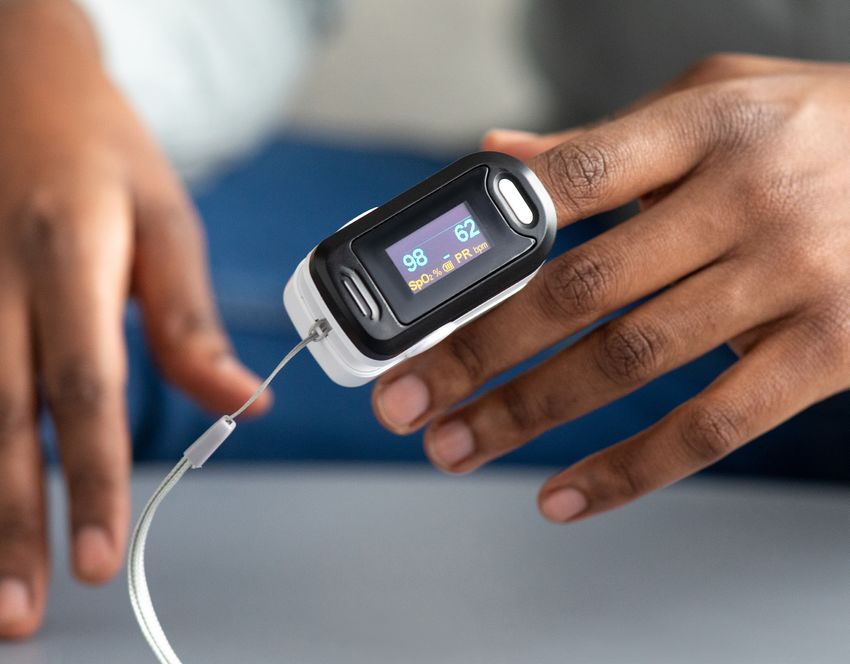
Pulse oximetry
and racial bias:
Recommendations for national healthcare,
regulatory and research bodies

March 2021

                           1
Summary
Pulse oximetry is a simple, cheap, and non-invasive Over the years, healthcare professionals have
means of testing the level of oxygen in a person’s become increasingly reliant on the pulse oximeter
blood. In simple terms, it works by attaching a to inform clinical decision making when adjusting
small device to a person’s finger, toe, or earlobe, supplemental oxygen levels and to triage patients.
which then sends a beam of light through that part Pulse oximeters are widely accessible and
of the body and registers the differences between demonstrate a great ease of use. This has resulted
oxygenated and deoxygenated blood. Its simplicity in an increased use of pulse oximeters by members
has transformed healthcare by providing a painless of the public during the Covid-19 pandemic in order
way of monitoring conditions such as pneumonia, to self-monitor their condition.
lung cancer, and anaemia; and providing an
effective tool in detecting the early stages of What does the evidence suggest?
hypoxia. The device is considered simple enough There is a growing body of evidence, going
that patients have been able to self-administer the back three decades, that suggest there may be
test at home during the Covid-19 pandemic. drawbacks when using pulse oximetry on darker
skinned patients. In as early as 1990, a study
There is a growing body of evidence, however, that revealed discrepancies in the reliability of a target
pulse oximetry is less accurate in darker skinned SpO2 of 92% when comparing white and black
patients.1 Given the increased mortality amongst patients receiving mechanical ventilation.3 Whilst a
ethnic minority patients during the Covid-19 92% target was suitable for white patients (n=25), a
pandemic, it is possible that the differential accuracy higher target of 95% was required in order to prevent
of pulse oximetry is a contributing factor to this significant hypoxaemia associated with this target in
health inequality.2 black patients (n=29). In addition, inaccurate pulse
oximetry readings were more than two times more
This raises issues about the test itself, and more common in black patients than white patients.
generally about the tendency for such medical
devices to be developed and calibrated based on Further trials revealed significant skin pigment-
lighter skin. This rapid review examines the evidence related differences when testing three different
on the accuracy of pulse oximetry in patients with models of pulse oximeters (Nellcor Inc., Novametrix
pigmented skin and provides both strategic and Inc. and Nonin Inc.) and consistently identified
practical recommendations to help narrow any overestimated SpO2 during hypoxia in dark-skinned
potential health inequalities between different ethnic individuals (n=11).4,5
groups.
A more recent study conducted in 2020, at the
Background University of Michigan Hospital compared measures
On its introduction, the pulse oximeter was a of oxygen saturation by pulse oximetry and arterial
significant development, providing a non-invasive, blood gas samples from adult inpatients receiving
inexpensive means to measure oxygen saturations supplemental oxygen.6 The sample consisted of white
and enable the early detection of hypoxia. The patients (n=1333) and black patients (n=276) and
pulse oximeter uses light to detect the amount of revealed that of the patients who had an SpO2 reading
oxygen in the arterial blood circulating peripherally between 92% and 96%, black patients were three
by measuring the differences in light absorption times more likely (11.7%) to have an arterial oxygen
between oxygenated and deoxygenated blood. saturation of less than 88% than white patients (3.6%).
This is a less invasive measure than measuring
oxygen saturation through arterial blood analysis Whilst the above-mentioned element of the study
but provides a less accurate reading. Where the has great relevance to the Covid-19 pandemic, the
pulse oximeter relies on light to produce a reading, study also collated and analysed retrospective data
arterial blood analysis directly measures the amount on a much larger scale, drawing data from 178
of oxygen and carbon dioxide in the blood. Where hospitals in the United States and assessing the
oxygen saturation is measured using a pulse consistency between pulse oximetry and arterial
oximeter, is produces an SpO2 reading. Where it is blood gas samples between the years of 2014
measured through blood analysis, it produces an to 2015 from patients in intensive care units. The
Sa02 reading. analyses revealed similar findings, with arterial blood
2gas oxygen saturations of less than 88% and pulse Pulse oximetry is used to frequently monitor oxygen
oximeter readings between 92% and 96% in 17.0% saturations and guide clinical management. In light
of black patients and 6.2% of white patients. This is of the Covid-19 pandemic, patients who are seriously
suggestive of a more long-term issue. unwell risk premature step-down treatment from
intensive care. Another study assessed the agreement
A smaller trial conducted in Singapore in 1993 between pulse oximetry and arterial blood gas in
explored the effect of ethnicity on the accuracy of Covid-19 ICU patients (n=30) who were considered
pulse oximetry in multi-ethnic Singaporean patients suitable to be stepped down. The study found
admitted to intensive care.7 Three ethnic groups that pulse oximetry readings were suboptimal in
were studied: Chinese (n=22), Malay (n=6) and comparison to the arterial blood gas analysis.13
Indian (n=5). The study found that Indian patients
showed the greatest difference between SpO2 Within this study, 67% of patients in this sample were
and SaO2 readings and with increasingly hypoxic from ethnic minority groups. Pulse oximeters have
conditions, Indian, Chinese and Malay groups of been found to not overestimate SpO2 in light-skinned
patients showed greater differences in SpO2 and individuals, suggesting that the large majority of
SaO2 readings. devices utilised data based on calibration studies with
light-skinned individuals, and that skin pigmentation
The mechanism by which skin pigmentation affects had not been taken into consideration when calibrating
pulse oximetry is unclear; however, a further study the devices.
did reveal greater variation in pulse oximetry
signal quality among darker skinned patients.8 Recommendations
A few studies which explored the effect of skin
Whilst the picture on racial bias in pulse oximetry is
pigmentation on the precision of pulse oximetry have
still mixed, as a worst-case scenario, the application
found that the degree of skin pigmentation does not
of this intervention can potentially have negative
affect the accuracy of pulse oximetry in infants and
outcomes for patients with more pigmentation in their
darkly pigmented critically ill adult patients in South
skin. To help counter potential health inequalities in
Africa.9,10,11
this area, we outline a number of recommendations
for healthcare, regulatory and research bodies.
More focused research is required to determine
the degree to which there is a link between pulse
oximetry racial bias and Covid-19.
Implications
With the increased use of pulse oximetry amongst
members of the public, the overestimation of SpO2
in hypoxic patients with darker skin could have
serious clinical implications. Current guidance,
issued by NHS England and Improvement on
the use of the pulse oximeter at home, suggests
that patients should seek medical attention if
the SpO2 reading is below 94%.12 With evidence
showing black patients are at an increased risk
of hypoxaemia due to the inaccuracy of pulse
oximeter SpO2 readings, this may result in delays
when presenting for medical care and inadequate
supplemental oxygen therapy being provided in
secondary care settings.
3RECOMMENDATION 1:
There should be an urgent review of pulse oximetry medical products used in the
United Kingdom
An urgent review of pulse oximetry medical products should be conducted by the UK Medical and
Healthcare Products Regulatory Agency (MHRA) in order to assess the accuracy of pulse oximeter
SpO2 readings in ethnic minority patient groups.14 Pulse oximetry products used in clinical settings,
and those which are more widely available for purchase by members of the public, should be
reviewed. Products which are approved for use must be suitable for ethnic minority patients as well
as the majority population.
The outcome of such a review may have implications for medical training and for public awareness
regarding the use of pulse oximeter devices.
RECOMMENDATION 2:
Identification of suitable parameters to identify hypoxia need to be verified
It is possible for patients to present with severe hypoxaemia in the absence of dyspnoea – what is
known as “silent hypoxaemia”.15 As a result of the increased use of pulse oximetry for self-monitoring
in Covid-19 patients managed outside of the hospital, patient education is key to allow other clinical
signs to be used when assessing the need to seek further medical attention. The appropriateness
of clinical signs for ethnic minority patients should be reviewed by critical care and respiratory
academic groups and NHS England and NHS Improvement; language such as “going blue” may
not be appropriate when assessing for cyanosis. This may require readjustment of thresholds for
seeking care for ethnic minority groups and inform future guidance and treatment pathways.
RECOMMENDATION 3:
Review of all medical equipment and devices
This review has highlighted the need to ensure healthcare equipment and devices are culturally
competent and sensitive so that they meet the needs of diverse populations. All medical equipment
and devices should therefore be assessed for suitability of use with ethnic minority patients, as
well as with the majority population. This should be sufficiently evidenced by manufacturers before
devices receive market approval.
RECOMMENDATION 4:
Further research
Further research in this area, with larger and more diverse populations, is recommended as a
priority for research bodies such as the National Institute for Health Research (NIHR) to consider.16
Research will help determine the extent of racial bias in pulse oximetry and will help to inform long-
term developments of pulse oximetry devices. Data derived from specific ethnic groups could be
used to generate calibration curves or enable the use of correction factors that would result in built-
in-user optional adjustments in future pulse oximeters.
4Acknowledgements
Olamide Dada led on this rapid review during her final year medical degree placement with the
NHS Race and Health Observatory.
References
1. Emery J. Skin pigmentation as an influence on the accuracy of pulse oximetry. Journal of perinatology : official journal of
the California Perinatal Association. 1987;7(6):329-30.
2. Updating ethnic contrasts in deaths involving the coronavirus (Covid-19), England and Wales - Office for National
Statistics [Internet]. Ons.gov.uk. 2020 [cited 15 March 2021].
3. Jubran A, Tobin M. Reliability of Pulse Oximetry in Titrating Supplemental Oxygen Therapy in Ventilator-Dependent
Patients. Chest. 1990;97(6):1420-1425.
4. Feiner J, Severinghaus J, Bickler P. Dark Skin Decreases the Accuracy of Pulse Oximeters at Low Oxygen Saturation:
The Effects of Oximeter Probe Type and Gender. Anesthesia & Analgesia. 2007;105(6):S18-S23.
5. Bickler P, Feiner J, Severinghaus J. Effects of Skin Pigmentation on Pulse Oximeter Accuracy at Low Saturation.
Anesthesiology. 2005;102(4):715-719.
6. Sjoding M, Dickson R, Iwashyna T, Gay S, Valley T. Racial Bias in Pulse Oximetry Measurement. New England Journal of
Medicine. 2020;383(25):2477-2478.
7. Lee K, Hui K, Tan W, Lim T. Factors influencing pulse oximetry as compared to functional arterial saturation in multi-ethnic
Singapore. Singapore Medical Journal. 1993;34:385-387.
8. Adler J, Hughes L, Vtvilecchia R, Jr. C. Effect of Skin Pigmentation on Pulse Oximetry Accuracy in the Emergency
Department. Academic Emergency Medicine. 1998;5(10):965-970.
9. Foglia E, Whyte R, Chaudhary A, Mott A, Chen J, Propert K et al. The Effect of Skin Pigmentation on the Accuracy of
Pulse Oximetry in Infants with Hypoxemia. The Journal of Pediatrics. 2017;182:375-377.e2.
10. Bothma P, Jyont G, Lipman J, Hon H, Mathala B, Scribante J et al. Accuracy of pulse oximetry in pigmented patients.
South African Medical Journal. 2021;86(5):594-6.
11. Smith R, Hofmeyr R. Perioperative comparison of the agreement between a portable fingertip pulse oximeter v. a
conventional bedside pulse oximeter in adult patients (COMFORT trial). South African Medical Journal. 2019;109(3):154.
12. Coronavirus » Pulse oximetry to detect early deterioration of patients with Covid-19 in primary and community care
settings [Internet]. England.nhs.uk. 2020 [cited 15 March 2021].
13. Philip K, Bennett B, Fuller S, Lonergan B, McFadyen C, Burns J et al. Working accuracy of pulse oximetry in Covid-19
patients stepping down from intensive care: a clinical evaluation. BMJ Open Respiratory Research. 2020;7(1):e000778.
14. Hidalgo D, Olusanya O, Harlan E. Critical care trainees call for pulse oximetry reform. The Lancet Respiratory Medicine.
2021;.
15. Levitan R. Opinion | The Infection That’s Silently Killing Coronavirus Patients [Internet]. Nytimes.com. 2020 [cited 15
March 2021].
16. Dyer O. Pulse oximetry may underestimate hypoxaemia in black patients, study finds. BMJ. 2020;371.
5You can also read


