PurpleTRAC Case Study: Updated 2021
←
→
Page content transcription
If your browser does not render page correctly, please read the page content below

PurpleTRAC Case Study:

The sanctions landscape, being inherently guided
by the state of global affairs, has never been
more complex than in 2019 and shows no sign
of letting up in 2020. As US and Iranian tension
escalates, the level of regulatory uncertainty and
threat of severe sanctions implications continues
to rise. With the US State Department’s Office of
Foreign Assets Control’s (OFAC) prominent role
in leading global sanctions setting, financial
institutions will be on high alert to ensure
regulatory compliance. Consequently, banks like
Romania’s First Bank are having to work harder than ever to keep on top of new regulations and
mitigate the financial and reputational risk of failing compliance checks or, more seriously, financing
criminal or terrorist activity.

                                         76% of surveyed banks reported that anti-
                                              money laundering (AML) and know your
       REGULATIONS
                                              customer (KYC) regulations are major
   SANCTIONS LISTS                            obstacles to expanding their trade
                                              financing operations.
SANCTIONED AREAS

  COUNTERPARTIES                         37% of risk and compliance practitioners
                                              said that continuing regulatory changes
              VESSELS
                                              was the single greatest challenge for
     TRADED GOODS                             compliance officers in 2019, with 16%
                                               saying that it was lack of skilled resources.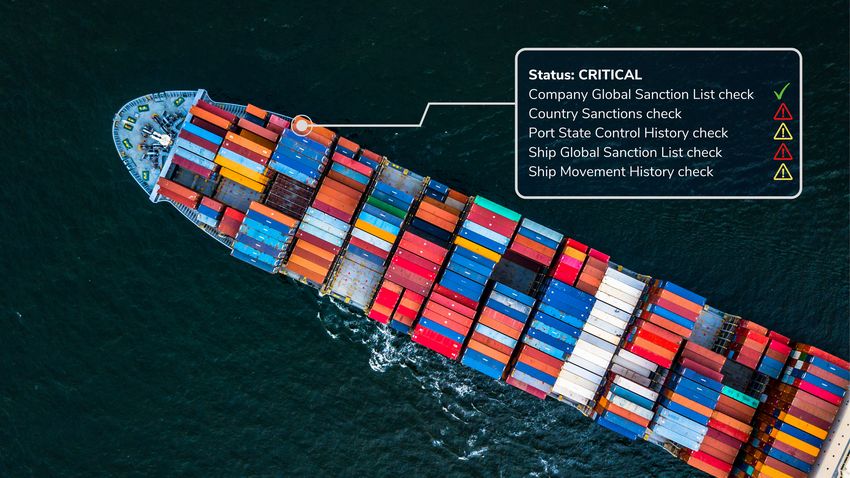
First Bank is a Romanian Bank, owned and operated by the US
investment firm J.C. Flowers & Co. since 2018. Originally established in
1995 as Pater Bank, it was then acquired by Piraeus bank, which it
operated under until its acquisition and subsequent rebranding as First
Bank.

One of First Bank’s key goals is to adhere to the highest levels of
compliance with both local and international regulations. Ensuring that the
systems, processes, and training are in place to meet regulatory standards
is therefore vital to preventing any unwarranted risks being taken.

For First Bank and many others, the process of verifying trade-based
transactions is one of the most laborious undertakings of compliance
departments, as a holistic risk assessment of all counterparties, vessels,
and traded goods is required.

Given the complexity of international trade, particularly that which is
maritime-based, banks across the globe like First Bank have been
adopting new technologies, such as PurpleTRAC, to thoroughly examine
all transactions, including maritime shipments.

As a maritime country in close geographic proximity to sanctioned
countries and regions, Romanian banks like First Bank face additional
compliance challenges, primarily, increased scrutiny from regulators and
higher risk levels.
Moreover, the compliance environment in Romania is significantly growing as supervising
authorities increasingly monitor whether the financial sector’s compliance standards meet
regulatory standards.

Given the globalisation of trade and the even bigger role that international sanctions will play in the
foreseeable future, alongside the constant need for time-sensitive decision-making for
transactions, First Bank understood the need for the banking system to invest in technologies that
support compliance workflow.

       To help manage its
    regulatory risk exposure,
     First Bank began using
    PurpleTRAC in July 2019

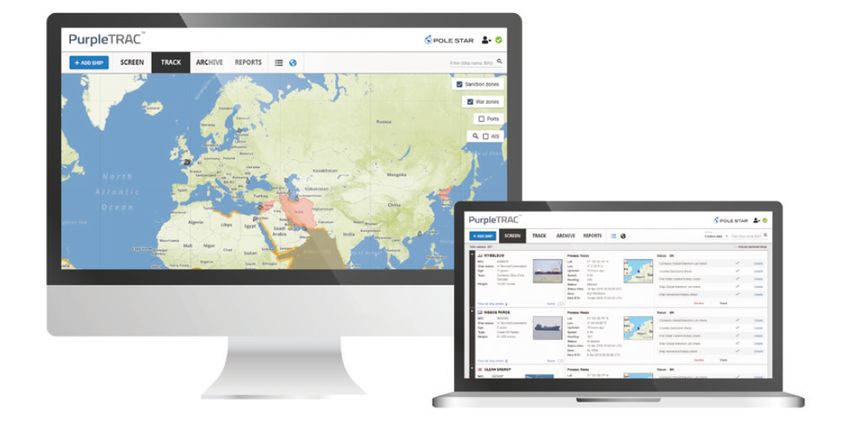
Upon entering the name of a vessel, PurpleTRAC immediately identifies it and all associated
companies responsible for its ownership and management. PurpleTRAC then screens them
against sanctions lists and countries deemed high-risk by First Bank, as well as confirming whether
the vessel has visited any sanctioned ports or high-risk territories. A tamper-proof screening report
is generated in seconds, automatically highlighting any situations that fall outside of First Bank’s
compliance policy.

First Bank now uses PurpleTRAC for all maritime-based trade finance transactions, as well as
certain transactions initiated via internet banking or at branch level. Any indication of a connection
with sanctioned countries or regions during the transaction verification process results in First
Bank’s Compliance department providing negative guidance for that transaction.
We spoke to Madalina
Titiriga, Head of Compliance
at First Bank to learn more
about their risk management
and sanctions compliance
processes.
What are the main difficulties First Bank faces when deciding whether to approve a
transaction?
Verifying trade-based transactions is a meticulous process requiring a risk assessment on all
counterparties, vessels, and the traded goods. As such, the ability to digitise and streamline risk
assessments is essential to providing timely responses to our customers and maintaining strict
observance of the regulatory requirements.
Moreover, the current pace of regulatory change is rapid, and the geopolitical climate presents the
potential for continued drastic changes in regulation.

What were the main compliance areas that you felt required additional support and why?
Trade-centric transactions. Both trade finance transactions and regular transactions performed in-
branch or via internet banking require fast verifications and decision-making due to their
complexity. As such, First Bank has implemented continuous compliance training alongside
systems like PurpleTRAC that monitor transactions to support and improve the verification
process.

What differentiates First Bank in your approach to risk management and sanctions
compliance?
First Bank’s vision is that of digital banking with a human touch. As such, the bank looks to utilise
state of the art compliance technologies to enable quality service to be delivered to our customers.
This requires First Bank’s compliance processes to ensure that potentially liable transactions are
not processed and our customers’ businesses are not jeopardised by activity in sanctioned
countries or regions, or with sanctioned entities.

What prompted the decision to begin using PurpleTRAC?
An internal project led by the Compliance Division identified the need to streamline the verification
process of ships, as the process previously took an average of 2 hours. In addition, the technology
used for the verification involved a complicated process to identify ownership of vessels, a crucial
aspect of determining risk. Therefore, to create a more efficient process, First Bank looked for
technologies that could decrease the verification time and found PurpleTRAC.

How has PurpleTRAC changed First Bank’s compliance processes?
Before PurpleTRAC, First Bank compliance processes relating to maritime-based transactions
were time consuming and the information we obtained regarding the movement of goods was not
detailed enough in many cases or structured. Now, using the PurpleTRAC system and with
support from Pole Star, our Compliance Officers can assess the movement of goods faster and
more easily. They can therefore make quicker decisions, minimising the bank’s and our customers’
risk of breaching international sanctions.

Having been bought and rebranded in 2018, did this bring additional hurdles around risk
management? How did this affect First Bank’s risk appetite?
At First Bank, we aim to provide the highest level of compliance with both local and international
laws and regulations, and it is of utmost importance to ensure that the systems and processes in
place are calibrated in a time-effective way.

In order to meet regulatory standards,
to ensure that no unwarranted risks in
the area of international sanctions are            “...using the PurpleTRAC
taken, and for a more robust decision-             system and with support from
making process, the verification of
vessels is essential. Therefore, the
                                                   Pole Star, our Compliance
bank’s zero tolerance of risk when                 Officers can assess the
processing transactions related to                 movement of goods faster and
sanctioned countries and regions, is
                                                   more easily. They can therefore
fully sustained by all systems,
processes, and training.                           make quicker decisions,
                                                   minimising the bank’s and our
                                                   customers’ risk of breaching
                                                   international sanctions.”

PurpleTRAC has been
designed with and for
companies with regulatory exposures in maritime trade
and shipping, and is now used by many major
international trade financing banks, international trading
companies, governments and flag administrations and
maritime insurers around the world.
PurpleTRAC can be configured
to an individual clients’
requirements, enabling them to
automate, streamline and
record their regulatory process
generating an all-important
audit trail for demonstration of
best efforts in compliance.
Vessel screening:
PurpleTRAC allows users to extensively screen a vessel by entering the vessel’s name or IMO
number, producing definitive results and auditable compliance records in seconds.
Vessel monitoring:
Following the screening process, users can elect to monitor a vessel, whereby they are
automatically re-screened every 24 hours. This allows users to engage our hybrid satellite tracking
technologies incorporating terrestrial & satellite AIS data, as well as Inmarsat secure real-time
tracking data.
Reporting:
Our PurpleTRAC system automatically collates all screening and monitoring activity and events in
incorruptible & auditable reports & archives.Contact
Head Office: Sales: Support:
The Yellow Building +44 20 7313 7402 +44 20 7313 7402
1 Nicholas Rd sales@polestarglobal.com support@polestarglobal.com
London
W11 4AN
International Offices:
London Singapore Panama
+44 20 7313 7400 +65 6679 6280 +507 301 5748
Hong Kong Australia USA
+852 2520 0951 +61 2 4254 1055 +1 727 610 950
Find out more
Learn more about PurpleTRAC:
www.polestarglobal.com/purpletrac
Copyright © Pole Star, all rights reserved. Pole Star reserves the right to change at any time without notice, information contained within
this document and makes no warranties or representations as to its accuracy. Valid as of 27.01.2020
www.polestarglobal.comYou can also read


