MTS 1500 Automated melt treatment station - COATINGS FILTRATION FEEDING SYSTEMS MELTSHOPREFRACTORIES METALLURGICAL AND POURING CONTROL BINDERS ...
←
→
Page content transcription
If your browser does not render page correctly, please read the page content below
C OAT I N G S   F I LT R AT I O N   FEEDING SYSTEMS   M E LT S H O P R E F R A C TO R I E S   M E TA L L U R G I C A L A N D P O U R I N G C O N T R O L   BINDERS   CRUCIBLES

      MTS 1500
      Automated melt treatment station
A new perspective on performance

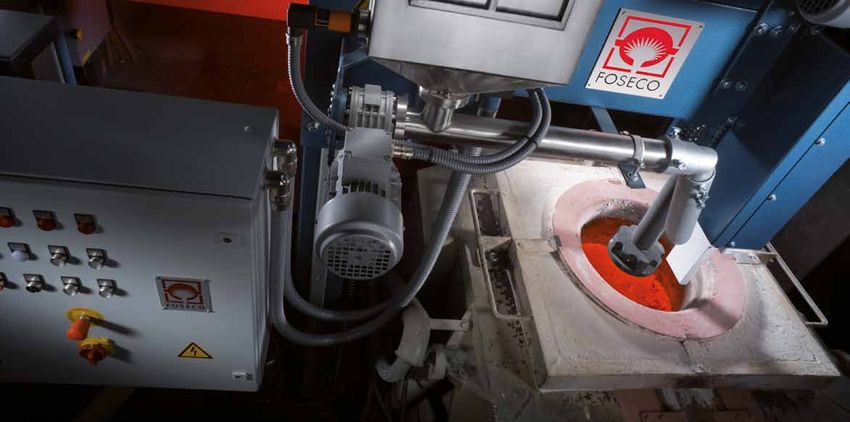
                                      What is the MTS 1500?                              The MTS 1500 is based upon FDU rotary degassing
                                                                                         technology, with the additional capability of adding
                                      The MTS 1500 is an automated melt treatment        a range of melt treatment products.
                                      station that:
                                                                                         The addition of these treatment products uses a
                                      ++ Provides a platform to perform all necessary   unique method, whereby the fluxes are fed from a
                                          melt treatments in a single operation          dispensing unit into a vortex deliberately created by
                                      ++ I
                                          mproves efficiency of the various treatments   the spinning rotor. This vortex is carefully controlled
                                      ++ Reduces operator involvement                   to ensure a very efficient mixing of the treatment
                                      ++ Reduces emissions                              products.

“MTS 1500 technology is an
automated process and the platform
of a fully controlled degassing and
melt treatment.”

 2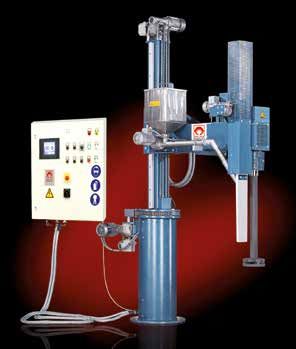
Process parameters

The standard treatment cycle using the MTS 1500 consists of a series of stages that can be summarised as follows:

   1. Consumables introduction                                                        3. Addition of treatment agents
      Shaft, rotor and baffle plate are                                                  The required amount of flux is then
      first lowered into the melt.                                                       dispensed directly into the vortex
                                                                                         and drawn down into the melt.

                                                                                                                               4. Vortex termination and
                                            2. Vortex formation                                                                   degassing
                                               The baffle plate is deactivated                                                    After the flux addition the
                                               and rotor speed is increased                                                       baffle plate is activated again to
                                               to a point at which a vortex is                                                    terminate the vortex and initiate
                                               created around the shaft.                                                          the degassing phase.

                                                                                                                                                                       3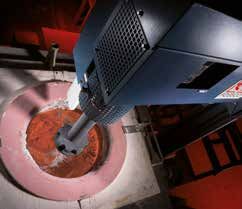
Consumable products
    There are two types of products that are key to the performance of the MTS 1500

    XSR and FDR rotors                                                      COVERAL* MTS fluxes
    New designs of rotors that                                              A range of new treatment agents has been specifically
      create the optimum vortex for the addition of the
    +                                                                      formulated for use with the MTS 1500 that
      treatment products                                                    + covers the principal foundry operations of
      are highly efficient in removing dissolved hydrogen
    +                                                                         cleaning, drossing, modification and grain
                                                                               refinement
                                                                            + keeps smoke and fume to a minimum

                Flux                             Application                                           Purpose

        COVERAL MTS 1524                                                         Reduces corundum build up. Removes oxides and other
                                            Cleaning and drossing
        COVERAL MTS 1533                                                           non-metallic inclusions. Produces a light dry dross.

                                                                                 Reduces corundum build up. Removes oxides and other
        COVERAL MTS 1560               Sodium free cleaning and drossing           non-metallic inclusions. Produces a light dry dross.
                                                                                          Especially suitable for AlMg alloys.

                                                                                 Reduces corundum build up. Removes oxides and other
                                     Sodium and calcium free cleaning and
        COVERAL MTS 1565                                                           non-metallic inclusions. Produces a light dry dross.
                                                  drossing
                                                                                     Especially suitable for AlMg and piston alloys.

        COVERAL MTS 1572                                                          Modifying metallurgical structure to reduce shrinkage
                                              Sodium modifying
        COVERAL MTS 1576                                                              defects and increase mechanical properties.

        COVERAL MTS 1582                         Grain refining                    Grain refinement to improve mechanical properties.

        COVERAL MTS 1540                      Hydrogen addition                          Introducing controlled hydrogen level.

        COVERAL MTS 1591                       Element removal                                  Removes Na, Ca, Sr, Li.

    For detailed information refer to the datasheets and SDS which are available on request.

4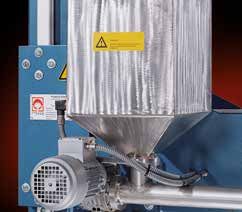
Benefits of the MTS 1500
The MTS 1500 offers the foundry several benefits that can be divided into four main categories

Metallurgical benefits                                Health and Safety benefits
The highly efficient manner in which the melt         The MTS 1500 contributes to the foundry Health &
treatment products are introduced gives a number of   Saftey improvements:
metallurgical benefits in the finished casting:       A healthier environment through reduced particulate
                                                      and gaseous emissions compared to conventional
+
  Consistent mechanical and physical properties       treatments because                                         An environmentally
                                                                                                                    friendly process
+
  Homogeneous microstructure and composition
+
  Very good levels of metal cleanliness               +
                                                        the MTS 1500 uses less flux
+
  Controlled gas porosity                             +
                                                        the action of the vortex draws the flux down into
                                                         the melt where it is quickly mixed into the metal
                                                      +
                                                        the flux used for the melt treatment is fully
Environmental benefits                                  consumed and does not continue to react post
The MTS 1500 assists the foundry in achieving a         treatment
better environmental performance by                   +
                                                        a safer environment through reduced operator
                                                        involvement in the melt treatment process
+	using less consumables (flux, inert gas)
+	reducing the amount of dross produced              Economic benefits
+	reducing emissions                                 Of major importance to aluminium foundries is          Screw feeder system for
                                                                                                             precise and reproducible
+ reducing treatment time and melt superheat with    reducing process costs. From this perspective the                       dosing
   associated energy savings                          MTS 1500 brings value to the foundry by

                                                      +
                                                        reducing treatment costs
                                                         -   reduced inert gas consumption
                                                         -   reduced flux consumption
                                                         -   reducing aluminium loss in the dross
                                                         -   reduced labour costs

                                                      + improving performance
                                                         - fast melt turn around
                                                         - reproducible melt quality                           High melt fluidity and
                                                                                                                   low porosity after
                                                         - increased reliability and decreased maintenance      COVERAL MTS 1582
                                                                                                                    grain refinement

                                                                                                                                        5
Case study A
The foundry Foundry requirements
A German sand foundry produces small and medium Foundry wants to improve sodium yield in a stable
batch series using an automatic moulding line. process to avoid after treatment:
Load cell for
precise dosing
Foundry practice
Foundry A melts various alloys in an induction furnace ++ Reduced number of batches out of specification
followed by FDU rotary degassing in a transfer ladle ++ Weight controlled addition of sodium modifier
using MTS 1500 technology. COVERAL MTS 1572 for
++ Production process without stoppage
sodium modification and COVERAL MTS 1582 for
grain refining is added depending on alloy and casting ++ Stable melt treatment
type. ++ Increased productivity
The specification for sodium in melt is 40 to 90 ppm
measured by spectrometer; 9 percent (23 out of 260 Achievements
Mean variation: batches) were out of sodium specification. The use of a load cell results in a more stable process
time controlled
with a weight difference below 5 percent based on
granulate dosing
a 500 g COVERAL MTS 1572 target addition rate.
Finally less than 1 percent (2 out of 260 batches) are
out of sodium specification only.
Productivity has increased due to a trouble-free
treatment and process tracebility improves quality
management.
Mean variation:
weight controlled
granulate dosing
6Case study B
The foundry Foundry requirements Achievements
Foundry B produces a range of castings in both high The foundry wanted to expand its activity by a factor The high efficiency of the MTS 1500 has given
pressure and low pressure. of four and needed a second machine to increase significant cost savings in terms of reduced treatment
melt treatment capacity. costs and a reduction in metal loss in the dross.
Foundry practice The metal content in dross is high, to reduce the melt More consistent process due to fully automised
Foundry B melts centrally and then transfers metal loss and save energy, an MTS machine is required. device and about 60 tons less aluminium loss per
to the casting furnaces using a transfer ladle. Melt year.
treatment was carried out in the transfer ladle using a
rotary degassing unit with a manual addition of flux.
Amount of dross Aluminium loss
per year per year
FDU with manual
Foundry B MTS 1500
granulate addition 120
Production capacity 20,000 tons per year
100
Tons per year
Number of ladles to degas 65 - 70 ladles with 800 kg AlSi7Mg per day
80
Treatment temperature 730 - 760 °C
COVERAL GR 2410 COVERAL MTS 1524 60
Granulate and addition rate
(0,05 %) (0,03 %)
40
Amount of granulate
400 g +/- 20 g 240 g +/- 10 g
per treatment 20
Annual granulate consumption 6,000 kg 3,600 kg 0
0 24 0 24
241 TS 15
R R 241 TS 15
ALG AL
M LG
A L M
VER OVER VER OV ERA
CO C CO C
7Case study C
Very dry dross
The foundry Achievements obtained
A European wheel foundry produces aluminium The titanium-boron based COVERAL MTS 1582 grain without any
wheels in low-pressure die casting. refiner has been introduced and is applied through a additional
MTS 1500 device. An amount of 250 g COVERAL MTS drossing flux
Foundry practice 1582 grain refiner is added into a carefully controlled
Foundry C uses AlSi7Mg alloy, molten in a tower vortex during each MTS treatment. It results in an before after
smelter and treated in an INSURAL* transfer ladle. excellent grain refining effect at lower addition
The original practice was a manual addition of TiBor rates compared to TiBor rods; the grain refining
rods followed by a FDU rotary degassing treatment. level is more constant now due to the automated
process. The resulting dross is low in metal and the
Foundry requirements
foundry reports reduced effort in cleaning the LPDC
The foundry wants to do all necessary treatment steps Thermal
furnaces.
in a single operation to reduce operator involvement analysis
in TiBor rods addition. Moreover they recognised the Treatment parameters
curve
high metal content in dross and asked for a reduction
Ladle INSURAL ATL 600 with 500 kg of AlSi7Mg
in aluminium loss.
Temperature 730 - 760 °C
250 g COVERAL MTS 1582
Addition rate
(0.05 % of the melt weight)
Treatment time 6 minutes
Inert gas flow 20 l/min N2 Micro structure
before and after 1 mm 1 mm
Rotor speed 450 rpm for MTS FDR 190.70 before after
grain refining
FOSECO. YOUR PARTNER TO BUILD ON. Foseco International Limited
Drayton Manor Business Park,
Tamworth, Staffordshire,
*FOSECO, the Logo, COVERAL and INSURAL are trade marks of the Vesuvius Group, registered in certain countries, used under licence. All rights reserved. No part of this publication may be reproduced,
stored in a retrieval system of any nature or transmitted in any form or by any means, including photocopying and recording, without the written permission of the copyright holder or as expressly permitted England B78 3TL
by law. Applications for permission shall be made to the publisher at the address mentioned. Phone: +44 (0)1827 262021
01/2019 · e
Warning: The doing of an unauthorised act in relation to a copyright work may result in both a civil claim for damages and criminal prosecution. All statement, information and data contained herein are
published as a guide and although believed to be accurate and reliable (having regard to the manufacturer’s practical experience) neither the manufacturer, licensor, seller nor publisher represents nor Fax: +44 (0)1827 283725
warrants, expressly or impliedly: (1) their accuracy/reliability, (2) that the use of the product(s) will not infringe third party rights, (3) that no further safety measures are required to meet local legislation. The www.foseco.com
seller is not authorised to make representations nor contract on behalf of the manufacturer/licensor. All sales by the manufacturer/seller are based on their respective conditions of sale available on request.
© Foseco International Limited 03/18. Please contact your local Foseco teamYou can also read


