Effective Packaging Solutions For HPP - Prem Singh, President & Chief Technology Officer, Teinnovations - Universal Pure
←
→
Page content transcription
If your browser does not render page correctly, please read the page content below
Effective Packaging Solutions For HPP

                 Prem Singh, President & Chief
              Technology Officer, Teinnovations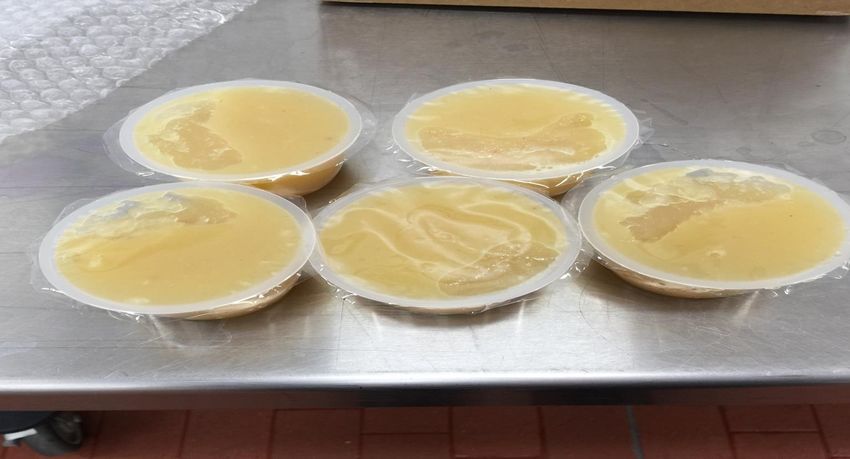
Effective Packaging Solutions for HPP

   Prem Singh
   President & Chief Technology Officer
   Teinnovations LLC
   Warrenville , IL, USA

   Provides:
   • Product development for HPP
   • Shelf-Life evaluation
   • Films, Containers
   • Filling/sealing machines
   • Problem Solving and consulting survives for
     HPP processing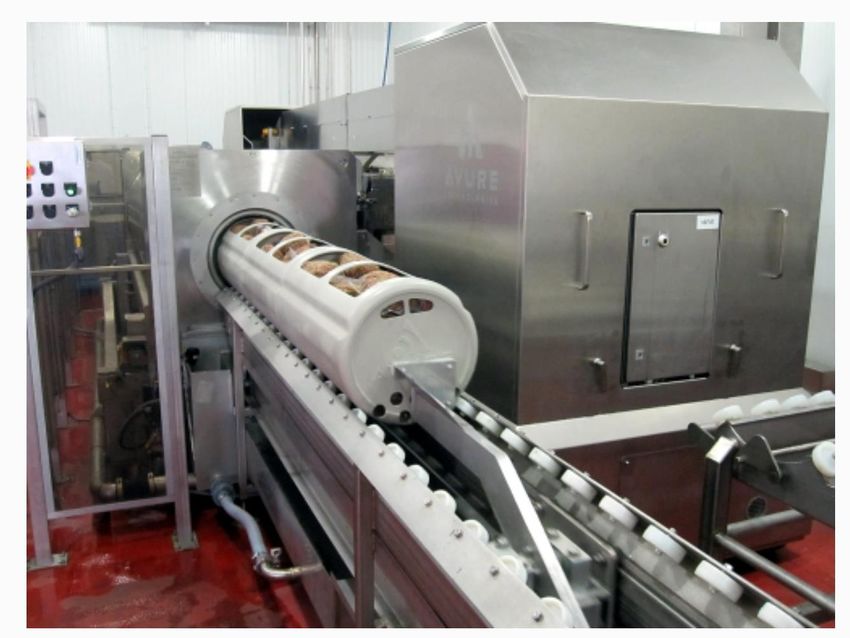
High Pressure Processing Basics                                                Most common use of
                                      Sensitivity to destruction of
                                                                               HPP in food industry is
                                      microorganisms in HPP varies
                                                                               with pre-packaged
                                      as to high pressure applied,
                                                                               food – trays, flexible
 Sensory , nutritional and
                                      time , temperature and other
                                                                               bags, pouches, bottles
 physical properties ( texture,
                                      food properties ( Ph, Water
 rheological, color, density etc. )                                            and jars.
                                      Activities, Water content, Air,
 essentially remain unaffected
                                      solutes, composition etc.)
 by this process compared with                                                             The specific
 conventional thermal process.                                                             packaging design
                                                                                           consideration
                                                                                           and solutions for
                                                                                           HPP remain the
                                                                                           key factor for the
                                                                                           success of this
                                                                                           process.

                                                                        To fail in effective
                                                                        packaging for HPP
                                                                        is to fail in HPP.
HPP            HPP          HPP
HPP Packaging Flow Sheet                                                 Compatible
                                                                         labels
                                                                                        Compatible
                                                                                        Films
                                                                                                     Compatible
                                                                                                     caps

                                                                                      Sealing
                                                                                  /Capping/Bagging                Material Handling
                                                                                      Process

                                                          MAP/Vacuum/G
                                                           as Flushing
   •       Remove Air ( Deaerate )
                                                            Process
   •       Water Activity
   •       Ph
   •       Water Content
   •       Micro Load Reduction
   •       Food Composition
                                             Fill with
                                             Product
       •    Do not contaminate the
            sealing surface

                                      Jars

                                                                            Label/Lidding
                            Bottles

                      Pouches
                                                         Storage &           Material
                                                         Shipping.           Handling
               Bags

   Container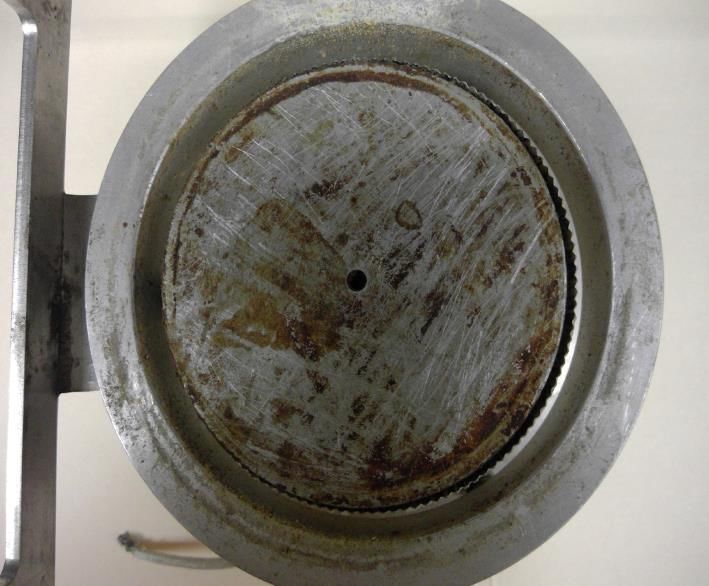
Elements of HPP Packaging

                                              Ready to Go HPP?
                                           Consider the following below

                  1. Containers ( Trays,
                 Bags, pouches, bottles        2. Films (Lidding, bags,   3. Caps ( bottles, Jars)
                        and Bags)                      pouces)

                    4.Filling Process             5.MAP Process                 6.Sealing
                                                                            Process/Machine

                                                                          9.HPP CMPRESSON /
                    7.Product Itself             8.HPP LOADING            DECOMPRESSION &
                                                                              UNLOADING
Fundamental Understanding

                         Generally
                           barrier
                       properties of
                        film are not
                        affected in
                            HPP
                                                                     • HPP acts
The packaging films                                                    instantaneously and   Water or food will be
                                                   See The OTR
                      Studies show that generally                      the pressure is       compressed dependent upon
and containers do
                                                   chart in this
                      the OTR and WVTR has                             uniformly             the pressure - at 600Mpa ,
compress more than
                                                   presentation . All distributed through
                      even improved in HPP                                                   water will compress by 15 %
water under HPP                                                        a mass of food
                                                   EVOH are not
                      processing . This is because
reducing volume of                                                     regardless of size,   by volume , so the packaging
                                                   the same
film
                      under high pressure , the                        shape and food        will need to flex reversibly at
                      volume reduction may cause                       composition
                                                                                             least that amount plus the
                      increase in the ordering of
                                                                   • However, the            compression of head space
                      molecules , specially                          compressibility is      gases and the film
                      amorphous region of the                        different for the
                                                                     different component
                      polymer
                                                                     of food
Food is Compressed Under HPP

                  Compression of Water                                                  Stored energy in a 1-liter water-filled pressure vessel

                    Pascal's law (also Pascal's principle[ or the principle of transmission of fluid-pressure) is a
                    principle in fluid mechanics that states that a pressure change occurring anywhere in a confined
                    incompressible fluid is transmitted throughout the fluid such that the same change occurs
                    everywhere. The law was established by French mathematician Blaise Pascal in 1647–48.
Tempress Technologies

• Important Note: In order to reach the full OTR protection ,
                                  the packages must be hermitically sealed otherwise the
                                  high barrier properties are lost through channel leaks or
                                  compromised seal.

                                • CO2 TR = 3 to 5 times the OTR value at 73ºF (23ºC), 0% RH

Data from Sabic
productinquiries@sabic-ip.com
Oxygen- Moisture Permeability Grid
Scanning Electron Micrograph of Met –PET/PE showing the damage caused by
                                                                                              Scanning Electron Micrograph of Nylon /EVOH pouch showing the pinholes . (a)
             PATP treatment . (a) Control , b and c PATP treated . ( Ayaz et al 2012), 1000
                                                                                              PATP treated with no storage . (b) PATP treated and stored @ 25 0C( Ayaz et al
             magnification magnification , 600Mpa, 1100C, 10 minutes
                                                                                              2012), 400 magnification magnification , 600Mpa, 1100C, 10 minutes

Bala Subramanium-HPP of food
Packaging Containers for HPP
• C-PET Containers and Trays (Crystallized Polyethylene Terephthalate)
• Need to be flexible for HPP – 15-20% flexible .
• Used for frozen and chilled prepared meals, case-ready meat trays, bakery products and the food service
industry
• From Freezer to MW or Oven -40 to 400 degrees F,
• Custom design shape and features available
• RePET trays with up to 40% PCR ( Post Consumer Recycled)
• Multiple colors and compartment options are available
• VSP ( Vacuum Skin Packaging ) works well in HPP
VSPPackaging Containers For HPP
• A-PET Containers and Trays (Amorphous Polyethylene
Terephthalate)
Cousc
ous
• Good for HPP- Need to be flexible and Sturdy
• Very Popular for HPP foods
• Wider Flange very important
Tzat
• Minimize silicon on the sealing surface to seal effectively
ziki
• Temperature: -40°F to +149°F (-40°C to +65°C)
• High Barrier with EVOH available
Tabaouli
• Color: clear
• Many attractive shapes and cool designs are available
PP Containers ( Poly Propylene)
•Freezer and microwave safe
•Wider Flange very important
•Temp ranges of PP: 32°F to +257°F (0°C to +125°C)
•PPDF with copolymer soften plastic for deep freeze applications
without cracking: -40°F to +257°F (-40°C to +125°C)
•Available in High Barrier (EVOH/PP)
•Colors: colorless (milky clear), black and white or customized printPackaging Containers for HPP
Bags and Pouches
BIBs( bags-in-box
Bottles
NomvaFilms for HPP
Selecting the film:
• Substrate to which the film is to be sealed
( substrate- CPET, PET, PP, PE or to self )
• Easy Peel or lock seal
• Seal Strength required
• Seal time and temperature limitations
• Barrier properties both oxygen and moisture
(EVOH, PVDC, AlOx , PVOH)
• How the package is further subjected to ( HPP,
retort, hot filled, MW, Oven etc.)
• Mechanical properties ( puncture resistance,
drop test)
• Optical Properties ( Clarity)
• Thickness
• Contaminant present on the sealing surface
• Regulatory compliance – extraction certificate
• Recyclability required.
• Generally, the single component or multilayer of
PET, PE, PP, EVOH , PA
• For containers, most used sealant layer is EVASome Consideration for Films for HPP
Some helpful general knowledge of films for HPP
• Seals:
• For Successful seal strength in HPP , a burst strength of 17 ” Hg in vacuum chamber with
water is found to be a guiding factor- but yet need to be peelable in most cases.
• A peel test is helpful to make sure the seal is strong enough
• Flexibility :
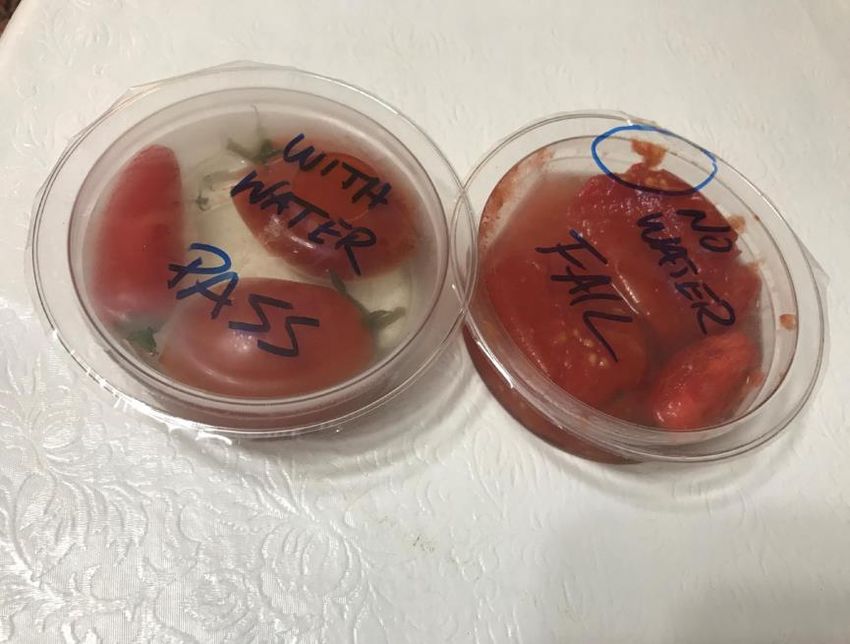
• The film must be flexible ( 15-20%) to endure compression/decompression forces in HPP.
The film goes through volume changes and must return to its original dimension and
geometry.
• Robustness: The film must be robust not to tear during the thermomechanical stress in HPP .
• Barrier Properties :
• EVOH seems to be the choice – must be laminated between two layers to protect from
water.
• Metalized films specially with SIOX2 does not seem to be a good choice .
• In HPP process the barrier properties does not decrease.HPP Packaging – Lidding Film
Lidding Films Lidding Films –Operating Parameters For HPP
• Type • Seal Temperature
• PET ( Poly Ethylene Terephthalate) • Seal Pressure
• PP • Seal Time
• PET/PE – Co-ex
• PE
• Seal Strength suitable for HPP
• PP • Sealing Heater heat capacity Clarity
• Composition • Seal temperature uniformity and calibration
• OTR • Cleanliness of Heater Surface
• Barrier Properties • Cutting Knives sharpness and Cleanliness
• Clarity • Mold holder and seal integrity
• Thickness • Peelabilty ( Easy Peel , Lock Seal)
• Color
• Peelabilty ( Easy Peel , Lock Seal)
• VSP
• Resistant to food ingredients , Chemicals
• Food Compatibility
• SustainabilityFilling and Sealing Machines Used for HPP
• Orics • Autoprod / Holmatic
• KartridgPak ( chubs)
• Zitropack • Tex- Wrap ( Wrapping after
• World Cup HPP)
• Modern
• VC999
• Multivac
• SealMax
• Ross
• Mondini
• ATS Engineering
• Harpak-ULMA
• Pack LinePackaging Sealing:
• Sealing Head /Heater/Temperature
• Sealing head surfaces must be clear of any scratches, roughness, contamination deposit
• Check seal head every 2 weeks
• Calibrate Seal head temperature uniformity
• Adjust temperature to make good seal Clean/Smooth Heater
• Sealing Pressure:
• Appropriate pressure is essential in combination with temperature ( typical 70 -75 lbs. /PSI)
• Sealing Time
• Adjust seal time to get good seal
• Affects the production rate
• MAP ( Gas Flushing)
• Need time to evacuate and gas flow
Not so Clean/Smooth Heater
• Need good gas flow and pressure system with properly designed vent –
• Minimum gas possibleSeal Strength for HPP Success Lb –force- 45degrees angle
Burst Strength for HPP Success
A Specially Designed HPP Film
                               Near zero leaker rate – sealing to various substrates
                                                                     To demonstrate the integrity of our film, empty
       6000 bars , 3 minutes, 150 C water
                                                                     containers were processed through HPP @ 6000 bars for
            NO LEAKERS WERE FOUND                                    3 minutes. Seal integrity remained intact even when the
              ES Standard Teinnovation Film                          container collapsed.
       High Barrier PP containers with Apple Sauce
SealMAX SC-1350
Some Typical Defects We See
The following check list for trouble shooting the leaker in HPP

                                    • What was the seal strength before HPP ( burst test and peel tests)
                                    • Does the seal look smooth without any channel, bubble or missing seal areas
                                    • Excessive contaminant on seal surface
                                    • Check if there was no abnormal head space air
                                    • Check if temperature , time and pressure are optimized in the sealing
                                       process and calibrated
                                    • Check that the correct sealing surface of the film is used ( It happens)
                                    • Check the heater surface if it is not damaged and dirty
                                    • Check the loading and handling in HPP chamber – it should be uniformly
                                       loaded not just dumped
                                    • Check the unloading process
Impression Paper- a tool to check
seal uniformity
Effective Packaging Solutions For HPP
You can also read


