QFLEET ELECTRIC VEHICLE TRANSITION STRATEGY - For the Queensland Government motor vehicle fleet - Department of Housing ...
←
→
Page content transcription
If your browser does not render page correctly, please read the page content below
QFLEET
ELECTRIC VEHICLE
     TRANSITION
       STRATEGY

  For the Queensland Government
               motor vehicle fleet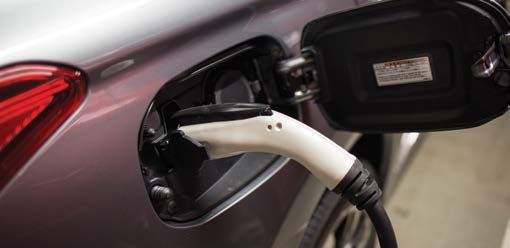
Minister’s foreword

When the Queensland Government released                         Agencies can also take advantage of the Queensland
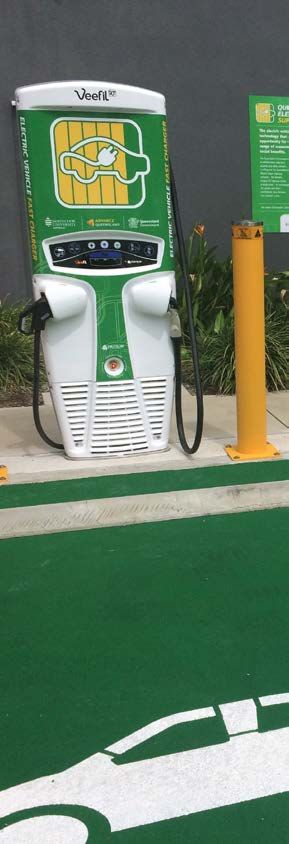
The Future is Electric: Queensland’s Electric                   Electric Super Highway — the growing network of fast
                                                                recharging stations that has become the world’s longest
Vehicle Strategy last year, we made a                           electric super charger highway in a single state, already
commitment to transition the government                         stretching from Cairns to the Gold Coast.
fleet to electric vehicles. This challenge is
                                                                Importantly, the QFleet Electric Vehicle Transition Strategy
being met by QFleet, the commercialised                         will play a major part in reducing the fleet’s greenhouse
business unit in the Department of Housing                      gas emissions and contribute to the government’s goal of
and Public Works, responsible for the                           achieving zero net emissions by 2050, supported by a 50
procurement and management of the                               per cent renewable energy target for Queensland by 2030.
Queensland Government fleet.                                    When QFleet had its beginnings some 25 years ago,
                                                                the idea of fully electric, rechargeable passenger and
The QFleet Electric Vehicle Transition Strategy establishes     light commercial vehicles being available to the general
this new technology firmly on the government’s fleet            public was a new concept. But if low-pollution transport
agenda. The current inclusion of electric vehicles in           was a desirable aspiration then, it is a critical goal now;
QFleet’s fleet, and the intention to at least double their      revelations about greenhouse gas emissions, climate
number each year for the next four years, will demonstrate      change and their likely consequences have seen to that.
their suitability as part of a multi-functional and versatile
                                                                Electric vehicles play an increasingly important role in our
vehicle pool.
                                                                emissions reduction activities and in building a culture of
This leadership position will be sustained, and                 fleet environmental sustainability.
negotiations are already underway with vehicle
                                                                They promise to be an exciting part of our journey towards
manufacturers to pave the way for early access to new
                                                                a low-carbon future.
electric vehicle models when released onto the
Australian market.
With a combined fleet of more than 10,000 vehicles
located across the state, departments will have many
opportunities to make the shift to electric models as
vehicles fall due for replacement over the coming months        The Honourable Mick de Brenni MP
and years. With their support, this strategy will make the      Minister for Housing and Public Works, Minister for Digital
transition a reality.                                           Technology and Minister for Sport

                                                                             QFLEET ELECTRIC VEHICLE TRANSITION STRATEGY      1
Introduction
The Queensland Government has committed to take an The shift to electric vehicles will expand over the
active role in preparing Queensland for the introduction next decade and beyond, and will be a dynamic process
of electric vehicles, ensuring the state is best placed to as the technology improves and the market continues to
capture the benefits this change will bring. develop.
The Future is Electric: Queensland’s Electric Vehicle BEVs (and PHEVs when running on their electric motors)
Strategy was released in October 2017 by the then produce virtually no tailpipe greenhouse gas emissions.
Treasurer and Minister for Trade and Investment, the And the emissions produced for recharging the vehicles is
Honourable Curtis Pitt MP; and the then Minister for potentially zero when using green power or solar power.
Main Roads, Road Safety and Ports and Minister for
Recharging from the standard grid will become less
Energy, Biofuels and Water Supply, the Honourable
emissions intensive as Queensland progresses towards
Mark Bailey MP.
the government’s target of deriving 50 per cent of its
An electric vehicle is defined as any vehicle that is fully or energy from renewable sources by 2030, announced by
partially driven by an electric motor and can be plugged- government in Pathways to a clean growth economy –
in to recharge. They comprise two main types: Queensland Climate Transition Strategy in 2017.
• the battery electric vehicle (BEV)
• the plug-in hybrid electric vehicle (PHEV).
2 QFLEET ELECTRIC VEHICLE TRANSITION STRATEGYThe Strategy
Focus areas for electric vehicle uptake 1. Replace existing vehicles with PHEV models
QFleet will encourage agencies to replace existing
QFleet is embracing the transition of its conventional internal combustion engine (ICE) vehicles
fleet to electric vehicles and will adopt with PHEVs of a similar type. This is intended to overcome
a proactive leadership approach to the ‘range anxiety’ of agencies and drivers concerned
about becoming stranded in a BEV if the battery should
increasing the number of electric vehicles
run completely out of power while on the road. It will also
in its fleet. This will integrate seamlessly
overcome qualms agencies might have about having
and concurrently with the other emissions vehicles with restricted capability in their fleets/pools.
reduction initiatives being undertaken.
2. Introduce electric vehicles into car sharing pools
There are six focus areas: (CBD and larger regional centres)
There are already three PHEVs in QFleet’s Brisbane CBD
1. Replace existing vehicles with PHEV models. car sharing pool of 16 vehicles. Having proved popular
with customers, the number will be increased as ICE
2. Introduce
electric vehicles into car sharing vehicles fall due for replacement and new Brisbane
pools (CBD and larger regional centres). car sharing precincts are added. BEV units will also
3. Introduce
BEVs to match existing lease be introduced as suitable models become available
vehicle replacements. on the market.
4. Incentivise
agencies to take up electric Similarly, PHEVs and BEVs will be included in the vehicle
vehicles. mix in regional car sharing pools, with due regard to
the nature of each location and vehicle usage patterns.
5. Introduce electric vehicle evaluations.
Feasibility of expanding the car sharing model to Cairns
6. Explore
opportunities encouraging and Townsville is being explored for implementation
manufacturers to speed up the importation of in 2018-19.
electric vehicles through bulk purchasing deals
By utilising car sharing electric vehicles, drivers will
across state boundaries.
experience the technology and become more accepting,
and enthusiastic about having these vehicles in their
agencies’ fleets.
QFLEET ELECTRIC VEHICLE TRANSITION STRATEGY 33. Introduce BEVs to match existing lease Another incentive QFleet will explore is end-of-lease
vehicle replacements adjustment. One of the considerations when determining
QFleet assists many customer agencies in developing a lease rate is the residual value of the vehicle—the price
expected to be realised by the vehicle sale at end-of-
and reviewing the annual vehicle replacement programs.
lease. Because of the relative newness of the electric
QFleet’s fleet consultants will possess the knowledge and
vehicle market and uncertainty throughout the industry
tools to identify where BEVs (and PHEVs) are a good fit in
about resale values, projected residual values need to
agency fleets and encourage uptake.
be quite conservative. Including a lease adjustment
This will be supported by access to loan or evaluation arrangement in electric vehicle lease agreements assures
models. agencies that if a vehicle is sold for more than the
residual value, QFleet will adjust lease rates accordingly.
4. Incentivise agencies to take up electric vehicles
QFleet will investigate the option of cross-subsidising 5. Introduce electric vehicle evaluations
electric vehicle lease rates, to reduce the effect on QFleet will motivate customer agencies to participate in
customer agencies of the comparatively higher purchase evaluating electric vehicles in order to (a) assess
costs. The concept involves introducing a loading the vehicles’ suitability for inclusion in the QFleet fleet
on higher emission vehicles leases and a parallel (b) enable agencies to gain hands-on experience with the
discounting for electric vehicle leases. This would provide new technology (c) stimulate interest and uptake of BEVs
an incentive for agencies to take up electric vehicles and and PHEVs.
reward their behaviour change. The lease adjustments In many cases, customer agencies will have the
would be managed so as to have no net financial impact option to convert a short-term evaluation direct
on the business. to a lease agreement.
QFleet emission reduction projection 2018-2030
100
90
80
RELATIVE CONTRIBUTION TO REDUCTION
70
60
EMISSIONS
50
40
30
20
Emissions reduction achieved by 2030 will be at least 30%
10
below 2005 levels, as per government commitment.
0
2017 2018 2019 2020 2021 2022 2023 2024 2025 2026 2027 2028 2029 2030
YEAR
HFC vehicle replacement PHEV vehicle replacement ICE lower emission replacement Fleet downsizing
BEV vehicle replacement Hybrid vehicle replacement ICE technology improvement (L4L) Residual CO2 emissions
4 QFLEET ELECTRIC VEHICLE TRANSITION STRATEGYEvaluation programs will include regional centres where These negotiations have a primary focus on purchase
electric vehicles have a potential for inclusion price. Bulk-buy arrangements with manufacturers can
in local fleets or pools. achieve procurement discounts and QFleet has employed
this method to realise significant savings for customer
QFleet will arrange for manufacturers to conduct electric
agencies and government. Leasing and buy-back
vehicle information events exclusively for government,
opportunities will also be explored as a risk mitigation
where customer agencies can learn from industry experts,
option.
have questions answered and enjoy
hands-on experience. Given the relatively high purchase cost of electric
vehicles and the expected modest initial uptake by
Establishing well-structured evaluation programs and
agencies, QFleet will investigate the benefits of engaging
gathering meaningful customer feedback will inform
with other jurisdictions — local councils and state and
vehicle replacement programs and potentially encourage
territory governments — to negotiate aggregated volume
manufacturers to increase supply.
procurement.
6. Explore opportunities encouraging manufacturers to QFleet will be a major participant in the Queensland
speed up the importation of electric vehicles through Electric Vehicle Council — a government/industry
bulk purchasing deals across state boundaries consultative group under development by the Department
QFleet will include electric vehicle procurement in its of Transport and Main Roads and including other
strategic discussions with vehicle manufacturers at agencies with owned fleets, such as the Queensland
quarterly contract review meetings and during the annual Police Service and Queensland Public Safety Business
price and volume commitment process (next scheduled Agency.
for April–June 2018). Of interest will be:
In this way, electric vehicles will play a key role in
• market intelligence regarding the future release of reducing QFleet’s greenhouse gas emissions.
electric vehicle models and upgrades
Short-term increase target
• advice to manufacturers of the types/models of
electric vehicles that will attract government sales With this leadership approach, QFleet will double the
number of electric vehicles in its fleet each year during
• gaining early access to new electric vehicles for
the next four years, increasing from 18 to 288.
evaluation purposes.
PROJECTED ELECTRIC VEHICLE UPTAKE (MINIMUM)
Projected electric vehicle uptake (minimum)
0 50 100 150 200 250 300
*2018 18
2019 36
2020 72
2021 144
2022 288
Projection may be exceeded depending on manufacturer release of additional models on the Australian market.
*April 2018
QFLEET ELECTRIC VEHICLE TRANSITION STRATEGY 5Electric vehicle
availability
The evolving electric vehicle market in few years. There are 11 electric vehicles currently offered
on the Australian market. However, some models are
Australia
considered either (a) unsuitable because of likely negative
Only a modest range of EVs that are suitable for general public perception of the model e.g. luxury or sports
use in the Queensland Government fleet are either appearance/performance, and/or (b) questionable on the
available now or are certain to be available in the next basis of their high purchase cost.
Electric vehicles currently available across the Australian market (as at February 2018)
MANUFACTURER MODEL TYPE
BMW i3 94Ah- Small BEV
BMW i3 94Ah Range Extender - Small BEV
BMW i8 - Sports PHEV
Mitsubishi Outlander - SUV PHEV
Mitsubishi Outlander Aspire - SUV PHEV
Tesla S 75D - Sports BEV
Tesla S 100D - Sports BEV
Tesla S P100D - Sports BEV
Tesla X 75D - Sports BEV
Tesla X 100D - Sports BEV
Tesla X P100D - Sports BEV
Robust projections for upcoming electric vehicle releases will be released in Australia and the timeframes for their
in Australia cannot realistically be made at this time. introduction.
While many manufacturers have models in production or
Notwithstanding these constraints, QFleet will maintain a
advanced planning in the northern hemisphere, most are
calendar of projected electric vehicle availability based on
only being produced in left-hand-drive format while others
the best industry intelligence available.
are in the luxury or sports car categories. Because of this
and for reasons of commercial sensitivity, manufacturers
are unable to make firm commitments as to which models
6 QFLEET ELECTRIC VEHICLE TRANSITION STRATEGYAnticipated new electric vehicles scheduled for future release across
the Australian market (as at February 2018)
MANUFACTURER MODEL TYPE EXPECTED
BMW i3 - Small Sedan BEV April 2018
Renault Zoe - Small Sedan BEV May 2018
Renault Kangoo - Small Van BEV May 2018
Hyundai IONIQ - Small Sedan BEV November 2018
Hyundai IONIQ - Small Sedan PHEV November 2018
Jaguar I-PACE - Medium SUV BEV November 2018
Mini Countryman - Small Sedan PHEV November 2018
Nissan Leaf - Small Sedan BEV December 2018
Audi e-tron - Sportsback BEV June 2019
Tesla Model 3 - Medium Sedan BEV July 2019
Volvo Each type of Volvo vehicle will have an electric or hybrid motor by mid-2019.
Hyundai Medium SUV FCEV September 2019
Skoda Superb - Large Sedan PHEV October 2019
The information in this table is current at the time of publication and may be subject to change.
Suitable for inclusion in QFleet general offering to customers Possible though limited suitability
May not be suitable e.g. high purchase price, public perception Insufficient information currently available
(luxury/sports vehicle)
QFLEET ELECTRIC VEHICLE TRANSITION STRATEGY 7In assessing vehicles for inclusion in its fleet, QFleet
will take into consideration factors such as:
• suitability in terms of public perception
• ANCAP safety rating
• total cost of ownership (including purchase cost
and projected residual value)
• fit-for-purpose suitability
• recharging requirements and available
infrastructure.
Recharging infrastructure for government
vehicles
Under The Future is Electric: Queensland’s Electric
Vehicle Strategy, the Queensland Government will
undertake an electrical infrastructure analysis of
government buildings, in order to understand the
opportunities and barriers to installing EV charging.
The lessons learnt from this study are not only
intended to be used to support the roll-out of
EV charging infrastructure in government owned
buildings for government EVs, but will also inform
building guidelines and regulations to ensure the
installation of EV charging infrastructure can become a
straightforward task.
This exercise will inform the progressive deployment
of QFleet electric vehicles in government offices in
Brisbane and regional centres.
Government drivers travelling longer distances will
also be able to take advantage of the government’s
expanding Queensland Electric Super Highway, the
world’s longest electric fast charging highway in a
single state.
8 QFLEET ELECTRIC VEHICLE TRANSITION STRATEGYReferenced documents
The Future is Electric: Queensland’s Electric
Vehicle Strategy
https://publications.qld.gov.au/dataset/the-future-
is-electric-queensland-s-electric-vehicle-strategy/
resource/7e352dc9-9afa-47ed-acce-2052cecfec8a
Pathways to a clean growth economy –
Queensland Climate Transition Strategy
https://www.qld.gov.au/environment/assets/
documents/climate/qld-climate-transition-strategy.pdf
QFLEET ELECTRIC VEHICLE TRANSITION STRATEGY 9For more information
GPO Box 293, Brisbane Qld 4001
QFleet-MAIL@hpw.qld.gov.au
www.qfleet.qld.gov.auYou can also read


