RAISING MONEY IN A CHALLENGING TIME - Strategies to adapt, rebuild and post better numbers - Phone2Action
←
→
Page content transcription
If your browser does not render page correctly, please read the page content below

RAISING
 MONEY IN A
CHALLENGING
   TIME
Strategies to adapt, rebuild and
      post better numbers
Nonprofit organizations worried about fundraising would do well
   to consider the story of Captain Thomas Moore. Captain Tom, as
   he is known, is a former British Army officer who—at age 99—set
   out to raise money for U.K. medical charities by doing 100 laps
   around his backyard.

   When he began in April, his goal was to raise £1,000 (about
   $1,250) before his birthday at the end of the month. He did some
   media interviews and his story caught fire, first in Britain and
   then worldwide. By the time Captain Tom turned 100, more than
   1.5 million people had donated to NHS Charities Together, his
   chosen cause. Collectively, they raised more than $40 million.

   The story of Captain Tom underlines an important point about
   raising money in a post-pandemic world gripped by protests
   over racial injustice: common knowledge around what brings in
   funding no longer applies. The organizations that succeed will
   be trading on new ideas and novel approaches. As Erik Leaver,
   an expert on fundraising at Blackbaud, put it, “nobody has a
   playbook for this.”

   The COVID-19 health crisis has forced development directors
   to tear up plans and start again under entirely new rules.
   Organizations like food banks and others that are providing
   pandemic relief are seeing unprecedented giving. Direct Relief’s
   Team Love Dance-A-Thon raised $3.7 million in 12 hours. Those
   dependent on events or whose missions lie far from public health
   see worrisome declines. Some even face an existential threat.

   Many nonprofits—perhaps even most—lie somewhere in the
   middle, forced to adjust and carry on in an environment marked
   by increased competition and a need for sensitivity to a national
   tragedy that has already killed more than 125,000 Americans.

   Yet, the need for social good organizations has never been
   greater—and that requires funding. If your organization is
   revamping its strategy, we have assembled strategies worthy
   of consideration as you recast your organization’s plan for the
   rest of the year. The organizations that adjust quickly to the new
   rules, tailor their appeal to the moment, show some creativity and
   prepare to take advantage of their “Captain Tom” moments, can
   see their numbers improve this year.

RAISING MONEY IN A CHALLENGING TIME | 2

Stay in the Moment
   Fundraising must go on so organizations can meet their mission.
   While that may seem obvious in many organizations, there are
                                                                                  UNDERSTAND YOUR
   those that paused programs when COVID reached U.S. shores                      AUDIENCE
   out of respect for the crisis and may be reluctant to restart.
                                                                                  The more you know about your
   While a pause was certainly appropriate for some organizations,                supporters—their giving history, touch
   so too is rejoining the fight. If you are communicating properly,              points and how they like to engage—
   your supporters will understand that your organization has an                  the more relevant you can be in your
   important mission. It is pivotal to tie your efforts to pandemic               fundraising communications.
   relief or the national recovery. “We’ve got to be realistic about
   this,” Leaver said. “This is a foundational crisis for nonprofits.”            Raiser’s Edge NXT with Blackbaud
                                                                                  Marketing can give you more
   The success of your next campaign and beyond may well depend                   complete insight into your donor
   on how well you can make the case that your work is relevant                   community and what moves them
   to the pandemic. COVID-19 is one of the few national crises that               to action at every stage of the
   has impacted every American. Fundraising appeals that stray too                constituent lifecycle, from acquisition
   far from the problems people are facing right now can strike the               to retention.
   wrong tone.
                                                                                  Blackbaud tools allow you to engage
   For organizations working on pandemic relief or recovery, explain              your audience according to their
   your efforts and the good they are doing. Make targeted appeals                specific preferences, and then assess
   and include personal stories of those who were helped, all with a              every engagement a supporter has
   measured and appropriate sense of urgency. Make the case that                  experienced to maximize your insight.
   your work is vital to America’s recovery and that donations are
   directly fueling those efforts.                                                You can then maintain momentum
                                                                                  with automated, action-triggered
   Make a special effort to communicate with your sustaining donors               follow-up messages that keep the
   and primary funders. Donors are being bombarded with requests                  conversation going.
   from organizations that are providing frontline care, and many
   will be moved to help. Funders, such as corporate sponsors,
   may be rethinking how to direct their resources. Be sure to
   communicate directly with sustainers and funders to explain how
   your organization is responding to the pandemic and why their
   support remains important. Retention will be vital moving forward.

   “Being honest and open with donors is really the most important

                                                                  “
   thing you can be doing right now,” Leaver said. “Make sure your
   asks are really relevant to the current moment.”

                                                                         Being honest and open with donors
                                                                 is really the most important thing you can
                                                                be doing right now. Make sure your asks are
                                                                     really relevant to the current moment.
                                                                          ERIK LEAVER, Fundraising Expert, Blackbaud

RAISING MONEY IN A CHALLENGING TIME | 3
Embrace Online, Virtual & Mobile
   Like the workplace, fundraising is likely to take a giant step toward the digital realm, furthering a transition that has
   been taking place for years.

   Online giving grew by 6.8 percent in 2019, according to Blackbaud’s annual Charitable Giving Report, and
   increased 9.6 percent over the past three years. The percentage of donations made on a mobile phone reached 26
   percent in 2019, more than double the percentage in 2014.

   While online giving still accounted for less than 10 percent of overall donations last year, that may very well change
   in a post-pandemic world in which organizations can no longer gather their donors for events, walks, runs and other
   in-person activities. The digital space is going to get more active.

   Many organizations are already trying virtual events, gathering their donors for a call or video conference using
   Phone2Action’s Virtual Event Suite; transitioning traditional run/walk/ride events to include virtual participation
   using Blackbaud TeamRaiser; conducting crowdfunding campaigns using Blackbaud Peer-to-Peer Fundraising;
   broadcasting via Facebook Live; or using fitness trackers to hold virtual athletic fundraising challenges.

                                                                   Social media is playing a more important role than it
                                                                   has in the past, with people spending far more time
                                                                   online. Many organizations are having success with
                                                                   paid acquisition strategies such as Facebook Lead
                                                                   Ads, which allow organizations to send targeted
                                                                   communications and capture data while giving
                                                                   supporters a smooth and low-friction experience.
                                                                   Facebook is a strong option because it is a network
                                                                   based on family and friends and calls to action may
                                                                   have more impact.

                                                                   “Digital interaction is more important than ever,” said
                                                                   Ximena Hartsock, co-founder of Phone2Action. “It’s
                                                                   what allows us to fight the problems that come with
                                                                   isolation and continue to gather in our communities,
                                                                   even as we practice social distancing. We need to
                                                                   meet our people where they are. Even as states
                                                                   reopen and people head back to the office, that’s more
                                                                   apt to be on a phone, an app or a social network.”

                                                                   One good example is the National Eating Disorders
                                                                   Association, which works to help the 30 million
                                                                   Americans who suffer from eating disorders recover.
                                                                   NEDA was forced to move a program that included
                                                                   almost 100 fundraising walks nationwide to an online
                                                                   environment. The walks provided fully a quarter
                                                                   of their annual revenue, as well as a way to unite
                                                                   members in their own communities and provide much-
                                                                   needed support.

RAISING MONEY IN A CHALLENGING TIME | 4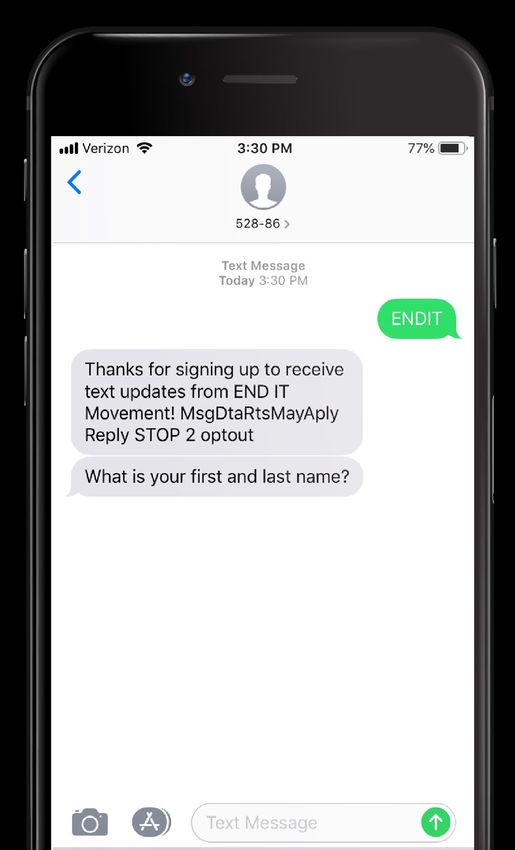
So when the COVID pandemic struck in the U.S., eliminating
   the ability to gather supporters, NEDA had to adjust—fast.
   The organization scheduled a series of “virtual” walks via
                                                                          TEXT MESSAGING CUTS
   videoconference, targeting specific cities. The video backgrounds
   were designed to highlight the locale and the speakers were            THROUGH THE NOISE
   chosen to address supporters’ needs. Some events even had a
                                                                          For organizations worried about cutting
   dance party at the end.                                                through the increase in digital noise brought
                                                                          on by the pandemic, text messaging is an
   The results were solid. NEDA was able to attract hundreds of
                                                                          option.
   people to its virtual walks and saw a 78-percent increase in calls
   to the association chat line. People enjoyed them—especially the       Text has a 99 percent open rate and click
   dance parties. “People were filming themselves and posting it on       and conversion rates that routinely run to
   social media,” said National Walks Director Jessica Hickman. “They     double digits. Using custom keywords (e.g.
   said, ‘we love this.’”                                                 text “info” to 52886) and SMS short codes
                                                                          can drive your audience to action in ways
   “We decided to focus on mission delivery, and providing support        that email no longer can.
   and connection, which is ultimately why people come to an event,”
   she said. “We wanted to provide what our community needs               Text is a more intimate medium that requires
                                                                          your audience to opt in. But even a small list
   during difficult times. If we showed up for people without a direct
                                                                          can have a big impact.
   fundraising ask, we hoped it would be something they remember
   and appreciate.”

   Let Advocacy Boost Your Fundraising
   Anyone doubting that nonprofits are doing more with digital needs
   only look at the advocacy numbers. Digital advocacy has exploded
   in the weeks following the U.S. emergency declaration of March 13.

   More than 1,000 advocacy campaigns were launched between
   March 17 and 24, according to Phone2Action’s State of Advocacy
   data. The campaigns activated roughly 1 million people who sent
   almost 2.4 million messages to Congress and other elected officials.
   Even after the initial wave, people have been more active since
   COVID than they were before the pandemic struck. The conversion
   rate for advocacy campaigns has almost tripled to 16 percent.

   How does this help fundraising? It does so in several ways. While
   there is not always overlap between an organization’s advocacy
   supporters and their donors, the work you do in advocacy can
   support your fundraising appeals.

   For NEDA it was easy to pinpoint. “The advocacy side has
   benefitted from the fundraising and walking programs’,’ said Public
   Policy Manager Kerry Donohue. “It’s a way for us to engage new
   advocates who might not participate. It’s a way for us to reach a
   new audience.”

RAISING MONEY IN A CHALLENGING TIME | 5
Hickman said that works in the other direction, too.
Advocacy can show donors the organization’s value in
a very tangible way. “We are able to speak better to our
impact,” she said. YOUR OWN ‘CIVIC ACTION
Roughly 50 percent of those who attended NEDA’s
CENTER’
virtual walks also took action on an advocacy campaign. One of the most important roles that nonprofits
One campaign drew 1,600 supporters, a NEDA record. can play in this year’s election is to provide
accurate voting information as states shift their
Equally important, NEDA saw a 30 percent increase in
process to accommodate social distancing and
its advocacy list.
prioritize voting by mail.
The value of that advocacy also showed on the balance
Phone2Action’s Civic Action Centers allow
sheet. One campaign set a relatively modest $40,000
nonprofits to provide a branded page that
goal (a NEDA walk can bring in up to $100,000) and allows their audience to check registration
got half way there just days after the invitation was status and register to vote. They can also
launched. learn about mail and absentee voting rules,
candidates, polling place locations and other
Advocacy represents tangible action that you are
important information.
taking to support your community. It represents your
mission in practice. The ability to point to advocacy Phone2Action’s Civic Action Center puts
victories, whether that is a successful virtual lobby day, everything your audience needs to know to get
a legislative win or thousands of names on a petition, active in this year’s election all in one place, and
can be used to show your value. Advocacy can help it’s available in both English and Spanish.
make a case to sustainers, reenergize lapsed donors
and provide compelling appeals for funding to keep the
action going.
“For organizations that have advocacy as part of their election remains to be seen, but it is hard to recall an
mission, this is absolutely the time to showcase that as election with more at stake. Not only will November’s
one of your strengths,” Leaver said. polling determine which party controls the White
House, Congress and thousands of state offices, but
Don’t Forget the Election it will establish the government charged with steering
America’s recovery.
Donations can increase following an election as people
While the pandemic and the nationwide protests have
react—positively or negatively—to the results. The
overshadowed the election in terms of media attention
phenomenon was much in evidence after the 2016
in recent weeks, that will almost certainly change as the
election in what became known as the Trump Bump. In
election draws closer, the parties make their presidential
some sectors, it was pronounced.
nominees official, the candidates begin campaigning
For example, environmental organizations saw a full time and the media refocuses its lens in the wake of
42 percent jump in revenue from monthly sustainer the protests. The election will draw attention, with the
donors, according to the Blackbaud Luminate Online protests and the pandemic likely occupying center stage
Benchmark Report for 2017. Both the number of new as issues.
donors and the number of repeat donors also grew,
“While COVID is really important, we are in an election
reaching twice the industry average.
season and the country remains at a crossroads,” Leaver
Whether donations will increase again after this year’s said. “There is important work to be done.”
RAISING MONEY IN A CHALLENGING TIME | 6Inspiration is Where You Find It
So, there are some strategies to be employed as the new fundraising landscape reveals itself. Keep relevant.
Make use of technology. Meet supporters where they are and show them what you are doing to help them and the
mission. And there is one more thing: experiment to find what works with your audience.
If a development team set out to create a winning strategy this year, they would not likely ask a 100-year-old
veteran to run laps. Yet Captain Tom raised $40 million for medical charities. They probably would not ask donors
to dump buckets of water on themselves. Yet the Ice Bucket Challenge raised roughly $115 million for the ALS
Association in 2014.
The activities that inspire people to give can be mysterious, and that’s why it’s important to try new things. Try a
video-based fundraising event. Start a virtual walk-a-thon. Nonprofits are having success with a variety of digital
strategies, many of which would never have been considered just six months ago. But the “new normal” is about
finding what works—and America’s recovery depends upon it.
“Nonprofits are essential to America’s recovery,” Hartsock said. “These are the organizations that are caring for
people and providing relief. They must continue to operate so that our communities have the resources they need.
They have to win this fight.”
To learn more about how Phone2Action’s advanced digital advocacy tools and
Blackbaud’s integration can help your organization drive engagement and donations,
schedule a time to talk with a Phone2Action Civic Engagement expert.
CONTACT US
RAISING MONEY IN A CHALLENGING TIME | 7You can also read


