Reducing the malaria burden in Sierra Leone - IMPACT REPORT Strengthening Health Systems to Improve Fever Management (SHIFT) project - King's ...
←
→
Page content transcription
If your browser does not render page correctly, please read the page content below

APRIL 2021

I M PA C T R E P O R T

Reducing
the malaria
burden in
Sierra Leone
Strengthening Health Systems
to Improve Fever Management
(SHIFT) project
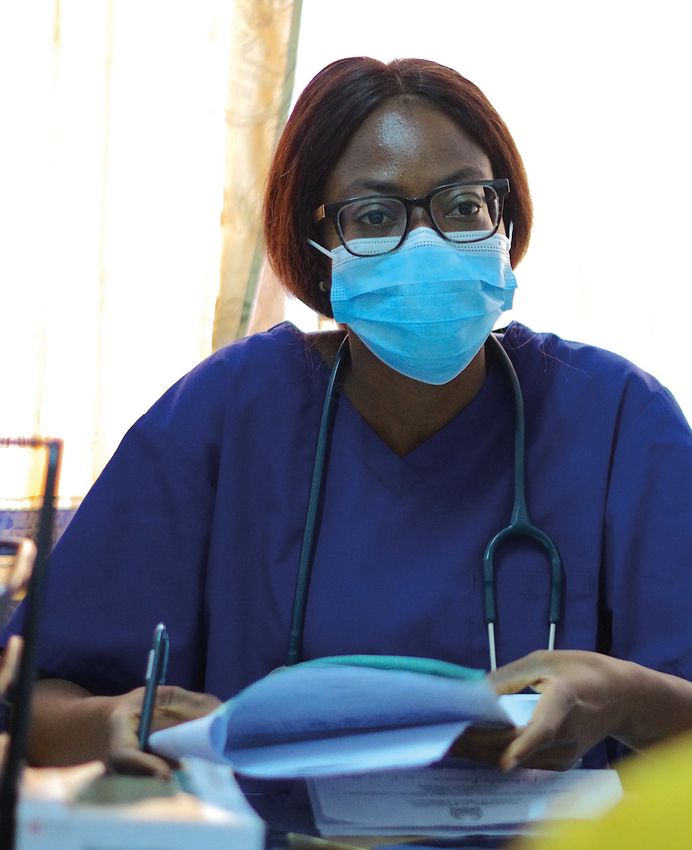

REDUCING THE MALARIA BURDEN IN SIERRA LEONE

Tackling malaria
in partnership
Malaria has a frightening grip on Sierra Leone,                    the quality of care for patients that suffer
as in many countries in Sub-Saharan Africa.                        from fever, a major symptom of malaria.
Its entire population, some 7 million people,
                                                                   King’s Global Health Partnerships (KGHP)
are vulnerable to this deadly disease.                             works with health facilities, academic
                                                                   institutions and governments to strengthen
               The numbers in Sierra Leone alone are               health systems and improve the quality
               staggering. Over 2,240,000 hospital visits are      of care in four countries: Somaliland,
               attributable to malaria each year with almost       Sierra Leone, the Democratic Republic
               half of those children under the age of five1.      of Congo and Zambia.
               Thousands of people of all ages – parents,
               siblings, neighbours, friends – die unnecessarily   We bring together expertise from King’s
               at the hands of this curable disease.               College London, the UK’s National Health
                                                                   Service (NHS) and our international partners
               Those who survive malaria often struggle            to educate, train and support healthcare
               to work or attend school due to its residual        workers; strengthen healthcare and training
               effects. Families often have to step in to          institutions; and enhance national health
               support patients with money they don’t have.        policies and systems.
               Despite vast improvements in malaria care over
               the last decade, the burden of malaria in Sierra    The SHIFT project, which began in September
               Leone remains ever-present and long-lasting.        2017, used a health system strengthening (HSS)
                                                                   approach to build capacity, skills and processes
               It is in this challenging context that King’s       at Connaught Hospital.
               Global Health Partnerships in Sierra Leone
               has delivered Strengthening Health Systems          During the project, KGHP’s multidisciplinary
               to Improve Fever management (SHIFT).                team has supported a range of areas across
               SHIFT is a three-and-a-half year project            the hospital, including clinical support,
               funded by Comic Relief and GSK to improve           monitoring and evaluation, supply chain
                                                                   management, patient support and advocacy
                                                                   and laboratory capacity building. The project
                                                                   has been completed in close collaboration
                                                                   with the Ministry of Health and Sanitation
                                                                   (MoHS) and the National Malaria Control
                                                                   Programme (NMCP).

                                                                   Reducing the burden of malaria in Sierra
                                                                   Leone is a complex challenge. Improvements
                                                                   are needed at all parts of a patient’s diagnosis
                                                                   and treatment if the country is to rid itself of
                                                                   the disease.

                                                                   This is the story of the SHIFT project as told
                                                                   through a typical patient’s journey through
                                                                   Connaught Hospital, Sierra Leone’s main
                                                                   tertiary referral hospital based in Freetown,
                                                                   where thousands of patients visit every year.

                                                                   1 P RE S I DE NT ’S MAL ARI A I NI T I AT I V E , 2 018 - 2 01 9 S I E R R A
                                                                      L E ONE MAL ARI A OP E RAT I ONAL P L AN

                                                                          KI N G’ S GLOB A L HEA LTH PA RTN ER S HIPS • 3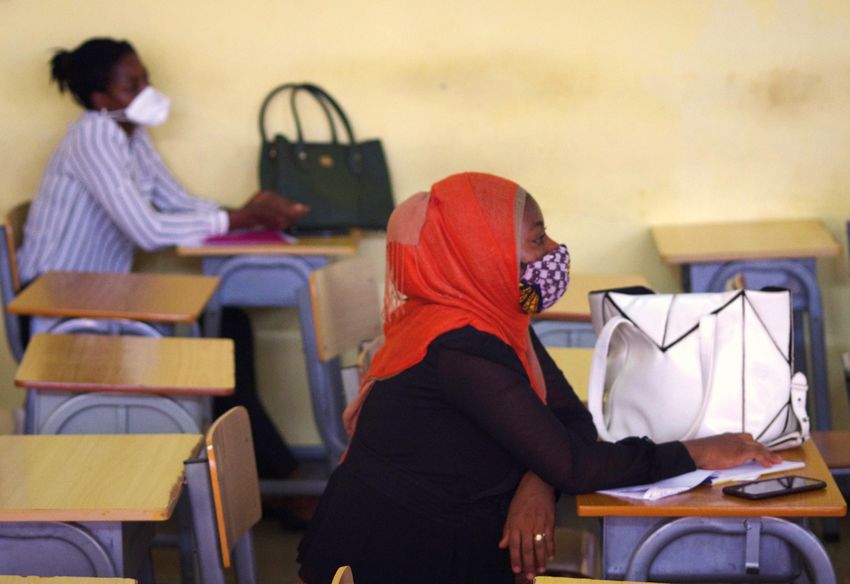
REDUCING THE MALARIA BURDEN IN SIERRA LEONE REDUCING THE MALARIA BURDEN IN SIERRA LEONE
Steps to success SHIFT in
Average
numbers
Completion of six-month audit to benchmark the accessibility and waiting time
quality of malaria care at Connaught Hospital. It found that there were: 4h over 4 hours
2017 months of the grant to
35 steps to access free malaria 10 additional steps Limited clinical
35
improve malaria care
testing, compared to one step for a patient to receive knowledge and
at private pharmacy free malaria treatment awareness of malaria
members of the multidisciplinary
team working to improve supply
chain management, clinical
Creation of guides and Connaught Hospital laboratory needs standards, patient advocacy
How did the SHIFT project training for laboratory assessment in collaboration with Ministry and laboratory capacity
staff to improve of Health and Sanitation (MoHS) and
address these challenges?
accuracy of testing development of quality improvement plan
2018
Expansion of Rapid Diagnostic Test (RDT) in the hospital Introduction of training for healthcare
and development of Standard Operating Procedures (SOPs) workers to improve fever management
to improve availability and testing turnaround times and malaria diagnosis junior doctors, nurses, lab
technicians, pharmacists and
surveillance officers at Connaught
Hospital trained and mentored
Launch of first in the country Patient Continued capacity building Creation of
Advocacy and Liaison Service (PALS) of laboratory staff, clinicians laboratory stock step reduction for patients
pilot to support patients and help and nurses through monthly management to access free malaria testing.
navigate hospital services training and mentoring system Prior to SHIFT it was 35 steps;
now there are only 3 steps
2019 for patients to access care
Electronic Laboratory Information Development of Introduction of a prescription
Management System (eLIMS) national guidelines form specific to malaria
introduced in the laboratory, the first for severe malaria to make treatment more of nurses and doctors
in a government facility in the country treatment accessible to patients surveyed were able
to correctly identify
first-line antimalarial
medication, as a result
of SHIFT project
3access
Strengthening of pharmacy Introduced Rapid Collaborated with President’s
department through internal Diagnostic Test (RDT) Malaria Initiative and Impact Malaria
stock management system step to accident and on national malaria microscopy
and improved data reporting emergency department training for laboratory staff of nurses, doctors and laboratory
staff that said that the impact
2020 of SHIFT project on malaria
First laboratory staff began to use Electronic PALS pilot handed over management and diagnosis
Laboratory Information Management to Ministry of Social was ‘positive’ or ‘very positive’
System (eLIMS) and patients begin Welfare and expanded
receiving printed test results to other facilities
4 • K IN G ’ S G LO B A L H E ALTH PARTNE RS H IP S KIN G ’S G LOB A L H E A LT H PA RT N E R S H I P S • 5
Services strengthened
by SHIFT
INCREASED MALARIA
TESTING AT TRIAGE
                       When a patient with suspected malaria arrives
                       at Connaught Hospital, they will have an array
                       of symptoms including fever, muscle aches,
                       nausea and headaches. As they wait to be seen
                       in the triage area, they may also be suffering
                       from vomiting and diarrhoea.

                       Once they are called, one of the on-duty
                       nurses will quickly and carefully check the
                       severity of their condition in order to ensure
                       that the most unwell patients are seen as
                       soon as possible by a doctor.

                       Prior to the SHIFT project, malaria rapid        out in triage, due to poor knowledge of hospital
                       diagnostic tests (RDTs) were rarely carried      guidelines, unregulated prescribing practices
                                                                        and a limited supply of tests. Now, if a patient
                                                                        is suspected of having malaria, a trained nurse
Whenever a patient comes for treatment,                                 will do a malaria RDT before sending them
we should make sure we diagnose properly                                to a doctor to receive the correct treatment.
          to know what the illness is that has                          The SHIFT project has made a vital
            brought that patient to the hospital”                       intervention: redesigning the patient
                                                                        charts to include a designated space for
                   SISTER FINDA CHRISTIANA                              malaria RDT results. The effect has been
                   KPANGE, NURSING OFFICER,                             to ensure RDTs are routinely carried
                  CONNAUGHT HOSPITAL                                    out and to increase the likelihood that
                                                                        patients will receive appropriate care.

                                                                        Furthermore, the project has provided
                                                                        practical RDT training for over 30 nurses,
                                                                        and developed flowcharts describing
                                                                        how to treat malaria. This has improved
                                                                        confidence among frontline workers; one
                                                                        nurse said that they were “proud to tell
                                                                        the patient that I’m going to do the test”.

                                                                        On top of that, ledgers have been introduced
                                                                        to keep track of malaria testing and treatment
                                                                        commodities, increase transparency of supplies
                                                                        and improve accountability. Small group
                                                                        training sessions of nurses in all wards has also
                                                                        reiterated the importance of data collection for
                                                                        the regular supply of RDTs and, more widely,
                                                                        a successful healthcare system.

6 • K IN G ’ S G LO B A L H EALTH PARTNE RS H IP S
SERVICES STRENGTHENED BY SHIFT

BETTER PATIENT INFORMATION
AND ADVOCACY
               Getting treatment at Connaught Hospital           to a PALS officer to answer questions about
               is not always straightforward, especially for     Connaught and the hospital services offered
               patients who are visiting for the first time.     on site. Posters around the hospital explain
               For those with suspected malaria in particular,   how they can contact the PALS officer, who is
               getting the right treatment can be challenging    also available via phone during working hours.
               and, at times, daunting.
                                                                 Feedback from patients that have used PALS
               This is where Patient Advocacy and Liaison        – which was the first service of its kind at a
               Service (PALS) has proved useful. As part of      government facility in Sierra Leone – suggests
               the SHIFT project, patients are able to speak     it has helped to reduce patient stress by making
                                                                 it easier to navigate the hospital and clarifying
                                                                 the cost of treatment.
[The PALS officer] supported me to get my
medical request approved and facilitated the                     Those who have benefited from the expertise
                                                                 of the PALS officer said that they would
process for me to get treatment quickly. It would                recommend the service to family members
have been difficult for me if you were not around                and others in their community. Its impact has
to assist me, because I virtually do not have any                also led to the Ministry of Social Welfare and
understanding of the processes”                                  Connaught’s management team to maintain
                                                                 the service after the SHIFT project, with the
PATIENT AT CONNAUGHT HOSPITAL                                    planned posting of social workers to Connaught.

                                                                     KI N G’ S GLOB A L HEA LTH PA RTN ER SHIPS • 7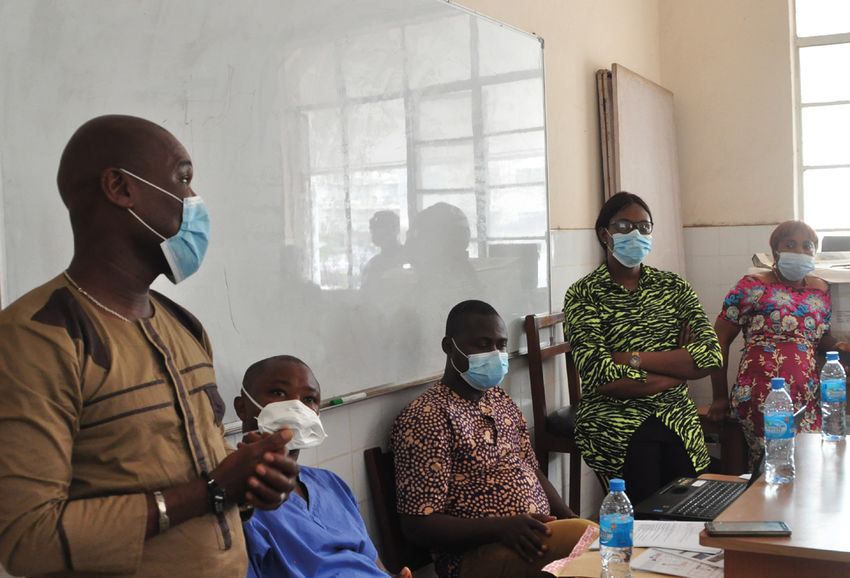
SERVICES STRENGTHENED BY SHIFT

IMPROVED MALARIA
MANAGEMENT BY DOCTORS
                       After being triaged and, in some cases,           There is still work to be done, particularly
                       consulting the PALS officer, patients wait to     when it comes to documentation and treating
                       see the duty doctor in a nearby consultation      cases of severe malaria. But this intervention,
                       room. This is a crucial step in the diagnosis     and the transfer of teaching materials to the
                       and treatment of malaria.                         hospital for ongoing rollout, ensures all junior
                                                                         doctors in Sierra Leone are effectively and
                       However, with only a limited time to see          routinely trained to identify key symptoms
approximately
                       each patient and pressures on demand,             of malaria.
   one third
  of patients          doctors can fail to recognise malaria symptoms.
 present with          In the past, it has sometimes taken a long
    fever at           time to get accurate results from tests. This
  Connaught            meant doctors sometimes gave antimalarials
                       without a positive malaria diagnosis, so some
                       patients were misdiagnosed.                       I noticed after the training, [house
                                                                         officers] are more confident to
                       Fever management training provided by the
                       SHIFT team in partnership with Ministry
                                                                         say why they’ve prescribed such
                       of Health and Sanitation (MoHS) has               and such drug for a patient and
                       helped to equip over 100 house officers           why they make such a decision
                       with the knowledge and tools to conduct           to treat for it as severe malaria or
                       a comprehensive assessment.                                   uncomplicated malaria”
    85% of
   patients            The sessions encourage junior doctors to
  correctly                                                                               DR SORIE CONTEH,
suspected of           consider all possible causes of fever, which                       CO-ORDINATOR OF
malaria have a         became especially important in March 2020
                                                                                          MALARIA CARE AT
confirmatory           when the global COVID-19 pandemic hit
   test (an            Sierra Leone.                                                     CONNAUGHT HOSPITAL
 increase of
65% between
October 2018
 and August
    2020)

    92% of
 patients with
   confirmed
    malaria
  receive first
line treatment
  (an increase
    of 47%)

8 • K IN G ’ S G LO B A L H EALTH PARTNE RS H IP S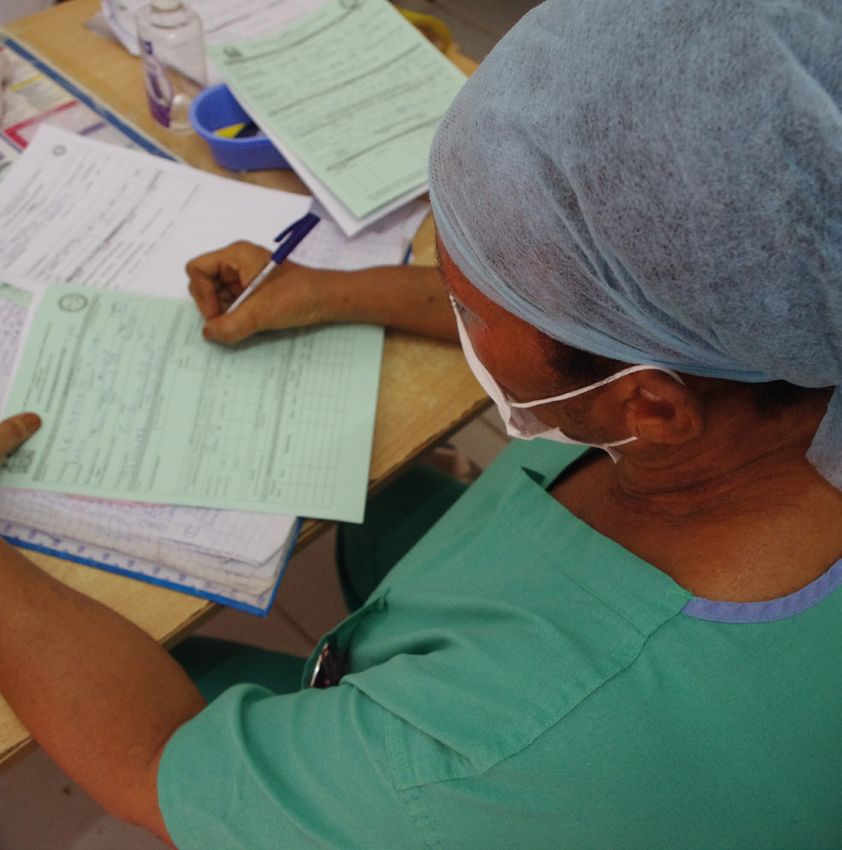
SERVICES STRENGTHENED BY SHIFT

GOING DIGITAL: ELECTRONIC
LABORATORY SYSTEM
               When doctors can’t be sure of the cause of       Laboratory Information Management
               fever, patients are referred to Connaught’s      System (eLIMS) has supported laboratory
               on-site laboratory for diagnostic testing.       staff by helping to improve turnaround
               Here, quick turnaround and accurate results      time, reduce clerical work and limit the
               can be the key to effectively managing malaria   risk of errors.
               symptoms and correct diagnosis through
               funded malaria testing.                          Alongside this, twice-monthly training
                                                                has been provided to laboratory staff on
               However, Connaught’s paper-based test            topics including good laboratory practice,
               reporting system meant that it has been          phlebotomy and malaria microscopy. New
               under-utilised by clinicians, resulting in       standard operating procedures and one-on-
               patients being confused about how to get         one mentorship by the SHIFT team have also
               a test and often paying for tests at private     increased confidence among the laboratory
               laboratories. This means patients don’t          staff and the wider hospital.
               get the care they need or pay for tests.
                                                                Laboratory results are now rarely misplaced,
               A new electronic system for securely storing     which was a common occurrence before
               and printing patient results was introduced      implementation, and doctors are increasingly
               to increase the standard of testing processes    sending patients for further testing. This bodes
               and substantially decrease patient waiting       well for the long-term future of Connaught
               time. Through a simple set up of four laptops    laboratory and the standard of treatment
               and a dedicated server, the Electronic           received by patients.

Entering samples before was time-consuming.
With this eLIMS system, it reduces the timeframe
            and I now have more time to spend
             in a queue of patients when
              I have a lot of them”
            OSMAN CONTEH, MEDICAL
           LABORATORY SCIENTIST

                                                                    KI N G’ S GLOB A L HEA LTH PA RTN ER SHIPS • 9
SERVICES STRENGTHENED BY SHIFT

BETTER SUPPLY CHAIN
MANAGEMENT AT PHARMACY
                       For patients diagnosed with malaria,          prescription another day. This, understandably,
                       Connaught’s on-site pharmacy is the next      undermined confidence in the hospital.
                       destination. Here, patients receive free
                       treatment supplied by the National Malaria    Due to changes in guidelines, doctors were
                       Control Programme (NMCP) that have            also in the habit of incorrectly prescribing
                       been prescribed by the doctor.                patients with branded anti-malarials that
    73% of
                                                                     required payment, even when the free,
  confirmed
malaria cases          However, a complex system of requesting       generic version was available.
   are now             for supplies meant that ‘stock outs’ were
  receiving            all too common. Patients, already tired and   Thanks to SHIFT, Connaught has a more
free, first line       weak, were asked to come back with their      sustainable system of requesting, storing and
  treatment                                                          supplying antimalarials. An improved stock
                                                                     management system with stock cards enables
                                                                     store managers to quickly, efficiently and
                                                                     reliably monitor their stock levels.

                                                                        The introduction of a specific malaria
                                                                            prescription form has enabled the
                                                                              prescription of NMCP-funded,
                                                                              generic medication and reduced
                                                                              the likelihood of patients having
We have tried to really minimise [stock                                       to pay for treatment.
outs] because of the intervention of SHIFT...
                                                                          These changes are supported by
            now we have tried to put                                      enhanced reporting of usage of supplies
             some mechanisms in place”                                     and malaria rates within the hospital,
                                                                            resulting in just one stock out since the
                     DR MOHAMMAD BAWOH,                                      start of 2020. It means thousands of
                     HEAD OF PHARMACY AT                                      patients have been able to access the
                    CONNAUGHT HOSPITAL                                        right drugs to deal with their fever.

10 • K IN G ’ S G LO B A L H EALTH PARTNE RS H IP S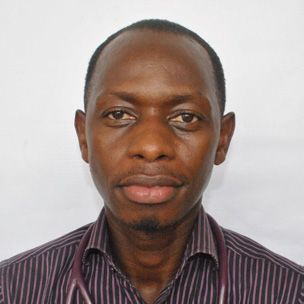
SERVICES STRENGTHENED BY SHIFT

IMPACT BEYOND
CONNAUGHT HOSPITAL
     As well as improvements to patient care           team have also assisted with national malaria
     at Connaught, the SHIFT project’s close           microscopy training in collaboration with
     collaboration with the Ministry of Health         the President’s Malaria Initiative and Impact
     and Sanitation (MoHS) has meant that other        Malaria project.
     healthcare facilities have benefited from work
     of the last three and a half years.               The MoHS has also rolled out eLIMS
                                                       nationally and the Ministry of Social
     For example, step-by-step guides and clinical     Welfare will implement PALS in seven
     resources for patients with severe malaria have   other healthcare facilities within the next
     been disseminated to government hospitals         year. This demonstrates SHIFT’s wider
     in Freetown and nationally, saving precious       impact on the quality of malaria diagnoses
     time and resources. Members of the SHIFT          and treatment in Sierra Leone.

  Future
  opportunities
     The quality of malaria care has improved          will lead to malaria-free zones in Africa
     considerably at Connaught Hospital as a result    within the next decade, and the eventual
     of the SHIFT project. Nurses have a steady        eradication of the disease by 2040.
     supply of RDT tests to diagnose patients;
     doctors have the confidence to differentiate      Until then, malaria will continue to
     between malaria and other diseases; and           affect the lives of Sierra Leoneans and
     patients can be more confident about the          pose a threat to children and women,
     diagnosis and treatment given to them at          in particular. There is no time to waste.
     Connaught Hospital. Diagnosis and treatment
     have improved. Lives have been saved.

     However, there is clearly a long way to go
     before malaria is eradicated in Sierra Leone.
     Prevention and treatment interventions,
     like the SHIFT project, are a crucial part of
     the National Malaria Control Programme’s
     strategy. KGHP calls on funding organisations
     to continue to invest in work like this that

                                                           KI N G’ S GLOB A L HEA LTH PA RTN ER SHIPS • 1 1
THANKS AND ACKNOWLEDGEMENTS We are grateful to all the dedicated staff at Connaught Hospital that have worked alongside King’s Global Health Partnerships during the SHIFT project. We couldn’t have done it without them. In particular, we would like to thank the Ministry of Health and Sanitation (MoHS), National Malaria Control Programme (NMCP) and College of Medicine and Allied Health Sciences (COMAHS) for their commitment to working in partnership with us to strengthen the health system of Sierra Leone. Finally, a note of thanks for the support provided by the team at Comic Relief and GSK during the coronavirus pandemic. Their flexibility and adaptability enabled the SHIFT team to work closely with the hospital at a time of great need. KING’S COLLEGE LONDON Centre for Global Health and Health Partnerships Suite 2.13 Weston Education Centre, Cutcombe Road, London SE5 9RJ T: 020 7848 5060 E: kghp@kcl.ac.uk W: kcl.ac.uk/KGHP TWITTER @KingsGHP
You can also read


