Rehabilitation under fire - health care in Iraq 2003-7
←
→
Page content transcription
If your browser does not render page correctly, please read the page content below

rehabilitation under fire
       health care in Iraq 2003-7

                                    enduring effects offc1
This report describes how the war and its aftermath continue to have a disastrous impact on
the physical and mental health of the Iraqi people, and the urgent measures needed to improve
health and health services. It focuses on the many failures of the occupying forces and their
governments to protect health, or to facilitate the rebuilding of a health system based on
primary health care principles. It assesses the current state of the health system, including the
impact of insecurity, and the workforce, supplies, medicines and equipment it lacks. It also
looks at health information and health policy. There is a special focus on mental health care, a
particularly neglected area. The report ends with conclusions and recommendations, exploring
what needs to happen now in Iraq and what lessons can be learned.

Keywords: conflict, security, health, health care, international development, Iraq

This report, an executive summary and other related information are available from the
Medact office and on the Medact web site – www.medact.org

Published In London, UK, 2008 by Medact
The Grayston Centre, 28 Charles Square, London N1 6HT, United Kingdom
T +44 (0) 20 7324 4739 F +44 (0) 20 7324 4734
E info@medact.org         Website at www.medact.org

Registered charity 1081097 Company reg no 2267125
© Medact 2008

Research and editorial team                                                                                         Report published in
Dr Heba Al-Naseri, MBBS, BSc, general practitioner trainee                                                          association with International
Ms Marion Birch, BA, MSc, SRN, SRM, director of Medact                                                              Physicians for the
Dr Judith Cook, MB, BChir, DTM and H, Diploma in Development Studies, general practitioner; Medact board            Prevention of Nuclear War,
member; and member of the Medact working group on violence, conflict and health                                     of which Medact is the UK
Dr Jack Piachaud, BM, Bch, FRCPsych, psychiatrist; Medact board member; and member of the Medact                    affiliate. IPPNW, the recipient
working group on violence, conflict and health                                                                      of the 1985 Nobel Peace
Ms Jane Salvage, RGN, BA, MSc, HonLLD, international health consultant and visiting professor, Florence             Prize, is located at 727
Nightingale School of Nursing and Midwifery, King’s College London, UK                                              Massachusetts Avenue,
Dr Sonali Sharma, MD, MSc, researcher in mental health and conflict                                                 Cambridge, MA, USA,
                                                                                                                    tel +1 617 868 5050,
Advisers                                                                                                            fax +1 617 868 2560,
Dr Majid Alyassiri, MBCHB, FRCPsych, consultant psychiatrist, St George’s Hospital, London, UK                      www.ippnw.org
Dr Olga Bornemisza, ME Des, MSc, Research Fellow, Conflict and Health Programme, London School of
Hygiene and Tropical Medicine, UK                                                                                   The financial support of the
Ms Suzanne Fustukian, BA MSc Senior Lecturer, International Health, Institute for International Health and          Allan and Nesta Ferguson
Development, Queen Margaret University, Edinburgh, UK                                                               Charitable Trust is gratefully
Professor Richard Garfield, RN, DrPH, manager, Health and Nutrition Tracking Service, Health Action in Crisis       acknowledged
Cluster, World Health Organization; and Henrik H. Bendixen Professor of Clinical International Nursing, School of
Nursing, Columbia University, New York, USA
Dr Ulrich Gottstein, retired professor of internal medicine, University of Frankfurt, Germany; co-founder,
IPPNW-Germany; retired IPPNW Vice-President, Europe; and member of frequent humanitarian missions to Iraq
Dr Ali Kubba, MB ChB, FRCOG, FFFP, consultant community gynaecologist and honorary senior lecturer, Guy's,
Kings and St Thomas' School of Medicine; and honorary professor, Basra School of Medicine, Iraq
Dr Sabah Sadik, MBCHB, FRCPsych, DPM, mental health adviser, Iraq
Professor Victor Sidel, MD, Distinguished University Professor of Social Medicine, Montefiore Medical
Center/Albert Einstein College of Medicine, New York, USA; and past president, International Physicians for the
Prevention of Nuclear War
Dr Egbert Sondorp, Senior Lecturer, Public Health and Humanitarian Aid, London School of Hygiene and
Tropical Medicine, UK
Professor Anthony Zwi, School of Public Health and Community Medicine and Associate Dean (International),
Faculty of Medicine, University of New South Wales, Sydney, Australia

Logistics and distribution Moyra Rushby, office manager, Medact         Design Sue MacDonald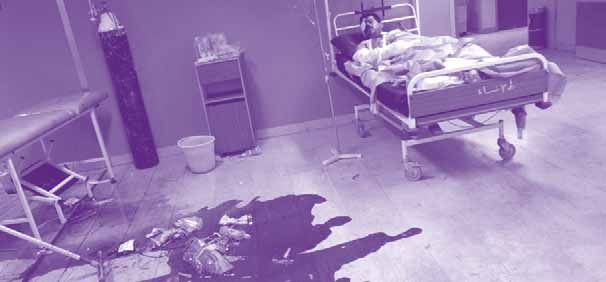
Introduction
‘A little understood, unfamiliar war’                       A wide range of data has been reviewed (see page 13)
– US defence secretary Donald Rumsfeld,                     and many people were consulted. Security is a major
resignation speech, November 8, 2006                        consideration for those working in and for Iraq today.
Medact’s five earlier Iraq reports presented data on        Some of those whose input shaped this report wish to
health and health services, and thus helped to fill some    remain anonymous. Their contributions are as fully
noteworthy gaps (Medact 2002, 2003, 2004; Yates             appreciated as those from people who are named.
2005; Reif 2006). There has been a gradual and
                                                            We wish to look to the future rather than apportion
welcome increase in such information from major
                                                            blame. However, the avoidance of future ‘mistakes’
agencies including the World Health Organization
                                                            requires as a minimum an objective evaluation of why
(WHO 2006a, 2006b), the International Committee
                                                            best practice was frequently not followed in Iraq, and
of the Red Cross (ICRC 2007) and Oxfam
                                                            in whose interests certain decisions were taken. We
(Oxfam/NCCI 2007). In this report Medact shifts its
                                                            hope this report contributes to that evaluation.
focus to an assessment of the quality of the support
given to the Iraqi health system after the 2003
invasion.                                                     BOX 1 THE CONTEXT
WHO defines the ‘health system’ as all activities
whose primary purpose is to promote, restore or               Iraq today is a failing state with a complex health
                                                              emergency. Its government has neither authority,
maintain health (WHO 2000). This report does not
                                                              credibility, administrative capacity nor ability to
directly address the wider determinants of health,
                                                              impose and guarantee order (Dodge 2007, Iraq
such as the cost of living or food security, but this in
                                                              Commission 2007). The country has fractured into
no way underestimates their importance.
                                                              regional power bases with not ‘one’ civil war nor
WHO has highlighted the need to learn lessons from            ‘one’ insurgency, but several (Stansfield 2007).
post-conflict situations worldwide, and encourages us
                                                              The state of health services reflects these regional
to ‘share knowledge and experience (both of what              variations. In the Kurdish region of northern Iraq,
works and does not work) which can be widely                  where the relatively safer conditions are often
disseminated’. Despite the continuing conflict in Iraq,       popularly described in glowing terms, some
it is important to start analysing why things happened        improvements have been made but the population
as they did; derive lessons for the future; and take          nevertheless still has no access to free, safe, high
urgent measures to improve health and healthcare.             quality health services.

Post-conflict health sector rehabilitation is a               The narratives about the attempts to rebuild the
specialised area; this report aims to discuss its             health system are complex and conflicting. This is
principles, as applied to Iraq, with a wider audience.        partly due to the highly politicized context and the
Prepared by an independent team of researchers and            large number of stakeholders, whose influence has
advisers from Iraq, the UK, the US and elsewhere, it          fluctuated. They include the Iraqi government(s); Iraqi
reviews developments in Iraq in the light of                  political, military, tribal and religious leaders; seven
international humanitarian law, and guidance on best          ministers of health – both US and Iraqi nationals;
practice (for example, High-Level Forum on the                Iraqi nongovernmental organizations (NGOs),
Health Millennium Development Goals 2005; Tayler              including those in the diaspora; the governments,
2005; WHO undated, accessed 2007).                            civil servants and military leaders of the occupying
                                                              powers; foreign for-profit and nonprofit organizations
The report starts with an update on the Iraqi health          given reconstruction contracts; the UN and its
system and its vulnerability. Five major aspects are          specialist organizations; international NGOs; and
then considered: policy, human resources,                     other foreign interests. At the best of times it would
infrastructure, supplies, and health information. The         be difficult to devise and implement a rehabilitation
centre spread summarizes key issues. Although this            programme to engage all these stakeholders, and
report does not focus on specific areas of health need,       these were hardly the best of times.
we have made one exception: mental health. This
receives less attention than other health issues, yet its
long-term impact on a country’s future is profound.
Finally, we offer conclusions and recommendations.

                                                                                          rehabilitation under fire      1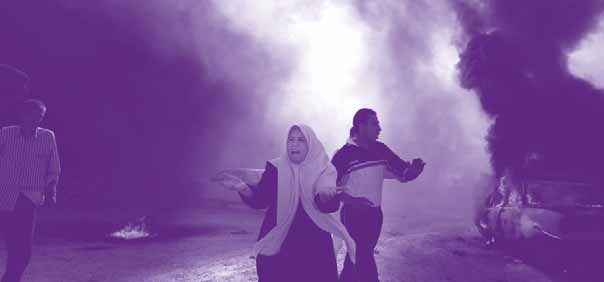
A health system under pressure
    The demands on the Iraqi health system have                Against this backdrop, the provision of basic,
    increased considerably since 2003, including trauma        sustainable health services is very challenging. ‘Iraqi
    and mental illness. Numerous reports document poor         hospitals are not equipped to handle high numbers of
    and generally deteriorating health. Collection of          injured people at the same time,’ says Dr Ali Haydar
    accurate health information is extremely difficult in a    Azize, Sadr City Hospital (IRIN 2007a). Junior staff
    country described as currently the most violent and        frequently perform procedures beyond their
    dangerous place on our planet (Global Peace Index          competence (Iraqi Medical Association 2007), while
    2007), but reputable studies suggest:                      families usually provide nursing care. Professional
    • High conflict-related mortality and morbidity (eg        expertise is in even shorter supply in remote and rural
      Burnham et al 2006, UNICEF 2007).                        areas, and in primary health care. Many routine
    • Death rates of children under five sliding towards       treatments are not available, including for chronic
      those of sub-Saharan Africa (Save the Children           conditions like asthma and diabetes. Those who can
      2007).                                                   afford it travel abroad - often to Jordan or Syria - to
    • Eight million Iraqis in need of emergency aid            be treated at great risk and expense by Iraqi doctors
      (Oxfam/NCCI 2007).                                       practising privately.
    The duty of the state to meet this demand is               The unregulated health economy, the need to
    recognized in Iraq’s 2005 constitution: ‘The State         maximize       professional     income, and        the
    takes care of public health and provides the means of      individualistic, specialty-focused traditions of Iraqi
    prevention and treatment by building different types       medicine are creating a fragmented fee-for-service
    of hospitals and medical institutions.’ However, the       system mainly delivering curative care. This cannot
    obstacles are formidable.                                  meet basic health needs effectively, and is beyond the
                                                               average citizen’s pocket.
    The health-supporting infrastructure, already in a
    fragile state following over 20 years of conflict and
    sanctions, was severely damaged by the invasion and          BOX 2 HAVING A BABY IN IRAQ
    subsequent looting. Despite some rehabilitation
    efforts, the provision of health care has become             ‘Aseel had been in labour for three days. It was
    increasingly difficult since 2003. Doctors and nurses        difficult for her, harder still with no pain-relief, doctor
    have emigrated en masse, exacerbating existing staff         or midwife. These were too expensive for us, but we
    shortages. The health system is in disarray owing to         now had no other option.
    the lack of an institutional framework, intermittent
                                                                 ‘After parting with my first banknote to secure petrol
    electricity, unsafe water supply, and frequent
                                                                 from my neighbour, we prayed for safety during our
    violations of medical neutrality. The Ministry of
                                                                 long trip to Diwaniyah Maternity Hospital in the dark.
    Health and local health authorities are mostly unable
                                                                 Thankfully we arrived safely, and were greeted by
    to meet these huge challenges, while the activities of       the open hand of the security guard. We parted with
    UN agencies and nongovernmental organizations are            another note to get in. It took a long time to find a
    severely limited.                                            midwife. Eventually a sleepy midwife answered my
    User fees were eliminated in 2003 in line with the           pleas, and we exchanged papers, notes and
    Coalition Provisional Authority’s initial policy of care     promises to bring more notes. Amin, my first son,
    free at the point of delivery. They were quietly             was born next morning.

    reinstated, however, as the negative knock-on effects        ‘Aseel developed a serious kidney infection and
    of reduced flexible income on salaries and local             needed antibiotics, but we couldn’t get them in
    purchasing had not been anticipated. The total health        Diwaniyah. Amin had to be fed powdered milk
    expenditure rose from US $23 per capita in 2003 to           diluted with tap water. There wasn’t enough money
    $58 in 2004 (the latest year for which figures are           to buy formula milk, so we had to make it last.
    available), nearly half of it out-of-pocket payments
                                                                 ‘Amin survived one of the toughest milestones of his
    (WHO 2007a). The Ministry of Health was unable
                                                                 life – birth. But by Iraqi standards his life of hardship
    to spend all of its budget in 2006-7 owing to
                                                                 had just started.’
    bureaucratic obstacles and difficulties with imports.
                                                                 From a personal interview conducted in Diwaniyah, 2005

2      rehabilitation under fire
The failure to protect
The Geneva Conventions require the occupying                  actions must have come from a senior level (personal
powers to ensure public order so they can fulfil the          communication).
following health-related responsibilities:
                                                              Priority access to healthcare is sometimes
• Civilian hospitals should not be attacked and should
                                                              commandeered by powerful groups. Iraqi factions
  be respected and protected at all times (IV, Article 18).
                                                              have committed numerous violations of international
• People engaged in the operation of civilian
                                                              law, with patients’ relatives and insurgents demanding
  hospitals should be protected (IV, Article 20).
                                                              treatment at gunpoint. Killings, kidnappings,
• Health workers should be allowed to carry out
                                                              intimidation and abuse of staff by insurgent and
  their duties (I, Article 19, and IV, Article 59).
                                                              criminal gangs are widespread, and women health
• Consignments of medical stores and foodstuffs
                                                              workers in particular often stay home. An Iraqi whose
  should be allowed free passage (IV, Article 23).
                                                              cousin was killed after being taken from his hospital
• Health services, public health and hygiene should
                                                              bed said: ‘We would prefer now to die instead of
  be maintained (IV Article 56), including facilitating
                                                              going to the hospitals. The hospitals have become
  assistance from relief agencies and other states (IV
                                                              killing fields’ (Paley 2006).
  Article 59).
After the transfer of authority to an interim Iraqi           Violation of medical neutrality
government in 2004, the conflict was redefined as an
                                                              The takeover of healthcare facilities for military use
‘internationalized internal armed conflict’ (ICRC
                                                              has deterred patients from using health services and
2005). When occupying powers operate through a
                                                              staff from going to work. Fallujah General Hospital
newly appointed government, they are still
                                                              was occupied by Coalition forces during military
responsible as outlined above. Yet these rules and
                                                              operations in 2004 (Seth et al 2006, Turlan and
obligations have routinely been ignored.
                                                              Mofarah 2006). In April 2007, Iraqi soldiers beat up
                                                              staff at Al Numan, a Baghdad hospital serving mainly
Damage to health facilities                                   Sunnis (Doctors for Iraq 2007). They claimed to be
Health facilities were not protected during or after          under orders from the Ministry of Health.
the invasion. Approximately 7% of hospitals were
                                                              Armed forces often provide ad hoc assistance to
damaged initially (Garfield 2003) and 12% were
                                                              civilians during conflict, but a more overt and
looted. Many ministry buildings were destroyed, and
                                                              planned humanitarian involvement was undertaken
only the ministries of oil and of the interior had
                                                              in an attempt to win hearts and minds in Iraq and
military protection (Medact 2003, Dodge 2007).
                                                              the US and UK electorates (Martins 2005, Seth et el
Looting and violence continued, usually unopposed,
                                                              2006). Such efforts undermine coordinated efforts to
and the damage and theft amounted in some areas to
                                                              rebuild sustainable health services.
a dismantling of health services. The country’s only
long-stay psychiatric hospital was one of the first to        The exodus of Iraqi doctors and nurses is partly
be looted, and the patients ran away. Al-Kindi                attributable to poor security conditions and the
Hospital, Baghdad, had ambulances and medicines               failure to protect (ICRC 2007). Iraq has also become
stolen at gunpoint. There are examples of local               the world’s deadliest country for aid workers (Turlan
action to prevent looting, suggesting that some of it         and Mofarah 2006). Most NGOs and international
might have been stopped with decisive military                organizations have left central and southern Iraq, or
intervention (Bhattacharya 2003).                             work clandestinely or remotely through staff who
                                                              risk their lives daily.
Restricted access to healthcare                               There are many precedents for these problems, which
facilities                                                    could and should have been anticipated
No humanitarian corridor was provided during the              (Christodoulou 2007): ‘The failure to provide
attacks on Fallujah in 2004, ambulances came under            adequate security is perhaps the single largest failure
fire and humanitarian convoys were denied access              of the reconstruction effort’ (Seth et al 2006). The
(Doctors for Iraq 2005). Elsewhere checkpoints,               Geneva Conventions continue to be violated and the
roadblocks and curfews have prevented health                  humanitarian space has not been regained (Hansen
workers and patients reaching health facilities, and          2004, Lafourcade 2005, Turlan and Mofarah 2006).
disrupted the distribution of supplies (Doctors for           Lessons from previous conflicts were not applied, and
Iraq 2006, IRIN 2007b). As such actions need the              patients and health workers remain vulnerable and
coordination of several platoons, authority for such          fearful.

                                                                                         rehabilitation under fire      3
Health policy and planning
    Health policy formulation in post-conflict settings        were encouraged to rebuild Iraqi hospitals, while
    should follow some key principles:                         other key policy concerns such as supporting health
    • Preparedness: create flexible plans based on local       workers received some resources but very limited
      knowledge and understanding of previous policy,          expert attention.
      to give direction and clarity in the confused post-
                                                               Invading Iraq without UN approval meant those
      conflict situation.
                                                               who knew most about postwar health planning were
    • Relief and recovery: provide immediate relief, and
                                                               mostly excluded from it in those early, critical
      simultaneously plan for longer-term needs and
                                                               months. There was no meaningful debate, and full
      capacity-building.
                                                               Iraqi participation was lacking. The Pentagon had
    • Participation: fully involve in-country leaders at all
                                                               virtual monopoly control of postwar reconstruction,
      levels, in partnership with humanitarian
                                                               a position reinforced by the bombing of the UN’s
      organizations.
                                                               Baghdad headquarters in 2003, which triggered the
    • Incrementalism: introduce agreed changes at a
                                                               withdrawal of most UN development personnel. For
      speed the system can absorb.
                                                               security reasons most UN programmes are still run
    These principles were generally ignored in Iraq, with      from neighbouring countries, except those in
    tragic consequences.                                       northern Iraq. WHO’s Iraq office has five field offices
                                                               but its headquarters are in Jordan.
    Prewar planning                                            Contracts awarded by the US comprised the largest
    Good practice in humanitarian assistance was               aid package from a single country since the Marshall
    recognized before the invasion by the US State             Plan.Yet the CPA allocated only 4% of the US $18.4
    Department, which warned of possible looting,              billion Iraqi Relief and Reconstruction Fund to
    service breakdown and humanitarian catastrophe,            health (Seth et al 2006), although it knew this budget
    and stressed the need for rehabilitation and               was inadequate (IRIN 2004).
    surveillance (Hahn et al 2007, National Security
                                                               Far bigger contracts were awarded to the private
    Archive 2007). But the internal US power struggle
                                                               sector than to expert health bodies like WHO,
    that derailed these plans was not resolved before
                                                               UNICEF and nongovernmental humanitarian
    deployment, and ‘caused great confusion in the field’
                                                               organizations (Seth et al 2006). These included
    (Burkle and Noji 2004).
                                                               contracts for training, capacity-building and
    Bypassing State Department/USAID processes, and            ‘strengthening’ the Ministry of Health as well as for
    sidelining relevant US and Iraqi expertise, the US         physical reconstruction activities.
    Defence Department secretly drew up its own plans
                                                               Meanwhile Iraqis had little opportunity to influence
    (Burkle et al 2007). It thought the infrastructure
                                                               the future of their health services. The enforced
    would survive intact, and envisaged rapid
                                                               sacking of Ba’ath party members (‘de-
    reconstruction carried out primarily by the private
                                                               Baathification’) removed many health experts from
    sector and funded by oil revenues (Christodoulou
                                                               senior posts, and clear and consistent leadership was
    2007). The UN also worked on its own post-conflict
                                                               lacking. At local level there was little or no inclusive
    health plans, but these were largely ignored. UK
                                                               policy-making or coordination with community
    planning advice was not heeded.
                                                               groups such as religious charities and mosques
                                                               (Hansen 2004, Lafourcade 2005, Turlan and Mofarah
    After the invasion                                         2006). Successive Iraqi ministers of health indicated
    WHO says post-conflict policy-makers should                commitment to rebuilding a primary care-led system
    maintain the health system’s basic functions, mending      with guaranteed access for the poor, and health care
    the cracks and cautiously introducing innovations          free at the point of delivery (WHO 2007c), but they
    (WHO undated, accessed 2007). This approach was            had little power to turn rhetoric into action.
    adopted in the very early days. Dr Frederick Burkle,
                                                               Nearly five years after the invasion, Iraq still has no
    who led USAID’s prewar planning, became the first
                                                               comprehensive health policy or funding strategy. The
    Interim Minister of Health in April 2003, but was
                                                               brief window of opportunity that opened after the
    replaced after two months by the less competent Jim
                                                               invasion was firmly closed by US military and
    Haveman - a clear signal that politics took
                                                               political conservatives, and remains closed today.
    precedence over expertise (Massing 2003,
    Chandrasekaran 2006). External private contractors

4      rehabilitation under fire
The health workforce
Rebuilding hospitals and health centres achieves little being nurtured. Those who do qualify may not be
without a parallel strategy to support the health fully competent, yet continuing professional and career
workers who staff them (WHO 2005). Good practice development opportunities are few.The roles of nurses
requires the following: and midwives are particularly poorly developed.
• Respect for medical neutrality in accordance with
international law. Piecemeal measures
• A clear, comprehensive policy on human resources
Some measures were taken to tackle these issues,
for health.
including pay rises for many health workers.
• Improvements in pay, working conditions and
Promising beginnings were also made on developing
other incentives to retain and develop the
policy on human resources for health. For example,
workforce.
WHO and US nurses helped Iraqi counterparts to
• Raising standards of care through appropriate
formulate a national strategy for nursing and
regulatory systems, basic education and continuing
midwifery in 2003 (Salvage 2007), but little further
professional development.
progress was made. As security deteriorated, most
• Relaunching professional associations and trade
external assistance remains on hold, although some
unions as effective independent organizations.
training opportunities have been provided inside and
Iraqi health workers are struggling against enormous outside the country. WHO, for example, has trained
odds to keep the service going.The steady outflow of nearly 34,000 people (WHO 2006a). However, the
professionals during the 1990s has turned into a impact of short courses and study visits is often
flood: up to 75% of doctors, pharmacists and nurses unsustainable, while partnerships with overseas health
have left their jobs since 2003, and over half of these institutions that offer pockets of solidarity and
have fled abroad (ICRC 2007, IRIN 2007c, IRIN support struggle to survive.
2007d, Iraqi Medical Association 2007). This may
In summary, this combination of events and
have left as few as 9000 doctors and 15,000 nurses
omissions is creating a poorly trained, overworked,
serving 28 million people, an extremely low
demoralized, fearful, underpaid health workforce in
professional to population ratio. For every 10,000
Iraq. Despite their dedication, many have reached
citizens there are only six doctors (compared with 23
breaking point. The implications are alarming. Iraqis
in the UK), 12 nursing staff (88 in the UK) and less
describe their health system as ‘beheaded’, because
than one midwife (WHO 2007a, 2007b). Dentists,
many of its brightest and best have already migrated,
pharmacists and managers are also in short supply.
while the practitioners, managers and teachers of the
Health professionals are almost completely absent
future are not being developed or supported.
from remote and rural areas. They are also numbered
among the estimated 2.2 million internally displaced
people (UNHCR 2007). B O X 3 L I G H T AT T H E E N D O F
The Ministry of Health and regional health THE TUNNEL?
authorities face similar staff shortages. There has been
There are occasional examples of successful health
a rapid succession of health ministers since 2003 (the
service rehabilitation in Iraq – effective and potentially
post became vacant in April 2007 and remained so at
sustainable because they adopt best practice
the time of writing), and a turnover of two-thirds of
principles. They are characterized by a long history of
the more senior civil servants in Baghdad and the
involvement in the country; partnership with state
governorates. De-Baathification of the machinery of
health authorities to provide mainstream health
government removed many experienced staff, and
services; and the protection of local and tribal leaders.
the Ministry has only a quarter of its complement. Local contractors refurbish the facilities and local
Those who remain face huge obstacles and in some health workers run the services, receiving training and,
cases lack the capacity to lead policy development, just as importantly, moral support. Such projects work
planning and implementation. closely with all relevant leaders, civil society,
Training has also been severely disrupted. Medical universities and international partners to build the
alliances, trust and expertise that are the foundation
schools and colleges struggle to stay open and students
stones of post-conflict health systems development.
face many threats to their safety and educational
experience (Iraqi Medical Association 2007).This seed To protect their employees and patients, these projects cannot be
named here
corn - the country’s future health professionals - is not
rehabilitation under fire 5the health care system in Iraq
Protec
for international h
ti ve: respect lity and
Objec se of medical neutra
n, ab u
ro tectio
c k of p
y: la
alit
Re
Human reso
Objective: clear
good pay and c
Governance professional dev
regulation
Objective: consistent,
Reality: overwor
experienced, influential
underpaid work
Reality: lacking risky and unregu
Health
influence, politicized, environment
information
experience not used
Objective: clear,
reliable, consistent, Infrastructur
useful supplies
Reality: inconsistent, Objective: stand
incomplete, Health financing repair and main
unreliable, politicized Objective: planned, budgets, orienta
linked to need and and workforce
overall policy Reality: political
Reality: short-term, motivated const
insufficient for need, supply, lack of i
no overall policy with HR strategy
implementation.
Obje
ctive
:o Health policy a
Real verall policy
ity: fr f r amework, sta
agme keholde
nted po
licy initiatives
, insuff
www.medact.orgq 2003-2007: vision and reality
c t i on
humanitarian law a
n d med
d international hu ical ne
manitari utrali
an law ty
, lack
of hu
m anit
ari an s
p ace
urces
policy,
conditions,
velopment,
rked and
ers in a
ulated Delivering
services
Health workers Meeting
struggling against health needs
re and
the odds in Unmet needs,
difficult, often high morbidity &
dardization, dangerous mortality
tenance circumstances; in
ated to task need of support
ly
truction and
ntegration
y, poor
.
ro ach
nt al app
a n d p l an n i ng re m e
lity, inc lementat
ion
t, fle xib i
r commitmen imp
r ti ci p a ti on , weak
ficient paHealth facilities and supplies
Re-establishing national supply and maintenance cost medicine available to those who needed it
systems post-conflict should not be neglected in favour (IRIN 2003). Objective assessment of the best way to
of delivering supplies and carrying out emergency use this ‘ready-made distribution system’ (Neep
repairs. The key principles of best practice are: 2003) was undermined by the US drive for
• Balancing physical rehabilitation with the privatization. Colonel Scott Svabek, appointed
development of the health workforce and supply Kimadia’s chief operating officer, said in September
systems. 2003 that vaccines and rabies treatment shots were
• Standardization of building design and equipment, ‘new private contracts ready to go’ (IRIN 2003).
as part of a national plan for supply, repairs and
The national formulary – the list of drugs supplied by
maintenance.
the Ministry of Health – was reviewed, and the CPA
• Basing national plans for infrastructure and supplies
asked the US Defence Department to help improve
on a clear understanding of the context and
the quality and quantity of medicines (Basu 2004). It
previous practice.
did not seek help from WHO, whose model lists of
essential medicines are used by 80% of countries
Rebuilding the infrastructure worldwide (WHO 2007d). The number of items in
Projects with rapid results and highly visible the existing formulary was reduced and the list
‘deliverables’ (such as building new clinics) are rebuilt to use more European and US suppliers (Basu
popular with parties to conflict and some donors, but 2004).
regarded with scepticism by others as the results are
After the handover to the transitional government
often difficult to sustain or incorporate in a new
the Ministry said 40% of the 900 essential drugs were
PHC-led health system. In Iraq, such projects
out of stock in hospitals, and 26 out of 32 drugs for
absorbed important resources inefficiently. Those
chronic diseases were unavailable (Chandrasekaran
who understood the need for a system-wide
2006). New health minister Aladin Alwan cancelled
approach could not prevail over the political need for
the formulary revisions and encouraged local
visible results that would ‘brand the postwar
pharmaceutical production. ‘We didn’t need a new
reconstruction efforts with the American flag’
formulary. We needed drugs,’ he said. ‘But the
(Denny 2003). The CPA, marginalizing Iraqi health
Americans did not understand that’ (Chandrasekaran
experts, thought there was no health infrastructure
2006).
worth preserving and no need to understand the old
system (Paterson 2006). With growing insecurity, inefficient delivery systems,
an absence of regulation and a flourishing cross-
Large health contracts were awarded with great haste
border black market, drugs are often in short supply
and little consultation, and their implementation
or out of stock – especially higher-cost medicines
lacked quality and local participation (Seth et al
such as those for childhood leukaemia. The
2006, Special Inspector General for Iraq
prescription medicines that patients buy in their local
Reconstruction 2007). For example, when 150 new
market are often counterfeit, adulterated or date-
health centres were built in Kurdistan, the regional
expired – and expensive; but ‘desperate families buy
director of health planning, Dr Lezgin Ahmed, said
them in an attempt to save the lives of their loved
he was consulted only about their location and
ones but thereby put them at high risk’, said Dr
would have preferred rehabilitation of existing
Abdel-Razaq, a Baghdad oncologist (IRIN 2007e).
facilities. Many were never finished because of
‘contractual problems’ (Chatterjee 2007). On the
other hand, work by local contractors in the southern Day-to-day operational costs
Marshlands produced good results – because it was In 2004 a request to reopen and top up the prewar
conducted in close consultation with local leaders, bank accounts of district health administrators was
was carefully supervised, and used relevant external refused as contrary to accounting procedures. These
expertise. still contained small but significant amounts that
could have been used for items such as generator
Medical supplies fuel. In the same year 13 Baghdad hospitals had 84%
of the ambulances they needed, only half of them in
Before 2003 the Iraqi State Company for Marketing,
working order (Jamail 2005). The importance of
Drugs and Medical Appliances, Kimadia, supplied
fixing such deceptively minor problems was not
medicines as part of the Oil-for-Food programme.
appreciated.
Despite concerns about its efficiency, it made low-
8 rehabilitation under fireHealth information
Postwar humanitarian and rehabilitation efforts fare comprehensive, system-wide strengthening of the
best when they are based on good local information. health information system have dwindled as security
The key principles of good practice are: has deteriorated, including at the Ministry of Health.
• Build on and strengthen the national health Iraqi and foreign nationals have risked their lives
information system. conducting household surveys.
• Collect and compare data from different sources to
create a full picture. The politics of information
• Establish agreed indicators to use in smaller surveys,
Health information, especially mortality data,
whose findings can then be aggregated.
continues to be a highly political issue because it is
• Maximise resources for data collection through
an indicator of the suffering caused directly or
good cooperation, particularly in insecure
indirectly by the invasion and subsequent violence
environments.
and poverty. In the face of persistent US and UK
refusal to facilitate, collect or release accurate civilian
Lack of coordination mortality figures, different organizations have used a
Before 2003, health information on Iraq was already range of data collection methods. The varying results
under the spotlight because of global concern about obtained from robust, widely used methods such as
the impact of sanctions (Garfield 1999). Data sources standard random cluster sampling (eg Roberts et al
ranged from the national health information system 2004, Burnham et al 2007) and systemized and
to small participative studies. In 2003 WHO had consistent data collection from media sources (eg
enough information to assess what resources were Dardagan et al 2006) have been disputed, and the
needed to help health facilities function again after opportunity for constructive comparison of data
the conflict. Yet in the absence of effective collected using different methods has not been taken.
coordination many organisations conducted their
Existing health information – such as that relating to
own local rapid needs assessments. Not all used the
Iraqis who fled to other countries - has not always
same indicators, and the information was not pooled
been acted on. There was considerable preparation
effectively to create a robust overview (Pavagnani and
for a ‘humanitarian emergency’ before the invasion,
Colombo 2003). Some NGOs tried to discuss health
but the emergency and huge displacement only took
information indicators and improve local data
place three years later following sustained insecurity
collection but such initiatives remained localised
and lack of economic recovery. By this time it was an
(personal communication).
indication of the failure to reconstruct Iraq, and
Soon after the invasion a large USAID contract was agencies had to campaign to draw attention to the
awarded to Abt Associates for ‘health systems dire living conditions and health risks experienced by
strengthening’. It subcontracted the collection of many refugees and internally displaced people.
baseline data to Huffman and Carpenter, self-styled
‘wetland regulatory and hydrologic consultants’. Missed opportunities
Their final report concentrated on sophisticated
Emergencies always present an opportunity to start
information technology, without explaining how
anew, but it is essential to establish and work from a
health information would be collected until such a
baseline of existing information and knowledge.
system could be introduced (Koudry 2004).
There was some awareness of this in Iraq, but the
Meanwhile WHO was developing its own project to
piecemeal contracting-out of projects, insufficient
assess the national diseases surveillance system
engagement of local experts, lack of coordination,
(WHO 2004), a goal supported by the Ministry of
and appointment of leaders with little relevant
Health, which wanted to integrate reporting and data
experience or knowledge meant that the principles
collection in a modern system.
were not put into practice. Health information has
Another contract was given to RTI International, become more rather than less political, and there is an
a US non-profit research organization, to strengthen urgent need to strengthen the national health
primary health services. A workshop in 2006, information system, and to assess civilian mortality
with Ministry and WHO participation, concluded rates throughout the conflict in a well-resourced,
it was difficult to agree a comprehensive PHC independent study.
strategy without better data. Opportunities for
rehabilitation under fire 9Mental health
War and insecurity have a major impact on mental was tension between exiled professionals returning to
health (Murthy 2007). In particular they influence leadership positions, and Iraqi personnel who had
the emotional and cognitive development of remained during the old regime; tension between
children, and the well-being of people with severe UK and US models of mental health care; and
mental disorders. Violent conflict, witnessing criticism of the high cost of external training. Efforts
atrocities, loss of loved ones, political oppression, were made to tackle these complex issues, but
torture, forced migration, poverty, family breakdown, security, stigma and low priority remain overarching
unemployment and social inequality create obstacles.
vulnerability to psychosocial distress and mental
The need to improve education and training,
disorder, and reduce resilience in the population as a
especially for non-medical professionals, is acute.
whole (Abed 2005, Patel et al 2006).
Psychiatrists are in short supply and morale is low
All these preconditions have been present in Iraq for among those who remain. A few training initiatives
many years, resulting in significant, well-documented have been conducted for psychiatrists, nurses,
mental health problems (Ahmad et al 2007, Al-Jawadi physicians, psychologists, social workers and teachers,
and Abdul-Rhman 2007, Al-Obaidy and Piachaud mostly in neighbouring countries and recently in
2007). Most services are based in general hospitals in Kurdistan. Training for psychiatrists was also given in
Baghdad and three other cities; there are 23 hospital- the UK and USA.
based mental health facilities, but no children’s or
community-based services, and many people receive Key tasks
little or no expert care or support. There are only
A nationwide psychiatric survey is set to generate
two mental hospitals in the whole country, both in
important new data that should underpin the key
Baghdad. The stigma associated with severe mental
tasks for the future:
disorders means that families may keep their ill or
disabled relatives hidden, sometimes neglected or • To develop locally and culturally sensitive policies
abused, and seek treatment only from traditional and services that will strengthen self-care and
sources. People with learning disabilities receive little community care, especially for psychological first
specialist help or support. aid, through massive public education and
community-based initiatives, as well as national and
Mental health was identified as a priority by the
regional conferences in Iraq.
CPA, but only $2.5 million was initially earmarked,
around 1% of the health budget - although mental • To develop clear terms of reference for the
illness usually accounts for 11% of the total disease National Mental Health Council.
burden (Patel 2007). Despite the lack of funding
• To ensure there is a defined budget allocated to
some progress was made (WHO 2006b). A WHO
mental health.
conference in Cairo in 2003 reviewed the needs and
agreed priorities. Iraqi psychiatrist Dr Sabah Sadik • To widen the professional base, training nurses,
was seconded from the UK health service to work as social workers and psychologists and linking with
national mental advisor for the Ministry of Health in other community sectors. All require more
2004. A multidisciplinary national mental health funding.
council was formed, and conferences held in 2005
• To integrate mental health into primary care.
and 2006. A mental health strategy was developed
based on WHO principles. The primary requirement for mental well-being is
peace and stability, with useful employment and
Signs of progress engagement in positive social relationships. The key
players need better coordination, and capacity-
Significant efforts have been made to improve
building should empower and engage with
facilities. The Ministry of Health has built eight
community leaders (IASC 2007). There is a need for
psychiatric units, WHO has built six, and others have
strong advocacy to ensure that mental health is truly
been rehabilitated. As a result there is a treatment
a priority. Both pre-existing problems and those that
facility in each governorate. Some NGOs provide
emerge in relation to violent conflict need to be
limited services on limited budgets. Services are
tackled. The part played by the psychological
developing in northern Iraq, but there has been little
consequences of war in reinforcing cycles of violence
progress in the central and southern regions. There
also needs examination.
10 rehabilitation under fireConclusions
Medact’s five earlier reports helped to fill some International evidence against applying free market
noteworthy gaps by presenting data on health and principles to the health sector, especially post-
health services in Iraq. In the light of the welcome conflict, was ignored. Talk of establishing a free
recent increase in such information, this report has national health service had little practical linkage
assessed the support given to the health system after with what was actually happening - de facto
the invasion. privatization. Favourable contracts were awarded to
US companies, who were not held accountable for
The occupying forces failed to prevent the physically
poorly executed work. Much Iraqi money was
and psychologically devastating looting of health
wasted during the first year after the invasion.
facilities. The Pentagon had assumed the
infrastructure would survive intact, and there were Competing agendas also affected the quality of
not enough troops to control the situation fully. The rehabilitation. The possibility of developing a clear
occupying powers stood back when the looting health plan was compromised by the desire to win
started, and attempted to give it a positive spin as a Iraqi hearts and minds, to create profit-making
safety valve for popular discontent. opportunities for international business, and to play
to the political and public galleries outside Iraq.
The dependence of the CPA on the military blurred
the distinctions between them, making some Iraqis The lack of an overall strategic plan on human
cautious about involvement. The ensuing reduction resources for health meant that development
in ‘humanitarian space’ weakened recognition of the initiatives took place in a vacuum. The limited
special status of health services and personnel in amount of training mainly raised morale and
conflict. This in turn created an environment in extended professional contacts, rather than teaching
which violations of the Geneva Conventions were transferable skills.
more likely.
In many instances no provision was made for the
Many of those who worked in Iraq with the CPA, maintenance of buildings and equipment, and there
especially after the first few months, were appointed were few operational budgets to cover running costs.
for political rather than professional reasons. There It was thought that a highly centralised health budget
was also some reluctance to accept outside help. could be protected more easily from corruption, but
Those who did have the requisite knowledge and it resulted in monies not reaching the point of use.
experience sometimes chose not to remain in post
Proposals to improve the health information system
due to the constraints they faced. Insecurity increased
were too reliant on complex technology and too
and opportunities were lost before the transitional
complicated for the immediate post-conflict context,
government took over in 2004.
when rapid data collection was needed for planning
There was insufficient Iraqi participation in planning and operations. WHO has subsequently assisted the
and implementation. Some individual officials Ministry of Health to improve surveillance.
worked hard to involve Iraqis, but others appeared
From soon after the invasion until today, good
not to consider it a priority: ‘The Iraqis were very
practice in the health sector has been subordinated to
much an afterthought from what I saw’ (Coxen,
different political agendas. The pattern was set early
quoted in Alderson 2007). No minister of health
on by the CPA, derailing its own promising start. As
stayed in post long enough to consolidate policy
a senior official said: ‘You’re going to only have
direction, and some followed a factional agenda. This
enough to build an occasional clinic or school, and
key leadership post was vacant from April 2007 and
you can connect them as you like to your political
remained so at the time of writing.
programmes and objectives. Your budget is meant to
The sequencing of projects should have been more support your political work, not to provide the basis
context-sensitive and less politically influenced. for a full-scale development operation. Focus on
‘Instead of beginning with security and basic needs making us friends. We need them’ (quoted in Stewart
and attempting the more complex things later, we 2007).
implemented simultaneously programmes on human
rights, the free market, feminism, federalism, and
constitutional reform’ (Stewart 2007).
rehabilitation under fire 11Recommendations
There are many lessons to be learned from Iraq. The Human resources
task is to analyse and disseminate them, while doing In the present insecure climate, health workers
everything possible to rehabilitate Iraq’s health urgently need imaginative and sensitive assistance
system. These recommendations aim to contribute to provided with donor funding through civil society,
this process. local and international NGOs, the diaspora, and
institutional links.
Participation
Investment in the health workforce has been well
Iraqis must define and lead all development processes
intentioned but often short-term and fragmented.
and must be equal partners in rehabilitation projects.
The Ministry of Health should now lead the
Greater local participation is essential for the future.
development of a comprehensive human resources
strategy. This would relate the total human resource
Coordination
requirement to needs, facilities, coverage and national
All stakeholders, including Iraqi leaders and civil budgets, and would consider recruitment, retention
society, diaspora groups, NGOs, international and education issues. The initiative should involve all
agencies and donors, should be encouraged and relevant stakeholders and could be facilitated or
helped to coordinate their efforts. supported by WHO.
Protection, medical neutrality and access Useful specific lessons can be learned through an
to services evaluation of the various types of training that took
place within the country, in neighbouring countries
The special role of health services and staff in times
and further afield.
of conflict, and how international humanitarian law
relates to them, should be discussed in appropriate
Infrastructure and supplies
fora, including a working group representing the
Iraqi government, the former occupying powers, and No occupying power should be able to impose
relevant actors from the Inter-Agency Standing neoliberal free market principles on the health sector,
Committee (the primary mechanism for inter- and should not allow them to drive rehabilitation and
agency coordination of humanitarian assistance, reconstruction. International norms should allow
involving key UN and non-UN partners). The local companies to have priority in any bidding
abuses of international law in Iraq need to be process for, say, a contract to build clinics. This would
objectively documented, and issues of accountability be a more efficient and appropriate use of resources
addressed. and support the local economy.
Health policy Health information
Various actors have tried to ensure that primary Mortality and morbidity data need to be collected in
health care services were a priority in terms a coordinated and independent manner, and fed into
of attention and resources. However, insufficient a revamped national health information system. The
influence and lack of an overall policy to engage with minimum data set being developed with WHO
means this has not been realised in practice. This support should be finalised and widely publicised so
priority needs to be taken forward both as part of an that all involved, including NGOs, use the same basic
overall policy debate and by making links with indicators to collect relevant information.
initiatives such as the strategy for mental health
services. Appeal to donors
Donors should continue to support ongoing
Iraqi leaders, health experts and civil society should
humanitarian efforts and projects in Iraq. There is a
determine what type of health system they want, on
common perception that the country is rich and
the basis of their constitution. WHO should be given
therefore not in need of funds, alongside a political
greater internal and external support to facilitate this
reluctance to acknowledge the ongoing humanitarian
process. Issues should include the national health
crisis within its borders and among refugees in
budget, the relationship with external donors and the
neighbouring countries. As a result, potentially valuable
regulatory framework. This would contribute to
projects and local programmes are inadequately funded
building and implementing a national health plan
to meet acute health needs in a hostile environment,
(with rational budget) to fill the current policy
although many are small-scale and require only modest
vacuum.
funds. ‘Aid money can be spent effectively – and the
need is dire’ (Oxfam/NCCI 2007).
12 rehabilitation under fireReferences
This is a list of sources cited in the report text. A large International Committee of the Red Cross (2005). Current Roberts L, Lafta R, Garfield R, Khudhairi J, Burnham G
number of additional sources were consulted – details available challenges to the law of occupation. Official statement, November (2004). Mortality before and after the 2003 invasion of Iraq:
from Medact. 21 www.icrc.org/web/eng/siteeng0.nsf/html/occupation- cluster sample survey. The Lancet, 364: 1857-64.
statement-211105?opendocument
Abed R (2005). Tyranny and mental health. British Medical Rumsfeld D (2006). Resignation speech. November 8
Bulletin 72, 1, 1-13. International Committee of the Red Cross (2007). Civilians www.news.bbc.co.uk/1/hi/world/americas/6130296.stm
Without Protection: the ever-worsening humanitarian crisis in Iraq.
Ahmad A, Abdul-Majeed A, Siddiq A, Jabar F, Qahar J, Salvage J (2007). ‘Collateral damage’ – the impact of war on
Report. ICRC, Geneva www.icrc.org/Web/eng/siteeng0.nsf/
Rasheed J, Von Knorring A (2007). Reporting questionnaire the health of women and children in Iraq. Midwifery, an
htmlall/iraq-report-10407/$File/Iraq-report-icrc.pdf
for children as a screening instrument for child mental health international journal, 23, 8-12.
problems in Iraqi Kurdistan. Transcultural Psychiatry 44, 5-26. Iraq Commission (2007). The Iraq Commission Report. Foreign
Save the Children (2007). Saving the lives of children under 5.
Policy Centre, London.
Al-Jawadi A, Abdul-Rhman S (2007), Prevalence of childhood Eighth annual State of the world’s mothers report. Save the
and early adolescence mental disorders among children Iraqi Medical Association/Medact (2007). The Iraq Health Children www.savethechildren.org/jump.jsp?path=/
attending primary health care centers in Mosul, Iraq. A cross- Crisis. Report of a one-day conference, London, July 27. Medact, publications/mothers/2007/SOWM-2007-final.pdf
sectional study. BMC Public Health, 7, 274. London.
Seth G, Jones S, Hilborne L, Ross A, Davis L, Girosi F, Benard
Al Obaidy K, Piachaud J (2007). While adults battle, children IRIN (news and analysis service, UN Office for the C, Swanger R, Garten A, Timilsina A (2006). Securing Health.
suffer: future problems for Iraq. Journal of the Royal Society of Coordination of Humanitarian Affairs) www.IRINnews.org Lessons from nation-building missions, Rand Corporation.
Medicine, 100, 394-395. IRIN (2003). Privatisation of drug companies spells http://www.rand.org/pubs/monographs/MG321/
disaster, says MSF. 23 September
Alderson A (2007). Bankrolling Basra. Constable & Robinson, Special Inspector General for Iraq Reconstruction (2007).
IRIN (2004). Healthcare budget inadequate. 16 February
London. Quarterly Report to Congress. October 30
IRIN (2007a). Emergency services lack capacity. 22 April
http://www.sigir.mil/reports/quarterlyreports/Oct07/
Basu S (2004). Iraq pharmacy structure in rebuilding mode. IRIN (2007b). Difficult to access the needy in Diyala
Default.aspx
US Medicine, Washington DC, May http://www.usmedicine. Province, say aid workers. 3 October
com/article.cfm?articleID=854&issueID=62 IRIN (2007c). Hospitals under pressure as doctors move Stansfield G (2007). Accepting Realities in Iraq. Middle East
abroad. 6 September Programme Briefing Paper. MEP BP 07/02 May. Chatham
Bhattacharya S (2003). Iraqi looters attack hospitals and
IRIN (2007d). Diyala desperately needs doctors. 18 House, London. http://www.chathamhouse.org.uk/
ambulances. New Statesman, April 10.
November publications/papers/view/-/id/501/
Burkle F, Noji E (2004). Health and politics in the 2003 war IRIN (2007e). Shortage of cancer treatments puts
Stewart R (2007). Occupational hazards. Picador, London.
with Iraq: lessons learned. The Lancet, October 9. thousands at risk. 4 October
Tayler L (2005). Absorptive capacity of health systems in fragile
Burkle F, Woodruff B, Noji E (2007). Lessons learned from Jamail D (2005). Iraqi Hospitals Ailing under Occupation.
states. Technical approach paper. HLSP Institute, London
Planning, Assessment, and Immediate Relief in the 2003 War with www.brusselstribunal.org/DahrReport.htm
www.hlspinstitute.org/projects/?mode=type&id=83428
Iraq. Corpwatch. 9 January http://www.corpwatch.org/
Koudry H (2004). Iraq Health Enterprise Planning: Information
article.php?id=14296&printsafe=1 Turlan C, Mofarah K (2006). Military action in an urban area: the
Technology for the MoH for the Year 2005 and Beyond. Iraq
humanitarian consequences of Operation Phantom Fury in Fallujah,
Burnham G, Lafta R, Doucy S, Roberts L (2006). Mortality Health Systems Strengthening Project. Abt Associates, US.
Iraq. Humanitarian Exchange Magazine 35, December
after the 2003 invasion of Iraq: a cross-sectional cluster sample
Lafourcade F (2005). NGOs in Iraq: a proposal to work on www.odihpn.org/report.asp?id=2843
survey. The Lancet, 368: 1421-8, October 21.
regaining a humanitarian space as a mechanism to protect the most
UNHCR (2007). www.unhcr.org/country/irq.html
Chandrasekaran R (2006). Ties to GOP trumped know-how vulnerable. NGOs Coordination Committee in Iraq, June
among staff sent to rebuild Iraq. Washington Post, September 17. http://www.ncciraq.org/IMG/pdf_Fanny_- UNICEF (2007). Holding back cholera in Iraq to protect
_NGOs_in_Iraq.pdf thousands at risk.
Chatterjee P (2007). High-tech healthcare in Iraq, minus the
http://www.unicef.org/infobycountry/iraq_40991.html
healthcare. CorpWatch Martins M (2005). The Commanders’ Emergency Response
http://www.corpwatch.org/ article.php?id=14290 Program. Joint Force Quarterly 37, 46-58. WHO (2000). Health systems: improving performance. World
www.dtic.mil/doctrine/jel/jfq_pubs/0937.pdf health report 2000. WHO, Geneva.
Christodoulou L (2006). Corporate carve-up: the role of UK
corporations in Iraq, March 2003 – March 2006. CorpWatch Massing M (2003). Appoint the Best to Iraq, Not the Best- WHO (2004) Health Action in Crises Highlights No 3, 5
www.corpwatch.org Connected. The Washington Post. July 6, pB04. April. WHO, Geneva.
http://www.washingtonpost.com/ac2/wp-dyn/A10709-
Dardagan H, Sloboda J, Dougherty J (2006). Reality checks: WHO (2005). Guide to health workforce development in post-
2003Jul4
some reponses to the latest Lancet estimates. Press release 14, conflict environments. WHO, Geneva. www.who.int/hac/
October 16. http://www.iraqbodycount.org/ Medact (2002). Collateral damage: the health and environmental techguidance/tools/manuals/en/index.html
analysis/beyond/reality-checks/ costs of war on Iraq, 2002. Medact, London.
WHO (2006a). Annual Report 2006. Iraq. WHO Iraq/Ministry
Denny C (2003) Blow for Short in battle with Pentagon. The Medact (2003). Continuing collateral damage: The health and of Health of Iraq.
Guardian environmental costs of war on Iraq, 2003. Medact, London. http://www.emro.who.int/iraq/Information_publications.htm
Doctors for Iraq (2005). Fallujah - one year on. Briefing note, Medact (2004). Enduring effects of war: Health in Iraq, 2004. WHO (2006b). Healing minds. Mental health progress report
December 12 http://www.doctorsforiraq.org/ Medact, London. 2004-2006. WHO Iraq and Ministry of Health.
www.emro.who.int/iraq/pdf/mnh_healingminds_04_06.pdf
Doctors for Iraq (2006). US and Iraq Forces Launch New Attacks Murthy R (2007) Mass violence and mental health - recent
on Ramadi. Press release, January 29 epidemiological findings. International Review of Psychiatry, 19, WHO (2007a). Iraq country profile.
183-192. www.emro.who.int/emrinfo/index.asp?Ctry=irq
Doctors for Iraq (2007). Al Numan Hospital in Baghdad closed
by the Iraqi Army. Press release. National Security Archive (2007). New State Department WHO (2007b). World health statistics 2007. WHO, Geneva.
Releases on the Future of Iraq Project. Electronic briefing www.who.int/whosis/en
Dodge T (2007). Staticide in Iraq. Le Monde diplomatique,
books. Middle East and South Asia. George Washington
English edition, February. WHO (2007c). Ministry of Health vision 2004-2007. WHO
University.
http://mondediplo.com/2007/02/04iran country office in Iraq
http://www.gwu.edu/~nsarchiv/NSAEBB/
www.emro.who.int/iraq/moh_vision.htm
Garfield R (1999). The Impact of Economic Sanctions on Health
Neep D (2003) Iraq after Saddam: bringing the state back in.
and Well-being. Network Paper 31. Overseas Development WHO (2007d). 15th model lists of essential medicines. WHO,
RUSI Newsbrief www.rusi.org/iraq
Institute, London. Geneva
Oxfam/NCCI (2007). Rising to the humanitarian challenge in www.who.int/medicines/publications/essentialmedicines/en/
Garfield R (2003). Challenges to health service development
Iraq. Briefing paper 105. Oxfam, Oxford.
in Iraq. The Lancet, 362, 1324, October 18. WHO (undated, accessed 2007). Analysing disrupted health
Paley A (2006). Iraqi hospitals are war’s new ‘killing fields’. sectors – Manual. WHO, Geneva www.who.int/hac/
Global Peace Index (2007). www.visionofhumanity.com
Washington Post, August 30. techguidance/tools/disrupted_sectors/en/index.html
Hahn S, Anandaraja N, Hennig N, Ripp J (2007). Health
Paterson M (2006). An Oversight Hearing on the Bush Yates T (2005). Iraq Health Update. Medact, London.
consequences of the war in Iraq. Proceedings of the 5th
Administration’s Plan to Rebuild Iraq’s Hospitals, Clinics and Health
Annual Mount Sinai Global Health Conference. Social
Care System: What Went Wrong? US Senate Democratic Policy
Medicine, July, 2, 3 http://journals.sfu.ca/socialmedicine/
index.php/socialmedicine/article/view/128/256
Committee Hearing, July 28 http://democrats.senate.gov/ International humanitarian law
dpc/hearings/hearing36/paterson.pdf
Hansen G (2007). Taking sides or saving lives: Existential choices
Patel V, Saraceno B, Kleinman A (2006) Beyond evidence: the Basic Principles on the Use of Force and Firearms by Law Enforcement
for the humanitarian enterprise in Iraq. Humanitarian Agenda
moral case of international mental health. American Journal of Officials (1990). Adopted by the Eighth United Nations
2015. Iraq Country Study. Feinstein International Center.
Psychiatry, 163, 1312-15. Congress on the Prevention of Crime and the Treatment of
www.reliefweb.int/rw/rwb.nsf/db900sid/SJHG-
Offenders, Havana, Cuba, 27 August-7 September.
74Q429?OpenDocument Patel V (2007). Mental health in low- and middle-income countries.
Br Med Bull 81-82:81-96. http://www.ncbi.nlm.nih.gov/ Geneva Convention Relative to the Protection of Civilian Persons in
High-Level Forum on the Health Millennium Development
entrez/query.fcgi?linkbar=plain&db=journals&term=0007-1420 Time of War (1949). Reproduced by the Office of the High
Goals (2005). Health Service Delivery in Post Conflict States.
Commissioner for Human Rights
Background paper for the third forum, Paris, 14-15 November Pavagnani E, Colombo A (2003). Lost behind desert mirages?
http://www.unhchr.ch/html/menu3/b/92.htm
www.hlthealthmdgs.org Consideration about rationale, aims and flaws of rapid needs
assessments in health, as witnessed during the Iraq crisis. Protocol Additional to the Geneva Conventions (1949) relating to
Inter-Agency Standing Committee (2007). IASC Guidelines on
Unpublished paper. the Protection of Victims of International Armed Conflicts
Mental Health and Psychosocial Support in Emergency Settings.
(Protocol 1) 8 June 1977, Part II: Wounded, sick and
IASC, Geneva. Reif K (2006). Conflict fuels Iraqi health crisis. Iraq Health
shipwrecked, Section 1 – General Protection Article 12 –
Update. Medact, London.
Protection of medical units.You can also read


