RESEARCH GUIDELINES - Ucc
←
→
Page content transcription
If your browser does not render page correctly, please read the page content below
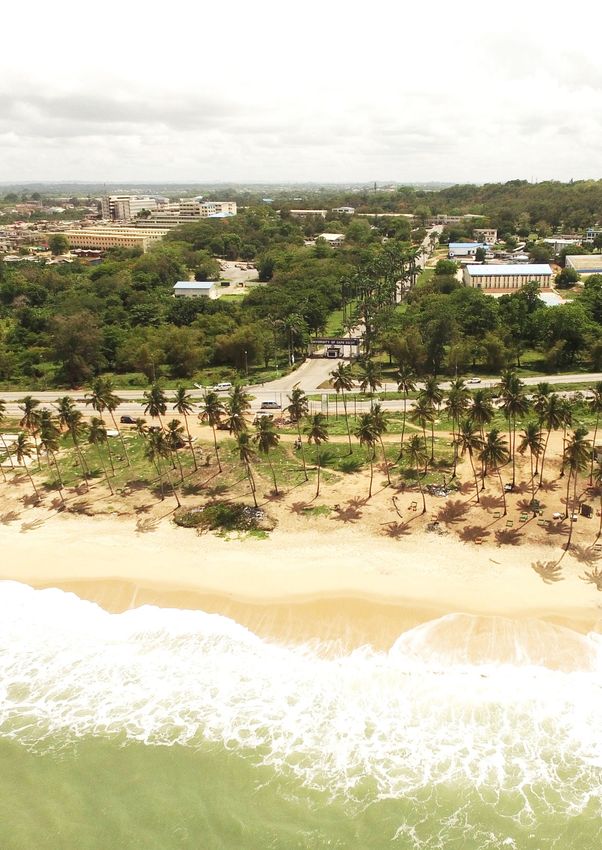
RESEARCH GUIDELINES
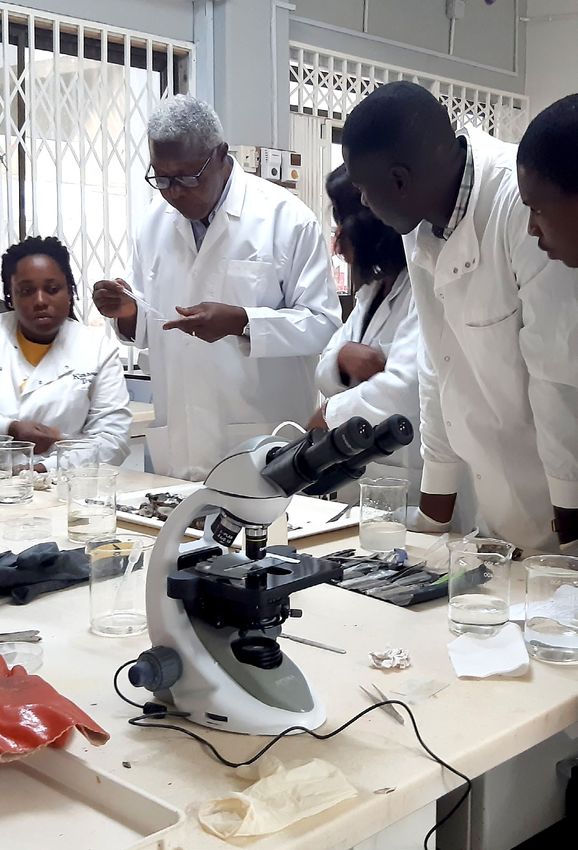
The University of Cape Coast (UCC), in
partnering with the World Bank under
the new Africa Centre of Excellence
(ACE III) Impact Project, will promote
coastal resilience within the West
and Central African sub-regions. The
objective of ACECoR is to support the
development of technical and scientific
capacity of young African professionals to
develop integrated solutions to address
coastal degradation in the countries
of intervention through short– to
long-term professional and academic
training programmes. ACECoR will carry
out education, research and outreach
programmes. These programmes will be
implemented in collaboration with other
academic institutions and industries
within the country, sub-region and at
the global level to ensure a multi- and
interdisciplinary approach to addressing
coastal degradation across the sub-region
Welcome message from the
            Director of ACECoR

                               Our vision
                               To be a global centre of excellence in coastal resilience
                               through collaboration with industry, private and public
                               institutions.

                               Our mission
                               To achieve sustainable management and use of coastal
                               environment through training of human resource,
Prof. Denis Worlanyo Aheto     and demand-driven research to support coastal policy
Director, Centre for Coastal   development in Africa.
Management - Africa Centre
of Excellence in Coastal
Resilience (ACECoR)            Our aims
                               ACECoR aims at achieving excellence in training both
Welcome to ACECoR. As          students and professionals in selected areas as a way
a research candidate you       of enhancing coastal resilience and promoting policies
are a part of the wider
                               through;
research community
and an important part           Training Professionals
of the University of            Learning Environment
Cape Coast’s strategic
                                Human Resource Capacity
goal to continuously
invest in developing
                                Industry Sector Partnerships
human capacity for the
accelerated development
of Africa through              We are committed to building a youthful
innovation, research           workforce to drive Africa’s emerging blue
and partnerships.
                               economy through research and innovation.

                                                  Visit https://acecor.ucc.edu.gh
4

RESEARCH
GUIDELINES

1. Background                       2. Research Scope
The Africa Centre of Excellence     The main aim of ACECoR’s
in Coastal Resilience (ACECoR) of   research activities is to generate
the University of Cape Coast is a   data that will address coastal
World Bank sponsored project        degradation in West and
to train 120 or more students       Central Africa. It is also to
at the Masters and PhD levels.      imbue resilience among coastal
In the University of Cape Coast,    communities in the sub-region.
the project is liaising with        Considering the complex and
various departments including       multifaceted nature of coastal
Fisheries and Aquatic Sciences,     degradation issues, all research
Economics, Environmental            activities have been grouped
Science and others to train         under five main thematic areas.
the students. The academic          These thematic areas are:
training involves courses in the
                                    » Coastal Geomorphology
academic areas of Integrated
                                    and Engineering,
Coastal Zone Management,
Fisheries, Oceanography and         » Climate Change Adaptation
other related programmes            and Mitigation,
as well as research in various      » Blue economy, Governance
thematic areas. Research in         and Social Resilience,
ACECoR project is grouped           » Disaster and Risk
into five thematic areas and        Management and
students’ research activities       » Ecosystems and Biodiversity.
are to be aligned with the
thematic areas. This research       All research activities under
guideline presents the overall      ACECoR whether students’
expectations regarding the          project, research consultancy
conduct of students and faculty     to the centre and/or individual
members on research under           research activities to be
ACECoR. The guideline seeks         sponsored by the project have to
to ensure that research and         be aligned to the five thematic
thesis supervision activities       areas. Also, all ACECoR’s
under ACECoR are conducted          collaborative activities must
in line with the highest            be in line with the thematic
professional standards in order     areas. Research projects that
to deliver a holistic training      cut across thematic area
to students as well as ensure       boundaries are encouraged
quality research at the centre.     to promote resilience
                                    in all spheres of coastal
                                    management in West Africa.
5

3. Research Organisation              (iii) Approval of Research           Occupational Health and Safety
                                      Proposal including Budget            with specific emphasis on:
The Centre for Coastal                                                     » Right to know about workplace
Management (CCM) which                After the proposal presentation,
                                                                           hazards and controls;
hosts the ACECoR project is           students are required to
committed to ensuring that            submit corrected version of          » Right to participate in
a suitable environment that           their proposal to the Academic       decisions about their personal
promotes academic and                 Coordinator who will organize a      health and safety; and
professional success for all          meeting for all senior members       » Right to refuse unsafe work.
research staff is observed. The       on ACECoR to discuss and             » Emergency procedures;
Centre therefore endeavours           approve the research budgets.
                                                                           » Health and safety policies;
to create an atmosphere of            Upon approval of proposals
                                      and budgets, students and            » Accident, incident and
mutual respect, trust, fairness
                                      their supervisors will be            occupational disease
and collegiality for its students,
                                      formally notified to commence        reporting procedures;
trainees and staff. Research
activities by Senior Members          fieldwork subject to acquisition     » Hazards/unsafe conditions
on ACECoR project are                 of ethical clearance.                reporting procedures;
guided by the CCM’s Project                                                » Instruction on safe work
Management Policy. Students,          (iv) Ethical Clearance               practices and procedures
interns and postdoctoral                                                   required to work safely in the
fellows’ research activities          All planned research by students,    laboratory, work area, facility,
shall however be governed             postdoctoral fellows and             or field research placement;
by the following guidelines:          interns must consider ethical        » Description of existing hazards
                                      clearance from the University        and what controls are in place
(i) Assigning of supervisors          of Cape Coast Institutional          » Personal protective
                                      Review Board (UCC-IRB)               equipment required
All students, interns, postdoctoral   before commencement of               performing work safely; and
fellows and other non-faculty         research. Ethical clearance
                                                                           » Safety and survival techniques
members conducting research           for involvement of human or
                                                                           in aquatic environments.
with the Centre shall be assigned     animal subjects should be
specific supervisors who are          obtained for fieldwork, pilot
                                      studies and/or laboratory work.      (vi) Data collection, processing,
faculty members. Masters and
                                      Collaborative research projects      storage and retention
PhD students shall be assigned
two supervisors each, one being       involving other universities or
                                      research institutions will often     The commitment of both
the Principal Supervisor and the
                                      require the ethical clearance of     the University of Cape Coast
other being the Co-Supervisor
                                      all participating institutions and   research policy and the ACECoR
in line with guidelines of the
                                      can be quite time consuming, so      research guidelines are to
School of Graduate Studies -
                                      students must start application      protect both the researcher and
UCC. Duties and responsibilities
                                      on time. Please ensure you           the institution with measures
of supervisors are outlined in
                                      allow enough time to make            devised to tackle compliance
Section 4 of this guideline.
                                      the appropriate applications, as     requirements and to disperse
                                      approval from one institution        some of the burden related
(ii) Presentation of                                                       with data management. All
                                      does not automatically give
Research Proposal                                                          data produced by students,
                                      you ethical clearance from the
                                      other participating institutions.    postdoctoral fellows, interns and
Graduate students on ACECoR                                                staff with funding support from
                                      Ethical Clearance forms can be
project shall be required to give                                          ACECoR and its collaborators are
                                      obtained from the Directorate
a presentation of their thesis/                                            primarily owned by the ACECoR.
                                      of Research, Innovation and
dissertation proposals during                                              Therefore, the students are
                                      Consultancy (DRIC), UCC.
a seminar to faculty members                                               mandated to release or make
who shall critique and provide                                             available their obtained data
feedback on the presentation.         (v) Field and Laboratory             to ACECoR. These data will be
The presentation forms part           Safety Orientation                   stored, managed and protected
of Seminars registered by the                                              by the Data Hub and Information
students as a course, and shall       All faculty, staff, postdoctoral     Systems Unit of ACECoR, and
be scored and graded. Students        fellows, students, interns and       the Unit will provide modalities
must pass with a minimum              visitors working, studying,          for submission of the data. For
mark of 60% before the proposal       conducting, and supporting           purposes other than writing
is approved for commencement          research in field and laboratory     of their thesis, such data could
of the research work.                 at ACECoR shall be provided          be used by the students only
                                      with field and laboratory safety     upon consultation with their
                                      orientation seminar that includes
6

supervisors and should promote        4. Supervision                        5. Publication
the interest of ACECoR.
                                       ACECoR is committed to
                                                                            (i) Technical Reports,
(vii) Confidentiality                 fostering an environment
                                                                            Conference posters,
                                      that promotes academic and
                                                                            Newsletters and other briefs
Researchers have a duty               professional success for all
to assure their research              research personnel (students
                                                                            All technical reports, poster
participants of confidentiality       and Supervisors). The
                                                                            presentations for conferences,
and all risks associated with their   intricacy of modern scientific
                                                                            newsletters, briefs and
involvement in the research.          methods, the need for careful
                                                                            other such publications
In order to ensure that risks         experimental design and the
                                                                            emanating from:
are appropriately reduced             precautions one must take in
and alleviated, researchers           data analysis, all require that the   » ACECoR
are required to submit their          Supervisor assume an active role      » staff, students and other
proposals and protocols to            in guidance and supervision.          affiliates of ACECoR who produce
the Institutional Review Board                                              such publications for ACECoR
of UCC for critical review.           The following shall be the            or with funding from ACECoR
                                      duties and responsibilities           » any other individual, group or
                                      governing the operations of           cooperate entities who produce
(viii) Quarterly Reporting            the supervisors on the ACECoR         such publications for ACECoR
                                      project in addition to the            or with funding from ACECoR
A research plan shall be              responsibilities outlined by
developed at the begining             the Graduate School of UCC:           should follow the provision on
of each research study and
                                      1. Supervisors shall help             authorship in Section 5iii as
students must give their
                                      their students to develop             well as the acknowledgement
progress report every quarter.
                                      sound research practices,             and disclaimer in Section 5v
The quarterly report must
                                      technical expertise and also          of this guideline. The logos
outline the extent of work done
                                      good research ethics.                 of University of Cape Coast,
in that period with consent from
                                                                            ACECoR, the World Bank, and
the supervisors following the         2. Supervisors shall support          any other institution(s) required
format in the approved research       students to develop suitable          to be acknowledged should
plan template. The quarterly          research plan covering the            be placed at the appropriate
reporting form is made available      entire period of the student’s        areas of the publication. The
on the ACECoR website. Section        research and ensure that as           placement of logos should follow
7 of the quarterly research           much as possible, students            branding rules of the World
reporting form provides details       follow the research plan.             Bank, ACECoR and UCC and
on the documents that must            3. Supervisors should have            should be done with the support
accompany the progress report.        realistic expectations regarding      of the Communications Office of
                                      the performance of students           ACECoR to ensure compliance
(ix) Clearance for transport          and should inform them                and conformity with the rules.
of samples across borders             of these expectations.
                                      4. Supervisors shall work with        (ii) Articles in peer
The packaging and                     their students to develop, present    reviewed journals
transportation of biological          and have their thesis/dissertation
materials across borders              proposals approved for research.      Articles for peer reviewed
are subjected to strict local         5. During the research years,         journals including conference
customs and other international       they shall have quarterly             proceedings authored by
regulatory protocols.                 meetings with the students            students, staff, researchers
Researchers who intend                and together with the student         and faculty of ACECoR should
transporting samples across           produce a quarterly research          follow the provisions on
international borders should          report to ACECoR project              authorship in Section 5iii,
inform the Applied Research           management team.                      affiliation in Section 5iv as well
Coordinator of ACECoR in
                                      6. They shall be keenly               as the acknowledgement and
writing for necessary support
                                      involved in the field research        disclaimer in Section 5v of this
in acquiring required permits.
                                      activities of the students and        guidelines. The category of
                                      make sure authentic data              journals for publication of studies
                                      is collected for analysis.            carried out under ACECoR are
                                      7. Supervisors shall essentially      the journals indexed by Scopus,
                                      mentor the graduate students          Web of Science, Science Citation
                                      under their supervision.              Index (SCI), SCI-Expanded and
                                                                            Social Science Citation Index.
                                                                            Students are required to publish
7

their first papers in the category   covers the following:              secondary affiliation. Associate
of journals indexed by the the                                          faculty of ACECoR (i.e. Faculty
                                     »   Conceptualization
abstracting services listed. The                                        from other Universities than
second papers, however, are          »   Methodology                    UCC) are also mandated to use
required to be published in the      »   Software                       ACECoR as their secondary
Journal of Fisheries and Coastal     »   Validation                     affiliation on research papers
Management (JFCoM) published                                            funded through ACECoR.
                                     »   Formal analysis
by the Department of Fisheries                                          Students and staff whose
and Aquatic Sciences and the         »   Investigation                  institution of affiliation at the
Centre for Coastal Management        »   Resources                      time of publishing their papers
of the University of Cape Coast.     »   Data Curation                  is not ACECoR but received
Any subsequent papers may            »   Writing - Original Draft       funding from the Centre for the
be published in the prescribed                                          research being published at
journals or JFCoM subject to         »   Writing - Review & Editing     the time of their engagement
the descretion of the author(s).     »   Visualization                  at ACECoR as students or
The Centre will annually provide     »   Supervision                    staff should provide ACECoR
updates on the category of           »   Project administration         as their previous affiliation.
journals for publication.
                                     »   Funding acquisition
                                                                        (v) Acknowledgement
(iii) Authorship                     All authors must take              of source(s) of funding
                                     responsibility for the             and Disclaimer
Authorship should be based on        content of their paper.
intellectual contributions to the                                       All publications funded by
conception, design, collection       (iv) Affiliation of authors        ACECoR or through ACECoR
of data, analysis, writing of the                                       should duly and appropriately
research, and other significant      All publications authored by       acknowledge the project, the
contributions. To provide            students, staff, researchers       World Bank and any other
clarity on consideration and         and faculty of ACECoR must         source(s) of funding as follows:
qualification for authorship,        have ACECoR as their primary
the Centre has temporarily           affiliation, except faculty from   The authors are grateful for
adopted the CRediT (Contributor      other Departments in UCC           funding for this research from
Roles Taxonomy) guidelines           working at ACECoR who may          the World Bank through the
provided by Elsevier which           wish to use ACECoR as their        Africa Centre of Excellence in
8

Coastal Resilience (ACECoR)           7. Other Research                     the course or thesis. To avoid
Project [Credit No.: 6389-            Ethical Considerations                the incidence of plagiarism,
GH] implemented by the                                                      student theses and manuscripts
University of Cape Coast’s            Claiming to have carried out          are verified through plagiarism
Centre for Coastal Management.        experiments, observations,            software (Turnitin) to ensure they
In addition, appropriate              interviews or any sort of research,   conform to ethical standards
disclaimer(s) should also be          which actually have not been          before submission. Students
issued. A format or template          undertaken or claiming to             are required to ensure that they
for Acknowledgement of                have results, which have not          have checked their write-ups for
the project and Disclaimer            been obtained, are considered         plagiarism before submission.
will be provided for use.             serious academic offences. In
                                      academic and professional
6. Intellectual Property              writing, it is very important to
                                      provide evidence for your claims
This section is provided in           by citing your sources. Copying
accordance with the University of     another person’s work and/or
Cape Coast Intellectual Property      making substantial use of other
Policy. Any Intellectual Property     people’s work and submitting
(IP) that results from this project   it as one’s own without
or from activities carried out by     proper acknowledgement is
student(s) and staff as part of       academically unacceptable
this project shall primarily reside   and considered a serious and
with the University of Cape           punishable offence. Re-wording
Coast. In circumstances where         another person’s work and
there may be joint ownership          presenting it as your own,
or multi-party ownership              quoting from someone else’s
between the UCC and the               work, copying from the work of
other institution(s), a written       another person, using another
agreement will be prepared            person’s ideas or data, and
and signed. The decision to           copies from your own previous
have a joint ownership of an          work without acknowledging
IP shall be determined by             the source are all considered
ACECoR on the grounds of the          serious issues of plagiarism as
merits of contribution of the         pointed out in the SGS-UCC
student or staff, and/or any          policies and regulations.
institution towards the IP.
                                      The penalty for fabrication of
                                      data and plagiarism shall be
                                      the cancellation of the result for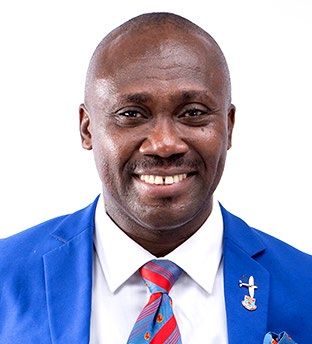
FURTHER INFORMATION
acecor.ucc.edu.gh
You can also read


