UCL African Partners Summit Report - Professor Ijeoma Uchegbu, Pro-Vice-Provost (Africa & Middle East)
←
→
Page content transcription
If your browser does not render page correctly, please read the page content below

GLOBAL ENGAGEMENT OFFICE

                             UCL African
                             Partners Summit
                             Report
                                       October 2020

Professor Ijeoma Uchegbu, Pro-Vice-
Provost (Africa & Middle East)
Funi Nemaheni, Senior Partnership
Manager (Africa & Middle East)
Panellists
Overview and Context                                          Professor Michael Arthur,
                                                              President & Provost,
The purpose of the UCL African                                UCL
Partners Summit was to initiate
discussions, with African partners,
regarding the impact of COVID-19 on                           Dr Dame Nicola
the Higher Education (HE) sector and                          Brewer, Vice-
                                                              Provost (International),
the future of HE global engagement.                           UCL

This report forms the main output from                        Summit Chair, Professor
the Summit and will potentially feed                          Ijeoma Uchegbu, Pro-
into UCL’s development of the Global                          Vice-Provost (Africa &
                                                              Middle East), UCL
Engagement Strategy 2021-26, while
also informing developments around
UCL’s engagement with the                                     Professor Mamokgethi
                                                              Phakheng, Vice-
Sustainable Development Goals                                 Chancellor, University of
(SDGs).                                                       Cape Town, South Africa

The Summit was held on Microsoft                              Professor Ernest
Teams Live. It was held in two                                Aryeetey, Secretary
sessions in an interactive question and                       General, African
                                                              Research
answer format. Attendees submitted                            Universities Alliance
their questions and comments using                            (ARUA), Ghana
Sli.do.                                                       Professor Zeblon
                                                              Vilakazi, Vice-Principal
The Summit was open to anyone with                            and Deputy Vice-
                                                              Chancellor (Research
links to, experience of, or an interest in                    and Postgraduate
collaborations between UCL and                                Studies), University of
African partners.                                             the Witwatersrand,
                                                              South Africa

Professor Michael Arthur, President &                         Professor Deenan Pillay,
                                                              Pro-Vice-Provost
Provost of UCL opened the Summit                              (International), UCL
and Professor Ijeoma Uchegbu, Pro-
Vice-Provost (Africa & Middle East)
chaired the Summit. Dame Nicola                               Professor Willem
Brewer, Vice-Provost (International)                          Hanekom, Director of the
opened the second session on the                              Africa Health Research
                                                              Institute (AHRI), South
future of global engagement.                                  Africa

Panellists included Vice-Chancellors of
                                                              Dr Joseph Macarthy,
African universities, a representative                        Executive Director,
from the African Research Universities                        Sierra Leone Urban
Alliance (ARUA), a representative from                        Research Centre
                                                              (SLURC), Sierra Leone
the Association of Commonwealth
Universities (ACU) and key partners of                        Professor Delmiro
                                                              Fernandez-Reyes,
UCL.                                                          Biomedical Computing,
                                                              UCL
This report is divided into two sections:
(1) Summit Areas of Convergence &                             Mr George Ananga,
Recommendations and (2) Summary                               Senior Membership
of Discussions.                                               (International),
                                                              Association of
                                                              Commonwealth
The full recording of the Summit can                          Universities (ACU)
be accessed at this link.

                                             2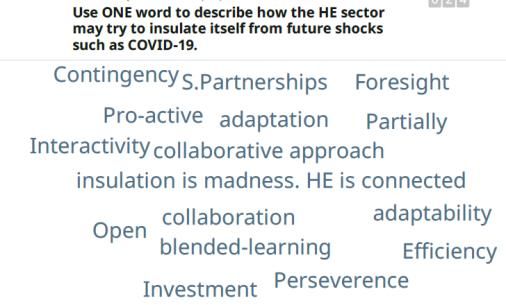
Summit Areas of Convergence & Recommendations
The Summit consisted of two sessions. The first session focused on the impact of
COVID-19 on the HE sector. The panel discussed three themes: the impact of
severe shocks such as COVID-19 on the HE sector, the HE response to COVID-19
and the lessons learned from COVID-19 to date.

The second session focused on the future of global engagement. Similar to the first
session, the panel discussed three themes: developing and sustaining global
partnerships during and after the pandemic, the barriers to sustainable global
partnerships and the impact of global partnerships on the Sustainable Development
Goals (SDGs).

This section of the report highlights the main areas of convergence that emerged
from the discussions at the Summit and the corresponding recommendations for
UCL and for UCL’s African partners.

 Panel discussions:            Recommendations for            Broader
 key themes                    UCL                            recommendations
                                                              for African partners

 Encourage further             Building on UCL’s              Encourage
 interdisciplinary ways of     strong existing approach       interdisciplinary funding
 researching COVID-19.         to interdisciplinary           for COVID-19 research at
 An interdisciplinary          research through the           both university and
 research focus into           Grand Challenges,              government level funding.
 COVID-19 could                explore a COVID-19 call
 provide more robust           that focuses on
 solutions to problems         interdisciplinary research
 such as unexpected            either through the Global
 differential death rates      Engagement Funds, UCL-
 and challenges around         Wits Seed Funds or the
 global recovery.              Africa & Middle East
                               Teaching Initiative.

 Inequality of access to       GEO to work with other         Continue to enhance
 adequate digital              departments at UCL e.g.        online platforms for online
 infrastructure has            the Office of the Vice         teaching and research
 been exposed both             Provost Advancement            collaboration in order to
 within countries and          (OVPA), to develop best        support the development
 across international          practice and guidance to       of effective and more
 borders. Explore              support online international   sustainable global
 potential to invest further   academic engagement            partnerships. More
 in online platforms to        and enhance, where             engagement with
 continue supporting           possible, online platforms     governments could be
 academics to develop,         already operating at UCL.      explored to encourage
 sustain and enhance                                          investment in digital
 global partnerships.                                         infrastructure across
                                                              research intensive public
                                                              universities.

                                             3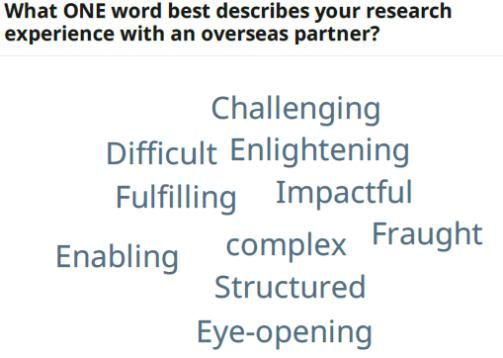
Encourage and support        GEO to explore how            Continue exploring
early career researchers     existing and new seed         avenues for enhancing
in partner institutions to   funding schemes can           and supporting early
maximise any                 better support early career   career researchers to
opportunities presented      researchers to encourage      take on research
by COVID-19. For             innovative research           leadership positions
example, early career        approaches to COVID-19.       within universities.
researchers could            This can be
pivot their research         interdisciplinary and
towards the pandemic         enabled either via the
and take on leadership       Global Engagement
roles in areas where         Funds, UCL-Wits Seed
their Principal              Funds or the Africa &
Investigators (PIs)          Middle East Teaching
aren’t able to               Initiative.
participate fully in the
projects, due to travel
restrictions.

Develop partnerships         GEO should aim to             African universities
with multilateral            strengthen UCL’s              should continue lobbying
organisations in the         partnerships with HE          international research
African continent in         multilateral                  funders to achieve a
order to achieve a           organisations, such as        decolonised funding
critical mass to             the African Research          landscape and should
influence and shape          Universities Alliance         continue to proactively
the African research         (ARUA), the Association of    shape the research
agenda (including            Commonwealth                  priorities in the continent
research priorities and      Universities (ACU), the       by lobbying through
funding that is locally      Academy of African            multilateral HE
driven) such that            Sciences (AAS) and the        organisations such as
Africans benefit fully       United Nations Forum for      ARUA.
from the research.           Higher Education in order
                             to enhance efforts to
                             achieve equitable research
                             funding for the global
                             south.

New partnerships need        GEO should continue to        Where possible, African
to pass a longevity test     encourage academics to        universities should
in order to be truly         pursue sustainable            encourage the building of
sustainable. A majority      partnerships with             cross border institutional
of PI to PI partnerships     African partners while        partnerships.
are built around             supporting PIs to
projects and disperse        develop partnerships
when the project ends.       that are grounded on
Existing partnerships        principles of
need to be monitored         equivalence. Where
to ensure that they          possible, follow-on funding
continue to be               opportunities should be
grounded on the

                                          4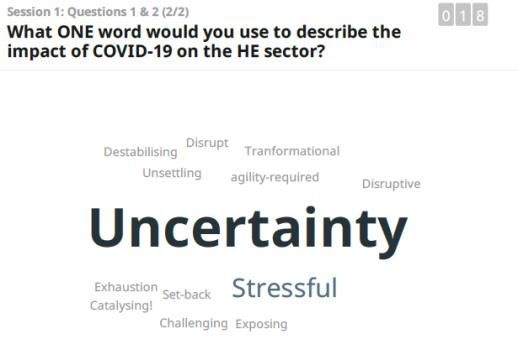
principles of                actively identified at the
equivalence.                 start of the project.

                             GEO to establish an
                             ‘Africa Steering Group’,
                             chaired by Pro-Vice
                             Provost (AME) to
                             oversee and develop
                             UCL’s approach to
                             partnership development
                             in Africa, both in the
                             context of existing links
                             and future ones. This
                             might include developing
                             ‘principles of engagement’
                             to support academics as
                             they seek to collaborate
                             with potential African
                             partners.

Explore the possibility of   GEO to discuss with           Universities should
offering virtual student     UCL Study Abroad and          continue exploring the
exchange programmes,         interested academics the      possibility of more virtual
e.g. with students paired    possibility of hosting a      study abroad
and working on a joint       virtual ‘summer school’ for   opportunities with global
project in separate          the 2020/2021 academic        partners.
locations. Travel            year with African partners.
restrictions provide an
opportunity for wider
access to each other
via electronic
solutions.

                                            5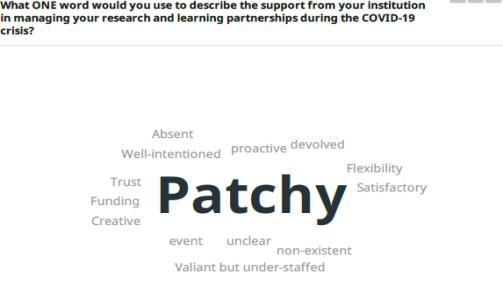
Summary of Discussions
                                                enable African health researchers to
                                                study the impact of COVID-19. A more
Session I: The Impact of                        pre-emptive approach would be to
COVID-19 on the HE Sector                       have a clear interdisciplinary focus on
Theme 1: Impact of COVID-19 on                  emerging threats in order to build up
research                                        the research base.
                                                The panel agreed that the disruption of
                                                research and teaching due to
                                                lockdown regulations has hugely
                                                affected the student population in
                                                African countries where the digital
                                                infrastructure remains under-
                                                resourced. For instance, Njala
                                                University in Sierra Leone is faced with
                                                the challenge of students’ limited
                                                access to laptops and providing
When asked to describe the impact of            students with email addresses in order
COVID-19 on the HE sector, the majority         to deliver ‘fit for purpose’ online
of attendees mentioned the word                 teaching and content.
‘uncertainty.’
                                                Other challenges include non-
The panel agreed that COVID-19
                                                conducive home environments due to
negatively affected research activities
                                                cultural expectations (i.e. female
in HE in a number of ways:
                                                students being expected to carry out
operational, financial and scientific,
                                                domestic chores at home). This
especially in low resource settings.
                                                domestic burden prevents female
                                                students from learning optimally in a
                                                home environment.

When asked if their research had been
impacted by COVID-19 in a negative or
positive way, 81% of the attendees stated
that their research was negatively              100% of attendees answered ‘yes’ when
affected.                                       asked if COVID-19 has had a
                                                disproportionate effect on students and
Most research priorities were reported
                                                staff from lower socioeconomic groups.
as being redefined and pivoted in
order to respond to the pandemic. This          The panel pointed out that the
includes opportunities for African              availability of a vaccine will worsen the
scientists to delve into new areas of           inequality gap between the global
research, such as researching whether           north and the global south, if not
people living with HIV or tuberculosis          accessed equitably. There is a need to
(TB) suffer worse outcomes if they              move away from a nationalistic
become infected with the virus.                 agenda (i.e. nations securing vaccines
                                                for their own populations, to a more
As a result of the pandemic, most
                                                global outlook when developing the
governments in Africa are putting more
                                                vaccine for a global pandemic).
funding into healthcare research to

                                            6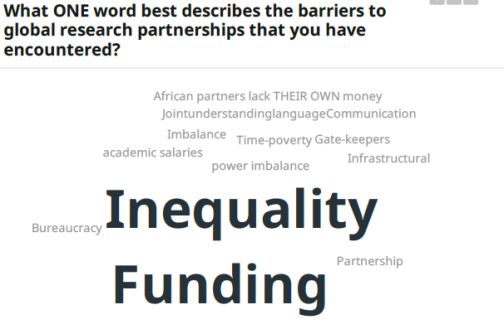
Theme 2: Response to COVID-19                    The panel noted that working remotely
                                                 meant that most of the universities’
The panel noted that research and                estates have not been in use, but
education activities in their universities       there is a strong case for maintaining
have been hugely supported.                      the campus experience for both staff
                                                 and students.

80% of the attendees agreed that their
institutions’ response to COVID-19 has           92% of attendees voted ‘yes’ when asked
been helpful in enabling them to carry out       if it is more likely that they will continue to
their research or education remotely.            conduct some of their work remotely.
In terms of universities’ response to            It is likely that remote working will
online learning, the panel noted that            continue but as the pandemic
COVID -19 exposed the infrastructure             becomes more controlled, staff are
deficits within HE systems in Africa             more likely to return to offices and
and the world. There is a need for               face-to-face teaching is more likely to
African governments to invest in online          resume. New universities have the
infrastructure. 95% of all research in           opportunity to remodel the future of the
Africa is in public universities.                digital HE experience.
There are ongoing discussions                    On mental health related to the
between some African universities and            pandemic, the panel noted that more
telecommunication companies to                   resources are needed to care for
extend bandwidth to students in rural            students and staff with mental health
areas.                                           issues that may have been
In African countries where online                exacerbated by the lockdown
platforms are more advanced, such as             measures in many countries.
Wits University in South Africa, student         Theme 3: Lessons learned from
participation rates have increased
                                                 COVID-19
compared to participation in physical
classrooms.                                      Universities’ processes and structures
                                                 should be agile in order to adapt
As more universities are moving to
                                                 swiftly when faced with shocks such
online learning, the panel expressed
                                                 as COVID-19. More focus should be
that universities should start the
                                                 placed on change management in
conversation on fee reduction for
                                                 order to effectively insulate the HE
online learning.
                                                 sector from future shocks.

74% of the attendees voted ‘no’ when
asked if they think that online learning         62% of the attendees voted ‘yes’ when
offers sufficient value for money.               asked if they think the HE sector can
                                                 insulate itself from future shocks such as
                                                 COVID-19.

                                             7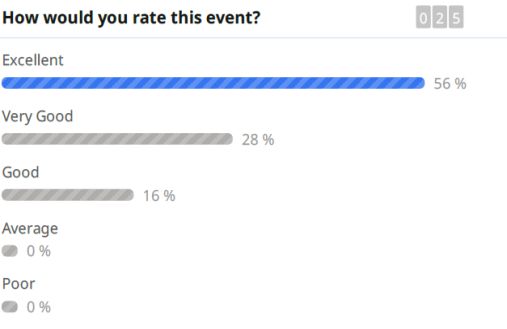
The pandemic exposed systemic                                           to local challenges. Similarly, the
weaknesses in the HE sector that                                        United Kingdom Research and
need to be addressed urgently, such                                     Innovation (UKRI) agency has been
as the inequality and the digital divide                                funding research that is more locally
emanating from online learning.                                         driven.
There are unique opportunities for
working together collaboratively across                                 Session II: Future Directions
borders and there is a strong need to
focus HE strategies on working with                                     of Global Engagement
multiple stakeholders in an
                                                                        Theme 1: Developing, sustaining
interdisciplinary way.
                                                                        and enhancing global partnerships
                                                                        during and after the pandemic
                                                                        The panel noted that mutual
                                                                        partnerships are based on trust built
                                                                        over face-to-face interactions.
                                                                        Universities need to start thinking
                                                                        more about ways to build trust
                                                                        virtually, especially for new
                                                                        partnerships.
Attendees’ one word descriptions of how
the HE sector may insulate itself from
future shocks such as COVID-19.

There is a strong desire for HE
institutions to define their mission in
contributing to society. The UK                                         56% of attendees voted ‘yes’ when asked
mortality rates were among the highest                                  if they were currently developing new
in the world, despite the fact that most                                international collaborative research
                                                                        proposals.
of the top performing universities in
research excellence are in the UK.                                      For established partnerships, a
Research excellence needs to                                            majority of collaborations are being
translate into societal benefit.                                        sustained through virtual interactions.
Governments should continue to work                                     In addition, universities need to think
closely with researchers through task                                   of ways to support academics’ global
force teams to come up with well-                                       partnerships during a global pandemic
informed research policies.                                             and/or future shocks.
‘Helicopter science’1 will continue
happening in Africa until African
researchers define their own research
agenda. Research funders in the UK
have started decolonising the funding
landscape and asking for research that
is driven by local researchers. For
instance, the Wellcome is working with
the African Academy of Sciences
                                                                        Attendees’ one word descriptions of the
(AAS) to run programmes that respond
                                                                        support from their institution in manging

1                                                                       elsewhere and publish the results with little involvement from local
  Used to describe situations where researchers from wealthier
countries fly to developing countries to collect data, analyse it       scientists.

                                                                    8
their research and learning partnerships The lack of digital infrastructure in
during the COVID-19 crisis. some African countries prevents the
development of mutually beneficial
The panel also noted that mobile
global partnerships. Few African
technology in African countries is
universities have the capability to
considered to be a” leap frog” model,
process large data sets that are
in that it has enabled economic
increasingly required for cutting-edge
development on an unprecedented
internationally funded research.
scale with mobile banking, reduced
road transport and greater access to
public services. Collaborators need to
recognise the potential for using
mobile technology for
building/sustaining partnerships.
The panel recommended that
universities should encourage young
researchers to maximise the
opportunities presented by COVID-19,
for instance pivoting their research
Attendees’ descriptions of their research
towards the pandemic and taking on
experience with overseas partners.
leadership roles in areas where their
Principal Investigators (PIs) aren’t able While the African continent is a rich
to fulfil these leadership roles due to resource for a variety of datasets,
travel restrictions. African researchers often have to rely
on the global north for processing of
The panel noted that universities
the data. This creates a challenge with
should reimagine offering a
regard to research ownership.
campus/residential experience via
virtual study abroad programmes. The panel noted that African
governments’ funding for research is
Theme 2: Barriers to global limited. While there is a huge capacity
partnerships, especially in Africa for research, the lack of financial and
infrastructure resources to enable
research production remains a burden
and further plays into the narrative that
Africa is the ‘poor cousin’ instead of an
equal player in partnerships.
87% of attendees voted ‘yes’ when asked
if they believe there are significantly more
barriers to research and learning
partnerships with African partners.
The panel noted the global asymmetry
in knowledge production, lack of
critical mass in research intentions and
disproportionate research ownership in
global partnerships. This creates a
Attendees’ one word descriptions of
power gap when creating cross border
barriers to global research partnerships.
partnerships.
9More engagement with multilateral Universities should encourage the
organisations, such as the United building of partnerships around a wider
Nations, is needed to highlight the institutional strategy in order to create
need for more funding for research sustainable interactions.
grants in the global south. In order to
Other barriers to partnerships include
lobby and advocate for more funding
the sheer cost of travel, weak
with multilateral organisations, African
currencies and poor internet
governments need to show that they
bandwidth. All these contribute to
have already started funding research
unequal research relationships.
in their own countries.
The panel noted that universities in the Theme 3: Research to address the
global north should incentivise 2030 SDG Agenda
researchers to encourage good
behaviour towards mutual partnerships
and discourage ‘helicopter science,’ a
description used when global north
scientists arrive to harvest data and
analyse it, with no consideration given 99% of attendees answered ‘yes’ when
to the African data providers or the asked if their research focused on
needs of the continent’s residents. sustainable development goals (SDGs).
The panel agreed that more research
“Instead of asking partners in the is needed to study the impact of
global south ‘what can we do for pandemics on specific ethnic groups
you?’ there should be a two-way such as Black, Asian and other
conversation about ‘how can we minority ethnic groups.
work together to arrive at a The panel also noted that solutions to
solution?’” research questions should benefit
those that need the intervention most.
- Professor Willem Hanekom, For instance, current COVID-19
Director of AHRI vaccine trials in the UK have shown
that 90% of trial participants were
Excellence exists everywhere and white, despite the overwhelming
researchers need to be purposeful in burden of COVID-19 morbidity and
their use of language with partners – mobility being disproportionately borne
instead of asking partners in the global in Black people.
south “what can we do for you?” this
should be a two-way conversation
about “how can we work together to
arrive at a solution?”
The panel expressed the need to
influence and shape the African 87% of attendees answered ‘yes’ when
research agenda and to decolonise asked if there is disproportionately more
the funding landscape. research focused on problems that largely
affect the global north.
The panel noted that new partnerships
When asked for areas where more
need to pass a longevity test in order
research funding is urgently needed,
to be truly sustainable. Most
the panel highlighted eight areas: (1)
partnerships are built around projects
climate change, (2) poverty-related
and disperse when the project ends.
10diseases, (3) youth mobility research,
(4) women in STEM, (5) infectious
diseases, (6) mental health, (7)
inequality in disease responsiveness,
and (8) the interplay between
governance and infrastructure to
enable science to benefit society.
Summit Evaluation
When asked to rate the Summit, 56%
of attendees voted excellent, 28%
voted very good and 16% voted good:
With thanks to the UCL African
Partners Summit organising
committee:
UCL Global Engagement Office:
Funanani Nemaheni, Sophia Hilt,
Lucy Crick, Jinnie Chua and
Tomoyo Miyakawa
UCL ISD: Patrick Robinson
Cover image: iStock
Website: ucl.ac.uk/global
Twitter: @UCL_Global
11You can also read


