Rethinking school safety: What does the data tell us? - Carl Hermanns ASU
←
→
Page content transcription
If your browser does not render page correctly, please read the page content below
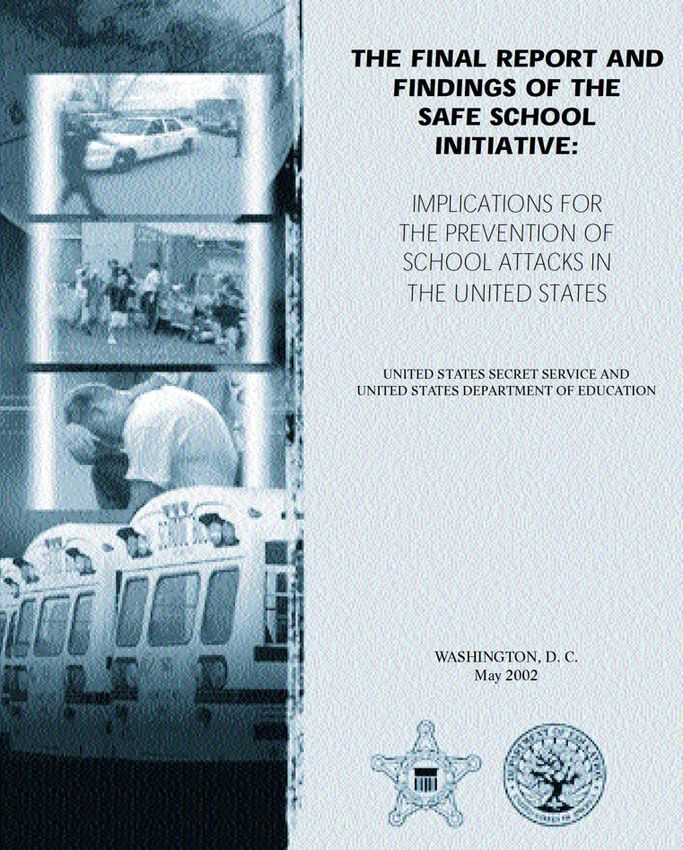
Rethinking school safety:
What does the data tell us?
Carl Hermanns
ASU
8/21/18
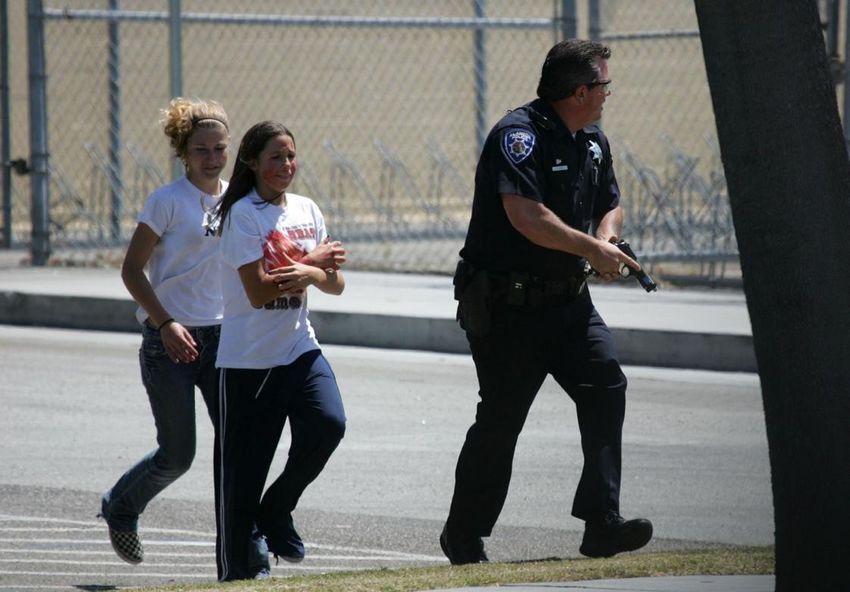
Santa Fe High School

              A student’s voice
Santa Fe High School

  It’s been
  happening
  everywhere.
  I’ve always kind
  of felt like
  eventually it was
  going to happen
  here too.
The data

     Let’s step back and see what the
              data can tell us
The data: 1999 - 2018
The Washington Post
Since 1999, at least 141 children, educators and other people have
been killed in assaults, and another 287 have been injured.
Over the past 19 years, 428 people have been killed or
injured in school shootings
There are approximately 50 million K-12 public school students
https://www.washingtonpost.com/graphics/2018/local/school-shootings-database/?noredirect=on&utm_term=.cc1387c6323d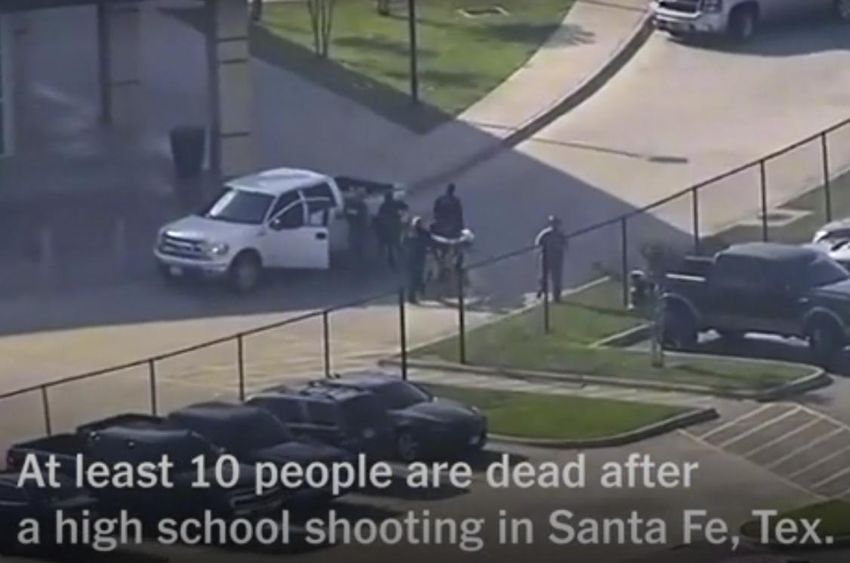
The data: 2018

                 2018 school shooting statistics
                           Education Week
                 https://www.edweek.org/ew/section/multimedi
                 a/school-shootings-this-year-how-many-and-
                 where.html.
Conclusions from the data
Although schools
are statistically one
of the safest places
kids can be, it
doesn’t feel that
way due to the
“It’s been happening everywhere.
random nature of
I’ve always kind of felt like
these events - and eventually it was going to happen
perception is reality here too.”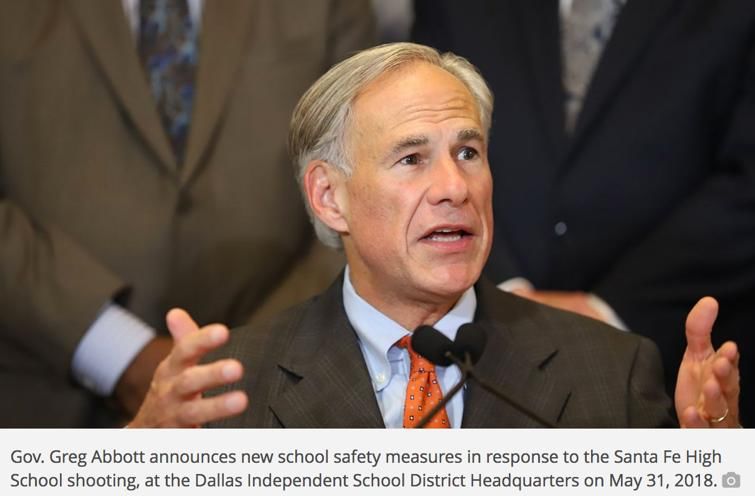
Conclusions from the data
After Columbine, even though
incidents of school violence had been
steadily dropping since 1993 (NCES),
it didn’t feel that way.
One result was the COPS in Schools program,
which increased the number of SRO’s in
schools by 38% over the next 8 years.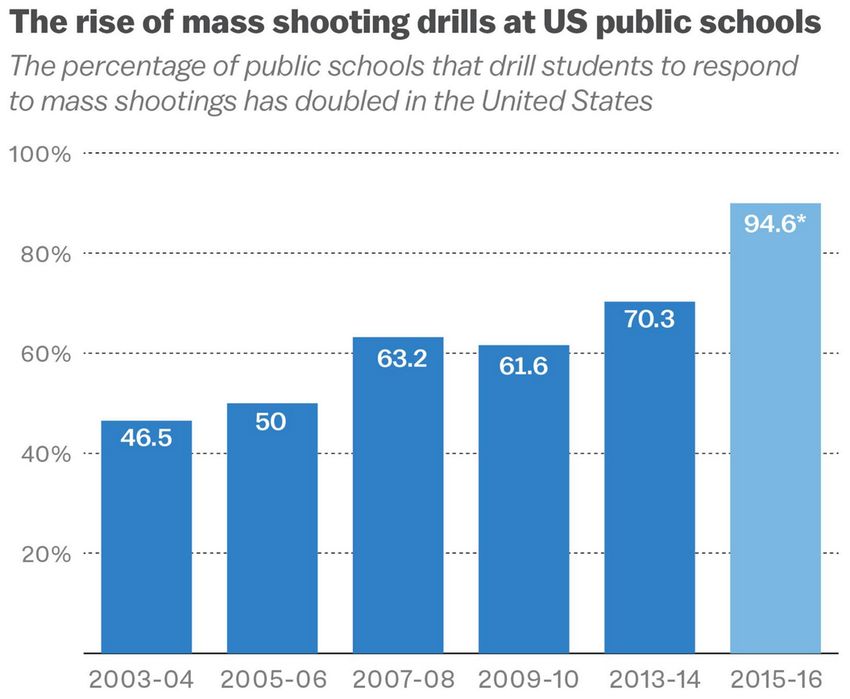
Conclusions from the data
Over the next 18 years, a number of
additional approaches were instituted in
an effort to keep schools safe, including:
Threat assessments
Metal detectors
Secure campus entrances
Safety drills
Security cameras
How are we continuing to grapple with this today?Active shooting drills
“School shooting drills
became the new normal
after Columbine”
Public school Active Shooter drills
2003-04: 46.5%
2013-14: 70.3%
2015-16: 94.6%*
NCES: 2015-16 = ”lockdown drills” – a broader
category that includes, but is not limited to,
active shooter response
https://www.vox.com/policy-and-politics/2018/2/16/17016382/school-shooting-drills-trainingCalculating the risk of getting shot
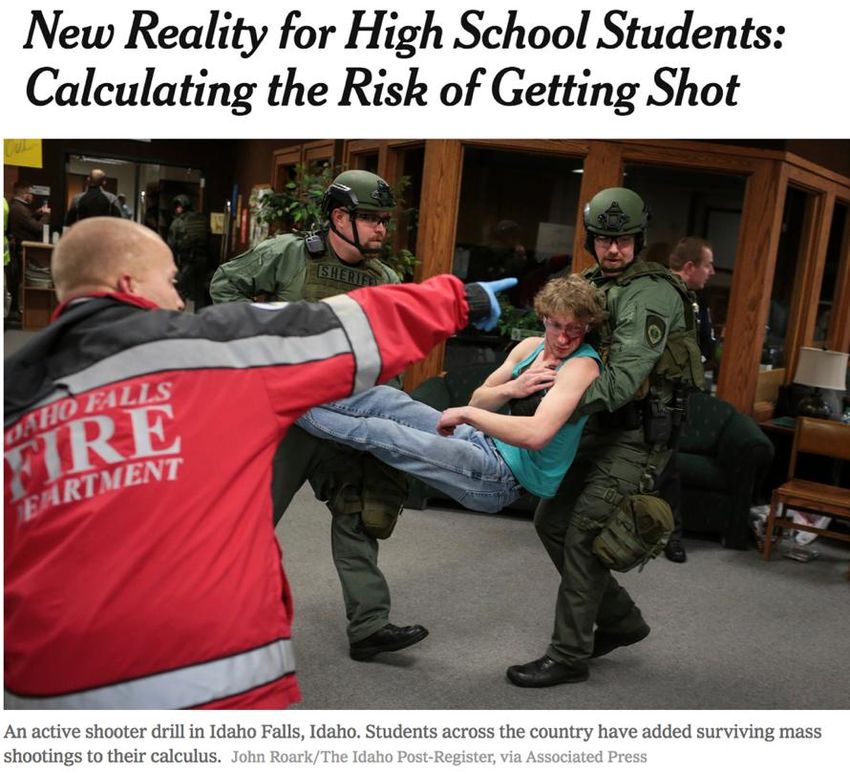
Students raised with the
persistence of mass shootings
and versed in the protocol of
active shooter drills think often
of the possibility of a shooting
in their schools ...even running
scenarios in their heads about
how likely they are to get shot.
They calculate escape routes.
And they ponder hiding spots
in wide-open classrooms.
“It’s like the front lines of a war,” said Emily Rubinstein, a sophomore
at a New York high school. “Being seated in front of the classroom
could be what makes you live and what makes you die.”
https://www.nytimes.com/2018/05/20/us/school-shootings-drills-risks.htmlSTOP School Violence Act
Appropriates $50 million/year
for 10 years to:
Provide training to identify and
intervene to stop school violence
Improve school security technology
and infrastructure to deter and
respond to threats of school violence
Develop and operate threat
assessment and crisis intervention
teams
Facilitate coordination between
schools and local law enforcementTexas Governor’s plan
At the heart of the governor’s
proposal is “hardening” schools like
Santa Fe as targets by:
Guarding them with increased
police presence, and
Persuading more school districts
to join existing state programs for
arming school staff.
The governor also proposes:
Texas Governor Greg
Providing active shooter
Abbott announced a training, and
new school safety plan Including a heavy emphasis on
on May 30, 2018 expanded mental health
screening and on-campus
counseling.
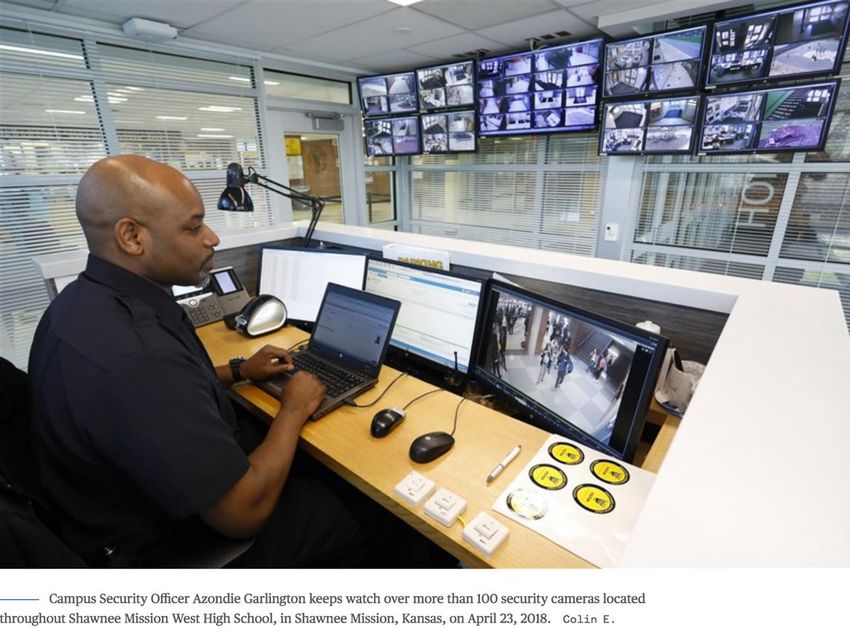
https://www.texastribune.org/2018/05/30/texas-gov-greg-abbott-santa-fe-shooting-school-safety-plan-gun-laws/High-tech security
Schools are spending
billions on high-tech security
The uncertainty over how to
prevent school shootings and the
horrifying consequences of
failing to do so – has created a
business opportunity.
School districts are staking their hopes on high-tech security
systems originally developed for the military, police and
private industry, and are driving a rapidly growing school
security market, which has ballooned to a multibillion-dollar
industry.
https://www.nbcnews.com/news/us-news/schools-are-spending-billions-high-tech-security-are-students-any-n875611High-tech security
Schools are spending
billions on high-tech security
Digitized building layouts paired
with surveillance cameras allows
police to get to the source of a
problem quickly.
“It’s about expediency. The sooner the police get there, the
sooner the carnage ends.”
“You cannot predict where this is going to happen. You can’t
sit and think, ‘Phew that won’t happen here,’ because it
absolutely could.”
https://www.nbcnews.com/news/us-news/schools-are-spending-billions-high-tech-security-are-students-any-n875611High-tech security
On the other hand
Santa Fe High School was already
using several security practices that
are often proposed in the wake of
school shootings.
The school has two armed police
officers patrolling a campus of
1,400 students.
The staff is trained in emergency
response,
students practice lockdown and ”So what else could the
active-shooter drills, and
district have done to protect
the school district has been
teachers and students?
praised by Texas officials for its
safety program
https://www.edweek.org/ew/articles/2018/05/30/a-deadly-school-year-35-people-killed.html?cmp=eml-enl-eu-
news1&M=58500585&U=1965185The Safe School Initiative report (2002)
• The attackers came from a variety of
family situations; almost two-thirds
came from two-parent families
• Wide range in academic achievement;
the largest percentage (41%) were
doing well in school
• Varied in social relationships, from
socially isolated to popular
• Wide range in discipline histories;
almost two-thirds (63%) were never,
or rarely, in trouble at school; only
27% had ever been suspended
• Only 1/3 of attackers had ever
received a mental health evaluation;
fewer than 1/5 had been diagnosed
There is no one “profile”
with a mental health or behavior
disorder.The Safe School Initiative report (2002)
Commonalities:
• Most had difficulty coping with
significant losses or personal failures,
and many (71%) felt bullied,
persecuted, or injured by others.
• Almost all (95%) were current
students at the school where they
carried out their attacks.
• In many cases, other students knew
about it, or were involved in some
capacity.
• Most had access to, and had used,
weapons prior to the attack.
• Age range is 11 to 21, with 85%
but there are commonalities between 13 and 18 at the time of the
attack. The median age is 16.The Safe School Initiative report (2002)
Conclusion:
The focus of the Safe School Initiative
was on examining the thinking, planning,
and other behaviors engaged in by
students who carried out school attacks.
Particular attention was given to
identifying pre-attack behaviors and
communications that might be detectable
– or “knowable” – and could help in
preventing some future attacks.
In light of the reports findings, the use of
a threat assessment approach may be
a promising strategy for preventing a
school-based attack.Threat Assessment in Schools (2004)
“The vast majority of the nation’s
students will complete their schooling
without ever being touched by peer
violence.
Nevertheless, recent school attacks
carried out by students have shaken
the image of schools as reliably safe
and secure environments in which the
qualifications of teachers and the
efficacy of the educational curricula
are the most pressing concerns of
educators and parents.
Televised images of frightened and
injured students fleeing school
grounds have imprinted themselves on
the American consciousness.”Threat Assessment in Schools (2004)
[These] highly publicized school
shootings have created uncertainty
about the safety and security of this
country’s schools and generated fear
that an attack might occur in any
school, in any community.
Increased national attention to the
problem of school violence has
prompted educators, law enforcement
officials, mental health professionals,
and parents to press for answers to
two central questions: "Could we have
known that these attacks were being
planned?" and, if so, "What could we
have done to prevent these attacks
from occurring?"Threat Assessment in Schools (2004)
Threat Assessment:
Drawing on the findings from the Safe
School Initiative study, the threat
assessment process relies primarily on
an appraisal of behaviors, rather than
on stated threats or traits, as the basis
for determining whether there is cause
for concern.
Threat assessment is a process for
identifying, assessing, and managing
students who may have the intent and
capacity to launch an attack and pose
a threat of targeted violence in school.19-year school shooting trajectory analysis
INCIDENTS OF SCHOOL SHOOTINGS
1999 – MAY, 2018
School Shootings Mean
18
17
16
1999: 7
16 15
14
2001: 13
13 13 13
14 13
12 12 2002: 5
12 11
2006: 15
10
2011: 7
10
8
9
9
9
9 2014: 16
6
7
7 7 2015: 7
4 5
2018: 17
2
0
99 00 01 02 03 04 05 06 07 08 09 10 11 12 13 14 15 16 17 18
https://www.washingtonpost.com/graphics/2018/local/school-shootings-database/?utm_term=.1168e32e6a0b19-year school shooting trajectory analysis
INCIDENTS OF SCHOOL SHOOTINGS
1999 – MAY, 2018
18 School Shootings Mean 17
16 15
16
Discussion:
14
13 13 13
14
12 12
13
What does this
12 11
data suggest?
10
10 Increased SRO presence
8
9
9
9
9
Metal detectors
6 7 7
Secure campus entrances
7
Safety/active shooter drills
4 5 Security cameras
Threat assessments
2
?
0
99 00 01 02 03 04 05 06 07 08 09 10 11 12 13 14 15 16 17 18
https://www.washingtonpost.com/graphics/2018/local/school-shootings-database/?utm_term=.1168e32e6a0bThe argument
Everything we have been doing...
Active shooter
And other safety and emergency drillsThe argument
Threat assessment process
Security enhancementsThe argument
...is necessary, but not sufficientThe argument
We focused on the implementation
of concrete steps for “identifying,
addressing, and managing
students who may have the intent
and capacity to launch an attack
and pose a threat of targeted
violence in school”
A reactive stance
We largely ignored the
report’s recommendations
on school climate and
cultureThe argument
Excerpts on culture and climate from the
Threat Assessment Guide handout
Effective threat assessment can only
occur in a larger context of school
safety. Cultures and climates of safety,
respect, and emotional support can
help diminish the possibility of targeted
violence in schools.
In an educational setting where there is
a climate of safety, adults and students
respect each other.
Ideally when this climate of safety is
created, students experience a sense
of emotional "fit."The argument
Targeted school violence is arguably
only the tip of the iceberg of pain,
loneliness, desperation, and despair
that many students in this nation’s
schools deal with on a daily basis
The threat assessment process by
itself is unlikely to have a lasting
effect on the problem of targeted
school violence unless that process is
implemented in the larger context of
strategies to ensure that schools offer
their students safe and secure learning
environments.The argument
Connection through human
relationships is a central component
of a culture of safety and respect. This
connection is the critical emotional
glue among students, and between
students and adults charged with
meeting students’ educational, social,
emotional, and safety needs.
The principal objective of school
violence-reduction strategies should be
to create cultures and climates of
safety, respect, and emotional
support within educational institutions.The argument
To work effectively, safe
school climates that create
relationships of respect and
connection between adults
and students must be
accepted as integral to the
mission of threat assessment
and management, and
understood from the top down
as integral to the success of
the learning experience.The argument
Reflection:
relationships of respect Has your district
and connection emphasized the guide’s
between adults and recommendations for
students
authentic relationship
integral to the and connection among
mission of threat
students and between
assessment
students and teachers at its
integral to the
schools?
success of the
learning experience. If so, what does it look like?
If we haven’t, why?You can also read


