Return to the Workplace Pack - January 2021 1 - Department of Genetics ...
←
→
Page content transcription
If your browser does not render page correctly, please read the page content below
Return to the
     Workplace Pack
     January 2021

      Return to the Workplace Pack (January 2021)   Page 1   1
Return to the Workplace Pack (January 2021)
Introduction
         Please take the time to read this important document before you return to your
         workplace. It provides the following essential information to ensure the safety and
         wellbeing of you and your colleagues:

             •   Actions that the University has taken to prepare buildings for safe reoccupation;
             •   Specific safety adjustments that have been made to your immediate place of
                 work; and
             •   Actions you need to take.

                            “   Your skills and expertise are key to the University’s gradual return to some of
                                our on-site operations. As we plan for that phased return, your safety is of
                                paramount importance. Extensive work is taking place to ensure that you are
                                able to go back to your place of work safely and confidently.

                                We will all need to make adjustments to fit the new working and social
                                environment in which we find ourselves. More than ever, we will rely on your
                                adaptability and perseverance to achieve a smooth transition back to our
                                workplaces. Please know that your efforts are recognised and hugely
                                appreciated.

                                 Professor Stephen J Toope – Vice-Chancellor

         This is a ‘live’ document and will be reviewed weekly by the
         Management Committee. Changes to the procedures outlined in the
         document will be implemented as required.
         Members of the Management Committee will be on call and can be contacted at
         any time in an emergency. Their contact details can be found in Appendix 3. The
         phone number for on-site Security is: 31818 (01223-331818)
         Adherence to the guidance in the document is mandatory: failure to
         comply with the procedures will result in disciplinary action by the Head of
         Department and may result in exclusion from the building.

                                                                                                                  2
Return to the Workplace Pack (January 2021)
Actions that the University has taken to prepare buildings
         for safe reoccupation
         The University has carefully considered the latest Government guidance and has
         worked with institutions to put robust measures in place to ensure that you can return
         to your workplace safely. The health, safety and wellbeing of all members of the
         University community has been and will remain at the heart of this activity throughout
         the coronavirus pandemic. The University will continue to review and respond to any
         revised government guidance, ensuring that local measures continue to adapt as
         necessary. The University has asked Departments to plan for 25% of normal
         occupancy.

         Specific safety adjustments that have been made to your
         immediate place of work
         Each institution has carefully reviewed the ways in which buildings are normally
         occupied and put specific measures in place to ensure the safety of all individuals, in
         accordance with the relevant up to date guidance.

         Specifically, the following adjustments have been made:

         Department of Genetics, Downing Street

         WORK PATTERN AT REDUCED OCCUPANCY
             •   Occupancy of the building will be restricted to 30% of normal levels and to
                 achieve this we will be operating a work shift pattern of two shifts per day.
             •   There will be a morning shift operating between the hours of 6am and 2pm
                 and a second shift operating between the hours of 2pm to 10pm. All should
                 be mindful of potential crowding in corridors and inside and outside the
                 building entrances at the beginning and end of each shift.
             •   The composition of each shift has been determined by group leaders in
                 discussion with members of their group
             •   The building will be divided into ‘zones’ and each research group will be in
                 one of the zones. Each zone will have a maximum number of people allowed

                                                                                                   3
Return to the Workplace Pack (January 2021)
to work in it at any one time. Zones can be found in Appendix 6 with zone
                 leads.
             •   There is some limited flexibility within research groups for members of a
                 particular shift to extend their working time into the other shift, as long as the
                 maximum occupancy for that zone is not exceeded at any one time.
             •   Changes to the working pattern must be organised in advance and a
                 request submitted to the Head of Department for approval.
             •   The electronic sign-in system will monitor occupancy in each zone
                 exceeded and an email will be sent to main.department@gen.cam.ac.uk
                 warning that the occupancy has been exceeded.
             •   If occupancy is exceeded, you should not enter the building
             •   Movement around the building should be kept to a minimum. Groups should
                 identify specific times for taking items to the autoclave to reduce the
                 number of people visiting that zone.
             •   To facilitate cleaning, no one should be in the building after 10pm.

             •   Any weekend work must operate on the same shift pattern as work
                 undertaken during the week. The second shift will finish at 11pm at
                 weekends, due to no evening clean.

             •   Existing external visitors into the Department will continue to be
                 given access, but new requests are unlikely to be approved.
                 Please contact the management team with specific requests.

             •   Maximum room occupancy, as noted on each door, must be respected.
             •   Upon returning to work, staff must sign a compliance form and return this to Lottie
                 Groocock.
             •   Once a week, staff must register their intention to come to work, their
                 anticipated hours and declare that they are symptom-free and have not been
                 exposed to COVID-19, to their knowledge. The form can be found here:
                 https://sitka.gen.cam.ac.uk/self-reg-form

             •   A rota has been established (Appendix 7) for a member of academic staff to
                 walk the department to provide support and oversee safety procedures.

                                                                                                       4
Return to the Workplace Pack (January 2021)
WORKING IN LABS AND OFFICES
             •   There will be a minimum 2m space between individuals working at
                 desks/benches.
             •   Benches and desks have been allocated to staff – ‘hot benching/desking’ is
                 not permitted.
             •   There will be no shared touchscreens and work must be conducted on
                 independent laptops or desktops only. There must not be shared usage of
                 desktop computers.
             •   The keyboards of communal equipment computers will be covered with fresh
                 cling film (provided) before each use.
             •   Each person must have a labelled lab coat which is solely for their use and wearing of
                 lab coats in all laboratory areas is compulsory.
             •   Communal cryoprotective face shields must be sanitised with 70% EtOH
                 by the user prior to and after each use.
             •   Users must wear disposable gloves inside cryogenic gloves.
             •   All meetings/seminars will be held remotely via Zoom/MS Teams etc.

             PHYSICAL CHANGES AND NEW PROTOCOLS FOR THE USE OF SHARED
             SPACES AND FACILITIES
             •   A sign-in and sign-out system has been installed at each end of the building
                 in order that occupancy of the building is known at all times. All staff must
                 touch their University card on the card reader system when entering the
                 building and when exiting the building. There are two entrance/exit doors:
                 the main entrance and the one by the external tanks. All other
                 entrances/exits will be for emergency use only.
             •   Individuals can check who is in the building by clicking using the following
                 link: https://ooh.gen.cam.ac.uk/ while connected to the departmental wired
                 network.
              • Signage has been installed in the Department to indicate social distancing
                 guidelines.
             •   Hand sanitizer stations have been established in all areas. Report empty sanitiser
                 stations to amj1008@cam.ac.uk
             •   Hand wash stations are positioned in all zones.
             •   Staff must wear face coverings in the building except when eating and
                                                                                                          5
Return to the Workplace Pack (January 2021)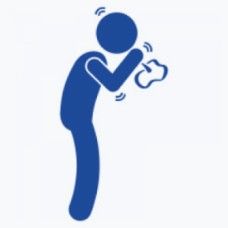
drinking; disposable face coverings will be provided by the Department. Staff
                 are encouraged to wear their own face coverings.
             •   Parts of the building, including meeting rooms and the library will be closed
                 completely.
             •   Use of the lift is restricted to movement of goods and disabled access.
             •   An online booking system has been developed and should be used to pre-
                 book certain communal items of equipment including the use of microscope
                 rooms and cell culture facilities. The booking system can be accessed at
                 https://booking.gen.cam.ac.uk/
             •   All deliveries will be received in the reception area and logged by the
                 receptionist who will contact floor representatives for pick-up.
             •   Water coolers are not operational, but mains drinking water is available on
                 each floor from the designated taps.
             •   The tea room has been rearranged to comply with social distancing rules. A
                 maximum of 8 people may use the tea room at any one time. There must be
                 no sharing of tables. Self-service tea, coffee, sugar and milk will not be
                 available. The microwave may still be used but must be cleaned before/after
                 each use. No tea and coffee will be served in the tea room but hot water will
                 be available.
             •   Toilet use will be restricted to cubicles only. Urinals have been disabled.
                     • All hand driers have been disconnected; hand towels are available.
                     • Disinfecting spray is available for use.
                     • Maximum number of staff in toilets is noted on the door.
                     • Please check for occupancy before entering the toilets.

             •   To aid cleaning and social distancing, lab areas will be de-cluttered and
                 additional storage areas have been identified for each floor to facilitate this.
             •   All staff returning to work must be prepared to act as fire-wardens following
                 protocols outlined in Appendix 1.
             •   An inter-departmental first-aid rota is in place: it will be updated regularly and
                 is posted in prominent areas, on the safety notice boards and the
                 departmental website. This will operate with the Departments of Plant
                 Science, Psychology and PDN.

                                                                                                      6
Return to the Workplace Pack (January 2021)
NEW CLEANING PROTOCOLS IN PLACE
• The department’s in-house cleaners will be in the building to clean between
the hours of 5am – 8.30am. This will overlap with the first shift. Our cleaners
have been provided with yellow barriers to block areas where cleaning is
taking place to enable them to social distance whilst working. You must not
cross these barriers while they are in place.
• In addition, contract cleaners will be coming in at 10pm to clean the floors.
• Researchers will be responsible for wiping down their work areas at the
beginning and end of their shift.
• Cleaners will work Monday to Friday.
• Cleaning of equipment is the responsibility of the researcher using the
equipment. It is essential that all equipment is cleaned appropriately between
each user.
• Communal equipment: A sign detailing the appropriate cleaning method for
the equipment will be found attached to the wall next to the equipment.
• Each researcher must clean their workstation, desk and laboratory bench at
the beginning and end of their shifts using the cleaning products provided.
WHAT TO DO IF YOU DEVELOP SYMPTOMS
https://www.nhs.uk/conditions/coronavirus-covid-19/self-isolation-and-treatment/
• If you develop symptoms of COVID19 whilst you are at work you must inform
your group leader/manager and return home immediately, avoid touching
anything and strictly follow handwashing and respiratory hygiene guidelines.
You must then follow the guidance on self-isolation (at the link above) and must
not return to the workplace until the required period of self-isolation has been
completed. Please complete the University’s COVID monitoring form if you are
experiencing symptoms and awaiting the result of a test:
https://www.cam.ac.uk/coronavirus/stay-safe-cambridge-uni/report-symptoms-
and-get-a-test
• The Departmental Administrator’s Office has been designated a sick-bay/
isolation room for anyone who feels unwell.
7
Return to the Workplace Pack (January 2021)• If you exhibit symptoms at home, or a member of your household tests positive,
you must not come in to work but self-isolate in accordance with the guidance.
• While in isolation, you should obtain a test for COVID19 (Appendix 2). Please
notify your group leader/manager and management committee of the result. If
the test is positive, you must self-isolate in accordance with the guidance. Staff
MUST also complete the University’s COVID monitoring form if they test
positive for COVID: https://www.cam.ac.uk/coronavirus/stay-safe-cambridge-
uni/report-symptoms-and-get-a-test
• Contact tracing will take place and individuals who have come into contact with
an infected person will also have to self-isolate in accordance with guidance.
• In the case of a positive test, those staff working in the building will be notified
of the shift and zone where the infected person is working.
• ‘Track, trace and isolate’ will be applied on a case by case basis.
8
Return to the Workplace Pack (January 2021)Returning to the workplace: discussing concerns and issues
It is important to note that working from home is still the default position for those
who are able to do so and no member of staff should feel obliged to come into the
building if they do not feel comfortable coming in.
Staff may well have some anxieties and/or practical queries about returning to the
workplace and there are a variety of resources and people available to help. Please
look at the University's website info, https://www.cam.ac.uk/coronavirus/wellbeing.
In addition, please talk to someone in the department. This could be your Group
Leader or supervisor, who will be able to confidentially discuss issues with individual
members of staff. All the members of the department's Silver Team are also very
willing to discuss issues (Silver Team: Steve Russell, David Summers, Cahir
O'Kane, Christine Farr, Sara Singlehurst, Ian Clark, Simon Collier, Lottie Groocock,
Sam Laister and Casey Mein). You can also talk to one of the department's
Wellbeing Advocates (Sam Laister and Marisa Segal) postgraduate student
representatives (Ellie Blake and Matthew McCormack) or postdoc representative
(Elves Duarte). Contact details for these individuals are found in Appendix 3.
It is important that we are all aware that we are not going back to ‘normal’ working
practices at the present time. The working environment will be very different and will
present a number of challenges to resuming a normal workload. We should all
therefore bear in mind that it might take time to adjust to the new circumstances and
understand that our work activity levels may be lower than before.
These guidelines will be reviewed on a regular basis. Items for consideration can be
sent to Lottie Groocock (cg663@cam.ac.uk)
List of Appendices
Appendix 1: Fire warden protocols
Appendix 2: COVID-19 tests
Appendix 3: Contact details
Appendix 4: Fly Facility guidelines
Appendix 5: Microscopy Guidelines
9
Return to the Workplace Pack (January 2021)Actions you need to take
During this transition back to working in University buildings, it is important that we all
make adjustments and adapt to new ways of working to ensure the safety of us all.
You are asked to take the following actions to ensure your own health and well-being,
as well as encourage colleagues to do the same:
SOCIAL DISTANCING
2m Stay at least 2m away from anyone else, at all times, whether in vehicles, on
site, outside or inside. Advise colleagues politely if you see they are not
maintaining social distancing; accept feedback about your social distancing
from others.
RESPIRATORY HYGIENE
If you cough or sneeze, cover your mouth and nose with a tissue, or your
sleeves (not your hands) if you do not have a tissue, and throw the tissue in
a bin immediately. Then wash your hands or use a sanitising gel.
HAND WASHING
Wash your hands more often than usual, using soap and hot water for at least
20 seconds, or use a hand sanitiser - when you get home or into work, and
during the day, when you eat or handle food, before eating and after using
the toilet. Hand sanitiser and soap and hot water will be provided. Touching
of the face should be avoided.
WASH YOUR CLOTHES REGULARLY
There is some evidence that the virus can stay on fabrics for a few days,
although usually it is shorter, so if you are working with people outside your
household wash your clothes regularly. Changing clothes in workplaces
should only normally be considered where there is a high risk of infection or
there are highly vulnerable people.
EQUIPMENT
Evidence suggests that the virus can exist for up to 72 hours on surfaces.
Please ensure you clean/wipe your own workstation surfaces regularly, such
as keyboards, mice, telephones, photocopiers etc. using the equipment
provided and note that no equipment should be shared with another member
of staff. The University is providing more frequent cleaning for communal
surfaces like door handles or lift buttons and communal areas like bathrooms,
kitchens and tea points.
10
Return to the Workplace Pack (January 2021)FOOD AND DRINK
You should bring your own food, drink and utensils from home and take them
home to clean at the end of each day. The use of kettles/boiling water
faucets and microwaves will be risk assessed on a site by site basis.
ADJUSTMENTS TO WORKING ARRANGEMENTS
Please comply with changes in working arrangements such as changes to
working hours, seating and workstation arrangements. These are being
put in place for everyone’s safety to reduce the risks of transmission in the
workplace by limiting the number of people that any given individual comes
into contact with regularly.
PPE AND FACE COVERINGS
The University’s approach follows the Government advice at
www.gov.uk/guidance/working-safely-during-coronavirus-covid-19/labs-
and-research-facilities. In summary, where you are already using PPE in
your work activity to protect against non-COVID-19 risks, you should
continue to do so. However, when managing the risk of COVID-19,
additional PPE beyond what you usually wear is not beneficial. In respect
of face coverings, there are some circumstances when wearing a face
covering may be marginally beneficial as a precautionary measure. The
evidence suggests that wearing a face covering does not protect you, but it
may protect others if you are infected but have not developed symptoms.
The department has decided to wear face masks in the building. It is
important to recognise that this measure does not stop viral transmission
and must not reduce compliance with other preventative actions.
TRAVEL TO WORK
When travelling to work, think about how and when you travel. To reduce
demand on the public transport network, you should walk or cycle wherever
possible. If you have to use public transport, you should try and avoid peak
times and wear a face covering.
SICKNESS
It is vital that if you are showing symptoms, i.e. onset of a new continuous
cough and/or high temperature, loss of smell and/or taste (these are currently
the most common symptoms of COVID-19) however mild, should not come
to work and must continue to self-isolate at home, as now, and that the
household quarantine rules continue to apply. If you develop these symptoms
whilst you are at work you should inform your manager and return home
immediately, avoid touching anything and strictly follow handwashing and
respiratory hygiene guidelines. You must then follow the guidance on self-
isolation and not return to the workplace until the period of self-isolation has
11
Return to the Workplace Pack (January 2021)SHIELDING AND VULNERABLE PEOPLE
Let your manager know if you, or those in your household are in an at- risk
or clinically vulnerable group, which means that you should continue to
follow current government guidelines around shielding and should not
come into work.
SUPPORT
If you are concerned about your own wellbeing or the wellbeing of others;
please speak to your manager immediately. Please also feel free to make
use of the wellbeing and mental health provisions of the University
whenever you wish.
If you have any questions
If you have any questions or concerns about any of the information in this document,
or at any point during this phase period, please do not hesitate to speak with your
manager or any member of the Management Committee.
12
Return to the Workplace Pack (January 2021)Appendix 1
Fire Safety While Operating a Shift System
During these unusual times, it is most likely that there will not be a trained fire
warden in every zone of the building during each shift.
It is vital that all staff play their part in helping to keep themselves and their
colleagues safe.
Familiarise yourself with colleagues sharing your shift.
Let a colleague know if you are retrieving consumables from one of the
allocated storage areas. (Areas signed ‘Authorised Personnel Only.’)
Do not wedge fire doors.
Please look out for one another.
In the Event of a Fire/Activation of the fire Alarm
If you find a fire:
1. Activate the fire alarm at your nearest call point.
2. Immediately notify all personnel in your work area.
3. Assist colleagues to check all rooms in your immediate work area.
4. Evacuate the building by the nearest escape route.
5. Do not stop to collect bags, coats, phones etc.
6. Make your way to the assembly point which is the quadrangle at the
front of Plant Sciences.
7. Check that colleagues that share your work space are at the assembly
point. If you are concerned that someone is missing, send a
representative to the front of the Genetics building to inform a
member of Security or the Fire Service. Do not enter the building.
8. Please wait at the assembly point until the Fire Manager/Deputy Fire
Manager or a member of Security tell you that it is safe to return to the
building.
If the fire alarm sounds:
Please follow steps 2-8 above.
13
Return to the Workplace Pack (January 2021)APPENDIX 2
A PCR swab test is offered to all University of Cambridge and college staff with symptoms of possible
SARS-CoV-2 infection (COVID-19).
This test involves a simple nose and throat swab that should take less than three minutes. It will tell you
whether you are infected, helping you protect yourself, your family, friends and colleagues, and the
wider Cambridge community.
You can book your test online via the web portal: https://cuhstaffportal.co.uk/testrequest/. If you
develop symptoms out of hours, please request a test using the NHS website.
Then self-isolate until you receive further instructions from the Addenbrooke's Hospital
Occupational Health or Infectious Diseases teams, in accordance with Public Health England (PHE)
guidance.
The University has broadened the list of possible criteria for which you are eligible for a test at one of the
dedicated University testing pods. The new criteria include milder, but clinically relevant symptoms.
The main symptoms of possible COVID-19 are:
1. High temperature - a feeling of feverishness, or a measured temperature of over 37.8oC
2. New cough - a new intermittent or persistent cough, or worsening of your usual cough (if you have
one)
3. A loss or change in your sense of taste or smell - particularly in the absence of nasal congestion
If you meet one or more of the above criteria, then please see below for information on what you need
to do and how to book a test.
Minor symptoms:
4. A sore throat
5. Nasal discharge or congestion
6. Muscle aches
7. New hoarseness
8. New shortness of breath
9. A new wheeze
If you meet one or more of criteria 4-9, you do no need to self-isolate, but can request a test at one of
the dedicated University testing pods.If you meet one or more of symptoms 1-3 for possible COVID-
19, you must follow these steps:
1. Self-isolate.
2. Inform your line manager.
3. Let the people you live with know they must self-isolate as well.
4. Take a test either through the University Testing Process or an NHS-approved test.
5. Complete the University’s COVID-19 monitoring form: https://www.cam.ac.uk/covidform
6. Read the support and guidance materials sent to you by the COVID-19 helpdesk.
14
Return to the Workplace Pack (January 2021)If you receive a positive test result:
1. Self-isolate for 10 days.
2. Tell your line manager and update your test results on the University’s COVID-19 monitoring form.
3. Let the people you live with know they must self-isolate for 10 days.
4. Provide contact details on the University’s COVID-19 monitoring form in order to initiate track and
tracing.
5. Read the additional support and guidance materials sent to you by the COVID-19 helpdesk.
If you receive a negative test result:
1. Let your line manager know your result.
2. Update your test results on the University’s COVID-19 monitoring form:
https://www.cam.ac.uk/covidform
3. You may be able to stop self-isolating. Please follow the government's guidance.
If you have any queries about this process please contact the COVID-19 helpdesk by phone 01223
339514 or email covid-helpdesk@admin.cam.ac.uk.
If you have concerns about your symptoms you should contact your GP or NHS 111 (out of office hours)
for advice.
Where can you get tested?
You will be offered a choice between tests at one of two locations:
• S2 Testing Pods, Addenbrooke's Hospital – 8.30am to 5pm, Monday to Friday. These pods
are only accessible by car, or bike while wearing a mask. If you are already on the Biomedical
Campus, you can access the pods on foot while wearing a mask.
Map and access information for Addenbrooke's S2 Testing Pods location (PDF)
• Dyson Building, Department of Engineering, Fen Causeway entrance (Please do not go to the
main entrance via Trumpington St) – 8.30am to 2.45pm, Monday to Friday. Accessible by bike or
foot while wearing a mask. Access by car is possible but very limited.
Map and access information for Engineering's Dyson Building location (PDF)
If you develop symptoms after the closure of the Pod on Friday, or any time on Saturday or Sunday, or
cannot access either of these two locations, you can arrange a test at an alternative location using
the NHS website.
15
Return to the Workplace Pack (January 2021)Appendix 3
Silver Team Contact Details
Ian Clark icc20@cam.ac.uk
Simon Collier psc38@cam.ac.uk
Christine Farr cjf1004@cam.ac.uk
Lottie Groocock cg663@cam.ac.uk
Sam Laister sam.laister@admin.cam.ac.uk
Casey Mein genda@gen.cam.ac.uk
Cahir O'Kane c.okane@cam.ac.uk
Steve Russell s.russell@gen.cam.ac.uk
Sara Singlehurst sjs85@cam.ac.uk
David Summers d.summers@gen.cam.ac.uk
Wellbeing Advocate Contact Details
Sam Laister sam.laister@admin.cam.ac.uk
Marissa Segal m.segal@gen.cam.ac.uk
Postgrad Student/Postdoc Rep Contact Details
Matthew McCormack mrm59@cam.ac.uk
(Postgrad)
Ellie Blake eb733@cam.ac.uk
(Postgrad)
Elves Duarte ed556@cam.ac.uk
(Postdoc)
16
Return to the Workplace Pack (January 2021)Fly Facility working practices (Covid–19) - Version 1 (9th June 2020)
Please note: We are dealing with a novel working environment and so may not be able to
anticipate all eventualities. The procedures described in this document will remain under
active review and are subject to change. The latest version of this document will be on the Fly
Facility website (https://www.flyfacility.gen.cam.ac.uk/).
Fly lab (115) occupancy
• Fly lab occupancy: Maximum seated occupancy in the Fly lab is seven people. One
person at each lab bench, plus up to two Fly Facility staff using the bench/computer
at the back of the lab.
• Visiting the Fly lab: Short visits to the Fly lab (e.g. for collecting/removing flies from
the CT rooms/delivering fly food/collecting used fly vials) are permitted and do not
contribute to the occupancy of the lab. However, such visits should be kept to a
minimum and each visit should be as brief as possible.
• External Users: The number of Fly lab users from outside the Department of
Genetics will be kept to a minimum. They will liaise with the fly facility manager
(Simon Collier) to secure use of a fly station. Future applications to work in the Fly
Facility from people outside of the Department of Genetics will need to be considered
by the Genetics Management Committee.
Reserving equipment in the Fly Facility
• Research group fly stations (115): Four stations in the Fly lab are now dedicated
for use by a single research group. The groups are:
o Glover
o O’Kane
o Russell
o Teixeira
The Jiggins group will continue to use their fly station(s) on the ground floor (G03). It
is the responsibility of individual fly groups to ensure that they make best use of their
fly station. Sharing arrangements for fly stations can be negotiated between groups if
usage is uneven. Groups are encouraged to rationalize their fly work to reduce the
total number of trips by group members to the Fly lab; e.g. by sharing tasks (virgin
collection, flipping crosses) across the group.
• Bookable fly station (115): A single fly station (the imaging microscope) is available
for bookings by individuals from all fly groups (including the Jiggins lab). This station
is available for both imaging and for regular fly work. Booking is through the
Department of Genetics Resource Booking System
(https://booking.gen.cam.ac.uk/). Oversight: Simon Collier (s.collier@gen.cam.ac.uk).
• Fluorescence microscope (115A): The fluorescent microscope in the microinjection
room (115A) is bookable through the Department of Genetics Resource Booking
System (https://booking.gen.cam.ac.uk/). Oversight: Simon Collier
(s.collier@gen.cam.ac.uk).
• Laser needle-puller (115): The laser needle-puller has been relocated to the back
bench of the fly lab and will be available for booking through the Department of
Genetics Resource Booking System (https://booking.gen.cam.ac.uk/). Use of the
needle-puller will be restricted to Department of Genetics members. Oversight: Simon
Williams and Alla Madich.
17
Return to the Workplace Pack (January 2021)• Fly cage incubator (301): Please contact Simon Collier if you wish to use the Fly
cage incubator. Contact details: Office: 33992; Mobile: 07543 264031; email:
s.collier@gen.cam.ac.uk
Working in the Fly lab (115)
• Entering the Fly lab: The lab entrance has a double door that restricts visibility for
people entering or leaving the lab. To improve visibility, the inner door will be propped
open during working hours. The large window in the outer door will allow people
entering or leaving the lab to assess if others want to use the door. Priority should be
given to the person exiting the lab to help reduce lab occupancy.
• Navigating the fly lab: A facemask and gloves are required when working in the Fly
lab. On arriving at the Fly lab, workers should clean their hands/gloves using the
sanitizer just outside the lab. They should then minimize movement around the lab
(e.g. visits to the CT rooms etc.) and should maximize distance between themselves
and other workers in the lab.
• Fly station use: Before using the fly station, the bench should be cleaned with the
spray provided, and the microscope controls cleaned with ethanol/isopropanol. Cling
film should be placed over the eyepieces and body of the microscope. At the end of
the session the cling film should be removed and discarded (use the autoclave bin),
the microscope controls cleaned with ethanol/isopropanol and the bench cleaned with
spray cleaner.
• CT rooms: The heavy plastic strips at the entrance of the CT rooms have been
removed to eliminate the possibility of them acting as a source of virus transmission.
Visits to the CT rooms should be kept to a minimum and be as brief as possible. Only
one person should be in a CT room at any one time and workers should wait for their
required CT room to become available before leaving their fly station.
• Fly food: Fly food will continue to be delivered to the cupboards at the front of the Fly
lab, although some cupboards will no longer be in use due to their proximity to the fly
station on the front bench. However, when fly food is taken for use, it should not be
returned to the cupboards, but should be stored on the bench top adjacent to the
appropriate group microscope. Users should plan to collect as much food as they will
need for their work when they enter the lab and leave unused food adjacent to their
group microscope when they leave. Used glass tubes and bottles should be put in the
red trolleys as usual, and used plastic in the autoclave bins
• Fly trays: To create more space in the fly lab and assist social distancing, the steel
trolleys for used trays have been removed. Instead, there are two labeled areas at the
end of each bench for clean trays and used trays.
• Fly lab computers: If possible, visitors to the fly lab should avoid using any of the lab
computers apart from the computer attached to the imaging microscope. When using
a lab computer, the keyboard, monitor and mouse should be covered with cling film
before use, which should be removed and discarded at the end of each session.
• Leaving the Fly lab: Hands/gloves should be washed when leaving the fly lab. The
overhead lights should not be switched off the as they are controlled by motion-
sensitive timers, and so will turn off automatically. It is strongly encouraged that the
last worker to leave at the end of the late shift switches off the CO2 supply at the
main regulator.
18
Return to the Workplace Pack (January 2021)Other information:
Fly inductions: Fly inductions will no longer be carried out in person. Individuals requiring an
induction should contact Simon Collier (Office: 33992; Mobile: 07543 264031; email:
s.collier@gen.cam.ac.uk). They will be prompted to read several pages of the Fly Facility
website covering safety, lab procedures, equipment, mites etc., as well as this document.
They will need to confirm that have read these documents and provide some additional
information before they will be permitted to work in the Fly lab.
Isolation/Quarantine: All fly stocks coming into the Genetics building still need to undergo a
two-generation quarantine. For the foreseeable future, all quarantine work will be undertaken
by Fly Facility staff (for no charge). Fly workers with stocks for quarantine will need to inform
fly facility staff and arrange to transfer the stocks to facility staff (e.g. via the collection tray).
All work in the quarantine area will be undertaken in the early shift, as Adelaide Carpenter will
occupy the attic space in the late shift.
Microinjection service: There will be dedicated trays for injection samples in the Fly lab and
in Genetics reception. Communication with injection staff should be primarily by email or
phone.
Fly Stock sharing:
• Internal: Fly stock sharing between fly workers in the department can still be done via
the fly lab collection tray, which has been moved to the front of the Fly lab (115).
• External: There are dedicated trays in Genetics reception for Cambridge fly workers
outside of the Genetics Department to leave or collect flies. This will avoid reception
or facility staff being directly involved in this exchange.
Food delivery/collection (external): The weekly van delivery service will recommence as
soon as practical, although the day/time of deliveries is likely to be changed. In all other
instances, fly food will be left in Genetics reception for external groups to collect.
Mailing flies: All mailing of flies from the facility will be done during the morning shift as
reception services will not be available in the late shift.
19
Return to the Workplace Pack (January 2021)Appendix 5
Return to work procedures 2020:
Regulation for use of Microscopes within the Department of Genetics.
Microscope booking
To allow ample time for room ventilation between bookings, set booking slots of 2 X 3hour periods
will be established for each shift.
To maximise the use of microscopes in shared rooms, we encourage the design of experiments either
involving time-lapse imaging or automatic multi-position imaging wherever possible, as this will
enable microscopes to be run remotely while another is being used in the same room. It also allows
for experiments to be running in the background during ventilation periods and between shifts.
– you must arrange with the person in the follow-on booking to remove your sample-
The booking will be set-up such that for a given session, both a booking on the microscope (for the
entire experimental session) and the room (for the active period of microscope usage). Here are a
couple of examples for clarity:
You are planning a 4-hour time-lapse experiment on the Leica SP8 that required 15 minutes of set-up
time:
- Book the Leica SP8 for the full 3-hour time slot, plus the room for the initial 15 minutes. Check
that the next user is happy to remove your sample. This will allow the Nikon to be used for
the remaining time and allow your experiment to run through the ventilation break. If the
Nikon and room have already been booked, contact the user directly to request 15 minutes
at the start of the session to begin your experiment.
You have 3hours of confocal imaging on the SP8 to do in which multiple samples need to be imaged
consecutively (i.e. requiring continued use).
- Book the Leica SP8 for the full 3-hour timeslot, as well as the room for the same time-period.
General guidance for microscope management
A check by the Facility Manager (FM) will occur once a day prior to the first session and cleaned if
necessary.
New users will not be trained in the initial restart phase, but ways of training new users will be
investigated whilst in the initial phase.
20
Return to the Workplace Pack (January 2021)Appendix 5
Standard Operating procedures:
Before entering the room
• Put on clean lab gloves (i.e. specific for microscope use).
• Face masks to be worn whilst working on all microscopes
Start-up procedure
• Clean parts of the microscope e.g. the microscope body around the eye pieces, focus knobs,
XY stage controller and any other parts of the microscope that you will come into contact with,
with 70% isopropanol ready-wet wipes (if available, if not: 70% ethanol).
• Do not spray ethanol widely onto the microscope as this can damage the optics and
electronics.
• Clean the objective lenses as normal with lens tissue and lens cleaning fluid before imaging.
• Clean eye pieces with 70% ethanol and lens tissue in a circular motion from the centre
outwards.
• Cling-film keyboard and mouse.
• The eye pieces and front of microscope should be covered in fresh cling film before usage.
• The Microscope On/Off switches should be cling-filmed during use.
• Dispose of all waste in the appropriate bin (specific bin to be placed outside the microscope
rooms).
• Continue normal start up procedure.
During a session
Clean gloves with 70% Ethanol after
• touching the microscope immersion oil
• touching your phone
• touching any other unclean surfaces
Shutdown procedure
• After a session has ended the microscope check other if other users are to follow, if not- shut
down.
• Remove sample from the microscope.
• Remove all cling film and place in the bin.
• Clean the objective lenses as normal with lens tissue and Isopropanol if required
• Clean eye pieces with Isopropanol and lens tissue in a circular motion from the centre
outwards.
• Clean parts of the microscope e.g. the microscope body around the eye pieces, focus knobs,
XY stage controller and any other parts of the microscope that you have come into contact
with, with 70% ethanol on a large kimwipe.
• If you have used a web camera for support, please wipe over with 70% ethanol on a large
kimwipe.
• Dispose of all waste in the appropriate bin,
• Leave room door open to allow for ventilation
21
Return to the Workplace Pack (January 2021)Appendix 6
Zone Area Zone Leader
1 Basement/Summers Lab David Summers
2 Basement/Washing up Area Sara Singlehurst
3 Ground Floor Labs Frank Jiggins
4 Ground Floor Admin Offices and Reception Casey Mein
5 Fly Lab Simon Collier
6 First Floor Labs Anne Ferguson-Smith
7 First Floor Computational Area Henrik Salje
8 Second Floor – Russell/O’Kane/Teixeria Labs Steve Russell
9 Second Floor – Martinez/Steventon/Glover/Segal Labs Steve Russell
10 Second Floor Computational Area Richard Durbin
22
Return to the Workplace Pack (January 2021)Appendix 7
Rota for a member of academic staff to walk the department to provide support and
oversee safety procedures.
AM PM
Monday Marco Geymonat N/A
Tuesday N/A Cahir O’Kane
Wednesday Felipe Karam-Teixeira N/A
Thursday N/A Christine Farr
Friday Steve Russell N/A
23
Return to the Workplace Pack (January 2021)You can also read


