REVIEW ANNUAL DESMOND TUTU HIV FOUNDATION - Desmond Tutu Health Foundation
←
→
Page content transcription
If your browser does not render page correctly, please read the page content below

09   ANNUAL
 REVIEW
 DESMOND TUTU HIV FOUNDATION

TABLE OF
CONTENTS
Message from our Patron, Archbishop Emeritus Desmond Tutu 4
An Overview of HIV/AIDS in South Africa – Dr Linda-Gail Bekker 6
About the Foundation 8
Our Facilities 9
Letter from the Director – Highlights and Achievements in 2009 11
Projects 13
OUR PATRONS Prevention 14
Emavundleni Prevention Centre 14
Archbishop Emeritus Desmond Tutu Women’s Health Unit 15
Leah Nomalizo Tutu
Men’s Health Unit 16
OUR MISSION
Behavioural Sciences 17
Tutu Tester Mobile Unit 18
The Desmond Tutu HIV Foundation pursues excellence in research, treatment, training and prevention of The Youth Programme 20
HIV and related infections in Southern Africa The SASHA Project 23
OUR PURPOSE Treatment 24
Clinical Trials Unit 24
To lessen the impact of the HIV epidemic on individuals, families and communities through our commitment
Hannan Crusaid Treatment Centre 25
to excellence, innovation and passion for humanity
Nyanga Community Health Clinic 26
OUR BOARD
TB and Care 27
Professor Gilla Kaplan (Chair) Advocate Taswell Papier Cipra Project 3 27
Zorhra Ebrahim (Vice-chair) Pieter-Dirk Uys Wellcome TB Programme 28
Professor Linda-Gail Bekker Professor Robin Wood Opportunistic Infections 28
Professor Des Martin Thandeka Tutu-Gxashe
Training 29
CONTACT
HIV Education Programme 29
Physical address MSM Sensitivity Training 29
Desmond Tutu HIV Foundation
UCT Medical School, Anzio Road Donors, Strategic Alliances and Partners 30
Observatory, Cape Town
Friends of the Foundation 32
Postal address
Desmond Tutu HIV Foundation
Peer Reviewed Papers 34
P O Box 13801
Mowbray 7705
Financial Report 2008/2009 37
Telephone: (+27) 21 650 6966
Facsimile: (+27) 21 650 6963
Disclaimer
Website: http://www.desmondtutuhivfoundation.org.za
Email: enquiries@hiv-research.org.za Photographs in the Desmond Tutu HIV Foundation 2009 Review are by Oryx Multimedia and from the
Foundation’s archives and represent the people and the communities the Foundation serves. The HIV
status of the people featured in these photographs is unknown, as in many instances, are their names. No
Designed and edited by Oryx Multimedia assumptions should be made regarding their appearance in the publication.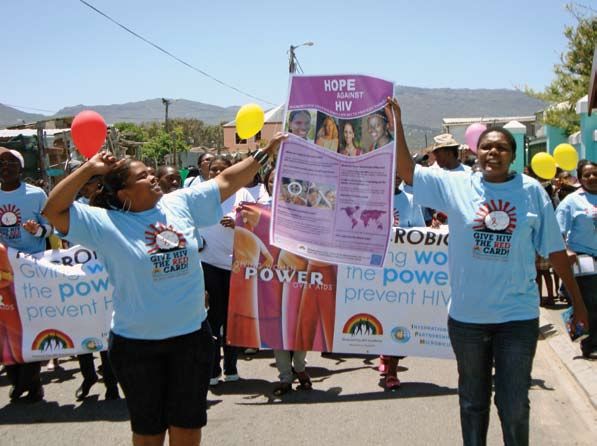
MESSAGE FROM OUR

                                                                                              PATRON,
                                                                   Archbishop Emeritus Desmond Tutu

                                                                   Dear Friends

                                                                   For so many years the news around HIV has been nothing short of a national disaster, an unfolding
                                                                   tragedy of immense proportions. The disease has taken hold of our communities with terrifying
                                                                   speed, with infection rates leaping higher and higher each year. Younger children have lost
                                                                   their parents and older parents have lost their children.

                                                                   Child-headed households are creating social challenges for which our support structures
                                                                   are unprepared, and communities spend their weekends at gravesides. Unfortunately, in our
                                                                   national response there have also been many missed opportunities and precious lives lost as a
                                                                   consequence.

                                                                   But change has happened and I was so proud to learn that it was a Desmond Tutu HIV Foundation
                                                                   clinic that was one of the first to roll out life saving antiretrovirals to those most needy in our
                                                                   communities. The untiring work of those trying to stem the pandemic is beginning to bear fruit.
                                                                   Infection rates in some sectors are leveling off and we have seen an unprecedented reduction
                                                                   in the number of people dying and we are beginning to see an early impact in other important
                                                                   diseases, such as tuberculosis, as a result.

                                                                   It is not a time to rest on our laurels, but I want to pay tribute to those who are working with such
                                                                   dedication to contain the disease. You are quite wonderful! I encourage you to redouble your
                                                                   efforts as there is still so much to be done. Thank you to everyone who has rallied to help and
                                                                   given their support so generously. To our donors and volunteers; thank you for your compassion,
                                                                   thank you for your caring. It is deeply, deeply appreciated.

                                                                   And now to work, as we enthusiastically take on another year of challenges and progress. We
                                                                   are counting on you being with us.

                                                                   God bless you

2009 ANNUAL REVIEW DESMOND TUTU HIV FOUNDATION GIVE HIV THE RED CARD 2009 ANNUAL REVIEW 
It is estimated that for every
                                                                                                                                                                                  two individuals started on
                                                                                                                                                                                  treatment, another five
                                                                                                                                                                                  become infected. It is for
                                                                                                                                                                                  this reason that attention
AN OVERVIEW OF HIV/AIDS IN                                                                                                                                                        and resources must also be

SOUTH AFRICA
                                                                                                                                                                                  given to strengthening HIV
                                                                                                                                                                                  prevention interventions
                                                                                                                                                                                  to curb incidence whilst
                                                                                                                                                                                  providing universal access
Dr Linda-Gail Bekker                                                                                                                                                              to treatment for all those
                                                                                                                                                                                  affected, in order to reduce
                                                                                                                                                                                  morbidity and premature
The number of people living with HIV worldwide continued to grow in 2008, reaching an
estimated 33.4 million. The total number of people living with the virus in 2008 was more than
                                                                                                                                                                                  deaths due to AIDS.
20% higher than the number in 2000, and the prevalence was roughly threefold higher than
in 1990. The continuing rise in the population of people living with HIV reflects the combined
effects of continued high rates of new HIV infections and the beneficial impact of antiretroviral                                               Courtesy of Peter Hugo
therapy. As of December 2008, approximately four million people in low- and middle-income
countries were receiving antiretroviral therapy—a tenfold increase over five years (World                                risk of contracting HIV. The overall national HIV prevalence among antenatal women aged
Health Organisation, United Nations Children’s Fund, UNAIDS, 2009). This is a triumph of global                          15–49 years in the 2008 ANC survey, measured using the parallel test algorithm, was 29.3% (95%
funding and health systems mobilisation in areas where more often than not, very little health                           CI: 28.5%–30.1%). The occurrence of the HIV infection nationally has stabilised at around 29.0%
resource exists. As a result, many many lives have been saved, families remain constituted and                           from 2006. In 2007, the HIV prevalence estimate among first visit antenatal attendees was 29.4%
breadwinners continue to feed their dependents.                                                                          (95% CI: 28.5–30.1).

The UNAIDS, estimates that in 2008 there were 5,3 million South Africans infected with the virus, of                     Nationally, women in the age group 30–34 years still have the highest prevalence, with a
which three million were women above 15 years old and 220 000 were children. South Africa has                            prevalence of 40.4% in 2008 compared to 39.6% in 2007. The HIV prevalence among the 15–24
almost two decades (1990–2008) of good sentinel surveillance data that assists in monitoring the                         years old (which is the Millennium Development Goal 6, Target 7 indicator 18) was 21.7% in
HIV epidemic trends in the 15–49 years old female population. At the end of 2007, the estimated                          2008 compared to 22.1 % in 2007 a decline of 0.4%. There is a slight increase in HIV prevalence
prevalence of HIV in the general adult population was 17.5 %. South Africa is home to one-                               among young women in the age group 15–19 years from 13.1% in 2007 to 14.1% in 2008. The HIV
sixth of the world’s population living with HIV and has the largest antiretroviral therapy (ART)                         prevalence has remained stable among women aged 25 years and above.
programme in the world. ART roll out began nationally in late 2003 and by the middle of 2008,
568 000 adults and children were receiving ART. This translated into around 40% of eligible adults                       Furthermore, the results show that there is wide variation in HIV prevalence rates between
receiving ART in 2008, although the latest recent guidelines recommend earlier initiation for                            provinces, in the age groups over 19 years, from 16.1 % in the Western Cape to 38.7% in KwaZulu-
certain patients, thus increasing the numbers eligible for ART and widening the treatment gap.                           Natal. For the first time HIV prevalence trends have been reported down to the district level
                                                                                                                         in South Africa. District HIV prevalence results show heterogeneity with respect to the spread
However, despite the impact of antiviral therapy, access and implementation is such that                                 of the epidemic, with prevalence rates ranging from 2.2% in Namakwa (NC) to 45.7% in
still many babies are born infected and many young people continue to be infected. It is                                 uMgungundlovu (KZN).
estimated that for every two individuals started on treatment, another five become infected. It
is for this reason that attention and resources must also be given to strengthening HIV prevention                       In 2009/2010 South Africa continues to be the epicentre of the generalised epidemic in the
interventions to curb incidence whilst providing universal access to treatment for all those                             Southern region of Africa. Within the country there is enormous heterogeneity in terms of disease
affected, in order to reduce morbidity and premature deaths due to AIDS.                                                 load, with the main disease burden still in women. Progress towards treatment access has been
                                                                                                                         made throughout the country in the last few years, but still enormous efforts need to be made
South Africa, with so many millions of people infected, faces both institutional and human                               in prevention of mother to child transmission programme coverage and increased HIV testing
resource capacity challenges to provide treatment, care and support. This is compounded                                  and timely linkage of individuals needing antivirals into comprehensive and sustainable care.
by the simultaneous resurgence of the TB epidemic and drug resistant pathogens. The findings                             With the global economic recession of 2009, and an ever increasing pool of patients requiring
from the South African 2008 antenatal survey supports observations that the HIV prevalence                               life long treatment, enhanced efforts to find effective prevention strategies has become even
may be stabilising in the general adult population but South African women remain at highest                             more urgent and imperative in 2010.

2009 ANNUAL REVIEW DESMOND TUTU HIV FOUNDATION GIVE HIV THE RED CARD 2009 ANNUAL REVIEW 
OUR

                                                                                                                                  FACILITIES
ABOUT THE                                                                                                                                               Head Office

FOUNDATION
                                                                                                                                                        The DTHF and the DTHC operate jointly from
                                                                                                                                                        the head office at the University of Cape Town
                                                                                                                                                        Faculty of Health Sciences, in Observatory. This
                                                                                                                                                        location also houses the Clinical Trials Unit, a
                                                                                                                                                        clinic that sees clients enrolled in antiretroviral
                                                                                                                                                        treatment and prevention studies.

The Desmond Tutu HIV Foundation (DTHF) is a registered non-profit organisation. Established
under the directorship of Professor Robin Wood and Associate Professor Linda-Gail Bekker, in
January 2004, the Foundation began as the HIV Research Unit based at New Somerset Hospital                                                              Hannan Crusaid Treatment Clinic, Gugulethu
in the early 1990s. It was acclaimed as one of the first public clinics to offer antiretroviral therapy                                                 The clinic opened in March 2004, becoming
to those living with HIV.                                                                                                                               the first dedicated HIV treatment centre in
                                                                                                                                                        the Western Cape. The clinic is a joint venture
More recently, the Foundation moved to its present headquarters at the Faculty of Health                                                                between the DTHF and the Western Cape
Sciences, at the University of Cape Town (UCT). Supported by Archbishop Emeritus Desmond and                                                            Department of Health and was initially funded
Leah Tutu, the Foundation has extended its activities to include HIV treatment, prevention and                                                          by Crusaid, a United Kingdom based NGO.
training, as well as tuberculosis management and monitoring, in some of the most vulnerable                                                             Thousands of people receive life-enhancing
communities of the Western Cape.                                                                                                                        antiretroviral   treatment      and     support   at
                                                                                                                                                        this site.
All of these activities are underpinned by evaluative and innovative academic research
undertaken by the Desmond Tutu HIV Centre (DTHC). The Centre, based at the University of
Cape Town’s Institute of Infectious Disease and Molecular Medicine, operates symbiotically                                                              Emavundleni, Crossroads
with the Foundation’s local field sites in the Nyanga area of Cape Town, Masiphumelele and                                                              This state of the art prevention centre opened
other areas in the peninsula.                                                                                                                           its doors in April 2007 to house DTHF’s first
                                                                                                                                                        large    scale   vaccine     trials.   Designed   to
The work of the Desmond Tutu HIV Foundation and the Desmond Tutu HIV Centre is integrated                                                               accommodate hundreds of trial participants,
at operational level, but they remain separate entities with separate governance structures                                                             the centre has a small laboratory and a
and funding streams. DTHC projects are not governed by or accountable to the DTHF’s board                                                               well-equipped pharmacy. The building also
of directors.                                                                                                                                           houses prevention activities such as voluntary
                                                                                                                                                        counselling and testing, in addition to ongoing
Pairing community-driven development and internationally acclaimed research, the DTHF                                                                   prevention (vaccine, microbicides, PrEP) trials
envisions a brighter future where HIV is manageable and its presence in South Africa’s                                                                  and psychosocial research.
communities diminished.

2009 ANNUAL REVIEW DESMOND TUTU HIV FOUNDATION GIVE HIV THE RED CARD 2009 ANNUAL REVIEW 
Desmond and Leah Tutu Centre,
     Masiphumelele                                                         LETTER FROM THE

                                                                                   DIRECTOR
     The Desmond and Leah Tutu Treatment
     Centre opened in 2003 as an annex to the
     Masiphumelele primary health care clinic in
     Masiphumelele, Noordhoek. In addition to
     offering antiretroviral treatment and HIV care
     to this community, the Centre also conducts
                                                                           Highlights and Achievements in 2009 - Professor Robin Wood
     research into TB and innovative HIV prevention
     methods.

     Kethupila Youth Centre
     The DTHF have acquired a site adjacent to
     Masiphumelele where the Kethupila Youth
     Centre is to be built. The Centre will focus
     on delivering HIV and reproductive health
     services to young people. In response to the
     holisitic needs of the young people in the area,
     the building will provide space for recreation,
     study and sporting activities. Construction will
     commence in January 2010.

     Tutu Tester – Mobile Unit
     In May 2008 the Foundation introduced an eye-
     catching, client-friendly, mobile HIV testing
     unit on to the streets of greater Cape Town.
     The vehicle offers free voluntary counselling
     and testing services to areas in need of strong
     preventative measures. Clients may also
     receive free screening for blood pressure,
     blood sugar, weight and sexually transmitted
     infections, as well as disease monitoring and
     TB screening for those who test positively for                        It is exciting to reflect on the activities in the last year of the Desmond Tutu HIV Foundation
     HIV.                                                                  and gratifying to see that key areas identified at our last strategic planning meeting in 2007
                                                                           were tackled in 2009. This year has seen the prevention work in important vulnerable groups
                                                                           develop, including men who have sex with men (MSM), women’s health and the extension of
                                                                           our youth work. We are particularly proud to be the only site in Africa taking part in the global
                                                                           iPrex pre-exposure study in MSM and this study has ensured that we have developed a better
                                                                           understanding of this population and its associated networks in Cape Town.

                                                                           Our partner in our women related work is the International Partnership in Microbicides. Two study
                                                                           sites have been established, at Emavundleni and Masiphumelele. The sites will introduce the
                                                                           first of experimental antiretroviral microbicides utilising an innovative community intervention to
                                                                           enhance adherence.

10          2009 ANNUAL REVIEW DESMOND TUTU HIV FOUNDATION   GIVE HIV THE RED CARD 2009 ANNUAL REVIEW                                                                      11
Finally, 2009 was important in that sufficient funds were raised to start construction of the
Kethuphila Youth Centre in Masiphumelele. I am delighted to say that a construction company
has been identified and that building will commence in January 2010 on the land purchased for
this purpose. We plan a celebration on 2 July 2010, when a number of our benefactors will be in
town as a result of the Soccer World Cup.

This past year has seen a consolidation of our work in TB/HIV with a number of important insights
and research papers being published. With South Africa’s unprecedented burden of TB, the
DTHF remains committed to helping find solutions to this public health disaster that will be
practical and sustainable. Of particular focus was the recognition of the remarkable annual risk
of tuberculosis infection among the youth in our communities. This will spur further research and
some possible opportunities for intervention in 2010.

Treatment of HIV remains an important activity and our collaborative clinic, the Hannan-Crusaid
clinic in Gugulethu, reached the incredible number of 6 000 individuals screened for antiviral
therapy in 2009. Another remarkable statistic was the 10 000th person tested by the mobile Tutu
Tester on the streets of Cape Town in the past year.

Despite many worldwide woes on the financial front, 2009 saw the DTHF continue to expand,
produce and undoubtedly fulfil its mission and purpose. We take this opportunity to thank and
congratulate our magnificent staff without whose commitment and dedication this would not
be possible. We also acknowledge the many sponsors and donors who generously continue to
contribute through the work of the DTHF to the upliftment and better health of the people of
South Africa.

We look forward to an exciting year of consolidation and growth in 2010!

                                                                                                                                      PROJECTS

12                                                       2009 ANNUAL REVIEW DESMOND TUTU HIV FOUNDATION   GIVE HIV THE RED CARD 2009 ANNUAL REVIEW   13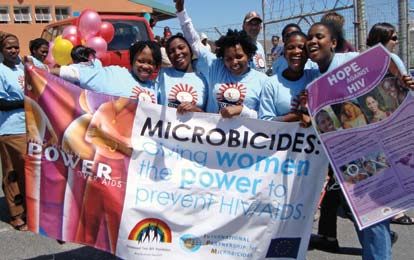
PREVENTION
EMAVUNDLENI PREVENTION CENTRE                                                                                            WOMEN’S HEALTH UNIT
Project Leader: Dr Surita Roux                                                                                           Project Leader: Dr Jennifer Pitt

                                                                                                                         There is a particular interest in how women might better protect themselves from infection
                                                                                                                         through the use of microbicides in the fight against HIV. Two studies are being conducted on
                                                                                                                         behalf of the International Partnership in Microbicides (IPM) in the communities of Nyanga and
                                                                                                                         Masiphumelele.

                                                                                                                         The IPM team is developing materials to educate women on the possible benefits of
                                                                                                                         microbicides and to encourage participation in the trials. Women’s discussion groups in the
                                                                                                                         community have been formed. They address a variety of issues related to women’s health and
                                                                                                                         are the scene of much lively debate.

                                                                                                                         If these early phase trials show that ARV based microbicides are safe and acceptable, the sites
                                                                                                                         will move on to efficacy trials in larger numbers of women.

                                                                                                                         The clinical trials also provide the opportunity to explore a number of health issues specific
                                                                                                                         to women in our communities, including optimal contraception, STI and cervical cancer
                                                                                                                         screening.

The HI virus continues to decimate our people. Much more needs to be done to improve the                                 The Masiphumelele team is currently expanding the reach of special concern for women’s
treatment and care of those living with HIV. The DTHF are proud to be innovators and international                       health into the community of Ocean View. They will be assessing the extent of the HIV epidemic
partners in developing knowledge and new interventions. The Emavundleni Centre in Crossroads,                            in this community, as well as the health priorities of women.
Nyanga has been designed specifically as a place where new biomedical technologies can
be tested to international standard among well informed and educated healthy volunteers.

                          The centre is an internationally recognised site for HIV prevention
                          trials including vaccines, microbicides, STI vaccines and pre-exposure
                          prophylaxis. Several such trials have been carried out and follow
                          up on these is in progress. Currently two studies have been initiated
                          involving the use of microbicides; similar studies are also being carried
                          out in Masiphumelele. Partnerships are a strength of the DTHF and we
                          are pleased to partner with a number of international networks and
                          agencies in the search for an effective, accessible HIV prevention
                          modality.

                          Emavundleni is one of seven national sites selected for the SASHA
                          study, mentioned elsewhere in this Review.

The centre also offers voluntary counselling and testing services to the community, in addition
to testing for STDs, TB and blood sugar levels. It is our practice always to refer patients to other
health services available should they require treatment outside the services offered by the
DTHF.

14                                                        2009 ANNUAL REVIEW DESMOND TUTU HIV FOUNDATION   GIVE HIV THE RED CARD 2009 ANNUAL REVIEW                                                                  15
MEN’S HEALTH UNIT                                                                                                           The Men’s division seeks a number of outcomes from its diverse scope of projects but its core
                                                                                                                            objective will continue to be seeking better support for the MSM community by initiating
                                                                                                                            cutting edge research and by bringing awareness to the many issues which affect this at-risk
Project Leader: Dr Andrew Scheibe                                                                                           population. Under the new leadership of Dr. Andrew Scheibe and Mr. Ben Brown, the men’s
                                                                                                                            division seeks in the coming year to create a solid foundation for its continued research and
                                                                                                                            presence in the MSM community.
                                        Our    men’s     health    division,     formed    in   2006,   is
                                        involved    in   a   variety   of      projects   and   research

                                                                                                                            BEHAVIOURAL SCIENCES
                                        focused on HIV prevention among men who have sex
                                        with men (MSM). This year, they have directed most of
                                        their efforts towards enrolling for the Chemoprophylaxis
                                        for HIV Prevention in Men Study. This groundbreaking                                Project Leader: Daniella Mark
                                        clinical trial is trying to determine if taking Truvada, an
                                        approved and safe ARV, once a day, can prevent
                                        HIV among negative men. The PrEP Study, as it is more
                                        commonly known, is unique in that unlike other research
                                        focused on using medication as a vaccine or treatment
                                        for HIV, PrEP’s aim is to use medication to prevent the
                                        initial infection of HIV. As the only African site of this global
                                        trial, the Desmond Tutu HIV Foundation plays a key role
                                        in securing South Africa’s contribution to global HIV
                                        prevention research.

The PrEP study has also afforded the division the opportunity to invest in new and innovative
approaches to engaging with and supporting Cape Town’s diverse MSM population. Included
among these are citywide netball tournaments, which allow for community-based teams of
MSM to actively take part in sport and compete with each other in a variety of locations around
the city. In 2009, the Men’s Division also enlisted the aid of Odidiva, Cape Town’s premier drag
cabaret artist, who performs weekly for sold-out shows of Cape Town’s LGBT community. With
her talent, great voice and side-splitting wit, Odidiva easily incorporates messaging into her show
that promotes not only the research of the Men’s division but also its messages of prevention
and safe sex.

Our men’s research team has also undertaken a number of new initiatives in their continued
                                                                                                                            Psychological, social and behavioural factors play a paramount role in the HIV/AIDS epidemic.
efforts to better serve MSM in Cape Town. To address the lack of MSM-friendly counselling and
                                                                                                                            Transmission is behaviour-driven, occurring in South Africa almost entirely through sexual
testing services found in Cape Town, the division created an MSM sensitivity manual for health
                                                                                                                            activity.
workers in Africa. The manual - which covers topics such as risk reduction counselling with MSM,
identity, coming out, stigma, and mental health - was distributed to colleagues in Kenya and
                                                                                                                            Psychological factors such as depression and substance abuse, and social factors such as
throughout the Western Cape in South Africa.
                                                                                                                            gender inequality and intergenerational sex, have been shown to be the primary drivers of
                                                                                                                            sexual behaviour in the HIV era. Psychosocial and behavioural factors are crucial to the success
The division also undertook a new research study that will provide us with insight into the specific
                                                                                                                            of prevention research. Such research relies on participants’ willingness to take part in studies,
HIV subtype that affects Cape Town’s MSM community. The team also plans to implement
                                                                                                                            successful recruitment (participant uptake of the trial) and retention (participants’ adherence
a yearly surveillance study to gather critical information including HIV prevalence data and
                                                                                                                            to it), providing appropriate and effective risk reduction support, monitoring risk behaviour and
human rights abuses in MSM in Cape Town.
                                                                                                                            minimising social harms. These are all psychosocial and behavioural factors.

16                                                           2009 ANNUAL REVIEW DESMOND TUTU HIV FOUNDATION   GIVE HIV THE RED CARD 2009 ANNUAL REVIEW                                                                     17
Finally, HIV/AIDS has profound psychological and social impacts, affecting mood states, quality
of life, substance use, relationships and community. Many people-living-with-AIDS interventions
are necessarily psychosocial, attempting to impact levels of disclosure and social support for
example. Even purely biomedical interventions such as HAART are behaviour-dependent,
requiring patients to adhere to medication regimens and care, both of which are dependent
on psychosocial factors.

The Psychosocial and Behavioural Division sets out to:
• Understand the psychosocial and behavioural determinants of HIV transmission in South
     Africa, and test suitable psychosocial and behavioural interventions to control the country’s
     epidemic;
• Support effective prevention research in South Africa through best practices, investigations
     into psychosocial and behavioural aspects of research/trial participation;
• Improve the quality of care for patients through assessing psychosocial and behavioural
     support needs (for example, predictors of adherence, retention to care), and implementation
     and assessment of psychosocial interventions at primary care level; and
• Impact policy and trial best practices through publication.

In 2009, the Psychosocial and Behavioural Division undertook or consulted on 16 studies, 11 of
which were purely psychosocial, and five that had psychosocial and biomedical components.
The studies are taking place at three sites: Emavundleni (nine studies), Masiphumelele (four
studies), and CTU (three studies). Three studies also have a national component that is managed
by DTHC. In total, we have 4 839 participants across all 16 studies.

                                                                                                                         There have been several innovations over the past year:

TUTU TESTER MOBILE UNIT                                                                                                  • A Biometric system has been introduced in partnership with the Broccoli Project, an IT
                                                                                                                            organisation. The system facilitates anonymity by capturing clients’ fingerprints electronically
Project Leader: Dr Nienke van Shaik
                                                                                                                            along with their medical history and stores the information on a secure, confidential
                                                                                                                            website.
The first step to controlling the spread of HIV infection is to test. People need to know their
status to be enabled to take responsibility for their health. Many fear stigmatisation and are                           • TB testing has now been incorporated into the screening programme in keeping with the
understandably reticent about coming forward. The Tutu Tester mobile unit provides a friendly,                              strategy of providing more comprehensive services to those testing HIV positive.
non threatening environment and can be taken to sporting events, night clubs, or any place
where people gather.                                                                                                     • A ‘Road to HIV Health’ card has been designed to assist nurses and HIV infected clients with
                                                                                                                            the monitoring of this disease by plotting viral loads together with the client’s CD4 counts on
The mobile unit was launched in May 2008 through the generosity of the Metropolitan Health                                  a card. Clients can now take responsibility for keeping track of their health.
Group. Since then a small team of dedicated staff have provided comprehensive and efficient
care to more than 10 800 people in many underserviced communities in the greater Cape Town                               • Between October 2008 and April 2009 the Tutu Tester partnered with TB/HIV Care, an NGO
area.                                                                                                                       operating in Cape Town, to provide both HIV and TB testing to the TB and antiretroviral
                                                                                                                            adherence supporters in their employ.
The Tutu Tester offers a prevention wellness package that includes screening for diabetes,
hypertension and obesity as well as HIV. The unit also offers TB testing and checks the CD4 count                        In October 2009 the Tutu Tester visited the office of our Patron, Archbishop Emeritus Desmond
of clients who test positive for HIV.                                                                                    Tutu in Milnerton. The Archbishop was tested for HIV. He paid a warm tribute to the DTHF staff for
                                                                                                                         their commitment and service to the communities of Cape Town.

18                                                        2009 ANNUAL REVIEW DESMOND TUTU HIV FOUNDATION   GIVE HIV THE RED CARD 2009 ANNUAL REVIEW                                                                      19
THE YOUTH PROGRAMME
Project Leader: Lisa Aquino
Young people are key to containing the spread of the HI virus. It is their willingness to take
responsibility for their health that will determine whether HIV remains a disease of pandemic
proportions. The DTHF has recognised the importance of educating youth regarding their health
and has developed programmes aimed at preventing HIV infection among young people and
supporting those living with HIV.
Adolescent ARV Clinic
The Adolescent ARV Clinic at the Community Health Centre in Gugulethu serves 100 young
people between the ages of 14 and 22 years old who are infected with HIV. The aim of the
programme is to improve retention in care, which is often poor, in this age group. The adolescent
clinic provides a place where young people can grow into adulthood in terms of their clinical
care, in a safe and supportive space. Trained staff are available, including a physician, and a
nearby container has recently been converted into an attractive activity room. In the past year
the number of young people attending the clinic has almost doubled.
Future Fighters
The Future Fighters are an important component in DTHF research and HIV prevention strategy.
Thirty young people, between the ages of 14 and 22, have been nominated by teachers or
organisations and form the Adolescent Community Advisory Board (CAB). They have been
trained in research and HIV, peer education, and general life skills. The Future Fighters provide
useful information to the DTHF on youth opinion and attitudes towards research affecting this
age group. They also educate their community on the value of research studies, and advocate
on HIV-related issues important to young people in South Africa.
20 2009 ANNUAL REVIEW DESMOND TUTU HIV FOUNDATION GIVE HIV THE RED CARD 2009 ANNUAL REVIEW 21Hlanganani Youth Groups
Young people are carrying the burden of the HIV THE SASHA PROJECT
epidemic in South Africa.
The Hlanganani (‘come together’) project is focused Project Leader: Dr Melissa Wallace
on the feasibility and effectiveness of a series of three
learning sessions offered to newly-diagnosed young
Since the prevalence of HIV/AIDS was formally
people. The programme is adapted from a programme
acknowledged with the establishment of World
for HIV infected pregnant mothers. It is hoped that the
AIDS Day on 1 December 21 years ago, there have
translation of this model to a South African youth setting
been changing patterns among those infected
will offer key information to newly diagnosed young
with the HIV. Today the HIV epidemic in sub-
people, and increase the number of youth with HIV who
Saharan Africa is mainly driven by new infections in
return to clinics for care.
adolescents. Should a vaccine become available,
adolescents should be among the first to benefit.
But without vaccine trials among youth such
a drug would not be licensed for use in this age
group. The SASHA project aims to identify clinical,
community, ethical, legal and socio-behavioural
obstacles to the conduct of adolescent HIV
vaccine trials and prevention interventions in seven
sites in South Africa: Cape Town, Soweto, Durban,
Mthatha, Klerksdorp, Pretoria, and Bushbuck Ridge
in Limpopo Province.
The project includes two studies:
• The first study is exploring the attitudes of communities, parents and adolescents, towards
adolescent participation in HIV vaccine trials. This is well underway;
• The second study will use the licensed HPV vaccine, an alternative sexually transmitted
infection vaccine, as a proxy for an HIV vaccine and thereby identify potential challenges to
the inclusion of adolescents in HIV prevention trials. This study will continue throughout 2010.
In preparation for this project, the selected sites have benefitted from capacity development in
Kethuphila Youth Centre
a number of areas. These include the incorporation of adolescent community advisory boards,
A youth health centre has long been a dream of the Foundation and the people of
and the mapping of adolescent community services at each site; the development of an
Masiphumelele. Over the past two years the Foundation successfully raised sufficient funds to
adolescent-friendly sexual health service, and training of staff to provide such a service; and
build a centre for the use of the youth in the Masiphumelele area. It is said that youth shun
training on the ethico-legal impact of research with adolescents.
conventional health facilities for fear of stigma and prejudice. We intend to provide a safe, non-
judgemental environment at the Kethuphila (‘choose life’) Centre where young people can
This year has seen the launch of the Consortium for Adolescent Trials in Southern Africa (CATSA).
receive advice, counselling and health services. In addition, we will provide recreation facilities
CATSA has developed out of the SASHA project and aims to sustain and further build the network
and skills education. Building will commence in January 2010.
of the seven adolescent sites for additional future adolescent prevention research. Funding is
currently being sought to support this initiative.
22 2009 ANNUAL REVIEW DESMOND TUTU HIV FOUNDATION GIVE HIV THE RED CARD 2009 ANNUAL REVIEW 23TREATMENT
CLINICAL TRIALS UNIT This has been a productive year with a number of studies being successfully carried out. By
mid-2009, there were 246 patients receiving antiretroviral therapy on 16 therapeutic trials. These
include:
Project Leaders: Dr Catherine Orrell/Christie Heiberg
• Investigating the safety and efficacy of a therapeutic vaccine for HIV participants. It is hoped
that the vaccine will enhance existing, or generate new, anti-HIV immune responses in those
The Clinical Trials Unit has conducted a wide variety of trials since its establishment in 1993.
already infected with HIV. In addition, the Clinical Trials Unit is the only site in South Africa where
The majority of these patients are on treatment pharmaceutical trials with all drug monitoring
the PK sub-study is being undertaken.
and clinical expenses covered by the companies concerned. Some patients who are post trial
received support for their continued treatment from the Pepfar-funded Compassionate Use
• The unit has been selected to participate in a leading multi-centred treatment strategy
Programme. The unit is based at DTHC headquarters at the University of Cape Town. Innovative
funded by the NIH called START (Strategic Timing of Antiretroviral Treatment). Preparations for this
trials and studies are in progress concerning investigational products and/or strategies for the
study are now underway.
treatment and/or prevention of HIV. Our partnership with local and provincial HIV and ARV
clinics has contributed substantially to their success.
The PrEP study is researching the efficacy and safety of pre-exposure prophylaxis in a high
risk HIV negative male patient population of men who have sex with men (MSM). The study is
revolutionising the recruitment and retention strategies of the clinical trials unit.
HANNAN CRUSAID TREATMENT
CENTRE
Project Leader: Dr Richard Kaplan/Dr Catherine Orrell
The clinic, situated in a purpose-built building within
the grounds of the Gugulethu Community Health
Centre, was established in March 2004 and is run
through a partnership between the Desmond Tutu
HIV Foundation and the Western Cape Provincial
Health authorities. It provided one of the first public
sector antiretroviral programmes in South Africa.
Gugulethu is an area where one in three adult
pregnant women are HIV positive. At the Hannan
Crusaid Clinic, the focus of our programme has
been on the requirements for the rapid scale-up of
antiretroviral therapy (ART) with on-site laboratory
support and a comprehensive, community-based
counselling service that continues to explore ways
of improving adherence and retaining patients in
care.
By October 2009, 5 872 patients had been screened for ART and 4 697 had started treatment.
The programme depends heavily on community counsellor support and family treatment,
which includes treatment programmes for children and adolescents.
24 2009 ANNUAL REVIEW DESMOND TUTU HIV FOUNDATION GIVE HIV THE RED CARD 2009 ANNUAL REVIEW 25TB AND CARE
The Sizophila Counsellors
An award winning team of 30 lay community workers living with HIV have been trained to CIPRA PROJECT 3
educate and support their peers who are receiving antiretroviral treatment. Sizophila means ‘we
will survive’. Their commitment and the example they set has resulted in excellent adherence Project Leader: Dr Keren Middelkoop
and retention on treatment among patients.
Adolescent Programme
Children who are infected with the HI virus need particular support and encouragement if they
are to manage their health. A small building on site is utilised as a clinic for children and youth
on Tuesday afternoons. It is important that an attractive, child-friendly environment be created
to encourage young people to return for assessment and to receive their medication. A nearby
container has been renovated and equipped as an activity room for their use and three youth
counsellors are employed by the DTHF to manage and support the young people and enhance
the programme adherence of the youth aged 9 – 19 years.
THE NYANGA COMMUNITY HEALTH
CLINIC TB/HIV INTEGRATION
PROJECT
Project Leader: Dr Richard Kaplan
The spread of TB in conjunction with the HI virus
has severely challenged the City Health and
Metro District Health services in the Western Cape Town’s informal settlements, beset by overcrowding and unhygienic conditions, have
Cape. They have welcomed the opportunity to created an environment where TB has become endemic. The HI virus inhibits the immune system
work in partnership with DTHF to provide an of individuals and they become easily susceptible to opportunistic infections, the most common
integrated TB and HIV service at the Nyanga being TB. It is the most frequent cause of death in patients with AIDS.
Community Health Clinic on the outskirts of
Cape Town. Nurses, who are the backbone of The WHO-recommended DOTS (Directly Observed Treatment short-course) strategy is failing to
our health services, run the clinic with the support contain TB epidemics in areas of high HIV prevalence, such as South Africa and the Western
of a medical officer. Cape in particular. The CIPRA Project 3 is studying the impact of the introduction of antiretroviral
therapy on the prevalence and disease patterns of tuberculosis in a community with high TB
The clinic provides TB treatment to almost 1 000 and HIV rates, and in which the national TB control programme is well administered.
patients annually with 40-50 patients initiating antiretroval therapy each month. An integrated
adherence support system has required the streamlining of these services with TB Care as the A baseline survey of TB and HIV prevalence was conducted by the DTHC in 2005 and repeated
preferred provider for community field support staff, and the DTHF taking joint responsibility in 2008/9 and since then, the study of TB case notification rates in Masiphumelele has been
with City Health for the implementation of the project and the training and evaluation of the ongoing. It is gratifying to note that there has been a decline in the incidence of TB in this
counsellors. The goal is to develop a service delivery model that can be adopted provincially. community since the scale-up of the ARV programme. The data collected in our studies, together
with information garnered from interviews with TB patients, will assist in the understanding of risk
factors and transmission patterns in this and similar communities in South Africa.
26 2009 ANNUAL REVIEW DESMOND TUTU HIV FOUNDATION GIVE HIV THE RED CARD 2009 ANNUAL REVIEW 27TRAINING
To improve the management of childhood tuberculosis, in 2009 we performed a tuberculin
skin test survey on more than 900 high school students to gauge the rate of TB infection among HIV EDUCATION PROGRAMME (HEP)
children. This was linked with an anonymous HIV prevalence survey. The results of this study will
inform the development of the youth-friendly programmes which will be implemented at the
Project Leader: Felicity Cope
Youth Centre to be opened in Masiphumelele in 2010.
Primary health care clinics in South Africa are frequently under staffed and in outlying areas.
These obstacles make access to additional training or new information difficult for health
WELLCOME TB PROGRAMME care workers in the field. The DTHF offers a self-managed distance learning programme for
doctors and nurses. The programme’s manual gives basic training in counselling, assessment
and management of antiretroviral therapy. It includes case studies and has a self-assessment
Project Leader: Dr Stephen Lawn
component. It is a practical guide that is intended to provide health care workers, either
individually or studying together in groups, with the knowledge they need to manage patients
infected with HIV efficiently and effectively. Participants can be examined for certification if
Dr Steve Lawn’s group has continued to
they wish. The programme has been developed by doctors and nurses who are active in the
work on the key issue of tuberculosis (TB)
treatment and care of patients infected with HIV, in consultation with universities and health
in the context of antiretroviral treatment
services.
(ART), with work being based on the
Hannan Crusaid treatment cohort in
The Foundation is eager to publicise this programme more widely so that more health care
Gugulethu.
workers can benefit from the course. The programme has been endorsed by the Clinicians
Society and is now web-accessible.
The diagnosis of TB is sometimes missed
in routine practice and indicates the
The programme is part of a growing library of similar self-learning books developed by and in
likely need for routine microbiological
conjunction with Professor Dave Woods.
screening of patients. Various diagnostic
options are being investigated by this
group at the Gugulethu ART clinic.
MSM SENSITIVITY TRAINING
OPPORTUNISTIC INFECTIONS In order to address, stigma and discrimination against Men who have sex with Men (MSM) in
the health sector, the Men’s Health Unit have developed and produced a sensitivity training
Project Leader: Dr Nienke van Shaik
manual for health workers in Africa. Plans are in place to use this manual in early 2010 to train
health care staff such as health workers, nurses, and VCT counsellors from both government
The Nyanga Community Health Clinic is also the site of an integrated monitoring and evaluation and non-profit organisations.
project that will cover voluntary counselling and testing, HIV, TB and antiretroviral clinics with a
patient tracking system that will alert the project managers to defaulting patients.
In July 2009 the TB unit hosted the WHO STOP TB/HIV scientific meeting at the UCT Medical
School. This event attracted nearly 250 people, many of whom are key leaders in the TB/HIV
scientific community. Members of the DTHC are regularly involved in the STOP TB/HIV meetings
each year, providing an important perspective from the epicentre of TB and HIV here in South
Africa.
28 2009 ANNUAL REVIEW DESMOND TUTU HIV FOUNDATION GIVE HIV THE RED CARD 2009 ANNUAL REVIEW 29DONORS, STRATEGIC ALLIANCES AND • Freshlyground
• Fuchs Foundation
• Metropolitan Life
• Metropolitan Health Group, including
PARTNERS
• Furture Fighters Qualsa
• George Wood Memorial Trust • Michael Moll
• Gilla Kaplan, Professor • Mount Nelson Hotel
• Global Fund for TB, HIV and Malaria, • Mpilo Ministries Trust
UNAID • Nomzamo Clinic – Masiphumelele
• Gordon Wright Memorial • Open Society Initiative of Southern Africa
• Hannan Crusaid Treatment Centre • Oryx Multimedia
• HCI Holdings • Provincial Administration of the Western
Without our partners none of this work would be possible. • HIV/AIDS Vaccine Ethics Group Cape
• Heiser Programme of New York • PEPFAR (US President’s Emergency Plan for
The Desmond Tutu HIV Foundation extends very warm thanks to our patrons Archbishop Community Trust AIDS Relief)
Emeritus Desmond Tutu and his wife, Leah Tutu. They have always been wonderfully generous • HIV Vaccine Trials Network • Pharmacology, UCT
with themselves on behalf of the Foundation and we value their commitment and enthusiasm • Hugin Family Foundation • Public Health Research Institute,
enormously. • International AIDS Vaccine Initiative New Jersey, USA
• Infectious Disease Epidemiology Unit, UCT • Perinatal HIV Research Unit
Our deep and sincere thanks are also extended to all those who have supported the Foundation • International Epidemiological Databases • Pieter-Dirk Uys
this past year. We value the interest and commitment of the international and national donor to Evaluate AIDS • Qatar 2022 Bid Committee
agencies; individual and corporate donors; and all those countless others, too numerous to • Institute of Infectious Disease and • Skoll Foundation
mention, who have so generously given of their time and resources. Molecular Medicine, UCT • South African AIDS Vaccine Initiative of
• International Maternal Pediatric Medical Research Council
We especially thank the members of our Board, volunteers, staff, and the patients themselves Adolescent AIDS clinical Trials • South African Centre for Epidemiological
who have courageously come forward for testing and treatment and who are unseen • Network of the National Institute of Allergy Modelling and Analysis
advocates for our work. and Infectious Diseases • Sexual Health and Rights Project
• Investec Asset Management • Strategic Management Solutions – Anna
We would particularly like to mention: • International Partnership in Microbicides van Esch
• IRISHAID, SA • Taswell Papier, Adv.
• African Renaissance Film • Community Advisory Boards of Nyanga, • J David Gladstone Institute of Virology • Thandeka Tutu-Gxashe
• Agence Française de Développement Masiphumelele and DTHC and Immunology • Tibotec
• Anesa & Babosa Architects • DAIDS (Division of AIDS of NIH National • John Hendrikse, Dr. • Treatment Action Campaign
• Archbishop of York’s Youth Trust Institutes of Health, USA) • Julius Oosthuizen of Edward Nathan • Triangle Project
• Bill & Melinda Gates Foundation • David Wood, Professor Sonnenbergs • Trident Press
• Bill Thompson • Desmond Tutu HIV Centre • Ken Freedberg, Massachusetts General • Truworths
• Cape Grace Hotel • Desmond Martins, Professor Hospital, Harvard University • Toga Laboratories
• CARE (Centre for Actuarial Research) • Doris Duke Charitable Foundation • Living Hope Trust • University of Cape Town
• Catholic Relief Services • Department of Health, South Africa • Masiphumelele Youth Project • Ukanyo Primary School
• Cell-Life, incorporating the iDART • European Developing Countries Trials (International Fundraising Steering • Volkswagen
pharmacy system partnerships Committee, chaired by Prof M Hayden) • Vusi Mahlasela
• Chevron South Africa • Elizabeth Glaser Paediatric Foundation • Masiphumelele High School • Wellcome Trust, UK
• City of Cape Town Health Department • European Clinical Trials Platform • Medecins San Frontiers • Western Cape Department of Health
• Claremont Rotary • Faculty of Health Sciences, University of • Meridian Accountants • Zohra Ebrahim
• Coca-Cola South Africa Cape Town
30 2009 ANNUAL REVIEW DESMOND TUTU HIV FOUNDATION GIVE HIV THE RED CARD 2009 ANNUAL REVIEW 31FRIENDS OF THE
FOUNDATION Chevron Cape Grace
We invite you to become a Friend of the Desmond Tutu HIV Foundation. Friends receive regular Agénce Française Developpement Investec
newsletters about our work and are given funding opportunities for special needs or projects.
Email your name, organisation, and contact details to to lavinia.browne@hiv-research.org.za
This Annual Review can only give a brief description of the work being done by the staff of the
DTHF. Visit our website, www.desmondtutuhivfoundation.org.za for a more detailed account of
our various investigations and projects. Rotary Club of Claremont Tibotec
The Foundation’s success is built upon diverse friendships as suggested in the list of donors,
strategic alliances, and partners. While we value all of these we wish to acknowledge the
following companies and organisations that have made major donations to the Foundation in
2009. Their help has given the DTHF the capacity to make strategic leaps in our interventions.
Metrofile Class of ’75 – Canada
On behalf of our patients and clients, we thank the following more than we can say, and trust
that they will continue to walk the road with us towards the goal of an HIV free society.
Metropolitan Health Mills Litho
Truworths
32 2009 ANNUAL REVIEW DESMOND TUTU HIV FOUNDATION GIVE HIV THE RED CARD 2009 ANNUAL REVIEW 33PEER REVIEWED PAPERS 23. Bendavid E, Wood R, Katzenstein DA, Bayoumi AM, Owens DK. Expanding Antiretroviral options in
resource-limited- A Cost Effective Analysis. J Acquir Immune Defic Syndr. 2009 Sep 1;52(1):106-13.Lawn
SL, Myer L, Edwards D, Bekker L-G, Wood R. Short-term and long-term risk of tuberculosis associated with
CD4 cell recovery during antiretroviral therapy in South Africa. AIDS 2009 Aug 24;23(13):1717-25
Published in 2008/09 25. Walensky R, Wolf L, Wood R, Freedberg KA, Martinson NA, Paltiel AD, Anglaret X, Ribaudo H, Weimstein
MC, Losina E. When to start antiretroviral therapy and preventive treatment for latent tuberculosis
infection for HIV-infected patients in resource-limited settings. Ann Intern Med 2009; Aug 4;151(3):
1. Emery S, Neuhaus JA, Phillips A, Babiker A, Cohen C, Gatell J, Giraud P-M, Grund B, Law M, Losso MH, 157-66.
Palfreeman A, Wood R Major clinical outcomes in antiretroviral therapy (ART)- naïve participants and in 26. Bicanic T, Muzoora C, Brouwer AE, Meintjes G, Longley N, Taseera K, Rebe K, Loyse A, Jarvis J, Bekker
those not receiving antiretroviral therapy at baseline in the SMART study. JID 2008; 197:1133–1144 LG, Wood R, Limmathurotsakul D, Chierakul W, Stepniewska K, White NJ, Jaffar S, Harrison TS. Independent
2. Bicanic T, Wood R, Meintjes G, Rebe K, Brouwer A, Loyse A, Bekker L-G, Jaffar S, Harrison T. High dose Association between Rate of Clearance of Infection and Clinical Outcome of HIV-Associated
amphotericin B with flucytosine for the treatment of cryptococcal meningitis in HIV: a randomised study. Cryptococcal Meningitis: Analysis of a Combined Cohort of 262 Patients. Clin Infect Dis. 2009 Sep
CID 2008 Jul 1;47(1):123-30. 1;49(5):702-9
3. Bacaer N, Oufliki R, Pretorius C, Wood R, Williams B. Modeling the joint epidemics of TB and HIV in a South 27. Middelkoop K, Bekker L_G, Mathema B, Shashkina E, Kurepina N, Whitelaw A, Morrow C, Kreiswirth B,
African township. Journal of Mathematical Biology 2008; 57(4):557-93. Kaplan G, Wood R. Molecular epidemiology of Mycobacterium tuberculosis in a South African
4. Walensky R, Wood R, S Zilber, B Wang, L Zheng, KA Freedberg, E Losina et al. Antiretroviral treatment community with high HIV prevalence. JID:2009;200(8):1207-11
rollout in South Africa: alternative scenarios and outcomes. JID 2008;197(9):1324-1332 28. Davies M-A, Keiser O, Technau K, Eley B, Rabie H, Van Cutsem G, Giddy J, Wood R, Boulle A, Egger
5. Middelkoop K, Wood R, Myer L, Bekker L-G. Tuberculin skin test survey in a community with high HIV and M, Moultrie H for the International epidemiological Databases to Evaluate Aids Southern Africa (IeDEA-
tuberculosis prevalence. CID 2008;47(3):349-55. SA) collaboration. Outcomes of the South African National Antiretroviral Treatment (ART) programme for
6. Wood R, Kaplan R, Bekker L-G, Brown S, Rivett U. The utility of pharmacy dispensing data for ART program children – The IeDEA Southern Africa Collaboration. SAMJ 2009;99(9):653-660
evaluation and early identification of patient loss to follow-up. S African Journal of HIV Medicine.2008;30: 29. Keiser O, MacPhail P, Boulle A, Wood R, Schechter M, Dabis F, Sprinz E, Egger M; ART-LINC Collaboration
44-48 of the International Databases to Evaluate AIDS (IeDEA). Accuracy of WHO CD4 cell count criteria for
7. Middelkoop K, Myer L, Mark D, Mthimunye S, Smit J, Wood R, Bekker L-G.A comparison of adolescent virological failure of antiretroviral therapy. Trop Med Int Health. 2009 Oct;14(10):1220-5.
and adult participation in an HIV vaccine PrEParedness cohort in South Africa. J Adolescent Health 30. Ferrand RA, Corbett EL, Wood R, Hargrove J, Ndlovu C, Cowan FM, Williams BG. AIDS among older
2008 Jul;43(1):8-14. children and adolescents in Southern Africa: projecting the time course and magnitude of the epidemic.
8. Keiser O, Orrell C, Egger M, Wood R, Brinkhof MWG, Furrer H, van Cutsem G, Ledergerber B, Boulle A for AIDS. 2009;Sep 24;23(15):2039-46.
the Swiss HIV Cohort Study and the International Epidemiologic Databases to Evaluate AIDS in Southern 31. Davies M-A, Keiser O, Technau K, Eley B, Rabie H, van Cutsem G, Giddy J, Wood R, Boulle A, Egger
Africa (IeDEA SA). The public health and individual approach to antiretroviral therapy compared: M, Moultrie H, for the International epidemiologic Databases to Evaluate Aids Southern Africa (IeDEA-
Virologic response, treatment changes and mortality in township South Africa and Switzerland. Plos Med SA) collaboration Outcomes of the South African National Antiretroviral Treatment Programme for
2008;5(7):e148. children: The IeDEA Southern Africa collaboration. SAMJ 2009, 99(10):730-737 .
9. Jaspan HB, Soka N, Strode A, Mathews C, Mark D, Flisher AJ, Wood R, and Bekker L-G. Community 32. Lawn, SD, Katharina Kranzer K, Wood R. Antiretroviral Therapy in the Control of the HIV-associated
perspectives on the ethical and legal issues surrounding adolescent HIV vaccine trials in South Africa. Tuberculosis Epidemic in Resource-Limited Settings. Clinics in Chest Medicine of North
Vaccine. 2008: 26(45):5679-83 America.2009;30(4):685-699
10. Lawn SD, Harries A, Anglaret X, Wood R. Early mortality among adults accessing antiretroviral treatment 33. Keiser O, Tweya H, Boulle A, Braitstein P, Schechter M, Brinkhof M, Dabis F, Tuboi S, Sprinz E, Kumarasamy
programmes in sub-Saharan Africa. AIDS. 2008 Oct 1;22(15):1897-908 K, Nash D, Jahn A, McPhail AP, Lüthy R, Wood R, Egger M, The ART-LINC Collaboration of the International
11. Kaplan R, Orrell C, Zwane E, Bekker L-G, Wood R. Pregnancy as a risk factor for loss-to follow-up Databases to Evaluate AIDS (IeDEA) study group. Switching to second-line ART in resource-limited
and mortality in a community-based antiretroviral treatment program in South Africa. AIDS. 2008 Aug settings: Comparison of programmes with and without viral load monitoring. AIDS in press
20;22(13):1679-81. 34. Lawn SD, Edwards D, Kranzer K, Vogt M, Bekker L-G, Wood R Urine lipoarabinomannan assay for
12. Badri M, Lawn SD, Wood R. Utility of CD4 count in predicting virological failure: implications for monitoring tuberculosis screening prior to antiretroviral treatment: diagnostic yield and association with immune
HAART in resource-poor settings. BMC Infect Dis. 2008 Jul 4;8:89. reconstitution disease. AIDS 2009;23:1875-1880
13. Fielding KL, Charalambous S, Stenson AL, Pemba LF, Martin DJ, Wood R, Churchyard GJ, Grant AD. Risk 35. May M, Wood R, Myer L, Egger M for the Cape Town AIDS Cohort (CTAC) and the Swiss HIV Cohort Study
factors for poor virological outcome at 12 months in a workplace-based antiretroviral therapy (SHCS). CD4 T-cell Declines by Ethnicity in Untreated HIV-1 Infected Patients in South Africa and
programme in South Africa: a cohort study. BMC Infect Dis. 2008 Jul 16;8(1):93 Switzerland. JID 2009;200(11):1729-35
14. Nash D, Katyal M, Brinkhof M, Keiser O, May M, Hughes R, Dabis F, Wood R, Sprinz E, Egger M. Long- 36. Jarvis JN, Harrison TS, Corbett EL, Wood R, Lawn SD. Is HIV-associated tuberculosis a risk factor for
term immunologic response to antiretroviral therapy in low income countries: A collaborative analysis of development of cryptococcal disease? AIDS 2009 Nov 26 [Epub ahead of print]
prospective studies. AIDS 2008.22:2291-2302. 37. Lawn SD, Kranzer K, Wood R. Antiretroviral therapy for control of the HIV-associated tuberculosis epidemic
15. Lawn SD, Little F, Bekker LG, Kaplan R, Campbel E, Orrell C, Wood R. Changing mortality risk associated in resource-limited settings. Clin Chest Med 2009;30(4):685-99,viii.
with CD4 cell response to antiretroviral therapy in South Africa. AIDS 2009 Jan 28;23(3):335-42 38. Cornell M, Technau K, Fairall L, Wood R, Moultrie H, van Cutsem G, Giddy J, Mohapi L, Eley B, MacPhail P,
16. Jarvis JN, Lawn SD, Vogt M, Bangani N, Wood R, Harrison TS. Screening for cryptococcal antiginaemia in Prozesky H, Rabie H, Davies MA, Maxwell N, Boulle A; International epidemiologic Databases to
patients accessing antiretroviral treatment program in South Africa. CID 2009;48(7):856-62. Evaluate AIDS Southern Africa Collaboration. Monitoring the South African National Antiretroviral
17. Bicanic T, Brouwer A, Meintjes G, Rebe K, Limmathurotsakul D, Chierakul W, Teparrukkul P, Pinpraphaporn Treatment Programme, 2003-2007: the IeDEA Southern Africa collaboration. S Afr Med J. 2009
S, Loyse A, White NJ, Wood R , Jaffar S, Harrison T. Relationship of CSF opening pressure, fungal burden Sep;99(9):653-60.
and outcome in patients with HIV-associated cryptococcal meningitis undergoing serial lumbar 39. Tuboi SH, Antonio Pacheco AG, Harrison LH, Stone RA, May M, Brinkhof BWG, PhD, Dabis F, Egger M,
punctures. AIDS 2009;23(6):701-6. Nash D, Bangsberg D, Braitstein P, Yiannoutsos CT, Wood R, Sprinz E, MD, Schechter M. Mortality
18. Pitt J, Myer L, Wood R. Quality of life and the impact of drug toxicities in a South African community Associated With Discordant Responses to Antiretroviral Therapy in Resource-Constrained Settings. J
based antiretroviral programme. J Int AIDS Soc 2009, 12(1):5. Acquir Immune Defic Syndr 2010 53 (1):70-77.
19. Orrell C, Walensky RP, Losina E, Freedberg KA, Wood R. HIV-1 clade C resistance genotypes after first 40. Dawson R, Masuka P, Edwards DJ, Bateman E, Bekker LG, Wood R, Lawn SD. Evaluation of the chest
virological failure in a large community ART programme. Antiviral Therapy 2009;14(4):523-31. radiograph reading and recording system (CRRS) for TB screening in advanced HIV. IJTBLD in press
20. Bicanic TA, Meintjes GA, Rebe K, Williams A, Loyse A, Wood R, Hayes M, Jaffar S, Harrison TS. Immune 41. Middelkoop K, Bekker L-G, Morrow C, Zwane E, Wood R. Childhood tuberculosis infection and disease in
reconstitution syndrome in HIV-associated cryptococcal meningitis: a prospective study. J Acquir a South African township: a spatial and temporal transmission analysis. SAMJ in press
Immune Defic Syndr 2009;51(2):130-4. 42. Bekker L-G, Wood R. The changing natural history of HIV/TB co-infection in a hyper-endemic area. Clin
21. April DA, Walensky RP, Chang Y, Pitt J, Freedberg KA, Losina E, Paltiel D, Wood R. Trends in HIV testing Infect Dis in press.
rates and outcomes in a South African township. 2001-2006: implications for expanded screening 43. Wood R, Hua Liang, Lawn SL, Middelkoop K, Wilkinson R, Hulin Wu. Prevalence of Latent Mycobacterium
policies. J Acquir Immune Defic Syndr 2009;51(3):310-6. tuberculosis Infection in Adolescents and Young Adults in Cape Town, South Africa. Int J Tuberc Lun Dis
22. Cornell M, Myer L, Kaplan R, Bekker L-G, Wood R. The impact of gender and income on survival and in press
retention in a South African antiretroviral therapy programme. Trop Med Int Health. 2009 Jul;14(7): 44. Keiser O, Tweya H, Braitstein P, Dabis F, MacPhail P, Boulle A, Nash D, Wood R, Lüthy R, Brinkhof MWG,
722-31. Schechter M, Egger M For the ART-LINC of IeDEA Study Group. Mortality after failure of antiretroviral
therapy in sub-Saharan Africa TMIH E pub ahead of print
34 2009 ANNUAL REVIEW DESMOND TUTU HIV FOUNDATION GIVE HIV THE RED CARD 2009 ANNUAL REVIEW 35You can also read


