Riding Lawnmower Safety Fact Sheet - Texas Department of ...
←
→
Page content transcription
If your browser does not render page correctly, please read the page content below
Riding Lawnmower
                                       Safety Fact Sheet
L
                                                                                   HS21-003A (01-21)

     andscapers and lawn
     care crews rely on riding
     lawnmowers to cover
more ground in less time.
The tight, zero-turn radius
on many riding lawnmowers
also allows for closer mowing
to buildings, trees, and other
obstacles. However, with these
advantages come the hazards
of machine rollovers and
contact with blade(s) or other
moving parts.
The U.S. Consumer Product
Safety Commission estimates
that 35,000 injuries and
hundreds of deaths related
to riding lawnmowers occur
each year.1 The U.S. Bureau
of Labor Statistics reports
that 252 landscaping service
workers died of work-related injuries in 2019.2   •   Use a rollover protective structure
These accidents, mostly due to loss of mower          (a roll bar) and a seat belt.
stability and operators thrown from or falling        Equip riding lawnmowers with rollover
under the equipment, are preventable.3                protection and seat belts to prevent
                                                      injuries. For any riding lawnmower
                                                      without rollover protection or a seat
           Safety Training                            belt as standard equipment, contact
                                                      the manufacturer for a kit. When
When safety precautions are ignored, riding
                                                      vertical clearances do not allow
lawnmower operators face potential dangers.
                                                      for a roll bar in the raised position,
Developing and implementing a comprehen-
                                                      temporarily lower it, but continue to
sive riding lawnmower safety training program
                                                      wear the seat belt. Return the roll bar
that includes written rules and procedures
                                                      to the raised position as soon as the
based on the manufacturer’s precautions can
                                                      vertical clearance allows.
reduce injuries and help keep workers safe.
                                                  •   Equip lawnmowers with an
Employers Must Provide Safe                           operator presence control (OPC)
Equipment                                             system.
The first steps in any landscaping workplace          An OPC system is a safety device that
program begin with ensuring that workers              will stop the rotary blade(s) when the
have safe equipment to use; and that they use         mower operator rises out of the seat
and maintain all available safety devices.            to perform a task or is thrown from
the mower. This feature reduces the
        chance of injuries, such as lacerations,                             Case Studies
        amputations, and even death.                     Operator Crushed by Riding Mower
                                                         (OSHA Accident Inspection 107975153)
    •   Inspect lawnmowers before each                   A riding lawnmower operator mowing on
        use.                                             a hill was moving too fast when he took a
        Use a standard checklist to inspect the          sharp turn. The mower tipped on top of
        mower before each shift. Check the               him, crushing his rib cage and puncturing
        tire pressure and look for any missing           his lungs. He died later that day. Never make
        or damaged guards. Ensure that the               sharp turns at high speeds, especially on a hill.
        roll bar and seat belts are attached
        correctly and that the interlocks that           Employee Burned When Gas Ignites
        keep the engine from starting while the          (OSHA Accident Inspection 002841710)
        mower is in gear are functioning.                A riding lawnmower operator attempted to
    •   Use only qualified personnel for                 refuel the mower he had been using. As he
        servicing and repairs.                           filled the gas tank, some gasoline ignited as
        Use experienced service personnel                it spilled onto the hot motor. The employee
        to inspect riding lawnmowers and for             suffered first degree burns to his face and
        annual maintenance. Only qualified               forearms. Always shut off the engine and wait
        personnel should service and repair the          at least five minutes for the mower to cool
        mowers.                                          before fueling.

    •   Provide personal protective                      Employee Injured When Mower
        equipment (PPE).                                 Overturned on a Tailgate
        Employees should wear heavy, close-              (OSHA Accident Inspection 125956334)
        fitting trousers and steel-toed, non-slip        An employee was driving a riding
        safety boots. Avoid baggy clothing,              lawnmower up a ramp to store it in a trailer.
        which can get caught in moving parts.            The hinge on the tailgate broke, and the
        Other PPE, which should be provided              mower overturned. The employee was
        by the employer at no cost to the                hospitalized with back injuries. Ensure that
        employee, include:                               any ramp used is securely attached to the
                                                         loading vehicle.
        o Safety glasses
          Require riding lawnmower                       Operator Severs Fingers When Mower
          operators to wear safety glasses               Slides on Wet Grass
          at all times unless operating in               (Summary of OSHA Accident Inspection 112046834)
          an enclosed cab. Continue to                   An employee operating a riding lawnmower
          wear safety glasses for all other              on wet grass rested his right hand on the
          landscaping duties when eyes may               gas tank as he mowed near a tree on a
          get hit with debris.                           slight incline. The mower slid and hit the
                                                         tree in the spot where he was touching the
        o Hearing protection
                                                         gas tank. Three of his fingers were severed,
          Require workers to wear earmuffs
                                                         and one was unable to be reattached. Avoid
          or earplugs to prevent hearing
                                                         mowing on wet grass and always keep hands
          loss from exposure to loud noise.
                                                         on the riding lawnmower's steering wheel.
          Earmuffs seal around the ears

                                            Texas Department of Insurance, Division of Workers’ Compensation
                                                               www.txsafetyatwork.com
2                                                                  HS21-003A (01-21)
to muffle loud noises. Earplugs                      operating riding lawnmowers on
           are inserted into the ear to block                   surfaces and terrains that can pose tip-
           noise and are either reusable or                     over and rollover risks. Discuss hazards
           disposable. Wash reusable earplugs                   related to loading ramps, wet surfaces,
           with warm, soapy water after                         slopes, ledges, retaining walls, barriers,
           each use to prevent ear infection.                   streams, bodies of water, unprotected
           Discard disposable earplugs after                    ditches, culverts, and excavations.
           each use. The Occupational Safety
           and Health Administration (OSHA)                •    Never carry passengers.
           Standard 1910.95(i)(l) requires                      Riding mowers are one-person
           hearing protection when sound                        machines.
           levels exceed daily limits that                 •    Evaluate and retrain workers as
           generally average 85 or 90 decibels.                 needed.
       o Bump caps or hardhats.                                 Evaluation and retraining are necessary
         Advise workers to wear bump                            to ensure that employees maintain safe
         caps or hardhats when riding a                         skills. Provide refresher training when
         lawnmower in the brush to protect                      a worker is observed practicing the
         the head from flying debris.                           following unsafe practices:
                                                                o An operator uses a lawnmower in
Ensure Safe Mowing Operations                                     an unsafe manner.
Employers are responsible for providing
workers with training on all equipment in a                     o A worker suffered an injury or was
language and vocabulary they understand.                          involved in a near-miss incident.
Before operating a riding lawnmower, workers
must prove that they know how to use the                        o A worker receives a new job
machines safely. Additionally, training should                    assignment that includes operating
include, but is not limited to, the following:                    an unfamiliar piece of equipment.

   •   Understand the use and purpose of                        o A worker receives a new job
       all safety devices.                                        assignment that includes mowing
       Demonstrate how to use, place, and                         on unfamiliar surfaces or terrain
       secure rollover protective structures,                     that present hazards to the
       guards, seat belts, and shields properly.                  operator.

   •   Know the importance of surveying
       the terrain.
       Train workers to look for dangers in
       the mowing path, such as large rocks,
       signs, trash receptacles, tree stumps,
       low-hanging tree branches, soft or wet
       spots, or other areas that present risks
       to mower operations.
   •   Identify stability and rollover
       hazards.
       Provide training on the risks of

                                           Texas Department of Insurance, Division of Workers’ Compensation
                                                              www.txsafetyatwork.com
                                                                  HS21-003A (01-21)                           3
Encourage Employee
Input and Responsibility
for Safe Work Habits
Employees should provide input
into developing a safety training
program and take action to
remain safe on the job site.
Here are some steps they can
take:
    •   Commit to learning.
        Workers need to
        understand and know
        where to find the
        operations, maintenance,
        limitations, and
        warning materials for
        all equipment. Read
        the operator manual's
        safety instructions and pay attention
        to the warning labels on the mower.
        If there are questions, stop and ask a
                                                           Safe Operating Practices
        supervisor before performing the work.        Preventing injuries requires focusing on safety
    •   Focus on safety.                              during each step of the job. These operating
        Before taking a hazardous shortcut,           practices can help ensure workers' safety.
        remember that accidents can leave
                                                      Pre-Start Inspections for Employees
        workers permanently injured or dead.
                                                      The best way to prepare for safe operations is
        For everyone's safety, do not take
                                                      a pre-start inspection. Before turning on the
        risks. No deadline is so pressing that
                                                      engine, complete a thorough visual inspection
        employees cannot take time to do the
                                                      of the mower at the beginning of each day.
        work safely.
                                                      Alert a supervisor if the mower needs any
    •   Know the dangers of fatigue or                repairs.
        impairment.
                                                           •    Belts
        Never operate machinery when overly-
                                                                Check for loose or damaged belts.
        tired or if drug- or alcohol-impaired.
                                                                Loose belts can slip, causing friction
        Discuss all prescription and over-the-
                                                                and possibly a fire. Belts can also
        counter medications with a doctor or
                                                                break and fly from the mower. Tighten
        pharmacist to ensure it is safe for use
                                                                loose belts or replace belts if any ply
        while operating machinery.
                                                                separation or cracks are visible.
                                                           •    Blades
                                                                Use heavy-duty gloves when inspecting
                                                                the blades. Make sure blades are
                                                                secure, balanced, and covered to

                                           Texas Department of Insurance, Division of Workers’ Compensation
                                                              www.txsafetyatwork.com
4                                                                 HS21-003A (01-21)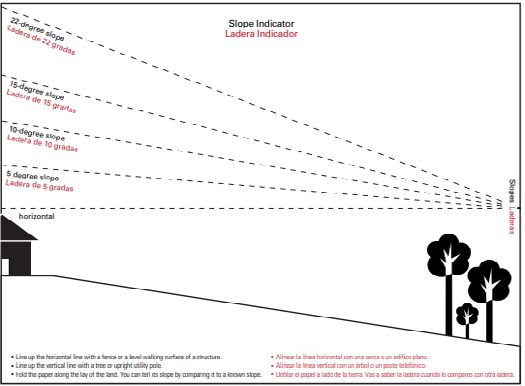
prevent injury. Report a bent, cracked,                   a slope. A label on the mower should
       or worn blade to a supervisor.                            provide the manufacturer's slope
                                                                 recommendations. If the label is
   •   Fluid Leaks                                               missing, do not mow on slopes over
       Fluid leaks can cause fire hazards                        15-degrees. Slope indicators (also
       as well as break-downs. Report                            known as clinometers or inclinometers)
       signs of leaking fluid to a supervisor                    are available for purchase and can
       immediately.                                              attach to a mower. OSHA offers a
   •   Grass or Grease Build-Up                                  downloadable, printable left slope
       Check the mower deck and chute for                        indicator and right slope indicator with
       grass clippings, leaves, grease, or other                 tips on finding the slope by aligning
       debris. Debris build-up on moving parts                   vertical objects with the horizon.
       is a fire hazard and can cause break-                     Additionally, smartphone applications
       downs.                                                    that measure slopes are available
                                                                 through the Apple App Store or Google
Prepare the Mowing Area                                          Play.
Prepare the mowing area to ensure a safe
working environment. Walk the location and                  OSHA Downloadable Left and Right Slope
remove hazardous obstacles. Debris picked up                            Indicators
by a mower can be thrown from the machine
at speeds up to 200 m.p.h.4 It can also cause
the equipment to jam or malfunction. Also,
look for hard-to-see holes, ruts, bumps, or
other uneven areas in tall grass that can cause
tip-overs.

Safe Start-Up
   •   Make sure all attachments are
       disengaged.
   •   Shift into neutral before starting the
       engine.
   •   Always start on flat ground.
   •   Start the mower from the operator's
       seat only.

Assess the Surrounding Risks
Before mowing an area, look at the conditions
of the land and take the following precautions:
   •   Consider the slope.
       Never operate riding lawnmowers
       on slopes that exceed the
       manufacturer's angle limits, and
       never leave a mower unattended on

                                            Texas Department of Insurance, Division of Workers’ Compensation
                                                               www.txsafetyatwork.com
                                                                   HS21-003A (01-21)                           5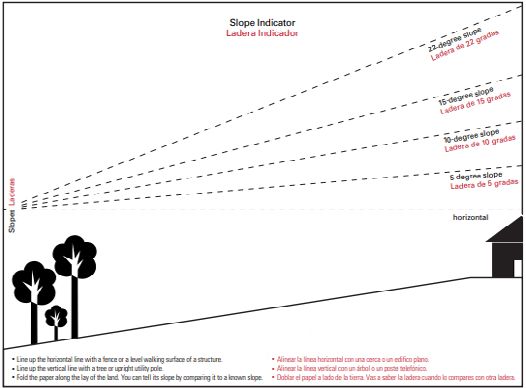
• Mow vertically.
                                                                                  Mow slopes up and down
                                                                                  (vertically) rather than
                                                                                  across (horizontally) to
                                                                                  avoid rollovers.
                                                                             • Do not stop, start, or
                                                                                shift on a slope.
                                                                                Use a low ground speed
                                                                                to prevent having to stop
                                                                                or shift while on a slope.
                                                                                Never shift to neutral
                                                                                or let the mower coast
                                                                                downhill. If the clutch must
                                                                                be engaged, take care to
                                                                                avoid tipping backward or
    •   Stay away from unprotected                                forward. Do not start or stop on a slope
        drop-offs.                                                to avoid losing traction. If the tires lose
        Never operate mowers in areas where                       traction, disengage the blade(s), and
        the machine's wheels are within five                      proceed straight down the slope.
        feet of an unprotected edge, such as
                                                             •    Avoid turning on a slope.
        retaining walls, barriers, levees, ditches,
                                                                  If an operator cannot back-up on the
        culverts, or other locations that present
                                                                  slope or feels uneasy doing so, either
        tip-over hazards. The lawnmower
                                                                  do not mow it or use a walk-behind
        could suddenly roll if a wheel goes
                                                                  mower later. If a turn must be made on
        over the edge or the ground under
                                                                  a slope, turn downhill slowly with the
        the wheel shifts. Instead, use a string
                                                                  mower's heavy end uphill.
        trimmer or push mower in these
        locations.                                           •    Decrease speed when the mower
                                                                  is traveling down slopes or around
    •   Create a safety zone near water
                                                                  sharp corners.
        hazards.
                                                                  Keep all movements on slopes slow and
        Examine the slope and the terrain's
                                                                  gradual. Avoid any sudden change in
        firmness before mowing near ponds,
                                                                  speed or direction to avoid a rollover.
        creeks, reservoirs, canals, bayous,
        sloughs, lakes, golf course water               Prevent Blade Injuries
        hazards, or similar bodies of water.            Lawnmower blade(s) are capable of throwing
        Establish a zone around the water               objects and amputating hands and feet. These
        hazard to ensure that the mower                 safe practices can prevent severe injury or
        operates at a safe distance — the width         death to the operator or bystanders from
        of two mowers is often adequate.                lawnmower blade(s).
Safe Slope Operations                                        •    Keep hands and feet away from
Slopes are a major factor related to tip-overs                    rotating mower parts.
and loss of stability on riding lawnmowers.                       Never reach around or beneath a
Mowing on slopes requires extra caution to                        running mower. Keep clear of the grass
prevent injuries and deaths.                                      discharge chute at all times. Never put
                                             Texas Department of Insurance, Division of Workers’ Compensation
                                                                www.txsafetyatwork.com
6                                                                   HS21-003A (01-21)
a foot on the ground to
attempt to stabilize a
riding lawnmower. Keep
both feet on the machine
at all times while it is
running. Feet hanging off
the mower can get pulled
under the machine and
into the blades.
• Use caution on wet
grass.
Mowing on wet grass
may make tires lose
traction. Slipping or skidding on wet • Never leave a running riding
grass can throw the operator off the lawnmower unattended.
lawnmower and into the machine's Always stop the blade(s), set the
moving parts. parking brake, turn off the engine, and
remove the key before dismounting
• Shut off the engine before to clean the mower, remove the grass
removing debris. catcher, unclog the discharge guard, or
Unclog the chute or clear the mowing perform any repairs.
area of rocks, wire, or other objects that
might be thrown by the blade(s) only • Never add a blade or chain
after shutting off the engine. not recommended by the
manufacturer.
• Do not mow around others. A blade or chain not designed for a
Be aware at all times of the location specific lawnmower can seriously injure
of coworkers and bystanders while or kill a mower operator.
mowing. Stop the lawnmower if anyone
enters the mowing area. • Do not mow during low visibility.
Operate riding lawnmowers only in
• Point the discharge chute away daylight or good artificial light.
from objects and people.
Never point the discharge chute at • Use caution when crossing
someone or against a wall, fence, or roadways.
another object. The material can injure Watch for traffic and pedestrians when
others or ricochet back, harming the operating near or crossing a roadway,
operator. Always stop the blade(s) driveway, parking lot, building corners,
when crossing gravel surfaces. shrubs, trees, and other blind spots. Be
aware of the surroundings at all times.
• Do not remove shields and guards.
Never operate a riding lawnmower • Avoid backing.
without all shields, guards, and other Avoid mowing in reverse, but if
safety features in place. unavoidable, remain alert and look
behind the mower and down at the
ground before and while backing.
Texas Department of Insurance, Division of Workers’ Compensation
www.txsafetyatwork.com
HS21-003A (01-21) 7• Start the mower from the driver's • Watch for low ground clearance.
seat. Riding lawnmowers with cutting decks
Never start the mower while standing installed have low ground clearance
beside it. and do not handle well on steep
inclines. If transporting the mower in a
• Never place the mower in motion truck bed, position the ramp carefully
until the worker is ready and belted to ensure the mower can clear the lip of
in the seat. the tailgate to prevent tip-overs.
Putting the mower in gear before the
operator is prepared can jerk it forward • Consider the wheel width and load
and throw the worker down or under weight.
the mower. Make sure the ramp is wide enough
for the mower's wheel gap and weight
• Never dismount a mower while it is capacity. Zero-turn mowers have offset
running. wheels and uneven weight distribution,
Leaving the mower while it is running requiring extra care.
may cause the operator's feet or toes
to pass under the mower housing and • Know the mower's center of
get caught in the blade(s). gravity.
The center of gravity on most riding
Safe Shut Down lawnmowers is high and can lead
to tipping or flipping when going
• Disengage the blade(s) and other
up a steep incline. Longer loading
attachments.
and unloading ramps provide more
• Lower all of the attachments to the stability.
ground.
The Proper Loading Process
• Shift into neutral.
• Park on a flat surface.
• Set the parking brake. Park on a flat surface to reduce
the steepness of the loading angle.
• Turn off the engine.
Remember to set the parking brake.
• Remove the key (if applicable). Always block the rear wheels.
• Use care when lowering or placing
Loading & Towing Safety the ramps.
If using a pick-up bed, unfold the ramps
Loading and towing riding lawnmowers on and place the finger or plate ends on
trailers or truck beds is dangerous if not the edge of the tailgate. Use tie-down
handled properly. Use the following steps to straps or trailer safety chain loops to
avoid severe injury or death. secure the ramps to the truck. Secure
the tie-down straps to a steel bumper,
Things to Consider Before Loading so they do not slide out while the riding
Before lowering a trailer ramp or sliding a lawnmower is on the ramp.
ramp onto a truck's tailgate, consider the
following: • Back the mower up the ramp.
Back the riding lawnmower onto the
trailer or truck bed to keep the heaviest
Texas Department of Insurance, Division of Workers’ Compensation
www.txsafetyatwork.com
8 HS21-003A (01-21)part of the mower low to prevent the Safe Gasoline Handling
front wheels from raising off of the
ramp (a wheelie). It also allows the • No smoking.
operator to drive forward down the Do not smoke, strike a match, or create
ramp when unloading. other ignition sources near gasoline.
• Never stop and start on a ramp. • Store the mower away from flames.
If conditions prohibit backing the Never store a riding lawnmower or
mower up the ramp, use a low gear to a fuel container near an open flame,
drive the mower forward up the ramp. spark, or pilot light, such as a water
Never stop and start midway when heater or other appliances.
driving forward on ramps to prevent • Turn off the engine when fueling.
tipping. If the operator stops on the Never remove a gas cap or add fuel
ramps, let the mower roll completely to with the engine running, and never
the ground before trying again. while indoors.
• Secure the mower. • Fill gasoline containers outside on
Set the mower's parking brake. Always the ground.
chain and block the mower, so it does Never fill fuel containers inside a
not move during transport. vehicle or on a plastic truck-bed liner.
Safe Towing • Use only approved fuel containers.
Use fuel containers designed to
• Use an approved hitch.
provide safe gas storage that minimizes
Utilize a hitch designed for towing.
spillages, fuming, and overflow. Always
Follow all manufacturer's recommenda-
store fuel containers in a well-ventilated
tions for weight and slope limits.
area away from direct sunlight.
• Tell others to stay clear.
• Do not use a gasoline dispenser
Keep bystanders at a safe distance.
nozzle to fuel a riding lawnmower
Never allow a person to travel on towed
on a truck or trailer.
equipment.
Use a nozzle to refill the mower only
• Travel slowly and allow extra when it is on the ground. If the mower
stopping distance. must be refueled while on a trailer or
The weight of the towed mower can truck bed, use a portable container.
cause loss of traction or loss of control.
• Remove all fuel-soaked debris.
If fuel spills on clothes, change clothes
Safe Fueling Practices immediately.
Gasoline and other fuels are flammable, and • Never clean hands with gasoline.
the vapors are explosive. Use extreme care Use a non-flammable solvent to safely
when handling gasoline to avoid injury or clean hands.
property damage.
Safe Fueling Procedures
• Shut off the engine.
Always shut off the engine and wait at
Texas Department of Insurance, Division of Workers’ Compensation
www.txsafetyatwork.com
HS21-003A (01-21) 9least five minutes for the engine to cool • Check to ensure all safety devices
before refueling. function correctly.
Never alter or remove guards or
• Discharge static shock. shields. Check the grass catcher and
Touch the fuel nozzle to the riding discharge guard often. Always use the
lawnmower before removing the fuel manufacturer's recommended parts
cap to prevent a static spark from when replacement is needed.
igniting the fuel.
• Remove the spark plug wire before
• Prevent spills. maintenance.
Use a funnel or a non-spill nozzle when Disconnect the spark plug wire and allow
fueling to reduce spillage. Keep the moving parts to stop before unclogging,
nozzle or funnel in contact with the fuel adjusting, changing blades, or making
tank while filling. Never overfill the fuel any repairs on the mower.
tank. Replace the gas cap and tighten
securely. • Remove debris build-up.
Keep riding lawnmowers free of grass,
• Clean any spillage. leaves, and foreign materials.
Wipe up all fuel and oil spills
immediately before starting the engine. • Replace grass bags as needed.
Check the grass catcher bags frequently
Carbon Monoxide Safety for wear or deterioration. Replace
Carbon monoxide (CO) is a colorless, with new bags for protection against
tasteless gas that can poison and kill. instability.
Symptoms of CO poisoning include headache,
nausea, weakness, dizziness, and loss of • Inspect the mower when running
consciousness. Operate riding lawnmowers over an object.
outside only to avoid CO poisoning. If If the riding lawnmower hits an object,
operators must work indoors, create ample stop, turn off the mower, and inspect
ventilation to prevent CO exposure. the machine. Make any needed repairs
before restarting. Never make repairs or
Riding Lawnmower adjustments with the engine running.
Servicing • Keep mower blade(s) sharp and
Maintenance balanced.
Establish regular maintenance schedules Always wear gloves and wrap the blade(s)
and following these general service safety in rags when sharpening, repairing, or
precautions: replacing the blade(s)s.
• Service in a well-ventilated area. • Check brakes often.
Never operate a riding lawnmower in a Adjust and service the brakes as needed.
closed area.
• Create a maintenance and inspection
• Tighten all nuts and bolts regularly. schedule.
Keep all mower parts, especially blade Maintain a schedule for inspecting
mounting bolts, tight and in safe mowers and lubricating all moving parts.
working condition. Replace safety and instruction labels as
needed.
Texas Department of Insurance, Division of Workers’ Compensation
www.txsafetyatwork.com
10 HS21-003A (01-21)• Use knowledgeable service
technicians. References
Utilize only experienced mechanics to 1
U.S. Consumer Product Safety Commission, CPSC
conduct maintenance, inspections, and Fact Sheet: Riding Lawnmowers. Website. https://
cpsc-prod.ctacdev.com/s3fs-public/588%20Riding%20
repairs. Lawnmower%20Fact%20Sheet.pdf. Accessed January 26,
2021.
For more information on landscape services 2
U.S. Bureau of Labor Statistics, Occupational Injuries/
safety, download The Texas Department of Illnesses and Fatal Injuries Profiles, 2019 by Industry
Insurance, Division of Workers' Compensation- [56173x]. Website. https://data.bls.gov/gqt/InitialPage.
Accessed January 26, 2021.
Workplace Safety publication on Lawn
Equipment Safety at https://www.tdi.texas. 3
U.S. Consumer Product Safety Commission, CPSC
Fact Sheet: Riding Lawnmowers. Website. https://
gov/pubs/videoresource/t5lawnequip.pdf. cpsc-prod.ctacdev.com/s3fs-public/588%20Riding%20
Lawnmower%20Fact%20Sheet.pdf. Accessed January 26,
2021.
4
Occupational Safety and Health Administration, “Mowing
and Trimming Safety.” Kansas State University Research
and Extension. Website. https://www.osha.gov/sites/
default/files/2019-03/mowing-trimming_safety_manual.pdf.
Accessed January 28, 2021.
The Texas Department of Insurance,
Division of Workers’ Compensation (DWC)
1-800-252-7031, Option 2
www.txsafetyatwork.com
Disclaimer: Unless otherwise noted, this document was produced by the Texas Department of Insurance, Division of Workers’ Compensation
using information from staff subject specialists, government entities, or other authoritative sources. Information contained in this fact sheet
is considered accurate at the time of publication. For more free publications and other occupational safety and health resources, visit www.
txsafetyatwork.com, call 800-252-7031, option 2, or email resourcecenter@ tdi.texas.gov.
Texas Department of Insurance, Division of Workers’ Compensation
www.txsafetyatwork.com
11 HS21-003A (01-21)You can also read


