Rosie the Riveter - Dane G. Hansen Foundation
←
→
Page content transcription
If your browser does not render page correctly, please read the page content below
World War II Remembered
        Field Trip Enhancement Program

              Rosie the Riveter

   Generously Sponsored by the
Dane G. Hansen Foundation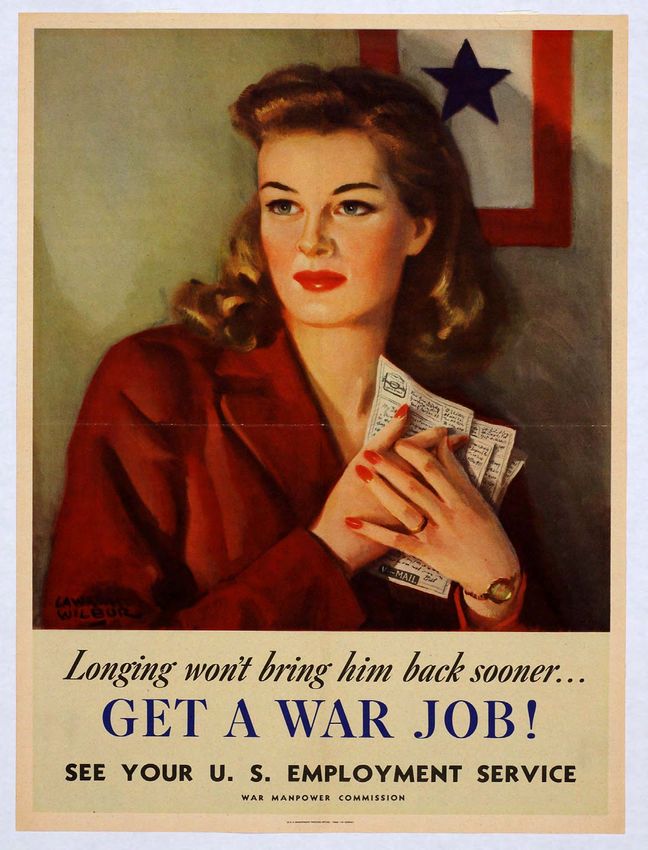
Rosie the Riveter

INTRODUCTION
                                                 CONTENTS
When America's men left to fight with the
Allies in World War II, women were               3-5          Lesson Plan
recruited through posters and other
propaganda to work at non-traditional            6-7           Sing a Song of Rosies
jobs in defense plants and factories. Many       8             The Real Rosies
women had always held jobs outside the
home, but this was the first time they           9             Rockwell’s Rosie
were being paid well and taught skilled          10            Let Your Inner Rosie Show!
labor. Many other women had not held a
                                                 11           Vocabulary Crossword
paying job outside of their home and this
was a new experience to earn money for           12-13 You Can Do It!
their hard work. These “Rosie the                14-20 Real Rosie Photos
Riveters” proved their abilities to
America and themselves and have not              21-29 Propaganda Puzzles
looked back since.                               30           Sources
OBJECTIVES                                       NATIONAL CURRICULUM STANDARDS
• Students will gain knowledge of the            All lesson plans meet numerous national
  rise of working women on the                   Common Core State Standards for Literacy in
  American home front during World               History/Social Studies, Science and Technical
  War II.                                        Subjects, as well as National Curriculum
• Students will use critical thinking            Standards for Social Studies.
  skills to analyze primary source
  photos and propaganda posters.
                                                  Common Core St. Standards               4th-5th
TARGET AUDIENCE: Grades 4-5
                                                 Standards

                                                             RI - Reading Informative
TIME REQUIREMENT: 1 hour                                               Text
                                                                                         4, 7, 9, 10
ACKNOWLEDGEMENTS
                                                                SL - Speaking and
This unit was produced in March 2014 by                                                   1, 2, 3, 5
                                                                     Listening
the Eisenhower Foundation. Mitzi Bankes
Gose and Donna Reynolds, writers.                      Natl. Curriculum Standards for Social Studies

Thanks to the Dane G. Hansen Foundation                       2: Time, Continuity, and
                                                                                         Early Grades
for funding and the Eisenhower                                        Change
                                                 Themes

Presidential Librar y, Museum and
Boyhood Home for support.                                    4: Individual
                                                                                         Early Grades
                                                             Development and Identity
Teachers may duplicate material for                          5: Individuals, Groups,
educational purposes.                                                                    Early Grades
                                                             and Institutions

                                             2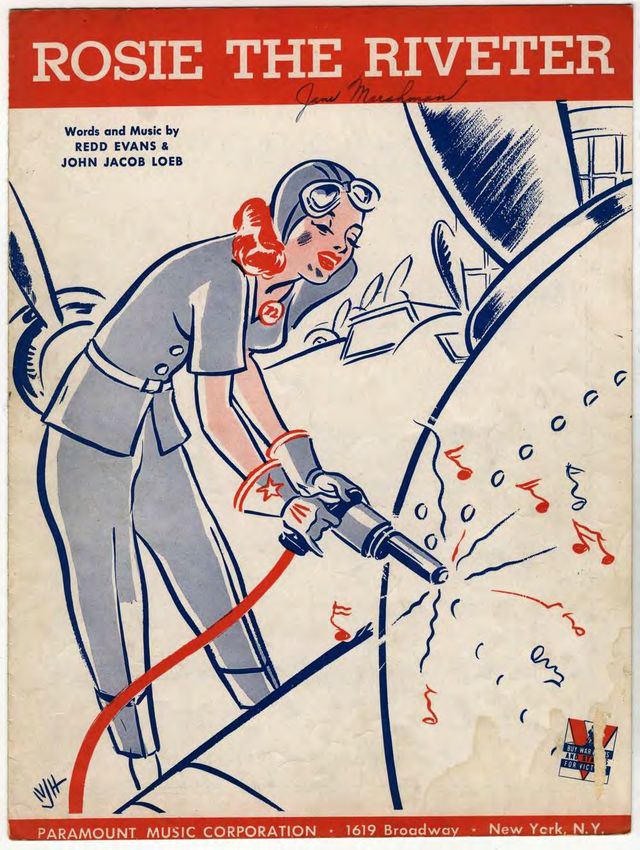
Lesson Plan

FACILITATOR INTRODUCTION: I’m sure you all have chores you are
expected to do at your homes, like take out the trash, load the dishes, or feed
the dog. What happens with the chore if you are gone - let’s say you go spend
the night with a friend? Someone else has to step in to complete the work in
your absence, right?
When America's men left to fight with the Allies in World War II, millions of
women were recruited, through posters and other propaganda, to work at
non-traditional jobs in defense plants and factories. Many women had always
held jobs outside the home, but this was the first time they were being paid
well and taught skilled labor. Many other women had not held a paying job
outside of their home and this was a new experience to earn money for their
hard work.

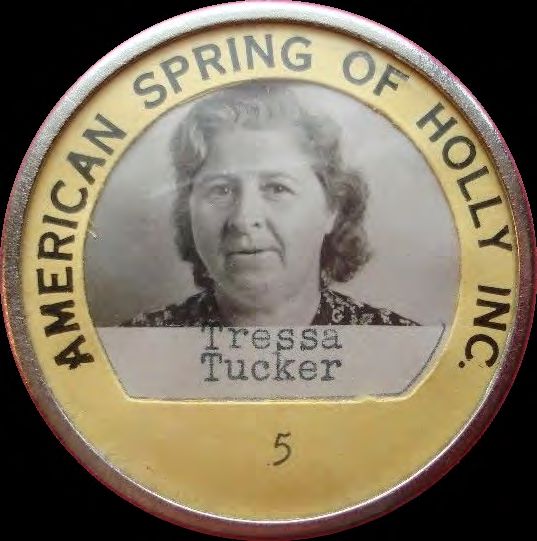
1. The Real Rosies
     *Hand out laminated photos of real Rosies at work (pages 14 - 20) and
     “The Real Rosies” worksheet (page 8).

EXERCISE: Go through the worksheet, “The Real Rosies” with students. Help
them think critically, and have them share their answers along the way, but
don’t give any answers/explanations until the end of the worksheet.
EXPLAIN: During WWII, women were filling many types of jobs—building war
ships, airplanes, bombs, bullets, communication devices, uniforms—all types
of equipment that our troops suddenly needed to fight in WWII.

2. Rosie Propaganda
   *Hand out the laminated propaganda posters mounted on the envelopes
   containing the puzzle pieces (pages 21-29 ).
EXPLAIN: Many posters were created by government agencies to persuade
women to fill jobs needed to create war supplies. This is called “propaganda,”
which means it is a message intended to persuade its audience. Give each
student a laminated poster and point out the messages they sent women
through these posters, both in words and images.
EXERCISE: Students are to assemble the puzzle pieces of their poster.

                                      3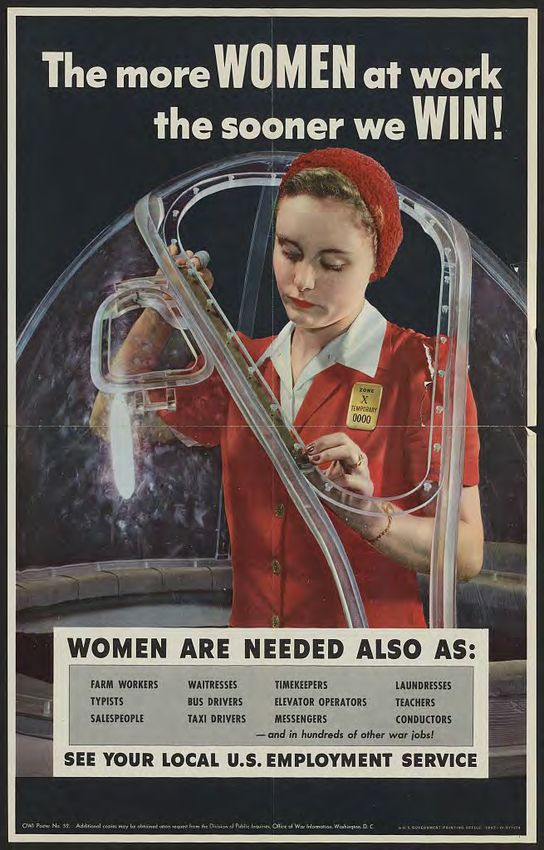
3. Sing a Song of Rosies
   *Hand out the laminated song lyrics and sheet music cover (pages 6-7).
 *Have the actual music (available online) and speakers available and ready
   to play.

EXPLAIN: The term “Rosie the Riveter” was coined in a song that was written
in 1942 by Redd Evans and John Jacob Leob and was recorded by numerous
artists.
EXERCISE: Students should read along while listening to the song. Play it a
second time for students to sing along (or to at least make the riveter sound).

4. Rockwell’s Rosie
    *Hand out a copy of the altered version of Rockwell’s Rosie (page 9).
     *Have a large mounted poster of Norman Rockwell’s 1943 oil on canvas of
     Rosie the Riveter (available online).

EXPLAIN: Rosie the Riveter became a cultural icon of the United States,
representing the American those women who worked in factories producing
munitions and war supplies while the men served in the military during World
War II. The most well-known “Rosies” were actually images created by artists
Norman Rockwell and J. Howard Miller.          Norman Rowell was a famous
American painter in his day. Many of his paintings, including this Rosie, was
used for the cover of the Saturday Evening Post magazine on May 29, 1943.
EXERCISE: Students should examine our large poster of Rockwell’s Rosie and
then compare it to the altered image on their handout. Students should use a
dry-erase marker to circle the five differences they find.

5. Let your Inner Rosie Show!
*Hand out clean red bandanas.
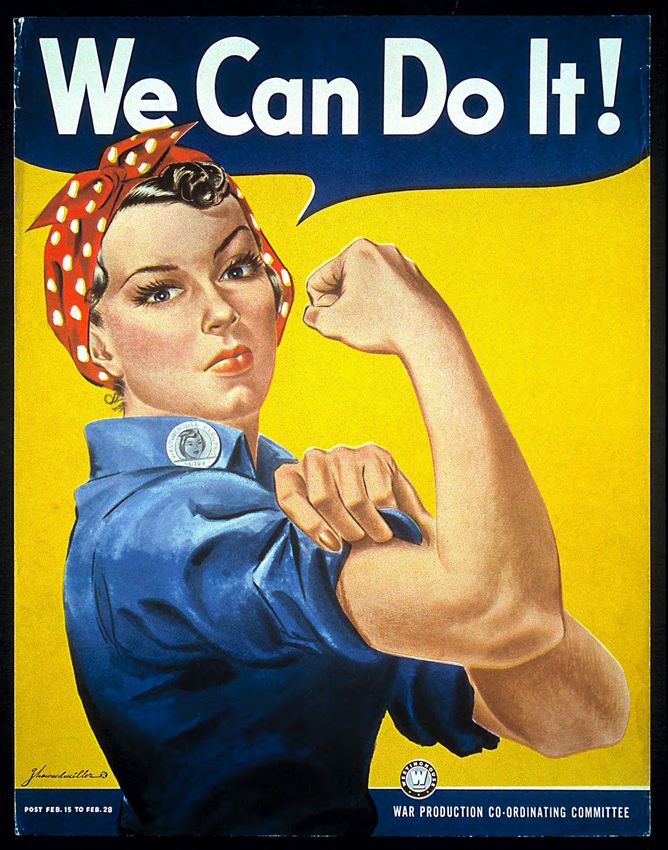
     *Hand out a copy of Westinghouse Electric’s “We Can Do It” poster (pg 10)

EXPLAIN: The other famous Rosie worked at Westinghouse Electric Service
when graphic artist J. Howard Miller drew the now-iconic poster to help boost
morale. The model’s name was Geraldine Hoff Doyle, and she reminded the
women working at Westinghouse that they could do the heavy labor factory
jobs to help the United States win the war. It wasn’t until decades later that
this poster was re-discovered and “went viral” as a symbol of women’s
liberation. Her red polka-dot bandana, rolled up sleeve and flexed arm in front
of the “We Can Do It” message have become iconic features of Rosie the Riveter
and individual strength.
EXERCISE: Give each student a clean red bandana to wear on their head
however they want.

                                       4
6. You Can Do It!
     *Hand out ID badge stickers (pages 12-13 printed on round
      sticker paper, available online).
     *Students will need colored pencils or markers.
     *students/teacher need a way to take their own photos.
     *Have oversized, mounted, blank “We Can Do It” poster
     (available online).

EXPLAIN: Take a look at the ID button on the collar of J. Howard Miller’s
Rosie. If you worked in a wartime factory, you often had to wear an
employment badge. These badges usually showed your photo, your
employee number, and the name of the company.

EXERCISE: 1. Direct students to draw a picture of themselves in their ID
sticker/badge and then put it on their RIGHT shirt collar.
2. Next, have students stand in front of the blank “We Can Do It” poster one
at a time to recreate it. Have a peer take their photo with their iPad.
3. After taking their photo, students should deposit the used headband in a
special bag so they can be washed.

7. Vocabulary Crossword
*Hand out       crossword puzzle copies (page 11).

EXERCISE: While you are waiting your turn for this, complete a crossword
puzzle of related vocabulary terms we have covered in this lesson. If you
don’t remember what the term means, look it up using your dictionary.

FACILITATOR’S CONCLUSION: Ask students what they learned about
women on the home front during WWII.
All Americans contributed to the efforts of helping the Allied forces win
WWII. It was not a war where just the soldiers went away and fought.
Everyone back home made changes to help as well. Many women filled the
new jobs required to build the war supplies. These were different jobs for
most women in the 1940’s, and it allowed America to see the amazing
abilities and contributions that women could make doing any job of the
work force.

                                    5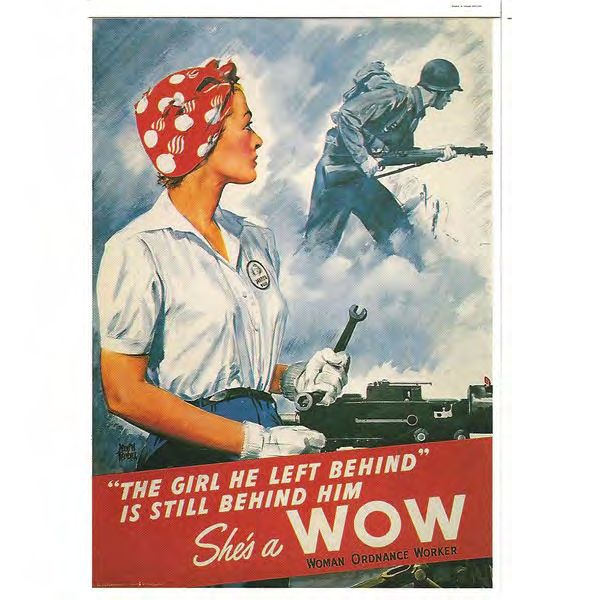
THE
ROSIE                        RIVETER
              Sing a Song of Rosies

           “Rosie the Riveter” Song Lyrics
              Redd Evans, John Jacob Loeb, 1942

          All the day long, whether rain or shine
              She's a part of the assembly line
         She's making history, working for victory
               Rosie, brrrrrrrrrrr, the riveter

            Keeps a sharp lookout for sabotage
               Sitting up there on the fuselage
      That little frail can do more than a male can do
                Rosie, brrrrrrrrrrr, the riveter

             Rosie's got a boyfriend, Charlie
                  Charlie, he's a Marine
               Rosie is protecting Charlie
         Workin' overtime on the riveting machine

            When they gave her a production 'E'
            She was as proud as a girl could be
  There's something true about, red, white, and blue about
              Rosie, brrrrrrrrrrr, the riveter

                             6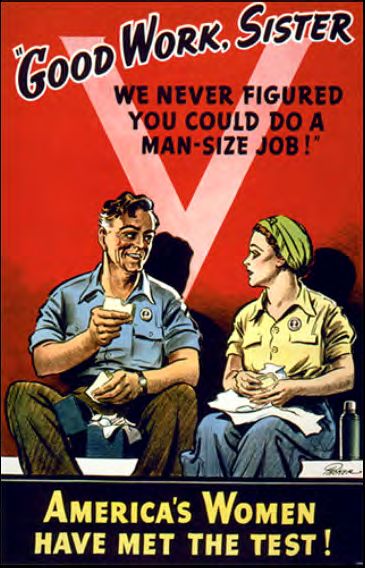
7
THE
ROSIE                              RIVETER
                         The Real Rosies

Carefully examine one of the photos provided to answer these
questions and gather clues.

1.   Who are the people in the photograph? How old do they seem to be?

2. Where was the photograph taken? What clues can you gather from the
photo?

3. What can you tell about the people from the clothes they are wearing?

4. What activity is shown in the photograph? Are the people doing the
activity as a group or individually?

5. What other details can you see in the photograph? Are there any tools,
vehicles, animals, buildings, or signs?

6. Summarize. What do these clues tell you about the people, time, or
event shown?

                                    8
THE
ROSIE                             RIVETER
                       Rockwell’s Rosie
Compare this altered image to the original image to find five changes.

                                  9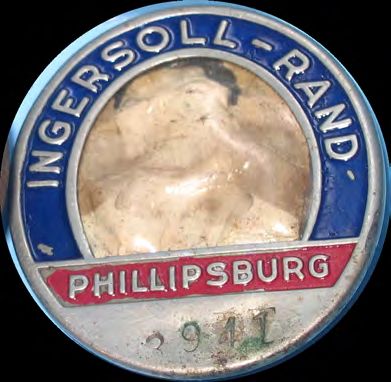
THE
ROSIE                         RIVETER
           Let your Inner Rosie Show!
Put on a clean red bandana and your employment badge, roll up
 your sleeves and recreate this pose while standing in front of
        the blank poster. Have a friend take your photo.

                              10
THE
ROSIE RIVETER
ACROSS DOWN
1 Freedom from oppression or limits on
7 Being paid to work or have a job.
behavior.
8 Many posters were created with this kind of
2 The confidence or enthusiasm of a person or
message intended to persuade its audience.
group.
10 The civilian population of a nation whose
3 An American graphic artist who painted
armed forces are at war abroad.
posters in support of the World War II home front
12 An iconic image that represents American
war effort.
women who worked in factories during World
4 An American painter and illustrator.
War II producing war supplies.
5 A war that ran from 1939 in which the Axis
14 To enroll new people in an organization.
powers were defeated by the Allied powers.
15 The group of countries that fought against
6 A place where items are made or assembled.
the Allies in World War II.
9 To cause someone to do or believe something.
11 The group of countries that fought with the
U.S. in World War II.
13 A person or image that is a widely-known
symbol of something else.
WORD BANK
Axis icon morale
propaganda Allies factory
World War II Norman Rockwell recruit
employment liberation Rosie the Riveter
home front A. Howard Miller persuadeYou Can Do It!
270
L
VA
NA
S
12270 13
Sources
The following are recommended sources of content, primary sources, or artifact
replicas suitable for classroom use.

                                     Books
Cohen, Stan. V for Victory, America’s Home Front During World War II.
      Missoula, MT: Pictorial Histories Publishing, 1991.
Colman, Penny. Rosie the Riveter: Women Working on the Home Front in World
      War II. New York: Crown, 1995.
Bird, William, and Harry Rubenstein. Design for Victory: World War II Poster
      on the American Home Front. New York: Princeton Architectural Press,
      1998.
Panchyk, Richard. World War II for Kids. Chicago: Chicago Review Press, 2002.
Reynolds, Clark. America at War, 1941-1945. New York: Gallery Books, 1990.

                            Websites or Online Sources
“American Women in World War II: On the Home Front and Beyond.” National
       WW2Museum.org. The National WWII Museum. December 20, 2013.
       .
“And then in my spare time . . .” Loc.gov. Library of Congress. December 17,
       2013. .
“Answers to Questions Women Ask About War Work.” ulib.niu.edu. Regional
       History Center, Northern Illinois University Libraries. January 29, 2014.
       .
commons.wikimedia.org
eisenhower.archives.gov/research/online_documents.html
“Rosie’s Legacy Gear.” Etsy.com. .
“Rosie the Riveter, 1941-1945.” The Pop History Dig. October 30, 2014.
       .
“Rosie the Riveter WWII Home Front national Historical Park.” NPS.org.
       National Park Service. http://www.nps.gov/rori/index.htm>.
“Supporting the World War II Effort.” NC Civic Education Consortium.
       University of North Carolina at Chapel Hill. Dec. 3, 2013. .
“Using Primary Sources.” Library of Congress. December 5, 2013. .
“War Manpower job flyer promoting women to register for War Jobs, 1942.”
       Archives.gov. U.S. National Archives and Records Administration.
       November 13, 2013. .
“Women Want to ‘Get It Over’.” Archives.gov. U.S. National Archives and
       Records Administration. November 13, 2013. .
“World War II on the Homefront: Civic Responsibility.” Smithsonian Education.
       Smithsonian Center for Learning and Digital Access. Dec. 15, 2013.
       .

                                      30
You can also read


