RSS International Conference - Conference Directory ALL WELCOME - 2-5 SEPTEMBER 2019 - Royal Statistical Society
←
→
Page content transcription
If your browser does not render page correctly, please read the page content below

BELFAST
                                                                 2-5 SEPTEMBER 2019

                     RSS International Conference
                     FOR ALL STATISTICIANS AND DATA SCIENTISTS
                     ALL WELCOME

                     Conference Directory
                      Headline sponsor

Visit:
rss.org.uk/conference2019
#RSS2019Conf
1
Visit Wiley during the
RSS 2019 International
Conference
           Visit our booth and have a go                        Add the joint YSS/Wiley Author
           at our Significance ‘Timeline                        Workshop to your schedule.
           of Statistics’ competition.                          Getting your research published and maximising its impact
                                                                Wednesday 4th September, 11:50am – 1:10pm

                                                                Speakers:
           Download the apps for Significance and the
           Journal of the Royal Statistical Society –           • Brian Tarran, Editor, Significance magazine
           Series A, B and C.                                   • Dr Jouni Kuha, Joint Editor of the Journal of the Royal Statistical
                                                                  Society, Series A
                                                                • Stephen Raywood, Senior Journals Publishing Manager, Wiley
           Get the latest content with personalised alerts
           and register for free sample issues                  • Beverley Harnett, Senior Marketing Manager, Wiley

                                                                Stay informed with StatisticsViews.com
https://rss.onlinelibrary.wiley.com/

                                                                                                                                        19-RM000692
                                          Statistics by Wiley                        @Wiley_Stats
2
BELFAST
                                                                                                                                      2-5 SEPTEMBER 2019

Welcome
I wish you a warm welcome to the historic             As well as enjoying a wealth of statistics and data   With thanks to our sponsors:
city of Belfast for the 2019 RSS Conference.          science, there are great opportunities to relax and   Headline sponsor:
I am delighted to welcome the conference              catch up with friends at the social events, which     Wiley
back to Northern Ireland and, with ICC Belfast        will be held in two of the most iconic venues in
located in the heart of the city on the banks of      Belfast. The Ulster Hall, previous host to U2 and     Data Ethics Day:
                                                      The Rolling Stones amongst many others, will          Ada Lovelace Institute
the river Lagan, I hope during your visit you will
explore and enjoy everything our incredible city      be the setting for the Welcome Reception on
                                                                                                            Business, Finance &
has to offer.                                         Monday evening, whilst proceedings will close at
                                                                                                            Industry stream:
                                                      Titanic Belfast, voted the World’s Leading Tourist    Department of
I am thrilled to say we have an exciting              Attraction 2016, with the Conference Dinner           Management Sciences,
programme of talks and social events planned          which will be held in front of the legendary          City University of
throughout the week. With ten keynote                 Titanic staircase. We also have the annual pub        Hong Kong
speakers, a wide variety of parallel sessions,        quiz of the Young Statisticians’ Section to look
a large selection of posters and rapid-fire talks,    forward to on Wednesday and with the Section          Data Science Stream:
we certainly have an extremely diverse and                                                                  Deloitte
                                                      celebrating its 10th anniversary this is sure to be
stimulating programme lined up. This year we          a night to remember.
will also be holding our inaugural Data Ethics                                                              Young Statisticians’
Day, supported by the Ada Lovelace Institute,         I hope you have a memorable, productive               Reception:
                                                      and thoroughly enjoyable week in Belfast!             Software Sustainability
on Wednesday, and will have a unique ‘in                                                                    Institute
conversation’ format to the Significance Lecture                Lisa McFetridge
on Tuesday around ‘Fighting fake news’ – two                    Programme Chair,
topical areas that I’m sure will spark discussions.             RSS 2019 Conference
                                                                                                                                                       3
General event information
Badges                                                         Dietary requirements                                                          Meeting conduct
Conference attendees are asked to wear their badges and        For those attendees who have notified the organisers of                       The Society operates a meeting conduct policy and
lanyards at all times while at the Conference.                 special dietary requirements* the following arrangements                      requires attendees to adhere to the policy at all times while
                                                               will be made:                                                                 in the conference and its associated events. The full text
Lost badges will be replaced at the discretion of the
                                                               •	Lunchtimes – please ask a member of catering staff                         of the policy can be found on the conference website,
conference organisers. A replacement fee may be charged.
                                                                                                                                             on the noticeboard by the registration desk and in your
                                                               •	Thursday night dinner – please make yourself known
Catering (Daytime)                                                to the RSS staff at the desk when entering the Titanic
                                                                                                                                             conference packs.
Lunch as well as tea/coffee at the mid-morning break              Suite for dinner following the pre-dinner drinks                           Mobile phones
and the mid-afternoon break is provided as part of your           reception. You will be given a card to display on the                      We ask that you switch your mobile phones and other
conference fee. All refreshments will be served in the            table in front of you.                                                     hand-held devices to silent when you are in sessions.
Exhibition area in Halls 1C&D on the 1st floor of the ICC
                                                               Please note that at the reception on Monday evening
Belfast. Due to the large number of attendees at the
                                                               canapés are being served and nibbles at the Tuesday
                                                                                                                                             Photography and filming sessions
conference there will be queues for refreshments, especially                                                                                 The Society will have a photographer taking photographs
at lunchtime, so we do ask you to be patient and stagger       evening reception.
                                                                                                                                             in many sessions and at social events. The Society may
your arrival at the serving points wherever possible.          The conference organisers have tried to cater for all dietary                 use photographs taken in conference reports, publications
                                                               requirements, however for some social events the venues                       and in future publicity materials. If you would prefer your
Cloakroom                                                      may be limited on what they can accommodate. If you are                       photograph not to be used in this way please contact the
A staffed cloakroom will be available in the Riverside Foyer   concerned about this, please contact the RSS conference                       conference manager.
on the ground floor of the ICC Belfast. This will be open      team.
each day during the hours of the conference programme.                                                                                       Please note that the Society will also be recording a number
                                                               * N.B. There will be vegetarian options provided at lunchtime and the
The Society accepts no responsibility for any items which      evening receptions which do not require any special arrangements but for      of sessions during the conference which will be made
may be lost or damaged.                                        the conference dinner vegetarians should talk to the RSS registration staff   available from the Society’s website in due course. The RSS
                                                               as above.                                                                     conference staff will be able to advise which sessions are
Conference App                                                                                                                               being recorded.
The app is available to download from the conference
                                                               Exhibition
website: https://events.rss.org.uk/rss/270/home                The exhibitors’ stands are located in Halls 1C&D alongside                    Poster presentations
                                                               the catering area. This area will be open at the following                    Posters will be on display in Halls 1C&D throughout the
                                                               times:                                                                        conference. As well as the poster reception on Tuesday
                                                                                                                                             evening there will be two lunchtime organised viewing
                                                               TUESDAY 3 SEPTEMBER                     8.30AM – 8.00PM
                                                                                                                                             sessions on Wednesday and Thursday – please see the
                                                               WEDNESDAY 4 SEPTEMBER 8.30AM – 5.30PM                                         relevant insert at the back of the directory for the list of
                                                                                                                                             posters being presented.
                                                               THURSDAY 5 SEPTEMBER                    8.30AM – 3.30PM
                                                               Please make time to visit our exhibitors – you will find in                   Presentation Desk
                                                               your packs an ‘Exhibition Passport’ in which you can collect                  For speakers wishing to submit or amend their presentations
                                                               stamps from the exhibitors – there is a competition for                       during the conference and for poster presenters registering
Visit:                                                         those who can collect the most stamps.                                        their poster the presentation desk is located in the Riverside
rss.org.uk/conference2019                                      Please note that not all stands will be present on all days of                Foyer on the ground floor.

#RSS2019Conf                                                   the conference.
4
BELFAST
                                                                                                                                   2-5 SEPTEMBER 2019

Registration desk                                                 Timings for presentations
The conference registration desk can be found on the              The following timings for presentations will normally apply:
left-hand side (as you enter) of the Riverside Foyer of the
                                                                  • Keynote talks: 30-45 minutes plus time for questions
ICC Belfast.
                                                                    and discussion
The Registration desk will open at the following times:           • Invited talks: 20-30 minutes plus time for questions
MONDAY 2 SEPTEMBER               3.00PM – 6.30PM                    and discussion
TUESDAY 3 SEPTEMBER              8.00AM – 6.00PM                  • Contributed talks: 20 minutes including time for
                                                                    questions and discussion
WEDNESDAY 4 SEPTEMBER 8.00AM – 6.00PM                             • Rapid-fire talks: 5 minutes with no questions
THURSDAY 5 SEPTEMBER             8.30AM – 3.30PM                    or discussion
                                                                  Twitter
Session locations
                                                                  You can follow the conference on Twitter: RSSAnnualConf
Plenary sessions will be held in Hall 1A on the 1st floor of      please use the hashtag #RSS2019Conf
ICC Belfast. All other sessions will be held in one of: Hall 1B
on the 1st floor, Boardrooms 1 and 2 on the 2nd floor, and        Welcome area/information point
the six Meeting Rooms (1A – 3B) on the 3rd floor.                 If you are new to RSS Conference or just need to find
ALL sessions are open to all attendees registered to              out some information you will find a welcome area and
attend on the relevant day (unless otherwise stated)              information point in the Riverside foyer which will be staffed
                                                                  at the start and end of each day and during breaks.
Social events
If you have booked to attend one of the evening social
                                                                  WiFi access
events this will be indicated on your conference badge.           Free wifi is available in the venue. You should connect to the
There are no tickets for these events, however you will be        network ‘ICC Belfast Wi-Fi’ – this will prompt a login screen
required to present your badge on entry to the Welcome            where you should select the ‘Public Users’ option. You will
Reception and the Conference Dinner, and you will only be         then be asked to enter an email address and agree to ‘terms
served at the Awards & Poster Reception if you are wearing        & conditions’ – the email address will not be stored or used
your badge.                                                       for any marketing purposes (unless you opt in) and will be
                                                                  forgotten after 24 hours. This process with therefore need
Stewards and Staff                                                to be repeated for each day you are attending.
RSS stewards (in RSS t-shirts) and RSS staff members
(identified by their badges) will be happy to assist
you throughout the conference. The members of the
Conference Board will also be identifiable by their badges.

                                                                                                                                                    5
Exhibitors at RSS 2019 Conference
      1/2 Royal Statistical Society -              6 JMP is a business unit of SAS that         8 Minitab® is the leading software for
      Come along to the RSS stand and              produces interactive software for            statistics education worldwide Minitab
      chat to the membership team to find          desktop statistical discovery. Introduced    provides a comprehensive
      out more about how you can gain              in 1989 with scientists and engineers        collection of statistics and graphs to
      formal recognition for your statistical      in mind, JMP has grown into a family         help instructors teach, and includes a
      qualifications and experience, find          of statistical discovery products used       user-friendly design that allows students
      out more about our volunteering              worldwide in almost every industry.          to quickly master the software and learn
      opportunities, and discover how you          From its beginnings, JMP software            statistical concepts. Since thousands
      and your colleagues could benefit            has empowered its users by enabling          of distinguished organizations in
      from joining our community of over           interactive analytics on the desktop.        more than 100 countries use Minitab,
      10,000 members. We’re also running           www.jmp.com                                  learning statistics with Minitab also
      a competition to win a year’s free                                                        prepares students for a wide range of
      membership – check your delegate             7 Jumping Rivers is a leading provider       jobs in the real world. There’s a reason
      pack to find out how to enter.               of bespoke training and consultancy          our software is the package of choice
                                                   in both R & Python. Our training             at more than 4,000 colleges and
      3/4 Wiley is a global provider of            courses have been recognised by the          universities around the world. Learn
      knowledge and knowledge-enabled              Royal Statistical Society and our trainers   more: www.minitab.com/academic/
      services that improve outcomes in areas      have been certified by RStudio. As
      of research, professional practice and       one of only seven RStudio Full Service       9 The Sensible Code Company -
      education. We partner with learned           Certified Partners, we have a variety of     We make TableBuilder; it applies a real|
      societies, including the Royal Statistical   plans for managing RStudio products.         time anonymisation algorithm to
      Society, and support researchers to          From on-demand support to full care          large confidential datasets to allow
      communicate discoveries that make            plans. If R or Python is crucial to your     them to be published safely. It›s being
      a difference. Our digital content,           organisation, we can help.                   tested by the ONS for disseminating
      books and 1600 online journals build                                                      Census 2021 data. The system will
      on a 200-year heritage of quality                                                         allow more data to be published sooner
      publishing. For further information, visit                                                and with more granular access for
      wileyonlinelibrary.com                                                                    diverse populations.

      5 ADR UK (Administrative Data                                                             10 Wolfram Research - Best known
      Research UK) is a partnership                                                             for Mathematica and Wolfram|Alpha,
      transforming the way researchers                                                          Wolfram Research has been pioneering
      access the UK’s wealth of public sector                                                   computational intelligence and
      data by linking data from across                                                          scientific innovation for over three
      different parts of government and                                                         decades. Wolfram provides a highly
      facilitating safe and secure access to                                                    integrated technology stack for
      accredited researchers. ADR UK is made                                                    multi-paradigm data science including
      up of three national partnerships and                                                     the very latest methods in machine
      the Office for National Statistics (ONS).                                                 learning, computer vision, predictive
                                                                                                analytics and automated reporting.
6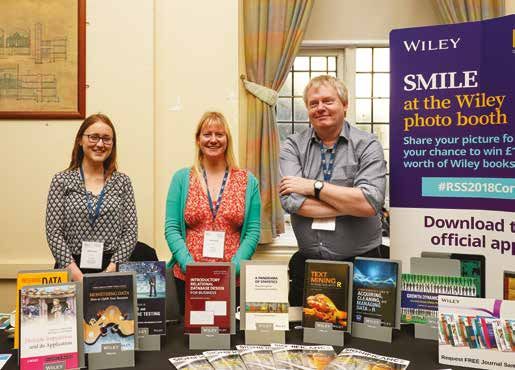
11/12 Deloitte - With over 900             15 The Best Practice and Impact               18 Exploristics - Provide a range
practitioners in Northern Ireland,         division in the Office for National           of expert analytics and data analysis
Deloitte provide clients with a range      Statistics supports everyone in the           services to clients in the health, pharma
of transformation services from strategy   Government Statistical Service or             and life sciences industries. We create
through to delivery and managed            involved in producing government              streamlined, flexible solutions and
services. Our delivery capability          statistics through consultancy, training,     bespoke approaches that help our
includes deep engineering expertise        guidance and more. The division               clients extract the most information
in automation, cloud, cyber, data          includes the Good Practice Team,              from a wide range of data sources.
analytics, data science and digital.       Quality Centre and Harmonisation
                                           Team. Come see how we can help                19 Allstate is driven by data. Our
13 Northern Ireland Statistics             YOU!!!                                        data divisions solve some of today’s
and Research Agency (NISRA) -                                                            most complicated analytics problems,
The go-to organisation for an              16 The Office for National Statistics         to deliver perfect insurance solutions
accurate and insightful account of         (ONS) produces the numbers that               to our customers. We are avid about
life in Northern Ireland. We inform        matter most – on the economy and              learning and applying new tools and
public policy decision-making, provide     business, people, population and              techniques to get the most value from
comprehensive registration and             communities. We are the executive             our massive data resources. We partner
genealogy services, conduct the census     office of the UK Statistics Authority and     with technology and the business,
and provide the data underpinning the      the largest producer of official statistics   incorporating analytics into every aspect
NI Programme for Government. The           in the UK. Our collective mission is to       of the organisation.
insight we provide guides the decisions    provide high quality statistics, analysis
of others.                                 to help the UK make better decisions.

14 Cambridge University Press is a         17 SAGE Publishing - Founded in
not-for-profit publisher that dates from   1965, SAGE Publishing is an
1534. We are part of the University of     independent company that
Cambridge and our mission is to            disseminates journals, books, and
unlock people’s potential with the best    library products for the educational,
learning and research solutions.           scholarly, and professional markets.
Visit our stand to discuss publishing      www.sagepublishing.com
with us, browse our publications and
get a 20% discount.

                                                                                                 BELFAST
                                                                                                 2-5 SEPTEMBER 2019
                                                                                                                                 7
D
    Venue Plan
    Ground Floor

                Registration Desk
    Riverside
    Entrance
                Riverside
                  Foyer

                                Presentation
                                Desk

                                                                       1       LEVE L
                                                                               ONE
                                                                                                       Level 1

                                                                                                                    Hall 1 D

                                                                                                                 Hall 1C

                                                                                                                           Hall 1B

                                                                                                                                     Hall 1A

                                       CHE C KLIST   Tech and AV   Catering   Branding   Marketing Support

    Visit:
    rss.org.uk/conference2019
    #RSS2019Conf
    8
LEVE L
TWO
                                                                                                                     BELFAST
                                                                                                                     2-5 SEPTEMBER 2019
     Level 2

               Boardrooms

                                                        3          LEVE L
                                                                   THREE            Level 3

                                                                    Balcony

                                                                                                     Meeting Rooms

                            CHE C KLIST   Tech and AV   Catering      Branding   Marketing Support

                                                                                                                                      9
Exhibition Plan – Level 1
Key to exhibitors

1/2   Royal Statistical Society

3/4   Wiley

5     ADR UK [Tuesday/Wednesday]
                                                    To Halls
                                                   1A and 1B
6     JMP SAS [Tuesday/Wednesday]
                                                                                              To other
7     Jumping Rivers [Tuesday/Wednesday]                                                      sessions

                                                                20
8     Minitab [Tuesday/Wednesday]

                                                       19

                                                                                                                               3
                                                                                                             1

                                                                                                                  2

                                                                                                                                     4

                                                                                                                                             5
9     The Sensible Code Company

                                                  18

                                                                     Posters
10    Wolfram

                                             17
                                                                                                                          Catering
11/12 Deloitte

                                                                                                   Posters
                                             16
13    NISRA

                                                                               Posters
                                                  15
14    Cambridge University Press
                                                           14
15    Best Practice & Impact Division, ONS

16    Office for National Statistics                                 13
                                                                                                                          Catering

17    SAGE Publications                                                        12
      [Tuesday/Wednesday]                                                                11
                                                                                                                                                     Coffee
18    Exploristics [Wednesday only]          Halls 1C&D
                                                                                                   Coffee
19    Allstate [Tuesday/Wednesday]           ICC Belfast

                                                                                                             10

                                                                                                                               8

                                                                                                                                                 6
                                                                                                                                         7
                                                                                                                      9
10
RSS International
Conference 2020
WELCOMING ALL STATISTICIANS
AND DATA SCIENTISTS
BOURNEMOUTH
7-10 September 2020
The 2020 Conference will take place in Bournemouth
a seaside resort on the south coast of England, located
east of the Jurassic Coast, a World Heritage Site.
The conference will once again feature top keynote
speakers, invited and contributed talks, poster
presentations and professional development workshops.
We are currently calling for proposals for invited topic
sessions - see the website for full details.
When registration opens attendees at the 2019
Conference will receive an additional 10% discount
for a limited period.
Registration will open shortly
rss.org.uk/conference2020
Visit:
rss.org.uk/conference2020 #RSS2020Conf
RSS International Conference 2021
6-9 September, Manchester
Save the date
More information coming soon. Stay tuned!
11A world class department providing state-of-the-art
education in and .
Drawing insights from data
Delivering values through efficiency BBA in Business Analysis
BBA in Business Operations Management
MSc in Quantitative Analysis for Business
MSc in Operations and Supply Chain Management
PhD
The majority of our faculty hold PhDs from acclaimed universities around the
world. Our faculty publish regularly in leading journals in Statistics, Operations
Management, and Operations Research. We are ranked 38th worldwide in the
latest UTD Business Research Ranking.
12Full Programme
All conference sessions are organised in streams.
For ease of reference each stream is represented by a colour in the programme:
Applications of Statistics Networking
Communicating & Teaching Statistics Official Statistics & Public Policy
Data Ethics Other
Data Science Prize winners
Environmental & Spatial Statistics Professional Development
Business, Industry & Finance Rapid Fire
Keynote Refreshments
Medical Statistics Social Statistics
Methods & Theory
13Day 1 Monday 2 September Day 2 Tuesday 3 September
Monday 2 September Tuesday 3 September Official Statistics & Public Policy
17:30 – 18:45 08:30 – 09:00
1.2 Contributed – Official Statistics and Public Policy:
Welcome to Conference and Keynote 1 Other Quality and value in official statistics
Keynote Meeting Room 2A
The Young Statistician’s Guide to the Conference
Hall 1A Hospital Standardised Mortality Ratio – Improving quality
Hall 1B and safety of Scottish hospitals through the exploration
Speaker: Organised by Lucy Teece, Emily Granger and Sarah and modelling of mortality
Siobhan Carey – Chief Executive, Northern Ireland Nevitt on behalf of the RSS Young Statisticians Section Robyn Munro – NHS NSS
Statistics and Research Agency
Whether you are new to RSS conference or a seasoned Dependent on Dover? Estimating and visualising the value
The Mirror and the Lamp: Reflections on the role of official attendee, this session will help you build your own of EU trade by UK port of entry for consumer goods
statistics, official statisticians and the challenges they face. conference programme, along with tips for getting the Jonathan Lewis – Civil Service
most out of conference and a run-down of the Young
Reproducible Analytical Pipelines for Health and Social
19:00 – 20:00 Statistician Section’s (YSS) highlights.
Care Publications
Presenters include: Jack Hannah – NHS National Services Scotland
Networking Lucy Teece – YSS Chair 2019 and
Rob Mastrodomenico – Vice-Chair, Statistics in Sports Section Environmental & Spatial Statistics
Welcome Reception: Ulster Hall
09:00 – 10:00 1.3 Contributed – Environmental & Spatial Statistics:
Medical Statistics Boardroom 2
Combining citizen science and survey data in a log-Gaussian
1.1 Contributed – Medical Statistics: Data linkage Cox process framework to estimate the monthly space-use
Meeting Room 3B of Southern Resident Killer Whales
Joe Watson – University of British Columbia
Education and health outcomes of children treated for
chronic conditions Detecting and Communicating changes in Waste Water
Michael Fleming – University of Glasgow, United Kingdom Treatment Plant performance in Ireland
Jason Larkin – Environmental Protection Agency Ireland
Evaluating the effects of an admission avoidance home visiting
programme for frail, elderly patients in NHS Forth Valley Understanding model fit for simulating species dispersal
Maria Cristina Martin – University of Strathclyde, using alternative cost metrics
United Kingdom Laura Merritt – University of Reading / Centre for Ecology
and Hydrology, United Kingdom
Risk prediction models that use routinely collected
electronic health data: generalisable and useful in
heterogeneous settings?
Yan Li – Farr Institute for Health Informatics Research
University of Manchester, United Kingdom
14Day 2 Tuesday 3 September
Social Statistics Medical Statistics Medical Statistics
1.4 Contributed – Social Statistics: Neighbourhoods 1.6 Contributed – Medical Statistics: Risk Factors 1.8 Contributed – Medical Statistics:
Changing practices
Boardroom 1 Meeting Room 3A
Meeting Room 1B
Neighbourhood change in Britain, 1971– 2011 Incorporating misclassification error from finite mixture
Chris Lloyd – Queen’s University Belfast models into generalised linear models: an illustration from A fresh look at the James-Stein estimator shows that
serological survey of RSV in England ‘dynamic borrowing’ of historical data is an illusion
Life at the Frontier: Conceptualising the Causes and Nicholas Galwey – GlaxoSmithKline, United Kingdom
Ania Zylbersztejn – UCL Great Ormond Street Institute of
Consequences of Ambient Social Frontier Propensity
Child Health, London, United Kingdom Epidemiological characterisation and classification of disease
Gwilym Pryce – University of Sheffield
Quantifying effects of some socio-demographic risk factors Anthony Webster – NDPH, University of Oxford,
Career Satisfaction, Work Resources and Health of United Kingdom
on Lyme disease incidence in Scotland
Employees and of Their Children: Evidence from 1,883
Jude Eze – SRUC Improving transparency about “power” and trade-offs in
Chinese Dual-Earner and Only-Child Households
Chunyi Chen – Shandong University Evaluation of two-part models for semi-continuous patient subgroup selection: assessing criteria and statistical models
reported outcome measures: an application to a clinical trial for subgroup selection
Method and Theory of lower back pain Claudia Geue – University of Glasgow, United Kingdom
James Griffin – Department of Statistics, University of 10:10 – 11:30
1.5 Contributed – Methods and Theory: Warwick, United Kingdom
Causal Inference Medical Statistics
Data Science
Meeting Room 2B 2.1 Medical Statistics: Investigation of and overcoming
Interpreting estimates of mediated effects from studies with 1.7 Contributed – Data Science: Words practical dilemmas within medical research
attrition: an example from a study of maternal depression
Meeting Room 1A Meeting Room 3B
and child neurodevelopment
Nicola Fitz-Simon – National University of Ireland Galway, Feature2Vec: Distributional Semantic Modelling of Human Organised by Helen McAneney and Lisa McFetridge –
Ireland Property Knowledge Queen’s University Belfast
Steven Derby – Queens University Belfast, Ecit, Department Under-representation in clinical trials: participants with
Bayesian nonparametric estimation in longitudinal mediation:
of Data Science and Scalable Computing, United Kingdom rare diseases, reporting and awareness
A Baron-Kenny based estimator for cross-lagged models
Andrej Srakar – Institute for Economic Research (IER), Clustering the citation network of a computer science Helen McAneney – Centre for Public Health,
Ljubljana and Faculty of Economics, University of Ljubljana conference Queen’s University Belfast
Clement Lee – Lancaster University, United Kingdom Analytical challenges of harmonising and integrating
diverse datasets / study types
Amy Jayne McKnight – Centre for Public Health,
Queen’s University Belfast
When are cost-effectiveness models not cost-effective?
Felicity Lamrock – Mathematical Sciences Research Centre,
Queen’s University Belfast
15Day 2 Tuesday 3 September
Official Statistics & Public Policy Environmental & Spatial statistics Obtaining consent for the linkage of social media data with
large-scale population surveys
2.2 Official Statistics & Public Policy: 2.3 Environmental & Spatial Statistics: Tarek Al Baghal – University of Essex
International comparisons of health outcomes – Applications of hidden Markov models in ecology
Do Income Summary Screens Improve Income Data Quality?
opportunities and challenges of using routinely
collected administrative databases Meeting Room 3A Paul Fisher – University of Essex
Organised by Byron Morgan – University of Kent Methods & Theory
Meeting Room 2A
A continuous-time Arnason-Schwarz model for the annual
Organised by Ania Zylbersztejn and Pia Hardelid – 2.5 Methods and Theory:
movement of bottlenose dolphins
Child Health Informatics Groups, UCL Great Ormond Modern Fisherian perspectives on inference
Sina Mews – Bielefeld University, Germany
Street Institute of Child Health
A test for the underlying state-structure of Hidden Meeting Room 2B
Comparing maternal and child outcomes across
Markov models: A case study of partially observed
countries using prospectively planned, pooled analyses Organised by Heather Battey – Imperial College London
capture-recapture data
of administrative data: the devil is in the detail
Rachel McCrea – University of Kent, United Kingdom Modified maximum likelihood estimation through
Katie Harron – UCL, United Kingdom
adjusted scores
Modelling latent animal movement and behaviour in
International comparisons of primary care quality using Nicola Sartori – University of Padova, Italy
population abundance surveys using hidden Markov models
admissions for ambulatory care sensitive conditions: the
Richard Glennie – University of St Andrews Conditioning and Randomisation in Selective Inference
example of asthma in children
Alastair Young – Imperial College London,
Irina Lut – UCL ICH, United Kingdom Modelling population dynamics using hidden Markov models
United Kingdom
Takis Besbeas – Athens University Economics Business /
Using administrative linked datasets to explain differences in
University of Kent
child mortality between England and Sweden: opportunities Communicating & Teaching Statistics
and challenges
Social Statistics
Ania Zylbersztejn – UCL Great Ormond Street Institute of 2.6 Communicating & Teaching Statistics:
Child Health, London, United Kingdom The rise of #Stats Twitter – Risks and rewards of
2.4 Social Statistics: The better understanding
social media use by statisticians
The unique opportunities and critical limitations of of society – methodological innovation on
using routinely collected national data for international Understanding Society Hall 1A
comparisons of maternal and newborn health
Jennifer Zeitlin – Inserm
Meeting Room 1B Organised by Darren Dahly – University College Cork
Organised by Paul Clarke – University of Essex The internet had radically altered how scientists and
statisticians can interact with each other and the public.
Understanding the impact of web mode on quantitative
Statisticians have taken to social media, such as blogs,
analysis of data from Understanding Society
blog comments, and Twitter for a variety of reasons. These
Paul Clarke – University of Essex, United Kingdom
include teaching statistical methods, post-publication peer
A latent class approach to inequity in health using review and other critiques, promotion of statistical literacy,
biomarker data and professional networking.
Apostolos Davillas – Office for Health Economics
Social media is also used by statisticians to more widely
and University of Essex
discuss other issues that impact our field, such as sexism
and career development.
16Day 2 Tuesday 3 September
The social media landscape occupied by statisticians has Communicating & Teaching Statistics 11:30 – 12:00
thus grown considerably over the past 10 years, and now
features statisticians from all over the world, at all career 2.8 Communicating & Teaching Statistics: Recent Refreshment break
stages. However, the value of social media participation innovations in school statistics: remediations Hall 1C/D
does not come without risks. These include concerns over
the appropriateness of public critique outside of traditional Boardroom 1
12:00 – 12:45
academic media, trolling and online abuse, organizational Organised by James Nicholson and Jim Ridgway –
social media policies, and the perception that social media Durham University Keynote
use is a waste of time. The aim of this session is to help
Recommendations for assessment of statistics in A-level
attendees weigh the pros and cons of social media use Keynote 2 – Campion (President’s Invited) Lecture
Mathematics
and maximize its value to their work as statisticians.
James Nicholson – Durham University, United Kingdom Hall 1A
Speakers:
Using real data across the curriculum at secondary level Speaker:
Erika Cule – GSK London
Darren Macey – Cambridge Maths Charlotte Watts – Chief Scientific Adviser, UK Department
Darren Dahly – HRB Clinical Research Facility Cork,
University College Cork for International Development
Professional Development
Altea Lorenzo – Biomathematics and Statistics Scotland
Maarten van Smeden – Leids Universitair Medisch
PD1 Professional Development: CStat and GradStat: 12:50 – 13:15
Centrum
What? Why How?
Other
Data Science Hall 1B
Organised by Maria Sudell and Ricky McGowan on Annual General Meeting of the Royal Statistical
2.7 Data Science: Transform, Supercharge, Create – Society
Harnessing AI technologies behalf of the RSS Young Statisticians Section and
Professional Statistician’s Forum Hall 1A
Meeting Room 1A How and why should you become a professional member All welcome
Organised by Robyn Foyster on behalf of the PwC AI of the RSS?
team led by Euan Cameron Agenda papers can be found on the website
Speakers will provide information and share their own
PwC is harnessing AI technologies to transform our clients’ experiences of the application process, followed by a 13:15 – 14:10
businesses and our own. discussion of what modern-day young statisticians,
GradStats and CStats look like. Lunch
Our AI team will present three talks where we have used
data science to: Speakers: Hall 1C/D
Ricky McGowan – RSS Professional Affairs & Accreditation
1) Transform the efficiency of our business
Manager
2) Supercharge existing PwC offerings John MacInnes – Chair of RSS Professional Affairs Committee
3) Create new client services Rob Mastrodomenico – Owner Global Sports Statistics
17Day 2 Tuesday 3 September
13:20 – 14:10 Others Disaggregation of areal unit count data
Craig Anderson – University of Glasgow
Networking 3.2 A Hundred Years Ago R.A. Fisher Started at
A spatially discrete approximation to log-Gaussian Cox
Rothamsted
Young Statisticians Reception processes for modelling spatially aggregated disease
Meeting Room 3A counts data
Riverside Foyer Olatunji Johnson – Lancaster University, United Kingdom
Organised by John Aldrich on behalf of the RSS History
Come and meet the RSS Young Statisticians’ Section and of Statistics Section
other statisticians over lunch. Social Statistics
In 1919 the agricultural station at Rothamsted recruited
Everyone welcome, of all ages, backgrounds and Ronald Fisher (1890 –1962) to analyse historic data on 3.4 Social Statistics: The Social Metrics Commission’s
experiences! crop yields. For him it was the beginning of a spectacular new measure of poverty for the UK
Sponsored by career and for Rothamsted the beginning of a Statistics
Department which became a force in world statistics. Meeting Room 3B
Software Sustainability Institute
The session considers what the appointment did for Fisher Organised by David Beckett and Matt Oakley on
and what Rothamsted did, and goes on doing, for statistics. behalf of the Social Metrics Commission
14:10 – 15:30
Rothamsted and the Making of Sir Ronald Fisher Sc.D., F.R.S. This session will consider the new poverty metric for the
Medical Statistics John Aldrich – University of Southampton UK, which the Social Metrics Commission launched in
From Fisher to Big Data: 100 years of Statistical Research September 2018.
3.1 Medical Statistics: Papers from
the Journal of the Royal Statistical Society at Rothamsted The session will provide participants with an overview of
Gavin Ross – Rothamsted Research (Retired) the methodology and results and then discuss: the practical
Hall 1A implications of the measurement framework that has been
Discussion of historical papers and survey of current
Organised by Martin Owen on behalf of the RSS challenges and fortunes developed; how others in the UK might adopt it; and what
Journal Series Editors Andrew Mead – Rothamsted Research it says about how poverty should or could be measured
internationally. It will also outline ongoing work to improve
Semiparametric Model for Bivariate Survival Data Subject to the measure, and how participants can support that goal.
Biased Sampling Environment & Spatial Statistics
Jin Piao – University of Southern California, United States Speakers:
3.3 Environment and Spatial Statistics: Matt Oakley – Social Metrics Commission
Landmark linear transformation model for dynamic Using electronic health records to model spatial Department for Work & Pensions
prediction with application to a longitudinal cohort study variation in disease risk London School of Economics
of chronic disease
Yayuan Zhu – University of Western Ontario Boardroom 1
Adaptive design in surveys and clinical trials: similarities, Organised by Emanuele Giorgi – Lancaster
differences and opportunities for cross-fertilization Medical School
Michael Rosenblum – Johns Hopkins University, Spatio-temporal Modelling of Trends in Benign Prostate
United States Hyperplasia drugs prescriptions in Scotland
Federico Andreis – University of Stirling, United Kingdom
18Day 2 Tuesday 3 September
Method & theory • Examples of innovative practice in engaging and Business, Industry & Finance
motivating students in the use of statistical software
3.5 Methods and Theory: 3.8 Business, Industry & Finance:
Panellists:
Pseudo likelihood theory and methods Contemporary Challenges in Industrial Statistics
William Browne – Bristol University
Meeting Room 2B Elinor Jones – UCL Meeting Room 1B
Meena Mehta Kotecha – LSE
Organised by Heather Battey – Imperial College London Organised by Idris Eckley – Lancaster University
Jamie Sergeant – Manchester University
Robustness of inference for GLMMs under model Next generation methods for industrially-focussed
misspecification Data Science earth-observation imagery
Helen Ogden – University of Southampton, United Kingdom Louise Lloyd – Rezatec, United Kingdom
3.7 Data Science: Equipping the analysts with the
Towards fully-efficient estimation data science skills they need to make an impact – Novel methods for senor-based streaming data
Ioannis Kosmidis – University of Warwick, United Kingdom stories from different sectors Idris Eckley – Lancaster University, United Kingdom
Pseudo likelihoods are used, inter alia, to improve the finite Personalised marketing: challenges and recent advances
sample properties of likelihood-based inference when an
Meeting Room 1A Arnoldo Frigessi – University of Oslo, Norway
appreciable number of nuisance parameters are present. Organised by Peter Fullerton and Adele Marshall
The session will cover recent advances in this field. on behalf of the ONS Data Science Campus and
Queen’s University, Belfast
Communicating & Teaching Statistics
The Royal Society’s Dynamics of data science skills report
(https://royalsociety.org/topics-policy/projects/dynamics-of-
3.6 Communicating & Teaching Statistics:
data-science/), published in June 2019, set out a vision of the
Weaving statistical software through University Professional Development
UK as a leading data science research nation and identified
teaching and learning
a sharp rise in demand for data scientists with specialists
Meeting Room 2A in the field being highly sought after across organisations, PD2 Data FAIRification using R/Rstudio workflows
from government departments to technology start-ups.
Organised by Simon Harden and Elinor Jones on behalf Hall 1B
of the RSS Special Interest Group in Teaching Statistics in In this session you will hear from three speakers experienced
Organised and Presented by Darren Dahly and
Higher Education in growing data science skills in different sectors.
Brendan Palmer – Statistics & Data Analysis Unit,
They will highlight successful programmes, expose the
As statistical computing is now a vital part of the practice HRB Clinical Research Facility
lessons learned and set out the benefits of cross-sector
of Statistics, University curricula in Statistics are steadily collaborations. There will then be an opportunity to ask As funders seek ways in which the visible research outputs
responding by incorporating the teaching of relevant software. the speakers questions in a panel session chaired by from their support can be maximised, adoption of open
During this panel discussion we propose to examine: Peter Fullerton from the ONS Data Science Campus. science practises are increasingly forming part of emerging
• The choice of statistics packages to teach to specialist Speakers: funding calls. However, there is little guidance on how to
students and/or non-specialist students Adele H Marshall – Queen’s University, Belfast implement these tools, and researchers can be intimidated
David Johnson – Office for National Statistics (ONS) by the complexity of choice and the multitude of options.
• How should we teach statistical software so that
students are competent in analysing data? Data Science Campus In this session, we will demonstrate an R/Rstudio workflow
Danny McConnell – Deloitte that includes the steps needed to assemble and package
• Effective ways of weaving statistics software into the research data in a manner that adheres to FAIR data principles.
teaching and learning of statistical theory
19Day 2 Tuesday 3 September
This session is aimed at researchers with a background in 15:40 – 16:30
R/RStudio. Using a broadly applicable example workflow,
we will take you through the ‘FAIRification’ of a sample data Rapid Fire
set. We will finish by demonstrating the final packaging of
the research project through the use of the Open Science Rapid Fire Talks 1 Rapid Fire Talks 2
Framework (www.osf.io) and assignment of digital object Meeting Room 1B
identifiers (DOI). Meeting Room 2B
A Bayesian Model Averaging Approach to g-Parameter Mapping the uncertain future of longevity: an
Professional Development Priors Elicitation ensemble approach for forecasting mortality
Saheed Afolabi - Ibadan, Nigeria Mark Hancock - Northumbria University, United Kingdom
PD11 Statistics and Machine Learning:
Better Together How GSK is helping to increase statistical capabilities Multivariate Correction for Attenuation of a
in sub-Saharan Africa Congeneric Measurement Model without Correlated
Boardroom 2 Lindsay Kendall - GSK, United Kingdom Errors: A Test of the Bock and Petersen Approach
Organised by Wolfram Research Valuation of preference-based measures: could Scott Colwell - University of Guelph
Presenter: borrowing strength from existing countries’ valuations On Parameter Estimation of the Hidden Gaussian
Mark Braithwaite (Wolfram) produce better estimates Process in perturbed SDE
Samer Kharroubi - American University of Beirut, Lebanon Li Zhou - Shandong University, Weihai, China
An interactive and example driven exploration showcasing
Statistical reproducibility for (multiple) pairwise tests Model Averaging in a Multiplicative Heteroscedastic
computational capabilities of the Wolfram Programming
in pharmaceutical product development Model
Language. This presentation will cover classical statistics,
machine learning and other data-driven computations and Andrea Simkus - Durham University / AstraZeneca, Alan Wan - City University of Hong Kong, Hong Kong
show how to bring these tools together to extract new United Kingdom
Robustness of Space-Filling Orthogonal Array Based
insights from your data and improve decision making. Assessing local chlamydia screening performance by Composite Design to Missing Observation
The talk will begin with an overview of how the power of combining survey and administrative data to account
Abimibola Oladugba - Department of Statistics,
the Wolfram Language can be applied to classical statistics, for differences in local population characteristics
University of Nigeria, Nsukka, Nigeria
followed by examples of how to set up highly-automated Nathan Green - Imperial College London, United Kingdom
machine learning from scratch. These two disciplines will Easy and intuitive multivariate normal quadrant
be brought together to show the power of Multiparadigm Counterfactual Analysis Using Censored Duration Data probabilities
Data Science followed by examples of deployment in the Andres Garcia-Suaza - Universidad EIA Julia Crook - Mayo Clinic, United States
real world.
Drug utilisation reporting using administrative claims Calculation of Relative Threshold Levels for the
Wolfram is leading the charge in Multiparadigm Data data in Ireland Capacity of Benefits from the Arthroplasty Surgery
Science, and this talk will show some of the steps taken to
Lea Trela-Larsen - University of Limerick using the Quantile Polynomial Regressions
make machine learning into just another tool for everyday
statistics and how anyone who has a basic knowledge of Sujin Kang - Imperial College London, United Kingdom
coding and an interest in the concepts of machine learning
can utilise a truly multiparadigm approach to data science.
20Day 2 Tuesday 3 September
Rapid Fire Talks 3 Rapid Fire Talks 4 Rapid Fire Talks 5
Meeting Room 3A Meeting Room 1A Boardroom 1
Program evaluation and causal inference for Research and Application of Data Governance A performance comparison between empirical
distributional and functional data: estimation of Architecture Based on Activity Theory variograms in achieving the best valid variogram
the effects of retirement on health outcomes Huaihai Hui - Chinese Academy of Sciences / Esam Mahdi - Qatar University
Andrej Srakar - Institute for Economic Research (IER), University of Leeds
Holistic approach to defining climate in
Ljubljana and Faculty of Economics, University of Ljubljana
Analysis of clickstream data ecological studies
Estimating the correlation between bivariate survival Ryan Jessop - Clicksco, United Kingdom Michel d. S. Mesquita - Bjerknes Centre for Climate
endpoints with semi-competing risks Research, Norway
Remote fault detection: identify faulty refrigeration
Yinghui Wei - University of Plymouth
units using signal processing and machine learning Issues in earthquake modelling
Joint modelling of multiple primary outcomes in on smart metering data Zak Varty - STOR-i Centre for Doctoral Training,
clinical trials with missing data Phuong Pham - Centrica, United Kingdom United Kingdom
Victoria Vickerstaff - University College London,
Data Science Education, Skills and Industry in Europe Generalized Regression Control Chart for Monitoring
United Kingdom
Berthold Lausen - Department of Mathematical Sciences, Crop Production in Nigeria using Asymmetric
Comparing methods of defining hyposmia in a large University of Essex, United Kingdom Distribution
incident cohort of patients with Parkinson’s disease Olatunji Arowolo - Lagos State Polytechnic, Ikorodu
Adjusting reviewer scores for a fairer assessment via
Sofia Kanavou - University of Bristol, United Kingdom
multi-faceted Rasch modelling Forecasting agricultural product and energy prices:
Assessment of alternate data-sources to meet the Caterina Constantinescu - The Data Lab, A simulation-based model selection approach
challenges of timelier and accurate registration of University of Edinburgh Robert Kunst - Institute for Advanced Studies, Austria
fact-of-death, as needed by record-linkage studies
The Use and Interpretation of Statistics in Medical Meta-analysis using simple methods successfully
Paula Curnow - NHS Digital
Research: An Evaluation of Medical Students’ Attitudes derives the big picture for exemptions of fisheries
Optimisation using emulation in disease modelling. Alaa Althubaiti - King Saud bin Abdulaziz University for landing obligation
How to use potential improvements to identify new Health Sciences, Saudi Arabia Mickael Teixeira Alves - Cefas, United Kingdom
design points
Is there a curse of Aaron Ramsey? The Impact of Agricultural Productivity on Economic
Daria Semochkina - University of Southampton
Anthony Masters - Nationwide Building Society, Growth in Nigeria
Analysing time-to-event data with recurrent events United Kingdom Saheed Abidemi Agboluaje - The Polytechnic, Ibadan,
Christiana Kartsonaki - University of Oxford, Nigeria, Nigeria
United Kingdom
Statistical Analysis of Genetic Relationship of Nigerian
and Kenyan Sheep Populations
Asugha Kester Ugochukwu - Federal University of
Agriculture, Abeokuta, Nigeria 21Day 2 Tuesday 3 September
16:30 – 17:00
Rapid Fire Talks 6 Rapid Fire Talks 7 Refreshments
Boardroom 3B Boardroom 2A Refreshment break
Social Class and Language Mastery effect in Admin data and public perception/views of how Hall 1C/D
Proficiency Tests we use it
Kaizo Beltrao - EBAPE FGV Neil Henderson - NISRA 17:00 – 17:50
“Severity to those who confess?”: Evidence from Connected Open Government Statistics Keynote
China’s 6,876 Cases of Intentional Injuries Bill Roberts - Swirrl IT Limited, United Kingdom
Mengjie Xu - Shandong University, Weihai Keynote 3 – Significance ‘In Conversation’:
Measuring the Economy - An ONS online book
Fighting fake news and false facts with evidence
Does Job Insecurity Increase the Likelihood of Getting Georgia Tasker-Davies - ONS and statistical thinking
Married? Evidence from 2,123 Chinese Adults
Faster Indicators of UK Economic Activity by using
Chaoying Fu - Shandong University, Weihai Hall 1A
over a hundred million VAT returns
Rethinking Reliability of Psycho-political Indicators Luke Shaw - Office for National Statistics James Ball (Journalist and author) and Peter Cunliffe-
in Women Elites for Multi-country Surveys Jones (Founder, Africa Check) in conversation with
Election prediction using financial models Timandra Harkness (Writer, broadcaster and presenter)
Rachel Gregory - University College Cork
John Fry - Manchester Metropolitan University,
Convergence and heterogeneity in global diets United Kingdom 17:55 – 18:20
Thai Le - Bournemouth University, United Kingdom
Forecast Error: How to Predict an Election: Part 1: Polls Other
Population health in a digital age: the use of social Timothy Martyn Hill - Barclays Corporate
media and wellbeing in Wales Royal Statistical Society Awards Ceremony
Bad evidence encourages bad policy
Jiao Song - Public Health Wales, United Kingdom
Paul Marchant - Leeds Beckett University, United Kingdom Hall 1A
The Dark Side of Community-level Social Capital:
Details of the award recipients can be found in the
Does Civic Participation Hurt Mental Health in China?
relevant insert at the back of the directory
Xiaoming Lin - Shandong University at Weihai
All welcome
18:20 – 20:00
Networking
Awards & Poster Reception
Hall 1C/D
Celebrate the success of the award winners and get your
first chance to view this year’s poster presentations
2223
Day 3 Wednesday 4 September

Wednesday 4 September                                               Official Statistics & Public Policy                           Social Statistics
08:30 – 09:00
                                                             4.2 Contributed – Official Statistics & Public Policy:        4.4 Contributed – Social Statistics: Populations
       Data Ethics                                           Alternative data sources
                                                                                                                           Meeting Room 1B
Contributed – Data Ethics: Breakfast Briefing                Meeting Room 2A                                               Modelling and forecasting UK fertility using Bayesian
                                                             Advancing the methods for administrative and transactional    Generalised Additive Models
Meeting Room 3B                                              data in official statistics                                   Joanne Ellison – University of Southampton
Organised by Tom King on behalf of the RSS Data              Hannah Finselbach – Office for National Statistics,
                                                                                                                           Measurement Error Model to Correct the Inconsistencies
Ethics Special Interest Group                                United Kingdom
                                                                                                                           in Migration Flow Data for South America
Tom King will introduce the Data Ethics Day and the          Young People’s Earnings Progression and Geographic Mobility   Andrea Aparicio-Castro – University of Manchester
work of the Special Interest Group                           Bonang Lewis – Office for National Statistics,
                                                                                                                           Combining health information systems data and probability
                                                             United Kingdom
                                                                                                                           survey data to monitor health coverage indicators in
                                                             Estimating the impact of automation                           low-resource settings
                                                             Andrea Lacey – Office for National Statistics,                Caroline Jeffery – Liverpool School of Tropical Medicine,
                                                             United Kingdom                                                United Kingdom

                                                                    Application of Statistics                                     Methods & Theory
09:00 – 10:00
                                                             4.3 Contributed – Applications of Statistics:                 4.5 Contributed – Methods & Theory: Methods
       Medical Statistics                                    Applications 1                                                Showcase

4.1 Contributed – Medical Statistics: Survival Analysis      Boardroom 1                                                   Hall 1A
                                                             Modelling Road Accidents in Edinburgh Using Hidden            Spaed rankings, and how to assess them – with application
Meeting Room 3A
                                                             Markov Models                                                 to predicting the Premier League
Is the Restricted Mean Survival Time Approach an             Valentin Popov – University of St Andrews, United Kingdom     David Firth – University of Warwick, United Kingdom
Alternative to the Time-Dependent Cox Model When
                                                             Supervised Classification of Linear Synchronous Motor         Large numbers of explanatory variables
Hazards are Non-Proportional?
                                                             Vehicle State in a Smart Factory                              Heather Battey – Imperial College London,
Bee-Choo Tai – National University of Singapore, Singapore
                                                             Jill Daly – CIT                                               United Kingdom
Landmark analyses of survival benefit associated with
                                                             Dynamic Spatial Sampling in Semiconductor Manufacturing       Inference under unequal probability sampling with the
statin prescription
                                                             Seán McLoone – Queen’s University Belfast,                    Bayesian exponentially tilted empirical likelihood
Ilyas Bakbergenuly – University of East Anglia,
                                                             United Kingdom                                                Andrew Yiu – MRC Biostatistics Unit, United Kingdom
United Kingdom
Identifying biomarkers to predict pancreatic cancer
Christiana Kartsonaki – University of Oxford,
United Kingdom

24
Day 3 Wednesday 4 September
Medical Statistics Environment & Spatial Statistics Our second speaker will get you tweeting. With tips on how
to make tweets more appealing with emojis, GIFs and photos,
4.6 Contributed – Medical Statistics: Identification 4.9 Contributed – Environmental & Spatial Statistics: and advice on how to engage and grow your audience.
and Prediction Climate
Our final speaker will focus on developing a Tweetorial;
Meeting Room 2B Boardroom 2 when and why you could do one, how to do it, and idea
on how to get the discussion going.
Analysis of paediatric visual acuity using Bayesian copula A new statistical approach to forecasting non-stationary
models with sinh-arcsinh marginal densities climate indices Professional Development
Mario Cortina Borja – Great Ormond Street Institute of Philip Sansom – University of Exeter
Child Health; University College London PD4 Professional Development: Data ethics in practice
A bivariate spatiotemporal model to estimate the occurrence
Sample size requirements for validating risk prediction of ozone and PM10 emergency alerts in Mexico City
Meeting Room 3B
models for binary outcomes Eliane R. Rodrigues – Universidad Nacional Autonoma
Chen Qu – UCL, United Kingdom de Mexico (UNAM) Organised by Tom King and Leone Wardman on
behalf of the Data Ethics Special Interest Group
The use of period analysis techniques as an alternative Quantifying uncertainty in climate projections based on
approach to estimate post-transplant kidney survival emergent constraints Ethical use of data has become a cliché, but what does
outcomes Philip Sansom – University of Exeter this actually mean in practice? The ODI and DCMS
Chloe Brown – University of the West of England / NHS have developed tools to help data scientists and other
Blood and Transplant, United Kingdom Professional Development practitioners think through the ethical implications of their
work. They each present a description of the tool and
Data Science PD3 Professional Development: Tweet all about it! its evolution, covering applications within and between
A beginners’ guide to Twitter for research organisations which both have application in government
4.7 Contributed – Data Science: Misc and private sector. Participants should attend expecting to
Hall 1B engage with the material and challenge their own practice.
Meeting Room 1A Organised by Altea Lorenzo-Arribas on behalf of the The talk will draw on exemplar applications and some
On Simulating Ultra High-Dimensional Multivariate Young Statisticians Section walk-through activity in applying the tools to general
Discrete Data examples. Delegates attending the session should expect
With a growing interest in altmetrics and alternative
Alfred Schissler – University of Nevada, Reno, United States to gain confidence in applying tools to their own projects
measures of impact, researchers are increasingly being
and the kinds of issues that may arise.
Big data and machine learning at the ONS: developing encouraged to self-promote and disseminate research on
innovative temporal disaggregation techniques Twitter and other social media platforms. This session is an Speakers:
Geoffrey Megardon – Office for National Statistics interactive, friendly, beginner’s guide to Twitter, highlighting Miranda Marcus – Open Data Institute
the benefits of this social media tool for researchers. Joe Baddeley – DCMS
Performance of calibrated non-positive definite covariance
matrix under a classification problem The session will begin with a beginner’s guide to Twitter.
Ronald Wesonga – Department of Statistics, College of We’ll cover the basics, including a tour of the platform,
Science, Sultan Qaboos University, Oman introduce handles and hashtags, and show you how to
follow your favourite statisticians.
25You can also read


