Issue 172 April 2021 - A publication of the Universities Council on Water Resources with support from Southern Illinois University Carbondale - UCOWR
←
→
Page content transcription
If your browser does not render page correctly, please read the page content below
Issue 172
April 2021

             A publication of the Universities Council on Water Resources
             with support from Southern Illinois University Carbondale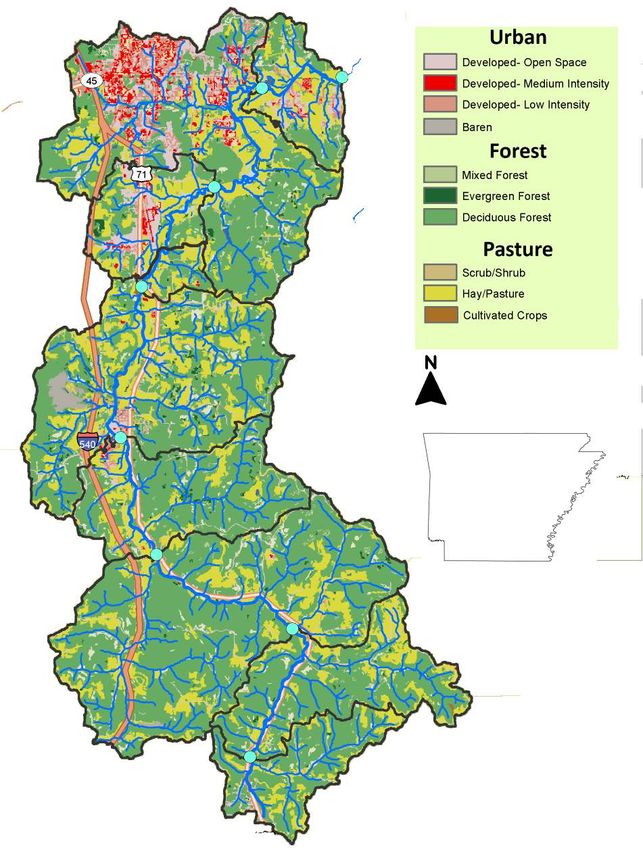
JOURNAL OF CONTEMPORARY WATER RESEARCH & EDUCATION
                                                 Universities Council on Water Resources
                                                   1231 Lincoln Drive, Mail Code 4526
                                                        Southern Illinois University
                                                           Carbondale, IL 62901
                                                       Telephone: (618) 536-7571
                                                              www.ucowr.org

                                                             CO-EDITORS
                                     Karl W. J. Williard                          Jackie F. Crim
                                  Southern Illinois University               Southern Illinois University
                                  Carbondale, Illinois 62901                 Carbondale, Illinois 62901
                                      williard@siu.edu                           crimjac@siu.edu

                                                     ASSOCIATE EDITORS
        Kofi Akamani                Natalie Carroll                 Mae Davenport                            Gurpreet Kaur
Policy and Human Dimensions            Education            Policy and Human Dimensions       Agricultural Water and Nutrient Management
 Southern Illinois University      Purdue University            University of Minnesota                Mississippi State University
     k.akamani@siu.edu            ncarroll@purdue.edu             mdaven@umn.edu                           gk340@msstate.edu

              Prem B. Parajuli                         Gurbir Singh                                Kevin Wagner
          Engineering and Modeling       Agriculture and Watershed Management        Water Quality and Watershed Management
         Mississippi State University          Mississippi State University                 Oklahoma State University
         pparajuli@abe.msstate.edu              gurbir.singh@msstate.edu                    kevin.wagner@okstate.edu

                                          M.S. Srinivasan                       Jonathan Yoder
                                              Hydrology                   Natural Resource Economics
                                    National Institute of Water and       Washington State University
                                 Atmospheric Research, New Zealand              yoder@wsu.edu
                                     MS.Srinivasan@niwa.co.nz

                                                      TECHNICAL EDITORS
                                           Elaine Groninger                 Shelly Williard
                                        Southern Illinois University   Southern Illinois University
                                        Carbondale, Illinois 62901     Carbondale, Illinois 62901
                                          egroninger@siu.edu               swilliard@siu.edu

         ISSN 1936-7031

         Cover photo: Maury River near Goshen Pass, Virginia, Credit: Jackie Crim
         Back cover photo: Reedy River Falls, Greenville, SC, Credit: Nicolas Henderson, original work, CC BY 2.0
         Inside back cover photo: UCOWR Virtual Roundtable Discussion

         The Journal of Contemporary Water Research & Education is published by the Universities Council on Water Resources
         (UCOWR). UCOWR is not responsible for the statements and opinions expressed by authors of articles in the Journal of
         Contemporary Water Research & Education.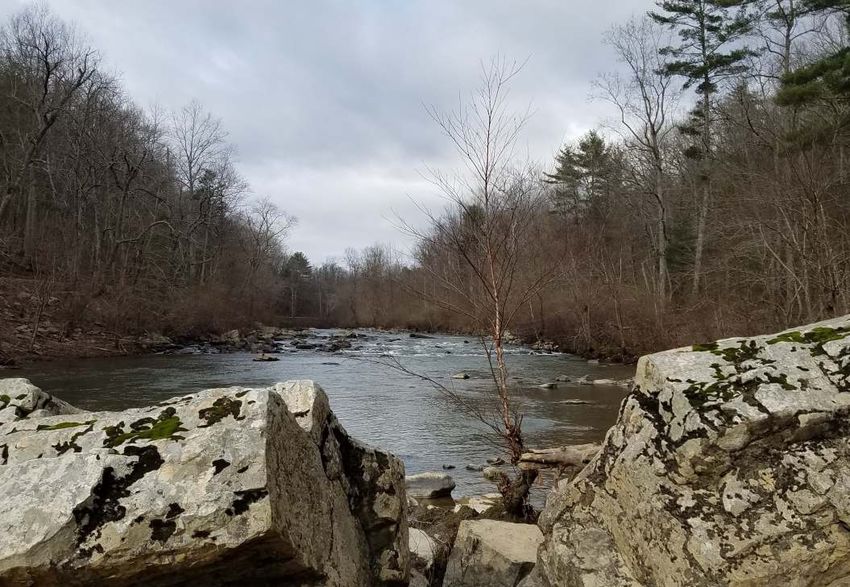
Journal of Contemporary
       Water Research & Education
    Issue No. 172                                                                                 April 2021

Perspective Piece
Diversity and Discrepancies in Water-related University Rankings: Is There a
Need for More Consistency or Is There Value in Breadth?
Pablo A. Garcia-Chevesich, Jonathan O. Sharp, and John E. McCray............................1

Articles
Integrating Cultural Perspectives into International Interdisciplinary Work
Karen I. Trebitz, Scott Fennema, and Keegan Hicks........................................................6

Flood Hazard Awareness at Old Dominion University: Assessment and
Opportunity
Nicole S. Hutton and Michael J. Allen ............................................................................19

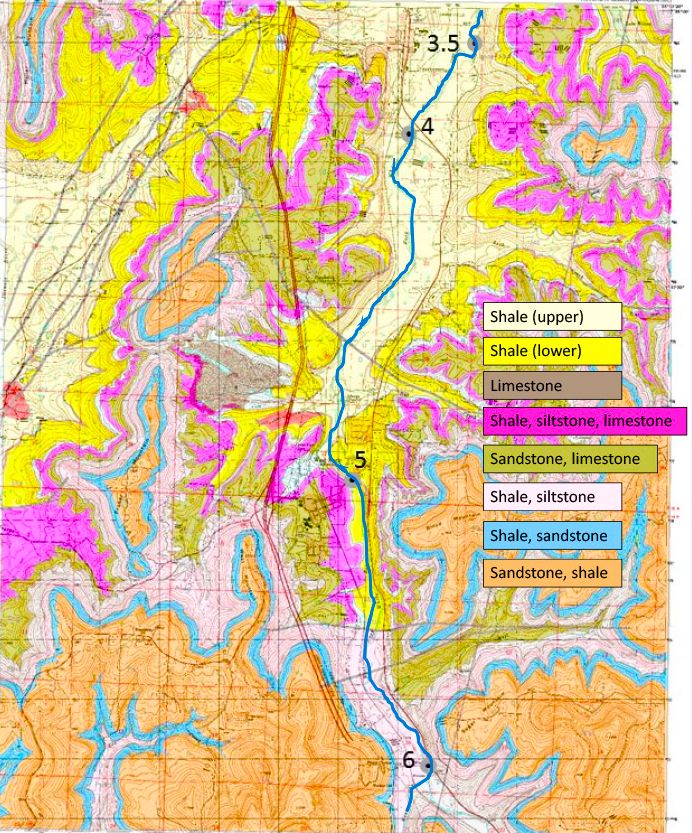
Natural Characteristics and Human Activity Influence Turbidity and Ion
Concentrations in Streams
Erin E. Scott and Brian E. Haggard ................................................................................34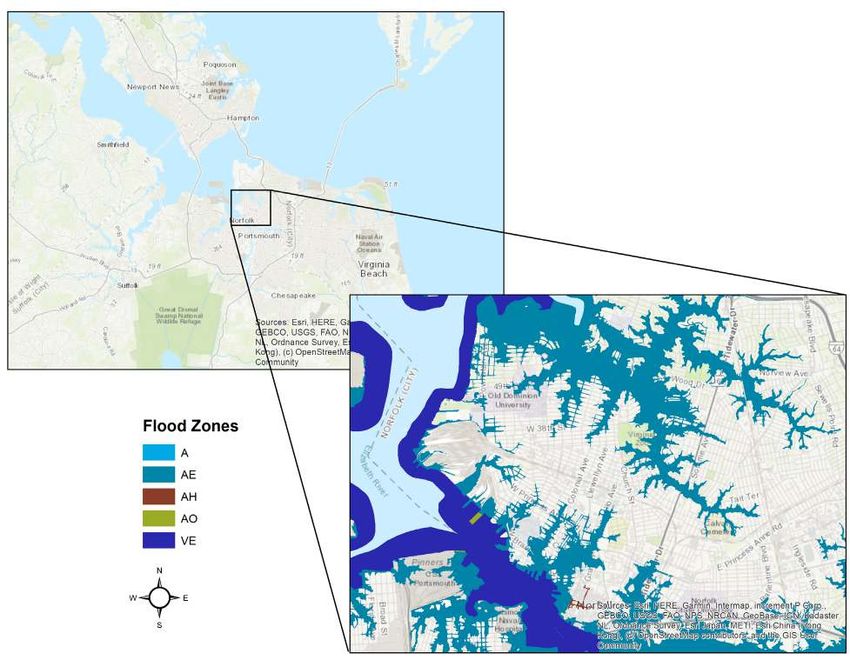
1

                              Universities Council on Water Resources
                           Journal of Contemporary Water Research & Education
                                       Issue 172, Pages 1-5, April 2021

                                      Perspective Piece
         Diversity and Discrepancies in Water-related
        University Rankings: Is There a Need for More
          Consistency or Is There Value in Breadth?
          *Pablo A. Garcia-Chevesich1,2, Jonathan O. Sharp1, and John E. McCray1
    1
    Colorado School of Mines. Department of Civil and Environmental Engineering, Hydrologic Science & Engineering
               Program, 2UNESCO, Intergovernmental Hydrological Programme, *Corresponding author

A
         ccess to clean water is an urgent and socially      and/or research programs in Environmental
         relevant global issue, as recognized by the         Engineering, Civil Engineering, Geophysics,
         U.S. National Academy of Engineers and              Geology, and Hydrology, but lacks Public Health
most other global scientific agencies. Universities          or Health Sciences degrees. Ultimately, water-
directly inform advances in this domain, serve as            focused domains of study fall outside of traditional
a training ground for practitioners who address              degrees, groupings, and associated metrics leading
challenges in water supply and quality, and more             to challenges in assessing strengths across both
broadly educate scientifically literate citizens.            disciplines and degree programs.
However, it is challenging for students seeking                 Several ranking systems exist that rate
information on university degree programs such               universities based on their strength in a specific
as Hydrology or other water-focused areas to                 discipline, including water resources, but the
find consistent information about programs, in               metrics for each are quite different. Ranking
part because of the disciplinary diversity of this           systems are based on multiple factors including
subject. Ranking systems typically focus on                  prestige of faculty members and publications,
more traditional departmental groupings (i.e.,               research funding, number and impact of
geosciences, civil & environmental engineering,              publications, search engine traffic, international
public health, etc.). While special rankings do              visibility, graduates in positions of influence,
occur for water science and engineering related              patent generation, perception by peer institutions,
programs, they are topically incorporated within             and financial sustainability, among others. The QS
various categories, including “Hydrology and                 World University Rankings (QS), for example, is a
water resources”, “Water resources engineering”,             ranking of the world’s top universities (not degree
“Water treatment and sanitation”, “Environmental             programs) produced by Quacquarelli Symonds,
and health sciences”, and others that span                   that synthesizes peer rankings from thousands of
traditional departments and have multiple homes              scholars, academics, and recruiters in conjunction
within and across institutions. These may involve            with Scopus citations, faculty/student ratios, and
categories that are absent at a particular university        staff and student numbers. The Times Higher
that has strengths in the co-listed category. For            Education World University Rankings (THEWU),
instance, our home institution of Colorado School            on the other hand, assesses universities using five
of Mines (or “Mines”) offers well regarded degrees           categories: teaching, research, citations (research

UCOWR                                           Journal of Contemporary Water Research & Education
Diversity and Discrepancies in Water-related University Rankings                           2

influence), salary of graduates, and international       THEWU ranking system, but is not mentioned by
reputation based on surveys. Another influential         the other two. Similar situations are shown for other
ranking system is the Academic Ranking of World          educational institutions such as Wuhan University
Universities (ARWU), also known as “Shanghai             and the University of Colorado at Boulder. While
Ranking”, which is based on quality of education,        different evaluation metrics can explain some of
faculty, and research output, among others.              this, it also highlights discrepancies in binning
Beginning in 1983, U.S. News & World Report              water related programs across “Water resources”
publishes an annual set of rankings of American          versus “Clean water and sanitation”, which in this
colleges and universities that are based upon            example necessitates very different foundational
data from surveys that the organization collects         approaches and expertise.
from each institution, as well as opinions from             National ranking systems also exist in the U.S.
faculty members and staff from other schools.            such as the Forbes College Rankings (which
This was expanded in 2014 to include Best                is based on student satisfaction, post-graduate
Global Universities. As a synthesis approach, the        success, student debt, graduation rate, and
Aggregate Ranking of Top Universities sums the           academic success). Other national ranking systems
QS, THEWU, and ARWU world ranks, excluding               are based on factors such as faculty publications,
institutions that do not have a distinct rank in those   annual fundraising, graduation rates, student’s
three systems. Some educational institutions (e.g.,      future earnings, affordability, internet appearance,
United Nations University (UNU)) also publish            and even athletics, nightlife, and campus
their own ranking. Other international ranking           quality. Examples include the Council for Aid to
systems include the Center for World University          Education, the Daily Beast’s College Rankings,
Rankings, the Leiden Ranking, the G-factor, the          the Economist’s Best Colleges, the Objective
Global University Ranking, the Nature Index, the         College Ranking, the Money’s Best Colleges, the
Professional Ranking of World Universities, the          Princeton Review Dream Colleges, the United
Reuters World’s Top 100 Innovative Universities,         States National Research Council, the Faculty
the Round University Ranking, the SCImago                Scholarly Productivity Index, the Top American
Institutions Rankings, the University Ranking by         Research Universities, the Washington Monthly
Academic Performance, the Webometrics Ranking            College Ranking, the TrendTopper MediaBuzz
of World Universities, and the Research Center for       College Guide, the American Council of Trustees
Chinese Science Evaluation Ranking at Wuhan              and Alumni, and the Niche College Rankings,
University.                                              among others. Additionally, websites such as
   With an increased visibility toward global issues     universities.com (which considers average tuition
on water availability and quality, there is growing      cost, student-teacher ratio, and number of enrolled
interest in undergraduate and graduate degrees in        students), or stateuniversities.com (which is only
water-related areas. In this sense, though the QS and    based on the number of enrolled students) provide
many other ranking systems do not consider “water”       each year a ranking of educational institutions
as a searchable topic of interest, both THEWU and        available nationwide to learn about different
ARWU develop a global ranking system for some            professional fields. A ranking of the top-10 U.S.
water topics. In contrast, the prominent U.S. News       universities from these two websites is included in
and World Report Graduate Program Rankings               Table 2, considering different water-related topics;
no longer includes specialties of hydrology or           discrepancies among sites and categories are clear.
water resources science and engineering. Table              As one can see, another source of confusion
1 shows some water-related global university             is the diverse factors that go into ranking such as
rankings for 2020, wherein one can see differences       cost of tuition, student-teacher ratio, or popularity
across similar ranking categories. Higher ranking        metrics. However, these factors do not address
universities such as The University of Arizona and       the quality of the technical, discipline-specific
Texas A&M appear under the Shanghai and UNU              education that is better suited for overall university
rankings, but are not even listed within THEWU.          or college rankings. As an example, the University
In contrast, UNC Chapel Hill appears under the           of Illinois Urbana-Champaign is ranked as one of

Journal of Contemporary Water Research & Education                                                   UCOWR
3                                Garcia-Chevesich, Sharp, and McCray

the world’s best universities in water education        inform prospective students, it is unnecessarily
(see Table 1), but it does not even appear in the       confusing and confined by traditional groupings
U.S. top-10 list from Table 2. Similarly, University    and in some cases less relevant evaluation metrics.
of Pennsylvania is listed #1 at universities.com        Rather our call to the academic community is to
under the “Hydrology and water resources” search,       think about (and work on) key metrics needed to
and #7 on stateuniversities.com, but the institution    create a consistent and accurate ranking system for
is not included in the international ranking systems    universities and programs that focus their efforts
(see Table 1). Another good example is Mines,           on water sciences and engineering. This evaluation
which regularly appears in worldwide and U.S.           needs to embrace the diversity and richness within
lists (see Tables 1 and 2). Based on research           this theme so as to best inform future students and
accomplishments (i.e., grants and peer-reviewed         practitioners.
publications), Mines is strong in hydrology and
water resources engineering, but while it currently     Acknowledgments
plays a leading role in treatment technologies, it
                                                        ReNUWIt (Re-Inventing the Nation’s Urban Water
is not included within the top 50 in the THEWU
                                                        Infrastructure), an NSF-funded interdisciplinary, multi-
“Clean water and sanitation” international list         institution engineering research center whose goal is to
despite being listed at positions 40 (not shown)        change the way we manage urban waters.
and 22 in the Shanghai and UNU lists, respectively
                                                        Center for Mining Sustainability, a joint adventure
(see Table 1).
                                                        between Colorado School of Mines and Universidad
    The above analysis shows a few of the               Nacional de San Agustín de Arequipa.
discrepancies across U.S. and international ranking
systems which can partially be explained by a
blurring across traditional categories and evaluation
                                                        Author Bio and Contact Information
metrics. While discipline-specific ranking systems      Dr. Pablo A. Garcia-Chevesich (corresponding
have inherent flaws, there is growing interest in       author) is a Research Assistant Professor at Colorado
hydrology, water resources, water and wastewater        School of Mines (Department of Civil and Environmental
treatment, and other water-related programs             Engineering) and Member of the Intergovernmental
                                                        Hydrological Programme of UNESCO. His research
in association with increasing environmental
                                                        focus is on watershed hydrology, for a better
concerns and a rising need for professionals in         environment. He may be contacted at pchevesich@
this important area. To this end, a rating system       mines.edu.
and clearer definition of the discipline should be
                                                        Dr. Jonathan O. Sharp is an Associate Professor
carefully considered and implemented for both
                                                        in the Department of Civil and Environmental
undergraduate and graduate programs. Students           Engineering and Director of the Hydrologic Science
seeking water-related careers should have more          and Engineering Program at Colorado School of Mines.
options than to look at rankings based on “civil        His research focuses on how microbial biogeochemical
and environmental engineering”, “public health”         processes impact water resources in both natural and
or “geosciences”. Rather, we propose the creation       engineered systems.
of a more specific, transparent, “Water” ranking        Dr. John E. McCray is a Professor at Colorado School
system that could better encompass the inherent         of Mines (Department of Civil and Environmental
diversity across this topic. This could be extended     Engineering) and campus PI for the NSF Engineering
to associated sub-disciplines such as “hydrology”,      Research Center on Urban Water (ReNUWIt). His
“treatment”, “watershed management”, “water             research focus is on chemical transport and treatment
resources”, “water policy”, and others. Similarly,      in urban and natural watersheds using a combination of
                                                        field, laboratory, and modeling techniques.
a new “Water” ranking system should consider
student-centric outcomes such as job placement
and salary five years after graduating, among
the other key factors previously listed such as
research productivity and teaching. While analysis
across different ranking domains can be used to

UCOWR                                         Journal of Contemporary Water Research & Education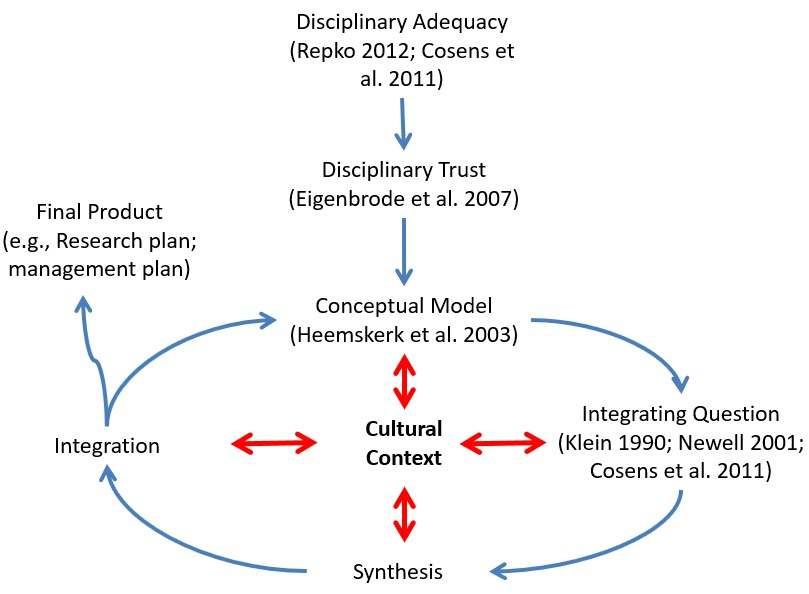
Diversity and Discrepancies in Water-related University Rankings                                   4

Table 1. Top 25 water-related universities globally across three different ranking systems for 2020.
Ranking           Shanghai Ranking                United Nations University         Times Higher Education World
                 (“Water resources”)             (UNU) (“Water resources”)          University Rankings (THEWU)
                                                                                    (“Clean water and sanitation”)
    1       Swiss Federal Institute of          University of Arizona               University of North Carolina at
            Technology Zurich (ETH)                                                 Chapel Hill
    2       University of Arizona               Swiss Federal Institute of          Tongji University
                                                Technology Zurich (ETH)
    3       Beijing Normal University           Delft University of Technology      Western Sydney University
    4       Texas A&M University                University of California,           Indian Institute of Technology
                                                Berkeley                            Kharagpur
    5       The University of New South         The University of New South         York University
            Wales                               Wales
    6       Hohai University                    Texas A&M University                Aix-Marseille University
    7       Tsinghua University                 Beijing Normal University           Anna University
    8       Wuhan University                    University of California, Davis     University of Auckland
    9       University of Illinois at Urbana-   University of Bristol               Middle East Technical University
            Champaign
   10       University of Bristol               Hohai University                    University of Strathclyde
   11       Delft University of Technology      University of Illinois at Urbana-   Tunghai University
                                                Champaign
   12       University of Colorado at           Flinders University                 RMIT University
            Boulder
   13       Flinders University                 Tsinghua University                 Charles Turt University
   14       University of California, Davis     University of Colorado at           King Mongkut's University of
                                                Boulder                             Technology
   15       University of California, Irvine    University of California, Irvine    Metropolitan Autonomus
                                                                                    University
   16       University of California,           The University of Texas, Austin     University of Wollongong
            Berkeley
   17       The University of Texas, Austin     University of Wageningen            Penn State University
   18       The University of Queensland        University of Saskatchewan          Hindustan Institute of Technology
                                                                                    and Science
   19       Wageningen University &             Swiss Federal Institute of          University of Indonesia
            Research                            Technology Lausanne
   20       University of Saskatchewan          The University of Queensland        Hiroshima University
   21       Northwest A&F University            Wuhan University                    University of Jaén
   22       Princeton University                Colorado School of Mines            Kyung Hee University
   23       University of Padua                 Stanford University                 An-Najah National University
   24       Utrecht University                  Oregon State University             University of Girona
   25       Swiss Federal Institute of          University of Padua                 Queensland University of
            Technology Lausanne                                                     Technology

Journal of Contemporary Water Research & Education                                                             UCOWR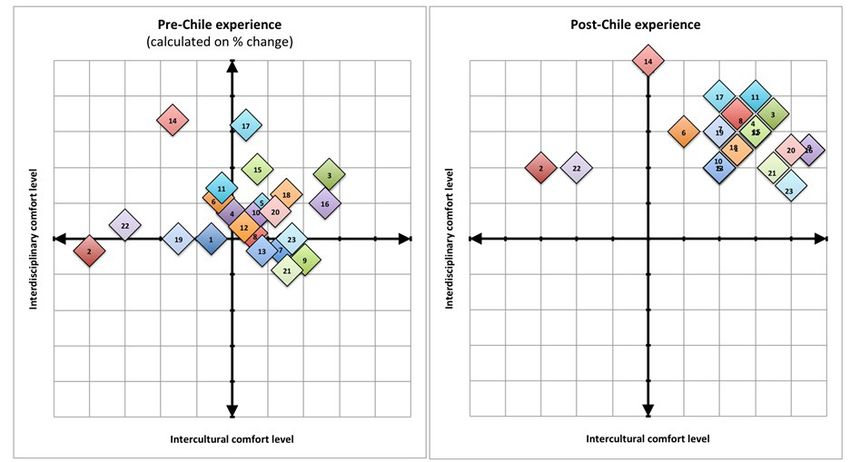
5                                      Garcia-Chevesich, Sharp, and McCray

Table 2. Best U.S. universities in 2020, from universities.com and stateuniversity.com, considering the two available water
topics (“Hydrology and water resources” and “Water resources engineering”).
                 --------------- universities.com ---------------       --------------- stateuniversity.com ---------------
Ranking      “Hydrology and water             “Water resources       “Hydrology and water             “Water resources
                 resources”                    engineering”            resources science”              engineering”
     1      University of                  University of Southern    Texas A&M University,         University of Nevada,
            Pennsylvania                   California                College Station               Reno
     2      University of California,      Villanova University      Colorado School of            University of Minnesota,
            Davis                                                    Mines                         Twin Cities
     3      Renssealer Polytechnic         University of             University of Arizona         University of New
            Institute                      Minnesota, Twin Cities                                  Mexico, Main Campus
     4      Boston University              Illinois Institute of     University of Rhode           University of Southern
                                           Technology                Island                        California
     5      University of Texas,           University of Idaho       University of California,     Oregon State University
            Austin                                                   Santa Barbara
     6      Colorado School of Mines       University of Delaware    University of California,     Villanova University
                                                                     Davis
     7      University of California,      University of Nevada,     University of                 University of Buffalo
            Santa Barbara                  Reno                      Pennsylvania
     8      Texas A&M University,          Oregon State University   Vermilion Community           Michigan Technological
            College Station                                          College                       University
     9      Brigham Young                  Michigan Technological    New Mexico Institute of       Central State University
            University, Provo              University                Mining and Technology
     10     University of New              University of New         Boise State University        Gateway Technical
            Hampshire, Main Campus         Mexico, Main Campus                                     College

  UCOWR                                              Journal of Contemporary Water Research & Education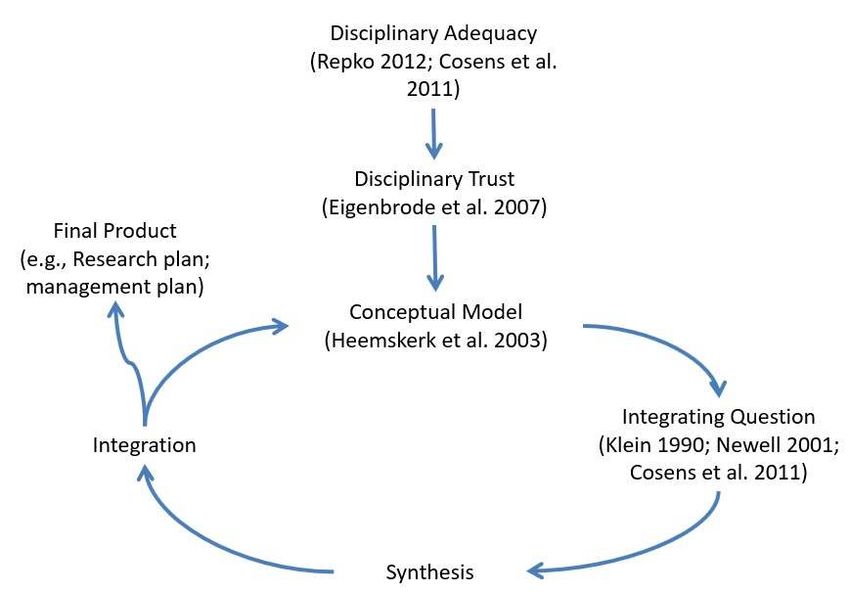
6

                               Universities Council on Water Resources
                            Journal of Contemporary Water Research & Education
                                       Issue 172, Pages 6-18, April 2021

   Integrating Cultural Perspectives into International
                 Interdisciplinary Work
                    Karen I. Trebitz1, *Scott Fennema1, and Keegan Hicks2
                             1
                               Water Resources Program, University of Idaho, Moscow, ID
                        2
                            Department of Biology, University of Waterloo, Waterloo, Ontario
                                               *Corresponding Author

Abstract: There are well-established methods for working in interdisciplinary natural resource management
settings, but place-based cultural differences are often poorly integrated into interdisciplinary projects.
Intercultural adequacy is necessary to ensure that water management strategies are acceptable within the
local contexts of water users. In this study we followed four cohorts of graduate students from Canada,
Chile, Cuba, and the United States that participated in an international graduate-level water resource
management course hosted at the Universidad de Concepción in Chile. The North American students
participated in post-experience surveys and interviews to assess changes in their interdisciplinary and
intercultural comfort levels. The interviews and survey identified factors that enhanced or detracted from
their progress towards integrating disciplinary and cultural differences into their work. Though course
material promoted interdisciplinary collaborations across various disciplinary cultures, participants noted
that traditional methods of integrating did not adequately bridge differences in place-based cultural
worldviews. We propose a framework developed during the experience to integrate place-based cultural
differences into all phases of the interdisciplinary research and natural resource management processes.
Keywords: intercultural adequacy, water management, collaboration, education, water resources

W
            ater resource management impacts
                                                                             Research Implications
            natural,    social,    and     economic
                                                                • This research highlights the importance of
            systems. Water managers must
                                                                  integrating cultural perspective into water
consider impacts on all systems (Grigg 2016)                      management;
through interdisciplinary lenses. Applying an
                                                                • Provides a method to include cultural
interdisciplinary approach in water resource                      discussion in the interdisciplinary water
management allows for the incorporation                           management process; and
of different disciplinary viewpoints and
                                                                • Identifies     pathways      to     improve
understandings to develop concrete management                     interdisciplinary      and      intercultural
solutions to specific problems. Working in                        collaboration in water management.
interdisciplinary groups poses many challenges,
however. Disciplinary language barriers disrupt
communication (Cosens et al. 2011; Repko 2012).               (Newell 2001; Cosens et al. 2011). The process
Disciplinary methodologies vary (Repko 2012),                 aides in understanding complex problems in natural
which can be frustrating and often culminates in a            sciences, social sciences, and the humanities
lack of trust between disciplines and research group          (Newell 2001). We propose fostering intercultural
members (Heemskerk et al. 2003; Eigenbrode et                 adequacy by adding culturally focused discussions
al. 2007; Cosens et al. 2011).                                into interdisciplinary methodology. We define
   The interdisciplinary literature has established           intercultural adequacy as the process of integrating
methods to create a synthesis of understanding by             place-based cultural views, discussions, and
weaving together relevant disciplinary knowledge              understanding into the interdisciplinary process

Journal of Contemporary Water Research & Education                                                      UCOWR
7 Trebitz, Fennema, and Hicks so that individuals can work across cultural cultural diversity as an integral component of differences. Intercultural adequacy incorporates interdisciplinarity (Thompson Klein et al. 2018). cultural contexts into natural resource research Currently, there is multiplicity in definitions of and management. The term intercultural adequacy intercultural study in the interdisciplinary literature. mirrors interdisciplinary adequacy, where Cosens In some cases, the interdisciplinary literature et al. (2011) recognize that it is highly unlikely for focuses on differences between disciplinary individuals to become experts in more than one cultures (Reich and Reich 2006; Thompson discipline—or in the present context, for cultural Klein et al. 2018)—even with relatively narrow learning to translate into competency (Zotzmann differences such as between the humanities and the 2016). arts (Lotrecchiano and Hess 2019). Other articles We follow the method of interdisciplinary stress the need for understanding place-based investigations and integration presented by Cosens cultures and practices (e.g., Egidiussen Egekvist et al. (2011), which begins by building disciplinary et al. 2016) and integrating cultural based ways adequacy from each represented field to overcome of knowing into research designs (Morgan 2006; disciplinary barriers (Cosens et al. 2011; Repko Sterling et al. 2017). The movement of adding 2012). Disciplinary adequacy requires building intercultural discussions into the interdisciplinary a basic understanding of the methodologies, process is still relatively new. Literature about assumptions, and terminology from the various interdisciplinary studies and intercultural studies disciplines represented on the interdisciplinary still remains largely separated. team. With an understanding of the differing Disciplinary and place-based culture are defined disciplines, the interdisciplinary team can foster differently. Disciplinary culture is the difference disciplinary trust through interactive exercises between the norms and practices of one discipline such as the Toolbox for Philosophical Dialogue versus another within the academic community (Toolbox; Eigenbrode et al. 2007). The Toolbox (Reich and Reich 2006). Place-based culture is is a series of prompts that facilitates dialogue to defined as beliefs, customs, lifestyles, and arts of identify and address philosophical differences and a particular society or group. Place-based culture similarities among disciplines from biological to is often tied in place and time to landscapes physical to social sciences. Conceptual models themselves, and must be interpreted in relation or diagrams then can be constructed to aid to context, history, and power (Swensen et al. interdisciplinary teams to create a simplified 2013). Natural, family, and social experiences may representation of the system of study (Heemskerk additionally be incorporated into an individual’s et al. 2003). The conceptual model can serve as a cultural worldviews. platform to develop complex integrating questions Understanding and acceptance of cultural that cannot be answered using a single discipline differences is a process. Responses to exposure to approach (Thompson Klein 1991; Newell 2001; other cultures can be described on a continuum, Cosens et al. 2011). Developing an integrating where individuals may begin with denial, defense, question and designing a conceptual model and minimization of other cultures—especially allowed team members to narrow the scope of their if the cultural differences are overwhelming project, create a communication platform for ideas (Hammer 2012)—before accepting or adapting (Heemskerk et al. 2003), and continually check to the foreign culture (Figure 2). Individual or the focus of their working hypotheses. Figure group development across the continuum to 1 presents a flow chart of this interdisciplinary an intercultural mindset, or open acceptance process. of cultural differences, is aided by supportive Working in an interdisciplinary space also interactions with people from different cultures requires intercultural awareness (Muratovski 2017; (Hammer 2012). Hammer and Bennett (1998) Thompson Klein et al. 2018) and intercultural propose an Intercultural Development Index (IDI) competency (Sarmento 2016). In 2018, the that is often used to assess the progress towards the Association for Integrative Studies expanded intercultural sensitivity of students in international its mission statement to explicitly include immersion experiences. In the interdisciplinary, UCOWR Journal of Contemporary Water Research & Education
Integrating Cultural Perspectives into International Interdisciplinary Work                      8

              Figure 1. Overview of the interdisciplinary process presented in Cosens et al. (2011).

              Figure 2. Intercultural Development Continuum: Growth from a monocultural to an
              intercultural mindset follows a continuum through Bennett’s (2001) steps of denial,
              polarization, minimization, acceptance, and adaption. Integration is the ideal that lies
              beyond adaptation. Source: Hammer 2012.

intercultural context, individuals need to move              note that interdisciplinary initiatives commonly
across the cultural continuum for each of the                fail because of a lack of a methodology that
cultural differences faced, such as disciplinary and         fosters internal group dynamics and allows for
place-based cultural differences.                            group engagement and social learning. Graduate
   Specific methodologies can further close the              fellows in an interdisciplinary program between
gap between disciplinary cultures by facilitating            the United States and Costa Rica (NSF Award
the establishment of trust within interdisciplinary          Number 0903479, 2012-2019) found that the lack
teams. Existing tools do not address differences in          of method(s) to integrate both disciplinary culture
place-based cultures, however. Allen et al. (2014)           and place-based culture into the research process

Journal of Contemporary Water Research & Education                                                       UCOWR
9 Trebitz, Fennema, and Hicks
hindered team progress (Morse et al. 2007; J.D. helped or hindered working in an interdisciplinary/
Wulfhorst, personal communications, 5-Jan-2017). intercultural setting; then we propose an addition
One proposed path to bridge cultural differences to the interdisciplinary process that facilitates
and foster cultural understanding is to encourage intercultural adequacy and cultural integration
diverse forms of intercultural dialogue and within natural and water resource management and
engagement (Crossley 2008; Jackson 2009). research.
Outcomes should lead to useful integration of
cultural differences and commonalities to allow Methods
for the development of shared visions, goals, or
directions (Crossley 2008; Smit and Tremethick Course Context and Research Setting
2013; Wiek et al. 2013), now known as intercultural The Water Issues course curriculum was taught in
competence (Sample 2013). Given the term’s collaboration with Universidad de Concepción and
complexity, however, there is a lack of consensus Universidad Católica de la Santísima Concepción.
in how to operationalize intercultural competency The approximately three-week course was designed
(Wahyudi 2016). Furthermore, Zotzmann (2016) to integrate graduate students from various
questions whether it is, “theoretically sensible and disciplinary and cultural backgrounds—law, social
ethically desirable to conceptualize the outcomes science, natural science, and engineering—to take
of intercultural learning as ‘competence’” (p. part in this unique interdisciplinary experience
252). In this manuscript, we therefore prefer aimed at understanding different perspectives
the term intercultural adequacy, which parallels on watersheds and watershed management. The
interdisciplinary adequacy in interdisciplinary course was offered during winter break in four
literature (e.g., Cosens et al. 2011). consecutive academic years from 2014 to 2018.
As part of an Integrative Graduate Education The course was divided into three dimensions:
and Research Traineeship (IGERT) fellowship field trips, lectures, and teamwork—the proportion
program at the University of Idaho (NSF Award of time spent in each facet of the course varied year
Number 1249400), graduate students participated to year.
in an interdisciplinary/intercultural experience in Students participated in a tour (field trip) of the
Concepción, Chile. The course was listed as WR Río Biobío and Río Laja Basins from the mouth of
604: Int’l Water Issues; we refer to it hereafter as the river into the Pacific Ocean to the headwaters
the Water Issues course. Graduate students came of both river systems. The field trip, which lasted
from engineering, natural sciences, social sciences, three days on average, provided background
and law backgrounds from Canada, Chile, Cuba, information on the physical, geographical, and
and the United States. Students were assigned into cultural settings. Time was spent with Indigenous
groups of intentionally diverse disciplinary and members in Pehuenche communities, and on their
cultural compositions. Teams were tasked with lands. The field experience familiarized participants
developing a water resource management plan for with the complexities of the Río Biobío and Río
the Río Laja and Río Biobío systems. After the Laja Basins systems and provided social time to
course, North American students were interviewed foster teamwork.
and completed a survey to assess whether the A week of lectures provided historical,
course changed the participants’ perceived comfort ecological, and hydrological context, an overview
working in interdisciplinary and intercultural of Chilean water policy and management, and
settings. Analysis of the interviews and surveys regional political issues of the Río Biobío and
identified factors that helped or hindered working Río Laja. Professors from the corresponding
across cultural and disciplinary bounds. universities lectured to provide “disciplinary
Whether talking about disciplinary or placed- adequacy”—a basic understanding of the
based culture, there is no clear path in the methodologies, assumptions, and terminology
literature to include cultural discussions in the from each discipline (Cosens et al. 2011)—
interdisciplinary process. The objective of this within the context of the Río Laja and Río Biobío
paper is twofold. First we present factors that systems. Question and answer sessions following
UCOWR Journal of Contemporary Water Research & EducationIntegrating Cultural Perspectives into International Interdisciplinary Work 10 the disciplinary lectures further facilitated cross- question to focus the team efforts to improve the disciplinary communication. The lectures and sustainability of the river systems. question sessions were intentionally structured to allow students to understand better the importance Data Collection: Surveys and Interviews of the current state of the watersheds, as well as Following participation in the Water Issues the active research within each basin. The course course, the North American students from the four delved into the complexities of the interdisciplinary successive cohorts were asked to participate in a process by presenting complex experiential case post-course survey and interview. Participation studies that link multiple disciplines. in this study was entirely voluntary, and no Students were divided into working groups compensation was provided. Twenty-three out by the faculty, who intentionally populated each of twenty-five North American students who research team with diverse disciplinary and cultural completed the course participated in the survey. representation. All groups had at least one student Twenty-two of these were IGERT fellows, one of who could speak both English and Spanish and whom was a fellow in a similar IGERT program served as a group translator. Groups were tasked at another university. One student was from a with developing water resource management university in Canada. We were unable to survey plans to increase the ecological and water yield and interview the South American students due to sustainability of the systems. In the context of this institutional hurdles and lack of financial support— course, sustainability was never defined. Each team this is a limitation to our study since we were only had to work out what they meant by sustainability able to evaluate insights from the North American across their disciplinary understanding. Plans were half of the student cohorts. We do, however, include required to integrate engineering, ecological, legal, in our results some observations that our Chilean and operational recommendations. The professors colleagues offered during and after the experience. leading the course allowed the students to find The survey and semi-structured interview their own paths to accomplish the course project. format were designed using Hammer and Bennett’s However, professors encouraged students to work (1998) IDI. Questions were organized into three through the interdisciplinary process outlined in categories, following Medina-López-Portillo Cosens et al. (2011) (Figure 1) before attempting (2004): individual student experience, external the interdisciplinary integration activities. Each course dynamics, and student decisions. Individual group had to develop a presentation and a final student experience questions built an understanding report that was co-authored and co-presented by of participants’ previous years in interdisciplinary all students in the team. This paper focuses on work, immersion experiences abroad, proficiency the intercultural dynamics of the collaboration in other languages, and personal experiences in the processes rather than the products from the course. course. External course dynamics questions were To facilitate disciplinary trust, student groups designed to get the participants’ viewpoints on the participated in a modified version of the Toolbox content provided by the organizers and instructors in exercise. The Toolbox prompts were translated the Water Issues course. External course dynamics into Spanish for the Water Issues course, so that factors included pre-trip orientation, lecture topics, Spanish-speaking students could engage in the and the amount of time spent in classroom lectures exercise in their native language, understanding, and field trips. The third section was focused on and perspectives. The Toolbox exercise allowed understanding choices made by students during the for team members to see behind the curtain of other course, such as the extent of contact and immersion disciplinary cultures by discussing the fundamental efforts with their international colleagues. principles and assumptions used in each field The survey component collected background through guided dialogue—taking students beyond information using quantitative Likert-scaled disciplinary adequacy, developing disciplinary responses via the online Qualtrics™ survey trust, following the interdisciplinary collaboration platform. Potential identifiers were removed, process (Figure 1). Groups were encouraged to and respondents were randomly assigned an develop a conceptual model and an integrating identification number to preserve confidentiality. Journal of Contemporary Water Research & Education UCOWR
11                                    Trebitz, Fennema, and Hicks

The survey instrument proved useful by collecting      data to test for rank correlation. Results are
data for quantitative analysis. Participants were      reported following Cohen (1988), where moderate
asked to complete the survey instrument before         correlations occur between (+/-) 0.30 and 0.50,
their interviews.                                      and high correlations are greater than 0.50 or less
    Interviews followed the developmental interview    than -0.50. Positive correlations indicate factors
process described by Hammer (2012), which leads        that improved interdisciplinary and intercultural
to more robust survey data in the IDI context. The     comfort and negative correlations indicate factors
core intent of the semi-structured interviews was to   that hindered comfort.
explore students’ collaborative experiences to learn
how they negotiated disciplinary and place-based       Results
cultural differences in their team science efforts.
Students were asked to provide details of specific        After completing the course, interview
incidents of cultural differences that impacted the    participants indicated how comfortable they were
group project, how they navigated the situation,       working in an interdisciplinary, intercultural setting
and their perceived outcomes (Hammer 2012).            prior to the course versus after. Respondents plotted
By asking similar questions in multiple forms, the     themselves on a Cartesian coordinate system in
combination of surveys and interviews allowed for      comfort level working in interdisciplinary (x-axis)
triangulation (i.e., asking similar questions from     and intercultural (y-axis) settings (Figure 3).
different angles) of responses to cross-check for      Comfort level is plotted using a Likert Scale from
consistency.                                           negative five, meaning no experience or comfort,
    One researcher conducted all interviews. The       to positive five, meaning extremely comfortable.
interview duration averaged 30 minutes with a          Participants experienced an increased comfort
minimum and maximum of 20 and 33 minutes,              level working across disciplines of 1.9. The
respectively. Interviews were administered in          students experienced an average comfort increase
person, by phone, or by video conferencing, and        of 2.1 working across cultures because of their
were recorded. One participant responded to            Water Issues course experience in Chile.
the questions in writing from a remote location.          The interdisciplinary comfort level before the
Additional interview questions emerged during the      trip correlated positively (moderate significance)
first few conversations and were carried forward       with both age of participant at time of trip and
through subsequent interviews. Transcripts of          years of experience in interdisciplinary research.
responses were coded into an expanded matrix of        Age and years of experience in an interdisciplinary
questions. Direct references to other members of the   setting were highly correlated, as expected.
cohorts were removed to preserve confidentiality.      Interdisciplinary comfort after participation in the
Respondents’ names were replaced by matching           course had a moderate correlation in the positive
identification numbers on interviews and surveys.      direction with the helpfulness of the interdisciplinary
Statements were aggregated by question to discover     activities (i.e., the Toolbox exercise), respondents’
trends in responses for qualitative dimensions of      age at the trip, and time spent in lectures. There
this study.                                            was a moderate negative correlation between
    Additionally, respondents were asked to plot       current interdisciplinary comfort levels with
themselves on a 2 x 2 matrix (-5 to +5 scale)          time spent in field trips (i.e., the more time in the
of interdisciplinary comfort level (y-axis) and        field, the lower the interdisciplinary comfort).
intercultural comfort level (x-axis). The matrix       Change in interdisciplinary comfort was positively
was designed to gauge respondents’ degree of both      correlated (moderate significance) with the percent
cultural and disciplinary comfort in collaborative     composition of North American students within a
research after this international experience.          working group, group social time, and time spent in
Matrix results were added to the quantitative          lectures. Interdisciplinary comfort was negatively
dataset. Correlation analyses were performed on        correlated (moderate significance) between
the variables of interest using Spearman’s rho, a      personal time spent previously in other countries
non-parametric test commonly used with ordinal         and time spent with Indigenous people in Chile.

UCOWR                                        Journal of Contemporary Water Research & Education
Integrating Cultural Perspectives into International Interdisciplinary Work 12
Figure 3. Participants’ self-evaluations of comfort working in an interdisciplinary (on the x-axis), intercultural (on
the y-axis) setting.
Post-course intercultural comfort (i.e., after the cohort when they participated in the Water Issues
Water Issues course) was positively correlated course was 31, and many had extensive experience
(strong significance) with personal time spent working in interdisciplinary settings. Those
in other countries previously, but negatively experiences and backgrounds with formal training
correlated (moderate significance) to time spent in were brought into group negotiations in the
lectures during the Chilean experience. The change Water Issues course. Furthermore, the University
in intercultural comfort levels because of the trip of Idaho’s IGERT program pointedly recruited
demonstrated weak positive correlation with group interdisciplinary students, which was reflected in
social time and weak negative correlation with time the relatively high interdisciplinary comfort levels
spent in other countries. While the level of fluency reported by the participants.
in another language showed a strong, positive Numerous interviewees specifically mentioned
correlation with time spent in other countries, the barriers to disciplinary adequacy, however. For
correlation was low with cultural comfort indices. example, one respondent felt that “engineers
Following participation in the Water Issues course, struggled to grasp what the biologists were
students increased their comfort working in both saying.” Through various forms of language and
interdisciplinary (p = 0.0006) and intercultural (p disciplinary translation within the group, others
= 0.0007) settings at an α level of 0.05. Table 1 were able to understand the biological concerns
summarizes the results of the correlation analysis better, even though the disciplinary trust was never
form the survey results. fully achieved. To facilitate disciplinary adequacy,
some groups turned to scholarly literature outside
Discussion their respective fields. Not all groups had the
same perspective or difficulties integrating. One
Of the twenty-three North American students, respondent stated, “differences (are) in tools, rather
twenty-one of them had previous experience than disciplines.”
and course work that explicitly taught how to Hammer and Bennett’s Intercultural
collaboratively work across disciplinary divides. Development Continuum (Figure 2) shows the
The average age among the North American process that individuals undertake to develop
Journal of Contemporary Water Research & Education UCOWR13 Trebitz, Fennema, and Hicks intercultural mindsets. Working across disciplinary IDI literature to increase intercultural adequacies, bounds follows a similar continuum. During such as: pre-departure and re-entry preparation, the Water Issues course, each student joined the cultural mentoring, and reflection on intercultural course with their own experience and progress experiences (Jackson 2009; Hammer 2012; working through interdisciplinary and intercultural Egidiussen Egekvist et al. 2016). Bennett (2010) continuums. Their experiences were brought laments that a major impediment to intercultural into the course and leveraged to aid in the class learning in studies abroad is the “failure as project. The post-survey results do not account for international educators to be knowledgeable the students’ pre-course experience and comfort protagonists of intercultural learning” (p. 446). levels. However, the experience aided in further Indeed, we discovered that for most of the Water developing the skillset and comfort necessary (as Issues cohorts, our interviews were the first time shown by the results of the correlation analysis) they had been asked to reflect on the experience— to further progress individuals across disciplinary in some cases this was four years later. and cultural continuums. It is therefore no surprise that the need Results of the interviews and the correlation to integrate cultural consideration into analysis show that the best methods to facilitate interdisciplinary research was not discussed in the interdisciplinary efforts were to: 1) have a formal context of the course, which was one impetus for instructional setting, and 2) allow for open this study. Interviewees were asked if any cultural discussion of disciplinary differences within teams. differences or barriers occurred while working on A key component in the group discussions—as the group project. Eleven respondents out of the one interviewee stated—was to allow for “open twenty-three either implied or explicitly stated that and honest” conversations and to be “willing to cultural differences arose while working on the debate both intellectually and jokingly, and share international teams; ten mentioned that they did not and listen.” The open dialogue allowed members notice cultural differences. Two of the interviewees to “discover how each member viewed things to stated that either they or members from their group get beyond that sticking point.” Interestingly, had previously spent time in Chile, which may all the participants who mentioned the different have increased intercultural adequacy between interdisciplinary processes in the interview team members. reported a high level of interdisciplinary comfort Results showed that people who self-reported (average of 8.5 out of 10) following the Water feeling more comfortable working across cultures Issues course. The high level of interdisciplinary were less aware of the existence of cultural comfort allowed groups to apply interdisciplinary differences; this falls in line with the Dunning- tools to overcome interdisciplinary hurdles. Kruger effect of being ignorant of one’s own Many of the students had previously studied ignorance (Dunning 2011). Participants who or lived in immersive international settings. Eight observed distinct cultural differences, self-reported considered themselves competent or fluent in at an average cultural comfort level of only 6.7. In least one other language. Six additional students contrast, the individuals who claimed that they did felt they could “get by pretty well” in another not notice cultural differences responded with a language. Twelve had at least some knowledge higher average cultural competence, 7.7. However, of Spanish. The previous intercultural comfort one student who self-reported an experience of that these students brought to the course helped severe culture shock was well aware of their own move them across the Intercultural Development limitations and ranked their intercultural comfort Continuum (Figure 2). the lowest of the cohort. Both survey and interview In contrast to the interdisciplinary process, results suggest that time spent in social settings however, students were not provided with methods helped to foster intercultural comfort, whereas to embrace intercultural differences in the Water formal, lecture-based settings inhibited comfort in Issues course. The curriculum provided on-site working across cultures. cultural experiences in Chile, but did not address Differences also arose among all the groups other influential program components identified in around the idea of how rivers should be managed— UCOWR Journal of Contemporary Water Research & Education
Integrating Cultural Perspectives into International Interdisciplinary Work                  14

these are issues that are neither clearly disciplinary      Some students struggled with the differing
nor completely cultural—and were evident in the          viewpoints regarding endemic species between the
surveys and interview transcripts. As an example,        salmon and steelhead in the Pacific Northwest to
one interviewee noted that:                              the small fish species in the Chilean rivers. One
    People in Chile don’t have the same                  interviewee stated that, “we Americans had to get
    perspective on the environment than we               over it,” meaning the North American students had
    [Americans] do; Americans came in with               to grasp and understand differing cultural views
    “dams are bad” while Chileans wanted                 on endemic species. To ensure that the proposed
    to make their country great through the              outcomes from the class project were favorable
    development of hydropower.                           within the Chilean setting, the North American
                                                         students needed to re-evaluate their ideas about
   In the authors’ working group, the North              dams and fish to include the cross-cultural
American students advocated for limiting or even         perspective of both the locals and North American
removing dams from riverine systems to allow for         students.
the restoration of natural processes. Being from the
Columbia River Basin, the North American students        Proposing a Methodological Framework
have seen how dams, over time, have become the              While working on the group project, our team
primary contributor to ecological consequences,          (the co-authors) was able to work through the
such as a large decline in salmon populations.           beginning steps of the interdisciplinary process
In contrast, Chilean students appreciated the            of building disciplinary adequacy, facilitating
importance of dams in their economy. The Chilean         disciplinary trust, and developing a conceptual
students were in favor of installing additional          model of the system. For these steps we drew
infrastructure, with limits, to hold water for future    on our lecture and field trip notes, our individual
use, including electricity generation and irrigation.    specialties, generous use of a white board, and
Further, while Chilean academic communities              the previous experiences of interdisciplinary
embrace the importance of biodiversity and species       experience of two group members. However,
preservation, the endemic species within the Laja        we had trouble building a conceptual model and
and Biobío River systems are not iconic species          could not agree upon an integrating question. Our
and do not occupy preeminent cultural status, such       progress was at an impasse.
as salmonids do in the American Pacific Northwest.          Through conversation we realized that the North
Many interviewees discussed differences between          American students and the Chilean students had
the native species located in the Biobío and Laja        different cultural perspectives on dams and river
River systems compared to the Columbia River.            operations (as elaborated above). The underlying
One American interviewee stated that the Chilean         differences on dams crosscut both disciplinary and
rivers lacked native “charismatic megafauna”             cultural differences, contexts, and perspectives.
within the river systems like the iconic salmon in       Reflecting on the interdisciplinary objectives of our
the rivers of the Pacific Northwest.                     course, we realized there was a gap in the process:
   Within the Chilean river system, many of the          there was no discussion of cultural differences. At
endemic species are dissimilar to endemic species        this point in the interdisciplinary process (building
that the American counterparts find in their river       a conceptual model and developing an integrating
systems. The North Americans were interested in          question), we were able to facilitate a supportive
preserving endemic species, but one observed that:       conversation regarding the different cultural views
    Chilean culture doesn’t have the connection          of dams. The resulting integrating question allowed
    with the fish, especially because the endemic        for a solution with reasonable regionally relevant
    fish are small galaxids1 and of no particular        ecological compromises, rather than an absolutist
    cultural value.                                      approach.
                                                            In the synthesis phase of our project, an
1
 Adult Galaxias maculatus specimen average only 10.5     unexpected but particularly interesting cultural
cm (Froese and Pauli 2017).                              impasse occurred over the definition of time. The

Journal of Contemporary Water Research & Education                                                  UCOWR
15 Trebitz, Fennema, and Hicks
future, in Euro-American culture, is typically Lake Paiute Tribe in the Truckee River Basin,
represented in a discrete time frame. As an example, California/Nevada (Cosens 2003); Yakima Nation
management plans will have a time horizon of in the Yakima River Basin (Graham 2012). The
five, ten, or even 30 years. Our Chilean colleagues cultural value of water and fisheries can differ
had a different understanding of what it meant largely from the cultural value of water for farmers
to even articulate a time horizon. To explain the and power producers (e.g., Freeman 2005).
Chilean concept of the future, our colleagues told Building intercultural adequacy can help bridge
the folklore story of Pedro Urdemales (Memoria between cultural viewpoints and further support
Chilena n.d.). In the story, Pedro promises his soul the intercultural aspects of integrated water
to the devil, payable tomorrow. Whenever the devil resource management.
comes to collect, Pedro tells him that he promised
to pay tomorrow; but it is currently today. Thus Conclusion
the idea of tomorrow—or the future—remains
an indefinite concept that can always be pushed The international collaborations of faculty at
onward. In essence, there are different views of the University of Idaho with their counterparts
timelines between the North and South American at Universidad de Concepción and Universidad
cultures. By revisiting the cultural context Católica de la Santísima Concepción made a
throughout the interdisciplinary process, we were space for a creative interdisciplinary, intercultural
able to blend both the North and South American experience. Results from the interviews and
students’ perspective into our process. We designed surveys conducted in this research suggest that
our management schemes to reflect the cultural increased time in formal settings, such as lectures,
difference by not defining specific periods, but aids in increasing interdisciplinary collaboration.
in casting the solutions on relatively “short,” In contrast, however, more time in informal
“moderate,” and “long-term” time horizons. situations and team interactions was needed to
Figure 4 demonstrates the addition of cultural- foster intercultural learning and collaboration.
based discussions to build cultural adequacy Balance is needed between time spent in formal
during the interdisciplinary process. By adding and social/informal settings to work effectively
cultural discussions, we were able to collaborate across intercultural and interdisciplinary bounds.
on an international interdisciplinary research/ The Water Issues course improved students’
management project. Our group did not experience comfort level working across interdisciplinary and
place-based cultural differences until we started intercultural boundaries. A short, culture-focused
developing a conceptual model of the water immersion course can facilitate individuals’ comfort
management issue. Other teams encountered in working across boundaries. Groups working
process-slowing issues at other times in the cycle. across cultural and disciplinary boundaries could
It is prudent to check the intercultural adequacy of benefit by starting their experience in a similar
the members frequently, and iteratively, throughout setting. Our findings have broad applicability
the interdisciplinary process. Revisiting the cultural in interdisciplinary and intercultural settings.
context of the interdisciplinary process at every Water resource management interlinks numerous
step ensures that place-based cultural perspectives disciplinary fields and binds cultures together.
are being addressed throughout the process so Interdisciplinary and intercultural education
that the integrative results are meaningful in the programs train the next generation of natural
regional context and local communities. resource managers who need to blend complex
While the Water Issues course took place with needs of society and the environment. Collaborators
students between North and South America, the in fields like water resource management must learn
overarching theme of intercultural adequacy how to work across disciplinary and cultural divides
applies to water management throughout the including ideologies and cultural philosophies, as
United States. For example, in the arid west demonstrated in our different working approaches
Native American tribes play a critical role in water to space (e.g., landscapes, dams, and biota) and even
management in numerous basins e.g., Pyramid to time. People and landscapes should be interpreted
UCOWR Journal of Contemporary Water Research & EducationYou can also read


