SATURDAY, FEBRUARY 22, 2020 - East Chapel Hill High School Child Care Services Association
←
→
Page content transcription
If your browser does not render page correctly, please read the page content below
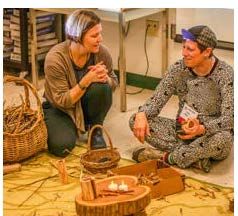
SATURDAY, FEBRUARY 22, 2020
  East Chapel Hill High School             with

Presented by          platinum sponsor
Child Care
Services                                 LEARNING
Association                               THREAD
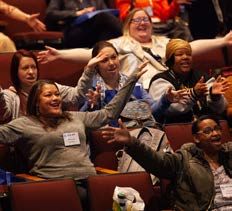
Dear Early Care and School
Age Education Professionals,
On behalf of the planning committee and Child Care Services
Association, we invite you to join hundreds of early childhood
professionals from across North Carolina at the 47th annual
Advancing Skills and Knowledge (A.S.K.) Conference. We are
excited to share this year’s program!
The A.S.K. Conference has always served classroom teachers as our primary audience. Although there is something for every
early childhood professional, the majority of workshops support instructional strategies. It is the planning committee’s priority
to bring you a full range of professional development opportunities, from shorter workshops to in-depth CEU sessions. As is
traditional at this conference, you have the opportunity to choose workshop sessions when you register for the day.
                                                                                                                For the third year, we are glad to
                with                                                                                            be working with the NC REGGIO
                                        The NC Reggio Emilia Collaborative was formed by a group
                                                                                                                EMILIA COLLABORATIVE. They
                                        of NC educators after hosting The Wonder of Learning,                   are hosting a series of sessions
                                        the traveling exhibit from Reggio Emilia, in 2017. The NC               examining how to implement
                                        Reggio Emilia Collaborative reflects the importance of                  the key principles of the Reggio
                                        a shared vision for education as well as creates energy,                approach to early childhood
            LEARNING                    conversation, and action around how we as a community                   learning in North Carolina.
             THREAD                     wish to cultivate the strong potential of all children.                 Participate in the Reggio workshops
                                                                                                                all day to earn a .5 CEU credit.
We are excited to host RON MOHL, celebrated educator, as our keynote speaker and ERICA BERRY, noted musician and
educator, as our featured presenter. We believe the conference will meet the professional development needs of all who attend!
CCSA is also sponsoring a learning thread for Durham PreK educators at the ASK Conference. These workshops are designed to
support high quality teaching and learning for public classrooms for 4-year-old children.

See you at the Conference,
The 2020 A.S.K. Conference Planning Committee

    Contents                                                             A.S.K. Conference Committee                     Our Mission
                                                                         Dinah Arthur            Karissa Livingston      Child Care Services
    CCSA Welcome..................................................1      Betsy Barnes            Nita McAdoo             Association is
    Featured Presenters.........................................2        Deanna Bledsoe          Christa Moore           dedicated to ensuring
    Reggio Emilia Learning Thread.....................3                  Linda Chappel           Heather Noe             affordable, accessible,
    Durham PreK Learning Thread......................5                   Charlene Daye           Valerie Person          high quality child care
    Chart of Workshop Subject Categories ......6                         Christine Farmer        Wendy Price             for all young children
                                                                         Kathy Ferguson          Carmen Raynor           and their families.
    CEU Courses .....................................................6
    Conference Schedule......................................7           Candice Fuentes         Melinda Rodriguez       CCSA’s Triangle Area
                                                                         Joyce Gillespie         Kiki Scott              Child Care Resource
    Session 1 Workshop Descriptions.................7
                                                                         Teresa Graves           Shawn Shefte            and Referral Division
    Session 2 Workshop Descriptions................8
                                                                         Monnie Griggs           Lydia Toney             supports early care and
    Session 3 Workshop Descriptions.............. 10                     Amanda Hazen            Alike Vail              school age educators by
    Directions to East Chapel Hill High............ 12                   Kamika Henderson        Swanda Warren           conducting professional
    Registration Information................................ 13          Alex Livas-Dlott        Beverly Williams        development, training
    Registration Form............................................ 14                                                     and technical assistance
                                                                         The A.S.K. Conference is made possible          activities all year. View
                                                                         by your registration fees and conference        our monthly training
                                                                         sponsorship funding from Lakeshore,             calendar on the website
                                                                         Chapel Hill Training and Outreach Project,      for additional learning
                                                                         Discount School Supply and Kaplan.              opportunities.

1
Keynote                                                                                        PROFESSIONAL SERVICES GROUP

Ron Mohl, Lead Educational Presenter, Lakeshore
Keynote: Foundations for Life: Being Emotionally Responsive for Young Children
Join Ron in discussing our role in a young child’s development and how it connects to
social-emotional skills. We will consider brain development when defining ourselves as
facilitators of social-emotional development and employ hands on strategies that support
a child’s independence. From this session, participants will be able to articulate three
points that define their role as a child’s social-emotional facilitator; list social-emotional
skills that can be encouraged in the learning environment; and apply hands-on strategies
that can be used with intentional instruction.
Ron brings over 20 years of experience in the education industry to his position of
Lead Educational Presenter for Lakeshore Learning Materials. In this role, Ron has
presented to school districts, public and private institutions, Head Start programs,          encouraging
and military bases across the country. By focusing on the importance of play in the
learning process, Ron’s interactive trainings help educators enrich the curricula
                                                                                            inforRon
                                                                                                 maMohl
                                                                                                     tivholds
                                                                                                        e a B.A. from Florida A
related to language development, math, science, music and diversity.                          conneducation
                                                                                                   ection industry to his position of L
                                                                                                     is a CLASS- certified classroom obser
Join Ron for featured workshop #21: Being a Partner in Play | 10:15 – 11:45 am
                                                                                                     at the Environmental Rating Scale Ins
What intentional choices can we make with children to support their learning
                                                                                                     with school districts to enrich their sc
while being a partner in play? We will look at specific strategies that enrich being
a partner in play through opportunities for discovery and actively participating in their play. As responsive   partners in play,
                                                                                                     private institutions—to      we profes
                                                                                                                              provide
will address the growth of the whole child while respecting them and their play. Participants will Curriculum®
                                                                                                     list opportunities for a child’s
                                                                                                                   and HighScope.
discovery; apply a 3-step process to initiate responsive teacher/student interactions; and employ contributions while being a
partner in play.
                                                                                                     Ron’s experience with Head Start pro
                                                                                                     and national conferences. Ron has als
                                                                                                     centers around the world, including Lo

          Featured Session                                                                           By focusing on the importance of play

                                          Erica Berry, Noted Musician and Educator
                                                                                                     enrich curricula that relate to being a
                                                                           instills the need for creating a learnin
                                          For the last 13 years, Erica has served as a music and movement    professional
                                                                                                    from Ralph Waldo Emerson: “The secr
                                          in preschools and to families all over the Triangle. She created the Theatre Arts
                                          Department at Woods Charter School and the voice program at Renner Dance
                                          Studios. She has worked with all ages of kids and adults in her capacity as a certified
                                          Group Fitness Instructor. Her passion is leading children and adults to greater
                                          happiness and health through movement and music. Erica studied Political Science
                                          and Music at Howard University and went on to pursue her Juris Doctorate degree
                                          at Hastings College of the Law. She practiced Corporate Law for 6 years before
                                          having her first child in 2002. She started an early childhood music education
                                          program, Jammin Baby, LLC, in 2006.
                                          Check Erica out at www.jamminbaby.com.

  Join Erica for featured session #52: How to Crack a Walnut | 1:45 – 3:15 pm                                    feedba
  Have you ever had a class where the kids were wild? What about super shy?                                 ENERG ck
                                                                                                         Professional Development
                                                                                                                   E
  Or was it a mixed bag? Guess what? This workshop will give you tangible
                                                                                                             new ide TIC
  techniques using music and movement to successfully engage children
                                                                                                                    as
                                                                                               full tic
  in such classes. Once techniques are shared, you will have an opportunity
  to participate in real exercises so that you can hit the ground running in
  your classroom. Be sure to attend this interactive workshop that will
                                                                                               n t a s
                                                                                           f a
                                                                                                 tips
  keep you on your toes!

                                                                                                                                      2
Reggio Emilia Learning Thread
    Geography of Connections: Creating a Community of Learners
    (.5 CEU) The NC Reggio Emilia Collaborative was formed by a group of North Carolina educators in 2018, after hosting
    the traveling exhibit from Reggio Emilia, The Wonder of Learning: The Hundred Languages of Children. The mission of
    the NC Reggio Emilia Collaborative is to create energy, conversation, and action around how we as a community wish to
    cultivate the strong potential of all children.
    If you register for the Reggio Emilia .5 CEU learning thread with a paper registration form, you will receive a workshop
    selection form by e-mail. The demand for the Reggio Emilia Learning Thread was very strong at A.S.K. 2019.
    Registration is limited and will be assigned first come, first served.

                                                                                                                    g
                   Session I: 8:30–10:00 am                                                                    carin RATE
                   Participants should choose one option:                                                         ABO
                                                                                                           COLL          y
                                                                                                                worth
• BEGINNER—The Reggio Emilia Approach to Education: What is It? How Do I Begin?
  This presentation is ideal for those who are new to the Reggio Emilia approach, just beginning
  to implement key principles of the infant-toddler, preschool and primary schools of Reggio Emilia in
  their own classrooms, or participants who would like to hear more about the fundamental principles and
  how they can be translated into the American context.

• INTERMEDIATE—Cultivating a Reggio Mindset: What’s Next?
  This presentation is designed for participants who have been implementing the basic principles of the Reggio Emilia
  approach and are ready to consider how to move beyond the beginning steps. This presentation will show examples of a
  current child-led, emerging project from Lakewood Avenue Children’s School, a 5 star-licensed Reggio-inspired preschool
  for children ages 1–5. Participants will explore how to use the children’s every day experiences as provocations for
  longer-term projects. This presentation is ideal for participants who would like to delve deeper into their understanding of
  the key principles of the Reggio Emilia approach.

• ADVANCED—Children as Agents of Change
  This presentation is designed for those who have been researching the infant-toddler, preschools and primary schools of
  Reggio Emilia for some time. Participants have a solid foundation of the key principles of the Reggio Emilia approach and
  are ready to delve into an understanding of the democratic classroom through an examination of the child’s right to be
  viewed as a global citizen and an activist. This presentation will show an example of a project from Carolina Friends Durham
  Early School, an independent Quaker school, which has been drawing inspirations from the schools in Reggio Emilia since
  1996. During this presentation, participants will examine the key dispositions that foster the democratic classroom, as well
  as the connection between projects, civic participation, and the child’s right to be an agent of change.

• INFANT-TODDLER—Petite Investigations: Explorations with our Youngest Children
  Can you do a long-term project with infants and toddlers? How do you determine what the children are interested in
  and truly reflect a child driven investigation? In this workshop we will discuss how to plan and implement an emergent
  investigation with infants and toddlers.

3
Session II: 10:15 am–12:00 pm
                   Atelier Experiences
Participants should choose one option for in-depth exploration. In Reggio Emilia an atelier is considered “a place of study.” During this
session, participants should choose one option for in-depth exploration. We’ll begin this session with guided work, learning about the
materials provided in the chosen atelier. Participants will also have time to explore the materials freely, concluding the experience with
suggestions for creating an atelier experience in their setting. Then we’ll open all the ateliers to visitors, so each
participant can explore the materials provided in all the ateliers.

• #1: THE NATURAL MATERIALS ATELIER—Learn how to bring the natural world into your classroom,                               wonde
  giving children the ability to express themselves with materials found out in nature.
                                                                                                                            experi rful
• #2: THE LIGHT AND SHADOW ATELIER—Bridge the worlds of science, art, and storytelling through
                                                                                                                                  ence
  light and shadow play. Discover the magical worlds that can be created through the use of simple
  materials, overheads, and lightboxes.
• #3: THE BLACK AND WHITE ATELIER—This atelier can best be described by Ann Pelo’s quote from The Language of Art:
  Reggio-Inspired Studio Practices in Early Childhood Settings—“Before launching into the full spectrum of color, stand at its edge
  with white and black, the beginning and the end. Black and white provide a frame through which we more clearly see and understand
  color. Side by side on paper, the contrast between black and white calls each more fully to life.
• #4: THE GRAPHIC LANGUAGES ATELIER—Discover the importance of drawing and painting as a tool of research for children.
  Participants will have time to experiment with line drawings, and various painting media.
• #5 THE BAMBINO ATELIER—Explore ways we can weave the fabric of connection and relationships through the materials we offer
  our youngest learners.
• #6: THE MOVEMENT ATELIER—Highlighting the ways you can move your body to express yourself. Learn about this important
  language of learning that children so frequently use.

                                                   LUNCH BREAK 12:00 – 12:20 pm

                   Session III: 12:30–1:30 pm
                   Geography of Connections: Children as Creators of Community
Come hear about the umbrella project that is being created by educators across the state of North Carolina. Learn how you can get
involved and receive support implementing the principles of the Reggio approach in your classroom

                   Session IV: 1:45–3:00 pm
                   School Tours
• #1 THE LITTLE SCHOOL HILLSBOROUGH—301 College Park Rd., Hillsborough. The Little School is a Reggio-inspired early
  learning center for 300 children age 3 months–5 years old. Located on 5 acres in Hillsborough, the school features several small
  cottages interconnected by playground spaces. In addition, The Little School hosts professionally trained cooks who create locally
  sourced, organic meals for the children, sta and families.
• #2 CAROLINA FRIENDS DURHAM EARLY SCHOOL—404-A Alexander Ave., Durham. Carolina Friends School is an independent
  Quaker School serving children 3 years–12th grade. The Durham Early School campus, located on Duke University’s central campus,
  is a Reggio-inspired preschool and kindergarten serving children ages 3–6 in two classrooms.
• #3 LAKEWOOD AVENUE CHILDREN’S SCHOOL—1701 Lakewood Ave., Durham. Lakewood Avenue Children’s School is a
  Reggio-inspired preschool serving 32 children in 3 classrooms—one for toddlers (1 & 2 year olds), middlers (2 & 3 year olds) and
  preschoolers (ages 3, 4, & 5). Lakewood Avenue Children’s School is a converted home in the Lakewood neighborhood of Durham.
• #4 CHILDREN FIRST—1211 Carroll St., Durham. Children First serves 12 children ages 23/4 to 5 in a mixed group setting. Children
  First draws inspiration from several sources, including the preschools in Reggio Emilia. The school is located in a home close to
  downtown Durham.
• #5 MORNINGSIDE PRESCHOOL—304 Morningside Dr., Carrboro. A play- and nature-based, Reggio-inspired preschool for 10–12
  children ages 2–5. Morningside Preschool is located in a home in Carrboro.
• #6 BRANCHES COMMUNITY SCHOOL—903 Broad St., Durham. Branches Community School is a converted bungalow home
  nestled between the neighborhoods of Old West Durham, Walltown, Trinity Heights, and Duke’s East Campus. This Reggio-inspired
  school serves 35 children ages 3 months-5-years-old. Branches has 3 classrooms—an infant room for children aged 3 months to 1
  year, a toddler room for 2 to 3-year-olds, and a preschool room for children aged 3 to 5.
                                                                                                                                             4
Durham PreK Learning Thread
    Unmasking the Invisible: Trauma, Stress and Self Care in Early Childhood
    This CEU earning professional development opportunity is sponsored by Durham PreK specifically for early educators
    working with 4-year-old children in Durham. Join an important cohort of teachers to meet new colleagues and explore
    the profound impact of these topics on your work with young children.

    Session 1: 8:30–11:30 am
    Participants will choose one session. Select either DPKA or DPKB:
    • DPKA—Trauma-Informed Strategies for Early Childhood Educators
      Experiences of adversity can have negative effects on development from infancy—
      but we can also begin building relationships and resilience from birth! We will discuss
      the short- and long-term effects of adverse experiences on children and caregivers.
      Then we will focus on solutions: how can we support and empower teachers and
      parents? How can we reduce the dosage of stress? What can we do in early childhood
      to build relationships, skills, and resilience? Interactive discussion will encourage
      brainstorming about how to begin this work in your classroom, center, and community.
      Katie Rosanbalm, PhD, Senior Research Scientist, Center for Child and Family
      Policy, Duke University

    • DPKB—The Effects of Trauma on the Young Brain and How Early Childhood
      Educators Can Be a Buffer
      Young children between the ages of birth through eight years old are the most
      vulnerable to the effects of trauma because their brains are still in the early
      formative years. Research shows that what a child experiences as overwhelming,
      frightening or stressful can reduce the size of their brain cortex which leads to
      problems with memory, attention span, thinking skills, language,
      and even their ability to self-regulate. These children show up in
      our early childhood classrooms as their best selves. As ECE
      professionals it is our responsibility to see their needs, and
                                                                              valuable
      be prepared to help them build resiliency to become
      successful children, ready for kindergarten and beyond.
      Come to this session prepared to change your mindset                e  x hilarating
                                                                           helpful
      about children and families, after all, we are the
      professionals in this field.
      Cymie Rawlins, Halifax County Smart Start

    Session 2: 12:30–3:00 pm
    All participants will attend:
    Preventing Compassion Fatigue
    Participants will learn about compassion fatigue (caused by absorbing the trauma and
    stress of the families that we work with), the symptoms to watch out for, how to do a
    self-assessment, and prevention strategies. These strategies will include awareness,
    balance, connection, mindfulness, and self-care.
    Jan Williams, Consultant

                     REGISTRATION FOR THE DURHAM PREK THREAD IS LIMITED.
     Contact Durham PreK at 919-403-6950 to register or e-mail us at durhamprek@childcareservices.org.

5
Sessions
We have designated all workshops                               Subject Area           Description
as one of the nine subject areas                                       1                 Planning a safe, healthy learning environment
required by NC licensing standards,                                    2                 Steps to advance children’s physical and intellectual development
shown at right.                                                        3                 Positive ways to support children’s social and emotional development
                                                                       4                 Strategies to establish productive relationships with families
All workshops impacting teacher                                        5                 Strategies to manage an effective program operation
classroom practice are aligned with                                    6                 Maintaining a commitment to professionalism
the North Carolina Foundations                                         7                 Observing and recording children’s behavior
for Early Learning Development                                         8                 Principles of child growth and development
Standards (NC FELD/Foundations).                                       9                 Working with children with special needs                  smo
                                                                                                                                                                    TEAM oth
                                                                                                                                                                         WORK
                                                                                                                                                                      up        -to-date
CEU Courses
                                                                                                                                                  e s o me
                                                                                                                                               aw       ss   e
                                                                                                                                                 succ
These courses provide more in-depth information and meet from 8:30 am – 3:00 pm
with a short break for an on-site lunch—you will not have time to attend the keynote
address. You will need to bring your lunch or purchase lunch when you register to
attend these courses. You will earn (.5) continuing education units (CEUs).
                                                                                                                                                                                              Subject
                                                                                                                                                                                   Audience    Area

 A    Boys in the Preschool Classroom: Supporting and Engaging Them                                                                                                                   P        1,3
      Boys, especially high energy and boys of color, continue to be expelled from pre-kindergarten programs across the U.S. One study suggests that boys are treated
      like defective girls, implying that boys’ slower developmental rates, physical response styles and kinetic learning behaviors are seen as deficits, and teachers
      wish them to be firmly and swiftly corrected. In this high energy session, we will discuss common issues teachers identify concerning boys and suggest ways that
      teachers can create a learning environment that supports and engages boys (as well as girls).
      Chantale Sherman, NC Healthy Social Behavior Initiative

 B    Geography of Connections: Creating a Community of Learners                                                                                                                      E        2,3
      NC early childhood educators are invited to join the NC Reggio Emilia Collaborative in making visible the intelligence of all children and educators through an all
      day supported inquiry in to children’s perspective on their community. Geography of Connections focuses on children’s curiosity, wonderings, and theories on their
      community using the principles of the Reggio Emilia approach. Read more about this learning thread in the Reggio Emilia section.
      The NC Reggio Emilia Collaborative

 C    How to Deal with Sensitive Issues in Early Childhood Education                                                                                                                  E        5,6
      This workshop is designed to help professional educators, parents, teachers, floaters, and volunteers deal with sensitive issues that arise in the Early Childhood
      field. The core of this workshop will include a highly interactive session that will provide knowledge, and a listening space along with five important strategies that
      can be implemented immediately in our profession. Participants will gain several special technique skills, and an opportunity to role play various sensitive issues
      that Early Childhood Educators are faced with throughout the year.
      Pebbles Lucas, Director, First Chronicles Daycare Center

 D    Loving Literacy: Books, Writing and Talking About Both                                                                                                                          E        2,3
      Learn playful strategies that will aid young chidren’s life long literacy and encourage their communication, curiosity, creativity and questioning. Discover methods
      that will inspire children’s desire to read and write while furthering their abilties to reason and understand different perspectives on both.
      Susie Wilde, Igniting Writing

  E   Trauma, Toxic Stress & Resilience for Early Childhood Professionals                                                                                                             E        2,3
      Child care administrators and teachers routinely confront Adverse Childhood Experiences (ACEs), trauma and toxic stress, in their own families and communities
      and in the children in their care. We will reflect on: the importance of self care and workplace wellness for child care providers, the impact of trauma and toxic stress
      on brains, bodies and behavior and the power of relationships to promote self-regulation and healing. Will include the film Resilience: The Biology of Stress and the
      Science of Hope. Participants will develop a personal resilience plan.
      Ennis C. Baker, MSW, LCSW

  F   What Can You Do With an Infant, Toddler, or Two? Programming for the Very Young                                                                                                I/T      1,2,3
      There is a myth that infants, toddlers, and twos are too young to do any real learning. Early childhood brain development research shows that very young children                         8
      absorb environmental enhancements very rapidly. Can you actually do any teaching at all with children this young? We will explore the early developmental process
      and find out what infants, toddlers, and twos can be taught, but more importantly, what you can instruct while learning how to apply that information in planning,
      designing, and implementing learning experiences for very young children.
      Romy Allen, Allenromy Consultants

                                                         AUDIENCE KEY:
         E = Everyone; AD = Administration; I/T = Infant/Toddler; P = Preschool; SA = School-age; H/S = Health & Safety
                                                                                                                                                                                                     6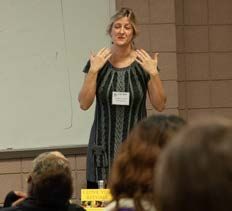
Schedule for the Day
REGISTRATION: 7:30 – 8:15 am BREAK: 10:00 – 10:15 am LUNCH: 11:45 am – 12:30 pm BREAK: 1:30 – 1:45 pm
SESSION 1: 8:30 – 10:00 am SESSION 2: 10:15 – 11:45 am KEYNOTE: 12:30 – 1:30 pm SESSION 3: 1:45 – 3:15 pm
Session 1: 8:30 – 10:00 am
Subject Subject
Audience Area Audience Area
1 A Conversation About Anti-Bias Education E 1,5 7 Getting Dirty with Infants E 1
This workshop will include activities to explore adult bias, Are you not sure how to engage infants in the classroom, or does
classroom activities to foster respectful relationships, a guided routine care take the majority of time, are you looking for ways to
group discussion, and a brainstorming session on ways to create fun activities? If you answered yes then this is the training
understand and support all cultures in the preschool classroom. for you. In this training, participants will create ways to interact
Jennifer Fisher, Brown’s Early Learning School with infants outside of routine care needs. Training participants
will learn fun ways to engage with infants. This is an interactive
session that will teach infant early care professionals how to
2 Add The Paint: The Art of the Early Childhood E 1,6,8 make creative activities to take back to the classroom.
Profession
Christin Davis, Child Care Resources Inc.
Child care teachers are the canvases; the variety of paints are
the resources. If you are new to the early childhood profession or 8 How to Greet Parents Upon Arrival I/T 4
a seasoned professional seeking resources or looking to support
other teachers, this session is for you. We will explore meaningful This workshop will provide teachers with 5 strategies to help them
resources and tips that encourage, support and promote quality improve their communication skills with parents upon arrival. We
care and education. Join us as we add the paint to canvases will focus on building better communication, building teacher/
throughout the early childhood profession. Participants will parent relationships, developing trust, helping parents to feel
also engage in hands-on activities that display how art not only welcome, and sharing the importance of confidentiality.
supports the development of children, but teachers as well. Martha Lavern Lucier, First Chronicles, Lead Teacher
Marquita Moore-Raynor, Hertford Northhampton Smart Start
9 In The End It’s All About The Beginning E 1,2,3,
Partnership for Children
Would you like to provide an environment where every child 8
3 Birth-Kindergarten Licensure for NC Pre-K Lead P 6 has the opportunity to succeed? This training will focus on how
Teachers and Developmental Day Lead Teachers to become an effective Early Care and Preschool teacher who
creates a quality learning environment to unlock every child’s
Workshop participants will gain knowledge of the processes to potential for their future success.
become a NC Birth–Kindergarten Licensed Teacher in a NC
Pre-K Program or Developmental Day Program in nonpublic Katharine J. Smith MS, S.I.E.R.R.A.
schools. The EESLPD Unit staff will provide information on
eligibility for teacher licensure and enrollment into the EESLPD 10 Let the STEAM Flow in Your Classroom! E 2
Unit. An overview will be provided of the following licensure types: Let’s inspire and create new and engaging learning experiences
Lateral Entry, Emergency, Residency, Initial, and Continuing. that will capture kids’ interest in science! You will learn fun STEAM
Mentoring and evaluating services provided by the EESLPD Unit project-based ideas you can do with simple and affordable items from
will also be reviewed. items you already have in your classroom to recycled items! Not
only will the children be learning science they will be incorporating
Tamiah Pittman, DCDEE-EESLPD Unit math, art and technology into their projects without even knowing it!
You will be amazed by the simple project based ideas found around
4 Creative Movement for the Mind & Body P 2 your classroom! So let’s get the STEAM rolling in your classroom!
Creative Movement combines music and movement while working Pearl Highducheck, Goddard School
on gross motor skills, encouraging imagination, and creating
positive energy. Participants will understand the meaning and 11 Little Voices, Big Sounds P 1,5
importance of vestibular, proprioception, and crossing the midline.
Miss Kim will share a 20 minute creative movement class complete Learn new and innovative music and rhythm techniques from the
with music and skits. Miss Kim will explain why each movement VOICSS Model to help your students transition from one activity
is important as well as any modifications that need to be made to another in inclusive and non-inclusive classroom settings.
for children with special needs. Miss Kim will end her presenta- Yasmine White, Voices Together
tion demonstrating children’s YOGA practice through storytelling!
Kim Black, Miss Kim Productions 12 Promoting School Readiness Skills in Preschool E 1,2,3,
Classrooms 7,8,9
5 Demystifying Intentional Planning with NC FELD E 1,2,3, Research in early care and education suggests that aspects of the
This workshop will help administrators and teachers with individu- 4,7,8 preschool classroom quality not measured by the CLASS or ECERS
alization and connection with NC FELD. After a brief introduction of appear to promote school readiness skills. Different quality dimensions
9 seem to develop different types of child outcomes. Findings will
NC FELD and the importance of intentional teaching, participants
will be provided templates and have hands-on, guided practice be presented briefly and then discussed with the audience.
creating plans to meet the needs of all children in their classrooms. Peg Burchinal, Frank Porter Graham, UNC-CH
Leigh Zaleon, M.Ed, Chapel Hill Training-Outreach Project
13 Recruiting and Hiring Infant Toddler Child Care Staff P 5,6
6 Every Child Ready to Read E 8 PART ONE This is the first part of a two part training. Part two is
session 35. Recruiting and hiring infant and toddler staff can be a
In this session participants will get an overview of the brain challenge! This training will provide expert information on recruiting
development and learn simple, fun ways to prepare children to and hiring child care staff with a focus on the needs of infants & toddler
read and succeed in school. staffing. It will be beneficial to attend both sessions, but you will still get
Karlene Fyffe Phillips, DMin helpful information if you only attend one! In this session, you will
have the opportunity to learn creative methods in order to attract
teachers that are the best fit for your organization. In the second,
you will learn best practices for the interview and hiring process.
Cassia Simms, NC Infant Toddler Initiative
E = Everyone; AD = Administration; I/T = Infant/Toddler; P = Preschool; SA = School-age; H/S = Health & Safety
7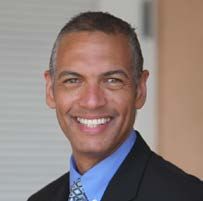
Subject Subject
Audience Area Audience Area
14 Speak Up! Applying the Levels of Leadership E 6 17 Yoga Beyond an Exercise: Yoga Theory for E 2,3
Standard I of the Teaching Standards doesn’t have to be Classrooms
daunting. In fact, everyone can be a leader and effect change, We will explore actionable techniques to foster self regulation,
from their classroom all the way up to the state level. Dig emotional intelligence, and stress reduction within the classroom.
deep with someone who is not “just a teacher” as we explore Gain a better understanding of yoga principles to carry into the
encouraging leadership among students, why failure can be an learning environment and everyday life. Develop tools based in yoga
option, and how to be an advocate for our profession. We will theory to foster stronger communication with students and parents.
also explore how the seed model and other social-emotional
Malikia Robertson, Yoga 4 Us, LLC
principles can help you be more effective with your coworkers.
Amy Latta, Childcare Network #78 18 Zero to Three The Growing Brain: I/T 2,3,8
Communication and Language
15 What’s the Difference? An Introduction to P 3,8 Zero to Three The Growing Brain: Communication and Language is
Conscious Discipline one of seven trainings developed by Zero to Three from The Growing
Conscious Discipline is a social-emotional program that Brain Curriculum. Communication and Language Development
empowers adults to consciously respond to daily conflict, focuses on skills that develop in the first 5 years. In this training,
transforming it into an opportunity to teach critical life skills to you will learn to recognize communication milestones that develop
children. It creates a culture of cooperation, construction problem in children from birth to 36 months: when they typically
solving, and academic success within the classroom. Come learn emerge, how this relates to brain development and
more about this transformational program! identify strategies for supporting infants and
Ashley Cooper, Connected At Last, LLC toddlers early communication skills.
CALM
togeth ER
Julie Clinkscale, NC Infant Toddler Initiative
16 Who Needs the Mess? Family Style Meals P 1
erness
This training is designed to introduce and transition centers
toward serving family-style meals. Teachers will understand the e ventfu
concept of mealtimes as part of the curricula, make a plan to
fun l
NG
handle messes and spills, and understand the importance of
I R I
SP
respecting children’s choices about what they eat.
Joyce West, Down East Partnership for Children IN gagin g
en
Session 2: 10:15 – 11:45 AM
Subject Subject
Audience Area Audience Area
19 A Conversation About Anti-Bias Education E 1,5 22 Birth-Kindergarten Licensure for NC Pre-K Lead P 6
This workshop will include activities to explore adult bias, Teachers and Developmental Day Lead Teachers
classroom activities to foster respectful relationships, a guided Workshop participants will gain knowledge of the processes to
group discussion, and brainstorming session on ways to become a NC BirthKindergarten Licensed Teacher in a NC Pre-K
understand how to support all cultures in the preschool classroom. Program or Developmental Day Program in nonpublic schools. The
Jennifer Fisher, Brown’s Early Learning School EESLPD Unit staff will provide information on eligibility for teacher
licensure and enrollment into the EESLPD Unit. An overview will be
provided of the following licensure types: Lateral Entry, Emergency,
20 Add The Paint: The Art of the Early Childhood E 1,6,8 Residency, Initial and Continuing. Mentoring and evaluating
Profession services provided by the EESLPD Unit will also be reviewed.
Child care teachers are the canvases; the variety of paints are
Tamiah Pittman, DCDEE-EESLPD Unit
the resources. If you are new to the early childhood profession or
a seasoned professional seeking resources or looking to support 23 Creative Movement for the Mind & Body P 2,9
other teachers, this session is for you. We will explore meaningful
resources and tips that encourage, support and promote quality Creative Movement combines music and movement while working
care and education. Join us as we add the paint to canvases on gross motor skills, encouraging imagination, and creating
throughout the early childhood profession. Participants will positive energy. Participants will understand the meaning and
also engage in hands-on activities that display how art not only importance of vestibular, proprioception, and crossing the midline.
supports the development of children, but teachers as well. Miss Kim will share a 20 minute creative movement class complete
with music and skits. Miss Kim will explain why each movement
Marquita Moore-Raynor, Hertford Northampton Smart Start is important as well as any modifications that need to be made
Partnership for Children for children with special needs. Miss Kim will end her presenta-
tion demonstrating children’s YOGA practice through storytelling!
21 FEATURED SESSION: Being a Partner in Play E 2,3, Kim Black, Miss Kim Productions
What intentional choices can we make with children to support 8,9
their learning while being a partner in play? We will look at 24 Demystifying Intentional Planning with NC FELD
PSG@LakeshoreLearning.com E 1,2,3
specific strategies that enrich being a partner in play through LakeshoreLearning.com/PSG
This workshop will help administrators and teachers with individu- 4,7,8
opportunities for discovery and actively participating in their play.
PROFESSIONAL SERVICES GROUP (800) 421-5354
alization and connecting with NC FELD. After a brief introduction of 9
As responsive partners in play, we will address the growth of NC FELD and the importance of intentional teaching, participants
the whole child while respecting them and their play. will be provided templates and have hands-on, guided practice
Participants will list opportunities for a child’s discovery; creating plans to meet the needs of all children in their classrooms.
apply a 3-step process to initiate responsive teacher/
student interactions; and employ contributions while Leigh Zaleon, M.Ed, Chapel Hill Training-Outreach Project
being a partner in play. Ron Mohl
25 Every Child Ready to Read E 2,8
Ron Mohl, Lakeshore
In this session participants will get an overview of the brain
LEAD EDUCATIONAL PRESENTER
rmohl@lakeshorelearning.com
development and learn simple, fun ways to prepare children to
read and succeed in school.
Karlene Fyffe Phillips, DMin
Ron Mohl holds a B.A. from Florida Atlantic University and brings over 20 years of experience in the
education industry to his position of Lead Educational Presenter for Lakeshore Learning Materials. Ron
is a CLASS- certified classroom observer for both toddler and pre-k classrooms. Ron has also studied
E = Everyone; AD = Administration; I/T = Infant/Toddler; P = Preschool; SA = School-age; H/S = Health & Safety
at the Environmental Rating Scale Institute for ECERS-3 and ITERS. In this role, Ron has collaborated
with school districts to enrich their scope of instruction and summer programs—as well as public and 8
private institutions—to provide professional development related to curriculum, including The CreativeSubject Subject
Audience Area Audience Area
26 Expulsion and Suspension: Strategies for P 1,3 33 Let’s Dig In With the Conscious Discipline Brain P 3,8
Teaching African American Preschool Children State Model
According to the US Department of Education Office for Civil Rights Conscious Discipline empowers us to be conscious of brain-body
(2014) data showed that African American boys make up 18% of states in ourselves and children. It then provides us with the skills
preschool enrollment, but 48% of preschoolers are suspended. we need to manage our thoughts, feeling and actions. With this
The training will provide an overview of federal and state policies on ability to self-regulate, we are then able to teach children to do the
suspension and expulsion among preschoolers. Based on the above same. By doing this, we help those who are physically aggressive
data, the training will provide strategies in lessening the numbers of (survival state) or verbally aggressive (emotional state) become
suspension and expulsion of African American preschool children. more integrated so they can learn and use problem-solving skills
Angeline Martin Woodson, JRM Counseling Pllc (executive state). Let’s dig in so we can identify and then help
children (and ourselves) upshift their brain for optimal learning!
27 Fostering Infant and Toddler Language Skills I/T 2,8 Ashley Cooper, Connected At Last, LLC
Infants and toddlers rely on caregivers to create, support and
extend their language experiences. In this session, participants 34 Making Them Visible: Recognizing, Supporting, E 1,3,4
will identify interactions and caregiving techniques that make the and Advocating for Children of Incarcerated and
greatest impact on infant and toddler language development. Returning Parents
Diana Lloyd, Reflective Teaching On any given day, there are an estimated 2.7 million children in
the US with at least one incarcerated parent (28,000+ in NC).
28 How a Trauma Informed, Two-Generational Approach E 1,4 This workshop will focus on what we know about these children
Supports Young Children and Families in the Crisis and the impact of parental incarceration, what strategies could be
of Homelessness Residing in a Shelter Setting implemented to serve them, resource and data collection gaps,
and ways to better meet their needs. The presenter will discuss the
In 2016, Families Moving Forward ventured into an almost unknown importance of gathering the families’ insight to ensure their voices are
territory, targeting services for the youngest population in the heard. Participants will be encouraged to take what they learn back
shelter, birth to 5 years old. Over the course of three years, many to their centers, continue the conversation, and determine next steps.
lessons have been learned and services continue to expand to offer
support to infants, toddlers, preschoolers and their families. FMF’s Melissa Radcliff, Our Children’s Place of Coastal Horizons Center
Dir. of P&P, Children’s Srvcs. Coor., and Early Childhood Specialist
will walk you through how family homeless shelters and early 35 Recruiting and Hiring: Infant Toddler Child Care Staff AD 5,6
childhood partner organizations can engage and provide evidence- PART TWO This is the second part of a two-part training that will
based practices to effectively support vulnerable households. provide expert information on recruiting and hiring child care staff
Tasha Melvin, Families Moving Forward with a focus on the needs of infants & toddler staffing. In the first
session, participants had the opportunity to learn creative methods
29 Are You Ready to Succeed? E 6 in order to attract teachers that are the best fit for your organization.
In this session, you will also learn best practices for the interview
You are here in your job not just to survive but to thrive. and hiring process. It will be beneficial to attend both sessions,
Achieving success is not rocket science. In this workshop, you but you will still get helpful information if you only attend one!
will walk away with unconventional techniques and wisdom that
is bound to help you to become successful as a teacher, director Cassia Simms, NC Infant Toddler Initiative
or owner of your childcare.
36 Sensory Integration and The Out of Sync Child E 2,9
Payal Nanjiani, Insightful Learning
A review of the sensory systems and the alert mechanism
30 How to Greet Parents Upon Arrival E 4 will provide a background for understanding and recognizing
sensory processing issues in the “out of sync” child.
This workshop will provide teachers with 5 strategies to help them
improve their communication skills with parents upon arrival. We Swetal Thaker, Developmental Therapy Associates
will focus on building better communication, building teacher/
parent relationships, developing trust, helping parents to feel 37 Stay Healthy, Stay Clean E 1,5
welcome and sharing the importance of confidentiality. Handwashing, diapering, toileting and sanitation procedures are
Martha Lavern Lucier, First Chronicles, Lead Teacher performed multiple times a day. Since they are done so frequently,
steps can easily be forgotten or rushed. Reviewing proper technique
31 In The End It’s All About The Beginning E 1,2,3, is a good reminder that these processes are more than just about
8 cleanliness but can also prevent the spread of infectious disease.
Would you like to provide an environment where every child While an early educator may believe they already know how to do
has the opportunity to succeed? This training will focus on how these procedures correctly, this training can help improve or refine
to become an effective Early Care and Preschool teacher who their skills to keep themselves and children healthy and safe.
creates a quality learning environment to unlock every child’s
potential for their future success. Rhonda Rambeaut, Durham County Health Department
Katharine J. Smith, MS, S.I.E.R.R.A. 38 Strategies for Promoting Early Communication Skills E 2,3
32 Let the STEAM Flow in Your Classroom! P 2 In this workshop, we will discuss strategies for promoting
communication skills in young children. Participants will be able
Let’s inspire and create new and engaging learning experiences to: (1) use information about typical communication milestones to
that will capture kids’ interest in science! You will learn fun guide their observations of children; (2) identify evidence-based
STEAM project-based ideas you can do with simple and contexts for working on communication skills; (3) describe several
affordable items from items you already have in your classroom evidence-based strategies for promoting children’s communica-
to recycled items! Not only will the children be learning science tion; and (4) identify resources for continued learning on this topic.
they will be incorporating math, art and technology into their
projects without even knowing it! You will be amazed by the Jessica Kinard, Carolina Institute for Developmental Disabilities
simple project based ideas found around your classroom!
So let’s get the STEAM rolling in your classroom! 39 Teaching Concepts Through Music and Movement E 2,3
zingus
Pearl Highducheck, Goddard School I will share with participants how I use music and movement to teach
m a
a nctio
literacy concepts, math skills, as well as social studies concepts.
Through these activities young children explore their environment,
u
ramb K
gain self awareness, as well as develop communication skills. Making
WOR
connections with personal experiences and displaying learning through
interactions with music, is an authentic and creative way of learning
that stimulates children’s interest in their everyday environment.
Angela M. Clayton, Gardner Webb University
E = Everyone; AD = Administration; I/T = Infant/Toddler; P = Preschool; SA = School-age; H/S = Health & Safety
9Subject Subject
Audience Area Audience Area
40 Teaching for Community, Creativity, & Sustainability E 1,2 42 FEATURED SESSION: Voices from the Field E 6
What would happen if we quit adding to the waste problem and Join us for a lively roundtable discussion of Careers in Early
began creating unique projects with repurposed materials that Childhood. Have you wondered what your future will look
promote creative thinking? Join the Scrap Exchange to learn like if you invest in a career in early childhood? Every
more about how we can combine creativity, environmental day across NC, early educators with wide ranging skills,
awareness, and community through reuse. educational level and experiences play pivotal roles
Kelly Jones, Scrap Exchange in the lives of young children. Come hear this panel
discuss their career pathways and how they became
41 Uso de la Lectura Dialogada Durante las E 2,4 equipped with the knowledge and skills to impact
Visitas al Hogar para Mejorar el Desarrollo de healthy and happy growth in children.
la Alfabetización Temprana y la Participación Rhodus Riggins, UNC-G, Cathy Collie-Robinson,
Familiar (Using Dialogic Reading During Home Durham Tech, and other special guests
Visits to Enhance Early Literacy Development and
Family Engagement)
Participantes aprenderán sobre visitas innovadoras de 43 Yoga Beyond an Exercise: Yoga Theory for Classrooms E 2,3,4
instrucción de alfabetización en el hogar, informadas por We will explore actionable techniques to foster self-regulation,
prácticas de la Lectura Dialogada. Se compartirá la evidencia emotional intelligence, and stress reduction within the classroom.
del impacto en los resultados de alfabetización de los niñas, así Gain a better understanding of yoga principles to carry into the
como en la participación de las madres y padres. Esta valiosa learning environment and everyday life. Develop tools based in yoga
intersección se resaltará a lo largo de la sesión a través de theory to foster stronger communication with students and parents.
ejemplos e información del programa Book Babies. Malikia Robertson, Yoga 4 Us, LLC
Participants will learn about innovative literacy coaching home
visits informed by Dialogic Reading practices. Evidence for
impact on literacy outcomes for children as well as on parent
engagement will be shared. This valuable, intersection will be
highlighted throughout the session demonstrated through lived,
measured examples of the Book Babies program.
Meytal Barak, Book Harvest
PSG@LakeshoreLearning.com
Keynote: 12:30 – 1:30 pm
PROFESSIONAL SERVICES GROUP
LakeshoreLearning.com/PSG
(800) 421-5354
Foundations for Life: Being Emotionally Responsive for Young Children
Join Lakeshore’s Ron Mohl in discussing our role in a young child’s Keynote
development and how it connects to social-emotional skills. We will sponsored by:
Ron Mohl
consider brain development when defining ourselves as facilitators of
social-emotional development and employ hands on strategies that
Chapel Hill
Training and
LEAD EDUCATIONAL PRESENTER
supports a child’s independence. From this session, participants will be
rmohl@lakeshorelearning.com Outreach Project
able to articulate three points that define their role as a child’s social-
emotional facilitator; list social-emotional skills that can be encouraged in the learning environment; and apply
hands-on
Ron Mohl holds a B.A. from Florida Atlantic Universitystrategies
and brings overthat canof be
20 years usedinwith
experience the intentional instruction. Subject area = 1,2,3,8; Audience = Everyone
education industry to his position of Lead Educational Presenter for Lakeshore Learning Materials. Ron
is a CLASS- certified classroom observer for both toddler and pre-k classrooms. Ron has also studied
Session 3: 1:45 – 3:15 PM
at the Environmental Rating Scale Institute for ECERS-3 and ITERS. In this role, Ron has collaborated
with school districts to enrich their scope of instruction and summer programs—as well as public and
private institutions—to provide professional development related to curriculum, including The Creative
Curriculum® and HighScope. Subject Subject
Audience Area Audience Area
Ron’s experience with Head Start programs spans across the country with keynotes in state, regional
45 Becoming Brain Smart P
and national conferences. Ron has also contributed educational strategies to military child development
1,2,3, 47 Conversations With Children: The Common P 1,2,3
When children start their day the Brain Smart way, they
centers around the world, including London, Italy, South Korea and Japan. are focused 8 Thread of Our Work
and ready to learn. Participants will learn the four components of This training is designed to provide teachers with strategies to
By focusing a Brain
on theSmart Start of
importance (that aligns
play in thewith the process,
learning principles of Conscious
Ron’s interactive trainings help educators simplify and integrate many of the demands of the preschool
Discipline) and leave with numerous activities that support the
enrich curricula that relate to being a partner in play through authentic experiences with children. Ron curricula by enhancing the use of rich, authentic conversations
development of self-regulation and emotional well-being. with children in all areas of the classroom.
instills the need for creating a learning environment of mutual respect, and finds inspiration in a quote
from Ralph Ashley
WaldoCooper,
Emerson:Connected
“The secret ofAteducation
Last, LLClies in respecting the pupil.” Joyce West, Down East Partnership for Children
46 Birth-Kindergarten Licensure for NC Pre-K Lead P 6 48 Fine Motor Activities for the Preschooler P 2,8
Teachers and Developmental Day Lead Teachers A discussion of the sub-skills needed for coordinated fine motor
Workshop participants will gain knowledge of the processes to skills will provide the knowledge for selecting fine motor activities
become a NC Birth–Kindergarten Licensed Teacher in a NC Pre-K for preschoolers. Numerous activities will be demonstrated.
program or Developmental Day program in nonpublic schools. The Swetal Thaker, Developmental Therapy Associates
EESLPD Unit staff will provide information on eligibility for teacher
licensure and enrollment into the EESLPD Unit. An overview will be 49 Fostering Infant and Toddler Language Skills I/T 2,8
provided of the following licensure types: Lateral Entry, Emergency,
Residency, Initial and Continuing. Mentoring and evaluating Infants and toddlers rely on caregivers to create, support and
services provided by the EESLPD Unit will also be reviewed. extend their language experiences. In this session, participants
Professional Development Custom Solutions Conferences & Workshops will identify interactions and care giving techniques that make the
Tamiah Pittman, DCDEE-EESLPD Unit greatest impact on infant and toddler language development.
Diana Lloyd, Reflective Teaching
E = Everyone; AD = Administration; I/T = Infant/Toddler; P = Preschool; SA = School-age; H/S = Health & Safety
10Subject Subject
Audience Area Audience Area
50 Guiding Children with Ability Differences in E 1,2,8, 57 Slow Down, You are Growing Way too Fast! I/T 1,2,3,
Inclusive Spaces 9 Training participants will learn about the many changes as 8
Today’s rich early childhood tapestry requires different skills infants grow and learn each day. During this interactive training
and dispositions to truly support all children and families. This participants will learn developmental milestones for infants and
interactive session will explore essential knowledge, skills, how to support infant growth and development in the classroom
and strategies to guide the experiences of young children with setting.
ability differences in inclusive spaces. Participants will discuss Christin Davis, Child Care Resources, Inc.
the spectrum of ability differences in our diverse learning
environments and spaces; examine key skills and characteristics 58 Social and Emotional Teaching: Long-term E 1,2,3,
of individuals in inclusive spaces; explore strategies for creating Development and Short-term Sanity 7
and supporting children and families in culturally inclusive
spaces; and explore resources for supporting children with ability Learn to address behavior challenges by increasing Social and
differences. Emotional Teaching Strategies in the classroom. We’ll focus
on the explicit instruction and support of social skills, emotional
Rhodus Riggins, UNC-G regulation and problem-solving for children ages 18 months -
5-years-old. We’ll use the framework of the CSEFEL Pyramid
51 Are You Ready to Succeed? E 6 Model and how it supports the Environment Rating Scales
You are here in your job not just to survive but to thrive. (ITERS-R and ECERS-R) and North Carolina Early Foundations
Achieving success is not rocket science. In this workshop, you for Early Learning and Development.
will walk away with unconventional techniques and wisdom that Zulaykha Clemons-Dunn, Exchange Family Center
is bound to help you to become successful as a teacher, director
or owner of your childcare. 59 Stay Healthy, Stay Clean E 1,5
Payal Nanjiani, Insightful Learning Handwashing, diapering, toileting and sanitation procedures
are performed multiple times a day. Since they are done so
52 FEATURED SESSION: How to Crack a Walnut E 1,2 frequently, steps can easily be forgotten or rushed. Reviewing
proper technique is a good reminder that these processes are
Have you ever had a class where the kids were wild?
more than just about cleanliness but can also prevent the spread
What about super shy? Or was it a mixed bag? Guess
of infectious disease. While an early educator may believe they
what? This workshop will give you tangible techniques
already know how to do these procedures correctly, this training
using music and movement to successfully engage
can help improve or refine their skills to keep themselves and
children in such classes. Once techniques are shared,
children healthy and safe.
you will have an opportunity to participate in real
exercises so that you can hit the ground running Rhonda Rambeaut, Durham County Health Department
in your classroom. Be sure to attend this interactive
workshop that will keep you on your toes! 60 Teaching Concepts through Music and Movement E 2,3
Erica Berry, www.jamminbaby.com I will share with participants how I use music and movement
to teach literacy concepts, math skills as well as social studies
53 In The End It’s All About The Beginning E 1,2,3, concepts. Through these activities young children explore
their environment, gain self awareness as well as develop
Would you like to provide an environment where every child 8 communication skills. Making connections with personal
has the opportunity to succeed? This training will focus on how experiences and displaying learning through interactions
to become an effective Early Care and Preschool teacher who with music, is an authentic and creative way of learning that
creates a quality learning environment to unlock every child’s stimulates children’s interest in their everyday environment.
potential for their future success.
Angela M. Clayton, Gardner-Webb University
Katharine J. Smith MS, S.I.E.R.R.A.
61 Teaching for Community, Creativity, & E 1,2
54 Little Bodies Big Feelings I/T 2 Sustainability
We are not born knowing how to manage our emotions. Young What would happen if we quit adding to the waste problem and
children need our guidance when learning to navigate this began creating unique projects with repurposed materials that
often-wild ride. Learn the techniques and strategies needed to promote creative thinking? Join the Scrap Exchange to learn
help infants, toddlers and two’s move towards regulating their more about how we can combine creativity, environmental
emotions. awareness, and community through reuse.
Carrie Becker, Transforming Early Childhood Education LLC Kelly Jones, Scrap Exchange
55 Making it Fresh... Using Local Produce In Child Care E 1,2 62 Rigor—Is It Really What You Think It Is? E 1,8
This workshop will focus on exposing young children to fresh What does it mean when someone says “include strategies to
local produce through menu changes and cooking activities. We make learning rigorous and relevant?” What does it look like in
will be doing hands-on activities to learn more about knife skills, an early childhood classroom? We have answers! Come explore
seasonal menu ideas, and cooking with children. rigor and its relevance to early learning. How to plan for it across
Lynn Policastro, Wake County Smart Start curriculum, challenge children and keep it developmentally
appropriate.
56 Making Them Visible: Recognizing, Supporting, E 1,3,4 Tracey-Lee Drummond Lucus, Consultant
and Advocating for Children of Incarcerated and
Returning Parents 63 Family Child Care Homes—It’s All About YOU! E 1,8
On any given day, there are an estimated 2.7 million children in In partnership with NC DCDEE, Southwestern Child
the US with at least one incarcerated parent (28,000+ in NC). Development’s Statewide Family Child Care Home (FCCH)
This workshop will focus on what we know about these children Consultant will be leading research efforts to better understand
and the impact of parental incarceration, what strategies could be the current landscape of licensed FCCHs in North Carolina.
implemented to serve them, resource and data collection gaps, This session will focus on gathering feedback from FCCH
and ways to better meet their needs. The presenter will discuss providers, families that choose/use FCCHs, and collaborating
the importance of gathering the families’ insight to ensure their with community partners to inform a statewide framework that
voices are heard. Participants will be encouraged to take what develops strategies to support current and potential licensed
they learn back to their centers, continue the conversation, and FCCH providers. Consider this a ‘fact finding’ interactive session
determine next steps. where participant engagement is highly valued!
Melissa Radcliff, Our Children’s Place of Coastal Horizons Nicole L. Pearson, Lori Jones, Deidre McMahon, Southwestern
Center Child Development
E = Everyone; AD = Administration; I/T = Infant/Toddler; P = Preschool; SA = School-age; H/S = Health & Safety
11You can also read


