SCHOOL OF ENGINEERING - STUDENT INFORMATION GUIDE - Temasek Polytechnic
←
→
Page content transcription
If your browser does not render page correctly, please read the page content below

STUDENT INFORMATION GUIDE
2019/2020

SCHOOL OF
ENGINEERING

                            i
This Student Information Guide is specially prepared for students of the School of
Engineering.

It details the academic system, facilities and student activities.

Information in the Student Information Guide is accurate at the time of publication.

The School of Engineering reserves the right to amend information without prior notice.

   Website: www.tp.edu.sg | Email: enghotline@tp.edu.sg | Tel: 67805144 | Instagram: instagram.com/TPengine

                                                                                                              ii
Page
                   Introduction

            1      Director’s Welcome
Table of Content
            2      Milestones in the School of Engineering
            6      The Care Person & Student Development Road Map
            7      Student Activities at a Glance
            8      Academic Calendar for 2019/2020

                   Academic Matters
Contents

            9      Academic System / Grading System
            11     ENG Academic Advisors List
            16     Examinations & Term Tests
            18     Criteria for Freshmen and Junior Director’s List Awards
            19     Withdrawal / Deferment / Course Transfer / Subject Exemption
            21     Student Code of Conduct
            22     Student Disciplinary Policy / Plagiarism / Copyright Issues
            23     Student Dress Code
            24     Medical Leave & Leave of Absence
            25     TP Student Profile

                   Student Matters

            26     An Overview of Student Services
            28     Scholarships, Bursaries, Financial Assistance Schemes
            30     Further Education Pathways / Student Insurance /
                   Communication with External Parties / Social Media Guidelines
            31     Engineering Student Clubs / Interest Groups
            32     IPPT Test

                   Useful Information

            33     Total Workplace Safety & Health (TWSH) Policy
            34     Environmental Policy
            35     Free Access Laboratories
            36     Dress Code in a Laboratory / Workshop
            37     Laboratory Safety Rules and Regulations
            38     Emergency Reporting Procedures

                                                                                   iii
DIRECTOR’S WELCOME

                   DIRECTOR’S WELCOME

                   Message from Director, School of Engineering

                   May I warmly welcome all students to the new academic year.

                   First, I would like to congratulate all new students for successfully getting a place at
the School of Engineering. I am confident that you have made the right choice to join us, and that when
you complete your diploma course, you can certainly look back with pride at the many fond memories
of the time spent here.

As we begin a new semester, it is a good time to reflect on how our environment has been changing
over the past decade. The signs of digitalisation are now all round us – we can see the increasing use of
technology in the way we live, work and play. In our campus, for instance, digital payment modes are
now available in our canteens, automated attendance-taking using sensors have been trialled in our
campus, and information-providing robots ply our library as well as the concourse during our Open
House.

The good news is that, as Singapore strives to become a smart nation, this increasing use of technology
offers expanding career opportunities in many engineering disciplines, as professionals with suitable
skill-sets are needed to manage and maintain the emerging new technologies and systems. At the same
time, however, advancements in technology can also render many skill-sets obsolete very quickly.
Therefore, it is important for you to keep abreast of technological changes, to be open to new ideas, and
most importantly, to be able to adapt to them rapidly.

Learning is a life-long process and you should continue to upgrade your skills even after you have
graduated from TP. For instance, I would urge all of you to consider the Earn and Learn Programme
(ELP) under the national SkillsFuture framework, which lets you work and pursue your further studies
simultaneously. In this way, you can apply your newly acquired knowledge and skill-sets to your job
while you upgrade your qualifications, thereby improving your work performance and enhancing your
career prospects at the same time.

In the next three years, you will receive not just academic training, but also opportunities to hone your
problem-solving skills, cultivate life skills, as well as acquire a global mind-set through overseas
internships, community projects or study trips. There are also diverse Co-Curricular Activities (CCAs)
which give you the chance to exercise your leadership qualities, pursue your sporting passion, enrich
yourself culturally, or to enlarge your circle of friends. So do make the best of your student life, because
learning can, and should, be enjoyable.

At the School of Engineering, we are always open to suggestions for improvement. Should you have any
feedback or need help in your personal matters at any time, do contact your lecturers or Care Person.
We are always here to assist you.

Finally, may I wish you a very rewarding and meaningful academic year ahead.

Wong Kia Ngee
Tel: 6780-5522
Email: kiangee@tp.edu.sg

                                                                                                           1
MILESTONES IN THE SCHOOL OF ENGINEERING

                     The School of Engineering was established under the wing of
1990                 the School of Science & Technology at the Stirling Road
                     Campus with a staff strength of 7. (Director: Mr Geoffrey Ng)

Jan 1991             School moved to Grange Road Campus.

                     1st batch of Engineering students started their diploma
Jul 1991             courses in Electronics and Mechatronics.
                     Enrolment for AY91/92: 80 students per course

                     The School of Engineering assumed autonomous status.
Oct 1992
                     (Director: Mr Ang Keng Loo)

                     School shifted to the Kim Seng Campus.
                     Enrolment for AY 93/94:
May 1993
                     240 (Diploma in Electronics)
                     160 (Diploma in Mechatronics)

                     1st batch of students in the Diploma in Quality Engineering &
Jul 1994
                     Management.

                     1st batch of students in the Diploma in Intelligent Building
Jul 1995
                     Technology.

                     Temasek Polytechnic moved to its permanent campus in
Sep 1995             Tampines.
                     AY 95/96 enrolment: 2,240

                     1st batch of students in the Diploma in Telecommunications
Jul 1996
                     and Diploma in Computer Engineering.

                     Official opening of Temasek Polytechnic’s new campus at
Jan 1997
                     Tampines by Prime Minister, Mr Goh Chok Tong.

                     Appointment of Mrs Lay-Tan Siok Lie as Acting Director,
Mar 1997             School of Engineering.
                     AY 97/98 enrolment: 4,700.

                     Appointment of Mrs Lay-Tan Siok Lie as Director, School of
Apr 1998
                     Engineering.

                                                                                    2
MILESTONES IN THE SCHOOL OF ENGINEERING

                     1st batch of students in the Diploma in Microelectronics and
Jul 1998
                     Diploma in Product Engineering.

Jul 2000             1st batch of students in the Diploma in Info-Communications.

                     1st batch of students in the Diploma in Biomedical Informatics
Jul 2001
                     & Engineering.

                     Launch of School of Engineering’s tagline “Where the Future
Jul 2001             Happens” by Director, School of Engineering, Mrs Lay-Tan
                     Siok Lie.

                     1st batch of students in the Diploma in Business Process &
Jul 2002
                     Systems Engineering.

                     Diploma options (e.g. Aerospace Electronics, Engineering
                     Business, Networking, Robotics) were offered to students
Jul 2003
                     from the Diplomas in Electronics, Mechatronics, Info-
                     Communications and Intelligent Building Technology.

                     1st batch of students in the Diploma in Integrated Facility
Apr 2006
                     Design & Management.

                     1st batch of students in the Diploma in Aviation Management
Apr 2007
                     & Services.

Nov 2007             Launch of Interactive Digital Centre Asia (IDC Asia).

                     Launch of TP-Lufthansa Technical Training (LTT) Centre for
Mar 2008
                     aerospace training.

                     1st batch of students in the Diploma in Media &
Apr 2008             Communication Technology and Diploma in Interactive Media
                     Technology.
                     1st batch of students in the Diploma in Aerospace Electronics,
Apr 2009             Diploma in Aerospace Engineering, and Diploma in Clean
                     Energy.

                                                                                   3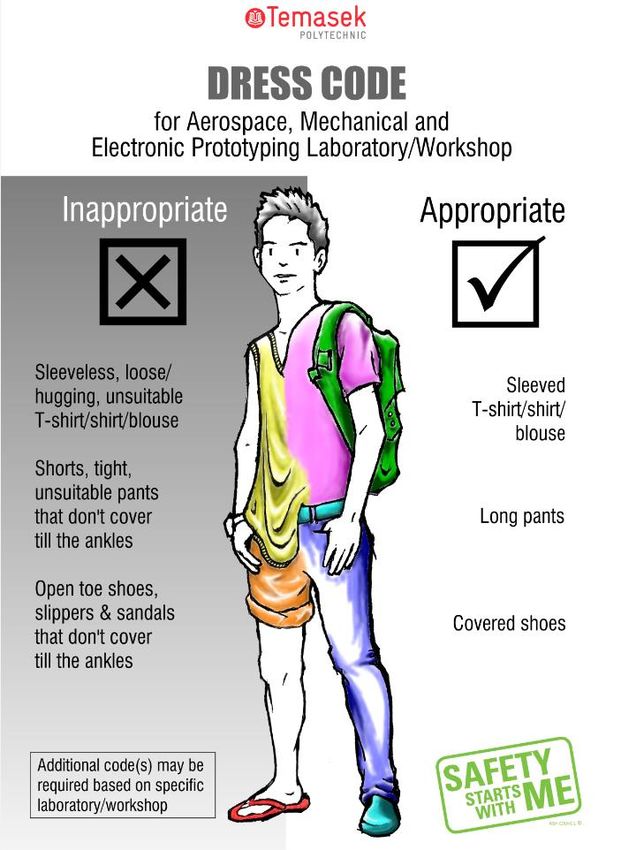
MILESTONES IN THE SCHOOL OF ENGINEERING

 Apr 2009            Opening of Clean Energy Research Centre (CERC).

                     1st batch of students in the Diploma in Green Building &
Apr 2010
                     Sustainability and Diploma in Integrated Facility Management.

                     1st batch of students in the Diploma in 3D Interactive Media
                     Technology and Diploma in Infocomm & Network Engineering,
Apr 2011             as well as Common Engineering Programme, Electrical &
                     Electronic Engineering Programme and Mechatronics &
                     Aerospace Programme.

Apr 2012             Launch of new TP logo.

Apr 2012             TP obtained CAAS SAR-147 approval.

                     1st batch of students in the University Preparatory
Sep 2012
                     Programme (UPP) for Maths & Foundation Maths modules.

                     1st batch of students in the University Preparatory
Mar 2013
                     Programme (UPP) for Physics module.

                     1st batch of students in the Diploma in Biomedical
Apr 2013
                     Engineering.

                     1st batch of students for the Poly Foundation Programme for
Apr 2013
                     top N(A) level school leavers.

                     1st batch of students in the University Preparatory
Apr 2014
                     Programme (UPP) for English module.

                     Appointment of Mr Wong Kia Ngee as Director, School of
Jul 2015
                     Engineering.

                     Launch of Temasek Aviation Academy (TAA) by Senior
Jan 2016
                     Minister of State, Mrs Josephine Teo.

                                                                              4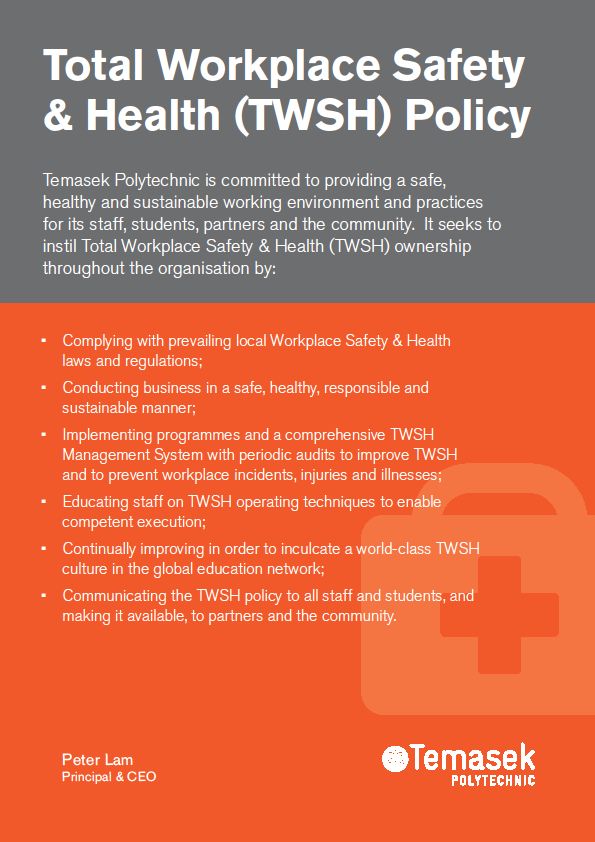
MILESTONES IN THE SCHOOL OF ENGINEERING

                     Appointment of Mr Peter Lam as new Principal and CEO of
Jul 2016
                     Temasek Polytechnic, taking over from Mr Boo Kheng Hua.

                     Discontinuation of Diploma in Infocomm & Network
Apr 2017             Engineering and Diploma in Media & Communication
                     Technology (no new intake).

                     1st batch of ENG graduates start ELP under the SkillsFuture
Apr 2017
                     framework.

                     Graduation of 1st batch of SAR-66 AML Training (Part 2)
Jan 2018
                     students under the CET/ELP framework.

                     1st batch of Freshies taking the new TP Fundamentals
Apr 2018
                     subjects under the revamped curriculum.

                     Launch of TP-HRG Robotics Innovation Centre by Senior
Feb 2019
                     Minister of State, Mr Chee Hong Tat.

                     Discontinuation of Diploma in 3D Interactive Media
                     Technology, Electrical & Electronic Engineering Programme,
Apr 2019
                     and Mechatronics & Aerospace Programme (no new intake),
                     and Diploma in Microelectronics (no further streaming).

                     Inclusion of Diploma in Business Process & Systems
Apr 2019
                     Engineering into Common Engineering Programme

                     Transfer of Communication lecturers in ENG School to HSS
Apr 2019
                     School / CCS

                                                                               5
STUDENT ACTIVITIES AT A GLANCE
THE SCHOOL OF ENGINEERING (ENG) STUDENT DEVELOPMENT ROADMAP
As an engineering student, you are given ample opportunities to achieve success in
your academic, personal and professional development in the school. To realise your
full potential, you are encouraged to participate actively in the variety of programmes
designed for you. This student development roadmap shows you how your
developmental needs are provided for, as you journey through the 6 semesters in ENG
School.
A Care Person (CP) will be assigned to help you through the journey in school. He/she
will provide care and guidance in matters pertaining to your academic, personal and
professional development in school and will meet you in the LEAP (Leadership:
Essential Attributes & Practice) Care Group interaction classes from Level 1 to Level 3.
LEAP is a leadership and character education programme which consists of three core
subjects, namely LEAP 1, 2, & 3. It aims to develop your leadership qualities by
instilling in you the ideal attitude, skill-sets and knowledge.
6STUDENT ACTIVITIES AT A GLANCE
MONTH EVENT
Freshmen Orientation (AY2019/2020)
APRIL 2019 Commencement of April Semester
Parents Connect 1
Campus Care Network (CCN) Day
MAY 2019
Graduation Ceremony
JUNE 2019 Term Tests
Parents Connect 2*
JULY 2019
Awards for Excellence Ceremony 2019
AUGUST 2019 April Semestral Examinations
OCTOBER 2019 Commencement of October Semester
Campus Care Network (CCN) Day
NOVEMBER 2019
Parents Connect 3*
DECEMBER 2019 Term Tests
TP Open House
JANUARY 2020
Joint Admission Exercise (JAE)
FEBRUARY - MARCH 2020 October Semestral Examinations
*Subject to changes.
7ACADEMIC CALENDAR FOR 2019 / 2020
April Semester Period
Term 1 15 Apr – 9 Jun 2019
Term Break 10 Jun - 23 Jun 2019
Term 2 24 Jun - 11 Aug 2019
Study Week 12 Aug - 18 Aug 2019
Semestral Examinations 19 Aug - 30 Aug 2019
Vacation 31 Aug - 13 Oct 2019
October Semester Period
Term 3 14 Oct - 15 Dec 2019
Term Break 16 Dec - 5 Jan 2020*
Term 4 6 Jan - 16 Feb 2020
Study Week 17 Feb - 23 Feb 2020
Semestral Examinations 24 Feb - 6 Mar 2020
Vacation 7 Mar - 19 Apr 2020
*
Term break ends on 29 Dec 2019 (Sunday). Term break to be extended by one week to 5 Jan 2020
(Sunday). Term 4 to start on 6 Jan 2020 (Monday).
April Semester
Mid-Semester Test: 3 Jun – 7 Jun 2019
October Semester
Mid-Semester Test: 9 Dec – 13 Dec 2019
Please refer to TP’s website for more information:
http://www.tp.edu.sg/admissions/academic-calendar
8ACADEMIC SYSTEM / GRADING SYSTEM
The TP academic system offers students more depth and width in the subject offerings.
The following are the main categories of subjects:
TP FUNDAMENTAL SUBJECTS - to develop desired qualities as envisioned in the
TP graduate profile;
DIPLOMA SUBJECTS - to provide students with the industry relevant technical
knowledge and skills training;
GRADING SYSTEM
HOW CREDIT UNITS ARE COMPUTED
For all taught subjects involving lectures, tutorials and/or practical, 1 credit unit is
awarded for 15 hours of work. Hence a subject is accorded 3 credit units if it is taught
over a total of 45 hours, as prescribed in the subject syllabus.
HOW GRADE POINT AVERAGE (GPA) IS COMPUTED
A student’s progress within a programme will be evaluated on the basis of the Grade
Point Average (GPA). The GPA is a numerical value that indicates the student’s
academic achievement in the course. A minimum cumulative GPA of 1.0 is required
for graduation.
The formula for calculating the GPA is given below:
GPA= Sum (credit units assigned to subject x subject grade point)
Sum (credit units assigned to subject)
The calculation of cumulative GPA (cGPA) will include all subjects with grade points
(i.e. TP Fundamental subjects, Core, Electives, CDS). Any failed elective subject or
CDS which is not replaced will be included in the computation of cGPA. Exceptions
are given to students who are also in the Diploma Plus Programme and Direct
Polytechnic Admission students whose three best CDS only will be taken into
computation.
Both Semester GPA and Cumulative GPA will be calculated.
Subjects without grade point (e.g. LEAP) will not be included in the calculation of
GPA.
9ACADEMIC SYSTEM / GRADING SYSTEM
Letter Conversion
Descriptors Grade Points
Grades (Percentage Range)
Z Distinction 4 = or > 80
A Excellent 4 = or > 80
B+ Very Good 3.5 75 to< 80
B Very Good 3 70 toENG ACADEMIC ADVISOR LIST
GETTING HELP FROM AN ACADEMIC ADVISOR
An Academic Advisor can:
Help you use the polytechnic’s resources effectively to achieve your academic goals.
Assist you in developing and implementing a meaningful educational plan so as to
realise your academic potential and your career plans.
Help you make smart choices about courses, subjects, elective options, and areas to
specialise in.
Provide you with accurate information regarding academic requirements for
graduation.
Help you to understand areas of concern that affect your academic progress.
Identify your strengths as well as areas you may need help in.
School Academic Advising Coordinator/Chair: Sing Kar Lui (6780 6647)
School Academic Advisors:
Diploma /
Course Chair Advisor Telephone Lead Advisor
AEG 1. Sue Siew Chai 6780 5478 Sue Siew Chai
2. Phang Yeh Fenn Dexter 6780 6652
Koh Poh Tee
3. Chan Choon Keong 6780 6661
5364
4. Tiow Chee Weng 6780 5461
5. Chai Chia Hing 6780 5514
6. Lam Darence 6780 5677
7. Ng Cheng Siong 6780 6662
8. Yeo Teck Boon, Bern 6780 6670
9. Leonard Ong Yong Wah 6780 5512
10. Kuschel Matthias 6780 5520
AEL 11. Ting Lai Horng Jacklyn 6780 5408 Ting Lai Horng
12. Low Chor Tong, Philip 6780 6610 Jacklyn
Tang Fook Heng
13. Ang Seng Loo Eric 6780 5583
5418
14. Ho Jiun Sien 6780 5591
15. Tam Yee Keong 6780 6713
16. Choo Seng Kok 6780 5592
17. Tan Kok Siew 6780 5446
18. Ng Kwan Wah 6780 6613
19. Tan Kwang Leng Daniel 6780 5320
20. Chua Hung Peng 6780 5434
21. L Somasundaram 6780 5602
11ENG ACADEMIC ADVISOR LIST
AMS 22. Sumarni B Sarmin 6780 6687 Sumarni B Sarmin
23. Wong Irene 6780 4097
Abbas Ismail
24. Cyrena Cheong Yoke May 6780 5629
5611
25. Farid B Yusof 6780 5628
26. Lee Wee Li 6780 5192
27. Ong Cheng Leong 6780 5452
28. Siow Wei Min Brandon 6780 5674
29. Lee Yang Wai Alvin 6780 5163
30. Mukthar Ahamadu bin Peer Mohamed 6780 1873
31. Darren Chua 6780 4018
32. Muhammad Husain bin Alias 6780 6704
33. Desmond Teck Chuan Ng 6780 5664
34. Ponmagal D/O Periasamy 6780 5631
BME 35. Kwok Siew Loong 6780 5404 Kwok Siew Loong
36. Rangaswamy Raja 6780 6677
Danker Adrian
Noel 37. Qian Xi Jun 6780 5479
5421
BZE 38. Lo Hing Loon 6780 5529 Lo Hing Loon
39. Loh Yue Thong 6780 5188
Lo Hing Loon
40. Chan Eng Suan 6780 5532
5529
41. Ong Chee Hong 6780 5395
42. Hong Geok Hua 6780 6673
43. Eu Kee Hoe 6780 6498
44. Low Beng Yew 6780 5670
45. Tay Yang How 6780 5543
46. Wong Vang Ching 6780 5429
47. Ng Lee Siam Christina 6780 5519
48. Tan Hui Kuang 6780 6669
49. Siew Wilson 6780 6629
50. Yeo Teck Chye 6780 5542
12ENG ACADEMIC ADVISOR LIST
CAP 51. Low Kian Mong 6780 5505 Christopher Diong
52. Diong Ming Loong Christopher 6780 6635
Dr Ho Peng
Ching 53. Benjamin Wong Liang Juee 6780 6665
54. Kang Liat Chuan 6780 5589
4457
55. Wong Fook Sung Albert 6780 5487
56. Foong Chee Hoong 6780 4030
57. Fu Ling Chen 6780 6663
58. Lie Siung Tjen 6780 5468
59. Tan Kow Wee Philip 6780 5465
60. Nah Cherng Kai 6780 5584
61. Chen Yoke Yeng 6780 5460
62. Rudy Sabarudin 6780 5498
63. Cha Cher Liang 6780 6638
CEN 64. Hee-Peh Bee Choo 6780 5443 Hee-Peh Bee
65. Boey Chee Kin 6780 5457 Choo
Calaiselvy
66. Teo Kok Keong 6780 6701
6614
67. Kerk Chong Jin 6780 6626
68. Tan Hock Seng 6780 5593
69. Ng Choon Seong 6780 5425
70. Aung San Win 6780 5143
71. Kit Ai Hwa 6780 5445
CER 72. Koo Siang Chuei 6780 5461 Chong Beng Leng
73. Chong Beng Leng 6780 5447 Fred
Ng Kee Wee
74. Oon Chin Hin 6780 5430
6657
75. Toh Lee Nah 6780 5470
76. Yeo Soo Pin 6780 5442
77. Suguna Thanagasundram 6780 5937
78. Zhu Shihe 6780 6609
79. Balajadia, Efren Lansangan 6780 5633
ELN 80. Kwong-Teng Noi Choo, Jacqueline 6780 5609 Kwong-Teng Noi
81. Tan Geok Ling 6780 5472 Choo, Jacqueline
Lim Chuck Mang
82. Lim Hong Sair 6780 6099
5597
83. Ramachandran, Maya 6780 5401
84. Chee Swee Ann 6780 5449
85. Nagu, Naganandhini 6780 5467
86. Tan Tai Suan 6780 6636
87. Ngai-Yak Lay Hoon 6780 6623
88. Liew Wen Fei 6780 5594
13ENG ACADEMIC ADVISOR LIST
GBS 89. Papineni Satya Praveena 6780 5625 Papineni Satya
90. Cheng Ming Chin 6780 6688 Praveena
Ho Kuan Tat
Jackson 91. Lim Kok Hee 6780 5619
92. Thong Yu Kiat, Augustine 6780 5618
6710
93. Ivan Ho Yuen Pui 6780 6711
94. Koh Soo Nghee Aubrey 6780 1890
95. Ang Zi Yang Adrian 6780 5507
96. Shruti Pilare 6780 6708
97. Sowmya Sathish 6780 4193
IFM 98. Au Kian Seng 6780 5615 Au Kian Seng
99. Wei-Wu Wen Ju, Judy 6780 5624
Joanne Koh
Phuay Theng 100. Lim Joo Hoe 6780 5617
101. Hooi-Lee Yu Hong 6780 5630
6568
102. Wiliana Sulistio 6780 5612
103. Lim Kian Kok 6780 5162
104. Au Kum Yun 6780 5566
105. Loh Yeow Meng 6780 5455
IMT_INE 106. Lee Tong Chay Lawrence 6780 5603 Lee Tong Chay,
107. Chua Chiang Heng 6780 5413 Lawrence
Yan Seow
Chiang 108. Tai Wee Fatt Tommy 6780 6644
109. Toh Kim Pheng Allan 6780 5420
5988
110. Kwan Eng Eng 6780 5893
MIE 111. Chong Beng Leng 6780 5447 Chong Beng Leng
112. Lum Moon Kiong 6780 5492
Ng Kee Wee
113. Feng Hanhua 6780 5450
6657
114. Lee Sin Guan 6780 6622
115. Adhikari Tanusree 6780 5424
MTN 116. Kwek Soo Keng, Andy 6780 5504 Irwan Bin Karim
117. Derrick Boey Shee Mun 6780 6700
Chan Choy Peng
118. Foo Ming Fenn 6780 6679
5489
119. Irwan Bin Karim 6780 5497
120. Lew Kok Fah 6780 5490
121. Lim Shee Soon, Peter 6780 5516
122. Chee Feng Ping 6780 4027
123. Lee Khim Yong 6780 6712
124. Peng Wai Meng 6780 5515
125. Thia Wang Ling Christopher 6780 1872
126. Tay Cheng Hong 6780 6672
14EXAMINATIONS & TERM TESTS
Examination Subjects
For all examination subjects, the passing criteria is based on both the continuous
assessment and the examination marks. A student is deemed to have passed a subject
if he/she obtains a minimum of 50% for that subject.
Non-Examination Subjects
For non-examination subjects, the assessment is based on all the course work
components such as class participation, assignments, quizzes, tests and mini-projects.
A student is deemed to have passed a subject if he/she obtains a minimum of 50% for
that subject.
A student who is required to attend a disciplinary hearing related to a subject, may also
be deemed to have failed that subject.
Attendance
There is an 85% attendance requirement. If you arrive late in class, your attendance
will be computed as ABSENT even though it will be reflected as LATE in the attendance
system. A student who attains below 85% attendance in a subject will be graded as ‘P’
(if he/she passes the subject) and ‘F’ (if he/she fails the subject). The P grade has a
Grade point average of 1. A student who obtains a ‘P’ grade will not be eligible for the
Diploma with Merit and the Director’s Lists award (refer to Section on “Criteria for
Freshmen and Junior Director’s Lists).
EXAMINATIONS & TERM TESTS
Rules & Regulations for Full-Time Students
You are to comply strictly with the following rules and regulations, failing which, you will
be dealt with by the Disciplinary Board, and you may be suspended / expelled from the
Polytechnic. Note that you are also expected to observe rules and regulations during
the class or lab test.
Please refer to TP’s website for more information:
http://www.tp.edu.sg/student-portal/full-time-student-portal/rulesregulations
Examinations/Term Test Time-Tables
Examinations and term test time-tables are released about three weeks before the
examinations/term tests start. You are strongly advised to print out a copy of your
personalised time-table, which also lists the venues and assigned seat numbers for your
convenience.
15EXAMINATIONS & TERM TESTS
Examination Results
The examination results are made available to students via the student portal. You are
encouraged to check your examination results online and print a copy of the Statement
of Results for reference.
Please refer to TP’s website for more information:
http://www.tp.edu.sg/student-portal/full-time-student-portal/academic-matters#tab3
16CRITERIA FOR FRESHMEN AND JUNIOR DIRECTOR’S LISTS
FRESHMEN DIRECTOR'S LIST
Students will be considered for the Freshmen Director’s List if they fulfil all of the
following criteria listed below:
Top 10% of the diploma cohort based on GPA.
GPA will be based on a list of subjects (of both freshmen semesters) for each
diploma (as stipulated in the course document).
The list of subjects will exclude LEAP, non-graded subjects and Global Studies.
Did not fail any subject in the main examination or assessments while studying at
Temasek Polytechnic.
JUNIOR DIRECTOR'S LIST
Students will be considered for the Junior Director’s List if they fulfil all of the following
criteria listed below:
Top 10% of the diploma cohort based on their GPA.
Computation of GPA will be based on a list of subjects of both semesters 2.1 & 2.2
(core and electives) for each diploma, according to the course structure.
List of subjects for computation of the GPA will exclude LEAP, non-graded subjects
and Global Studies.
Must not fail any subject in the main examination or assessments while studying at
TP. (Note that this is the same criterion for Diploma with Merit (DWM)).
For electives: Students must complete the stipulated number of electives based on
their course structure. If students have completed more than the required number of
electives, all electives will be taken into consideration for computation.
Please refer to TP’s website for more information:
http://www.tp.edu.sg/schools/eng/tp-students#tab3
17WITHDRAWAL / DEFERMENT / COURSE TRANSFER / SUBJECT EXEMPTION
COURSE WITHDRAWAL
Students are strongly advised to consult their Care Person / Course Chair before
exploring the option to withdraw from the course.
To withdraw, students are to:
Complete the Course Withdrawal form.
Settle all outstanding bills and return all property belonging to Temasek Polytechnic
Submit the completed form together with the student’s Student Matriculation card to
“Student Services”.
Please refer to TP’s website for more information:
http://www.tp.edu.sg/fees-and-financial-matters/course-withdrawal-and-refund-
guidelines
DEFERMENT OF STUDIES
Students are strongly advised to consult their Care Person/ Course Chair before
exploring the option to defer their course of study.
To defer their course of study, students are to:
Complete the Course Deferment form.
Settle all outstanding bills and return all property belonging to Temasek Polytechnic.
Submit the completed form together with one of the following documents:
Deferment due to Singapore National Service (NS) obligation
NS enlistment letter or rejection letter from the Central Manpower Base regarding
their appeal for NS deferment or a letter from their unit stating their ORD date.
Deferment due to medical reasons
Medical certification letter from a Singapore-registered doctor specialising in the
field, stating the medical conditions and the period of rest required.
Deferment due to other reasons
Supporting documents, if any.
Please refer to TP’s website for more information:
http://www.tp.edu.sg/staticfiles/TP/files/one-stop-center/course_defer.pdf
Note: Students are advised to attend classes while waiting for the outcome of their
deferment request.
18WITHDRAWAL / DEFERMENT / COURSE TRANSFER / SUBJECT EXEMPTION
COURSE TRANSFER
Only applicable for students whose status is active i.e. who have not been removed
from a course and who have met the Minimum Entry Requirements of the new course.
Furthermore, course transfer is subject to individual merit and vacancies.
Requests for course transfer will be accepted after the release of the Semestral
examinations results.
To apply, students are to:
Complete the Course Transfer form
Submit the completed form to “Student Services” by the first week of the start of the
semester
Please refer to TP’s website for more information:
http://www.tp.edu.sg/student-services
APPLICATION FOR SUBJECT EXEMPTION
Only applicable to enrolled students at the start of their course of study. They are
advised to check the Course Chair or the website of their respective School for
eligibility.
To apply, students are to:
Obtain the application form from the “Student Services”.
Submit the completed form to “Student Services” by the first week of the start of the
semester or within the application period.
Note that exemption is not automatic and only one application per student per
semester is allowed.
19STUDENT CODE OF CONDUCT
At Temasek Polytechnic, students form a big part of our family. Besides helping you to
succeed academically, we also care for your character development. As you go
through your course of study at Temasek Polytechnic, you will face new challenges and
choices and may find yourself in unexpected circumstances.
This Student Code of Conduct shall serve as a guide for your conduct in both
academic and non- academic aspects of your polytechnic life. It also serves as a
reminder for all of us to work towards a harmonious environment in and out of the
campus, and to maintain the good reputation of Temasek Polytechnic.
20STUDENT DISCIPLINARY POLICY / PLAGIARISM / COPYRIGHT ISSUES
CATEGORIES OF OFFENCES
Student offences are categorised into 3 categories, namely Category 1, Category 2
and Academic-Related Offences.
Please refer to TP’s website for more information:
http://www.tp.edu.sg/student-portal/full-time-student-portal/rulesregulations#tab3
COPYRIGHT ISSUES
Copyright is a form of protection that the law provides to the authors of original creations
(writing, drawing, music or art forms or even sound recordings and film) against unlawful
copying. It is ILLEGAL to violate any of the rights provided by the law to the owner of a
copyright. Temasek Polytechnic respects the ownership of intellectual material
governed by copyright laws. All TP students are expected to know and comply with the
copyright laws that affect them. Here is a list of Do’s & Don’ts:
What you CAN do:
Make reasonable copies of a work(s), i.e. 10% of the total number of pages in a
physical edition of the work;
Copy not more than 10% of the total number of bytes in an electronic edition of the
work; or
Make copies of not more than 1 chapter of the work.
What you must NEVER do:
Photocopy an entire book/piece of work;
Copy more than 10% of the total number of pages or more than one chapter; or
Copy more than one article from a given periodical, unless they relate to the same
subject matter.
If you are in doubt, please feel free to consult your lecturers for clarification. Please do
NOT assume that it is acceptable to copy something, even if it is for your own use.
21STUDENT DRESS CODE
The Attire Guidelines for TP Students are as follows:
General Occasions:
Students must be dressed in a manner appropriate of a tertiary student. This includes a
neat and tidy hairdo, and appropriate clothes and footwear.
Laboratories / Workshops:
Students must comply with the stipulated dress code of the respective laboratories and
workshops, for safety reasons.
Headgear:
Students must be readily identifiable at all times. Therefore, any form of headgear that
prevents this is not permitted.
22MEDICAL LEAVE & LEAVE OF ABSENCE (LOA)
APPLICATION FOR MEDICAL LEAVE
During Examinations
Please refer to TP’s website for more information:
http://www.tp.edu.sg/student-portal/full-time-student-portal/rulesregulations#tab1
During Term Time or Term Tests
Applications for medical leave must be submitted online via the Student Portal
within 2 working days (excluding Saturday, Sunday and public holidays) from the last
day of the medical leave, with a scanned copy of the Medical Certificate (MC).
For example, if a student is issued an MC on Monday, he should submit the
MC by Wednesday in the same week.
Login to Student Portal > Click “Attendance” > Click “Apply / Submit MC”.
A scanned MC must be uploaded during the online application.
Students must retain the original copy of the MC for 6 months.
Students must submit the hardcopy MC upon request for auditing purposes.
Only MCs issued by medical practitioners registered with the Singapore Medical
Council will be accepted.
Please note that MCs issued by Traditional Chinese Medicine practitioners will not
be accepted.
APPLICATION FOR LEAVE OF ABSENCE (LOA)
Applications for Leave of Absence (LOA) must be submitted online via the Student
Portal at least one week before the leave date (excluding Saturday, Sunday and
public holidays) or immediately after the date of absence for emergency cases, with
a scanned copy of the supporting documents.
Login to Student Portal > Click “Attendance” > Click “Apply / Submit LOA”.
A scanned copy of the supporting document(s) must be uploaded during the online
application.
Students must retain the original copy of the supporting documents for 6 months.
Students must submit the hardcopy LOA supporting document(s) upon request for
auditing purposes.
The outcome of the medical leave or LOA application will be sent through the student’s
TP email account.
23AN OVERVIEW OF STUDENT SERVICES
Every TP student will graduate as a lifelong learner, future-oriented creator and values-
centred leader through a wide range of opportunities, activities and experiences offered
at TP.
Lifelong Learner
Self-directed > Resilient > Competent
Our students are self-directed learners who remain competent in the face of challenges
and rapid changes.
Future-Oriented Creator
Problem Solving > Digital & Information Literate > Innovative & Entrepreneurial
Our students are future-oriented creators who possess problem-solving skills and an
entrepreneurial spirit.
Values-Centred Leader
Character & Citizenship > Leadership > Communicative & Collaborative
Our students are leaders with a service mindset who, through effective communication
and collaboration, contribute generously to the global community as responsible
citizens.
TP CURRICULUM
The TP curriculum comprises TP Fundamentals (TPFun) subjects, Diploma Core
subjects and Diploma Electives/Options. Together, these subjects prepare students to
be responsible individuals and skilled professionals. The TPFun subjects imbue
students with core competencies to lead, communicate, create and collaborate.
Through these subjects, students attain a mastery of skills and passion for lifelong
learning, and are equipped to contribute positively as citizens.
All students will take the TPFun subjects starting from their first year. They comprise the
following:
Leadership: Essential Attributes & Practice
Communication Skills
Career Readiness
Current Issues & Critical Thinking
Global Studies
Guided Learning*
Innovation & Enterprise
Sports & Wellness
Student Internship Programme
[*Students have a choice to opt for Guided Learning or take one of the following Global Studies subjects:
Managing Diversity at Work, Global Citizenship & Community Development, and Expressions of Culture.]
24AN OVERVIEW OF STUDENT SERVICES
STUDENT SERVICES
The Student Services caters specifically to the needs of our students and alumni. It
offers a wide range of services relating to student academic matters and enquiries.
Self-service notebooks are available for students to login to access to TP's various
online services, such as updating of personal particulars, retrieval of class timetable and
examination results, registration for graduation ceremonies and booking of sports and
library facilities.
Please refer to TP's website for more information:
http://www.tp.edu.sg/student-services
STUDENT DEVELOPMENT AND ALUMNI AFFAIRS (SDAA) DEPARTMENT
SDAA is committed to:
Providing students with a well-rounded educational experience that contributes to
personal enrichment and institutional pride;
Maintaining ties with the institution’s alumni to foster TP spirit;
Establishing excellence in student and alumni administrative support services.
SDAA offers many programmes and services, which include the management of:
Student Clubs and Interest Groups
TP Students’ Union
Sports, Adventure and Community Service Clubs
Arts, Sports and Special Interest Groups
SDAA offers other student development programmes which include the:
Sports Programme (e.g. Institute-Varsity-Polytechnic Games, NAPFA)
Arts Programme (e.g. Arts Festival, performances and workshops)
Leadership Training Programme (e.g. Student Leadership Profile)
Experiential Learning Experiences (e.g. Adventure Learning Course)
Enrichment Courses (e.g. Sign Language Courses, Guitar Courses)
Please refer to TP’s website for more information: http://www.tp.edu.sg/student-life
“SEAL” GRADING ADMINISTRATION
Students’ participation in Co-Curricular Activities (CCAs) enables them to gain CCA
points in the Service, Enrichment, Achievement, Leadership (SEAL) grading system.
The SEAL grading system systematically records their participation in Co-Curricular
Activities (CCAs). Students can look out for more details on CCAs and SEAL via the
full-time student portal.
25AN OVERVIEW OF STUDENT SERVICES
STUDENT CARE & COUNSELLING (SCC)
The Student Care & Counselling (SCC) team comprises of qualified counsellors who
are always ready to lend a listening ear to the students' concerns and worries about
academic progress, adjustment to life in a polytechnic, relationships or family problems.
Students with financial difficulties can approach the counsellors for the various financial
assistance schemes available in the polytechnic.
Be it emotional, financial or social, we are right behind you in the journey of change and
growth.
Please refer to TP’s website for more information:
http://www.tp.edu.sg/student-portal/full-time-student-portal/student-services#tab3
THE BEFRIENDERS
Troubled by relationship issues?
Burdened with financial difficulties?
Experiencing difficulties with school work?
Think you got into the wrong course?
Want a listening ear?
If you answered “yes” to any of the above, do contact the Befrienders. They are a
group of lecturers with a special passion for students’ welfare. All meetings with them
are treated with the strictest confidentiality.
Please contact Ms Lim Yoke Ying, Laura at 6780 5051, email: yokeying@tp.edu.sg
who will put you in touch with a Befriender.
CAREER SERVICES CENTRE
At the Career Services Centre, the focus is to help our students develop their sense of
self and deepen their understanding and commitment towards the sectors that they are
likely to enter after they graduate, to successfully transit to work.
Please refer to TP’s website for more information:
http://www.tp.edu.sg/centres/cs#tab6
26SCHOLARSHIPS / BURSARIES / FINANCIAL ASSISTANCE SCHEMES
SCHOLARSHIPS
TP offers a range of prestigious scholarships to full-time students who have excelled
academically and with a proven track record in Co-Curricular Activities.
Scholarships offered include:
Temasek Polytechnic Engineering Scholarship
Industry-sponsored Scholarships
Co-Curricular Activities Scholarships
Co-Curricular Activities Awards
Please refer to TP’s website for more information:
http://www.tp.edu.sg/fees-and-financial-matters/tp-scholarships-awards
BURSARIES
Bursaries are awarded to students who require financial assistance to continue their
course of study at the Polytechnic. Although financial need is a criterion, a satisfactory
academic performance is also a pre-requisite for selection.
Please refer to TP’s website for more information:
http://www.tp.edu.sg/fees-and-financial-matters/financial-assistance-schemes#tab8
FINANCIAL ASSISTANCE SCHEMES
There are a number of financial assistance schemes at TP.
Should you require additional financial assistance, there are several bursary schemes
available and you may apply for the most suitable bursary that you qualify for.
Please refer to TP’s website for more information:
http://www.tp.edu.sg/fees-and-financial-matters/financial-assistance-schemes#tab2
TEMASEK LEADERSHIP PROGRAMME (TEMASEK LEAD)
The Temasek Leadership Programme (Temasek LEAD) is a talent development
programme that aims to groom our high-performing students into leaders with vision,
character and heart, beyond academic pursuits.
Please refer to TP’s website for more information:
https://www.tp.edu.sg/student-life/temasek-leadership-programme
27SCHOLARSHIPS / BURSARIES / FINANCIAL ASSISTANCE SCHEMES
HELP FROM TP CAMPUS CARE NETWORK FUND (CCN)
Students can receive short to medium-term financial help from CCN from the following
two schemes:
1. CCN Crisis Assistance Scheme
2. CCN Emergency Scheme
Please note that these CCN Financial Assistance Schemes are subject to change.
Please refer to TP’s website for more information:
http://www.tp.edu.sg/fees-and-financial-matters/financial-assistance-schemes#tab10
NEU PC PLUS PROGRAMME
NEU PC Programme offers our students with disabilities or low income households the
opportunity to own a brand new computer at an affordable price.
Please refer to TP’s website for more information:
http://www.tp.edu.sg/fees-and-financial-matters/financial-assistance-schemes#tab9
28FURTHER EDUCATION PATHWAYS / STUDENT INSURANCE /
COMMUNICATION WITH EXTERNAL PARTIES / SOCIAL MEDIA GUIDELINES
FURTHER EDUCATION PATHWAYS
Temasek Polytechnic has advanced standing arrangements with a number of
universities both locally and overseas. This means that our diploma holders may get to
enjoy exemptions from certain university modules and hence will be able to complete
their degree programme in a shorter time and at a lower cost.
Please refer to TP’s website for more information:
http://www.tp.edu.sg/courses/full-time-courses/further-education
STUDENT INSURANCE
All full-time students are covered by the Student Group Personal Accident Insurance
Policy. This scheme provides insurance coverage for accidents sustained by the
students. The annual insurance premium is part of the total fees payable at the start of
each academic year.
Please refer to TP’s website for more information:
http://www.tp.edu.sg/student-portal/full-time-student-portal/administrative-matters#tab2
COMMUNICATION WITH EXTERNAL PARTIES
Students are to seek written (letter or email) approval from their supervisor or lecturer if,
in the course of their project work, they need to act as a representative of TP to
communicate with any external party.
SOCIAL MEDIA GUIDELINES
Temasek Polytechnic supports and encourages its students and staff to exercise good
netiquette through their dialogue with the community. The intent of the guidelines is to
provide a practical and helpful framework to guide students and staff of Temasek
Polytechnic in their engagement online.
If you are creating or participating in social media activities, these guidelines are for you.
Social media tools would include, but is not limited to blogs, discussion forums, micro
blogs (Twitter, Facebook, and LinkedIn), photo and video sharing sites (e.g. Instagram),
podcasts, RSS feeds, social networks, web chat tools and Wikis.
Please refer to TP’s website for more information:
http://www.tp.edu.sg/student-portal/full-time-student-portal/rulesregulations#tab5
29ENGINEERING STUDENT CLUBS / INTEREST GROUPS
The various Student Clubs and Interest Groups are part of the school’s diploma
courses. Students who are interested to be part of the main committee for the student
clubs and interest clubs are to contact the Advisors in charge.
The Advisors are listed in the table below:
Student Club / Matter Advisor Co-Advisor
Air-Borne (AEG) Leonard Ong Yong Wah Darence Lam
ASHRAE Student Branch (GBS) Shruti Pilare
Atomic (MIE) Thia Wang Ling Christopher
Bio-ENGenes (BME) Rangaswamy Raja (Dr) Qian Xi Jun
BiZen (BZE) Christina Ng
Ponmagal D/o Periasamy
BlackBox (AMS) Cyrena Cheong Yoke May
Wong Irene
Computer Engineering Network
Kok Boon Kiong Kumbar, Shankarappa
(CEN)
Trilogy (IMT) Josephine Ang Mei Geok
E2Matrix (CAP/ELN) Liew Wen Fei Maria Teresa Abelanes
Energy Oasis (CER) Toh Lee Nah
Rubrics Club Goh Toh Hong Rudy Sabarudin
Engineering Studies Club (ESC) Patrick Phang Chian Wei Lee Kum Leong, Steven
Engineering Makers Club (EMC) Ho Peng Ching
G-Force (AEL) L Somasundaram Ng Kwan Wah
i.HUB (INE) Kumbar Shankarappa
IES Student Chapter Hu Fang Patrick Phang Chian Wei
Integrated Facility Management
Eric Lim Kian Kok Au Kum Yun
Club (IFM)
SME Club (MTN) Derrick Boey Shee Mun Tay Cheng Hong
Student Ambassadors Andrew Tham
30IPPT TEST
IPPT TEST
The Individual Physical Proficiency Test (IPPT) is conducted for all final year NS-liable
students annually. The three Pre-Enlistee IPPT stations are:
Sit-ups
Push-ups
2.4 km run
Final year NS-liable students can refer to the following web site for more information on
IPPT test, scoring and benefits.
Please refer to website for more information:
https://www.cmpb.gov.sg/web/portal/cmpb/home/before-ns/pre-enlistment-process/pre-
enlistee-ippt-and-bmi
31TOTAL WORKPLACE SAFETY & HEALTH (TWSH) POLICY
32ENVIRONMENTAL POLICY
33FREE ACCESS LABORATORIES
The following laboratories are open to all engineering students to allow them to work on
their assignments outside normal lab sessions.
Laboratory Location
Basic Electronics EN13-7-37 & EN16-1-68
Soldering EN13-7-39 & EN16-1-68
Mechanical Workshop EN16-1-68
Note: For safety reasons, the Mechanical Workshop will only be open if there is a Staff
present. You may refer to the signage on-site for operating hours.
Students can request through their Subject Leaders, for labs to be opened to allow them
to work on their assignments outside of their normal lab sessions.
34DRESS CODE IN A LABORATORY / WORKSHOP
Dress Code for Computer, Electronics, Physics and Chemistry Laboratories
Covered shoes
T- Shirt / Shirt / Blouse with sleeves
Dress Code for Aerospace, Mechanical and Electronic Prototyping Laboratories /
Workshops
Covered shoes
T- Shirt / Shirt / Blouse with sleeves
Long pants
35LABORATORY SAFETY RULES AND REGULATIONS
ALWAYS REMEMBER: SAFETY FIRST
IF IN DOUBT, SEEK HELP FROM THE LECTURER OR THE STAFF ON DUTY
It is possible to create serious damage due to negligence – both to personnel and
property.
Safety Rules
Enter the lab only if you are accompanied by an authorized personnel.
Listen and carry out instructions properly as directed by lecturers and staff on duty.
Be alert and responsible at all times.
Understand the hazards identified in the WSH-Risk Assessment and follow risk
control measures.
Read carefully and follow WSH-SWP (Safe Work Procedures), instructions and
manuals.
Wear recommended PPE (Personal Protective Equipment).
Keep the work place clean and tidy at all times.
Clean up the workplace and dispose any waste in the specified manner.
Report any unsafe working conditions to the lecturer or staff on duty.
Report any injuries, however minor, to the lecturer or staff on duty, so that the
injured can be properly attended to.
Lithium Battery Safety
Do not charge Lithium batteries unattended (e.g. notebook computers, mobile devices,
mobile power banks).
Note: Students will not be allowed to use any of the facilities in the lab if he/she has
been found to infringe any of the stipulated lab rules and regulations or behaved in a
manner that is deemed inappropriate.
36EMERGENCY REPORTING PROCEDURES
Call 6780 5999 (Fire Command Centre) for situations where life or property is at
imminent risk (e.g. injuries, fire outbreak). Please provide exact location & contact
number to request for an ambulance, if needed.
Inform the General Office hotline at 6780 5144 and the General Office staff will
contact a TWSH-Working Group member to assist in the situation.
Stay with the injured person until help arrives.
If necessary, accompany the injured person to the hospital or arrange for someone
to accompany him/her.
For minor injuries, the injured person can be sent to the Sick Bay at EN17-7-80.
Useful Contacts
Nearest Hospital : Changi General Hospital
Telephone : 6788 8833 (24-hr Hotline), 6850 1770
Nearest Clinic : Green Cross Medical Centre
Telephone : 6781 3022, 6781 3011
Address : Blk. 824 Tampines St. 81 #01-30
Operating Hours : Mon-Fri, Sun (0900 – 2100), Sat (0900 – 1230)
Nearest Clinic : True Medical Clinic Tampines West
Telephone : 6909 0324
Address : Blk. 824 Tampines St. 81 #01-26
Operating Hours : Mon - Sun & PH (0800 - 1400; 1800 – 2300)
ON DISCOVERING A FIRE
Activate the nearest break-glass alarm system.
Attempt to extinguish the fire, without personal risk.
If the fire is beyond control, evacuate immediately.
Call 6780 5999 and give the exact location of the fire to the Duty Officer in the Fire
Command Centre.
37EMERGENCY REPORTING PROCEDURES
ON HEARING THE ALARM
Ascertain the situation and prepare to evacuate.
EVACUATION
An announcement will be made over the Public Address System to evacuate.
Close all windows and doors and switch off all electrical services and gas appliances.
Evacuate in an orderly manner via the nearest emergency exit.
Do not take lifts.
Report at the designated Assembly Area: Tembusu Grove.
If the escape route is cut off, go into a room with a window, closing the door behind
you. Stand by the window, call for help and await rescue. The fire services will
usually arrive in a matter of minutes.
Your ASSEMBLY AREA is shown in the diagram below:
Assemble
here!
3821 Tampines Avenue 1, Singapore 529757
Website: www.tp.edu.sg | Email: enghotline.edu.sg | Tel: 6780-5144
39You can also read


