Senior Campus

  Curriculum
  Handbook
     2019

Year 12 Courses
←
→
Page content transcription
If your browser does not render page correctly, please read the page content below

Senior Campus
Curriculum
Handbook
2019
Year 12 Courses
CONTENTS
Page

  3    The Dilworth Senior Campus Curriculum.

  4    The Wider Curriculum.

  5    Assessment and Reporting / What Option Choices Can I Make?

  6    Frequently Asked Questions.

  7    NCEA Levels 1, 2 and 3.

  8    University Entrance Requirements.

  10   Careers Information

       Subject Descriptions

  15   Transition education

  16   Art:                    Practical Art / Photography

  18   Classical Studies

  19   Commerce:               Accounting / Economics

  21   English

  22   Drama

  23   French

  24   Mathematics             Mathematics / Mathematics Extension

  26   Media Studies

  27   Music

  28   Physical Education      Physical Education / Recreation / Sports Studies

  31   Religious Education
                               General Science / Biology / Chemistry / Digital Electronics /
  33   Science
                               Physics
  37   Social Studies          Geography / History
                               Technology (Hard Materials) / Design & Visual
  39   Technology
                               Communication / Hospitality / Digital Technologies
  43   Te Reo Maori

  44   Gateway

       Flowcharts

  45   How do I get NCEA Level 2 and 3?

  47   How do I get NCEA University Entrance?

                                          2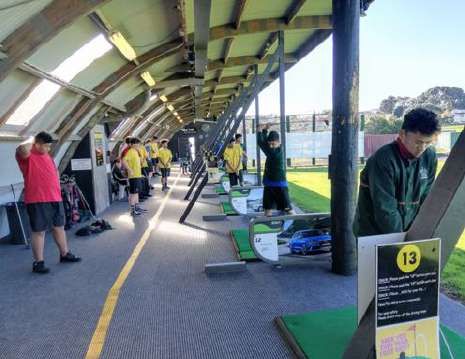
48        Year 11 to year 13 Subject pathways

         The Dilworth Senior Campus Curriculum
Aims                                                                       Essential Learning Areas
Dilworth Senior Campus offers a wide range of courses to               This table indicates the subjects that are available in
cover the 8 essential learning areas                                   Year 12 with the usual pathway from Year 11 In some
                                                                       subject areas there may be alternative pathways.
The aim of the Dilworth School Curriculum in Year 12 is            Learning Area and
                                                                                               Year 11                 Year 12
to provide a quality academic education by:                             Course
                                                                 Commerce
§   Offering a broad base of subjects that satisfies the         Accounting                         ✔           è           ✔
    eight essential learning areas of the New Zealand            Economics                          ✔           è           ✔
    Framework:                                                   Language
                                                                                                    ✔                       ✔
         -        Language                                       English                                        è
         -        Science
         -        Technology                                     Languages
         -        Social Sciences                                French                             ✔           è           ✔
         -        The Arts                                       Maori                              ✔           è           ✔
         -        Health and Physical Well Being                 Mathematics
         -        Mathematics                                                                       ✔
         -        Languages                                      Mathematics                                    è           ✔

                                                                 Applied Mathematics                            î           ✔
§   Teaching boys other transferable skills through
                                                                 PE and Health
    Transition Education and Gateway.
                                                                 Physical Education                 ✔           è           ✔

§   Providing programmes to increase opportunities for           Sports Studies
                                                                                               New subject in year 12       ✔
                                                                 Level 2/3 Standards
    pupils with special learning needs.
                                                                 Science
§   Being responsive and proactive to curriculum                                                    ✔
                                                                 Science                                        è           ✔
    development.
                                                                 Biology                                        î           ✔
§   Ensuring that our academic standards, including              Chemistry                                      î           ✔
    national examination results, are the best possible          Physics                                        î           ✔
    and compare favourably with our past performance.
                                                                 Electronics *                                  î           ?
§   Providing courses that offer opportunities                   Social Sciences
                                                                 Classical Studies             New subject in year 12       ✔
§   Continuing with a values based Religious Education           Geography                         ✔            è           ✔
    programme for all boys in Year 12.                           History                            ✔           è           ✔
                                                                 Media Studies                 New subject in year 12       ✔
                                                                 Technology
Option classes will only be formed if there are                  Design and Visual
sufficient numbers of students.                                                                     ✔           è           ✔
                                                                 Communication
                                                                 Technology (Hard Materials)        ✔           è           ✔
We will do our best to ensure that all students have their
choice of options, but some combinations may not be              Hospitality                   New subject in year 12       ✔
possible.
                                                                 Digital Technologies          New subject in year 12       ✔

                                                                 The Arts
                                                                 Drama                              ✔           è           ✔
                                                                 Music                              ✔           è           ✔
                                                                 Art                                ✔
                                                                                                                î
                                                                 Practical Art                                              ✔
                                                                 Photography                                    î           ✔
                                                                                        Transition Education
                                                                                                   ✔            è          ✔
                                                                 Transition
                                                                                               Compulsory               Compulsory
                                                                 Gateway                       New subject in year 12      ✔
                                                                                        Religious Education
                                                                                                  ✔                        ✔
                                                                 Religious Education
                                                                                               Compulsory               Compulsory

                                                             3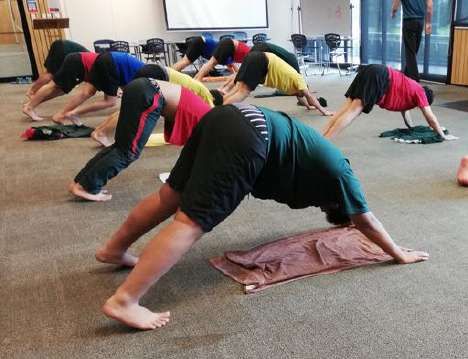
The Wider Curriculum
This Handbook deals primarily with the formal arrangements for subjects and options at particular year levels.
However, some aspects of the curriculum may be taught in a less formal manner and teaching continues across all
year levels. These aspects, fundamental to our programme, include:

Academic Tutors                                                  Performing Arts
Each evening, tutors are available across a wide range           There are many opportunities for the boys to take part in
of subject areas to support the boys with their studies.         and experience the Performing Arts, including the Talent
                                                                 Quest, House Music Competition, The School Show, 48
Careers                                                          Hour Film Festival, Theatre Sports, Drama Productions
Dilworth has a Careers Adviser to help students with             and Debating. There are also many visiting artists and
careers information, work experience opportunities,              performers who perform throughout the year, and many
decision-making, CVs and applications for courses                opportunities to attend and present a wide variety of
and/or jobs. University and Polytechnic Liaison Officer          concerts and shows. The Arts Council is made up of
visits. Senior students may elect to visit tertiary              Senior students whose aim is to promote and foster the
institutions.                                                    Arts at Dilworth.

Competitions                                                     Publications
Dilworth students participate in a variety of competitions       Dilworthian, Newsletters, Website.
and quizzes such as Science and Maths competitions,
Language Perfect competitions, History Quiz, Classics            Religious Education & Chapel
Quiz.                                                            Students in Years 10 – 12 participate in a structured
                                                                 programme, which includes religious, social and health
Dean System                                                      education. All students receive further Christian
There is a Dean for each House, who assists with the             education in regular chapel services.
academic development and pastoral care of each
student.                                                         Social Events
                                                                 School Ball for Year 12 and 13.
Dinners                                                          Social events with other local girls’ schools.
Academic, Sports, Cultural, Leavers, House.
                                                                 Spirit of Adventure Voyages.
Field Trips                                                      Opportunities for selected Year 12 and 13 boys to
These occur in many areas, both national and                     participate in 10-day voyages on the Spirit of Adventure.
international, as well as Choir and Marae trips.
                                                                 Sports, Outdoor Education, Recreation
Leadership                                                       A range of traditional sports is offered at Dilworth and
Opportunities exist for boys to have leadership roles in         inter-school house competitions are played. All students
School, House and extra-curricular activities.                   are expected to participate in one sport per season and
                                                                 in the inter-house swimming, athletics and cross-country
Learning Support                                                 carnivals. An outdoor experience is offered to all Year
Where a student has a particular need, specialised help          12 students at the Outdoor Pursuits Centre in the
is available. Individual Reading and Language                    Central North Island. A sports exchange occurs with St
Development and Mathematical Development                         Peters (Cambridge).
assistance is provided for individuals or in small groups.
Support within other subject areas is also provided.             S.S.R.
                                                                 Sustained Silent Reading is held every day for 15
Library                                                          minutes. All students and staff participate.
The Library is equipped with the latest technology and
has a wide variety of books, as well as areas specifically       Teacher Trainees
designed for teaching, studying and reading. The library         Each year Dilworth assists various Auckland based
resources support all aspects of the curriculum, with            Teacher Training Institutes, by accepting their trainees.
particular emphasis being put on information retrieval
skills and the encouragement of good reading habits.             Technology
                                                                 Computers are available for boys in classrooms and in
Music and Speech                                                 the Houses. The boys are also allowed to register their
Visiting teachers offer instrumental and vocal tuition.          own device.
There are opportunities for boys to perform in school
and public concerts throughout the year. Dilworth has a
School Choir, a Jazz Band, a Concert Band and other
performing groups. Performing groups take part in
performances at festivals, churches and other public
venues, and participate in secondary school
competitions.

                                                             4
Assessment and Reporting
                         Formal Assessment                                             Reports &
Year 12               INTERNAL      EXTERNAL                                   Parent / Teacher Meetings
                                                                         NCEA course outline sent home to
                                                                         parents/caregivers.
Term1                                                                    Progress report sent home early in late Term 1.
                                                                         Parent / Teacher Interviews towards the end of
                                                                         Term 1.

                                                                         A full report based on completed internal
Term 2                                                                   standards and practice external exams sent
                  Formal assessment                                      home at the end of Term 2.
                  of NCEA Internal
                  standards take place                                   Parent / Teacher Interviews mid-way through
                                             Exams late in Term 3
                  throughout the year.                                   Term 3 to discuss academic progress and option
                                             in all NCEA subjects
Term 3                                       with external
                                                                         choices for the following year.
                                                                         A report on internal and external practice grades
                                             standards
                                                                         to date will be sent home at the end of Term 3.
                                             NCEA EXTERNAL
                                             ASSESSMENTS                 A full report based on the final exam results and
Term 4                                       November -                  summing up the year’s progress.
                                             December

All marks gained in formal assessments can be used by NZQA should a boy be unable to sit his NCEA exams and
compassionate consideration is granted.

Each boy is expected to track his own progress towards achieving his NCEA goals. His Dean and other staff will
also monitor his progress and have conversations with him regarding the progress he is making. Where necessary,
parents and caregivers will be included in these conversations.

*The structure and timings listed above are based on the 2018 assessment and reporting calendar. These
are subject to change. Any changes will be fully communicated to boys, parents and caregivers.

What Option Choices Can I Make?
The selection of an appropriate course of study is
very important. Many boys are uncertain about their
career choices If this is the case, it is important to
make selections that are broad enough to keep
                                                                   All Students take
many future career pathways open.
                                                                   English, Religious Education and Transition/Recreation
Planning for your future should take into                          Choose 4 subjects from
account:                                                           Accounting, Applied Mathematics, Biology, Chemistry,
• Your interests and abilities                                     Classical Studies, Design and Visual Communication,
• Which subjects you enjoy the most                                Digital Technologies, Drama, Earth and Space Science,
• The skills you have and would like to
                                                         Year 12

                                                                   Economics, Electronics, French, Gateway, Geography,
  develop                                                          History, Hospitality, Maori, Mathematics, Media Studies,
• Your future career interests                                     Music, Painting, Photography, Physical Education, Physics,
• Any subject requirements (pre-                                   Sports Studies, Technology (Hard Materials).
  requisites) at the next level
• Any entry criteria for tertiary training                         YOU CAN ONLY TAKE ONE SUBJECT FROM EITHER
                                                                   OF THESE GROUPS:
All Year 12 courses are described in this booklet                  1. Physical Education and Sports Studies
and boys are encouraged to plan their course of                    2. Practical Art and Photography
study carefully and seek advice where necessary.

Dilworth School offers a wide variety of options and
it is usual that all subjects run in each particular
year. However, if class sizes are too small, a
particular subject may not be offered for that year.

                                                             5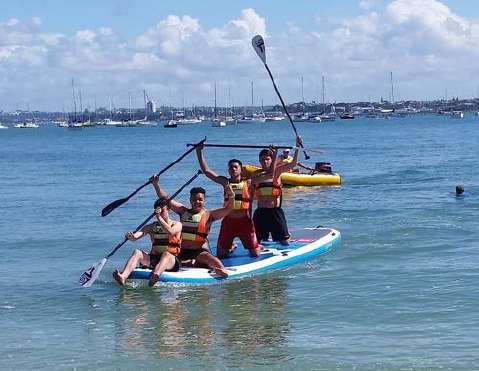
Frequently Asked Questions
                                                                  Will I get to study the subjects
How Many Subjects Can I Study?
                                                                  that I choose?

The policy of the school is that all boys in Years 12 enter       It is inevitable that the option structure will not satisfy
for five subjects each year towards an NCEA                       every student’s needs. The subject groupings are
qualification.                                                    based on the requirements of the majority.

The boys should be focussing on Quality rather than               Wherever possible we will meet the wishes of the
Quantity. It is important for good academic students to           student.
aim for Merit or Excellence endorsements on their
NCEA certificate. Merit and Excellence grades will help           Teachers will also be involved in the option process.
students who are aiming to apply for restricted entry             They will be asked about the suitability for each boy to
University courses.                                               move on to the next level of study in their subject.

All boys in Year 13 are given a study periods within their        When completing the option form, every boy should
timetable. These periods are for the boys to use in their         choose back-up option subjects in case the timetable
own way to support their learning.                                does not allow him to study his preferred option
                                                                  subjects.
Each year the question of dropping a subject is raised.
Current school policy is to disallow that, except in
circumstances where the teaching staff feel that it is in
the best interests of the student to do so. Such decisions
are not made lightly and only made after consulting
family.

How important are Parent /
Teacher Interviews?

There are two parent-teacher interviews in the school
year.

All parents are expected to attend.

If parents are unable to attend Parent / Teacher
Interviews for some special reason, the school is always
willing to make arrangements for alternative interviews,
particularly for Country Parents.

Parents are encouraged to maintain contact and should
feel comfortable about making enquiries about their
son’s progress at any time during the year. The best
arrangement is to make contact with the Dean for your
son’s House, who will then advise on the best course of
action to take.

                                                              6
N.C.E.A. Levels Two and Three
Overview                                                      Certificate Endorsement
Students can accumulate credits towards NCEA Levels           At each NCEA level a student can get an endorsed
1, 2 and 3. Each student is issued with a separate            certificate.
handbook explaining details of how this system works at
Dilworth.                                                     Gaining 50 credits at Merit or Excellence level will
                                                              generate a MERIT CERTIFICATE
Assessments for NCEA are both external and internal.
The achievement standards for each subject, the               Gaining 50 credits at Excellence level will generate a
number of credits for each standard and whether the           EXCELLENCE CERTIFICATE
standard is assessed internally or externally are
explained in detail in this handbook. There is also
information about which standards count towards
Literacy and Numeracy.

Level 2                                                       Course Endorsement
For a student to be awarded NCEA Level 2 he must              Students Course endorsement provides recognition for
achieve 80 credits or more, 60 of which must be from          students who perform exceptionally well in an individual
Level 2 standards.                                            course. This can be gained independently of a
                                                              qualification at all levels.
He must also have both Level 1 Literacy and Level 1
Numeracy.                                                     Gaining 14 or more credits at Merit or Excellence level
                                                              may generate a MERIT COURSE ENDORSEMENT.

Level 3                                                       Gaining 14 or more credits at Excellence level may
                                                              generate an EXCELLENCE COURSE
For a student to be awarded NCEA Level 3 he must              ENDORSEMENT.
achieve 80 credits or more, 60 of which must be from
Level 3 standards.                                            In each case the 14 credits must include a minimum of
                                                              three externally assessed credits and three internally
He must also have both Level 1 Literacy and Level 1           assessed credits.
Numeracy.
                                                              Physical Education and Level 3 Visual Arts are exempt
                                                              from this.

                                   60 Level 2
                                    Credits
                      Level 1
                     Numeracy

                                Level 1
                                Literacy

                      NCEA Level 2

Flow charts explaining the requirements for Certificate Endorsement, Course Endorsement, NCEA and
University Entrance can be found at the end of this handbook.

                                                          7
University Entrance

    Standard Entry                                         Approved Subjects
                                                           The following Level 3 subjects, studied at Dilworth are
    University Entrance (UE) is the minimum requirement
                                                           approved subjects for University Entrance:
    to go to university in New Zealand. The current
    requirements are:
                                                           Accounting
    NCEA Level 3 – a minimum of 60 Level 3 credits         Biology
                                                           Calculus
         Including                                         Chemistry
                                                           Classical Studies
         Three subjects at Level 3 or above,               Design and Visual Communication
         made up of:                                       Digital Technology
                                                           Drama
         14 credits each, in 3 approved subjects           Earth and Space Science
                                                           Economics
                                                           English
    PLUS                                                   French
                                                           Geography
         Numeracy                                          History
         A minimum of 10 credits at Level 1 or above in    Mathematics
         selected Achievement Standards, available         Media Studies
         through a range of subjects or a package of 3     Music Studies
         numeracy unit standards (26623, 26626, 26627 –    Painting (Practical Art)
         all 3 are required).                              Photography (Practical Art)
                                                           Physical Education
    PLUS                                                   Physics
                                                           Printmaking (Practical Art)
         Literacy                                          Statistics
         A minimum of 10 credits at Level 2 or higher in   Te Reo Māori
         selected Achievement Standards, made up of:

•      5 writing credits
•
•      AND

•      5 reading credits

                                          14

                                                                                                       UE
           UE                          Credits in                       NCEA
                                       each of 3
        Literacy                       approved                        Level 3
                                        Subjects

                                                           8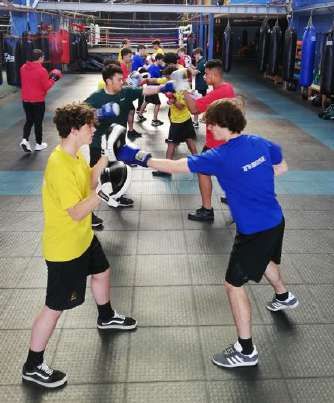
University Entrance

English for Auckland University
The University of Auckland has introduced a new entrance requirement – the Academic English Language
Requirement.

Automatic entry will be restricted to students who gain a minimum of seventeen credits in English at Level 2 or 3.
Students who do not meet this standard can still gain places at the University but will be required to pass a specified
for-credit course in Academic English in their first year of study at the University.

Entrance to Limited Entry Courses
Acceptance into some courses requires more than the minimum entrance.
These courses require a rank score. They are listed later in this book.

Rank scores are calculated on the best 80 Level 3 credits achieved.
   •    2 points are awarded for every ‘Achieved’ credit
   •    3 points are awarded for every ‘Merit’ credit
   •    4 points are awarded for every ‘Excellence’ credit

Example

                                    ALL at                                                RANK
    80 Credits                                                   80 x 3
                                    Merit                                               SCORE 240

                                                           9
Careers Information
                                                          CAREERS AT DILWORTH SCHOOL

                                                         Deciding what to do when you leave school can be a very
                                                         intimidating decision! It’s ok not to know exactly what you want to
                                                         do with the rest of your life – you really don’t need to know! What
                                                         you DO need is a firm sense of direction and a realistic plan for
                                                         your first steps into adulthood and the world of work.

                                                         Make an appointment to see our Careers Adviser to:

      §       Discuss your interests, talents and aspirations – and where they might lead you
      §       Discover what subjects you will need for further study, where this study could lead you.
      §       Access information on polytechnic/trade courses.
      §       Find information on University study options, entry requirements and scholarships.
      §       Learn how to write a good CV and cover letter, and develop your interview skills.

    ALL year levels are welcome. It’s never too early to start learning more about yourself, exploring your options and
    setting goals.

    THE CAREER DEVELOPMENT COMPETENCIES

    The Careers Department at Dilworth School provides a range of opportunities and experiences that encourages
    students to make informed choices about their future career pathways.

    Our ultimate aim is to empower our
    students to self-manage their career and
    personal development throughout their
    lives. We want them to continue to do this
    long after they leave school, and what they
    learn at school is a crucial start.

    To give our boys a great head start, we
    aim to help them develop an identified set
    of career management
    competencies. Each competency involves
    a set of understandings, skills and
    attitudes required to successfully manage
    life, learning and work.

    The competencies, which are based on international research and practice, are grouped into three areas:

•   DEVELOPING SELF AWARENESS

    Young people need to be able to understand themselves and the influences on them. We seek to assist them
    to:

          -     Build and maintain a positive self-concept. For example – knowing who they are; their interests, skills,
                qualities and cultural and personal values.
          -     Interact positively and effectively with others
          -     Change and grow throughout life

                                                                 10
• EXPLORING OPPORTUNITIES
Students should be able to investigate opportunities in learning and work and relate them to themselves. We
aim to encourage them to:
- Participate in lifelong learning to support life and work goals
- Locate information and use it effectively
- Understand the relationship between work, society and the economy.
• DECIDING AND ACTING
Young people need to be able to make and adjust their plans, to manage change and transition, and to take
appropriate action. Careers Counselling and Coaching can empower students to:
- Make life- and career- enhancing decisions
- Make and review learning and career plans
- Act appropriately to manage their own careers.
DREAMCATCHER
DREAMCATCHER is an online Career
Development platform purchased by
Dilworth School in 2015.
DreamCatcher’s focus is to empower
students by providing tools, contacts,
ideas and, most importantly, an easy to
use structure for ongoing Career
Development.
DreamCatcher can be accessed by
students anywhere with an internet
connection.
Designed to assist students build their
skills within the above 3 sets of Career
Development Competencies,
DreamCatcher is easy to use and
encourages informed decision making.
Dreamcatcher helps students build skills in:
Self-Knowledge – The cornerstone to all informed career decisions
Career Exploration – Extensive tools, useful links and ideas to explore
Subject Selection Tools – Ensures students take the correct subjects for their top career choices
Future Planning – Encourages the development of an informed decision making process
Tertiary Option Exploration – Reduces future investment risk
Personal and Academic Goal Setting – Interactive and Reflective
All students can login to DreamCatcher anywhere, anytime, using their usual school login that they use for
internet access.
11TERTIARY STUDY OPTIONS
In NZ there are lots of different ways to learn and places to study at tertiary level. There are eight universities, 20
polytechnics and institutes of technology, 40 Industry Training Organisations that offer apprenticeship training (to do
workplace training through an ITO you will need to have a job) , and many, many more options through private
training organisations. The important thing is to find the right fit for you, and your career ambitions.
UNIVERSITY STUDY
As all of our Universities in NZ are well respected in the world rankings, so whichever
University you choose will offer you a great education. The key is to pick the
university that best fits how, where and what you want to study!
The most common university programme is the undergraduate degree. Your
first degree is called a bachelor's degree and usually takes three or four years of
full-time study to complete.
Degrees can be general, such as a Bachelor of Arts, or focused on a specific
vocation, such as the Bachelor of Veterinary Science.
A general degree is a good option if you are interested in a certain area, but don't have a specific job or favourite
subject area in mind. As you work through your degree you can try out a range of subjects, then decide on a subject
area to specialise in.
General degrees give you a wide range of skills in research, information gathering and problem solving. Degrees in
specific subjects also provide these skills and may also lead to work in a specific job or industry.
Conjoint Degrees
A conjoint programme lets you pursue two undergraduate bachelor’s degrees at the same time.
You may have the opportunity to begin a conjoint programme in the first or second year of study, and most
programmes can be completed within five years, depending on the University and/or the combination you opt for.
A conjoint programme often only requires just one extra course to be taken each year (compared to a normal full-
time load).
WORKPLACE TRAINING
Training on the job can be a good alternative to formal tertiary study. You
can earn money and pick up skills. In many cases you can also work
toward a national certificate, or gain credits as part of the New Zealand
Qualifications Framework. There are two main ways to do on-the-job
training:
New Zealand Apprenticeships
• Includes the support of an apprenticeship co-ordinator, who checks your
progress on a regular basis.
• You will need to find a job in your desired trade before you can start an
apprenticeship
• Please note: A restricted driver’s licence is a requirement to gain an
apprenticeship, so we recommend you start the process of gaining your
learner and restricted licences as soon as possible!
If you don't qualify for a New Zealand Apprenticeship, you may still be
12able to do industry training.
Workplace training
• Available at school through application to the Gateway programme
• Can be done in all industries that are covered by an industry training organisation (ITO).
ENTRY REQUIREMENTS FOR UNIVERSITY
As a guide, the entry requirements for The University of Auckland are included in this Handbook. The
requirements for other Universities may be different but this will offer you a good indication of what you may need in
your area of study.
For specific entry requirements for other Universities, please visit their website.
RANK SCORE
A rank score is used by many universities to compare students applying for a course and/or to set a minimum entry
standard.
• Your top 80 level 3 credits (from approved subjects) are used in the calculation
• Up to a maximum of five level 3 approved subjects are used
• If more than 80 credits are gained, the highest value credits are used.
• Level 3 credits gained in year 12 can be used.
Your rank score is calculated by awarding the following points for up to 24 credits in each approved subject. The
maximum rank score is 320.
Excellence 4 points
Merit 3 points
Achieved 2 points
NOTE: The majority of Conjoint (combined) degrees require higher rank scores of 210, with the exception of
Engineering (270), Health Science (250) and Nursing (220)
ACADEMIC ENGLISH LANGUAGE REQUIREMENT
In 2016, the University of Auckland will introduce an Academic English Language requirement into all of its
undergraduate programmes.
• You must have gained the University Entrance Literacy Standard and a minimum of 17 credits in English at
Level 2 and/or 3
If you do not meet this requirement, it will not affect whether you are offered a place on a programme but you will
need to pass an Academic English Language course during your first year of study.
THE UNIVERSITY OF AUCKLAND DEGREE ENTRY CRITERIA
TABLE A TABLE B
Reference is made to table A
and Table B subjects as Classical Studies Accounting
requirements for many degrees. English Biology
Geography Calculus
The Table A and Table B History Chemistry
subjects that are taught at Te Reo Maori Economics
Dilworth are listed here. Mathematics*
13Physics
Statistics
Digital Technologies**
* Mathematics cannot be used in combination with Calculus and/or Statistics
** Digital Technologies Achievement Standards # 91632 – 91642 only
2016 RANK SCORE, SUBJECT AND OTHER REQUIREMENTS
FOR THE UNIVERSITY OF AUCKLAND
Programme Rank score, subject and credit requirements
230 A minimum of 16 credits in one subject from Table A and a
minimum of 16 credits in one subject from Table B.
Bachelor of Architectural Studies (BAS)
Subject to the qualitative evaluation of a portfolio of creative work and
written statement.
Bachelor of Arts (BA)1 150
180 with a minimum of 16 credits in each of three subjects from
Bachelor of Commerce (BCom)2
Table A and/or Table B.
150 Subject to the qualitative evaluation of a CV, written statement
Bachelor of Dance Studies (BDanceSt)
and an audition/interview.
Bachelor of Education (Teaching) 150 Subject to a satisfactory interview, police check, and referees’
(BEd(Tchg))3 reports.
Bachelor of Engineering (Honours) 260 with 17 external Level 3 credits in Calculus and 16 external Level
(BE(Hons)) 3 credits in Physics
150 Subject to the qualitative evaluation of a portfolio of 12 colour
Bachelor of Fine Arts (BFA)
reproductions and written statement.
250 with a minimum of 18 credits in one subject from Table A and a
Bachelor of Health Sciences (BHSc)
minimum of 18 credits in one subject from Table B.
Students must be offered a place in another bachelor’s degree. Entry
Bachelor of Laws (LLB (Part I)) will be based on the guaranteed scores for the other bachelor’s
degree.
Bachelor of Music (BMus) 150 Subject to the qualitative evaluation of a CV, music certificates,
referees’ report and in the case of Classical Performance, Jazz
• Classical Performance, Jazz
Performance and Popular Music majors, an audition. Composition
Performance or Popular Music majors
major will be required to submit for qualitative evaluation a portfolio of
• Composition and Musicology majors 2 or 3 compositions.
230 with a minimum of 18 credits in one subject from Table A and a
Bachelor of Nursing (BNurs)
minimum of 18 credits from one of Biology, Chemistry, Physics.
Bachelor of Sport, Health & Physical
150
Education (BSportHPE)3
180 with a minimum of 16 credits in each of three subjects from Table
Bachelor of Property (BProp)2
A and/or Table B.
Biomedical Science 280
Bachelor
of Science Food Science and Nutrition 200
(BSc)4
Exercise Science 200
14All other majors
165
/specialisations
150 Subject to a satisfactory interview, police check, and referees’
Bachelor of Social Work (BSW)3
reports.
Bachelor of Urban Planning (Honours)
230 Subject to the qualitative evaluation of a written report.
(BUrbPlan(Hons))
15Transition Education
Introduction Year 11 Transition
The purpose of transition is to give students • To provide a range of opportunities for students to
information and skills so that when they leave improve their understanding of the world and to
Dilworth and enter either tertiary education or develop job acquisition skills.
the work force, they will be well equipped and • To educate students about personal safety including
able to cope better with the changes they will be cyberbullying, sexuality, relationships, drugs and
facing. alcohol.
• To educate students about good study habits and the
importance of an academic discipline.
• to offer experiences with toddlers in a family situation
Topics include:
- Planning & Preparation
- Drugs and Alcohol
- Study Skills
- Careers
- Plunket – under 5 year care
- Study Skills
Year 12 Transition
§ To provide a range of opportunities for students to
improve their understanding of the world and to
develop job acquisition skills.
§ To educate students about Traffic law and to develop
responsible attitudes to driving.
§ To educate students about their rights and
responsibilities as employees.
§ To educate the students about budgeting, banking,
leaving home, flatting and their responsibilities as tax
payers.
Topics include:
- Planning & Preparation
- Goal Setting
- Self-Management Strategies
- Careers
- Financial Literacy
- Job Interviews
- Plunket – parenting – now Year 11
- Driving Study Skills
- CV
- Application Letters
16Practical Art Level 2
Entry Requirements Additional Course Information
Prerequisites: Students complete both internal standards and then are
able to choose an external standard that best suits their
Level 1 Art or approval of HOD Art. talents and interests.
Credits
The course enables students to gain up to 24 Level 2
credits through a selection of internal and external
standards.
Content and Skills
Students at this level develop an individual way of
working, based on an understanding of art gained
through research of contemporary artistic styles.
Students:
§ Take responsibility for their own learning, in
setting their own goals and evaluating their own
learning achievement.
§ Clarify and develop ideas through the use of
drawing and other established artistic
procedures.
§ Learn and practise ways of working from
established art practices and demonstrate their
ability to use that understanding to further
individual and co-operative ends.
Level 1
Subject No Description Credits Literacy
Practical Demonstrate an understanding of methods and ideas from
I 91308 4
Art established practice appropriate to painting/printmaking.
Practical Use drawing methods to apply knowledge of conventions
I 91313 4
Art appropriate to painting/printmaking
Practical Develop ideas in a related series of drawings appropriate to
I 91316 4
Art established painting/printmaking practice
Practical Produce a systematic body of work that shows understanding
E 91321 12
Art of art-making conventions and ideas within painting
Practical Produce a systematic body of work that shows understanding
E 91323 12
Art of art making conventions and ideas within printmaking
17Photography Level 2
Entry Requirements Additional Course Information
Prerequisites: For this course each student will be issued with a school
camera that he is required to return in good condition at
Year 10 and 11 Art preferred (limited places). the completion of the course.
Credits
The course enables students to gain up to 24 Level 2
credits through four Achievement Standards.
Content and Skills
This is an art course that introduces and encourages the
student to develop his picture making skills and
conceptual thinking.
The student will develop skills to choose, clarify and
explore his own theme, based on photographic models.
An experimental and wide-ranging approach is
emphasised.
Good time management and a good work ethic are
essential for success in this subject.
Level 1 UE Literacy
Subject No Description Credits Literacy
Reading Writing
Demonstrate an understanding of methods and
Photography I 91307 ideas from established practice appropriate to 4
photography
Use drawing methods to apply knowledge
Photography I 91312 4
appropriate to photography.
Develop ideas in a related series of drawings
Photography I 91317 4
appropriate to established photography practice.
Produce a systematic body of work that shows
Photography E 91322 understanding of art-making conventions and 12
ideas within painting.
18Classical Studies Level 2
Entry Requirements Additional Course Information
Students should have a minimum of 12 Level 1 English While not a compulsory prerequisite for Year 13
credits. For students who do not meet these criteria, Classical Studies, it is advantageous to have undertaken
entry is at the HOD’s discretion. the course in Year 12.
Credits
The course enables students to gain up to 20 Level 2
credits through four Achievement Standards.
Content and Skills
Classical Studies comprises the examination of selected
topics in Greek and Roman history, literature, culture, art
and architecture.
The topics for 2019 will be:
- Pompeii and Herculaneum
- Roman Politics.
- The influence of Classical Studies on
Star Wars
The course aims not only to provide students with
knowledge and appreciation of important aspects of
Greek and Roman civilisation but also enables them to
gain experience of a variety of different sources of
subject matter, evidence and argument.
Level 1 UE Literacy
Subject No Description Credits Literacy
Reading Writing
Classical
E 91201
Examine the significance of the features of
4 ü ü ü
Studies work(s) of art in the classical world.
Classical
I 91202
Examine a significant event in the classical
4 ü ü
Studies world.
Classical
E 91203
Demonstrate understanding of socio-political life
6 ü ü ü
Studies in the classical world.
Classical
I 91204
Demonstrate understanding of the influence of
6 ü ü
Studies aspects of the classical world on other cultures.
19Accounting Level 2
Entry Requirements
There is no prerequisite for entry to this course. All
students are welcome – you do not have to be good at
Mathematics.
Credits
The course enables students to gain nineteen Level 2
credits.
Content and Skills
This course aims to further promote accounting as a
financial language for sole traders. It provides students
with a more in-depth knowledge of accounting principles
and processes.
Subject No Description Credits Level 1
Literacy Numeracy
Demonstrate understanding of accounting
Accounting E 91174
concepts for an entity that operates accounting
4 ü
subsystems.
Prepare financial information for an entity that
Accounting E 91176
operates accounting subsystems.
5 ü
Accounting E 91177
Interpret accounting information for entities that
4 ü ü
operate accounting subsystems.
Accounting I 91179
Demonstrate understanding of an accounts
3 ü ü
receivable subsystem for an entity.
Accounting I 91386
Demonstrate understanding of an inventory
3 ü ü
subsystem for an entity.
20Economics Level 2
Entry Requirements Additional Course Information
The Year 11 course is an advantage but not a Level 2 Economics introduces students to
prerequisite at this level. Students who have undertaken macroeconomics theory.
the Year 11 course must show competency in at least
two of the external Achievement Standards. Macroeconomics is the study of the economy as a
whole. It involves a study of the issues/objectives facing
each government, using economic models.
Credits
The course enables students to gain up to 22 Level 2
Economic credits through three external achievement
standards and two internal achievement standards.
Content and Skills
The issues that result from market forces are the scope
for study at this level.
Students will explore the issues of: unemployment,
growth, inflation, trade and government policies relating
to each economic issue.
They will develop an understanding of cause and effect
in the issues covered using relevant economic concepts
and modules.
Assessment is by way of NCEA Level 2 through a
combination of internal and external Achievement
Standards, in both Economics and Business Studies.
Level 1 UE Literacy
Subject No Description Credits Literacy Reading Writing
Economics E 91222
Analyse inflation using economic concepts and
4 ü ü
models.
Economics E 91223
Analyse International trade using economic
4 ü ü
concepts and models
Economics E 91224
Analyse economic growth using economic
4 ü
concepts and models.
Economics I 91227
Analyse how government policies and
6 ü ü
contemporary economic issues interact.
Economics I 91225
Analyse unemployment using economic
4 ü ü
concepts and models
21English Level 2
Entry Requirements Additional Course Information
English is a compulsory subject for all students in Year For University Entry there is a literacy requirement that
12. Entry to Level 2 English requires students to have each student must gain at least 10 credits in Level 2
15 credits at Level 1 including credits from writing and Literacy. Five credits should be for reading and five
external literary standards, OR HoF approval. The credits for writing.
course will be selected from the standards below.
Students wishing to attend the University of Auckland
Credits should also be aware of their additional requirement for
17 credits in English at Level 2 or higher. This means that
The course enables students to gain up to 21 Level 2 students wishing to attend the University of Auckland who
credits through five Achievement Standards. do not get 17 credits at Level 2 may be required to take
Year 13 English as an option
Contents and Skills
The Year 12 English course has an academic focus.
The externally assessed aspects cover:
§ Written texts
§ Visual texts
The internally assessed aspects are:
§ Oral presentation
§ Writing
§ Personal reading
Students will follow a course selected from some or all
of these standards, with a maximum of 21 credits.
Level 2 Literacy
Subject No Description Credits Reading Writing
English E 91098
Analyse specified aspects of studied written text(s),
4 ü ü
supported by evidence.
English E 91099
Analyse specified aspects of studied visual or oral text(s),
4 ü
using supporting evidence.
English I 91101 Produce a selection of crafted and controlled writing. 6 ü
English I 91102 Construct and deliver a crafted and controlled oral text. 3
Form developed personal response to independently
English I 91106
read texts, supported by evidence.
4 ü
22Drama Level 2
Entry Requirements Additional Course Information
10 credits at Level One Drama (should include A high degree of commitment to rehearsals and
AS90006 & 90997) or approval of HOD Drama or HOF performances is required, which will include out-of-class
Performing Arts. time in the final two weeks prior to an assessed
performance. Students who can demonstrate interest in
the subject and/or some performance experience will be
advantaged.
Credits
The course enables students to gain up to 22 Level 2
credits through five Achievement Standards
Content and Skills
The aim of this course is:
§ To develop practical knowledge in drama
performance and critique.
§ To initiate and develop ideas collectively and
individually.
§ To study one theatre form in detail;
understanding the form and its purpose in
historical context.
§ To participate in a show for an invited
audience.
The topics for 2019 will be chosen from; Devised
Theatre, Pasifika Theatre for NZ Audiences, Realism,
short scenes from NZ plays, Class production and
responding to a live performance.
Achievement Standards will be selected from the following standards:
Level 1 UE Literacy
Subject No Description Credits Literacy
Reading Writing
Drama I 91213 Apply drama techniques in a scripted context. 4 ü ü
Drama I 91214 Devise and perform a drama to realise an intention. 5 ü
Drama E 91215
Discuss a drama/theatre form or period with reference
4 ü ü ü
to text.
Drama I 91216 Perform features of a complex drama/theatre form. 4 ü ü
Drama I 91217 Examine the work of a playwright (optional) 4 ü ü
Drama I 91218
Perform a substantial acting role in a scripted
5 ü ü
production.
23French Level 2
Entry Requirements Additional Course Information
Students must have achieved at least ten Level 1 The Tahiti exchange is also possible at this level. (See
French credits to be able to cope with the Year 12 Level 1 information.)
course, which leads to the NCEA Level 2 qualification.
Students will have the opportunity to attend the Senior
French Dinner.
Credit
The course enables students to gain up to 24 Level 2
credits through 5 Achievement Standards.
Content and Skills
Language skills are refined and extended, with students
gaining more personal independence in their language.
Topics become less subjective and transactional.
Achievement objectives are to: communicate about
future plans, give and respond to warnings, advice and
suggestions, express and respond to approval,
disapproval, agreement and disagreement, give and
respond to information and opinions, giving reasons,
read about and recount actual or imagined events in the
past.
Topics may include: the French-speaking World, Youth
– rights and responsibilities, relationships, Health Issues
in France and New Zealand, Fashion, Music,
Technology and Media.
Coco Chanel, the famous designer and one of the
personalities studied in Year 12
Subject No Description Credits
Demonstrate understanding of a variety of spoken French texts on
French E 91118 5
familiar matters.
Interact using spoken French to share information and justify ideas
French I 91119 5
and opinions in different situations
Give a prepared spoken presentation in French that
French I 91120 4
communicates information, ideas and opinions.
Demonstrate understanding of a variety of written/visual French
French E 91121 5
text(s) on familiar matters.
French I 91122 Write a variety of text types in French for genuine contexts. 5
24Mathematics Level 2
Entry Requirements Additional Course Information
Students must have gained at least 14 credits at This course prepares students for either 13MAS or
Level 1 in Mathematics to be successful in Level 2. 13MAT.
In particular, students need to have passed 91027
(MCAT) Algebraic Methods and 91028 Tables,
Equations and Graphs as almost all Standards at
Level 2 require this content knowledge.
Credits
The course offers 20 credits at NCEA Level 2
Content and Skills
This course is designed for students who need
additional support to ensure they understand and
can apply Mathematics concepts in a range of
situations. Knowledge and skills from Year 11 will
be built upon to ensure a broad pathway of
learning that will prepare students for successful
transitions beyond school. Level 2 Algebra and
Graphical skills are essential for students wishing
to take up Mechanical or Electrical apprenticeships
or go into any of the Services once they leave
school.
Dilworth Mathematics Department Course design (2019):
Year 10 Year 11 Year 12 Year 13
13MAC
3.15 Sys of Eqns 3
3.5 Complex #’s 5*
12MAX 3.3 Trig 4
2.1 Coord Geom 2 3.6 Differentiation 6*
2.2 Graphs 4 3.7 Integration 6*
2.14 Sys of Eqns 2 24
10MAT 11MAT 2.6 Algebra 4*
Number 1.1 Number 4 2.7 Calculus 5* 13MAS
Measurement 1.11 Bivariate 3 2.12 Probability 4* 3.10 Inference 4
Algebra 1.12 Chance & Data 4* 21 3.9 Bivariate Data 4
Geom: Ang./Trans. 1.7 Trigonometry 3 3.8 Time Series 4
Stats/Probability 1.2 Algebra 4* 12MAT 3.14 Prob Distns 4*
Geom: Trig/Pythag. 1.3 T/E/G 4* 2.1 Coord Geom 2 3.13 Probability 4*
22 2.2 Graphs 4 20
2.14 Sys of Eqns 2
2.7 Calculus 5* 13MAT
2.9 Inference 4 3.10 Inference 4
2.10 Experiments 3 3.9 Bivariate Data 4
20 3.4 Critical Paths 2
3.15 Sys of Eqns 3
3.2 Linear Prog 3
3.8 Time Series 4
20
Yellow - essential skills/learning for widest possible progression beyond this level
* - externally assessed standard
____ - sections denote approximate term splits and topic order within terms
25Mathematics Extension Level 2
Entry Requirements Additional Course Information
At least Merit grades in both 91027 (MCAT) Algebraic
Methods and 91028 Tables, Equations and Graphs This course prepares students for either 13MAC or
standards from Level 1 13MAS
Credits
The course offers 21 credits at NCEA Level 2
Content and Skills
This course is designed for students who are confident
mathematicians and who want to keep their options
open for future pathways. Calculus is either a
requirement or recommended for any students wanting
to go into fields of Engineering, Mathematics, Science,
Economics and Computing. Statistics in Stage 1 at
University is one of the most popular courses as it is a
requirement for students studying fields of Humanities,
Commerce, Business and some Sciences. This
Mathematics course ensures students are well prepared
for whichever pathway they choose to take in the future.
Dilworth Mathematics Department Course design (2019):
Year 10 Year 11 Year 12 Year 13
13MAC
3.15 Sys of Eqns 3
3.5 Complex #’s 5*
12MAX 3.3 Trig 4
2.1 Coord Geom 2 3.6 Differentiation 6*
2.2 Graphs 4 3.7 Integration 6*
2.14 Sys of Eqns 2 24
10MAT 11MAT 2.6 Algebra 4*
Number 1.1 Number 4 2.7 Calculus 5* 13MAS
Measurement 1.11 Bivariate 3 2.12 Probability 4* 3.10 Inference 4
Algebra 1.12 Chance & Data 4* 21 3.9 Bivariate Data 4
Geom: Ang./Trans. 1.7 Trigonometry 3 3.8 Time Series 4
Stats/Probability 1.2 Algebra 4* 12MAT 3.14 Prob Distns 4*
Geom: Trig/Pythag. 1.3 T/E/G 4* 2.1 Coord Geom 2 3.13 Probability 4*
22 2.2 Graphs 4 20
2.14 Sys of Eqns 2
2.7 Calculus 5* 13MAT
2.9 Inference 4 3.10 Inference 4
2.10 Experiments 3 3.9 Bivariate Data 4
20 3.4 Critical Paths 2
3.15 Sys of Eqns 3
3.2 Linear Prog 3
3.8 Time Series 4
20
Yellow - essential skills/learning for widest possible progression beyond this level
* - externally assessed standard
____ - sections denote approximate term splits and topic order within terms
26Media Studies Level 2
Entry Requirements Content and Skills
For the best chance of success in this subject students Media Studies:
should have at least three Merit grades in English Level • is about the active exploration, analysis,
1. creation, and enjoyment of the media and its
products.
This subject requires creativity, critical thinking skills and • examines the dynamic role of the media in
written and verbal fluency. society, how the media constructs messages
about individuals, communities, and cultures
Credits and how media products are produced,
controlled, and distributed.
The course enables students to gain 16 Level 2 credits. • students gain the knowledge and skill to
conceive, plan, design and make media
products that engage audiences.
Additional Course Information • students develop the skills to become
informed, discriminating citizens in a
Achievement Standards will cover these areas of
constantly changing, interconnected world.
study/skill acquisition:
Though Media Studies, students explore
career pathways in the rapidly growing
§ An analysis of propaganda as an ethical issue in
information, knowledge, entertainment, and
the media.
communications industries.
§ An analysis of the representation of specific social
groups in the media
§ An analysis of the superhero genre and its
relationship to society.
§ Production of a design and plan for a music video.
§ Completion of a music video using Adobe Premiere
Pro.
Level 1 UE Literacy
Subject No Description Credits Literacy Reading Writing
Media Studies I 91250
Demonstrate understanding of representation in
the media
3 ü
Media Studies E 91251
Demonstrate understanding of an aspect of a
media genre
4 ü ✓ ✓
Media Studies I 91253
Complete a developed media product from a
6 ü
design and plan using a range of conventions
Media Studies I 91254
Demonstrate understanding of an ethical issue
3 ü
in the media
27Music Level 2
Entry Requirements Additional Course Information
Students entering this course are expected to be Grade NCEA Level 2 Music is a prerequisite for the NCEA
4+ standard in performance and music theory and will Level 3 Music course.
have completed the NCEA Level 1 course. Students
who have learned an instrument for four years or more
may be accepted for the class at the discretion of the
Head of Department.
Credits
The course enables students to gain up to 31
Level 2 credits through seven Achievement Standards.
Content and Skills
The Year 12 course is very similar to the Year 11. A
greater depth of study is required of set works, and there
is the opportunity to develop interests in other genres.
Most students as part of their study will extend their
engagement in music technology by recording and
sequencing work in a recording studio context.
Subject No Description Credits
Music I 91270 Perform two substantial pieces of music as a feature soloist. 6
Music I 91271 Compose two substantial pieces of music. 6
Demonstrate ensemble skills by performing a substantial piece of
Music I 91272 4
music as a member of a group. (OPTIONAL)
Music I 91273 Devise an instrumentation for an ensemble. (OPTIONAL) 4
Perform a substantial piece of music as a featured soloist on a
Music I 91274 3
second instrument. (OPTIONAL)
Music E 91275 Demonstrate aural skill by through written representation. 4
Music E 91276 Demonstrate knowledge of conventions in a range of music scores 4
28Physical Education Level 2
Entry Requirements Additional Course Information
Students must have attained at least 14 credits from Students have four lessons of Level 2 Physical
Level 1 Physical Education. Entry outside of this Education per week. During these lessons the course
requirement will be at the discretion of the Head of will balance physical activity with theory to ensure both
Physical Education, in consultation with the Year 11 sides of the subject area are adequately addressed.
teachers of the student and the Deans.
Some choice of assessments will be allowed, to cater for
strengths, interests and intended career pathways.
Credits
The course enables students to gain up to 18 Level 2
credits from five internally assessed Achievement
Standards listed below.
Content and Skills
This course follows on from Level 1 Physical Education
increasing the student’s knowledge and skills inherent in
our subject area. In particular, students will have the
opportunity to apply biophysical principles, develop
leadership skills through delivering sports events,
develop an understanding of the sociology of sport, and
gain an understanding of risk management in dangerous
physical activities.
The aim of the course is to offer a pathway towards
careers in sport, exercise prescription, coaching,
teaching and outdoor leadership.
Level 1
Subject No Description Credits Literacy
Physical Demonstrate understanding of the application of
Education
I 91329
biophysical principles to training for physical activity.
4 ü
Physical
I 91330 Perform a physical activity in an applied setting. 4
Education
Physical
I 91331
Examine the significance for self, others and society of a
4 ü
Education sporting event, a physical activity, or a festival.
Physical
I 91333
Analyse the application of risk management strategies to
3 ü
Education a challenging outdoor activity.
Physical Consistently demonstrate social responsibility through
I 91334 3
Education applying a social responsibility model in physical activity.
Physical Examine the implementation and outcome(s) of a
Education
I 91335
physical activity event or opportunity.
3 ü
29Recreation Level 2
Introduction Additional Course information
Recreation is a compulsory subject for all students in Students will have two periods of Recreation a week.
Year 12. The purpose of the course is to offer the Participation is compulsory.
students experience in a wide-range of sports and
physical activities they may wish to pursue as adults.
Students will be challenged to reflect on how each
activity may benefit their Hauora as an adult, as we all
need to live an active adult life.
Credits
There are currently no credits attached to this course.
Content and Skills
The activities students will experience in Recreation
include:
• Traditional social sports such as Touch,
Tennis, Cricket, Basketball, Football,
Volleyball, Badminton and Softball
• Frisbee Golf
• Stand-up Paddle Boarding
• Squash
• Lawn Bowls
• Boxfit
• Yoga
• Indoor Netball
• Indoor Rock Climbing
• Ten-pin bowling
• Golf
• Weight training
• Jogging
• ‘Spin’ classes on stationary cycles
30Sports Studies Levels 2 and 3
Entry Requirements Additional Course information
Students must have attained at least six credits from Students have four lessons per week of Sports Studies.
Level 1 Physical Education, as well as Level 1
Numeracy and Level 1 Literacy. Entry outside of these The course has been designed for students who did not
requirements will be at the discretion of the Head of attain the required number of credits in Level 1 Physical
Physical Education, in consultation with the Year 11 Education for automatic entry into Level 2 Physical
teachers of the student and the Deans. Education.
The aim is to offer students the opportunity to
participate in a full Level 2 Sports Studies course, to
Credits prepare them for Certificates and Diplomas in Sport at
the Tertiary Level.
The course enables students to gain up to two Level 1
credits, 11 Level 2 credits and eight Level 3 credits This course is administered by MIT and is completed
through six internally assessed Achievement and Unit over two consecutive years. The Unit Standards (US)
Standards. completed can go towards the MIT Certificate in Sport
Studies and Sport Leadership Programmes once the
student leaves Dilworth.
Content and Skills
This programme enables students to develop leadership
skills and confidence in physically active settings,
prevent and manage injuries, apply basic sports
psychology and demonstrate competency in movement.
There is also an element of Outdoor Education through
participation in sea kayaking.
Subject No Description Credits
Level 1 Standard
Sports
I US 20818 Demonstrate kayaking skills on sheltered or slow-moving water. 2
Studies
Level 2 Standards
Sports Apply knowledge of basic anatomy to the performance of sport
I US 21649 3
Studies skills.
Sports Demonstrate knowledge of sports coaching, the coaching
I US 22770 4
Studies environment, and sports participants’ needs.
Sports
I 91330 Perform a physical activity in an applied setting. 4
Studies
Level 3 Standards
Sports Sports Injury - Demonstrate knowledge of injury management
I US 20673 4
Studies and Physical Activity.
Sports
I US 21648 Apply basic psychological skills to sports performance. 4
Studies
31Religious Education
Introduction Year 10
James Dilworth’s Will laid down that at the school Term 1, the focus is on the following key areas:
which bears his name, boys were to be bought up in • Introduction to the Dilworth Celtic Cross (lesson
the “tenets of the Church of England” (now the and assessment)
Anglican Church in Aotearoa, New Zealand and • Attitude Hardwired (lesson and follow-up)
Polynesia). Currently Religious Education is taught to • Christian testimony
all boys in Years 5 - 12, one period every week. • Easter Study
Content and Skills Term 2, the focus is on the following key areas:
• New Zealand Anglican Church history
In the New Zealand Curriculum, (Directions for learning • Basics of the Christian faith (Unit)
– Vision –Values), effective Religious Education should • Science and Faith
play a serious part in building the following values into
the school wide curriculum: Term 3, the focus is on the following key areas:
• Diversity • Prayer
• Integrity • Free-will and Big Questions (Unit)
• Respect, • World Religions
• Equity
• Community Term 4, the focus is on the following key areas:
• Participation • Service and giving (Unit)
• Christmas study
• Character and identity unit
Year 11
Term 1, the focus is on the following key areas:
• Attitude, (lesson and follow-up)
• Easter – The gospel of John, the life of Jesus
Term 2, the focus is on the following key areas:
• Life Stories – Forgiveness (Unit)
• Abrahamic Religions (world religions) Islam,
Judaism and Christianity (study and
presentation)
Term 3, the focus is on the following key areas:
• Service in the world study
• World religions – Eastern Religions
Term 4, the focus is on the following key areas:
• Ethics and Morality
Year 12
Term 1, the focus is on the following key areas:
• Attitude Pits, (lesson and follow-up)
• The Science of Happiness
Term 2, the focus is on the following key areas:
• Consumerism (Unit)
• Service in the community study
Term 3, the focus is on the following key areas:
• Philosophy (Unit)
• World Religions and the philosophy of faith
Term 4, the focus is on the following key areas:
• Ethics and Morality mini debates
• What do you want to do with your life?
32You can also read


