Sensory Training Kits - Siebel ...
←
→
Page content transcription
If your browser does not render page correctly, please read the page content below
Sensory
Training Kits

                Siebel Institute of Technology
                       322 South Green Street, Suite 100
                                 Chicago, Illinois, 60607
                               United States of America
                               www.siebelinstitute.com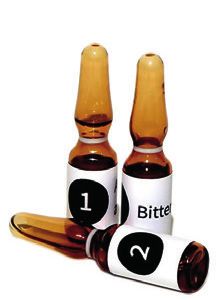
1         SENSORY KIT
          INTRODUCTION

The Siebel Institute Sensory Training Kits are shipped in ready-to-use liquid form, making them as
easy to use as possible.
Each kit is designed to help tasters build their skills towards understanding beer flavor at a truly
professional level.
While breweries with established tasting panel structures will find these kits valuable, it can also be
used for ‘taster calibration’ by others with an interest in beer including:

    Breweries training new and existing staff to spot beer defects more effectively
    Brewers guilds looking to add value to their regularly-scheduled meetings
    Homebrew groups and beer judges looking to sharpen judging and flavor recognition skills
    Distributors, wholesalers and agents who need to be able to ‘talk the talk’ about beer attributes
    with beer specialty retailers
2 FLAVOR
DESCRIPTIONS
Acetaldehyde Common sources: Concentration: Threshold in beer:
1 Green apple, cut grass Fermentation product, staling 45 mg/L 10-20 mg/L
or contamination
Acetic acid Common sources: Concentration: Threshold in beer:
2 Vinegar-like Contamination 360 mg/L 60-120 mg/L
(mash, bacteria or wild yeast)
Almond Common sources: Concentration: Threshold in beer:
(Benzaldehyde) Specific styles (Including 3.0 mg/L 1.0 mg/L
3
Marzipan, Almonds Barrel Aging) yeast growth or
raw materials
Bitter Common sources: Concentration: Threshold in beer:
4 (lsolone) Hopping, 24 mg/L 7-15 mg/L
Hoppy, bitter hop addition
Butyric acid Common sources: Concentration: Threshold in beer:
5 Putrid, baby vomit Bacterial 7.5 mg/L 3.0 mg/L
contamination
Caprylic acid Common sources: Concentration: Threshold in beer:
6 Soapy, fatty, candle wax Microbial contamination or 31.5 mg/L 5-10 mg/L
yeast breakdown at maturation
Contamination Common sources: Concentration: Composition:
7 Sour & buttery Contamination 0.6 mg/L Diacetyl
(Lactobacillus) 360 mg/L Acetic Acid
D.M.S. Common sources: Concentration: Threshold in beer:
8 (Dimethyl sulfide) Wort boil, wort cooling 400 µg/L 25-50 µg/L
Cooked com or vegetables or contamination2 FLAVOR
DESCRIPTIONS
Diacetyl Common sources: Concentration: Threshold in beer:
9 (2,3-Butanedione) Microbial contamination 0.6 mg/L 0.1-0.2 mg/L
Butter, butterscotch or improper maturation
Earthy Common sources: Concentration: Threshold in beer:
10 (2-Ethyl fenchol) Packaging or water-derived 15 µg/L 5.0 µg/L
Geosmin, soil-like contamination
Ethyl acetate Common sources: Concentration: Threshold in beer:
11 Solvent-like, nail polish Wort composition and yeast 120 mg/L 20-40 mg/L
remover growth
Ethyl hexanoate Common sources: Concentration: Threshold in beer:
12 Aniseed, apple or licorice Fermentation product, wort 0.6 mg/L 0.2 mg/L
composition or yeast health
Geraniol Common sources: Concentration: Threshold in beer:
13 Floral, geranium flowers Hop addition and variety 450 µg/L 100-200 µg/L
Grainy Common sources: Concentration: Threshold in beer:
14 (Isobutyraldehyde) Excessive run-off or 3.75 mg/L 1.0-2.5 mg/L
Husk-like, nut-like insufficient wort boil
Hefeweizen Common sources: Concentration: Composition:
15 Spicy & banana Specific beer styles 120 µg/L Eugenol lsoamyl
4.5 mg/L acetate
Indole Common sources: Concentration: Threshold in beer:
16 Farm, barnyard Bacterial infection during 0.55 mg/L 10-20 µg/L
fermentationIsoamyl acetate Common sources: Concentration: Threshold in beer:
17 Banana, peardrop Fermentation product, wort 4.5 mg/L 1.0-1.5 mg/L
composition or yeast health
Isovaleric acid Common sources: Concentration: Threshold in beer:
18 Cheesy, old hops, Use of old, degraded hops 6.0 mg/L 1.0mg/L
sweaty socks
Lactic acid Common sources: Concentration: Threshold in beer:
19 Sour, sour milk Beer spoilage bacteria 400 mg/L 140 mg/L
Light-struck Common sources: Concentration: Threshold in beer:
20 (3-Methyl-2-butene-1-thiol) Clear or green bottles 600 ng/L 5-30 ng/L
Skunky, toffee or coffee like
Mercaptan Common sources: Concentration: Threshold in beer:
21 (Ethanethiol) Poor yeast health, autolysis 3.75 µg/L 1.0 µg/L
Sewer-like, drains
Metallic Common sources: Concentration: Threshold in beer:
22 (Ferrous sulfate) Water sources, 3.75mg/L 1.0mg/L
Metal, tin-like, blood non-passivated vessels
Papery Common sources: Concentration: Threshold in beer:
23 (Trans-2-nonenal) Product of oxidation, staling 2 µg/L 0.5 µg/L
Cardboard, oxidized
Spicy Common sources: Concentration: Threshold in beer:
24 (Eugenol) Microbial contamination, wild 120 µg/L 40 µg/L
Cloves, all spice yeast or aging2 FLAVOR
DESCRIPTIONS
Vanilla Common sources: Concentration: Threshold in beer:
25 (Vanillin) Custard pow- Specific styles (barrel aged, 150 µg/L 40 µg/L
der, vanilla essence common wood flavor)
Exotic Common sources: Concentration: Hop varieties:
(g-Nonalactone) Higher concentration in aged 0.06 mg/L Equinox, Amarillo,
27 Coconut, Vanilla, Fruity, beers (Including Barrel Aged); AU Topaz, Cascade
Glue-like Thermal load indicator of
brewing process
Woody Common sources: Concentration: Hop varieties:
(Caryophyllene and Characteristic of the hop 12.0 mg/L AU Topaz,
33 Humulene Fraction) heavier volatiles and Present GRTettnang
Woody, Resinous in some barrel aged beers Fuggle
Tobacco Common sources: Concentration: Hop varieties:
38 (β-Damascenone) A specific note found in hi- 0.5 mg/L Hallertau Tradition
Natural, Woody, Sweet, gher concentrations in certain & Blanc, Polaris,
Fruity, Plum, Spicy Tobacco, hop varieties and Present in Aurora, Columbus,
Nuances, Menthol-like some barrel aged beers Czech Saaz
H2S Common sources: Concentration: Threshold in
45 Rotten eggs Fenmentation, maturation or 72 µg/L beer:
contamination 4 µg/L
Smoky Common sources: Concentration: Threshold in
(Syringol) Present in Specific Styles and 97.1 mg/L beer:
46 Smoky (smoked wood/ a Common Flavor Component 1.8 mg/L
smoked fish), Phenolic in Barrel Aged Beers
Peat-like Common sources: Concentration: Threshold in
(Guaiacol) Present in some barrel aged 1.35 mg/L beer:
47 Peat-like, Smoky, Woody, beers 10 mg/L
MedicinalBarnyard Common sources: Concentration: Threshold in
(4-Ethylphenol) Common in Many Beers Inno- 10.0 mg/L beer:
48 Barnyard, Horsey, Brett- culated with Brettanomyces 0.3 mg/L
related flavors, Wine-like, Also Present in some barrel
Alcohol aged beers
Coconut Common sources: Concentration: Threshold in
49 (2-Heptanol) Present in some barrel aged 22.4 mg/L beer:
Dill, Earthy, Coconut beers 0.5 mg/L
Caramel Common sources: Concentration: Threshold in
(5-Methyl Furfural) Present in Specific Styles and 147 mg/L beer:
50 Caramel, Spicy, Sweet, a Common Flavor Component 50 mg/L
Almond in Barrel Aged Beers
Whiskey Common sources: Concentration: Threshold in
(Lactone) Common Flavor Component 18.1 mg/L beer:
51 Woody, Oakey, Coconut, in Barrel Aged Beers 0.4 mg/L
Rum-like, Green
Pineapple Common sources: Concentration: Threshold in
(Ethyl Butyrate) Common Flavor Component in 1.8 mg/L beer:
52 Pineapple-like, Brett-re- Many Beers Innoculated with 0.4 mg/L (ASBC)
lated flavors, Rum-like, Brettanomyces, also Present
Tropical Fruit in some barrel aged beers.3 SAMPLE
PREPARATION
STEP 1:
To spike your beer sample: Find the appropriate vial. The painted band around
the narrow neck of the vial (the white line) means that the vial is ready to open
without scoring.
IMPORTANT:
If there is liquid above the white line in the vial, gently tap with your finger to
get all the liquid to the bottom part of the vial.
STEP 2:
To open the vial, hold it with both hands, with one thumb against the narrow
top section.
ADVICE:
You may want to protect your hands from broken glass by using a paper towel,
light cloth or piece of gauze when opening the vial.
STEP 3:
Hold the bottom of the vial firmly while pushing the top section away from you
with easy, even pressure. A light pressure should cleanly snap the vial open,
while using too much force can cause it to shatter.
STEP 4:
Pour the entire contents of the vial into an empty, clean glass or container that
is capable of holding the appropriate amount of beer as indicated on the kit’s
outer packaging.
Add the appropriate amount of beer to the glass or container. This will yield
approximately three times the flavor threshold of the compound.4 TASTING
PROCEDURE
STEP 1:
Prepare a control (unspiked) and a spiked sample of beer. A typical serving
is 80ml to 100ml per person.
IMPORTANT:
To remind you of the beer’s original aroma and taste impression and to
allow to directly compare the differences between both samples, always
start the tasting procedure with your control sample followed by the spiked
sample.
STEP 2: AROMA IMPRESSIONS
Swirl the glass gently. ‘Drive» the sample by your nose while sniffing in for
initial aroma impression. Use two or three short, sharp sniffs to allow the
volatiles to reach the appropriate areas.
STEP 3: TASTE IMPRESSIONS
Take one or two small sips and allow the sample to sit on your tongue for
taste impressions.
STEP 4: SWALLOW
Swallow the sample. This is necessary to allow evaluation of the sample’s
bitterness component.5 MATERIAL SAFETY
DATA SHEET
The Siebel Institute flavor standards are safe to consume once used as directed.
For further information please consult the Material Safety Data Sheet (MSDS)
available for download at http://www.siebelinstitute.com/products/sensorykits/
6 AVAILABLE
SENSORY KITS
COMPREHENSIVE SENSORY KIT
25x1 selected flavors to spike 1L
The Comprehensive Sensory Training Kit offers 25 vials representing
a large variety of the most important flavors and aromatics found in
beer. While breweries with established tasting panel structures will find this kit valuable, it can also
be used for «taster calibration» by brewers guilds, homebrew groups and beer judges.
This kit contains the following flavors:
1x 1 Acetaldehyde 1x 2 Acetic acid 1x 3 Almond
1x 4 Bitter 1x 5 Butyric acid 1x 6 Caprylic acid
1x 7 Contamination 1x 8 D.M.S. 1x 9 Diacetyl
1x 10 Earthy 1x 11 Ethyl acetate 1x 12 Ethyl hexanoate
1x 13 Geraniol 1x 14 Grainy 1x 15 Hefeweizen
1x 16 lndole 1x 17 lsoamyl acetate 1x 18 lsovaleric acid
1x 19 Lactic acid 1x 20 Light struck 1x 21 Mercaptan
1x 22 Metallic 1x 23 Papery 1x 24 Spicy
1x 25 Vanilla6 AVAILABLE
SENSORY KITS
BASIC SENSORY KIT
4x6 selected flavors to spike 1L
The Basic Sensory Training Kit offers 4 pre-measured vials of six
of the most common & important beer-related flavor compounds.
This kit is perfect for companies that do frequent sensory training panels using these core standards.
It is also suitable for those looking for basic sensory training.
This kit contains the following flavors:
4x 1 Acetaldehyde 4x 7 Contamination 4x 8 D.M.S.
4x 9 Diacetyl 4x 17 Isoamyl acetate 4x 23 Papery
SPECIALTY SENSORY KIT
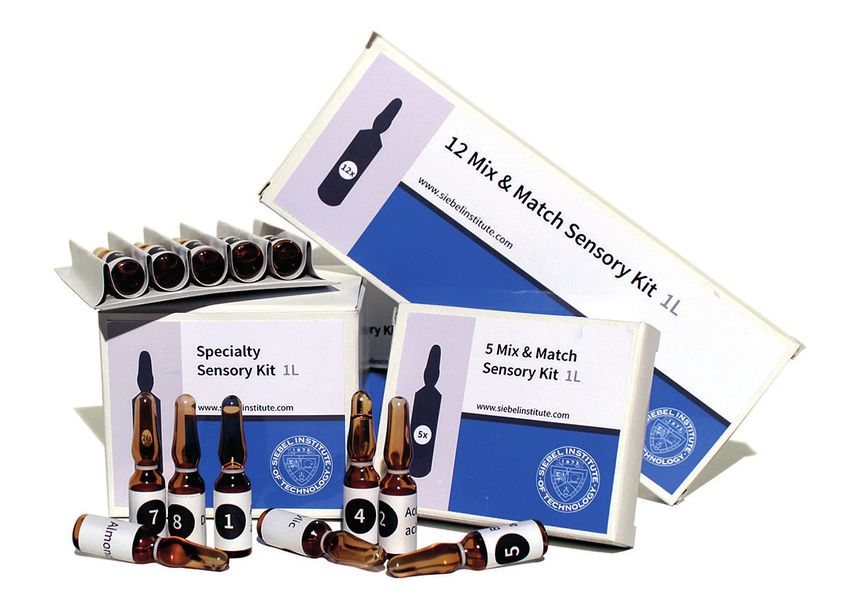
24x1 individual flavors to spike 1L
Our Specialty Sensory Training Kit is ideal for companies conducting
sensory training on a frequent or large-scale basis.
5 MIX&MATCH SENSORY KIT
5x1 individual flavors to spike 1L
The 5 Mix&Match Sensory Kit can be custom designed. You may
choose any 5 flavor compounds that suit your individual needs.6 AVAILABLE
SENSORY KITS
12 MIX&MATCH SENSORY KIT
12x1 individual flavors to spike 1L
The 12 Mix&Match Sensory Kit can be custom designed.
You may choose any 12 flavor compounds that suit your individual needs
BARREL AGED SENSORY KIT
12x1 selected flavors to spike 1L
This kit contains the following flavors:
1x 3 Almond 1x 38 Tobacco 1x 49 Coconut
1x 25 Vanilla 1x 46 Smoky 1x 50 Caramel
1x 27 Exotic 1x 47 Peat-like 1x 51 Whiskey
1x 33 Woody 1x 48 Barnyard 1x 52 Pineapple
REGULAR SENSORY KIT (1 L)
12x1 selected flavors to spike 1L
The Regular Sensory Training Kit (1L) contains 12 of the
most common flavors found in beer. It is suitable for
intermediate training of taste panels and groups of up to 10 people.
1x 1 Acetaldehyde 1x 4 Bitter 1x 7 Contamination
1x 8 D.M.S. 1x 9 Diacetyl 1x 12 Ethyl hexanoate
1x 17 Isoamyl acetate 1x 18 Isovaleric acid 1x 20 Light Struck
1x 22 Metallic 1x 23 Papery 1x 24 Spicy6 AVAILABLE
SENSORY KITS
CRAFT SENSORY KIT
12x1 selected flavors to spike 1L
The Craft Sensory Kit contains 12 flavor compounds that
may be found in many unique styles of craft beer.
This kit contains the following flavors:
1x 3 Almond 1x 8 D.M.S. 1x 9 Diacetyl
1x 12 Ethyl hexanoate 1x 13 Geraniol 1x 14 Grainy
1x 15 Hefeweizen 1x 17 lsoamyl acetate 1x 18 lsovaleric acid
1x 23 Papery 1x 24 Spicy 1x 25 Vanilla
ESSENTIAL OFF-FLAVOR KIT
6x1 selected flavors to spike 1L
The Essential Off-Flavor Kit contains 6 of the most frequently
encountered off-flavors common to beers of all styles.
This kit contains the following flavors:
1x 7 Contamination 1x 8 D.M.S. 1x 9 Diacetyl
1x 18 lsovaleric acid 1x 23 Papery 1x 45 H2S6 AVAILABLE
SENSORY KITS
INTERMEDIATE OFF-FLAVOR KIT
12x1 selected flavors to spike 1L
The Intermediate Off-Flavor Kit offers a total of 12 compounds
that cover a variety of spoilage-related flavors as well as
artifacts from other sources.
This kit contains the following flavors:
1x 1 Acetaldehyde 1x 2 Acetic acid 1x 7 Contamination
1x 8 D.M.S. 1x 9 Diacetyl 1x 14 Grainy
1x 16 Indole 1x 18 lsovaleric acid 1x 20 Light struck
1x 22 Metallic 1x 23 Papery 1x 45 H2S
ADVANCED OFF-FLAVOR KIT
18x1 selected flavors to spike 1L
The Advanced Off-Flavor Kit offers 18 different compounds that
cover the full spectrum of off-flavors that are critical for beer tasters
to know towards accurately evaluating beer.
This kit contains the following flavors:
1x 1 Acetaldehyde 1x 2 Acetic acid 1x 5 Butyric acid
1x 6 Caprylic acid 1x 7 Contamination 1x 8 D.M.S.
1x 9 Diacetyl 1x 10 Earthy 1x 14 Grainy
1x 16 Indole 1x 18 lsovaleric acid 1x 19 Lactic acid
1x 20 Light struck 1x 21 Mercaptan 1x 22 Metallic
1x 23 Papery 1x 24 Spicy 1x 45 H2S7 FURTHER QUALITY
CONTROL TOOLS
HLP MEDIUM
Hsu’s Lactobacillus/Pediococcus Medium
Enables selective counting of lactic acid bacteria. Many lactic acid bacteria can be
detec-ted in as little as 48 hours. Differentiation of Lactobacil/us and Pediococcus can
be made after 5 days of incubation. HLP is a simple test for the most common beer
spoiling bacteria, requiring minimal lab equipment. Anaerobic incubation equipment
and an autoclave are not required.
LCS MEDIUM
Lin’s Cupric Sulfate Medium
For detection and quantitative determination of wild yeast populations in brewing culture
yeast. Approximately 1 million culture yeast is plated on LCSM. This medium is designed
to encourage the growth of non-Saccharomyces yeast. A few Saccharomyces yeast may
show some growth on this medium.
LMDA MEDIUM
Lee’s Multi Differential Agar
A nutrient medium that will detect most organisms commonly encountered in a
brewery. Acid producing bacteria are identified by the development of a clear zone
around the colonies. Further identification is facilitated by the characteristic color
reactions. Actidione may be added to the medium to suppress the growth of culture
yeast.
LWY MEDIUM
Lin’s Wild Yeast Medium
For detection and quantitative determination of wild yeast populations in brewing culture
yeast. allli Approximately 1 million culture yeast is plated on LWYM. The growth of culture
yeast is suppressed. Wild yeast grow as larger distinct colonies. This medium is designed
to encourage the growth of Saccharomyces wild yeast. A number of non-Saccharomyces
yeast will also grow on this medium.8 CONTACT
INFORMATION
For questions please contact:
Siebel Institute of Technology
322 South Green Street, Suite 100
Chicago, Illinois, 60607
United States of America
For sensory kit technical questions:
sensory.kits@siebelinstitute.com
For Microbiological Media distributor, technical and sales inquiries:
dmd@doehler.com
Orders can be placed online at:
www.siebelinstitute.com/sensorykitsYou can also read


