New i-Phone and i-Pad Acid-base Data Interpretation Apps in Clinical Assessment of Critically Ill Patients: Is that a Problem or a Step into the ...
←
→
Page content transcription
If your browser does not render page correctly, please read the page content below
New i-Phone and i-Pad Acid-base Data Interpretation
 Apps in Clinical Assessment of Critically Ill Patients:

    Is that a Problem or a Step into the Future?

              Jesper H Wandrup, Dr med, Cand Scient
               MD Specialist of Chemical Pathology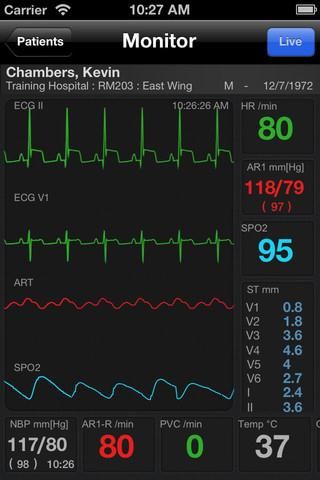
More than eighty percent of doctors now use smartphones
             and tablets and different clinical Apps at work

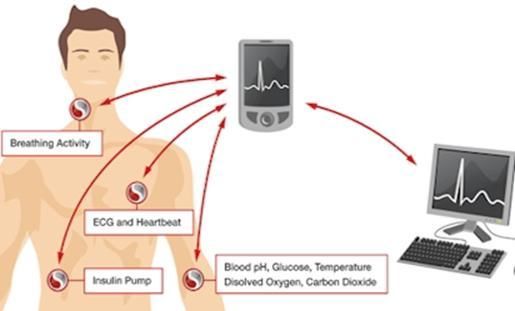
AirStrip Technologies    MIM SoftwareTM     Different Mobile Applications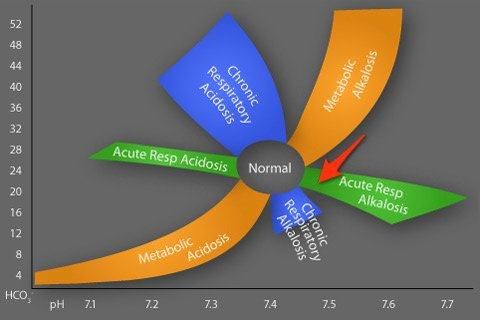
Characteristics of Analytical ABG – Arterial Blood Gases
Interpretation of Acid-base Disorders in ICU
1. In a clinical survey 1982 conducted at a university teaching hospital, 70% of the
   participating physicians claimed that they were well versed in the diagnosis of acid-base
   disorders and that they needed no assistance in the interpretation of arterial blood
   gases (ABGs).
    These same physicians were then given a series of ABG measurements to interpret, and
    they correctly interpreted only approx. 40% of the test samples.
    Hingston DM. A computerized interpretation of arterial pH and blood gas data: do
    physicians need it? Respir Care 1982;27:809-815

2. A clinical survey at another teaching hospital 1984 revealed that incorrect acid-base
   interpretations led to errors in patient management in one-third (33%) of the ABG
   samples analyzed.

    Broughton JO, Kennedy TC. Interpretation of arterial blood gases by computer. Chest
    1984;85:148-149.

3. Another clinical survey 1998 reveals the same serious deficiencies and difficulties
   interpreting ABGs, correctly, as earlier.

    Vergara F. Evaluating the Accuracy of and Time Spent in Analysis of Acid-Base Reports
    by Three Methods: Is a Computer-Aided Method Best? Proc. AMIA Symp. 1998, 1092
   Conclusion:
   The impact of this ABG-interpreting inadequacy may cause trouble in the ICU, where 9 of
   every 10 patients may have an acid-base disorder.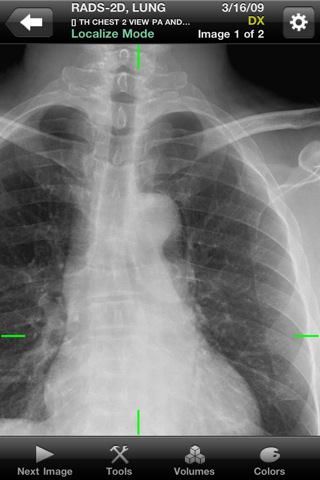
Is Clinical Acid-base Interpretation Still a Problem?

In a study in Australia from 2010 29% of ABGs were incorrectly
interpreted by EM doctors.
Austin K et al. Accuracy of interpretation of arterial blood gases by emergency medicine
doctors. Emergency Medicine Australasia 2010;22:159-165

31% were incorrectly interpreted by critical care nurses in a study
2011 from Utah, USA. However, using graphical tools improved the
result to approx. only 17% incorrectly interpreted.

Doig AK et al. Graphical Arterial Bloood Gas Visualization Tool Supports Rapid and
Accurate Data Interpretation. Computers Informatics Nursing 2011;29:204-211
Acid-Base-Disorders
Henderson-Hasselbalch
cHCO-3 Kidney regulation (24-48 hours)
pH = pK1 + log
a pCO2 Lung regulation (10-15 minutes)
pK1 = 6,12
a = 0,0307 mmol L-1 mmHg -1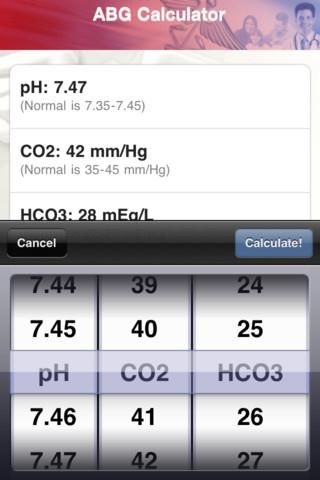
Lung-Regulation - CO2 Excretion

       CO2             CO2
Kidney Hydrogen Ion Excretion Bicarbonate Reabsorption

Blood        Renal Tubulus Cell                    Pre-Urine

                                                      Na+ HPO42-
                       CA
CO2        CO2 + H2O           H2CO3

 HCO3-                      HCO3- + H+             H+ + HPO42-
                                         ATP
  Na+                             Na+             Na+
                                                        H2 PO4-

                                               Dihydrogen phosphate in
                                               urine max. 70 mmol H+/day
Kidney Hydrogen Ion Excretion

  Blood           Renal Tubulus Cell                     Pre-Urine
                        Glutamine
                             Glutaminase

Glutamate           Glutamate + NH3                           NH3

                                       H+                  H+ + NH3
                                                 ATP

  Na+                                      Na+          Na+       +
            ATP                                                NH4
    K+             K+

                                                       Ammonium in urine max.
                                                         400 mmol H+/day
Physiologic Compensation of Respiratory Acidosis and Alkalosis
Clinical ex. of respiratory acidosis: Airway obstruction, overdose of morphine
cHCO-3 (N)
pH = pK1 + log
a pCO2
-
Compensation Kidney: Reabsorption of cHCO3
Clinical ex. of respiratory alkalosis : Fever, hyperventilation
cHCO-3 (N)
pH = pK1 + log
a pCO2
-
Compensation Kidney: Excretion of cHCO3Physiologic Compensation of Metabolic Acidosis and Alkalosis
Clinical ex. of metabolic acidosis: Acute kidney failure, diabetes coma
cHCO3-
pH = pK1 + log
a pCO2 (N)
Compensation Lungs: Hyperventilation
Clinical ex. of metabolic alkalosis: Vomiting, therapy with loop diuretics
cHCO3-
pH = pK1 + log
a pCO2 (N)
Compensation Lungs: HypoventilationSupporting the integration of a graphical ABG visualization into current digital presen- tations of numerical ABG data seems to reduce time needed to extract meaningful information and increase interpretation of ABG, considerably, in the clinical setting. Vergara F. Evaluating the Accuracy of and Time Spent in Analysis of Acid-Base Reports by Three Methods: Is a Computer-Aided Method Best? Proc. AMIA Symp. 1998, 1092 Doig AK et al. Graphical Arterial Bloood Gas Visualization Tool Supports Rapid and Accurate Data Interpretation. Computers Informatics Nursing 2011;29:204-211
How does the new mobile technology
gadgets represented by different Apps fit
into the picture of supporting intensive
doctors and nurses in interpreting ABG?
ABG Stat App

          Icon

          $1.99
          Category: Medical
          Updated: Jan 24, 2012
          Version: 1.6
          Size: 2.5 MB
          Languages: English, Spanish
          Seller: Shane Garst
          © 2012 Impact RN, Guaranteed to Increase your score on the NCLEX and CCRN.

          Requirements: Compatible with iPhone, iPod touch, and iPad. Requires iOS 4.0 or later.

          Description
          All ABG calculations accurate according to the American Association of Critical-Care Nurses “Blood Gas
          Analysis”

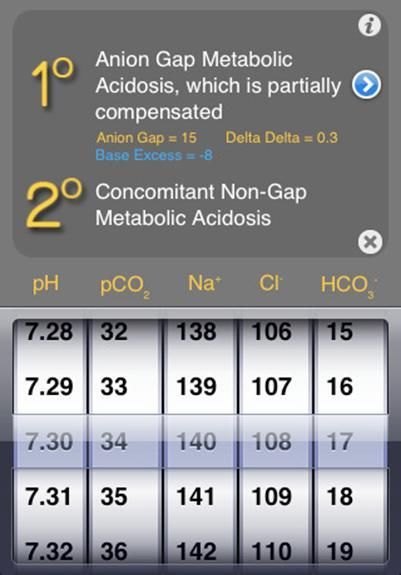
          ABG STAT is an aid for interpretation of ABGs, Anion Gap, A-a Gradient, Oxygen Content, along with
          detailed notes on possible causes and potential corrections.

          Features
              Easy to use
              Fast, accurate input using slot roller
              Detailed views listing possible causes of the acid-base disorder
iPhone/iPad Screenshots ABG Stat App
ABG Acid-Base Eval Support
             Icon
             • Free
             • Category: Medical
             • Updated: May 25, 2011
             • Size: 0.3 MB
             • Language: English
             • Seller: Joshua D. steinberg
             • © 2011 Joshua Steinberg MD and Laleh Jafarian

             Requirements: Compatible with iPhone, iPod touch, and iPad. Requires iOS 3.1.2 or later

             Description
             ABG Acid-Base eval walks a clinician through a stepwise approach to analyse ABG's and
             electrolytes in order to arrive at acid-base disorders and diagnostic ideas about ill patients.

             Features
             The app addresses such common questions as:

             •   What are common causes of metabolic acidosis?
             •   How do I calculate predicted pCO2?
             •   What is the primary acid-base disorder?
             •   Are additional acid-base disorders present, and if so, what are they?

             This app is written and intended for practicing clinicians like internists, family physicians, ER
             docs, cardiologists, pulmonologists, intensivists, and for resident physician trainees.
iPhone/iPad Screenshots ABG Acid-Base Eval Support
Acid Plus - The ABG Calculator

                Icon
                Homepage: Free Radical Software, LLC
                Rating: (74)
                Version: 2.5
                Size: 0.5 MB
                Price: $3.99

Requirements:
Compatible with iPhone, iPod touch, and iPad. Requires iPhone OS 2.2.1 or later.

Description:
Designed, programmed, and used by two internal medicine docs, Acid Plus is an essential tool for
healthcare professionals who need quick, powerful, and easy-to-interpret acid-base results from ABGs
and metabolic panels.

Audience:
Ideal for MDs, PAs, RNs, RTs, EMTs, and med students, everything you need for acid-base calculations
is put right in the palm of your hand. No more ABG cards or guesswork.

With an intuitive design and easy-to-read display, Acid Plus makes it a breeze to answer even the most
complex acid-base problems in seconds. Just turn the device to landscape view to get a colorful graph
with an arrow highlighting the disorder.
iPhone/iPad Screenshots Acid Plus - The ABG Calculator
Definition of a Mobile Platform
For purposes of this guidance, “mobile platforms” are defined as commercial off-the-shelf
(COTS) computing platforms, with or without wireless connectivity, that are handheld in nature.
Examples of these mobile platforms include mobile computers such as the iPhone®, BlackBerry®
phones, Android® phones, tablet computers, or other computers that are typically used as smart
phones or personal digital assistants (PDAs).

Definition of a Mobile Medical Application (Mobile Medical App)
For purposes of this guidance, a “mobile medical app” is a mobile app that meets the definition
of “device” in section 201(h) of the Federal Food, Drug, and Cosmetic Act (FD&C Act); and either:

     •   is used as an accessory to a regulated medical device; or
     •   transforms a mobile platform into a regulated medical device.
Mobile Medical Apps for which FDA will apply Regulatory Oversight
Mobile apps may take a number of forms, but it is important to note that the FDA
will apply its regulatory oversight to only the subset of mobile medical apps as
expressed in this guidance.
The following examples represent mobile apps FDA considers mobile medical apps
and that will be subject to its regulatory oversight:
• Mobile apps that are an extension of one or more medical device(s) by
connecting to such device(s) for purposes of controlling the device(s) or
displaying, storing, analyzing, or transmitting patient-specific medical device
data.
• Mobile apps that allow the user to input patient-specific information and -
using formulae or processing algorithms - output a patient-specific result,
diagnosis, or treatment recommendation to be used in clinical practice or to
assist in making clinical decisions.Mobile Medical Apps for which FDA will not Seek Regulatory Oversight This FDA guidance is limited only to mobile medical apps. The following examples represent mobile apps that FDA does not consider to be mobile medical apps for purposes of this guidance: Mobile apps that are electronic “copies” of medical textbooks, teaching aids or reference materials, or are solely used to provide clinicians with training or reinforce training previously received. These types of apps do not contain any patient-specific information, but could show examples for a specific medical specialty. Examples of such medical text books include the electronic Physician’s Desk Reference and similar reference materials.
Summary and Conclusion Regarding ABG-interpreting Apps

 Possibilities and Benefits
 •   Potential to transform healthcare in both the developing and the developed world
 •   Mobiles are personal and available at the point of care where POCT data are needed
 •   Mobiles are permanently carried by most doctors or nurses
 •   Mobiles or tablets are always on (WIFI)
 •   Mobiles offers an extended possibility for supporting interpreting analytical transmitted
     data at the point of care, correctly.

 Problems and Issues to be Solved
 •   How about security issues regarding sensitive patient data
 •   Issues regarding correct transmission of data and secure passwords for receiving the data
 •   Adequate documentation regarding the support of interpreting the data and possible
     limitations in interpreting guidance
 •   How will FDA secure design control and post-marked surveillance of ABG-interpreting Apps
     already on the market which at present ought to be classified as accessories to medical
     devices (blood gas analyzers)
You can also read


