SHAPING THE FUTURE Award Nominations Due September 20 - CNS Officer Election Begins August 21 - Child Neurology Society
←
→
Page content transcription
If your browser does not render page correctly, please read the page content below
Summer 2020 | Special Issue

    Bringing CNS Members Together to Make Children’s Lives Better

                           Honoring
                            the Past

    Award Nominations Due September 20

SHAPING THE FUTURE

     CNS Officer Election Begins August 21
TOGETHER•APART
                          virtual2020
                                                ICNA • CNS
                                              ICNA • CNS

                                    16th International Child Neurology Congress
                                    49th Annual Child Neurology Society Meeting

                                16th International Child Neurology Congress
                                49th Annual Child Neurology Society Meeting

                   Sharing Knowledge • Sowing Friendships • Spreading Hope

    Coming in October to a Computer Screen Near You
                  The 2020 CNS-ICNA Virtual Joint Meeting, October 12-23
                           Firing You Up Without Burning You Out
The original five-day live meeting in San Diego will be spread out over two weeks in mid-October, giving you more
choices for learning and earning CME, and more chances to network with colleagues from around the world.

The full schedule will be posted in late August, but in a nutshell, here’s what’s coming:

Week 1: October 12-16                                       Week 2: October 19-23
• Workshops, Meet-the-Experts, Junior Seminars,             • NDC Symposium, 7 Plenary/Award Lectures,
  Select Seminars, Special Interest Group Meetings            28 Symposia
• Offered once simulive (pre-recorded sessions              • Offered once simulive (pre-recorded sessions
  w/live interactive audio & text Q&A), then                  w/live interactive audio & text Q&A), then
  on-demand 24/7 thru March 2021                              on-demand 24/7 thru March 2021
• Platform & Poster Presentations – on demand               • Platform & Poster Presentations – on demand
  24/7 throughout the meeting                                 24/7 throughout the meeting
• Exhibits & Industry Sponsored Symposia and                • Exhibits & Industry Sponsored Symposia and
  Product Theaters                                            Product Theaters
• Beaucoup Networking Opportunities                         • Beaucoup Networking Opportunities

    REGISTRATION PORTAL OPENS FIRST WEEK OF SEPTEMBER
                                        Updates on CNS and ICNA websites
CONTENTS
                 SUMMER 2020/SPECIAL ISSUE

Connecting with Colleagues
4   LETTER FROM THE EXECUTIVE DIRECTOR
6   CNS OFFICERS – PAST AND PRESENT
20 2021 CNS AWARD NOMINATIONS
    20   ARNOLD P. GOLD FOUNDATION HUMANISM
         IN MEDICINE AWARD
    22   ROGER AND MARY BRUMBACK MEMORIAL
         LIFETIME ACHIEVEMENT AWARD
    24   BERNARD SACHS AWARD
    26   HOWER AWARD
                                                               Child Neurology Society
                                                               1000 West Cty Rd. E, Suite 290
Connecting with the Future                                     St. Paul, MN 55126
                                                               Tel: 651/486-9447
8   2020 CNS CANDIDATE PROFILES                                Fax: 651/486-9436
                                                               Email: nationaloffice@
     8   PRESIDENT-ELECT                                       childneurologysociety.org
    14   SECRETARY-TREASURER                                   www.childneurologysociety.org

    16   COUNCILLOR OF THE SOUTH                               Editor: Daniel Bonthius, MD, PhD
    18   COUNCILLOR OF THE WEST                                Managing Editor: Roger Larson, CAE

                                                               Published Quarterly

                                             Child Neurology Society | Summer 2020/Special Issue    3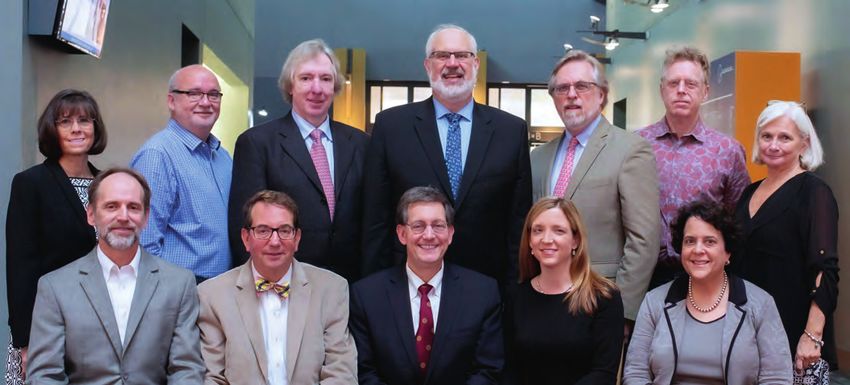
CONNECTING WITH COLLEAGUES
       Letter from the Executive Director

       September 20 – Make it About You
       Roger Larson, CAE

      We measure ourselves by many
      standards. Our strength and our
                                                          O        f all the dates and deadlines I’ve thrown at you in the past 30 years,
                                                                   this may well be the most important: September 20, 2020.

                                                          That’s the date by which all nominations must be submitted for all career
      intelligence, our wealth and even                   recognition awards to be presented at the most consequential CNS Annual
                                                          Meeting since the first gathering in Ann Arbor in 1972: the CNS 50th/
      our good luck, are things which                     Golden Anniversary Meeting to be held in Boston next fall.
      warm our heart and make us
      feel ourselves a match for life.                    September 20 also marks the end of the 30-day period during which Active
                                                          CNS Members will choose four new officers. This year’s election marks only
      But deeper than all such things
                                                          the ninth time in its history that a majority of seats on the CNS Executive
      and able to suffice unto itself                     Committee – four out of seven – are up for election. The last time this
      without them, is the sense of                       happened was in 2003, when Ann Tilton was elected Secretary-Treasurer
      the amount of effort we can put                     and Jim Bale was chosen President-Elect. Both of them, as it turns out, later
                                                          received the Society’s most prestigious honor, the Hower Award; Dr. Tilton
      forth…S/He who can make none                        in 2012 at the annual meeting in Huntington Beach, and Dr. Bale last year
      is but a shadow; s/he who can                       in Charlotte.
      make much is a hero.
                                                          Their selection as Hower Awardees is not unrelated to their election as
      – William James                                     officers. In both instances for both eminences, what we are talking about,
                                                          really, is the Jamesian sense of “effort put forth.” Let me be clear about this:

4   Child Neurology Society | Summer 2020/Special Issue
every child neurologist I have known in my 30+ years with
the CNS is, in my mind, something of a Jamesian “hero”.
And while relatively few have been nominated to run for
                                                                                              Check out the
office and only half been elected, no child neurologist caring
daily for patients or probing the diseases and disorders
                                                                     CNS Lifelong Learning
besetting the brain could ever be accused of making no
effort or be dismissed as a mere shadow.
                                                                                                      website...
Still, some do stand out for expending extra effort, as this
year’s happy coincidence of matching deadlines for electing                                over 35 CME and
new officers and nominating award recipients reminds us.
It is one of the quiet glories of the Child Neurology Society
                                                                                      non-CME courses and
that it has always openly and democratically left it to the                        3 Self-Assessment Exams
members to decide who would be nominated to serve as its
officers or be honored with one of its awards. Doing so has
required some effort on the part of its members; minimal
effort in the case of voting – it takes less than a minute,
                                                                                                Access by clicking
really – a little more when submitting nominations honoring                             Lifelong Learning button
career- and lifelong contributions.
                                                                                            on main CNS website
At bottom, what is really being asked of each member in
terms of effort is relatively simple, if not necessarily easy: it
is an exercise in self-reflection and self-knowledge. In voting
for officers or nominating someone for an award, each
member is essentially asking themselves why they went into
child neurology, why they remain so passionately committed
to it, what tangible and intangible personal rewards they
have reaped, what hopes they might have sown. That latter
question is particularly crucial this year as those elected will
determine how – and how well – the CNS pivots from its first
50 years to its next 50 years. By submitting a nomination or
casting your vote in the election you are putting forth the
effort to honor and support those colleagues and mentors
whose efforts reflect and project, embody and extend your
own at this pivotal point in time where past, present and
future so critically, and creatively, hang in the balance.

What is required, at bottom, is “putting forth the effort” to
seriously ask yourself two questions: 1) Who in the past put
forth the effort needed to make child neurology a calling
that I felt drawn to? 2) Who among these candidates will put
forth the effort needed to help me continue on that path
with the kind and level of passion, commitment and sense
of fulfillment that will compel the next generation – a truly
diverse generation – to put forth the effort needed to follow
after me and chart new hope-filled paths in an emerging
new age of daunting challenges, dazzling opportunities and
dizzying uncertainties?

The online election portal opens August 21. The nomination
portal is open now. Both close September 20. The choice is
yours. The chance is yours to put forth the effort to honor
the past and shape the future.

                                                                    Child Neurology Society | Summer 2020/Special Issue   5
CONNECTING WITH COLLEAGUES
          CNS Officers – Past and Present

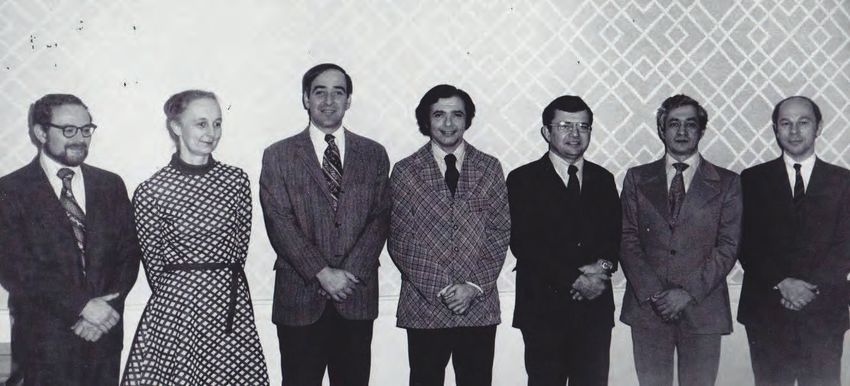
       First CNS Executive Committee: Standing (l-r): John Menkes, Isabelle Rapin, Gerald Fenichel, Kenneth Swaiman, Richard Allen,
       Manuel Gomez, James Schwartz

      President                                     Donna Ferriero            2009-2011         Councillor
      Kenneth Swaiman             1972-1973         E. Steve Roach            2011-2013         Isabelle Rapin             1972-1973
      Gerald Fenichel             1973-1974         Nina F. Schor             2013-2015         Manuel Gomez               1972-1973
      Manuel Gomez                1974-1975         Kenneth Mack              2015-2017         John Menkes                1972-1974
      James Schwartz              1975-1976         Jonathan Mink             2017-2019         James Schwartz             1972-1974
      Richard Allen               1976-1977         Phillip Pearl                 2019-         Karin Nelson               1973-1974
      Bruce Berg                  1977-1978                                                     Raymond Chun               1973-1975
      N. Paul Rosman              1978-1979         Secretary-Treasurer                         Bruce Berg                 1974-1976
      Arthur Prensky              1979-1980         Richard Allen             1972-1975         Paul Dyken                 1974-1976
      Paul Dyken                  1980-1981         Raymond Chun              1975-1978         Arthur Prensky             1975-1977
      Mary Anne Guggenheim        1981-1982         Robert Eiben              1978-1981         N. Paul Rosman             1975-1977
      Raymond Chun                1982-1983         Lawrence Lockman          1981-1984         Jack Madsen                1976-1978
      Robert Eiben                1983-1985         Marvin Fishman            1984-1986         Peggy Copple (Ferry)       1976-1978
      David Stumpf                1985-1987         Ira Lott                  1986-1989         Joseph French              1977-1979
      Marvin Fishman              1987-1989         Peggy Copple (Ferry)      1989-1993         Francis Wright             1977-1979
      Darryl C. De Vivo           1989-1991         Stephen Ashwal            1993-1997         Mary Anne Guggenheim       1978-1980
      Peter H. Berman             1991-1993         Patricia Crumrine         1997-2002         Gerald Golden              1978-1980
      Joseph J. Volpe             1993-1995         Ann Tilton                2003-2004         Gerald Erenberg            1979-1981
      Michael E. Cohen            1995-1997         Nina Schor                2004-2010         John Freeman               1979-1981
      Alan K. Percy               1997-1999         Harvey Singer             2010-2015         Marvin Weil                1980-1982
      Michael J. Painter          1999-2001         Bruce Cohen               2015-2020         Marvin Fishman             1980-1982
      Stephen Ashwal              2001-2003                                                     Peter Huttenlocher         1981-1983
      James Bale                  2003-2005                                                     Michael Bresnan            1981-1983
      Ann Tilton                  2005-2007                                                     David Stumpf               1982-1984
      John Bodensteiner           2007-2009                                                     Gwendolyn Hogan            1982-1984

6   Child Neurology Society | Summer 2020/Special Issue
CNS Executive Committee 2019-2020: Seated (l-r): Donald Gilbert (rotated off 10/19), Bruce Cohen, Phillip Pearl, Lori Jordan,
Nancy Bass. Standing (l-r): Sue Hussman (CNS Associate Director), Michael Shevell (rotated off 10/19), NIgel Bamford, Jonathan Mink,
Roger Larson (CNS Executive Director), Mark Wainwright, Theresa Trapilo (CNS Annual Meeting Adjunct/Boston Children’s Hospital)

Joseph Volpe                1983-1985         Patricia Crumrine           1995-1997         Jonathan Mink               2007-2009
Barry Russman               1983-1985         James Bale                  1995-1997         Robert Rust                 2008-2010
Russell Snyder              1984-1986         Alan Hill                   1996-1998         Wendy Mitchell              2008-2010
Ian Butler                  1984-1986         Ann Tilton                  1996-1998         Warren Lo                   2009-2011
W. Edwin Dodson             1985-1987         Edward Kovnar               1997-1999         Sakkubai Naidu              2009-2011
Michael Painter             1985-1987         Richard Nordgren            1997-1999         Gary Clark                  2010-2012
Robert Zeller               1986-1988         Michael Goldstein           1998-2000         Sidney Gospe                2010-2012
Doris Trauner               1986-1988         E. Steve Roach              1998-2000         Barry Kosofsky              2011-2013
Darryl De Vivo              1987-1988         Faye Silverstein            1999-2001         Suresh Kotagal              2011-2013
Gary Goldstein              1987-1089         Michael Johnston            1999-2001         Vinodh Narayanan            2012-2014
Robert Vannucci             1988-1989         Carmela Tardo               2000-2002         Jayne Ness                  2012-2014
Stephen Ashwal              1988-1990         Pauline Filipek             2000-2002         Bruce Cohen                 2013-2015
Jack Pellock                1988-1990         Michael Noetzel             2001-2003         Roger Packer                2013-2015
Joseph Pasternak            1989-1991         Carl Crosley                2001-2003         Kevin Ess                   2014-2016
Patricia Duffner            1989-1991         Julie Parke                 2002-2004         Kara Lewis                  2014-2016
O. Carter Snead             1990-1992         Roy Elterman                2002-2004         Phillip Pearl               2015-2017
Edwin Meyer                 1990-1992         Marc Patterson              2003-2005         Renee Shellhaas             2015-2017
Israel Abroms               1991-1993         Douglas Nordli              2003-2005         Peter B. Kang               2016-2018
William Logan               1991-1993         Donna Ferriero              2004-2006         Mary Zupanc                 2016-2018
Mary Johnson                1992-1994         Leon Dure                   2004-2006         Donald Gilbert              2017-2019
Alan Percy                  1992-1994         Kenneth Mack                2005-2007         Michael Shevell             2017-2019
Phyllis Sher                1993-1995         Laura Ment                  2005-2007         Lori Jordan                 2018-2020
Gregory Holmes              1993-1995         Leslie Morrison             2006-2008         Mark Wainwright             2018-2020
W. Donald Shields           1994-1996         Anne Anderson               2006-2008         Nancy Bass                      2019-
John Bodensteiner           1994-1996         Steven Leber                2007-2009         Nigel Bamford                   2019-

                                                                                 Child Neurology Society | Summer 2020/Special Issue   7
2020 Candidate Profiles
    Active Members – Vote on-line August 21-September 20
    On-line balloting for four positions on the CNS Executive Committee will be conducted August 21-September 20.
    Below are profiles written by the candidates themselves, with responses from President-Elect candidates
    to additional questions posed by the Nominating Committee.

    PRESIDENT-ELECT

                         I am currently the Director of the                    project that became the CPT 1997 Single
                         NeuroDevelopmental Science Center at Akron            System exam. In 2006 I assumed the chair
                         Children’s Hospital and am the Medical                of the Practice Committee where I had the
                         Director of the hospital’s Research Institute.        opportunity to both stumble and learn. The
                         I hold the titles of Professor of Pediatrics and      AAN recruited me simultaneously to serve on
                         Professor of Integrative Medical Sciences             both the coding and practice committees,
                         (Physiology) at Northeast Ohio Medical                which gave me deeper exposure to guideline
                         University. I spent the first two decades of          development, quality, business management,
                         my career at The Cleveland Clinic before              healthcare policy, and hospital department
    Bruce H. Cohen,      moving to my current position and have                finances. My term as chair of the CNS Practice
    MD, FAAN             practiced in a high-volume clinical practice          Committee ended and then I was elected as
                         before transitioning currently to a blended           CNS Councillor for the Midwest, and most
                         practice involving both translational and             recently as Secretary-Treasurer. I served in
                         clinical trials research. For the last five years I   elected leadership positions as Chairman
                         have assumed administrative duties including          of the AAN Child Neurology Section, as
                         strategic planning and managing over 60               President of the Professors of Child Neurology
                         providers and 200 employees in six divisions.         (PCN), and as President of the Mitochondrial
                                                                               Medicine Society. For the last decade I have
                         I was born in St. Louis, and graduated                been appointed by the AAN as the Advisor
                         Washington University (Summa Cum Laude).              to the AMA’s CPT Panel, which involves
                         I attended medical school at the Albert               working with all other medical professional
                         Einstein College of Medicine and fell in love         organizations, and assisting in the authorship
                         with child neurology under the watchful               of telemedicine codes and the 2021 E/M
                         eyes of Isabelle Rapin and Al Spiro. Following        codes. I have 120 peer-reviewed publications,
                         pediatric residency at The Children’s Hospital        650 invited lectures, 40 chapters, and one
                         of Philadelphia (CHOP), I trained in child            book that I co-edited with two prior students.
                         neurology at Columbia Presbyterian Medical            I am an Associate Editor for Mitochondrian and
                         Center, followed by a fellowship in neuro-            Continuum and serve on the editorial board
                         oncology at CHOP. I have focused my clinical          for Pediatric Neurology.
                         and academic career in neuro-oncology,
                         neurofibromatosis and mitochondrial                   I have been married to my wife and best
                         medicine. My career path has also taken               friend Anna for almost 18 years and we have
                         me into the area of business management,              two terrific kids aged 14 and 16. Anna helps
                         health care policy, and payment models.               me fine a balance in life. We love decorating,
                         In the early 1990s I walked into a CNS                biking and family travel. I also have two older
                         Practice Committee meeting and was                    children, one an internal medicine resident
                         quickly assigned the task of understanding            and one in a PhD program.
                         the nuances of the newly written E/M CPT
                         codes, and then represented the CNS in a

8     Child Neurology Society | Summer 2020/Special Issue
Vote online
                                                                                     August 21-September 20

PRESIDENT-ELECT

                   I am tremendously honored to be considered         the new anti-seizure medications (2014),
                   for the position of President-Elect of the Child   sleep in the intensive care unit (2018), and a
                   Neurology Society (CNS). I am a Clinical           symposium on infantile spasms (2019). From
                   Professor of Pediatrics at the University of       2011 to 2014, I also organized the Junior
                   Michigan. My clinical practice focuses on          Members Seminars for the annual meetings.
                   children with complex epilepsy, while my           During that time, I expanded the program
                   research program is investigating causes and       to include concurrent sessions which were
                   consequences of neonatal seizures and the          designed to be relevant to junior colleagues
                   implications of abnormal sleep physiology          at various stages in training and with diverse
Renée Shellhaas,   among infants who require intensive care.          interests across academic and private practice
MD, MS             I am also an active leader in several              careers. I learned about the behind-the-
                   multicenter pediatric epilepsy collaborations.     scenes structure and organization of the CNS
                   My research was first supported by the             through service as Councillor for the Midwest
                   Pediatric Epilepsy Research Foundation (PERF)      (2015-2017), and more recently the CNS-
                   Shields Fellowship Award (2008) and is now         CNF Strategic Collaboration Working Group
                   funded by PCORI, NIH, and PERF.                    (2019-2020). Finally, since 2016, I have had
                                                                      the privilege of co-chairing the organizing
                   I grew up in Nova Scotia, Canada, then             committee for the annual Jack Pellock
                   attended Middlebury College, followed by           Resident Seminar on Epilepsy. Though the
                   the University of Michigan Medical School.         Pellock Seminar cannot be held in person this
                   My residencies in Pediatrics and Child             year due to the COVID-19 pandemic, virtual
                   Neurology, and a fellowship in Clinical            meeting technology allows us to invite far
                   Neurophysiology were all completed at the          more residents than usual in order to teach
                   Children’s Hospital of Philadelphia. I joined      epilepsy fundamentals while connecting
                   the faculty at the University of Michigan in       learners with each other and with leaders in
                   2007, where I completed a Master’s degree          the field, as well as – most importantly –
                   in Clinical Research Design and Statistical        welcoming our residents as highly valued
                   Analysis at the School of Public Health.           members of the CNS. My sincere hope is
                                                                      that the Pellock scholars will grow deep roots
                   I have been actively involved with the CNS
                                                                      in our Society and that we will mentor and
                   ever since I received an Outstanding Junior
                                                                      sponsor them to confidently integrate into
                   Member Award (2005). I served two terms on
                                                                      our ranks and develop as our future leaders.
                   the Scientific Selection and Program Planning
                   Committee (2009-2015). As a concurrent             In sum, I view the Child Neurology Society
                   member of the American Epilepsy Society            as my extended family and my professional
                   Pediatric Content Committee, I functioned as       home. With your support, I look forward to
                   a liaison between the two planning groups          serving you as the next CNS President.
                   and was successful in achieving a goal of
                   enhancing pediatric epilepsy content for the
                   CNS annual meetings. I organized several
                   well-received sessions, including breakfast
                   seminars on epilepsy classification (2013),

                                                                      Child Neurology Society | Summer 2020/Special Issue   9
Candidate Q&A: PRESIDENT-ELECT

     What have been your most important or rewarding experiences in your years with
     CNS or with other professional organizations,and how have these experiences
     shaped your vision of the direction the CNS might take under your leadership?

     Bruce H. Cohen, MD, FAAN:                                       change. This will require new skills, and for our members
     This is my only opportunity to ask for your support,            to develop and participate in quality projects within the
     so I will share my personal journey through the CNS.            CNS and in other societies. Doing so will ensure our
     My closest friends outside my family evolved from               patients receive the care they need by those best able to
     relationships that began at the annual meetings and             deliver that care. This work must occur while we never
     committee work within the CNS, AAN and other                    take our eyes off the science, advocacy, education and
     professional organizations. My most rewarding                   professionalism that defines the CNS.
     experiences are these true friendships and the scholarly,
                                                                     I treasure the time I have spent working for our Society.
     policy, and advocacy accomplishments achieved with
                                                                     The CNS is healthy, both financially and in spirit.
     these friends. As I look back on the 30 annual CNS
                                                                     Our diverse membership is united in purpose as we
     meetings attended, I also cherish the memories of
                                                                     represent the needs of the most vulnerable patients.
     conversations in the hallways and meeting rooms.
                                                                     But we must be ready to pivot and adjust to the
     I am not alone – look at the faces of our members
                                                                     changes that we will face.
     at every annual meeting and especially at the Legacy
     Reception, where we reflect on the years.                       I understand the hardships facing our profession, along
                                                                     with the impact members face because of career stage
     A highlight, and the cumulation of work of years on the
                                                                     and family pressures. I have worked in a high-volume
     Practice Committee, was addressing the membership at
                                                                     practice, served as a training director, mentored dozens
     the 2017 CNS Presidential Symposium on the impact
                                                                     of junior neurologists, participated in NIH and industry-
     of new healthcare models on the financial health of our
                                                                     sponsored grants and clinical trials, chaired committees at
     profession. As part of my experience, I have had the
                                                                     my hospital, chaired scientific advisory boards in advocacy
     opportunity to mentor junior members in both health
                                                                     organizations and managed budgets. I want to make
     care policy issues and in scientific investigation. When
                                                                     sure we leave the profession in great shape for our junior
     I think of the reasons I am running for president, it is
                                                                     partners, who will carry this torch forward during our
     because I want to ensure the health of our society and
                                                                     second 50 years. I will always advocate for child neurology
     the practice of child neurology by bringing new
                                                                     and want to serve as your president.
     members along the journey.

     Member participation is essential for a healthy CNS and
     I thank past leadership for implementing diversity in
     committee membership. One new initiative will assist
     the committee chairs to formalize a roadmap for career
     success in their committees and committee reporting.
     A second initiative will address the changes we face
     in practice as payment models change. All practices
     regardless of size or scientific focus will need to adjust to

               Vote online
               August 21-September 20

10      Child Neurology Society | Summer 2020/Special Issue
What have been your most important or rewarding experiences in your years with
CNS or with other professional organizations,and how have these experiences
shaped your vision of the direction the CNS might take under your leadership?
Renée Shellhaas, MD, MS: ongoing professional dialogues through CNS Connect
As we approach the 50th anniversary of our Society, and less formal individual interactions, the CNS can and
it is time to pause and reflect on the rich history of our should serve as a hub for connections between members
members and their work. In the time since the CNS from all types of child neurology disciplines, practices
began, understanding of genetics, opportunities for and programs.
neuroimaging and neuromonitoring, and possibilities of
The CNS has played a central role in my career. Its
national and international collaboration have blossomed.
members have been extraordinarily generous with their
With its history of discovery and innovation, the future
time and talents. They sponsored me for my first official
of our field – and our Society – has never been brighter.
assignments (membership in the Scientific Selection and
New generations of disease-modifying therapies
Program Planning Committee was key to my sense of
provide both new hope and new challenges. Research
belonging in our society, just as it taught me essential
networks are fostering exciting discoveries in the lab,
skills related to scientific review and conference planning).
while learning healthcare systems offer the possibility of
They challenged me to form a big-picture vision while
integrating cutting edge research results into clinical care
maintaining patience and attention to detail (election
and informing the next set of high priority questions.
as Councillor for the Midwest and service on the
Meanwhile, the diversity of our colleagues continues to
CNS-CNF Strategic Collaboration Working Group have
grow across demographic profiles, clinical endeavors, and
been inspirational and showed me the grittier side of
research areas. With deliberate support for our members,
organizational leadership).
advocacy for our patients, and thoughtful vision from our
leaders, the next 50 years will be transformational for child My hope for the CNS is that it will deliberately grow in
neurology and the CNS. inclusiveness as it supports and empowers all members
of the child neurology community. I hope that more
Among my most rewarding experiences with CNS has
and more individuals will, like me, find their professional
been organization of the Jack Pellock Resident Seminar
home here. And I hope that this home will strengthen
on Epilepsy. This annual event brings together senior
their careers and challenge them to innovate, connect and
residents from North American programs to intentionally
grow on behalf of the children and families who are at the
link them to each other and introduce them to a diverse
center of our extraordinary profession.
faculty who are selected for their expertise and their
prioritization of mentorship. Closely aligned programs,
such as the CNCDP-K12, also provide our younger
members with deliberate links to each other and to
senior leaders (I joined the CNCDP-K12 faculty last year).
Friendships formed through these programs can last
a lifetime and enrich our personal connections to the
CNS. Through programs like the Pellock Seminar and
the CNCDP-K12 retreat, as well as our annual meetings,
Child Neurology Society | Summer 2020/Special Issue 11Candidate Q&A: PRESIDENT-ELECT
Personal Statement/Additional Information
Bruce H. Cohen, MD, FAAN: within my institution, and members of the CNS and other
These are critical times for American Medicine and our organizations. This is reflected within the authorship
society. In these past few months, the importance of the of many publications, the roles I serve on professional
interactions between clinical medicine and the larger committees, and at work, where I mentor dozens of junior
systems involving healthcare delivery and structural investigators on their projects. My professional society
inequalities have become magnified. Using my extensive roles and advocacy work have taught me humility and the
experience in leadership, research, healthcare economics, need to thoughtfully adjust to the ever-changing needs of
and of course, clinical medicine, I hope to contribute the organization or new business model.
to our community by serving as your President of the
My employment experience, leadership on professional
Child Neurology Society. I am grateful for the leadership
committees and peer reviewed publications demonstrate
experiences I have had, and my family and job allow me
my depth of knowledge and experience as it relates to
to dedicate the time necessary to carry out the role of
the practice needs for both academic and non-academic
president. I am committed to leading with an eye towards
practices. I have spoken and written extensively on
the unique practice needs for members in both academic
health care economics as it relates to neurology practice
and non-academic practices, the importance of diversity
and this experience will benefit the membership’s
and inclusion, and the need for mentorship engagement
practice, financial security, academic pursuits and their
and thoughtful innovation.
patients’ needs.
My roles at Akron Children’s Hospital, the hospital’s
My commitment to diversity and disability is reflected in
foundation board, as the AAN Advisor to the AMA-CPT
1) my hires at work; 2) the Diversity Committee formed
panel, as well as in the other roles I assumed has taught
within Neuroscience under my leadership that addresses
me the skills of balancing conflicting needs in the setting
issues of diversity, disability and inclusion; and 3) the
of limited resources. Having lived the life of a clinician in
composition of two boards that I have appointed and
a high-volume practice, I understand only too well the
controlled in the last 5 years (Neuroscience Leadership
ever-increasing pressures that face our members. I have
and UMDF-SMAB). As president, my commitment to
participated in dozens of clinical trials and served as
diversity within all levels of the CNS would continue.
PI/Chair for National Cancer Institute and industry-
sponsored trials. I have held subawards in NIH I believe I have the vision, temperament, skills and
grants, now partially funded by a U54 as the second commitment to serve our society, and I would be
highest contributing institution in the North American honored to serve as your president.
Mitochondrial Disease Consortium. These roles have
allowed me to mentor residents, fellows and colleagues
Vote online
August 21-September 20
12 Child Neurology Society | Summer 2020/Special IssuePersonal Statement/Additional Information
Renée Shellhaas, MD, MS: AAP Section on Neurology and the PERC steering committee.
Leadership Experience: I have served as a leader of both I am currently a medical advisory board member for Hope
small clinical teams and larger research collaboratives. for HIE and spent six years working for my church’s staff-
I currently lead NIH-funded research teams that span the parish relations committee. In 2019, I was asked to join the
nine centers of the Neonatal Seizure Registry (co-PI CNS-CNF Strategic Collaboration Working Group. I used this
Dr. Hannah Glass; treatment and consequences of neonatal opportunity to actively engage and learn more deeply about
seizures) and a seven center group from the North American the Child Neurology Foundation and how its mission and
Fetal Therapy Network (sleep-disordered breathing in infants work complement the CNS.
with myelomeningocele).
Each of these organizations has its own culture,
Some of my most meaningful leadership experiences center priorities, structure, and history. Serving a range of
on the CNS. I first learned about abstract selection and organizations has broadened my horizons and given me
program planning during my consecutive terms on the a variety of experiences that shape my approach to
Scientific Program Planning Committee (2009-2015) and leadership and service.
developed skills to organize and lead breakfast seminars
Contributions to diversity: This issue is not just trendy
and symposia for the annual meeting. I was honored to be
in summer 2020. It is fundamental to the future of our
elected Councillor for the Midwest (2015-2017) – ironically
profession and to the health and well-being of the children
during the time when the 2020 CNS/ICNA meeting
and families we serve. I realize that I can never fully
proposal was being developed. Since 2016, alongside
understand the experience of an under-represented minority
Drs. Pearl and Wirrell, and with Roger Larson’s wise guidance,
in child neurology. Yet, I do know the opportunities and
it has been my privilege to organize the Jack Pellock Resident
challenges related to being a woman in this field. While
Seminar on Epilepsy.
nobody should be elected or offered opportunities solely
For as long as I can remember, CNS has been my professional because of the color of their skin or the makeup of their
home, but I have also had the honor of serving in elected chromosomes, no person should ever be passed over due
and appointed leadership roles for the American Academy of to those factors. We must actively promote and value our
Pediatrics Section on Neurology (Executive Committee diversity now, as we pivot toward the next 50 years of the
2018-2021), American Epilepsy Society (most recently as CNS. Our work here is just beginning, but will remain at the
Research & Training Council member, 2018-2020) and core of my priorities should I be elected to lead the CNS.
Pediatric Epilepsy Research Consortium (steering committee
Contributions to mentoring junior colleagues:
member, 2014-2018). I also serve on the editorial board for
As a recipient of a CNS Outstanding Junior Member Award
Neurology (currently as Associate Editor), Pediatric Neurology,
and the CNF/PERF Shields fellowship, I know firsthand what
Journal of Child Neurology, Journal of Pediatrics, and Sleep.
a difference the CNS can make to a young child neurologist.
Involvement with these organizations provides me a rich
Among my mentees at the University of Michigan,
network of advisors and a range of experiences that will
twelve have presented at a CNS meeting since 2008
inform my work as CNS President.
(one Outstanding Junior Member awardee and one
Knowledge of both academic and non-academic Child Koenigsberger Scholarship winner).
Neurology priorities: I am an academic child neurologist
On a larger scale, I have worked diligently to enhance
with an active clinical research portfolio. While this narrows
CNS junior member programming. This began with
my experience with non-academic child neurology, I have
expansion of the junior member seminars to include tracks
been careful to listen for the non-academic perspective
based on training stage and career interests. It has been a
during my time as CNS Councillor and in my work with
true joy to lead the Pellock Seminars – these foster resident
junior members and my own trainees who have a range of
networking but also allow talented junior faculty to give talks
career aspirations. The CNS exists to support all members of
and mentor small group discussions alongside senior leaders.
our professional community.
Raising up our diverse and tremendously talented junior
Experience on non-profit boards: I have served on the colleagues must always be a CNS priority.
CNS board, as well as on the executive committee for the
Child Neurology Society | Summer 2020/Special Issue 13Candidate Profiles: SECRETARY-TREASURER
SECRETARY-TREASURER
It is an honor to be nominated for Secretary- of two important journals in our field: Pediatric
Treasurer of the Child Neurology Society. I am an Neurology and the Journal of Child Neurology,
Associate Professor in the Departments of Pediatrics as well as the journal Stroke.
and Neurology at Vanderbilt University Medical
Center, where I direct our pediatric stroke program I am knowledgeable about both academic and
and co-direct our multidisciplinary pediatric non-academic child neurology priorities and
neurovascular program. understand that many of these priorities are
overlapping. Every day, child neurologists face the
I grew up in Minnesota, Oklahoma, and overseas challenges of reimbursement – being paid for our
with stops in Tokyo, Copenhagen, and Brussels. work, our time, our thought and care for children
Lori C. Jordan, MD,
PhD I earned a B.S. in Biology from the College of with complex neurological issues, keeping current
William and Mary in Virginia, before moving home with rapidly growing medical knowledge in our field
for medical school at the University of Oklahoma. including neurogenetics and genomic therapies,
I completed training in Pediatrics, Child Neurology and avoiding burnout, while maintaining our love
and Vascular (Stroke) Neurology at Johns Hopkins. for medicine. Securing funding for research and
As my interest in pediatric stroke grew, I realized scholarly activities that advance our field is also
that I wanted to do clinical research and hopefully critically important. Finally, diversity is a priority in
advance stroke prevention, treatment, and recovery our field and is present in our patient populations.
for children. After finishing my clinical training, Multiple languages are heard every day in our
I completed a PhD in Clinical Investigation at the clinics. We want to enhance and value diversity in
Johns Hopkins Bloomberg School of Public Health our colleagues and in our patients.
and joined the faculty at Johns Hopkins. There I
served as Associate Residency Program Director I strive to make contributions to diversity in my
and started a pediatric stroke program which roles as an educator, researcher and mentor. I have
allowed me to combine my passion for clinical worked to recruit a diverse group of residents to
care and clinical research directed toward children our training program and support them to become
with hemorrhagic and ischemic strokes. I moved leaders in our field. My research is focused on stroke
to Vanderbilt in 2011 where I have expanded in children with sickle cell anemia. The challenges
my clinical research program, founded a second faced by this population are evident daily. I have
pediatric stroke program, served as Program also been fortunate to serve as a research mentor
Director for our Child Neurology Residency program to a diverse group of MD and PhD trainees. I have
and currently serve as Associate Program Director. become acutely aware of the implicit bias and
racism they face despite their excellence.
My leadership experience at Vanderbilt includes
serving as both Program Director and currently as Training and mentoring the next generation of
Associate Program Director for our Child Neurology child neurologists is critically important. I have
Residency program. I also currently serve as the CNS been fortunate to be mentored by brilliant,
Councillor for the South, and as Secretary-Treasurer generous people in our field and have worked to
and on the Board of Directors of a new 501c3, the pay it forward by devoting considerable time to
International Pediatric Stroke Organization. Helping mentoring, including receiving NIH funding for
get a new non-profit organization off the ground mentoring in patient-oriented research. Finding
and working to make it financially sustainable and successfully pursuing one’s passion(s) leads to
has increased my appreciation for the CNS fulfilment in any field and is critical for our residents,
immeasurably. I am also currently a member of the fellows and junior faculty. I am passionate about
American Heart Association Brain Health Committee helping junior colleagues develop their careers
and have served on the AHA National Epidemiology and enjoy mentoring in patient care, program and
Stroke Statistics Committee, the American Society career development, and research.
of Hematology Guidelines for Cerebrovascular
The CNS is the professional home for child
Disease in Sickle Cell Anemia Committee, and
neurologists. I look forward to continuing to serve
directed the research fellowship for Vanderbilt’s
this organization and to working alongside so many
StrokeNet site (U10-NS086492). I currently serve
wonderful colleagues. Thank you for considering me
on the program committee for the International
for Secretary-Treasurer.
Stroke Conference and on the editorial boards
14 Child Neurology Society | Summer 2020/Special IssueSECRETARY-TREASURER
I have served in many leadership positions, I was on the board of directors for Missouri’s
including currently as Vice Chair, Division March of Dimes chapter. I also had the privilege
of Pediatric and Developmental Neurology of serving on the Child Neurology Foundation’s
and Professor of Neurology and Pediatrics at Advocacy Committee for 13 years during which
Washington University. Within the Child Neurology time we contributed to a respite workbook for
Society, I have been a member of various families/care providers and organized a Patient
committees since 1988, including the Executive Advocacy Day at the CNS meeting in 2006,
Committee (Councillor for the Midwest) and three as part of our mission to provide parents
years as Finance Committee chairman. Presently I with appropriate resources to care for their
Michael J. Noetzel, am a member of the CNS Practice Committee, the neurologically involved child.
MD editorial board of Journal of Pediatric Neurology and
the AAN’s Neurorehabilitation Topic Work Group. This latter concept has been especially important
to me, as I care for a large number of patients
Previously as division head, Neurologist-in-Chief at impaired by physical and/or intellectual
St. Louis Children’s and as director of Clinical and deficits, as well as those further disadvantaged
Diagnostic Neuroscience Services (this last position by social circumstances and race. Working in
for nearly 25 years), I was challenged by the neurorehabilitation has taught me that disability
varied priorities of academic and private practice limitations are very dependent upon environment.
child neurologists. In response, we developed The manner by which we promote wellness and
new clinical opportunities including: inpatient reduce disability in our patients often must include
programs in neurorehabilitation, neurocritical resources designed to modify or adapt a child’s
care, neonatal neurology and acute stroke; environment and therefore exceed the boundaries
outpatient centers in cerebral palsy, neurogenetic of traditional medicine.
disorders, and demyelinating/autoimmune
diseases; and expanded epilepsy monitoring and During my years as division director, 25 individuals
sleep centers. In collaboration with the hospital, completed their fellowship training in child
an off-site specialty care center was built, which neurology. I firmly believe that how we gather
allowed us to partner closely with private practice information from others, and the inherent value we
neurologists. I have been an investigator in place on it, is greatly influenced by the style and
multi-centered NIH sponsored research studies singular mannerisms of those whom we consider
(Diabetes Control and Complications Trial, Silent our mentors. It is gratifying to see expanding
Infarction Transfusion Trial and the Autism and leadership roles taken on by former trainees and
Developmental Disabilities Monitoring Network) junior colleagues in my fields of pediatric stroke,
and currently serve on the publication committee cerebral palsy and neurorehabilitation, especially
of the International Pediatric Stroke Study Group. within the CNS. Hopefully it is evident that if
Based on these experiences, I recognize the impact elected Secretary-Treasurer, I will serve the CNS
of reduced national funding on research, with the with great dedication and enthusiasm.
COVID19 pandemic creating greater hardship and
uncertainty, especially for our junior colleagues.
Vote online
August 21-September 20
Child Neurology Society | Summer 2020/Special Issue 15Candidate Profiles: COUNCILLOR FOR THE SOUTH
COUNCILLOR FOR THE SOUTH
I have always considered the Child Neurology for Child Neurologists. In my local community,
Society my home. I feel like I’ve been a CNS I co-founded the Autism Consortium of Central
member all my life, though I didn’t attend my first Texas, a group of clinicians, researchers, therapists,
annual meeting till I was a fourth-year medical and families dedicated to improving the lives of
student. I am eager to serve on the CNS Executive people with autism.
Committee to further the important work we do
as child neurologists and support the success of I am active in mentoring junior colleagues. I teach
current and future clinicians. and supervise medical students and residents in
clinic and on the inpatient service. I am the advisor
In my clinical practice, I focus on the care of for Dell Medical School medical students entering
Audrey C. Brumback,
children with autism and neurodevelopment Neurology residency. In 2017, I chaired the Child
MD, PhD
disabilities. I also direct a translational research Neurology resident recruitment committee at my
program to develop novel treatments for these institution, and I continue to be an active member
challenging disorders. I’ve been grateful for the of the recruitment committee. I have served as a
support given me over the years, including the mentor and panelist for the NINDS R25 Grantee
2016 CNF Pediatric Epilepsy Research Foundation Workshop and have lectured for the Early Career
(PERF) Elterman Research grant and the 2017 Research Training Symposium at the AAN annual
CNS Philip R. Dodge Young Investigator Award. meeting. To promote under-represented groups
in science and medicine, in 2017, I became
I have been an active member of the Child the founding faculty advisor for the UT Austin
Neurology Society. I served on the CNS Bylaws student chapter of the Association for Women in
committee from 2015-2017, the CNS Awards Science. I also mentor, with paid summer research
Committee 2017-2020, and this year I chaired internships in my laboratory, high school students
the Awards subcommittee tasked with reviewing from under-represented groups who are interested
applications for the PERF Elterman Research grant. in neurology.
In 2019, I became a member of the CNS Scientific
Selection & Program Planning Committee, I am excited by the prospect of joining the CNS
which includes reviewing abstracts for the annual Executive Committee as the Councillor for the
meetings. For the past year, I have served on the South to help shape the future of the Child
scientific organizing committee for the 2020 joint Neurology Society.
meeting of the CNS and the International Child
Neurology Association (ICNA).
I have also been active in the child neurology
community outside of the CNS. I am a member
of the editorial boards for the journals Pediatric
Neurology and Seminars in Pediatric Neurology.
In 2018, I served on the committee that set the
passing scores for the Neurology board exam
Vote online
August 21-September 20
16 Child Neurology Society | Summer 2020/Special IssueCOUNCILLOR FOR THE SOUTH
I feel honored to be selected as one of two Children’s of Alabama. I am a member of the
candidates for the CNS Executive Committee CME Committee of the Department of Pediatrics.
as Councilor for the South. I have been a clinical I have been member of the Child Neurology
faculty member in the Division of Neurology Society for 21 years, and I serve on the Scientific
in the University of Alabama-Birmingham Selection & Program Planning Committee.
(UAB) Department of Pediatrics since in 2012.
In pediatric neurology we all have our stories and Prior to my current position in an academic
unique paths that brought us to this immensely institution, I was practicing in a university-affiliated
rewarding profession. I was drawn to neurology private hospital in a Chicago suburb at Northshore
and neuroscience from early on, since attending University HealthSystem. Having experienced
Krisztina Harsanyi-
University Medical School of Pécs in Hungary. After different environments and practice settings
Jilling, MD
moving to the US in 1989, my exciting professional serving diverse patient populations, it is clear to me
journey began as a post-doctoral fellow at UAB in that there is persistent great need in the US and
the Neurobiology Research Center studying retina worldwide for knowledgeable, competent pediatric
electrophysiology, then exploring mechanisms of neurologists. It is crucial to have well-trained
cortical plasticity. Early immersion in the science of and up-to-date general child neurologists in the
neuronal plasticity, combined with my goal to be community, as well as pediatric neurologists and
a practicing clinician, and being guided by shining subspecialists practicing at universities providing
examples of child neurology mentors at UAB led the most advanced neurological services. To drive
me to the obvious path of pediatric neurology. the field, we need to be able to recruit colleagues
I completed neurology/child neurology training who are motivated to push academic research and
at Northwestern University Feinberg School of clinical practice to their limits. To achieve this goal,
Medicine and at Children’s Memorial Hospital, medical students and undergraduates need to be
where I was fortunate to be trained by truly exposed to both clinical practice and research in
inspiring faculty mentors. I then completed a sleep this important area early on, so the best of the best
medicine fellowship, also at Northwestern, can gravitate towards our beloved field.
in a wonderful program providing both clinical
I bring diversity to the Child Neurology Society by
and research training.
being a woman and a foreign medical graduate
I am grateful for this exciting and rewarding path with a unique career path, who first completed
that led me to practice both child neurology post-doctoral training in neuroscience, then child
and sleep medicine; two quite interconnected neurology and sleep medicine training. I lead my
disciplines. Beyond my clinical activities, I am professional life striving for compassionate, high
involved in education and mentoring of trainees quality clinical work and resident/fellow education.
in both neurology and sleep medicine, as well It would be a privilege to bring my diverse
as in leadership roles. Since 2017, I have been experiences and serve on the CNS Executive
serving as Program Director for the Sleep Medicine Committee as Councilor for the South.
Fellowship at UAB, and Associate Director of
the multidisciplinary Sleep Disorders Center of
Child Neurology Society | Summer 2020/Special Issue 17Candidate Profiles: COUNCILLOR FOR THE WEST
COUNCILLOR FOR THE WEST
I am honored to be nominated for Councillor for the 46th Annual Meeting. I am the pediatric lead
the West. Currently Clinical Associate Professor in for the AAN’s Neuro-Oncology Working Group.
Neurology and Pediatrics at Stanford University, As a fellow of the American Academy of Pediatrics
I am a native St. Louisan who graduated from the (AAP), I was a member of the Executive Committee
BA/MD program at the University of Missouri- for the Section of Neurology (2012-2018)
Kansas City. I initially began a combined pediatric and implemented the trainee AAP CNS Travel
and psychiatry residency at Brown University; Scholarship, now awarded annually at the CNS
incredible mentorship helped me discover child meeting. I remain active in AAP, and am the
neurology was my true passion. I quickly rerouted AAP representative for the Brain Death Summit
Sonia Partap, MD, to the University of Washington for child neurology Working Group, a collaboration to create
MS and finally to Stanford for a neuro-oncology consensus guidelines for brain death in children
fellowship. At Stanford, I had the opportunity to and adults. My unique combination of experiences
earn a Masters in Epidemiology through the K12 will allow me to bridge the AAN, CNS, AAP, and
NSADA program. By serving the CNS I hope to Society of Neuro-Oncology to advocate for our
help upcoming child neurologists similarly discover overlapping interests.
the possibilities of our field, particularly those
who also come to child neurology after a diversity Similarly, I served on Greater Bay Make-A-Wish
of experiences. councils and am on the Medical Advisory Board
for the Make-A-Wish Foundation of America.
My commitment to junior colleagues is reflected As treasurer elect, I successfully obtained 501(c)(3)
in my role as Stanford’s Director for Neuro- nonprofit status for the Brain Tumor Epidemiology
Oncology Fellowships. I mentor learners at various Consortium, an international organization.
levels and have been recognized with teaching This further developed my skills in navigating
awards at Brown and Stanford. I have worked nonprofit boards.
with mentees on numerous publications; I have
a particular interest in survival disparities in I take my position as educator and leader seriously
children with cancer related to race and insurance and feel that my duty is to ensure our profession
status. In my academic work, I strive to combine continues to thrive and evolve. Despite our diverse
scholarly pursuits with creating opportunities backgrounds, the CNS unites us. As our trainees
for trainees to explore the broad possibilities in face a paucity of personal interaction and research
research, scholarship, and clinical care within funding, it is upon us mentors to ensure their
pediatric neurology. education and opportunities for collaboration
do not falter. I am the product of life-altering
I bring to my work my experience in leading child mentorship and aspire to do the same for the next
neurology communities of practice. Within CNS, generation through the Child Neurology Society.
I am an active member of the Awards Committee
and Neuro-Oncology special interest group, spoke
at the Gold Humanism Breakfast at the 49th
Annual Meeting, and chaired a symposium during
Vote online
August 21-September 20
18 Child Neurology Society | Summer 2020/Special IssueCOUNCILLOR FOR THE WEST
When I arrived at UCSF 21 years ago, I planned on my exposure to the different struggles in private
being a clinician scientist. Over time, I recognized practice compared to those in academic medicine.
an increasing need to improve the clinical care for
our patients and the families we served. Eventually These experiences also helped me better mentor
I took on the role as Clinic Director for the Division students, residents, fellows and junior faculty;
of Child Neurology. With a growing presence in guiding them to develop a better plan for their
the clinical community, I was asked to sit on the future careers regardless of clinical setting. For
board of The Arc of San Francisco to help improve me, mentoring crucially includes the importance
the support provided in our community to people of work-life balance. I have meet with many
with disabilities, providing more insight into how LGBTQ+ students and trainees to provide support
Jonathan B. Strober,
our care affects our patients. as an openly gay man raising a biracial daughter
MD
with my Latino husband. I willfully share my
Years later I moved on from this position to journey with others so that they can see all future
perform basic science research. These studies possibilities. I also learned that while I was able to
then translated into my current clinical research. hide who I was for fear of unfair treatment, many
However, my interest in clinical care never do not have that privilege.
dwindled. I eventually returned to the role of
Clinical Director, now for the Pediatric Brain I was honored to be part of our neurology
Center. The center combines the practices of child department’s first diversity committee and now
neurology, neurosurgery, rehabilitative medicine, part of the newly developed Diversity Committee
and pain and palliative care. More recently, when for the Pediatric Brain Center. It is so encouraging
Benioff Children’s Hospital was built, I was honored to see how these committees have expanded from
to be part of the team given a chance to create a initially focusing on how we can improve diversity,
unique clinic space. equity, and inclusivity for our faculty, to how we
can improve the work environment for staff as well
The idea was to create a private practice model the experience of all our patients and families. This
in an academic setting. This was not an easy task, work is important now more than ever given the
but it helped me learn about the different practice current climate of our nation.
models, especially with new RVU requirements
being rolled out across the country. As a result of I believe all of this varied experience would allow
my experiences, I was tasked to sit on the CNS me to represent all members of our society on
Practice Committee twice, the Practice Committee the executive committee and I welcome the
for the AAN, and the Clinical Advisory Committee opportunity to do so.
for the Muscular Dystrophy Association.
Membership on these committees expanded
Child Neurology Society | Summer 2020/Special Issue 19CONNECTING WITH COLLEAGUES
2021 CNS Award Nomination
Arnold P. Gold Foundation Humanism in Medicine Award
Submit Nominations March 1-September 20, 2020
The Child Neurology Society announces the 2021 Arnold P. Gold Foundation Humanism in Medicine Award.
This prestigious award will be presented to a practicing child neurologist or developmental pediatrician of any age
who has been nominated by their peers and selected by the Child Neurology Society Awards Committee. The focus of
this award is to recognize an individual who has shown extraordinary and ongoing humanism in their medical career.
This award will be presented at the Legacy Reception held as part of the 50th Annual CNS Meeting. The award includes
a $1000 honorarium from the Arnold P. Gold Foundation.
ELIGIBILITY CRITERIA PROCEDURE
• Active member of the Child Neurology Society 1. Submit an electronic nomination on-line by clicking
• Ongoing contributions to humanism in medicine link to be posted on CNS website
• Demonstrates compassion and empathy in the 2. Merge the following documents into a single pdf file
delivery of patient care (no .doc or .docx formats):
a. Letter of Nomination, 2-5 pages in length,
• Shows respect for patients, families and co-workers double-spaced. The letter should include a
• Demonstrates cultural sensitivity in working with statement of the applicantʼs eligibility for this
patients and family members of diverse backgrounds award, as outlined above.
• Displays effective, empathic communication and b. A recent copy of the nominee’s curriculum vitae.
listening skills c. Up to 3 additional letters of support (optional).
• Understands a patient’s need for interpretation of 3. On-line nominations must be entered and saved on the
complex medical diagnoses and treatments and CNS website on or before September 20, 2020.
makes an effort to ensure patient comprehension 4. The 2021 awardee will be informed of the Award
• Comprehends and shows respect for the patients Committee’s decision by November 31, 2020.
viewpoint 5. The nominee and her/his introducer will have
• Is sensitive to patients’ psychological well-being, 15 minutes to present at the Legacy Reception.
identifies patients’ and family members’ emotional Other awards to be presented at the Legacy
concerns Reception include the Roger & Mary Brumback
Lifetime Achievement Awards and the Blue Bird Circle
• Engenders trust and confidence Outstanding Training Director Award.
• Displays competence in scientific endeavors 6. Questions?
Contact: Roger Larson, CAE, Executive Director
(rblarson@childneurologysociety.org)
Given that only one award is presented annually,
submission of updated nominations for members not
selected is encouraged the following year.
SUBMIT A NOMINATION BY SEPTEMBER 20, 2020
http://cns.nonprofitcms.org/a/Solicitations/Home/1234
20 Child Neurology Society | Summer 2020/Special IssueYou can also read


