Shared Sky - Square Kilometre Array
←
→
Page content transcription
If your browser does not render page correctly, please read the page content below
Shared Sky
15816_Shared-Sky-catalogue_v5.indd 2            29/03/2018 08:52
Shared Sky

     Shared Sky stems from a vision by the Square              This exhibition reflects the richness of the artist’s ancestor’s understanding of
                                                               the world developed across countless generations observing the movements
     Kilometre Array (SKA) to bring together under             of the night sky. Shared Sky explores how this sophisticated understanding of
     one sky Australian and South African artists in a         celestial mechanics resonates in the work of living artists that are sharing their
                                                               insights with scientists working to unlock the secrets of the Universe.
     collaborative exhibition celebrating humanity’s ancient
                                                               Understanding what sustains the rhythms and patterns of the world around us
     cultural wisdom. This vision embodies the spirit of the   continues to be one of humankind’s most enduring fascinations. The movement
     international science and engineering collaboration       of objects across the night sky has been a profound source of inspiration for
                                                               artists since time immemorial. The desire to understand has informed creation
     that is the SKA project itself, bringing together many    myths and stories amongst human populations across the globe for countless
     nations around two sites in Australia and South           generations. It is what has inspired both groups of artists in this exhibition, and
                                                               what drives the large international teams of scientists and engineers developing
     Africa to study the same sky.                             one of the world’s greatest scientific endeavours in Australia and South Africa:
                                                               the Square Kilometre Array (SKA) radio telescope project.

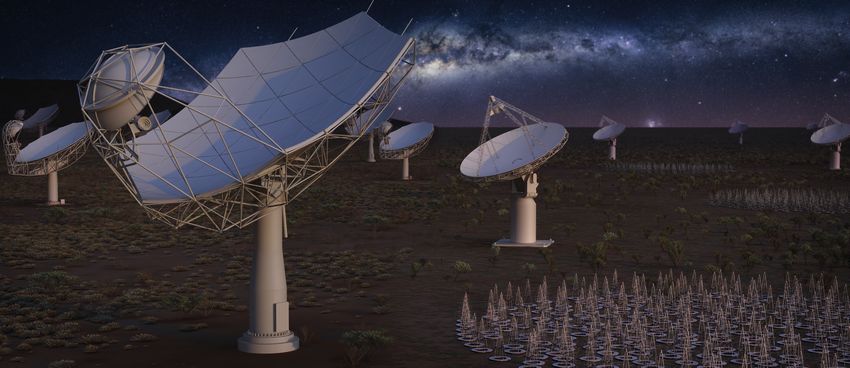
                                                               Shared Sky connects artists working in remote communities from either side
                                                               of the Indian Ocean that have ancient cultural connections to the two sites
                                                               where the SKA will be located. Both locations were specifically chosen for
                                                               their radio-quietness and relative isolation – fundamental requirements for a
                                                               successful radio telescope facility. Prototype ‘precursor’ telescopes are already
                                                               active at each location, some of which will eventually become part of the much
                                                               larger SKA telescope – the world’s largest-ever radio telescope. Through this
                                                               global collaboration involving governments, scientists and engineers from
                                                               over 20 nations, the SKA radio telescope will capture unprecedented levels
                                                               of information, often from the farthest reaches of the Universe. By enabling
                                                               scientists to see deeper into space, further back in time, and with greater
                                                               clarity than has ever been possible, the SKA will greatly enhance humanity’s
                                                               knowledge of the Universe around us, and may help answer some of the ancient
                                                               questions that have been posed by people since they first looked up into the
                                                               night sky.

                                                               Being located on similar latitudes on both continents, the two sites in Australia
                                                               and South Africa present essentially identical views of the night sky to the
                                                               peoples that have lived there for tens of thousands of years, and to whom
                                                               some of the oldest known artwork on earth can be attributed. Shared Sky also
                                                               embodies the idea that no borders exist in the sky and that the night sky is
                                                               an increasingly scarce natural resource that belongs to and is shared by all
                                                               humanity.

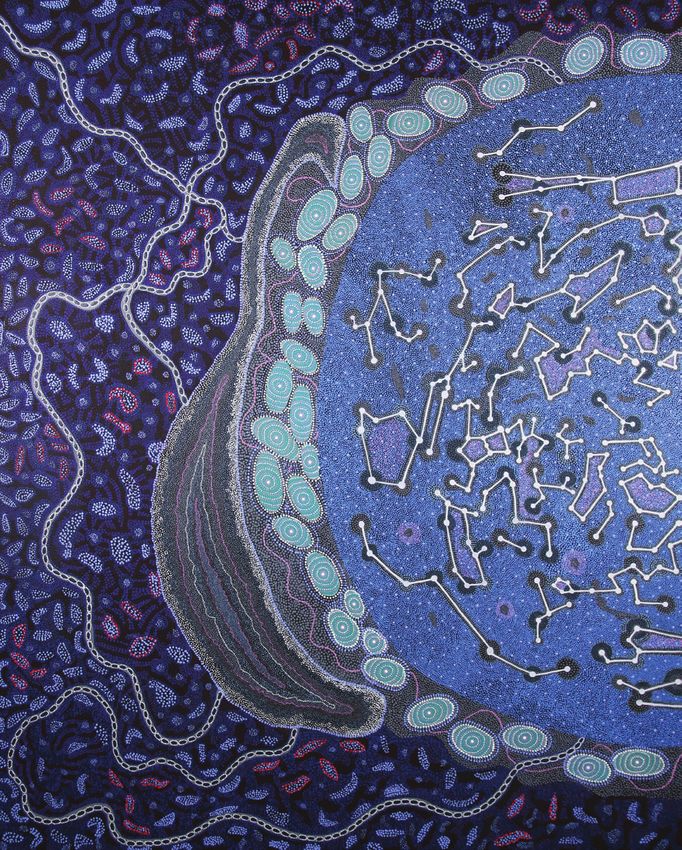
                                                               For Yamaji people – indeed many Aboriginal communities right across southern
                                                               Australia – the appearance of the dark shape of an emu stretched out along
                                                               the length of the Milky Way has heralded the season for collecting emu eggs for
                                                               thousands of years. Since the times of ancient Egyptian and Greek civilisations,
                                                               Western societies and generations of astronomers focused on the points of
                                                               light in the night sky as the only indication of celestial objects. However, in the
                                                               last two centuries, the discovery of gamma-ray, infrared and radio emissions –
                                                               amongst others from the sky – has shown the need and importance to observe
                                                               the Universe in more ways than just through visible light. This realisation has
                                                               profoundly affected scientists, engendering a renewed respect for the insights
                                                               developed by Aboriginal people over countless generations of what is now
                                                               described as Indigenous Astronomy.

                                                               In Western Australia, the Yamaji and other Aboriginal artists who have created
                                                               artworks for Shared Sky are descendants of, or connected to, Wajarri people
                                                               that until the mid-19th century were still living a largely traditional way of
                                                               life, hunting and gathering on the land that is now the site of the Australian
                                                               SKA. This land is situated 700km north-east of Perth, at Boolardy Station in
                                                               the Mid West region of Western Australia. Many of the artists have visited
                                                               the Australian SKA site and have spent time talking with scientists on site,
                                                               under the stars, sharing their stories about the night sky. Though most have

15816_Shared-Sky-catalogue_v5.indd 3                                                                                                       29/03/2018 08:52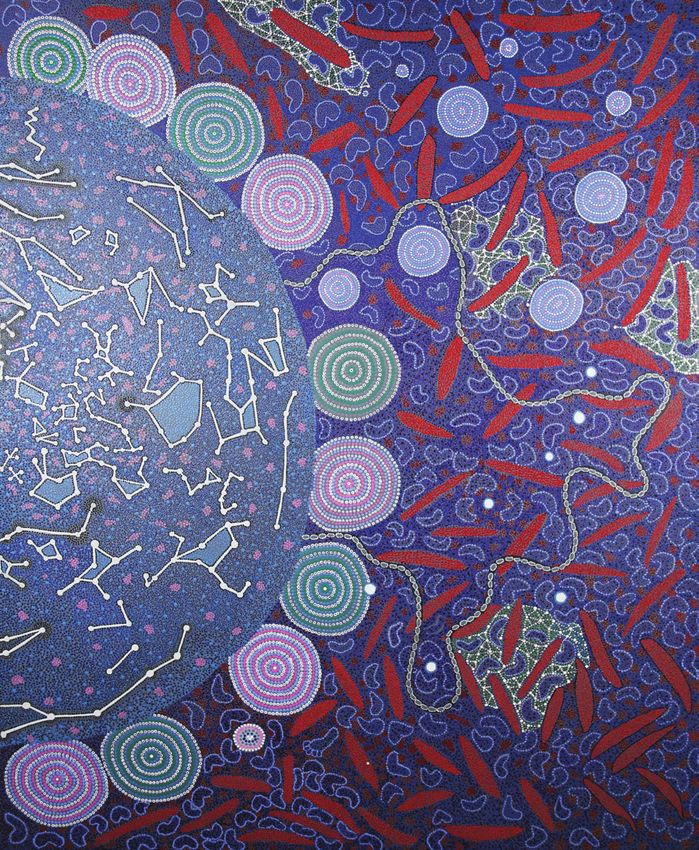
not lived on this specific land, they create artwork throughout the Mid West         The story-telling traditions of these artists’ forbears would have remained largely
     region to promote their culture and continue the process of teaching their           a mystery if it were not for the comprehensive archive of the Bleek & Lloyd
     own communities the stories of their ancestors, reviving dying languages             Collection. This extraordinary collection of stories was instigated by German
     and nurturing Aboriginal culture to maintain connections to their traditional        linguist Wilhelm Bleek in the 1870s in collaboration with his English sister-in-
     Country. They are connected to Shared Sky through the auspices of the                law, Lucy Lloyd. It comprises verbatim interviewed accounts of hundreds of
     community arts organisation Yamaji Art Centre in Geraldton, Western Australia        traditional /Xam stories translated into English. Although little evidence exists
     – a strong advocate for social justice and the promotion of respect and              of the specific purpose the rock engravings and paintings that are still in situ
     awareness of Yamaji culture. Some of these Aboriginal artists are children of        in the Karoo, they do afford tantalising glimpses of the culturally specific ritual
     the Stolen Generations, forcibly removed from their families in the 1940s and        significance of this extinct petroglyphic practice. As eminent archaeologist John
     1950s and denied access to traditional language and culture during periods           Parkington observes:
     of institutionalised policies of assimilation. Coming together through their
                                                                                             Not a single karoo engraver has been observed in the act of
     connections at Yamaji Art Centre, many of these artists have become strong
                                                                                             engraving. Nor do we have the comments of anyone from inside the
     advocates for the healing powers that art can bestow within their communities
                                                                                             engraving tradition on the significance of engravings.
     that are working together for positive change.
                                                                                          Shared Sky presents an unprecedented opportunity for these peoples, who
     The experiences of some of these Australian artists resonate with those of the
                                                                                          share so much through their common colonial histories, to reflect upon the
     South African artists who, working through the arts, address contemporary
                                                                                          countless generations of proud custodianship of their respective homelands
     social and political issues. Loss of cultural identity is addressed by connecting
                                                                                          and draw strength and inspiration from each other. That these communities
     with their roots through the stories told by their ancestors. San populations of
                                                                                          developed such rich and distinctive cultures over thousands of generations in
     the Karoo suffered from cultural suppression throughout the 18th and 19th
                                                                                          absolute isolation – and an entire Indian Ocean apart – yet share so many deep
     centuries that eventually brought about the extinction of the /Xam language.
                                                                                          concerns for the preservation of their cultural heritage, is fitting testament to
                                                                                          the power of collaboration.

                                                                                          Stories passed on through meticulous oral traditions from one generation to
                                                                                          another across the millennia, and the profoundly complex understandings of
                                                                                          celestial mechanics common to both cultures, has been brought together in this
                                                                                          way through the cultural agency of the Square Kilometre Array project and the
                                                                                          willingness of scientists to reach out and appreciate alternative ways of seeing.

                                                                                          Shared Sky acknowledges how important the resilience of these cultures
                                                                                          is to all human-kind. It builds upon the earlier work of the ongoing Ilgarijiri
                                                                                          (Things Belonging To The Sky) project that began when artists from the Yamaji
                                                                                          Art Centre who had already been painting their stories about the night sky,
                                                                                          exchanged stories with scientists from Curtin University’s Institute for Radio
                                                                                          Astronomy, that profoundly enriched each other’s understanding of the night
                                                                                          sky. It is our intention to engage with communities around the world to increase
                                                                                          awareness of, and appreciation for, the contribution that these ancient cultures
     In South Africa, artists that are descendants of /Xam speaking San people            have made to our understanding of the world and to reflect on the importance
     and others of the central Karoo work communally to produce artworks at the           of preserving them amidst the never-ending fascination for new knowledge.
     First People Centre of the Bethesda Arts Centre in the small village of Nieu
     Bethesda, Eastern Cape. They mainly produce collaborative artworks in textiles
     that explore their own creation myths and celebrate the ancient culture of
     their ancestors that survived in the harsh environment of the central Karoo
     desert region for millennia. These large art quilts reflect a visual language that
     stretches back to a time of great antiquity. Fragments of ostrich eggs between
     65-75,000 years old have been found which show evidence of decorative
     engraving a distant connection to the lost art of rock engraving so evident
     across South Africa’s central Karoo region. Art forms like these flourished from
     the end of the last ice-age approximately 12,000 years ago.

     The tragedies of the last two centuries devastated the traditional hunter
     gatherer populations of the Karoo and the First People artists in Nieu Bethesda
     are trying to heal the suffering by connecting the richness of a past that has
     been lost, with the talent and inspiration of the present. The artists at the
     Bethesda Arts Centre find meaning in the ancient stories that are pertinent
     to their own lives, and to the modern world. They seek to share their vision
     through the work. In the story of the Creation of the Sun, for example, the sun
     is an old man, asleep in his house, shining for himself alone. It is a story about
     the dawning of consciousness both in the individual, and in humanity as a whole.

15816_Shared-Sky-catalogue_v5.indd 4                                                                                                                                  29/03/2018 08:52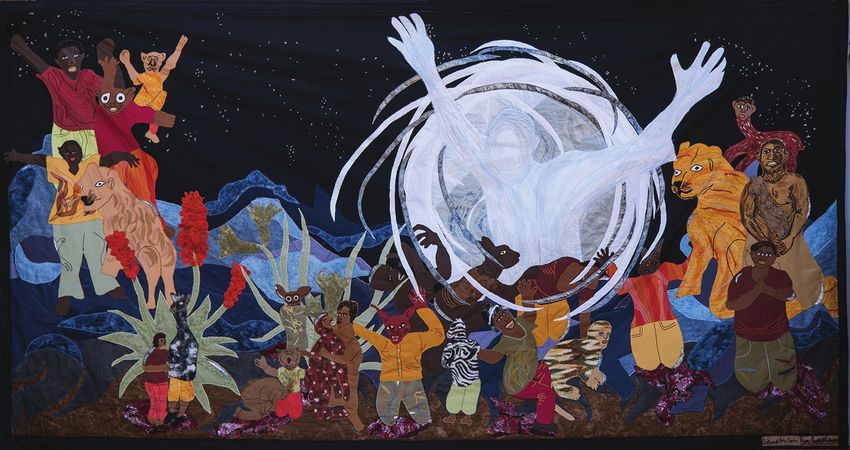
Shared Sky

      This catalogue supports the exhibition:                  Frendoline Malgas, Felicity Tromp, Rentia              Green, Glenda Jackamarra and all the artists from
      Shared Sky                                               Davidson, Esmerelda Tromp, Seraline Tromp,             the Yamaji Art Centre, Australia; Jerry Skinner
      Berlaymont Building                                      Merlyn Davidson, Rosie Jacobs, Angie Hendricks,        from SKA Australia; William Garnier, Mathieu
      Monday 16 April – Sunday 29 April                        Martin Lackay, Riaan Sweers, and James Hartlief.       Isidro & Joseph Diamond from SKA Organisation,
                                                                                                                      Manchester, UK; Lorenzo Raynard from SKA
      Shared Sky is presented by the international             Shared Sky has been curated by Chris Malcolm,          South Africa; as well as Professor Steven Tingay,
      Square Kilometre Array (SKA) Organisation,               Director, John Curtin Gallery, Perth Australia.        Deputy Executive Director of ICRAR, Perth,
      Manchester, UK; SKA South Africa, Johannesburg,                                                                 Austrailia. We wish to particularly thank the
      South Africa; SKA Australia, Canberra, Australia         IMAGE CREDITS                                          curator, Chris Malcolm and Xavier Pardos from
      in collaboration with Curtin University’s Institute of   Above: Telescopes pointing towards the sky             the John Curtin Gallery for their invaluable work in
      Radio Astronomy and the John Curtin Gallery.             (artist’s impression), SKA Organisation.               bringing this exhibition to life.
      Shared Sky was developed in collaboration with           Front: Milky Way, (detail), Sarah West,
                                                                                                                      In Belgium, the exhibition organising team
      Yamaji Art Centre, Geraldton, Western Australia          Derby District High School, photograph.
                                                                                                                      included all the above as well as Alexander
      and the First People Centre at the Bethesda Arts         Inside Left: Ilgari Inyayimanha (Shared Sky),
                                                                                                                      Cooke, Counsellor to the Australian Mission to
      Centre, Nieu Bethesda, Eastern Cape, South Africa.       Yamaji Art Centre artists collaborative painting,
                                                                                                                      the European Union; and Vinny Pillay, Minister
                                                               acrylic on canvas.
      Yamaji Art Centre artists: Nerolie Bynder,                                                                      Counsellor to the South African Mission to the
                                                               Inside Right: Origin of Death, First People Artists,
      Catherine Bynder, Gertrina Bynder, Barbara                                                                      European Union.
                                                               Bethesda Arts Centre, collaborative art quilt.
      Comeagain, Marion Dingo, Charmaine Green,                Inside Far Right: Creation of the Sun,                 Special thanks go to Commissioner Moedas and
      Jenny Green, Sherryl Green, Tracey Green, Jonaya         First People Artists, Bethesda Arts Centre,            his Cabinet for organising and sponsoring this
      Jones, Basil Jones, Wendy Jackamarra, Kevin              collaborative art quilt.                               exhibition.
      Merritt, Barbara Merritt, Gemma Merritt, Susan
      Merry, Bianca McNeair, Gemma Maher, Debra                ACKNOWLEDGEMENTS                                       Berlaymont Building
      Maher, Craig ‘Chook’ Pickett, Kyle Pickett and           The exhibition organisers wish to acknowledge          Rue de la Loi 200
      Margaret Whitehurst.                                     the many people and groups across the world            1049 Bruxelles
                                                               that have all contributed to the success of this       Belgium
      Bethesda Arts Centre artists: Sandra Sweers,             exhibition. Our sincere thanks to all of them,         T: +32 2 295 24 26
      Jeni Couzyn, Naasley Swiers, Julia Malgas,               including Jeni Couzyn and all the artists from the     http://ec.europa.eu/
      Gerald Mei, Yvonne Merrington, Maria Tamana,             Bethesda Arts Centre, South Africa; Charmaine          #sharedsky

15816_Shared-Sky-catalogue_v5.indd 1                                                                                                                               29/03/2018 08:53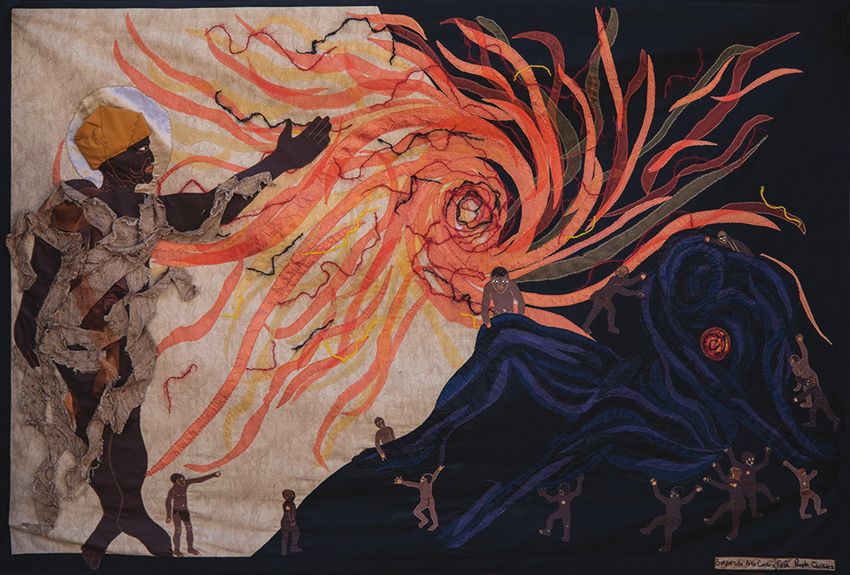

You can also read


