Sharing experiences - managing innovations - International Climate Initiative from 2017 to 2019
←
→
Page content transcription
If your browser does not render page correctly, please read the page content below
Sharing experiences –
managing innovations
International Climate Initiative from 2017 to 2019

Publication details

    Published by
    Federal Ministry for the Environment, Nature Conservation and Nuclear Safety (BMU)
    Division IK I 6 · 11055 Berlin · Germany
    Email: IKI6@bmu.bund.de · Website: www.bmu.de/english

    Edited by
    BMU, Division IK I 6 and N I 4
    International Climate Initiative Secretariat

    Text
    ZUG (Zukunft – Umwelt – Gesellschaft gGmbH), tippingpoints, Berlin/Bonn

    Design
    BEST FRIEND | Agentur für Kommunikation GmbH, Tinkerbelle GmbH, Berlin/Köln

    Picture credits
    Cover: Nelly – stock.adobe.com | Page 4: BMU/Karsten Andree (Rauchwetter) | Page 12: BMU/Jaruwan Khammuang | Page 13: BMU/
    Jaruwan Khammuang | Page 14: BMU/René Zamora Cristales | Page 15: BMU/René Zamora Cristales | Page 16: BMU/Mariana Rodríguez
    Aguilera | Page 17: Wetlands International | Page 19: BMU/Karsten Andree (Rauchwetter)

    Date
    June 2020

    Download of this publication
    Email: IKI6@bmu.bund.de
    Website: www.bmu.de/en/publications and www.international-climate-initiative.com

    Notice
    This publication of the Federal Ministry for the Environment, Nature Conservation and Nuclear Safety is distributed free of charge.
    It is not intended for sale and may not be used to canvass support for political parties or groups. Further information can be found at
    www.bmu.de/en/publications

2     International Climate Initiative 2017–2019
Table of contents

Introduction                                                                                                           5

How International Climate Initiative works                                                                             6

International Climate Initiative from 2017 to 2019                                                                     8

An overview of the funding of International Climate Initiative                                                     10

Examples of International Climate Initiative funding

    Mitigation of CO2 emissions with paper packaging made of rice straw                                            12

    Restoration of 20 million hectares of degraded landscape                                                       14

    Ecosystem-based approaches to tourism                                                                          16

    A habitat worth protecting for migratory birds                                                                 17

Abbreviations                                                                                                      18

                                                                          International Climate Initiative 2017–2019       3
LEARN MORE
        ABOUT IKI AND
        FOLLOW US AT:

        www.international-
       climate-initiative.com

             @iki_bmu

4   International Climate Initiative 2017–2019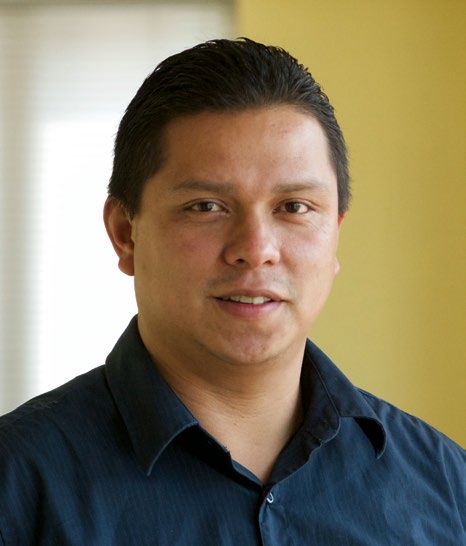
INTRODUCTION
The challenges posed by climate change and the loss of biodiversity are immense.
They affect life all over the world. The international community is therefore
cooperating to find solutions for the restructuring of its societies. How this can be
achieved is shown by this International Climate Initiative (IKI) assessment for the
years 2017 to 2019 – three years, which also saw radical changes within IKI.

With the introduction of the “Thematic and Country Calls 2017”, the project man-
agement was transferred from the Gesellschaft für Internationale Zusammenar-
beit GmbH (GIZ) to the new IKI Secretariat at the Zukunft - Umwelt - Gesellschaft
gGmbH (ZUG). A mammoth task indeed, as more than ten years of experience with
programmes was suddenly placed in news hands and new funding structures also
had to be established. That was ten years with ten major international competitions,
more than 4,000 project outlines and ultimately more than 700 projects that had
either already been funded or would be funded by the end of 2019.

IKI has been oriented on international climate policy since its inception. Today, the
Paris Agreement and its mechanisms, the agreement on biodiversity and the 2030
Agenda form the solid policy backbone of the funding conditions. In coordination
with the partner countries, IKI provides funding for organizations that implement
specific measures there. In this way, Germany is helping developing and emerging
countries to find new and ambitious paths for their national contributions to
achieving global goals. Innovative approaches such as ecosystem-based adaptation
to the impacts of climate change combine nature conservation and climate change
mitigation for the well-being of people, countries and societies. The aim is to sup-
port the transformation of the states in an ecologically ambitious and economically
sound manner, and this is helped by especially large IKI projects (such as the NAMA
facility), which are also supported by other donor countries.

The global spirit of optimism that is encouraging more and more countries, eco-
nomic sectors, cities and the civil society to commit to climate change mitigation,
climate change adaptation and biodiversity is also reflected in the rapid depletion
of IKI funds despite an increase in the funds. For the year 2019, IKI funds were
completely used during the year. This also shows the great extent to which IKI is
accepted and in demand all over the world, despite its stringent quality require-
ments. It also illustrates the importance of this precisely targeted German climate
and biodiversity financing aspect. How this actually works in practice is shown here
by the reports from several IKI projects.

                                            International Climate Initiative 2017–2019   5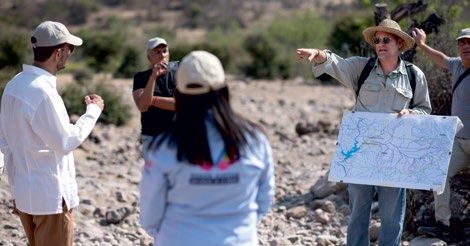
How International Climate
    Initiative works
    Four funding areas, two funding pillars and a competitive orientation – an
    innovative concept for the effective protection of the climate and biodiversity.

    International Climate Initiative (IKI) is one of the       objectives. Studies, concepts and specific measures for
    most important instruments of the Federal Ministry         climate change mitigation and protection of biolog-
    for the Environment, Nature Conservation and               ical diversity can also be funded. Depending on the
    Nuclear Safety (BMU) for the international financing       project, funding can be bilateral, regional or global.
    of climate change mitigation and biodiversity. IKI
    operates within the framework of the United Nations        IKI supports through two funding pillars: the the-
    Framework Convention on Climate Change (UNF-               matic and the country-specific selection procedures.
    CCC) and the Convention on Biological Diversity            Both procedures use idea competitions to select
    (CBD), financing climate change mitigation and bio-        innovative projects. This approach ensures that the
    diversity conservation in developing, emerging and         best ideas and concepts will be implemented and
    transition countries. Since 2008 to 2019, IKI approved     that the diversity of the implementing partners
    more than 730 climate and biodiversity projects with       grows. Both of these funding pillars have been
    a total funding volume of 3.9 billion euros in more        geared towards large-volume projects since 2017.
    than 60 countries.                                         Two small-scale project programmes have been asso-
                                                               ciated with the thematic pillar since 2019 and 2020,
    The partner countries are supported with IKI fund-         namely IKI Small Grants and IKI Medium Grants,
    ing to help them implement and ambitiously develop         respectively. All funding procedures are two-stage,
    their nationally determined contributions (NDCs)           with the exception of the Small Grants. The com-
    anchored in the Paris Agreement. The NDCs include          petitive character of the funding procedures and
    measures adapt to the impacts of climate change and        the inclusion of non-governmental implementing
    increase resilience to its unavoidable impacts. In the     organisations are important features of IKI that dis-
    field of biodiversity, IKI supports partner countries in   tinguish its work from classical development cooper-
    achieving the goals of the CBD to counteract the dra-      ation procedures – this means that IKI funds do not
    matic global loss of natural resources. The activities     go to government institutions in partner countries.
    of IKI also contribute to the implementation of the        The IKI Secretariat, located at the German state-
    2030 Agenda for the United Nations’ 17 Sustainable         owned company Zukunft - Umwelt - Gesellschaft
    Development Goals (SDGs).                                  (ZUG) gGmbH (Future-Environment-Society),
                                                               supports technical monitoring and programme
                                                               management.
    Funding areas, types of funding
    and large IKI projects                                     In addition to selecting projects from the ideas com-
                                                               petitions, IKI also contributes to ambitious mitigation
    Projects that are implemented in one of the following      measures solutions with independent large-scale
    four funding areas are eligible for support: Mitiga-       initiatives. The BMU has created an international
    tion of greenhouse gas emissions, adaptation to the        climate-financing programme that supports ambitious
    impacts of climate change, conservation of natural         measures in combating climate change – the NAMA
    carbon sinks with a focus on reducing emissions from       Facility. Other donors to the Facility besides IKI include
    deforestation and forest degradation (REDD+) and           the United Kingdom, the European Union and Den-
    conservation of biodiversity. IKI projects use policy      mark. Through the ‘IKI Support Project for the Imple-
    advisory services, capacity building, technology coop-     mentation of the Paris Agreement (SPA)’, the German
    eration and financing mechanisms to achieve their          government is seeking to strengthen global initiatives

6    International Climate Initiative 2017–2019
and networks it has either founded or co-founded.           strengthen the NDC for international economic and
These initiatives and networks include the Low Emis-        political relations. The Nitric Acid Climate Action
sion Development Strategies Global Partnership (LEDS        Group (NACAG) is another IKI initiative that advises
GP) and the NDC Partnership (NDCP). The “Strategic          and supports partner countries in the technical
Partnerships for Implementation of the Paris Agree-         conversion of nitric acid factories, enabling them to
ment” (SPIPA) of the BMU and the European Union             exploit the great potential for reducing nitrous oxide
are also working together with the G20 countries to         emissions as swiftly as possible.

                                     The Federal Ministry for the Environment,
                                      Nature Conservation and Nuclear Safety
                         plans, manages and specifies policy priorities in four thematic fields.

                        Mitigation of        Adaptation to             Carbon sinks/         Conservation of
                       greenhouse gas       the impacts of                REDD+                biodiversity
                          emissions         climate change

 Interna-
  tional
obligations
                                                                        Thematic call incl. small-scale
                               Country call
                                                                           project programmes

                                           IDEA COMPETITIONS

                                  IKI Secretariat (Zukunft –                    Evaluation
                                Umwelt – Gesellschaft gGmbH)               Project management
                                                                             Administration

                                                   Implementation

                                   Close cooperation with                    Consortia with
                                      partner countries                   implementing partners

                                 IKI programmes and projects with local
                                        and regional involvement

                                  IKI major projects, e.g. NAMA Facility

                                                                         International Climate Initiative 2017–2019   7
International Climate Initiative
    from 2017 to 2019
    More effective climate change mitigation requires continuous adaptation to the
    global situation. Therefore, International Climate Initiative (IKI) has undergone
    structural development.

    IKI was founded in 2008 as one of the first instru-          for each topic. The thematic selection procedures also
    ments of international climate financing. Right              reflect developments in international negotiations.
    from the outset, the BMU’s funding programme                 Each of the country-specific selection procedures
    was adapted to the pace of global climate policy.            (also known as country calls) supports one IKI partner
                                                                 country. The priorities and the selection of topics
    The funding programme was comprehensively re-                are made in close consultation with the individual
    designed from 2017 to 2019 to enhance IKI’s effi-            partner governments. About 50 per cent of the project
    ciency. The ideas competition was re-oriented and            funds applied for go to local non-governmental
    thematic and country-specific selection procedures           organisations, universities, think-tanks and indig-
    introduced. The re-orientation of IKI was completed          enous groups, for example, in the target countries.
    with the launch of two small project programmes,             This not only achieves sustainable benefit and greater
    namely Small Grants and Medium Grants. This                  acceptance in these countries, but also strengthens
    enables IKI to operate more flexibly, since it can           their institutions and expands their knowledge and
    now support large- and small-scale projects in the           resources on the ground.
    four funding areas. All IKI projects must apply IKI
    Safeguards since 2017, which are environmental and           However, the implementation of the UNFCCC and
    social standards intended to prevent negative impacts        the CBD also requires the support of smaller stake-
    caused by IKI projects, and to provide even better pro-      holders in developing and emerging countries and the
    tection for people and nature in the partner countries.      effective participation of all social groups. To address
                                                                 this, BMU launched two programmes at the end of
                                                                 2019: IKI Small Grants and IKI Medium Grants that
    Re-alignment of the ideas                                    also seek their projects through idea competitions. IKI
    competition                                                  Small Grants directly support local non-governmen-
                                                                 tal organisations and national funding institutions in
    IKI underwent an important change with the introduc-         developing and emerging countries. The programme
    tion of its thematic and country-specific selection          aims to fund more than 100 small-scale projects, each
    procedures. Before 2017, it was mainly small and             receiving up to 100,000 euros by 2025.
    medium-sized projects that were supported; however,
    IKI now focuses on large-volume projects thanks to the       IKI Medium Grants are used in developing and emerg-
    two new procedures. The funding amount for the               ing countries to support projects that are carried out
    thematic selection procedures amounts to between five        by German-based civil society organisations together
    euros to 20 million euros. In the case of the coun-          with partner organisations in the target countries.
    try-specific selection procedures, projects are support-     Calls for funding for the programme with different
    ed with amounts between 15 euros to 35 million euros.        priority themes are published at regular intervals.
                                                                 IKI plans to commission 10 to 15 projects per year.
    The ideas competition for the thematic selection             Projects are supported with funding amounting
    process (also known as thematic call) is usually             to between 300,000 euros to 800,000 euros and a
    announced once a year. It contains more than ten cur-        duration of between two to three years. The BMU is
    rent priority topics, assigned to the overall goals of IKI   providing a total of 30 million euros over five years for
    and the four funding areas. A project is commissioned        the duration of the programme.

8    International Climate Initiative 2017–2019
Ideas competitions from 2017 to 2019 Funding and some practical examples
Within its new structure, IKI has so far carried out The following pages provide an overview of IKI
three thematic selection procedures and ten coun- funding for the years 2017 to 2019, itemised by the
try-specific selection procedures. The priority topics various regions in which IKI projects are carried out
of the thematic calls included the phasing out of and by projects with a global impact. Finally, four
coal, climate financing and the preservation and practical examples from the four IKI funding areas
restoration of peatland ecosystems. The country calls illustrate the specific work of IKI.
introduced in 2017 were initiated in Argentina, Costa
Rica, India, Indonesia, Colombia, Mexico, the Philip-
pines, Thailand, Ukraine and Vietnam. The first idea
competitions for IKI Small Grants and IKI Medium
Grants will be completed in 2020. Overall, the total
authorised budget increased from 386.82 million
euros in 2017 to 456.82 million euros in 2019.
Approved budget of International Climate Initiative from 2008 to 2019
€500 €457
million million
€437
million
€ 387
€400 million
million €338
million
€309
€287 million
€300 million €263
million million
€200
million €137
€120 €134 million
€120 million €120 million
million million
€100
million
€0
2008 2009 2010 2011 2012 2013 2014 2015 2016 2017 2018 2019
Source: Federal Ministry for the Environment,
Nature Conservation and Nuclear Safety (BMU)
International Climate Initiative 2017–2019 9An overview of the funding of
International Climate Initiative
Total commitments and expenditures of International Climate Initiative (IKI)
for projects from 2017 to 2019: 1.6 billion euros. An overview by region.
45
75
MIDDLE EAST AND
€248 NORTH AFRICA
40 million
11
2 €48
million
CENTRAL AND LATIN
AMERICA, CARIBBEAN
88 36
GLOBAL PROJECTS
107
63
€825 million 421
234
10 International Climate Initiative 2017–2019Mitigating greenhouse gas Conserving natural carbon
emissions sinks/REDD+
Adapting to the impacts of
Conserving biodiversity
climate change
8
2
6
CENTRAL AND EASTERN EUROPE, €101
CENTRAL ASIA, TURKEY million
SOUTH AND
SOUTHEAST ASIA,
PACIFIC
85
75
119
€260 million
28
SUB-SAHARA, 38
AFRICA
29
60
€127
million
22
16
Source: BMU from 2017 to 2019 IKI funding volume of the regions
(from 2008 to 2019 in millions of euros) according to the DOHA counting method;
differences due to rounding up or down may occur
International Climate Initiative 2017–2019 11IKI FUNDING EXAMPLES
Mitigation of CO2 emis- Project Area Africa and Asia
sions with paper packag-
ing made of rice straw
The SEED Initiative grants the Low
Carbon Award to sustainably operat-
ing companies. One of the winners in
Financing and capacity building for micro and Small
the competition in 2019 is Fang Thai
Climate-smart Enterprises (SMEs), that offer prod-
from Thailand. ucts and services in the fields of emissions reduction
and adaptation.
Small and medium-sized enterprises (SMEs) can also
contribute to climate change mitigation by develop-
ing and offering innovative products and services to Countries
mitigate greenhouse gas emissions and adapt to the Ghana, India, Indonesia, South Africa, Thailand,
impacts of climate change. Sponsored by Interna- Uganda
tional Climate Initiative, the SEED Initiative supports Implementing organisation
sustainably operating companies at different stages of Adelphi Research gGmbH
their development, from start-up, to growth and scal-
Partner institutions
ing. Selected start-ups receive the Low Carbon Award,
• Global Village Energy Partnership (GVEP)
which, in addition to the prize money, also includes
• Nexii
technical support measures such as assistance in
• United Nations Development Programme (UNDP)
developing business plans.
• United Nations Environment Programme (UNEP)
• Various climate-relevant institutions in the partner
One of the winners of the SEED Award in 2019 is the
countries
Fang Thai Factory Limited Partnership based in the
Thai province of Lampang. The company produces BMU funding: €7,340,437,74
biodegradable paper and packaging made from rice
Duration: 04/2013 to 12/2022
straw. Rice straw is a waste product of the rice harvest.
It is subsequently burned, causing greenhouse gas
emissions and air pollution. According to the calcu-
lations of the Thai Ministry of Natural Resources and
the Environment, Fang Thai can mitigate CO2 emis-
sions in the paper industry by about 28,000 tonnes per
year, thus helping to solve one of the sector's major
problems. At the same time, the company's business
idea has created a new source of income for the Lam-
pang farmers and considerably improved the local air
quality. SEED is supporting Fang Thai for one year
with business workshops and funding amounting to
10,000 euros.
Rice straw paper can also be used to produce biodegradable food
packaging
12 International Climate Initiative 2017–2019Jaruwan Khammuang is the founder and
CEO of the Fang Thai company in Thailand
A real alternative and
100 per cent biodegradable
IKI: How did you get the idea for a new kind of to the economic development of Bann Samkha. The
paper? livelihoods of about 160 families in this village depend
JARUWAN KHAMMUANG: I come from Bann on rice and fruit cultivation. Rice straw packaging
Samkha in Lampang Province, Thailand. Bann Sam- is an environmentally friendly alternative for the
kha is a small village and the inhabitants mainly make secondary packaging of perishable and non-per-
their living from rice cultivation. Despite the yields we ishable food, cosmetics and beverages. The material
achieve as rice farmers, we face two main challenges: has a whole range of positive properties. It can be
Firstly, many families do not have enough income after produced relatively inexpensively and the packaging
the harvest season, so many move to the big cities in design can be customised. Our project also contrib-
search of work. Secondly, the rice straw is burnt, and utes to the UN goals for sustainable development, in
that increases air pollution and CO2 emissions. While particular Goal 1 (No Poverty) and Goal 13 (Climate
Nathapol Khammuang (the Managing Director of the Action). Our work is also helping to achieve Goal 3
Fang Thai Factory Limited Partnership) and I were (Good Health and Well-Being), Goal 5 (Gender Equal-
looking for a solution to these problems, the idea came ity), Goal 8 (Decent Work and Economic Growth) and
to me that we could use the rice straw harvest residue to Goal 12 (Responsible Consumption and Production).
make paper. The packaging industry causes huge envi-
ronmental problems through deforestation, high CO2 What are your plans for the future?
emissions and inadequate waste management – and we In 2020, we aim to expand production capacity
believed that producing paper from 100 per cent biode- to 1,000 tonnes per month, because the more we can
gradable rice straw would be a realistic alternative. produce, the greater the contribution we can make
to strengthening the foundations of life in our village
How long did the development take? and worldwide. We also need to combat the burning of
The R&D work and the subsequent product test- harvest residues, a still widespread practice. We need
ing took us about two years. During this time, we realistic alternatives, because the burning of rice straw
looked for partners and experts, got advice from them causes severe air pollution in our villages and towns.
and learned from other well-known examples.
What does the SEED Award mean
What have you already achieved? for you and your project?
After the foundation of the company, we initially We can now expand our market volume and
sold handicraft products and packaging in small network better with others. Our company was
quantities. Later, we had a chance for a real break- only able to grow so quickly through the sup-
through when a large company that needed larger port and encouragement of the programme.
quantities approached us, but our limited production
capacity meant that we could not meet the company's
requirements. However, after this, interest in our idea
really started to grow, and we are now contributing
International Climate Initiative 2017–2019 13IKI FUNDING EXAMPLES
Restoration of 20 million
hectares of degraded
landscape
Forest landscapes are among the
most important ecosystems on
earth – International Climate
Initiative (IKI) helps to protect
and restore them. The 20×20 initiative restores forest landscapes in Latin America –
here in Guatemala, for instance
Latin America and the Caribbean have some of the
most ecologically valuable forest ecosystems in
the world, but 650 million hectares of the forests Project example – Latin America and the
are affected by degradation and deforestation. The Caribbean
expansion of agricultural land is mainly to blame for
this widespread damage, although the development of
infrastructures such as roads, settlements and mining
is also causing large-scale destruction of nature and
the environment. These factors all lead to a loss of bio-
diversity and climate-damaging greenhouse gas emis-
sions, making landscapes and infrastructure more
vulnerable to the consequences of climate change.
This is why IKI supports the 20×20 Initiative, the aim Supporting Initiative 20×20: A country-led effort to
of which is to restore and protect about 20 million bring 20 million hectares of degraded land in Latin
hectares of damaged forests in the region by 2020. In America and the Caribbean into restoration by 2020
view of the various degrees of land degradation in
the region, 20×20 not only supports the restoration of
forests, but also helps to implement sustainable land- Countries
use approaches that combine trees, arable crops and Argentina, Chile, Colombia, Costa Rica, Ecuador,
animal husbandry in holistic systems. Local people Guatemala, Mexico, Peru, Uruguay
also benefit in terms of better income opportunities Implementing organisation
and food security. World Resources Institute (WRI)
Partner institutions
20×20 cooperates with governments, respective
• Ministry of the Environment (MINAM) – Peru
authorities, research institutions and the private sector
• Ministry of the Environment and Energy (MINAE) -
to achieve its goals. The project partners perform a
Costa Rica
cost-benefit analysis to determine landscape restoration
• Ministry of the Environment and Natural Resources
measures and identify new financing mechanisms
(SEMARNAT) – Mexico
involving the private sector. The initiative also sup-
• Ministry of Environment and Sustainable Develop-
ports partner countries in developing strategic plans
ment (MADS) – Colombia
for reforestation. The local communities consequently
• International Centre for Tropical Agriculture
benefit in many ways, including improved soil function
(CIAT) - Colombia
and less soil erosion. The project thus makes a significant
contribution to mitigating the effects of climate change BMU funding: €4,632,021
and strengthening the region’s resilience.
Duration: 12/2015 to 11/2020
14 International Climate Initiative 2017–2019René Zamora Cristales, born in Guatemala, Project
Coordinator of the 20×20 Initiative at the World
Resources Institute (WRI) in Washington, D.C., USA
Secondary forests are not
without their uses.
We can show humanity that sustainable forest
management is more productive
IKI: What role does the WRI play in the implemen- short-term benefits. In this way, we can send a strong
tation of the 20×20 initiative? signal to the farmers: “You can stay in your home coun-
RENÉ ZAMORA CRISTALES: For example, we coor- try; you don’t have to become ‘agricultural migrants’”.
dinate the cooperation of the initiative members in var-
ious working groups on topics such as emissions trading What are the biggest challenges you face in your
and biodiversity. We also organise the exchange of work?
knowledge between projects, ministries and local stake- Most countries have the wrong incentive struc-
holders, for example, through webinars, excursions and tures. Conventional agriculture, animal husbandry
an annual international workshop on landscape resto- and seeds are subsidised, for example, but there are no
ration, we bring projects and private investors together financial incentives for forest restoration. The eco-
to raise funds from the private sector for the restoration logical services of the forests are not priced into the
of forests, and we manage the monitoring of the results. system, so we must create other structures that include
forest restoration. This would also make it easier to
How do you convince local people to invest in forest attract private investors who want to invest capital,
restoration rather than continuing with deforesta- but are still afraid of the risk of financing forest resto-
tion for industrial and agricultural purposes? ration projects starting from the exploration phase.
We show them the advantages of doing so. Let me
give you an example: In Latin America, secondary
forests have so far been considered useless – those are
forest areas that have already been cleared for logging
or agricultural purposes, but they could be systemat-
ically reforested. It was considered more productive
to move on to clear the next forest; however, we can
demonstrate that sustainable forest management is not
only more productive, it also brings other benefits such
as protection against flooding and an improved water
supply. There are forms of agricultural use like agro-
forestry and forest pasture grazing that combine these
advantages without damaging the forests just to gain
International Climate Initiative 2017–2019 15IKI FUNDING EXAMPLES
Ecosystem-based
approaches to tourism
Droughts, floods and storms
characterise the image of climate
change, but nature can protect itself
against its own forces and it can also
help the tourism industry. The work of interdisciplinary teams on site promotes the develop-
ment of knowledge and resources regarding Ecosystem-based
Intact ecosystems provide important services for Adaptation.
humans. They maintain soil fertility, for example, and
produce clean water and air. At the same time, they
protect against the impacts of climate change, miti- Project example – Mexico
gating droughts, floods and storms and other natural
hazards to life. Strategically using and promoting
these important ecosystem properties to make nature
and humans more resilient is referred to as “Ecosys-
tem-based Adaptation” (EbA). This approach also
combines other advantages. The recreational use of
the landscape increases, for example, which has a pos-
itive effect on health and the quality of life. Moreover,
new jobs are created in sectors such as sustainable
agriculture and tourism, a development that boosts Ecosystem-based Adaptation to climate change in
the economic performance of entire regions. cooperation with the private sector in Mexico
The “Ecosystem-based Adaptation to climate change
in cooperation with the private sector in Mexico” Country
project (ADAPTUR - Adaptación al Cambio Climático Mexico
basada en Ecosistemas con el Sector Turismo) sup- Implementing organisation
ports adaptation to climate change in three Mexican Deutsche Gesellschaft für Internationale
tourism regions: San Miguel de Allende, Guanajuato, Zusammenarbeit (GIZ) GmbH
Riviera Nayarit (Jalisco), and the Riviera Maya in
Partner institutions
Quintana Roo. The project develops various measures
• Ministry of the Environment and Natural Resources
in these areas to protect and restore the main ecosys-
(SEMARNAT), Climate Policy Department
tems, such as the Mesoamerican coral reef, coastal
• Tourism Secretariat (SECTUR)
wetlands, lagoon systems and resilient green belts
• National Protected Area Authority (CONANP)
around urban areas.
• National Institute for Ecology and Climate Change
(INECC)
The measures primarily serve to reduce economic
risks for tourism enterprises, which is why the project BMU funding: €4,000,000
supports partnerships between the private and the
Duration: 09/2017 to 08/2021
public sectors. In this way, private companies are
made aware that they should address the impacts
of climate change and its risks in their corporate
planning. The project also anchors the aspect of bio-
diversity in the sense of “mainstreaming” in tourism
planning measures and programmes of the public and
private sector. The strategy of the Mexican Tour-
ism Secretariat, for example, has been updated with
criteria for climate change mitigation and ecosys-
tem-based adaptation.
16 International Climate Initiative 2017–2019IKI FUNDING EXAMPLES
A habitat worth protect-
ing for migratory birds
Protecting wetlands and retaining
flight routes: These are the core
objectives of an IKI project that is
building a network of migratory
bird sanctuaries along the African-
Eurasian flight route.
Wetlands are important habitats for migratory birds
Every year, millions of water birds fly from Europe to
Africa and back in search of food and suitable breed-
ing grounds. To reach their destinations during their
migration, however, they need intact wetlands where Project example – Mali and Ethiopia
they can rest and feed. International Climate Initiative
(IKI) is supporting the conservation and restoration of
wetlands in Ethiopia and Mali along the African-Eur-
asian flight route. The goal is to create a network of
protected areas.
This will not only help the birds, but local populations
will also benefit from these sanctuaries, because intact
ecosystems increase resistance to the impacts of cli-
mate change, mitigate greenhouse gas emissions and Climate-resilient network of migratory bird
create new sources of income as tourist attractions. To sanctuaries in the African-Eurasian flyway
achieve its goals, the project is not only committed to
integrating wetland protection into the policies of the
countries, but also to using an integrative approach to Countries
involve all the stakeholders who have a special interest Mali, Ethiopia
in the project areas in question, ranging from industry Implementing organisation
to local communities. Wetlands International (WI)
Partner institutions
Through this work, the project is supporting the
• Ethiopian Wildlife Conservation Authority
implementation of relevant resolutions in the inter-
• Ministry of the Environment, Hygiene and Sustain-
national Agreement on the Conservation of Afri-
able Development – Mali
can-Eurasian Migratory Waterbirds (AEWA), which
was adopted within the framework of the Bonn BMU funding: €3,189,730
Convention on the Protection of Migratory Species.
Duration: 10/2015 to 12/2020
To further develop important frameworks and the
practical implementation of existing resolutions in a
targeted manner, the experience gained is shared with
relevant organisations and parties to the AEWA, the
Ramsar Convention (an international Convention on
the protection of wetlands, in particular, habitats for
waterfowl and waders), and the Convention on Biologi-
cal Diversity (CBD).
International Climate Initiative 2017–2019 17Abbreviations
ADAPTUR Ecosystem-based adaptation to climate change with the private sector in Mexico (Adaptación al
Cambio Climático basada en Ecosistemas con el Sector Turismo)
AEWA Agreement on the Conservation of African-Eurasian Migratory Waterbirds
BMU Federal Ministry for the Environment, Nature Conservation and Nuclear Safety
(Bundesministerium für Umwelt, Naturschutz und nukleare Sicherheit)
CBD Convention on Biological Diversity
CEO Chief Executive Officer
CIAT International Centre for Tropical Agricultre (Centro Internacional de Agricultura Tropical)
CO2 Carbon dioxide
CONANP National Protected Area Authority Mexico (Comisión Nacional de Áreas Natural Protegidas)
EbA Ecosystem-based Adaptation
G20 Group of the largest industrialised and emerging economies and the European Union
GIZ German Development Cooperation Organisation (Gesellschaft für Internationale
Zusammenarbeit GmbH)
GVEP Global Village Energy Partnership
IKI International Climate Initiative (Internationale Klimaschutzinitiative)
INECC National Institute for Ecology and Climate Change Mexico (Instituto Nacional de Ecología y
Cambio Climático)
LEDS GP Low Emission Development Strategies Global Partnership
MADS Ministry of Environment and Sustainable Development Colombia (Ministerio de Ambiente y
Desarrollo Sostenible)
MINAE Ministry of Environment and Energy Costa Rica (Ministerio de Abmiente y Energía)
MINAM Ministry of the Environment Peru (Ministerio del Ambiente)
NACAG Nitric Acid Climate Action Group
NAMA National Appropriate Mitigation Actions
NDC Nationally Determined Contributions
NDCP Nationally Determined Contributions Partnership
REDD+ Reducing Emissions from Deforestation and Forest Degradation
SDGs Sustainable Development Goals
SECTUR Tourism Secretariat Mexico (Secretaría de Turismo)
SEMARNAT Ministry of the Environment and Natural Resources Mexico (Secretaría de Medio Ambiente y
Recursos Naturales)
SMEs Small and medium-sized enterprises
SPA Support Project for the Implementation of the Paris Agreement
SPIPA Strategic Partnerships for the Implementation of the Paris Agreement
UN United Nations
UNDP United Nations Development Programme
UNEP United Nations Environment Programme
UNFCCC United Nations Framework Convention on Climate Change
WI Wetlands International
WRI World Resources Institute
ZUG Federally-owned, non-profit company founded by the Federal Ministry for the Environment,
Nature Conservation and Nuclear Safety (Zukunft – Umwelt – Gesellschaft gGmbH)
18 International Climate Initiative 2017–2019International Climate Initiative 2017–2019 19
WIE
MINDERUNG
    HEISST DAS KAPITEL

www.bmu.de/english
You can also read


