SHE the change - March 2021 The Good Sight
←
→
Page content transcription
If your browser does not render page correctly, please read the page content below
The
March 2021
                   Volume 2 / Issue 9
                   www.thegoodsight.com

Good Sight

                 SHE
             the change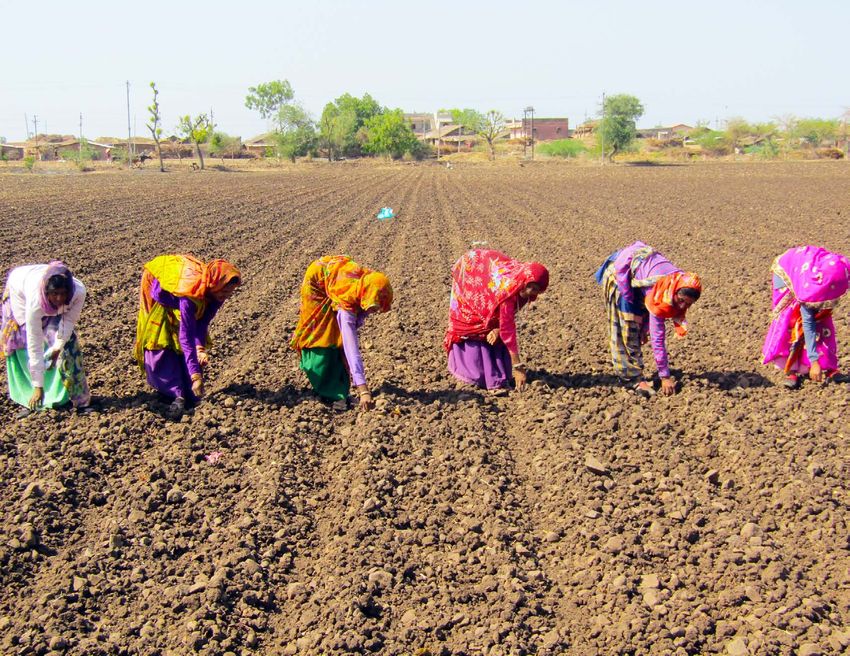
The                  Plaudits for
Good Sight            women-centric
                      efforts
                      Dear Reader,

                      Another financial year has ended this March. The
                      Good Sight has published a wide variety of stories from
  Editor              development sectors from across India and other countries
  Asit Srivastava
                      in the past 12 months. The e-publication or webzine,
  Bhesaja Choudhury
                      more accurately, is going to be two years old very soon.
                      Since the beginning, we have tried to be different from
  Creative Head
  Arabinda Das
                      others. We have made the webzine free for all. We believe
                      detailed coverage of the development sector still eludes
  Marketing Head      publications. It’s still a less-explored sector. The Good Sight
  Nimesh Lal          is striving hard to gather stories of the works being done by
                      development organisations. And this has been its objective
  Photo Editor        since the foundation of the monthly online magazine was
  Abhirup Dasgupta    laid.

  Team TGS
                      March is also the month when the world commemorates
                      the cultural, political and socio-economic achievements
                      of women. And we at The Good Sight have picked some
                      remarkable stories of women empowerment in the past one
                      year to mark the very special month. We wish them to rise to
                      the zenith!

                      Editors

                      Asit Srivastava
                      Bhesaja Choudhury
Taking women            #Har Kadam
                                  up on social ladder     Beti KeSang

                                  06                      30
INSIDE
                                  Bringing positive       Messenger of
                                  change in girls         menstrual hygiene
                                                          practices

                                  12                      34
                                  Informed, empowered     Sustaining livelihoods
                                  adolescent girls        with climate-smart
                                                          organic cotton
                                                          farming

                                  16                      40
                                  Dedicated to cause of   Facilitating GOOD
                                  girl care               education, gender
                                                          equality

                                  20                      46
                                  Preparing future-
                                  ready resilient girls   For HER education

                                  24                      52

4 | The good sight | March 2021                                          The good sight | March 2021 | 5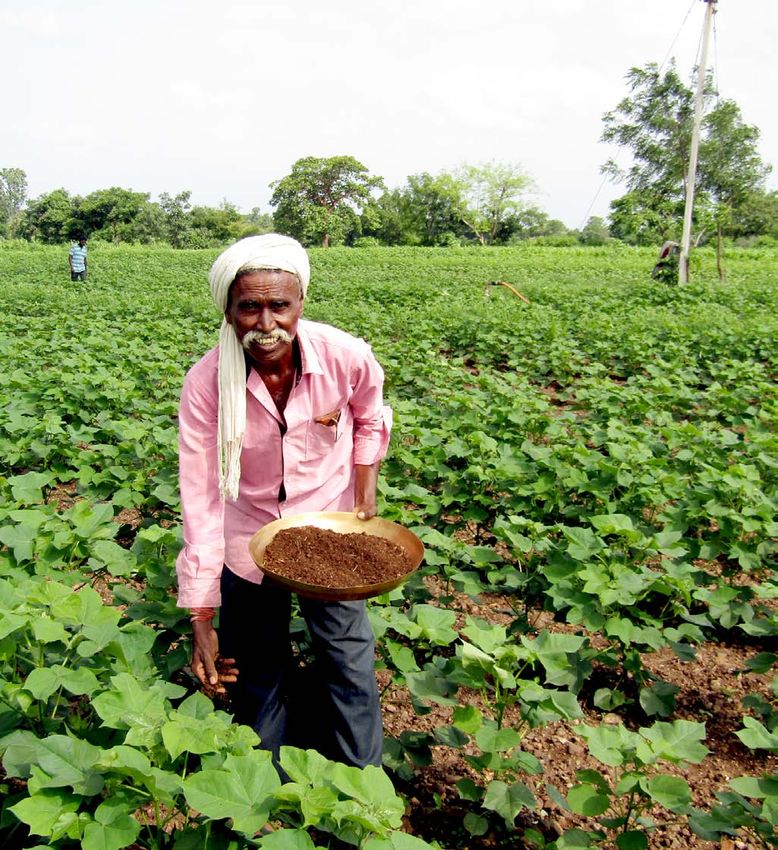
U
                                                                      dyogini has come a long way from its
                                                                      inception in 1992 – from a service provider,                     Arvind Kumar Malik has a

 Taking women
                                                                      principally for training poor, asset-less and                    degree in Forestry Science from
                                                                      mainly illiterate women in three backward                        Pantnagar Agriculture University
                                                        states of India namely Rajasthan, Bihar and Odisha to                          and advanced training in human
                                                        becoming a specialised agency. On this date, Udyogini                          rights. He has over 20 years of

 up on social
                                                        is placed at the very centre of developing cutting-                            experience in the development
                                                        edge knowledge and practice for micro-enterprises                              sector and has worked with
                                                        for the poor, especially rural tribal women. Udyogini         some leading national and international NGOs.
                                                        is recognised as a knowledge holder with regard to            He spent two and a half years as Regional Rural

 ladder
                                                        value chains which work towards integrating the rural         Development Manager, Aga Khan Foundation,
                                                        poor, especially women in generating income from lac,         Afghanistan, between 2011 and 2013. Malik
                                                        backyard poultry, mushroom, medicinal and aromatic            was recognised as Ford Fellow in 2015, a global
                                                        plants, vegetables, etc. This body of work is spread          fellowship organised by Columbia University and
                                                        through Chhattisgarh, Jharkhand, Madhya Pradesh,              Ford Motor Company and 92 Street Y, USA.
 Udyogini has been fostering gender equality by         Rajasthan and Uttarakhand, impacting more than

 improving the socio-economic status of women to        50,000 producers. If poor, marginalised and vulnerable
                                                        women are provided customised business services
                                                                                                                                                  - Arvind Kumar Malik
                                                                                                                                                                  CEO
                                                                                                                                                              Udyogini
 fully participate in decision making in domestic and   (skill, entrepreneurship training, financial and market
                                                        linkages) then their income significantly increases
 public spheres                                         due to increase in production and quality of product
                                                        and services. The increase in economic status enables
                                                        women to participate in decision making in the domestic
                                                        and public sphere.

                                                        Target Population & Geography
                                                        Our programmatic interventions are mainly designed
                                                        for the rural and tribal women from remote and
                                                        inaccessible areas engaged in traditional cultivation/
                                                        practices due to lack of knowledge, attitude and skills for
                                                        scientific methods and lack of exposure to technology
                                                        for full potential, value addition and processing.
                                                        Education deprivation leads to lower possibilities
                                                        of employment for them, which is why they are our
                                                        beneficiaries. The geography where we work are in
                                                        Central India (Jharkhand-Ranchi, Gumla and Khunti
                                                        districts; Chhattisgarh-Kanker district; and Madhya
                                                        Pradesh-Shahdol, Mandla, Katni and Anuppur districts)
                                                        and North India (Uttarakhand-Chamoli district and
                                                        Rajasthan-Karauli and Sawai Madhopur districts)

                                                        Scale of Impact
                                                        The scale of the impact our initiatives have achieved in
                                                        FY 2018-19 is as follows:

                                                        Uttarakhand:
                                                        • 1,500 producers in Chamoli adopted scientific
                                                          methods of MAP cultivation

6 | The good sight | March 2021                                                                                                             The good sight | March 2021 | 7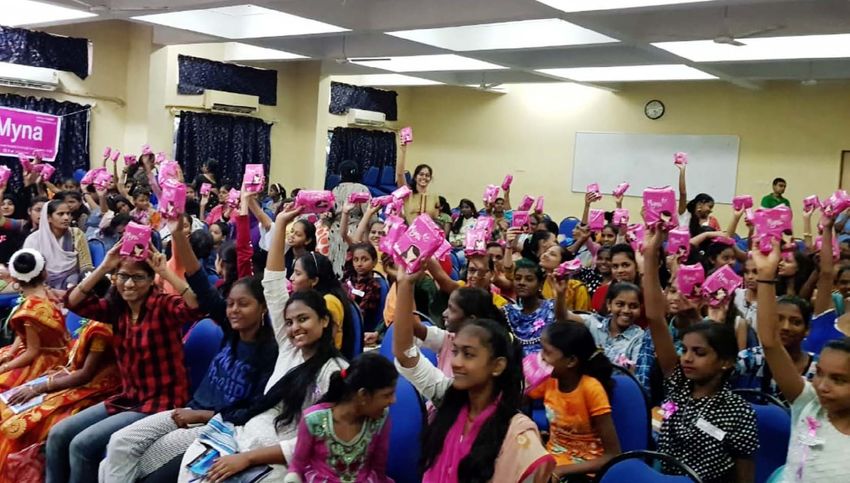
• More than 6-hectare of non-cultivable farmland area
   brought under MAP

 Jharkhand:
 • 10,380 women/ households in 60 villages are
   involved in mushroom, NTFP (lac), livestock and self-
   employment.
 • Lac processing unit was established with 500
   producers with the convergence of SFURTI scheme
   under MSME, Govt of India.
 • 13 service providers in livestock and lac value chains
 • Service providers earn an income ranging between Rs
   800 and Rs 1,000 month.

 Rajasthan:
 • 451 women/ households trained on scientific
   agriculture practices
 • 100 farmers realised better price in Sesame with gain
   up to 8%

 Chhattisgarh and Madhya Pradesh:
 • 20,000 women/ households in 158 villages on lac
 • Income increased from Rs. 4,000 to Rs. 6,500 per
   cycle
 • Cooperative formed

 SDGs Covered
 The Sustainable Development Goals our programmes
 are in alignment with are as follows:

  SDG- 1 No poverty    Working on community-based
                       livelihood
  SDG- 2 Zero          • Working on kitchen garden and
  hunger                 mushroom production
                       • Deworming and vaccination of
                         goat and poultry resulting in
                         higher levels of animal protein
                         consumption by its producers
  SDG-5 Gender         Awareness and recognition of
  Equality             women’s economic contribution
  SDG-8 Decent         Formalisation and growth of
  work and             micro enterprises
  economic growth
  SDG-15 Life on       Sustainable practices in the use
  land                 of land in its agricultural projects
                       with methods of cultivation that
                       are good both for the land and
                       the producers

8 | The good sight | March 2021                               The good sight | March 2021 | 9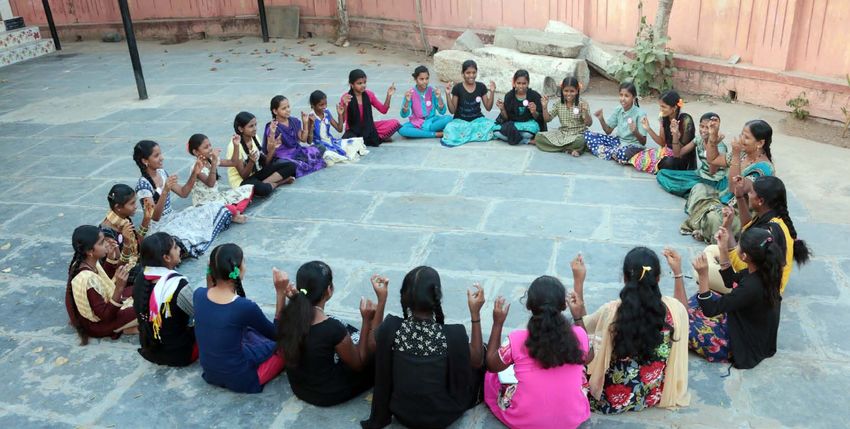
Implementation & Sustainability successfully overcome the challenges faced during
The project implemented in three states i.e. the implementation. The various challenges we face
Chhattisgarh, Jharkhand and Madhya Pradesh. include remote and disaggregated production, lack of
In Chhattisgarh, the project was implemented in knowledge, technology and opportunities for further
Building capacity of producers, Kanker district with grassroots-level organisation
Sehbhagi Samaj Sewa Sansthan (SSSS) and Udyogini
processing, networking constraints with the government
officials and the disregard of rural-tribal specificities.
entrepreneurs and producers’ independently implemented this project in Madhya
Pradesh’s two districts namely Anupur and Shahdol,
Moreover, enhanced income can be achieved with
economies of scale and scope.
organisation and in Jharkhand’s three districts namely Kanker,
We came with a multi-pronged strategy to focus on
Ranchi and Gumla. The project has enabled the target
group to build upon their capacity – knowledge, attitude the upgrading, basket-approach and social-security
and skills – to enhance income by services. In upgrading, we focused on process upgrading
• Choosing those products which are having rich and product upgrading, so as to improve the quality of
sources in tribal areas and hence it can fetch good the product and bringing efficiency in the value chain
The idea is to enhance the income level of vulnerable women return round the year activities, whereas, with basket approach, we built
producers up to a considerable level so that they can contribute • All the PoPs and scientific methods are tried and an economy of the scope by producing two or more
different products, so as to increase the cost-efficiency.
tested by research institution like INRG, The Goat
to the family income and come one step ahead in the decision- Trust etc
making process of the family • Increasing production and reducing the cost of Technological Innovation
production by adopting scientific practices of lac, Before Udyogini, tribal and rural women in
mushroom, livestock Chhattisgarh and Madhya Pradesh used to cultivate
• Diversification of income for generating avenues lac with traditional methods that couldn’t produce
(mushroom, vaccination services for backyard poultry good quality and higher quantity of lac. Importance of
and goat) by adopting better management practices inoculation, phunki removal and three timely sprays
Lac cultivation was first initiated by Udyogini in 2008 at Jharkhand and presently it has been replicated in appeared to be a proven innovation for good quality of
• Better negotiation with market dynamics
Chhattisgarh and Madhya Pradesh to benefit 30,000 women through lac and backyard poultry (BYP) value lac that fetches good return to the farmers. Apart from
• This improvement in the capacity of the target group
chain. The reasons for selection of lac, goatry, mushroom, VLRAC (Village Level Aggregation and Retail this programmatic innovation, Udyogini team designed
is irreversible and hence sustainable unless and until
Centre) and backyard poultry value chain is that they are compatible with rural-tribal specificities, have mobile apps for seasonal evaluation of lac interventions.
there are climatic and socio-economic changes that
good market demand in both domestic and exports markets, are supported by government programmes Lac cultivation is a seasonal crop with two seasons in
compel the community to revisit their livelihood
and have good potential to enhance the income of women. The idea is to expand the product basket to a year. Through in-house app development, Udyogini
strategy and devise appropriate coping mechanisms
enhance the income level of vulnerable women producers in the state up to a considerable level so that they was able to figure out the problems, challenges, good
to address the changes.
can contribute to the family income and hence come one step ahead in the decision-making process of the approach in one season and based on the learnings it
family. became a reference point for next season. As it takes
The capacity building and co-learning ecosystem of the
project helped to develop the community to realise their six cycles to technically coined, farmers have adopted
The project has enabled targeted stakeholders i.e. lac producers, BDSP, CBOs and PIs to build upon their scientific methods of lac cultivation.
potential to some extent. The system at the village level,
capacity, knowledge, attitude and skills to enhance income by adopting scientific practices which reduce the
developing the capacity of community on different steps
cost of production and hence produce quality production of lac. It has also built the capacity of farmers to
of value chain and development of a cadre of service The Way Forward
better negotiate with the market as earlier the lac farmers were engaged in distress selling and not aware Udyogini, through its implementation, ensures that
providers are going to help and retain the learning/
of the better marketing options. They were unexposed to better processing systems to fetch a better price beneficiaries have adopted scientific methods of lac
outcomes of the project. Successful adaptation means
for their product. This improved knowledge, attitude and skills of the target group is irreversible and hence cultivation and also beneficiaries have seen the benefits
people becoming increasingly able to make informed
sustainable unless and until there are climatic and socio-economic changes that compel the community they got in the form of higher income, gaining technical
decisions about their lives and livelihoods in a changing
to revisit their livelihood strategy and devise appropriate coping mechanisms to address the changes. The knowledge and coping up with climatic changes that
climate.
capacity building and co-learning ecosystem of the project helped to develop the community to realise their cannot be possible with the traditional method. Now
potential to some extent. The system at the village level, developing the capacity of community on different Challenge & Mitigation Udyogini is moving towards the value addition in lac
steps of value chain and development of a cadre of service providers are going to help and retain the Approach like seed lac, button lac and shellac. For this, Udyogini is
learning /outcomes of the project. We at Udyogini have always felt that challenges established one processing unit to process lac and take
make an organisation grow and we have always up beneficiaries on one ladder up in lac value chain.
10 | The good sight | March 2021 The good sight | March 2021 | 11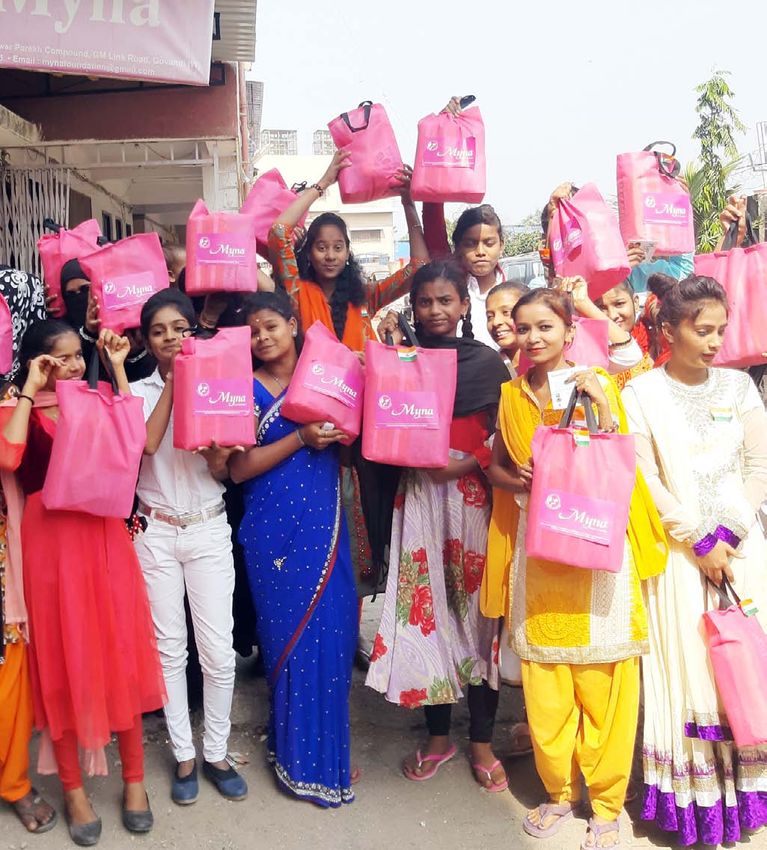
Bringing
    positive
    change in
                                                                                                                 A woman being explained the techniques of Azolla
                                                                                                                 cultivation and vermicomposting in Deoghar district
                                                                                                                 of Jharkhand. Image by PRAVAH.

                                                 POSHANN project                                         women volunteers who are not only taking informed

    girls                                        W
                                                                                                         decisions at personal level but also supporting the
                                                                 omen and adolescent girls stand         community at large. Selected groups of young girls
                                                                 in the centre of Welthungerhilfe’s      and women are trained on nutrition, agriculture and
                                                                 multi-stakeholder POSHANN               WASH through a series of Participatory Learning and
                                                                 project implemented by PRAVAH in        Action (PLA) cycles. These adolescent girls play an
                                                 collaboration with Abhivyakti Foundation (AVF) and      important role in sensitising others in the village on
                                                 Centre for World Solidarity (CWS) in Jharkhand.         nutrition, children diet and hygiene.
                                                 Supported by The Federal Ministry of Economic
                                                 Cooperation and Development (BMZ), this initiative      Under the project, adolescent girls are also mobilised

      For PRAVAH, which has been                 consciously empowers adolescent girls through
                                                 participatory education and action about their
                                                                                                         and linked to government services and facilities
                                                                                                         during the Iron and Folic Acid supplementation
                                                                                                         week, deworming week as part of Ministry of Health
      working to empower vulnerable and          education, health and nutrition across 162 remote
                                                 villages in the state.                                  and Family Welfare programme and learn about their
                                                                                                         reproductive health.
      underprivileged communities and            In many of these villages, early marriage is a common
                                                 traditional practice which leads to the creation of     Initiatives under the programme are implemented

      address deep-rooted problems of            a complex intergenerational cycle of malnutrition.
                                                 Planned efforts are undertaken to create awareness
                                                                                                         in the three districts Deoghar, Giridih and East
                                                                                                         Singhbhum by PRAVAH, AVF and CWS respectively.

      poverty, hunger and food insecurity        amongst girls on child marriage, malnutrition
                                                 cycles, reproductive health and menstrual hygiene.
                                                                                                         CWS targets to encourage and inform nearly 250-
                                                                                                         300 young adolescent girls in 40 villages of Ghatshila

      in 530 villages in Jharkhand and           Women in reproductive age are often nutritionally
                                                 vulnerable. This vulnerability and dietary gap create
                                                                                                         block. In Sonarathadi block of Deoghar, more than
                                                                                                         3,000 women in the reproductive age group of 15-49

      four districts of Bihar, women and         long-term damage. Therefore, the project stresses on    years, supported by PRAVAH, will improve their
                                                 monitoring Minimum Dietary Diversity of Women           care-giving practices in nutrition, dietary diversity,
                                                                                                         hygiene and health. Here, around 65 women
      adolescent girls are one of its priority   (MDDW), an indicator of whether or not women
                                                 between 15 and 49 years of age have consumed at         volunteers, supported by PRAVAH are playing a
                                                                                                         crucial role in maintaining, monitoring and guiding
      interventions                              least five out of 10 defined food groups in last 24
                                                 hours.                                                  the community for improved kitchen garden in every
                                                                                                         household. In Giridih, a total of 4,000 women will
                                                 Under the project, the three organisations have         be covered across 40 villages in nine Panchayats by
                                                 also created a group of dynamic strong young            AVF.

12 | The good sight | March 2021                                                                                                  The good sight | March 2021 | 13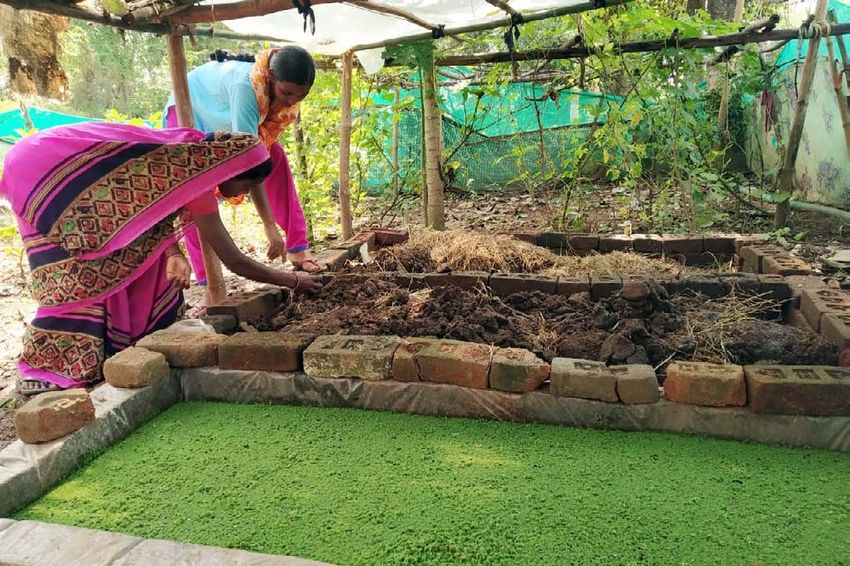
Focus in post-COVID-19 world
Volunteer                                                                                                                    The pandemic taught us how important is the health and immune system
Parvawati Kumari                                                                                                             of a person to fight any disease. PRAVAH is proud of its team and women
of Pokhariya
packaging seeds                                                                                                              volunteers who are toiling with the community and government to provide
to be distributed to                                                                                                         relief materials, sanitise villages and maintain hygiene practices. We have also
the community for
nutrition gardens.                                                                                                           supported 640 adolescent girls with sanitary pads along with other WASH
(Image by PRAVAH).
                                                                                                                             materials. As an organisation, we believe and work towards family food security.
                                                                                                                             People should depend more and more on their own production, no matter how
                                                                                                                             much quantity they can grow. Girls and women are always an important part of
                                                                                                                             our interventions. PRAVAH has promoted women SHG federations who helped
                                                                                                                             in preparing nutrition mix and masks for the relief work. Last but not the least,
     Implementation                                           gardens across thousands of households providing               our young volunteers are the real heroes, and we salute them for their passion
                                                              them with regular access to fresh and nutritious               and fearlessness.
     The pandemic disrupted the ecosystem within the                                                                                                                                                                                - Dilip Dubey
                                                              food. This in turn is improving food diversity at the
     villages. With returning migrants to the villages,                                                                                                                                                                                 Secretary
                                                              household level. The group of women volunteers
     and loss of income, children and pregnant women                                                                                                                                                                                     PRAVAH
                                                              have played a crucial role in furthering the concept
     became the most vulnerable groups. During this
                                                              of ‘Grow, Glow, Go’ food under which communities
     time of need, the volunteers and the project team
     played a critical role in monitoring the health of       store crop seeds for every season and utilise them for
     children and women. Under the project, it was found      the same season until next year. During this year’s
     out that many children in the project area who           lockdown due to the pandemic, the support shown by                                                                                Women volunteers coming together to map and
                                                                                                                                                                                                create the nutrition sensitive microplanning
     were earlier in the “green” category of nutrition had    the women volunteers in seed distribution came as a                                                                               in Churinda village, East Singhbhum district -
     fallen to either ‘yellow” or “red” category, meaning     boon for the community as there was no other source                                                                               Jharkhand. Image by CWS.
     undernutrition. Trained volunteers supported by          of diversified crops available except their nutrition
     PRAVAH distributed seeds for nutrition gardens           gardens. Some families were also able to sell excess
     to approximately 2,500 HHs during the lockdown           produce of bottle gourd and bitter gourds in the
     ensuring food security.                                  local markets which helped them to earn around
                                                              INR 24,000 even during the lockdown. The trained
     Young girls and women acted as warriors during
                                                              women volunteers are acting as change agents within
     the breakout of the COVID-19 pandemic. The
                                                              the community and not only changing themselves but
     nationwide lockdown created panic and a total
                                                              also the mindset of the community.
     disruption and restriction in movement across the
     country, including Jharkhand. During this time, the
     partner teams digitally connected with the groups of     Sustainability
     women volunteers and supported them to carry out a
     preliminary need assessment in the community.            To ensure project sustainability, trained and skilled
                                                              women volunteers, youth and ICDS frontline workers
     These group of motivated women took the necessary        are made an integral part who transfer the knowledge
     safety precautions and went out to the community         on best practices for nutrition, hygiene and natural
     to spread awareness on the pandemic. They ensured        resource management to the larger community. They
     the spread of government messages and acted as a         help in raising awareness in the community and take
     catalyst in controlling the spread of rumours and fake   up the responsibility to bring about a positive change
     news. It is worth mentioning that the volunteers were    in the long run. Adolescent and young girls are more
     the real hope during the lockdown period. They came
                                                              open to new learnings which are appropriate to their
     out with a lot of passion to support the government-
                                                              life and the learning prepares them to face challenges
     established community kitchen and relief centres by
                                                              in different stages of their lifecycle, and negotiate
     maintaining social distance and hygiene protocols.
                                                              for positive actions to mitigate the risks of gender
                                                              discriminations in the patriarchal society. Including
     Impact                                                   girls as an integral part of the initiative has also
     The targeted communities adopt good practices            bridged the generation gap as they are frequently
     for nutrition and hygiene. One of the most visible       interacting with their elderly on concerned issues and
     impacts includes setting up of homestead nutrition       challenging the gender stereotypes.
                                                                                                                       Abhivyakti Foundation team along with ICDS workers educating adolescent girls on adverse effects of child marriage and
                                                                                                                       early pregnancies through various games. Image by AVF.

   14 | The good sight | March 2021                                                                                                                                                                                         The good sight | March 2021 | 15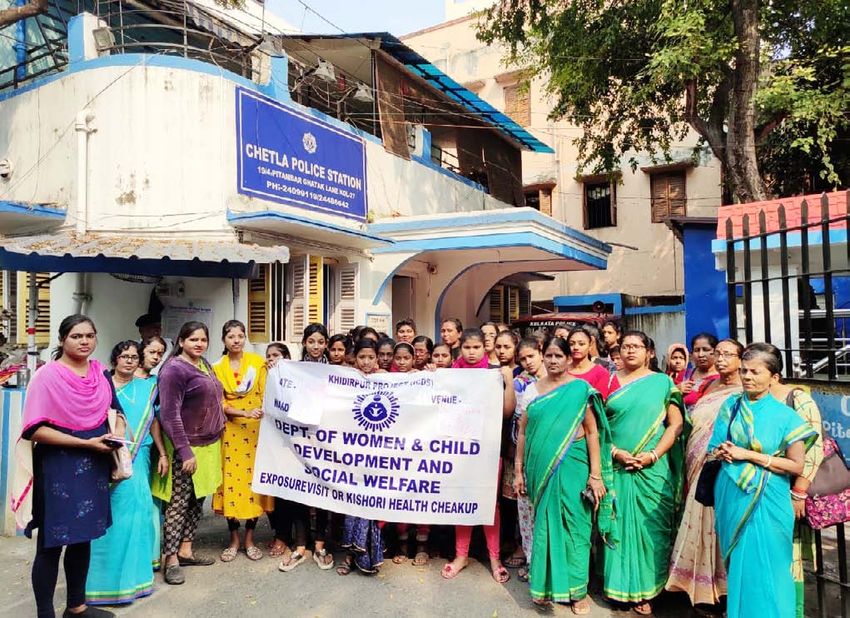
Informed,
 empowered                                 Adolescent girls during a group session.

                 adolescent
                                           Strengthening SAG-KP                                     school that would add value and also eventually
                                           Convergence Programme                                    strengthen the SAG-KP convergence programme.
                                                                                                    The main target population are adolescent girls aged
                                           In 2010, a major shift came in the adolescent
                                                                                                    11 to 18 years, both out of school and in-school, and

                       girls
                                           programme when the Government of India launched
                                                                                                    the programme is being implemented in all the 23
                                           a comprehensive empowerment programme focused
                                                                                                    districts of West Bengal.
                                           on adolescent girls known as SABLA (renamed
                                           as ‘Schemes for Adolescent Girls’) to address            Implementation
                                           multidimensional problems and challenges faced           The peer-led approach is one of the major strategies
                                           by out-of-school adolescent girls in the age group       of the programme where peer leaders (PLs) are
                                           of 11-18 years. In 2013, the Department of Women         democratically selected by their peers and later
 Since 1974, CINI has been working         and Child Development, Government of West
                                           Bengal (GoWB), initiated Kanyashree Prakalpa
                                                                                                    the trained PLs take sessions in the group to build
                                                                                                    knowledge and skills on health, including sexual
 to ensure adolescents achieve their       (KP), a conditional cash transfer scheme for the         reproductive health, nutrition, life skills education
                                           continuation of girls’ education and delaying the age
 rights to health, nutrition, education,   of marriage. Recognising aims of SABLA coincided
                                                                                                    and protection of rights. Due to the pandemic
                                                                                                    situation, as physical sessions were not possible, CINI
 protection and participation by           with the objectives of the KP, the GoWB decided to
                                           integrate both the schemes from 2015 to achieve
                                                                                                    started to reach digitally to the adolescents through
                                                                                                    WhatsApp groups and telephone calls. Adolescents
 making duty-bearers and communities       holistic development of girls. CINI as state technical   who have smartphones participated directly in the
                                           partner of the department provides technical support
 responsive to their wellbeing             in the 23 districts of West Bengal with added value
                                                                                                    sessions through the WhatsApp platform. Those
                                                                                                    who don’t have the facility were oriented later by
                                           components like the inclusion of gender and rights,      their peers in small groups. Different stakeholders
                                           sexual reproductive health in training, capacity         like schoolteachers, health/Anganwadi workers and
                                           building of frontline workers, engagement of parents     PRI members also joined these groups to ensure
                                           and community, inclusion of girls in local decision-     constructive discussions. Girls used this platform not
                                           making platforms, support in district planning and       only for the sessions but also participated in event
                                           monitoring process, etc. Within this backdrop, CINI      celebrations, run campaigns through innovative
                                           supports for the overall empowerment of adolescent       messages/materials. Simultaneously, stakeholders’
                                           girls by creating a gender-balanced and adolescent-      training and review meetings were also taken place
                                           friendly environment both within and out of the          through online platforms.

16 | The good sight | March 2021                                                                                           The good sight | March 2021 | 17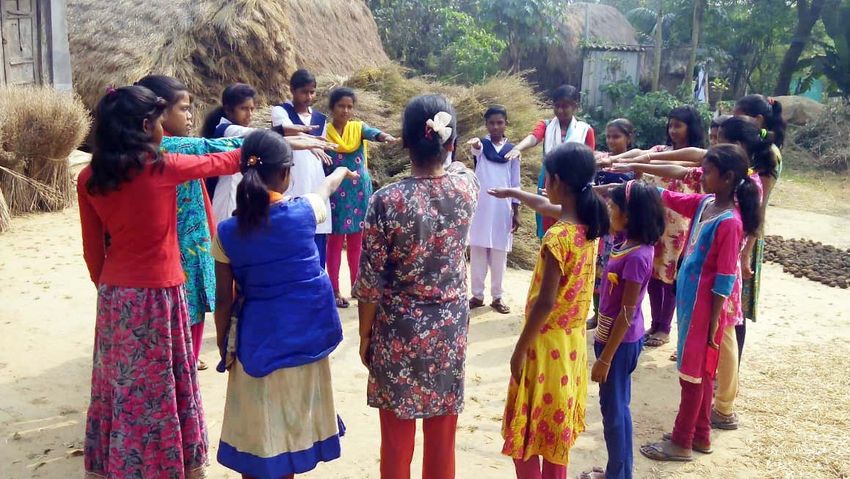
Focus in post-COVID-19 world
                                                                                                                                     When we started our journey in 1974, most of the mothers attending our
                                                                                                                                     clinics were in their teens, malnourished and bringing their sick children for
                                                                                                                                     treatment. As we moved into the community, we saw girls neglected, pulled out
                                                                                                                                     of school, sent out as domestic workers and married off early. We set up the
                                                                                                                                     Adolescent Resource Centre at CINI in 2000, one of the first in the country,
                                                                                                                                     to engage, empower and help them achieve their full potential. We were not
                                                                                                                                     alone as over the years, many government programmes were launched such as
                                                                                                                                     “Kanyashree Prakalpa” in Bengal, SABLA/Scheme for Adolescent Girls (SAG),
                                                                                                                                     Rashtriya Kishor Swasthya Karyakram (RKSK), “Beti Bachao, Beti Padhao”
                                                                                                                                     in different states of India. Our investment paid off as during post-COVID-19
                                                                                                                                     period, we saw girls and boys in our project areas motivating others to take
                                                                                                                                     preventive measures, resisting early marriage and trafficking.

                                                                                                                                                                                                            - Dr Samir Chaudhuri (Pediatrician)
                                                                                                                                                                                                                         Secretary and Founder
                                                                                                                                                                                                                          Child in Need Institute

                                                                                     An exposure visit for adolescent girls.

 Impact
 Nearly 7,56,120 adolescent girls (AG) from the 23 districts of West Bengal have been covered where CINI has a
 direct intervention. Visible impacts are as follows:
 • Peer leaders have developed their leadership skill by conducting weekly sessions
 • AGs are now much more comfortable to measure their own BMI by themselves
 • AGs are aware of different service delivery points and peer leaders refer their peers to Anwesha clinic
 • Decrease in the number of out-of-school girls
 • Decrease in the number of early marriages
                                                                                                                               Peer leaders taking a session on girls’ empowerment.                    Vocational training of adolescent girls in progress.
 • Empowerment issues are jointly discussed by local self-government, community women and AGs
 • AGs are now practising nutrition garden in their courtyard
 • Through vulnerability mapping, AGs are identifying their problems and participating in different community
    platforms

 Sustainability
 This unique flagship programme is designed as a government-NGO partnership model for adolescent
 empowerment and is creating an enabling environment for the holistic development of adolescent girls by dealing
 with the social and systematic challenges in their lives. The focus is to develop a sustainable model through
 strengthening the government system and creating safe space in Anganwadi centres, imparting education on life
 skills, retaining girls in schools and preventing early marriage through strengthening community engagement.
 Thus, change-makers are functional within the community and frontline workers are capacitated in the government
 system to carry forward the initiative to scale up the model in other states of India. The initiative has already been
 scaled up from 7 districts to all the 23 districts in West Bengal.
                                                                                                                                                  Child Rights Week observance by CINI with adolescent girls.

18 | The good sight | March 2021                                                                                                                                                                                                      The good sight | March 2021 | 19
Capacity building of health Implementation
workers
I
As part of the guidelines, in this project a number
n 2017, SRIJAN partnered with EKJUT and of community meetings were to be organised.
the CMHO (Chief Medical Health Officer) However, during the lockdown, it was not possible
of Anuppur in MP for a project which aimed to conduct these meetings for awareness generation
at building the capacity of the ASHA health and planning. Post lockdown also it became very
workers and health department functionaries. difficult to conduct these meetings as the scare
Dedicated
This was aimed to have an impact on the health of of COVID-19 infection was still there. Travelling
adolescent and young girls and women who face became very difficult for the ASHA workers and Sehat
issues related to their reproductive health and Sakhis, community workers promoted by SRIJAN for
personal hygiene. In the poverty pockets, girls supplementing the work of women and girls’ health,
to cause
are in a vulnerable position as they lack general to carry out their day-to-day work. For conducting
awareness in matters related to their overall health, trainings of Sehat Sakhis and ASHA workers, it
reproductive health and wellbeing, especially during became difficult to find a venue where the safety
puberty. It is also impacted by the various social from infection and social distancing norms could be
taboos surrounding the adulthood of women. ensured.
of girl
Sehat Sakhis collected data of women migrants who
The ASHA workers in the village have the potential were returning back to their villages and relief work
to play an important role in spreading awareness on was planned accordingly. Project staff collected
their reproductive organs, growth pattern, menstrual
care
the data over phone and did relief work with 645
health and personal hygiene and provide medicinal families. In order to spread awareness about
and other resources for them to look after their COVID-19, wall painting was done at visible places in
health and move towards empowerment. This project the villages depicting the social distancing norms and
covered 578 villages of Anuppur, Pushprajgarh, precautions.
Jaitharii and Kotma blocks of Anuppur district.
SRIJAN has been promoting strong
community institutions of women,
training in life skills, livelihoods and
financial services, thereby creating
a safe space for women in the rural
landscape
DC and Sehat Sakhis interacting with pregnant women on maternal health issues.
20 | The good sight | March 2021 The good sight | March 2021 | 21Focus in post-COVID-19 world
SRIJAN is dedicated to the cause of empowering rural women to address the
social, health, economic and political barriers disproportionately affecting their
Impact Sustainability well-being. Pertinent issues affecting the girl child ranges from child marriage,
Eight tribal dominated villages that have been Through this project, SRIJAN has promoted teenage pregnancy, poor reproductive health and limited education. SRIJAN
promoted as model villages under this project have community cadre for supplementing the work of has been promoting strong community institutions of women, training in
had zero infant mortality and maternal mortality. women and girls’ health called Sehat Sakhis. A life skills, livelihoods and financial services, thereby creating a safe space for
Also, in the same villages institutional deliveries total of 578 Sehat Sakhis have been nurtured and women in the rural landscape. However, gender inequalities continue to find its
increased from approximately 67% before the year promoted and they have become members of the place, for which SRIJAN has been creating opportunities for dialogue both at
2018 to currently 87% as a result of the interventions Village Health Management Committee that is local and policy level in order to promote greater degree of equality for women
of the project. A total of 6,959 participatory learning promoted by the National Health Mission. This and girls.
meetings have been organised with the community committee is run by the community women members
members where several women and girls’ health- and it holds regular meetings to manage and monitor
- Prasanna Khemariya
related issues have been discussed and actionable the health-related issues of their village. Sehat Sakhis
CEO
points have been decided upon. In this way, over are also paid an honorarium for attending this
SRIJAN
578 villages have been impacted and 578 Sehat meeting.
Sakhis have been promoted in these villages through
capacity building.
Village-level
meeting on
women’s health
issues in progress
Sehat Sakhis
facilitating women
and taking oath
for COVID-19
prevention.
Training of Sehat Young girls
Sakhis being demonstrating
facilitated by hand washing
SRIJAN staff. technique for
prevention from
COVID-19 and
other infectious
22 | The good sight | March 2021 diseases. The good sight | March 2021 | 23Preparing
future-ready
resilient Girls participating in a session with their CorStone-trained teacher.
(Photo by Laura Kudritzki Photography).
girls Girls First
T
he Girls First programme empowers girls attending KGBV (Kasturba Gandhi Balika Vidyalaya)
residential schools to unleash their potential and transform their life trajectory, despite difficult
circumstances. CorStone’s integrated resilience-based and adolescent health programme aims to impact
measurably three interdependent factors in girls’ wellbeing: mental or emotional health, physical health
and education.
CorStone develops and provides personal Girls First resilience training integrates the best practices from the fields of emotional resilience, positive
resilience programmes to improve psychology, social-emotional learning, positive youth development, emotional intelligence, and restorative justice.
It also provides training in topics like reproductive health and gender equity. The programme is delivered one hour
wellbeing for youth worldwide, focusing per week in a facilitated peer support group format (15-20 girls per group), led by a KGBV teacher who has been
trained by CorStone.
on adolescent girls as critical change- Girls who have completed the programme have shown increased abilities to define and set goals and increased
agents in their communities knowledge and awareness of gender equity and personal agency.
Girls First focuses on girls in standard 6-8 in KGBV schools in Bihar. KGBV schools serve exclusively at-risk
girls from SC/ST communities - many of these girls have never gone to school or dropped out and are at risk for
exploitation, child marriage or abuse.
24 | The good sight | March 2021 The good sight | March 2021 | 25Implementation
Girls First resilience training integrates evidence and best practices from
the fields of emotional resilience, positive psychology, social-emotional
learning, positive youth development, emotional intelligence, and
restorative justice. It also provides training on topics like reproductive
health and gender equity. The programme is delivered one hour per week
in a facilitated peer support group format, led by a KGBV teacher who has
been trained and mentored by CorStone.
The challenges presented by the COVID-19 pandemic have shown us
how important resilience is - not just for girls, but for everyone: teachers,
parents, families and communities. CorStone is currently working to adapt
its current curriculum as well as develop COVID-19-specific materials for
youth. It is modifying its programme delivery strategies to utilise basic
technology, such as radio and TV spots, so that youth can continue to have
access to wellbeing education materials.
A KGBV classroom in Patna, Bihar.
Impact
Since 2015, CorStone has been implementing Girls First in 100 of the 560
KGBVs in Bihar. Having seen the positive impact of the programme, in
December 2018, the Bihar Ministry of Education requested CorStone to
demonstrate how the programme could be scaled up. Since then CorStone
has been training master trainers from among the trained teachers and
along with them have expanded the programme to reach 268 KGBVs across
all districts in Bihar and has reached out to over 26,500 girls. In the next
two years, CorStone hopes to cover all KGBVs in Bihar.
Sustainability
We work closely with the local government to build capacity and capabilities
within the Ministry so that they can fully manage and carry out the Girls
First programme after the two years of CorStone training and supervision. A CorStone student
workbook. (Photo
We are continuously monitoring and documenting processes and supports by Laura Kudritzki
required to improve the programme and ensure high quality and fidelity of Photography).
Girls First delivery in Bihar’s KGBVs.
26 | The good sight | March 2021 The good sight | March 2021 | 27Focus in post-COVID-19 world
The disastrous effects of the COVID-19 pandemic has
only reaffirmed the necessity of providing wellbeing and
resilience education to youth and girls. In fact, in the
unfolding crisis, the promise of resilience training should
best be viewed in two ways — as a ‘response’ to the myriad
of social and economic stressors currently being faced by
girls; and as an opportunity for ‘inoculation’ against future
challenges.
- CorStone CEO Steve Leventhal with
Program Director Nandita Bhatla (left)
and Vice President and India Country
Director Gracy Andrew (centre).
(Photo by Laura Kudritzki Photography).
A session in progress in a classroom at KGBV, Patna, Bihar.
The Girls First programme empowers girls attending KGBV residential schools
to unleash their potential and transform their life trajectory, despite difficult
circumstances.
Girls First sessions incorporate group activities and games that build confidence, creativity and mindfulness.
28 | The good sight | March 2021 The good sight | March 2021 | 29#Har
Kadam
Beti
KeSang
Active female members promote GEP Campaign in the community in Chhattisgarh.
Vijayi and wardens, provides teachers and students
S
with reflection and self-learning materials, and
upported by the IKEA Foundation and in continuously supports teachers to build their
close partnership with the government, capacity as life skills educators. Gaining enhanced
Founded on the belief that World Change Room to Read is strengthening the life
skills of adolescent girls in all government
life skills and enhanced career aspirations are the key
outcomes of the project.
Starts with Educated Children®, Room residential institutions in the state of Chhattisgarh.
Vijayi – empowering girls for successful lives, as The Girls’ Education Program also took a big leap
to Read works in 16 countries across the the project is called, is being implemented in Porta forward. A collaboration with the global private
Cabins, Ashramshalas, Kasturba Gandhi Balika equity major Warburg Pincus aims to empower
globe in the areas of early literacy and Vidyalayas (KGBV) and Rajiv Gandhi Shiksha
Mission (RGSM) hostels across Chhattisgarh (from
around 45,000 girls in 475 KGBV in the two states of
Telangana and Andhra Pradesh. The project focusses
girls’ education grades 6-8) and in KGBVs in Rajasthan in grades on reaching out to residential schools for girls in the
two states.
9-12. The project aims to empower around 68,700
girls in Chhattisgarh and Rajasthan over three years. During the past year (2019-2020), Project Vijayi
Life skills education and mentoring support for has benefited a total of 25,492 new girl scholars in
adolescent girls are at the heart of Room to Read’s Chhattisgarh and Rajasthan.
Girls’ Education Program. Vijayi trains teachers
30 | The good sight | March 2021 The good sight | March 2021 | 31Focus in post-COVID-19 world
Moving forward our focus will be on strengthening and
consolidating capacities. Training support is being provided to
internal team of our Girls’ Education Program through virtual
mediums. The training focusses on understanding the concepts
of self-esteem, body image, gender stereotypes, body talk/
comparison, etc. Apart from this, training is being delivered
on communication, facilitation, critical thinking, etc. at the
state level. Girls’ Education Program has started providing
task-based training inputs to teachers and wardens through
posters, resource sheets, videos, response material and weekly - Saktibrata Sen
conference calls. Program Director
Room to Read India
Anganwadi workers lend
support to #HarKadamBetiKeSang.
Implementation education campaign #HarKadamBetiKeSang aims
to address these challenges by reaching out to girl
Room to Read began by creating a repository of scholars, their families, and larger communities. RtR
materials and resources that spanned different is also partnering with local and state governments,
mediums – these included digital content for donors and supporters, and all other key stakeholders
consumption through WhatsApp, community radio who essentially strengthen the ecosystem of a girl
shows that reached the remotest corners of the child and help her thrive. The campaign uses a
country, podcasts, TV broadcasts, 6 newsletters, 179 blended approach with radio programming. RtR is
self-reflection worksheets and remote mentoring using community radios for field energising activities,
sessions to name a few. Additionally, a concerted and social media to create a dialogue for building a
effort was made to build capacities – Room to Read supportive environment for girls’ education.
trained teachers, wardens and social mobilisers and
equipped them to perform effectively in a world Sustainability
where in-person instruction was no longer possible. Projects Vijai and the project in collaboration with
The organisation especially focussed on familiarising Warburg Pincus are big sustainable projects of Room
parents on the new roles – as guides and educators to Read. These projects will have long-ranging impact
that they would now have to play. Most importantly on empowering girls’ education in the three states of A girl along with her grandmother extends support to RtR’s girls’
education campaign.
Room to Read wanted to motivate them to prioritize Chhattisgarh, Rajasthan, and Telangana. Alongside,
the education of girls even in these difficult times. the campaign #HarKadamBetiKeSang is an initiative
All this was done in keeping in mind the diverse and to create more awareness in the immediate ecosystem
multilingual nature of India with the Government on a central issue on girls education during the
and public institutions as important partners in the pandemic and reaches out to those beyond ordinary
endeavour. reach of the program through various communication
Impact sources. This campaign will have long-ranging
impact as it essentially uses behaviour change
Every time a pandemic has hit across the globe, it communication (BCC) tools. The behaviour change of
has disrupted the lives of the girls more than anyone stakeholders is crucial for sustaining girls’ education
else. In response to the pandemic, Room to Read and will help to weave a better future for girls as Empowering girls through education.
conceptualised a campaign #HarKadamBetiKeSang. independent decision makers. Sustainability is about
This is a seven-week-long national level girls’ building up a strong demonstration, supporting the
education program campaign. This is the new governance and engaging with the ecosystem so that
initiative by Room to Read to reach out to those the social capital building around the central issue of
beyond ordinary reach. Room to Read’s girls’ girls education is enhanced too.
Girls in Ajmer enjoying reading at home.
32 | The good sight | March 2021 The good sight | March 2021 | 33Messenger
of menstrual
hygiene
practices
Myna Mahila Foundation is a social
organisation which works towards
providing menstrual hygiene access,
improving menstrual health and
employing women in the urban Girls with menstrual hygiene kits.
slums of Mumbai
T
he Myna Mahila Foundation (MMF) of safer menstrual hygiene management practices.
is not only empowering women by It is creating a cultural revolution and generating
encouraging discussion on taboo subjects jobs locally. It improves health at the doorstep,
such as menstruation but also creating affordably. It educates women in English, life
a network of young female entrepreneurs by skills, mathematics, computer and health and
partnering with self-help groups in urban slums financial literacy. It holds workshops, courses and
that produce and distribute affordable high-quality lectures with the women.
menstrual hygiene products to increase adoption
34 | The good sight | March 2021 The good sight | March 2021 | 35Flagship programme: Sponsor a Girl Sponsor a Girl programme is its flagship initiative aimed at equipping underprivileged girls with menstrual hygiene products and training them on proper menstrual hygiene management and sanitation. First, its team takes a survey of the slum communities in Mumbai and identifies girls who are really in need. They are then linked with a donor, who with a minimum donation of INR 500, helps sponsor them with hygiene kits including Myna sanitary pads for three months, soap, shampoo, conditioner and a pair of underwear. The programme also includes regular events such as Pad Parades, Women’s Day and Menstrual Hygiene celebrations, life skills classes and educational sessions on menstrual hygiene management, biology of periods, hygiene practices, product of choice, proper disposal practices and busting period stigmas & myths. Through this programme, it aims at improving menstrual health and hygiene practices, providing access to sanitary products, raising awareness for menstrual hygiene and shifting health behaviours of girls in financially restrained, marginalised and vulnerable households. The target population includes girls under the age of 18 in urban slum communities and low-income households in Maharashtra including Govandi, Kurla, Chembur, Palghar and Nahur. Implementation amid COVID-19 An event of ‘Sponsor a Girl’ programme. In the backdrop of the pandemic and the subsequent lockdown, Myna Foundation had to focus on meeting the sanitary as well as other necessary needs of the girls, underprivileged families and daily wage earners in Mumbai’s slum areas. Its team ration and more. It also trained our staff on social has reached out to 4,356 girls, held 74 events and hence it plans to sustain this programme through its continued providing door-to-door access to sanitary distancing and hygiene practices. The main challenge distributed over 25,590 pad packets to girls through various initiatives such as Myna Speaks (its annual pads, along with other necessities such as ration & was acquiring permits for our ground team members our Sponsor a Girl programme. women’s health conference), online menstrual sanitary relief, distributing & producing facemasks, and vehicles to access some of the worst affected hygiene education sessions, webinars, engaging with providing COVID-19 sensitisation, and shifting its slum areas including Mankhurd, Chembur, Govandi, Sustainability its beneficiaries on the Myna health app and our MHM education and awareness sessions online and Transit camps and others. The main area and scope of its work revolves latest campaign “Pledge a Period” which will help through the Myna Health Application. It introduced around increasing menstrual hygiene access and it sponsor girls with hygiene kits including sanitary a women’s helpline to help women report domestic Impact improving health outcomes for women and girls in pads, disposable bags, underwear, facemask, sanitizer and mental health issues, order pads, request for Starting from March 2018 until March 2020, it underprivileged and low-income households in India, and menstrual hygiene education and awareness. 36 | The good sight | March 2021 The good sight | March 2021 | 37
An informed girl                                                               Focus in post-COVID-19 world
                                                                                                                                  Since March, our focus has been on providing access to sanitary, hygiene and ration
   Almost 20 per cent of the girls drop out from schools in India after attaining puberty due to lack of                          relief to vulnerable women, underprivileged families and daily wage earners in
   awareness, affordability of sanitary napkins and inadequate infrastructure. All the girls and women in                         Mumbai. Recently we launched the “Pledge a Period” campaign to continue our
   Myna Foundation’s programme come from rough walks of life and are chosen after a careful evaluation of                         efforts in improving menstrual hygiene access and providing online menstrual
   their demographic and menstrual hygiene practices.                                                                             hygiene education to girls. We also have plans to install sanitary pad ATMs, run
                                                                                                                                  Myna bus and autos across Mumbai to distribute sanitary pads and improve
   Azmati, a girl from Govandi, had to drop out of junior college due to cultural and financial restraints. She                   menstrual health. We have reached more than 1,170 women since August and aim to
   had attended Myna Foundation’s ‘Sponsor a Girl’ sessions where she expressed her willingness to join                           reach more than 5,000 by November-end because periods don’t stop in a pandemic.
   Myna. She was allowed to join Myna only because it is a women’s organisation and was considered to be
   safe by her parents. As a leader and a fellow at Myna, she progressed extremely well. She learned how to                                                                                  -Suhani Jalota
   do micro-management, fill out evaluation forms and even worked her way around using a laptop! She no                                                                                    Founder and CEO
   longer uses old rags during her periods and now spreads menstrual hygiene awareness in her community.                                                                             Myna Mahila Foundation

                                                                                                                  A menstrual hygiene education session in
                                                                                                                  progress.
           Beneficiaries of ‘Sponsor a Girl’ programme.

38 | The good sight | March 2021                                                                                                                                                             The good sight | March 2021 | 39
Sustaining
livelihoods
with Preparation of botanical extract for application in
climate-smart
the organic cotton field.
C
limate Change Adaptation of Women to low returns on investment, debt cycles, crop
Smallholders and Cotton Producers failures and so on.
organic cotton
(CCACP) or ‘Sufalam’ project,
supported by Galeries Lafayette of CARE India started working on an empowerment
France, is a climate-smart organic cotton and model in network with local stakeholders like
livelihood project being implemented since KVKs, Agriculture University at Akola and others;
farming
2018 in 10 villages of Jalgaon-Jamod Block in developed Package of Practices (PoP) for small
Buldana district of Maharashtra. Keeping CARE and marginal women landholders. PoPs were
India’s goals of ending poverty and women’s adoptable through Farmer Field School (FFS)
empowerment, the project essentially works with methodology where 111 demonstration farmers
1,511 small and marginal women landholding contributed around 5% of their land or 0.5 acres of
households from mostly tribal communities. The land to learn, test and implement organic cotton
overall strategy is to empower women farmers cultivation practices. PoPs were based on less
to adopt organic cultivation of cotton and water-intensive models and developed farmers’
Through Climate Change Adaptation of engage in ethical and globally accepted organic
production standards for higher market reach,
capacity to shift from high cost intensive inorganic
cotton production to climate-resilient less cost-
Women Smallholders and Cotton Producers including the export market and better prices. intensive cotton production. Till October 2020,
Cotton is a traditional crop in the Vidarbha the CCACP project was successful in empowering
Project, CARE India is empowering women region of Maharashtra as it is suitable because 1,511 women small and tribal cotton farmers and
of the soil and climate ecology. Today the cotton helping them emerge as climate-smart farmers.
farmers from tribal communities cultivators, particularly the small women and The women farmers have also emerged as
tribal landholders are exposed to multiple threats. entrepreneurs in agriculture input production,
Mostly mono-croppers, the small landholder thus strengthening the local economy during
cotton farmers are one of the most vulnerable COVID-19 pandemic through production and sale
farming communities in India due to the climate of organic or biopesticides and fertilizers to local
shift, water stress and market influences, leading farmers, since the pandemic had halted the local
40 | The good sight | March 2021 The good sight | March 2021 | 41Organic cotton seeds being sown by
women farmers.
economy and agriculture input flow. The project
has in overall strengthened farmers’ platforms
to influence the value chain for organic cotton
farming. With the project closed to completing
two years, the key achievements may be mapped
as follows:
• At scale reach to 1,511 women small and tribal
farmers in cotton and, also influencing other
farmers in the area. The overall achievement
is a reduction in the risk of crop loss and
enhanced income
• One farmers’ group namely “SUFALAM” has
been registered under Agriculture Technology
Management Agency (ATMA) and Agriculture
Department (Govt. of Maharashtra) to take
government agriculture scheme to the village
level
• Promotion of Self-Help Groups (SHG) and
Farmers’ Groups (FG) with the capacity
to promote PoPs to demonstrate climate
resilience in organic cotton cultivation. 53
SHGs with 539 members have achieved
till October, a cumulative saving of Rs.
6,66,392/-
• Block Level Organic Cotton Committee
(BLOCC) members have been trained
on collective procurement of inputs and
marketing of organic cotton with five Farmers
Groups (FGs) empowered with diverse
knowledge and skills to improve cotton
farming environment e.g. prevention of child
labour, women labour equal wages, price
negotiation and fair prices for cotton, quality
cotton packaging and delivery to market,
reducing the processing of cotton and false
weighing done by middlemen, etc
• Child labour eradication in the cotton
cultivation, particularly as farm and
cotton delivery labour, through awareness
and empowerment and support diverse
institutions at the community level like SHGs,
schools, etc
42 | The good sight | March 2021 The good sight | March 2021 | 43Fruit of ‘Sufalam’ Focus in post-COVID-19 world
The small and marginal farmers in India today face a huge crisis
Maya Bai Munim Singh Alashe, aged 42, is a in sustaining agriculture as source of livelihood with frequent
woman farmer from Hanwatkhed village of weather shocks and water stress, besides other challenges like
Jalgaon (Jamod) block, Buldhana district, access to inputs on time, market and fair prices. COVID-19 has
Maharashtra. Essentially a farming household, sharply impacted the small and marginal landholders although
Maya Bai experienced low returns from cotton there has been an agricultural productivity enhancement during
cultivation due to severe crop loss due to climate the period. The focus in the post-COVID-19 period essentially
shift, water stress and low price for cotton has to be to strengthen small and marginal farmers’ institutions/
produced by her and overall high input costs in platforms, with better climate-resilient adoptive technologies
inorganic cotton. Average loan size taken before and in overall ensure that climate-smart agriculture supports higher income, market
each season was approximately INR 25,000. access and nutrition security.
Post-loan repayment, she was hardly left with
- Manoj Gopalakrishna
choices to manage her family well.
Chief Executive Officer
CARE India Solutions for Sustainable Development (CISSD)
When ‘Sufalam’ started, she was invited to
participate in the project and pilot organic
cotton growing techniques with Package of
Practices from CARE India. The FFS sessions
exposed her to all the sustainable methods of
cotton production. When she first shared her
learning with her husband Munim Alashe, he
was hesitant to adopt the practices. Finally
convinced seeing other farmers adopt the
Package of Practices (PoPs), the couple started
growing cotton using the PoPs on their 0.5
acre land. To their surprise, the cotton crop’s
growth through the PoPs using traditional seed,
IPM, organic manures etc was much better and
resilient to climate shocks and water stress.
The pest infestation in the field also reduced
extensively. The couple slowly transited to
Jamunabai Deva Abaya of Charban village
organic cultivation of cotton adopting all PoPs picking cotton from her organic cotton field.
promoted by the Sufalam project like IPM,
biodynamic composting, botanical extracts and 6,000 INR per acre on pesticides alone, thereby
organic manure in their field, botanical extracts ensuring a higher return on investments. May
required only once in a crop cycle, etc. Bai is planning to invest in better educational
opportunities for their children and she along
In 2019-2020 harvest, Maya Bai achieved very with her husband have become exponents of
high crop produce which was much better in the PoPs promoted by CARE India and are
quality. She was also happy to save around motivating other farmers to adopt the PoPs.
CARE India, a Section 25 Company (member of CARE International confederation working to end poverty in 93
countries), is in India for 70 years; currently working in 16 states reaching out to 46 million people. A farmer applying organic fertilizer
in his cotton field.
44 | The good sight | March 2021 The good sight | March 2021 | 45T
he Devadasi system in lower caste focuses on child participation as a key approach
communities is a religious sanction to reaching its objectives, focusing on girl
given to prostitution of young girls child-led community empowerment. The major
deeply rooted in a socio-cultural interventions include girl child sensitisation, girl
norm. The project aims to address child advocacy and life skills training, community
exploitation of girls and their inequalities by awareness, provision of education and vocational
strengthening the systems and services for child training as a means to both protect vulnerable
protection and child empowerment. The project girls and rehabilitate victims of the system.
Facilitating
Project: Children Empowerment for GOOD (Getting Out Of Devadasi System)
and Preventing further Dedications
GOOD
Contributing to
SDGs:
education,
Goal 4: Goal 5: Goal 10:
Quality Education Gender Equality Reduced Inequalities
gender equality
Terre des Hommes Netherlands rehabilitating victims
of Devadasi system, preventing dedications and
providing vulnerable girls with opportunities through
quality education and vocational training
Terre des Hommes (TdH) Netherlands prevents child exploitation, removes children from
exploitative situations and ensures these children can develop themselves in a safe environment.
Its thematic interventions cover worst forms of child labour, child trafficking and unsafe migration,
commercial sexual exploitation of children, child abuse & sexual and reproductive health and rights.
It operates in 18 countries. In India, its projects focus on addressing worst forms of child labour in
Mica mines; prevention of child trafficking and child marriage in Andhra Pradesh and Telengana;
addressing child abuse & sexual and reproductive health rights of early married girls and children of
Devadasis in Karnataka.
Life skills training underway.
46 | The good sight | March 2021 The good sight | March 2021 | 47You can also read


