Shearing Promoting our industry, sport and people - New Zealand Shearing ...
←
→
Page content transcription
If your browser does not render page correctly, please read the page content below
.

Shearing
 Promoting our industry, sport and people
                                           Number 105: (Vol 37, No 1) April 2021
                                                        ISSN 1179-9455 (online)

                   Last Side Publishing
                   Hamilton, New Zealand

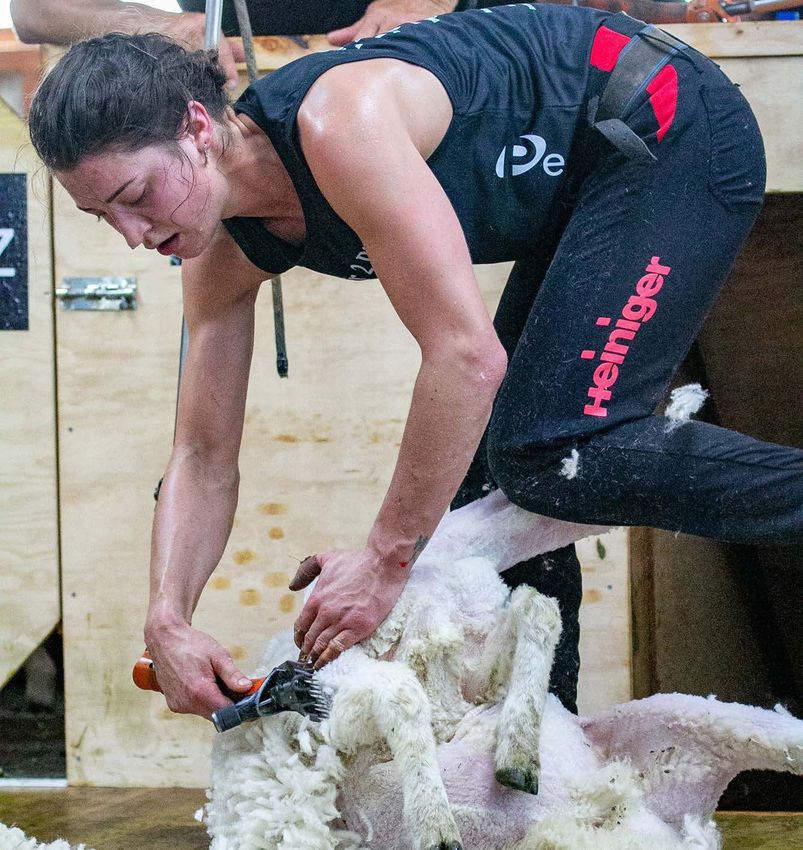
    Megan Whitehead during her nine-hour, lamb shearing
   world record of 661 at Shearing 1 on 14 January 2021.
                          Croydon Bush
Shearing        Promoting our industry, sport and people
                                                                               Number 105: (Vol 37, No 1) April 2021
                                                                                         ISSN 1179 - 9455 (online)

UNDER COVER STORY                                               CONTENTS
Greetings people and welcome to Shearing magazine No.            3     Heiniger advertisement
105. With 60 pages, this is the largest edition in our 37-       4     NZ Woolclassers’ Association news
year history. That’s fifty percent bigger than the printed       5     Harry Hughes – ‘Still out there’
editions and best illustrates one obvious advantage of our
having gone exclusively ‘digital’.                               7     Lister advertisement
  Our Contents are perhaps dominated by seven tribute            8     Tribute: Des de Belle
stories for industry people who have died over the past few      9     Tahi Ngātahi
months, notable among them 95-year-old Ian Hutchings, a         10     Training boost/WOMOLife
contractor long associated with the Morrinsville and wider
Waikato region. It is our privilege to publish their stories    12     Megan Whitehead – full capacity?
and to record the exploits and contributions to our industry    14     Tribute: Brian Morrison
for which they are best remembered.                             16     TJ Law Shearing Supplies
  Several other stories have historical themes. We are          17     South Canterbury reunion
delighted to finally publish a story about Harry Hughes,        18     Wool Medal for Kevin Gellatly
who has been on our ‘radar’ for 20 years or more. Also the
legendary Bill Vella, a world record holder and contractor      19     Tribute: Veronica ‘Ronnie’ Goss
in the 1930s, while we bring to light the shearing exploits     20     Campaign for Wool
of a fighter pilot and prisoner-of-war from the WWII era.       22     Len Holland’s Lochinver dream job
  For those hoping to go shearing in the United Kingdom in      24     Tribute: Hazel Riseborough
the off-season, we have some information and instructions
from the National Association of Agricultural Contractors       26     Coaches in the woolshed
(NAAC) at page 35. Read carefully.                              29     Shearing in the Dunes
  Meantime, here’s to a mild New Zealand winter, to the         31     Tribute: Brian Cocks
continued absence of Covid-19 in our communities and,           32     Remembering Jack Harrison
with luck, we’ll do it all again in August.
                                                                34     Tribute: Ian Hutchings
Ka kite ano                                                     35     Going to the UK for work?
Des Williams (editor)                                           36     Bill Vella – Mr Inbetween
                                                                38     Acto Agriculture advertisement
 New Zealand Shearing Contractors’ Assn.                        39     ‘Chalky’ White’s world record
          AGM and Conference                                    42     Heiniger advertisement
                                                                44     Pte. Allies Mulligan – POW shearer
   5-6 May 2021, Novotel New Plymouth
                                                                46     Conlan brothers in public art
    Further information from: contactus@nzshearing.co.nz        47     Norwood Rural Sports Awards
Photo Credits:
                                                                48     Tips for pressers
Barbara Newton cover, p12; Bernie Walker collection p8, 14,     49     Aria Sports photo essay
15, 46; Campaign for Wool p20, 21; Dallas Mihaere p4; David     50     Provincial Growth Fund/WOMOLife
Lawrence p53; Elite WIT p13, 30; Eric Solomon p17; Gabriela     52     Book Review/Tom’s Top Hat story
Schmidt-Morrell p26; Ian Hutchings Jnr p34, 35; Larraine        53     Tribute: Brian Johnson
Brough collection p5; Len Holland p22, 23; Nigel Beckford p11   54     Malcolm O’Dwyer profile
(Luke); NZ Rural Sports p47; Phil Oldfield p30; Roger Leslie
p29; Sarfraz Hapuku p56, 57; Stephen Hughes p6 inset; Tom       56     Kaumatua Jerry Hapuku reflects
Harding p52. All others LSP Ltd/Shearing magazine.              58     New Zealand championships review
                                                                60     When Bing met the Duke
 Publisher: Last Side Publishing Ltd, Box 102, Hamilton
 3240, New Zealand. Tel 0274 833 465.
 Email: shearingmag@xtra.co.nz                                          Next edition due 27 August 2021.
 Copyright: All material subject to usual arrangements.              Deadline for all material two weeks prior.

                                                        Shearing 2
Shearing 3

Wool Clip Grading Course
The second session of the new Wool Clip Grading course
was successfully run at Middlemarch in March this year,
attended by a full class of 15 experienced woolhandlers.
  This is a new short wool course – with learning-at-home
content sent out two weeks prior to the two day practical
block course – at which proficient woolhandlers can gain 10
NZQA credits and the opportunity to apply for their Q stencil
registration with the New Zealand Woolclassers Association.
  The NZQA credits can be transferred to the New Zealand
Certificate in Wool Technology and Woolclassing at the
Southern Institute of Technology, should the participant
decide to further their wool education.
  The Wool Clip Grading Course is a new initiative from
NZWCA, backed by Southern Institute of Technology,
Telford and the New Zealand Shearing Contractors
Association. This course provides the New Zealand wool
industry with people who have the skills and knowledge
to grade wool across the table and board, co-ordinate the
quality of team output and complete documentation in a
wool harvesting operation.
  It is planned to hold these courses in both the North and
South Islands. Co-ordinators Richard Gavigan and Bruce
Abbott are keen to hear from any shearing contractors or           Above: Alexandra contractor Peter Lyon testing his skill at
groups who are supportive and interested in hosting a two-         the wool clip grading course, held at Middlemarch last month.
day block course in their area. A small number of sheep and
a woolshed would be needed. Contact:                                 At the time of writing we are still finalising the whole
Bruce Abbott                                                       day’s programme, but included will be important pre-season
Mobile 027 2280 868                                                classing and clip preparation information presented from
Email pbabbott@xtra.co.nz                                          brokers; an update from the Strong Wool Action Group
                                                                   (SWAG), presentation of woolclassing merit awards from
Richard Gavigan                                                    the 2020 season, and we will have the usual wool exercises
06 376 6599 (Home)                                                 with trophies for the best guessers! Our AGM will be the
Mobile: 027 376 0005                                               final item on the day’s programme.
Email: gavigan@xtra.co.nz                                            Lunch is included on the day which will begin at 8am.
                                                                   Attendance is free to current NZWCA members and $25 to
Industry Day at Tinwald                                            non-members. Pre-registration is essential, to do so please
All New Zealand Woolclassers’ Association members and              email your name, contact phone number and (if available)
interested people are invited to attend our annual pre-season      your classer registration number to Annette Gamble,
Industry Day and Annual General Meeting, which is to be            secretary@woolclassers.org.nz
held on 13 May 2021 at the Tinwald Hall, 10 Graham St,               For more information contact NZWCA Registrar Marg
Ashburton.                                                         Forde reg@woolclassers.org.nz
  We have arranged a tour through the New Zealand Sock
Company Factory in Ashburton on the day. This company              Wool Technology and Classing
is recognised internationally as an innovative provider of         There has been strong interest for 2021 in the Certificate
socks, with a passion for wool. The Sparrow family have            of Wool Technology and Woolclassing course through the
owned the business since 1980 and their connection with it         Southern Institute of Technology (SIT) in Invercargill. 39
spans three generations. A member of the Sparrow family            students began the course in February and there are enough
will speak to us before the factory tour in the early afternoon.   students for another intake in July.
                                                                     Congratulations to all the 2020 graduates, we look forward
                                                                   to seeing you out there in our industry – in the wool sheds/
                                                                   stores/scours/factories/auction rooms/brokers – putting into
                                                                   practise all you have learned, contributing to ensuring the
                                                                   highest possible quality standards for NZ wool.
                                                                     Graduate award winners for 2020 were: Top Overall
                                                                   Student, Ingrid Neera (trophy donated by NZWCA); Highest
                                                                   Practical Marks, Toby Single (trophy donated by NZ Wool
                                                                   Scours); Highest Theory Marks, Abby Kell (trophy donated
                                                                   by NZ Wool Scours).
                                                          Shearing 4
Harry Hughes ‘still out there’
By Des Williams
If you find yourself in a group of ‘senior citizens’ discussing
the good old days of New Zealand shearing in the 1950s and
1960s – both in the sheds and on the competition boards – a few
legendary names may be recalled in conversation. Consider
Manu Rangiawha, Joe Ferguson, the Nesdales, Mate Simon,
Colin Chamberlin, Mac Potae – and Harry Hughes. The last
named then might prompt the question – ‘Yes, now whatever
happened to Harry Hughes?’
   We know Harry was at Ongerup, Western Australia in 1992
because his photo appeared in this magazine, lined up in an
Allan Faulkner gang that included two other New Zealanders,
Fred Bayer from the Hauraki Plains and Sonny Crawford
from Te Kaha.
   Then, in 1998 we published a story by Tony Mathews – a
tribute piece recalling days on tough merinos in a Central
Otago shed where everybody struggled to get the wool off in
respectable fashion. Except Harry, who had put on new combs
and kept above the wrinkle, turning out sheep after sheep
looking like they’d been well shorn with blades.
   The memoir concluded with Tony Mathews ‘hoping that
Harry is still out there somewhere. He travelled widely
throughout Antipodea, never staying long in one place as far
as I could tell, yet always in demand.
   ‘I’m sure hundreds of readers will have met up with Harry
over the years and, like me, worked with him awhile, and
never forgotten him. He was the greatest. At least the greatest
I ever worked with.’
   Well, it has taken many years to confirm Tony Mathews’
hope that Harry is indeed, still out there! Still out there in
Western Australia, actually, at Manjimup, a couple of hundred
kilometres south-east of Perth. He went across the Tasman in
1967 and did a season, came back to New Zealand and then
made the move a permanent one the following year. After 53
years, he has no plans to return to New Zealand but is happy
to talk on the one ‘no bullshit printed’ condition.
   Harry was born at Kawhia on 1 March 1939 to parents John
Bicknell Hughes (1881-1957) and Kawe Hemotitiha Uerata
Hughes (1906-1992) and grew up on the family dairy farm at         Above: Harry Hughes at the South Island championships,
Okupata Road, Oparau, a few miles inland from Kawhia. He           Gore, 1967, an event won by Brian Quinn with Ian Rutherford
was the youngest of five children in the family, following John    and Tom Brough second and third, respectively.
(‘Jack’), Ann, Mary and Mabel. Mary (84) is the only other         rocker Neil Young puts it in one of his songs.) After staying
sibling still alive, at Tokoroa.                                   local around the Waikato for several years he ventured further
   Harry was an 11-year-old pupil at Oparau School when he         afield, working where he could, moving between contractors
started working in the sheds, helping out on neighbouring          like Mate Simon at Aria and Murray McSkimming and Ray
properties wherever and whenever he could.                         Howes in the south.
   ‘Local farmers would get me in to lend them a hand after           ‘Mate Simon would also take a team down south to work so
school, roustabouting and that sort of thing. There were several   I was soon moving between North and South Island several
‘rehab’ farmers in the area, young blokes who had come back        times a year. From about the age of 18 I also started going
from World War II and been settled on new properties offered       to competitions. I think my first win was in a clean shear
for selection by the government. Ted Ferguson was one that I       event at Otorohanga. Prizes and prize money back then was
remember, always very helpful and giving me opportunities          generally sponsorship from the stock firms so you might win
to learn to shear. I’d often take the stand for the last hour      a handpiece or other gear and that made me keener to become
or so each day while he went away to muster a mob for the          a good shearer.’
following day.                                                        ‘I also remember winning at the Waikato Show at Hamilton
   At 14, and with his 15th birthday coming up in March, Harry     one year when Joe Te Kapa got disqualified from first place
didn’t see much point in going back to school at Oparau for four   and I was promoted from second. That final was actually
weeks and so he left at the end of the year and started work       transferred to the Ruakura Research Centre because it was too
full time. (Stole a few hours on the sun, as that great Canadian   wet at the usual showgrounds venue [Claudelands].’
                                                          Shearing 5
‘Looking back, I think I used to scare myself out of winning
                                                                    events like that because the very thought of having to `make a
                                                                    speech in public used to terrify me. I’m not sure why that was
                                                                    because I could be full of talk at times when I wanted to be!’
                                                                       Terrified or not, Harry says he attended Golden Shears every
                                                                    year from 1961 to 1968 and made the top 12 on each occasion,
                                                                    including 1968 when he finished fourth behind George Potae,
                                                                    Morrie Anderson and Ray Alabaster in the Open plate. The
                                                                    previous year he and Tom Brough had teamed up for third
                                                                    place in the Maori-Pakeha final. He also featured in several
                                                                    finals at Gore’s Southern Shears, as Brian Quinn remembers.
                                                                       ‘Yes, I remember shearing against Harry at Gore on several
                                                                    occasions. He was a very stylish shearer, nice hand, always
                                                                    relaxed and very fast. You never saw Harry get panicked in
                                                                    any situation. I also shore a lot with Harry in the sheds when
                                                                    he was down working for Murray McSkimming.
                                                                       ‘I remember working with Harry and Denis Carlyle at a
                                                                    three-stand shed where the three of us got through 15,000 ewes
                                                                    between us and we were really looking forward to starting
                                                                    on the lambs the following day, because we didn’t get many
                                                                    opportunities like that.
                                                                       ‘Then that night Murray arrived, picked up Harry and myself
                                                                    and took us to Burwood and left two other blokes with Denis to
                                                                    shear the lambs. Harry was always happy to take the number
                                                                    one stand at Burwood. Nobody else wanted that stand because
                                                                    the pen was much larger and you had to chase the last few
                                                                    around to catch them. Fleeces could also get piled up there if
                                                                    it was really busy. I remember Harry saying once it was just
                                                                    as well he was Maori, otherwise they might never find him
Above: Harry Hughes pictured 25 years later, in a shed at           among all the wool!’
Ongerup in 1992. Inset: A more recent image!                           Harry moved to Western Australia in 1968 and has remained
  The shows were also bringing Harry into contact with other        there ever since. For the first 15 years he worked in ‘Union
top guns from around the country – men that he didn’t get the       teams’, shearing with straight narrow gear and ‘that took some
opportunity to work with in the sheds. He teamed with Bing          doing,’ he recalls. But he also mastered a bag of shearing tricks
Macdonald to win the Maori-Pakeha event at the New Zealand          and thinks he might be just about the only shearer who was
mid-winter championship at Gisborne in June 1963, beating           able to shear blind-folded, left and right hand, one hand in his
Manu Rangiawha and Colin Bosher in the process.                     pocket with both wide and narrow gear!
  ‘In 1964 I made another final at Hamilton – it was a big             Harry has enjoyed his life in the West and though retired
event called the Waikato Golden Fleece Wool Exhibition              from the handpiece himself, still takes an interest in the
and the Rothmans sponsored National Shearing and Wool               industry. He notes the ever-increasing tallies being produced
Handling Awards.                                                    by men and women (though the news of Megan Whitehead’s
  ‘I finished my sheep way ahead of everyone else, but              recent record hadn’t filtered through to him at Manjimup,
Brian Waterson ended up winning. It was contested over              where he lives). He recalls with a chuckle the daughter of a
two 20-sheep finals, held on consecutive nights. I think the        man from Piopio that he used to play rugby with. [Christine
organisers had plans for their ‘Golden Fleece’ to rival the         Brown/Newton.] ‘She came across to Western Australia and
Golden Shears but it turned out to be a one-off thing.              was producing tallies that had many of the young blokes too
  And a ‘one-off thing’ it was, incorporating a national            scared to shear with her for fear of getting beaten. I was getting
championship and the New Zealand Maori open championship,           a bit old for it myself by then, so it didn’t worry me at all, but
held at Hamilton’s Bledisloe Hall from 18-21 March 1964.            it was very interesting to see their reactions.’
Harry made both finals, finishing fourth in the Maori event            Having just turned 82, Harry says it’s ‘got him beat’ how he
(won by Mac Potae) and just a point way second to Waterson          has lived to be that age. ‘I always thought I’d be dead by the
in the main event.                                                  time I was 40 and here I am, having more than doubled that.
   Maori championship (15 sheep): Mac Potae 88.2 pts                I’m not as mobile as I used to be at getting around, but I can’t
   1; George Hawkins 87.64 2; Eddie Reidy 87.38 3; Harry            complain about that.’
   Hughes 84.95 4; Manu Rangiawha 82.44 5.                             Harry has one son, Stephen, aged 48 from his marriage to
                                                                    Marita, who died in February 1987. Stephen is involved in a
   National championship (2 x 20 sheep finals): Brian               farming enterprise at Boyup Brook.
   Waterson 160.76 1; Harry Hughes 159.75 2; Joe Ferguson              Tom Brough describes the Harry he knew and worked
   159.39 3; Bing Macdonald 155.53 4; Allan Williamson              with as ‘A magnificent shearer.’ Brian Quinn says he was ‘A
   155.41 5.                                                        terrific stylist and a pleasure to work with.’ Harry was one of
                                                                    the original 28 ‘Master Shearers’ announced at Golden Shears
   Harry recalls getting up on stage for the Maori championship     in 1975. And back to Tony Mathews? Well, as far as he’s
final, only to find his comb had a chip out of it, which meant he   concerned, Harry Hughes was just the greatest. No bullshit.
had to shear very cautiously. But that wasn’t his only challenge.
                                                           Shearing 6
Shearing 7
Des de Belle tribute
By Bernie Walker
John Desmond de Belle was born in Bathurst NSW in June
1929. He had three brothers and three sisters. They lived in
the Lithgow area during Des’ school years. Charles, his father,
taught Des to shear at an early age and he used this skill to
travel the world shearing. As a result Des visited places few
others would be able to, then or even today.
   Des worked the overnight shift at the International Telephone
Exchanges in Canberra and Sydney whilst also working a
day shift at the Australian Glass Works in Sydney. He and a
mate then travelled to Europe and saw much of the continent
including the Coronation of Queen Elizabeth II. He also
attended the Helsinki, Melbourne and Rome Olympic Games.
   Between 1961 and 1967 Des was shearing mostly in the south
and west of England. The most memorable part of his time in
England was hitch-hiking from London to Cape Town because
it was such a cold winter in England. When he returned to
England, he developed a passion for theatre in London as well
as making several trips back to Australia and others to Russia
and Siberia, Brazil, Uruguay and Argentina.
   In 1969 Des married his first wife Thelma in Sydney
before they moved to Perth in Western Australia for a year.
They then headed to Canada where Des was shearing and
contracting based in Calgary, Alberta. He developed many
great friendships in the mid-west of Canada and the north-west            Above: Des de Belle, shearing industry researcher.
of the United States including time in Alaska and out along        him to piece together the history of the many handpieces he
the Aleutian chain. In 1972 his son Charlie arrived, but sadly     collected. Because of his great knowledge of the industry, I
Thelma passed away.                                                often asked Des for information during research of a story.
   Des had known his second wife Dorothy from their                He loved the excuse to visit the girls at the National Library
schooldays and when they met again in the 1970’s they              and I always reminded him not to forget the chocolates or a
married and continued to live in Canada before returning to        bunch of flowers for them.
Australia late in 1975. Des worked for the Royal Agricultural        Still very much the traveller, he and his sister Joyce
Society at the Sydney Agrodome and demonstrated shearing           travelled to Europe in 2011 for a leisurely tour by ship. In
at the Royal Easter Show for around 25 years. He was always        2012, three generations of de Belles, Des, his son Charlie
in demand on Australia Day at the Powerhouse Museum,               and grandson Matthew visited many of Des’ old stomping
Sydney Town Hall, Opera House, Fort Denison and the                grounds by campervan through Calgary, Edmonton, the
Sydney international hotels. He would delight the Japanese         Athabasca Glacier, Dawson Creek and into the United States
tourists with a commentary in fluent Japanese. In 1988 he          to Yellowstone, Grand Canyon and many other memorable
was invited to represent Australia at the Canadian National        locations. Back in Australia, Des decided to visit Vietnam
Exhibition in Toronto when Australia was the feature nation.       and Cambodia in 2017, aged 88, to see one place he had not
In 1991 Des and Dorothy did a spice tour of India. At this time    been – Angkor Wat.
Des’ daytime job was with Makita Power Tools prior to his            During May 2019 he became unwell and it was decided
retirement and relocation to Canberra. In retirement, Des and      he should move into an aged care home in Padstow, which
Dorothy travelled extensively around Australia in their own        allowed family in Sydney to visit more often. Des left us on
campervan as ‘grey nomads’ and also to England.                    the day of the conjunction of Jupiter and Saturn, thought by
   After Dorothy died in 2009, Des maintained and expanded         many to be the Star of Bethlehem. Des himself was, for all to
his interest in all things shearing. One job was to classify       see, a shining light of the shearing industry.
and identify glass plate negatives at the National Library of
Australia. Drawing on his familiarity with shearing and wool
classing he easily identified the wool bale brands from which
he could tell the station where they had been taken. He would
often visit the nearest of them and meet the current owner.
   Des acquired an extensive collection of shearing
memorabilia, including some pneumatic handpieces which
he restored to working order. He became a regular visitor
to the National Library and the Patent Office which enabled

                                                          Shearing 8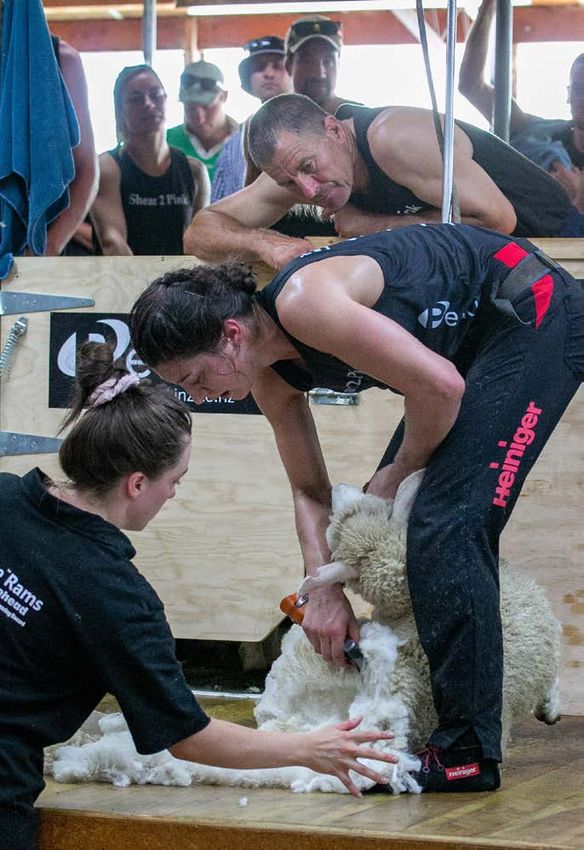
HELP US
 ALL RAISE
 OUR GAME                                                                         Learn Your Warm-Ups
                                                                                  Every year over 9,000 days are lost to

 IN THE
                                                                                  injury in the wool sector. That’s a lot of
                                                                                  pain for no gain. Tahi Ngātahi’s videos
                                                                                  are designed to help everyone raise their
 WOOLSHED                                                                         game in the shed. You can learn short
                                                                                  warm-up routines that help prevent
                                                                                  back strains at www.tahingatahi.co.nz.
                                                                                  A few extra minutes of simple stretches
                                                                                  a day could save your back and boost
 Tahi Ngātahi is an online platform        • make shearing more attractive to     your wallet.
 that uses video clips to pass on skills     new entrants.
 and safety tips to farmers, shearing
 contractors and shearers.                 Tahi Ngātahi’s part of wider efforts
                                           to revitalise the wool industry
 Our aim is to:                            and will be integrated into the
 • reduce common injuries by               government’s new $1.86m on-job
   30% and prolong careers                 training initiative Kaiaka Wool
 • build a stronger, more skilled          Industry Training NZ.
   workforce

 Visit www.tahingatahi.co.nz and sign up to show your support for this
 great industry.

 For business support to make the best use of the programme, please
 contact Bronwyn Campbell at support@tahingatahi.co.nz or 0272436979

                                                                                  Don’t Blow Your Wrist
                                                                                  With main shear looming, now’s the
                                                                                  time to prepare the body for those big
                                                                                  tallies. Blown wrists are really common
                    OFFICIAL PARTNERS                                             among shearers who hit the board hard
                                                                                  after a bit of a break. Just like the All
                                                                                  Blacks wouldn’t play a test without a
                                                                                  pre-season or any warm-up, you need
                                                                                  to make sure you’re in good nick before
                                                                                  you pick up the handpiece. You can
                                                                                  learn simple warm-up routines that help
                                                                                  prevent blown wrists at
                                                                                  www.tahingatahi.co.nz.

MID/SOUTH CANTERBURY

Requires quality shearers and                                       STAY
woolhandlers for permanent                                           WEIRD
or seasonal work. Good rates
 offered, must be drug free.

  Phone Tony 027 693 3010
                                            Follow Shearingmag
                                                   on Facebook
                                                      Shearing 9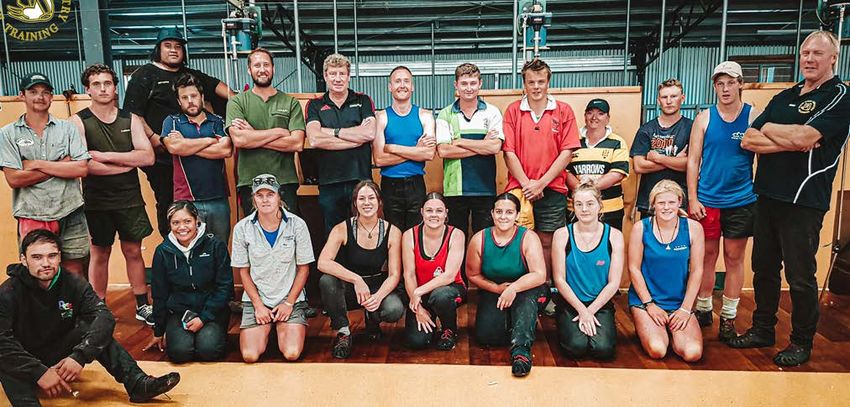
Tahi Ngātahi and                                                                            Training Boost for
 Farmstrong Join Forces                                                                        Shearers and Wool-
  For Shearing Champs                                                                               handlers
Tahi Ngātahi is partnering with nation-                                                    A new, $1.8 million pilot training prog-
wide, rural wellbeing programme                                                            ramme for shearers and wool handlers
Farmstrong at events on the shearing                                                       has been launched by training provider
calendar beginning with the NZ                                                             WOMOlife.
Shearing Championships in Te Kuiti.                                                          Last year the New Zealand Shearing
   Farmstrong aims to help the rural                                                       Contractors’ Association established
community live well and farm well.                                                         a new training arm – Kaiaka Wool
More than 18,000 Kiwi farmers and their                                                    Industry Training NZ – to upskill 120
families were involved in Farmstrong                                                       existing shearers, and provide a training
last year.                                                                                 pathway for 150 new shearers.
   Farmstrong promotes the 5 Ways To                                                         Declining sheep numbers and Covid
Wellbeing. International research has                                                      border restrictions have combined to
shown people who thrive have these                                                         create a serious shortage of shearers.
simple habits in common:                                                                   In fact, ACC has warned that a lack of
• Staying connected with mates                                                             qualified sheep shearers could lead to
• Keeping active                                                                           more injuries during Main Shear.
• Taking note of and enjoying the simple                                                     Multi-for mat training provider
things in life                                                                             WOMOLife won the tender to roll out the
• Learning new things to keep fresh                                                        training. Its courses will provide training
• Giving back to friends and community.                                                    in movement techniques designed to
   Fa r m st rong A mba ssa dor Sa m                                                       reduce the risk of injury while increasing
Whitelock comes from a farming                Sam Whitelock, Farmstrong Ambassador         performance and productivity.
background and intends to head back                                                          To achieve this WOMOlife has created
into the industry when he hangs up              As part of the event Farmstrong is         an extensive library of online video
his boots. He’s a big fan of the 5 Ways:      organising snack packs for all of the        content which will be supported by
‘These five habits help keep life in          shearers when they register. There will      practical, hands-on training days in the
perspective when the going gets tough.        also be Farmstrong educational material      wool shed with accredited WOMOlife
That’s why I’ve made them part of my          and a representative there to pass on tips   trainers.
life, because whether you’re a rugby          and advice farmers have shared about           Head trainer Carmen Smith brings
player or a farmer there are always going     staying well.                                over 25 years of knowledge and expertise
to be things that you can’t control. In         Last year Farmstrong also staged a         to the programme, and along with her
rugby it might be the ref, in farming it’s    series of community shows in rural           partner Gavin, runs a 340-hectare sheep
the weather and prices.                       community halls. The crew at Moore           and beef farm in Waipukurau. Having
   ‘I’ve found the 5 Ways can make a big      Shearing in Seddon were among those          started her working life as a shepherd,
difference to your wellbeing. They have       who attended a show at Awatere. The          Carmen moved into the wool sheds
a positive, cumulative effect over time       Moores have been in the shearing             and has never looked back. She is a
and make you much more resilient. This        industry for 16 years and have run a         shearer, wool handler and presser, and
gives you something to draw on when           contracting business based in Seddon         has worked in sheds all over the world.
you are under pressure. It also makes         for the last five.                           She loves to compete and has trophies
you healthier and more productive               Te Moore says her team are right           to show for it.
whether you’re a farmer or shearing in        behind Farmstrong. ‘It’s definitely            Another award winner, world record
the woolshed.’                                raised awareness amongst the farmers         holder Justin Bell, has over 28 years of
   Farmstrong project lead Gerard             and shearers we work with about the          expertise in the shearing industry and
Vaughan says: ‘Farmstrong helps               importance of looking after yourself.        is looking forward to being a trainer.
farmers cope with the ups and downs           We’ve noticed people are a lot more          He has competed in shows but enjoys
of farming by sharing things they can         open to discussing the pressures they’re     endurance shearing more and knows
do to look after themselves and their         facing or listening to others who might      what it takes to shear for hours on end,
teams. Encouraging farmers to get off         be under the pump.                           day in and day out, and is keen to pass
the farm and socialise at events like these     ‘We’ve worked in the shearing              on his knowledge and expertise to
is one of the best ways we can do that.       industry for a long time and we know         those starting out and younger shearers
Our message to farmers is grab your           how hard it can be. The friendships and      wanting to upskill. Justin, whose family
mates and neighbours and get along and        connections you build are a big part of      farm is at Weber near Dannevirke, has
recharge your batteries for a few hours.’     dealing with those challenges.’              set three world records and currently still
                                                                                           holds the two-stand, eight-hour strong
                                                                                           wool lamb record!
                                                                                             Other trainers include Dino Smith,
                                                                                           Mouse O’Neill, Stu Munro, Sarah
                                                                                           Higgins, Leonora Smith and Sheree
                                                                                           Alabaster, with support from assistants
                                                           Shearing 10
Luke Paulsen, Clara Taingahue and
Luke Mullins (pictured opposite during
his 2017 eight-hour, three-stand world
record of 1661 at Waitara Station with
James Mack and Eru Weeds, of which
Luke contributed 554).
Kaiaka board chairperson Dr Gabrielle
Wall says WOMOLife is a part of wider
efforts to revitalise the wool industry
and make training accessible to a
highly mobile, geographically isolated
workforce. ‘High-quality training is
urgently needed to bring new people into
the wool harvesting industry, as well as
supporting those already in the industry
to build on their skills.
‘WOMOLife’s innovation is blending a
traditional hands-on training model with
an online platform. We also know there’s
no substitute for having experienced
trainers working with trainees in the
wool shed. With this approach, trainees
will have the best of both worlds by
combining hands-on training with
access to online resources 24-7.’
New Zealand Shearing Contractors’
Association chief executive Phil Holden
adds: ‘It takes two years to become
a trained shearer, so we can’t just
fill in the current labour shortages
overnight. That’s why Tahi Ngātahi and
WOMOLife are more important than
ever. We need the shearers we’ve got to
stay fit and well and we need to attract Strengthen Your Business
Join NZSCA
and train new entrants.
‘This is great news for the industry – a
21st century solution to the challenges
that have led to the current shortage of
shearers.’
Every year New Zealand Shearing Contractors Association
members shear 70% of the nation’s flock, employing 3,200
workers. We give them tools that strengthen their business
and streamline their paperwork.
Employment — industry-approved employment contract;
recommended pay rates, Employers & Manufacturers Assoc.
(EMA) membership; work visa application support.
Insurance — AON coverage included in NZSCA membership
fee. Covers Public Liability, Employers & Statutory Liability,
Punitive & Exemplary, Directors & Officers.
Health and safety — workbook compliant with the Health
& Safety at Work Act 2015. Access to Tahi Ngātahi online
learning platform.
President: Mark Barrowcliffe 027 554 4433
Executive Officer: Phil Holden 027 467 1670
Secretary: Suzanne Kennedy 027 551 1500
Above: Colin ‘Mouse’ O’Neill of E: contactus@nzshearing.co.nz
Alexandra, will be part of the WOMOLife Find out more: www.nzshearing.co.nz
shearer training team.
Shearing 11Megan Whitehead – full capacity?
By Jill Angus Burney
There’s no doubt Megan Whitehead, at aged 24 is a sheep
shearing power still in development. Sitting on 47 seconds a
lamb over the first run, she started out her gruelling nine-hour
day shearing on 14 January 2021 at a 690 pace. With 153 out
the porthole by breakfast, it was possible that Whitehead would
open up a large gap over her target of 648 lambs in nine hours,
the world strongwool lamb record shorn by Emily Welch at
Waikaretu in December 2007.
A capacity crowd at the Grant Brothers woolshed,
‘Craigellachie’ on the Croydon Hills less than five kilometres
from Gore, watched Whitehead belt the lambs out of the
woolshed all day.
At the morning smoko break she was 16 up on Welch’s
tally, with another 132 out the porthole. The heat and size of
the lambs took its toll, with the average dropping back to 49
seconds per lamb before lunch for another 126, then 125 for
each of the afternoon runs.
It’s a detail that stands Whitehead out among recent
women’s records. It’s only the third record in thirty years to
break another record, following Canadian, Pauline Bolay in
December 2019 cracking by three lambs in the last five minutes
to overtake Lake Taupo’s Kerri-Jo Te Huia’s eight-hour lamb
record of 507 in 2012, which in turn broke Ingrid Smith’s solo
credited 470 from her 2009 two-stand lamb record with her
mother, Marg Baynes on 30 January 2009.
Another difference is that Whitehouse has a team record in
her repertoire of tricks, unlike all but the Baynes, who have
otherwise all shorn solo. While Te Huia has since lost that solo
lamb record to her Canadian victor, her nine-hour 452 world
ewe record at Otapawa Station near Eketahuna exactly three
years earlier on 14 January 2018 remains uncontested. And
she would be the first to say, holding two world records at the
same time is no easy feat. Above: Every blow followed and counted.
Like many of her outstanding male contemporaries, who
deliberately shear in a team record for experience, Whitehead innovative, and one that allowed the World Record Committee
and her team of volunteers, led by her father, Quentin, took a to approve this record attempt to proceed.
team’s wealth of learnings to best effect. Astonishingly, Whitehead is the first woman to shear not just
From before the March 2020 Covid lockdown, Quentin one 600 in her career. She became the first woman shearer to
Whitehead had overseen the breeding programme of do over 600 in eight hours (601), in a training day in Taranaki
Snowline rams over the Grant’s Wairere-bred Romney ewes. in mid-December 2019. Not content with her second 600+ as
Simultaneously, Megan had started an intensive training the ringer smashing out 607 in the four-stand record at Waihi
and nutrition programme, tapping equally into the two best Pukawa woolshed a year ago, but calmly lifting her best by
recognised performance coaches, the Brisbane-based New 54 to exceed Welch’s record by 13 at the end of this attempt;
Zealander, Dylan Fowler, and United Kingdom-based high her record being recorded as a total of 661 lambs (three not
performance athlete and trainer, Matt Luxton. allowed). Three tallies of over 600 in fourteen months is her
Some months earlier, the Whiteheads appointed the exceptionalism.
Southland-based event manager, Jude McCabe of the And many would have no doubt, had she had been onboard
Invercargill 2017 world shearing championships to prepare in the three-stand woolshed at Puketiti, Piopio on 23 December
Whitehead’s solo record attempt. McCabe brought a carefully 2019, on milk lambs of the highest quality – who knows, but
choreographed presentation of each phase of the shearing the sky’s the limit in a woolshed full of exceptional shearers.
day. Media was present from just before breakfast, for a live The 700 ceiling awaits her maturity as a shearer. And most
cross at 7am to the TV1 Breakfast show, notwithstanding the of all, her supporters, recognising her unique skill, physiology
remarkable technology of live judge’s teleconferences. and ambition, liken her potential to the young Olympic
These crosses to Tocumwal in New South Wales, Australia canoeist, Lisa Carrington. High praise indeed.
to meet the rules for the external non-New Zealand judge
to access a pen of lambs each 30 minutes all day was a ******
remarkable and difficult feat. Bringing in the video link for the
external judge was reportedly a highly expensive solution, but
Shearing 12Above: Elite Wool Industry Training
Beginners Shearing Course held at
Lumsden, February 2021, back left:
Connor Bennie, Joshua Hart, Hone
Adams, Shaun Langford, Brook Todd
(trainer), Gavin Rowland (trainer),
Bradley Kirk, Hamish Sinclair, Mark
Perkin, Toni McKenzie, Ben Ridder,
Kyran Outen, Norm Harraway (trainer).
Front Row; Quinn Rata, Miriama
Thompson, Holly Landreth, Ema Heke,
Jess Barbeler, Paula Leggett, Lola
Hutchinson, Brooke King. Opposite:
participants in a Beginner’s Course
at Taratahi Agricultural Training
Centre, January 2021. Back left: Noel
Handley (trainer), Billy Dalziell, Liam
Quirke, Benazzi Ward, Sam Loder,
Charlie Heard, Paerata Abraham
(trainer). Front left: Russell Kyle, John
McKenzie, Sam Mathewson, Michael
Buick, Will Billing, Callum Griffith.
Older than Waipukurau! One may assume the ‘Shearing match’ did take place as
Sorry Waipukurau, your claims to maybe holding the first advertised, for a similar event was advertised two years later,
(and therefore oldest) shearing competition in New Zealand for 10 October 1860, with men’s and boy’s (under 18) classes
on 21 January 1868 [story published in Shearing magazine offering prizes of three pounds and two pounds respectively,
November 2016] have been challenged by a little place near with second and thrid placings also to receive some money.
Auckland, named Otahuhu. The event was to be followed by a public dinner at Rogers’s
An advertisement in The New Zealander newspaper dated Hotel at 4 o’clock.
27 November 1858 gave notice of a ‘Shearing match’ to be Then, again thanks to the informative pages of The New
held at Otahuhu. The match “will take place at the Cattle Zealander, we learn of a competiton held by the Papakura
Show, on Thursday, the 2nd of December, at 1 o’clock. Agricultural Association in November 1862 – the sheep
Shearers intending to compete for prizes, must give in their shearing first prize was won by Hunua Karaka, with second
names to the Secretary (Geo. Fisk) at Otahuhu, before 12 prize going to ‘Mr Winstone’. No details, no known rules,
o’clock, on the day of the Show.” no photos or points, nothing else – but a contest, sure enough
It was not unusal back then for events to be widely with first and second place-getters.
‘previewed’ by way of advertising, not quite so usual for And rugby? Well, rugby was still eight years away from
results to receive equal attention. Such a search on this taking its first deep breath in New Zealand.
occasion has drawn a blank. (Des Williams)
Shearing 13Brian Morrison tribute
By Bernie Walker
I first met Brian Joseph (BJ/Barney) Morrison in 1951 when
we shared a desk at St John’s School in Euroa. He was born
in 1938 at Euroa and grew up in Longwood where his father
John was the Railway Stationmaster. Brian had four brothers
and four sisters. In 1952 he went to Rupertswood College at
Sunbury where he shore his first sheep.
By 1954, Brian was working around the Longwood district
for 10 shillings ($1) a day. During this time he developed a
great love and respect for the humble sheep which was to last
all his life. He also learnt to play Australian Rules football
well enough to play a season with the Richmond VFL Club, a
career he gave up in 1961 when he married Judith Blake from
Violet Town and they took a caravan to Longreach in Central
Queensland where they worked for Grazcos for three years.
It is claimed that, with other industry friends, Brian and his
wife Judy pioneered the use of caravans among the itinerant
shearing community.
Each year he returned to Longwood for the local shearing
season and in 1963 he established his contract shearing
business. Initially it consisted of Brian and three of his
Queensland mates with Judy doing the paperwork and cooking.
Within five years he was employing 45 men in five teams.
During this period Brian’s reputation as a champion shearer
was firmly established when he won the Australian Open
Shearing Championship in 1967 and 1968. He also won the
Australian Strongwool title in 1967.
He spent time shearing in New Zealand in 1969 and competed
at the Golden Shears against Kiwi champion Brian Quinn.
He made several trips to New Zealand demonstrating Tally- Brian Morrison shearing his world record in 1972.
Hi mainly in the South Island and in 1973 toured with John Australian Wool Board (AWB) to work with Kevin Sarre and
Hutchinson. In 1963 he achieved his ambition to own a farm the other Tally-Hi instructors, which in turn led to him being
when Brian and Judy bought 424 acre ‘Boongala’ at Avenel. sent to India by the Department of Foreign Affairs for seven
Later they also bought land closer to Euroa at Creighton. seasons to instruct Indian shearers in Australian methods,
The very distinctive shearing style which Brian had mainly in Rajasthan Province. He also represented Australia
developed appeared relaxed and effortless but his tallies at Expo 70 in Osaka, Japan with John Hutchinson from South
were always exceptional. As a result he was recruited by the Australia.
All year round work available for
experienced and reliable staff on
our local and stay out runs. Fine
wool shedhands required from
start August until end October.
Quality accommodation available.
Friendly and safe working
environments.
For enquiries call Joel on
0274 075 531
fostershearing@xtra.co.nz
Shearing 14After he returned, he persuaded the Euroa A & P Society
to build a shearing pavilion for the annual Show which, with
the support of the Apex Club, became the biggest one day
competition in Australia, attracting up to 160 competitors in
four classes. This then led to the Forlonge Invitation in 1973,
the first open time event held in Australia, which created
tremendous interest and was followed in 1974 by Golden
Shears Australia. Brian played a significant role in all these
developments and became an outstanding commentator of
shearing competitions, particularly at Golden Shears and
Diamond Shears.
Also in 1972 Brian again demonstrated his faith in sheep
which were then selling for 50 cents per head. He bought
3200 ewes and employed a drover to ‘take ‘em walkabout’.
Wool prices recovered and the first lot of lambs sold for $25.
The Stribling family allowed him to use their ‘Drysdale
Estate’ 20 stand shed to shear the mob. Always thinking
‘outside the square’, Brian took the opportunity to organise
a shearing school for his shearers with close friend Fred
Jarvis, Victorian AWB shearing instructor. Prior to this in
February Brian claimed a World 8 hour record for shearing
410 merino weaners in the Euroa RSL Hall. The following
year he shore his mob in our shed at ‘Springbank’.
In association with the contracting business Brian and
Judy opened ‘The Wool Bin’, a shearing supplies business in
Euroa in 1973 which developed into ‘Morrisons of Euroa’, a ‘Now the weather had been sultry for a fortnight’s time or more
high quality country style clothing business. This company And the shearers had been driving might and main,
was selected to outfit the Australian Winter Olympic Team And some had got the century as ne’er had done before
to Lake Placid in New York State, USA, in 1980. But now all hands are wishing for the rain.
They also provided the wardrobe for the cast of ‘The Well a few had taken quarters and were coiled up in their bunk
Man from Snowy River’ movie. Brian did many shearing When we shore the six-tooth wethers from the plain
demonstrations and once shore a sheep while the legendary And if the sheep get harder then a few more men will flunk
Slim Dusty sang ‘Click go the Shears’ for 3200 delegates to Unless we have another fall of rain
a Rotary International conference in Sydney. He also shore
one while Dennis Gibbons sang the same song at the opening For the boss is getting rusty, and the ringer’s caving in
of Seven Creeks Run. His bandaged wrist is aching with the pain
Brian had no horizons to his thinking and always had an And the second man I fear, will make it hot for him
idea floating around. One of these which he presented to me Unless we have another fall of rain ...’
in 1975 was creating a National Sheep and Wool Centre at (From Another Fall of Rain, by John Neilson)
Euroa. I fully supported the idea as it fitted well with the Bernie Walker photo collection.
Golden Shears and the Victorian Wool Producing Industry
Training Committee of which I was a member.
While on a sales trip through the Riverina Brian noticed
the 36 stand ‘Wunnamurra’ woolshed near Jerilderie. This
big shed was bought and moved to Euroa to create Seven
Creeks Run which was opened in October 1982 by the Prime
Minister Malcolm Fraser MHR for whom Brian contracted
his shearing.
Brian was inducted into the Australian Shearers Hall of
Fame at Shear Outback at Hay NSW in 2019. By this time
he was badly affected by supranuclear palsy from which he
passed away on 23 December 2020 in Benalla, where he and
Judy had retired. Brian and Judy reared four boys, but the
eldest Andrew who manages National Grazing Services in
Hay is the only one associated with shearing.
Brian Morrison made a huge impact on the shearing
industry with his vision and courage which extended into
his other business activities including ‘Morrisons of Euroa’.
******
Shearing 15Shearing 16
Shearer / Shedhand Reunion
There were plenty of shearing yarns spun when veteran South
Canterbury shearers and shedhands reunited at the Empire
Hotel (the ‘Big E’) on Saturday 13 February 2021. The Empire
has been a favourite watering hole for South Canterbury
shearers and shedhands over the years and it hosted a sold-out
reunion of shearers and shedhands organised by Eric Solomon,
Alan Newton and Allan Scott.
  At a party, I’d run into an old mate Allan Newton – we hadn’t
caught up for few years and he said to me, ‘Wouldn’t it be a
good idea to have a shearers’ reunion!’ Well, I was immediately
on board with that idea. So, after a few phone calls back and
forth between us, and Allan catching up with the Empire Hotel
publicans, Ian and Kathy Gallon, we got things under way.
We roped in Allan Scott, a former shearing contractor from
Pleasant Point and started to get organised.
  Between the three of us we had several meetings and decided
we would sell tickets to cover all costs, which were food,
courtesy vans, music, cost of the tickets, wrist bands, etc.
  We had a lot of old shearers and shedhands and we also had
a place for those ‘gone but not forgotten’, which were photos
of shearers and shedhands who had passed away.
  We had Peter Lyon, a former Pleasant Point man, now a
shearing contractor from Alexandra, Central Otago as our
guest speaker, and through the night various yarns were spun,
generating lots of laughter. We had close to 200 people at our
reunion and we had courtesy vans to take people home or to
their motels throughout the night.
  We had a few bob left over after all expenses were paid and
we donated all moneys to the South Caterbury Hospice.
  We had a few bales of wool scattered around the hotel with
40 or so moccasins. One bale of wool was at the front door
on which they signed their name as they entered the room.
  On Day Two we had a BBQ breakfast for anyone who arrived
back and that turned out a good day as well.
  So many shearers and shedhands caught up after being apart
for so many years. The age group was generally 50 plus. Our
old legend Snow Quinn rang me and apologised for not being
able to attend because of prior commitments, but said he would
have loved to be at the reunion.
  We challenge everybody throughout New Zealand to do
the same. If not, we will be doing it again in a couple of years Top: Reunion organisers, Eric Solomon, Alan Newton, Allan
time, and next time we will spread it out over a long weekend. Scott. Middle: signed bale. Above: Alan Newton and Peter
  (Eric Solomon)                                                 O’Neill (General Manager, South Canterbury Hospice.)

  Gone but not forgotten (top left): Andrew Salt, Kapi Marshall, Jack Benson, Jock Heke, Sparky Heke, Doug Heke, Tony Etti, Bruce
  Hopa, Craig Fowler, Steve Ryan. Middle left: Willie Tito, Sparky Manson, Snow Manson, Honk Ponga, Tammy & Bev Thompson, Tom
  Thompson, George Rhind, Chris Millar, Ian Reiri, Colin Bosher. Front left: Clarrie Russell, Joe Duff, Fred Wybrow, Rick Pivac, Dave
  Klemit, Jo Te Kapa, Bill Ngaha, Ricky Smith, Bill Michelle, Mark Hough, Tai Hoera, Charlie Brophy. John Harvey Smith (bottom).

                                                                   Shearing 17
Kevin Gellatly awarded Wool Medal
By Des Williams and Bernie Walker Perenjori Shears, to competing, judging,
He was inducted into Australia’s and commentating at Perth Royal and
Shearing Hall of Fame in 2015 and other shows. In recognition of his
now, Western Australian legend Kevin contribution Kevin received a Master
Gellatly has another major wool industry Shearer award in 1997. He has been a
honour beside his name. On 16 January team manager and is Patron of WACSA.
2021, Kevin was presented with what For 13 years Kevin travelled to the
has been described as the industry’s USA, instructing American shearers
greatest accolade – the Australian Wool in the technique he developed to shear
Industry Medal. alpacas. Kevin’s passion for the industry
This is what our ‘Australian Corres- is undiminished, extensive and enduring.
pondent’, Bernie Walker, wrote about He has made a lifetime commitment and
Kevin when he was inducted into the contribution to the future of the shearing
Hall of Fame: industry.
Kevin Joseph Gellatly was born in And in the ‘BK Walker poem’ which
1948 and grew up in the West Australian has been a feature of all Australian Hall
wheatbelt town of Perenjori. Later he West Australian legend, Kevin Gellatly, of Fame inductions to date, Kevin was
went to Aquinas College in Perth. After Australian Shearers’ Hall of Fame and thus summarised into two verses:
he left school Kevin planned to become Wool Industry Medal recipient.
a woolclasser but in 1968 he attended a Kevin came from Perenjori to shear
shearing school. up to $25 each. They were closely shorn the Hobson’s ‘Northwest run’
He shore locally until he joined Peter with machines to remove any grass seed Three years on the road had him on
and Val Hobson on their renowned contamination. track to become a gun
‘North West Run’ which traversed the For several years from 1995 Kevin For the next twenty-four years Kevin
big northern stations. He shore with became a Heiniger representative, Gellatly was ‘on the board’
them for three years, while at 20 years travelling throughout Australia. He was Before he moved to Perth to work with
of age he and his brothers became responsible for Tasmania and conducted Brian Beresford.
contractors using 32volt electric gear. workshops in New Zealand.
He employed and trained many young Kevin spent 13 years as a shearing For years he’s been training, inspiring
indigenous men in the area during the and woolhandling trainer with TAFE young people to aim high
next 24 years. At times he had up to four and WA Colleges of agriculture where Developed a pattern for alpacas the
teams working. Kevin then moved to he developed his unique and innovative Americans were keen to try
Perth for his childrens’ education. He approach inspiring, challenging and With a passion for the industry
worked with Brian Beresford for ten encouraging young people to be part of extensive and enduring
years. the industry. He paid special attention to Kevin’s lifetime contribution covers
Retired from contracting, Kevin was grinding and to the care of handpieces. every aspect of shearing.
able to concentrate on shearing. Kevin Kevin has been involved with all
and Brian shore stud rams from the aspects of competition shearing in W hen inter viewed by Wester n
eastern states for which they were paid Western Australia, from running the Australian newspaper Countryman
upon receipt of the honour, Kevin told
Proud to support N.Z. Shearing Magazine reporter Cally Dupe shearing is about
mental toughness.
‘When you watch someone progress
We require staff July-October and January-May to being able to shear a full sheep,
Accommodation, travel and meals provided it is so nice to stand back and watch
Good attitude towards work and our clients essential them achieve that. It is so rewarding to
Reliable work and weather patterns in Central Otago watch them think, ‘hell, I’ve achieved
something I thought I would never be
Employment Agreement based on NZSCA able to do.
‘You learn discipline shearing, you
Work under NZSCA ‘SHEARNZ’ programme
know it’s going to be hard, but if you
have the mental power to get through the
All enquiries welcomed. Contact Peter or Elsie first two hours, you will be OK.’
Tel 03 448 6378 Fax 03 448 9201 Kevin told Countryman he was always
Email: elsie@peterlyonshearing.co.nz a good talker and knew how to motivate
people. Congratulations, Kevin Gellatly!
Shearing 18Ronnie Goss: Done too soon
Perhaps the American singer/songwriter Neil Diamond put it
as succinctly as anyone when he wrote and sang of people who
had departed this Earth before their time. ‘Done too soon’, he
said, listing the likes of ‘Wolfie’ Mozart, Humphrey Bogart,
HG Wells, Buster Keaton, Chico Marx ...
And Done too soon, gone too soon, Veronica ‘Ronnie’
Goss, who died at the Taumarunui Shears on 26 February
2021, her 53rd birthday, having just competed in the open
woolhandling event.
New Zealand champion 1999 and 2003; Golden Shears
champion 2008; a career record of 53 open titles and bestowed
Master Woolhandler status by Shearing Sports New Zealand,
Ronnie was runner-up to Hilary Bond of England at the 2014
world championships in Ireland. She also represented her
country in ten woolhandling tests against Australia, at home
and ‘across the ditch’ and for seven years was a Shearing Sports
New Zealand woolhandling delegate.
Among the hundreds of tributes to Ronnie’s memory posted
on Facebook was the following, from Tia Potae, who teamed
with Ronnie for the 2005-06 trans-Tasman series:
I was really going through it that year and Ronnie helped
me deal with so much more than just the woolhandling test!
You will be missed sweet lady.
The first time I got to wear the silver fern as a New Zealand
team member was in 2005, with Ronnie as my team mate! I
was sooo nervous and excited, I’d seen Ronnie compete in
the North Island shows and idolised how easy she always
made it look!
I had travelled over early to compete at the Warrnambool
Show, and me being the unorganised human that I was back
then, didn’t have my blazer or a money card that would work
in Australia so, of course, beautiful Ronnie brought my blazer
and shiny new credit card with her! I was in heaven!
She got sick the night before the show and ended up in
hospital with a kidney infection, she had no sleep and still
competed and came 2nd. I was right behind her in 3rd and I
remember they read the placings out from sixth up to first. After
the prize giving she said to me, ‘Oh you little shit I thought
you had me for a minute!’ We lost the test in Aussie that year,
but came back with the win at the 2006 Golden Shears. I hung
that red ribbon above my bed for years.
Ronnie always had this cool calm way about her, with her
Whitney Houston haircut and smile, her humility, she never
judged others but was always honest. Over the years she told
me a few truths! And I will always be grateful for those lessons.
She was always so proud of her babies and I remember
watching them all at the Golden Shears one year, maybe the
first time Johnny won, or was when Ronnie won? I can’t quite
remember... All the kids Kirkpatrick and Goss were lined up
on the floor, beaming with pride, cheering on their parents!
Seeing the amazing adults they have all become is a testament
of how amazing Ronnie was.
There are so many more beautiful memories I have of you
Ronnie, and I will continue to speak of you and your beautiful
nature for many years! I truly hope you find as much peace in
the next life as you did in this one. Thank you Ronnie, sleep
well you amazing soul, until we meet again.
Photos: Top right, Tia Potae and Ronnie Goss after beating
Australia at Golden Shears, 2006. Other images from the
world championships at Gorey, 2014: Ronnie rolling a fleece;
applauding other finalists; still able to share a joke with Hilary
Bond after the finals presentations.
Shearing 19As CFW Chair I have also been
involved in the industry-wide initiative to
adopt the New Zealand Farm Assurance
Programme (NZFAP) standard for wool.
The New Zealand wool industry must
remain relevant and desirable in the eyes
of consumers.
An accreditation scheme for wool
Tom O’Sullivan of Havelock North underpins traceability back to source
has recently taken over from Philippa and accountability for animal welfare,
Wright as chairman of the Campaign for environmental impact, and careful land
Wool (NZ). Tom is General Manager of management.
Pukenui Station Ltd. He’s been involved Initial meetings have been incredibly
with agri-management and export positive and while there is still a lot to
marketing for more than 20 years. be confirmed, I am optimistic that the
T he Ca mpa ig n’s Ma rch 2021 adoption of the NZFAP standard for
newsletter ‘The Clip’ highlights some wool will be launched as early as April
recent wool promotional activity: this year. I will endeavour to keep you
Wool in Architecture Project: a live Tom O’Sullivan, new chairman posted on progress.
webinar on the benefit and unique Campaign for Wool (NZ). Ending on an incredibly positive
qualities of wool was presented to go to Vicki Lindstrom, our WIS co- note, I have recently heard from several
members of the New Zealand Institute ordinator, who oversaw these upgrades wool retailers that they have noticed a
of Architects on 10 March. The session in the past few weeks. significant increase in the enquires for
was aimed at reinforcing the amazing Indust r y Di rect ion: T he CFW and sales of woollen products. I remain
attributes of wool and detailing why continues to do some industry analysis extremely optimistic that this is the early
future designers and specifiers have a work with Agri-strategist Brian Richards stages of a true renaissance of strong
responsibility to consider wool products and his team in Auckland. I believe the wool. There is no silver bullet or quick
for the building industry and the benefit work we are doing with Brian will be fix, however we at the Campaign are
of the environment. extremely useful in creating a new focused on the activity in the belief that
industry strategy when the timing is the results are starting to flow.
North & South Magazine: published In closing, as always, I am eager to
a series of articles over a five-month right to do so.
We are watching progress of the receive your feedback. If you have any
period (Nov 2020-March 2021), creating thoughts, comments, or suggestions I
profile for the Campaign and the benefits government-appointed Strong Wool
Action Group (SWAG), of which I am a would love to hear from you.
of wool fibre, as well as profiling the (Tom O’Sullivan)
exciting and innovative things that director, and will look to complement this
work. To ensure complete transparency Email tom@campaignforwool.co.nz
companies Maxwell Rogers Fabrics; www.nzwool.co.nz
Bremworth Carpets; Terra Lana Wool and connectivity between both parties,
Insulation; Woolchemy and Big Save I facilitated a positive meeting late last
Furniture are doing with wool. year between SWAG Executive office
Andy Caughey and Brian and his team.
Show Promotions: A promotion planned
for the Auckland Show in February was
postponed until September 2021 because
of Covid-19 lockdown but a successful
display at the Wanaka A&P Show on
12-13th March went ahead as planned.
Wool in Schools Upgrade: As planned,
over the Christmas break, we completed
a refresh of our two Wool In Schools
educational containers (pictured
opposite). The board felt that it is
important to keep them up to date and
relevant to an ever-changing world. In
addition to a repaint on the outside,
new carpet, updated class material and
documentation we also installed new
flat-screen TV’s to allow us to run small
video clips on the benefits and qualities
of wool. I am sure students will love
these enhancements.
A big than ks as always to
PGGWrightson for their sponsorship of
this project but also a huge thanks must
Shearing 20You can also read


