SIOP PODC NURSING February 2020 - POINTE
←
→
Page content transcription
If your browser does not render page correctly, please read the page content below

SIOP PODC   February 2020
  NURSING

Agenda:

■ Announcements
■ My Pediatric Oncology Nursing Journey
   – Lauri Linder, PhD, APRN, CPON (USA)
■ Tips and Tricks for Abstracts and Presentations
   – Lauri Linder, PhD, APRN, CPON (USA)
■ Next meeting
Access through:
- SIOP PODC Nursing page:
https://siop-online.org/nursing-working-
group/
- CancerPOINTE Nursing page:
https://cancerpointe.com/nursing/
- Cure4Kids SIOP PODC Nursing group
    documents:
https://cure4kids.org/ums/home/groups/det
ail/documents.php?groups_id=338
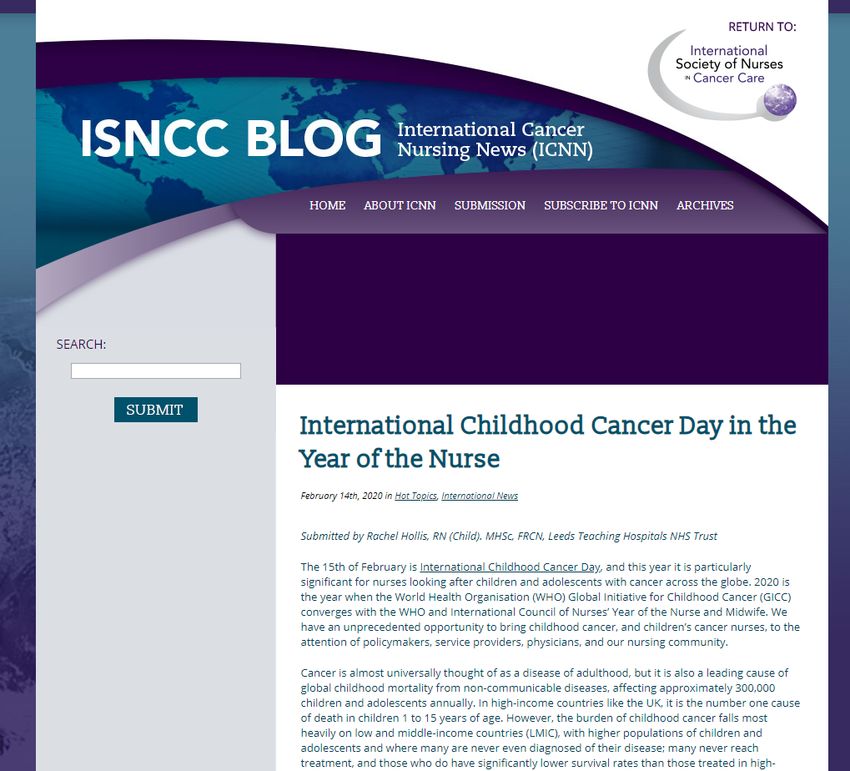
INTERNATIONAL
  CHILDHOOD
CANCER DAY IN
  THE YEAR OF
   THE NURSE
  Blog post by Rachel
         Hollis

http://news.isncc.org/internat
ional-childhood-cancer-day-
   in-the-year-of-the-nurse/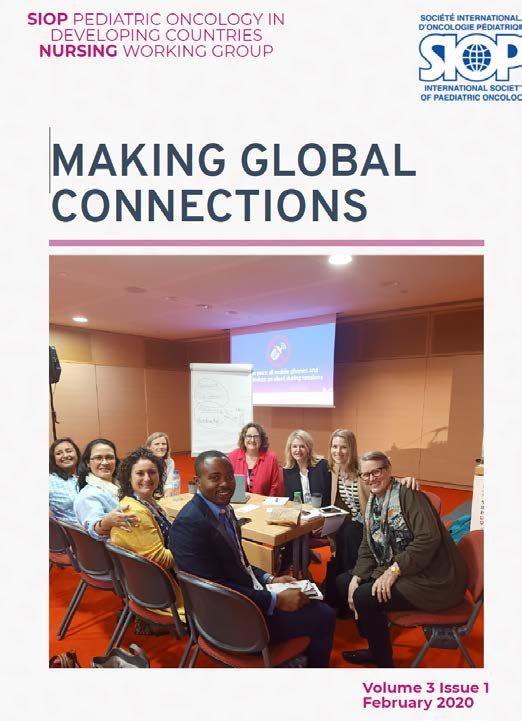
2020 Education
Meetings
KEY DATES FOR YOUR CALENDAR:
     April 1, 2020 – Abstract Submission Deadline

   April 1, 2020 – Scholarship Application Deadline
         https://siop-online.org/nurse-scholarships/

April 1, 2020 – SIOP 2021 Programme Proposal Deadline

  July 29, 2020 – Early Registration Savings Deadline

      October 14-17, 2020 – SIOP 2020, Ottawa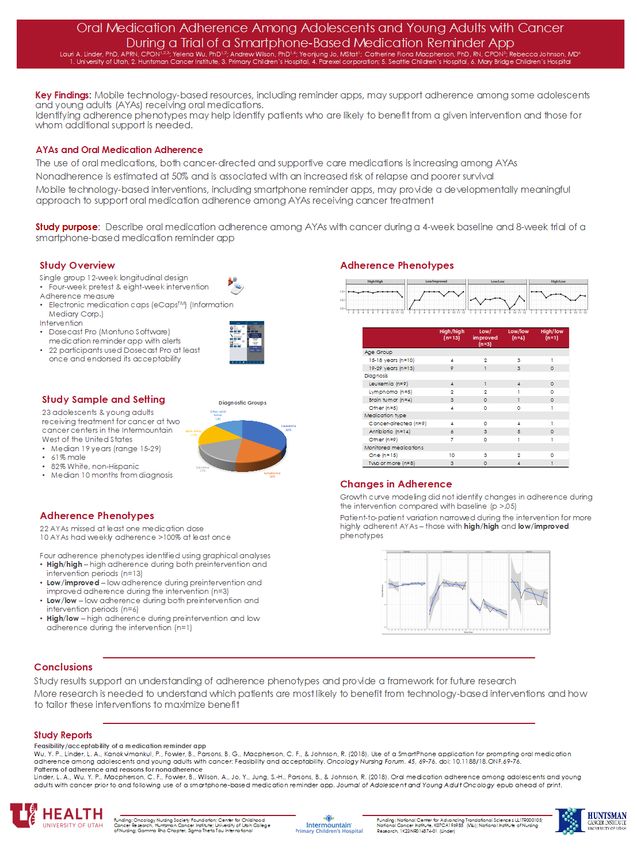
APHON International Nurse
Scholarships- Deadline March 31, 2020
■   APHON offers a scholarship that provides an opportunity for a pediatric
    hematology/oncology nurse from a developing country to attend the APHON annual
    conference and exhibit each year.
■   The 44th Annual Conference will be held September 3-5 at the New York Hilton Midtown
    in New York, New York.
■   The scholarship covers airfare, taxi, hotel, meals, and the conference registration fee, up
    to a maximum of $3,000 USD.

https://aphon.org/about-us/scholarships/intl-nurse-scholarship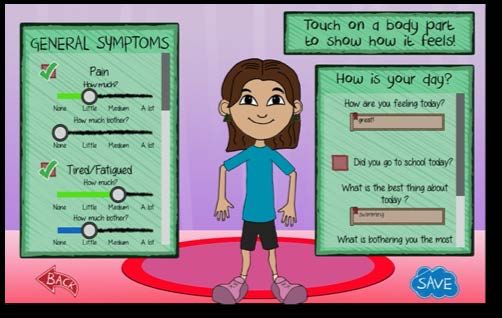
MY PEDIATRIC
ONCOLOGY NURSING
   JOURNEY …
         Lauri A. Linder, PhD, APRN, CPON
       Associate Professor, University of Utah
Clinical Nurse Specialist, Primary Children’s Hospital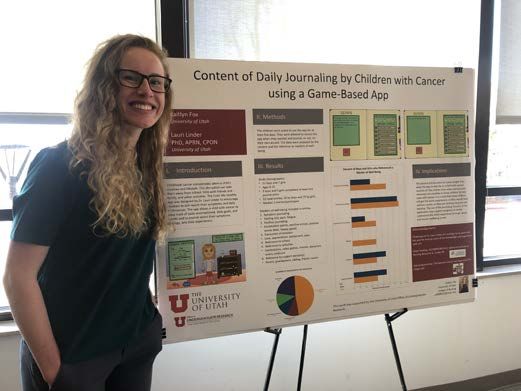
Introduction …

■ University of Utah
   – BSN, 1989
   – MS, Parent-Child Clinical Nurse
     Specialist, 1994
   – PhD, Nursing, 2009
My current role …
■ Joint appointment …
                                      ■ Clinical Nurse Specialist
                                          –   Master’s degree
■ Clinical Nurse Specialist               –   Advanced practice license
    –   Pediatric oncology and            –   Emphasis on population vs.
        hematopoietic stem cell               care of the individual patient
        transplant                        –   Evidence-based practice
    –   Inpatient unit with 32 beds       –   Quality improvement
    –   Ambulatory clinic sees 40         –   Staff mentorship and support
        patients/day                      –   Collaborate with service line
                                              educators
■ Associate Professor
    –   University of Utah
    –   Research and teaching
Some of my current projects …
■ mHealth research ■ Writing
■ Mentoring
■ Infection preventionTIPS AND TRICKS FOR
ABSTRACTS AND
PRESENTATIONS
Lauri A. Linder, PhD, APRN, CPON
Associate Professor, University of Utah
Clinical Nurse Specialist, Primary Children’s HospitalSession Objectives ■ Apply strategies for writing an abstract for professional presentations ■ Describe strategies to communicate a professional practice project or research study through a poster or podium presentation
What can be included for an
academic presentation?

■ Clinical practice project
■ Research study
■ Educational project
■ Theoretical paper
■ Review of the literature / systematic review
Writing a Successful Abstract

 ■ Read the directions

 ■ Believe the directions

 ■ Follow the directions
Source: Lenz, M. Writing a WINing Abstract. University of Washington School
of Nursing https://win.confex.com/win/2018/cfp.cgi
Calls for Abstracts
■ International Society of Paediatric Oncology annual congress:
  October 14-17, 2020 in Ottawa, Canada
   – Abstracts due April 1, 2020
   – https://siop-congress.org/submission/
   – 2021 Congress is October 21-24, 2021 in Honolulu, HI, USA

■ Association of Pediatric Hematology/Oncology Nurses annual
  conference: October 27-30, 2021 in Salt Lake City, UT, USA
   – Abstracts typically due in late January
   – http://conference.aphon.org/submit-an-abstract
Parts of the Abstract

   ■ SIOP                                       ■ APHON
       –   300 word limit                            –   500 word limit
       –   Background/objectives                     –   Basis of inquiry
       –   Design/methods                            –   Purpose/objectives
       –   Results                                   –   Methods
       –   Conclusions                               –   Findings/outcomes

Note: SIOP will allow an abstract that has been presented at another conference in the same
calendar year to be presented at that year’s congress.
Let’s start writing …
Parts of an Abstract

■ Title
   – Provides the first impression
   – An “abstract of the abstract”
          – (Waller & Ropka, 1993)
   – Should include:
     ■ Important variables
     ■ Target population
     ■ Context
Writing the title … ■ Pain in children with cancer ■ Prevalence of post-operative pain among young children with brain tumors ■ Improving parent education ■ Improving education for parents of children with leukemia at the time of diagnosis
Parts of a Scientific Abstract
■ Basis of inquiry/background
  – Nature and importance of the problem prompting the
    study or project
  – Rationale/conceptual basis for the study or project
■ Purpose/objectives
  – Overarching purpose of the project or study
  – Goals of the program
  – Research questions or hypotheses driving the study
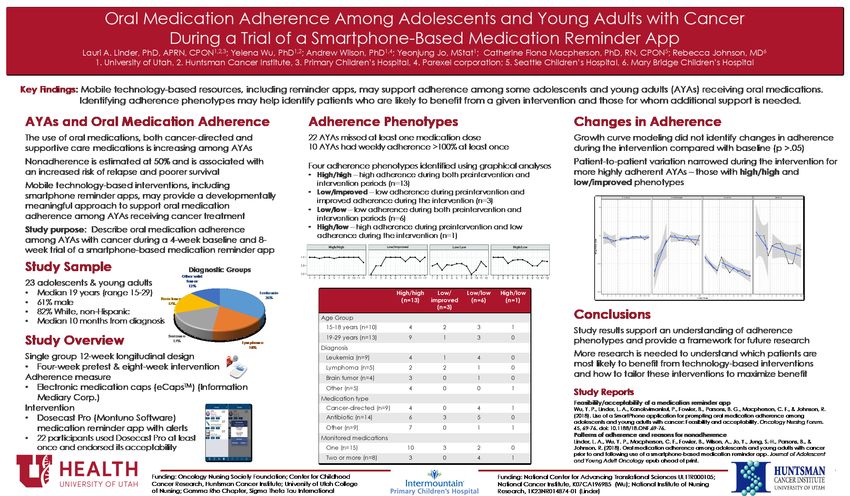
Project Example: Background/Purpose AYAs with cancer have unique needs/concerns that are often overlooked during the initial cancer diagnosis. The introduction of a navigator dedicated to AYAs with cancer in the adult oncology setting successfully facilitates early contact and assessment of AYA specific concerns in the new diagnosis period. This project examines the impact of introducing the AYA navigator role in a Canadian Health Institution on early contact and assessment of AYA specific concerns in the new diagnosis period. Complete abstract accessible at: http://conference.aphon.org/UPLOADS/Files/Sample_paper-posterabstract.pdf
Research Example: Background/Purpose
Children receiving cancer treatment suffer multiple symptoms, yet
often struggle to describe these symptoms. mHealth resources,
including apps, offer developmentally meaningful, multi-sensory
approaches to support symptom reporting.
This study investigated the acceptability of an investigator-
developed symptom-reporting app from perspectives of children
receiving chemotherapy and their parents. This game-based app
features a personalizable avatar to guide children to report
symptoms using brief checklists, drawing features, and short-
answers. It also includes a drawing page, diary, and daily goals
checklist.
 Complete abstract accessible in 2019 SIOP Conference proceedings:
 https://onlinelibrary.wiley.com/toc/15455017/2019/66/S4
Parts of a Scientific Abstract

■ Methods: Research    ■ Methods: Project
  – Design               – Approach
  – Study sample and     – Project setting
    setting              – Target population
  – Data collection      – Outcome variables
    methods                of interest
  – Study variables      – Processes used
  – Analytic plan        – Evaluation plan
Project Example: Methods The project setting was a 32-bed inpatient oncology unit in a free-standing pediatric hospital. Our process began with a 5-year retrospective review (2006-10) of CLABSIs. Interventions implemented in 2011 included Children’s Hospital Association’s best practice bundles that emphasized heightened antisepsis and situational awareness in relation to central line care. Review of unit-based practices suggested inconsistencies with daily hygiene cares. This led to the implementation of formalized supportive cares in 2013. The “1-2-3 cares” included once daily bathing, twice daily oral care, and out-of-bed activity three times/day. Following implementation of these cares, CLABSI rates decreased to 2.59/1,000 line days (2013-17). Continued review of unit-based data identified significant decreases in all groups of organisms with the exception of those common to the lower gastrointestinal tract. Infections remained most prevalent among patients with acute leukemia, specifically during periods of profound and prolonged neutropenia. These data and continued review of published evidence allowed our team to leverage for use of prophylactic antibacterial therapy for our highest risk patients during their neutropenic phase beginning 4th quarter 2017.
Study Example: Methods
Twenty-three AYAs (median 19 years; range 15-29 years) receiving at
least one prescribed, scheduled oral medication related to their cancer
treatment participated in this 12-week longitudinal single group interrupted
time series study. Baseline oral medication adherence was monitored
using electronic monitoring caps for four weeks. Participants then used a
medication reminder app and had their oral medication adherence
monitored for 8 weeks. Paired t-tests compared adherence before and
during the intervention. Multilevel unconditional growth curve models
assessed adherence trajectories, accounting for individual variation. Visual
graphic analysis techniques were applied to individual profile plots of
weekly adherence to evaluate trends and identify adherence phenotypes
(patient subgroups with similar adherence patterns).

Complete abstract accessible in 2018 SIOP Conference Proceedings:
https://onlinelibrary.wiley.com/toc/15455017/2018/65/S2
Parts of a Scientific Abstract
■ Results/Outcomes
  – If in progress …
    ■ Status of the project – e.g., participants accrued, duration of
      project implementation
    ■ Any preliminary analyses
  – If completed …
    ■ Summary of completed analyses
    ■ Emphasize major results
Parts of a Scientific Abstract
■ Conclusions
– Regardless of project/study status …
■ Implications for practice/directions for future research
■ Overall summary of the significance of the project or the study
For APHON abstracts, the conclusions are included as the last
few sentences of the resultsProject Example: Results
Upon completion of the training, the nurses verbalized an
increased knowledge of common pediatric cancers and their
treatment. The nurses were able to demonstrate safe
administration of chemotherapy and upon a return visit had
maintained the standards. The nurses demonstrated increased
critical thinking skills when interacting with colleagues and
reported feeling decreased anxiety when speaking to families
about cancer and its treatments. Ongoing communication with
the nurses and the pediatric oncology team at MGH occurs every
other week via Skype to discuss challenging cases as well as to
reinforce education.
Complete abstract accessible at: http://conference.aphon.org/UPLOADS/Files/Sample_paper-posterabstract.pdfStudy Example: Results Participants were 86 AYAs (median 19 years; range 15-29 years; 52% males; 71% White) receiving chemotherapy at 5 sites in the United States. Participants reported a median of 4 symptoms at each of two timepoints (T1, T2) immediately prior to courses of chemotherapy with a range of 0-15 symptoms at T1 and 0-18 symptoms at T2. The number of symptoms reported did not differ based on age (adolescent vs. young adult) or gender. Severity (t=-3.22; p
Study Example: Conclusion

  Fatigue, nausea, difficulty sleeping, and pain are among the
  most severe and distressing symptoms regardless of whether
  identified as priority symptoms. Identification of priority symptoms
  can provide clinicians with a starting point to develop patient-
  centered plans for symptom management interventions.

Complete abstract accessible in 2018 SIOP Conference Proceedings:
https://onlinelibrary.wiley.com/toc/15455017/2018/65/S2
Two Additional Sections for APHON
    Abstracts
 ■ Conference Learning Gaps                               ■ Learning Outcome
      – What will learners be able                             – What observable and
        to do as a result of                                     measurable outcome
        attending your                                           will learners be able to
        presentation to address                                  do as a result of
        the identified conference                                attending your
        learning gaps?                                           presentation?

Examples accessible at: http://conference.aphon.org/UPLOADS/Files/Sample_paper-posterabstract.pdf
Examples:
■ Conference Learning Gap
– Pediatric oncology nurses need to recognize and respond to
symptoms children experience as a consequence of their
disease and its treatment. Mobile technology-based resources
can support children in communicating their symptoms in a
developmentally meaningful manner.
■ Learner Outcome
– Attendees will be able to describe the process for designing a
child-centric technology-based resource for symptom
assessment that engaged children with cancer and pediatric
oncology healthcare providers as co-designers.
Complete abstract accessible at: http://conference.aphon.org/UPLOADS/Files/Sample_paper-posterabstract.pdfGeneral Principles when Writing ■ Keep the focus on the project or study you are describing ■ Address each required area ■ Put most of the focus on the methods and outcomes ■ Use active voice whenever possible
Pitfalls to Avoid when Writing

■ Copying and pasting an abstract from another source
■ Too much content in the background and not enough
  description of the methods and results
■ Repeating content in the abstract
■ Excessive use of adjectives
■ Not allowing sufficient time for feedback and refining
  the abstract prior to submission
Before submitting your abstract …

■ Re-read the instructions

■ Peer review
  – Proofreading support
  – Clarity of presentation
  – Attention to objectives
What happens if my abstract
is accepted?
■ Poster presentation
   – SIOP: Poster available to
     attendees at designated     ■ Paper/podium session
     times
                                    – 10-15 minute slide
   – APHON: Poster typically          presentation
     available to attendees
     throughout the conference      – Grouped with other similar
                                      presentations
   – Most conferences specify
     times for authors to be
     present in person
What if my abstract isn’t accepted? ■ Ok to be disappointed – but don’t be devastated! ■ Request feedback ■ Work with a trusted mentor ■ Revise and resubmit!
Preparing a Poster Presentation
■ Read the instructions carefully for the poster size and format
   – SIOP typically requires posters to be in portrait orientation
   – APHON supports posters in landscape or portrait orientation
■ Organize for a vertical flow of information
■ Use a font size that can be easily read from 4-6 feet away
   – Dark text on a light background is easier to read
■ Use bullet points rather than paragraphs of narrative text
■ Use graphics and illustrations to help tell the story
   – Obtain any appropriate permissions
Preparing a Podium Presentation

■ Read the instructions for expectations regarding the duration of
  the presentation and time for questions
■ Plan for 10-15 slides
■ Use bullet points rather than paragraphs of narrative text
   – Maximum of 5 bullet points per slide
■ Use 18-28 point font for text
■ Use graphics and illustrations to help tell the story
   – Obtain any appropriate permissions
Preparing a Podium Presentation

■ Background and purpose – 1-2 slides
■ Methods – 2-3 slides
■ Results – 3-4 slides
■ Discussion – 2-3 slides
   – Clinical Implications, Limitations, & Future Directions
■ Conclusion – 1 slide
Before the Conference …

■ Double-check due dates for submitting electronic materials
■ Spell check materials before printing or submitting
■ Rehearse presentation prior to the conference
   – Posters – approximately 3 minutes
   – Podium presentations – within specified timeframe
Additional Resources
■ APHON Call for Abstracts: http://conference.aphon.org/submit-
  an-abstract
■ APHON Paper/Poster Abstract Examples:
  http://conference.aphon.org/UPLOADS/Files/Sample_paper-
  posterabstract.pdf
■ SIOP Call for Abstracts: https://siop-congress.org/submission/
■ Linder, L. A. (2012). Disseminating research and scholarly
  projects: Developing a successful abstract. Journal of Pediatric
  Oncology Nursing, 29, 362-366. doi: 10.1177/1043454212456087
ADDITIONAL QUESTIONS?
           Lauri A. Linder, PhD, APRN, CPON
         Associate Professor, University of Utah
  Clinical Nurse Specialist, Primary Children’s Hospital
               lauri.linder@nurs.utah.edu
Next meeting: ■ March 19th ■ 8:00 PM Singapore time ■ Handy time zone converter: https://www.timeanddate.com/worldclock/conver ter.html
You can also read


