Sonorities The News Magazine of the University of Illinois School of Music 2018
←
→
Page content transcription
If your browser does not render page correctly, please read the page content below
sonorities
                                                          2018

The News Magazine of the University of Illinois School of Music
Published for the alumni and friends of the
                                                                ca m pus ne w s
School of Music at the University of Illinois at
Urbana-Champaign.
The School of Music is a unit of the College of
                                                                From the Director

                                                                M
Fine + Applied Arts and has been an accredited
                                                                      ake Music Matter. We feature this
institutional member of the National Association of
Schools of Music since 1933.                                          simple phrase on our new School
                                                                      of Music website and t-shirts, and
Peter Mortensen, Interim Dean of the College of
Fine + Applied Arts                                                   now on the cover of Sonorities. For
                                                                me, the third word makes the difference.
Jeffrey Magee, Director of the School of Music
                                                                Making music has been at the center of
Robert Grisbrook, Editor
                                                                our School mission since its founding in
Katherine Buzard, Copy Editor                                   1895, but the qualifier “matter” extends
Aaron Godwin, Copy Editor                                       that notion. It reminds us to bring music Jeffrey Magee, Director of the School
                                                                                                              of Music
Design and layout by Studio 2D                                  back into the world beyond the practice
UI School of Music on the Internet:                             room, the teaching studio, the rehearsal hall, or the competition venue; to make it
www.music.illinois.edu                                          connect with diverse gatherings—not just connoisseurs and competition judges—in
                                                                unusual venues, and in the spirit of social exchange and community-building.
                                                                    In this issue, you’ll find many ways that our faculty, students, and alumni carry
                                                                out this vital task. A year ago, the School launched a newly renovated curriculum
                                                                for all students in the Bachelor of Music Education degree, which now includes a
Share your good news!                                           Music Technology option. Our feature, “Out in the Schools,” aims to open up the
Send photos and submissions to:                                 new curriculum and lead you through it from the student perspective. More than
music-sonorities@illinois.edu                                   40% of our undergraduate student body resides in that degree, so it has been a real
                                                                game-changer for the School.
                                                                    This year we also celebrate the University of Illinois’ sesquicentennial, and School
                                                                faculty and students are playing a key role in the festivities. Concerts in Chicago’s

Co nte n t s                                                    Symphony Center, New York’s Alice Tully Hall, and our own Krannert Center will
                                                                showcase the premiere of a new work, Gathering, commissioned for the sesquicen-
CAMPUS NEWS. . . . . . . . . . . . . . . . . . . . 2            tennial and composed for the unusual combination of choir, wind symphony, and
C E L E B R ATING GIVING . . . . . . . . . . . . . . 6
                                                                vocal soloists. The text, compiled by a National Book Award winner with deep ties
                                                                to the campus, comprises excerpts from speeches and writings from an intellectually
OU T REAC H . . . . . . . . . . . . . . . . . . . . . . 8
                                                                and culturally diverse cohort of distinguished alumni. Learn the inside story in this
OU T IN TH E SCHOOLS . . . . . . . . . . . . . 12               issue—and join us for one or all of the concerts in Spring 2018!
G AT HER IN G. . . . . . . . . . . . . . . . . . . . . 16
WO RLD S END & WORLDS B E G I N . . . . . . 19

FAC ULTY NEWS . . . . . . . . . . . . . . . . . . 22            New degree bridges digital gap
A L U MNI NEWS. . . . . . . . . . . . . . . . . . . 29

S T U DENT N EWS. . . . . . . . . . . . . . . . . . 40          The School of Music has announced a           first institution in the Midwest to offer a
IN MEMOR IAM . . . . . . . . . . . . . . . . . . . 43           new undergraduate degree program              Bachelor of Science degree in Music and
G IV I N G . . . . . . . . . . . . . . . . . . . . . . . . 46   that will combine the study of music          Computer Science, and it further reinforces
                                                                                                              U of I’s position as the leader in blended
                                                                and computer science in a Bachelor
                                                                                                              programs integrating computer science
                                                                of Science in Music                           with other disciplines.
                                                                The new “CS + Music” program is based             Students in the CS + Music program
                                                                on the “CS + X” meta-degree initiative that   will have equal training as musicians
                                                                was invented at the University of Illinois    and as computer scientists, and several
                                                                and Stanford University, a program which      courses in the new curriculum have been
                                                                is gaining momentum at colleges and           specifically designed to integrate core
                                                                universities across the country.              principles from both disciplines. Gradu-
                                                                   The Illinois School of Music is the        ates from the new degree program will
be well positioned to pursue careers in                                                          sound on film. In a series of firsts in the
music or computer research, or to enter                                                          1950s, Professor Lejaren Hiller established
the 16-billion-dollar global music industry,                                                     the Experimental Music Studio, the first of
which is now almost exclusively digital                                                          its kind in the world. Hiller and Leonard
in content and delivery.                                                                         Isaacson used the first computer built
    The campus professors behind the                                                             and owned by a US university (ILLIAC 1)
degree, Dr. Heinrich (Rick) Taube, School                                                        to compose one of the first substantial
of Music, and Dr. Paris Smaragdis, Com-                                                          pieces of music to be written algorithmi-
puter Science/Electrical Engineering, say:                                                       cally. Hiller also worked with Robert A.
“The CS + Music degree fills an educational                                                      Baker to develop one of the first music
void that many have struggled with in the                                                        composition computer languages.
past. Until now, these two disciplines had                                                           Dr. Jeffrey Magee, director of the School
to be studied separately. We are delighted                                                       of Music, adds: “The School of Music is
                                                  (Left to right) Rick Taube, Professor of
to see that students today will finally have      Composition-Theory, and Paris Smaragdis,       excited to launch this new program after
the opportunity to study both of these            Associate Professor of Computer Science        years of development through close col-
fields, and their fascinating interplay, on       and ECE                                        laboration among faculty in Computer
the campus that has brought many historic                                                        Science and Music. The new degree
innovations in computer music.”                   technology. As early as the 1920s, Professor   program addresses an area of intense
    The University of Illinois has historically   of Electrical Engineering Joseph Tykociner     student demand and positions us well
been a forerunner in music and audio              was one of the first researchers to place      to educate leaders in music technology.”

New masterclass series takes off
Violin star Rachel Barton Pine provided the inaugural                    Barton Pine served as a fantastic opportunity for our students to
masterclass in the new Daniel J. Perrino masterclass                     receive input from a wonderful musician and violinist. I thought
series on 21 October, 2017                                               Rachel was sensitive to each student’s individual needs and
                                                                         very generous with her advice. Her expertise and knowledge
Pine provided a masterclass, a rock strings workshop, and                of the repertoire was clear from start to finish.”
String Academy chamber music coachings, offering unique                     The Daniel J. Perrino masterclass series is made possible by
insight to music majors, local music educators and the public.           a generous gift from Sheila Johnson (BS ’70) and will mainly
   Nelson Lee, Clinical Assistant Professor of Music at UI and           focus on bringing exceptional violinists to the University to
member of The Jupiter Quartet, says: “The class given by Rachel          work with students.

                                                                            Events calendar: The Daniel J. Perrino
                                                                            masterclass series
                                                                            ■■   Monday, December 4: Zach DePue, Concertmaster,
                                                                                 Indianapolis Symphony Orchestra
                                                                            ■■   Saturday, March 10: Timothy Lees, Concertmaster,
                                                                                 Cincinnati Symphony Orchestra; Adjunct Professor,
                                                                                 University of Cincinnati, College-Conservatory of Music
                                                                            ■■   Saturday, April 14: Almita Vamos, Violin Faculty, Music
                                                                                 Institute of Chicago

Rachel Barton Pine gives instruction during her rock strings
workshop at the School of Music

                                                                                                                20 1 8            3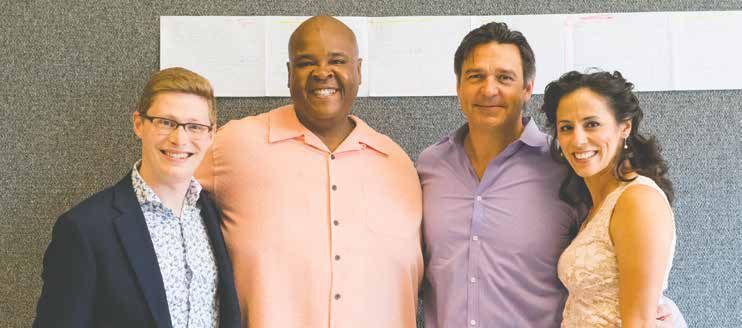
ca mp u s n e ws
Star line-up for JEN 2018 performance
The University of Illinois will once again be represented
at the Jazz Education Network (JEN), the major jazz
education conference of the year, with a prestigious
invitational performance
The UI Concert Jazz Band submitted a recording of student
compositions and arrangements in March 2017 and was sub-
sequently selected to give a premiere performance of the works
on the main stage in the primetime evening slot of 10–11pm
on January 4, 2018.
   The band will be joined by incredible guest artists Doc
Severinsen, former leader of the Tonight Show Band for over
30 years and, at 89, still leader of his own big band; Ernie
Watts, former member of the Tonight Show Band for 30 years,
a current member of Severinsen’s big band and a world-wide        UI Concert Jazz Band performing at JEN 2014
performer with his own groups; and Jim Pugh, a current U of I
jazz faculty member and a member of many internationally-         Watts (saxophone) and Jim Pugh (trombone) on January 4,
known jazz and popular groups such as Steely Dan, Chick           2018 in Dallas, TX. It’s sure to be one of the highlights of the
Corea’s Return to Forever, and the Woody Herman Orchestra.        Jazz Education Network’s main conference.”
   The performance will take the form of a marquee event and         UI has a long history of being invited to perform in a variety
should be one of the most well-attended concerts of the confer-   of categories presented at the conference. Groups have taken
ence, featuring works by current and former U of I students.      part in at least seven different JEN and IAJE (JEN’s predeces-
   Director of the Concert Jazz Band and Jazz Studies Chair,      sor) conferences since 2011, including the Concert Jazz Band
Chip McNeill, says: “The Concert Jazz Band and I are looking      (four times), the Latin Jazz Ensemble (once), the Jazz Trom-
forward to a stellar performance with our featured guests and     bone Ensemble (two times), and some of our small group jazz
legendary jazz performers, Doc Severinsen (trumpet), Ernie        combos (once).

Hail to the Orange!
Musicians pay tribute to UI’s rich musical heritage                  Jeffrey Magee, director of the School of Music, comments:
                                                                  “You will hear three distinctly different versions of the Illinois
Illinois Songs, a new CD released by the School of Music, com-
                                                                  Alma Mater—one played by our university’s elite concert band,
memorates the sesquicentennial anniversary of the University
                                                                  the Illinois Wind Symphony; one sung by an internationally
with a homage to its musical traditions.
                                                                  celebrated operatic baritone; and one sung by our premier choir,
    Comprising repertoire performed by the Varsity Men’s Glee
                                                                  the Chamber Singers—and utterly transformed by a student
Club, Alumni Chorus, Nathan and Julie Gunn, Illinois Wind
                                                                  arranger. Listen closely and you’ll hear two other Illinois songs
Symphony, University of Illinois Black Chorus and the Univer-
                                                                  woven into the arrangement’s rich tapestry.”
sity of Illinois Chamber singers, it documents the University’s
                                                                     Copies of the CD can be purchased by phone on 217-333-
musical diversity while delivering stirring renditions of songs
                                                                  2620 or online at music.illinois.edu/illinois-songs.
including “Hail to the Orange (Alma Mater)” and the “Univer-
sity of Illinois March.”

        4            son orities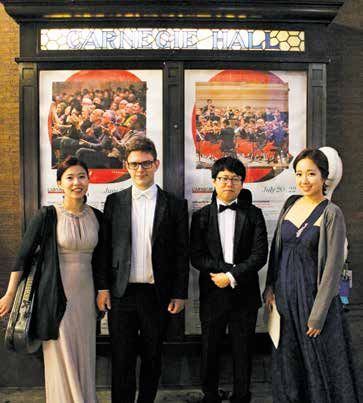
Building “Choral Bridges”
UI Chamber Singers tour Austria and          St. Michael’s Church in Vienna. The sound
Hungary with a constructive musical          made me feel like I was finally living
message                                      everything I learned about in my music
                                             history classes – as though I was living
The University Chamber Singers and their     in the time that Haydn composed while
director Andrew Megill, professor of con-    singing in the church in which Mozart
ducting and director of Choral Activities,   premiered his requiem.”
travelled through Austria and Hungary            The Chamber Singers also performed
between May 24 and June 4, 2017, to          a number of independent concerts, deliv-
perform with members of the Webern           ering an American program entitled “I
Kammerchor, the chamber choir of the         Hear America Singing,” which featured
Vienna School of Music, as well as other     texts by the likes of Walt Whitman, Emily
European collaborators.                      Dickinson and Langston Hughes, and
                                                                                          Chamber Singers pose by a “Choral
   The Chamber Singers gave three joint      traditional American music including         Bridges” concert poster in Vienna
performances of their “Choral Bridges”       folksongs, spirituals, and American hymns.
program with members of the Webern               The tour included visits to Freistadt,
Kammerchor, including at St. Michael’s       Klosterneuburg, and Vienna in Austria,       with people we love and who share the
Church in Vienna, where Mozart premiered     as well as to Budapest in Hungary.           same passion. I wouldn’t trade the laugh-
his requiem. Music included Franz Joseph         Currie adds: “The most meaningful        ter, schnitzel and wonderful music for
Haydn’s Theresienmesse and Benjamin          musical experience is when we perform        anything.”
Britten’s Cantata Misericordium. These
performances came to be through the kind
invitation of the Webern Kammerchor,
who while on tour to the US in Spring
2016 collaborated with the Chamber
Singers and invited them on a musical
exchange in Vienna.
   Grace Currie, a chamber singer and
undergraduate in choral music education,
reminisces about the music-making on
tour: “I basked in the great acoustics of    St. Michael’s Church provides an ornate setting for the UI Chamber Singers and members
                                             of the Webern Kammerchor to perform works by Haydn and Britten

                                                                                          “You will hear three
                                                                                           distinctly different versions
                                                                                           of the Illinois Alma
                                                                                           Mater . . . Listen closely
                                                                                           and you’ll hear two other
                                                                                           Illinois songs woven into
                                                                                           the arrangement’s rich
                                                                                           tapestry.”

                                                                                                        20 1 8           5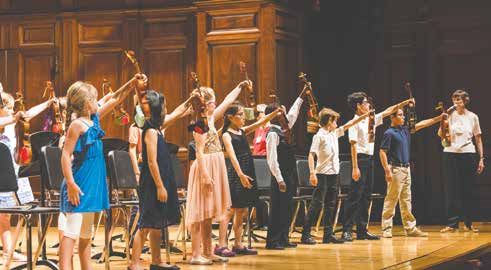
cel e b ra t in g gi v i ng
by David Allen, Associate Director of Development at the University of Illinois School of Music

A very special gift: the Corley family
Lynd Corley, alumna and ardent supporter of the School of
Music, continues to share her generosity and kindness with
her alma mater, helping us to celebrate our 150th year at the
University of Illinois in a very special way. In loving memory
of her late husband, Dr. W. Gene Corley, Lynd and her family
have given a donation that makes it possible for us to take
our musical celebration and performances of Dominick DiO-
rio’s Gathering to Orchestra Hall at the Symphony Center in
Chicago, as well as to Alice Tulley Hall at Lincoln Center in          Lynd Corley (center), Scott Corley (BS
New York City.                                                         Computer Science ’92), Anne Corley
                                                                                                                     Dr. Corley (1935–
   Both Lynd and Gene were members of School of Music                  Baum (BALAS Biology ’86), and Bob
                                                                       Corley (BALAS Economics ’88) are all          2013) was one
choirs during their time at UIUC. Lynd was president of the                                                          of the world’s
                                                                       UI graduates
Women’s Glee Club and Gene was president of the Varsity Men’s                                                        foremost experts in
Glee Club. Lynd earned her bachelor’s and master’s degrees in                                                        analyzing buildings
music education, while Gene earned his bachelor’s, master’s,           Chicago Symphony Chorus for 10 years,         damaged by bombs,
and doctorate degrees in civil engineering with an emphasis            and still maintains a private music studio    earthquakes, fires
                                                                       in Glenview, Illinois.                        and tornadoes. He
in structural engineering.
                                                                                                                     led the federal
   Lynd’s dedication to the School of Music is evidenced by                Lynd and Gene, who were married for
                                                                                                                     investigation of the
her enduring support. She is currently a member of the School          53 years, shared a strong love for music at   collapse of the World
of Music National Advisory Council and previously served               Illinois, and we are proud to honor them      Trade Center’s twin
on the School of Music Alumni Board. In addition to these              for their many accomplishments, loyal         towers on September
                                                                       support, and passion for music. We are        11, 2001
roles, she served as director of bands for the Glenview Public
School District for over 20 years, sang professionally with the        sincerely grateful to the Corley family!

Another big year of support                                            Giving to School of Music 2014–2017
                                                                       (FY = July 1–June 30)
from you!                                                             $2,000,000
                                                                      $1,800,000
Once again, we have surpassed our previous year’s level of
donation. The following chart illustrates the different types of      $1,600,000

donations we received. Thank you for supporting Music at Illinois!    $1,400,000
                                                                      $1,200,000
                                                                      $1,000,000
                                               Unsolicited Estates
                                                                        $800,000
                                                        Matching
                                                          Pledges       $600,000
                                                         Deferred       $400,000
                                                         Outright
                                                                        $200,000
                                                                             $0
                                                                                     FY2014        FY2015       FY2016        FY2017

         6             son orities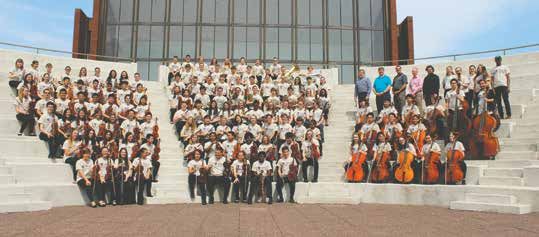
As we begin to celebrate our sesquicentennial anniversary, we recognize the impor-
                                                tant names represented through funds that support Music at Illinois every year in
                                                incalculable ways. As you browse the list below, you may see several familiar names
                                                and most likely many that you have never heard of, as our music family and legacy
 years of generosity                            is extensive and strong! If you would like to add your donation to one of these funds,
                                                reach out to us to start a conversation about your potential support and contribution.
                                                Your support of these funds is an integral part of the day-to-day operations as well
                                                as the long-term success of our students, ensembles, and areas of study.

A. A. Harding Awards                            Eric Dalheim Memorial Scholarship               Marilyn Plederer Zimmerman Fellowship for
Andrew George De Grado Piano Scholarship        Franz Joseph Haydn Scholarship in Music            Excellence in Music Education
Ann and Ralph Mason Endowment in Music              Performance                                 Martha S. Beerman Endowment
Barbara H. McMurtry-Noel Scholarship            Frida Haller Jones Memorial Award Piano         Mary C. Maslen Fund
Bernard Goodman Orchestra Award                 G. Jean Sutter Music Education                  Mary E. Hoffman Music Endowment
Bernice Adams Arment Memorial Scholarship       Gene Corley Memorial Fund—Illinois Varsity      McAllister Memorial Musicology Award
    in Piano                                        Men’s Glee Club                             Miriam L. Ekbom Scholarship
Beverly Myrow Memorial Harp Fund                George M. Unger Endowment                       Nancy Wustman Memorial Award
Bill A. Nugent Endowed Professorship in         George W. Brownfield Fund                       Nicholas Temperley Endowment for the Study
    Music Performance                           Gerald and Linda Anderson Music Education          of Musicology
Bill A. Nugent Fellowship in Music                  Scholarship                                 Paul Rolland Memorial String Award
Bruce R. Foote Memorial Scholarship             Gerald M. Crystal Music Organ Program           Pauline V. and Ralph C Morgan Memorial
Bruno and Wanda Nettl Lecture in                Geraldine B. Cooke Endowed Scholarship and         Music Award
    Ethnomusicology                                 Fellowship                                  Pauline V. Morgan Memorial Music
Bruno Nettl Ethnomusicology Fund                Geren Stith Memorial Award                         Scholarship
Bruno Nettl World Cultures Performance Fund     Gertrude Weber Gassmann Piano Award             Peter A. Michalove Fund
Carolyn Joyce Mitchell Davy Music               Grace Elizabeth Wilson Memorial Award for       Professor Frances Crawford Memorial
    Scholarship                                     Excellence in Singing                          Scholarship
Charles and Helen Loeb Scholarship              Gregory S. Vasich Memorial Endowment            Robert E. Gray Trombone Award
Charles Leonhard Lectureship                    Guy M. Duker Awards                             Robert Earl Thomas Endowment
Claire Richards Memorial Fund                   Harold Decker Choral Excellence Fund            Robert H. and Dorothy R. Clements
Clara Rolland Piano Award                       Harry Begian Bands Assistantship                   Scholarship
Clyde William Young Music Scholarship           Haskell O. Sexton Memorial Award—School         Robert H. Green Memorial Scholarship
Daniel J. Perrino School of Music Scholarship       of Music                                    Robert L. Zarbock Music Fund
Diane Heckert Staub Choral Endowment            Howard A. Stotler Endowment                     Roger R. Cunningham Fellowship
Doris Vance Harmon Scholarship                  Jana M. Mason and Richard C. Anderson           Roslyn Rensch Harp Collection
                                                    Twenty-First Century Piano Endowment        Salvatore Martirano Composer Award
Dorothy A. and Claude R. Langford Endowed
    Chair in Music                              Jerry Hadley Memorial Scholarship               Sheila C. Johnson Endowed Fund—
Dorothy A. and Claude R. Langford Fellowship    Jessica Brennan Clark Scholarship                  Susan Starrett String Scholarships
Dorothy Bowen Scholarship                       Joe Bartkowiak Memorial Scholarship in          Sheila C. Johnson Endowed Fund—
                                                    Music                                          Daniel J. Perrino Chair
Dr. Michel E. Ewald Memorial Scholarship
                                                John & Elvia Suter and Karl M. Hakes Fund       Smith Music Legacy Scholarship Project
Dr. Charles Leonhard Endowment for                                                                 (Thomas J. and Tina Weedon Smith)
    Excellence in Music Education               John Brownfield Memorial Fund
                                                John Garvey Scholarship in Jazz Studies         Swanson Family Endowment
Duane A. and Imogene W. Branigan
    Endowment                                   Joseph W. Schlanger Memorial Opera              Thomas J. Harris Memorial Band Award
Edgard Varese Percussion Award                      Scholarship                                 Thomas Schleis Memorial Scholarship
Edmund C. Williams Excellence Award             Judy Riemenschneider Marderosian Memorial       Warren H. Schuetz Memorial Award
                                                    Music Scholarship                           William Allen and Lena M. Corder Fund
Edmund Plaszczykowski Memorial
    Scholarship for Excellence in Music         June and Charles Ross Piano Fellowship in the   William Anderson Scholarship in Music
                                                    Honor of Patti and Bernard Phillips         William F. Ludwig U of I Band Awards for
Edward Krolick String Scholarship
                                                Lex and Sheila Young Music Education Award         Percussionists
Elizabeth Meier Frauenhoffer Memorial Award
    in Music                                    Louise Taylor Spence Scholarship                William W. Olson Varsity Men’s Glee Club
Elizabeth Meier Frauenhoffer Memorial           Lucille and Charles Wert School of Music           Travel Fund
    Scholarship in Music                            Fund                                        William Warfield Vocal Study Fund
Elsie E. Maylath Memorial Scholarship           Marcella K. Brownson Memorial Scholar &
                                                    Fellow

                                                                                                              20 1 8            7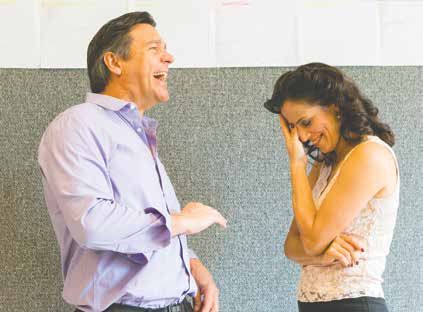
o utr e a c h
     Summer Scrapbook
     by Jancie Philippus, Public Engagement Coordinator at the
                                                                                                  1

     University of Illinois School of Music

     2017 was an exciting summer for
     Illinois Summer Youth Music!

    N
         ow in its 68th year, the camp expanded to four
         one-week sessions and celebrated its highest enroll-
         ment in five years. With 26 programs offered over
         the summer, Illinois Summer Youth Music (ISYM)
     boasted a larger curricular offering than ever before,
     including the School of Music’s Pre-College Chamber             1 | Joe “absolute”
                                                                     Khan works on his
     Academy and Contemporary Music Week. Read about                                                  2
                                                                     original lyrics with local
     some of our new programs below.                                 hip-hop artist DeAngelo
                                                                     “Blackmage” Brown
     ISYM Hip-Hop
                                                                     2 | ISYM Hip-Hop
       Led by Dr. Adam Kruse, participants in ISYM Hip-Hop           participants Tiana “Ti”
       worked with local hip-hop artists and educators to write      Steele and Elaishe “Lai
                       and perform original songs and explore        Don” Stone perform on
                                                                     stage at The Canopy Club
                        elements of hip-hop culture.
                            The program, made possible by the
           the ISYM                                                  3 | Dr. Adam Kruse
Listen to                generous support of the Urbana Arts
            Mixtape:                                                 works with Asata “Sata”
Hip-Hop                  Council, celebrated the inherent col-       Young to record her
               .edu/
   go.illinois            laborative nature of hip-hop, partnering   song, Schoolbag
               op17
    isymhiph
                           ISYM, the University of Illinois School
                            of Music, The Canopy Club, and local
                            artists and teachers. Summer master
                     of music education students worked with
       participants to record their songs, generating an ISYM           3
       Hip-Hop Mixtape at the end of the week, while the cul-
       mination of the program was a student-performance of
       original music at The Canopy Club.

     Pre-College Chamber Academy
     For 2017, all of the ever-popular Pre-College Instrumental
     Programs were moved to the same week, allowing ISYM
     to offer chamber music to all participants. Students
     worked with U of I applied faculty in masterclasses and
     workshops focused on fundamentals, repertoire, and
     solo performance. They also had the opportunity to

              8             son orities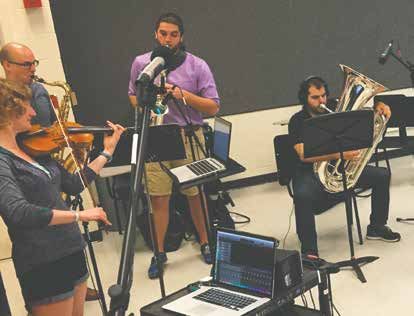
5

                                             4

                                                 participate in a wide
                                                 variety of chamber
                                                 ensembles ranging
                                                 from wind and brass
                                                   quintets to string quartets
                                                   and large instrument choirs.
                                                     ISYM also offered a new elective, entitled “Careers in
                                                  the Arts,” where students could explore possible liveli-
                                                  hoods as musicians and arts entrepreneurs. Since the
                                                 Pre-College Academy immediately preceded the Senior
                                                 High Ensemble week, many students opted to stay for
                                                 two weeks and engage with the ISYM High School Band,
                                                 Choir, and Orchestra programs.

                                                 Black Chorus at ISYM
  6                                              Founded by Dr. Ollie Watts Davis, the inaugural Black
                                                 Chorus at ISYM focused on strengthening musicianship
                                                 and acquiring individual artistry, exploring the unique
                                                 treatment of the elements of vocal music by Black Ameri-
4 | ISYM Double Reed program
                                                                   cans in a choral setting.
participants enjoy a group lesson with
Professor Timothy McGovern                                             Students were exposed to a wide
                                                                   range of repertoire, including spiritu-
5 | A euphonium trio performs as                                    als, hymns, anthems, gospel, jazz, pop,
part of the ISYM Euphonium and Tuba      7                          hip-hop, soul and R&B, and developed
program concert led by Professor
Mark Moore in the Foellinger Great                                   skills for the practice and performance
Hall                                                                 of the vocal music of Black Americans.
                                                                         Classes included full ensemble and
6 | Professor Elliot Chasanov                                         sectional rehearsals, masterclasses,
leads ISYM Pre-College Trombone
participants in a concert in the
                                                                      group voice lessons, conducting/
 Foellinger Great Hall                                                 directing, and musicianship. Students
                                                                       also joined the University of Illinois
                                                                       Black Chorus in a collaborative and
                                                                       uplifting performance in the Foel-
              8                                                         linger Great Hall at the Krannert
                                                                        Center for the Performing Arts.

                                                     7 | Dr. Ollie Watts Davis leads The Black
                                                     Chorus at ISYM in her original song, Feel
                                                     the Warmth

                                                     8 | Logan Parks performs with the Black
                                                     Chorus at ISYM

                                                                                     20 1 8        9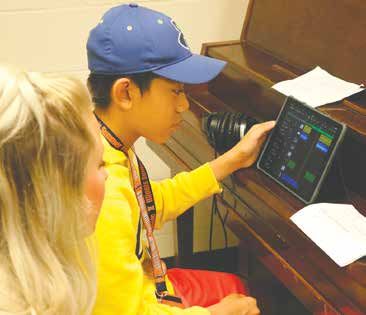
o utr e a c h
Making Music Matter
by Stephen Burian, Public Engagement Assistant Director at the University of Illinois School of Music
ISYM is but one program among Programs such as the Banks Bridgewater Lewis Fine
Arts Academy Summer Camp, Make More Music! and
many that bring over 14,000 the Piano Laboratory Program offer affordable music
instruction to the community while providing additional
young people to campus to teaching experience for our students.
interact with the School of Music The summer of 2017 was especially busy for the School
of Music. In addition to regular programs such as ISYM,
and our faculty Summer Harp Class and Summer Piano Institute, several
new programs blossomed.
T
he twenty public engagement programs of the School
2017 also marked a homecoming for the seminal teach-
of Music make the critical connection between the
ing of Paul Rolland (Violin Professor, 1945–78), with
university and the larger community of musicians
The Paul Rolland String Pedagogy Workshop returning
outside the School.
to Illinois after an absence of decades. String teachers
The Illinois String Academy (ISA) began with a modest
from across the country joined an impressive faculty that
30 violin and viola students in the fall of 2015. Under
included four ASTA (American String Teachers Associa-
the diligent leadership of Aaron Jacobs (DMA ’16) the
tion) presidents, The Jupiter Quartet and several students
program now enrolls three times as many students and
of Paul Rolland. Plans are already underway for the
has hired several additional instructors. Aaron’s doctoral
Workshop to return in July 2018. The final performance
research focused on five leading string programs for
of the Paul Rolland String Camp for young violinists, led
youth, and ISA puts this research directly into practice
by Nancy Kredel (MM and MS in Music Education, ’68)
in a way that enhances the musical community for all.
and Aaron Jacobs, was tied into the workshop.
This year ISA also expanded to add cello instruction
Famed violin soloist Rachel Barton Pine also came to
with the hiring of Leah Sweeney (BM ’16).
give a series of masterclasses and performances as part
of a two-day residency that benefited
both the Rolland Workshop and ISYM.
Her evening recital featured only
works for unaccompanied violin and
left the audience in awe.
In June, 140 students from four
different youth orchestras came to
Krannert Center for a weekend of
music making as the Heart of Illinois
Youth Orchestra Festival. Represent-
ing the Champaign-Urbana, Decatur,
Peoria and Quincy communities, stu-
dents rehearsed and performed in
the Foellinger Great Hall under the
baton of Chicago Youth Symphony
Young musicians demonstrate proper violin technique for an audience of string teachers
Orchestra Director Allen Tinkham.
at the Paul Rolland String Pedagogy Workshop
10 son oritiesOn top of all this, Director of Choral
Activities Andrew Megill introduced
a Choral Conducting Symposium
in 2016 and registration was filled
in under 24 hours! For 2017, the
Choral Conducting Symposium was
joined by the Illinois Bach Academy
(IBA). For the inaugural IBA, singers
and instrumentalists from across the
country came to study, rehearse and
perform J.S. Bach’s St. John Passion with
an orchestra performing in period
Youth orchestra musicians from Quincy, Decatur, Peoria and C-U join forces in the Heart
style in the Great Hall.
of Illinois Youth Orchestra Festival
20 1 8 11Out in the Schools
Glimpses of the newly
renovated Music Education
Program at Illinois
by Janet Revell Barrett, Professor of Music Education
O
n a bright, Tuesday morning in the fall, music education students start
the day by walking through the doors of Edison Middle School and
heading straight to the music room. For the next three hours, thirty
U of I students interact with their peers, seventh grade students, the
music teacher at the school, Mr. Jeff Dare, and their instructor, Dr. Bridget
Sweet, as part of the newly revised course, Music in Adolescence.
I am observing, eager to see how the class has taken shape after a year of
preparation. I notice how a purposeful energy in the room rises as Dr. Sweet
and the university students review plans for the day, assign responsibilities
for small group work, practice leading songs with ukulele accompaniment,
and discuss adjustments to accommodate the ever-shifting circumstances of
life in schools before the seventh graders tumble in the door.
The U of I students lead activities, facilitate music-
making, and learn firsthand about the myriad interests and
characteristics of the middle school students throughout “I leave for the day,
the morning. They ask questions, offer assistance, and impressed by the array
facilitate the seventh graders’ decision-making as they
create soundtracks of their lives. In turn, the middle
of persons, musics, ideas,
school students open up as they reveal their musical and interactions I have
preferences and interests, tell stories about friends and
witnessed.”
family, and discover common bonds with their newly-
assigned university partners. Musical connections crop
up as I listen to the lively conversations and snippets of songs bouncing
around the room.
After two sets of general music classes rotate in and out, the university
students walk across the street to the community room of the Champaign
Public Library where Dr. Sweet engages them with reflection on the morn-
ing’s accomplishments and thoughtful discussion of the day’s assigned read-
ings. I leave for the day, impressed by the array of persons, musics, ideas,
and interactions I have witnessed.
On Wednesday morning, a different class spreads out across the elementary
and middle schools of Champaign and Urbana. These university students
12 son oritiesare enrolled in
Elementary/Middle “It’s hard to tell in the
School Instrumental
Methods, charged moment who is more
with teaching exultant when the first
small groups of
sound happens—the
first and second
year wind, percus- preservice teacher or the
sion, and string fifth grader.”
students. In col-
laboration with
eight local school band and orchestra teaching col-
leagues, Dr. Jeananne Nichols organized this mobilization A music technology project takes shape
of preservice teachers so the university students would
have an opportunity to use what they are learning in sound very different from my own teacher preparation
class in support of the teachers and students in their program decades ago.
own communities.
Four university students arrive at Dr. Williams Elemen- Fresh renovation
tary School to join up with Stacey Peterik, the school’s These morning vignettes of music education students
band director. The budding instrumentalists at Dr. Wil- out in the schools illustrate several recent changes in
liams have only just received their instruments, new even the Bachelor of Music Education program, what we
to the process of putting them together. Each university have called a renovation of the curriculum. The word
student sits down with one or two beginners. It’s hard to “renovation”—just as you might imagine from watching
tell in the moment who is more exultant when the first home improvement programs—suggests the preserva-
sound happens—the preservice teacher or the fifth grader. tion of distinctive features of a structure, as well as the
On Thursday, I arrive at Edison with the university modernization of other features to meet the demands of
students, but this time to sit in on yet another site-based contemporary living. This potent metaphorical concept
class. The cast of characters resembles Tuesday except for guided decision-making as we considered how the cur-
one, as Dr. Adam Kruse facilitates the course Introduction riculum might uphold valued traditions of the university
to Music Education Technology. A primary aim of this class and public school music programs while enabling pos-
is to put technology to work in the service of learning. sibilities for innovative thinking and addressing areas
Again, the preservice teachers work alongside and on in need of revision. If you were to follow UI students as
behalf of the seventh graders in a collaborative creation they transition from Edison Middle School to the Music
project using samples and digital audio workstations [above Building, Smith Hall, and the Harding Band Building,
right]. Mixed pairs and trios of university students and for instance, you would quickly recognize distinctive and
middle school students are stationed around the room, perhaps more familiar components such as ensemble
intently listening through headphones to one another’s rehearsals, applied study in instruments or voice, and
ideas; conversations about the tools, creative process, music history and theory classes. A day in the life of a
and progress checks toward final versions punctuate the music education major involves moving in and out of
scene. I sit behind a duo speaking French—a seventh the rich offerings of the School of Music in tandem with
grade student recently arrived in Champaign from the placement in field-based courses, making the most of
Congo paired strategically with a U of I student who the program’s close integration with local area schools.
happens to minor in French. “Comment ça sonne?” [How Planning for the new BME began in earnest in 2011,
does that sound?], I overhear as they tweak the sample as music education faculty began discussing possible cur-
on the Chromebook sitting between them. I stop to think ricular changes with colleagues in the School of Music
how these experiences at Edison Middle School look and and in the surrounding Urbana-Champaign area. After
20 1 8 13a deliberative and consultative process that took several Another new course, which will be offered for the
years, we were pleased to learn in 2015 that the revised first time in Fall 2018, acknowledges music teachers’
BME curriculum had been approved by the Board of flexibility by developing skills teaching bands, choirs,
Regents. The music education division is now in the and orchestras. Music Teaching in Ensemble Settings aims
second year of a four-year sequential implementation of to give preservice music teachers a strong foundation
this initiative, which includes a series of required courses in the curricular and programmatic aspects of leading
common to all music education majors, balanced with ensembles, after which students can pursue advanced
opportunities for students to choose a specialized area courses in their chosen concentrations of instrumental
of focus, or concentration, in instrumental music, choral music, choral music, general music, or technology.
music, general music, or technology. The first music Core courses also include Differentiating Music Instruc-
education majors to complete their studies in full under tion, which focuses on creative adaptation of music
this plan will graduate in 2020. classes to meet the needs of students with disabilities.
The revised curriculum is designed to speak to the Donna Gallo and Adam Kruse have been collaborating
intensification of music teachers’ responsibilities in the with advanced technology students to create sound
field and the fact that music teachers’ roles are more boards that are accessible and interactive for students
varied than ever before—a theme we recognize in the job with severe and profound disabilities to use during the
descriptions of our recent graduates as well as alumni. course. Other students travel to the Crisis Nursery on
It actively encourages students to gain experience with a weekly basis to provide musical engagements for the
students in varied settings and specializations early on in young children there. Assessment and Evaluation of Music
the program. For example, just as Music in Adolescence is Learning, another core course, addresses the complex
required, so is Music in Childhood. This course, formerly demands of accountability in the current educational
offered for students in the general music specialization climate as preservice teachers explore strategies for
only, is now a core course for BME students across the documenting student growth in performing, creating,
program. Through the semester, preservice teachers work and responding to music.
with Dr. Donna Gallo to build a robust understanding of In addition to these core requirements, BME students
the diverse musical worlds of children while also assisting can select electives from a variety of additional music
area music teachers in schools that serve students who education courses as well as diverse offerings across the
identify as White, African/American, Hispanic/Latino, School of Music. Elective courses include Popular Music
as well as Asian/Pacific Islander, Indian, Congolese, Pedagogy, Healthy Music Practices, Music in the Interdisciplin-
and Mayan. ary Curriculum, Teaching Young Singers, Service Learning
in Music Education, and others. These diverse curricular
offerings often draw upon the research interests and
expertise of faculty members in areas such as culturally
responsive pedagogy, adolescent vocal development,
hip-hop studies, music for incarcerated students, music
for LGBTQ students, and interdisciplinary approaches
in education. Many of these courses take our students
“out into the schools” as well, even in unexpected ways.
For example, this fall the Advanced Technology class
“These initiatives highlight the
portability, flexibility, and accessibility of
technological tools and understandings
useful in facilitating creative musicianship.”
ISYM Hip-Hop campers worked with MME students on original
songs
14 son oritiesFinally, the MOSAIC Consortium of doctoral students
and faculty (below) continues into its third year, sponsor-
ing conferences, guest lectures, and collegial exchange
of research projects and topics. Last year, the MOSAIC
Consortium organized a series of lectures on culturally
responsive pedagogy featuring Dr. Constance McKoy
of the University of North Carolina at Greensboro. The
lecture series prompted discussions at the undergradu-
ate and graduate level about students’ musical identities
and music teachers’ knowledge of racial, ethnic, and
linguistic diversity.
The newly renovated music education curriculum at
Illinois draws upon the assets and resources of the sur-
rounding community, and takes advantage of collegial
partnerships with area teachers to complement university
MME students pair traditional playing with new recording and coursework with field-based experiences. As undergradu-
editing technologies ate students work closely with elementary and secondary
students, they acquire, practice, and adapt strategies and
is using videoconferencing software built into online approaches that build on traditional strengths of the
digital audio workstations to assist high school students field while exploring new avenues for musical growth.
enrolled in a new music technology class taught by one In the graduate program, Master of Music Education
of our Master of Music Education students. Through this students narrow the gap between theory and practice
mix of experience and expertise, the BME curriculum through the newly-instituted capstone projects, which
aims to provide U of I graduates with comprehensive provide opportunities to integrate principles of curricu-
breadth and depth as they pursue a fulfilling life in lum design and scholarly inquiry into their work in local
music teaching. schools and communities. Music education at Illinois
Graduate music education programs at Illinois are celebrates these school and university alignments as we
thriving and developing as well. For example, students in move out into the schools.
last summer’s vibrant Master of Music Education cohort
took part in a hip-hop course that was integrated with a
hip-hop camp for ISYM students. MME students worked
with ISYM Hip-Hop campers on original song creations
that included a digital instrumental background track and
original recorded lyrics (previous page). MME students
also explored recording and editing technologies along
with their traditional performance skills on wind and
string instruments (above). These initiatives highlight the
portability, flexibility, and accessibility of technological
tools and understandings useful in facilitating creative
musicianship.
The summer of 2017 also welcomed the inaugural
Capstone Exhibition for MME students, who showcased
curriculum projects they specifically designed for their
school sites as well as inquiry projects that demonstrated
their application of research techniques and processes.
Eleven graduates of the MME program participated in MOSAIC Consortium members (Front to Back) Channing Paluck,
this event, highlighting the integration of theory and Bridget Sweet, Donna Gallo, Janet Barrett, Jennifer Thomas,
Jeananne Nichols, Jonathan Schaller, Adam Kruse, and Matthew
practice in the curriculum of their school communities. Fiorentino
20 1 8 15G ATH E RI N G
A S E SQ U I CE N T E NNI AL M U S I C AL C E L E B RAT I O N
The University of Illinois Activities Dr. Andrew Megill, will be joined by soloists
Nathan Gunn, Todd Payne, and Yvonne Redman for the
celebrates its sesquicentennial debut of a newly commissioned work titled Gathering.
Megill explains: “This an exciting event because it calls
anniversary in 2017, and the up the legacies of two significant parts of the University
of Illinois School of Music history. Historically, the band
School of Music is playing and choir programs have been important nationally,
an integral part of campus and it’s a way for us to celebrate that beautiful tradition
and legacy.”
festivities throughout a Gathering is the collaborative creation of composer
Dominick DiOrio, Indiana University Jacobs School of
15-month celebration Music, and National Book Award-winning writer and
by Jancie Philippus, Public Engagement Coordinator at the
Professor Emeritus Richard Powers. Powers has assembled
University of Illinois School of Music a text that blends speeches and writings by a diverse
trio of University of Illinois alumni, including Pulitzer
F
estivities commenced in style with a Campus Sesqui- Prize-winning poet Mark Van Doren (BA 1914), Nobel
centennial Kick-Off concert at the Krannert Center laureate in Physiology/Medicine Rosalyn Yalow (PhD
on February 28, 2017; Dr. Stephen Taylor’s Archaea 1945), and pioneering architect and engineer Fazlur
for the Altgeld Chimes and McFarland Carillon, as Khan (PhD 1955). DiOrio was selected from many out-
well as numerous faculty and students, featured in the standing composers as a rising star in the music world
performance. Further highlights include the release of and for his experience writing for voices and instruments.
a new CD by the School of Music, Illinois Songs, featuring Peterson remarks: “While bands and choirs are funda-
faculty and students performing songs near and dear to mental to any music program, they rarely get a chance
devoted Illini; the Marching Illini’s schedule of several to perform together because there isn’t much repertoire
sesquicentennial-themed shows in their Fall 2017 season for this pairing. We’re hoping to add a very significant
(all leading up to Illinois Bands’ own 150th birthday piece to the repertoire that will not just be relevant here
bash the following year); and the Campus Wide Con- at Illinois but will get legs of its own and live far into the
vocation at Memorial Stadium on May 12, 2018, which future.”
will conclude the celebration exactly 150 years after the
first Illini graduated from the university. A fitting end to
a momentous occasion.
Journey to Gathering
However, one of the most widely anticipated projects Long before the curtains rise this spring, the journey
of the year’s celebration remains unmentioned: a special of this historical tour started with the creation of the
sesquicentennial concert tour that will visit Chicago, New original work. In May 2017, the creative team, includ-
York, and Champaign-Urbana in the spring of 2018. ing the directors and performers, gathered to discuss
These concerts will be performed by two of the school’s the libretto and composition, as well as the process
flagship ensembles and will showcase Illinois excel- and thought needed to bring the work to life. With the
lence, instill pride, and deepen engagement through a composer’s score sketches pinned to the walls of a Music
once-in-a-lifetime experience. The University of Illinois Building classroom, Powers described the energy within
Wind Symphony and Chamber Singers, led by Director the words of the reference material and gave insight into
of Bands Dr. Stephen Peterson and Director of Choral the choices made with the lyrics while DiOrio described
16 son oritiesJoin us in Celebration!
Gathering Sesquicentennial
Performance Schedule:
■■ Sunday, February 11, 2018 | Chicago, 3:00 pm
Chicago Symphony Center | Featured soloists:
Nathan Gunn and Yvonne Redman
■■ Saturday, April 14, 2018 | New York City, 7:30 pm
Alice Tully Hall | Featured soloists: Yvonne Redman
and Todd Payne
■■ Saturday, April 21, 2018 | Urbana Campus,
7:30 pm
Krannert Center for the Performing Arts | Featured
soloists: Yvonne Redman and Todd Payne
For tour updates and to purchase tickets, visit
www.music.illinois.edu/gathering
the feel, emotion, and flow of the musical score. The
lively discussion focused on how the text and the music
weave together to paint a portrait of Illinois’ long history
and the vibrant future ahead. To quote a selection of text Professors Nathan Gunn and Yvonne Redman share a laugh at the
from Fazlur Khan: “The technical man must not be lost May 2017 Gathering creative team meeting
in his own technology. He must be able to appreciate
life, and life is art, drama, music…”
The Chicago and New York performances have been
The involvement of soloists Gunn, Payne, and Redman
made possible by the generous support of the Corley
strengthens the sense of community being celebrated
family in memory of Dr. W. Gene Corley, a Civil Engineer-
through these performances. The three are long-time
ing alumnus and former president of the Varsity Men’s
friends and share a history of musical collaboration. Todd
Glee Club. Read more about the Corley family on page 6.
Payne, an alumnus of the School of Music and current
Professor of Voice at Missouri State University, consid-
ers Gunn to be family thanks to their long acquaintance About the composition
since his time as a student. During the creative team
Gathering, an original choral symphony for wind ensemble,
meeting in May, Payne said: “This project gives me the
chorus, baritone, and soprano, weaves together texts from
opportunity to come back home to the University of
University of Illinois alumni Mark Van Doren, Rosalyn
Illinois where I received my graduate degrees and met
Yalow, and Fazlur Khan, three revered scholars with
so many wonderful people...to this day Nathan and Julie
meaningful ties to the University of Illinois. Professor
Gunn and I are more than friends, we’re family. These
Emeritus Richard Powers, a MacArthur Fellow, selected
concerts give me the opportunity to give to this wonder-
the authors’ texts that comprise the libretto. Composed
ful institution what it gave to me.”
by Dominick DiOrio, Gathering not only celebrates the
Gunn and Redman also share a history as long-time
university’s 150th anniversary but also the importance of
colleagues, friends, and faculty at the University of Illinois.
public education in America. Established in 1867 as one
Having known Gunn since her earliest professional years,
of the country’s first public land grant institutions, the
Redman remarked “It’s an honor to have the opportunity
University of Illinois has long been an innovative leader
to perform with someone I’ve known for a very long time
in education, enriching the lives of many. Consequently,
and to be able to bring that special energy to the piece,”
there is much to be celebrated within the pages of its
and she is looking forward to bringing DiOrio’s music
history, and Gathering serves as a sonic jubilation of these
to life alongside her esteemed colleagues.
achievements.
20 1 8 17From Left to Right: Dominick DiOrio, Todd Payne, Nathan Gunn, and Yvonne Redman in front of DiOrio’s Gathering sketches
Drawing upon his own deep connection to his alma because of the universal nature of the text, invites all
mater, Powers’ powerful libretto celebrates 150 years of into a community of reconciliation—a gathering that
tradition and innovation in leadership, creativity, the leads to communal healing.
sciences, and the humanities. Through the works of Van Gathering brings together many voices from the past and
Doren, Yalow, and Khan, Powers expresses the important present in musical celebration of the community, tradition,
impact these scholars and many others at our university innovation, excellence, and leadership throughout the
have made on public education and society. Yalow’s text University of Illinois’ 150-year history. It is about coming
represents the university’s contributions to the sciences together and questioning why education and knowledge
as well as her own work as a champion for women’s access are important. Fittingly, this musical celebration will be
to public education. Khan, one of the greatest structural brought to life by our students—the future generations
engineers of the twentieth century, represents Illinois’ of Illinois alumni leaders, pioneers and innovators. In
place as a leader in all engineering fields. Finally, Van the composer’s own words, “music is a vast, complex, and
Doren’s text, a hymn to wisdom, connects the arts, sci- precarious gathering, but it is the pinnacle and lifeblood
ences, and humanities in a musical gathering of some of human experience. Its vitality is ours to nurture, and
of Illinois’ greatest visionaries. its future lies in the hands and minds of the students
Gathering presents composer Dominick DiOrio’s own who grace our halls.”
celebration of a society where education is available to
all who seek it, as well as the important contributions of
the above-mentioned scholars. He draws upon his own
experiences in a variety of schools, both as student and
teacher, in contextualizing this piece as a celebration of
public education. DiOrio observes that schools are the
place where society’s values are expressed most clearly
and fervently. A commitment to public education, civic
engagement, shared responsibility and governance are
some of our greatest values and are manifested in music
and musical gatherings such as this commission. DiOrio
has chosen Johannes Brahms as a “spiritual counterpart,”
quoting Ein Deutsches Requiem (premiered 150 years
ago) and Brahms’ First Symphony in his own work. The
Composer Dominick DiOrio explaining elements of Gathering to
German Requiem, often called a “human” requiem the creative team on May 17
18 son oritiesWorlds End & Worlds Begin
Dr. Mark Rabideau, director of the 21st-Century Musician Initiative at
DePauw University School of Music (BM ‘88, DMA ‘98), adapts his May
2017 convocation speech in an open letter to new U of I graduates
Dear Recent Music Graduate,
When you applied to school, you were probably told that you should only
go into music if you couldn’t imagine doing anything else. That was good
advice.
You have spent the past few years, as my friend and bass trombonist
David Taylor puts it, “embracing the joy of the struggle.” You did not wait
for inspiration, but pursued it on your own: striving for mastery where
perfection does not exist; learning
to play something difficult so well
as to make it sound easy; teaching “You need to be not just
so tirelessly that your students no
longer need you—all signs of your
an artist-to-a-panel, but an
grit and tenacity. artist-to-the-world.”
And with degree in hand, you are
now equipped to enter an increasingly
connected world. A world where music is embraced
throughout every culture, where communities gather
around music to mourn collective hardships and cel-
ebrate shared moments. It’s a world where many parents
already understand that music enhances their child’s
chances to succeed. Yet it has never been more of a
struggle to make a living as a musician—at least when
following traditional paths. So what comes next?
You needed these past few years to focus and to hone
your skills. But now that you’re graduating, I want to
tell you the second part of that good advice about going
Dr. Mark Rabideau delivers his into music, the part we thought best to save until this
convocation address to graduands in moment.
Smith Memorial Hall
You need to be more than someone who plays the
cello really well, or who has mastered the trumpet excerpts most likely to
appear on orchestral auditions. You need to be bigger than the number
of jazz standards you can play in any key or the treatises you can cite. You
need to be not just an artist-to-a-panel, but also an artist-to-the-world.
I want to offer a different view of these past few years in school, one
in which your music education has not been about learning how to do
things, but rather about developing yourself into someone who can make
the world a better place.
What if you were to think of your life as your art?
20 1 8 19Think of it the way a composer might think of a new composition.
Maybe she imagines the scope of the work first. Maybe she has an idea
of the instrumentation, the moments of arrival and the transitions that
lead us through a story. But they’re all just ideas at first, and as she writes,
they will change along the way. Your life will unfold similarly, but try to
imagine it now:
What do the big moments look like? How do the transitions unfold?
Who will be in your ensemble, your audience?
As you think about the composition of your unknown
future, consider some of the strengths you have as an “Worlds end. Worlds begin.
artist and musician: And your ability to imagine
■■ You are curious. the future you want for
■■ You are creative.
yourself is what will get you
■■ You are collaborative.
through.”
Nobody has ever become an artist without a deep sense
of curiosity. Curiosity about what they could do on their
instrument; about making sense of the world around them; about helping
others to see with a unique perspective. Art, after all, is about challenging
perceptions we may take for granted.
Licensed in creativity, we are inventors of the future. As artist-entrepreneurs,
we are poised to see needs and gaps as opportunities that may bring about
meaningful change, both around the world and down the street.
And who are better at collaborating
than the members of a string quartet,
a jazz trio or an opera company?
Armed with your curiosity, creativity
and ability to collaborate, how, then,
can your artistry make a difference?
In her book, The Third Chapter,
Harvard professor and author Sarah
Lawrence-Lightfoot speaks to the role
that the arts play even in life’s most
challenging moments. She writes:
“It is fascinating that the first
responses to violence, fear and despair
are often not words, arguments or
analysis. When we feel desperate,
Faculty assemble words will not do. They do not seem cathartic or productive; they will not
for the Class of carry our complex emotions. The New York City public school teachers
2017
from District One who could see the fiery destruction of 9/11 from their
classroom windows knew this intuitively. While looking for a way to help
their young students rage and grieve, they turned away from the formal
curriculum not to words, but to art. They asked their students to draw their
fears, paint their pain, dance their anguish, and rap their rage. The raw
emotions were channeled into art when words would not do.”
When life gets confusing and painful, we turn to art to learn not what to
do, but how to be. Don’t ever underestimate the good that art can do in the
world.
20 son oritiesI didn’t know it at the time, but as a welfare kid struggling to get through
school at the hands of an undiagnosed reading disorder, it was music that
would scoop me up and give me focus. And it was my music teachers who
not only found ways for me to thrive artistically, but to succeed as just the
person I am. They showed me that it was my talents that would define me,
not the poverty that I came from
or the learning disadvantages that
shamed me.
When I close my eyes, I remember
exactly how I felt when I graduated
from music school: full of hope; full of
promise; ready to take on the world.
And when I open my eyes and think
of you, Dear Recent Music Graduate,
I want to tell you that your future is
promising.
That does not mean that it won’t
unfold unexpectedly along the way; it
will. You will suffer maybe more than
a few bumps in the road. I did. When
you do, please remember this: Worlds end. Worlds begin. And your ability Students face
to imagine the future you want for yourself is what will get you through. their next steps as
graduates
Remember that there is little else more intimate than making music with
other people. Every glance, nod and breath synchronizes our shared com-
mitment. Draw on those who have gone through this experience with you.
You are inextricably linked by the music you have made together.
Remember that tenacity and grit are your greatest assets as you grapple
with the complexity of the world you will soon inherit.
Remember to be authentic, and to be grateful.
Be true to your own unique voice. Music school has
“Remember to be authentic, not likely prepared you in this way. We prepare you to
and to be grateful.” be thorough, but a byproduct is that we become alike—
learning from the same excerpts, études and ensembles.
Now it is time to discover what you can offer the world.
Be grateful to your art. It has prepared you to play in the messy, fertile
spaces of complexity and ambiguity. Be grateful to the artists you learn from
and collaborate with. They, too, have walked this path.
And be grateful to your audiences, because your art is incomplete without
them.
Now that you have graduated, it’s time to tell, and to live, your story. And
I can’t wait to hear about all you will accomplish.
Stay close,
Mark Rabideau
20 1 8 21You can also read


